DOMYO has made Japanese braids in Tokyo since 1652, and this workshop lets you see the craft from two useful angles: first as a piece of cultural history, then as a skill you can try yourself. You’ll handle 100% silk threads and leave with a handmade item, not just a photo of one.
I like the order of the experience: the museum-style introduction gives the braiding context, and then the hands-on lesson makes the techniques easier to appreciate. I also like that the finished braid becomes a personal souvenir, with the making itself calm and focused rather than rushed.
One consideration: this is a quiet craft workshop, not a broad sightseeing tour, and you’ll need to concentrate to keep the braid’s pattern on track. The listed price starts at $69.49, so it makes most sense if you value the instruction, silk materials, and access to DOMYO’s craft history as much as the item you take home.
- What makes the DOMYO workshop special
- Inside DOMYO’s Kagurazaka workshop
- The first half hour: objects, stories, and technique
- One hour with silk and the Naragumi braid
- Matcha, finishing, and the last half hour
- Is .49 good value?
- Finding the shop and planning your visit
- Who will get the most from this workshop?
- Should you book the DOMYO kumihimo experience?
- FAQ
- How long does the kumihimo experience take?
- What time does the workshop start?
- What can I make?
- What materials are used?
- Is the workshop suitable for beginners?
- Is English-speaking instruction available?
- What is included in the price?
- What is the minimum age to participate?
- What is the cancellation policy?
- The Best Of Tokyo!
- More Historical Tours in Tokyo
- More Tours in Tokyo
- More Tour Reviews in Tokyo
- Not for you? Here's more nearby things to do in Tokyo we have reviewed
What makes the DOMYO workshop special
 1 / 7
 2 / 7
 3 / 7
 4 / 7
 5 / 7
 6 / 7
 7 / 7
- A working craft house with roots in 1652: DOMYO specializes in kumihimo and has served the imperial family and reproduced braids from national treasures.
- History before handiwork: You see historical materials and replicas, and watch a demonstration before beginning your own braid.
- A beginner-friendly Naragumi lesson: Staff guide you step by step as you make a strap, key chain, or bracelet from silk.
- English-speaking instruction: Instructors including Yuki-san, Maki-san, and Makiko-san have been named by participants. The instructor on your visit may differ.
- A gentle finish: Matcha and a sweet are served while your piece is finished.
- Two daily start times: The scheduled sessions begin at 11 a.m. or 2 p.m. and take about two hours.

👉 See our pick of the 25 Best Guided Tours In Tokyo
Inside DOMYO’s Kagurazaka workshop
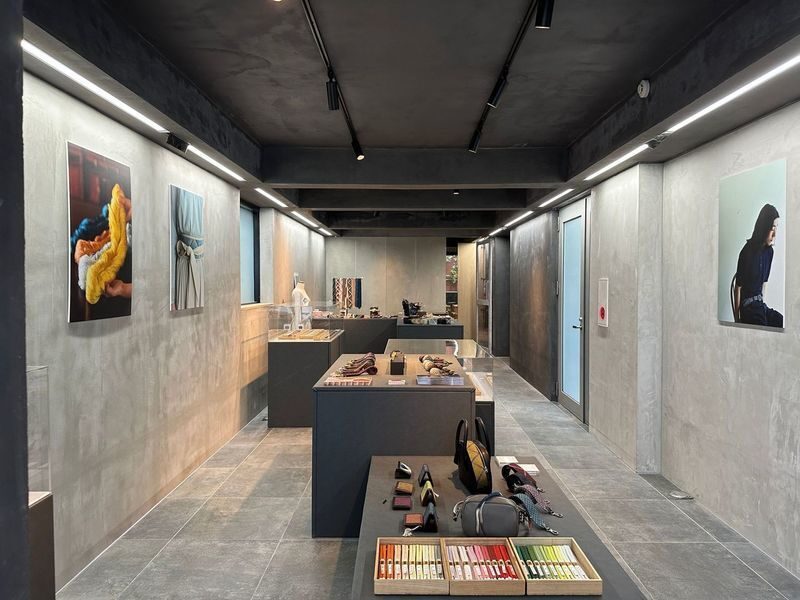
The workshop takes place at DOMYO’s Kagurazaka store, at 6-chome-75 Kagurazaka in Shinjuku City. The company’s long history is more than a date on a sign. DOMYO works to keep traditional braiding alive, making its products by hand from the preparation of silk threads through to the braiding.
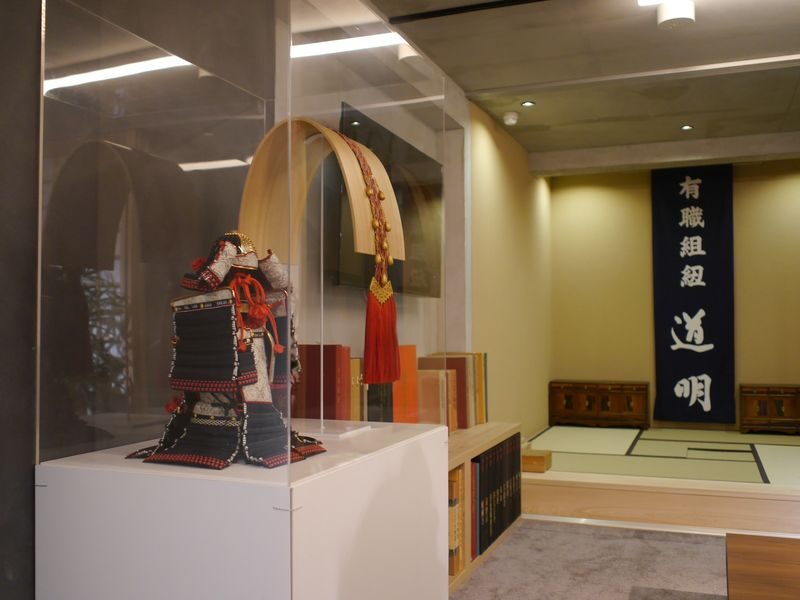
Kumihimo, which means braided cord, has had practical and decorative roles in Japan. Braids have been used in imperial court clothing, sword knots, and kimono sash bands. That range gives the introductory tour a good reason to exist: it helps you see these cords not as mere trim, but as objects made for particular uses and with techniques worth preserving.
DOMYO has served the imperial family and reproduced braids found on national treasures. The workshop also offers a look at historical braiding materials and replicas of old designs. This is a chance to connect the small cord you make to a much broader craft tradition, without needing prior knowledge of Japanese textiles.
You can also read our reviews of more historical tours in Tokyo



The first half hour: objects, stories, and technique
Arrive for your booked session and wait in the participant lounge. Lockers are available for luggage, which is handy if you are coming from a hotel or carrying day-trip bags. The scheduled start times are 11 a.m. and 2 p.m.; the experience is set up as a roughly two-hour visit.
The first half hour is devoted to the museum tour. You’ll see historical materials and recreations of older braids, then watch a craft demonstration. This introduction matters because it shows the skill behind the finished object before you try to reproduce even a small part of the process.
The explanations cover kumihimo’s history and uses, as well as how DOMYO makes its braids. The company’s process includes spinning and dyeing silk threads before braiding them. That attention to material is worth noting: the threads in your workshop are 100% silk, not generic craft cord, and the quality of the material adds real value to a small finished item.
English-speaking staff make it easier to ask questions as the group moves from the displays to the work area. Participants have named instructors including Yuki-san, Maki-san, and Makiko-san, and described clear, patient teaching. Since the instructor may vary, treat those names as examples rather than a promise of who will lead your session.
One hour with silk and the Naragumi braid
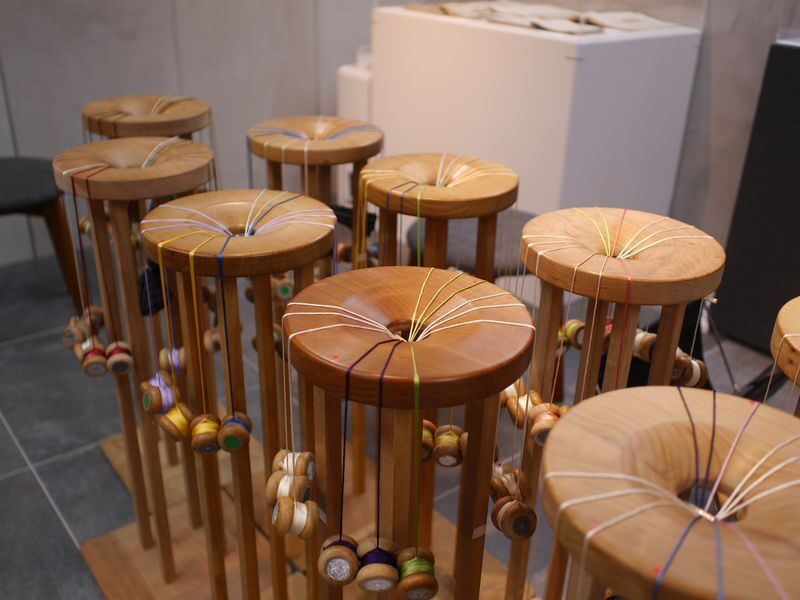
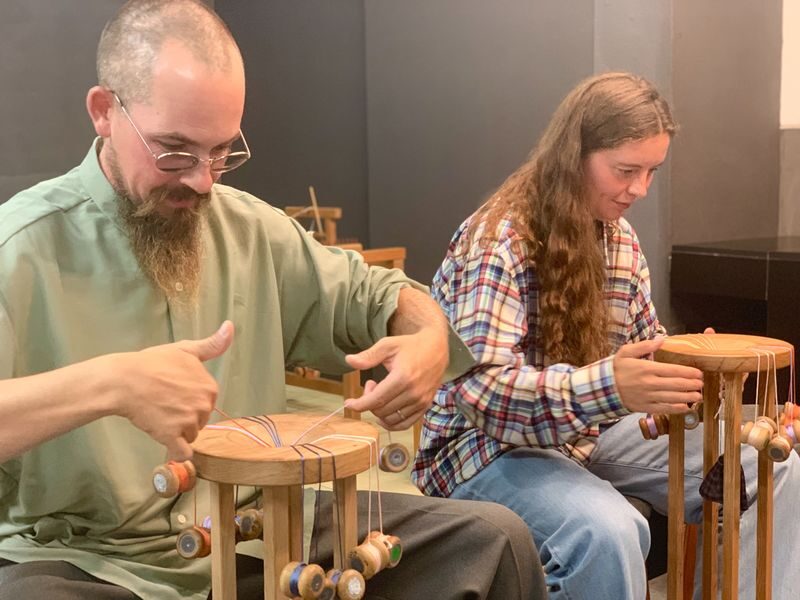
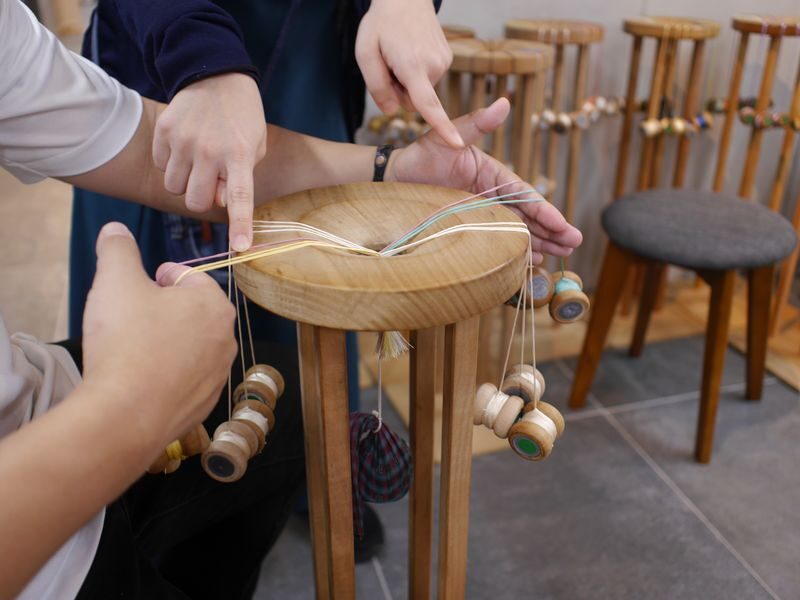
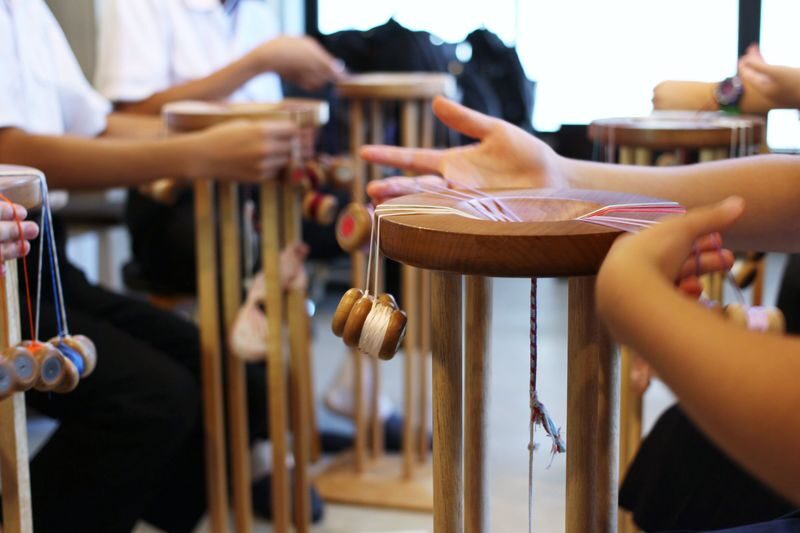
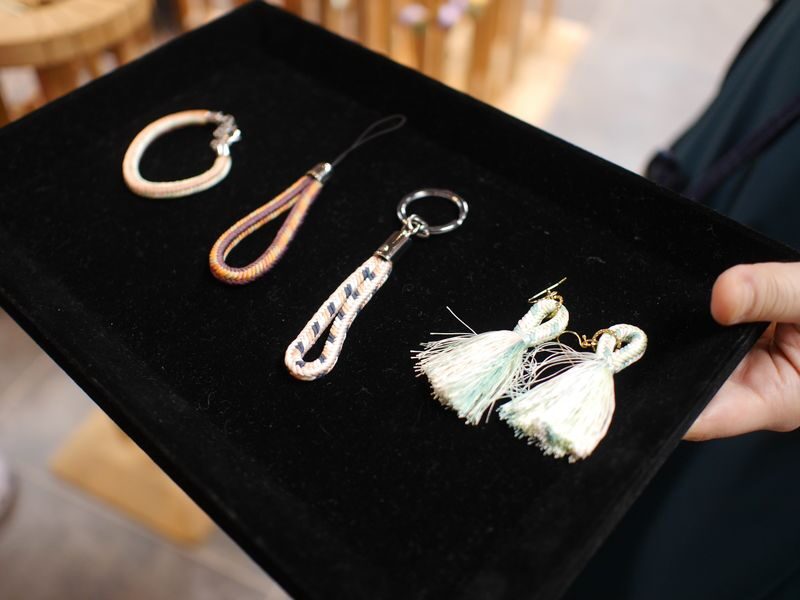
The workshop itself runs from about 11:30 a.m. to 12:30 p.m. for the morning session, or 2:30 p.m. to 3:30 p.m. in the afternoon. You’ll use traditional tools and the Naragumi method to make a strap, key chain, or bracelet. The activity is designed for beginners, and you don’t need to arrive with knitting or braiding experience.
You’ll choose from available color combinations and follow the instructor’s steps. The braid takes attention: you need to remember the sequence and keep a steady rhythm. That focus is part of the pleasure. It gives your hands a clear task and your mind a break from navigating Tokyo, checking maps, and deciding where to eat next.
Don’t confuse beginner-friendly with entirely effortless. A few steps may need repeating, and a small mistake can interrupt your rhythm. But the instruction is close at hand, and participants describe getting help when needed. One useful point to ask about before you begin is how many strands your selected pattern uses. Options can differ: some participants have worked with 12 strands, while others had 24. If you care about complexity, ask the instructor what choices are available.
The final result is more than a take-home trinket. You have watched the material and method introduced, tried the technique yourself, and made a cord with your own hands. That personal connection is a strong reason to choose this workshop over a souvenir bought off a shelf.
Matcha, finishing, and the last half hour
After braiding, there is a scheduled break from 12:30 to 1 p.m., or 3:30 to 4 p.m. You’ll have matcha while staff finish your order. Refreshments are included, and participants have also described receiving a small sweet with the tea.
This pause is a thoughtful part of the visit. Your braid may need a final assembly step before it is ready to wear or use, so you can relax rather than rush out with an unfinished piece. The matcha gives the workshop a distinctly Japanese close, although the activity’s main value remains the craft lesson, not a tea ceremony.
The whole experience lasts about two hours. That is long enough for context, instruction, making, and a short break, but short enough to fit into a day built around other parts of Tokyo. It is a good choice if you want an activity with substance that does not take over your schedule.
Is $69.49 good value?
The listed starting price is $69.49. That is not bargain-bin pricing for a short activity, so consider what the fee covers: an English-speaking introduction, access to DOMYO’s historical materials and demonstration, a guided lesson, 100% silk, the finished braid, and refreshments.
If you only want a cheap souvenir, you can spend less elsewhere. But that comparison misses the point. Here, you learn why the craft matters and make something yourself under guidance. The workshop’s value is strongest for anyone interested in Japanese material culture, traditional skills, or a hands-on keepsake with a story behind it.
The activity also suits people who are unsure whether they are crafty. The steps are taught in sequence, and the instructor can help when you lose the pattern. It still asks for patience and concentration, so it may not suit someone looking for a fast, effortless activity. Children aged 7 and older may participate; the age rule is worth checking if you are planning a family booking.
You can also read our reviews of more tours and experiences in Tokyo






Finding the shop and planning your visit
The address is 6-chome-75 Kagurazaka, Shinjuku City, Tokyo 162-0825, Japan. The shop is described as being within reach of two subway stations, though the exact station names are not specified here. Use a map app and follow the directions carefully: the final turn may take you down a small, residential-looking street. The shop is labeled when you arrive.
The activity is offered at 11 a.m. and 2 p.m. The voucher is valid only for the date and time selected, and confirmation is sent within 48 hours. If you do not receive a confirmation email, contact customer support. You can cancel for a full refund at least 48 hours before the activity, using Tokyo local time.
The listed participant minimum age is 7. A young child was present during one session, but that does not change the stated age requirement for taking part. If you are traveling with younger children, confirm arrangements before booking rather than assuming they can join the craft lesson.
Who will get the most from this workshop?
I’d put this high on the list for a visitor who wants a cultural activity with some substance and a useful keepsake at the end. It is especially appealing if you enjoy learning how an object is made, want a break from large attractions, or like quiet work that rewards concentration.
It can also work well for families with children aged 7 and up, since the instructions are simple enough for beginners and children have completed their own pieces. Couples and solo visitors can enjoy it too. Some sessions may be small or even feel like a private lesson, but group size is not guaranteed, so don’t book on the assumption you’ll have one-on-one instruction.
You don’t need to be an expert in Japanese history or textiles. The opening tour supplies the context, and the hands-on portion makes the craft tangible. If you’re already deeply interested in braiding, you may wish the lesson offered more patterns or a longer making session. The standard experience is an introduction, not an advanced course.
Should you book the DOMYO kumihimo experience?
Book it if you want to understand a traditional Japanese craft from the inside, make a silk item with patient guidance, and spend two calm hours away from the usual sightseeing circuit. DOMYO’s history, the displays, and the hands-on Naragumi lesson give the activity more depth than a basic craft class.
Skip it if your priority is a low-cost souvenir, a fast-paced tour, or an activity that asks little concentration. For everyone else, especially craft-minded visitors and families with children aged 7 or older, this is a distinctive way to bring home something you made yourself.
Kumihimo Workshop at a Historic 370-Year-Old Braiding Shop in Tokyo
“Loved the experience! It was very unique and enjoyable. They explained the history of Kumihimo and showed beautiful recreations of historical ones….”
FAQ
How long does the kumihimo experience take?
The scheduled experience takes about two hours. It includes a 30-minute museum tour, a one-hour workshop, and a 30-minute break while your piece is finished.
What time does the workshop start?
Sessions are scheduled to start at 11 a.m. and 2 p.m.
What can I make?
You can make a strap, key chain, or bracelet using the Naragumi braiding method.
What materials are used?
The workshop uses 100% silk materials.
Is the workshop suitable for beginners?
Yes. The activity is designed for beginners, and an instructor explains the steps and offers help as you braid.
Is English-speaking instruction available?
Yes. English-speaking staff are included.
What is included in the price?
The experience includes English-speaking staff and refreshments. Other personal expenses are not included.
What is the minimum age to participate?
Participants must be at least 7 years old.
What is the cancellation policy?
You can receive a full refund if you cancel at least 48 hours before the activity date, using Tokyo local time.