
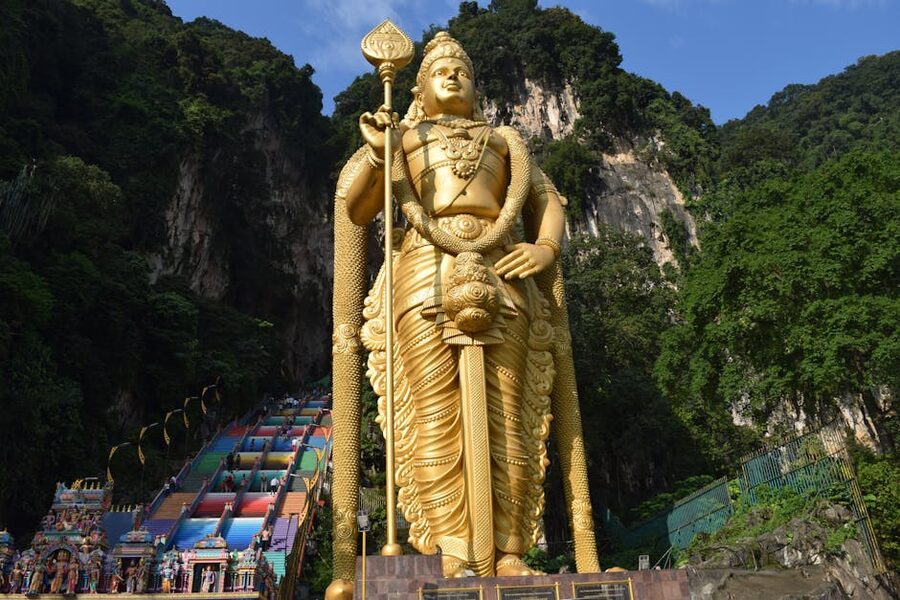
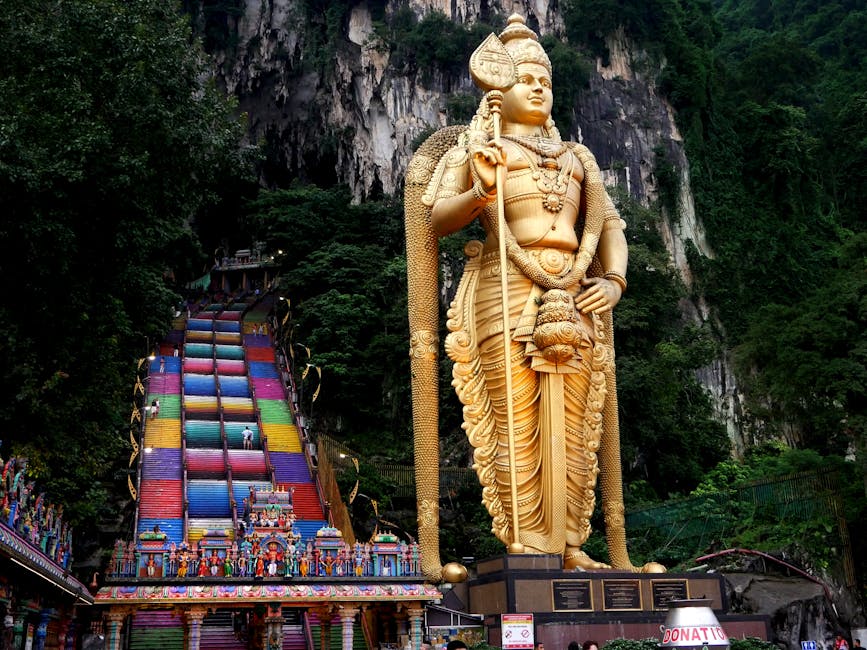
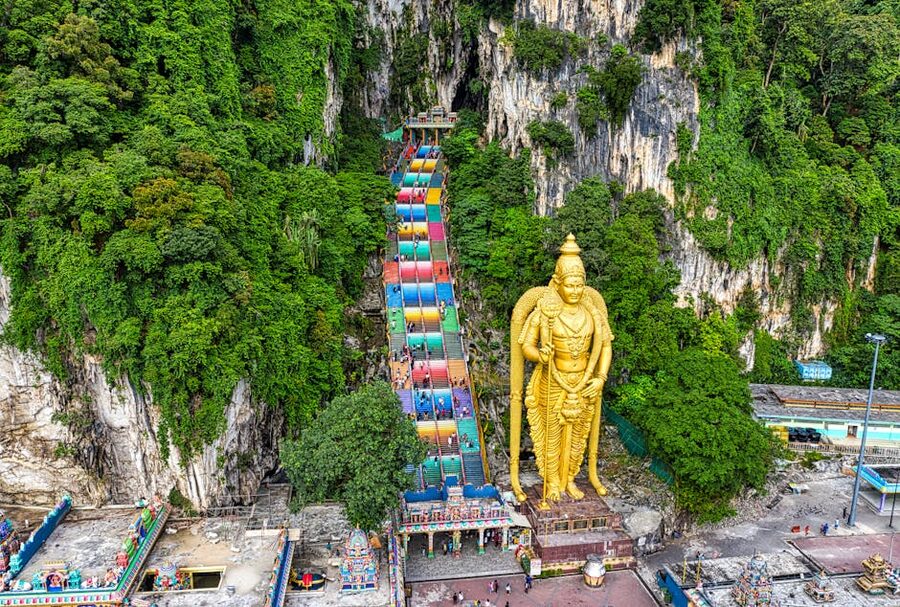
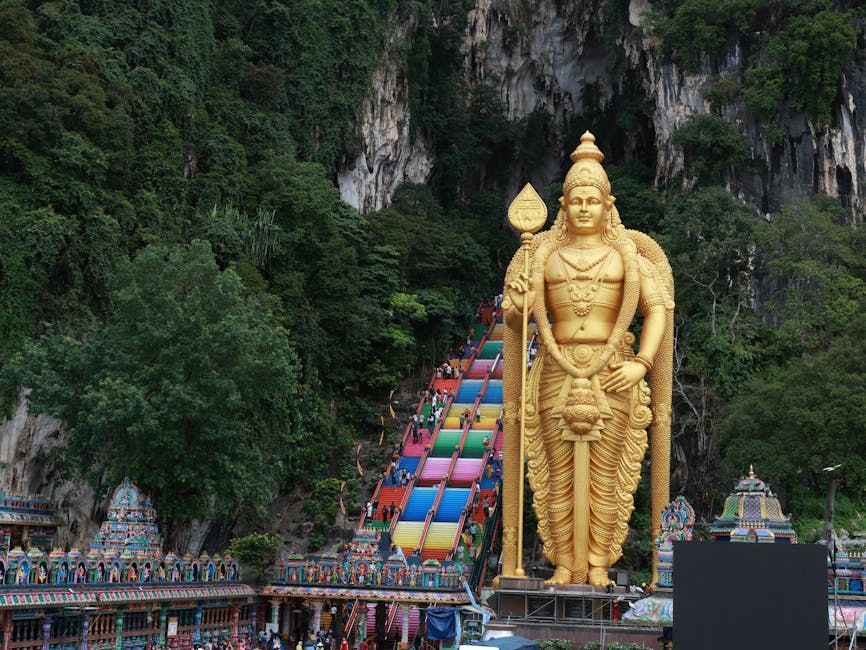
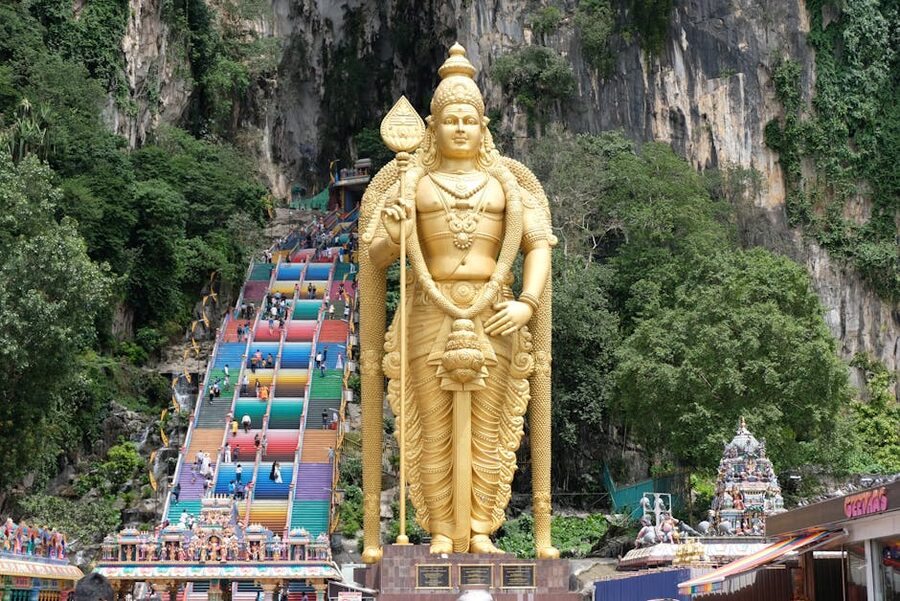
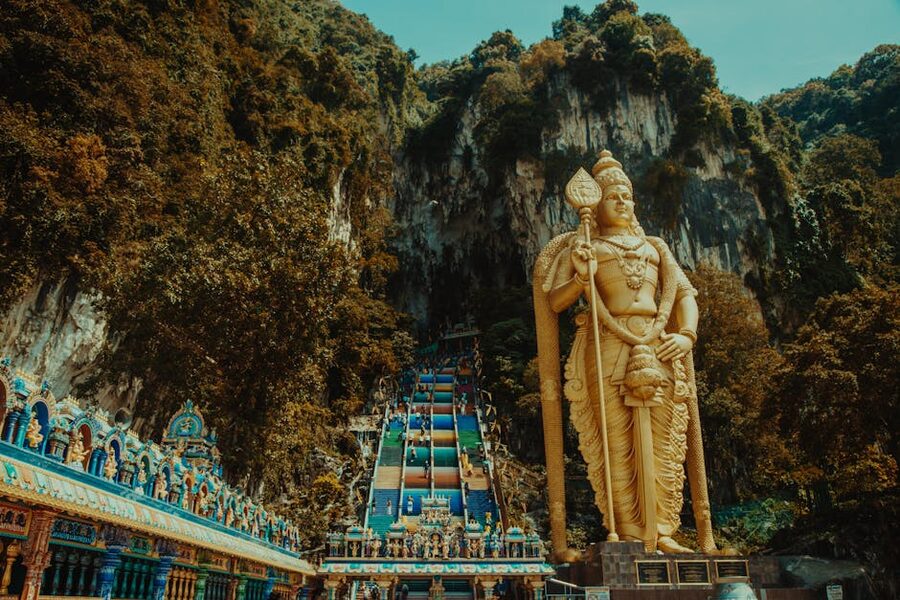
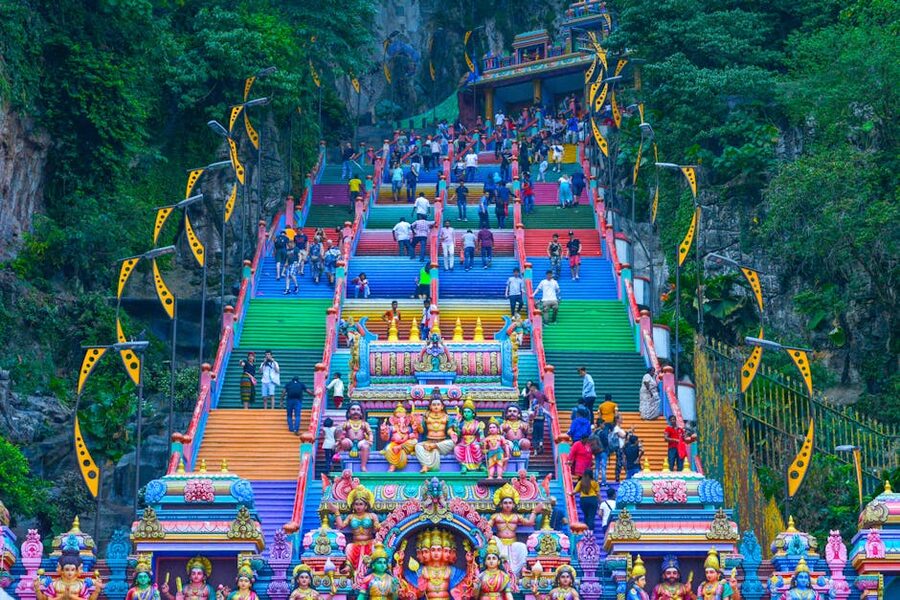
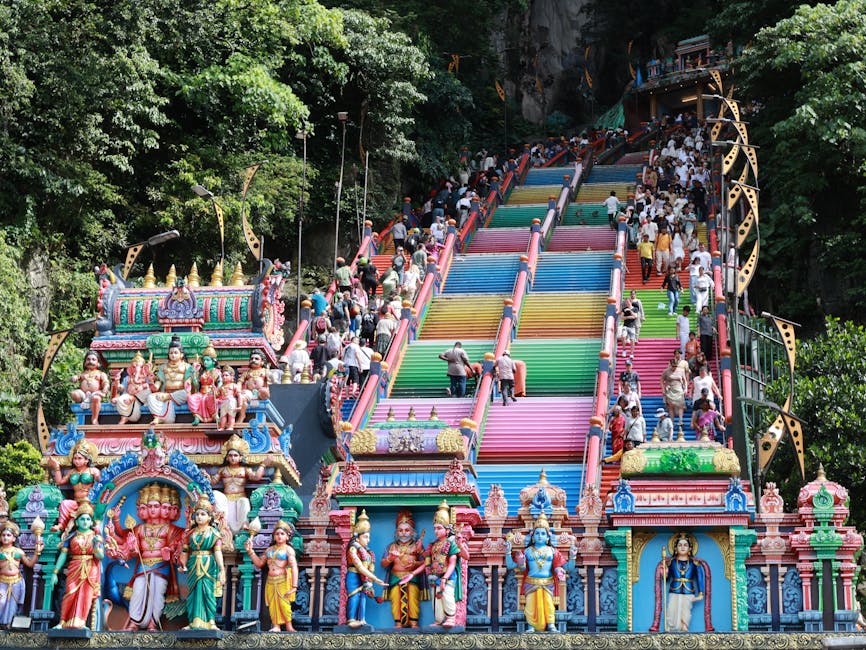
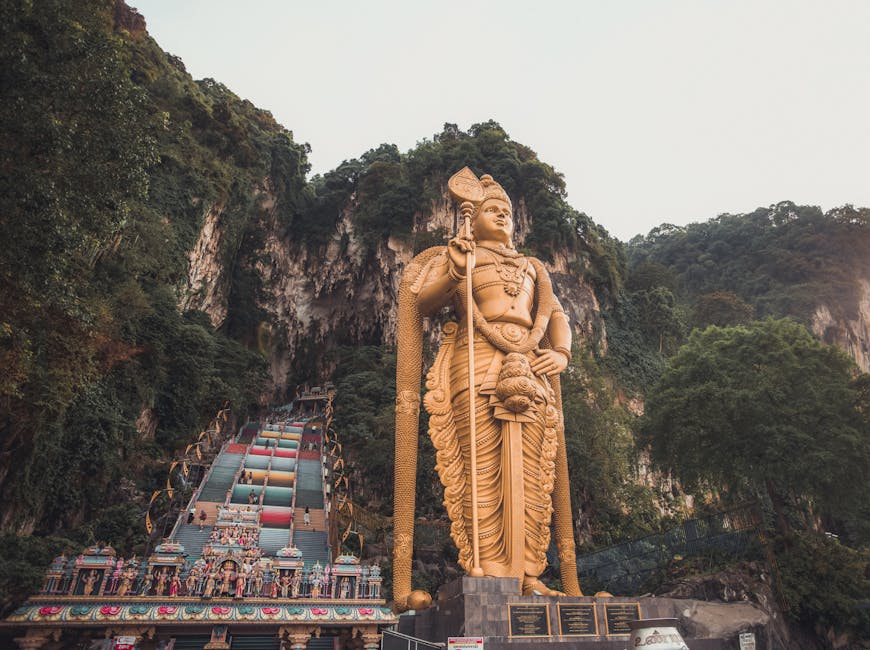
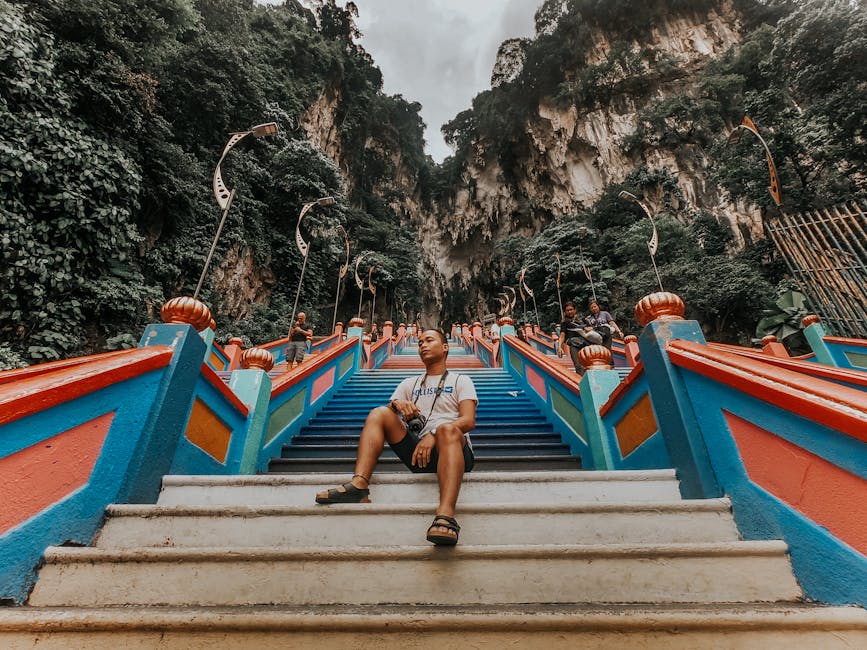
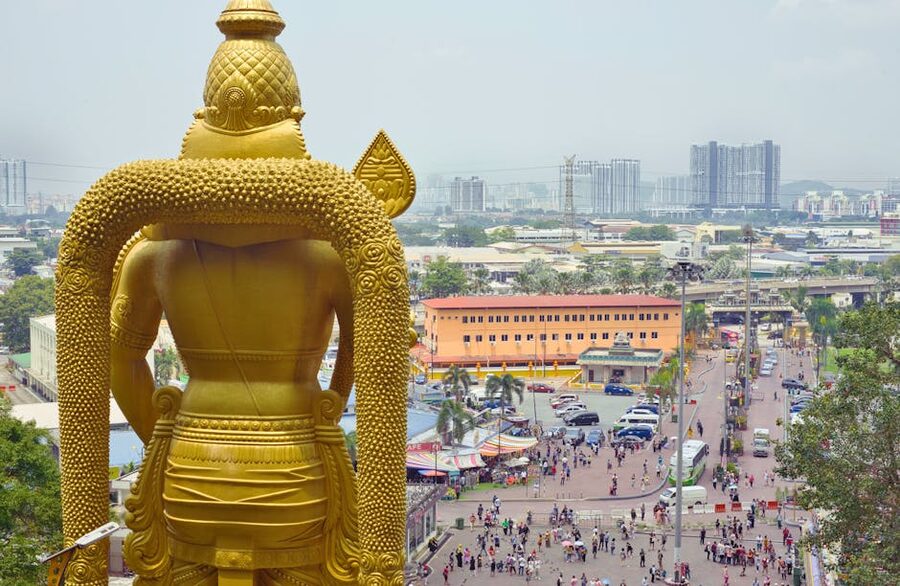
Two hundred and seventy-two painted steps. A 140-foot golden statue of Lord Murugan standing guard at the bottom, the tallest of its kind in the world. A 400-million-year-old limestone cliff rising straight out of the Klang Valley like someone stood it up on end. That is Batu Caves before you even walk inside, and it is the reason every guidebook ever printed about Kuala Lumpur puts it on page one.
The caves sit about 13 kilometers north of central KL, which sounds close until you try to figure out how to actually get there. Taxi? Grab? Commuter train? Half-day tour with a driver? I have done all four now across different trips, and the short answer is that it depends on how much of your morning you want to spend problem-solving versus looking at rainbow staircases.
This guide walks you through everything you need to actually book a Batu Caves tour from Kuala Lumpur without wasting money on overpriced transfers or ending up on a rushed coach with forty strangers. I have ranked my three favorite tours at the bottom, but first, the logistics.
Short on time? Here are my top 3 picks:
Best budget: Kuala Lumpur Batu Caves Half-Day Tour with Pick-Up — $13. Cheapest legit option, includes a Batik workshop and hotel pickup.
Best overall: Batu Caves Cultural Temple Tour from Kuala Lumpur — $34. Four hours, small group, adds Royal Selangor and a chocolate factory stop.
Best premium: Private Half-Day Batu Caves and Cultural Tour — $35. Private guide, your own car, set your own pace.
- How the Official Batu Caves System Works
- Tours vs Going on Your Own
- The Best Batu Caves Tours to Book
- 1. Kuala Lumpur Batu Caves Half-Day Tour with Pick-Up —
- 2. Batu Caves Cultural Temple Tour from Kuala Lumpur —
- 3. Private Half-Day Batu Caves and Cultural Tour —
- When to Visit Batu Caves
- How to Get to Batu Caves
- Tips That Will Save You Time
- What You Will Actually See Inside
- A Bit of History
- Combining Batu Caves with the Rest of KL
- Nearby and While You Are in the Region
How the Official Batu Caves System Works
The first thing you need to know is that Batu Caves is free. There is no entrance ticket, no booking platform, no skip-the-line nonsense. It is an active Hindu temple complex managed by the Sri Maha Mariamman Temple trust, and the main Temple Cave at the top of the stairs is open to anyone from 6 a.m. to 9 p.m., seven days a week.
What people pay for, when they pay at all, is either transport to get there, a guide to explain what they are looking at, or access to the Dark Cave conservation site halfway up the staircase.
The Dark Cave is a separate guided experience that runs about 45 minutes and costs around 35 Malaysian ringgit (roughly $8 USD) for the educational tour, or 80 ringgit for the adventure tour that takes you deeper in. It has been closed for extended stretches in recent years, so do not build your whole trip around it.
The Ramayana Cave, tucked to the left of the main staircase at the base, charges about 7 ringgit. It is small, dimly lit, and packed with dioramas depicting scenes from the Hindu epic. Worth the couple of dollars if you want something more immersive than just the main Temple Cave.
Everything else, including the selfies at the base of the Murugan statue, the walk up the 272 steps, the inside of the main cave, and the smaller shrines at the top, costs nothing.
Tours vs Going on Your Own
So if the caves are free, why book a tour at all? Four reasons, in order of how much they matter.
Transport. This is the big one.
Getting from central KL to Batu Caves on your own means either a Grab ride (simplest, about 30 to 45 ringgit each way depending on traffic), the KTM Komuter train from KL Sentral (cheapest, 2.60 ringgit, but the trains run every 20 to 30 minutes and can be frustrating on weekends), or a taxi where you negotiate the price first and hope the driver does not add a return-trip markup.
A half-day tour wraps the whole transport question into one flat fee and skips all the haggling.
Context. Without a guide, Batu Caves is a staircase, a statue, and a big echoey cave full of shrines. With a guide, it is 130 years of Tamil migration history, a festival called Thaipusam that draws a million people a year, the geology of the limestone karst, and the iconography of the various deities inside. I learned more in the 25 minutes of guided explanation on my second visit than I did in three hours wandering solo on my first.
Add-on stops. Most half-day tours do not just dump you at the caves and leave. They typically bolt on a Batik workshop, a pewter-making demo at Royal Selangor, or a chocolate factory visit. None of these are mind-blowing on their own, but together they pad out a morning nicely and give you something to do in the air conditioning between the long drive and the hot climb.
Not getting scammed by taxis. Fixed-fare drivers at the Batu Caves parking lot have been known to quote travellers absurd return fares. Grab is usually fine but can be slow to find a driver at peak times. A tour removes this entire category of problem.
That said, if you are on a tight budget, confident with public transport, and willing to Google the history beforehand, the DIY route is genuinely fine. I would still recommend a tour for your first visit and solo DIY for the second.
The Best Batu Caves Tours to Book
These are the three I would actually put my own money on, pulled from the tours with the deepest track records and strongest reviews. All three are under $40 and all three handle hotel pickup somewhere in central KL.
1. Kuala Lumpur Batu Caves Half-Day Tour with Pick-Up — $13
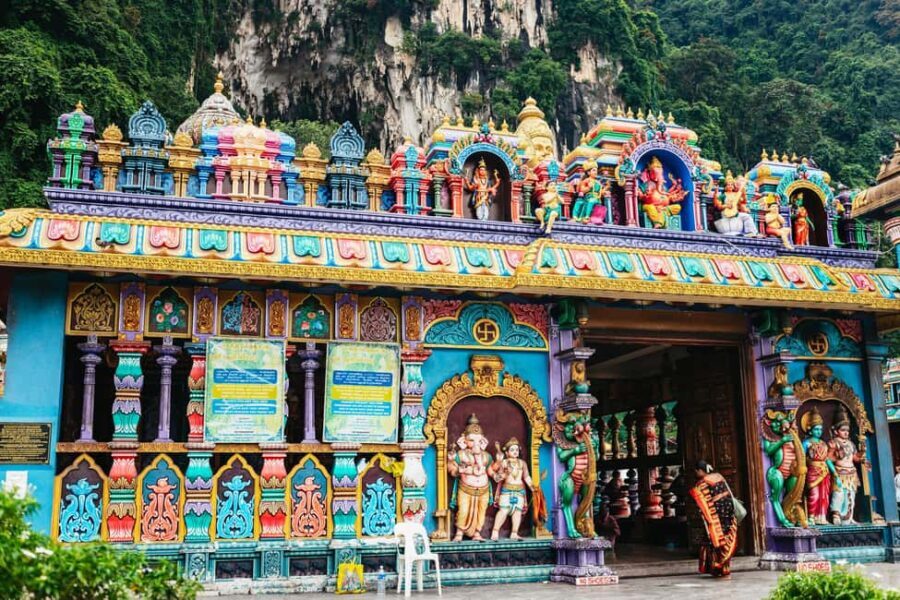
This is the one I recommend when someone asks me the cheapest way to see Batu Caves without getting taxi-scammed. At $13, it is essentially the cost of two Grab rides — and you get a driver, a small-group coach, and a Batik workshop thrown in for free. The tour runs around 3.5 hours, picks you up from most central KL hotels, and the Batik workshop is a genuine surprise: you paint your own fabric square and take it home.
The trade-off is that it is a coach tour, so you are sharing the morning with 20 to 30 other people, and the pacing at the caves themselves is a bit rushed. You get about 75 minutes at Batu Caves proper, which is enough to climb the stairs, look around the main cave, and get back down, but not enough to linger. For the price, that is a fair deal.
2. Batu Caves Cultural Temple Tour from Kuala Lumpur — $34
If I had to pick one, this would be it. Four hours, small group, and the itinerary actually uses the extra 30 minutes to let you slow down at the caves. Same core Batu Caves experience, but you also stop at a traditional Malay village temple on the drive in, and you wrap up with a visit to the Royal Selangor pewter workshop where you can watch craftsmen hammer out tankards.
At $34, it is more than double the budget option, but you are getting a longer tour, a smaller group, and better guide time at each stop. The 4.7-star average across more than a thousand bookings tells you people come away satisfied. This is the middle-ground tour for anyone who wants a proper cultural context without paying for a full private guide.
3. Private Half-Day Batu Caves and Cultural Tour — $35
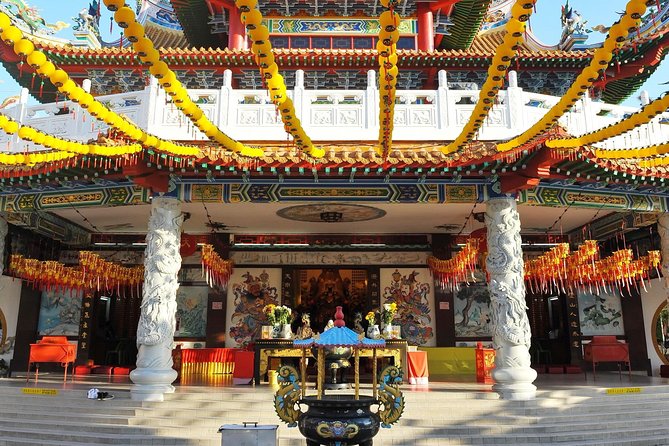
For a dollar more than the small-group option, you get your own car, your own guide, and total flexibility over the itinerary. This is the tour I would pick if I were traveling with older parents, with kids, or with anyone who just does not want to wait for a coach full of other people. The perfect-5-star average across more than three thousand bookings is the strongest review signal of the three, and that kind of rating is genuinely hard to fake.
The private format means you can spend as long as you want at the base taking photos of the Murugan statue, skip the climb if someone in your group cannot do the stairs, or swap a stop you are not interested in for something else entirely. $35 for a private half-day in Kuala Lumpur is roughly the price of one dinner for two at a nice KLCC restaurant, and the flexibility is worth it.
When to Visit Batu Caves
The caves are open every day from 6 a.m. to 9 p.m., but the practical window when you will actually want to be there is much narrower. Mornings are the only real answer.
Arrive between 7 and 8 a.m. if you can. The light is softer, the tour coaches have not landed yet, and most importantly, the temperature is still bearable. Climbing 272 uneven concrete steps in direct equatorial sun at 1 p.m. is a mistake you only make once. By mid-morning the base of the staircase is elbow-to-elbow with people trying to get the same photo, and by noon the heat turns the climb into a slog.
If you are doing a hotel pickup tour, most of them leave central KL between 8 and 9 a.m., which puts you at the caves between 9 and 10. That is still workable but not ideal. Ask your operator if they can do an earlier pickup — some will accommodate it, especially for private tours.
Avoid weekends if you can. Saturday and Sunday draw local families and day-trippers from across the Klang Valley, and the queue at the base of the stairs can stretch 30 meters on a busy weekend morning. Weekdays are significantly calmer.
Thaipusam is a different category entirely. The festival happens on the full moon of the Tamil month of Thai, which usually falls in late January or early February. During Thaipusam, an estimated one million pilgrims make the walk from central KL to Batu Caves over three days, many of them carrying kavadi (ornate offerings).
It is one of the most visually stunning religious festivals on the planet, and it is also completely unmanageable if you just want a casual sightseeing visit. If you come during Thaipusam, come FOR Thaipusam. Otherwise check the date before booking and pick a different week.
How to Get to Batu Caves
Four options, in rough order of how I would recommend them.
Booked tour with hotel pickup. The easiest route, full stop. You sit in the hotel lobby, a van shows up, and you are at the caves 30 to 45 minutes later. Any of the three tours above includes this.
KTM Komuter train from KL Sentral. The cheapest route and my favorite for DIY visits. The Port Klang line has a direct train to Batu Caves station, which is literally a two-minute walk from the base of the staircase. Trains run every 20 to 30 minutes from KL Sentral, the journey takes about 30 minutes, and one-way costs 2.60 ringgit (less than a dollar).
Buy the token from the ticket machine, tap in, and go. Check the return schedule before you climb the stairs so you are not waiting 25 minutes in the sun on the way back.
Grab ride. Fast and comfortable. A one-way Grab from central KL runs about 30 to 45 ringgit depending on traffic, so maybe $7 to $10 USD. The catch is the return. Drivers often do not want to come out to the Batu Caves lot, and you may wait 15 to 20 minutes for a ride back, especially if your visit runs long. Budget extra time on the return leg.
Taxi. Not recommended unless you have no other option. Taxi drivers at Batu Caves are notorious for inflated round-trip fares and flat refusal to use the meter. If you must take a taxi, agree on a price before you get in and have the app alternative on your phone as leverage.
Tips That Will Save You Time
- Dress modestly. Batu Caves is an active temple. Shoulders covered, legs covered below the knee. If you turn up in shorts or a tank top, you will be handed a sarong at the entrance for 3 to 5 ringgit. Not a big deal but faster to just wear pants in the first place.
- Watch your stuff around the monkeys. The resident long-tailed macaques are bold. They will snatch a water bottle, a bag of chips, a phone, or a pair of sunglasses straight out of your hand if you are not paying attention. Do not feed them. Do not taunt them. Do not hold food out for a photo.
- Bring water. The climb in the heat will dehydrate you faster than you expect. There are stalls at the base selling bottles for 3 to 5 ringgit, but nothing on the way up and nothing inside the cave.
- Cash for the small stuff. The Ramayana Cave, the Dark Cave tours, the sarong rental, and the snack stalls at the base are all cash-only. Bring 50 to 100 ringgit in small notes.
- Start at the Ramayana Cave. It is small, dim, and air-conditioned — a good first stop before the big climb. Most tour groups skip it, so it is quieter.
- Go up the middle of the staircase. The edges get slippery from the paint wear and the monsoon damage. The center has better grip and a handrail if you need it.
- Do not linger too long at the top. The Temple Cave is impressive but it is also echoing, bat-droppings-on-the-floor, pigeon-filled. Twenty minutes is plenty for most visitors.
What You Will Actually See Inside
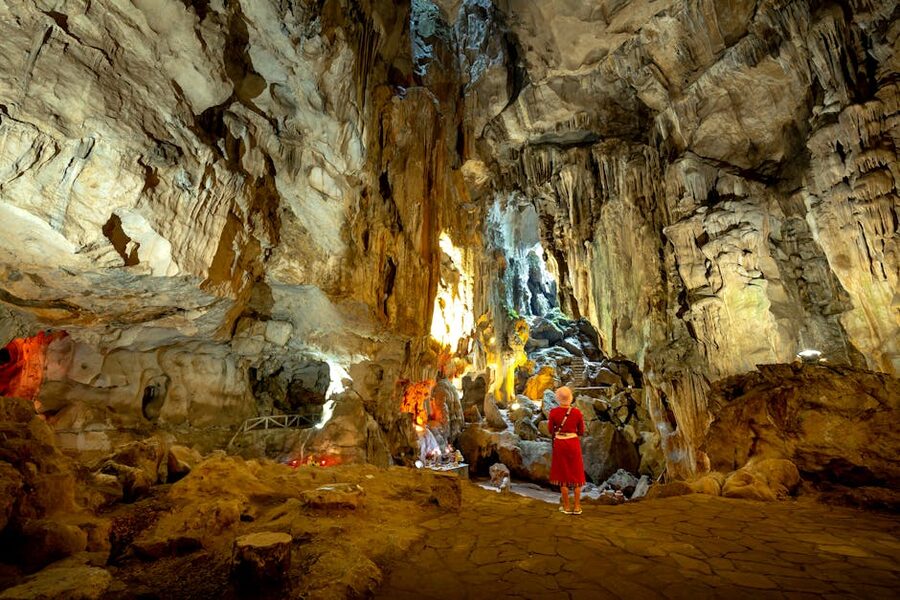
Once you make it to the top of the 272 steps and catch your breath, the entrance to the Temple Cave opens up like a yawn in the limestone. The main chamber is enormous — roughly 100 meters tall at the highest point and about the size of a small cathedral. Sunlight pours in from the natural opening in the ceiling, and depending on the time of day, you get shafts of light hitting the shrines like someone aimed a spotlight.
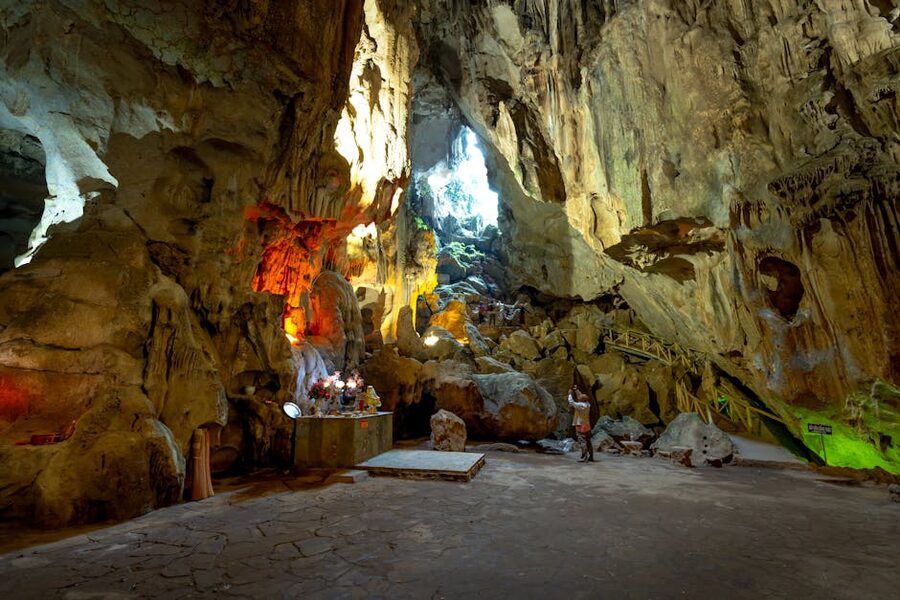
The Temple Cave — also called the Cathedral Cave — is the spiritual heart of the complex. It is dedicated to Lord Murugan, the Hindu god of war, and contains several smaller shrines tucked into the rock walls. You will see devotees leaving offerings at the altars, priests performing rituals, and the occasional cow on festival days. The feeling is half tourist attraction, half active house of worship, and the ratio shifts depending on when you visit.
At the far end of the main chamber, another short flight of steps leads to a smaller, brighter inner cave. This back chamber is easy to miss because most coach tours do not bother walking the extra 50 meters. Go. The inner cave has better lighting, fewer people, and some of the more ornate shrines on the site.
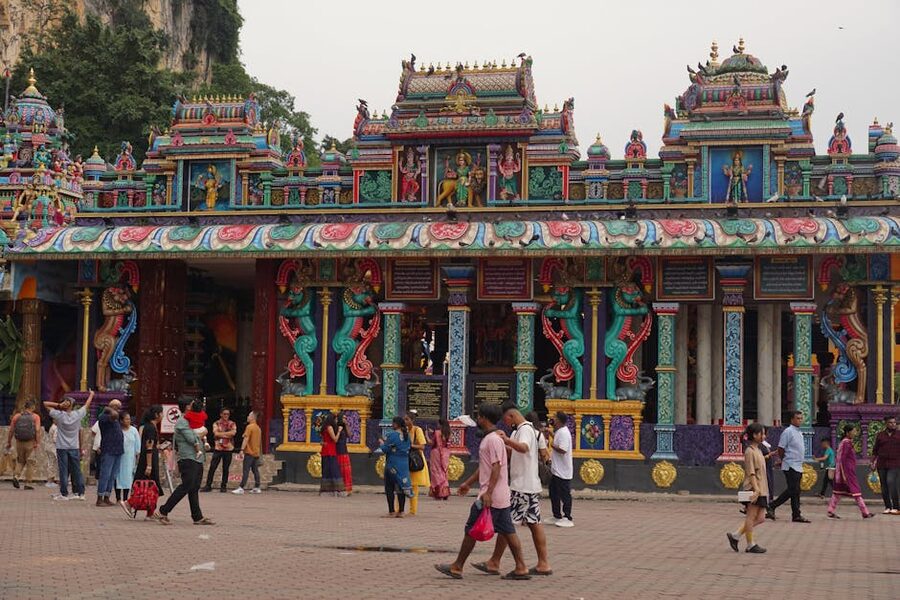
Back at the base, the complex also includes the Sri Subramaniar Swamy Temple, which is easy to wander into without realizing you are somewhere meaningful. It has been on the site since 1891 and is one of the oldest temples in Selangor. Take a few minutes to walk the outer courtyard before you leave.
The statue of Lord Murugan at the entrance was consecrated in 2006 and took three years to build. At 42.7 meters (140 feet), it is the tallest statue of a Hindu deity in Malaysia and among the tallest in the world. The gold paint on it is real paint, not gold leaf, and it gets refreshed every few years. Up close you can see the weld lines on the steel frame.
A Bit of History
The limestone hills of Batu Caves are estimated to be about 400 million years old, predating pretty much everything you associate with Southeast Asia. Indigenous Temuan people used the caves as shelter for centuries before recorded history. In the 1800s, American naturalist William Hornaday documented the site during a scientific expedition, which is how the caves came to Western attention.
The Hindu shrine you see today dates to 1891, when Tamil trader K. Thamboosamy Pillai established a Murugan temple inside the main cave. He chose the location because the entrance is shaped like a vel, the spear carried by Lord Murugan. Thaipusam has been celebrated here ever since, growing from a small local festival to one of the biggest Hindu events outside India.
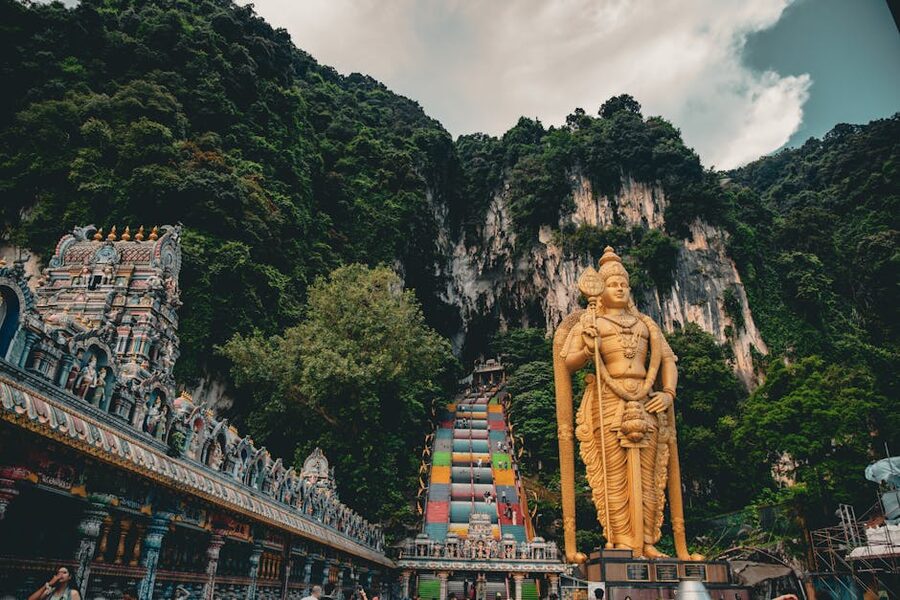
The 272-step staircase was built in 1920. The rainbow paint job, the thing everyone comes for now, was added in August 2018. It was controversial — the temple committee painted the stairs without getting approval from Malaysia’s department of heritage, and UNESCO publicly criticized the decision. The temple committee refused to undo it, the travellers poured in, and now the colorful stairs are the single most recognizable image of Kuala Lumpur after the Petronas Towers.
Combining Batu Caves with the Rest of KL
A Batu Caves visit only takes half a day, which leaves the afternoon wide open for the rest of Kuala Lumpur. Most half-day tours drop you back at your hotel by 1 p.m. That is plenty of time to grab lunch at a nearby hawker center and hit the Petronas Towers skybridge or KLCC Park in the afternoon.
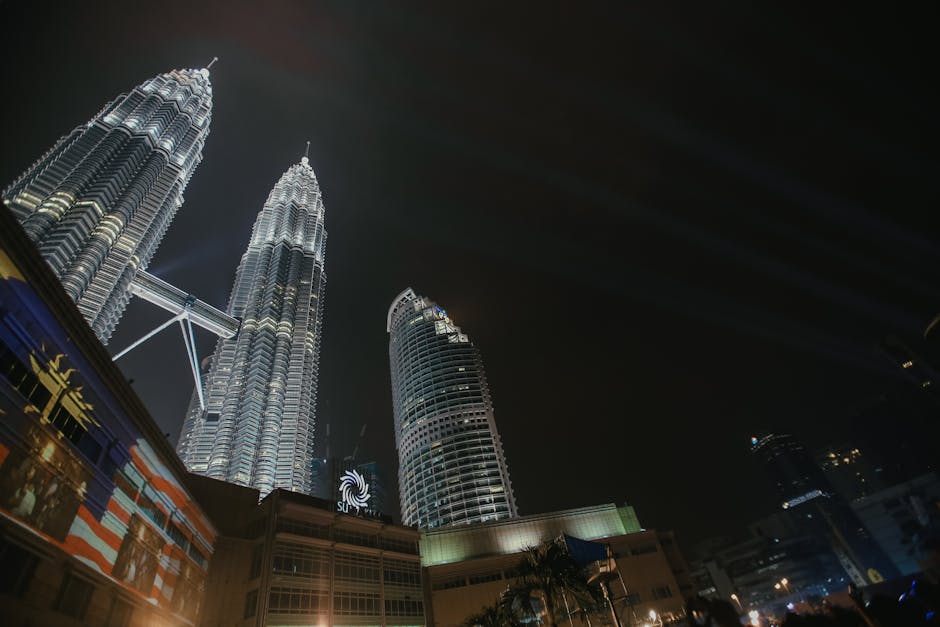
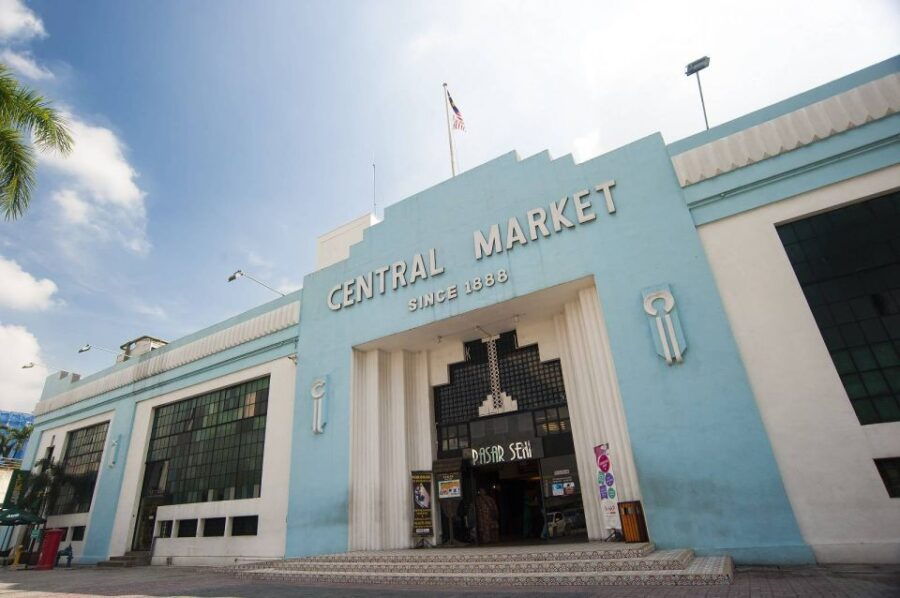
If you have three days in KL, a reasonable itinerary is: Day 1 the city center (Merdeka Square, Chinatown, Central Market), Day 2 a Batu Caves morning + Petronas Towers afternoon, Day 3 a day trip to Malacca or the Genting Highlands. The Batu Caves morning fits naturally into a short trip without eating a full day.
Nearby and While You Are in the Region
If you are island-hopping Southeast Asia and Batu Caves is part of a longer trip, the neighboring countries have some of my favorite half-day experiences on earth. In Thailand, the Grand Palace, Wat Pho and Wat Arun tour in Bangkok is the obvious temple counterpart, and the Bangkok floating market and train market tour pairs beautifully with it as a full Bangkok day.
For a Chiang Mai add-on, Doi Inthanon National Park and the White Temple and Blue Temple day trip from Chiang Rai are both stunning.
South of Malaysia, Indonesia has the Borobudur and Prambanan temple tour from Yogyakarta, which is the closest spiritual sibling to Batu Caves in terms of sheer scale, and the Lempuyang Gates of Heaven tour in Bali if you want another photogenic temple to bolt onto the trip.
If you are headed further south, the Mount Bromo sunrise tour from Java and the Ijen Volcano blue fire tour are the two Indonesia mornings I would not skip.
Kuala Lumpur is easy to reach from both Bangkok and Bali on cheap regional flights, so if Batu Caves is catching your eye, there is no reason not to make Malaysia one stop in a longer Southeast Asia loop. Three days in KL, three in Bangkok, a week in Bali, and you have a nice two-week trip with zero wasted travel days.
Batu Caves is one of those sights where the photo does not prepare you for the scale. The statue is enormous, the cave is enormous, the staircase is more of a workout than it looks, and the whole complex has a weird charm that comes from being both a tourist magnet and a genuinely active temple at the same time. Book the tour that matches your budget, show up before 9 a.m., wear pants, and hold onto your sunglasses around the monkeys. You will have a good morning.