
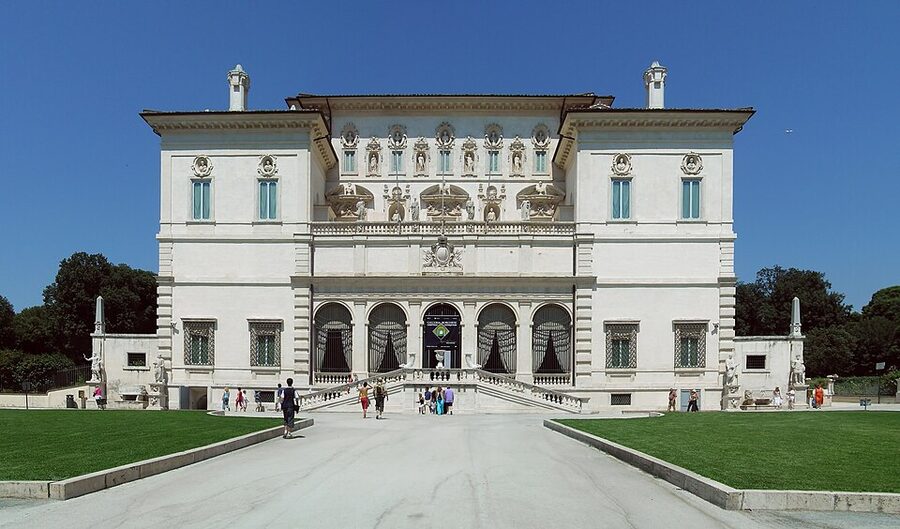
Most Rome museums you can wander into off the street. The Borghese Gallery does not work that way. It runs on two-hour timed slots with a cap of 360 visitors at a time, and if you don’t have a ticket booked in advance, you don’t get in. The good news is once you understand how the booking actually works, it’s one of the simplest reservations in Rome.
In a Hurry? Top Picks
- Borghese Gallery Entry Ticket with Escorted Entrance, $50: the easy default. Meet the host, walk past the queue, two hours inside on your own. Check availability
- Gallery + Gardens Small-Group Tour, $60: a guide who actually knows the Bernini sculptures, capped at 15 people, gardens included. Check availability
- Guided Tour with Skip-the-Line Ticket, $84: the upgrade pick if you want a guide for the full two hours and don’t care about the gardens. Check availability
- In a Hurry? Top Picks
- The thing nobody warns you about
- The three ways to book
- 1. Direct from the official Galleria Borghese site
- 2. GetYourGuide entry ticket
- 3. Tiqets or other third-party platforms
- How far ahead to book
- The free Sunday catch
- Pick your tour: my three recommendations
- 1. Rome: Borghese Gallery Entry Ticket with Escorted Entrance:
- 2. Rome: Borghese Gallery and Gardens Guided Small-Group Tour:
- 3. Rome: Borghese Gallery Guided Tour With Skip-The-Line Ticket:
- What you’ll actually see inside
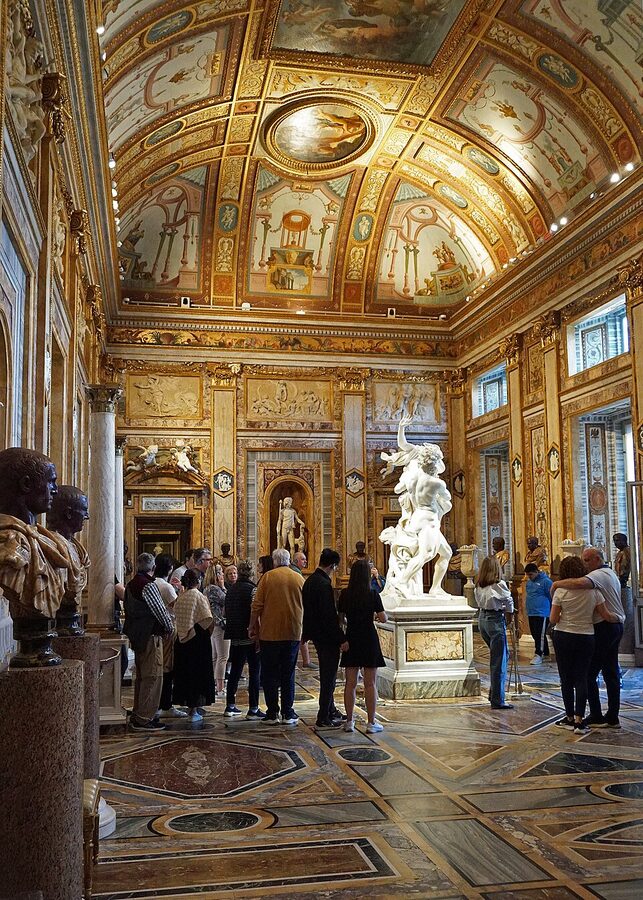
- Ground floor: the sculpture you came for
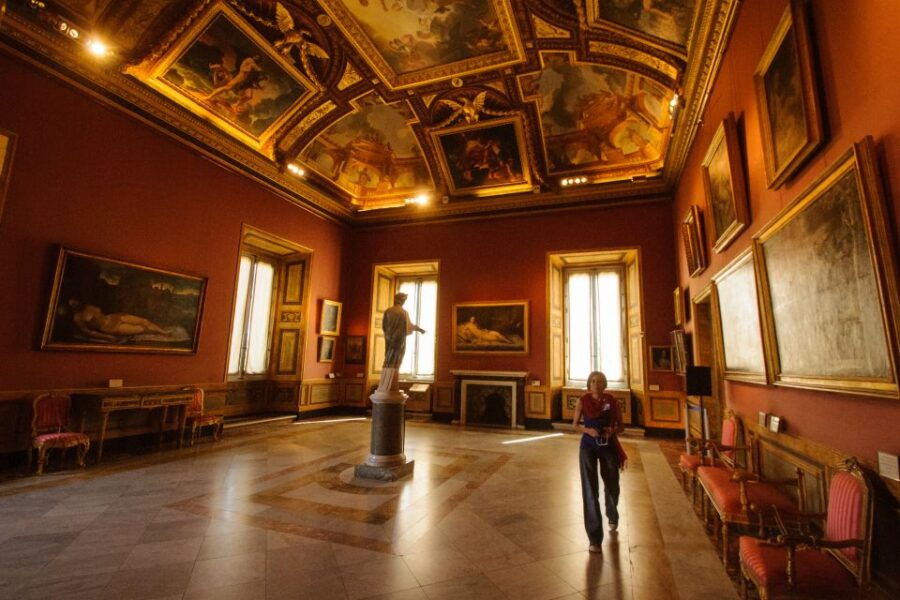
- First floor: the painting collection
- How to plan your two hours
- Practical stuff (the bits the official site buries)
- Getting there
- What to do before or after the gallery
- Common mistakes to avoid
- What it costs altogether
- If the slots are sold out
- Where to next
The thing nobody warns you about
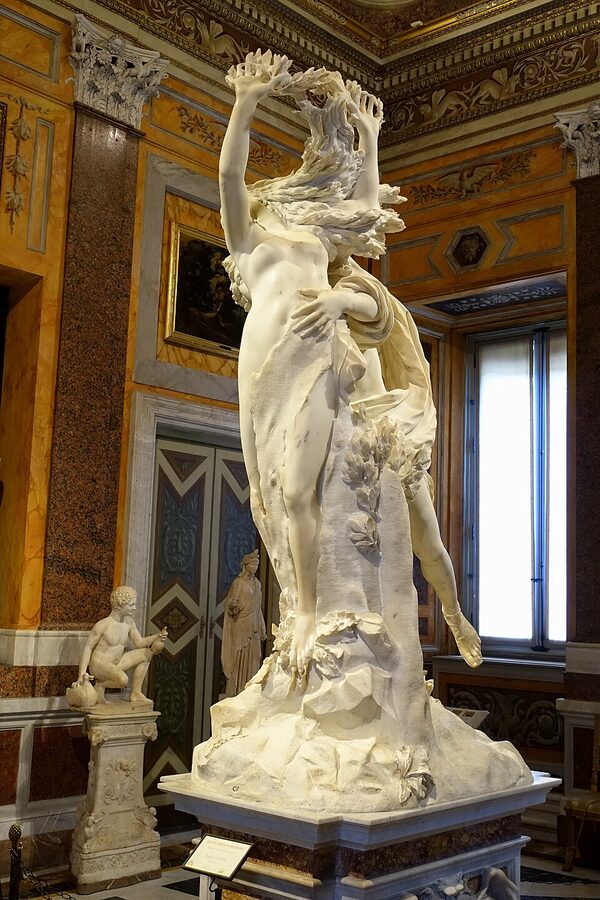
The Borghese isn’t huge. You get two hours, end of slot. That sounds like a lot until you realise the place is wall-to-wall masterpieces. Bernini’s Apollo and Daphne, his Pluto and Proserpina, his David, Caravaggio’s David with the Head of Goliath, Titian’s Sacred and Profane Love, Canova’s Pauline Bonaparte, all in one building, on two floors. People come out wishing they’d had three hours.
That two-hour cap is also why advance booking matters more here than at most Rome attractions. The museum literally cannot let more than 360 people in at once. If your slot is full, no amount of charm at the door will fix it.
The three ways to book
You have three real options for buying tickets. The cheapest, the easiest, and the one that fixes your time problem.
1. Direct from the official Galleria Borghese site
Cheapest. Standard adult ticket is €13, plus a €2 booking fee. Concession (EU residents 18-25) is €2. Under 18 is free. The last shift of the day costs €8 instead of €13.
The catch: the booking flow runs through TicketOne, which is the big Italian ticketing platform, and the user experience is rough. You click through several pages, the form wants more details than feels normal, and parts of the site default to Italian even after you switch the language. Disponibile means available on the calendar. Acquista biglietto means buy ticket. Once you push through, the tickets land in your inbox as PDFs.
Worth it if you want to keep costs down. If you’d rather pay €5-7 more and skip the bureaucracy, scroll on.
2. GetYourGuide entry ticket
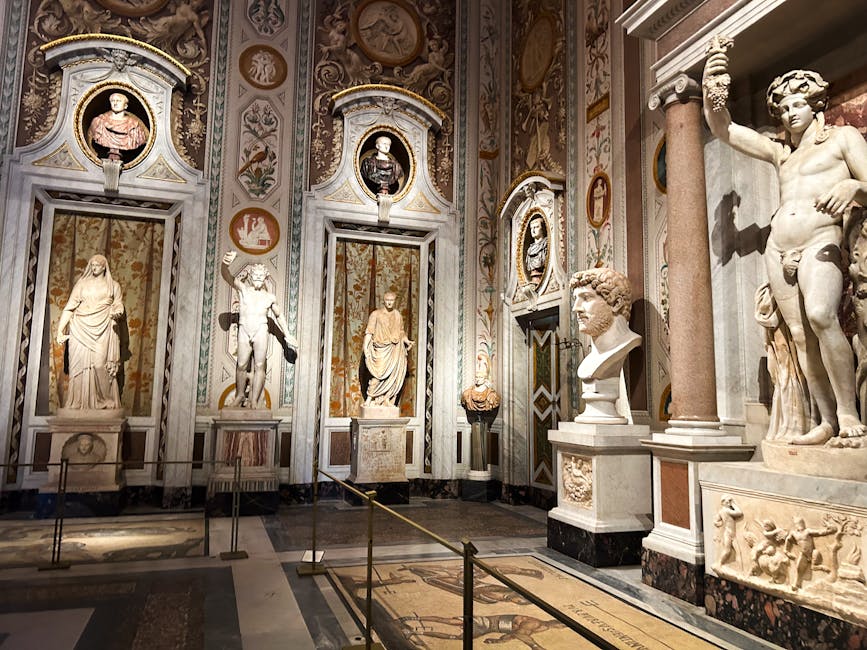
This is what most visitors actually buy. The standard Borghese Gallery entry ticket with escorted entrance is around $50 and includes a host who meets you at the gate, walks you past the entrance queue, and points you at the cloakroom. After that you’re on your own inside, free to spend your two hours however you want.
It costs more than buying direct, but in exchange you get a clean booking page in English, instant confirmation, free cancellation up to 24 hours, and a real person standing at the meeting point. For most travellers that’s worth the markup. It’s also the option that’s most often still available when the official site has sold out.
3. Tiqets or other third-party platforms
Tiqets carries Borghese entry tickets too. Pricing sits between the official site and GetYourGuide. The interface is clean, but I’d default to GetYourGuide because the inventory tends to last longer and the host service makes the entrance smoother.
If you’ve found availability on the official Galleria site for your dates, just book direct. If those slots are gone, GetYourGuide is the next call.
How far ahead to book
The official website opens slots about 90 days out. In high season (April through October, plus Christmas and Easter weeks), the popular morning and early-afternoon slots get snapped up within a week or two of release. If you’re going May-September, book the moment your dates are firm. Don’t wait until you land in Rome.
For shoulder season (November, January, February, early March) you can usually still find availability a week or two ahead, but I wouldn’t push it past that. December gets busy again because of Christmas markets and school holidays.
If the official slots show “Esaurito” (sold out), check GetYourGuide and Tiqets next. The third-party allocations sometimes survive longer because they get sold separately.
The free Sunday catch
The Galleria Borghese participates in the Italian Ministry of Culture’s prima domenica del mese programme. First Sunday of every month, entry is free. Sounds great. There are catches.
You still have to book a slot. Free does not mean walk-in. The €2 booking fee still applies. And the slots open a couple of weeks before the date and vanish in minutes. Setting a calendar alarm helps. Honestly, unless you’re on a tight budget or you happen to already be in Rome on a first Sunday, the saving isn’t worth the booking stress for most people. The standard ticket is €13. That’s not the line item that’s going to break your Rome trip.
The other free entries to know: state holidays sometimes apply, and EU residents under 18 always go free.
Pick your tour: my three recommendations
If you’ve read this far and decided you want a guide rather than a self-guided ticket, these are the three I’d actually book. Listed by booking volume, which broadly tracks what’s working for other travellers.
1. Rome: Borghese Gallery Entry Ticket with Escorted Entrance: $50

Of all the Borghese options I’ve seen circulate, this is consistently the one repeat visitors recommend if you don’t want a full guided tour. Our review of the escorted-entrance ticket covers the cloakroom rules and the meeting-point logistics. Booking is GetYourGuide, free cancellation up to 24 hours.
2. Rome: Borghese Gallery and Gardens Guided Small-Group Tour: $60
The Bernini sculptures reward a guide who can explain what you’re looking at, and the small-group cap keeps things manageable. Our review of the gallery and gardens combo has the meeting-point and language details. Headsets included.
3. Rome: Borghese Gallery Guided Tour With Skip-The-Line Ticket: $84
Pricier than the other two, and worth it if you want a guide leading you through every Bernini room with backstory rather than just the highlights. Our take on the full guided tour compares it directly with the entry-only ticket so you can see what the price gap actually buys.
What you’ll actually see inside
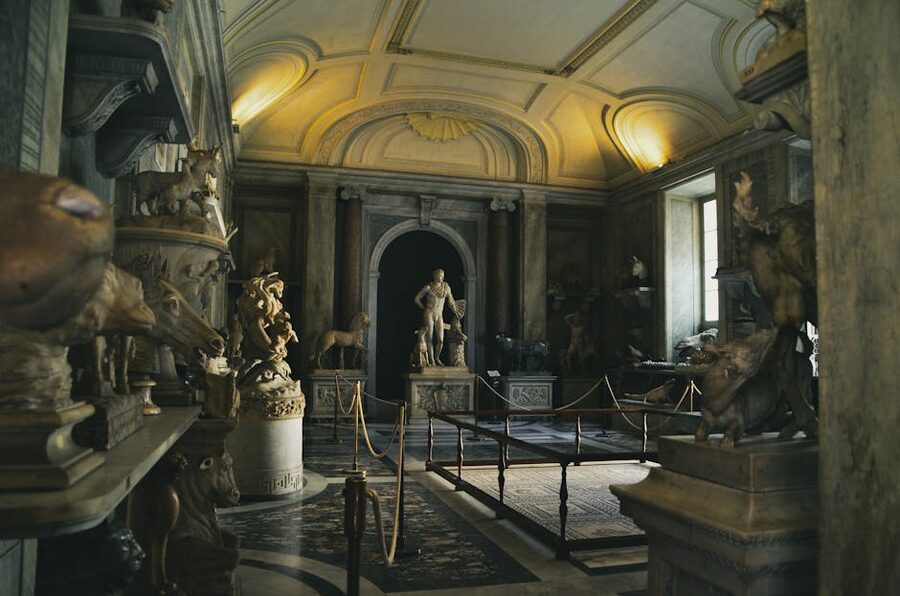
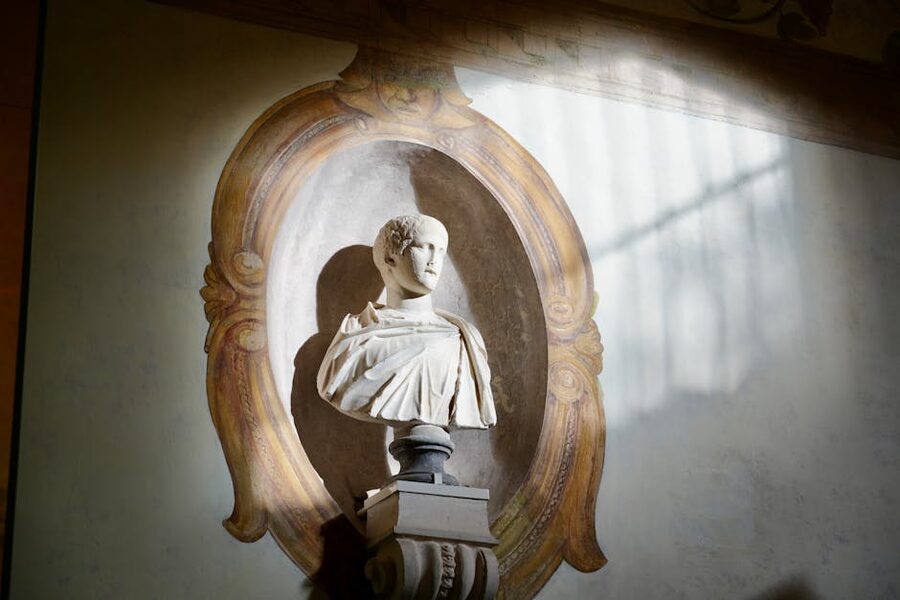
The collection is the personal stash of Cardinal Scipione Borghese, the nephew of Pope Paul V. He was the most aggressive art collector in early 17th-century Rome and used his political clout to corner the market on Bernini, Caravaggio, and a long list of antique sculpture. The villa was built specifically to display all of it. So what you walk into isn’t really a museum in the modern sense. It’s a private 17th-century gallery that the Italian state bought in 1902 and opened to the public.

Ground floor: the sculpture you came for
The ground floor is mostly Bernini, with a few showpieces that anchor each room. Save the bulk of your two hours for this level.
Apollo and Daphne sits in its own room. Walk a slow circle around it. The transformation tells a different story from each angle. The leaves growing out of Daphne’s fingers are paper-thin. From the side you see Apollo’s hand pressing into her hip and the marble dimples like flesh.
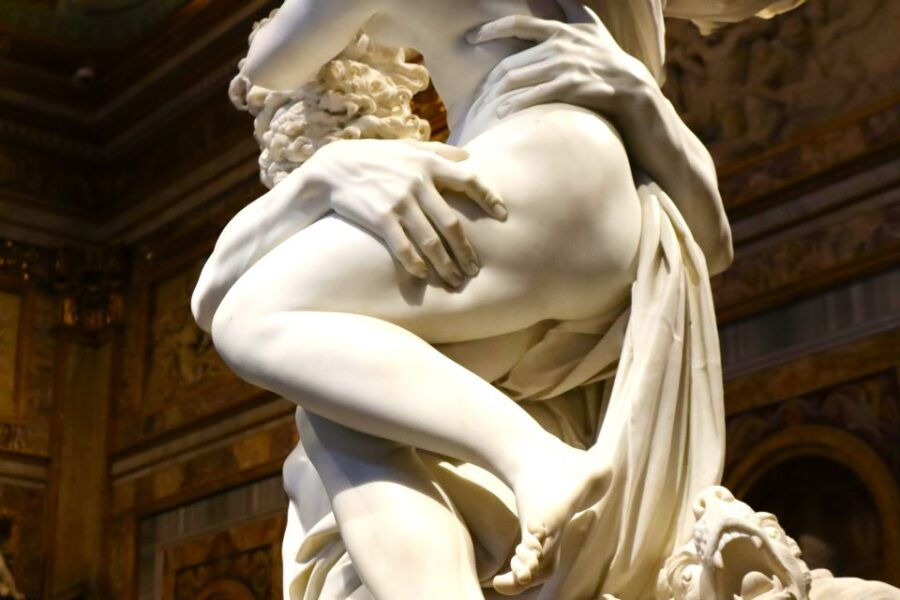
Pluto and Proserpina is in the same wing. Get close to her thigh. The fingerprint detail is the most-discussed marble passage in Rome.
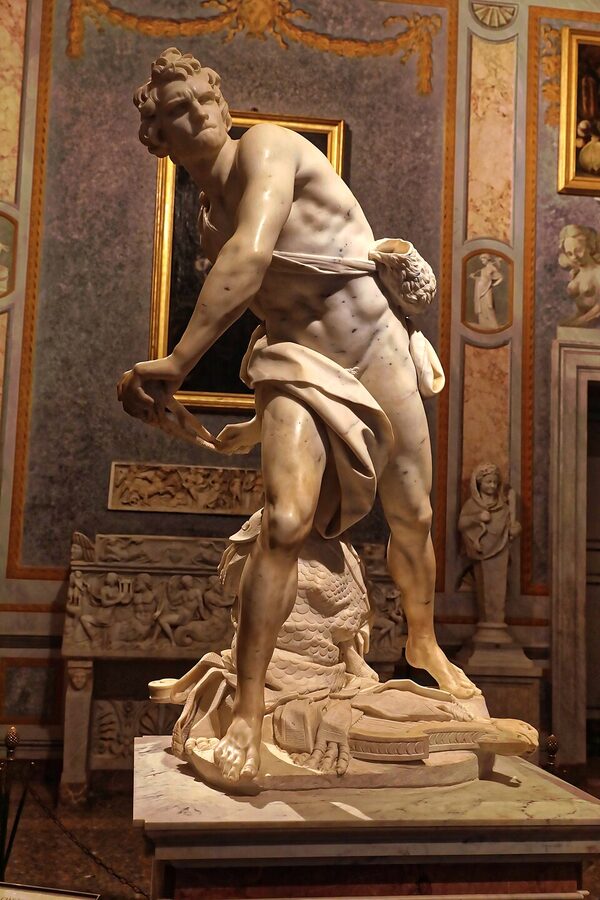
Bernini’s David is across the floor in the Sala del Sole. Tighter, more compact, and very different from Michelangelo’s heroic version in Florence. This one is mid-action, body coiled, jaw clenched. The face is reportedly Bernini’s own.
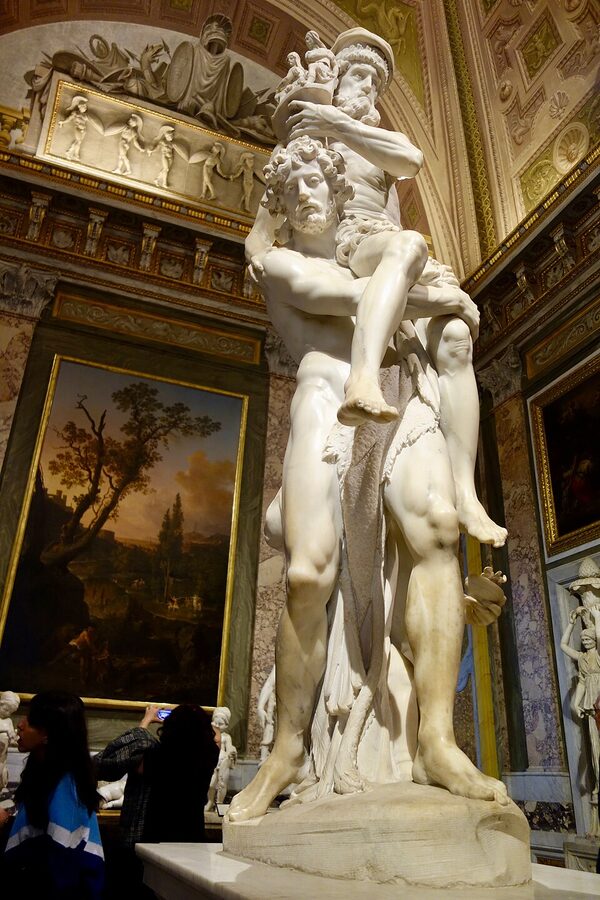
Aeneas, Anchises and Ascanius is the earliest of the four major Berninis here, finished when he was twenty. Three generations stacked in a single column of marble. Nineteen-year-old Bernini sculpted this. Sit with that for a second.
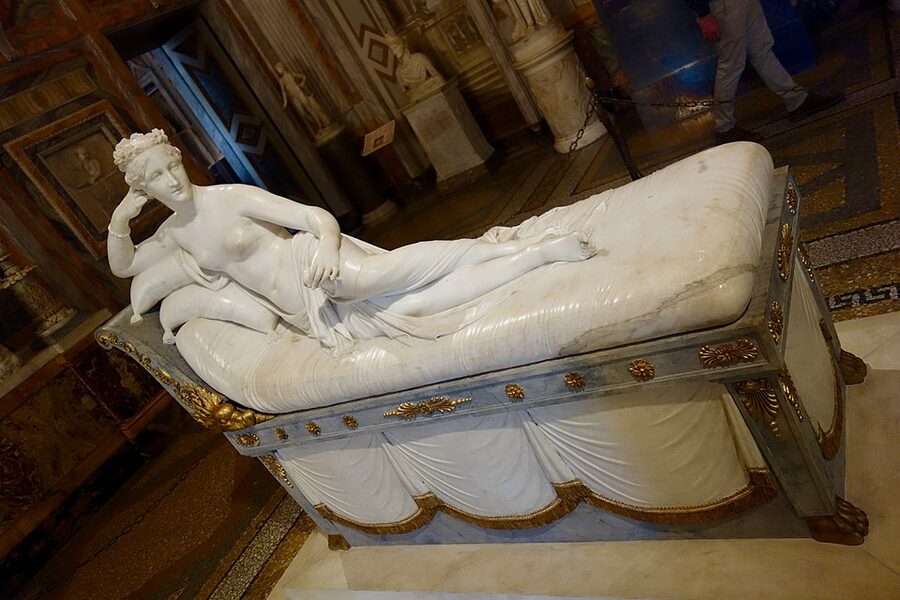
Canova’s Pauline Bonaparte as Venus Victrix gets the room before you reach the staircase. Napoleon’s sister, posed half-naked on a real Roman couch, holding the apple of Paris. People asked her at the time if it was uncomfortable to pose like that. She reportedly answered that the studio had a stove.
First floor: the painting collection
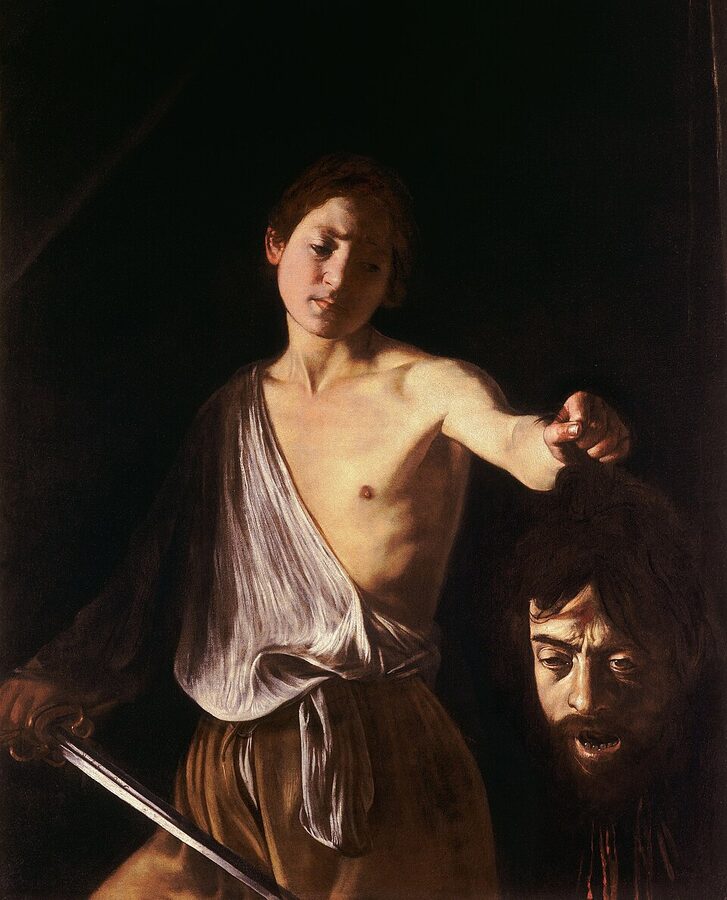
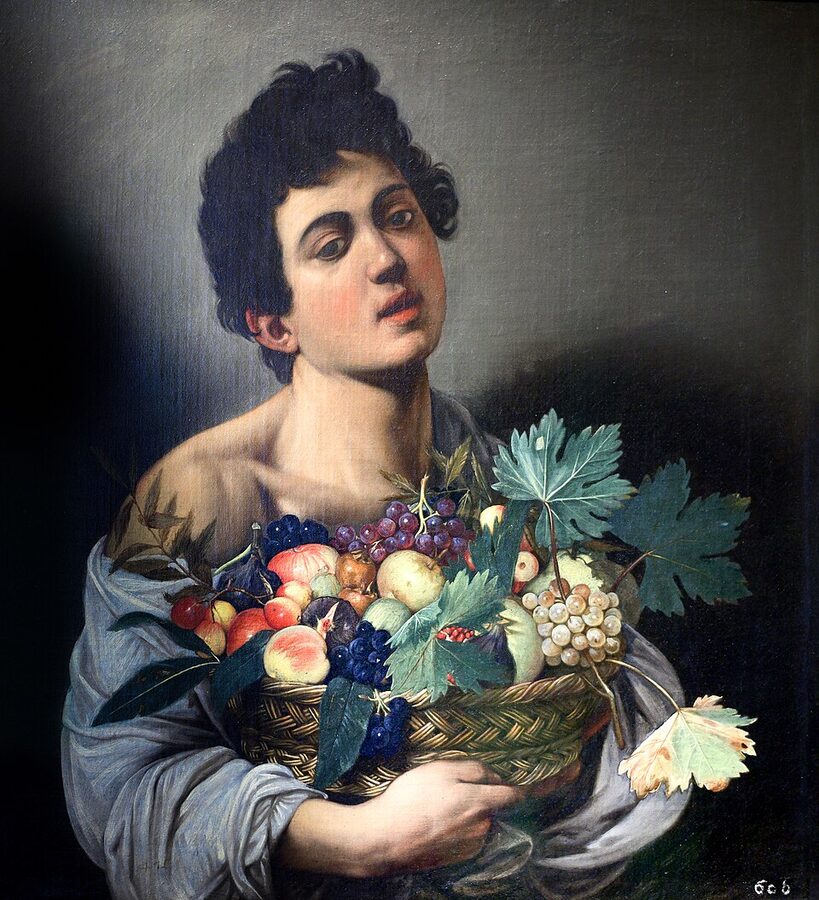
Upstairs is the Pinacoteca, the painting gallery. Smaller rooms, less crowded, and home to Caravaggio’s largest single-collection holding anywhere. Boy with a Basket of Fruit, Madonna of the Palafrenieri, Sick Bacchus, Saint Jerome, David with the Head of Goliath. The Goliath is the famous one. The severed head is supposedly a self-portrait, painted in the year Caravaggio died.
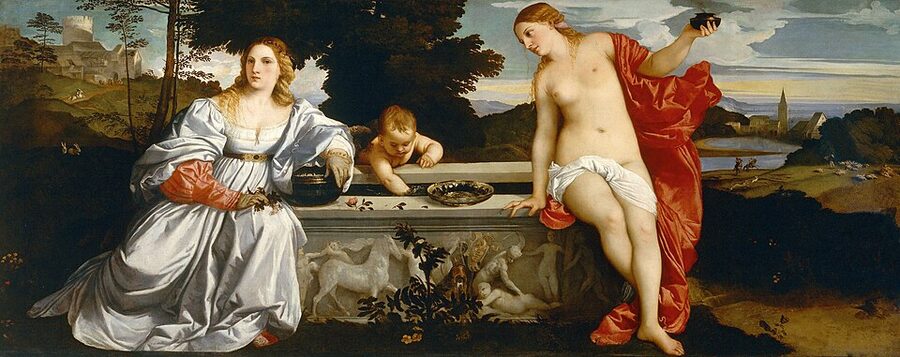
Don’t skip Titian’s Sacred and Profane Love either. It’s quietly one of the most discussed paintings in art history because nobody can agree what it actually means. Two women, one clothed, one naked, by a sarcophagus. Read the wall text and then make up your own mind.
How to plan your two hours
This part is easy to get wrong. Most people enter, drift slowly through the entrance hall, lose 25 minutes to the first room of antique busts, and then realise they have 90 minutes to cover everything else. Don’t do that.
My rough split: 70 minutes downstairs on Bernini and Canova. 40 minutes upstairs on Caravaggio and Titian. Buffer of 10 minutes for the rooms you didn’t expect to like and the staircase.
If you’ve only got time for one floor, stay downstairs. The Bernini is what makes the Borghese the Borghese. You can see Caravaggio elsewhere in Rome. Try the Contarelli Chapel in San Luigi dei Francesi or the two paintings in Santa Maria del Popolo. You can’t see Apollo and Daphne anywhere else on Earth.
Practical stuff (the bits the official site buries)
Address: Piazzale Scipione Borghese 5, inside the Villa Borghese gardens. The gardens themselves are public and free; only the gallery requires a ticket.
Opening hours: Tuesday through Sunday, 9am to 7pm. Last entry is at 5.45pm. Closed Mondays. Closed 25 December and 1 January.
Bags: No backpacks of any size are allowed inside. There’s a free cloakroom on the lower level. Small bags within the size frame at the door are fine. Don’t show up with rolling luggage; you’ll have a problem.
Photography: Allowed without flash. No tripods or selfie sticks.
Cafe and shop: Both on site. Cafe prices are tourist-area normal, the bookshop is genuinely good if you want a serious art catalogue rather than fridge magnets.
Toilets: Yes, on the lower level next to the cloakroom. Go before your slot starts; you’ll resent the queue if you go mid-visit.
Wheelchair access: Both floors are accessible by lift. Some of the older sculpture rooms get tight at peak times but it’s manageable.
Getting there
The Borghese sits inside the Villa Borghese gardens, which is the green wedge above the Spanish Steps. Three sensible ways to arrive:
Walking from the Spanish Steps: 15 to 20 minutes uphill through the Pincio gardens. Easy navigation, scenic, and you finish on the Pincio Terrace which has the best free city view in central Rome. This is what I’d recommend if you’re staying anywhere near the centro storico.
Metro Line A to Spagna: walk through the Villa Borghese gardens for 12 minutes. Same approach as above but less hill, because you can take the lift up from the metro station.
Bus from Termini: the 910 (direction Mancini) and the 92 (direction Marliana) both stop at Pinciana/Museo Borghese, which is the closest stop. About 20 minutes door to door. From the Barberini metro stop you can also pick up the 63 or 83.
If you’re combining with other Rome attractions, the gallery pairs well with the Spanish Steps, Trevi Fountain, or the Pantheon, all of which are within 30 minutes’ walk. It does not pair well with the Colosseum and Roman Forum; that’s a separate big morning. Don’t try to do both in one day unless you’re booked for an early Borghese slot.
What to do before or after the gallery
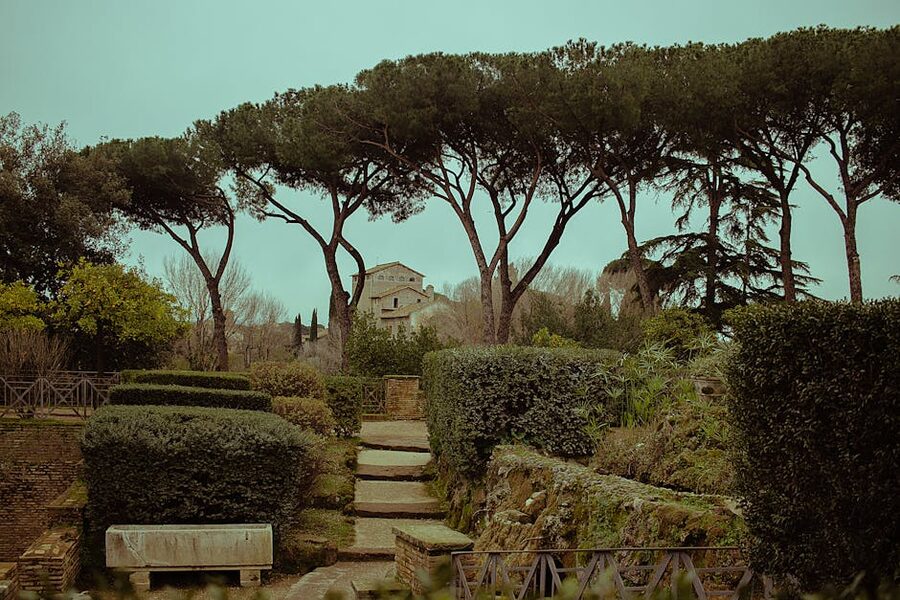
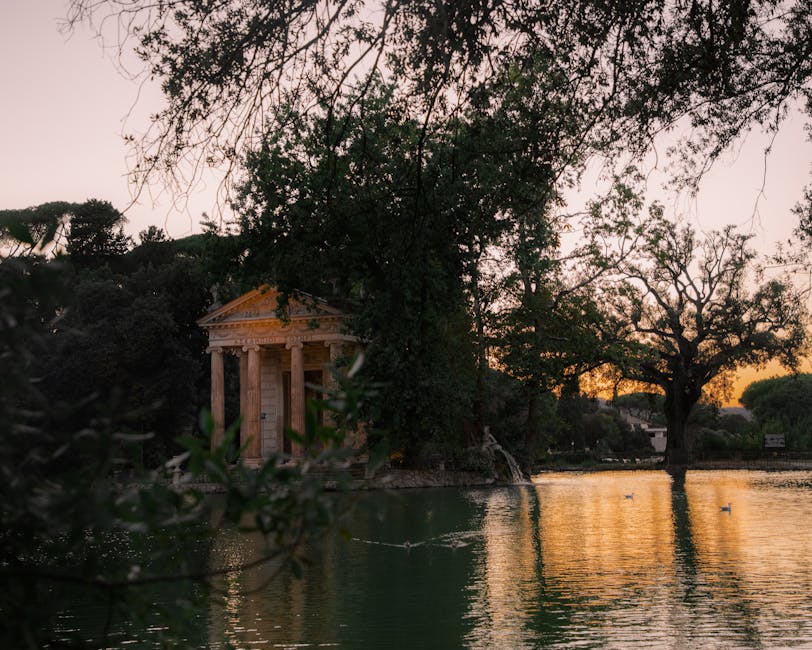
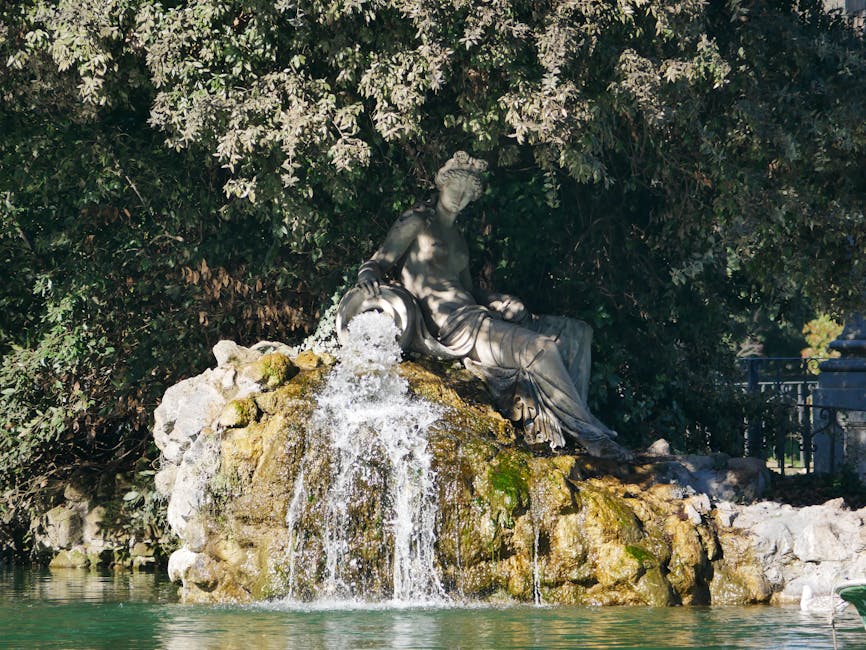
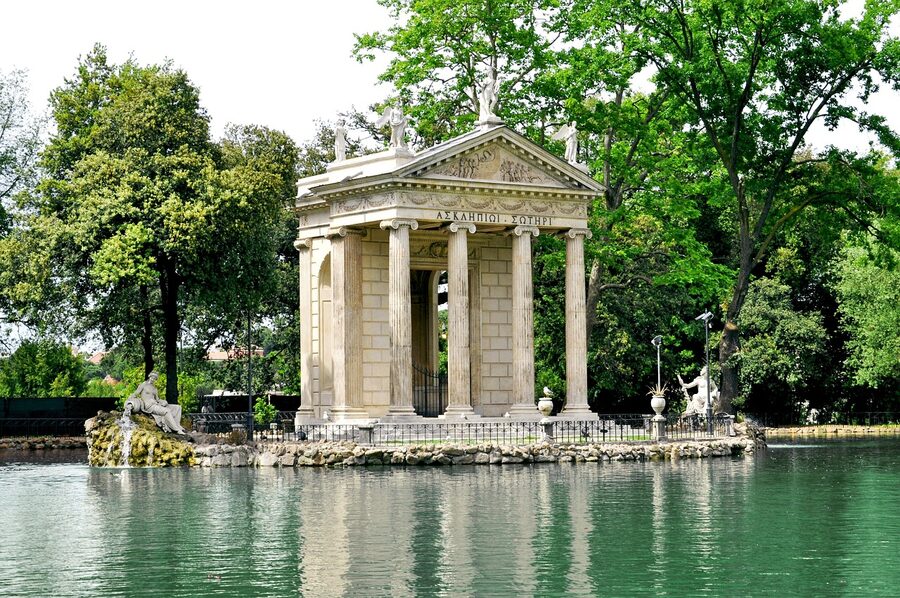
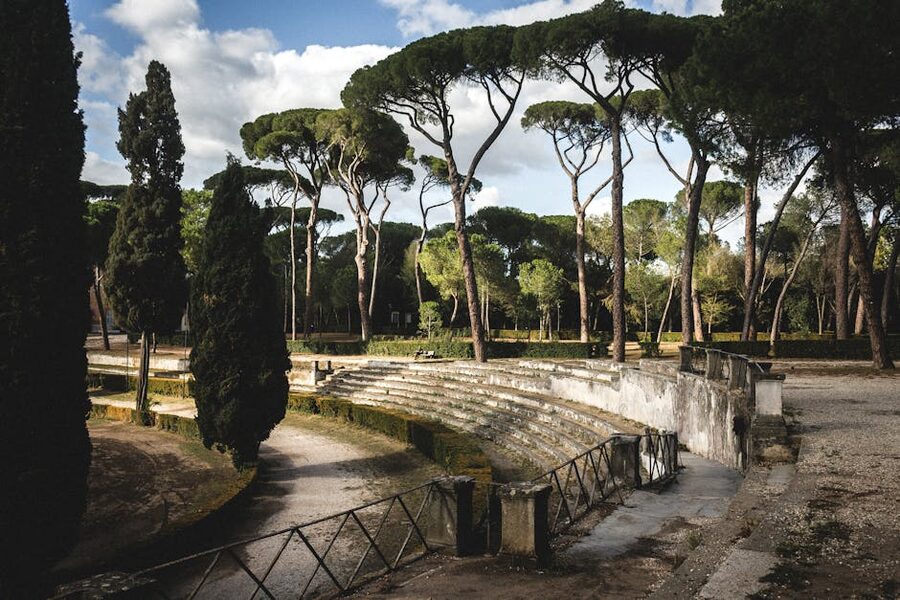
The Villa Borghese gardens themselves are free and worth an hour. The Tempio di Esculapio sits on a small lake with rowboats for hire, and the Pincio Terrace at the south edge is the best photo spot in the city. The bike rental kiosks near the main entrances are cheap if you want to cover more ground.
If you want food after, the Trastevere neighbourhood is the move for dinner. A Trastevere twilight food tour works as the second half of a Borghese day if your gallery slot was in the early afternoon.
For travellers using a Roma Pass on a longer Rome trip, note: the Borghese is not covered by the Roma Pass. You still need to book a slot directly. The pass works for the Colosseum, the Forum, and many other sites, but the Borghese sits outside the system because of the timed-entry cap.
Common mistakes to avoid
Showing up without a booking. Won’t work. Even the on-site phone line wants you to book first.
Booking the last slot of the day to save €5. The 5pm shift at €8 sounds smart until you realise the gallery starts winding down for closing well before 7pm and you’ll feel rushed. The €8 saving isn’t worth it.
Skipping the cloakroom. They will not let you carry your daypack into the gallery. Don’t argue. Drop it.
Treating it as a one-hour visit. Two hours is the slot, plus 10-15 minutes of entry processing on top. Block out a clear half-day if you can.
Going on Monday. Closed. This catches people every week.
Trying to add the gallery onto a Vatican Museums morning. Don’t. The Vatican Museums and Sistine Chapel are an exhausting 3-4 hour visit on their own and you’ll have nothing left for the Borghese. Give each its own day.
What it costs altogether
For two adults, expect roughly:
Direct booking: €13 per ticket plus €2 booking fee, so €30 total. Add a couple of euro for transport. About €34 for two.
GetYourGuide escorted entry: $50 per person, around $100 for two. About €92 at current rates.
Small-group guided tour: $60 per person, around $120 for two. About €110.
Add lunch in the area, which runs €15-25 a head, and you’re looking at a €100-150 day for two with the entry-only options, or up to €170 for the small-group tour. Reasonable for one of the best museums in Italy.
If the slots are sold out
You have a few options.
Try GetYourGuide. The third-party allocation is sometimes still live when the official site is sold out.
Look at the next-day inventory at 9am. The official site sometimes releases held-back tickets a day before.
Email or phone the gallery directly. The number is +39 06 32810, lines open 9.30am to 6pm Monday to Friday. They’ll occasionally have phone-only allocations.
Take the small-group guided tour instead of the entry-only. The guided slots run on a different inventory and survive longer.
If everything is gone for your dates, accept it. Don’t burn a half-day waiting at the door for cancellations. They’re rare. Spend the day on the Colosseum Underground instead, or take a day trip down to Pompeii. The Borghese will still be there next time.
Where to next
If the Borghese has put you in a Rome-art mood, the natural pairing is the Vatican Museums and the Sistine Chapel on a separate day, ideally the day before or after rather than back-to-back. For something more atmospheric and less crowded, Castel Sant’Angelo is a 25-minute walk across the Tiber and gives you the Tiber view from the rooftop terrace at sunset. And if you want to balance the high art of the Borghese with something completely different, the Rome catacombs on the Appian Way are about as far from baroque marble as the city gets.