Tokyo’s cherry trees, Kyoto’s canal paths, and the old farmhouses of Shirakawa-go give this 14-day route a fine mix of spring color and Japanese history. I like that you get both iconic stops and smaller-town time, and that the private format lets you shape some days around your own interests.
I also like the practical range: private transfers and English-speaking guides for scheduled sightseeing, a night at a hot-spring ryokan, and free time in Tokyo and Osaka. The trade-off is that private does not mean escorted every minute: the Hakone-to-Takayama train journey is on your own, and blossoms are never guaranteed on a fixed date.
- The best reasons to consider this tour
- A spring route with room for more than blossoms
- Tokyo’s shrines, gardens, and river views
- Fuji views and a ryokan night in Hakone
- Takayama and Shirakawa-go’s old homes
- Kanazawa gardens, then Kyoto’s spring paths
- Nara’s deer and Osaka’s blossom parks
- What the price covers, and where to check the details
- Should you book this Japan tour?
- FAQ
- How long is the tour, and where does it start and end?
- Are flights included in the price?
- Are guides with us for the whole trip?
- What meals are included?
- Can the itinerary be changed?
- Is the cherry blossom timing guaranteed?
- The Best Of Tokyo!
- More Private Tours in Tokyo
- More Tours in Tokyo
- More Tour Reviews in Tokyo
- Not for you? Here's more nearby things to do in Tokyo we have reviewed
The best reasons to consider this tour
 1 / 9
 2 / 9
 3 / 9
 4 / 9
 5 / 9
 6 / 9
 7 / 9
 8 / 9
 9 / 9
- A Sumida River cruise adds a relaxed view of Tokyo’s spring trees after a full day of temples and city sights.
- A night in a Hakone ryokan pairs hot-spring pools with dinner at the inn, a welcome change of pace from city hotels.
- Shirakawa-go’s gassho-zukuri homes offer a close look at traditional mountain architecture, including a visit inside Wada House.
- A Kyoto day built around blossoms includes the Philosopher’s Path, a two-kilometer canal walk lined with cherry trees.
- Private planning and local help can make a complex route easier. Odynovo agent Mia Wang kept in touch with one couple during their trip, and Takayama guide Tomoko Sugiyama added a local spring festival to their day.

👉 See our pick of the 25 Best Guided Tours In Tokyo
A spring route with room for more than blossoms
This tour links Tokyo, Kamakura, Hakone, Takayama, Shirakawa-go, Kanazawa, Kyoto, Nara, and Osaka over two weeks. Cherry trees are the seasonal thread, but the trip is not just a string of parks: it moves from city shrines and coastal temples to mountain towns, historic homes, gardens, and busy food streets.
The timing matters. The itinerary is designed for the spring viewing period, from late March into early May, but blooms shift with weather and location. A date that catches Tokyo at full flower may find Takayama or Kyoto earlier or later in its season. I’d treat the blossoms as a welcome bonus rather than a promise, and ask Odynovo how the route is being timed for your departure.
The tour starts in Tokyo and ends in Osaka, with 4-star accommodation, 13 breakfasts, and one dinner included. English-speaking guides lead the listed sightseeing, while private vehicles handle many transfers. You also get some days and evenings to yourself, so this is a guided private trip, not a minute-by-minute escort.
You can also read our reviews of more private tours in Tokyo

Tokyo’s shrines, gardens, and river views
Your first day is deliberately simple: an English-speaking driver meets you at the airport and takes you to your Tokyo hotel. After an international flight, having the transfer arranged is a useful comfort. The rest of the day is for settling in and getting your bearings.
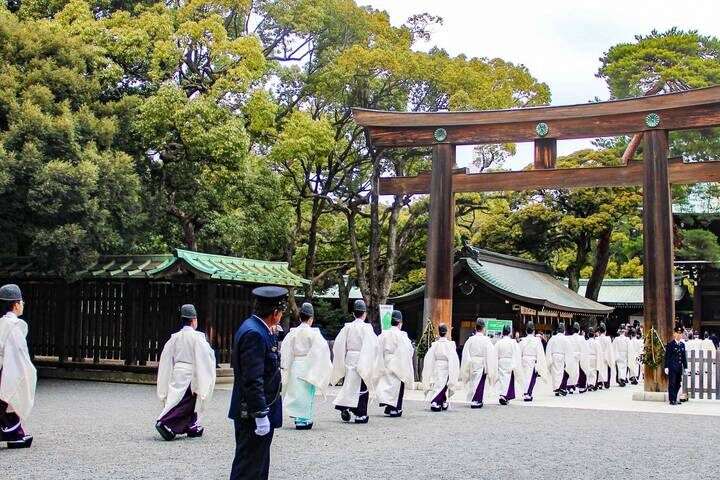
Day two packs in several sides of the city. Meiji Shrine’s wooded grounds offer a calm start, with time to observe Shinto customs such as writing a wish on a wooden plaque or choosing a charm. Shinjuku Gyoen follows, a large garden with several styles of grounds and a prominent place in the city’s cherry-blossom season.
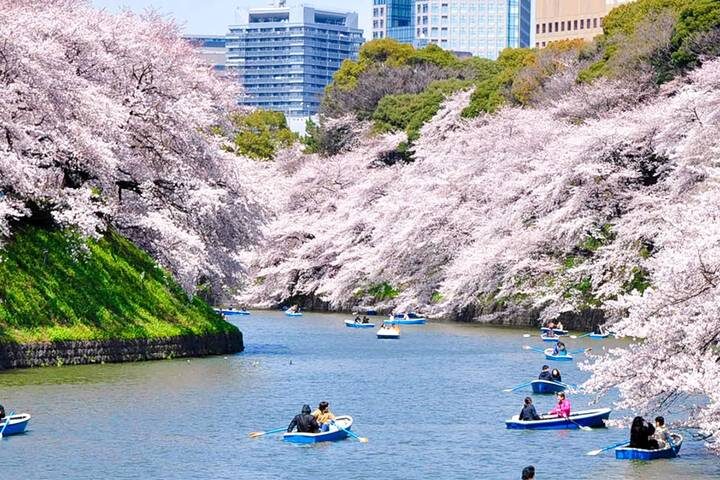
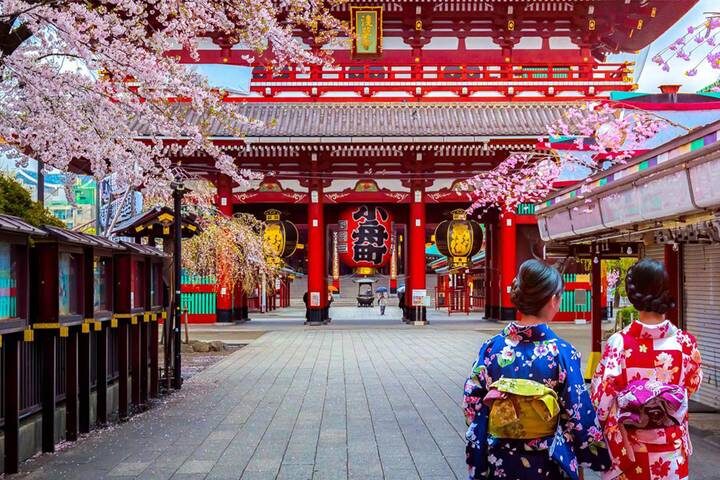
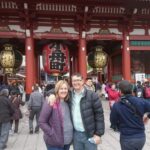
Tokyo Tower gives you a high view over the capital before the day shifts to the older streets around Senso-ji Temple and Nakamise Shopping Street. The temple is an active place of worship as well as a major sight, so take a moment to notice how people pray rather than treating it only as a photo stop. The Sumida River cruise is a welcome sit-down at the end of a busy day, with a chance to see the tree-lined banks from the water.
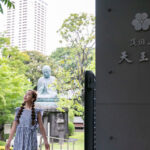
Day three takes you to Kamakura, a coastal town with important Buddhist and Shinto sites. At Tsurugaoka Hachimangu, you’ll see a shrine whose history dates to 1063, then continue to Kotoku-in Temple and its Great Buddha. Hasedera Temple adds elevated views over the town and coast.
The day ends with a tea ceremony at a traditional tea house reached through a bamboo grove. It is a quieter counterpoint to Tokyo’s scale, though the drive there and back makes for a full day out. Day four is yours to choose: Harajuku for fashion and street style, or Ginza for galleries, designer shops, and upscale shopping. That open day is valuable if you want to slow down, revisit a favorite neighborhood, or simply take Tokyo at your own pace.
Fuji views and a ryokan night in Hakone
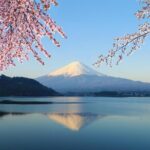
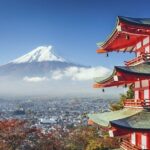
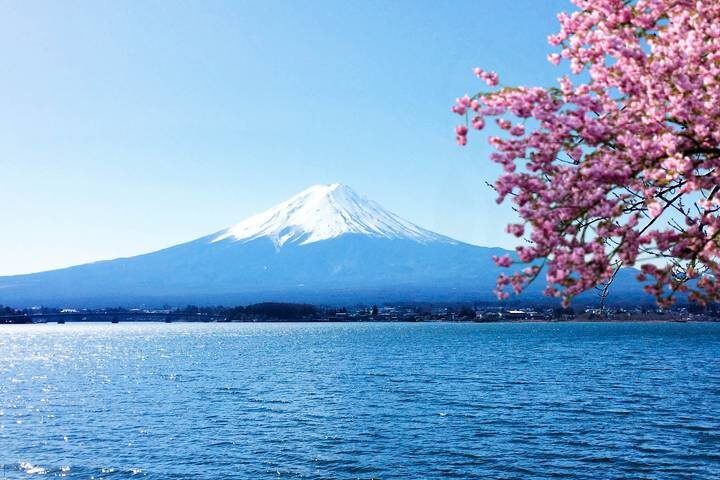
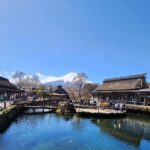
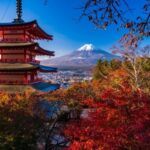
On day five, you leave Tokyo for Arakurayama Sengen Park, known for its view of Mt. Fuji, a red pagoda, and cherry blossoms. The view depends on clear conditions, so keep your expectations flexible. A short cruise on Lake Kawaguchiko offers another angle on the mountain and its setting.
You then continue to Hakone for a night at a ryokan, a traditional Japanese-style inn. Hot-spring pools and dinner at the accommodation are included. This is one of the trip’s most distinctive stays, and a good chance to enjoy an evening without another restaurant decision or transfer.
The next morning brings a long rail journey to Takayama. You make your own way to Odawara Station, take the Shinkansen to Nagoya, then transfer to an express train for Takayama. The stated travel times add up to about four hours and ten minutes on the trains, before station connections and getting to the hotel. You receive a guide and map, but this leg is independent, so keep your tickets and transfer instructions handy.
Takayama and Shirakawa-go’s old homes
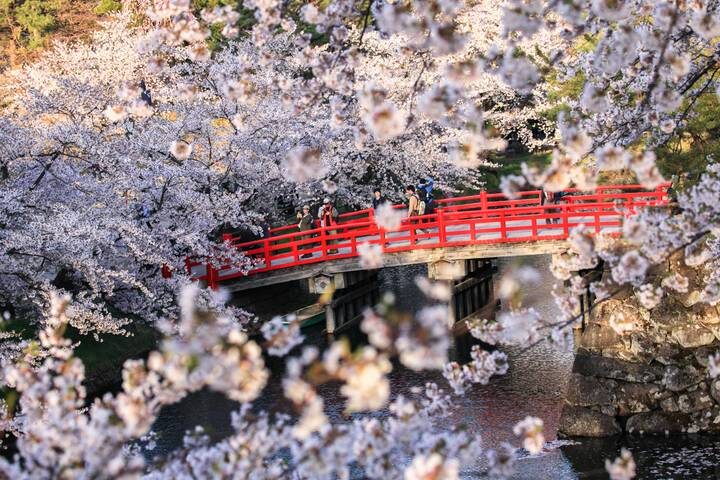
Takayama’s Edo-period old town gives the route a very different feel from Tokyo. Start at the morning market, then cross Nakabashi Bridge, a local landmark framed by cherry trees in season. The Kusakabe Folk Museum occupies a restored merchant’s home, offering a look at local craftsmanship and the scale of a prosperous household.
The afternoon is set aside for Kami Sannomachi Street, lined with preserved merchant houses, sake breweries, small shops, and cafes. This is a good place to wander without rushing through a checklist. One guide, Tomoko Sugiyama, took a couple to a local spring festival in Hida City that was not part of their original plan. That kind of local suggestion can turn a scheduled sightseeing day into something more personal, though you should not assume an extra festival will fall during your dates.
On day eight, a roughly one-hour drive brings you to Shirakawa-go. Its steep-roofed gassho-zukuri farmhouses were built for practical reasons, including heavy snowfall, and their unusual roof shape makes the village instantly recognizable. At Wada House, you can see rooms such as the living room, guest room, and butsuma, which help explain how families used these large homes.
The observation deck gives you a broad view across the village and valley. The Gasshozukuri Minkaen Outdoor Museum adds more examples of the traditional buildings before you continue to Kanazawa. It is a full transfer day with several stops, so enjoy the views but expect less unstructured time than in Takayama.
Kanazawa gardens, then Kyoto’s spring paths
Kanazawa’s Kenrokuen Garden is the main event on day nine. Water features, bridges, teahouses, stone arrangements, and seasonal blooms make it a rewarding visit even if the cherry trees are not at their peak. A guide accompanies you through the garden, after which you can explore the 21st Century Museum of Contemporary Art at your own pace and visit Kanazawa Castle.
You then take the Shinkansen to Kyoto. The guided portion includes help getting to the station, but the train ride itself is part of your transfer to the next hotel. The balance of garden, art, and castle makes Kanazawa more than a brief stop between larger cities.
Day ten begins in Arashiyama, on Kyoto’s outskirts. The bamboo grove is a popular sight, and it can feel crowded, so an early start may make the walk more pleasant. Nearby, Togetsukyo Bridge looks out toward forested hills and the river, with cherry trees along the banks in spring.
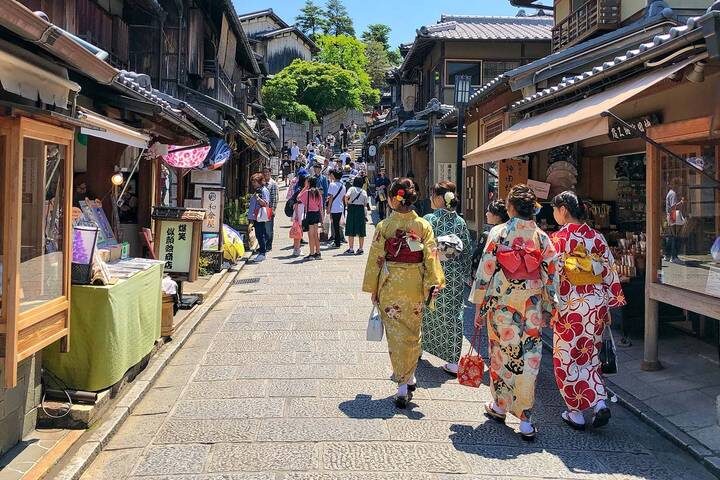
Back in central Kyoto, the Philosopher’s Path follows a canal for about two kilometers beneath cherry trees. It is one of the clearest examples of how this tour links a famous cultural city with a simple outdoor walk. If you prefer a quieter alternative, the Okazaki Canal path is suggested. The day ends in Gion, where traditional buildings and the area’s geisha culture offer a glimpse of Kyoto’s older entertainment district. Be respectful and keep the focus on the neighborhood, not on treating local people as photo subjects.





Nara’s deer and Osaka’s blossom parks
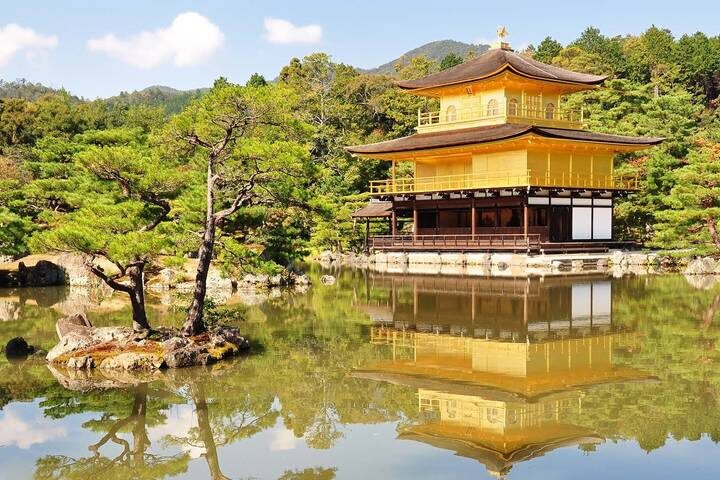
Day eleven begins with two of Kyoto’s best-known sights: Kinkaku-ji, the Golden Pavilion, and Fushimi Inari Shrine, with its long corridors of red torii gates. Both draw crowds, but they are memorable for different reasons: one for its gold-covered upper floors and garden setting, the other for the repeated gates that lead up the hillside.
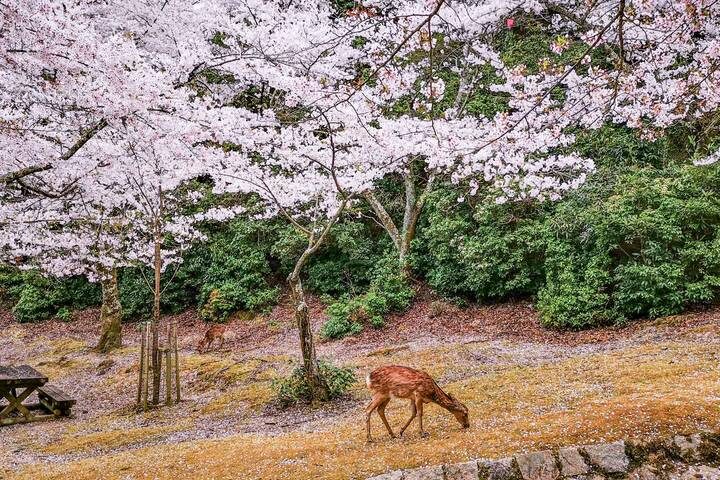
Then you travel to Nara, where deer roam freely in Nara Park. The animals are part of the town’s identity, but they are still wild, so follow local guidance and keep food secure. The plan also includes Mount Wakakusayama, where a walk uphill opens to views over the city. The climb adds physical effort to a day that already includes several stops, so take it at a comfortable pace.
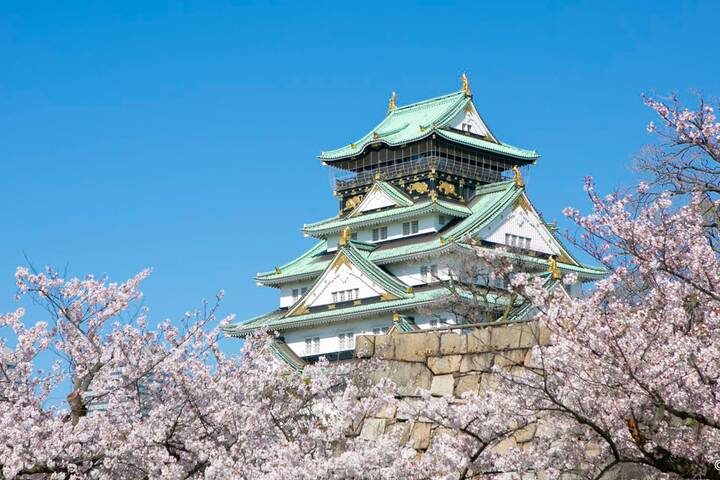
Osaka is the overnight destination. Day twelve starts at Osaka Castle, followed by the Osaka Museum of Housing and Living, where detailed models show everyday life in Edo-period Osaka. A brief kimono experience may be possible, but it is optional and depends on timing. The afternoon is set aside for Kema Sakuranomiya Park and the Osaka Mint Bureau, both known for cherry blossom viewing. Confirm the exact arrangements for these stops, since the detailed schedule presents them as optional.
Day thirteen is free for Osaka’s food and shopping districts. Shinsaibashi is the suggested shopping area, while Dotonbori is a natural place to sample street food and drinks amid bright signs and crowds. You have breakfast included, but other meals are generally your own responsibility, so this is a fine place to try local specialties at your own pace.
On day fourteen, you have some leisure time before a private driver takes you to the airport. Check your flight timing and confirm the transfer details with Odynovo, especially if you plan to use the remaining hours for sightseeing.
What the price covers, and where to check the details
The listed starting price is $8,711, based on the cheapest room, and peak-season rates can change. That is a substantial price, but it covers a 14-day private trip with 4-star accommodation, in-destination private transport where listed, English-speaking guides for scheduled sightseeing, entrance fees for listed attractions, 13 breakfasts, and one ryokan dinner. You are also paying for a route that connects several regions without having to arrange every hotel and transfer yourself.
The value depends on how much you want someone else to coordinate. Private transport is useful for reaching places such as Arakurayama Sengen Park and moving between Takayama, Shirakawa-go, and Kanazawa. On the other hand, the independent train leg and free days mean you still need to manage some details and make your own plans.
International flights, travel insurance, visas, tips, personal expenses, optional activities, and pre- or post-tour accommodation are not included. Special diets, including vegetarian, vegan, Jain, Halal, and Kosher, can be requested. Room combinations and itinerary changes may be possible, subject to availability and possible extra cost.
Odynovo has more than 20 years of experience with private and customized tours, and its TourRadar operator rating is 4.9 out of 5 from 461 ratings. A past traveler praised the detailed planning and regular updates from agent Mia Wang, and the trip’s scheduled guides and drivers also earned strong praise. Still, hotel service is not something I would take for granted: confirm the property, room arrangement, and any luggage delivery plan before departure. One reported luggage-delivery problem at a Kyoto hotel affected a same-day flight, so do not leave an important handoff until the last minute.
Should you book this Japan tour?
I’d consider this tour if you want a broad first trip to Japan, value private transfers, and would rather have the main hotels and sightseeing arranged than build the route from scratch. It is especially appealing for couples, families, and small groups who want a mix of major sights, historic towns, garden visits, and a few open days.
Think twice if you want a fully escorted trip every day, prefer to travel only by rail, or need a strict guarantee of peak blossoms. The Hakone-to-Takayama train is independent, several days are partly free, and the spring bloom shifts from year to year. Before booking, ask Odynovo to confirm the seasonal timing, hotel names, transport arrangements on free days, and any luggage forwarding. If those details suit you, this route offers a practical way to see a lot of Japan without turning every transfer into a separate planning project.
Cherry Blossoms of Japan Tour (Tailor-Made Private) – 14 Days by Odynovo
“My husband and I have recently returned from a 14 day private Japan tour. We have been travelling with Odynovo since 2018 and visited many countrie…”
FAQ
How long is the tour, and where does it start and end?
The tour lasts 14 days. It starts in Tokyo and ends in Osaka.
Are flights included in the price?
No. Flights before and after the tour are not included in the listed price. The tour information says flight assistance may be available as part of a package.
Are guides with us for the whole trip?
English-speaking guides are included for sightseeing listed in the itinerary. Some time is independent, including the Hakone-to-Takayama train journey and free days in Tokyo and Osaka.
What meals are included?
The tour includes 13 breakfasts and one dinner at the Hakone ryokan. Special diets, including vegetarian, vegan, Jain, Halal, and Kosher, can be requested.
Can the itinerary be changed?
Yes. Itinerary changes can be requested, including after booking, but may add cost depending on what you change.
Is the cherry blossom timing guaranteed?
No. The tour is planned for the spring blossom period, but flowering dates vary. Peak-season availability and prices can also change.