Shirakawa-go’s steep-roofed gassho-zukuri houses and Takayama’s old streets make a fine pairing: one is a mountain village shaped by its setting, the other a preserved Edo-era town. I like that this trip links both without asking you to manage long-distance buses, and that the roughly two-hour stops leave room to wander, eat, and take photos.
I also like the brief mountain break at Hirugano Kogen, where you can look toward Mount Dainichi and the Hakusan range, and collect a complimentary bottle of highland milk. The trade-off is a long day on the road: you get a useful taste of both places, not time to see every corner.
- At a glance
- The Nagoya departure and long ride north
- Hirugano Kogen: a quick mountain-air break
- Takayama’s Sanmachi streets: browse, taste, and choose
- Shirakawa-go: gassho roofs and a village setting
- What the price buys, and what it does not
- Timing, comfort, and practical limits
- Who should book this Nagoya day trip?
- FAQ
- Where does the tour leave from in Nagoya?
- What time does the tour return?
- How long is the tour?
- How much time is scheduled at Takayama and Shirakawa-go?
- What is included in the price?
- Are meals included?
- Does every departure have a tour guide?
- What happens if I arrive late?
- Can I cancel for a refund?
At a glance
 1 / 8
 2 / 8
 3 / 8
 4 / 8
 5 / 8
 6 / 8
 7 / 8
 8 / 8
- Two headline stops: Spend about two hours each in Takayama’s old town and Shirakawa-go.
- A mountain pause: Stop for 15 minutes at Hirugano Kogen service area, around 850 meters above sea level.
- A long but simple day: Round-trip transport from Nagoya is included, with tolls, fuel, and parking covered.
- Free time, not a fully guided walk: The guide can explain the places and share tips, but much of each stop is for exploring on your own.
- Season changes the view: Summer and winter packages run in different date ranges, and the scenery depends on the day’s weather.
- Keep the evening open: Traffic can push the return well past the planned 19:00 arrival.
The Nagoya departure and long ride north
The bus leaves at 8:00 from in front of the clock at the West Police Station, Taiko-dori Exit, Nagoya Station. Arrive at least 10 minutes early. The meeting point is specific, so check the operator’s email the night before for the final meeting details, vehicle plate, guide information, and contact method. That message may land in your spam folder.
This is a shared ride, not a private charter. The vehicle is assigned according to group size. If fewer than 12 people join, the company may use a smaller vehicle with a driver but no tour guide; larger groups have a driver and guide. That distinction matters if you are counting on commentary throughout the ride. English and Chinese are listed as guide languages, while guide language and package options can vary, so confirm the option you book.
The drive is part of the bargain and part of the cost. You avoid arranging separate transport to two mountain destinations, but you spend several hours seated. Past trips have been described as comfortable, though one report noted a smaller vehicle and another found tinted windows made it harder to enjoy the views. If you are sensitive to motion, choose your seat thoughtfully where possible and bring anything you normally use for a long bus ride.
Hirugano Kogen: a quick mountain-air break
At about 9:30, the schedule allows 15 minutes at Hirugano Kogen service area, in Gujo City. It is one of Japan’s highest-altitude highway service areas, at roughly 850 meters, and has an observation deck with views toward Mount Dainichi and the Hakusan mountain range. A complimentary bottle of highland milk is included for each person.
Think of this as a leg-stretch and a view, not a full visit to the surrounding area. Fifteen minutes goes quickly, especially if you want to use the facilities, take photos, and collect the milk. Keep an eye on the departure time. The fixed schedule is what lets the bus reach both major stops and return to Nagoya in one day.
Takayama’s Sanmachi streets: browse, taste, and choose
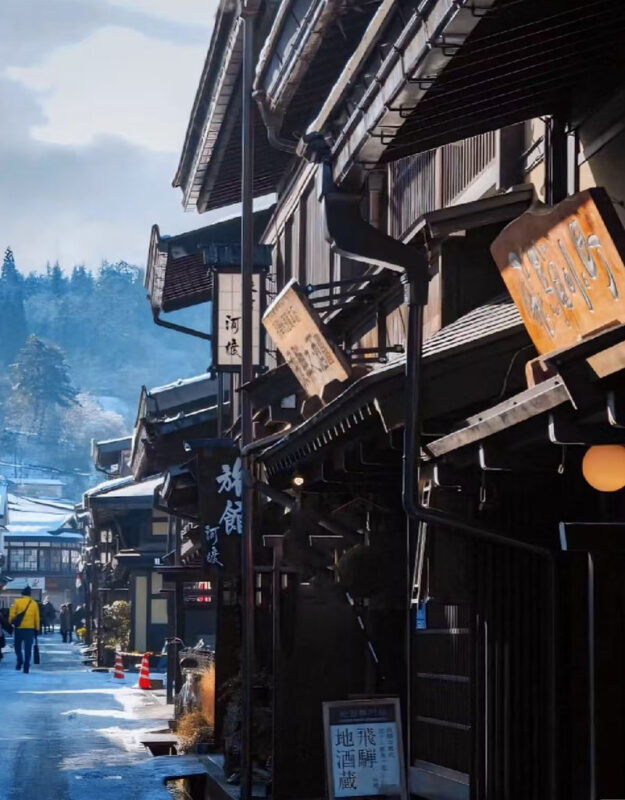
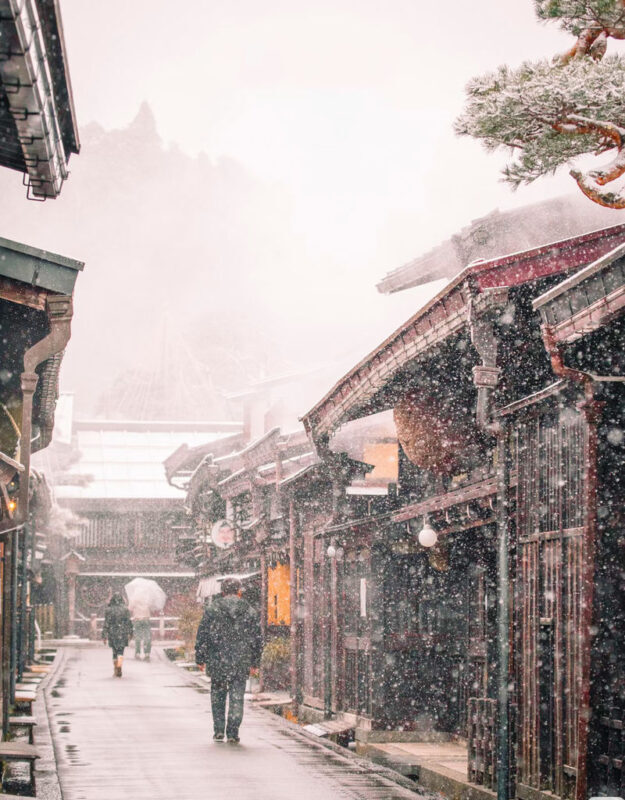
The next major stop is Hida Takayama, scheduled for about two hours from 11:00. Its Sanmachi old town preserves an Edo-period streetscape across three main streets. Kamisan-no-machi is described as the livelier stretch, while quieter lanes offer a slower feel. You can browse traditional buildings, local shops, and food stalls, or simply walk the old streets and notice how the town changes from one block to the next.
The two-hour window is useful, but it includes lunch if you eat here. That is the catch. Lines at popular food stalls can eat into the time you might otherwise spend browsing, and some people find the best-known shopping street quite commercial. If you want a more relaxed visit, decide before you arrive whether food or wandering comes first. Hida beef is a popular local choice, and one useful tip is to go straight to the old town rather than spending too much of the stop on a separate market visit.
I would not treat the old town as only a shopping stop. The value is in walking the three streets at your own pace, looking beyond the shopfronts, and getting a sense of the preserved castle-town layout. Still, two hours is a sampler. If Takayama is a priority, a separate stay gives you more time for the town and its food.
Guides can make the free time more productive by pointing out useful routes, places to eat, and local customs before you set off. Past guide names include Sirius, Vicky, Zhang, and Lim Ho, but you should not expect a particular person on your departure. Some departures have had lively explanations in several languages; others have had less commentary. The clearest expectation is a shared day trip with guidance and recommendations, not a continuous walking tour.
Shirakawa-go: gassho roofs and a village setting
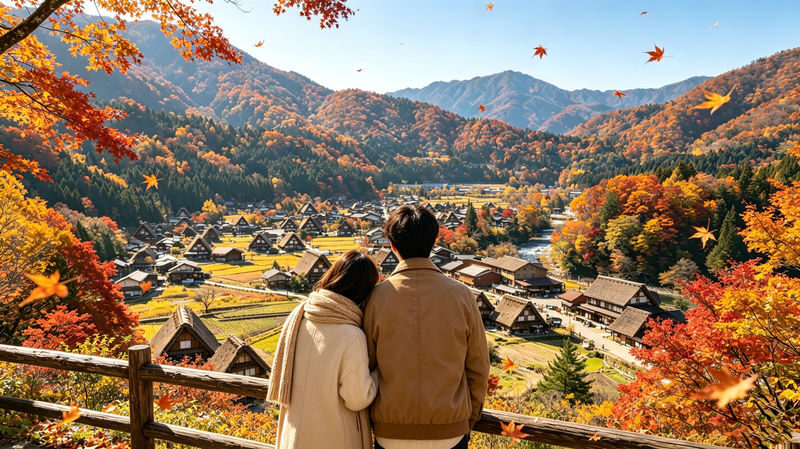
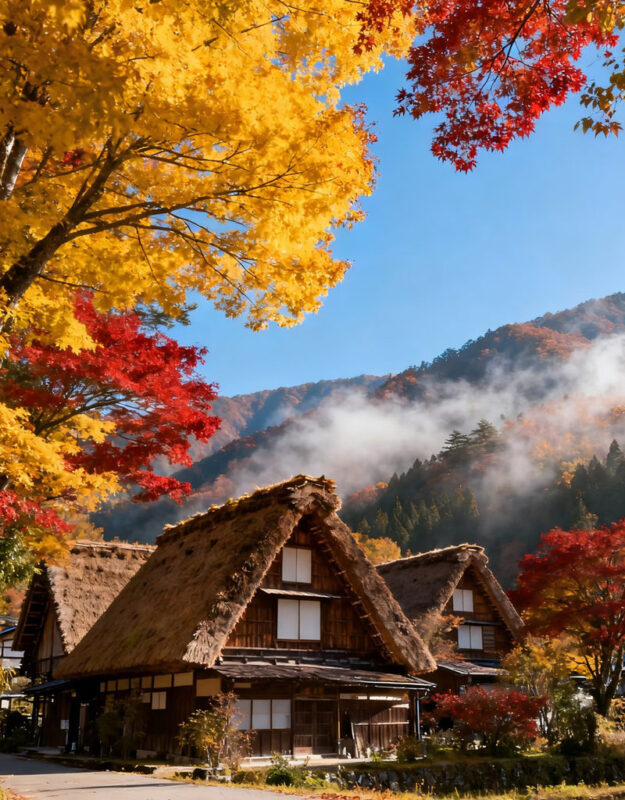
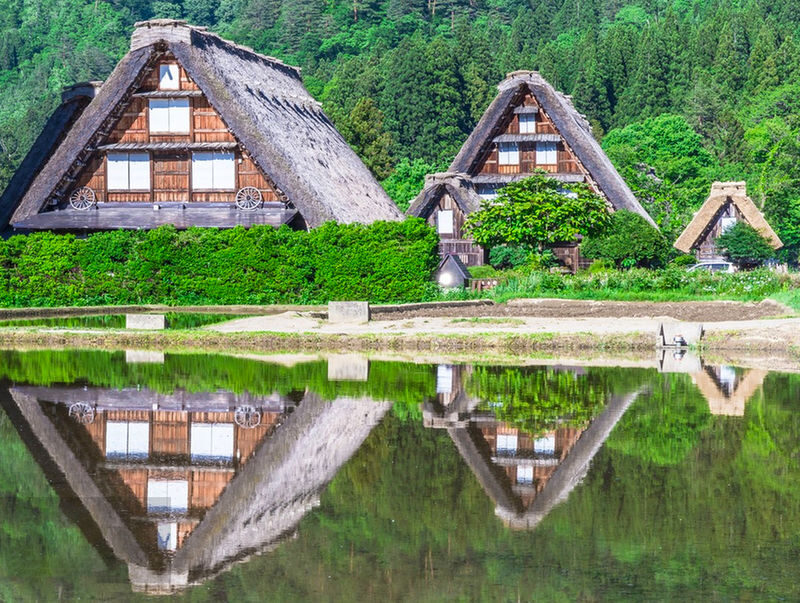
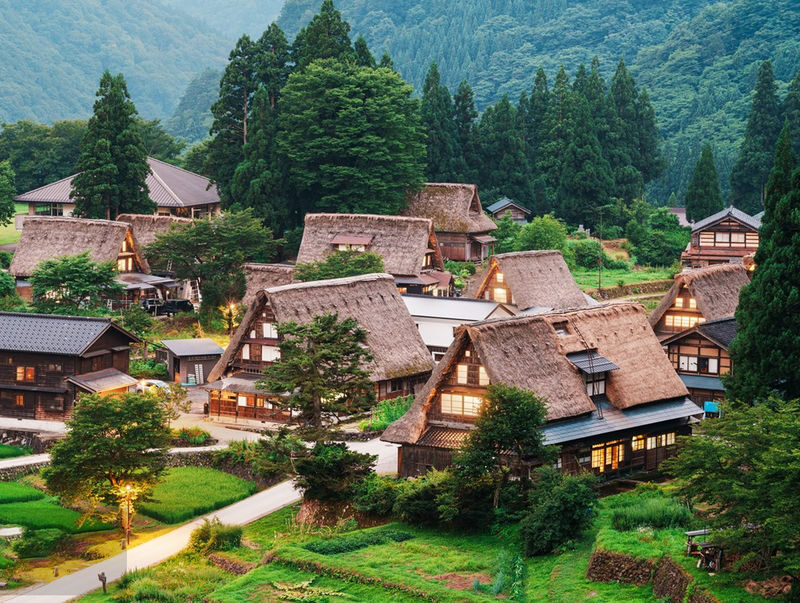
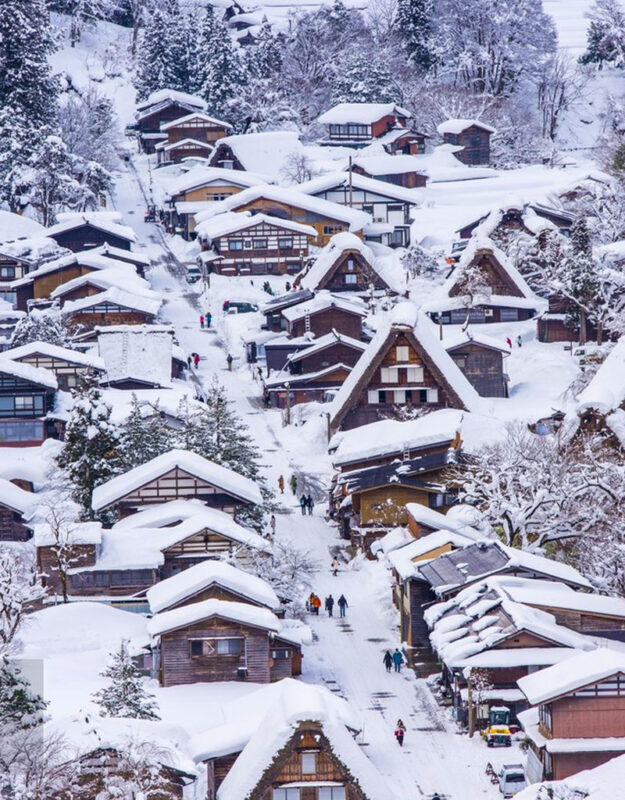
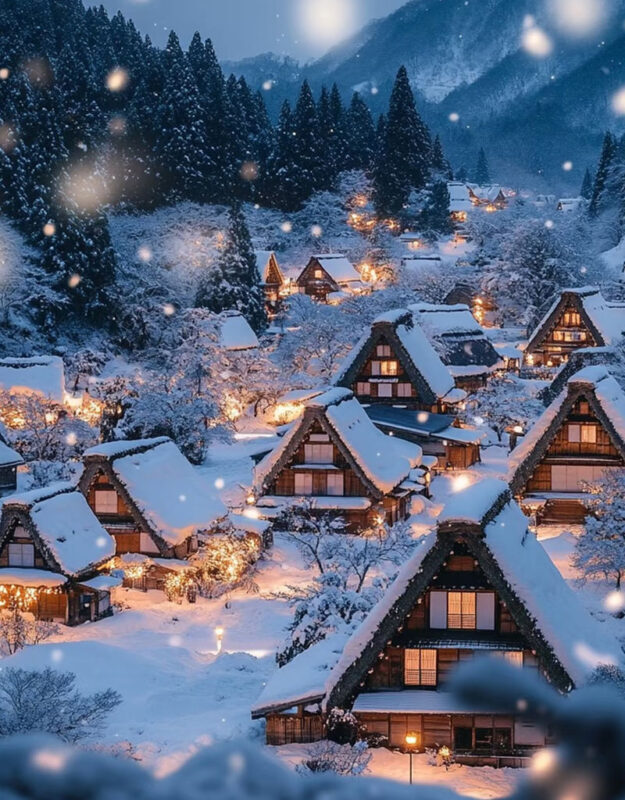
Around 14:00, the bus reaches Shirakawa-go for a scheduled two hours. The village is a World Heritage site known for its distinctive gassho-zukuri wooden houses. Their sharply pitched roofs give the village its recognizable profile, while the surrounding mountains make the setting feel very different from Takayama’s town streets.
This is the stop many people most want to linger over. Walk among the traditional houses, take in the mountain backdrop, and allow time to see the village from more than one angle. A walk to the observation deck can give you a broad view of the settlement, but budget time for the walk up and back. If you spend the whole visit on the main paths, you may miss that wider perspective; if you prioritize the viewpoint, you will have less time to browse and pause in the village.
The look changes sharply with the season. Autumn brings red maples and ginkgo among the wooden houses. In winter, snow can cover the roofs and create the classic picture-postcard scene, with warm lights visible after dark. Snow is not guaranteed on a particular date, and the actual view depends on weather and conditions. Summer has its own appeal, with green mountain surroundings rather than a winter scene.
Two hours gives you a worthwhile first visit, but it can feel short if you want to see every lane, stop often for photos, and eat. The schedule is a compromise: enough time to explore the main area, not enough to linger without watching the clock. Keep the meeting point and departure time clear, since the group may wait only five minutes before moving on.
What the price buys, and what it does not
The advertised starting price is $49.29. At that level, the main value is the transport: Takayama and Shirakawa-go are far easier to combine when someone else handles the road, parking, and transfers. Tolls, fuel, and parking are included, as are round-trip transfers from the Nagoya meeting point. For an independent visitor, arranging the same route by public transport takes planning and can cost more once separate fares are added.
The price does not cover meals, drinks beyond the included milk, tips, or personal purchases. Bring money for lunch and snacks, and remember that two hours in Takayama can disappear quickly if you spend time in queues. The guide may suggest local food and products, but the tour information says there is no forced purchase.
This is good value if you want a guided framework and two major destinations in one day. It is less compelling if you prefer long, unhurried visits or want a deep exploration of Takayama. The itinerary’s strength is breadth and convenience, not time for every side street.
Timing, comfort, and practical limits
The planned return is 19:00 at Nagoya Station, in front of the Mini Stop convenience store behind Bic Camera at the West Exit. Treat that as an estimate, not a promise. The drive back is scheduled for about three hours, but traffic, weather, weekends, and public holidays can add substantial delays. The operator warns that delays of two to five hours are possible on busy days, so do not book a tight evening connection, dinner reservation, or other activity.
The order of stops can change, and bad weather or traffic may shorten time at attractions or reduce the number of stops. Japanese vehicle-use rules also limit the operating day. In other words, this is a practical route, but the day is not immune to road conditions.
The trip is a poor fit if you dislike long bus rides, need flexible time at each place, or are uneasy with a fixed group schedule. You must follow the guide’s timings; if you miss the group, the bus may leave after its short waiting period, and missed or interrupted portions are not refunded. Keep your phone accessible. The operator sends the final contact details by email the evening before, and LINE users may need to join a group through a link in that message.
Large luggage should be declared when booking, since vehicle capacity is limited and the driver can refuse luggage that exceeds it. Children over age two pay the adult rate. Children under two may ride free only without a separate seat, but the operator asks families to notify them in advance and does not recommend participation for that age group. Seniors aged 65 and over must be fit for the trip and accompanied by someone aged 22 or older. The stated exclusions include high blood pressure, heart disease, acrophobia, asthma, epilepsy, and pregnancy. Travel insurance is not included.
Who should book this Nagoya day trip?
Book it if you have one day to see both Takayama and Shirakawa-go, want the transport handled for you, and are happy to explore independently once you arrive. First-time visitors to the region can get a useful overview, and families or small groups may find the shared bus simpler than coordinating multiple connections.
Skip it if you want a slow visit, need a guaranteed guide-led walk at every stop, or have a fixed evening plan in Nagoya. The best reason to go is the contrast: preserved town streets in Takayama, then a mountain village of traditional roofs in Shirakawa-go. Just accept the long ride and the clock. For a one-day introduction to both, the balance is sensible; for a deeper stay, choose one destination and give it more time.
Shirakawa-go Gassho Village & Hida Takayama Old Town Walking Day Tour in Central Japan (Departing from Nagoya)
“Highly recommend this tour. We went in summer but it was still beautiful. Less time at the first stop with the Koi pond and more time at the lunch…”
FAQ
Where does the tour leave from in Nagoya?
Meet in front of the clock at the West Police Station, Taiko-dori Exit, Nagoya Station. Arrive at least 10 minutes before the 8:00 departure.
What time does the tour return?
The planned return is around 19:00 at Nagoya Station, at the Mini Stop behind Bic Camera at the West Exit. Traffic and weather may delay the arrival, sometimes by several hours.
How long is the tour?
The scheduled day runs from 8:00 to 19:00, about 11 hours including the road journeys and stops.
How much time is scheduled at Takayama and Shirakawa-go?
The itinerary allows about two hours at each main destination. The Hirugano Kogen service-area stop is scheduled for 15 minutes.
What is included in the price?
Round-trip transfers from the meeting point, toll fees, parking fees, fuel, and an English- or Chinese-speaking guide are listed as included. Each person also receives a complimentary bottle of highland milk at Hirugano Kogen.
Are meals included?
No. Meals, beverages, personal expenses, and tips are not included.
Does every departure have a tour guide?
Not necessarily. If the group has fewer than 12 people, the operator may use a vehicle with a driver but no tour guide. Larger groups are assigned a driver and a guide.
What happens if I arrive late?
The tour information says late arrivals and no-shows are not refundable. The guide may wait up to five minutes at attraction meeting points before continuing.
Can I cancel for a refund?
You can receive a full refund if you cancel at least 24 hours before the activity date, based on local destination time. No refund is provided for lateness, non-attendance, or leaving the tour after it has begun.