
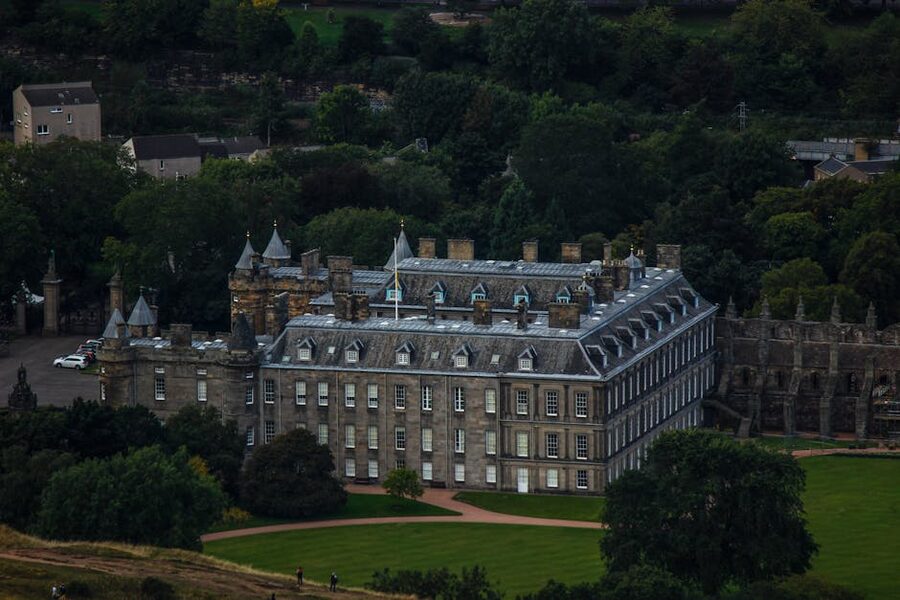
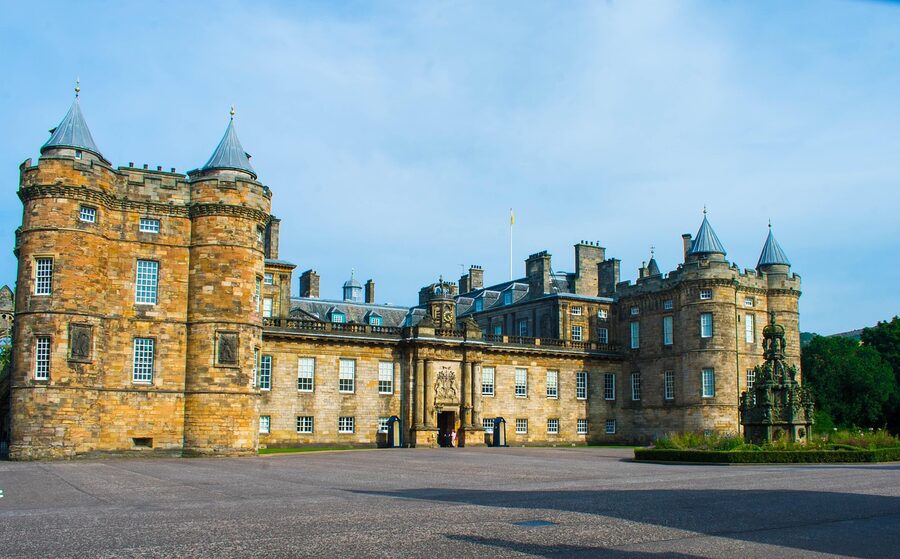
Here is the surprising thing nobody tells you. Holyroodhouse is older than Buckingham Palace, denser with actual royal history, and on most days you can walk straight up to the gate without queueing for an hour. The Augustinian abbey it grew out of was founded in 1128. Buckingham wasn’t even a palace until 1837. Yet a fraction of the visitors come here.
So if you’re picking one royal residence to actually book in Britain this year, this is the one. Here is how to do it.
In a Hurry? Top Picks for Holyroodhouse
- Standard Entry Ticket: ~$29. The simplest way in, with audio guide and full state apartments access. Check Availability
- Admission Ticket via Viator: ~$30.50. Same content, different platform if you collect Viator vouchers. Check Availability
- Castle + Holyrood Combo Tour: ~$106. Both royal sites in one guided morning, easily my pick if you only have one day. Check Availability
- In a Hurry? Top Picks for Holyroodhouse
- What Holyroodhouse Actually Is
- Why Buckingham Gets the Crowds and Holyrood Doesn’t
- The Tickets, Plainly
- When to Book
- Top 3 Ways to Book Holyroodhouse
- 1. Edinburgh: Palace of Holyroodhouse Entry Ticket: about
- 2. Palace of Holyroodhouse Admission Ticket: about .50
- 3. Edinburgh Castle Guided Tour and Holyrood Palace Ticket: about 6
- What You Actually See Inside
- The State Apartments
- The Great Gallery
- Mary Queen of Scots’ Chambers
- The Holyrood Abbey Ruins
- The Palace Gardens
- Getting There from the Royal Mile
- Pairing Holyrood with the Rest of Edinburgh
- Practical Bits
- Common Mistakes
- Where to Read Next
What Holyroodhouse Actually Is
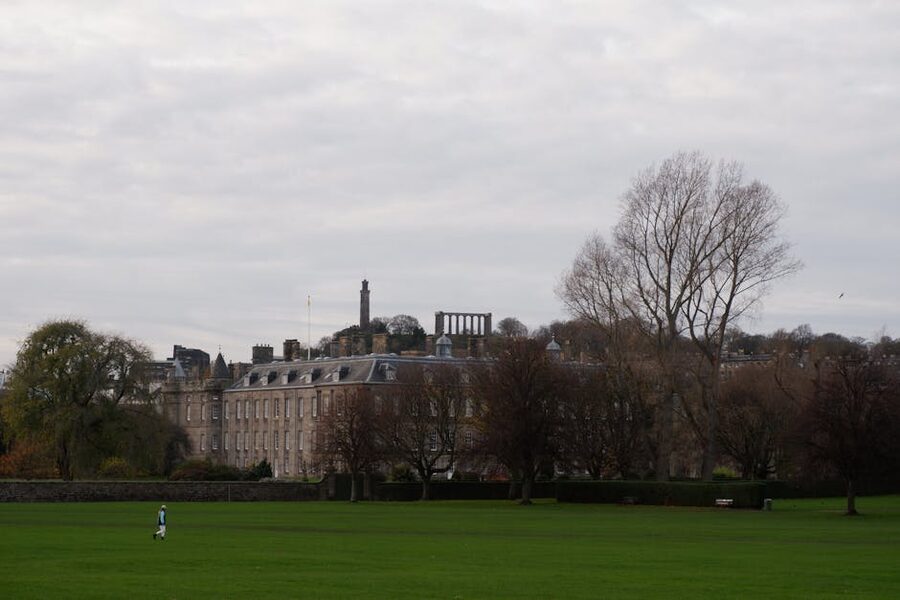
It’s the King’s official residence in Scotland. Not “a former palace.” Not “a museum.” This is where King Charles stays when he’s in Edinburgh, and where he hosts Holyrood Week each summer, hands out honours, and throws garden parties for around 8,000 invited guests.
The site has been used by royalty since 1128. King David I founded an Augustinian abbey here, the kings of Scotland kept a guest house attached, and James IV converted the whole thing into a proper royal palace in 1501 ahead of his marriage to Margaret Tudor. James V then doubled the size in the 1530s. Charles II rebuilt it after a fire in the 1670s. Every Stuart monarch put their hands on this building.
That layered history is why I keep coming back. You walk through rooms that span 500 years of British royal life in one circuit. There is nothing like it in London.
Why Buckingham Gets the Crowds and Holyrood Doesn’t
This is where Holyrood quietly wins. Buckingham Palace State Rooms are open about 10 weeks a year. Holyroodhouse is open most of the year except during the King’s Holyrood Week. You can rock up on a wet Tuesday in February and walk straight in.
The other thing: Buckingham is mostly 19th-century interiors. Holyrood has 16th-century timber ceilings, the actual murder spot of David Rizzio, and a gallery of 96 Scottish kings painted by a Dutch artist who’d never seen most of them. It’s older, weirder, and more haunted. If you’re the kind of traveller who chose Westminster Abbey over the Buckingham State Rooms, you’ll feel the same way here.
The Tickets, Plainly
Holyroodhouse does timed-entry tickets only. You pick a slot when you book, you turn up within that slot, you exchange your voucher for a paper ticket at the office, and in you go. It’s the same format the Royal Collection Trust uses at all their venues.
What you pay (adult standard, 2026 prices, give or take depending on season):
- Palace + audio guide: around £20 if you book direct, or about $29 USD via the GetYourGuide entry ticket which is the version most people end up booking
- Palace + King’s Gallery combo: a few pounds more, only worth it if you actually like art exhibitions (the King’s Gallery rotates so check what’s on)
- 1-Year Pass: roughly £30, pays for itself if you visit any other Royal Collection site (Windsor, Buckingham State Rooms, Hampton Court if it’s open) within twelve months
- £1 tickets: available for visitors on certain UK benefits, book directly with the Royal Collection Trust by phone, not online
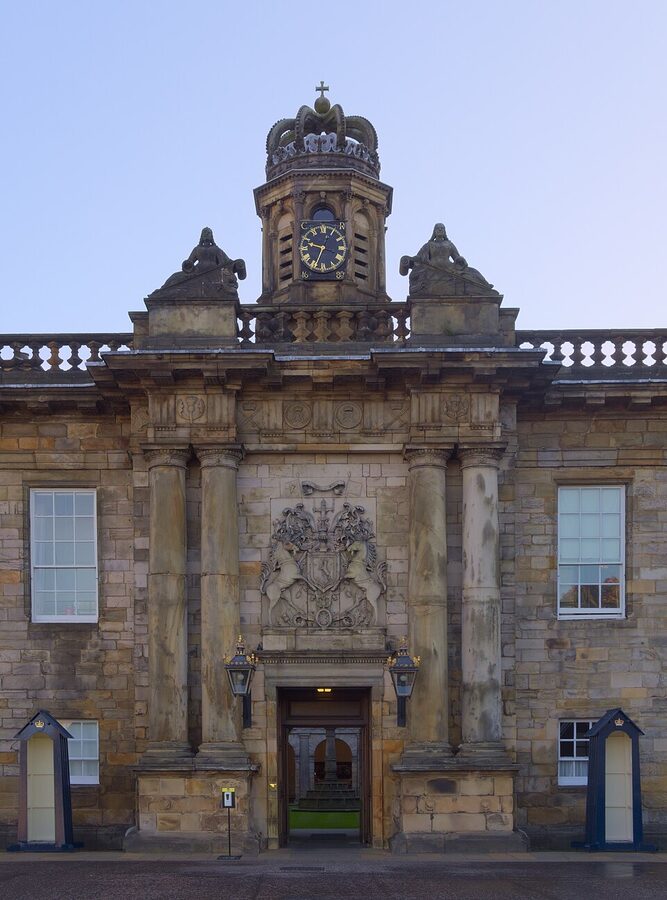
The audio guide is included on every ticket and it is genuinely one of the best I’ve used at a UK heritage site. Roughly 90 minutes of stops, but you can rush through in 60 if you skip the side commentary, or stretch to two hours if you listen to everything.
When to Book
Holyrood Week is the one big closure. The King hosts state events at the palace for around a week in late June or early July, and tickets disappear weeks ahead. The exact dates change each year, so before you lock in flights, check the Royal Collection Trust calendar for your travel month.
Outside of that, the palace runs on a winter / summer schedule:
- Summer (April to October): open daily 9:30am to 6:00pm, last admission 4:30pm
- Winter (November to March): open 9:30am to 4:30pm, last admission 3:15pm, and closed on certain weekdays (the official site lists Tuesday and Wednesday closures in some winter months)
Best slots in my experience: the very first 9:30am entry (the state rooms are properly empty) or the last 90 minutes before close (school groups have left). Avoid the 11am-2pm rush, which is when every coach tour from Glasgow lands.
Tickets typically open about three months ahead. For Royal Week-adjacent dates and Edinburgh Festival weeks (early-to-mid August), book as soon as the calendar opens. Everything else, a week or two ahead is fine.
Top 3 Ways to Book Holyroodhouse
I’d usually default to booking direct with the Royal Collection Trust because it’s the cheapest option. But if you’re already piecing together a trip with vouchers, or you want a guide rather than just an audio handset, here are the three I’d actually recommend.
1. Edinburgh: Palace of Holyroodhouse Entry Ticket: about $29
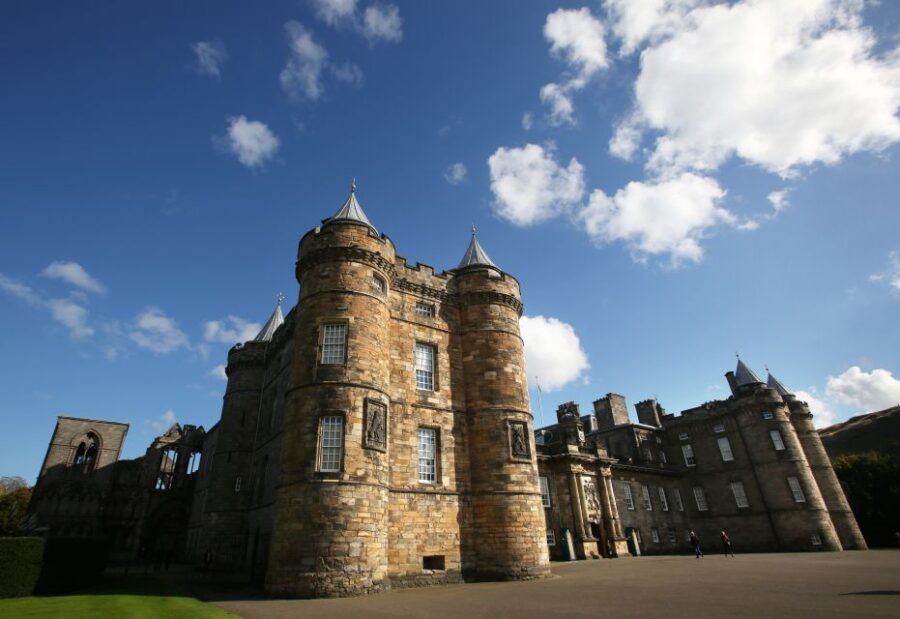
This is the one I book when I’m bringing visitors and I want zero friction. Our full review walks through the voucher exchange step in detail because the on-site process throws people off the first time. Same content as the direct booking, just bundled into a confirmation email you can pull up at the gate.
2. Palace of Holyroodhouse Admission Ticket: about $30.50
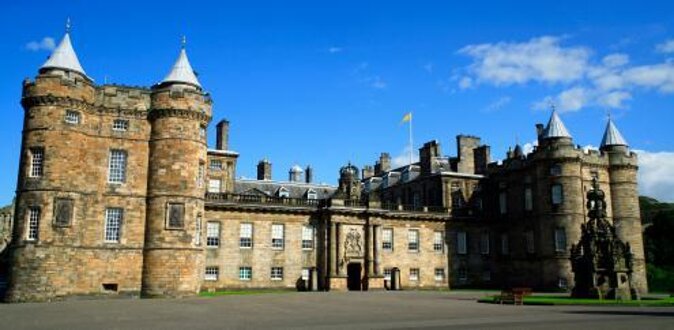
Functionally identical to the GetYourGuide version, slightly more expensive when I last checked. Our review covers what to expect inside and lists the rooms in the order the audio guide takes you. Pick this only if Viator credit is the reason.
3. Edinburgh Castle Guided Tour and Holyrood Palace Ticket: about $106
If you only have one day in Edinburgh and you want both royal sites, this is the move. Our review breaks down what’s actually guided versus self-paced so you know what you’re paying for. The guide does the Castle, then drops you at Holyrood with a separate ticket.
What You Actually See Inside
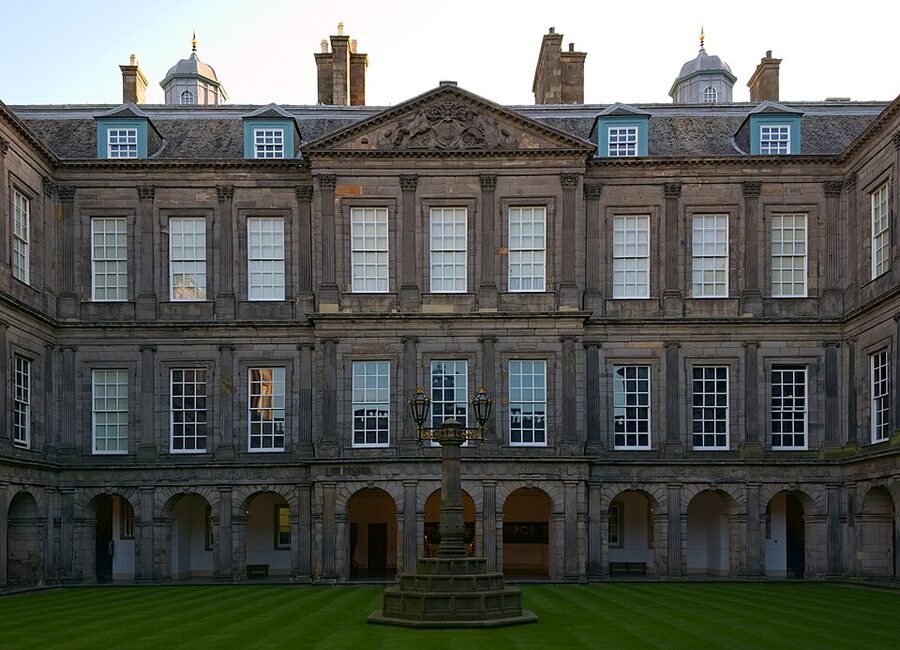
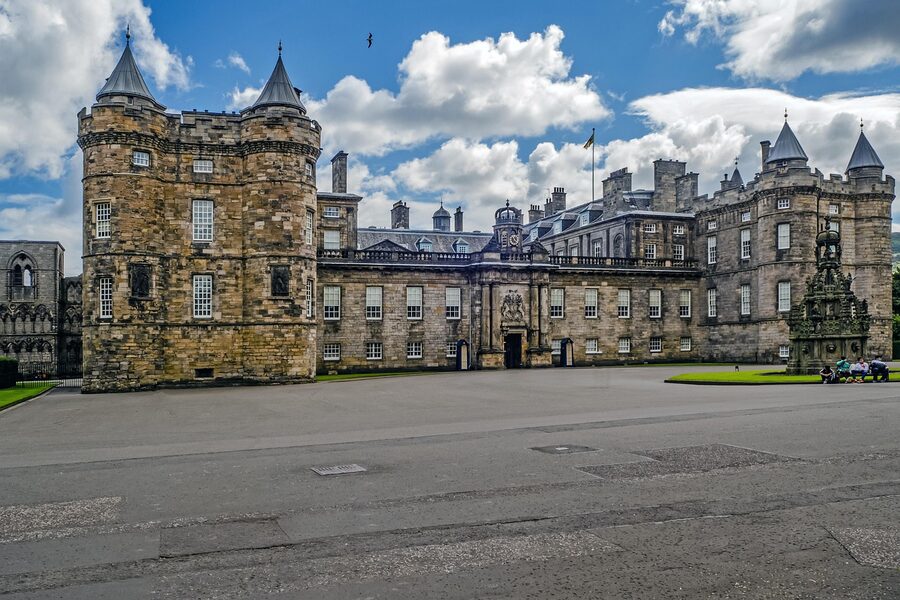
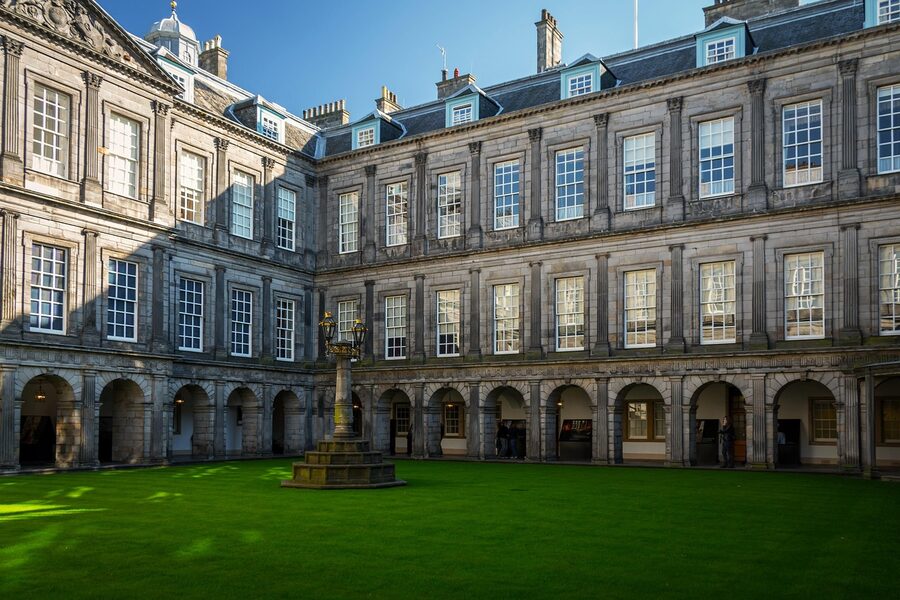
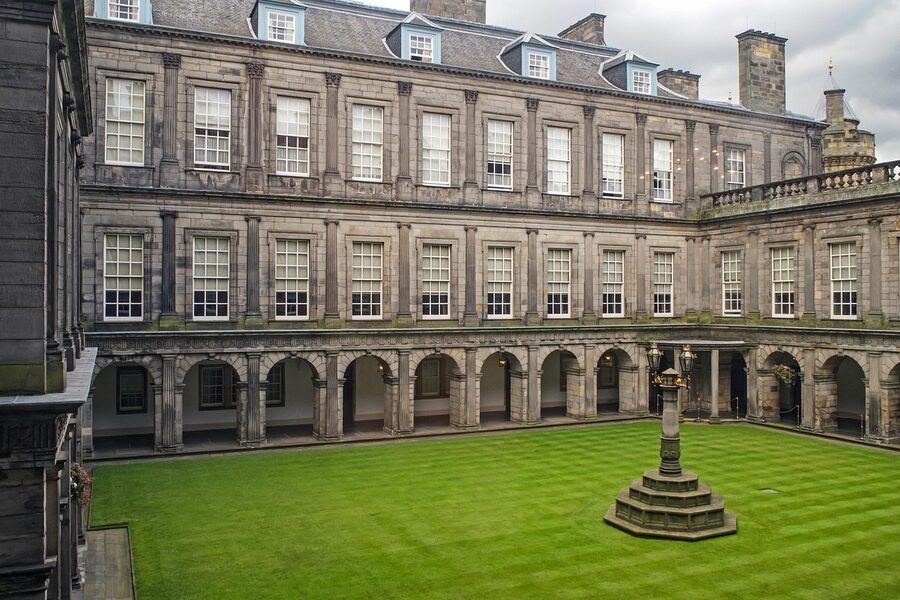
The route is one-way and self-paced. Audio guide on, follow the arrows. You walk in through the Charles II quadrangle, up the Great Staircase, and through the State Apartments on the first floor before dropping back down through the older James V tower on the way out.
The State Apartments
These are the rooms used for actual royal business. The Royal Dining Room. The Throne Room with two thrones commissioned for King George V and Queen Mary in 1911 (still used today for receptions and Scottish state affairs). The Evening Drawing Room. They get bigger and grander as you walk because under the Stuarts only the most important visitors were granted an audience deep into the suite.
I find the second half of the apartments more interesting than the first. Things slow down as you reach the King’s Bedchamber and the heavy wall hangings.
The Great Gallery
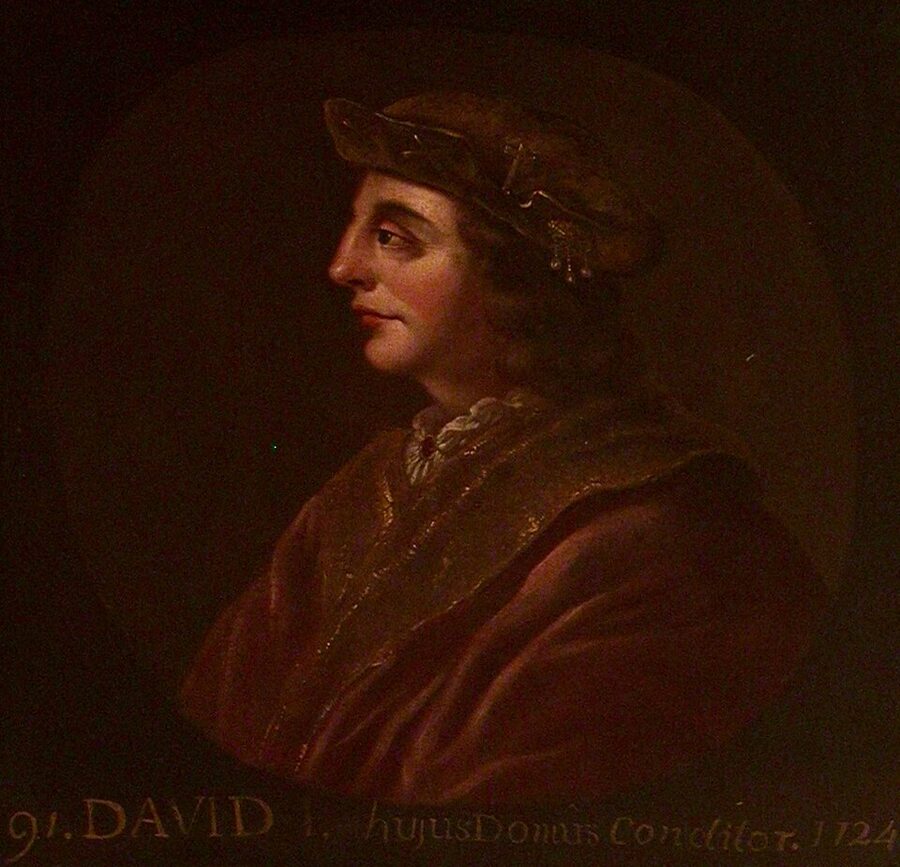
This is my favourite room in the palace. Ninety-six portraits of Scottish kings, real and legendary, line the walls floor to ceiling. They were painted between 1684 and 1686 by a Dutch artist called Jacob de Wet II under contract to Charles II for around £120 a year. He made up faces for kings nobody had ever seen, including the entirely mythological ones from Scotland’s foundation myth.
In 1746, Bonnie Prince Charlie’s troops slashed many of the paintings during the Jacobite Rising. You can still see repair lines on some canvases. The Great Gallery is also where the King now hosts state banquets when he’s in residence. State dinners in a room of half-invented kings is a very Holyrood thing.
Mary Queen of Scots’ Chambers
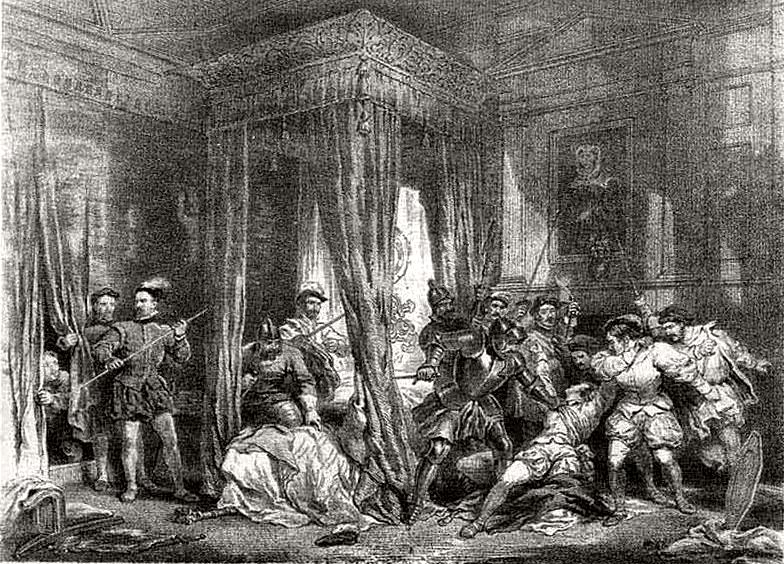
This is the moment people remember from Holyrood. The James V tower at the north-west corner of the palace contains Mary Queen of Scots’ personal apartments, more or less untouched since the 1560s. Low ceilings. Painted timber. The supper room where her secretary David Rizzio was eating dinner with her on 9 March 1566 when her husband Lord Darnley and a group of nobles burst in, dragged him out, and stabbed him 56 times in the next room.
Guides will point out a dark patch on the floor and tell you it’s Rizzio’s bloodstain. It almost certainly isn’t, but the location is real and the weight of it lands. Mary was six months pregnant at the time. The child she was carrying went on to become King James VI of Scotland and James I of England.
If history feels distant in most palaces, it doesn’t here. Stand in the supper room for a minute and try to picture the scene. That’s the trick of Holyrood.
The Holyrood Abbey Ruins
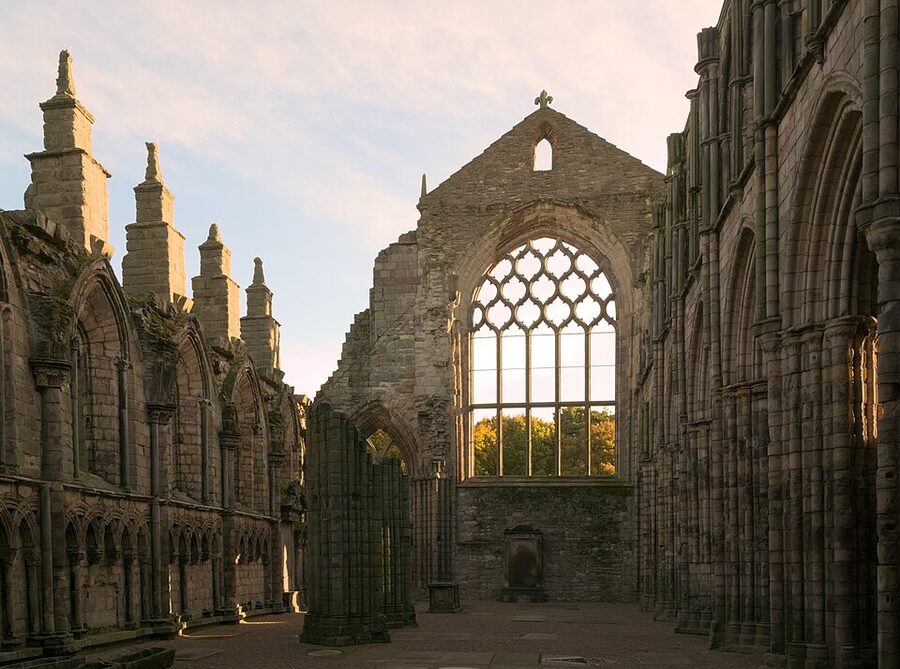
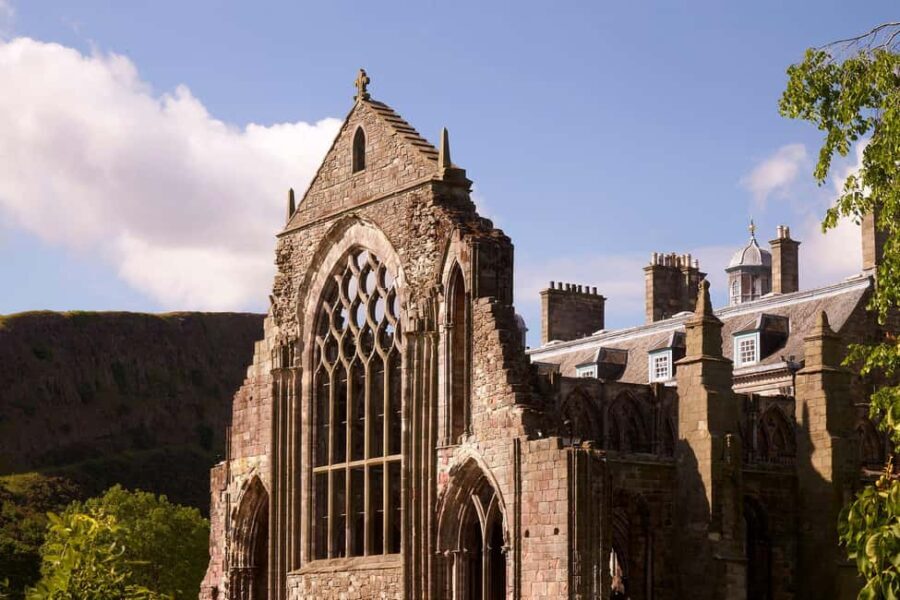
You exit the palace into the abbey ruins. They’re included on the standard ticket. This is where it really hits you that the palace is the youngster on the site.
The abbey was founded in 1128 by King David I after, according to legend, he was knocked off his horse by a stag while hunting and saw a vision of a holy cross (the “rood”) in its antlers. He vowed to build an Augustinian monastery on the spot. Stag story aside, the abbey was a working monastery for 400 years and a coronation venue for several Scottish monarchs.
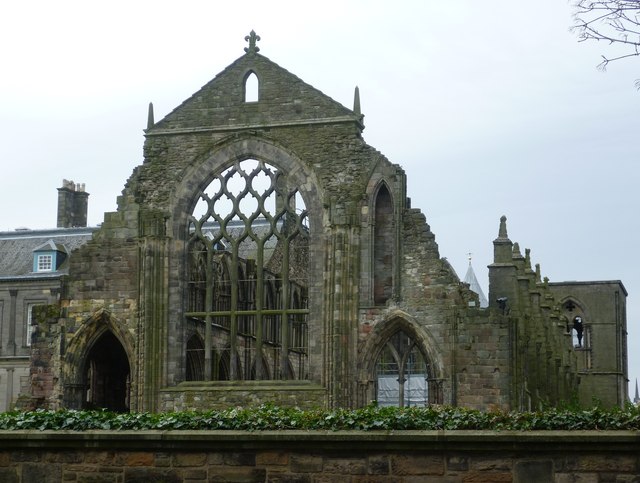
The roof collapsed in 1768. Nobody put it back. The abbey has stood roofless ever since, which is why the interior shots look the way they do. Several Stuart monarchs are buried somewhere under the rubble at the east end. James II, David II, and Mary’s husband Lord Darnley all rest here, plus Rizzio in an unmarked spot in the south aisle.
The Palace Gardens
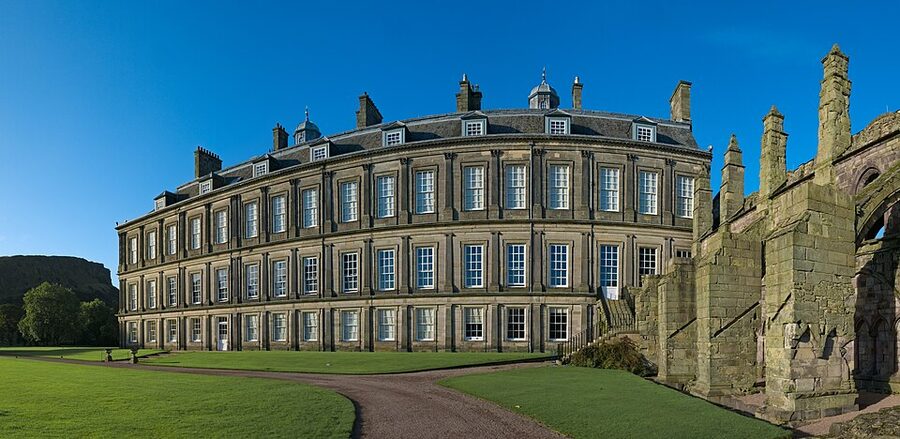
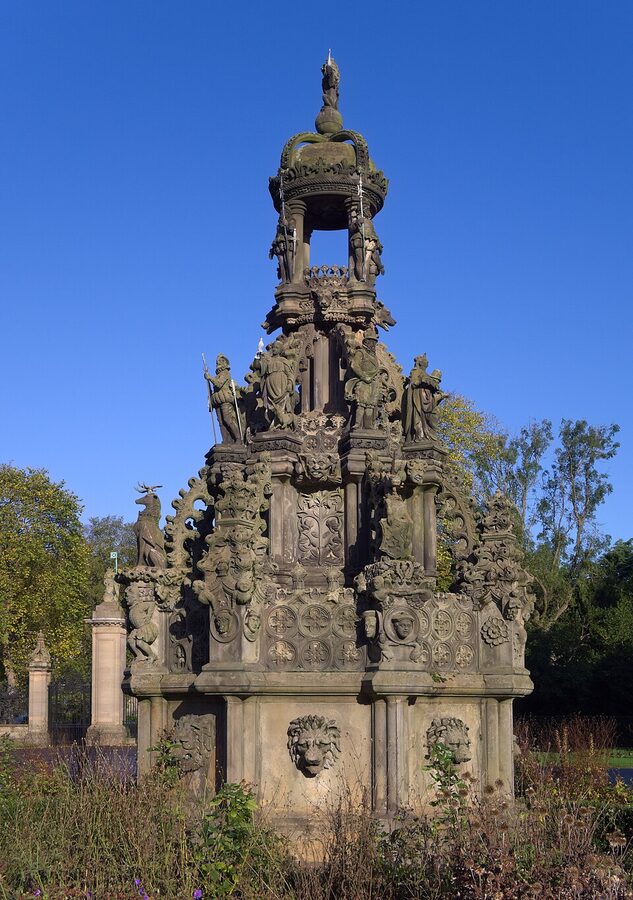
The gardens are about four acres. They open in summer with the rest of the ticket but only on weekends in the winter months, which is worth knowing if you’re booking in February. The standout features:
- The Jubilee border: a strip of silver-leaved plants put in for Queen Elizabeth II’s Diamond Jubilee in 2012
- Queen Mary’s Sundial: commissioned by Mary, Queen of Scots’ father James V around 1540, one of the oldest sundials in Britain
- The Wentworth Elm: only two of these survive in Britain, both at Holyrood
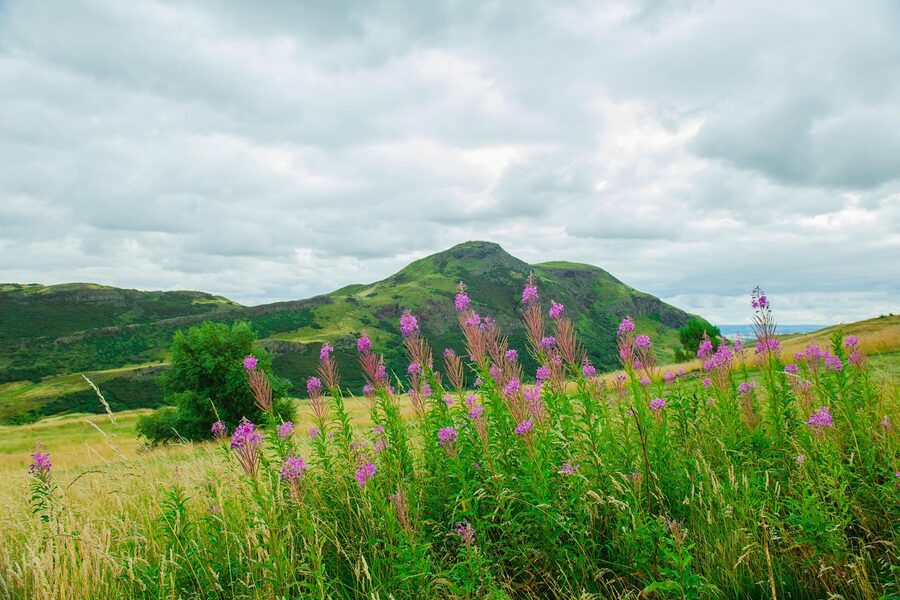
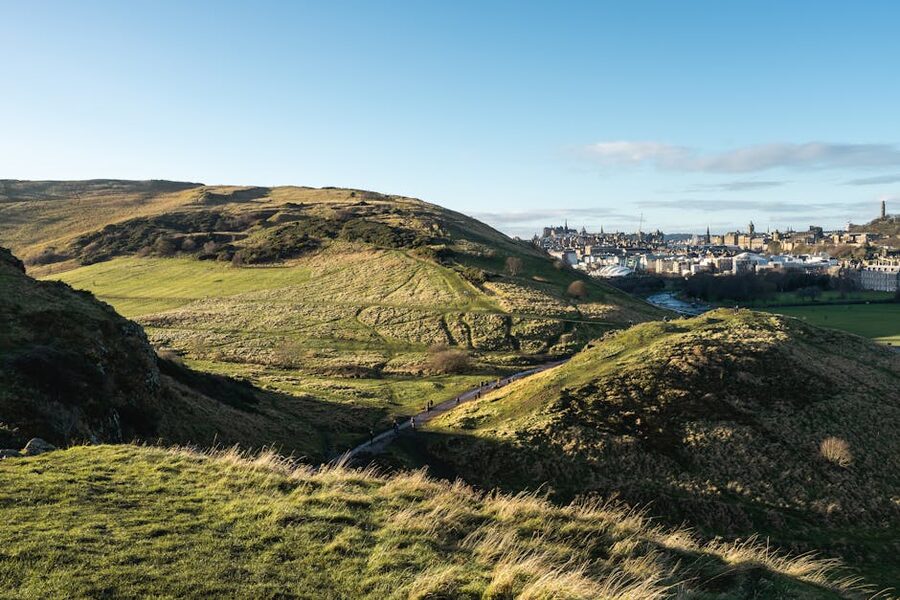
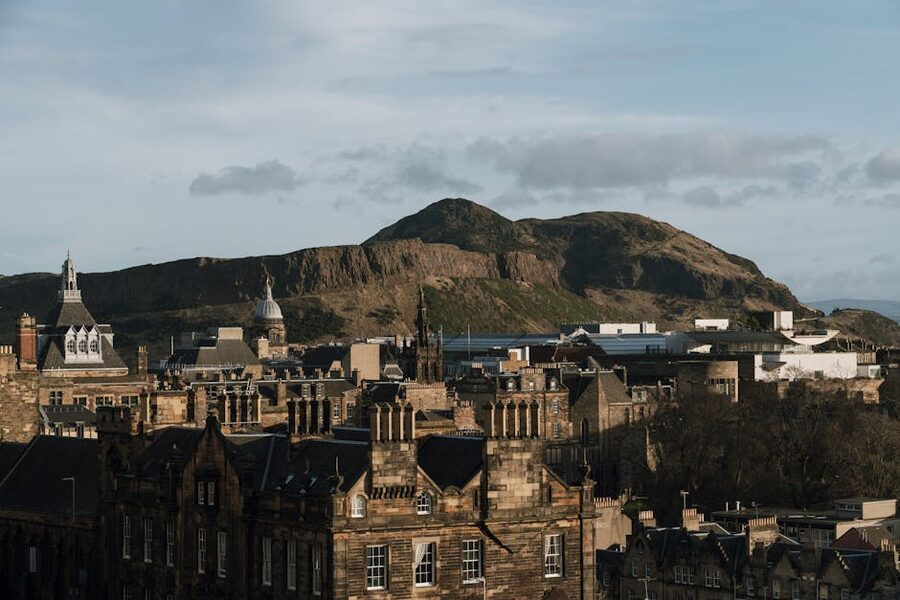
- Views across to Salisbury Crags: the volcanic cliffs of Holyrood Park behind the palace are part of the same royal estate
I’d budget 25 minutes for the gardens in summer. They’re nice. They’re not the reason you came.
Getting There from the Royal Mile
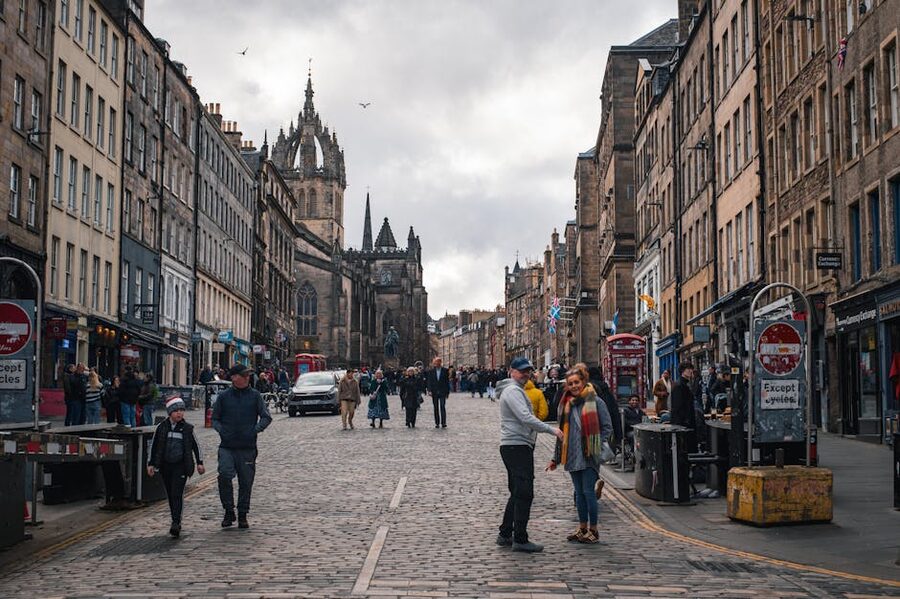
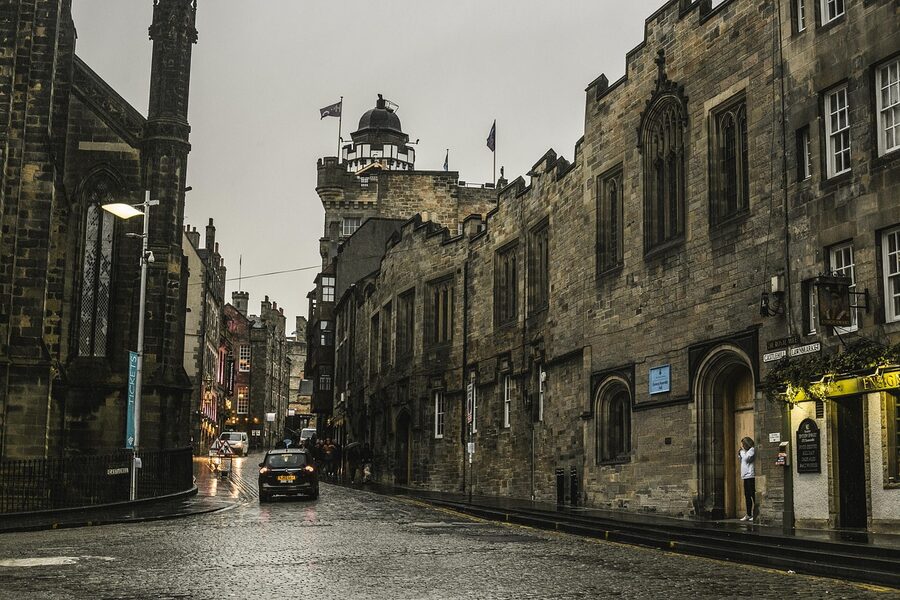
The palace sits at the bottom of the Royal Mile. If you start at Edinburgh Castle on Castle Rock and walk straight downhill, you’ll hit Holyroodhouse in about 25 minutes at a normal pace. The walk is gently downhill almost the whole way, which is the right direction to do it (uphill on the way back is harder than people expect).
If you don’t want to walk:
- The Royal Mile bus stop is two minutes from the palace gates
- The hop-on hop-off red sightseeing buses all stop at Holyrood, with the Royal Edinburgh Ticket bundling Castle, Holyrood, and Royal Yacht Britannia
- Edinburgh Waverley station is a 12-minute walk through the New Town side
- Taxis from the city centre run £6-9
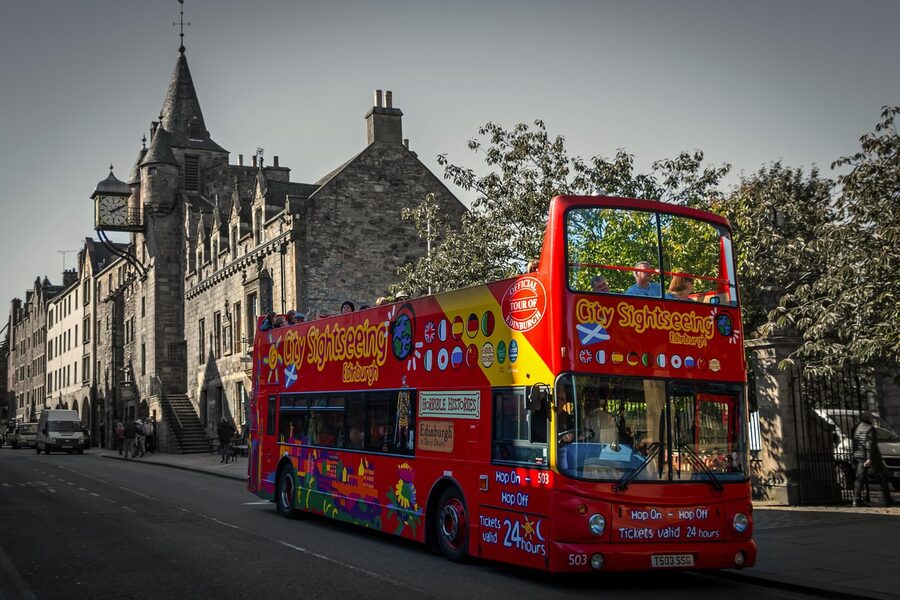
The combined Royal Edinburgh Ticket isn’t a discount on entry, but it is a logistical win if you’re doing the whole royal-attractions loop with limited time. Our review of the royal-attractions HOHO bundle walks through which version is worth it.
Pairing Holyrood with the Rest of Edinburgh
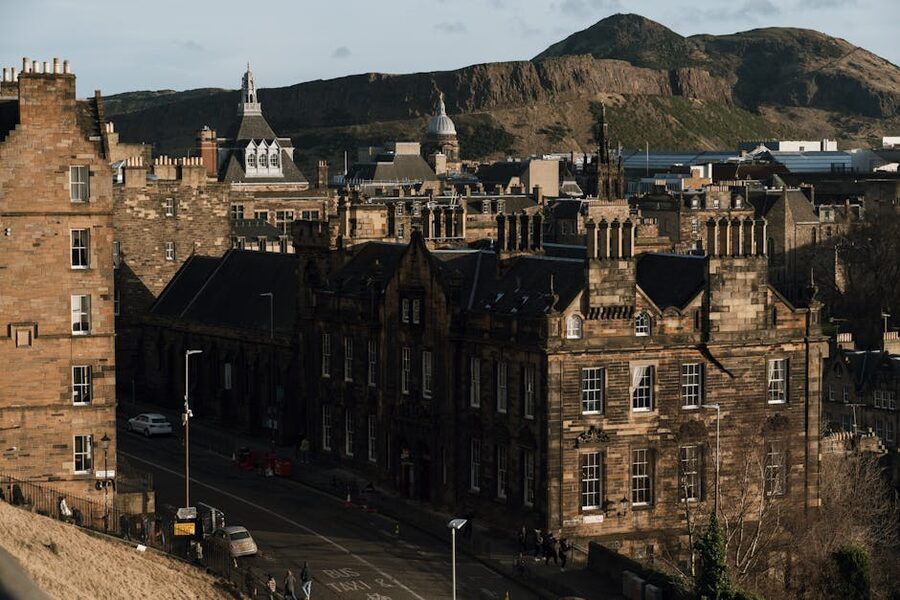
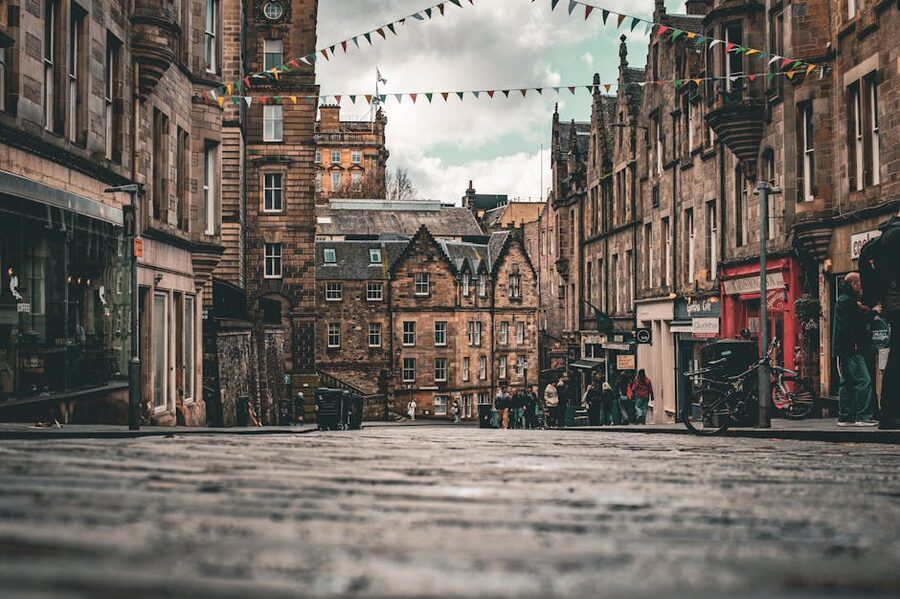
Holyrood works best as the back end of a Royal Mile day. My usual rhythm:
- Morning: Edinburgh Castle on the 9:30am opening (the castle gets stupidly busy by 11am)
- Lunch: walk down the Royal Mile, stop at one of the pubs in Cowgate or by the World’s End
- Early afternoon: Holyrood, with a 2pm or 2:30pm timed slot
- Late afternoon: Holyrood Park behind the palace, walk up to Salisbury Crags or Arthur’s Seat
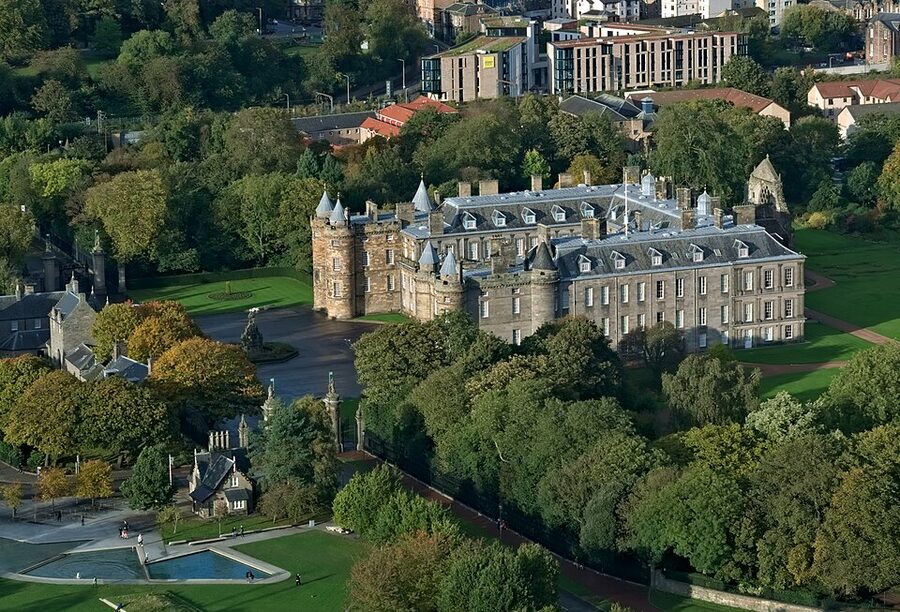
If you only have an afternoon, skip the castle and lean into Holyrood plus the park. You’ll get a quieter, weirder day, and the palace + crags combo is a truer version of Edinburgh than the tourist Royal Mile.
Practical Bits
Address: Canongate, Edinburgh EH8 8DX. The bottom of the Royal Mile, the one with the Scottish Parliament across the road.
Photography: No photos allowed inside the State Apartments or Mary’s chambers. Photos are fine in the abbey, the gardens, and the courtyard.
Bag policy: Bag check at the entrance, no large rucksacks inside. Lockers are available for free.
Accessibility: The State Apartments are on the first floor. There is a lift. The abbey ruins are on uneven ground but mostly flat.
How long to budget: 90 minutes minimum for the palace and abbey. Add 25 minutes for the gardens in summer. Two and a half hours total is comfortable.
Cafe and shop: The cafe (in the visitor centre near the gate) is fine. The shop sells the usual royal-stamped goods. If you want a real meal, walk five minutes back up the Royal Mile.
Common Mistakes
I’ve sent enough friends to Holyrood to know where they trip up. The big ones:
Booking during Royal Week without checking. The site closes for around a week in late June or early July. Tickets simply aren’t on sale for those dates. Check the calendar before you book your hotel.
Showing up on a winter weekday without checking closure days. November-March has Tuesday and Wednesday closures for some weeks. The ticket page will tell you, but only if you read it.
Treating the audio guide as optional. It’s included. The rooms make a tenth as much sense without it.
Skipping the abbey. People rush through to get to the gardens or back to the Royal Mile. The abbey is the oldest part of the whole site. Spend 15 minutes in there.
Doing Holyrood and the Castle on the same morning. You will be exhausted and you will rush both. Pick one for morning, the other for early afternoon, with a real lunch in between.
Buying the King’s Gallery upgrade without checking what’s on. The exhibitions rotate. Some are excellent. Some are niche. Look at the current show before paying the upcharge.
Where to Read Next
If Holyrood goes well, you’ll want to do the rest of the Edinburgh royal-and-history loop. Edinburgh Castle is the obvious pairing and the one most people do as a half-day before Holyrood. Past that, the Old Town has its own underground side: the Edinburgh Vaults are 18th-century bridge cellars that were sealed off and forgotten, and the Scotch Whisky Experience sits halfway up the Royal Mile if you want a calmer afternoon. Harry Potter fans usually want the Old Town walking tour for the Greyfriars and Victoria Street stops. And if you’re collecting royal residences, Buckingham State Rooms and Kensington Palace are the obvious London follow-ups.