
You think Buckingham Palace is open year-round. It isn’t. The State Rooms, the actual palace interior, are open to the public for roughly 10 weeks a year, mid-July to late September, while the King is up at Balmoral. The rest of the year you can stand outside the gates as long as you like, but you cannot get in.
That summer window is also why State Rooms tickets sell out hard. There are 19 rooms to walk through, the headliners being the Throne Room, the Picture Gallery, the White Drawing Room, and the Music Room. Tickets are timed and capped. Outside summer, you have the free Changing of the Guard outside the gates, the Royal Mews, and the Queen’s Gallery, all with their own logic.
This guide explains which ticket gets you what, when to book, and which combo makes sense for your trip length. The short version: book the State Rooms ticket the moment dates drop if you’re visiting July to September, treat the Changing of the Guard as a free bonus, and add the Royal Mews if you’ve got an extra hour and any interest in royal carriages.
- In a Hurry? Three Picks
- The 10-week summer opening, in plain English
- The 19 State Rooms, room by useful room
- What the Changing of the Guard actually is, and why it’s free
- Royal Mews: the carriages and horses next door
- Top picks for booking right now
- 1. Buckingham Palace State Rooms Entrance Ticket:
- 2. Changing of the Guard Small Group Tour:
- 3. Royal Mews Entrance Ticket: .90
- Combos with Westminster, Big Ben, and a walking tour
- Getting there, what to wear, and small details that matter
- How the palace got here: 1703 to 2026
- What to do on the days the palace is closed
- How Buckingham Palace compares to Europe’s other royal residences
- Tickets and booking traps to avoid
- The Royal Mews horses, the gardens, and Queen’s Gallery quirks
- Photography: where to get the famous shots
- Where to head next
In a Hurry? Three Picks
Best for the actual palace interior: Buckingham Palace State Rooms Entrance Ticket from $44. 19 State Rooms, summer only, free cancellation 24 hours out.
Best for the ceremony with context: Changing of the Guard Small Group Tour from $15. Two-hour walking tour ending at the ceremony, with a guide explaining what’s happening.
Best for the royal carriages: Royal Mews Entrance Ticket from $22.90. The Gold State Coach used at coronations, plus the working stables.
The 10-week summer opening, in plain English
Here is what nobody tells you on the booking page: the State Rooms are open only when the King is not in residence. He’s traditionally at Balmoral in Scotland for the late summer. That’s why the public window is mid-July to late September, give or take a few days each side. Exact dates are published in March or April. Once they’re up, the popular slots vanish quickly.
If you’re planning a London trip outside that window and you want to walk inside the palace, you can’t. There is no winter version, no spring tour, no quiet-month workaround. The State Rooms are the working royal household and they go back to being that the second the King returns. The State Rooms ticket only exists during this summer opening.
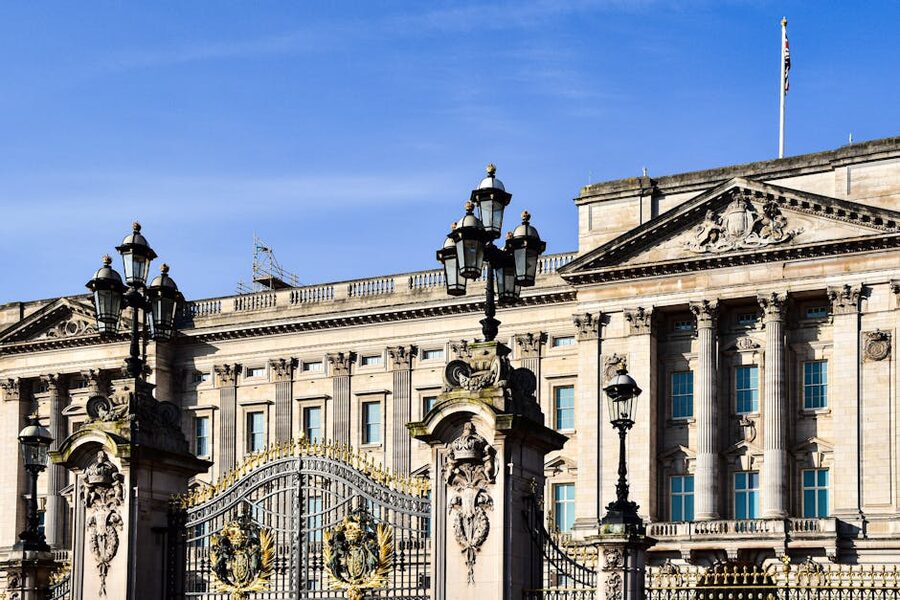
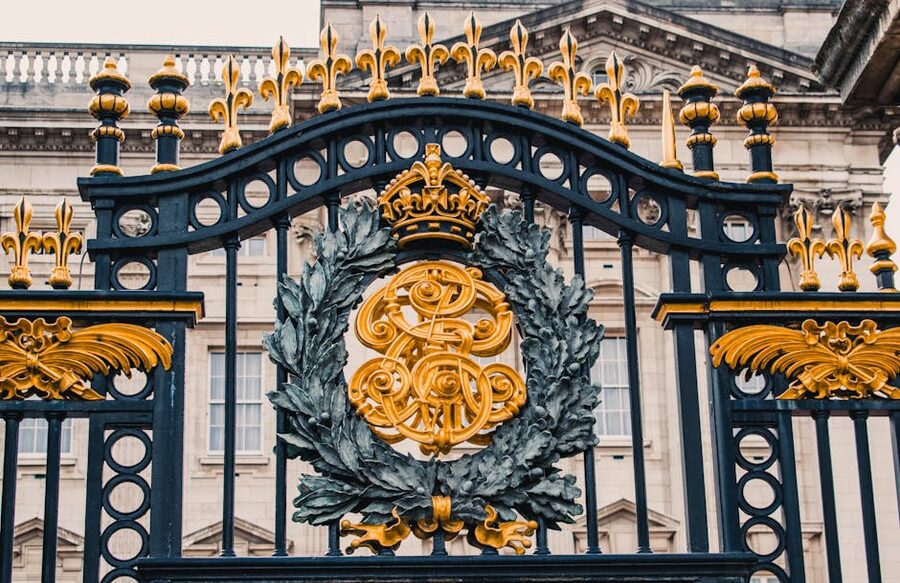
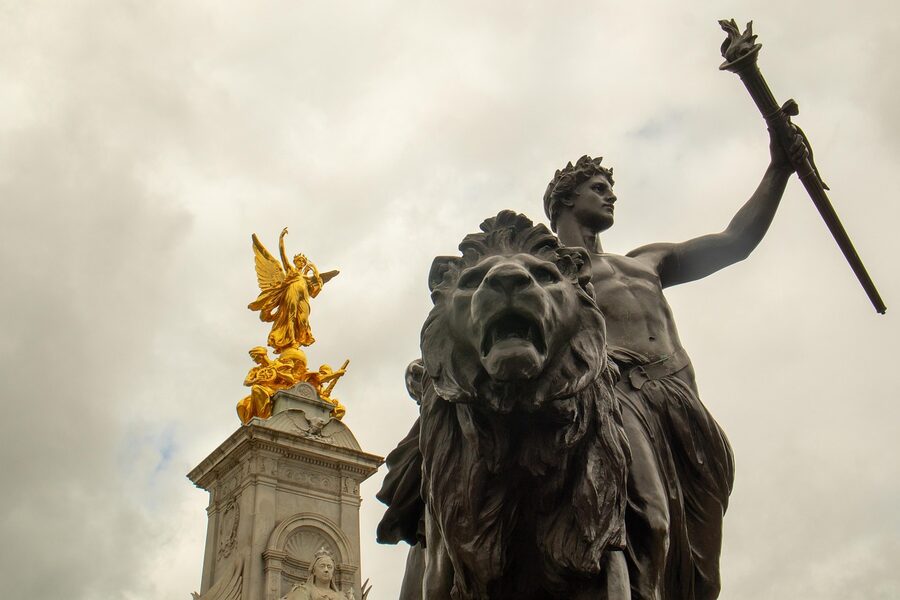
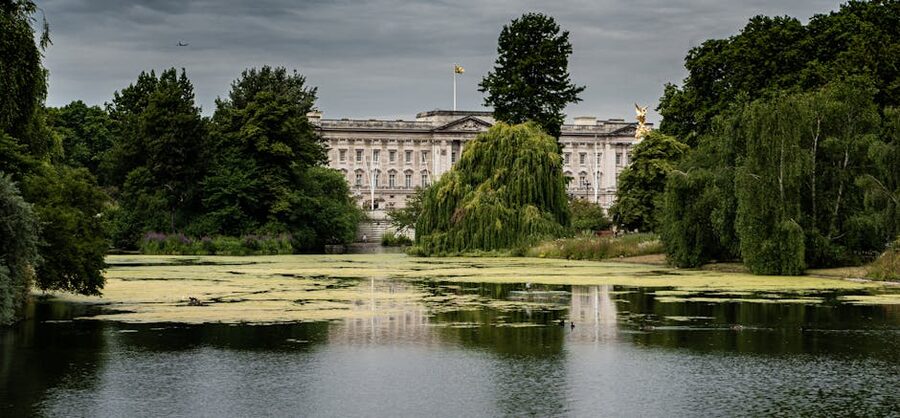
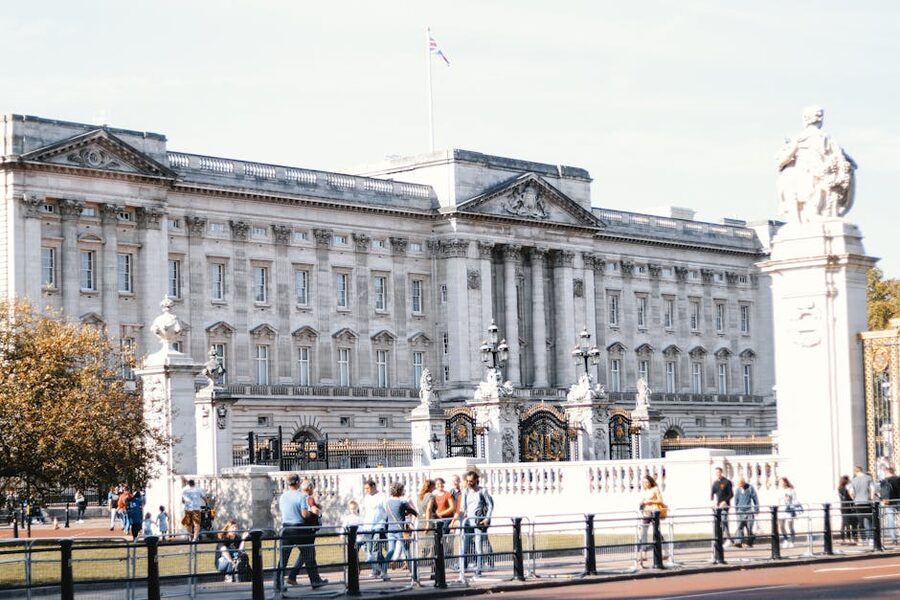
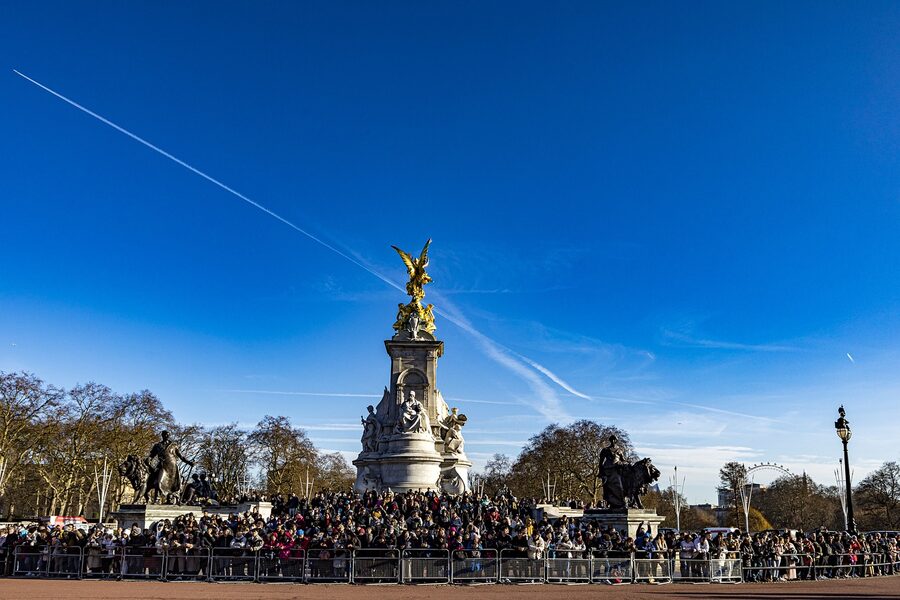
What you do get year-round is the outside of the palace, which is open and free. The Victoria Memorial in front, the gates themselves (genuinely impressive ironwork), the road around the perimeter, and St James’s Park stretching east toward Whitehall. None of this needs a ticket. None of it requires booking. You can spend an hour wandering the outside in February and it’s still worth doing.
The 19 State Rooms, room by useful room
The audio guide on the State Rooms tour is genuinely good, narrated for years by King Charles back when he was Prince of Wales. It’s about 90 minutes if you listen to everything, more if you stop and stare. Nineteen rooms sounds like a lot. In practice the tour flows, with three or four headline rooms doing the heavy lifting and the rest providing context.
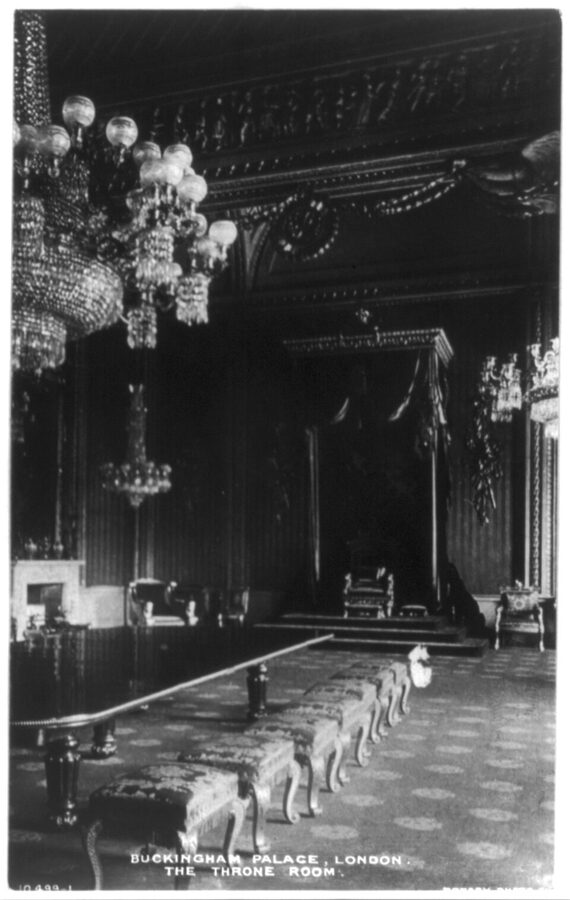
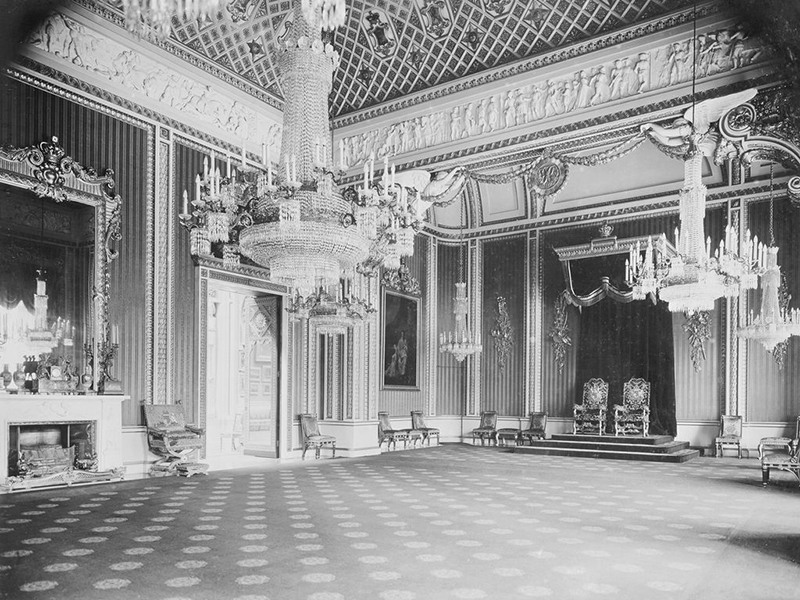
The Throne Room is where royal wedding photos happen. Two thrones at the far end, crimson upholstery, gold leaf everywhere. The Picture Gallery is the longest room in the palace at 47 metres, hung with paintings by Rembrandt, Rubens, Van Dyck, Canaletto, and Vermeer. This is the one art historians come for. The White Drawing Room hides a secret door behind a mirror that the royal family uses to enter when receiving guests, which the audio guide will gleefully point out.
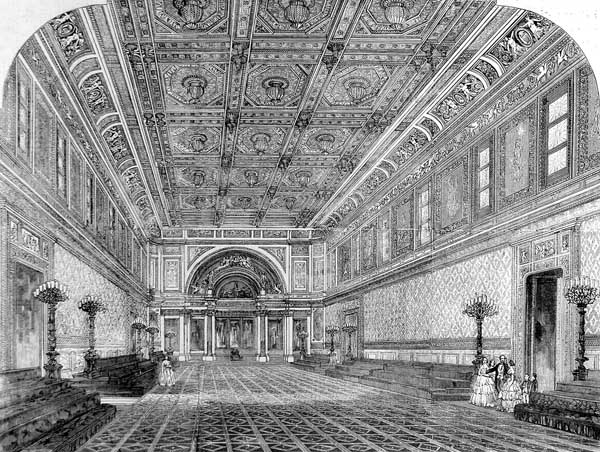
The Music Room has a domed ceiling and a parquet floor that’s been used for royal christenings (Prince William, Prince George). The State Ballroom, added under Queen Victoria, is where state banquets happen and where investitures (knighthoods, OBEs, Dame appointments) are conducted by the King. You’ll walk through it. You won’t sit at the table.
The Blue Drawing Room and Green Drawing Room connect the headliners. The Green Drawing Room is what guests at state visits see first, walking up the Grand Staircase from the Marble Hall. The remaining rooms (the Bow Room, the State Dining Room, the 1844 Room, the Yellow Drawing Room) round out the suite. None feels like filler. The audio guide gives each one its own moment.
What the Changing of the Guard actually is, and why it’s free
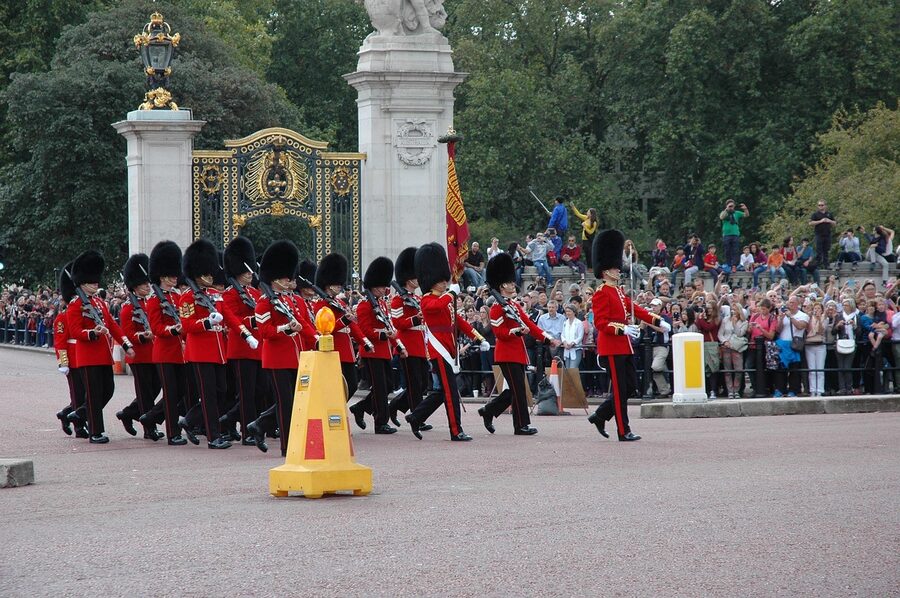
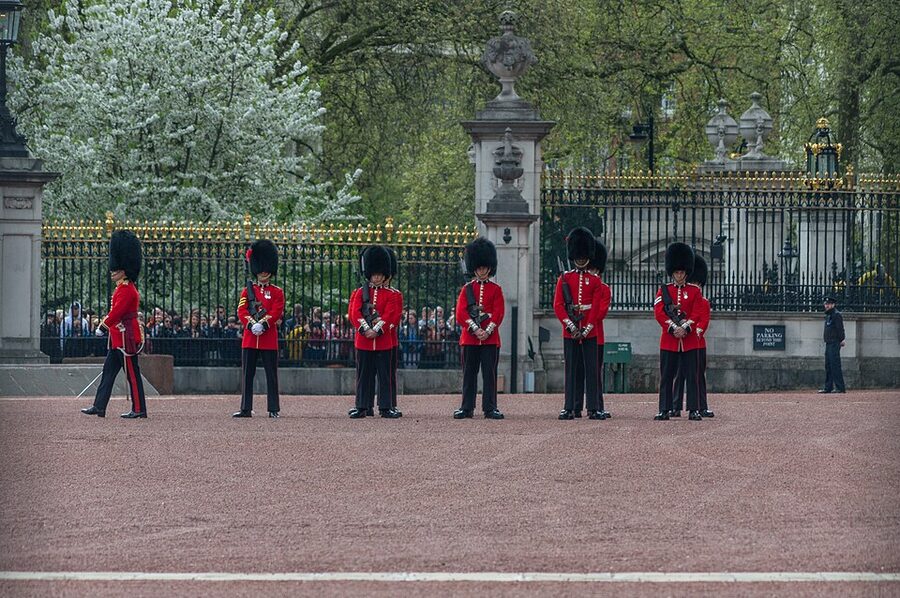
This is the part people get most confused about. The Changing of the Guard is free. It happens on the forecourt and the road outside the gates. There’s no ticket, no booking, no paid viewing area. You show up, you watch.
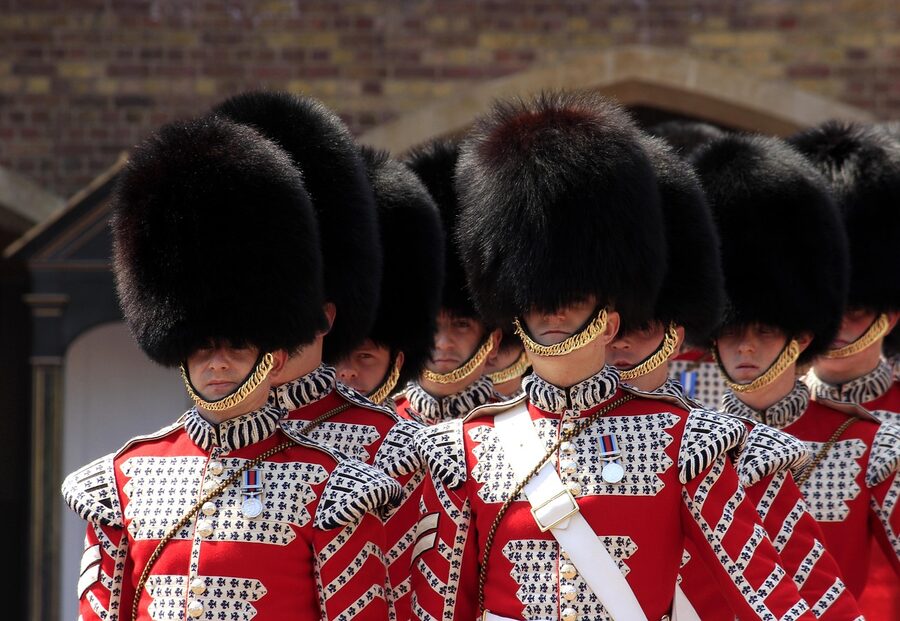
The ceremony starts at 10:45am, takes about 45 minutes, and finishes at roughly 11:30am. Days vary by season. The standard schedule is Monday, Wednesday, Friday, and Sunday during the warmer months, dropping to fewer days in winter. Cancellations happen for heavy rain. The official British Army site publishes the schedule each Sunday for the week ahead.
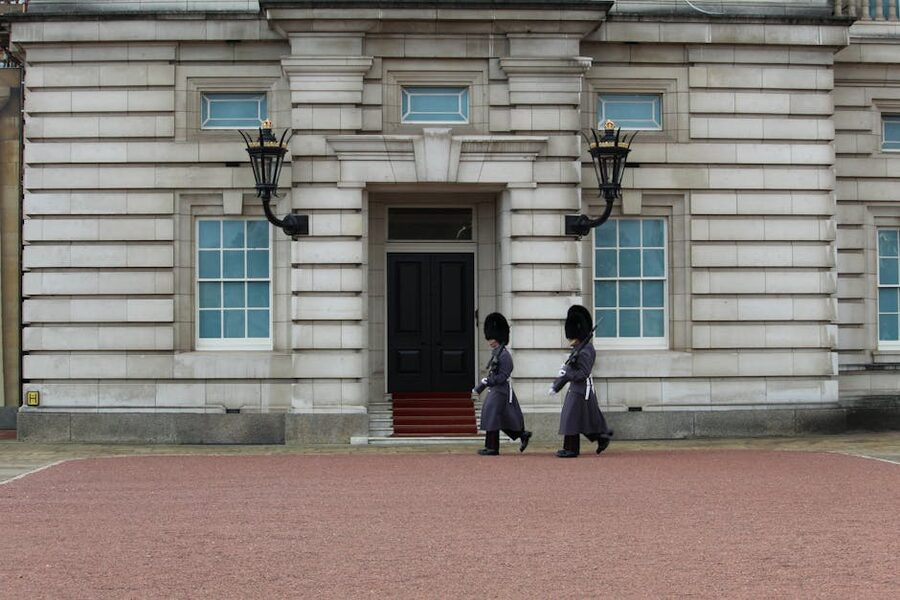
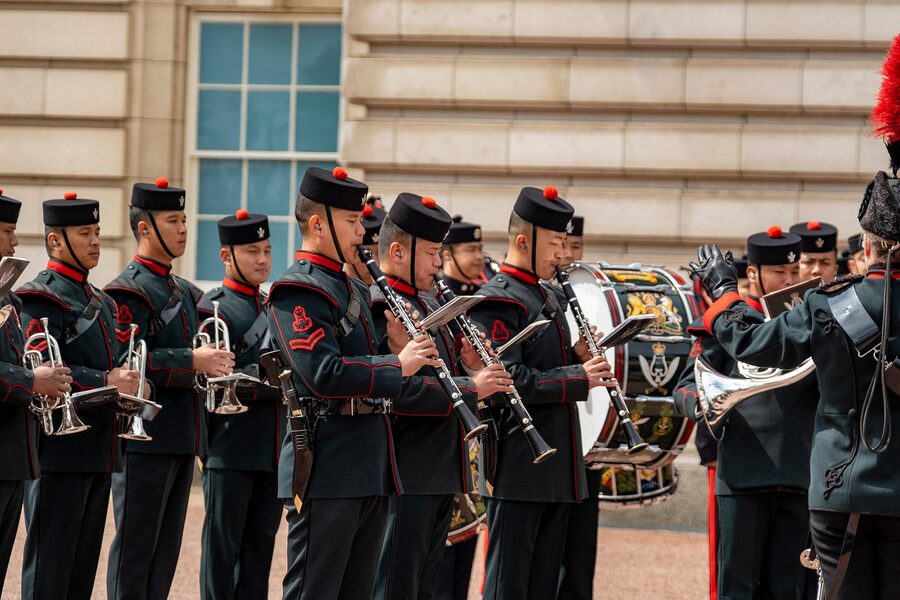
What you’ll see: the New Guard marches from Wellington Barracks on Birdcage Walk to the palace, accompanied by a regimental band. The Old Guard, having stood duty, is replaced. Both bands play. There are speeches and salutes. The whole thing is choreographed to the second.
Where to stand: the railings on either side of the forecourt have the best view but fill up fastest. The Victoria Memorial steps give you elevation and a wider angle, which most photographers prefer. You need to be in position by 10:00am for any decent spot in summer. Earlier on royal occasions or busy weeks. If you arrive at 10:30 you’ll see backs of heads.
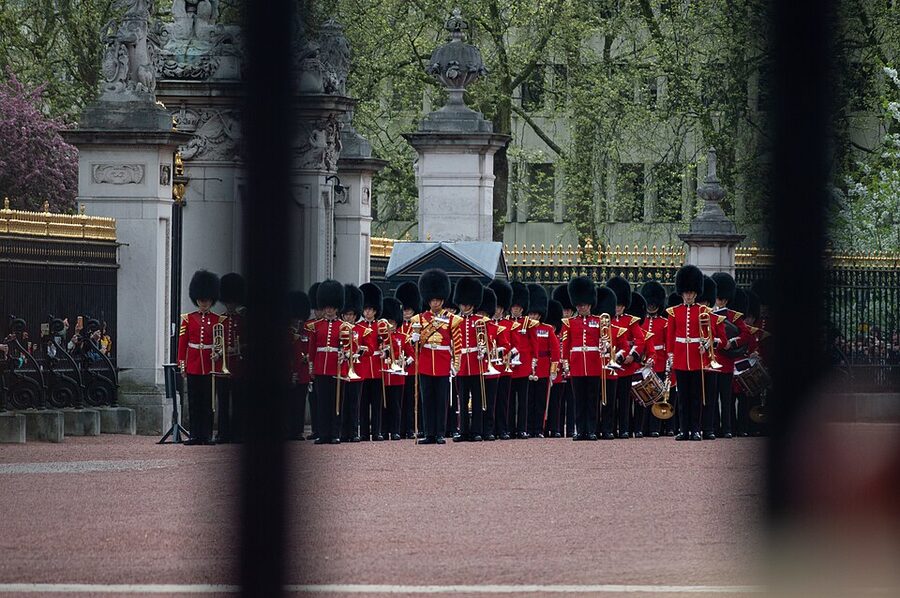
If you’d rather have a guide explaining what each movement means and where the regiment came from, that’s where a small-group walking tour helps. The Changing of the Guard small-group tour covers Wellington Barracks, Birdcage Walk, and the procession route, ending at a reserved viewing spot. You don’t need a guide to enjoy the spectacle, but you’ll understand it more.
Royal Mews: the carriages and horses next door
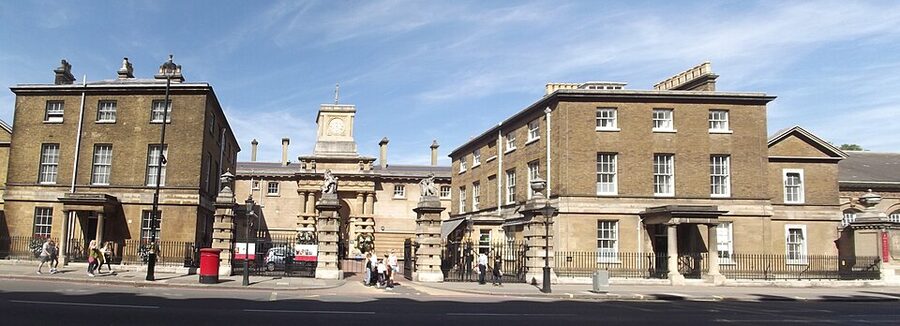
The Royal Mews is the working stables for the royal horses and carriages. It’s also where the Gold State Coach lives. That’s the heavy gilt carriage you’ve seen in coronation footage from 1953 and 2023. It weighs four tonnes, was built in 1762 for King George III, and only comes out for coronations. The rest of the time it sits in the Mews, polished, with a small information panel explaining how the eight horses pull it at walking pace because anything faster would shake it apart.
You’ll also see the Diamond Jubilee State Coach (newer, lighter, used for state opening of Parliament), the Glass Coach (used for royal weddings, including William and Kate), and the Irish State Coach. The horses are real and live there. Look for the Cleveland Bays and the Windsor Greys. The grooms are usually around and friendly.
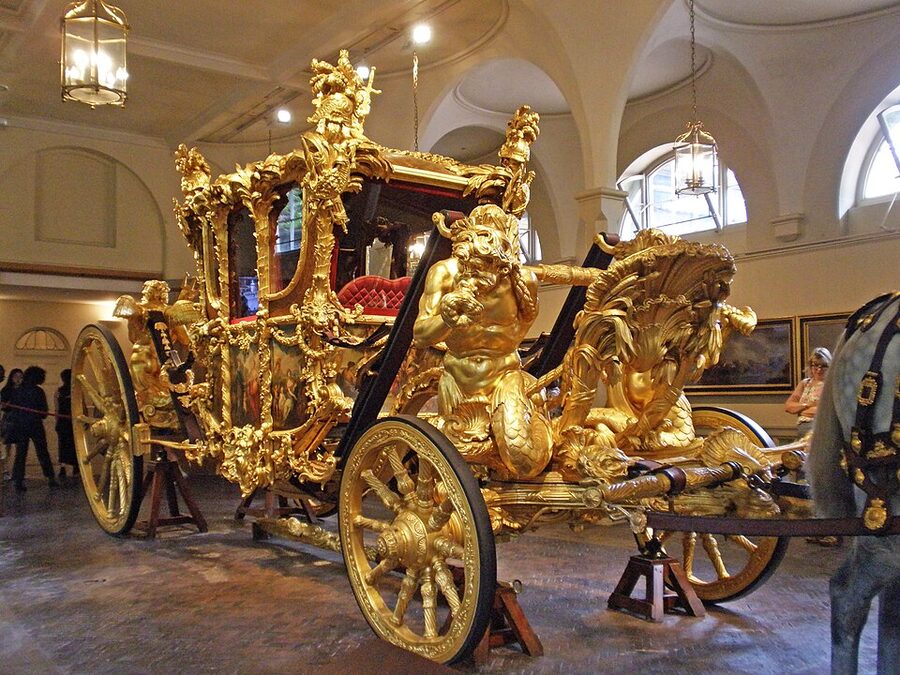
The Royal Mews ticket is a sensible add-on if you’ve got an hour and any interest in royal regalia. It’s also open across more of the year than the State Rooms, with closures in midwinter and during state events. Check the dates before you book. Allow about an hour.
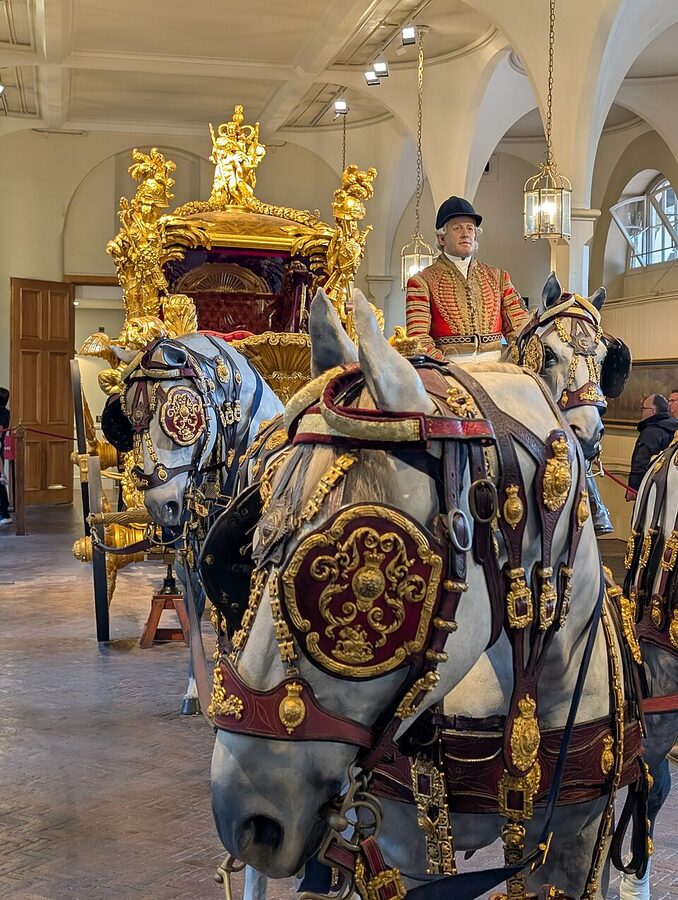
Quirk worth knowing: the Mews is a working facility. Some days the horses are in their stalls and visitors can see them. Some days they’re being exercised in St James’s Park or are on duty for a state event. The Royal Collection Trust site notes when carriages or horses are off-site, which is mostly during state visits and major royal anniversaries.
Top picks for booking right now
I’ve narrowed the pool to three. The first is the actual palace interior and is summer-only. The second pairs the free ceremony with a guided context walk. The third is the Royal Mews next door, which extends the visit by about an hour.
1. Buckingham Palace State Rooms Entrance Ticket: $44

This is the headline product and the one most visitors should book. Audio guide with about 90 minutes of content, the full 19-room route, and the only way to actually walk inside the palace. Slots vanish fast in July and August, so book the moment your dates open. Our full review covers the morning-versus-afternoon trade-off and which slot tends to be quieter.
2. Changing of the Guard Small Group Tour: $15

The ceremony is free, but a guide explaining the regimental history, the procession order, and what each section of the music means turns 45 minutes of marching into a story. Two hours, small group, finishes at the forecourt. Our full review walks through what’s covered between Wellington Barracks and the palace itself.
3. Royal Mews Entrance Ticket: $22.90
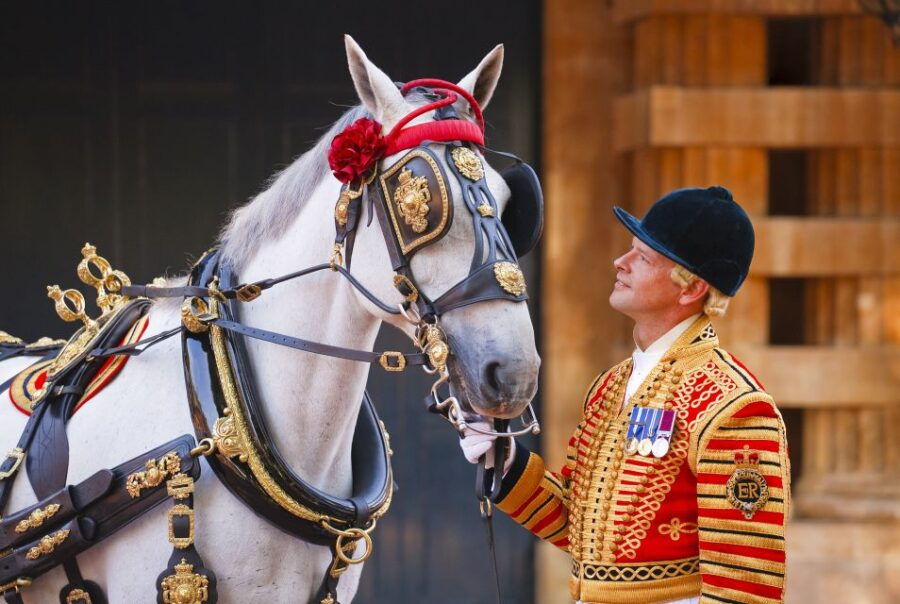
If you’ve got an extra hour, the Mews adds the carriage angle to your palace visit. Open across more of the year than the State Rooms, which makes it the only Buckingham Palace ticket worth booking outside summer. The Royal Mews review goes into the carriage rotation and which week the horses are most likely to be in the stalls.
Combos with Westminster, Big Ben, and a walking tour
If you want context for the palace, walking it together with Westminster makes more sense than treating each as a separate stop. The route from Buckingham Palace east through St James’s Park, past Horse Guards Parade, down Whitehall to Parliament Square, ends at Westminster Abbey and Big Ben. It’s about 25 minutes on foot, longer if you stop. Several walking tours run this exact route, often timed to end or start with the Changing of the Guard.
The combo logic only works if you’re trying to cover ground efficiently. If you’ve got more days in London, splitting palace and Westminster across separate visits gives both their own breathing room. The walking tour combo is most useful for a single intense day where you want to see the royal-palace-and-Parliament axis with a guide tying it together.
An alternative is the Changing of the Guard combo with Buckingham Palace State Rooms entry, which sometimes appears as a bundled product during summer. Read the dates carefully because the Guard ceremony schedule can shift, and you don’t want a State Rooms slot at 11am that clashes with the procession start time at 10:45.
Getting there, what to wear, and small details that matter
The closest tube stations are Green Park, Hyde Park Corner, and Victoria, all about 7-10 minutes’ walk. Green Park is the prettiest approach because you walk through the park and the palace appears at the end of the Mall. Victoria is the most direct if you’re coming with luggage. Hyde Park Corner is fine if you’ve already been doing things on the west side.
For the Changing of the Guard, get to Green Park station by 09:45 at the latest in summer, walk down and pick a spot by 10:00. The Mall is busy after 10:15. Strollers and wheelchairs work fine on the pavements but the curbs at the gate railings are tight, so the Victoria Memorial is the more accessible viewing spot. The State Rooms tour is wheelchair accessible across most of the route, with a couple of step transitions handled by ramps and lifts. Royal Collection Trust publishes an access guide with each booking confirmation.
Dress code: there isn’t one. The palace tour is a regular paid attraction in summer, not a private royal visit, so jeans and a t-shirt are fine. Bags get scanned. Large rucksacks need to go in the cloakroom, which is included in the ticket. Phones and small cameras are fine in the gardens and on entry, but photography is prohibited inside the State Rooms themselves. The audio guide reminds you several times. They mean it.
Time required: budget 2-2.5 hours for the State Rooms tour, plus 20 minutes for security and entry. The Royal Mews adds about an hour. The Changing of the Guard adds 45 minutes plus arrival buffer. A full Buckingham Palace day from 10am to 4pm is realistic if you’re combining all three, with a lunch break at one of the cafes on the route.
How the palace got here: 1703 to 2026
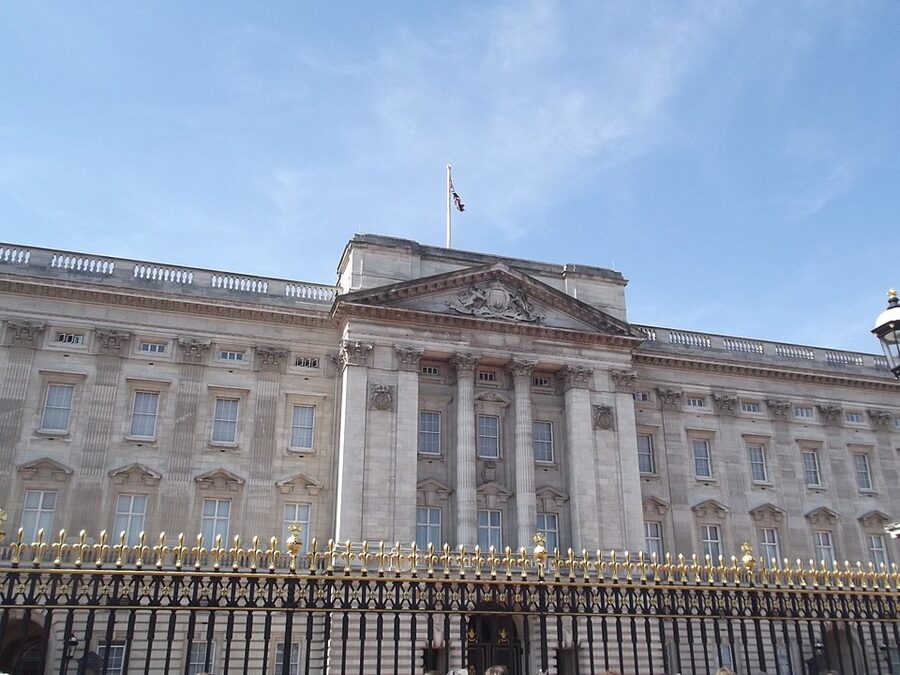
Buckingham House was built in 1703 for the Duke of Buckingham. King George III bought it in 1761 as a private residence for Queen Charlotte. It wasn’t really meant to be a palace, more a townhouse. The palace upgrade started in 1825 under King George IV, who hired architect John Nash and threw enough money at it to provoke a parliamentary inquiry into the costs. Nash was sacked for budget overruns. Edward Blore finished the job.
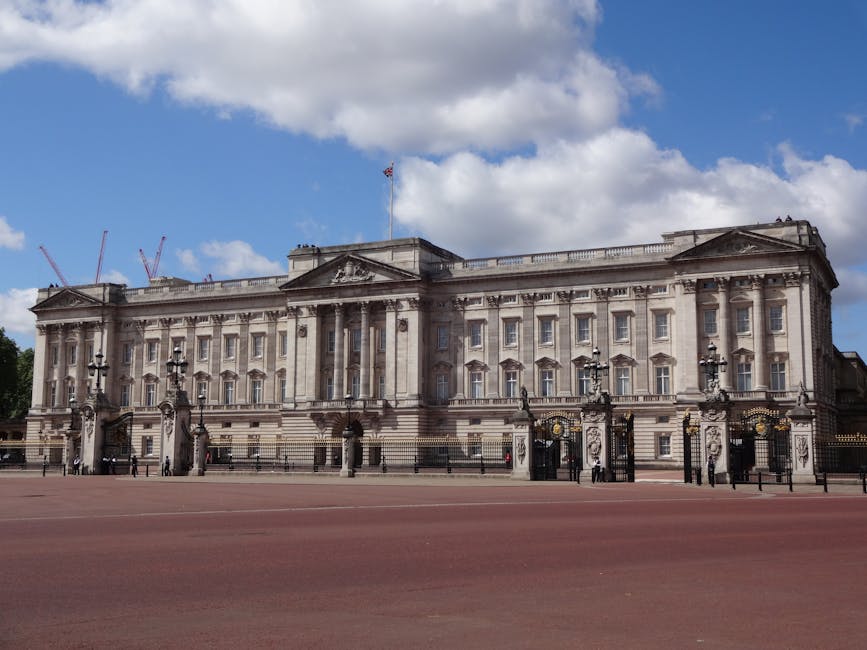
Queen Victoria moved in in 1837, three weeks after she took the throne, and was the first monarch to use it as the principal royal residence. She added the State Ballroom and the east wing that closed off the central courtyard. That east wing is what you see from the Mall today, the famous facade with the balcony where the royal family appears for state occasions and after weddings. The Portland stone refacing happened in 1913 under King George V, because the soft Caen stone of the original facade had been eaten alive by Victorian-era pollution.
The palace was bombed during the Blitz in 1940, including a direct hit on the chapel. King George VI and Queen Elizabeth (the Queen Mother) were inside at the time. They survived. The Queen Mother famously said afterwards, “I’m glad we have been bombed. Now I can look the East End in the face.” The chapel was rebuilt as the Queen’s Gallery, which is the rotating royal art exhibition you’ll see signposted from the palace exterior.
The State Rooms first opened to the public in 1993 to fund repairs to Windsor Castle after the 1992 fire. The summer opening was meant to be temporary. It worked so well that it became permanent. Roughly 500,000 visitors a year now do the State Rooms tour during the 10-week window, which is why slots disappear quickly.
What to do on the days the palace is closed
Outside the summer window, the palace’s adjacent attractions still work. The Royal Mews is open across most of the year. The Queen’s Gallery on Buckingham Palace Road runs rotating exhibitions of royal art, drawn from the Royal Collection of over 1 million objects. Standard ticket is around £19. Worth an hour if you’re already in the area and the current exhibition matches your interests.
The Changing of the Guard still runs year-round, just on fewer days in winter. The free outside experience is identical. Crowds are also lighter, which makes winter visits a sneaky-good time for the ceremony.
St James’s Park, Green Park, and Hyde Park form a 4 km walking corridor on the palace’s east and west sides. None of them require any planning. They give you a full afternoon if you’re combining a palace exterior visit with general central London wandering, including the Westminster Abbey and Houses of Parliament axis or a stroll up to the Eye on the South Bank. If you’re travelling with kids who got hooked on the guards, Madame Tussauds has the full royal-family figure set and works as a winter-day backup. And for an evening payoff, a Thames cruise from Westminster Pier puts you on the water for sunset views back toward the palace district.
How Buckingham Palace compares to Europe’s other royal residences
People often ask how Buckingham Palace compares to Europe’s other royal residences, especially if they’re doing a multi-country trip. Quick answer: it’s smaller inside than most visitors expect, and the tour is shorter than the equivalents in Madrid, Granada, or Lisbon. The 19 State Rooms are impressive but they’re a picked subset, not the whole palace.
The Royal Palace of Madrid is roughly twice the size and open year-round, with no King-in-residence restriction. The Alhambra in Granada is a different category entirely (a Moorish palace and citadel complex), but if you’re doing a “famous European palace” rotation it makes the comparison set. The Royal Alcázar of Seville is closer in scale to the State Rooms but has a much longer dynastic history. Lisbon’s Jerónimos Monastery isn’t a palace but is the closest equivalent royal-architecture experience in Portugal.
Buckingham Palace’s selling point isn’t size. It’s the working-household angle. You’re walking through rooms that the King uses for state banquets two months later. That’s something Madrid and Granada can’t offer because the heads of state don’t actually live there.
Tickets and booking traps to avoid
A few things to be wary of when shopping for tickets online. Anything sold as “VIP Buckingham Palace” or “skip-the-line State Rooms” at premium pricing is usually just the standard timed-entry ticket dressed up. The standard ticket already has timed entry. There is no actual queue to skip during the State Rooms summer opening because access is by appointment.
Combo packages bundling Buckingham Palace State Rooms with the Tower of London or Westminster Abbey can work, but watch the timing. The State Rooms tour takes 90 minutes plus 30 minutes for entry buffer. The Tower of London needs three hours to do properly. Cramming both into one day is tight. Two days is more realistic.
Free cancellation: the official Royal Collection Trust booking and the GetYourGuide listings both have 24-hour free cancellation as standard. Anything offering 30-day free cancellation is repackaging the standard product with a markup. Book direct or via GetYourGuide for the best balance of flexibility and price.
Photography: prohibited inside the State Rooms. Allowed in the gardens and on the forecourt. Allowed at the Royal Mews (no flash, no tripod). Allowed everywhere outside the gates. If photos matter to your visit, the gardens and the forecourt give you the keeper shots.
The Royal Mews horses, the gardens, and Queen’s Gallery quirks
One detail competitors miss: the Royal Mews has a working forge. The farrier is sometimes there during visiting hours, fitting shoes to the horses. If you go on a Wednesday or Thursday morning during opening months, you’ve got a decent chance of catching it. Most visitors walk past the forge area without realising it’s active.
Garden tours are a separate timed product, available some summer days as an add-on to the State Rooms ticket. About 45 minutes, covering the South Terrace, the lawns, and the lake. The garden is 16 hectares, the largest private garden in London. Most visitors don’t add this. If you have any interest in horticulture or just want extra palace-exterior time, it’s a quiet alternative to the busier State Rooms exit route.
The Queen’s Gallery, on Buckingham Palace Road, is open most of the year and runs rotating exhibitions from the Royal Collection (about 1 million objects, only a fraction shown at any time). Recent themes have included Rembrandt’s portraits, Russian Imperial gifts, and the photography of Princess Margaret. Standard adult entry around £19. Worth checking the current exhibition before booking. If it doesn’t match your interest, skip; if it does, this can be the sleeper hit of a London royal day.
Photography: where to get the famous shots
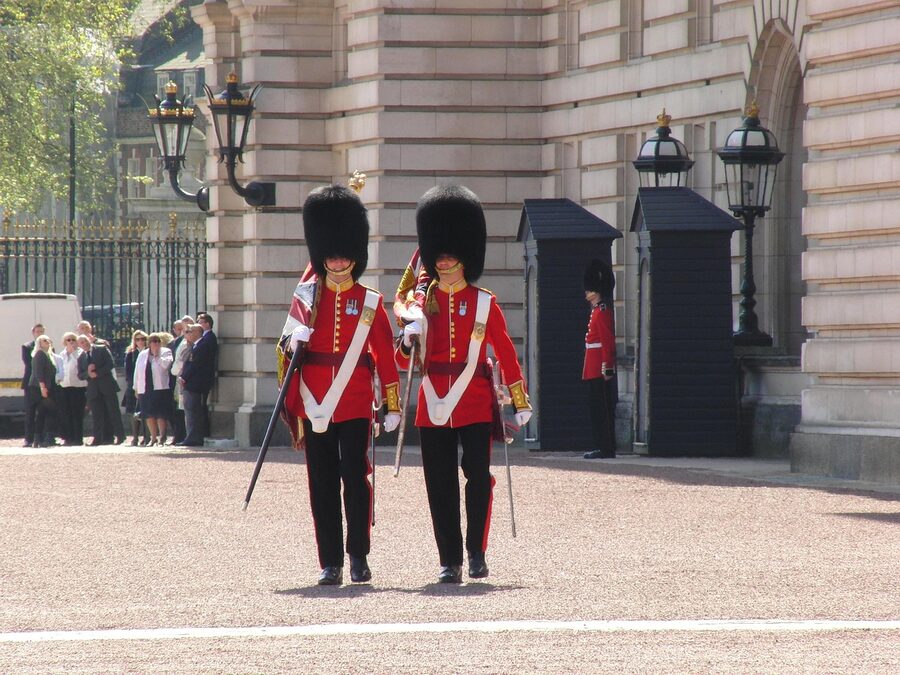
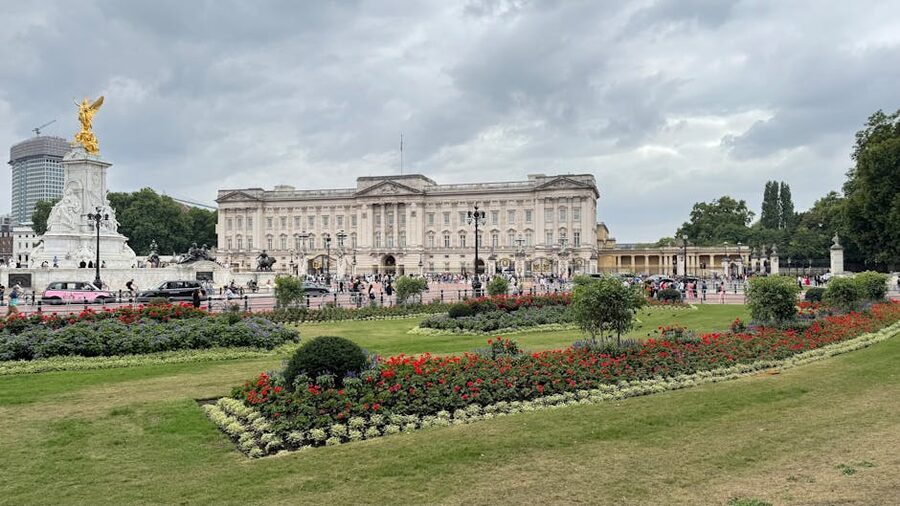
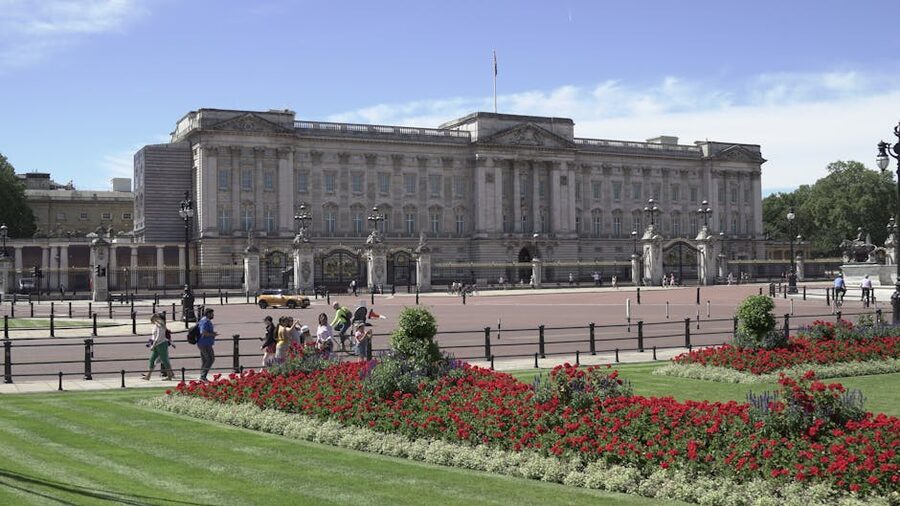
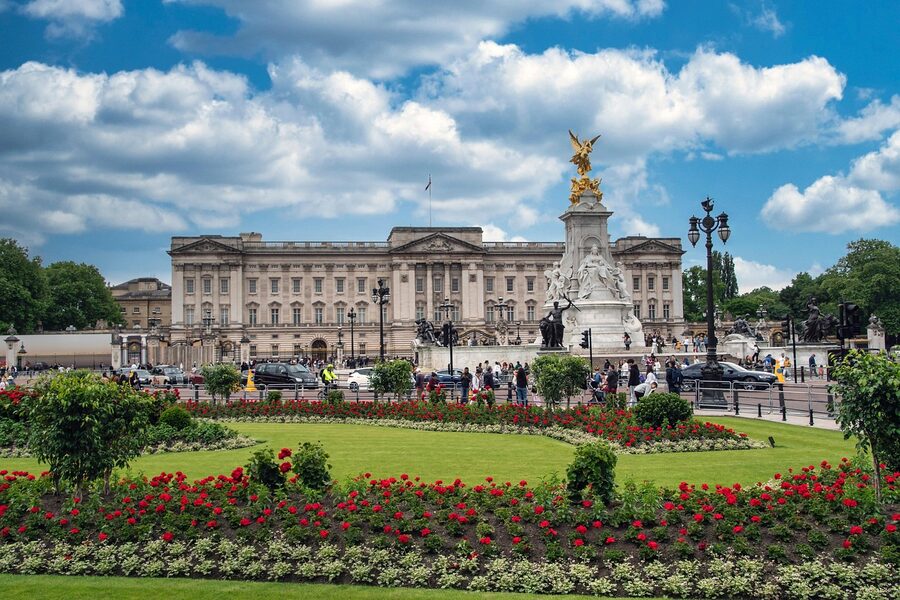
The classic Buckingham Palace shot is the front facade with the Victoria Memorial in the foreground. Stand on the central path leading from the Mall to the Memorial, point camera, done. Morning light from the east is best (the facade faces east). Late afternoon works in summer when the sun has moved overhead.
For the Changing of the Guard, the Victoria Memorial steps give you elevation and the full forecourt panorama. The Mall side gives you the procession arrivals. The corner of Buckingham Palace Road and Birdcage Walk gives you the New Guard departing from Wellington Barracks. Pick one or two of these. You can’t cover all three on a single ceremony.
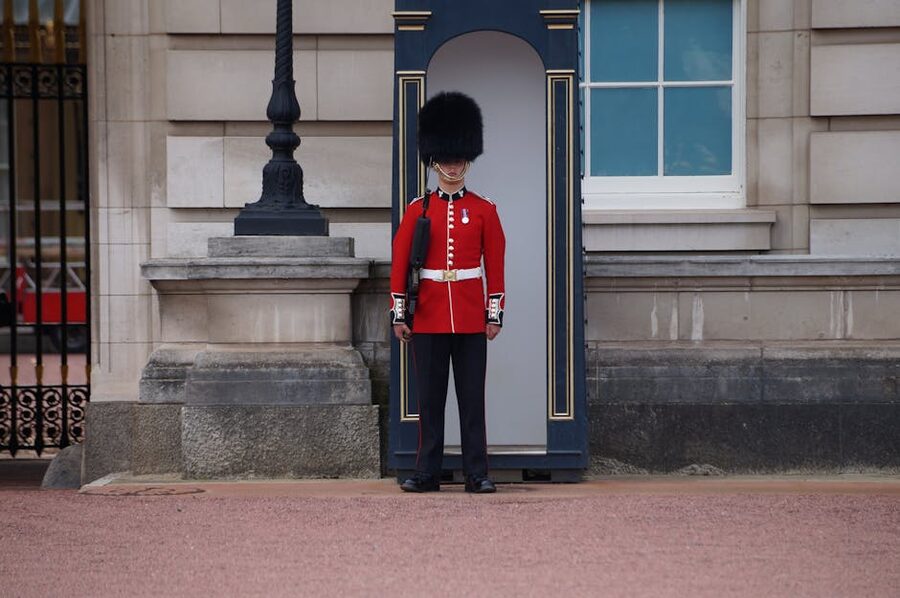
For the gates themselves, get close. The gilt detail rewards a tight crop. A 50mm or short telephoto handles it fine. Phone cameras work, but the gold detail benefits from a real lens if you’re carrying one. Photographers who like London after dark can pair the palace with one of our two evening-walks favourites: the Jack the Ripper walking tour in the East End or the Harry Potter filming-locations walk across central London. Both run in the dark and give you a different visual register.
Where to head next
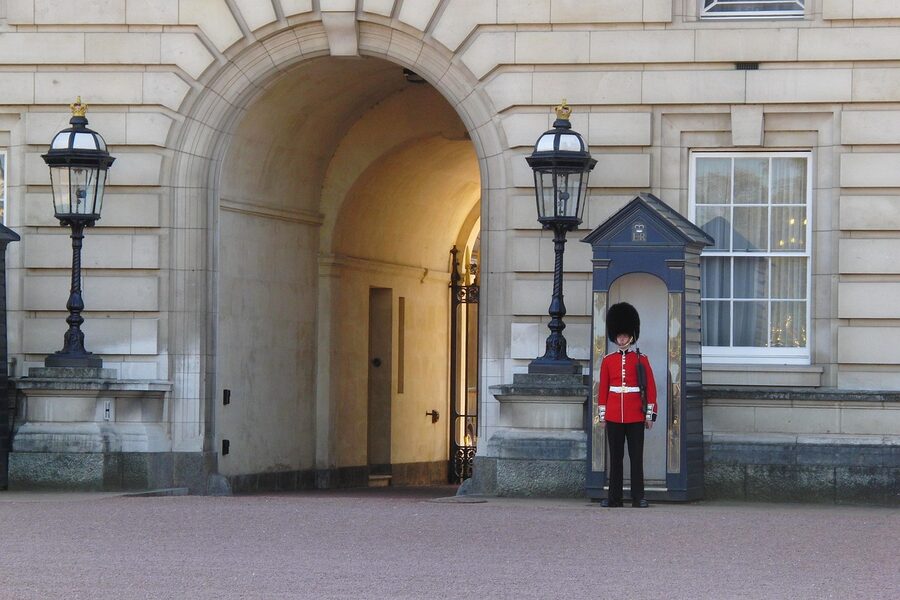
If you’ve got a half-day still ahead and want to push east, the deepest-history complement is the Tower of London, easily a half-day on its own. For royals-and-views, the London Eye is the closest big-ticket pairing. And if your legs are giving up, the hop-on hop-off bus guide ties most of central London onto a single day.