
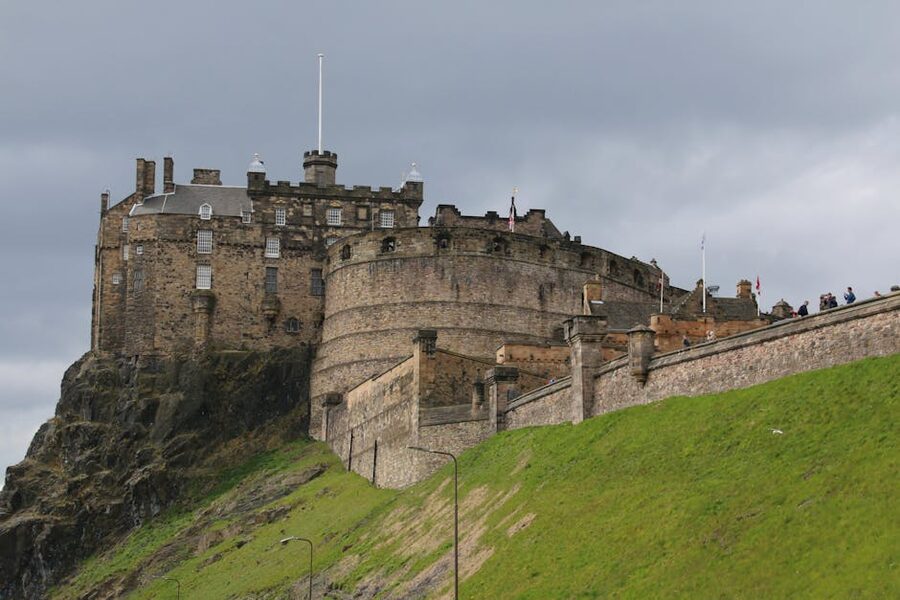
Stand on the Esplanade at one minute to one and you’ll feel it before you hear it. The crowd hushes, gulls scatter off the battlements, and a soldier in tartan walks out to the half-moon battery. Then the gun goes. The boom rolls down off Castle Rock, ricochets across the Old Town tenements, and dies somewhere over the Forth. Welcome to Edinburgh Castle.
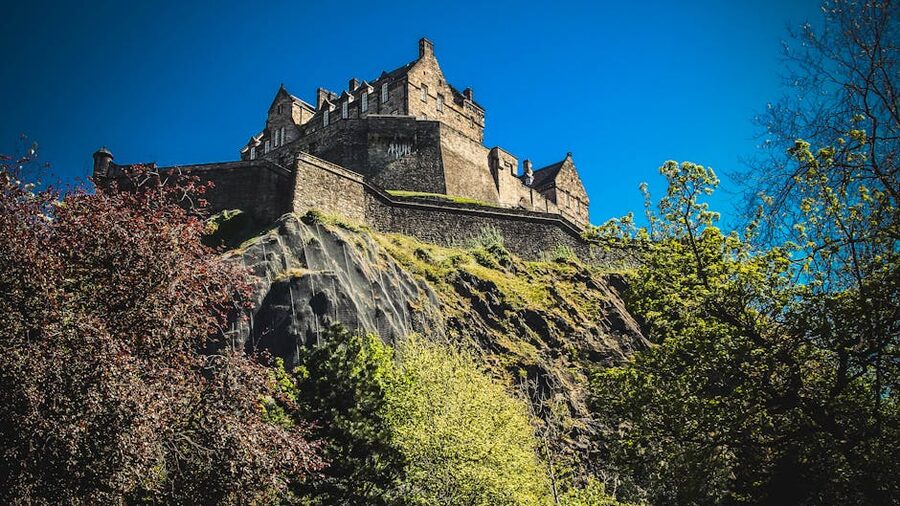
The castle is the busiest paid attraction in the UK outside London, and in July and August it’s heaving by mid-morning. Booking a timed entry is non-negotiable now, and adding a guide makes a huge difference if you want the stories rather than just the buildings. Below are the tours I’d actually book, plus the practical bits I wish someone had told me before my first visit.
- In a Hurry? Top 3 Edinburgh Castle Picks
- Skip-the-Line Walking Tour:
- Castle Guided History Tour:
- Highlights Tour with Entry:
- How Edinburgh Castle Tickets Actually Work
- Ticket Types and What They Include
- When to Visit (And When Not To)
- Opening Times and Last Entry
- The Three Tours I’d Actually Book
- 1. Edinburgh Castle: Skip-the-Line Guided Walking Tour:
- 2. Edinburgh Castle Guided History Tour:
- 3. Edinburgh Castle: Live Guide Tour:
- What’s Actually Inside
- The Honours of Scotland
- The Stone of Destiny
- Mons Meg
- St Margaret’s Chapel
- The One O’Clock Gun
- The History in One Page
- Getting There
- Accessibility
- Bag Checks and Storage
- Food, Coffee, and the Bit Most Guides Skip
- Common Mistakes
- What Else to Pair It With
- One More Thing
- More Edinburgh Reading
In a Hurry? Top 3 Edinburgh Castle Picks
Skip-the-Line Walking Tour: $49
The most-booked Castle tour on GetYourGuide for a reason. Fast-track entry plus a 1.5-hour guided walk covers the Crown Jewels, Stone of Destiny, and Mons Meg without you doing the planning.
Castle Guided History Tour: $49
Same price, slightly different angle. Heavier on the Wars of Independence and the royal palace. Pick this if you care more about who lived here than what they fired off the walls.
Highlights Tour with Entry: $49
Two full hours instead of 90 minutes, which gives the guide room to actually answer questions. Best for first-timers who want everything explained, not just signposted.
How Edinburgh Castle Tickets Actually Work
Edinburgh Castle uses timed-entry tickets. You pick a slot when you book, say 9:30 to 11am, and that’s the window in which you have to enter. Once you’re inside you can stay until closing. The catch: tickets are valid for one entry only. Leave the castle and you can’t come back. So plan to do it in one go, and bring snacks if you want to stay through lunch.
The official Historic Environment Scotland (HES) site sells the cheapest tickets, but in summer the next-available slot can be three or four days out. That’s where third-party guided tours earn their keep. Companies on GetYourGuide buy ticket allocations in advance, so you can usually still find availability for tomorrow even when HES says sold out.
Ticket Types and What They Include
The standard adult HES ticket covers entry plus access to every museum and exhibition inside (Crown Jewels, Royal Palace, Great Hall, the National War Museum, the Prisons of War). It also includes the optional 30-minute introductory tour led by a castle steward, which leaves from the Argyle Battery several times a day. Take it if you have time. It’s not the same as a private guided tour, but it’s a nice orientation, and it’s free with the entry ticket.
The audio guide is a separate add-on and costs a few quid extra. There’s over six hours of content on it, so don’t try to listen to all of it. Pick three or four stops that interest you and skip the rest. I find audio guides drag if you’re already moving with a group.
If you’re road-tripping more of Scotland, look at the HES Explorer Pass. It covers Edinburgh Castle, Stirling, Urquhart, Skara Brae and 50-odd other sites for a flat price across 5 or 14 days. Worth it if you’re hitting two or more castles. Not worth it if Edinburgh is your only stop. And note that Holyrood Palace isn’t included because it’s a Royal Collection property, not HES.
When to Visit (And When Not To)
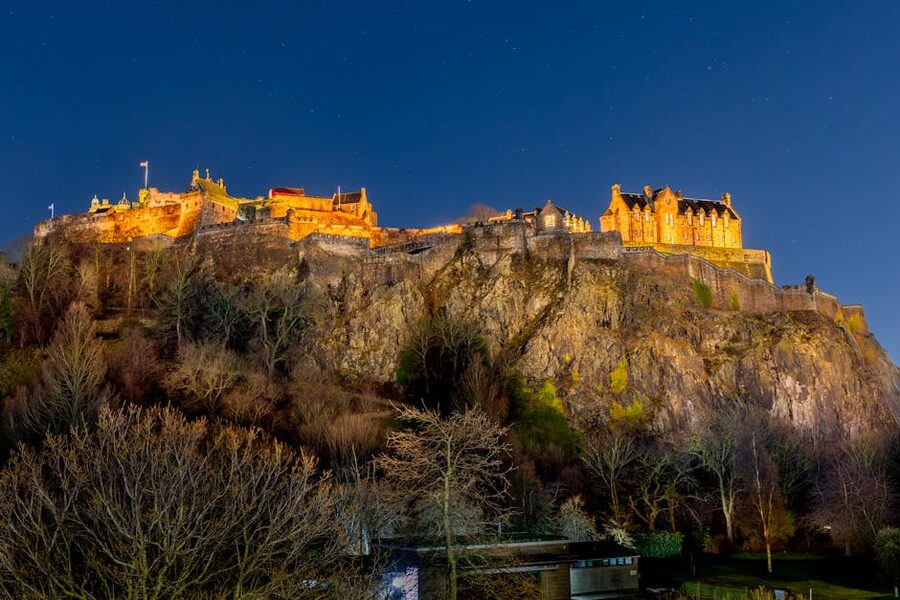
The honest answer: any morning between November and March is great. Crowds are light, ticket slots are easy to grab, and the haar mist rolling off the Forth makes the photos better than a clear summer day. The downside is the wind. Castle Rock is exposed on three sides and the temperature on the battery is always five degrees colder than your phone says.
If you’re stuck visiting in July or August, here’s the trick: avoid the 10am to 12pm window. Cruise ship coaches and hotel breakfast crowds all turn up at opening time. Slots after 1pm are quieter, and the last entry is one hour before close, so a 3pm slot still gives you two solid hours inside.
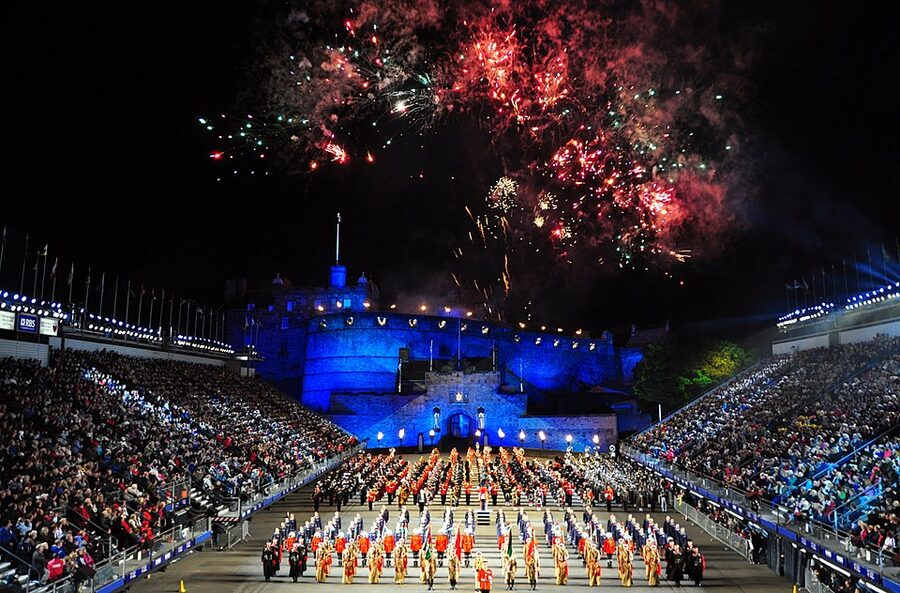
One August week to actually avoid is the start of the Royal Edinburgh Military Tattoo, when the Esplanade gets fenced off for grandstand seating and entry routes shift. Go either before or after Tattoo week, or buy a Tattoo ticket separately and treat it as a different night out. The Edinburgh Festival itself doesn’t close the castle, but it doubles every queue in the Old Town.
Opening Times and Last Entry
Summer (April to September): 9:30am to 6pm, last entry 5pm. Winter (October to March): 9:30am to 5pm, last entry 4pm. The castle closes on Christmas Day and Boxing Day, but is otherwise open every day of the year.
You should plan a minimum of two hours inside. Three is more comfortable. The official guide says two, but I’ve never managed it without skipping something I wanted to see. The Royal Palace alone with its tiny birth-chamber where Mary Queen of Scots had James VI is worth twenty minutes of careful looking.
The Three Tours I’d Actually Book
If you only want to walk in, see the Crown Jewels and walk out, the bare HES ticket is fine. But guided tours give you the stories and the why, and on a damp Edinburgh morning a good guide is also someone holding an umbrella while pointing at things. Here are the three I’d put my own money on, ordered by how I’d recommend them.
1. Edinburgh Castle: Skip-the-Line Guided Walking Tour: $49
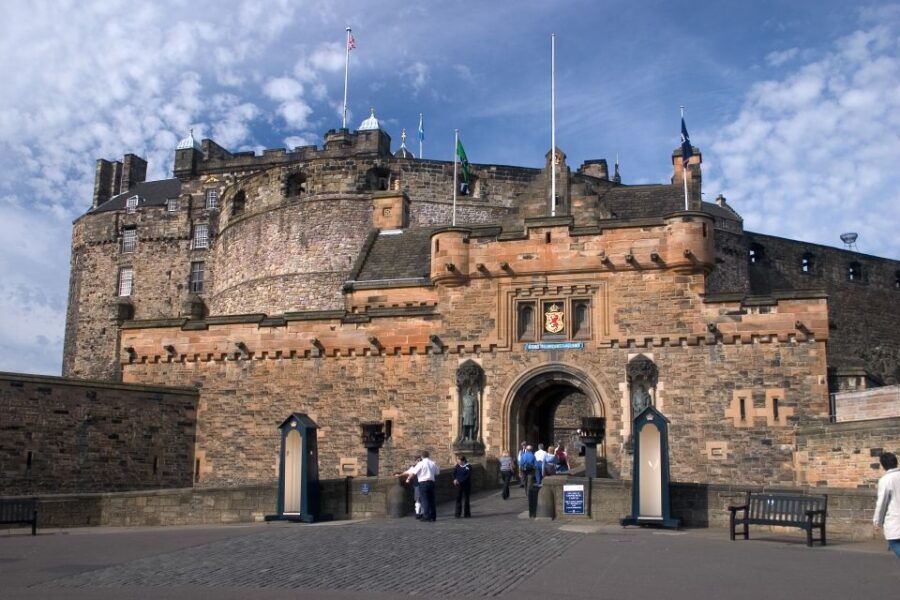
This is the most-booked Castle tour on the market, and the volume is no accident. You skip the entry queue, you get a 90-minute walk through the highlights with a live guide, and the price is identical to the standard HES ticket once you factor in the fast-track. Our full review of this Skip-the-Line tour covers the meeting-point logistics and what to expect at the Crown Jewels stop, which gets bottlenecked.
2. Edinburgh Castle Guided History Tour: $49

Same price as the flagship, slightly different shape. The history tour spends more time on the Wars of Independence and the actual political weight of the Honours of Scotland, less time on the photo stops. Our history tour review goes into the guide quality, which sits notably higher than the city average. Pick this if you’ve already done the Tower of London and want something with more depth than the standard tourist loop.
3. Edinburgh Castle: Live Guide Tour: $50
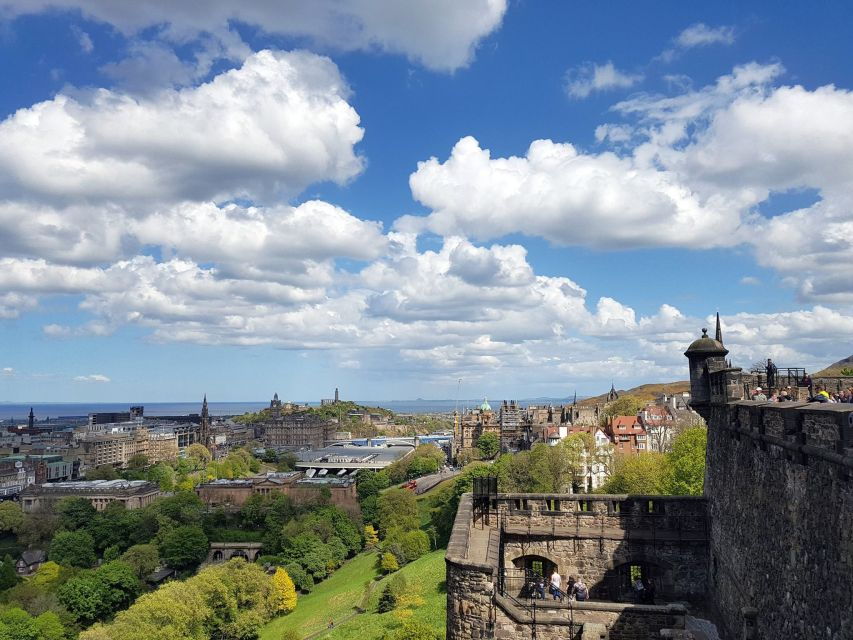
A pound more than the others, but smaller groups and a slightly different itinerary. Worth it if you don’t want to be in a 25-person crocodile through the Royal Palace. Our live guide tour write-up notes the Adam Smith statue and Crown Square stops as standouts, and the guides take questions properly rather than batting them away.
If you’re booking the day before, my honest advice: take whichever of these three has a slot in the time window you want. The quality difference between them is small. The quality difference between any of them and a no-guide self-tour is large.
What’s Actually Inside
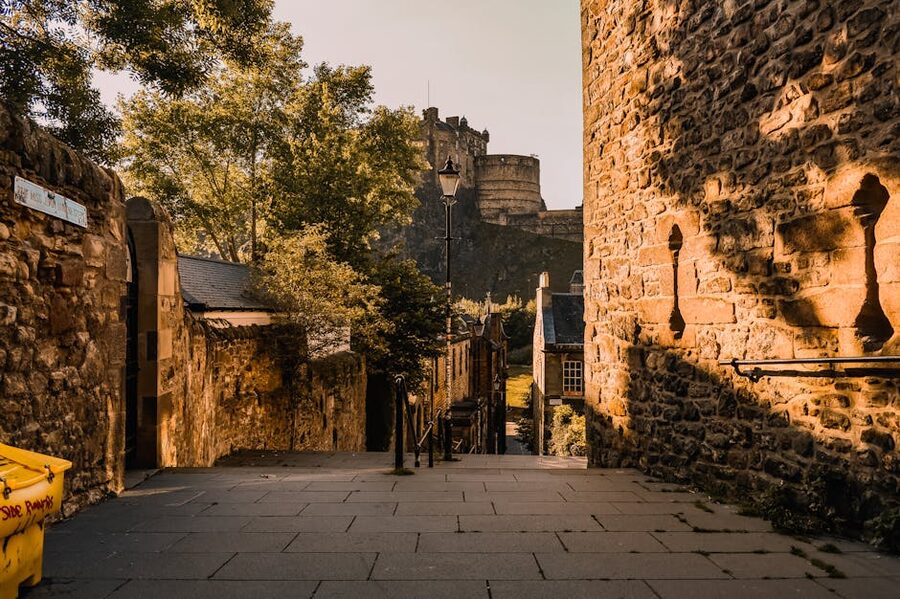
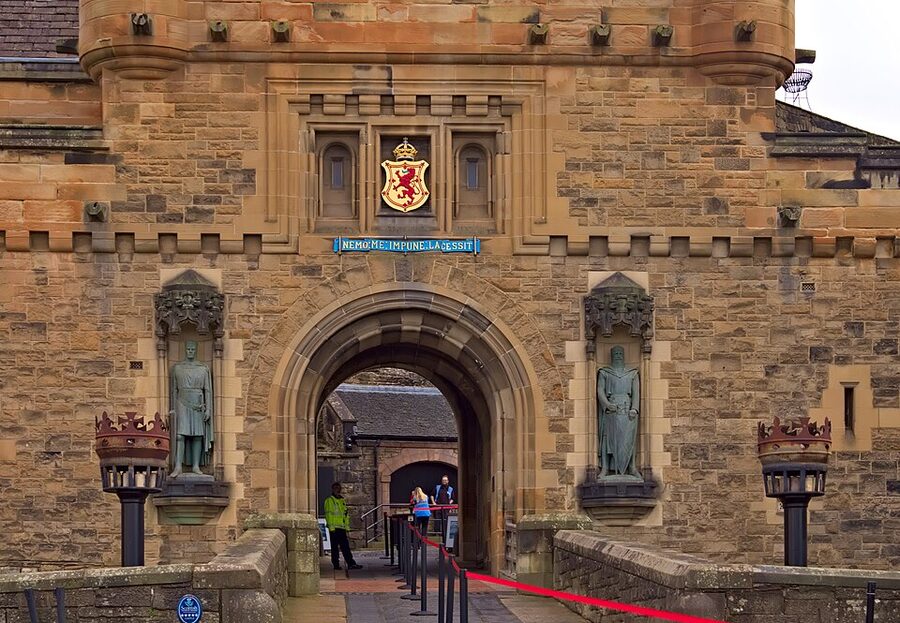
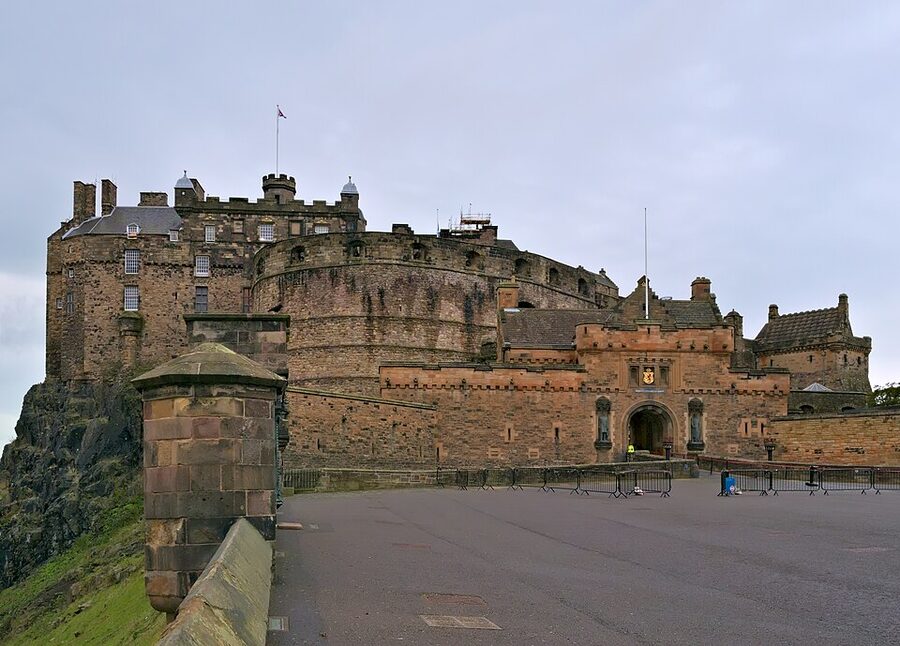
The site is bigger than it looks from below. You enter through the gatehouse, walk uphill past the Argyle Battery, climb again to the upper ward, and then loop down through Crown Square. Plan on uneven cobbles the whole way, plus a few short flights of stone stairs.
The Honours of Scotland
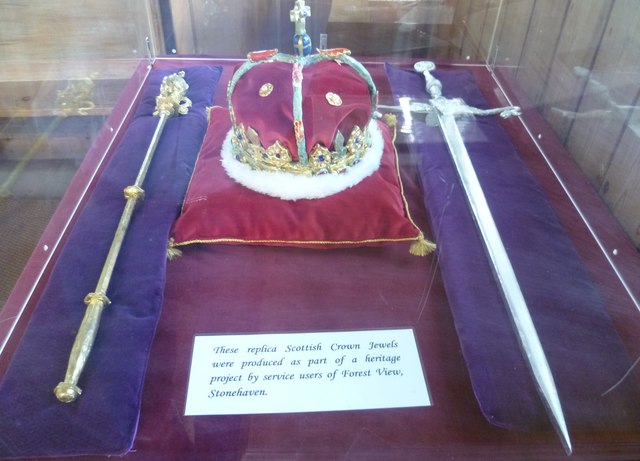
The crown, sceptre and sword in the Royal Palace are the oldest royal regalia in Britain. The Scottish set predates the English Crown Jewels by more than two hundred years. The English versions in the Tower of London are bigger and shinier, but ours are older and have a wilder backstory. They were buried under a church floor for over a hundred years to keep them away from Cromwell, then forgotten about, then dug up by Walter Scott in 1818. Worth lingering on the wall texts here. They’re easy to skim past and shouldn’t be.
If you want a side-by-side comparison, our guide to the Tower of London covers the bigger English Crown Jewels collection, and visiting both on the same UK trip is a fair pairing. Edinburgh’s Honours feel more personal. The Tower of London’s set is a state-spectacle.
The Stone of Destiny
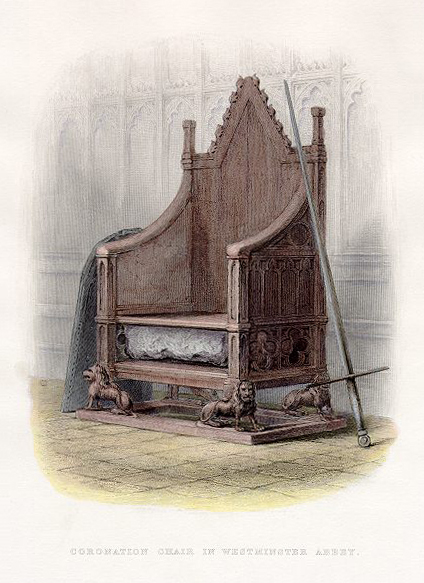
The Stone is on permanent display next to the Honours since 1996. Before that, it lived under the Coronation Chair in Westminster Abbey for almost seven centuries. It’s gone south twice since, both times for English coronations, then back to the castle. The display is darker than you’d expect, and the queue can bottleneck here in summer. A guided tour gets you in via a different door and skips the worst of it.
Mons Meg
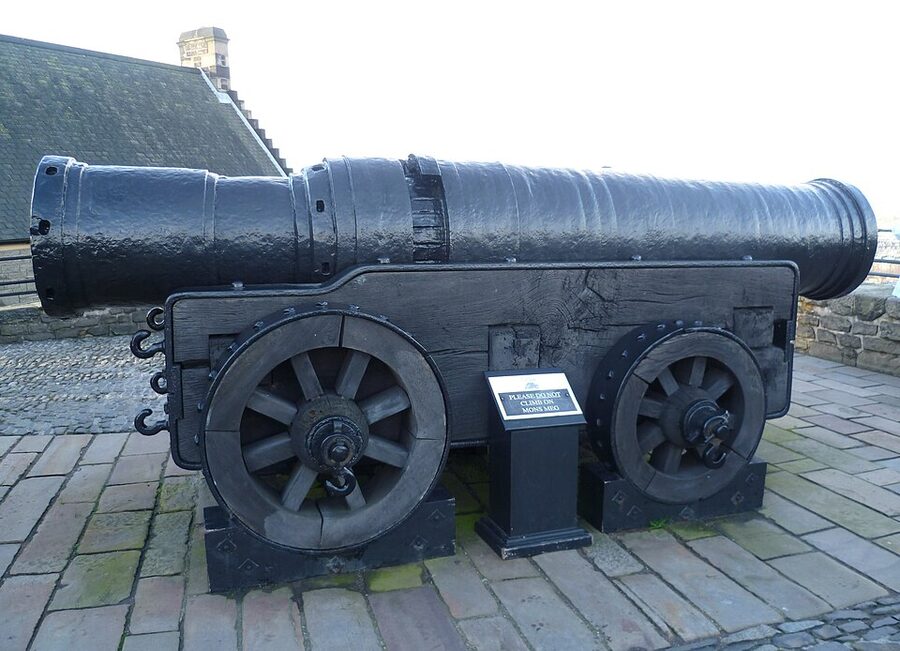
Built in 1457, fired stones the size of a microwave, and was eventually retired because the barrel kept cracking when fired. Most kids do a lap, get a photo, and move on. The cannonballs piled next to her are real and look fake. Pick one up if security isn’t watching. They’re heavy.
St Margaret’s Chapel
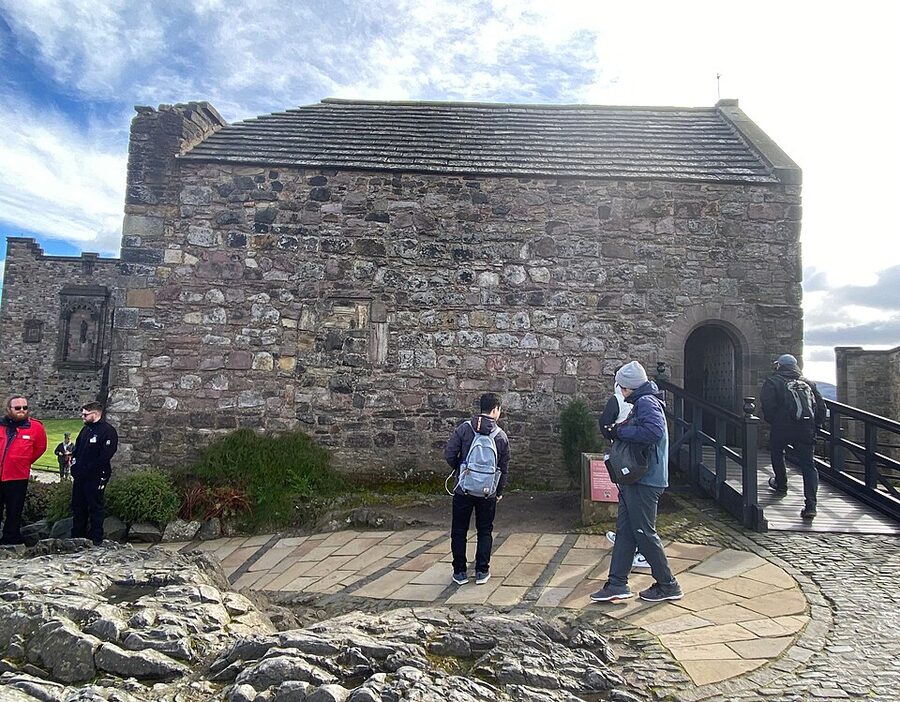
The smallest building on the site and the oldest in the city. Built around 1130 in memory of Queen Margaret of Scotland. It’s a single tiny room with a stone arch, a small altar, and stained glass. Most tour groups skip it. Don’t. Five minutes here is one of the few quiet pockets you’ll find inside the castle on a busy day.
The One O’Clock Gun
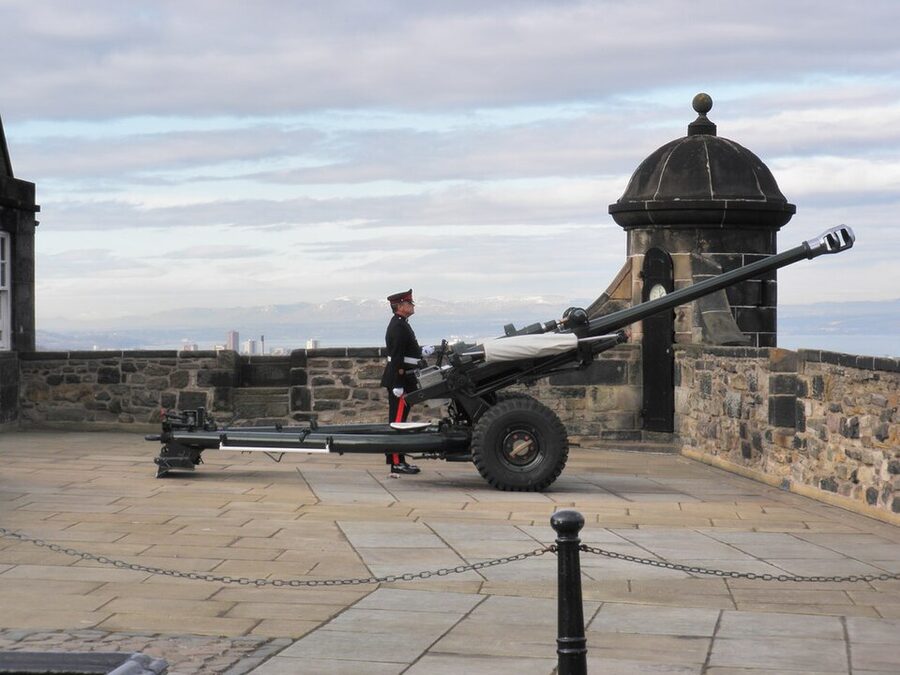
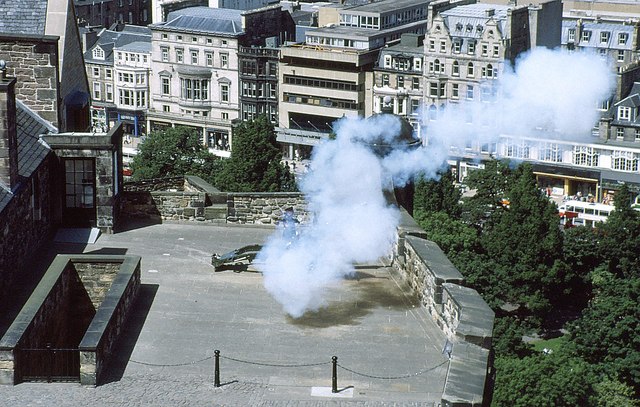
The gun has been fired daily at exactly 1pm since 1861, except Sundays, Good Friday, and Christmas Day. Originally it was a time signal for ships in the Forth, who used it to set their chronometers. There’s still a striped time-ball on Calton Hill that drops at the same moment, the visual cue for ships out of earshot.
If you’re inside the castle at 1pm, get to the Mills Mount battery five minutes early. It’s the most fun thing the castle does, the crowd reacts every single time, and it’s free with your entry ticket. The boom is louder than you expect. Babies cry. People scream. A guide once told me the loudest reaction is always from American tourists who’ve forgotten it’s coming.
The History in One Page
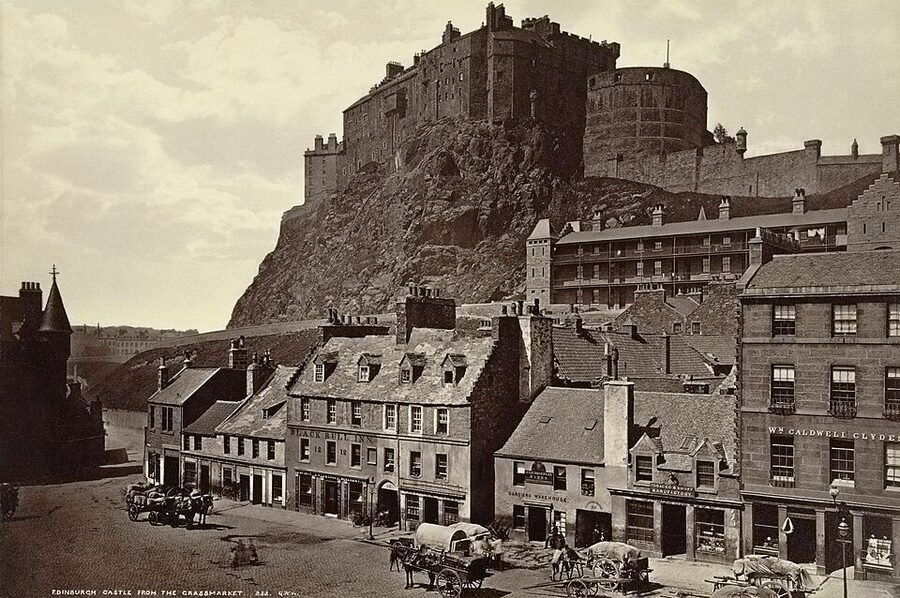
People have lived on Castle Rock since the 2nd century AD. The first castle proper went up around the 12th century under King David I. Since then it’s been besieged 26 times, making it one of the most-attacked castles in Europe. Cromwell took it. The Jacobites tried in 1745 and didn’t. The site has been a royal residence, a state prison, a barracks, and a treasury, sometimes all at once.
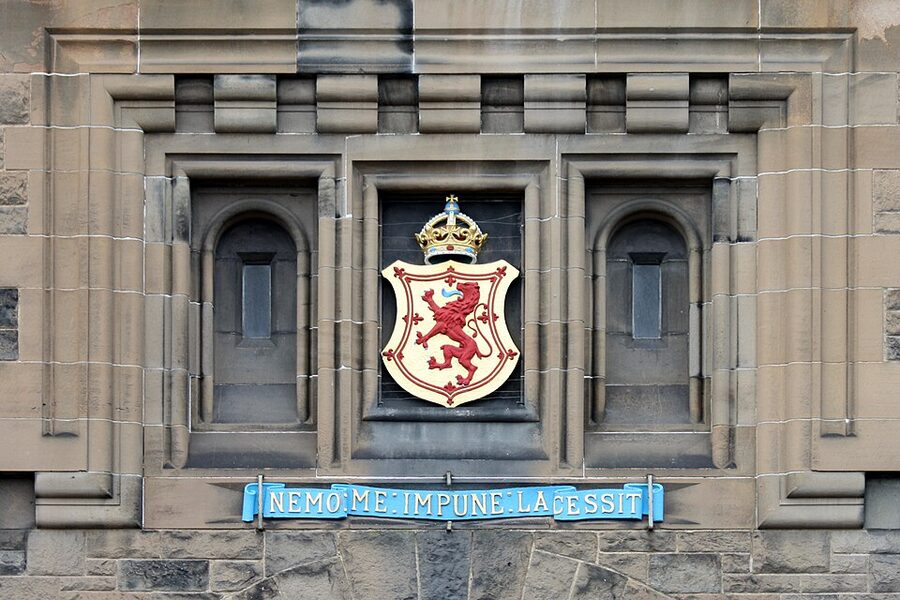
It still is, technically. The castle is an active military headquarters and you’ll see uniformed personnel inside the walls. The Royal Regiment of Scotland is based here, and the National War Museum on site is run by National Museums Scotland. None of this gets in your way as a visitor, but it does mean random bag checks happen at peak times. Build ten minutes of slack into your schedule.
Getting There
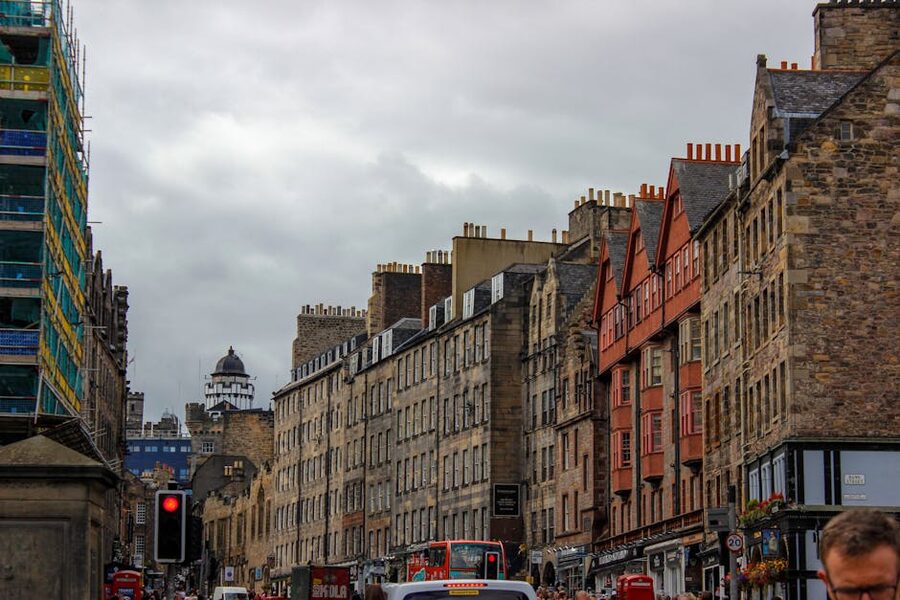
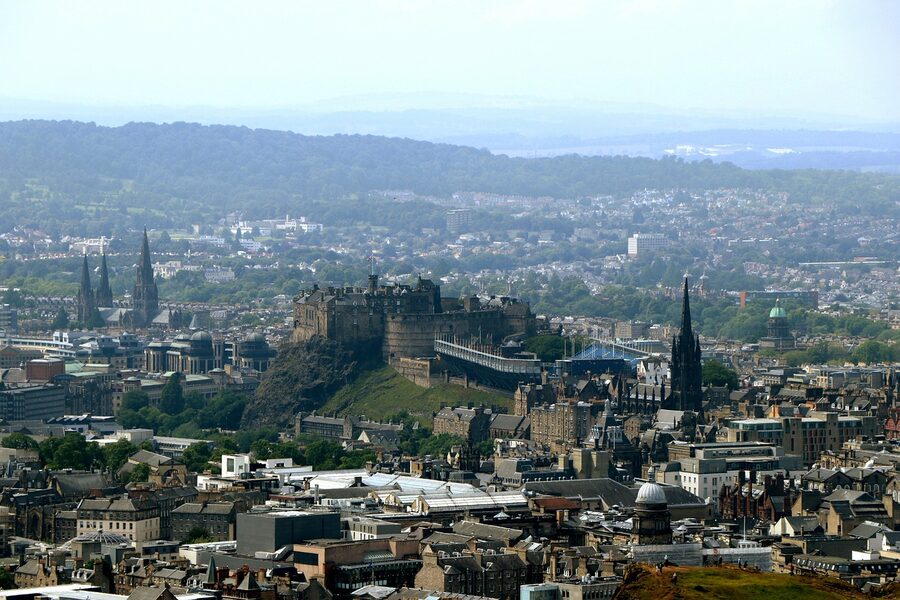
The castle sits at the top of the Royal Mile. From Waverley station it’s a 10-minute uphill walk through Princes Street Gardens and up Castle Wynd. From the bus stops on Princes Street, allow 15. There is no car park at the castle itself. Castle Terrace below is the closest paid car park and it’s pricey. Don’t bring a car into central Edinburgh if you can avoid it. The Old Town wasn’t built for traffic and it shows.
The walk up the Royal Mile from Holyrood is about 25 minutes if you don’t stop. You will stop. There’s a closes-and-courts detour every fifty metres. The cobbles are uneven and slippery in rain, so flat shoes with grip are smarter than fashion trainers.
Accessibility
The site is on a steep hill (still, technically, an extinct volcano) with stairs and uneven cobbles throughout. A free mobility vehicle runs between the lower and upper wards for visitors with mobility difficulties. Demand is high in summer and waits can be long. Of the three toilet blocks on site, only one has level access. If you have a wheelchair user in your group, contact HES ahead of your visit. They’ll work the timing with you.
Bag Checks and Storage
There’s no left luggage facility at the castle. Whatever you bring through the gate, you carry around the whole site. If you’ve come straight off a train with a suitcase, drop it at Waverley left luggage first. Strollers are allowed but they’re work on the cobbles. Random security checks happen at peak times, so allow time.
Food, Coffee, and the Bit Most Guides Skip
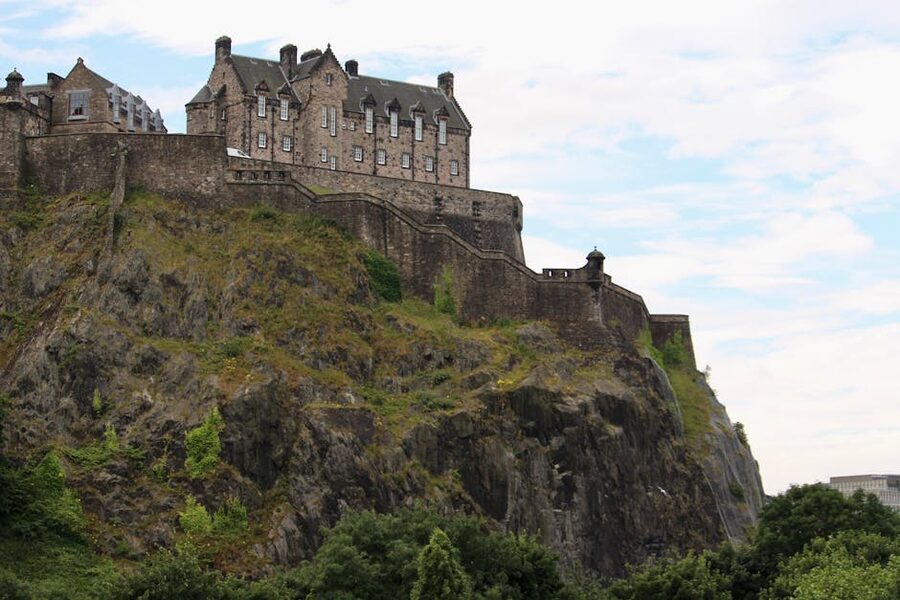
There are two cafes inside, the Tea Rooms in the Crown Square area and the Redcoat Cafe near the entrance. Both fine, both pricey for what they are. A scone and a coffee will cost you about £8. The Redcoat does proper hot lunches, the Tea Rooms is more cake-and-coffee. Neither beats walking ten minutes back down the Royal Mile to Mums Great Comfort Food or Wedgwood the Restaurant for a proper meal afterwards.
If the weather turns, there’s a covered walkway from the Argyle Battery down through the Argyle Tower, which is the warmest indoor stretch of the site. Useful to know in March when the haar comes in sideways.
Common Mistakes
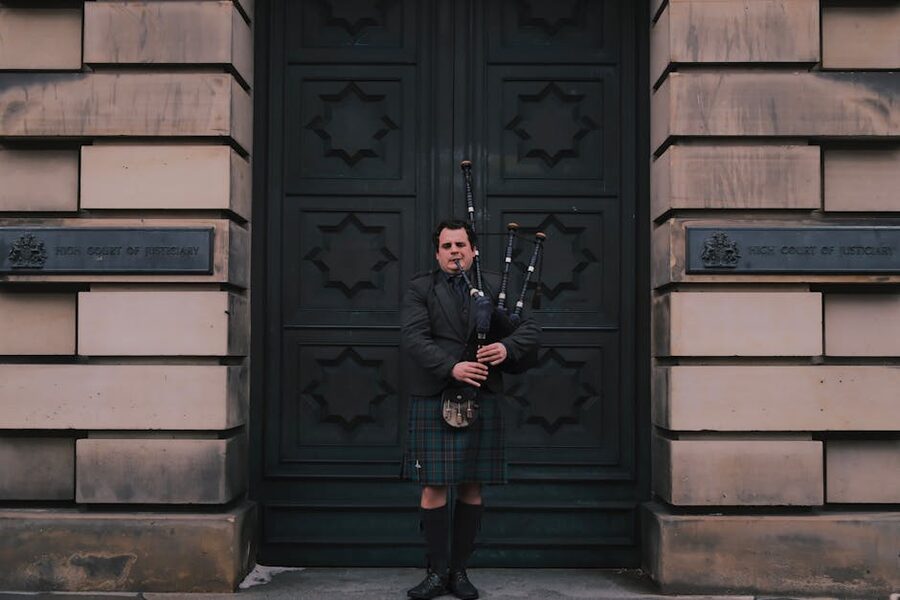
I’ve watched tourists make these often enough to call them out:
- Booking the wrong day. The HES site shows availability across the whole month at once. People click the first available date without realising it’s two weeks away. Check the calendar carefully.
- Trying to do the castle in 90 minutes. If you’ve also got the National War Museum on your list, two hours is the bare minimum. Three is realistic.
- Wearing heels on the cobbles. The whole site is uneven stone. Trainers or grippy flats only.
- Skipping the One O’Clock Gun. If you’re inside between 12:50 and 1:05, get to the battery. It’s a memory people talk about for years.
- Eating lunch inside. Even the cafes will tell you the food is better in town. Save the £8 scone money for somewhere on Victoria Street.
What Else to Pair It With
The castle works best as a half-day. You’ll have time afterwards for one of: the National Museum of Scotland (free, ten minutes’ walk), Greyfriars Kirkyard (the Tom Riddell tombstone if you’re a Harry Potter fan, more on that in our Edinburgh Harry Potter walking tour guide), or a tour of the South Bridge Vaults under the Old Town. The vaults are the strangest hour you’ll spend in Edinburgh, sealed up for over a century before they were rediscovered in the 1980s. Our guide to the Edinburgh Underground Vaults covers daytime versus ghost-tour options.
If you want to round out a full day in the Old Town, walk down to Johnnie Walker Princes Street or the Scotch Whisky Experience next to the castle. Our Edinburgh whisky experience guide compares the two side by side. They’re a 100m walk apart and aimed at different visitors. The Scotch Whisky Experience is the daytime, family-friendly one. Johnnie Walker is the evening, tasting-bar one.
One More Thing
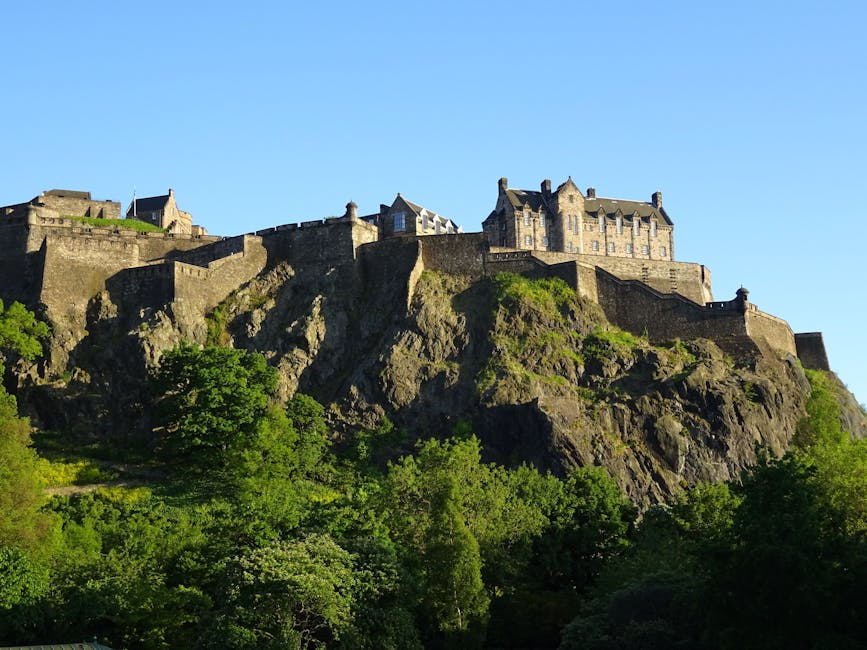
If you only have one morning in Edinburgh and you’re trying to choose between the castle and Holyrood Palace at the bottom of the Royal Mile, do the castle. Holyrood is good but it’s a smaller story. The castle is the city in stone. Every layer of Scottish history is somewhere on this rock. Book the slot, take the tour, stay for the gun, walk out the way you came in.
More Edinburgh Reading
If you’ve got a few days in town, the same trip pairs well with our writeups on the South Bridge Underground Vaults for an evening hour, the Edinburgh Harry Potter walking tour for the Greyfriars-and-Diagon-Alley side of the city, and the Scotch Whisky Experience next door if you want to drink something warming after two hours on the battlements.