
My friend Marta still talks about her first sight of Meteora. The bus had been climbing through Thessaly for what felt like a forever loop of olive groves and roadside saints, the morning mist sitting low on the plain. Then she rounded a bend outside Kalambaka, looked up, and went quiet for about a full minute.
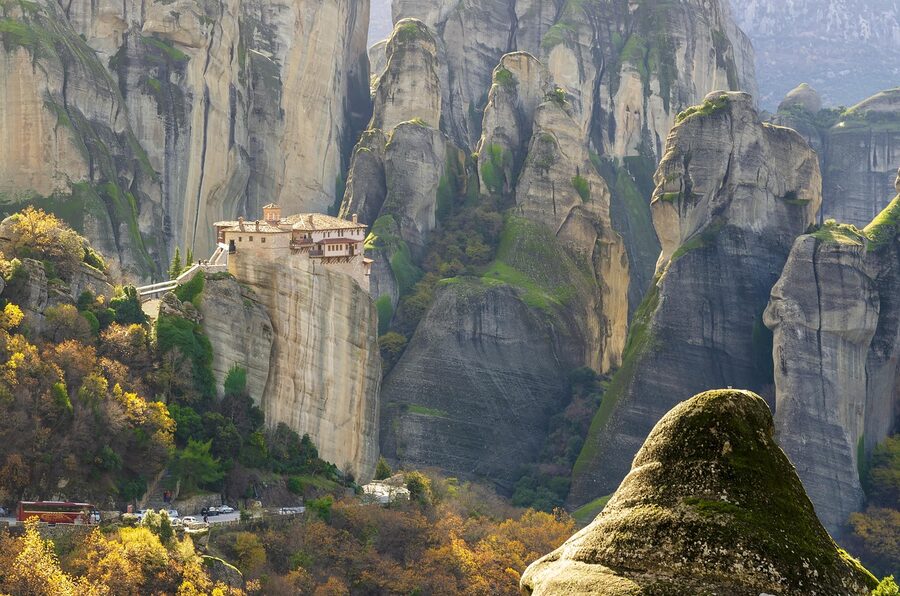
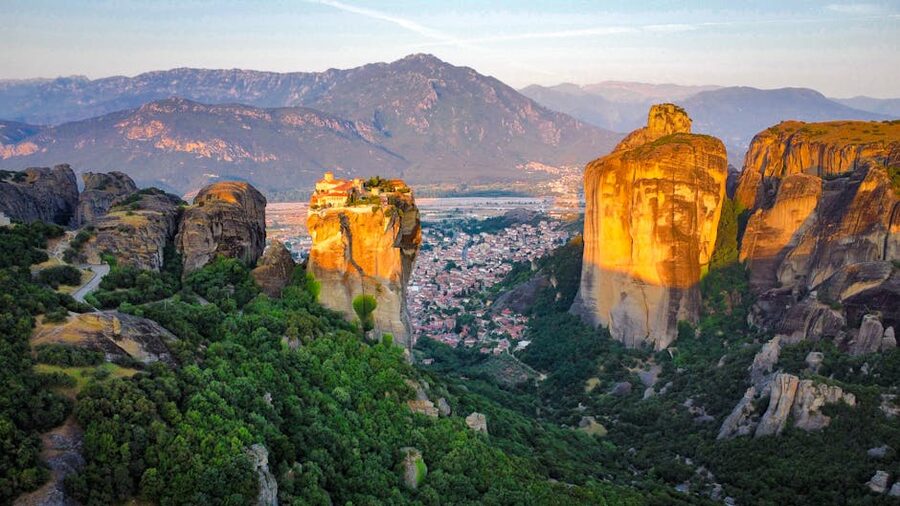
Six monasteries. Balanced on top of stone fingers that punch out of the ground like something out of a fantasy novel. She told me later that the climb up the cut-stone steps to Great Meteoron wrecked her quads, but the view from the top was the only travel moment that has ever made her cry. That is the kind of place Meteora is. And it is doable as a long, very long, day trip from Athens.
- In a Hurry? My Top 3 Picks
- Is the Day Trip Actually Worth It?
- The Six Monasteries, Quickly
- Coach Day Trip vs Train and Driver
- Day Trip vs the Two-Day with Delphi
- The Theopetra Cave Stop
- Dress Code (This Trips People Up)
- Photo Restrictions Inside
- The Tours I Would Actually Book
- 1. Athens to Meteora Day Trip with Caves and Lunch (around )
- 2. From Athens: Delphi and Meteora 2-Day Guided Tour (around 1)
- 3. Meteora Day Trip from Athens by Bus with Optional Lunch (around )
- How to Build the Day So It Does Not Crush You
- Best Time of Year
- What the Drive Looks Like
- A Bit of Context (Skip This If You Are Just Booking)
- Cost Breakdown for the Day
- Common Mistakes I See
- Pairing Meteora With the Rest of Your Athens Trip
- FAQ-style Bits I Get Asked
- What Else to Plan in Greece
In a Hurry? My Top 3 Picks
Caves and Lunch flagship from Athens, around $87. Long day, full coach, three or four monasteries plus a quick stop at the Theopetra Cave. The most-booked Meteora day trip on the market for good reason. Check availability and times.
Two-day Delphi and Meteora combo, around $271. If 14 hours in a coach sounds like punishment, this splits the journey, throws in Delphi, and gives you a sunset on the rocks. See dates and price.
Bus day trip with optional lunch, around $87. Same idea as the flagship but smaller groups and a different operator. Good fallback when the headline tour is full. Check the Viator listing.
Is the Day Trip Actually Worth It?
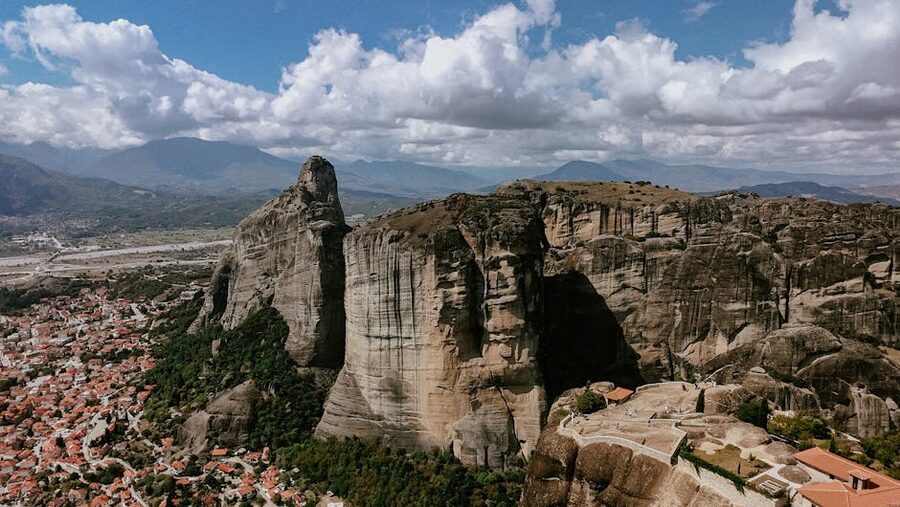
Short answer. Yes, if you do not have a second night to give, and no, if you can swing a sleepover in Kalambaka.
The drive from Athens is roughly 350 kilometres each way. That works out to about four and a half hours on the road in good traffic, and tour operators pad an extra thirty to forty minutes for fuel stops. So a 7am pickup gets you to the first monastery around midday, two or three monasteries inside three hours, lunch, then you are turning around. You are back in Syntagma by 9 or 10pm. That is fourteen hours, door to door. It is brutal.
Here is the real trade. A day trip lets you tick Meteora off in one go, with no hotel costs, no extra train booking, no second packing decision. You will see the rocks, you will go inside two or three monasteries, you will eat a lamb lunch, and you will be back in Athens that night. If your trip is short and Greek-island heavy, this works.
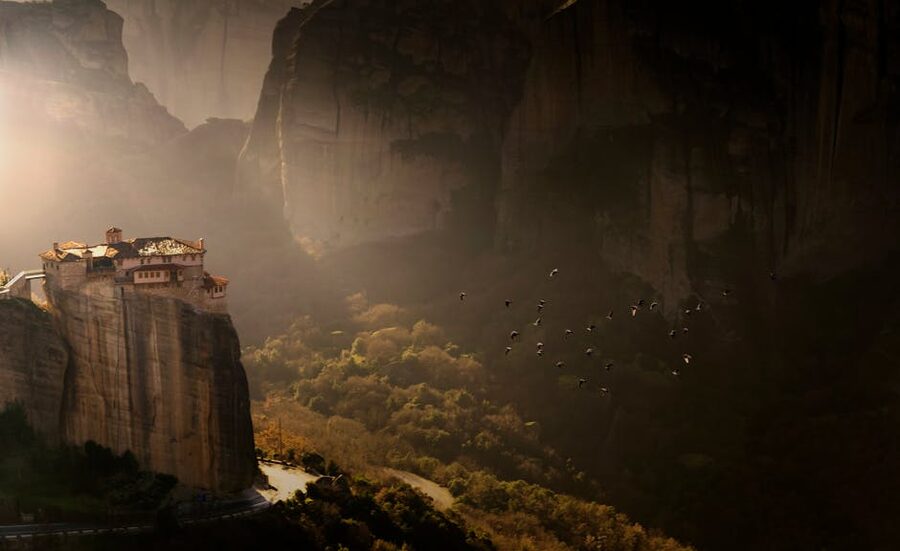
What a day trip cannot give you is sunset on the rocks, sunrise mist, or the empty mid-morning hour before the coaches arrive. For that you need an overnight in Kalambaka, or the two-day combo with Delphi I cover further down. If you are choosing between a fast day-trip to Meteora and a slow day-trip elsewhere, the closer Athens options like a Cape Sounion sunset run are easier on the body and arguably more relaxing.
The Six Monasteries, Quickly
There are six active monasteries open to visitors. Four are male houses. Two are convents. Each one closes one weekday. Plan for that.
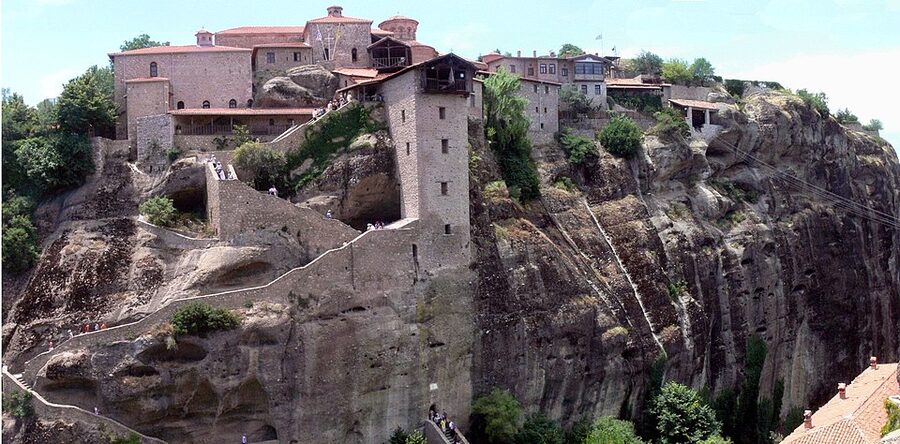
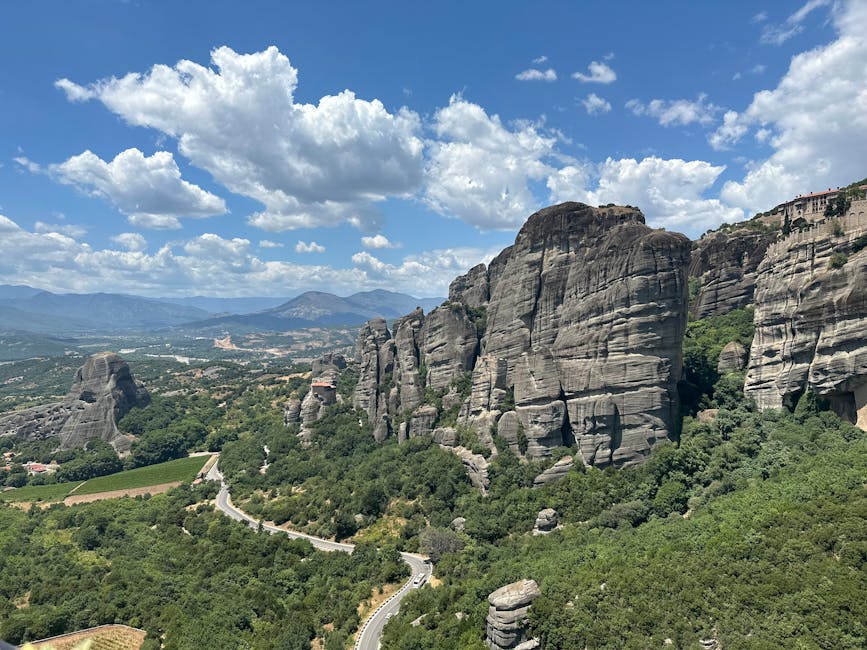
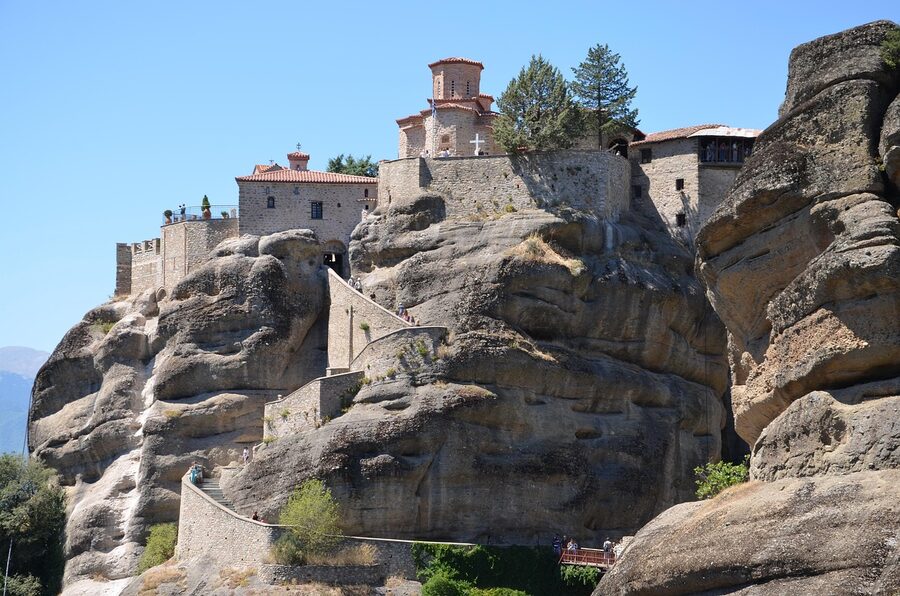
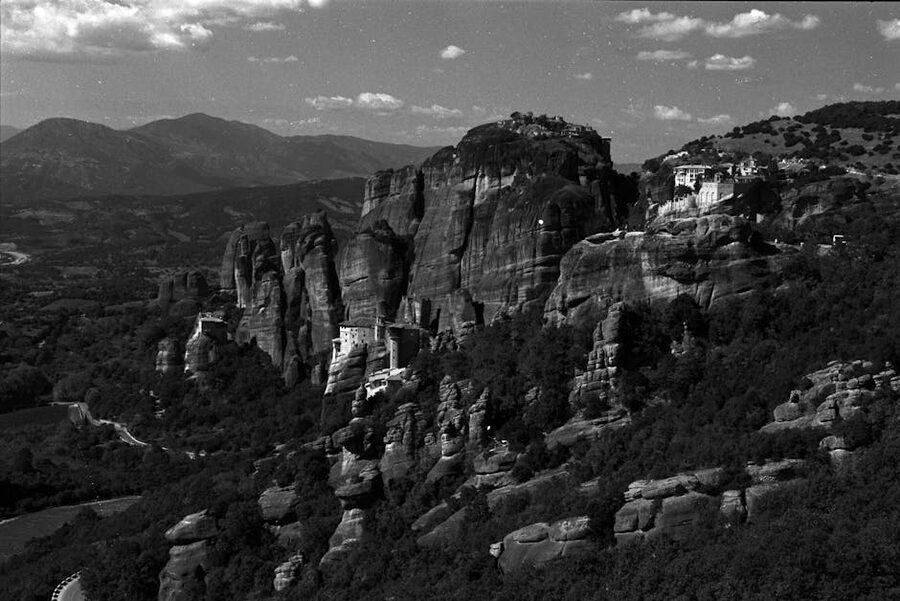
Great Meteoron (Megalo Meteoro). The biggest, the oldest, founded by St Athanasios in the 14th century. Has the famous skull room and the original wood-and-rope hoist that monks used before stairs existed. Closed Tuesdays.
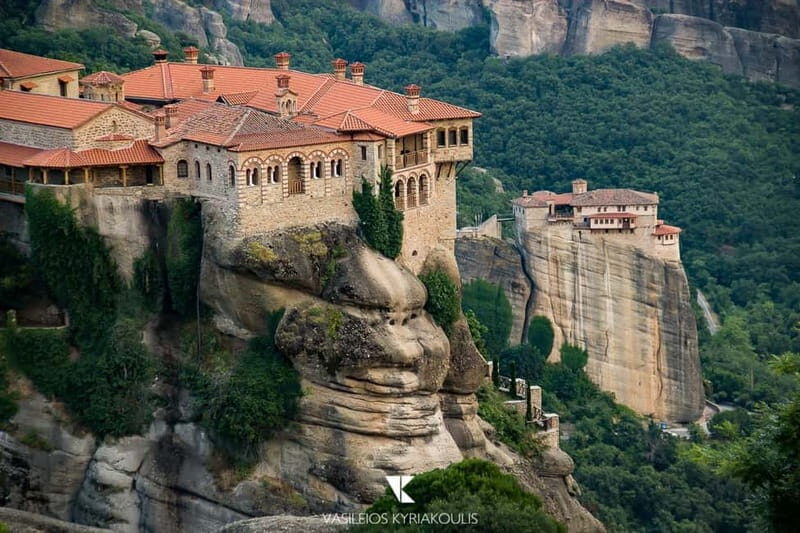
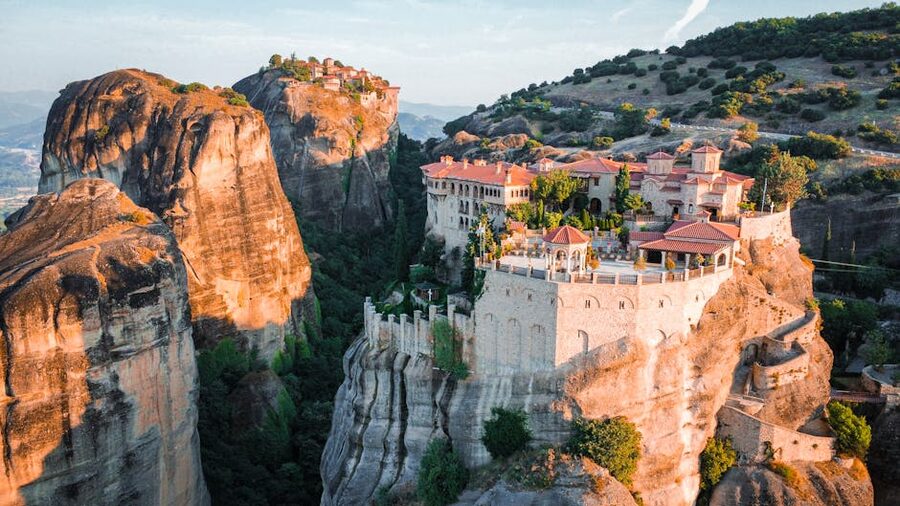
Varlaam. Right next door, second largest, with two domed churches and a beautiful refectory you can walk through. Closed Fridays.
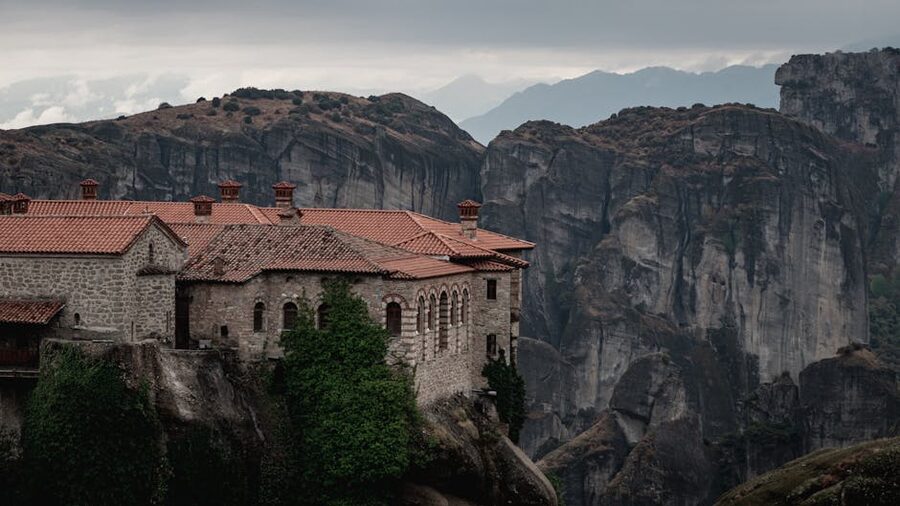
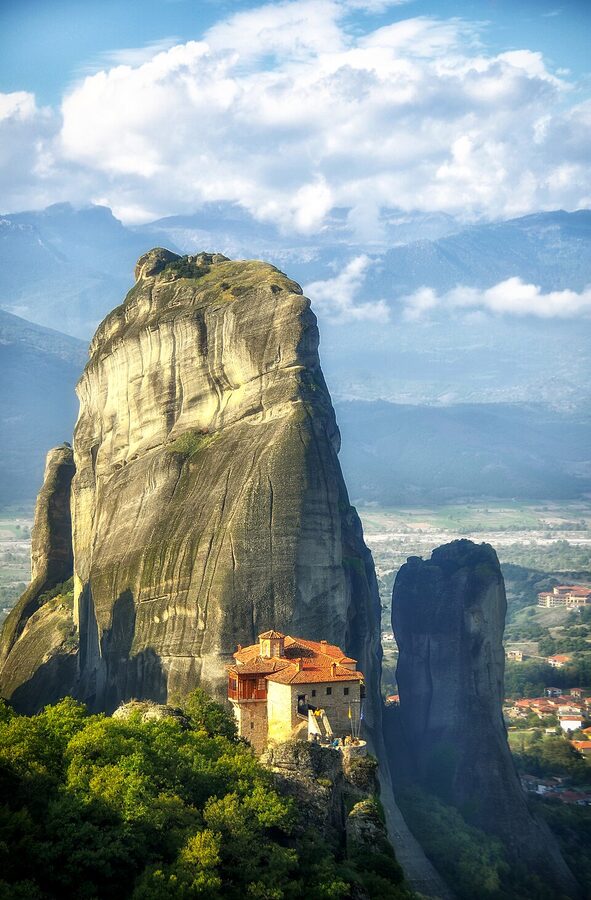
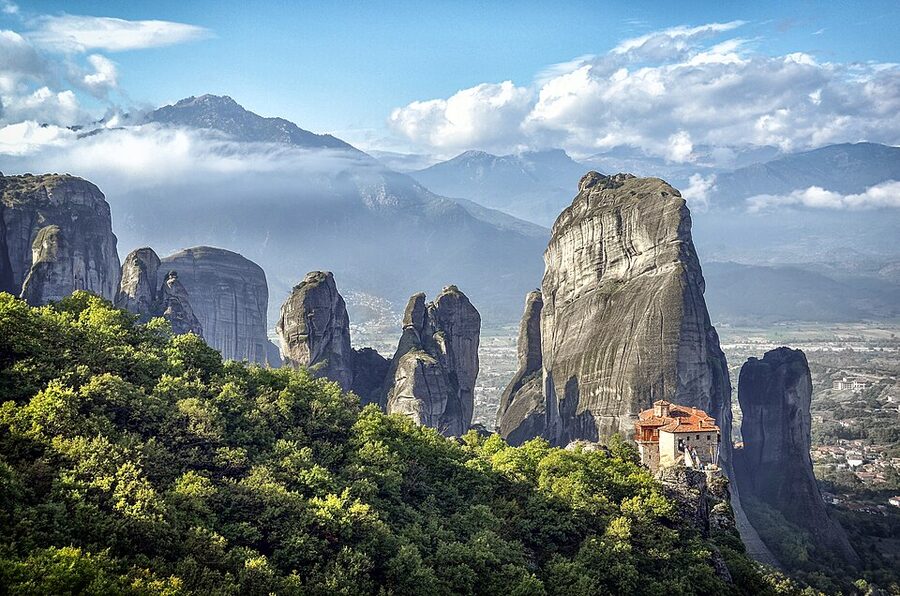
Roussanou (Agia Varvara). A nunnery, sitting on a smaller pillar between the others. Bridge access, easier walk than most. Closed Wednesdays.
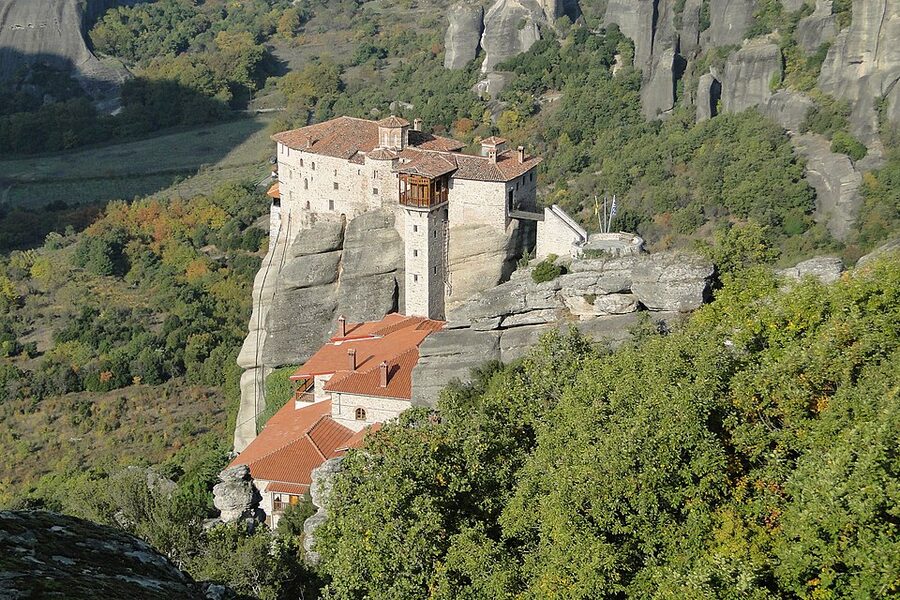
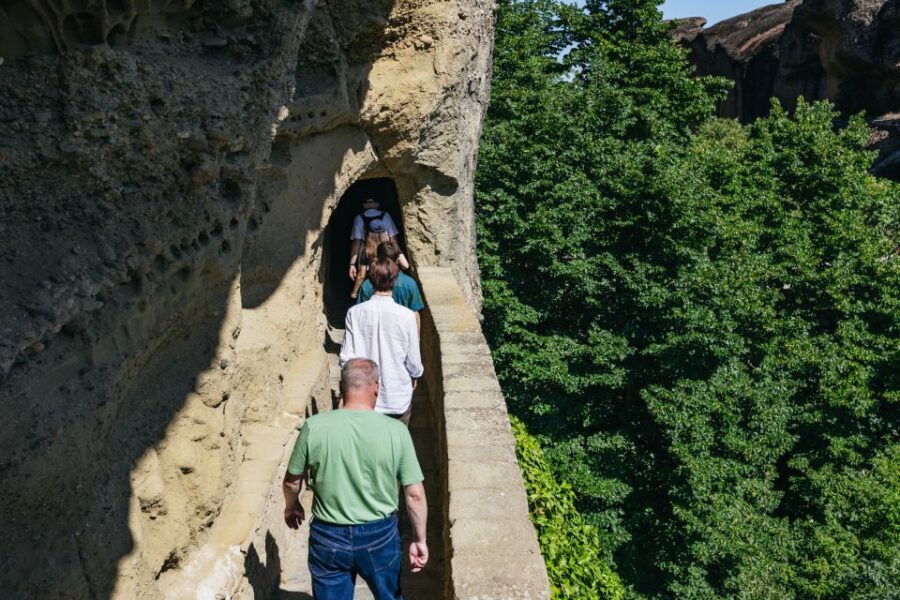
Holy Trinity (Agia Triada). The hardest to reach, a real climb up cut steps. The James Bond For Your Eyes Only rooftop scene was filmed here. Closed Thursdays.
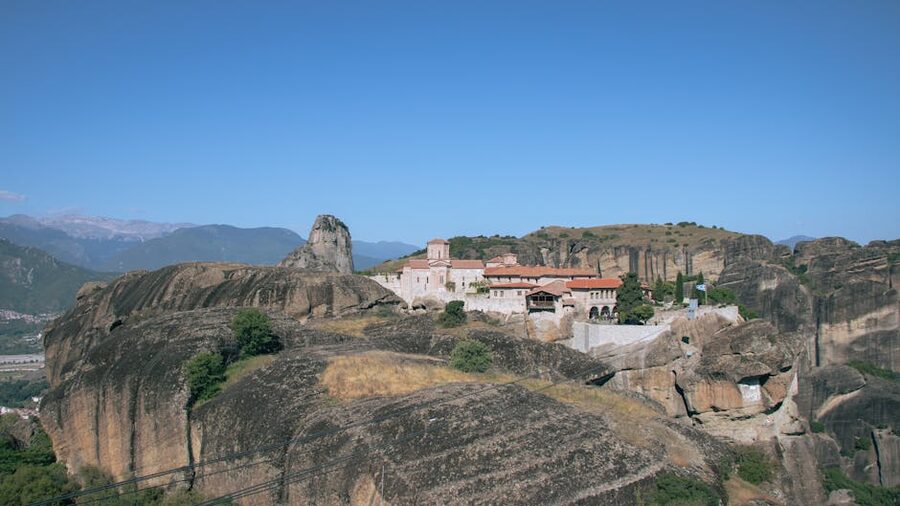
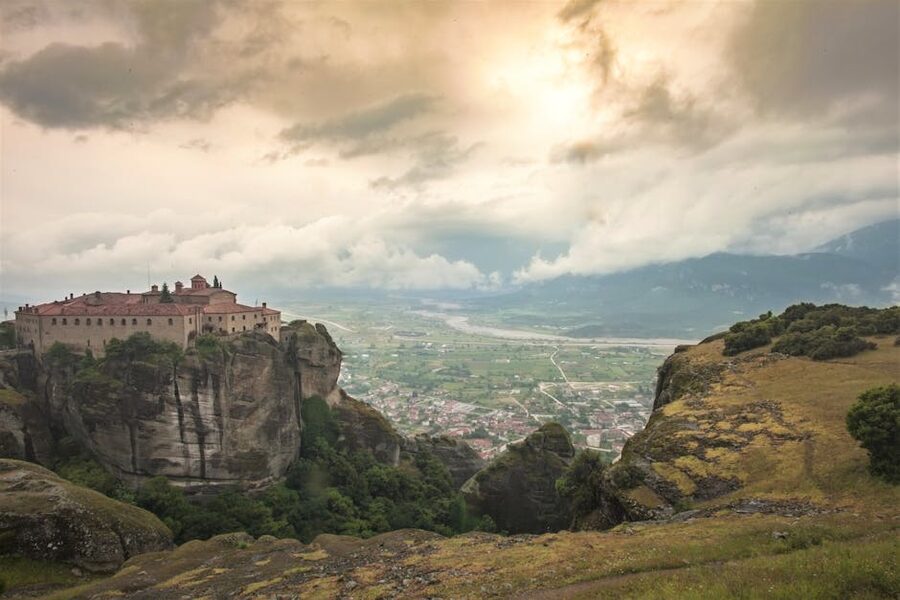
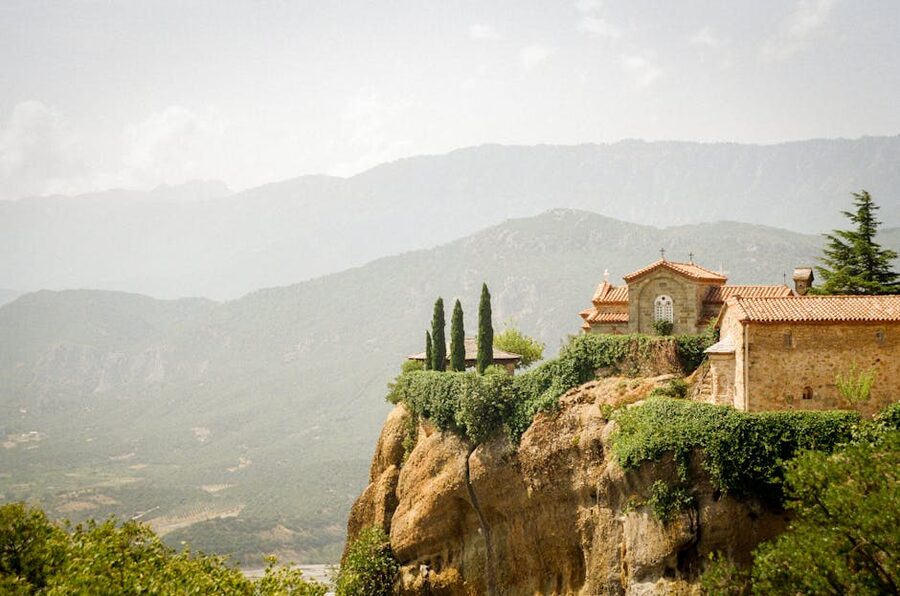
St Stephen (Agios Stefanos). The other convent, the most accessible. A short flat walk over a small bridge, no scary stairs. Closed Mondays.
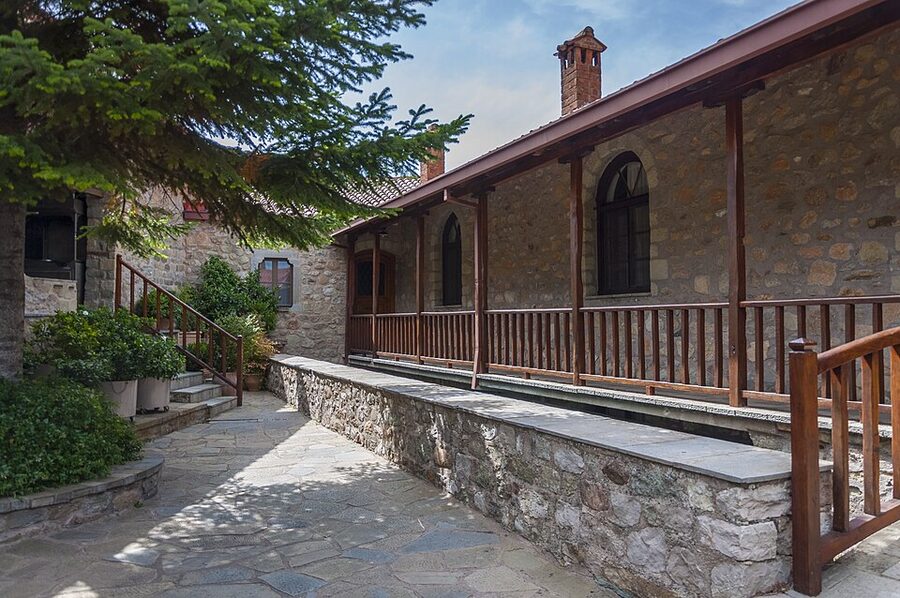
St Nicholas Anapafsas. The smallest, with 16th-century frescoes by Theophanes the Cretan that are arguably the best art at Meteora. Closed Fridays.
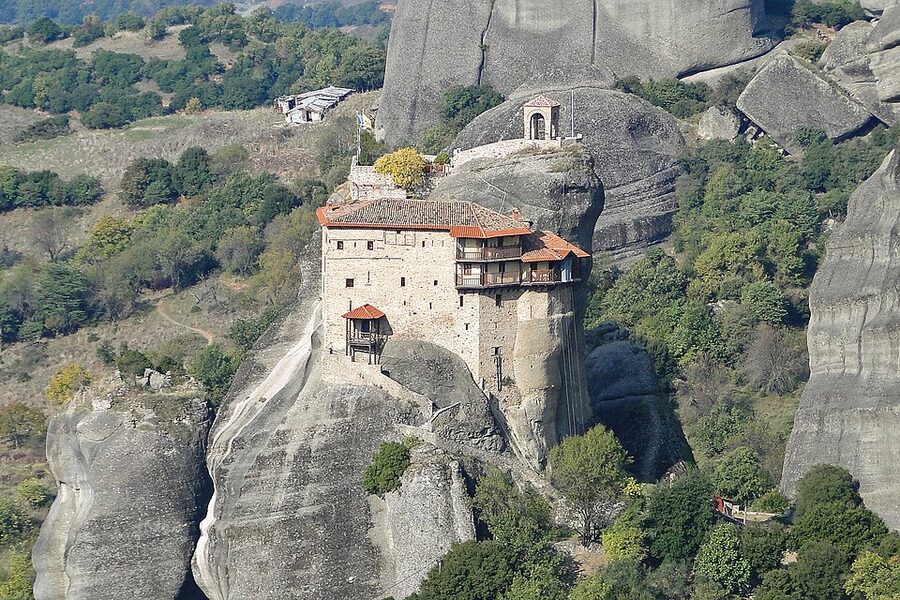
Day-trip itineraries usually visit two or three of these. The most common combo is Great Meteoron plus Varlaam plus a roadside photo stop at Holy Trinity, or sometimes Roussanou plus St Stephen if your day lands on a Tuesday and Great Meteoron is closed. A good guide will tell you on the bus exactly which monasteries are open that day. If you want all six, you need two days. Tours that lean local rather than coach, like the smaller-group local-guide trips, often pick the less-rushed monasteries (Roussanou and St Stephen) on purpose because the climbs are gentler.
Coach Day Trip vs Train and Driver
You have three real options for getting from Athens to Meteora and back in a day. Each has trade-offs.
Coach day tour. The standard format. Around 75 to 90 dollars per person, includes pickup near Syntagma, English-speaking guide, four-and-a-half-hour drive, two or three monasteries, lunch (usually a $10-15 add-on), and a Theopetra cave stop. Easy to book, no logistics. Cons: 14 hours sat in a seat, fixed schedule, you cannot linger anywhere. The Greek lunch options through tour operators are usually fine but rarely memorable, so do not pick a tour purely on the food. If you want a coach trip that adds a coastal stop instead of just inland mileage, the caves and seaside variant swaps part of the return drive for a sea view, which is a nice nervous-system reset on the way back.
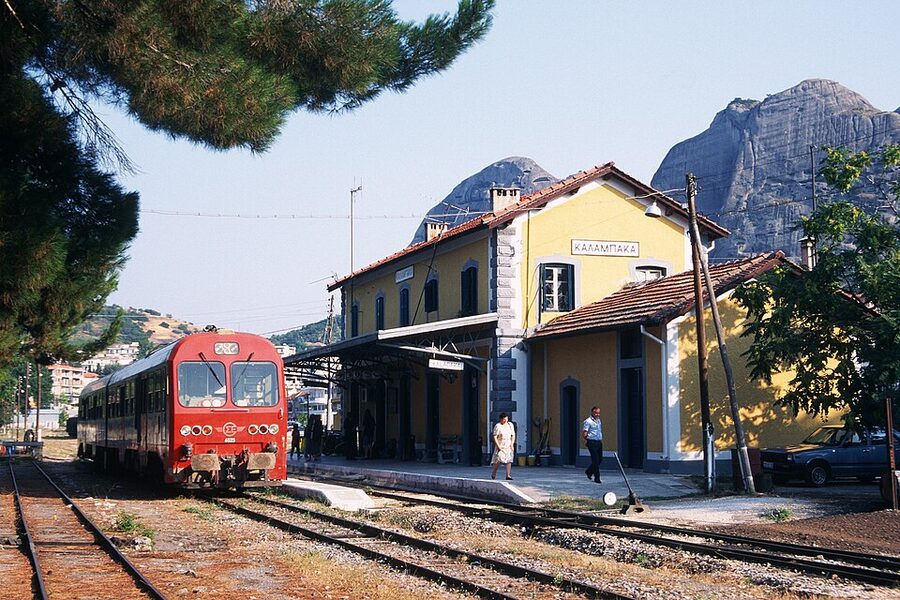
Train plus local driver. The OSE intercity train runs from Athens Larissis station to Kalambaka in about 4 hours 20 minutes, leaving around 6:18am with a return around 5:30pm. Tickets are roughly 25 to 30 euros each way. From Kalambaka station you take a pre-arranged taxi or local guide for the four-hour monastery loop. Total day cost lands similar to the coach, but you get reclining seats, a coffee car, scenery, and a smaller group when you actually reach the rocks. This is what I would do if I had to repeat the day.
Self-drive. A rental car costs 35 to 60 euros for the day plus 30 to 40 euros in fuel and tolls. You get full flexibility. You can do all six monasteries if your timing is right, you can stop where you want, and you can stay until sunset and drive back overnight. The catch is that 9 hours of motorway driving on top of the actual visit is a lot. Greek motorway driving is fine and orderly. Greek mountain road driving in fading light, less so. If two of you can split shifts, do it. If you are solo, take the train. The same calculation applies to longer self-drive runs we cover from Madrid out to Toledo and Segovia; the day stretches fast once driving and visiting compete for time. The caves and lunch alternative coach covers the same monastery loop at a slightly lower price point if you are watching cost more than group size.
Day Trip vs the Two-Day with Delphi
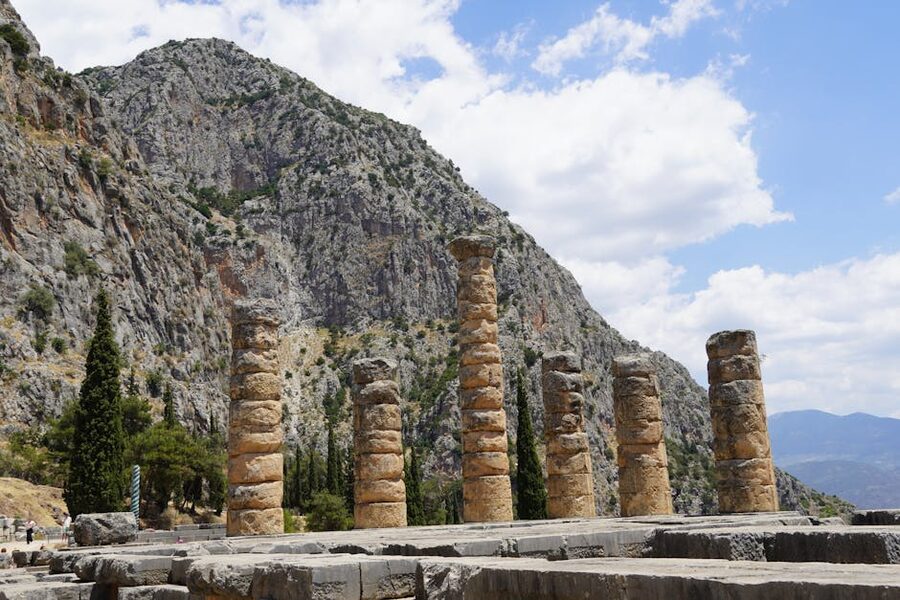
If you have two days, take them. The two-day Delphi and Meteora combo is the single best-value option for travellers who only have one shot at central Greece. Day one runs Athens to Delphi via Thebes, gives you three to four hours at Apollo’s sanctuary and the museum, then crosses the Pindus mountains to Kalambaka for an overnight in town. Day two is a slow Meteora morning with two or three monasteries, a sit-down lunch, and a leisurely return to Athens.
You pay around $271 per person for the standard double-room version of this. That is roughly three times the day-trip price, but you also get a hotel, half-board, two days of guiding, and Delphi thrown in. If you priced those separately you would not get close to $271. The hotel in Kalambaka is usually a 3-star with a view of the rocks from the breakfast room, which sets up day two beautifully.
Pick the day trip if your itinerary cannot give you a second night. Pick the two-day if you can spare it. There is no third good answer. The same logic applies elsewhere in southern Europe; we wrestled with the same trade-off when looking at a single-day three-cities run from Madrid versus splitting Toledo and Segovia across two days. If you are already overnighting in Kalambaka but want a sunset experience without a second day-trip booking, the local Kalambaka sunset tour runs short and hits the photo angles that day-trippers from Athens never see.
The Theopetra Cave Stop
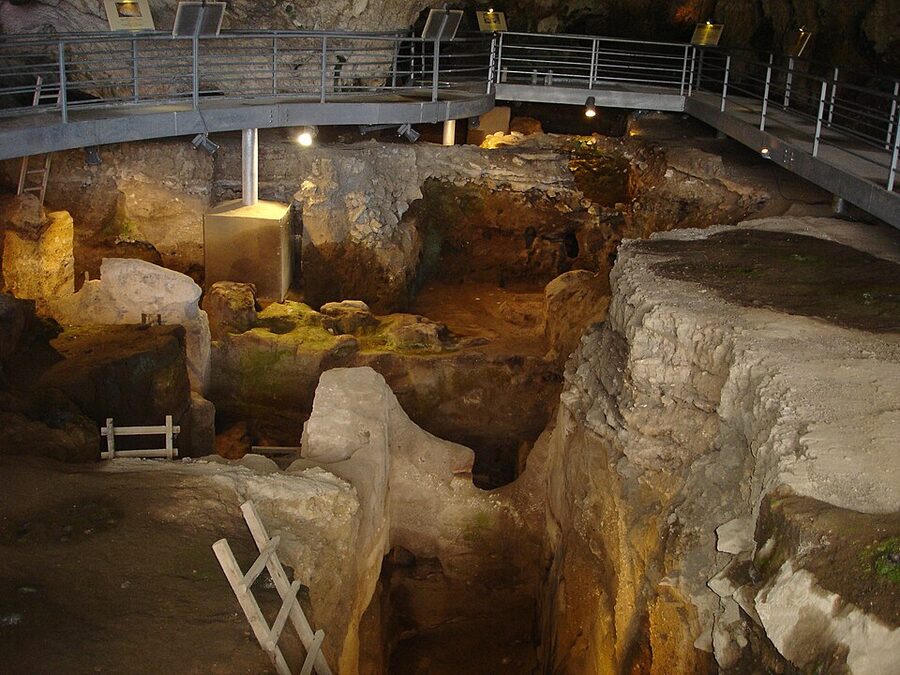
Most flagship coach tours include a 30-to-45 minute stop at Theopetra Cave on the way in. It is genuinely worth it. Theopetra is a Palaeolithic site with the oldest known evidence of human occupation in Greece, around 130,000 years back. There are footprints from Neanderthal children preserved in the cave floor. The visitor centre is small, the lighting is dim, and you will not get the full archaeological story in 40 minutes. But you will get enough context to understand why Thessaly was always inhabited, long before the monks ever came.
Skip the cave only if your tour stop is shorter than 25 minutes. Below that you barely make it through the entrance and back to the bus.
Dress Code (This Trips People Up)
Meteora’s monasteries are working religious houses and they enforce dress code at the gate. This is not a polite suggestion. It is enforced.
Women: long skirts that cover the knees, shoulders covered, no shorts. If you turn up in trousers, most monasteries hand you a wraparound skirt at the door. They are clean and free, but the line for them at peak hours is long. Bring your own if you can.
Men: long trousers, shoulders covered, no shorts. Some places allow knee-length cargo shorts. Most do not. Wear long pants and stop guessing.
Both: remove hats inside churches. Sleeveless shirts are not okay anywhere. A thin scarf in your daypack covers shoulders fast if you forgot.
The wrap-skirts at the entrances are usually pinned with a sign asking visitors to leave a euro coin in the box. Carry change.
Photo Restrictions Inside
You can photograph the outsides of every monastery freely. That is where the iconic shots come from anyway. Inside, every monastery I have been in bans photography of the frescoes and the altar areas. Some allow phone shots in the courtyard but no flash. Some ban phones entirely once you cross the threshold of the church.
Look for the sign at the church door. If it has a camera with a line through it, put your phone in your bag. The monks and nuns will tap you on the shoulder if you get this wrong, and they do not love repeat offenders. Save your shutter for the views from the parapets and the climb back down.
The Tours I Would Actually Book
I have looked at every Athens-to-Meteora option in our review database. Three sit clearly above the rest. They cover the three different ways to do this trip: the flagship coach day, the two-day with Delphi, and a smaller-group bus alternative.
1. Athens to Meteora Day Trip with Caves and Lunch (around $87)
This is the single most-booked Meteora day trip on the market and it is the safe pick if you want the canonical Athens-to-Meteora experience. The guide team gets named in review after review for storytelling on the long drive, which is the real value when you are stuck on a coach for nine hours of road. Our full review lists what is and is not included in the lunch upgrade. The actual weakness is the lunch itself, which is correct but never memorable. Eat the bread, eat the lamb, do not expect a Mamma Mia moment.
2. From Athens: Delphi and Meteora 2-Day Guided Tour (around $271)
This is the option I would pick if I had a free 48 hours in Greece. You get a half-day at Delphi (which is its own UNESCO site and shouldn’t be skipped), a hotel night in Kalambaka with the rocks visible from breakfast, then a slow morning at the monasteries before the day-trippers arrive. Our two-day review covers the dietary flexibility (one of our editors did this with celiac and the guide handled it without fuss). The slightly lower satisfaction score behind the day-trip flagship is mostly because two-day groups are smaller and travellers notice every flaw, not because anything is wrong.
3. Meteora Day Trip from Athens by Bus with Optional Lunch (around $87)
This one runs through Viator and tends to fill up later than the GetYourGuide flagship, which is exactly why I keep it on the list. Our review walks through how the optional lunch works (you decide on the bus, not at booking), and the named guides come up almost as often as on the flagship. Pick this if your travel dates are tight and the headline tour is sold out, or if you specifically want a smaller group.
How to Build the Day So It Does Not Crush You
Pickup is between 6:45 and 7:30am from Syntagma square. Eat breakfast in your hotel before, do not skip it. The first food stop on the coach is around 9:30am at a roadside service area, and it is fine but not breakfast.
Bring layers. The monasteries sit between 400 and 600 metres above the plain. In April and October the temperature gap between Kalambaka town and Great Meteoron’s terrace is real. A thin shell or fleece for the rocks plus a t-shirt for the bus is the right combination. In summer, swap the fleece for a wide-brim hat and hold tight to the shoulder-coverage rule for the dress code.
Hydrate hard on the bus. The monasteries do not sell water at the entrances and the climbs add up. A 750ml bottle topped up at lunch usually gets you through the day. Sun cream goes on before you leave Athens. The tour guide will not remind you. Do not nap through the descent into Kalambaka either; that approach view is half of why you came.
If you tend to motion-sickness, sit near the front of the coach for the mountain section between Trikala and Kalambaka. The road bends are real but not extreme. Greek bus drivers are calm. Compared to mountain coaches I have taken elsewhere, this one is gentle.
Best Time of Year
Late April through early June, then mid-September through late October. Skies open up, day temperatures sit in the low 20s, mornings hold mist on the plain, and the coach tours run at maybe 70 percent of summer volume. Spring brings wildflowers around the lower paths. October brings the first colour change in the trees below the rock pillars, which photographs beautifully against the sandstone.
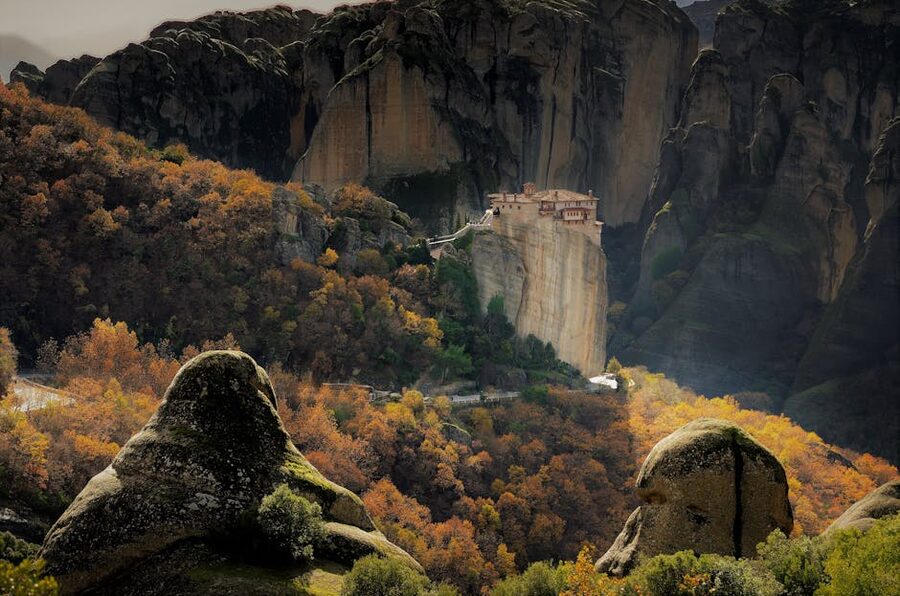
July and August are not a deal-breaker, but the bus is sticky, the queues at Great Meteoron snake into the courtyard, and the heat at the rock terraces gets serious. November to March is genuinely off-season; tours run, but a few of the smaller monasteries reduce winter hours. December and January can also bring light snow on the upper monastery roads, which is gorgeous but slows the day down. If you are a winter visitor, the two-day combo is much smarter than a one-day rush.
What the Drive Looks Like
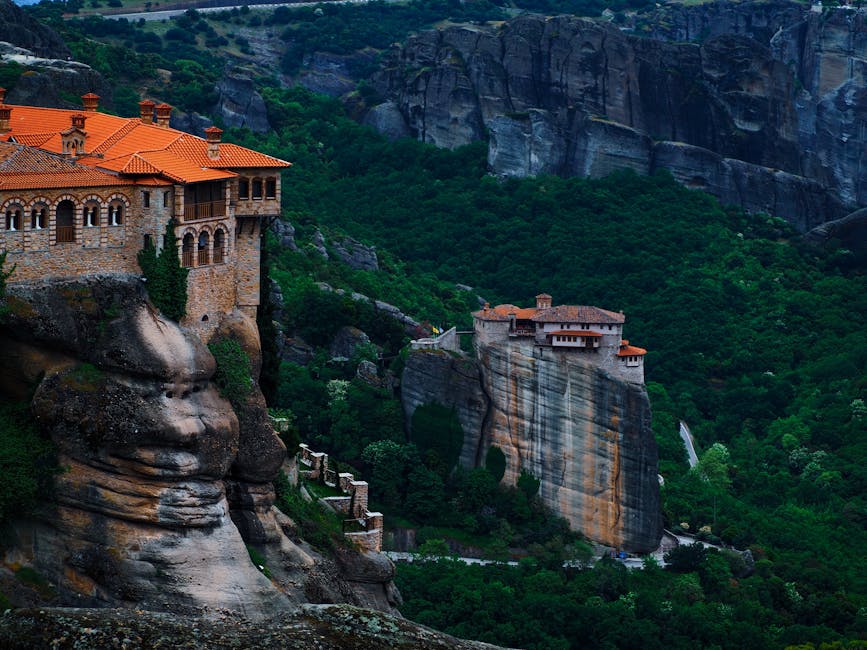
The route runs Athens to Lamia to Domokos to Karditsa to Trikala to Kalambaka. You leave the city on the A1 motorway, climb out past Schimatari, and run up the eastern flank of central Greece for two and a half hours. Lamia is the first proper coffee stop. From Lamia you cut west through the Domokos pass and drop onto the Thessaly plain, which is a flat sea of cotton fields and olive groves with the Pindus mountains rising on the horizon ahead.
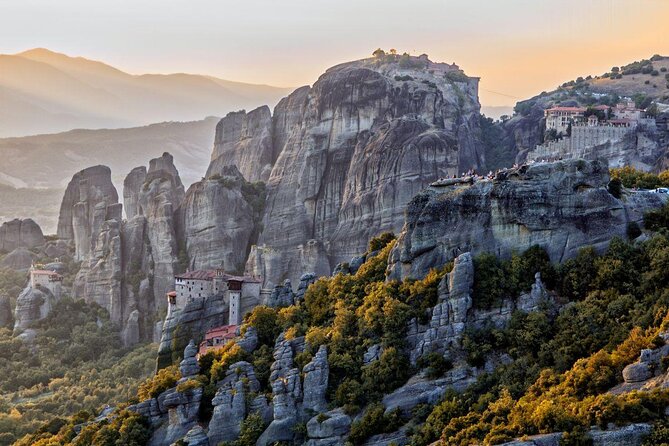
About 30 minutes before Kalambaka, the rocks come into view. There is a moment, usually as the road curls left around a low rise, when the whole pillar field appears at once. If you are awake for it, that is the moment Marta cried at. Have a window seat ready.
A Bit of Context (Skip This If You Are Just Booking)
The first monks arrived at Meteora in the 11th century, hermits living in caves and cracks in the rock. The monasteries themselves came later, in the 14th and 15th centuries, when the Serbian and Byzantine empires were collapsing and remote rocks looked like a good place to keep manuscripts safe. At their peak there were 24 monasteries here. Most were destroyed or abandoned during the Ottoman period. The six that remain are all working religious houses, with monks and nuns in residence today.
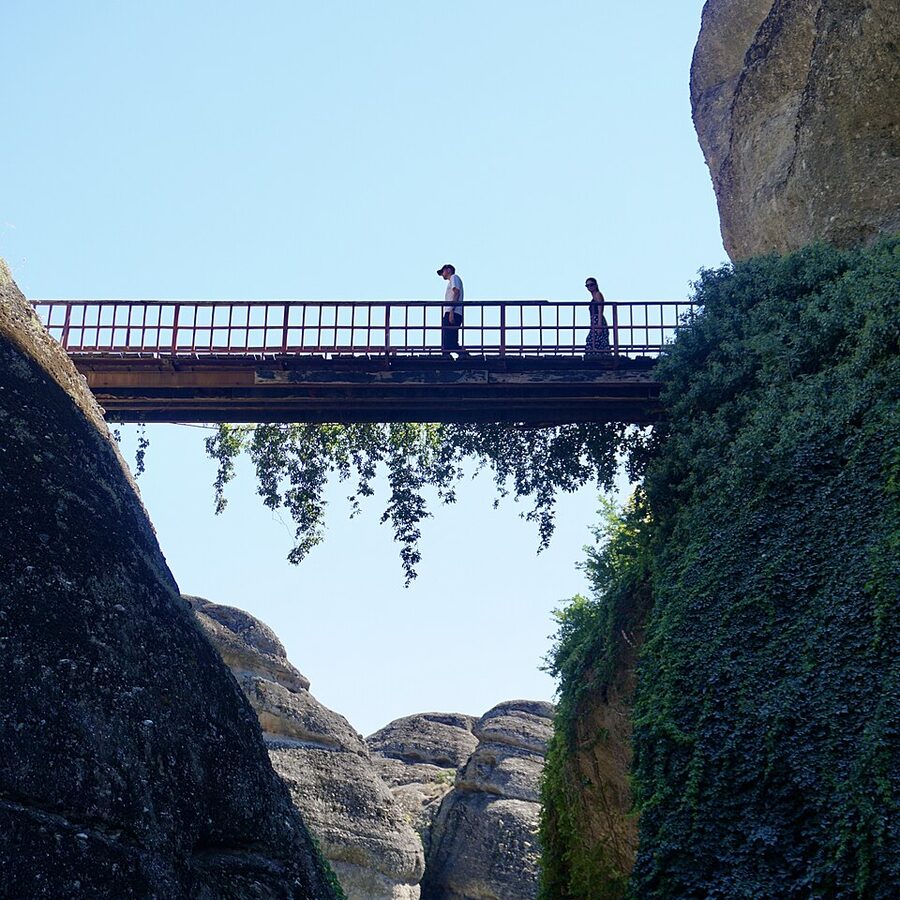
Until the 1920s the only way up was a rope-and-net hoist or a series of removable wooden ladders that the monks pulled up after themselves. The cut-stone steps you climb today were carved in the 1920s, partly to attract tourism, partly because the rope hoists kept failing in scary ways. There is a famous quote attributed to one of the monks, when asked how often the ropes were replaced: “When the Lord lets them break.”
UNESCO listed Meteora in 1988, jointly under the cultural and natural heritage criteria, which is rare. It sits on the same combined-criteria list as places like Mount Athos and Machu Picchu. Worth knowing when someone asks you what makes Meteora special: the rocks plus the monasteries plus the fact that the monasteries are still alive. None of those three on their own would carry it.
Cost Breakdown for the Day
Here is what the day actually costs if you pick the coach option, in rough numbers.
Tour fee, around $87 per person. Optional lunch upgrade, about 12 to 15 dollars on top. Monastery entry, 3 euros each, with most tours hitting two or three monasteries (so 6 to 9 euros total). Wrap-skirt rental tip, 1 euro. Coffee and snacks at the rest stops, around 8 to 10 euros total. Tip for the guide, 5 to 10 euros for a good run.
So all-in, somewhere between $115 and $135 per person for a full day. The two-day version, depending on hotel category, lands closer to $300 to $360 once you add in dinners and entrance fees. Compared to a similar-distance day trip on a different coast like a Malaga to Ronda and Setenil run, the Meteora day is longer in hours but actually competitive on cost when you factor in what you see.
Common Mistakes I See
People undercook the dress code and queue 25 minutes for a wrap-skirt at Great Meteoron. Wear long pants from the hotel, save yourself the line.
People skip Theopetra and regret it after seeing the cave on social media a week later. If your tour includes it, do it. It adds maybe 35 minutes to a 14-hour day. The contrast between Palaeolithic caves and 15th-century monasteries is the actual story of Thessaly, and you only get it by stopping at both.
People book the cheapest tour, find out it is the no-lunch version, then end up at a roadside taverna paying 22 euros for moussaka they did not love. The lunch upgrade is small money. Take it.
People also try to book the two-day combo same-week in summer and find it sold out. Three weeks in advance is the right window for May, June, and September. For July and August aim for at least a month.
And finally, a smaller mistake: people forget cash. Monastery entry is cash-only at the gate (3 euros each). The wrap-skirts are tipped in cash. Some of the rest stops accept card but the queue is twice as long. Bring 30 euros in coins and small notes.
Pairing Meteora With the Rest of Your Athens Trip
Meteora is a long day, so build the rest of your Athens itinerary around recovery. The day before, do something easy in central Athens like the Acropolis. The day after, do nothing strenuous. If you have a third day in Athens, the Cape Sounion sunset run works as a half-day reset; it takes about five hours total and leaves you with a quiet evening in the city.
For the Acropolis itself, decide early between a guided walking tour and a combo ticket. A guided walking tour works if you want frescoes and history explained, while the combo ticket is the better call if you want to chain Acropolis with the Ancient Agora and the rest of the archaeological sites at your own speed.
If you are also considering a longer Greek-island leg, do Meteora before you fly to the islands, not after. Trying to do a 14-hour day after a week of Santorini sun is rough. Coming back to Athens from Crete or Mykonos, you want a soft landing day, not another long bus ride.
FAQ-style Bits I Get Asked
Can I do Meteora as a day trip if I am only in Athens for two nights? Yes, but only if both your nights are in Athens. Day one Acropolis, day two Meteora. Departure flight day three. Tight, but doable.
Are kids okay on this? Older kids, fine. Under 7s, the 14-hour bus day is brutal. The two-day option works much better with young children.
Is the lunch vegetarian-friendly? The included Greek lunch usually has feta, salads, bread, olives, and stuffed vine leaves alongside the lamb. Vegetarians will eat well. Vegans should bring snacks; some operators do, some do not, and you cannot count on it.
Is there wifi on the bus? Sometimes, often spotty. Treat it as bonus, not infrastructure. Download a podcast for the morning leg.
Can I climb Holy Trinity in flip-flops? Please do not.
What Else to Plan in Greece
If Meteora is your big inland day, your Athens core is probably the Acropolis, and a sunset half-day at Cape Sounion makes a relaxed third anchor. The Acropolis walking tour is the easiest way to get the layered context (Pelasgian wall, Erechtheion, Theatre of Dionysus) without overheating, and the combo ticket is what I push when travellers want to chain four or five archaeological sites in a single morning. Cape Sounion’s Temple of Poseidon at sunset is the reverse-Meteora day: short, golden, on the water, and you sleep in your own bed by 10pm. Three days, three very different angles of Greece, and Meteora is the one your friends will ask about for the next year.
Book your tour early for May through June and September through October. Pack long pants and shoulder coverage. Eat the bread at lunch. And keep a window seat ready for that bend outside Kalambaka, the one where the rocks first show. That one is worth showing up for.