
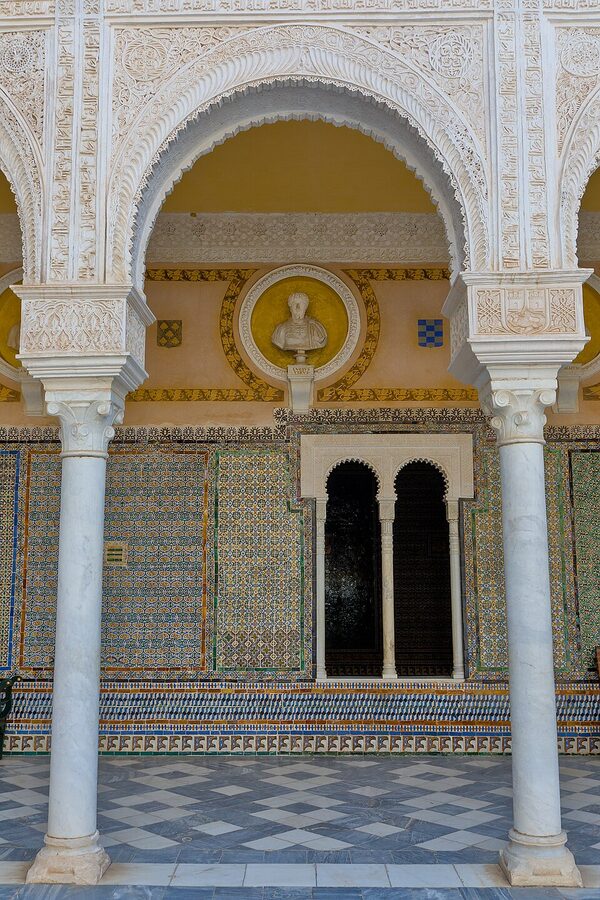
You cross the Apeadero, the carriage hall just inside the door, and the cool hits you before your eyes have adjusted to the dimness. Marble underfoot, sunlight slicing in low off the azulejos in the patio beyond, and a guide pointing at a balcony where Cervantes is said to have stayed when this was the country house of the Dukes of Alcalá. That is the moment you realise the Real Alcázar is not the only palace in Seville worth a queue.
In a Hurry? Top Picks
- Best entry ticket (around $14): the basic Casa de Pilatos ground-floor entry with audio guide covers the patio, gardens and ground floor at your own pace.
- Best small-group guided option (around $29): the 90-minute guided visit with entry tickets if you want the Renaissance and Mudéjar layers explained as you walk.
- Best palace pairing (private, from $258 per group): the Casa de Pilatos and Palacio de Lebrija combined tour bundles the two best private palaces in town.
- In a Hurry? Top Picks
- How the ticket system actually works
- Best time of day to actually go inside
- Three picks worth booking
- 1. Casa de Pilatos Ground Floor Entry Ticket: around
- 2. Guided Visit of the Casa de Pilatos with Tickets: around
- 3. Casa de Pilatos and Condesa de Lebrija Palace Tour: from 8 per group
- Ground floor self-guide vs upper floor guided visit
- The Apeadero, Salón Pretorio and the Capilla
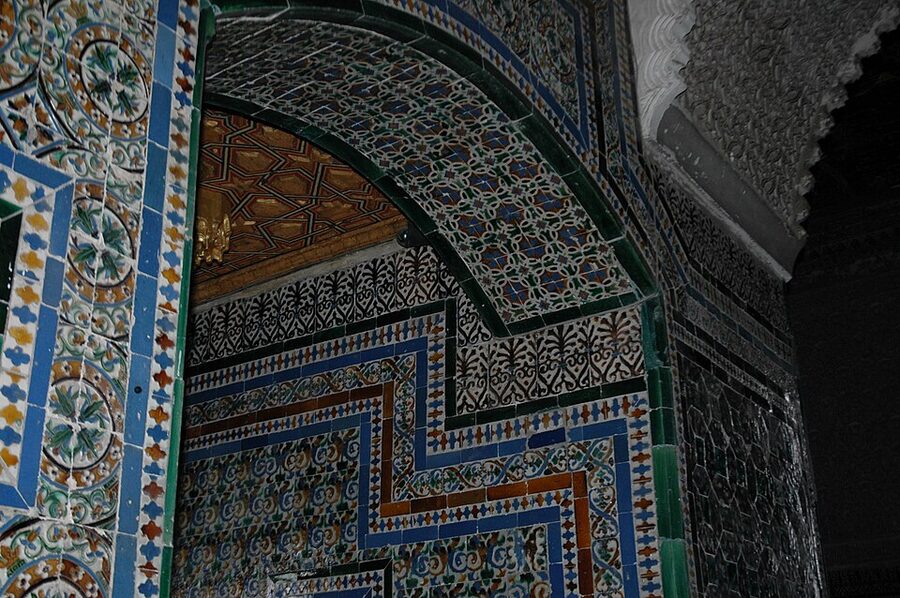
- The azulejo collection that nobody warns you about
- The Roman emperors and the marble collection
- The two gardens (Jardín Chico and Jardín Grande)
- How it compares with the Royal Alcázar
- Practical bits people forget
- A short history (in case you want context before you go)
- Getting there and what’s next door
- If you’ve got an extra hour after
- What to read next on Andalusia and Spain
How the ticket system actually works
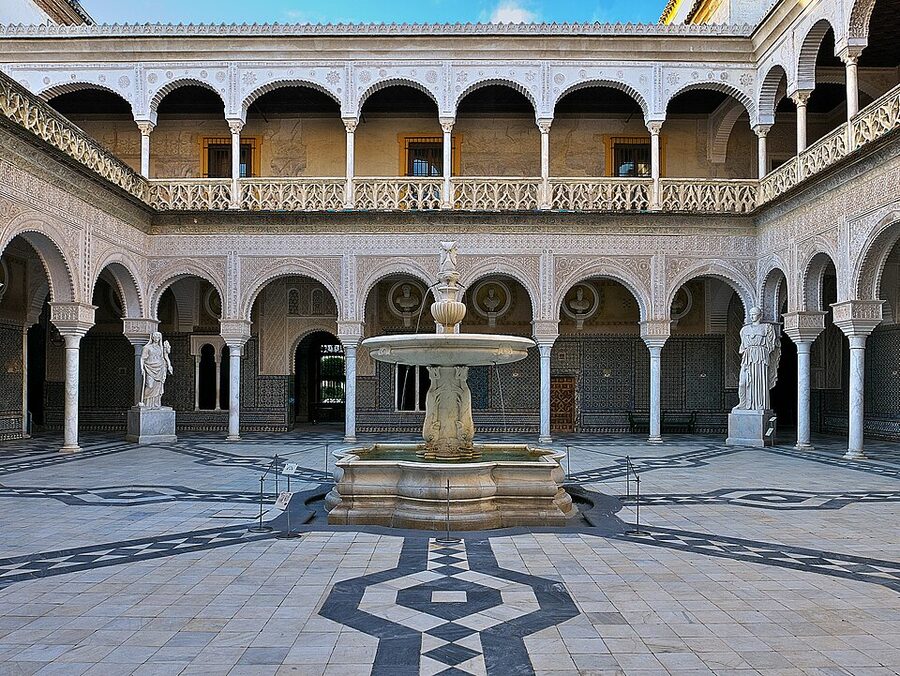
The Casa de Pilatos splits its visit into two clean halves. The ground floor (the patio, the chapel, the garden, the public rooms) you can do at your own pace with an audio guide. The upper floor, where the Medinaceli family still lives part of the year, is only open with a guide on a fixed schedule. The price reflects that.
Standard pricing runs about 12€ for the ground floor and 6€ extra for the upper floor, both bookable at the door or online. Children under 11 are free with an adult, school groups pay 8€, and disability above 50% gets a half-price rebate. The bundled tickets on GetYourGuide come in at about $14 because they include the audio guide and a printed time slot, which is the version most travellers want. For a deeper comparison with the city’s other big-ticket monument, our Royal Alcázar booking guide lays out where the queues actually pinch.
One useful detail. The Fundación Casa Ducal de Medinaceli runs the foundation that owns the palace, and they handle their own ticketing on top of the GetYourGuide listings. Both routes work. The official site is cheaper by a euro or two; the GetYourGuide route is fully refundable up to 24 hours before. I default to the GetYourGuide ticket because the time-slot system is identical and the cancellation buffer matters more than the saving.
The palace runs a strict no-flash, no-tripod rule, and bags larger than a small day pack get sent to a free locker by the entrance. There is no airport-grade security, but the staff at the door do glance into open bags, and on Sundays they sometimes turn away picnic loads if you are too obviously planning to eat in the garden.
Best time of day to actually go inside
Standard hours: every day, 9:00 to 18:00 in winter (November to March), 9:00 to 19:00 in summer (April to October). The first slot of the day is the one to book if you can. The patio is empty at 9:15. By 11:00 the cathedral has finished its first wave and the overflow walks the ten minutes east to here, and the photo angles in the patio start to fill up.
Best slot, in my experience: the first booking at 9:00 to 9:30, or the last hour before close. The upper-floor guided tours run at fixed times (10:30, 12:30, 16:00 are the ones I have seen most often, but check on the day) so if you want both floors you have to time the entry around the upper-floor slot, not the other way around.
The middle of the day is the worst, and the reason is unusual. The Casa de Pilatos sits on the tour-group circuit between the cathedral and Plaza de España, and a lot of the larger group operators use it as a 25-minute stop. Their windows are 11:30 to 13:00. If you arrive at noon, you arrive with them. The patio acoustics carry every umbrella-led commentary in three languages.
Three picks worth booking
The Casa de Pilatos is one of those places where the catalogue of tour options is short for a reason. The pool of bookable visits is thin, but the three below cover the situations almost everyone runs into. The first is what most travellers actually want. The second adds a guide for the architectural payoff. The third pairs the Casa de Pilatos with the Palacio de Lebrija, which is the only other private palace in Seville open to the public and a natural double-bill.
1. Casa de Pilatos Ground Floor Entry Ticket: around $14

This is the version I send most people to. Our review of the Casa de Pilatos ground-floor entry ticket gets into what’s covered and what’s not, but the short version is that you walk in, scan the QR code for the audio, and the patio, gardens, chapel and ground-floor rooms are yours for as long as you want. Easily the most-booked Casa de Pilatos option on the market.
2. Guided Visit of the Casa de Pilatos with Tickets: around $29

Pick this one if you want the architectural story rather than just the audio-guide highlights. Our walkthrough of the 90-minute guided visit notes that the format is small enough to actually ask questions, and the guides are usually art-history graduates who can name the Italian sculptors who carved the Roman emperors in the patio. Worth the extra euros if the building’s mongrel pedigree is what drew you here.
3. Casa de Pilatos and Condesa de Lebrija Palace Tour: from $258 per group
This is the booking to pick if you want a private guide and you’ve already done the Alcázar. Our breakdown of the Casa de Pilatos and Lebrija combined tour covers the timing and how the palaces compare. The Palacio de Lebrija holds a Roman mosaic floor lifted from the ruins of Itálica that you can walk on, which by itself justifies the second stop.
Ground floor self-guide vs upper floor guided visit
The two halves of the visit are different beasts and deciding between them is the main planning decision you make.
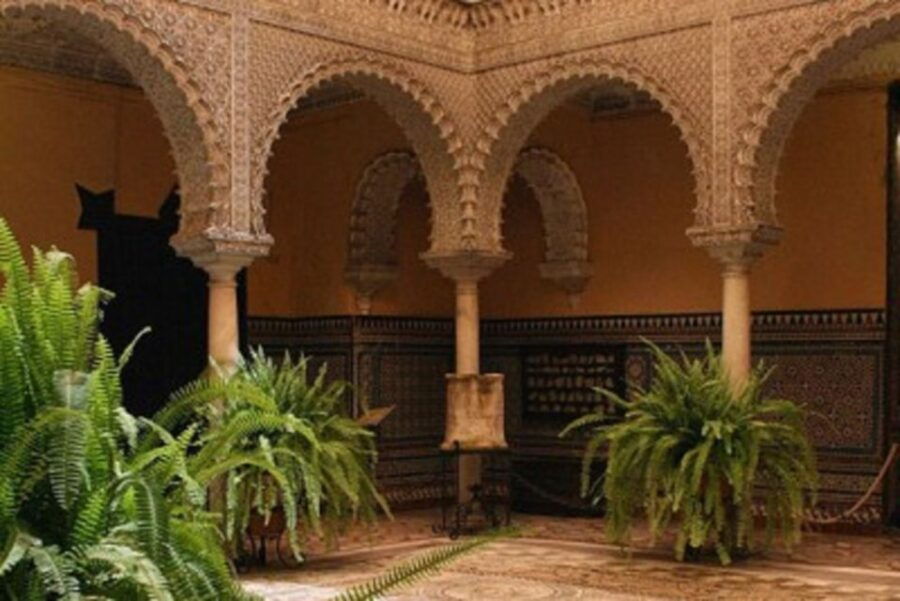
The ground floor is the public-facing palace. The patio, the gardens, the chapel, the Salón Pretorio, the rooms used for receiving visitors. You can wander it freely with the audio guide, sit on a stone bench in the patio for as long as you want, and double back to take photos at different times of day. Two hours is plenty. Most people do it in an hour and a half. This is the part you absolutely cannot skip.
The upper floor is the family residence. The Medinaceli still spend several months a year here, so the upper floor is only open with a guide on a fixed schedule, and the route changes depending on which rooms are in use. Expect about 45 minutes, a small group, and a guide who will tell you which painting is by Goya and which one is by a 19th-century imitator (the answer is rarely the obvious one). The upper-floor extra is 6€ on top of the ground-floor ticket and you book it on the day at the desk in the patio.
If you only have time or budget for one, do the ground floor. The patio and gardens are the building’s headline, and the upper floor, while interesting, is a smaller payoff for the extra ticket. If you have an architecture-history bent and the time, do both. The upper-floor guide is the only way to see the artesonado ceilings in the Salón de los Mosaicos and the Goyas, and the smaller group makes it feel like a private visit.
The Apeadero, Salón Pretorio and the Capilla
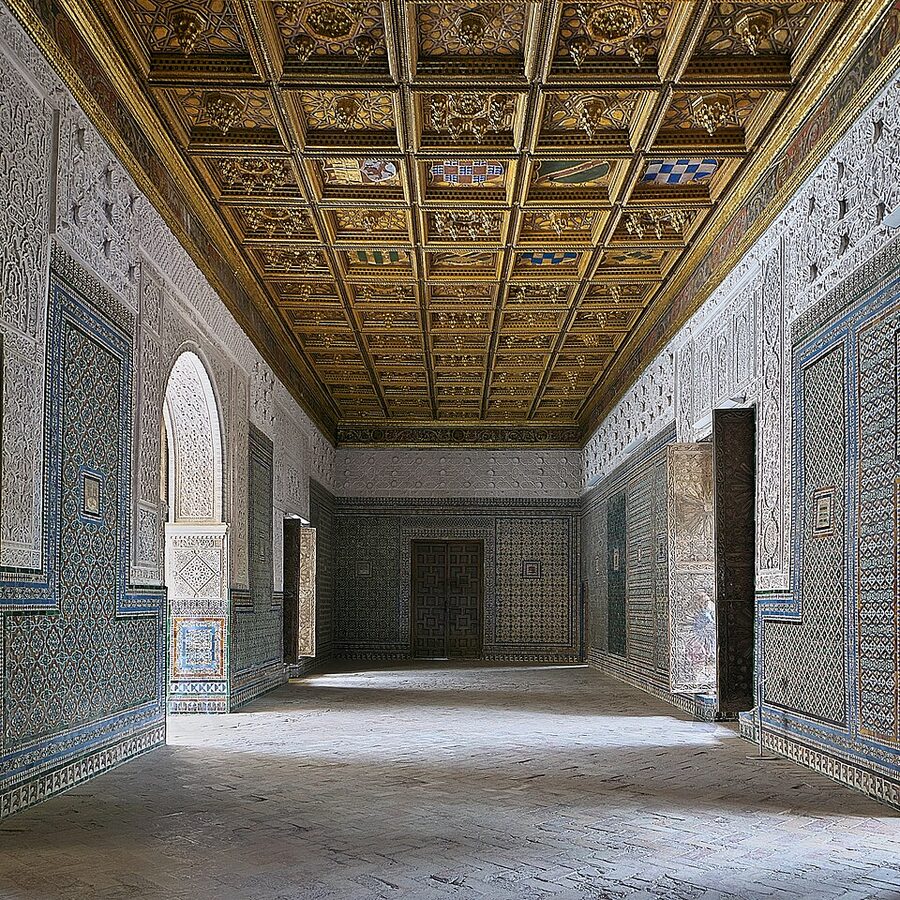
The ground-floor route runs in roughly this order. You enter through the Apeadero (the carriage hall), pass the central patio, and then loop into the Salón del Pretorio, the Salón de Descanso de los Jueces, the Capilla and the Gabinete de Pilatos before exiting via the gardens.
The Salón Pretorio is the room Fadrique Enríquez de Ribera built to commemorate his pilgrimage to Jerusalem. The story everyone tells is that Fadrique returned in 1520 having walked the route of the Passion in Jerusalem, and he laid out the new wing of his Seville house to mirror what he’d seen. The room measurements are even said to match the praetorium where Pilate judged Christ. That is the reason the building is called the Casa de Pilatos.
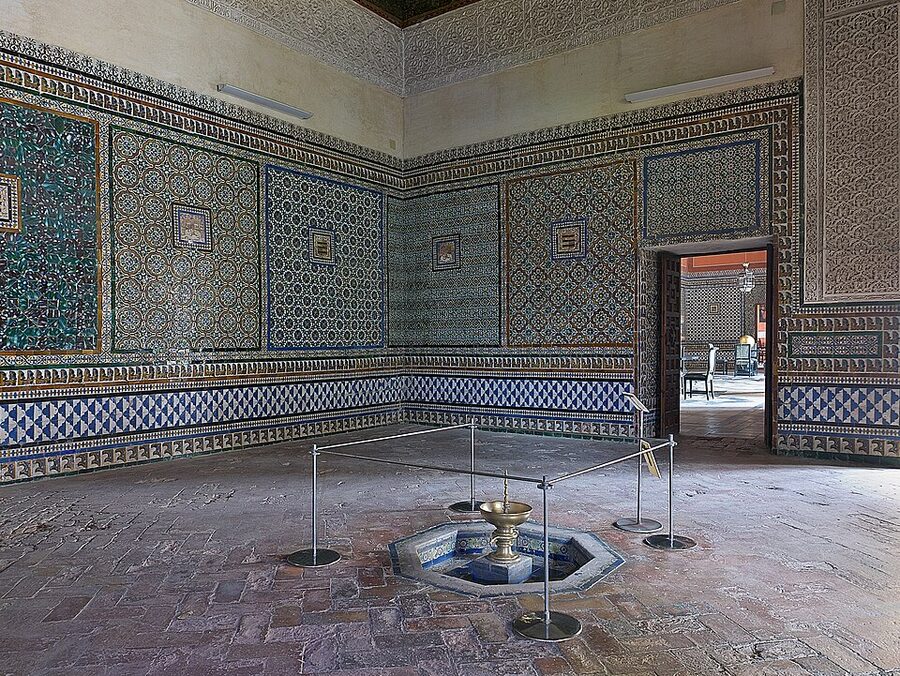
The Capilla is the small chapel just off the patio, easy to walk past if you’re following the audio guide too literally. Look up. The ceiling is one of the earliest examples of plateresque vaulting in Seville, and the floor stones are recycled from the original 15th century construction. The walls are bare today, but the niches once held a private altarpiece that Fadrique commissioned in Italy and that has been moved to a museum in Madrid.
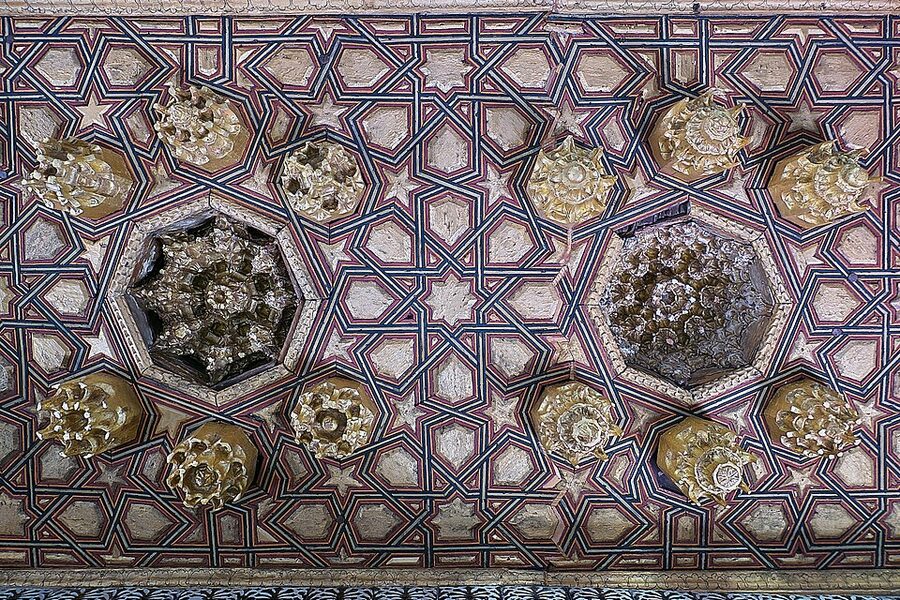
One detail the audio guide tends to skip. The Salón de Descanso de los Jueces (the room of the resting judges) was the antechamber where the family’s councillors waited before being received in the Pretorio. The room is small and easy to miss, but the painted dado runs the entire perimeter and is one of the most ambitious tile programmes in Seville outside the Alcázar. If you’re slowing down anywhere on the ground floor, slow down here.
The azulejo collection that nobody warns you about
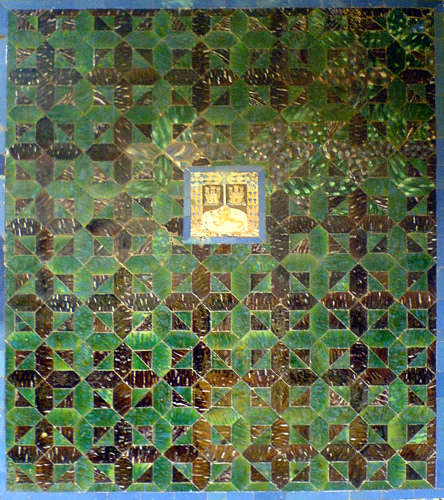
The Casa de Pilatos holds the most important domestic collection of 16th century azulejo tilework in Spain. That sentence sounds dry. In person, it is the thing nobody tells you about and the thing that floors you.
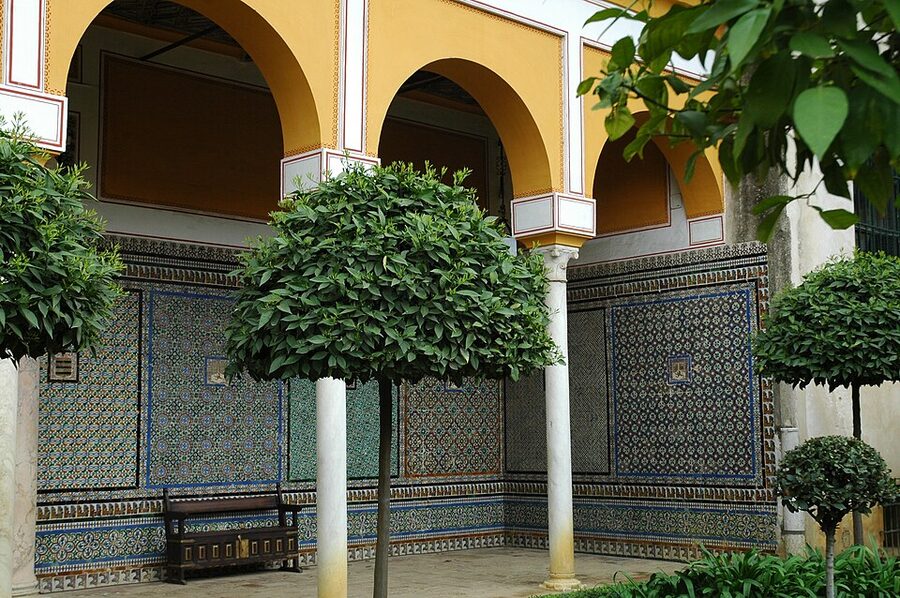
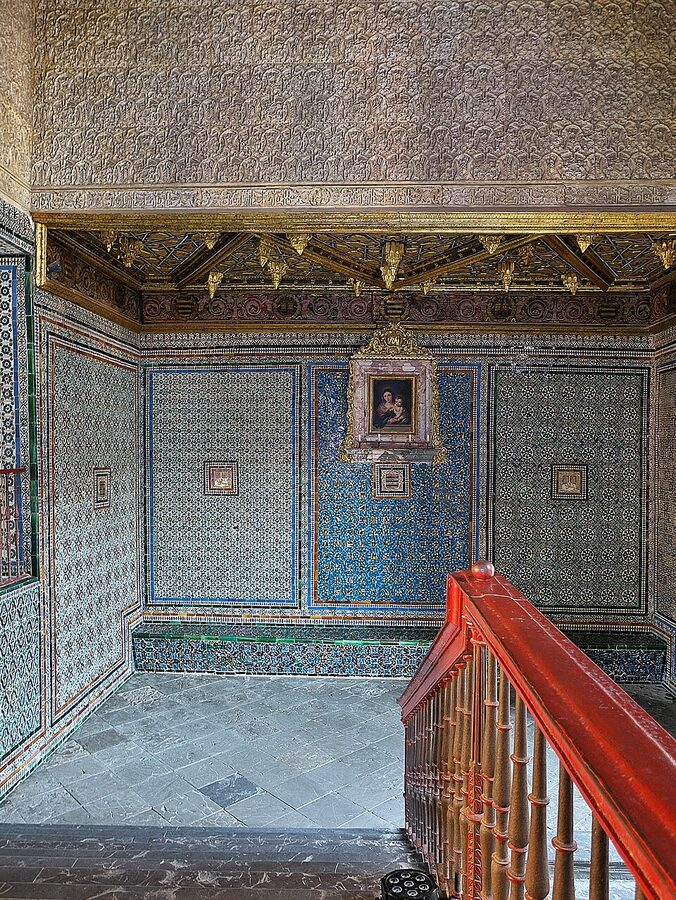
The numbers are unusual. About 150 different tile patterns survive in the building, most of them on the lower walls of the patio, the staircase, and the rooms off the patio. They were almost all made in the kilns of Triana, the riverside neighbourhood you cross to find the city’s flamenco bars. The same workshops were exporting tiles to Portugal, Mexico and the Philippines at the same time these rooms were being decorated, so what you’re looking at is the high point of an industry that ran for a century. If you want to ride the river that the kilns sat on, the Seville Guadalquivir cruise booking guide walks the same water route a working barge would have taken loaded with this exact stoneware.
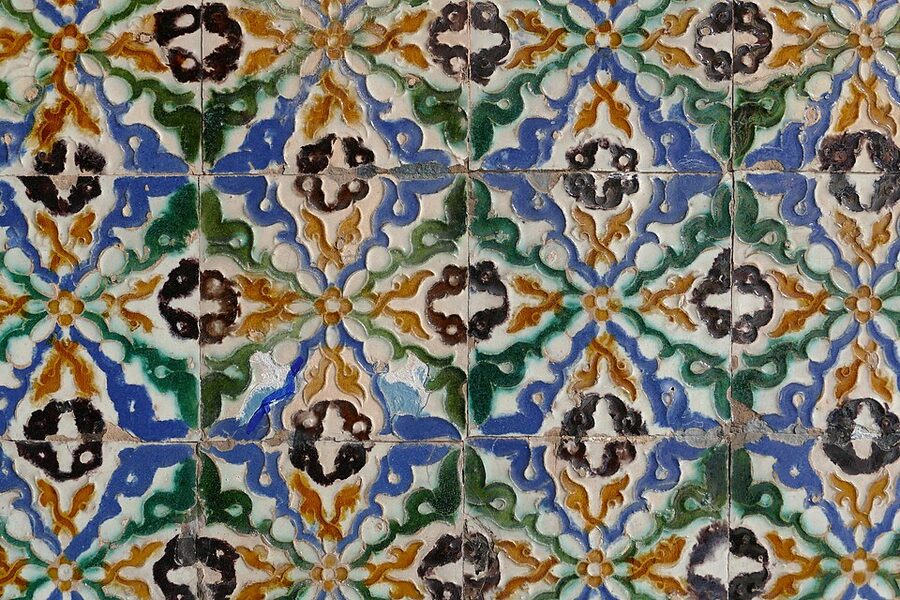
Two technical names worth knowing. Cuerda seca (“dry cord”) is the technique that uses a manganese-and-wax line to keep the colours from running into each other in the kiln. Arista tiles use a raised ridge stamped into the wet clay to do the same job. Both techniques are visible in the patio. Look at the lower few feet of any wall, and you’ll see different tile patterns from different decades sitting next to each other, because the building was redecorated piecemeal over a hundred years and not always with matching sets.
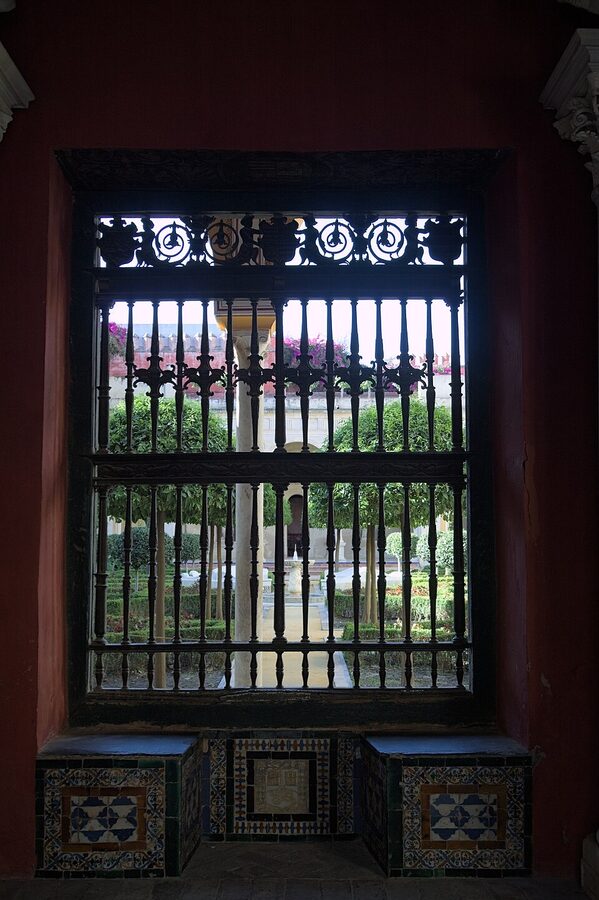
If you have ever been mildly disappointed by the Salón de Embajadores in the Alcázar (smaller in person than the photos suggest, and choked with tour groups), the patio at Pilatos is the visit that will reset your expectations of what 16th century Seville tilework actually looks like at room scale.
The Roman emperors and the marble collection
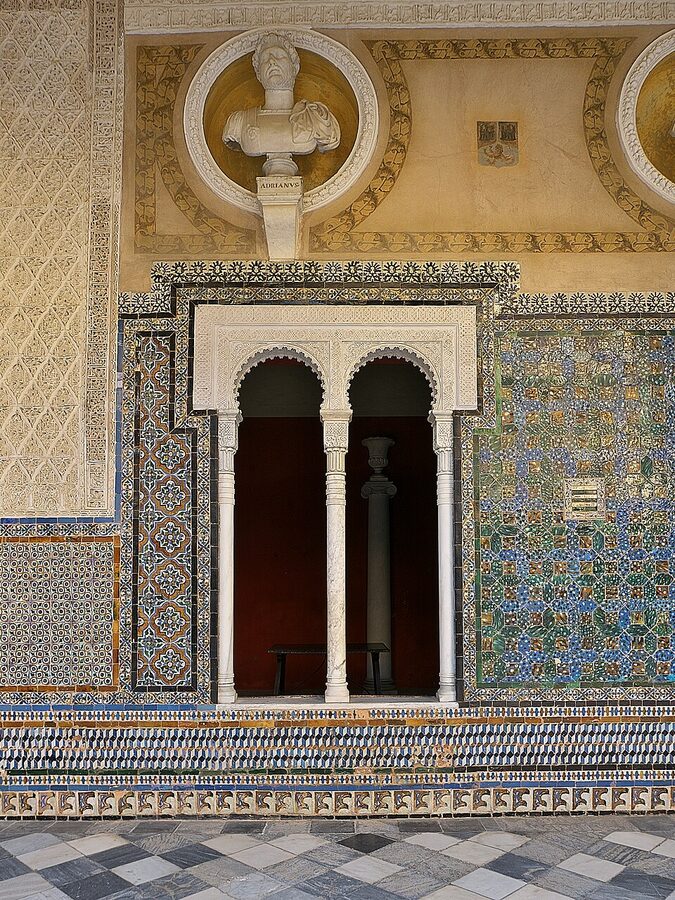
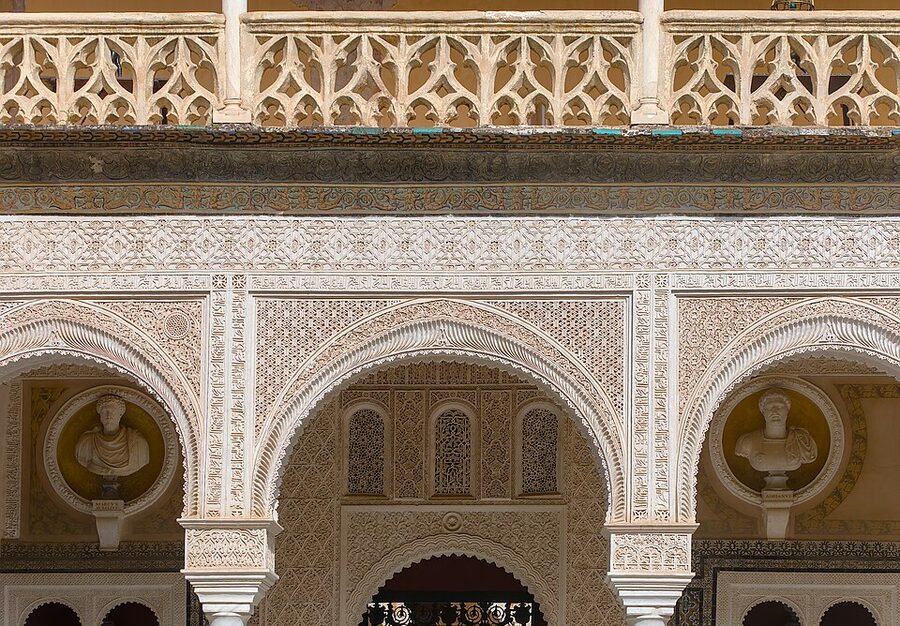
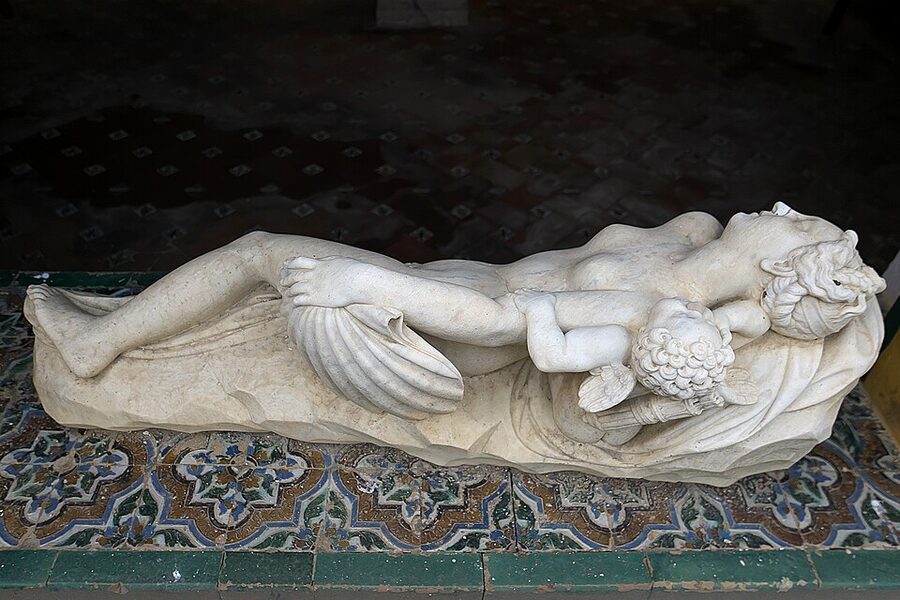
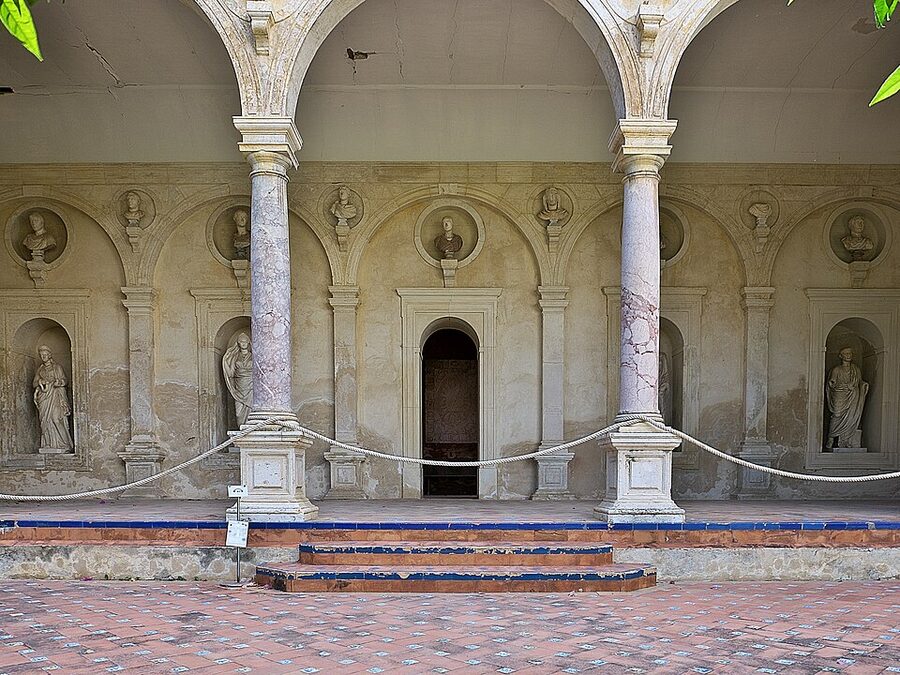
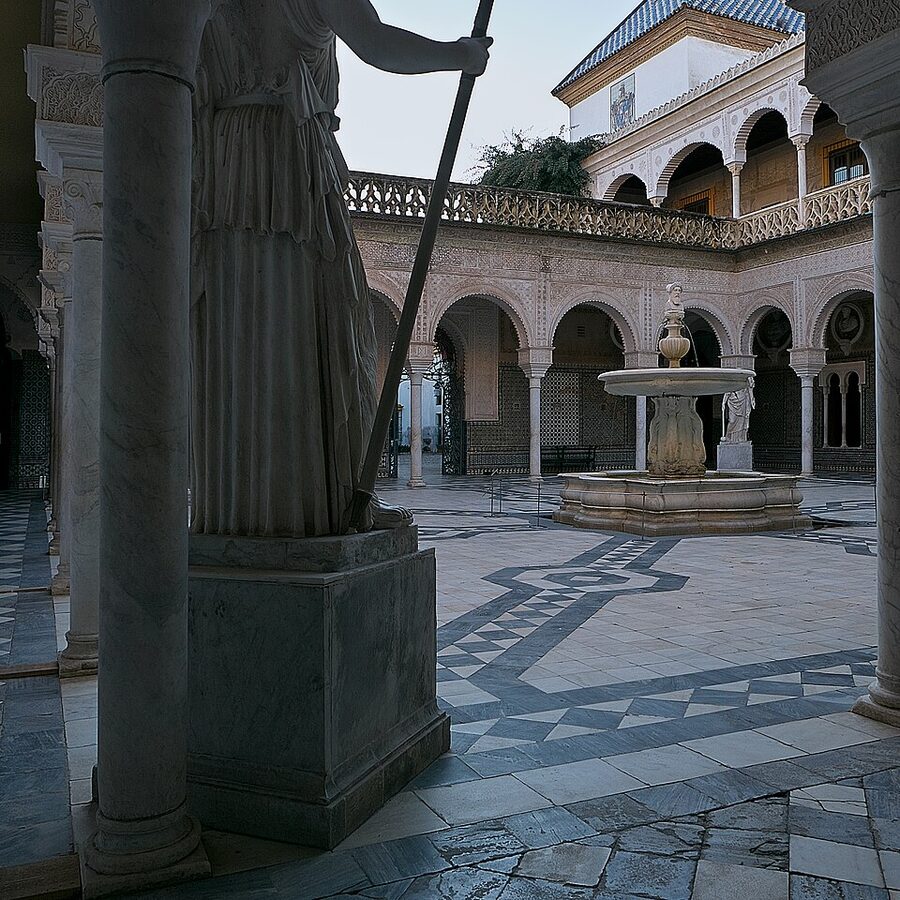
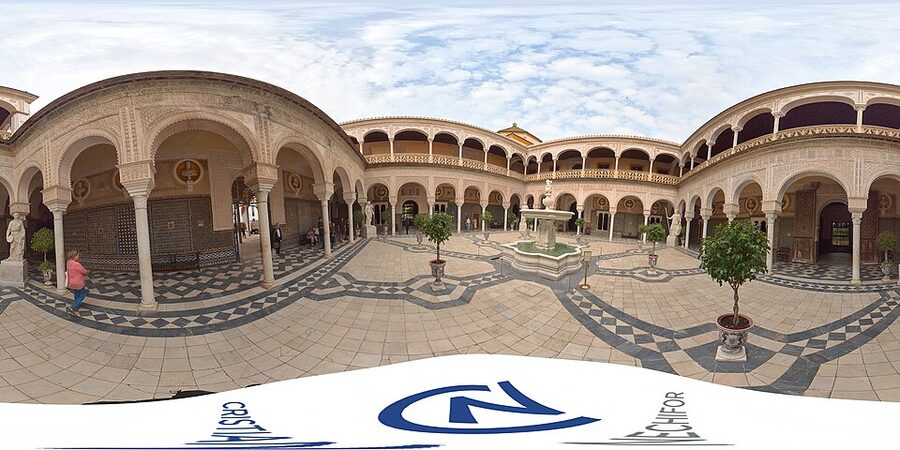
Walking the gallery once around the patio you pass twenty-four marble busts in the niches above the arches. Twelve Roman emperors and twelve Greek and Roman gods and heroes, all in original 16th century carvings or earlier. The collection was assembled by Per Afán de Ribera, the first Duke of Alcalá and the man who turned the Casa de Pilatos from a comfortable noble house into a cabinet of curiosities for his private use.
Per Afán was the Spanish viceroy of Naples in the 1560s, and he used the position to ship antiquities back to Seville on the same fleets that carried silver from the Americas. The result is a collection that includes genuine Roman portraits (the Hadrian above is one of them) alongside Renaissance copies that were aged on purpose to match. Modern scholarship can usually tell which is which. As a casual visitor, you can spot the difference by looking for the pupils of the eyes: Roman busts have shallow drilled pupils, the 16th century copies don’t.
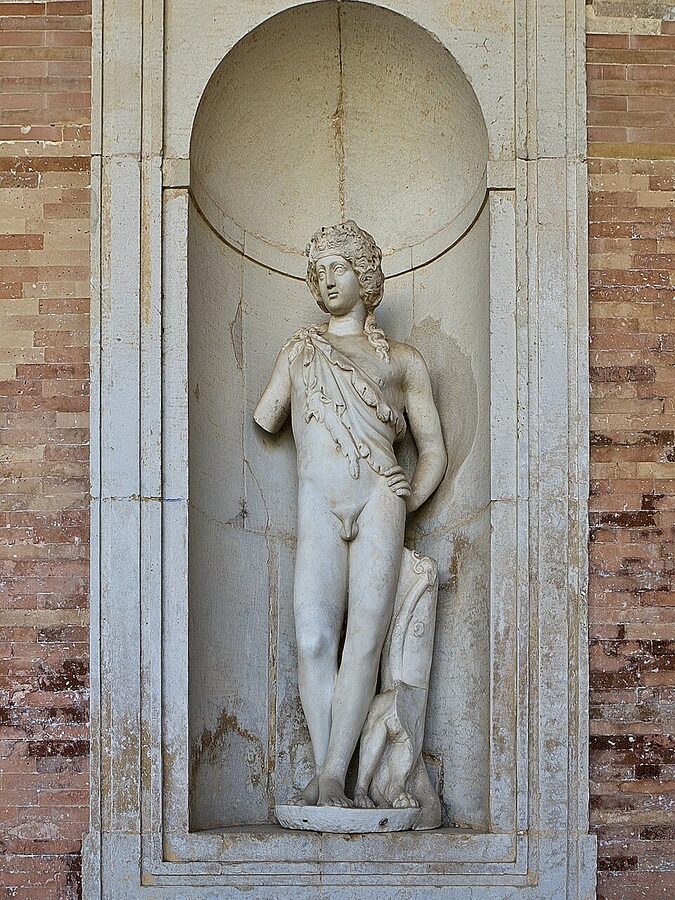
The four corner niches in the patio hold full standing figures rather than busts. Athena (in her Pallas Belligera form, helmeted and armoured), a Bacchus, a Ceres, and a Roman muse. The Athena, the one in armour, is the figure most commonly photographed. She faces directly into the central fountain.
The two gardens (Jardín Chico and Jardín Grande)
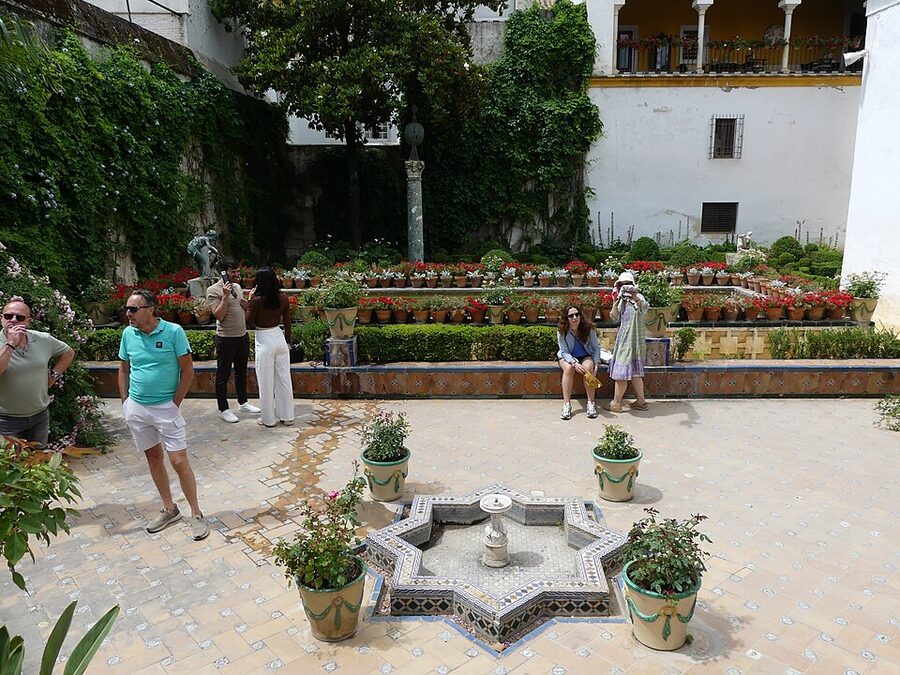
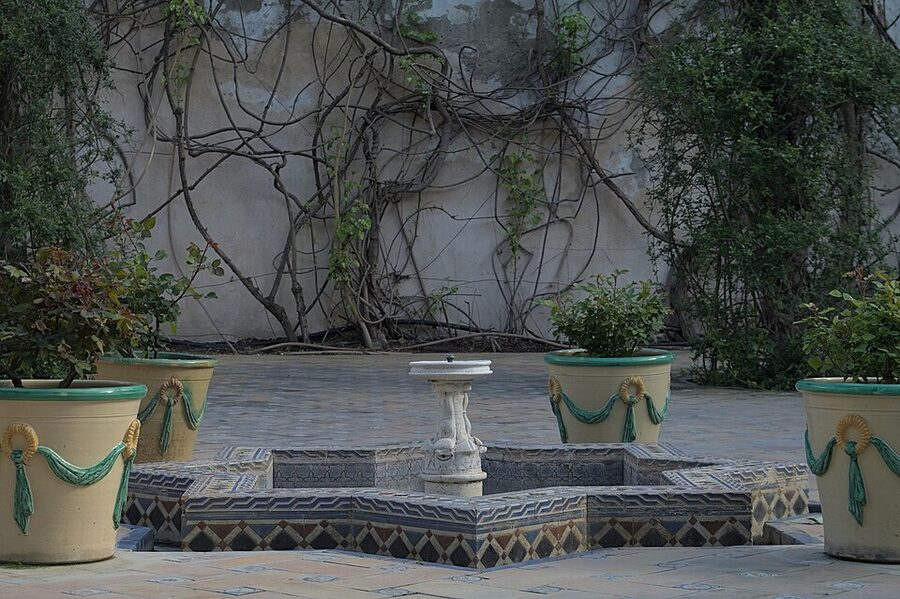
Most palaces in Seville have one garden. The Casa de Pilatos has two, and they are different in scale and purpose. You walk the Jardín Chico (the small garden) first, then the larger Jardín Grande through a door in the south wall.
The Jardín Chico is the older of the two, laid out in the 16th century in the Italian Renaissance style with a central axis, a single fountain, and orange trees in geometric rows. It is the one you sit in. There is a covered loggia on the east side with stone benches that catch the morning sun and stay cool through summer afternoons. If you bought the audio guide, this is where you stop to actually listen to the longer chapters. The water in the central fountain comes from the same underground cistern system that feeds the patio.
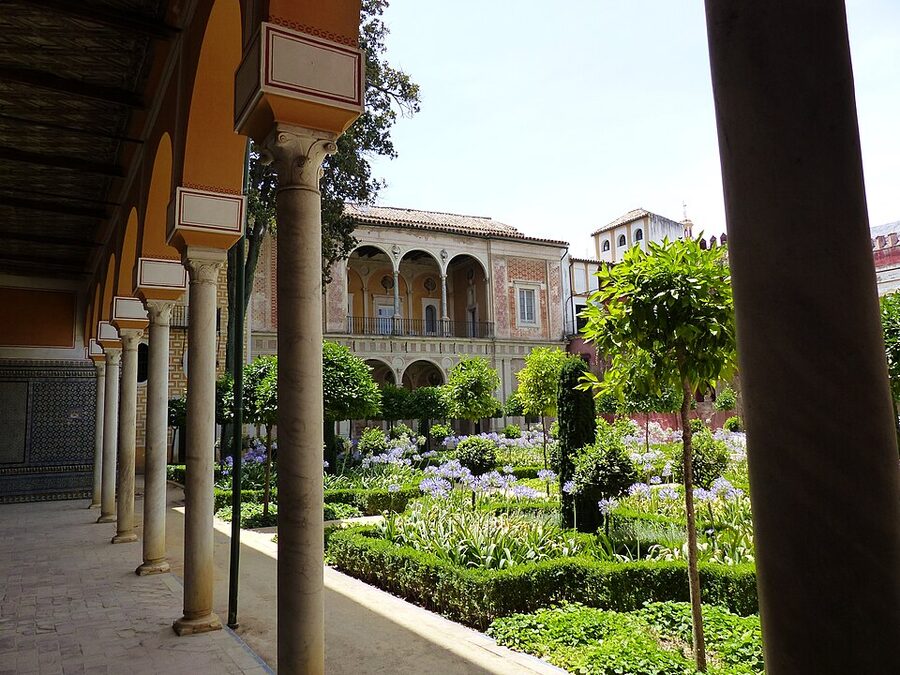
The Jardín Grande is the larger and noisier of the two. Palm trees, lemon trees, a rose terrace and a small grotto built into the south wall. The current layout dates to a 19th century redesign by the eighth Duke of Medinaceli, after a flood washed out the original 16th century parterre. The grotto on the far wall is decorative rather than historical, and on quiet days you can hear water running through it from the still-functioning cisterns.
Practical bit. The gardens are part of the ground-floor ticket. There is no extra fee. The benches in both gardens are unrestricted. If you are travelling with kids who have hit the wall on palace interiors, the Jardín Grande is where you let them run, because the gravel paths are wide and there is no breakable artwork.
How it compares with the Royal Alcázar
This is the comparison most travellers come to the page for, so let me lay it out.
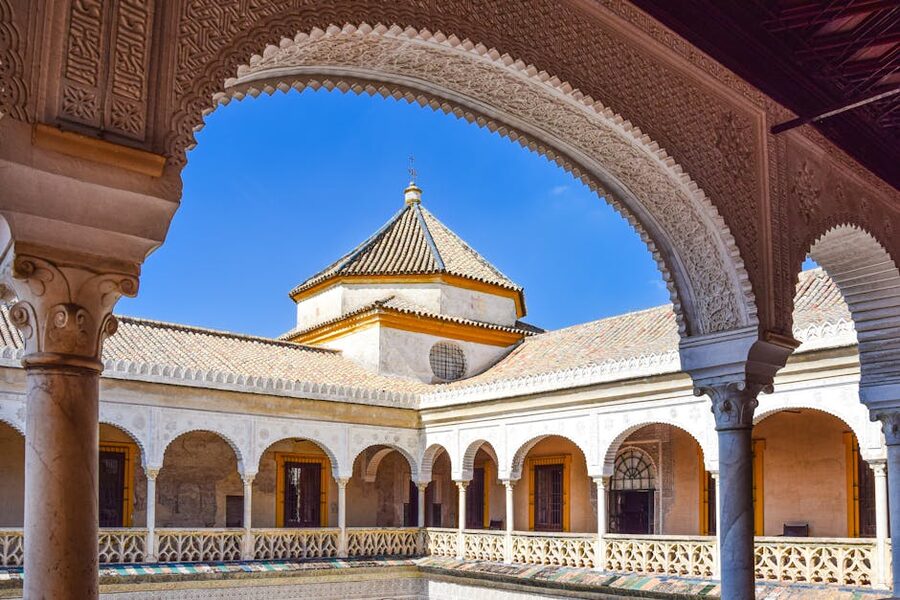
The Real Alcázar is bigger, more famous, and busier. It is the city’s first booking and rightly so. The Casa de Pilatos is smaller, less famous, and quieter, and on most days it is the better palace experience. Both buildings were built in the same century, both blend Mudéjar and Renaissance, and both have azulejo tilework, gardens, marble columns and coffered ceilings. The difference is foot traffic and tone.
At the Alcázar you walk a fixed one-way route with thousands of other people, surrounded by the hum of a hundred tour-group commentaries. At the Casa de Pilatos you walk where you want, sit where you want, and on most weekday mornings the patio holds maybe twenty other visitors. The art collection at Pilatos is also more interesting than the Alcázar’s because it is what one family, the Medinaceli, actually collected and lived with rather than what got grafted onto a royal residence over the centuries.
If you only have one day in Seville, do the Alcázar and either the cathedral or the Casa de Pilatos in the afternoon. If you have two days, do them both. The order I’d suggest: Alcázar early on day one (book the first slot via our Royal Alcázar guide), Pilatos either late on day one or first thing on day two. The two visits sit ten minutes apart on foot. After Pilatos the natural next stop is the Seville Cathedral and Giralda climb, which is also about ten minutes away in the other direction.
Practical bits people forget
A few things I wish someone had told me before my first visit:
- Photography rules. Photos allowed everywhere on the ground floor. No flash, no tripods. The upper floor is no-photography full stop. Your camera roll on the upper floor is going to be empty, so take your time on the lower one.
- Toilets. One set on the ground floor near the entrance, perfectly clean. None in the gardens. If you’ve been three hours, plan accordingly.
- Audio guide. QR-code activated, plays through your own headphones. Bring earphones. The cheap ones they hand out at the desk are workable but uncomfortable.
- Stairs and accessibility. The ground floor and gardens are mostly step-free; some thresholds, but doable in a wheelchair. The upper floor is stairs-only, no lift.
- Sunday afternoons. Locals take their kids to the gardens on Sunday afternoons after lunch, so the place is busier than a midweek morning. Not unpleasant, but quieter time slots are weekday mornings.
- Sevilla Pass. The Sevilla city tourist card includes the Casa de Pilatos in its list of free monuments, but the upper floor still costs the 6€ extra. Worth checking against your other plans.
A short history (in case you want context before you go)
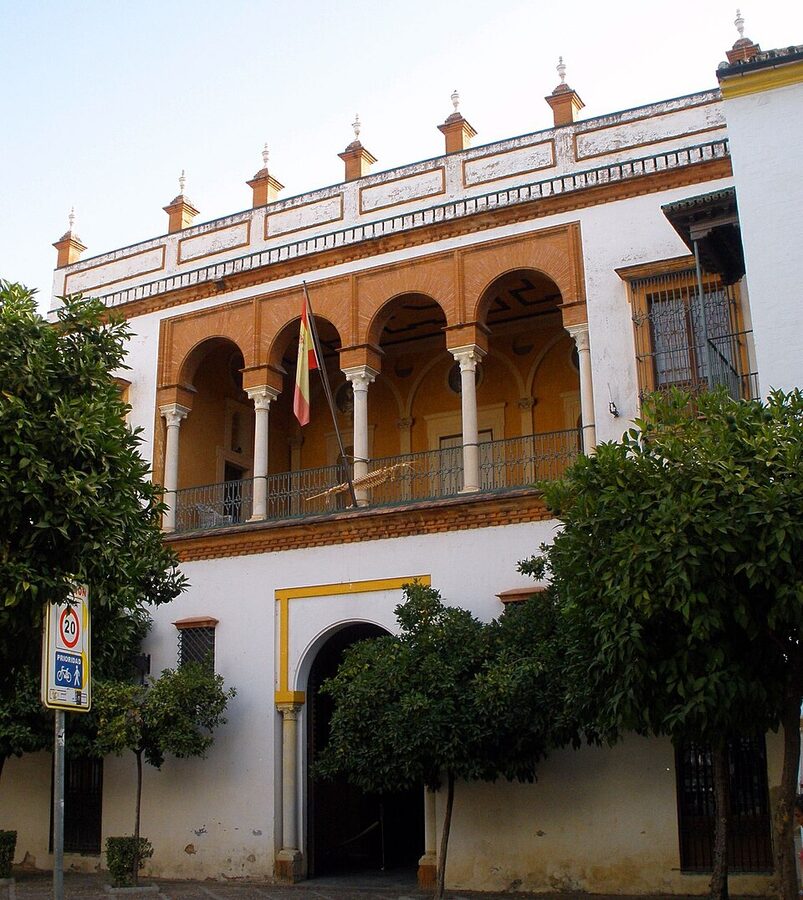
The building started in 1483 with Don Pedro Enríquez de Quiñones, the Adelantado Mayor of Andalusia, who bought the plot of land from a Jewish family who had been forced to sell during the Inquisition’s expansion through the city. He commissioned a smallish palace with a single patio and lived in it until his death in 1492.
The building everyone visits today is mostly the work of his son, Fadrique Enríquez de Ribera, the first Marquis of Tarifa. Fadrique took over the property in his twenties and started a forty-year programme of expansion. The trip to Jerusalem in 1518 to 1520 changed his architectural ambitions. He came back with measured drawings of the praetorium, of the Holy Sepulchre, of the Stations of the Cross, and started rebuilding his Seville house to incorporate references to all of them. The result is the rare palace whose layout is a memory of someone else’s pilgrimage.
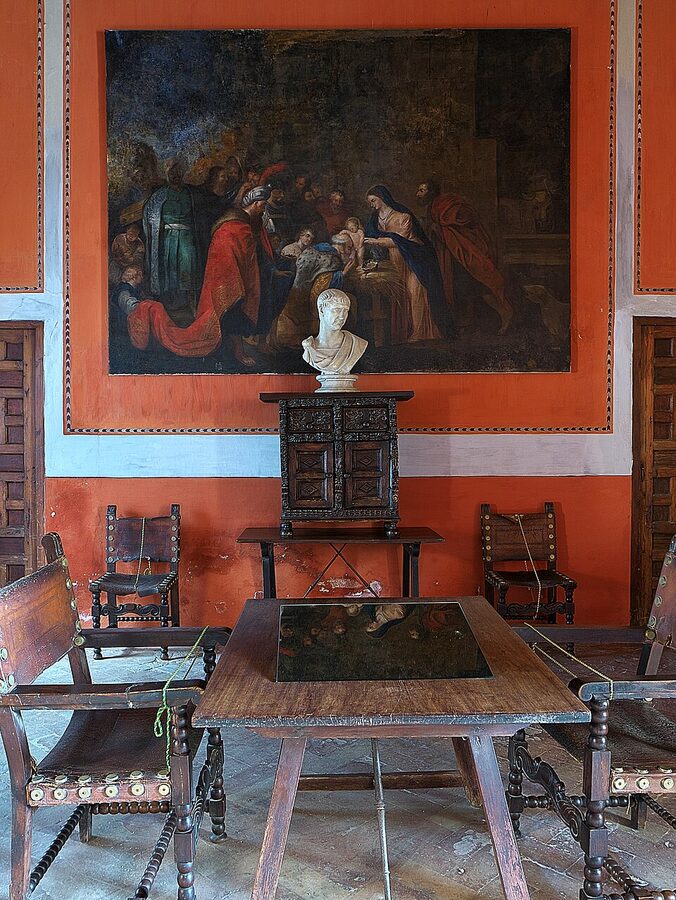
Fadrique’s nephew Per Afán de Ribera carried the work forward. As Spanish viceroy of Naples in the 1560s, he was perfectly placed to import marble, antiquities, sculpture and painters’ workshops from Italy. The classical statuary, the Italian Renaissance frescos in the upper floor, and most of the marble columns in the patio came in on his ships. By the time he died in 1571 the palace had its current form.
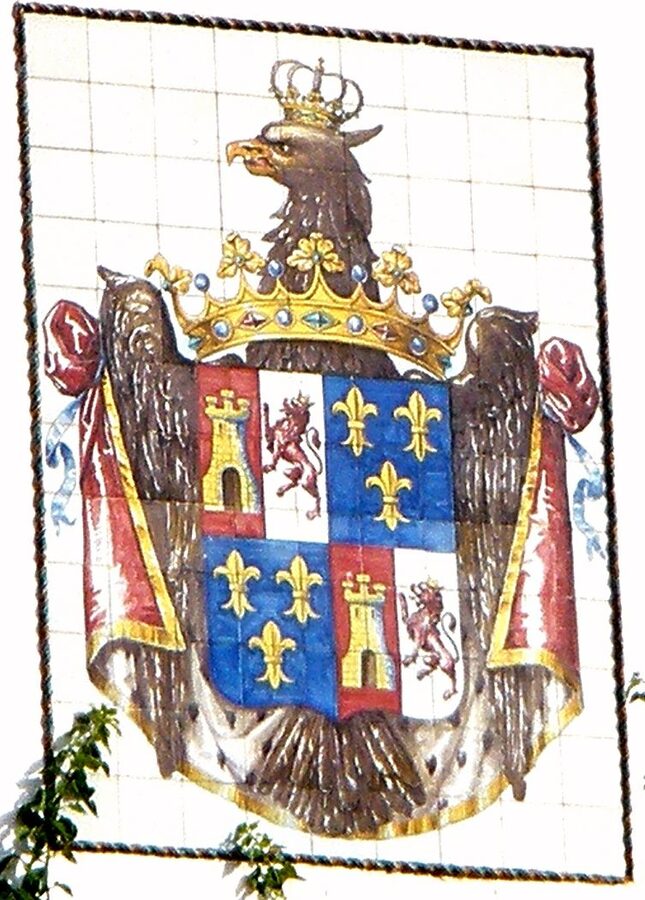
The dukedom of Alcalá merged with the Medinaceli line in 1623, which is why the building today belongs to the Casa Ducal de Medinaceli. The 18th Duchess of Medinaceli, Victoria Eugenia Fernández de Córdoba, oversaw the restoration of the building in the late 20th century and the opening of large parts of it to the public. Her family still lives in part of the upper floor.
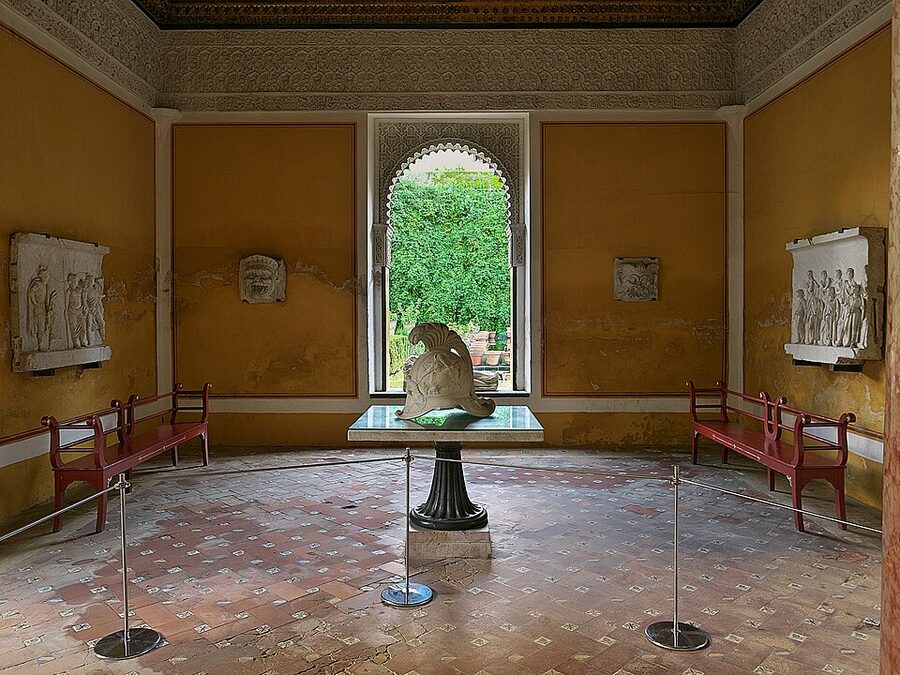
One footnote, because everyone asks. Cervantes is rumoured to have stayed in the palace as a guest in the 1590s, when he was working as a tax collector based in Seville and badly needed somewhere to sleep that wasn’t a tavern. The first chapter of Don Quixote is sometimes said to have been drafted in a chamber on the upper floor. Documentation is thin and the story is probably apocryphal. The guides will tell you anyway, because Sevillanos love it.
Getting there and what’s next door
The Casa de Pilatos sits at Plaza de Pilatos 1, on the eastern edge of the old town, about a ten-minute walk from the cathedral and an eight-minute walk from Plaza de España. Metro: there is no metro stop on this side of the old town, so the closest is Puerta de Jerez at twelve minutes’ walk. Tram: Archivo de Indias (six minutes’ walk). Hop-on bus: the city loop has a stop two streets away on Calle Águilas. If you’re working out the rest of your day’s route, our Seville hop-on hop-off booking guide covers which loop hits this corner.
Driving in is a bad idea. The whole streets-end district is camera-enforced and the cameras read foreign plates. Use the underground car park at the Setas (Plaza de la Encarnación) and walk the eight minutes south. If you’ve never seen the Setas, our Setas de Sevilla rooftop ticket guide covers the rooftop walk on top of the same garage.
For after-dinner plans on the same evening, the Casa de Pilatos is a five-minute walk from the bars in Calle Mateos Gago and ten minutes from the back streets of Santa Cruz where most of the smaller flamenco rooms set up. The Seville flamenco booking guide has the rundown of which spots are worth the entry fee and which are tourist traps with bad chairs.
If you’ve got an extra hour after
Most Casa de Pilatos visits run an hour and a half on the ground floor. Add 45 minutes if you take the upper-floor guided slot. After that, three things sit close.
The Palacio de las Dueñas, ten minutes north on foot, is the second great private palace of Seville and was the family home of the poet Antonio Machado. Smaller than Pilatos, less famous, often overlooked. Worth an hour if you’re already in palace mode.
The Iglesia de San Ildefonso, three minutes away on Plaza de San Ildefonso, is a small Baroque church with no entry fee. Easy stop, useful air conditioning in summer.
The Convento de Santa Paula, eight minutes north, is a working convent where the nuns sell quince paste and almond cakes from a turntable behind a screen. You don’t see them. You leave the money in a tray, the tray rotates, and the cake comes back. It is the most Seville thing you can do in fifteen minutes, and almost no tourist guide mentions it.
What to read next on Andalusia and Spain
If you’re working out the rest of your Seville days, the Royal Alcázar booking guide is the obvious next read for the city’s headline palace. Heading on into Andalusia? The Alhambra ticket guide handles the trickiest booking window in Spain, and the Córdoba Mezquita guide covers the mosque-cathedral that pairs naturally with this Mudéjar palace.