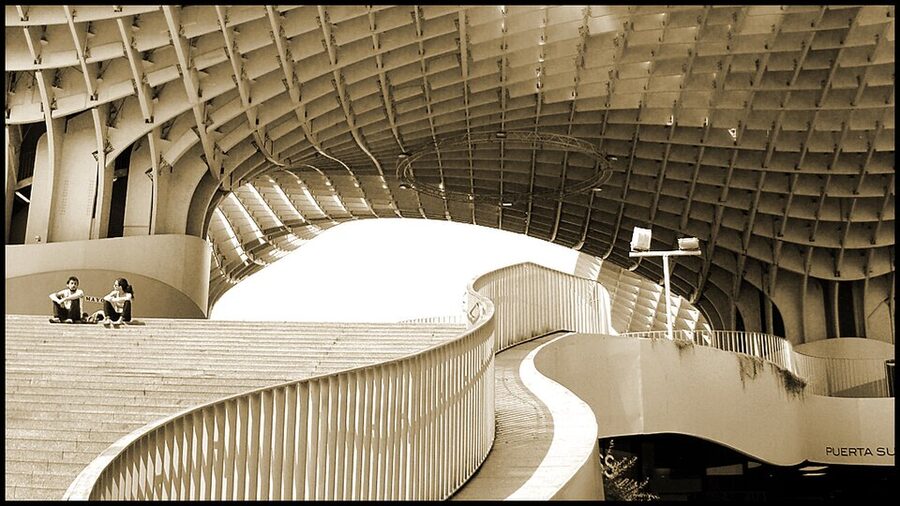
Here’s the thing nobody tells you about the giant timber mushrooms in central Seville: they are, by some measures, the largest wooden structure on the planet. Designed by German architect Jürgen Mayer-Hermann and finished in 2011, the Setas were widely hated when they opened. Now half the city’s selfies are taken on top of them.
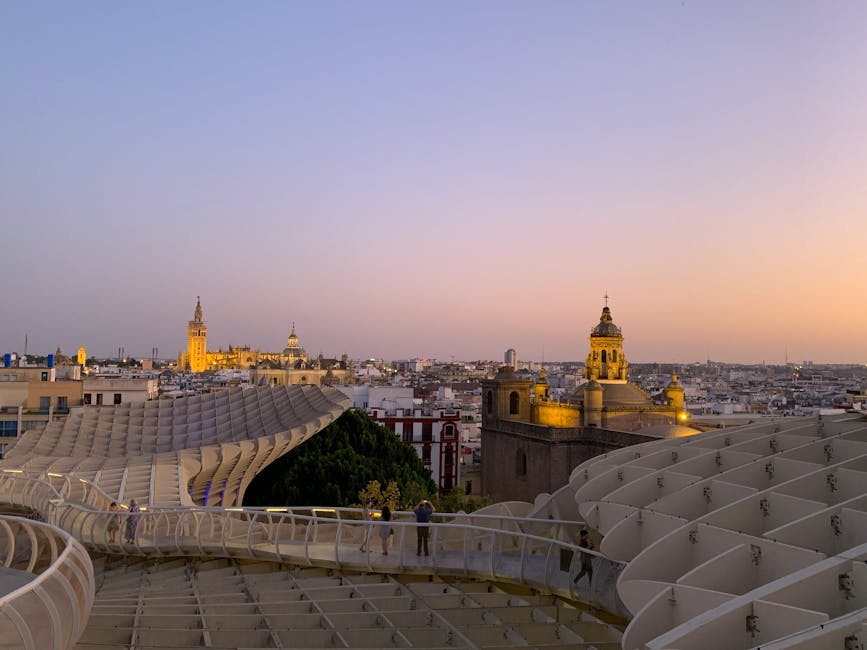
This guide covers everything I’d want to know before booking: which ticket actually gets you on the rooftop walkway, when to go to dodge the queues, what’s tucked underneath in the Antiquarium, and where to eat once you come back down. There are three small tour cards near the top if you just want to book and move on. The rest is the practical stuff.
- In a Hurry? Top Setas de Sevilla Picks
- What Las Setas Actually Is
- Tickets and What You Actually Pay For
- The Best Setas de Sevilla Tours and Tickets
- 1. Setas de Sevilla Entry Ticket: around
- 2. Setas Guided Tour with Optional City Tour: around
- 3. Flamenco at Tablao Flamenco Las Setas: around
- Timing the Rooftop Walkway
- How to Use the 48-Hour Re-Entry Properly
- The Antiquarium: Roman Seville Hiding Underneath
- What Else Is Inside the Setas
- The Aurora Light Show After Dark
- Getting There
- Where to Eat Around the Setas
- Photography Tips
- Is It Worth It?
- Common Mistakes to Avoid
- Planning the Rest of Your Seville Trip
In a Hurry? Top Setas de Sevilla Picks
Standard rooftop ticket (around $18): the no-fuss way onto the walkway, the immersive room, and the Aurora light show after dark. Book the entry ticket.
Guided Setas + optional city tour (around $34): a short walk-and-talk through the structure with the option to bolt on a wider Seville tour after. Worth it if you’re new to Spanish architecture. Book the guided tour.
Flamenco at Tablao Las Setas (around $33): not a Setas ticket as such, but the tablao is right at the foot of the structure and pairs perfectly with a sunset visit upstairs. Book the flamenco show.
What Las Setas Actually Is
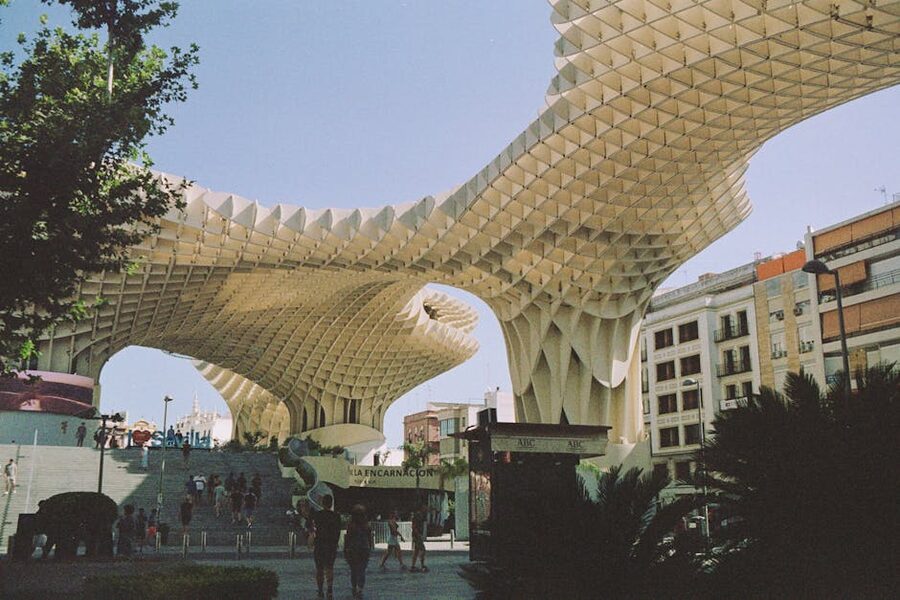
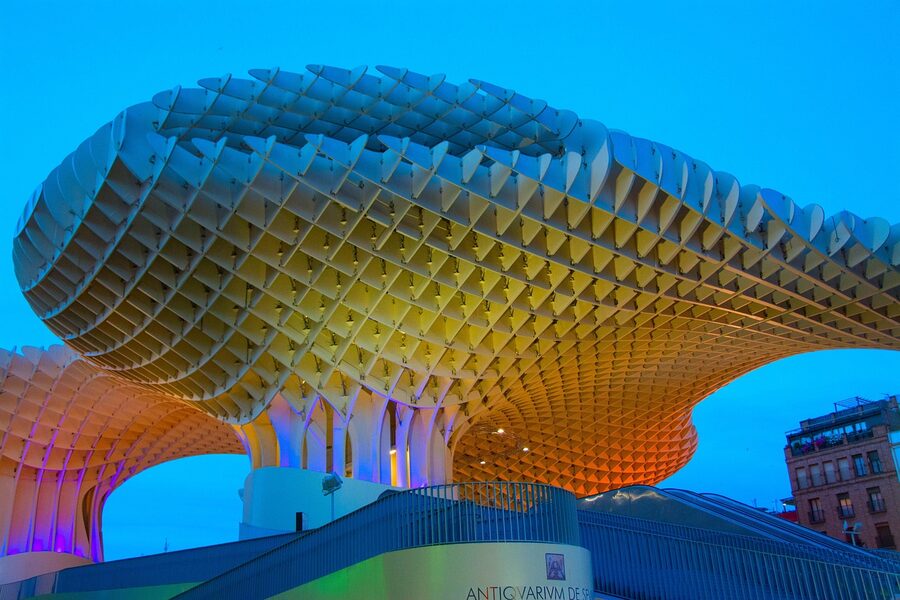
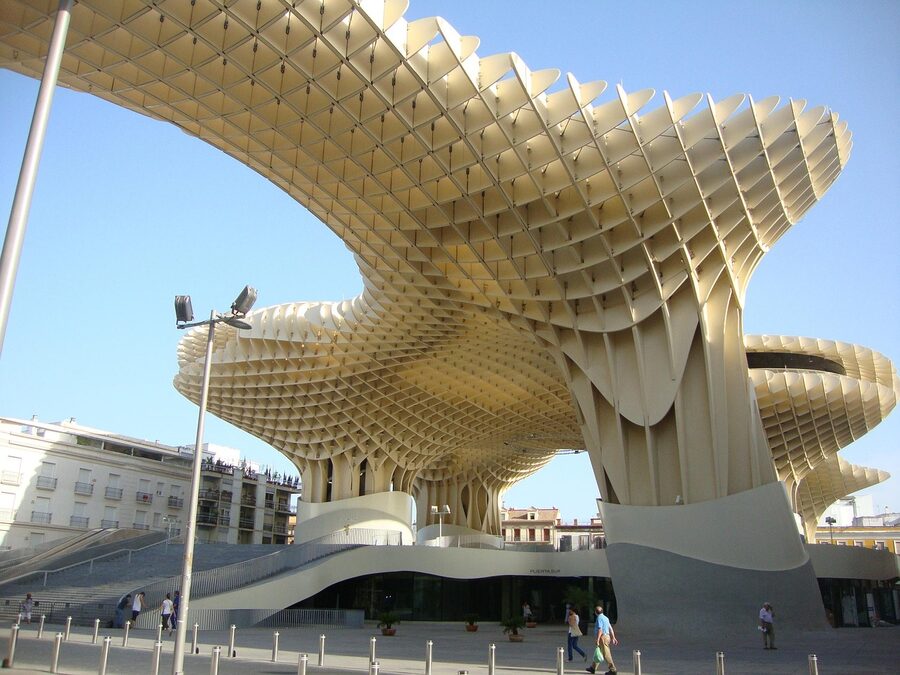
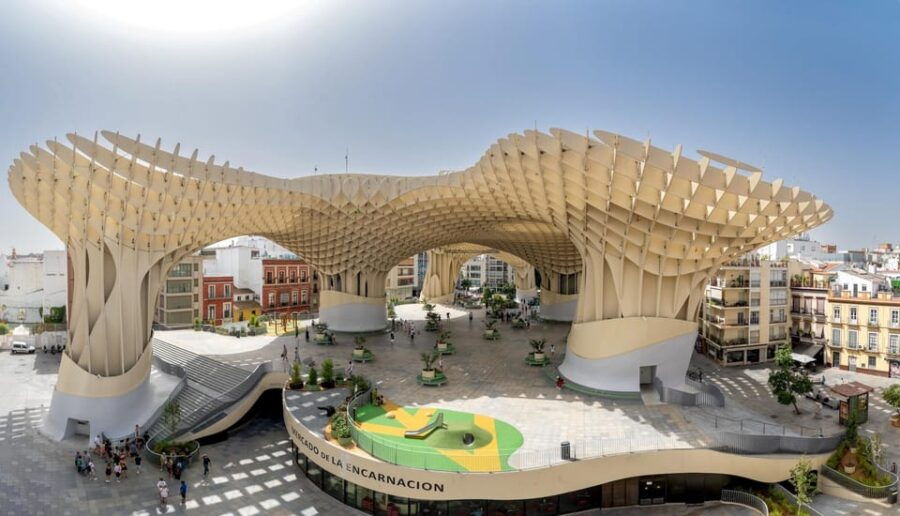
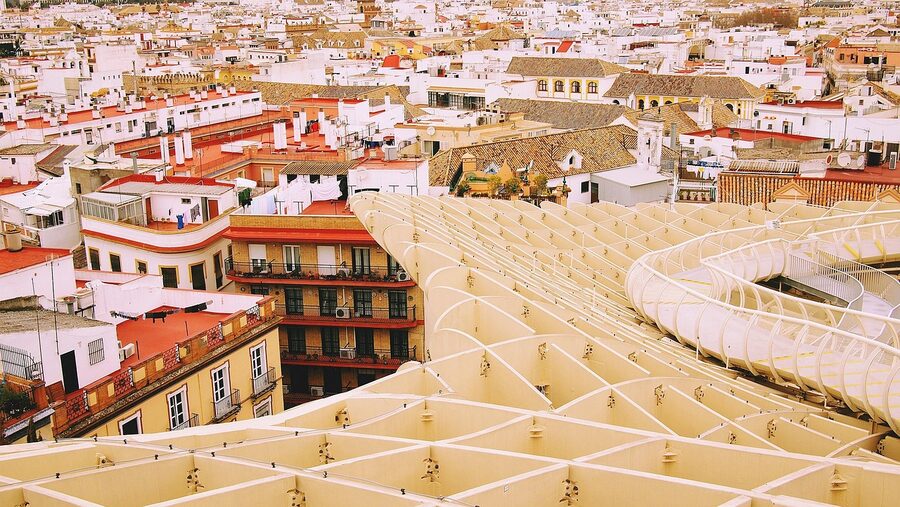
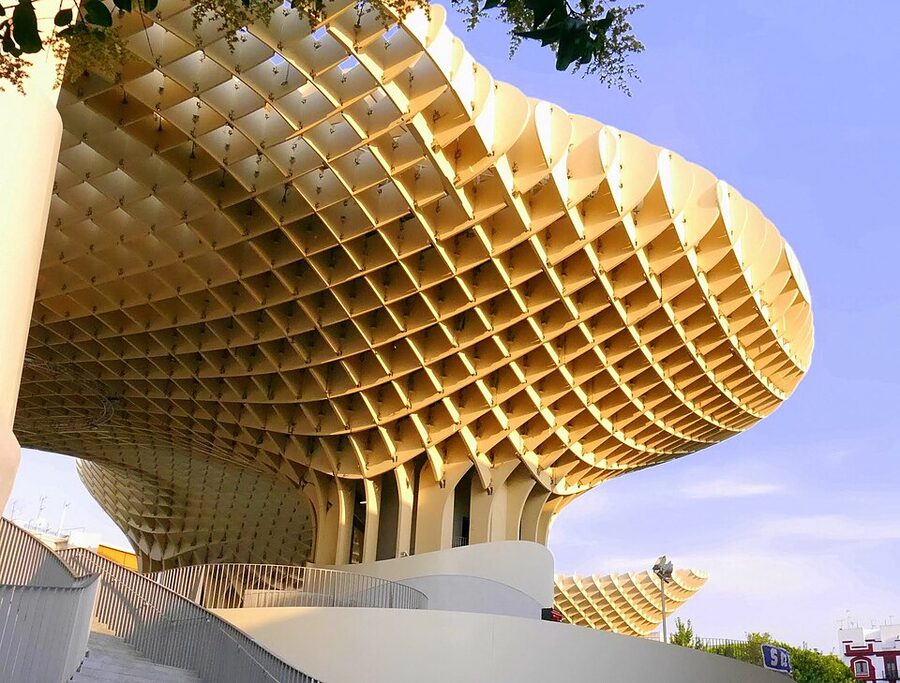
The official name is Metropol Parasol. Locals call them Las Setas (the mushrooms) and that is the name that has stuck. Six concrete columns hold up six interlocking wooden umbrellas covering most of Plaza de la Encarnación. The whole thing is roughly 150 metres long, 70 wide, and 26 metres at its highest point. The wood is Finnish birch coated to handle Andalusian sun.
It’s worth knowing the history because it changes how you read the building. The plaza had been a building site since the 1970s, when the old market got demolished and the city failed to replace it. A parking lot was the plan. Then workers hit a Roman road, mosaics, and house walls underneath. The whole project was paused, the dig was protected, and the city ran an architecture competition. Mayer’s mushroom won partly because it solved the puzzle of how to leave the ruins in place. If you’ve already seen the careful glass-floor preservation at the Royal Palace in Madrid, you’ll recognise the approach.
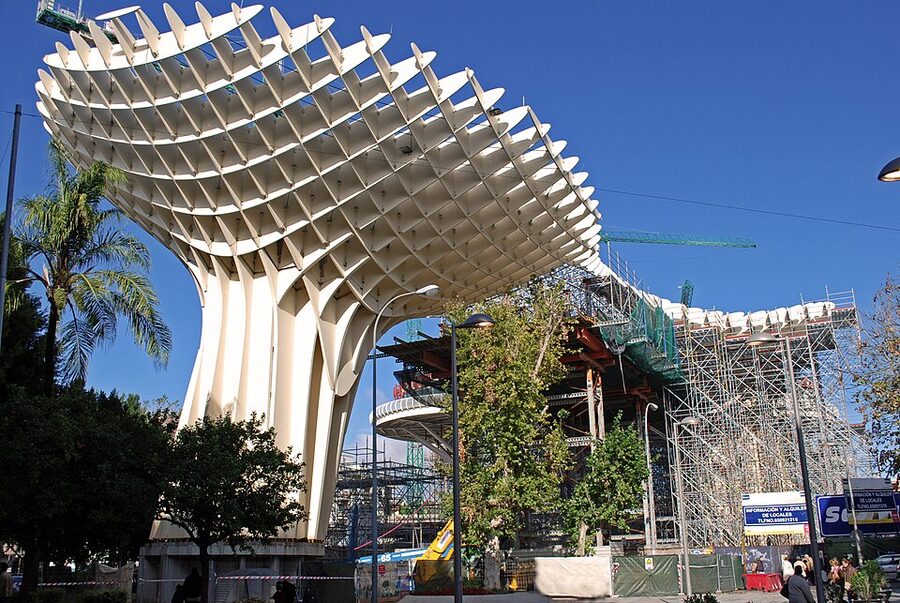
Was it controversial? Wildly. Sevillanos called it “the waffle,” “the hangover,” and worse. Cost overruns ran into the tens of millions of euros. Fifteen years on, opinions have softened. Most people I know in the city now treat it the way Parisians eventually came around to the Eiffel Tower: still ugly to some, but theirs. The arc reminds me of Barcelona’s relationship with the Sagrada Família, which was also called every name under the sun for decades before becoming the city’s defining image.
Tickets and What You Actually Pay For
Here is the bit that confuses everyone. Walking under the Setas is free. Sitting in the plaza, eating ice cream from one of the kiosks, peering up at the lattice, all free. You only need a ticket to ride the lift up to the rooftop walkway and watch the light show. That’s it.
The standard ticket is currently around €16 (about $18 depending on the day’s exchange rate) and includes three things: access to the rooftop walkway, a short immersive video room called “Feeling Sevilla,” and the Aurora light show that runs after sunset. Importantly, your ticket is good for two visits in 48 hours. So you can come for daylight views, leave, and return after dark for the lights without paying again. Most people don’t realise this. Use it.
Children 6 to 14 pay around €13. Under-5s are free. The Antiquarium downstairs is a separate, much cheaper ticket (€2, free for under-16s) and you can absolutely buy that on the spot. Booking the rooftop ticket online is the safer move, especially in spring and autumn when sunset slots sell out a day or two ahead. The standard rooftop ticket is what most people want.
The Best Setas de Sevilla Tours and Tickets
The pool of bookable Setas options is genuinely small. There’s one flagship entry ticket, one guided variation, and a handful of activities that share the building. No padding, no upsells. Here’s what I’d actually recommend.
1. Setas de Sevilla Entry Ticket: around $18
This is the one I’d book if I had to pick a single option. Our full review of the standard entry ticket goes into how the 48-hour re-entry rule works in practice, which is the single best reason to book this version over a third-party combo. Skip-the-line at peak slots, immersive room, and the night Aurora cycle are all included.
2. Setas Guided Tour with Optional City Tour: around $34
If the design history sounds interesting, a guided visit is a sensible upgrade. Past View runs a 30-minute Setas walk that you can extend into a wider Seville city tour, and our review of the guided option explains when the optional city add-on is worth it (verdict: yes, if it’s your first day in town). Skip-the-line entry is built in.
3. Flamenco at Tablao Flamenco Las Setas: around $33
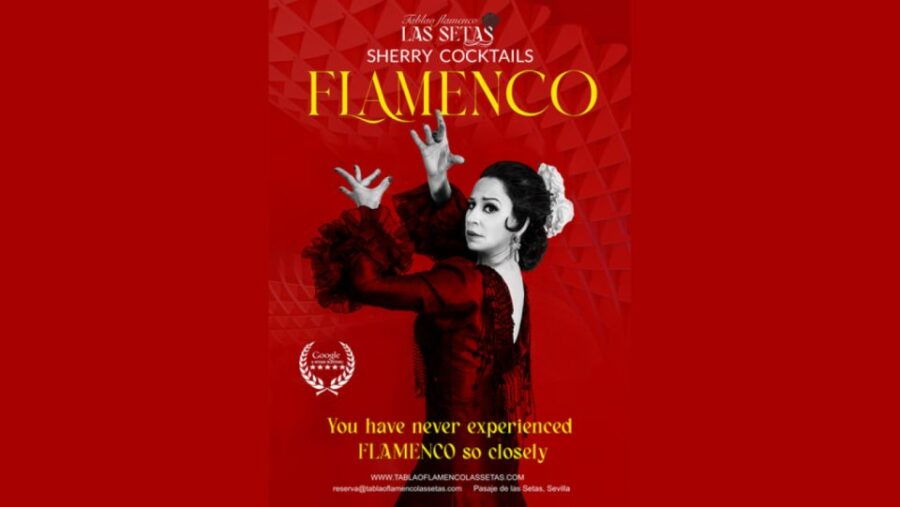
This isn’t a Setas ticket as such, but the tablao is right at the base of the structure and is the easiest way to add live flamenco to a rooftop visit. Our full review of the Tablao Las Setas show covers seating tiers, the optional drink, and how the small venue affects the energy. Performances run nightly and last about an hour.
Timing the Rooftop Walkway
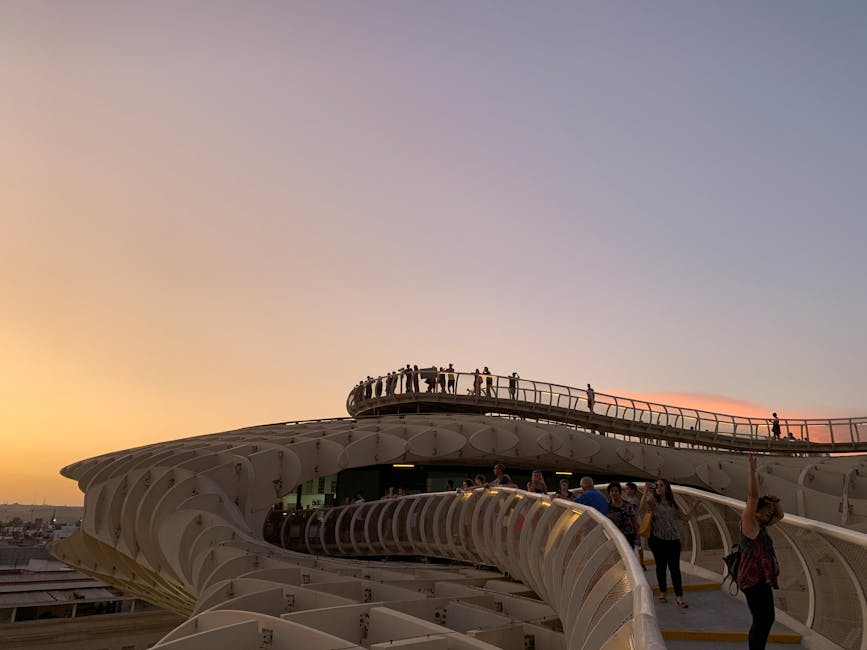
The single best thing you can do here is time it right. Sunset in Seville falls anywhere from about 18:00 in winter to 21:45 in midsummer. The roof opens late (until around midnight in winter, half past midnight in summer), so you have plenty of runway after dark. My rule of thumb is simple: aim to be on the walkway about an hour before sunset, stay through golden hour, and let the Aurora lights kick in once it’s properly dark.
Booking timed slots is more relaxed than at Seville Cathedral or the Alcázar, but sunset slots in March, April, October, and November sell out fastest. If you arrive in Seville with no plan, check availability on the same day before you commit to a sunset dinner anywhere else. In dead August heat the queues are shorter because most tourists are at the river or hiding indoors. The same logic applies elsewhere in Spain: Park Güell in Barcelona is unbearable at noon, much better at 5pm.
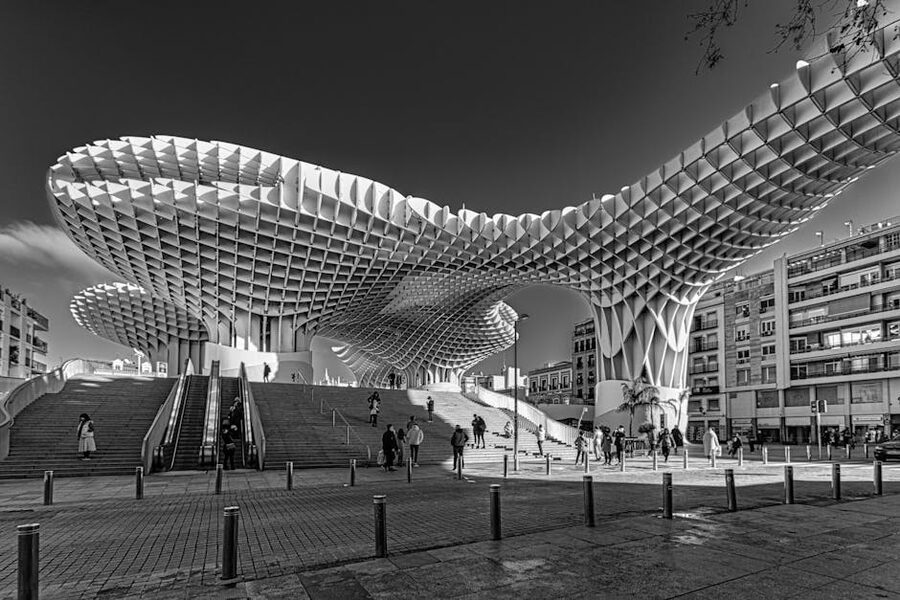
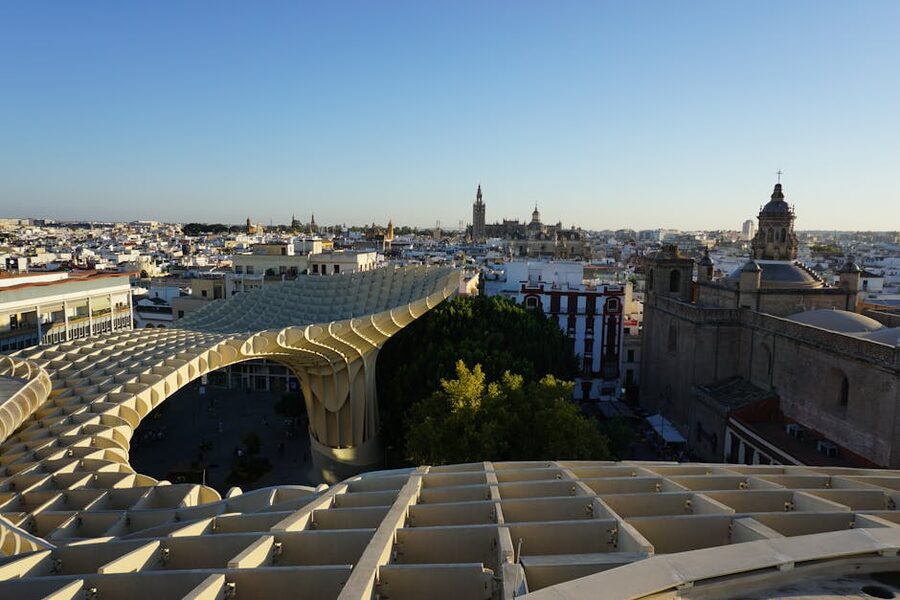
One small warning that nobody mentions: the highest point of the walkway is a bit of a wind tunnel on breezy days. Hold onto hats and loose maps. There’s a glass viewing platform that handles the wind better and is the sweet spot for long-exposure photos of the Cathedral and Giralda.
How to Use the 48-Hour Re-Entry Properly
Most ticket sites bury this in the small print, so I’ll spell it out. Buy a single rooftop ticket. Validate it. You now have two visits inside a 48-hour window. The smart play is daylight first (the views are better for understanding the city’s layout) and a second visit at full dark for the Aurora light show. You can split your two visits across two evenings if your trip allows.
Sevillanos who live in the postcode get free entry, which is why you’ll often see local couples up there on a Tuesday evening. If you’re staying nearby for more than a few days, treat it the same way: a quick fifteen-minute loop counts as one of your visits and is a lovely thing to do after dinner.
The Antiquarium: Roman Seville Hiding Underneath
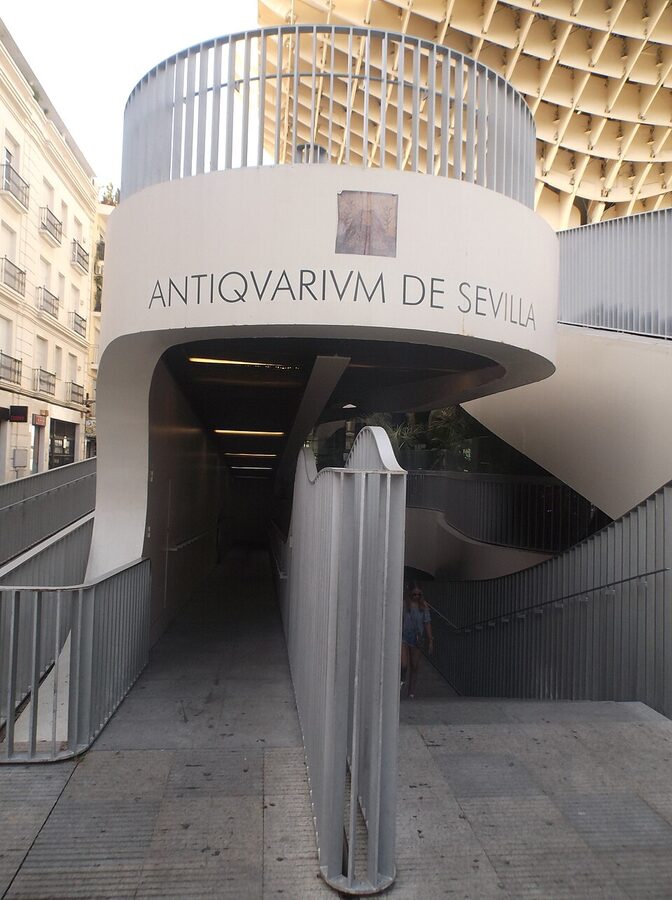
This is the part of Las Setas almost no tourist bothers with, and it’s the part I’d argue you shouldn’t skip. Down a flight of stairs, five metres below street level, is the Antiquarium: the actual Roman ruins they found while clearing the site for the parking lot. Mosaic floors, fish-pickling tanks, second-century house walls, even a small bath complex. The whole thing is preserved in situ under a glass deck.
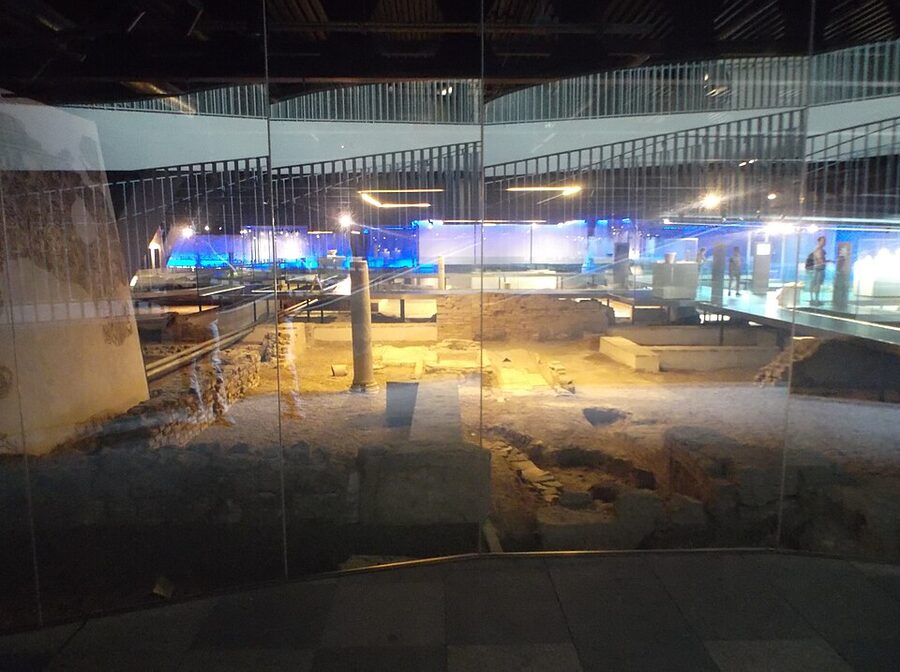
It costs €2. Under-16s are free. Open Tuesday to Saturday 10am to 8pm, Sundays and holidays 10am to 2pm, closed Mondays. If you’re already paying €16 to go up top, the Antiquarium is a no-brainer add. It’s also blissfully quiet. I once spent half an hour down there with two other people and a bored guard.
The exhibits do a decent job of explaining how the layers stack: Roman (Hispalis), Visigothic, then early Islamic Seville. If you’ve already done the Alcázar, the Antiquarium completes the timeline at the bottom end. For travellers stitching together a Spain history trail, this slots in nicely between a day trip to Toledo and Roman ruins further afield.
What Else Is Inside the Setas
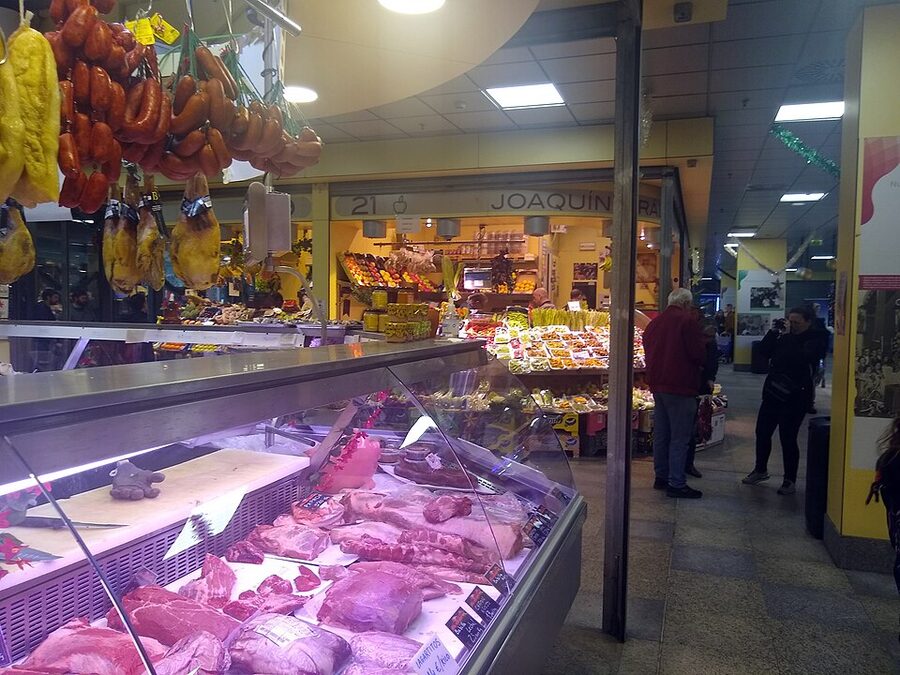
Easy to forget the Setas is also a working market. The Mercado de la Encarnación sits on the ground floor. There’s a fishmonger, a butcher, a couple of cheese counters, a few small bars doing tortilla and beer, and a flower stall. It’s not the cheapest market in Seville (that title belongs to Triana), but it is the most central and the easiest to combine with a rooftop visit.
The plaza level is where the city actually uses the building. Kids ride scooters in circles. Office workers eat takeaway lunch on the benches. There’s an open central square that hosts events, tiny outdoor concerts, and the occasional film screening. If you’ve come from the Cathedral side of town, the Setas plaza is a useful place to slow down for an hour. It plays a similar everyday role to the area around the Prado in Madrid: a major sight that doubles as a working public space.
The Aurora Light Show After Dark
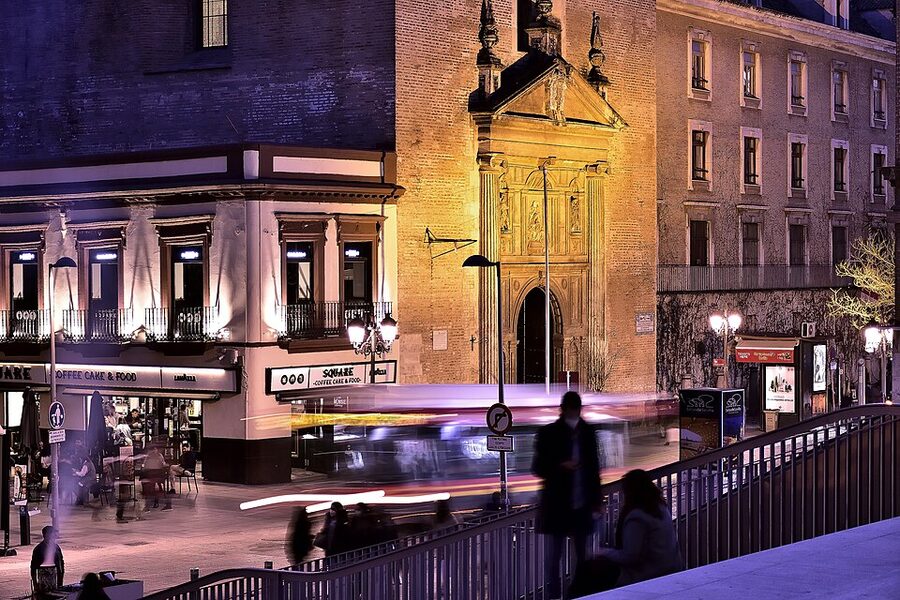
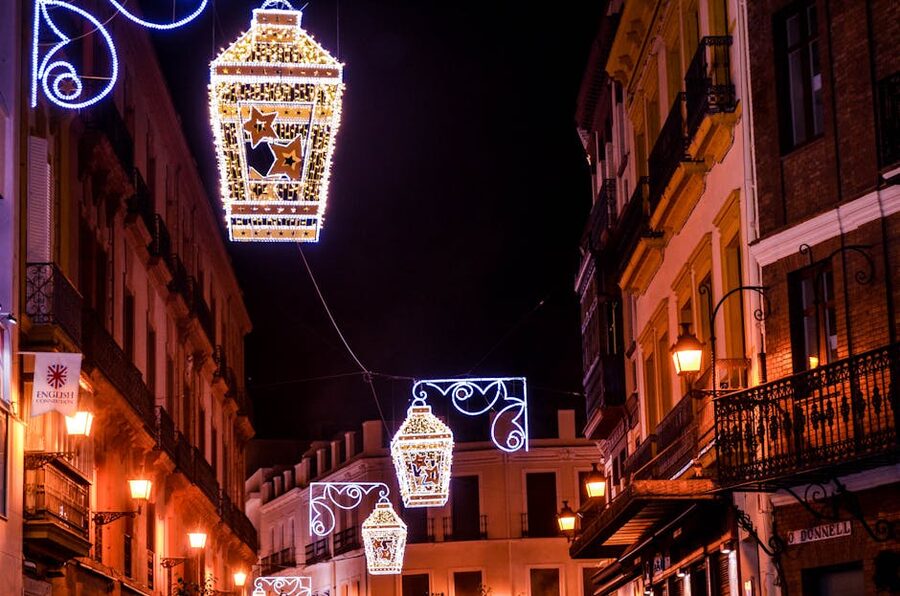
“Aurora” is the official name for the after-dark lighting installation. It’s not a single show with a start time. It’s a slow colour-cycle that runs continuously from about an hour after sunset until the building closes. Reds, purples, blues, greens, ambers. The full cycle takes about fifteen minutes. From the rooftop it feels immersive because you’re walking through it. From the plaza it works almost better because you can see the whole structure breathe.
Practical: the lights are visible whether or not you have a rooftop ticket. If your second 48-hour entry has expired and you still want the night version, just walk back to the plaza after dinner. It costs nothing.
Getting There
Plaza de la Encarnación sits roughly between Seville Cathedral and the Alameda. Most people walk in from the Cathedral or the Alcázar in around fifteen minutes. From the river side, allow twenty. Easy on foot, no need for transport unless you’re staying out near Triana or the Macarena.
If you’re using public transport, the closest metro stop is Plaza Nueva on Line 1, then a 10-minute walk north. City buses 27 and 32 stop a couple of blocks away. The hop-on hop-off bus stops a short walk south, near the Cathedral, which is the easiest option if you’re moving between sights with a heavy camera bag. If you’ve used the Barcelona hop-on hop-off or the Madrid panoramic bus, the Seville version works the same way: jump on, jump off, repeat.
By car: don’t. The streets in this part of the old town are narrow, one-way, and resident-only in places. There’s an underground car park nearby (Plaza Magdalena, about 8 minutes walk) but you’ll pay around €25 for a half-day. Walk or take a taxi.
Where to Eat Around the Setas
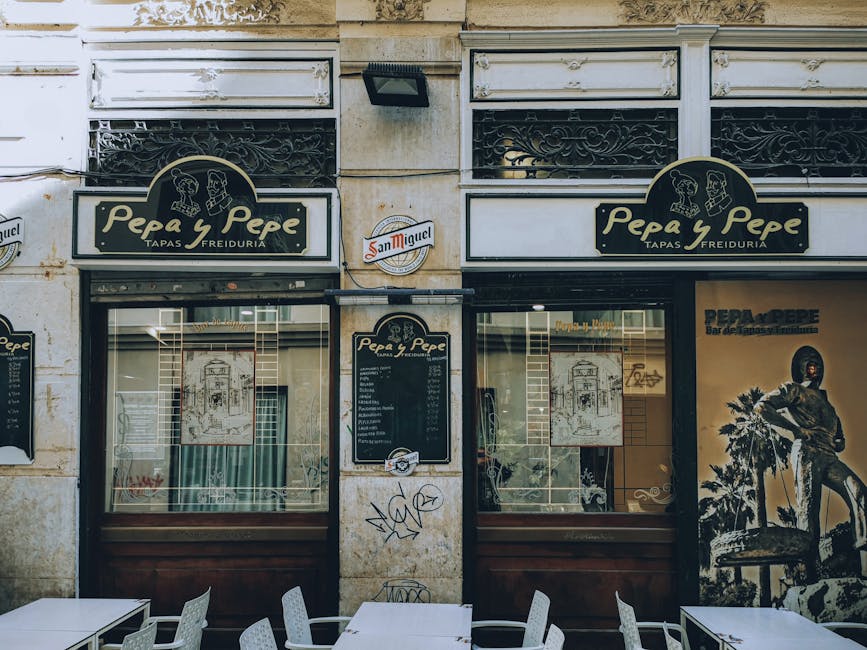
The streets just off the plaza are densely packed with tapas places. A few that locals actually use:
- Bar Plata: small, loud, cheap, on Calle Habana about three minutes south. Order the solomillo al whisky and a tinto de verano.
- Confitería La Campana: historic patisserie around eight minutes from the Setas, going since 1885. Get a tortita de aceite or a slice of yema for breakfast.
- El Rinconcillo: said to be Seville’s oldest tapas bar (founded 1670). Five minutes east, just past Iglesia de Santa Catalina. The chalk-on-the-bar bill is part of the experience.
- Eslava: properly worth the walk to the Alameda, twelve minutes north. The honey and rosemary pork cheek won a national tapas prize and they have not nerfed it since.
Inside the Setas itself, the Mercado de la Encarnación has a couple of small bars where you can sit at the counter for a beer and a tortilla slice. Cheap and quick if you want to refuel before going up. Don’t expect anything special.
Photography Tips
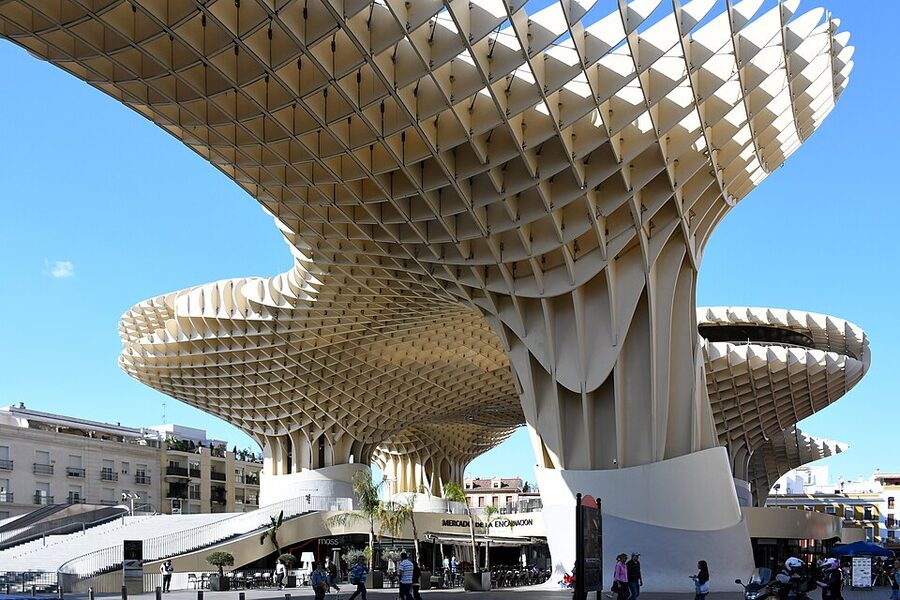
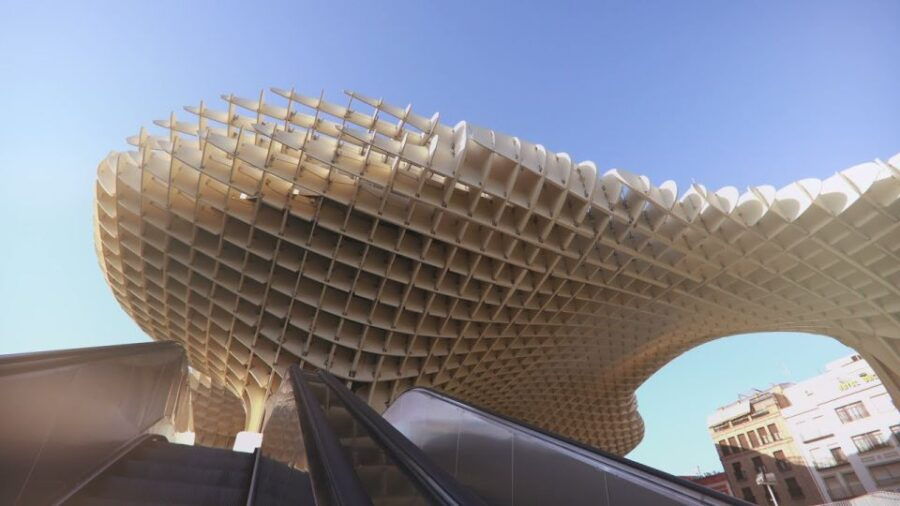
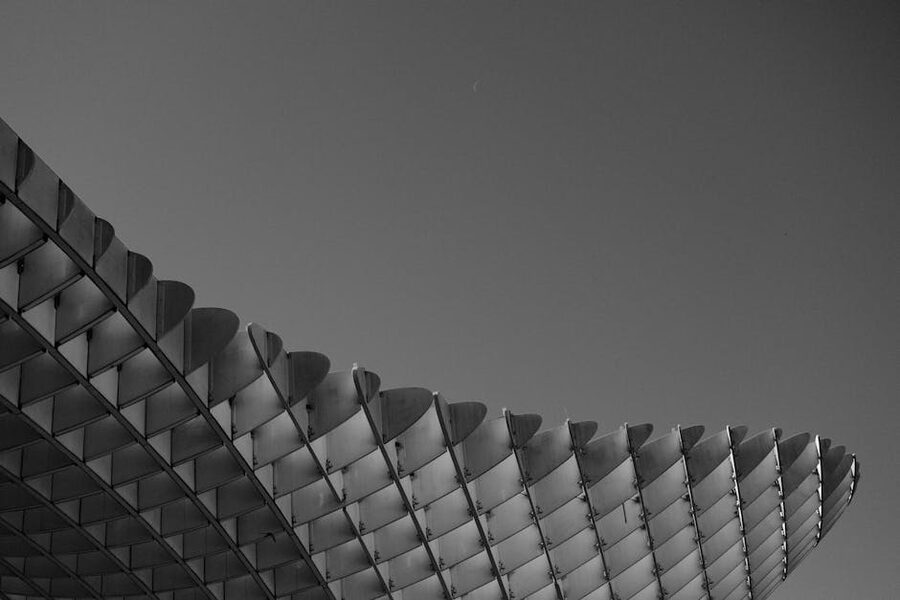
Two angles do the heavy lifting here. From below, in the plaza, frame the lattice against blue sky for that abstract pattern shot. From the walkway, the shot most people miss is looking down through the joinery: the wood grain reads like organic geometry, especially at low sun angles.
Tripods are technically not allowed on the walkway but small handheld gimbals are fine and nobody will stop you using a phone. For long exposures of the city, the glass viewing platform is the only spot stable enough. After dark, set the white balance manually unless you want every shot tinted by whatever colour the Aurora is currently cycling through.
Is It Worth It?
Yes, with caveats. If you only have one full day in Seville, the Cathedral and Giralda and the Alcázar have to come first. Those are the two attractions you came to see. If you’ve got a second day, the Setas earns its slot easily, especially if you make it the sunset stop on a tapas-heavy evening.
If you’ve got three days or more, you can’t avoid it anyway. The Setas is on the way to half the things you want to do, and the views from the top help you understand the city’s geography better than any map. Pair the rooftop with a flamenco show in the evening, then a Guadalquivir cruise the next morning, and you’ve covered the city’s three main moods: medieval, modern, and river.
Common Mistakes to Avoid
- Going at midday in summer. The walkway has almost no shade and Andalusian summer means 38°C without trying. Sunset or after dark is the right call from May through September.
- Not using the second entry. Your ticket is valid twice in 48 hours. Most people use it once and bin it. Daylight plus night is the best combination.
- Skipping the Antiquarium. €2. Air conditioned. Empty. It is the closest thing Seville has to a free secret.
- Eating at the directly-under-the-Setas restaurants. They have laminated menus in seven languages for a reason. Walk three blocks in any direction and the food gets better and cheaper.
- Booking the cheapest non-flagship option you find. The pool of bookable Setas products is small. The official entry ticket is the safe bet. Don’t pay €25 for a “skip-the-line” version that does the exact same thing.
Planning the Rest of Your Seville Trip
If the Setas is on your itinerary, you’ll want the city’s heavyweights too. Cathedral tickets sell out faster than anything else in Seville and need booking in advance. For evenings, a flamenco show at one of the small tablaos beats the big tourist halls every time, and a slow Guadalquivir cruise at golden hour does the job a hop-on bus can’t.