
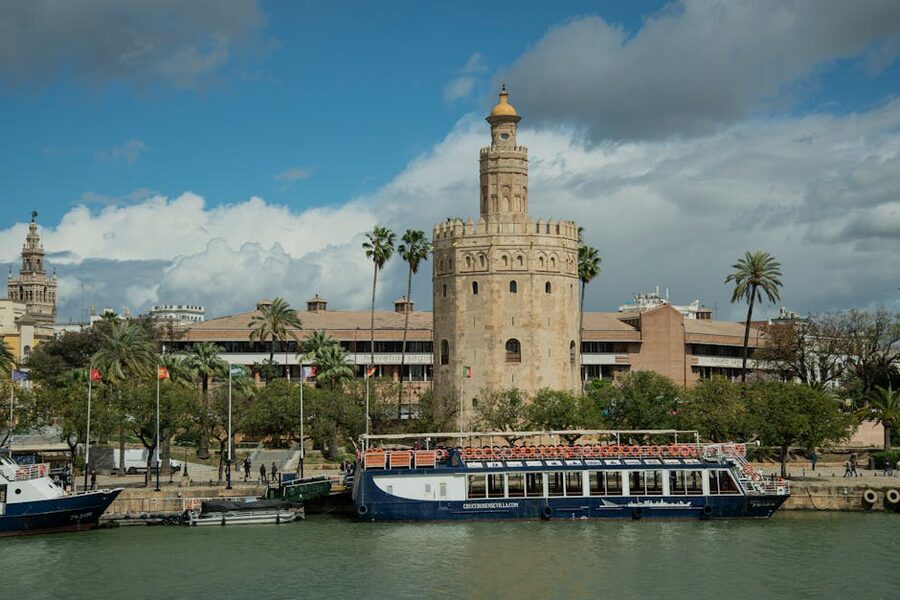
Is a Guadalquivir river cruise actually worth it in Seville, or is it a tourist circuit you’re paying for? Honest answer: it depends on the boat you book and the hour you take it. The wrong combination is forty euros down the drain. The right one is the only place in the city where you can sit down for an hour, see Triana from the water, and watch the sun drop behind the Torre del Oro.
This is how I’d pick a Seville cruise so it lands in the second category, not the first.
- In a Hurry
- Why a Cruise At All
- Where the Boats Leave From
- Reaching the Quay
- Picking the Right Type of Cruise
- The 1-Hour Panoramic Loop
- The Boat Tour With Lunch or Dinner
- Kayaks and the Yacht
- My Top Picks for Booking the Cruise
- 1. Seville: 1-Hour Guadalquivir River Sightseeing Eco Cruise:
- 2. Seville: Guadalquivir River Cruise:
- 3. Seville: Guadalquivir Boat Tour With Optional Lunch or Dinner:
- What You’ll Actually See From the Water
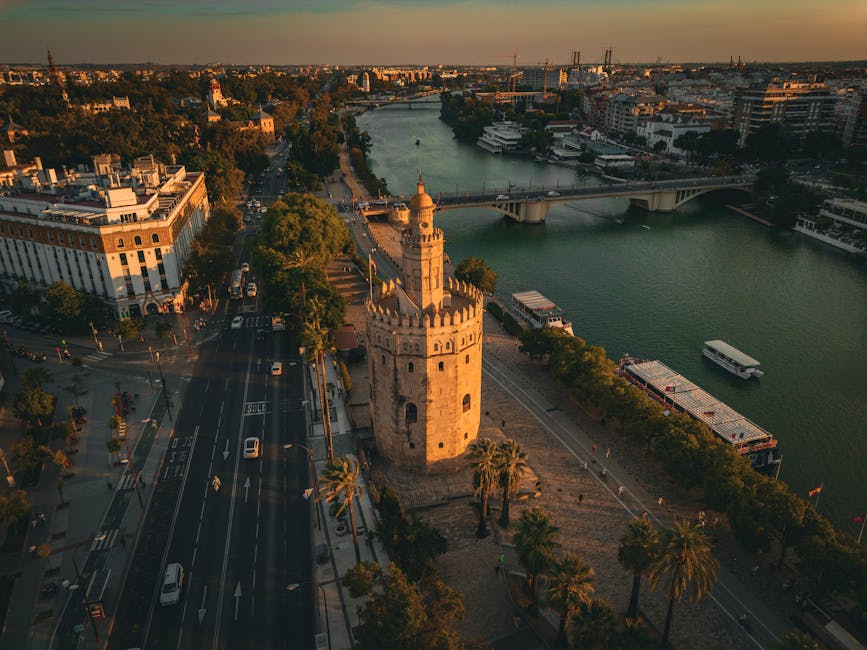
- Torre del Oro and the Maestranza
- The Triana Waterfront and Calle Betis
- The Triana Bridge and Beyond
- Isla Cartuja and the Pavilion of Navigation
- Sunset or Daytime: The Real Trade-Off
- Plaza de España: The Cruise Doesn’t Reach It
- Practical Booking Logistics
- What the Cruise Doesn’t Do Well
- Common Booking Mistakes
- Best and Worst Times of Year
- How a Cruise Fits a Two-Day Seville Plan
- Eating Around the Pier
- Which Cruise Should You Actually Book?
- Pairing the Cruise With the Rest of Spain
In a Hurry
- Cheapest panoramic pick: 1-Hour Guadalquivir Eco Cruise. Around $19. Hop-on style boat, audio in your earbuds, hour back at the Torre del Oro.
- Standard hour with audio guide: Seville Guadalquivir River Cruise. Around $21. Same loop, different operator, audio in seven languages.
- Sit-down meal on the water: Boat Tour With Optional Lunch or Dinner. Around $29. Up to two and a half hours, tapas or a full menu, live music on some sailings.
Why a Cruise At All
The Guadalquivir is the only navigable river in Spain. That’s the trivia line every guide repeats, and it’s true, but it doesn’t explain why you’d give up an hour of your sightseeing day to bob about on it.
The real reason is that Seville is laid out around the river. The historic core sits on the east bank. Triana, the old sailors’ and potters’ quarter, is on the west bank. From the street, you mostly see the two halves separately. From the boat, you see them as a single picture, and the geography of the city finally makes sense. You also get the Torre del Oro from the water, which is the angle the watchmen had in the 13th century when they were checking who was rowing in.
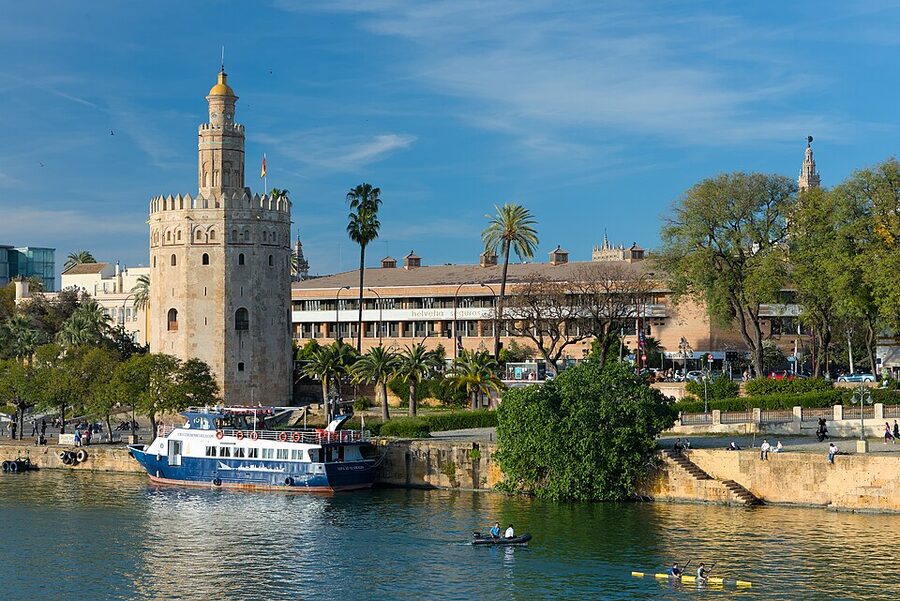
The other reason is rest. By day three in Seville, you’ve walked the cobbles of Santa Cruz, queued for the Cathedral, queued again for the Alcázar, eaten standing up at three different tapas bars. An hour in a deck chair with a breeze and the city sliding past is genuinely restorative. If you’ve been working through the Cathedral and Alcázar tickets back to back, the cruise is the natural breather between them.
Where the Boats Leave From
The departure quay is short and unmissable: Paseo Alcalde Marqués del Contadero, the strip of riverside between the Torre del Oro and the Puente de San Telmo. Walk along the river from the Torre and you’ll see three or four ticket booths, each painted a different colour, each offering basically the same loop.
The booths are organised by operator. Cruceros Torre del Oro, Naturanda, GuadaLuxe, and a couple of smaller outfits all push off from the same hundred metres of quay. If you’ve pre-booked online, your voucher will tell you which booth to redeem at. If you’re booking on the day, walk past all of them once before queuing. Prices are within a euro of each other; the only meaningful difference is the next departure time.
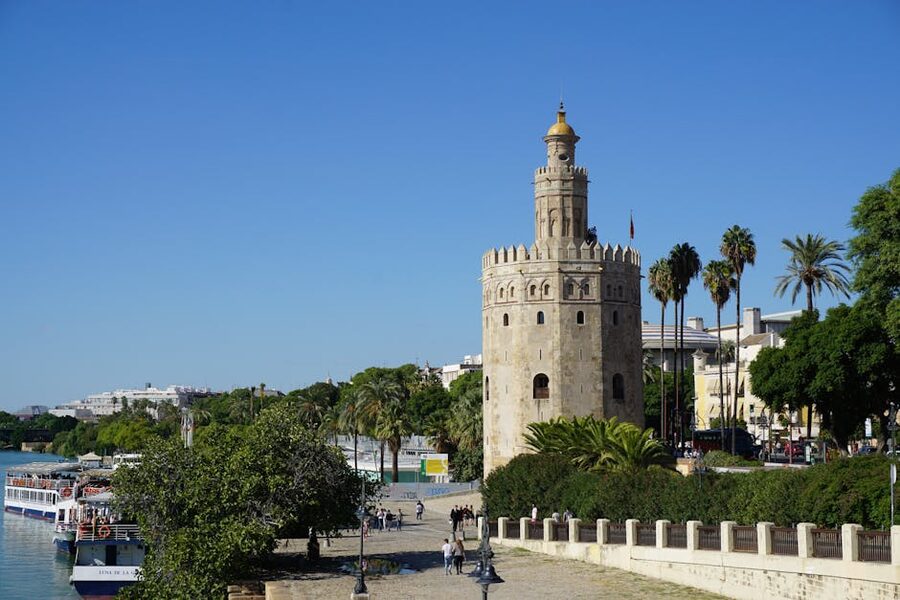
One thing the maps don’t tell you. The eastern bank has a low concrete walkway right at water level, parallel to the road. That’s the actual departure point, not the quay one level up. There are stairs down. If you book online and your map app drops you at street level, look for the staircase signed Embarque or just labelled with the operator’s logo. From there you walk straight onto the pontoon.
Reaching the Quay
From the Cathedral and Giralda, the Torre del Oro is a five-minute walk south along Avenida de la Constitución. From the Alcázar, six minutes through the Jardines de Murillo and across Avenida Roma. From Plaza de España, allow fifteen minutes on foot or jump on the hop-on hop-off bus, which has a stop at the Torre del Oro. From the Setas de Sevilla and the Setas walkway in the north, it’s a twenty-minute walk or a quick metro hop to Puerta de Jerez.
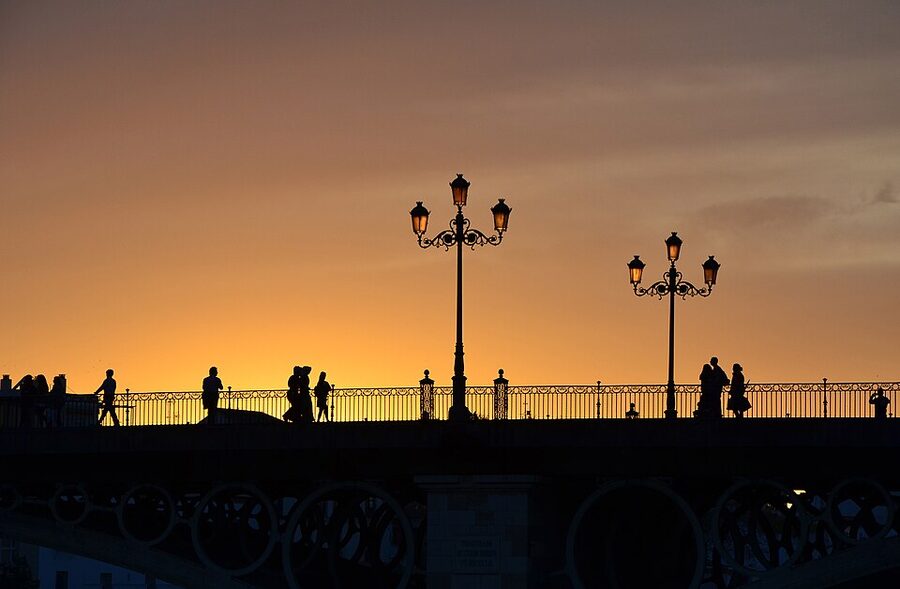
If you’re staying in Triana, walk across the Puente de Isabel II (everyone calls it the Triana Bridge) and you’ll be at the quay in eight minutes. That’s the prettier approach. The bridge was finished in 1852 and it sets up the cruise visually. You’re walking over the river you’re about to sail down.
Picking the Right Type of Cruise
There are roughly three categories of cruise on the Guadalquivir. They look similar in the listings. They’re not.
The 1-Hour Panoramic Loop
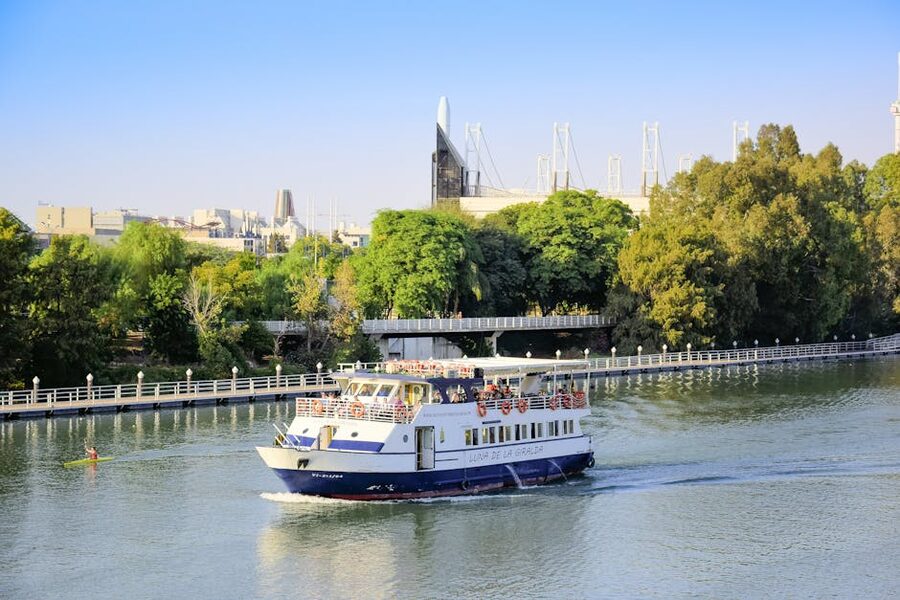
This is the workhorse of the Guadalquivir cruise scene. One hour, leaves from the Torre del Oro, sails north past Triana up to roughly the Pavilion of Navigation on Isla Cartuja, turns around, sails back. Audio guide in five to seven languages playing through a small speaker on board, or piped to your phone via QR code on some operators.
It’s the right pick for most visitors. Cheap, short, hits every landmark you’d want to photograph. Where it falls down: the on-board commentary is loud, sometimes overlapping in three languages at once on the older boats, and on a busy summer afternoon you might end up sharing a bench. The flagship version is the 1-hour Eco Cruise, which we cover in detail including which deck to grab. The standard river cruise option covers the same ground at a slightly different price point.
The Boat Tour With Lunch or Dinner
This is the upgrade. Same boat, same route, but it’s now ninety minutes to two and a half hours, depending on if you’ve added a meal. Tapas selections, full Andalusian menu, sometimes live flamenco guitar. Prices roughly double the panoramic, but you’ve replaced a dinner reservation with a floating one.
It works best at sunset. The food is fine, not extraordinary; the setting is what you’re paying for. We dig into the menu and the pacing in our boat-tour-with-lunch-or-dinner review, including which sailings include the live music. If you’ve already got a flamenco show booked for the evening, the lunch version is the sensible pick instead.
Kayaks and the Yacht
The fringe options are worth knowing about. The Guadalquivir kayak trip takes you upriver from a different launch point, usually around two hours of paddling, and you do not see the central monumental stretch. Go for it if your priority is being on the water rather than seeing the city. The exclusive yacht cruise is the small-private-boat option, fewer people, often in the evening, more like a charter than a tourist run.
For most travellers, neither of these replaces a panoramic. They’re add-ons. If kayaking is the only kind of being-on-water you’ll consider, you’re better off picking the kayak and not bothering with a cruise at all.
My Top Picks for Booking the Cruise
Three I keep coming back to, ranked by who they’re actually for. Pick 1 if you want the cheapest competent loop. Pick 2 if you’d rather have the audio guide piped clearly. Pick 3 if you want to make a meal of it.
1. Seville: 1-Hour Guadalquivir River Sightseeing Eco Cruise: $19
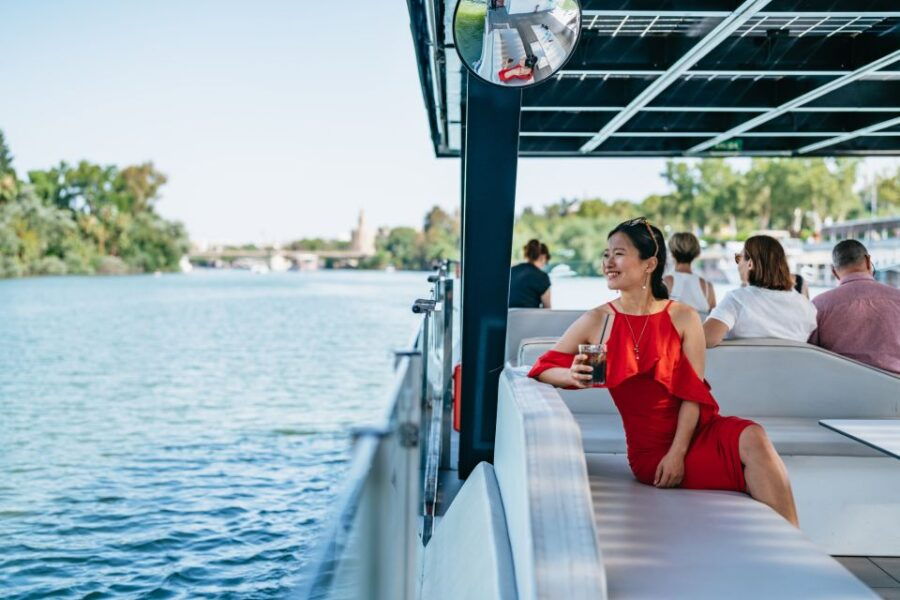
This is the one I send most first-timers to. Hour sail, hits the Torre del Oro, the Triana waterfront, the Cartuja bridges and back. The eco-cruise branding is mostly about the engine, but in practice it’s the most-booked Guadalquivir product full stop. Our full review walks through which deck has the better photo angles and how the audio guide actually plays in the noisier midday sailings.
2. Seville: Guadalquivir River Cruise: $21
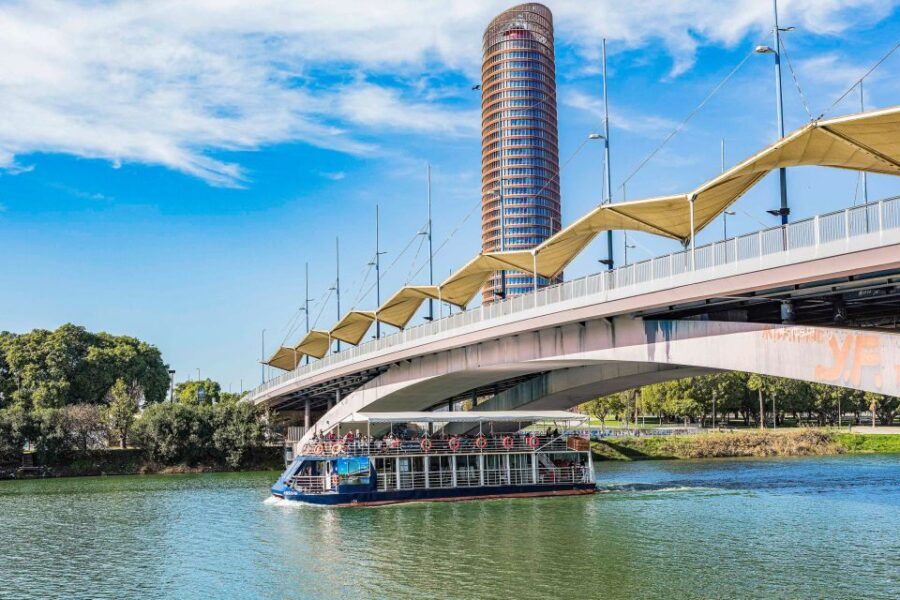
If the eco-cruise is sold out for your slot, this is the equivalent run from a different operator. The pacing is identical, the bridges are the same, the difference is the audio system: this one runs through individual handsets in seven languages instead of an overhead speaker, which makes a real difference if you’re sailing with a non-English speaker. Our review goes into the actual audio quality and whether the handsets ever run out (sometimes, on busy afternoons; bring earbuds as a backup).
3. Seville: Guadalquivir Boat Tour With Optional Lunch or Dinner: $29
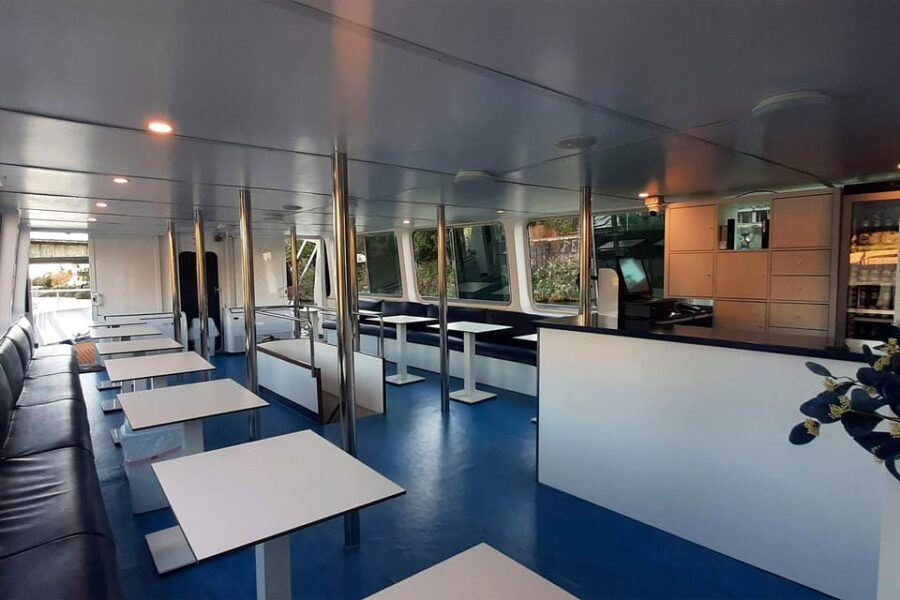
Pick this when you want the cruise to count as your evening. Ninety minutes to two and a half hours depending on if you’ve taken the food add-on, with tapas or a fuller Andalusian menu. The sunset sailings book out three or four days ahead in spring; the lunch slot is easier to grab last-minute. Our review covers what’s actually on the menu, which sailings include live flamenco guitar, and where to sit so you’re not next to the speaker.
What You’ll Actually See From the Water
The 1-hour loop covers a fixed stretch: roughly two kilometres north from the Torre del Oro, past four bridges, around Isla Cartuja, and back. Here’s what to look for.
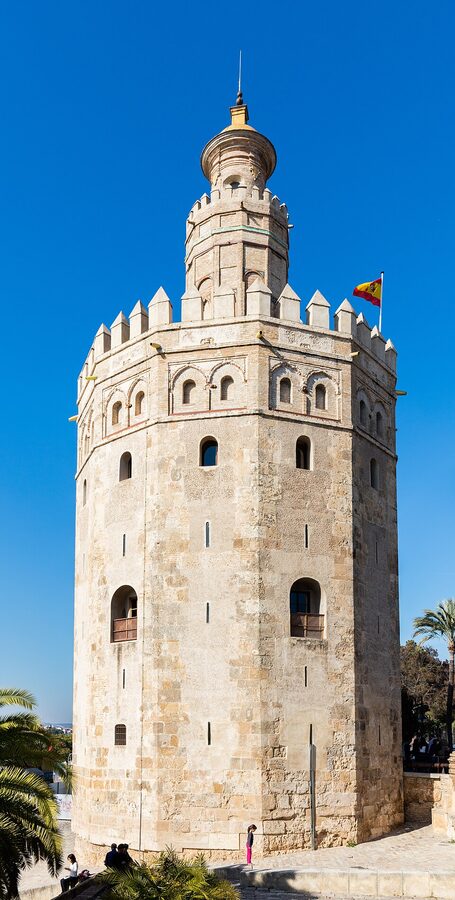
Torre del Oro and the Maestranza
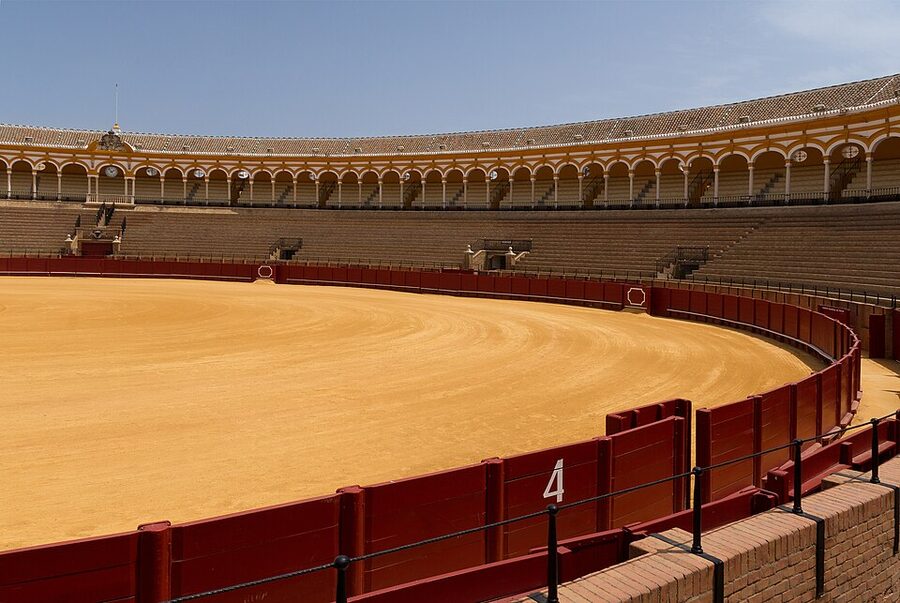
The first five minutes. As you push off, the Torre del Oro is on your left and the Maestranza bullring is just behind it. The Torre is the obvious photo, but pivot 30 degrees and the bullring’s white-and-yellow facade with its dome catches better light at sunset than the tower does.
The Triana Waterfront and Calle Betis
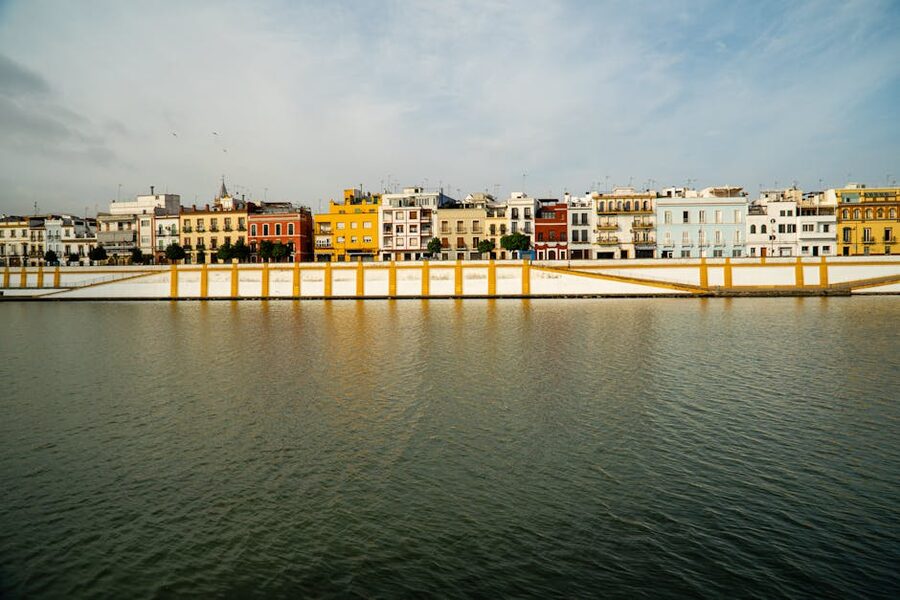
About ten minutes in, the river curves slightly and the Triana side opens up. Calle Betis is the pastel-coloured row of houses backing onto the river. Yellow, ochre, pink, mint green; the orderbook is intentional, the colour scheme is not. They were repainted in the 1990s after Expo 92 and never quite settled into a uniform look. From the boat it’s the most photographed angle of Triana, and you’ll see why immediately.
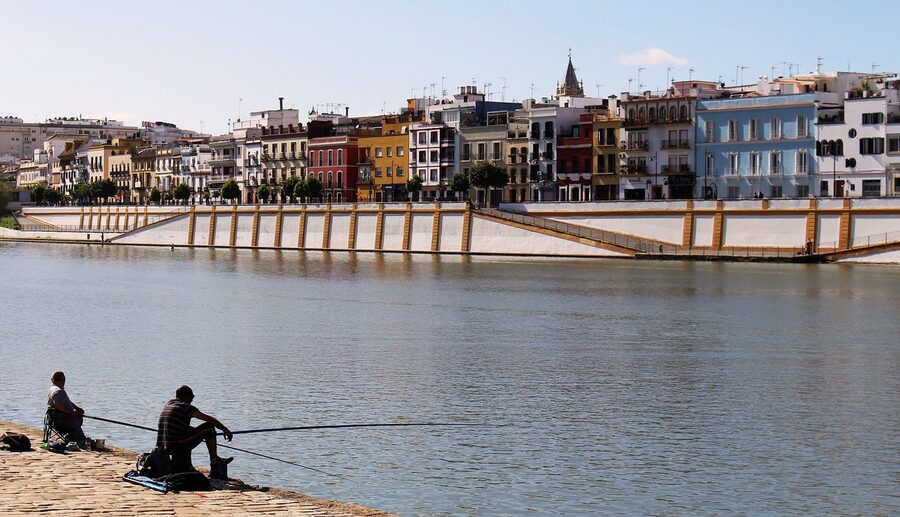
This stretch is also where you’ll spot the bullring’s far side, the church of Santa Ana, and a couple of historic ceramic studios still operating from Triana’s potter days. If you’re following up the cruise with a Triana flamenco show in the evening, this is the neighbourhood you’ve been seeing from the water.
The Triana Bridge and Beyond
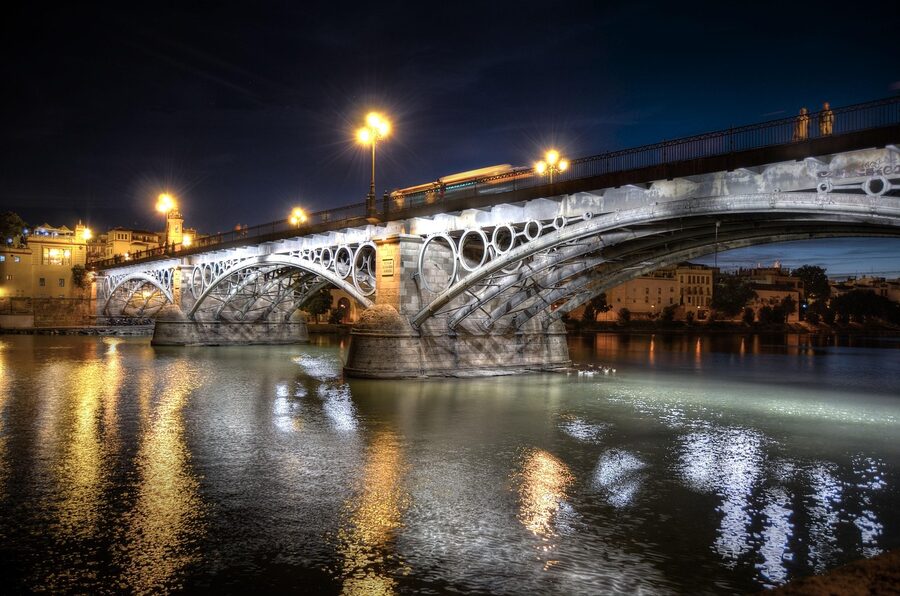
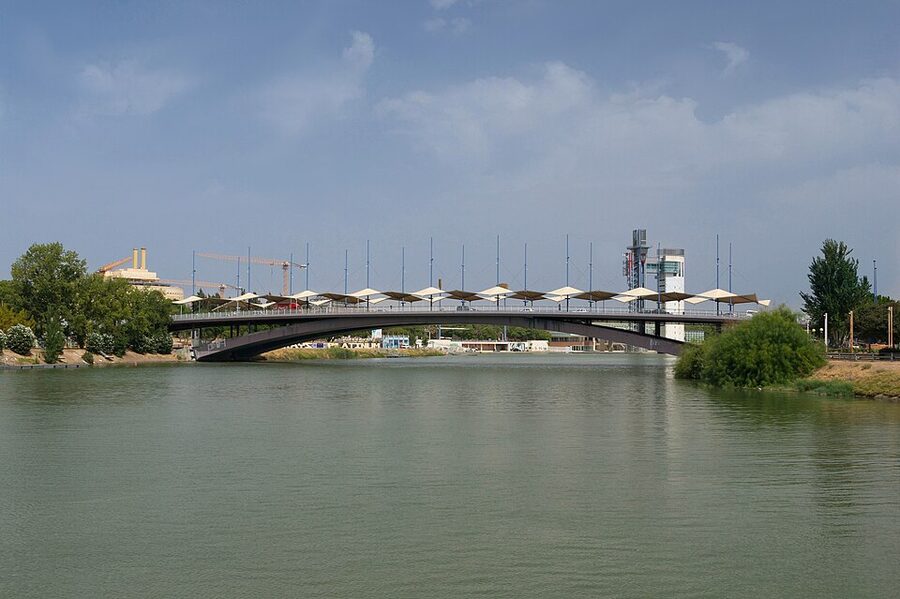
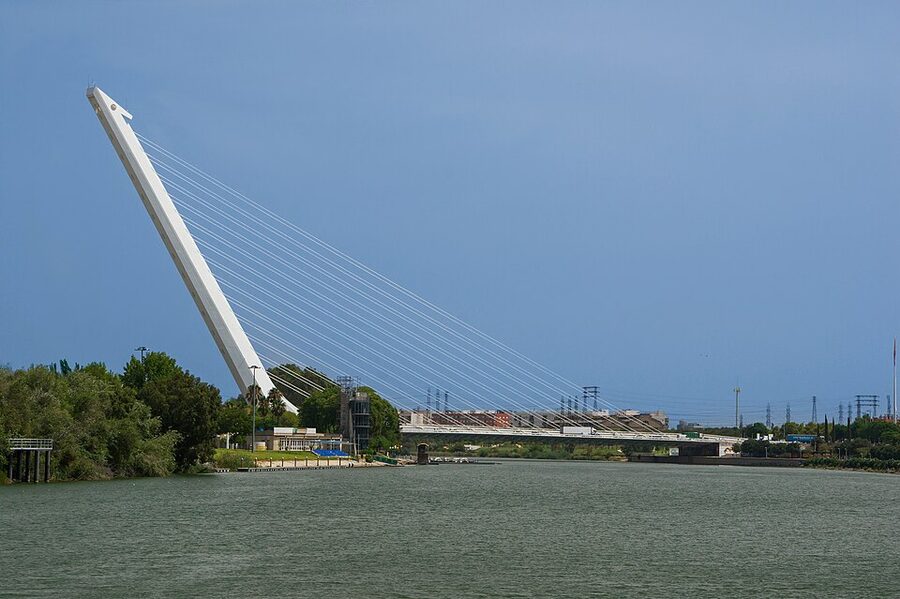
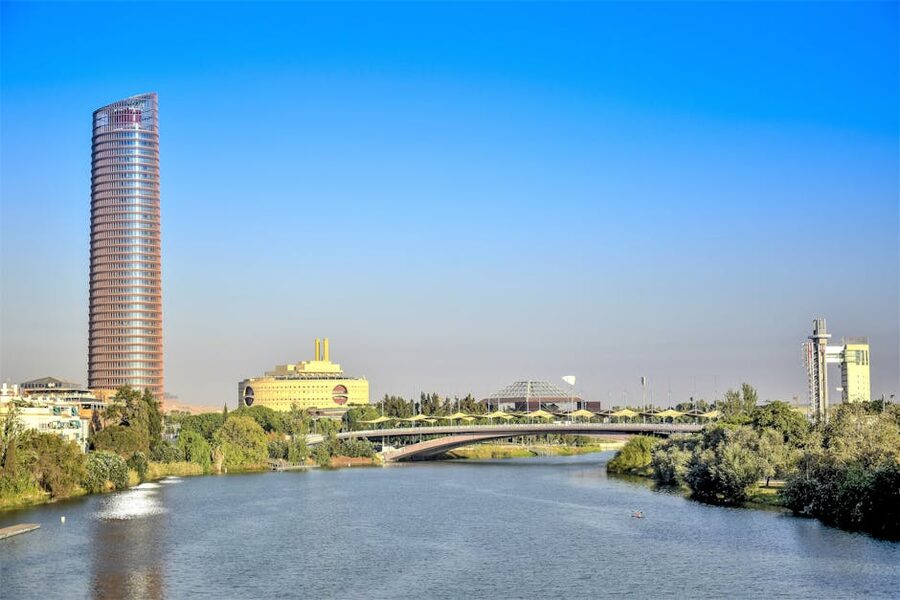
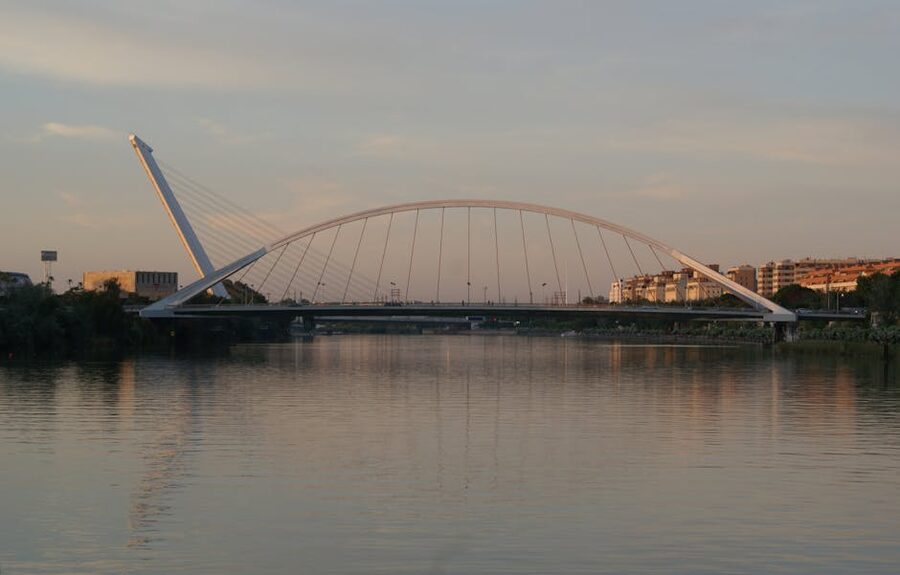
You sail under the Triana Bridge (Puente de Isabel II) about twelve minutes in. It’s lower than it looks from above; on the upper deck of the boat, people instinctively duck. You won’t actually hit it, but the rivets feel close. North of it, the river opens out and you can see the more recent bridges: the Puente del Cachorro (Cristo de la Expiración), then the Calatrava-designed Puente del Alamillo with its single white pylon.
Isla Cartuja and the Pavilion of Navigation
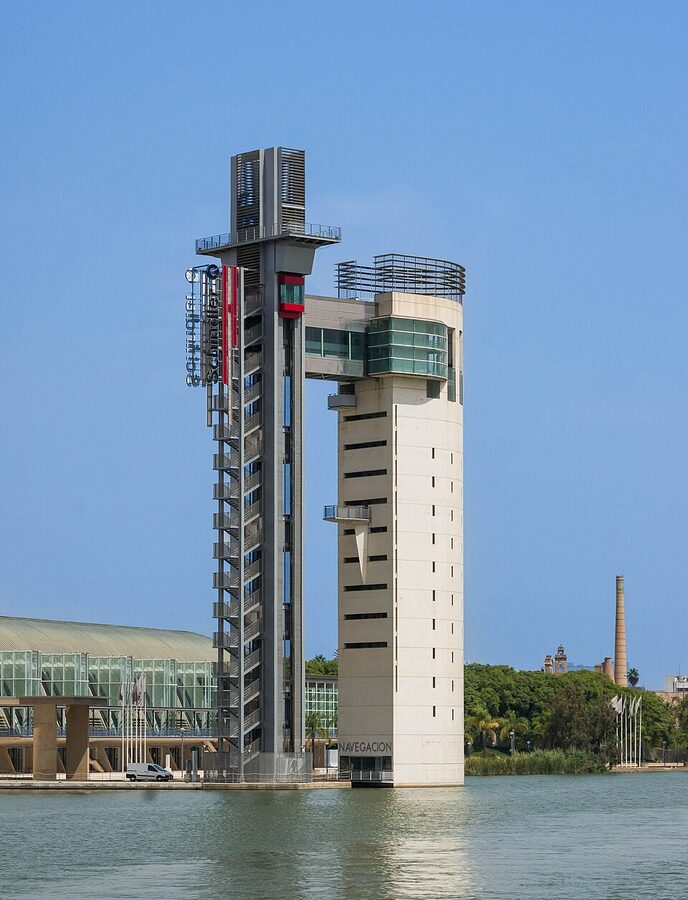
The boat turns around near the Pavilion of Navigation on Isla Cartuja. This was the Spanish pavilion at Expo 92 and the surrounding island still has chunks of Expo architecture scattered through it. Most are dilapidated; the Pavilion of Navigation is the one piece that’s actually been kept up, and from the boat its long horizontal lines and viewing tower look better than they do from the road.
The Cartuja itself is the old Carthusian monastery where Columbus is supposed to have planned his second voyage. The boat doesn’t stop, but you’ll see the monastery walls from the river. The whole northern section of the loop is basically a guided history of Expo 92 plus a much older monastic past.
Sunset or Daytime: The Real Trade-Off
The single biggest decision on a Guadalquivir cruise isn’t which operator; it’s the hour. The same hour-long loop is genuinely a different experience at three different times of day.
Mid-morning (around 11am). Light flat, river quiet, easiest to grab a window seat. The Torre del Oro and Triana side both get good frontal light. Worst for photos of the western bank in summer because the sun is behind it. Best if you’ve got a tight day of sightseeing ahead.
Late afternoon (around 5-6pm). The compromise. Light improving, river busier, queue at the booth gets longer. The Calatrava bridge starts to glow as the sun drops. This is when most of the lunch-cruise sailings actually run.
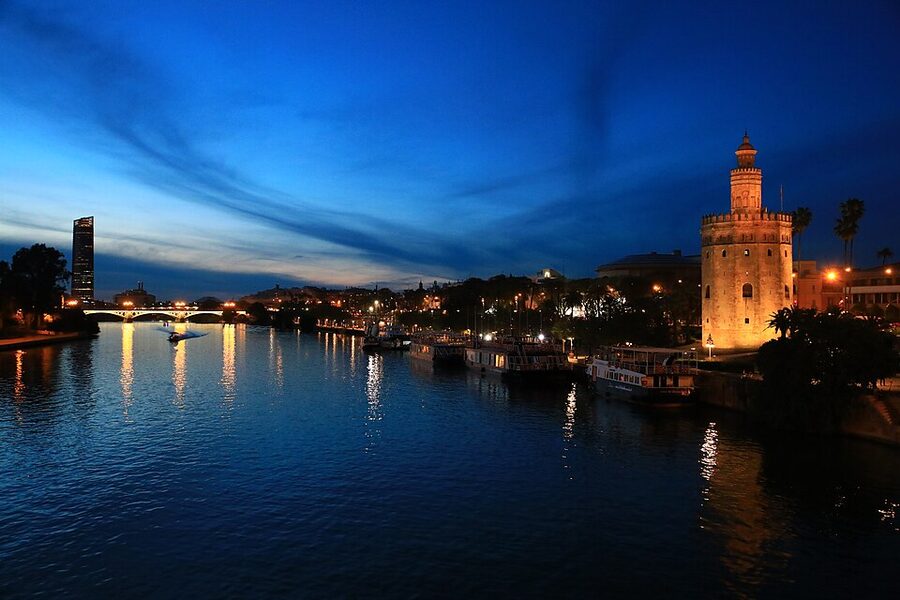
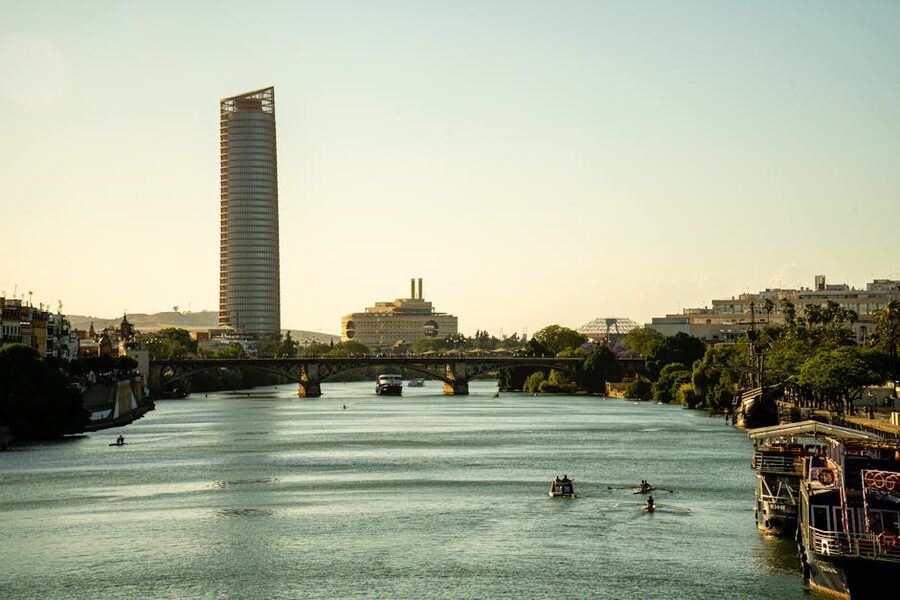
Sunset (last sailing of the day, varies seasonally). The whole reason to do this on holiday. The Triana side glows pink for about ten minutes, the Torre del Oro turns the colour it’s named for, and the river stops looking like a working waterway and starts looking like a postcard. Book this one if you only do one cruise. The downside: it’s the most expensive sailing on most operators (a euro or two extra), and the boats are full.
Avoid the noon sailing in July or August. Direct overhead sun, no shade on most boats unless you sit indoors, and the ride feels twice as long. If summer is your only option, take the latest sailing of the day.
Plaza de España: The Cruise Doesn’t Reach It
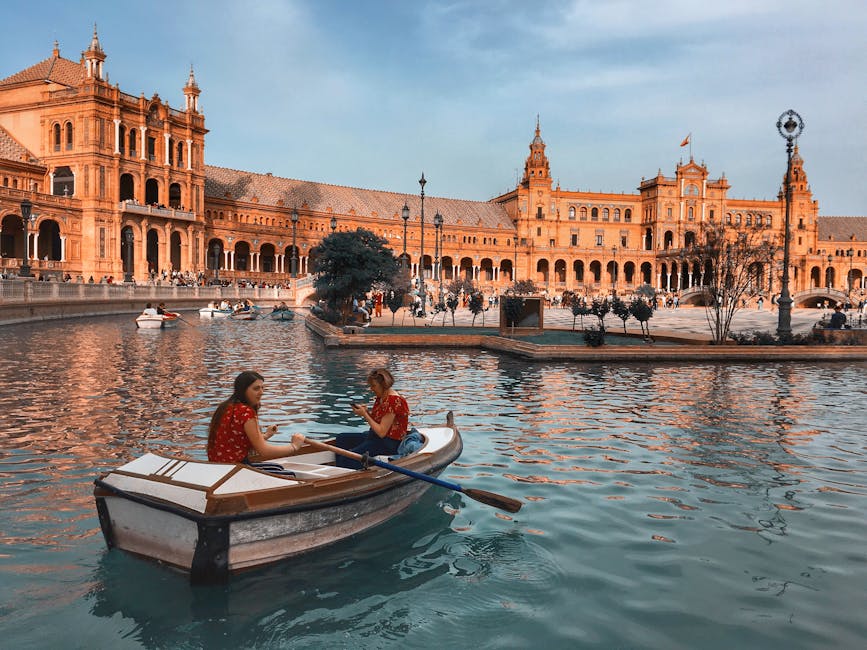
One thing the brochures imply but never quite say: a Guadalquivir cruise does not pass Plaza de España. The plaza sits half a kilometre east of the river, in Maria Luisa Park, fed by an artificial canal that does take rowboats but is not the Guadalquivir.
If you’re hoping to see the Plaza from the water, you’ve got two choices. Either rent a small rowboat from the rental dock at the plaza itself (about six euros for thirty minutes; queue is short on weekday mornings, brutal on Sunday afternoons), or include the Plaza in your walking itinerary either side of the cruise. The plaza is fifteen minutes’ walk south of the Torre del Oro pier through the gardens of San Telmo and the entrance to Maria Luisa Park.
If you’re tackling Seville’s transport networks together, the hop-on hop-off bus stops at both the Torre del Oro and Plaza de España and is the easiest way to bolt the two onto a single afternoon.
Practical Booking Logistics
Pre-book or walk up? For the panoramic 1-hour cruises, walk-up is fine outside July/August and Easter week. The boats run frequently and the next slot is rarely more than 45 minutes away. For the lunch and dinner sailings, pre-book. Same for sunset slots in shoulder season; the last sailings sell out two or three days ahead in April, May, September, October.
What does your ticket include? The audio guide, always. Sometimes a bottle of water; usually not. Food is only on the lunch and dinner upgrades. None of the standard cruises include onboard alcohol, but the bigger boats have a small bar.
Discounts. Children under 6 are free on most operators, ages 6 to 12 are half price. Senior discounts (65+) on a couple of the operators, usually three euros off. Group rates start at 10 people. None of these show up clearly on the third-party booking sites; if you qualify, the on-site booth is usually cheaper.
Cancellation policy. Most affiliates allow free cancellation up to 24 hours ahead. The lunch and dinner sailings vary; some need 48 hours. Always check before booking, especially if you’re flying in the day before.
Accessibility. The pontoons are level with the boat decks, no steps. Wheelchair access is fine for the lower deck on most operators. The upper deck involves a short staircase and is rarely accessible.
What the Cruise Doesn’t Do Well
Honest list. Skip if any of these are deal-breakers.
- Quiet contemplation. There’s an audio commentary running the whole time, often loud, sometimes overlapping in three languages on the older boats. If you wanted a peaceful river drift, you wanted the kayak.
- Getting off anywhere except where you started. It’s a closed loop. You can’t hop off at Triana or Cartuja. If that’s what you wanted, you wanted the bus.
- Inside views of the city. You see the river facade of Seville. You don’t see Santa Cruz, the cathedral interior, the alcázar gardens, the Setas, or any of the small streets. The cruise complements the walking, it doesn’t replace it.
- Food worth writing home about. Even on the dinner sailings, the menu is hotel-buffet level. The setting is what you’re paying for.
- Live music as a primary draw. Some sailings include a flamenco guitarist. The acoustics on a moving boat with engine vibration are not great. If music is the main reason you’re going, book a proper flamenco show on land.
Common Booking Mistakes
- Booking the wrong “Seville cruise”. Some search results pull up day cruises from Cádiz cruise port that include Seville as a coach excursion, not a river cruise. Make sure the listing says Guadalquivir, hour-based, departing from the Torre del Oro.
- Confusing the river cruise with the Plaza de España rowboats. Different bodies of water, different bookings, different prices. The rowboats are short, charming, and queue-controlled; the river cruise is touristic, longer, and unrelated.
- Picking the cheapest sailing without checking the time. A 12pm cruise in July is genuinely worse than a 6pm cruise at twice the price. The time of day is doing more work than the operator name.
- Showing up at street level without finding the staircase. The pontoon is below the road. A surprising number of people miss their slot because they were standing on Avenida Roma looking for a gangway that’s three metres below them.
- Booking the lunch cruise as your only Seville meal. The food is fine, not memorable. If you only have three dinners in Seville, none of them should be on a boat.
Best and Worst Times of Year
Spring (March, April, early May) is the sweet spot. Warm enough for the upper deck, cool enough that the indoor cabin isn’t necessary, gardens of San Telmo around the pier are in flower. October has the same temperature profile minus the orange blossom.
July and August are brutal. The river acts as a heat funnel; even at 7pm a cruise can sit at 35 degrees. The boats run, but the experience is endurance rather than enjoyment. If you’re locked into summer dates, the very last sailing of the day is the one to book.
Winter (December to February) is underrated. The Christmas market on the Plaza Nueva runs into late January, the cruise prices drop a euro or two, and the sunset sailings start at 5pm because the sun goes down early. The cabins are heated. The only real downside is that fog occasionally cancels morning sailings; if it’s foggy at 9am, the boats might not run until 11am.
How a Cruise Fits a Two-Day Seville Plan
Two days is enough for Seville’s serious sights. The cruise is a half-hour-plus-buffer slot, ideally between two indoor visits.
Day 1: Cathedral and Giralda in the morning, lunch in Santa Cruz, Alcázar in the early afternoon. Cruise at 5 or 6pm to catch sunset. Flamenco in Triana in the evening.
Day 2: Setas de Sevilla at opening for the empty walkway, then walk down through the centre to lunch in El Arenal. Afternoon free for Plaza de España, Maria Luisa Park, or shopping. The hop-on hop-off bus can fill in the gaps if you want to cover Triana more thoroughly without retracing on foot.
If you’ve only got one day, the cruise is the second thing you cut, after Plaza de España. The Cathedral and Alcázar are non-negotiable. The cruise is a luxury, and a worthwhile one, but only if your itinerary has air in it.
Eating Around the Pier
Skip the cafés directly behind the Torre del Oro. They’re fine for an espresso but not for a meal; the prices are 30 percent over fair and the food is geared at people who’ll never come back. Walk three minutes inland into El Arenal and you’re in proper neighbourhood territory: Bodega Bar Lonja for very cheap lunchtime tapas, or Casa Morales on Calle García de Vinuesa for the wine-bar version of the same idea. Both are favourites of locals who’ve been coming for thirty years.
If you’re crossing into Triana before or after, the Mercado de Triana on Calle San Jorge has a dozen tapas counters under one roof, all open into the early afternoon, all cheaper than anywhere on the riverfront. Best Mariscos sells fried fish by the cone; Coloniales does the more sit-down version.
Which Cruise Should You Actually Book?
If you’ve read this far, you probably want a single answer.
For most people: book the 1-hour Eco Cruise at $19. Take the last daylight sailing of the day. Sit on the upper deck, river side, facing west.
If your travel companion needs a non-English audio guide: book the standard river cruise with the multi-language handsets, around $21.
If you want the cruise to be your dinner: book the boat tour with dinner option at $29. Take the sunset slot. Accept that the food is the smaller part of the experience.
Pairing the Cruise With the Rest of Spain
If Seville is one stop on a wider Spanish trip, the cruise pairs naturally with a couple of other things in the cluster. Inside the city, the obvious follow-up is a proper Triana flamenco show in the evening after a sunset sailing, with the Alcázar filling the daytime around it. If you’re heading on to Madrid or Barcelona, the Prado and Sagrada Familia guides will save you the same booking-window guesswork this one just did.