
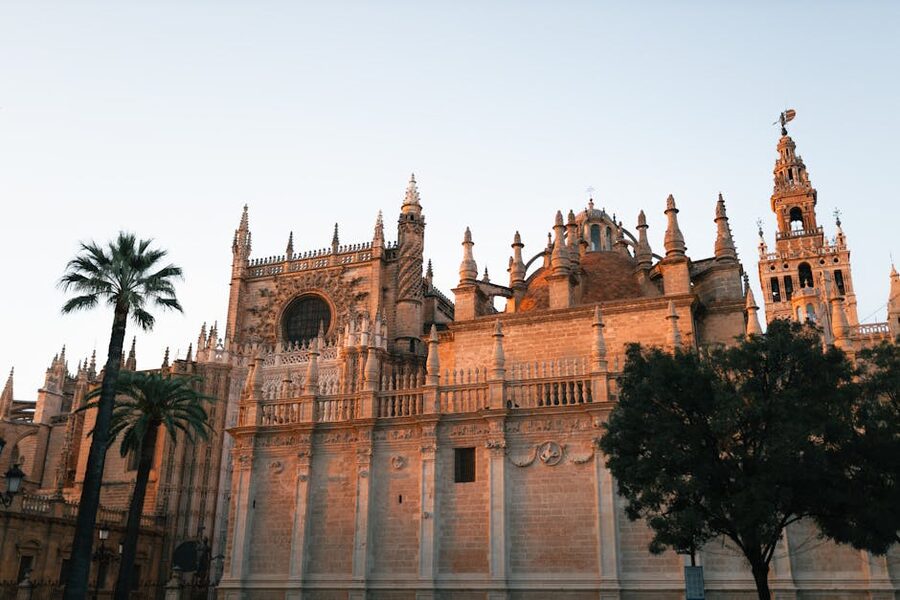
The first thing you notice walking into Seville Cathedral is the cold. Forty-three metres of stone over your head, sunlight cut into colour by the stained glass, and a hush that swallows the heat you brought in from the plaza outside. It hits you before any of the famous bits do, and it’s the moment that tells you why people queue for hours to get in here.
In a Hurry? Top Picks
- Best entry ticket (around $20): the basic Cathedral and Giralda entry with audio guide covers everything you actually need to see.
- Best combo with the Alcazar (around $69): the guided Cathedral, Giralda and Royal Alcazar tour handles both bookings in one slot.
- Best 2.5-hour guided option (around $65): the Cathedral, Giralda and Alcazar guided tour if you want the history explained as you walk.
- In a Hurry? Top Picks
- How the ticket system actually works
- Best time of day to actually go inside
- Three picks worth booking
- 1. Seville Cathedral and Giralda Entry Ticket: around
- 2. Cathedral, Giralda, and Royal Alcázar Guided Tour: around
- 3. Cathedral, Giralda and Alcázar Entry With Guided Tour: around
- What you’ll actually see inside
- The tomb of Christopher Columbus
- The Capilla Mayor and the gold altar
- The stained glass and the side chapels
- The Giralda climb (no stairs, but read this first)
- The bit about heights and queues
- The orange tree courtyard you’ll walk through twice
- Audio guide vs human guide: which to actually book
- Skip-the-line, but read the small print
- Combining with the Royal Alcázar (or not)
- Practical bits people forget
- A short history (in case you want context before you go)
- Getting there and parking
- If you’ve got an extra hour after
- What to read next on Seville
How the ticket system actually works
You buy a single ticket and it covers three things: the cathedral nave, the rooftop terrace, and the climb up the Giralda tower. There is no separate Giralda ticket. If someone tries to sell you one, walk away.
Standard adult entry runs about 13€ online or 14€ at the box office, with reduced rates around 7-8€ for students under 25 and over-65s. Kids under 14 are free. Most of the bookable tours through GetYourGuide come in a touch higher (think $18-22) because they bundle the audio guide and skip-the-line slot together. For the difference of a coffee, that’s the version I’d buy.
The cathedral now uses nominative tickets. That means your name and ID number get printed on the ticket, and you’ll be asked to show ID at the door. Bring your passport. A driving licence is fine for EU visitors, but international travellers should default to the passport because the staff at the entrance can be picky.
Entry is organised in five-minute time slots. You pick a slot when you book online, and the staff are strict about it. Show up fifteen minutes early. Show up an hour early and they’ll tell you to come back. The slot system is the main reason booking online matters: walk-up tickets exist, but on busy days they sell out by lunchtime, and the queue at the box office on Avenida de la Constitución can eat 90 minutes of your day in summer. If you’re travelling in July or August and absolutely cannot afford a wasted morning, the priority-access cathedral and Alcázar combo gives you a fast lane through both sites.
Best time of day to actually go inside
Standard hours: Monday to Saturday 10:45 to 17:00, Sunday 14:30 to 18:00. The afternoon Sunday opening trips up a lot of people who’ve planned a morning visit. Check the official site the week of your trip because religious services and Holy Week routinely close sections without warning.
Best slot, in my experience: the very first booking of the day, around 10:45 to 11:00. The light is starting to come through the east windows, the tour groups haven’t arrived yet, and you can actually hear your own footsteps in the nave. The 12:30 to 14:00 window is the worst. Think coach tour traffic, school groups, and the guides funnelling people through the Columbus tomb area like a queue at passport control.
If you can’t do early morning, try the last entry around 16:00 on weekdays. The light through the stained glass is at its best around 16:30 to 17:00 in winter, and the tour groups have mostly cleared out. The downside: you only get a short window before closing, so the rooftop and Giralda need to be your priority that day.
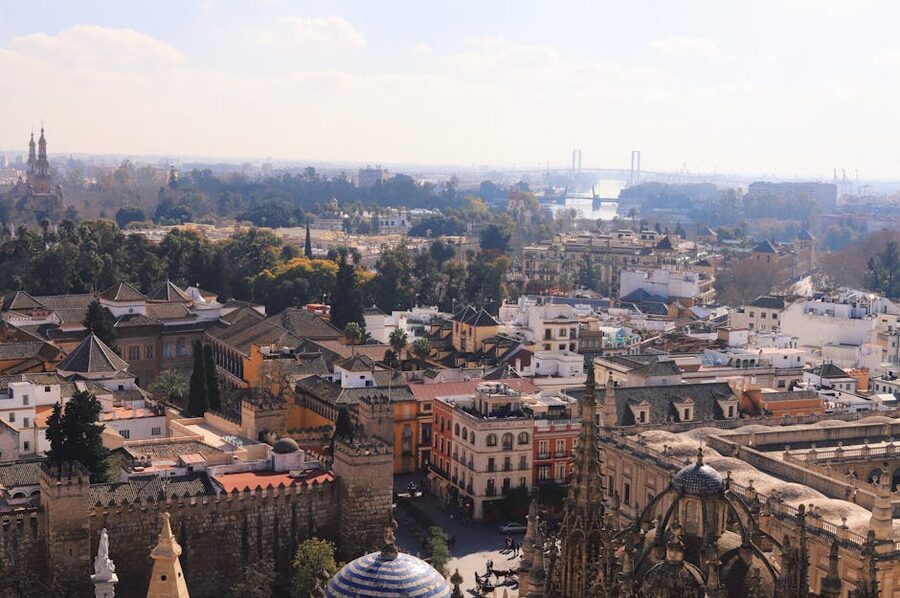
Three picks worth booking
I have spent enough time matching travellers to Seville bookings that the three options below cover almost every situation. The first is what most people actually want. The second and third get you the Alcázar bundled in if you’ve only got a day in the city and don’t want to think about it twice.
1. Seville Cathedral and Giralda Entry Ticket: around $20
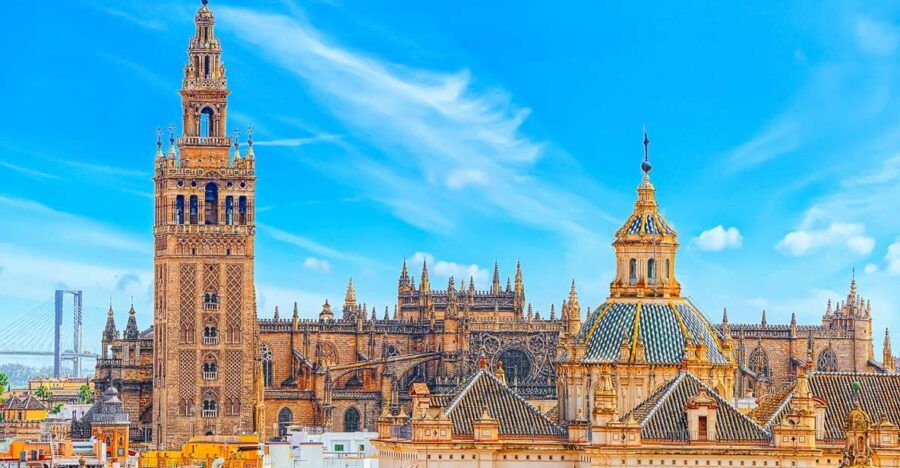
This is the version I send most people to. Our review of the Cathedral and Giralda entry ticket goes deeper into what’s covered, but the short version is that you get a printed time slot, a separate skip-the-line entrance, and an audio guide that’s actually decent. Easily the most-booked option for the cathedral on the market.
2. Cathedral, Giralda, and Royal Alcázar Guided Tour: around $69
If you’ve only got 24 hours in Seville, this is the booking that does the most work for you. The guide handles both the cathedral and Alcázar entries, and you skip both queues. Our walkthrough of the combined guided tour covers the timing details, but the headline is that you walk between the two sites in about ninety seconds, so the bundling actually works.
3. Cathedral, Giralda and Alcázar Entry With Guided Tour: around $65
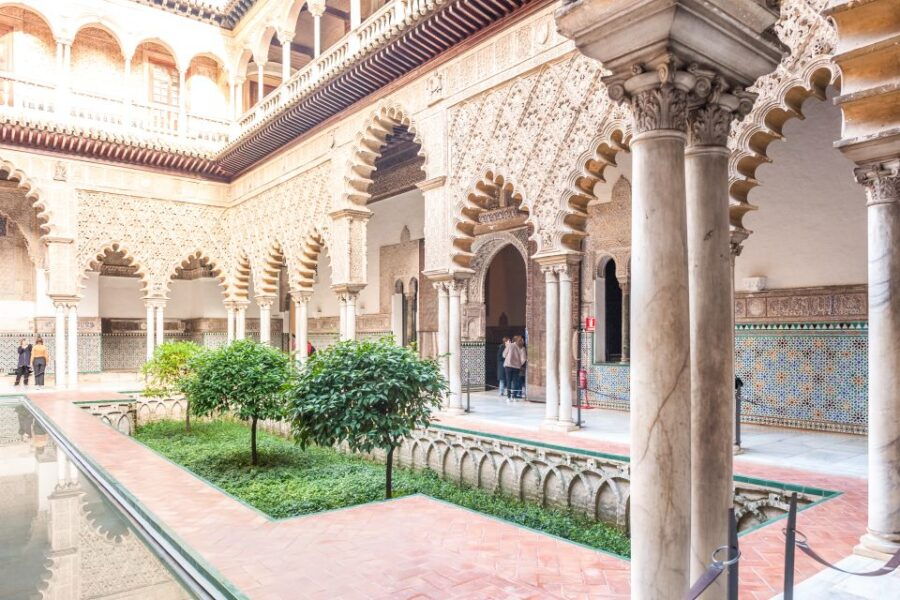
This is the one to pick if you want a guide who’ll explain Mudéjar tile patterns and Gothic vault construction rather than just point at things. Our breakdown of this 2.5-hour combined tour notes that the format is tighter than option 2 and the groups are usually smaller. Worth the extra euros if you care about the why.
What you’ll actually see inside
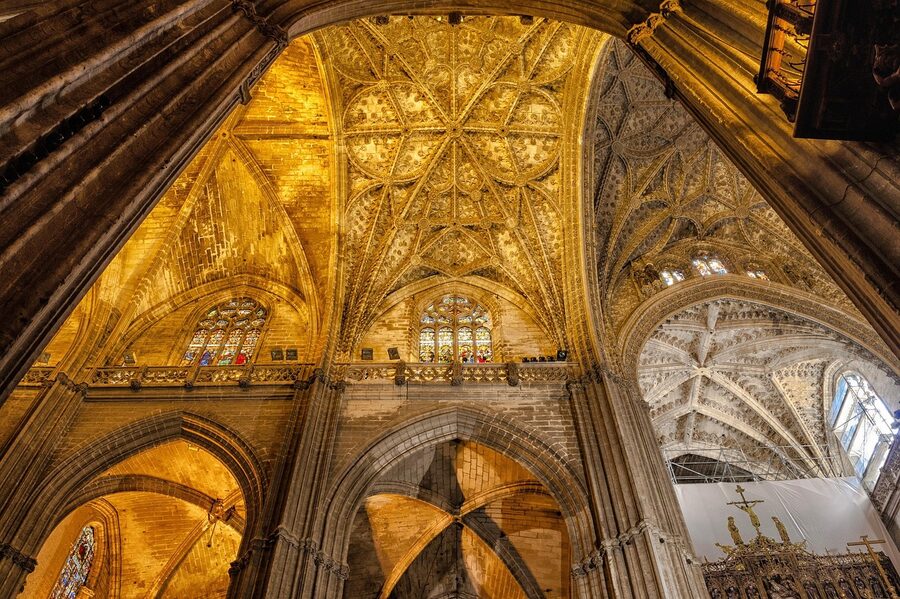
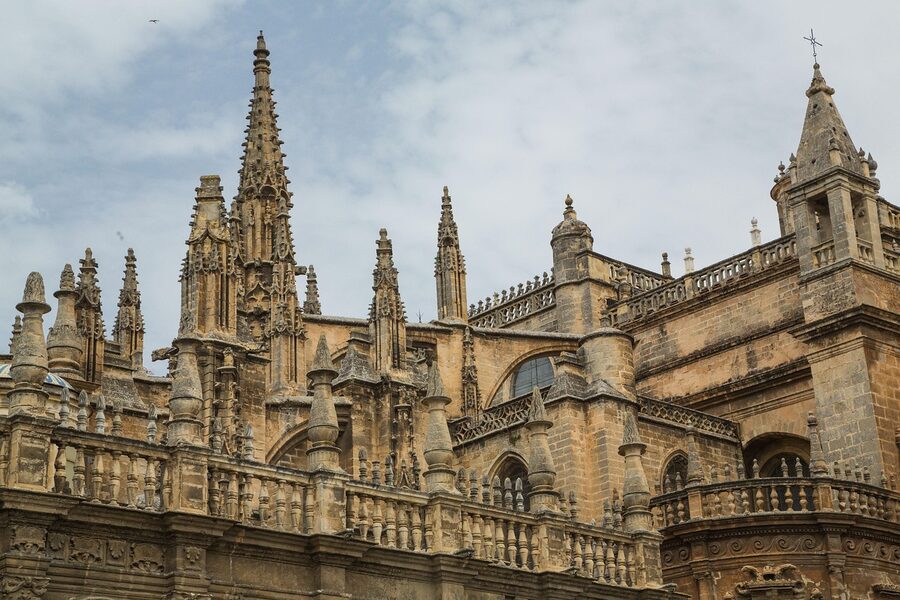
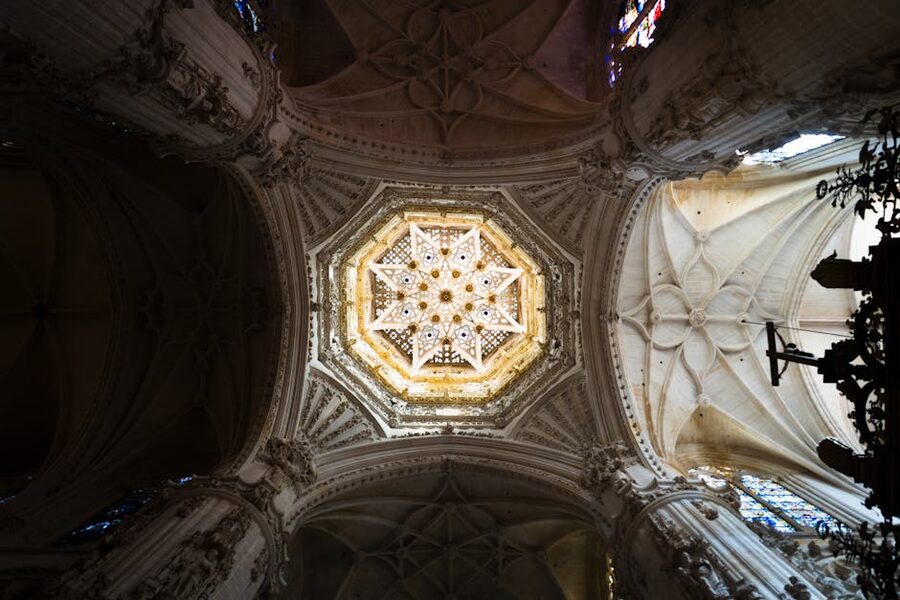
The cathedral has five naves, 80 chapels, and an interior that runs 127 metres long, 83 metres wide, and 43 metres high. Numbers don’t really help. What helps is knowing what to actually look for so you don’t drift around feeling like you should be impressed but not quite knowing why.
Three things I’d budget time for, in order:
The tomb of Christopher Columbus
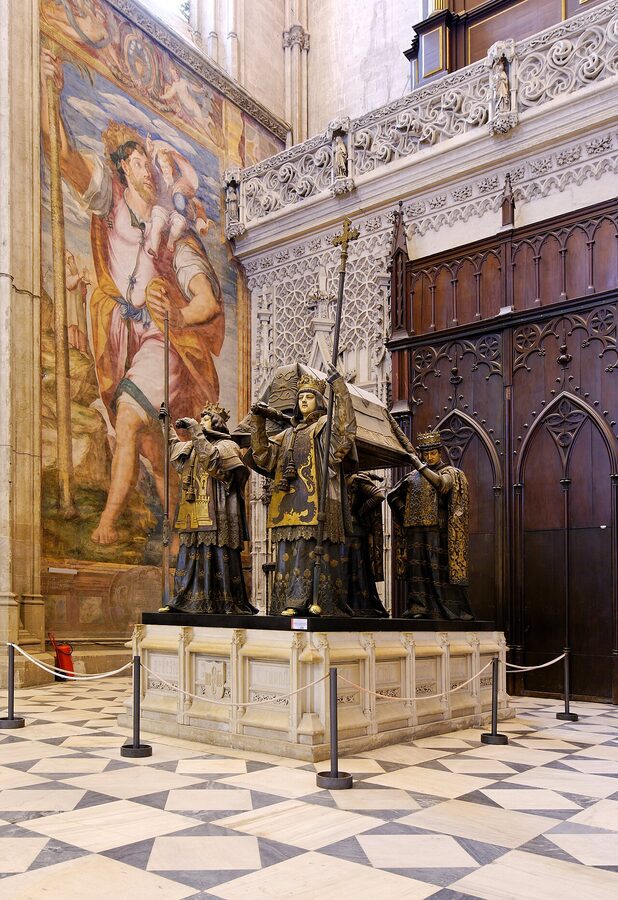
The four crowned figures carrying the bronze casket represent the medieval kingdoms of Castile, León, Aragón and Navarre. Columbus’s bones moved around for centuries (Spain, then Cuba, then back to Seville in 1898) and DNA testing in 2006 confirmed that at least some of them are actually here. There’s always a small crowd. Mid-afternoon you can wait ten minutes for a clear photo. First thing in the morning you can walk straight up to it.
The Capilla Mayor and the gold altar
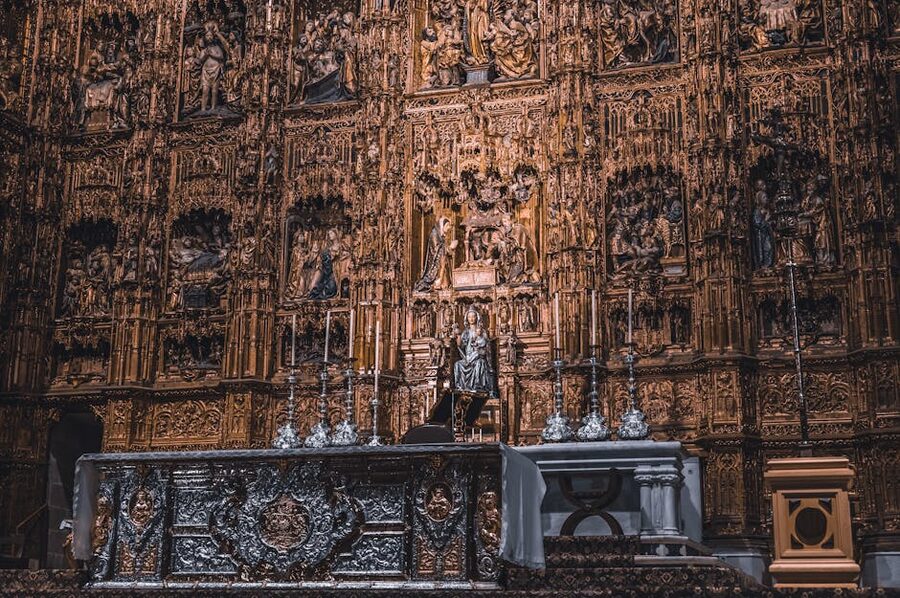
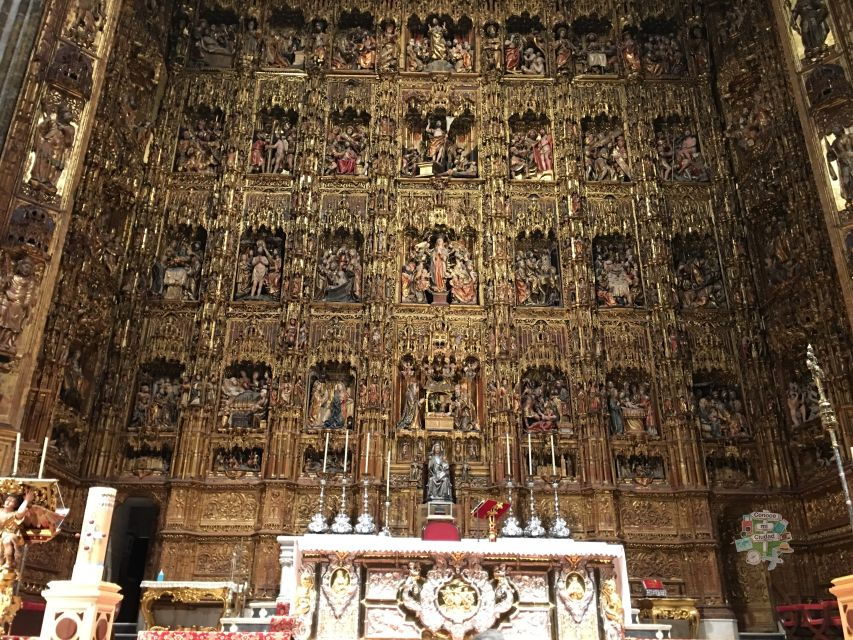
The main altarpiece is one of the largest in the world by surface area. Forty-five carved and gilded scenes of the life of Christ and the Virgin, finished by a Flemish master named Pieter Dancart in the late 15th century. You’re looking at five storeys of gold leaf. Bring a phone with a decent zoom if you want to read the panels because the closest you’ll get is the iron grille that runs across the front of the chapel.
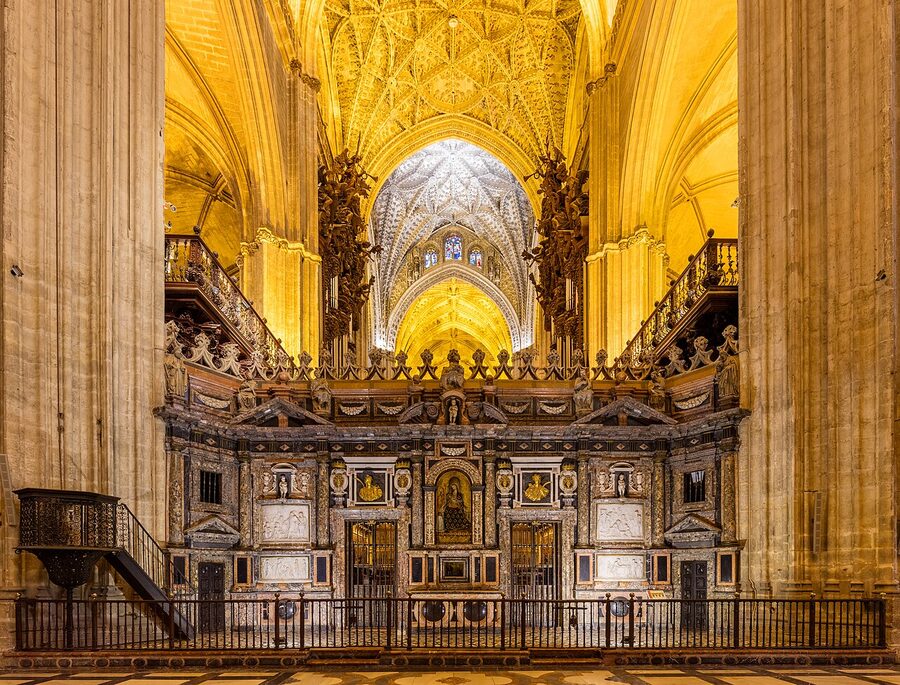
The stained glass and the side chapels
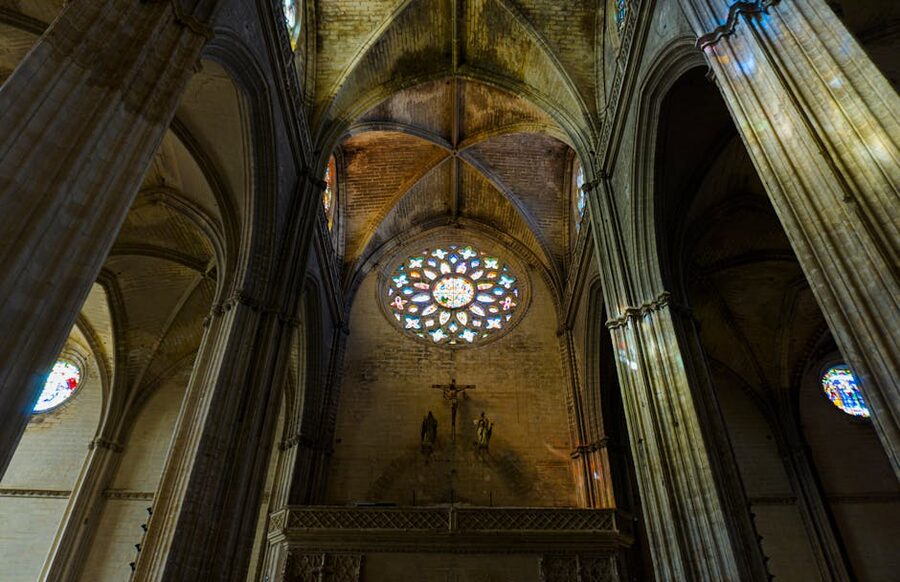
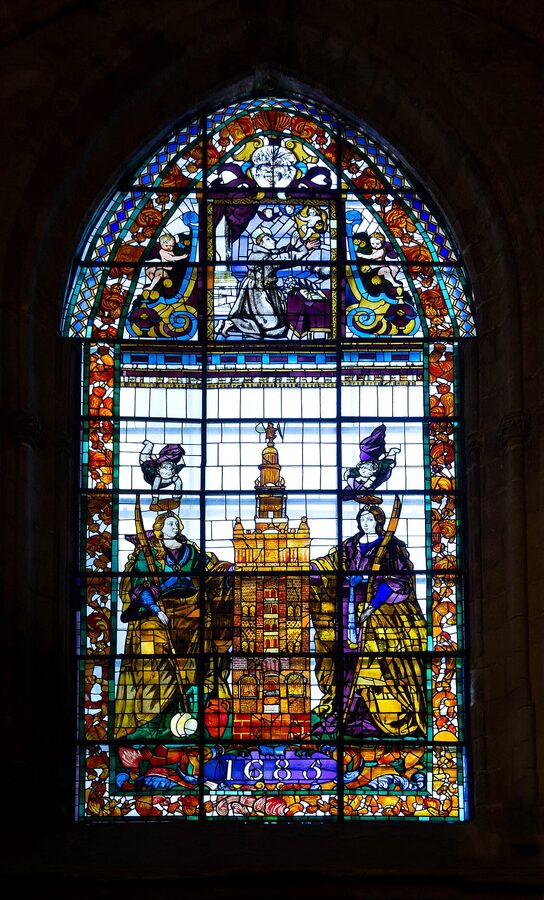
The 75 stained-glass windows span almost five centuries of work, with the oldest sections going back to the 1400s. Most are still in original glass. The Capilla Real holds the silver shrine of Ferdinand III, the king who took Seville from the Almohads in 1248, and you can see paintings by Murillo, Goya, Zurbarán and Pedro de Campaña scattered through the side chapels. Bring a small pair of binoculars if you have them, or set your phone camera to manual focus, because half the detail is on ceilings 25 metres up.
The Giralda climb (no stairs, but read this first)
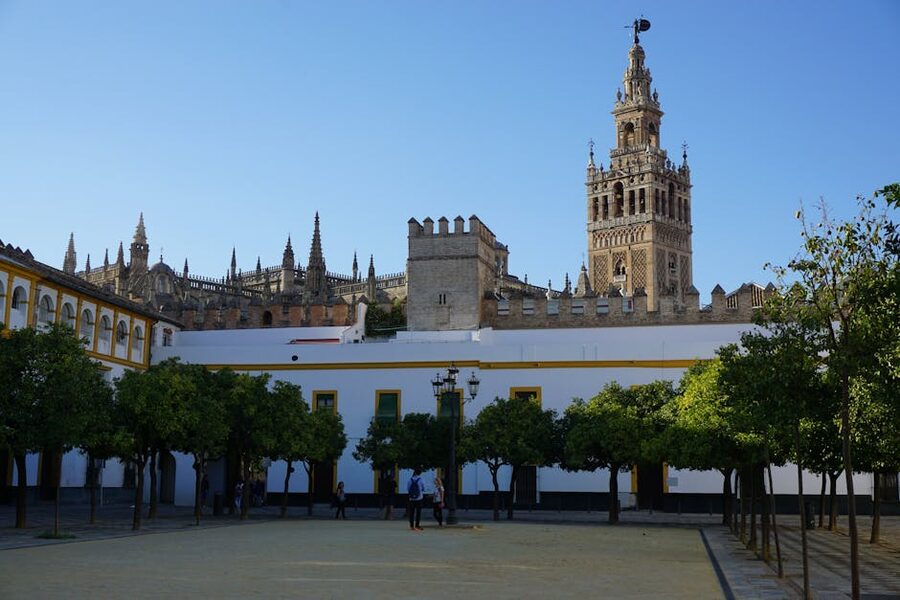
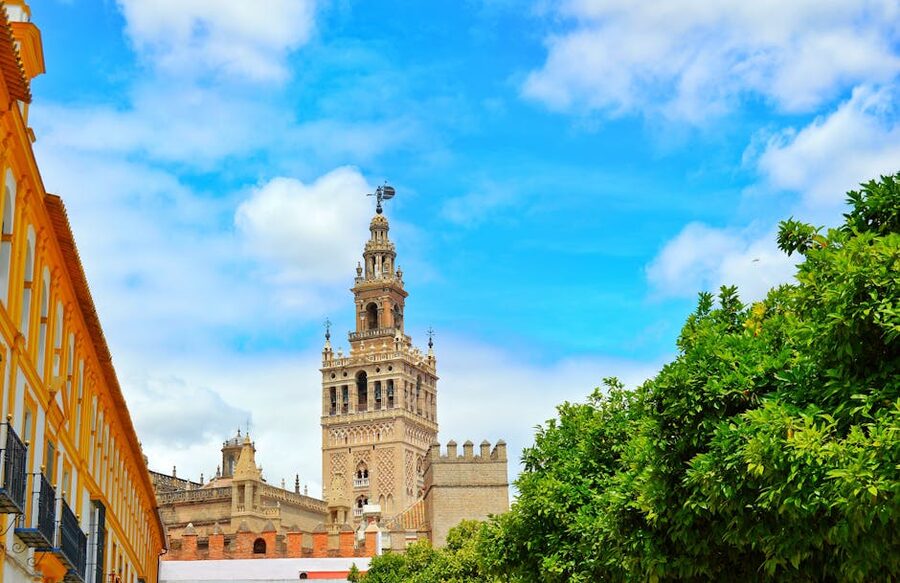
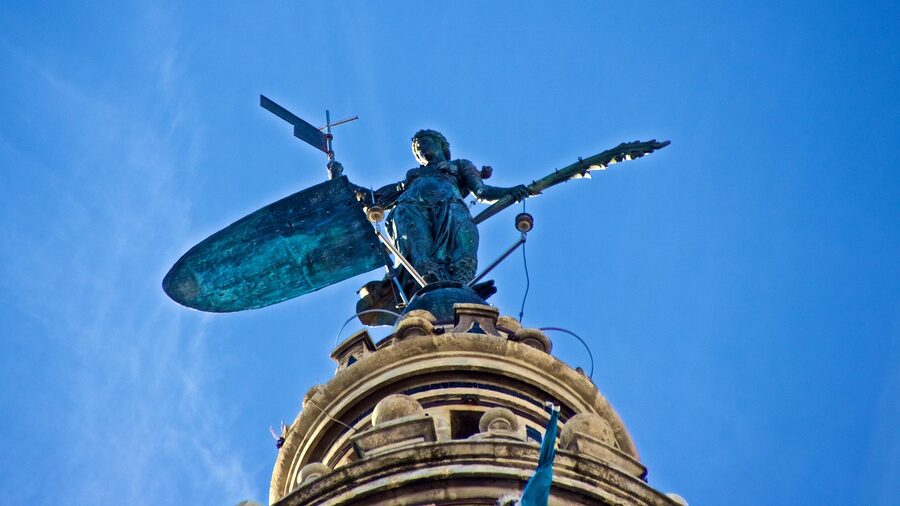
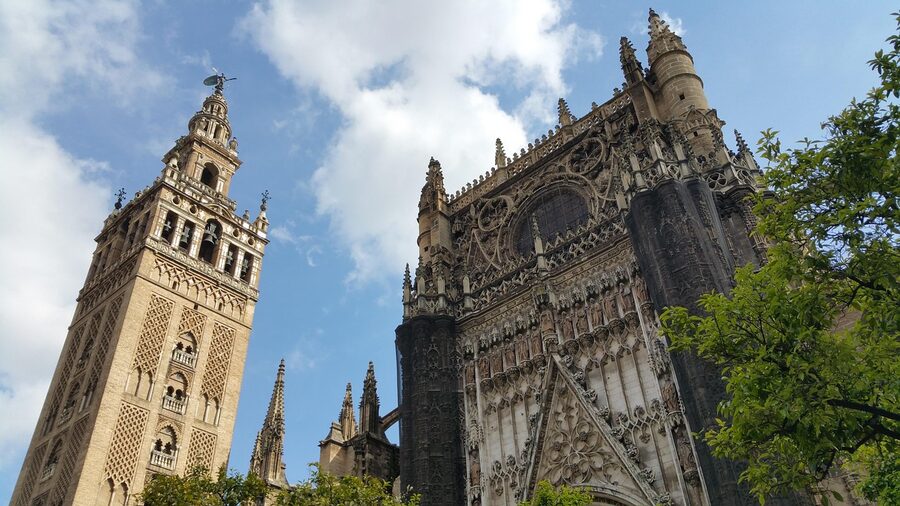
The Giralda climb is the single most surprising part of the cathedral visit, and almost no one warns you about how it works. There are no stairs. The architects designed 35 sloped ramps so the muezzin could ride a horse to the top to call prayer. Today you walk it.
The total height is 104 metres, but you only climb to the bell stage at about 70 metres. Allow 15 to 20 minutes up. The ramps are wide enough that you can pause without blocking the people behind you. Bring water in summer because there’s no airflow once you’re past the first three levels and the stone holds the heat.
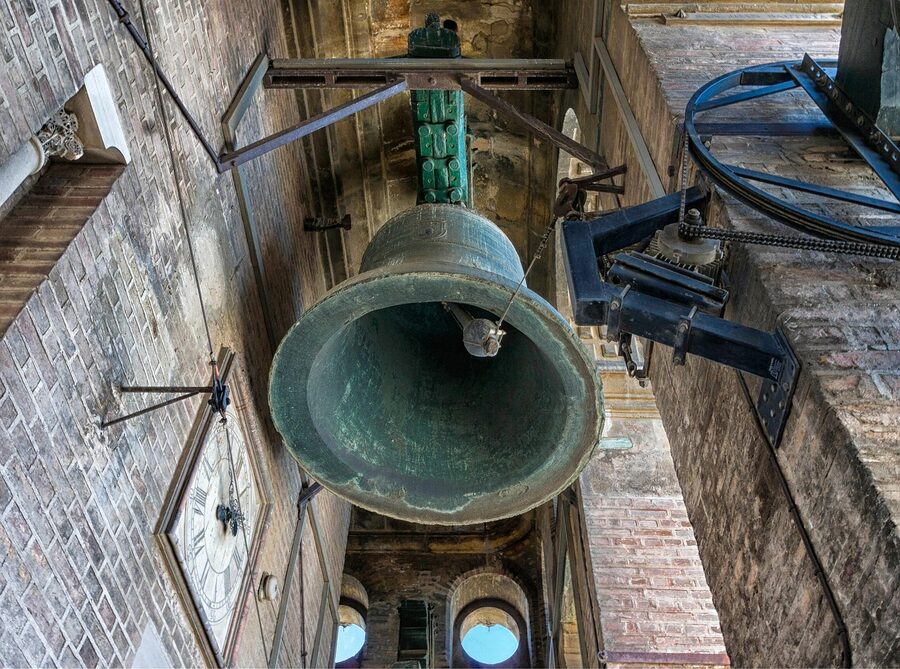
At the top you get a 360-degree view over the rooftops of the old town: the Alcázar gardens to the south, the Guadalquivir and Triana to the west, and Plaza de España’s twin towers off in the distance. The bells ring on the quarter hour. If you can time the climb so you’re at the top at noon, you’ll feel them. Loud. Not a metaphor.
The bit about heights and queues
The ramp gets narrower towards the top and the bells are loud enough to startle you if you’re not expecting them. If you have anxiety about confined spaces, the upper sections are tight. Skip it and take the rooftop terrace instead.
Even with skip-the-line cathedral entry, there’s sometimes a separate small queue at the base of the Giralda inside the building, mostly because the architects can’t physically fit more than 30 to 40 people on the ramps at once. Five to ten minutes is normal. Twenty is the ceiling.
The orange tree courtyard you’ll walk through twice
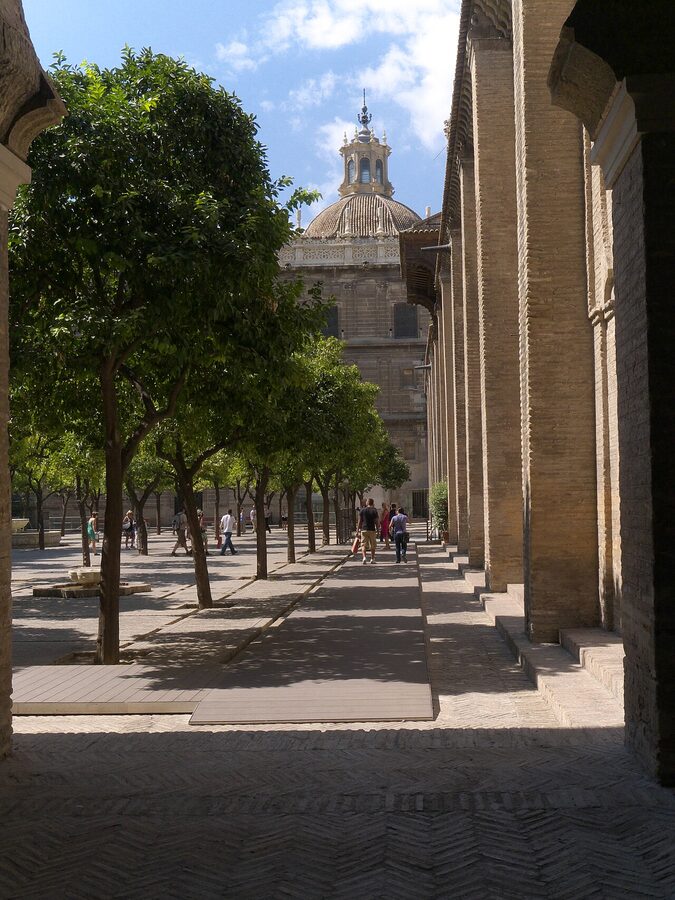
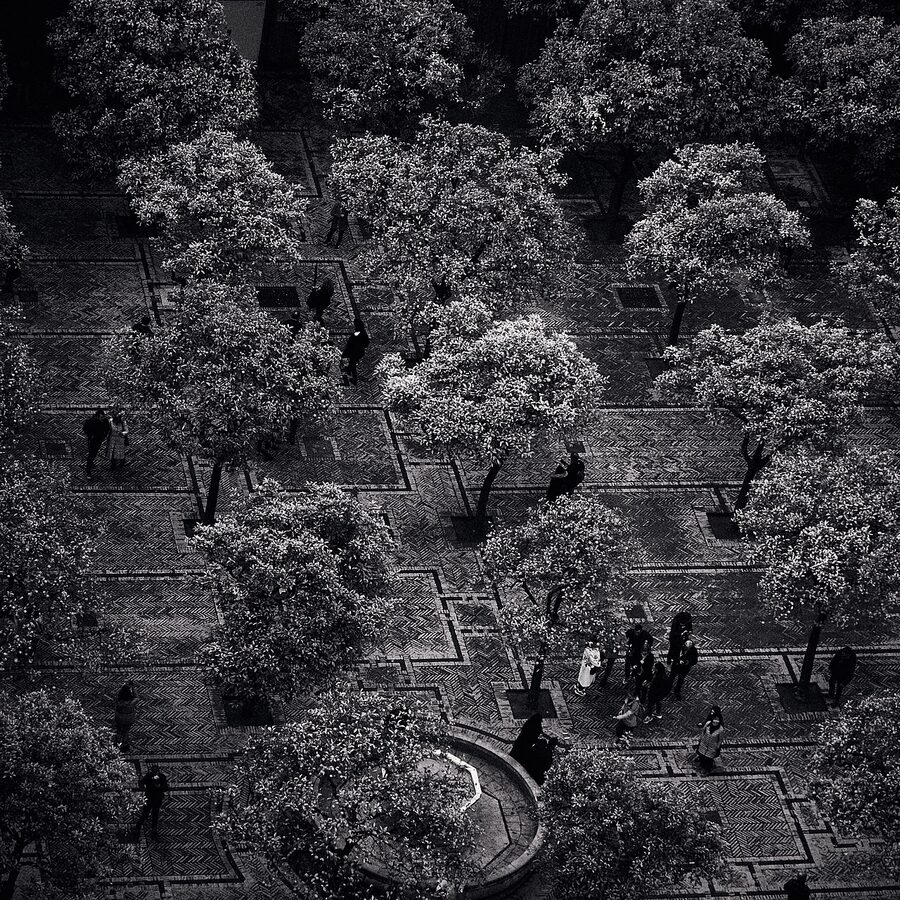
Almost every cathedral visit starts and ends in the Patio de los Naranjos. It’s the courtyard of the original mosque, kept intact when the rest was demolished in 1401 to start the cathedral. Sixty orange trees in straight lines, an old central fountain that was originally a Visigothic font, and a covered walkway around the edges where you can sit on the stone benches.
This is where I’d take a break mid-visit if you’ve got time. Buy a ticket for late morning, do the cathedral, sit in the courtyard for fifteen minutes with a bottle of water, then go up the Giralda. The orange trees actually fruit in late winter (January and February), and the smell when the blossom comes out in March is the closest thing to a free perfume the city offers.
Audio guide vs human guide: which to actually book
The audio guide that comes bundled with most online tickets is fine. It’s not great. It does the basic timeline, the Columbus story, the altar, and the Giralda, and it runs about 60 minutes if you listen to everything. For most people that’s enough.
The reason to spring for a human guide is the architecture. The cathedral was built in 105 years across three different styles, and a real guide will walk you through which sections are pure Gothic, which are early Renaissance, and where the Mudéjar tilework betrays the Moorish craftsmen who actually built the lower walls. I’ve taken the basic ticket twice and a guided tour once, and the guided tour is the version I remember in detail two years later. If you only want a guide for the cathedral itself (without the Alcázar attached), the guided cathedral and Giralda tower tour is the cleanest standalone option.
The trade-off: a guided tour locks you to a group pace. You’ll spend less time in front of the altar and more time waiting for the slow walkers in your group to catch up. If photography matters to you, take the entry ticket and go on your own.
Skip-the-line, but read the small print
Both the basic entry ticket and most of the guided tours include “skip the line.” The line they skip is the box office queue, not the security check. There is still a metal detector at the door, and on busy days the security queue can run 10 minutes regardless of which ticket you have. Plan for it. The priority access guided cathedral tour is the version that runs you through both queues fastest if you’re on a tight time budget.
Also: bag size. Anything over the small-day-pack range gets sent to the cloakroom across the plaza, which is a 5-minute walk and adds time. Bring the smallest bag you can.
Combining with the Royal Alcázar (or not)
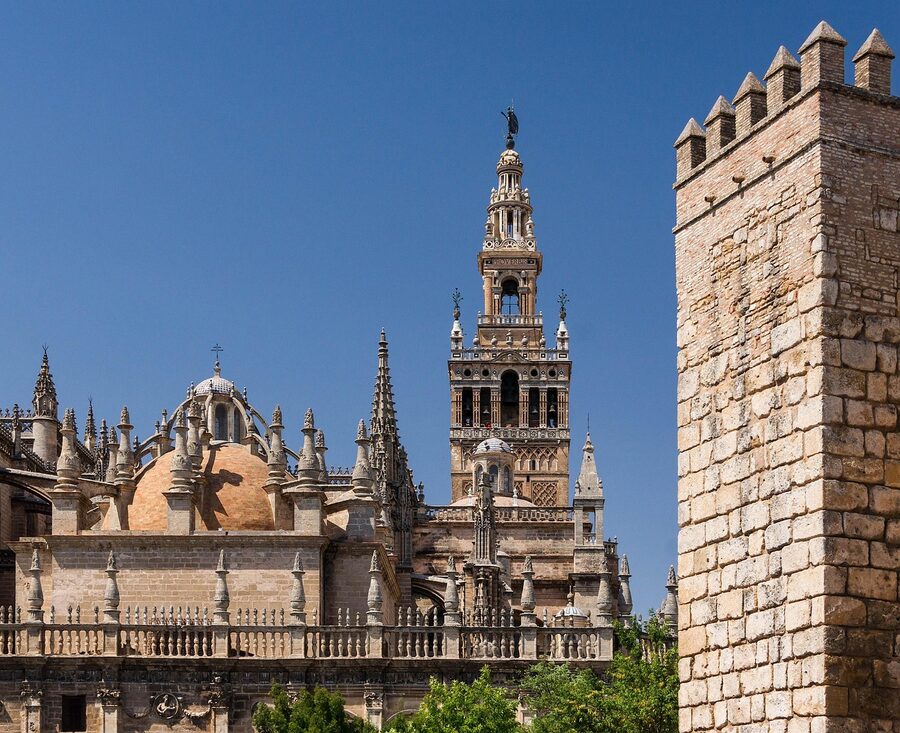
The cathedral and the Royal Alcázar are 90 seconds apart on foot. Most people do them in the same day, and most of the better tours bundle the two together. You’ll find a deeper breakdown in our guide to booking Royal Alcázar tickets, including the queue patterns and the booking site differences.
The combined-tour option (Pick 2 above) is what I’d default to if you’ve only got one day. It handles the cathedral, the Giralda climb, and the Alcázar in one go, with one guide doing the running between booking systems.
The case for buying separate tickets: you save about €15 to €20 per person, and you can break the day into two halves with a long lunch in between. Cathedral in the morning, lunch in Santa Cruz, Alcázar at 15:30 when the heat starts to ease. That’s the version I’d pick if I was doing it for myself.
Practical bits people forget
A few things I wish someone had told me before my first visit:
- Dress code. Knees and shoulders covered. They will turn you away in shorts and a vest top. A scarf in your bag is the simplest fix in summer.
- Phones and photos. Allowed everywhere except the Capilla Real, where flash and video are banned. Tripods need a permit. The light inside is good enough that you don’t need flash anyway.
- Toilets. Limited inside the cathedral itself. The cleanest ones are in the cafés around Plaza Virgen de los Reyes, two minutes away. Buy a coffee, use the loo, then walk over.
- Holy Week. The cathedral closes for major sections on most days of Semana Santa (the week before Easter) and the surrounding processions choke central Seville. If you’re booking March or April, check the dates of Easter that year and aim for the week before or after.
- Refunds. Most online tickets allow free cancellation up to 24 hours before. Read the specific listing before you book; the bundled-tour cancellation windows are sometimes tighter.
A short history (in case you want context before you go)
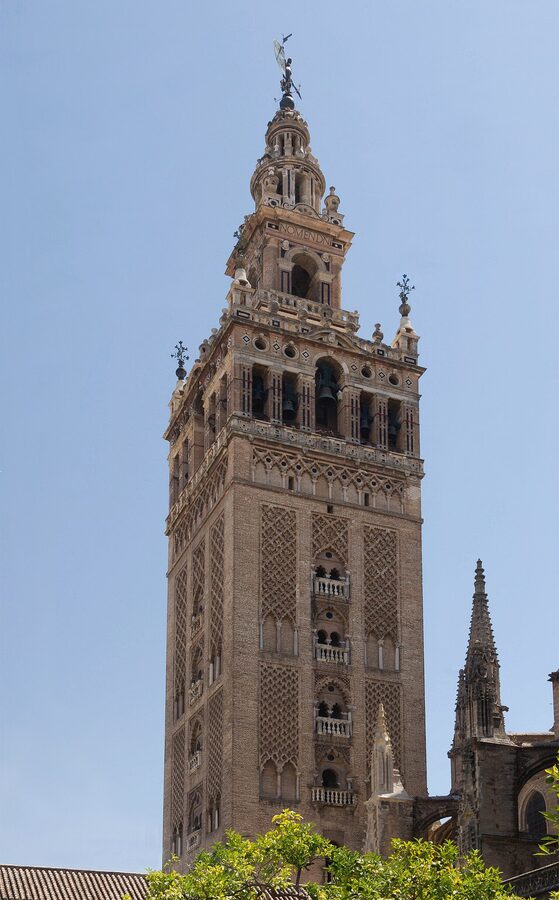
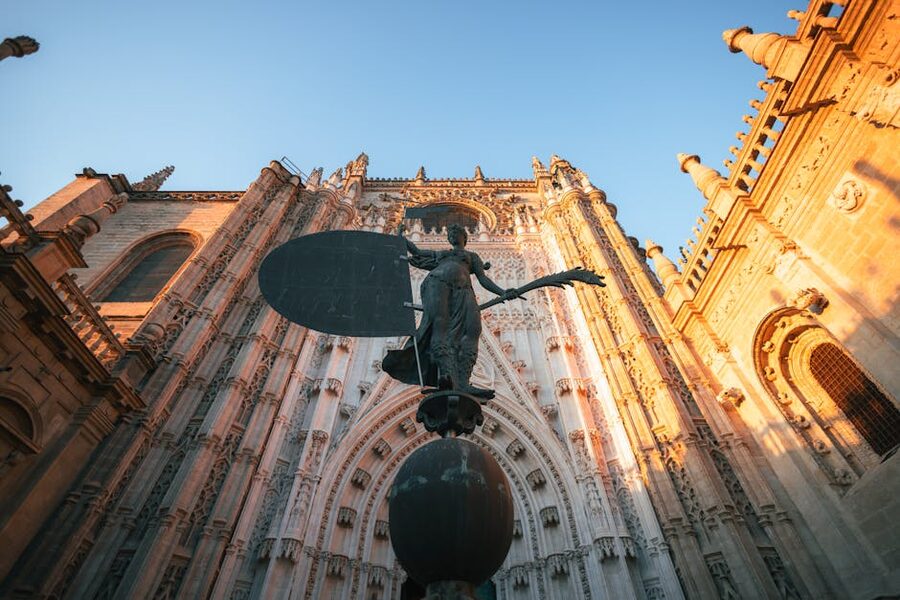
The Almohads built the original mosque on this site in 1172, with the Giralda finished as a minaret in 1198. Ferdinand III took the city from the Moors in 1248 and converted the mosque to a cathedral on the spot. By the start of the 15th century the building was crumbling, and the cathedral chapter made the decision that the city’s still living with: tear down the mosque and build the largest church in the Christian world in its place.
Construction ran from 1401 to 1506, more than a century, with the architects deliberately chasing scale. There’s a famous (probably apocryphal) line from the chapter minutes: “Let us build a church so beautiful and so great that those who see it finished will think we were mad.” The result is the largest Gothic cathedral in the world by area, third largest of any kind, and a building so heavy that the central dome collapsed twice in the 16th century and once more in 1888. Each time they rebuilt it bigger.
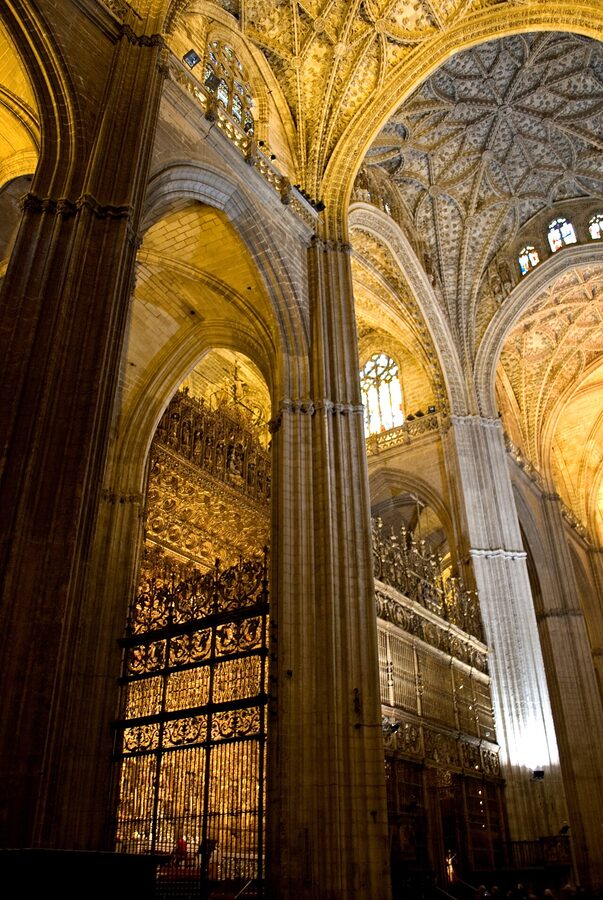
UNESCO listed the cathedral, the Giralda and the Alcázar together as a single World Heritage site in 1987. The three buildings are read together as the architectural record of three civilisations stacked on the same patch of ground.
Getting there and parking
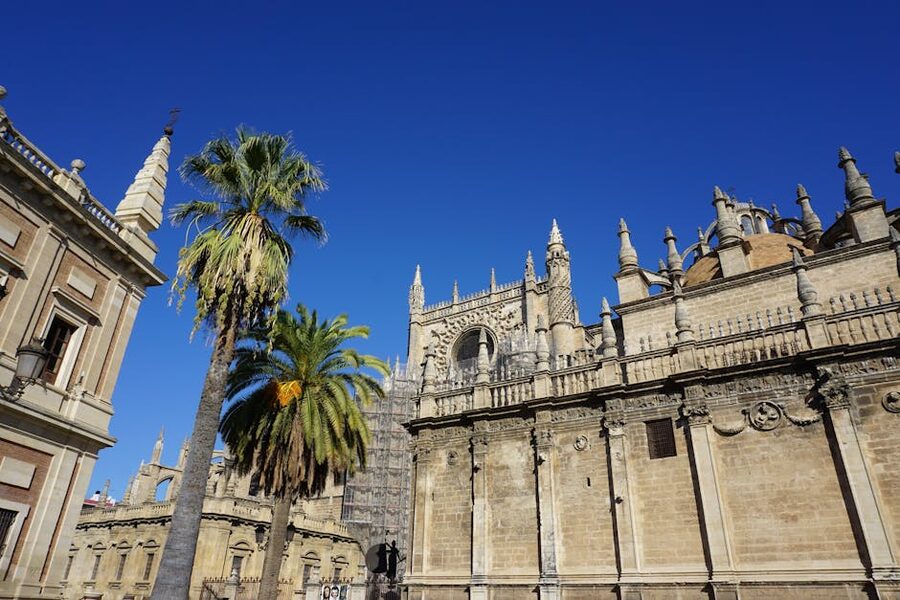
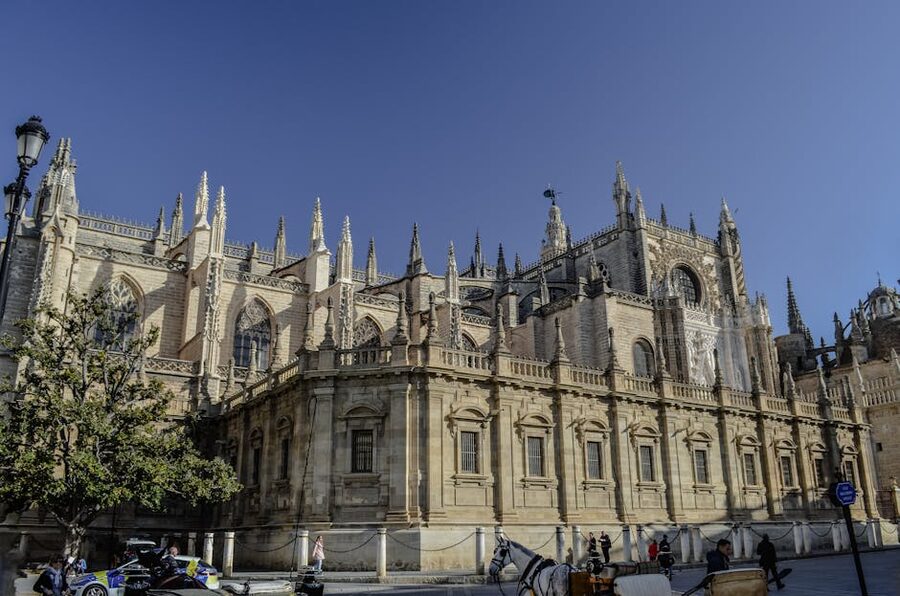
The cathedral sits on Avenida de la Constitución, in the dead centre of the old town. Metro: Puerta de Jerez on Line 1, two minutes’ walk. Tram: Archivo de Indias stop is right outside the south door. Bus: the C5 minibus loops the old town and stops on Constitución.
Driving in is a bad idea. The historic centre is mostly a pedestrian zone with camera-enforced restrictions, and parking inside the ring is around €25 a day if you can find it. The standard play is to leave the car at one of the larger underground car parks on the edge of the old town: Paseo de Colón along the river, or the Avenida de Roma car park, both about ten minutes’ walk and about €18 a day.
If you’ve got an extra hour after
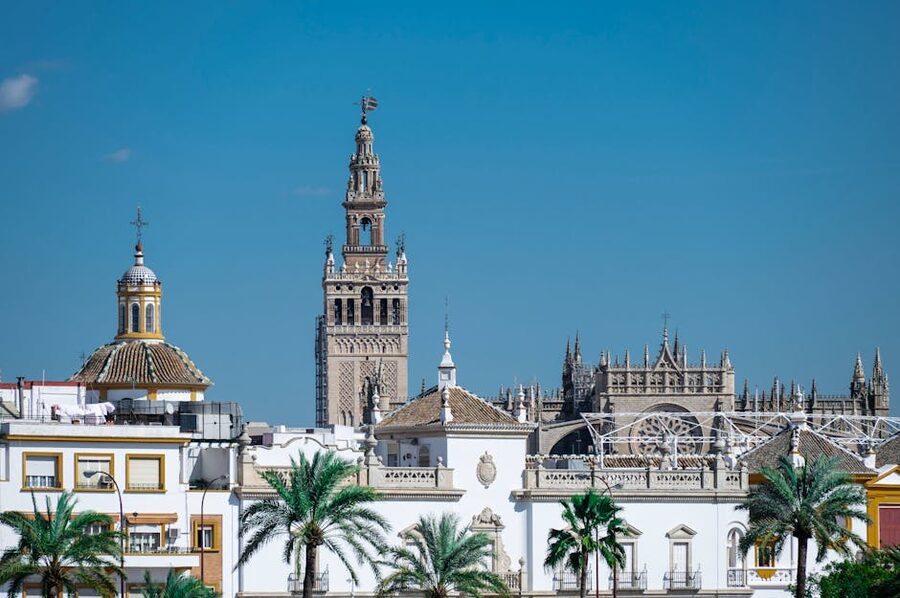
Most cathedral visits run two to three hours including the Giralda. If you’ve got time afterwards, two things sit basically next door:
The Archivo General de Indias, opposite the cathedral on Plaza del Triunfo, holds the Spanish colonial archive (Columbus’s logbook, original maps of the Americas, treaty documents). Free entry, often empty, climate-controlled, and a good break from the heat. Closed Sundays.
The Barrio Santa Cruz, the old Jewish quarter, starts behind the cathedral’s east wall and runs as a maze of whitewashed lanes east toward the Murillo gardens. There’s no specific itinerary, but the lanes are narrow enough that you’ll lose phone signal in the middle, and that’s part of the point. Get lost for an hour. Find a tapas bar.
What to read next on Seville
If you’re sorting out the rest of your time in the city, the Alcázar is the obvious next booking and our Royal Alcázar booking guide lays out the Mudéjar palace queue patterns and the gardens timing. If you’re coming down from Madrid and the cathedral is a one-day stop, the day-trip logistics in our Madrid three-cities day trip guide and the Ávila and Segovia day trip notes tell you which routes are worth booking from the capital. And if you’re putting Seville on a wider Spain itinerary, the Madrid flamenco bookings are a useful contrast for the Andalusian flamenco scene you’ll find around the cathedral after dark.