
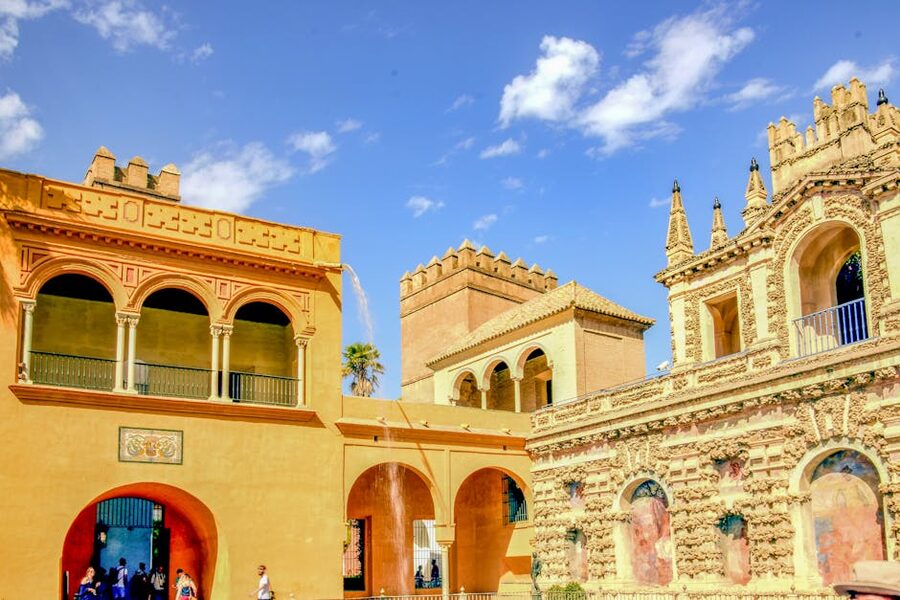
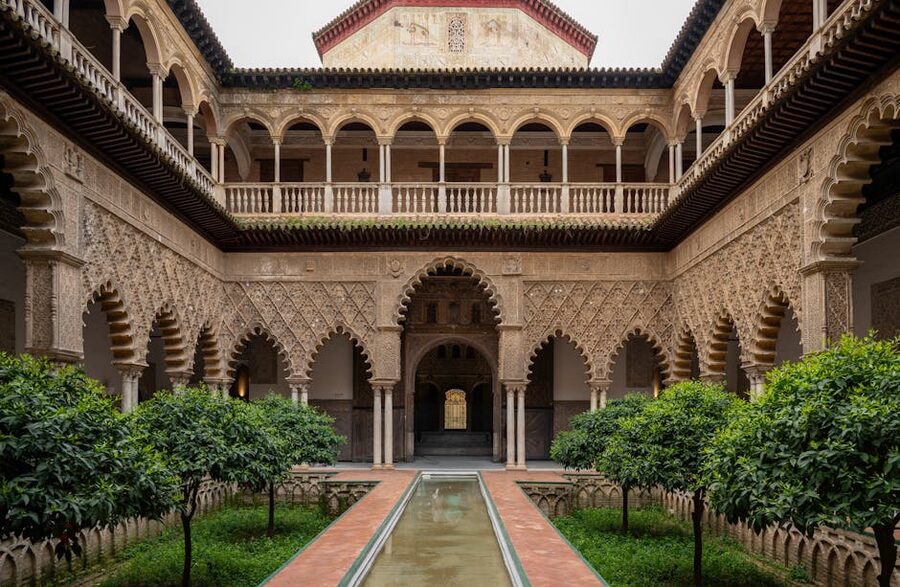
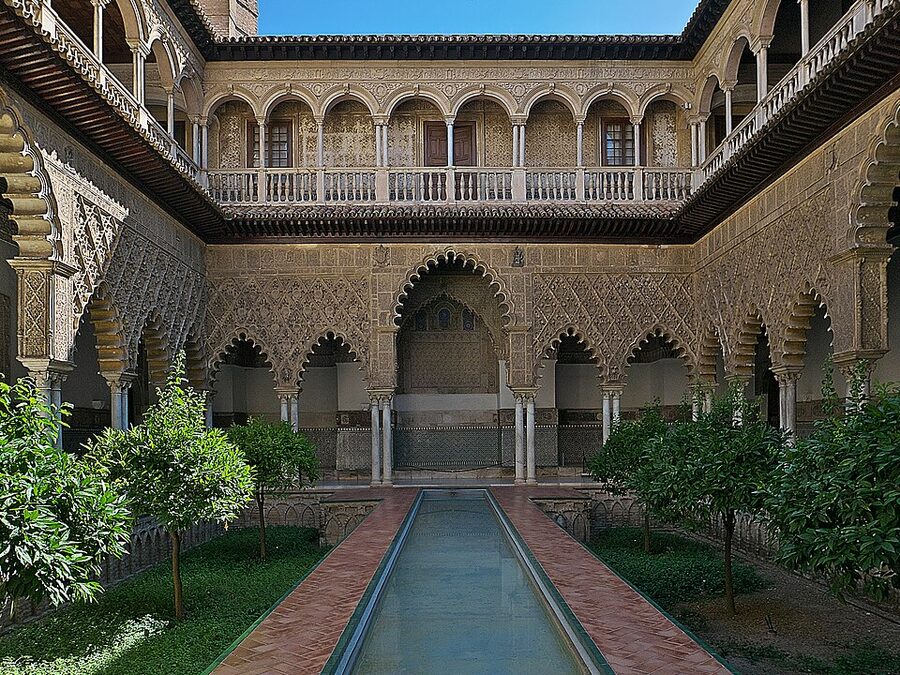
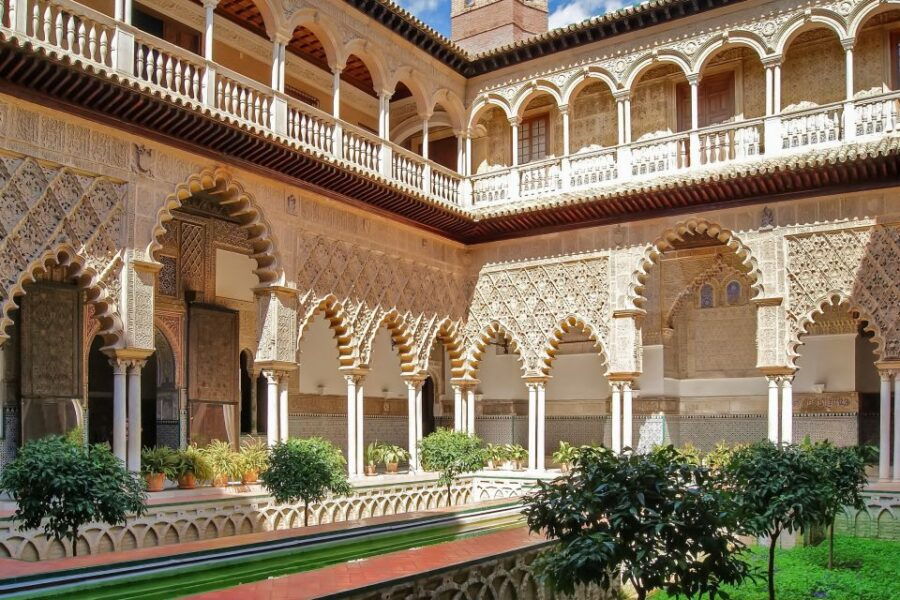
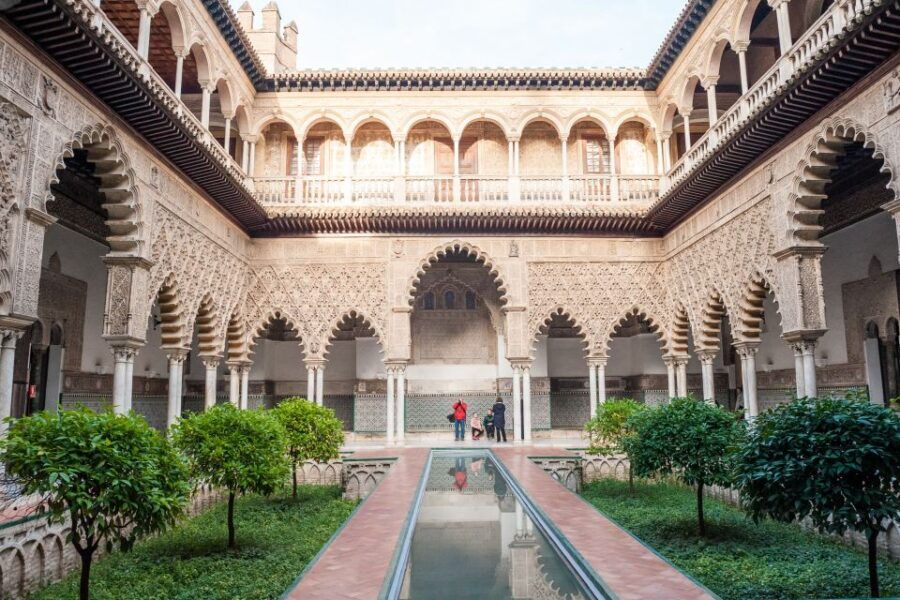
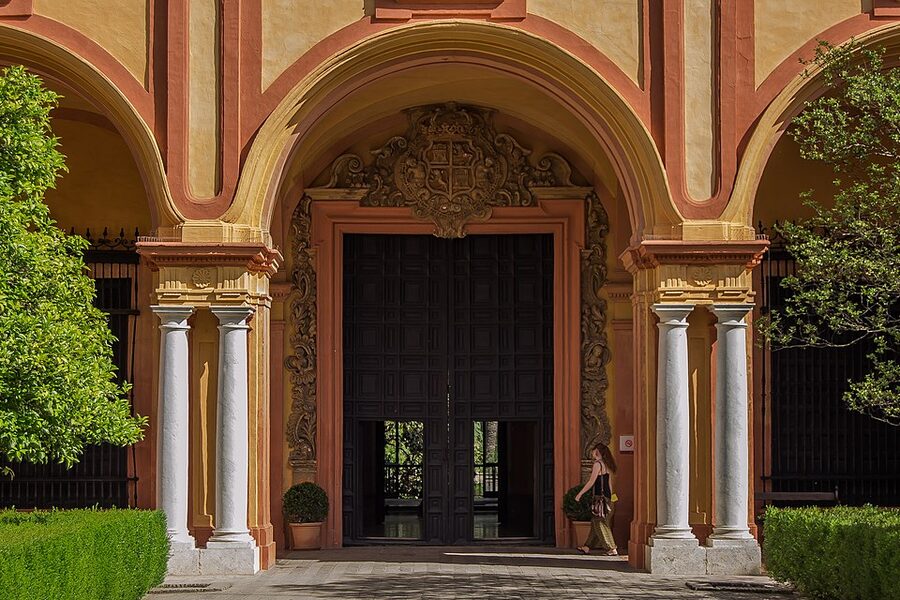
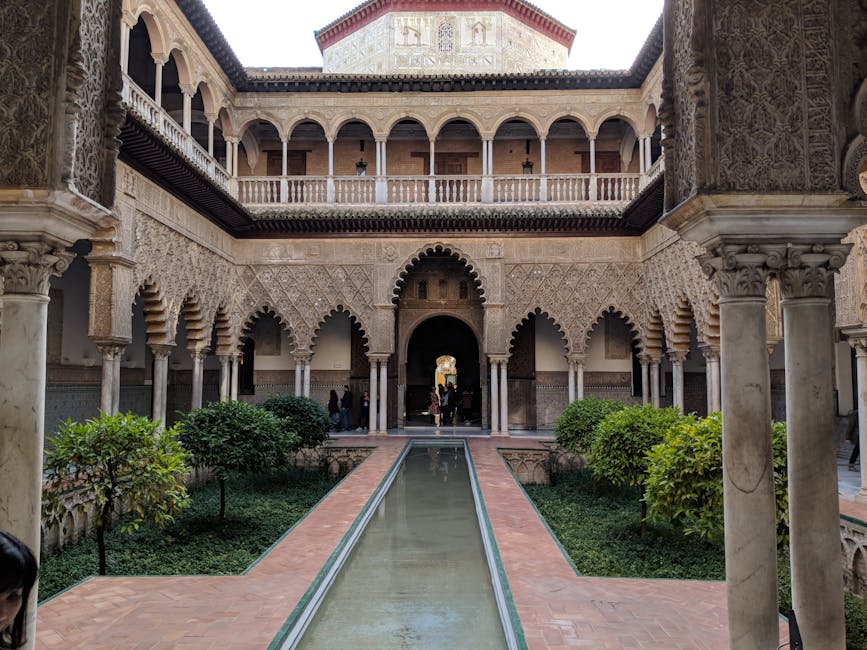
You walk through the Lion Gate, follow a corridor that smells faintly of orange blossom, and then the Patio de las Doncellas opens up in front of you. Sunken garden, twin reflecting pools, plasterwork that looks more like lace than stone. That moment, the sudden stop, is what you’re paying for. Everything else is logistics.
This is how I’d book the Real Alcázar so the moment actually lands. Right ticket, right time slot, right way in.
- In a Hurry
- Why Pre-Booking Matters Here
- Picking the Right Time Slot
- Ticket Types Compared
- Top Picks for Booking the Alcázar
- 1. Seville: Royal Alcázar Entry Ticket:
- 2. Seville: Alcázar Guided Tour:
- 3. Seville: Cathedral, Giralda, and Royal Alcázar Guided Tour:
- What You’ll Actually Walk Through
- The Mudéjar Palace
- The Gothic Palace and the Salón de los Tapices
- The Gardens
- The Game of Thrones Question
- Practicalities Worth Knowing
- A Quick History So You Know What You’re Looking At
- Best and Worst Months to Go
- Common Booking Mistakes
- Pairing the Alcázar With Other Seville Sights
- Where to Stay So the Alcázar Is Your First Stop
- Which Ticket Should You Actually Book?
- More Seville and Spain Reading
In a Hurry
- Cheapest fast pick: Royal Alcázar Entry Ticket. Around $23. Pre-booked time slot, walk past the on-site queue, explore at your own pace.
- Best for first-timers: 75-Minute Guided Tour. Around $46. Official guide, fixed start time, the bits you’d otherwise walk past explained as you go.
- Combo with the Cathedral: Cathedral, Giralda & Alcázar Guided Tour. Around $69. Three sights, one morning, one guide. Good if you’ve only got a day in Seville.
Why Pre-Booking Matters Here
The Alcázar has a daily visitor cap and timed entry slots. That part isn’t optional. Every ticket, official site or affiliate, gets you a 30-minute entry window. Miss it and they’ll usually still let you in within an hour, but in high season they sometimes won’t.
The on-site box office sells leftover tickets for the same day. In April through October, those usually run out by 11am, sometimes earlier. I’ve seen the queue at the León Gate stretch past Plaza del Triunfo by mid-morning in May. People who turned up at noon hoping to walk in were sent away.
The other reason to pre-book: the official Alcázar site (alcazarsevilla.org) only opens ticket sales about two months out and frequently sells through the popular morning slots within days. GetYourGuide and similar resellers buy bulk inventory and often have slots available when the official site shows zero. If you’re booking three or four weeks ahead, the affiliate listings are usually your easiest route. We covered the same logic in our Seville Cathedral and Giralda guide, which has the same booking-window quirks.
Picking the Right Time Slot
This is where most visitors get the experience wrong. They book for 11am or noon because that’s the slot they could find, and then they spend their visit elbowing past tour groups in the Mudéjar Palace.
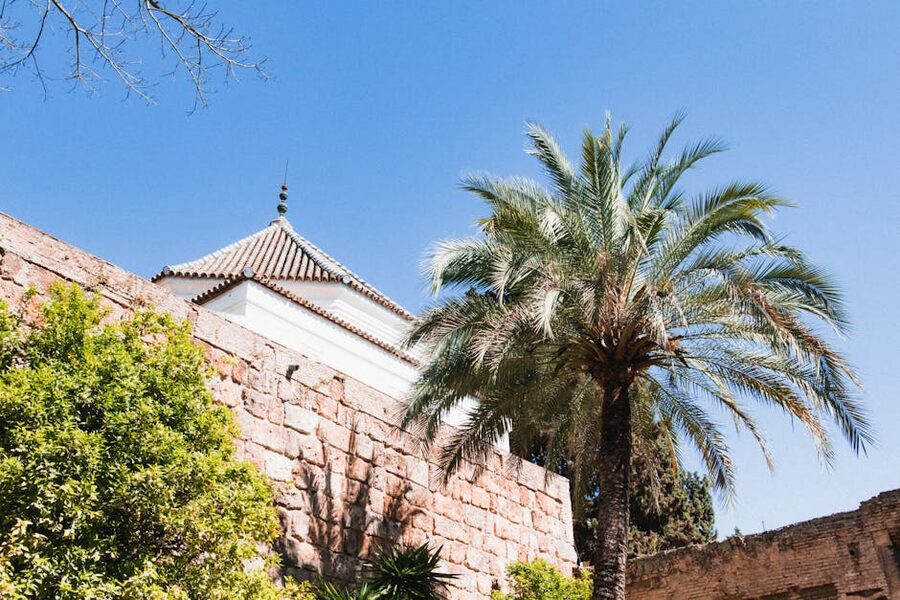
The Alcázar opens at 9:30am. The first three slots, 9:30, 10:00 and 10:30, are quieter by a wide margin. By 11:30 the cruise crowd from Cadiz starts arriving and the small interior rooms get genuinely uncomfortable. If you can get a 9:30 slot, take it. If not, aim for the last entry of the day, which shifts seasonally but is usually around 5pm in summer and 4pm in winter.
One catch with the early slots: the gardens take twenty minutes to warm up in spring and autumn. If you’re shooting photos, you might want a 10:30 slot so the orange-tree shadows are softer and the fountains have caught the light. It’s a trade-off between fewer people and better light.
Ticket Types Compared
There are basically four ways to get in, and they’re not equivalent.
- Standard entry, around $23. Time-slotted, self-guided. You walk in, you walk around, you leave when you want. Audio guides are sold separately at the entrance for about 6 euros, or you can use the free Alcázar app on your phone. This is the right pick if you’ve done your reading and just want to be there.
- Guided tour, around $46. 75 minutes with an official Alcázar-licensed guide, in a small group. They take you through the Mudéjar Palace, the Patio de las Doncellas, the Salón de Embajadores, and a slice of the gardens. They cannot stay in the gardens with you, so you’ll usually peel off after the tour ends and explore the green parts on your own.
- Cathedral combo, around $69. Three sights in one half-day: Cathedral, Giralda, Alcázar. Same guide for all of it. Aggressive pacing. You’ll see the famous bits and miss the small ones.
- Skip-the-line + reduced group, $80 and up. Worth it if you genuinely struggle in big groups or you want detailed art-historical commentary. The priority-access combo version upgrades the queue handling at all three sights. Otherwise the standard guided tour covers the same ground.
If your only goal is to see the Alcázar, the entry ticket plus the free phone app is the practical default. If it’s your first proper Moorish-Christian palace and you want to know what you’re looking at, the 75-minute tour earns its money. We pull this apart further in our walk-through of the entry ticket, including what’s actually in the booking confirmation email and how the time-slot enforcement works in practice.
Top Picks for Booking the Alcázar
These are the three I keep coming back to, ranked by how much they actually deliver for the money. Order matters: pick 1 is the default for most people, pick 2 if you want a guide, pick 3 if you’re squeezing Seville into one day.
1. Seville: Royal Alcázar Entry Ticket: $23
This is the one I send friends to. Pre-booked time slot, no mandatory group, you can spend twenty minutes in one tile-lined room if that’s what you want. Our full review covers exactly what redemption looks like at the gate and which audio app does the heavy lifting if you skip the guide. If you only book one Alcázar product, make it this one.
2. Seville: Alcázar Guided Tour: $46
Pick this one if you want context. The guide will walk you through the Mudéjar Palace, point out the inscriptions praising both the Christian king and the Muslim sultan, and explain the Almohad-era cisterns under the Patio del Yeso. It’s the cheapest properly-guided option. Our review goes into the meeting-point logistics and what the guide skips so you know what to circle back to on your own afterwards.
3. Seville: Cathedral, Giralda, and Royal Alcázar Guided Tour: $69
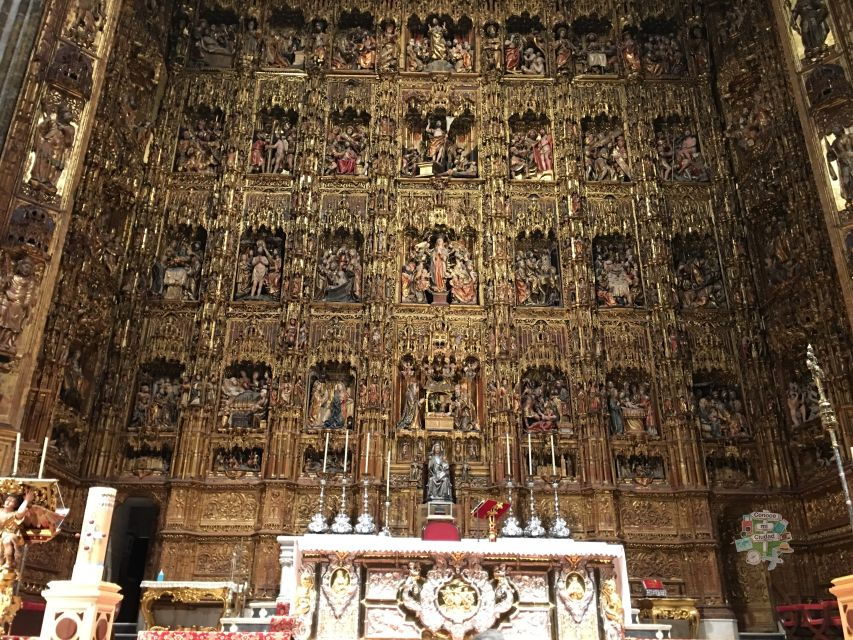
The pacing is tight. You get about an hour and twenty minutes inside the Alcázar, which is enough for the palace but not for a proper garden wander. Our breakdown of the combo talks through which sight gets shortchanged in practice (usually the Cathedral interior) and whether to add an extra hour to your Alcázar afternoon afterwards. Good for travellers on a single Seville day, less good if you have time to do the sights properly on separate mornings.
What You’ll Actually Walk Through
The site is bigger than people expect. The palace section alone is close to two hours if you read every room. The gardens add another hour minimum if you go past the obvious paths. Plan for two and a half hours total, longer if you photograph.
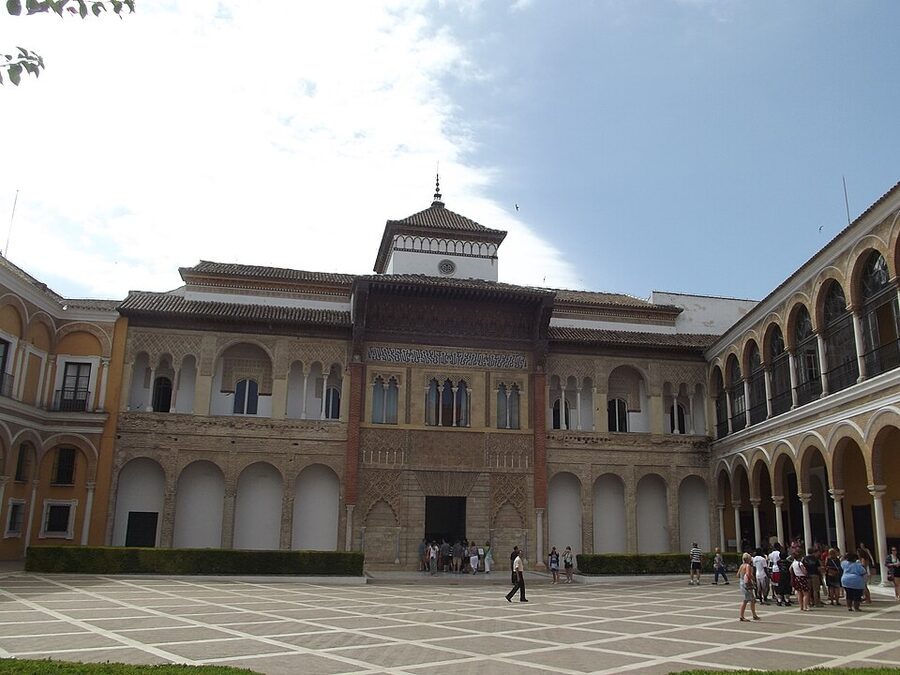
The Mudéjar Palace
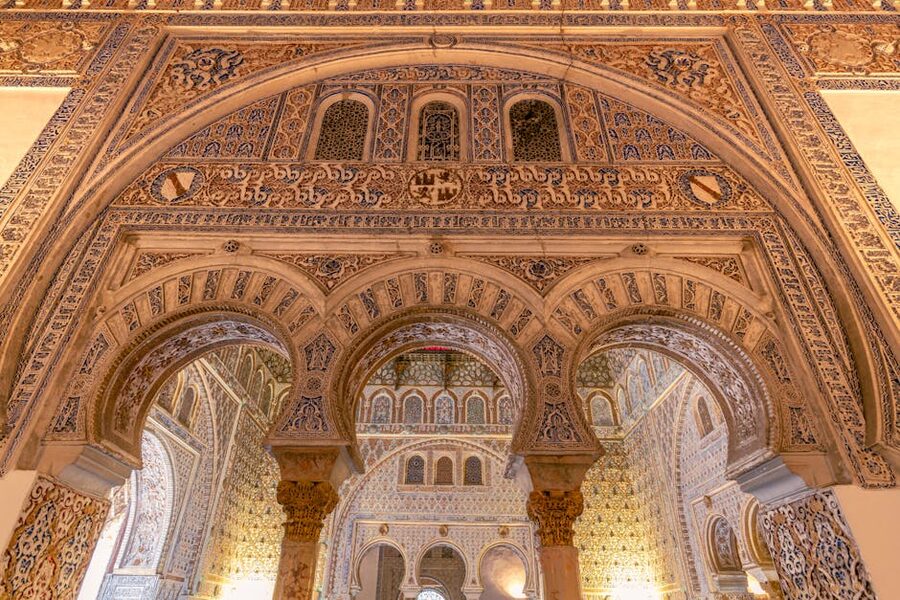
This is the headline act. Built by Pedro I of Castile in the 1360s using Muslim craftsmen from Granada and Toledo, the palace is the best-preserved example of Mudéjar architecture in Spain. Tile, stucco, carved cedar ceilings, the lot.
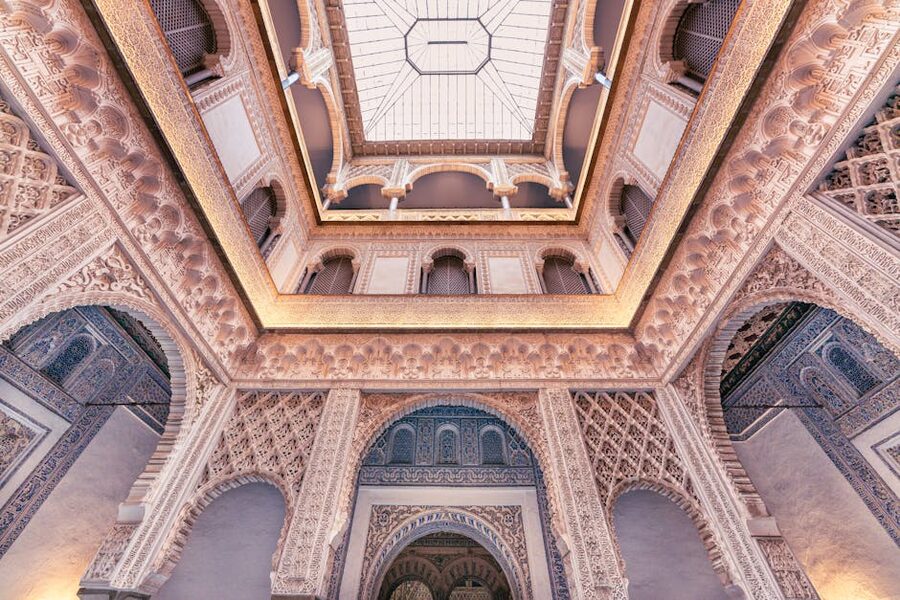
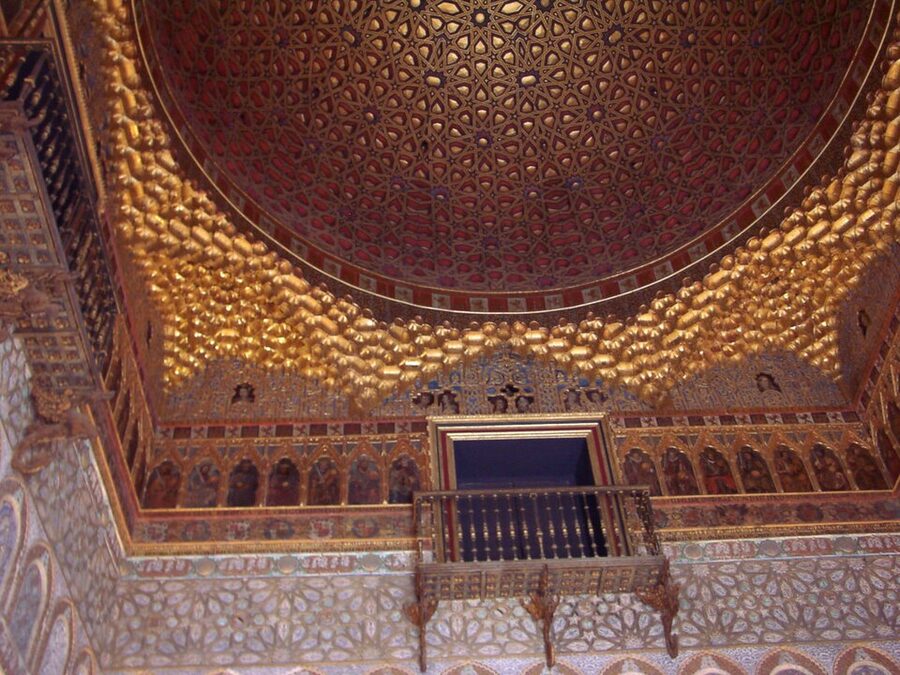
Two rooms do the heavy lifting. The Patio de las Doncellas, the central courtyard, with its sunken garden and twin pools. And the Salón de Embajadores, a domed throne room that sits off the patio. The dome itself is a half-orange of carved cedar, gilded, more than 8,000 individual pieces. You’ll spend ten minutes looking up.
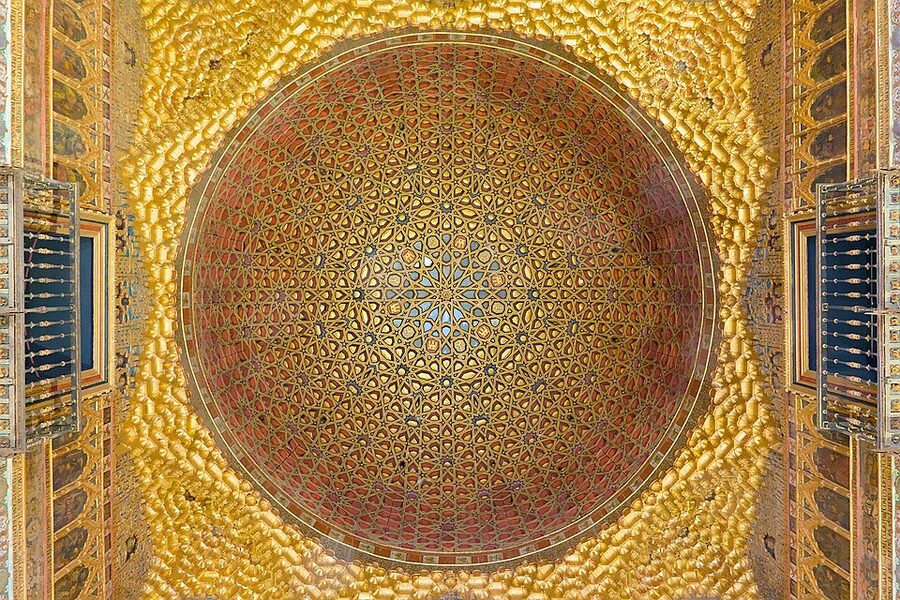
If you have a guide, this is where you’ll spend the densest twenty minutes of the visit. If you don’t, the Alcázar app’s audio is genuinely good for these two rooms specifically. Worth pulling up. For a more thorough guided experience focused entirely on the palace, the skip-the-line guided tour version spends an extra fifteen minutes here than the standard 75-minute tour does.
The Gothic Palace and the Salón de los Tapices
Most visitors blow through this part to get to the gardens. Don’t. The Salón de los Tapices has a set of 16th-century woven hangings showing Charles V’s conquest of Tunis. They’re huge, intricate, and oddly underappreciated because they’re on the far side of the palace from the showpiece Mudéjar rooms.
The Gardens
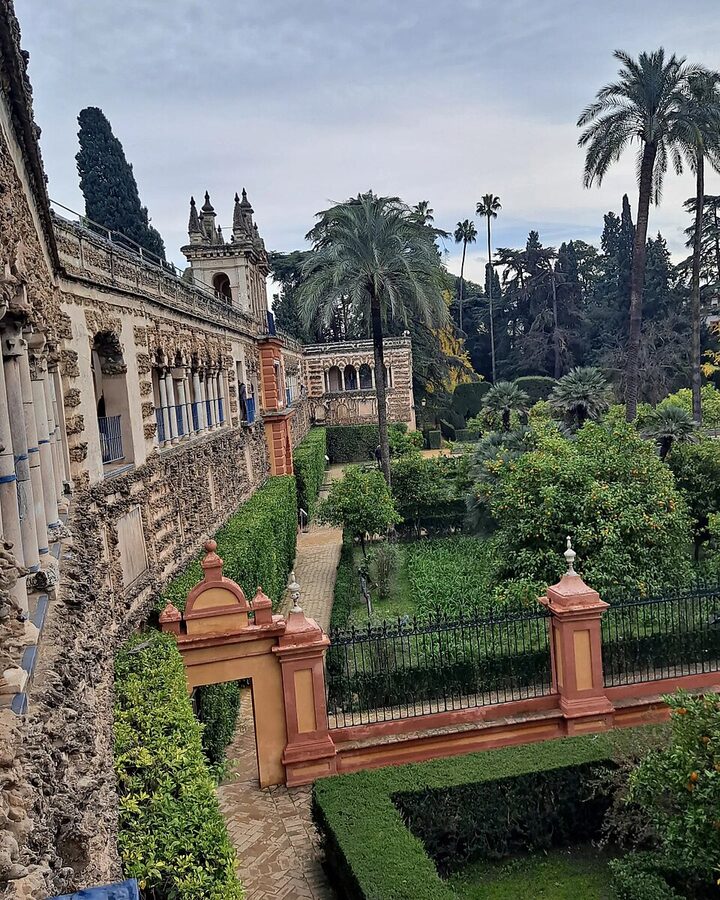
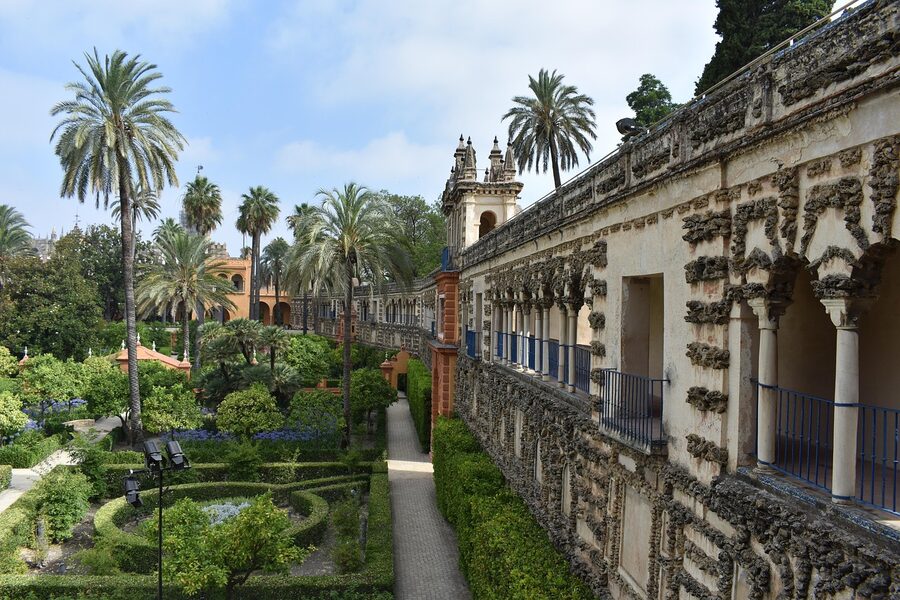
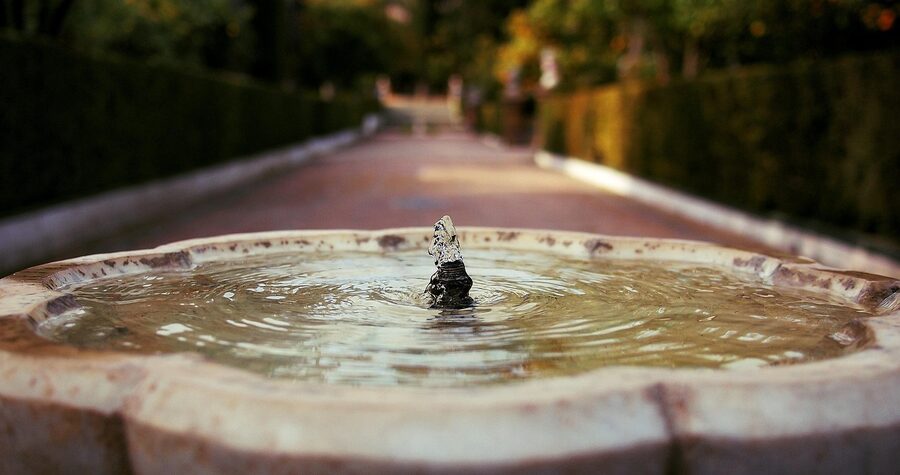
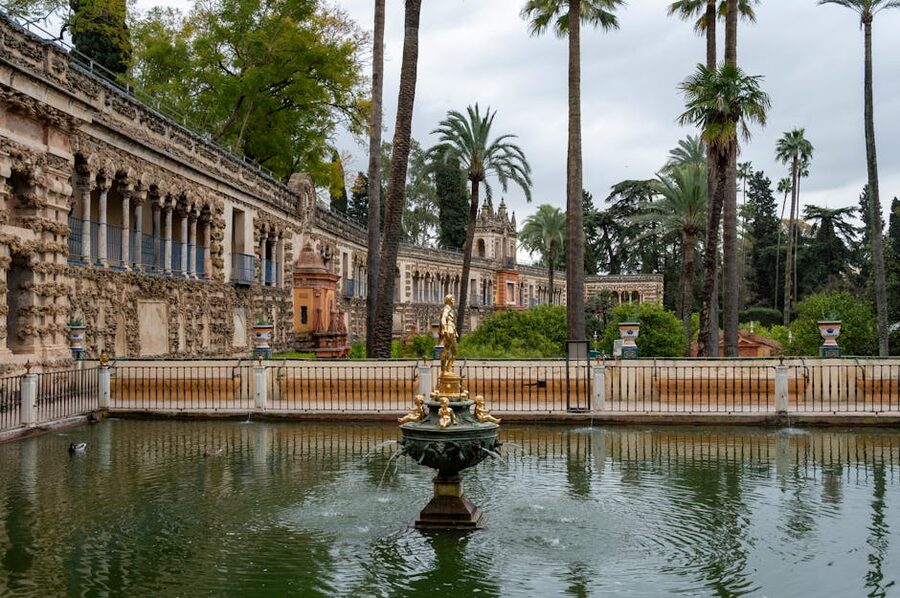
This is where the Alcázar earns its second hour. The gardens cover about 60,000 square metres and they get less crowded the further you walk from the palace. The Jardín de las Damas and Estanque de Mercurio are the two big set pieces; both right next to the palace exit, both photographed to death.
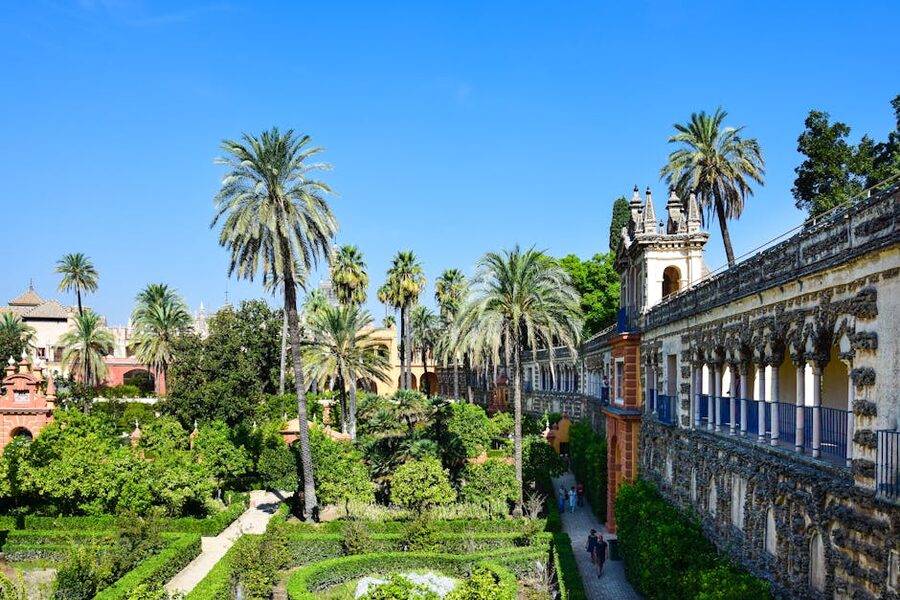
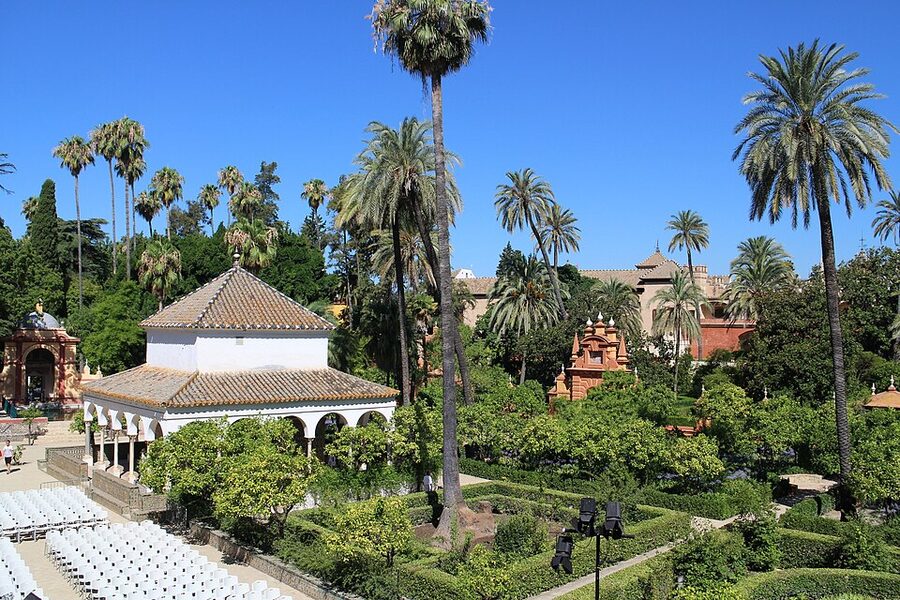
Walk past them. Keep going east. The Jardín de los Poetas and the Jardín de la Cruz are quieter, with the maze-like hedges and orange groves that the official photos don’t bother showing. There’s a small pavilion at the back called the Cenador de Carlos V where almost nobody stops. That’s where you eat the orange you palmed off a tree on the way in. (Don’t, technically. Yes, technically.)
The Game of Thrones Question
Yes, you’ve seen this place on TV. The Alcázar plays Dorne in seasons five through seven. Specifically the Patio de las Doncellas, the gardens, and the Patio del Crucero do most of the work.
If you’re here for that reason: the spots are not signed. There’s no Dorne tour officially run by the palace. A handful of independent guides run themed walks; they’re variable. The Alcázar app doesn’t mention the show. You’ll recognise the Patio de las Doncellas instantly, but the rest takes a bit of searching.
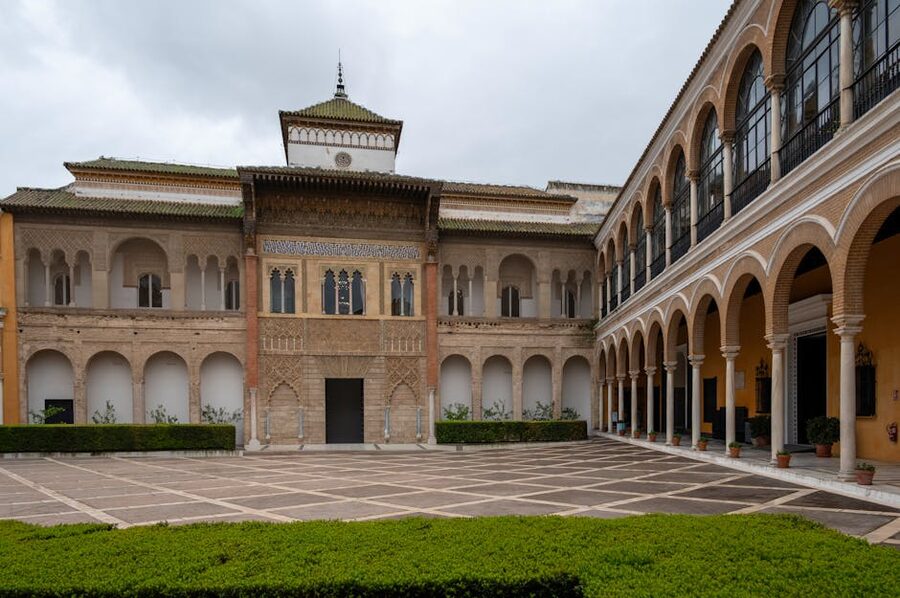
Don’t book a Game of Thrones-only tour and skip a proper Alcázar guide. Book a proper Alcázar guide and ask them to point out the show locations as you go. Most of them are happy to.
Practicalities Worth Knowing
How to get there: The Alcázar is on Plaza del Triunfo, right next to the Cathedral. From Santa Justa station it’s about a 25-minute walk, or 7 minutes in a taxi. There’s no metro stop closer than Puerta de Jerez, which is a flat five-minute walk away. Most central hotels are walking distance. If you’re coming from elsewhere in Andalusia, the Málaga-to-Seville day trip option covers the round trip and bundles the Alcázar tickets in one booking, which saves a layer of stress on the morning of.
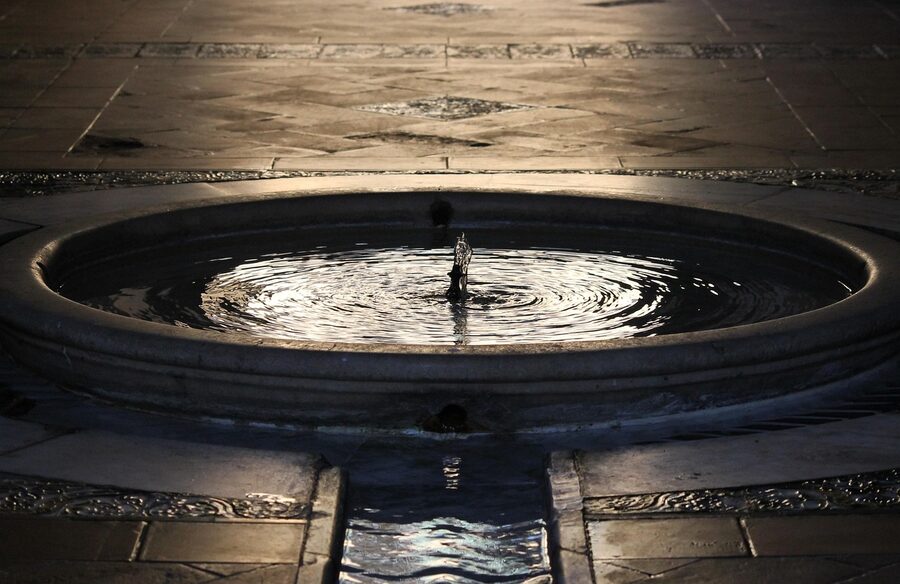
What to bring: Sunglasses (the gardens are bright), water (there’s a fountain inside but it’s not always working), and a camera with a reasonably wide lens for the interiors. The dress code is informal but you’re a guest in a working royal residence; the upper floors are technically still used by the Spanish royal family. Avoid bare midriffs if you want to access the Cuarto Real Alto.
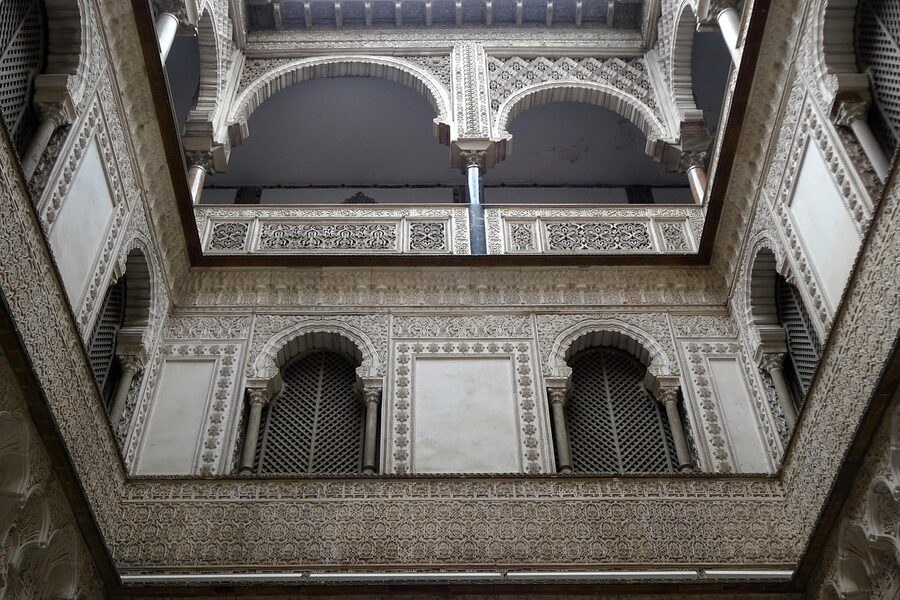
The Cuarto Real Alto: The royal apartments upstairs are a separate timed tour (about 5 euros extra), only run a few times per day, capped at 16 people, in Spanish or English depending on the slot. If you have time, do it. The royal family still uses these rooms when they’re in town. The audio guide is genuinely interesting because it covers the Bourbon redecoration of what was originally an Almohad space, which is a stranger story than it sounds. Book at the ticket office on the day; you can’t pre-book this online.
Eating around the Alcázar: Avoid the cafés on Plaza del Triunfo (overpriced, geared at the cruise crowd). Walk three minutes north into Santa Cruz and you’re in a different price bracket. La Goleta on Calle Mateos Gago does cheap, good tapas and is open late.
Bathrooms: One block of bathrooms inside the palace, near the entrance. None in the gardens. Use them before you head out into the green.
A Quick History So You Know What You’re Looking At
The Alcázar isn’t one building. It’s a palace complex layered over twelve hundred years of construction, demolition and renovation, on top of a Roman site that was already old when the Visigoths got here.
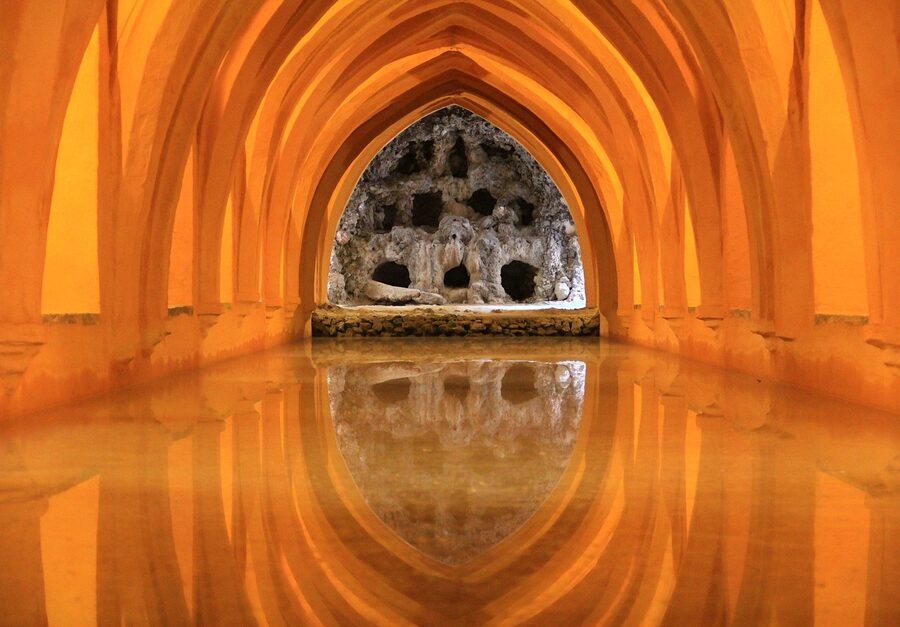
The first identifiable palace is from the 10th century, built when Seville was the seat of the Abbadid taifa. Then the Almohads expanded it in the 12th century, including the patios and cisterns that still survive at the back. The Christian conquest of Seville happened in 1248, and the Castilian kings took over the existing palace rather than tearing it down.
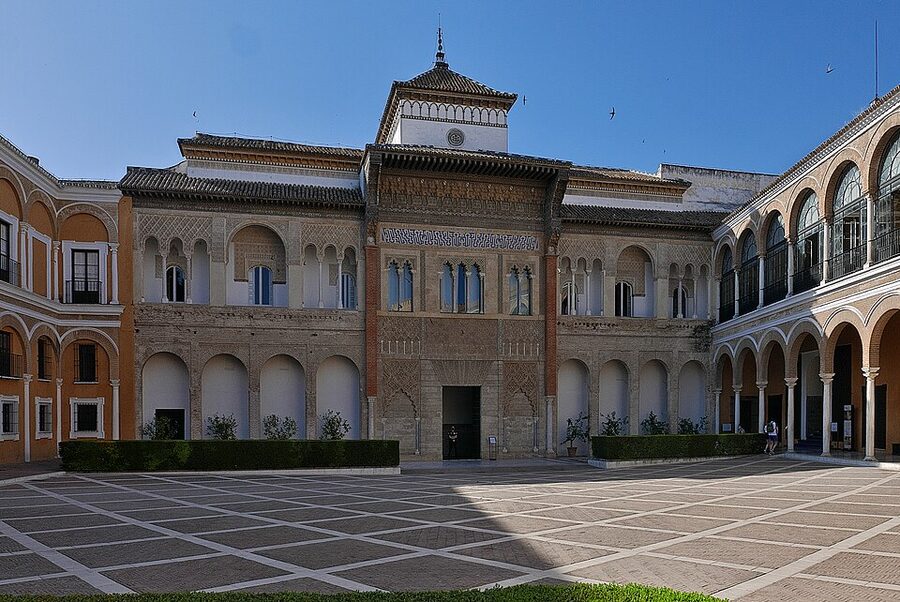
The Mudéjar Palace, the part everyone photographs, was commissioned by Pedro I of Castile in 1364. He used Muslim craftsmen from Granada and Toledo, designed it as a Christian palace in Islamic style, and signed the facade in Arabic. That blend, neither purely Moorish nor purely Castilian, is what makes the Alcázar feel different from anywhere else in Andalusia. It’s why UNESCO listed it in 1987.
Charles V got married here in 1526, in the Salón de Embajadores. The Bourbons rebuilt the upper floors in the 18th century. The royal family still uses the Cuarto Real Alto when they visit Seville, which is more often than you’d think. It’s the oldest royal palace still in active use in Europe, which is one of those facts that gets quoted a lot but doesn’t really hit until you’re standing in a room where someone could plausibly host a state dinner next month.
Best and Worst Months to Go
March, April and October are the sweet spot. Warm enough to enjoy the gardens, cool enough that the palace interiors aren’t suffocating. Spring brings the orange blossom; the entire complex smells of azahar for about three weeks in late March or early April depending on the year.
July and August are brutal. Seville hits 40°C regularly. The gardens are full sun, the interiors aren’t air-conditioned, and the queue outside is in direct heat. If you have to go in summer, book the 9:30 slot and be out by 11:30.
December and January are surprisingly good. Crowds thin out, the orange trees in the patios are heavy with fruit, and you can sometimes get a 10am slot the same week. Bring a jacket; the stone interiors get cold.

Avoid Sundays from October to March, because morning entry is free for EU residents and the queue gets long even with pre-booked tickets. (The entry-ticket holders still have priority but the bottleneck at the gate is real.) If you’re already considering a combo with the Cathedral and Giralda, the entry plus guided tour combo is a slightly cheaper alternative to the priority-access version and comes with the same skip-the-line benefit at the León Gate.
Common Booking Mistakes
People run into the same handful of issues. Quick rundown so you don’t:
- Buying for the wrong attraction. There are two major Spanish royal sites called Alcázar, in Seville and Segovia, plus the Alcazaba in Granada (Alhambra) and the one in Málaga. Make sure your ticket says Seville and Real Alcázar. The Toledo Alcázar is a different building entirely; if you’re booking a Three Cities day trip from Madrid you’ll see both names floating around.
- Booking too late. Three weeks ahead is fine in winter, six weeks ahead in shoulder season, eight weeks for July through September. The morning slots fill first.
- Booking too early. The official Alcázar site only releases tickets two months out. If you’re trying to book five months ahead, use an affiliate. They have inventory the official site doesn’t.
- Combining with the Cathedral on the same morning. Doable but tight. The Cathedral plus Giralda is comfortably 90 minutes; the Alcázar is two hours. If you’re doing both, start with the Cathedral at 9:30 and the Alcázar at 11:30. We covered the Cathedral pacing in our Seville Cathedral guide and the same logic applies in reverse.
- Showing up with a passport that doesn’t match the booking name. Most affiliate tickets don’t actually check ID, but the official ones do. Book in the name of the person who’ll be holding the QR code.
Pairing the Alcázar With Other Seville Sights
The Alcázar sits at one corner of a triangle with the Cathedral and the Archivo de Indias. Most people do all three in a single day; whether that’s a good idea depends on how fast you walk.
Two days in Seville is enough for everything serious. Spend a half-day on the Alcázar (palace plus gardens, properly), a half-day on the Cathedral and Giralda, and the rest on Triana, the Metropol Parasol and a flamenco show in the evening. Our Cathedral and Giralda booking guide covers the second half-day in detail.
One day in Seville and you have to choose. If you can only do one indoor sight, do the Alcázar over the Cathedral. The Cathedral is huge and impressive but feels familiar if you’ve seen any other Gothic cathedral. The Alcázar has nothing else like it in Spain. If you’re running a single-day Seville trip out of Madrid, the Three Cities day trip isn’t quite the right shape because Toledo and Segovia don’t pair with Seville geographically. Book Seville as its own trip.
Where to Stay So the Alcázar Is Your First Stop
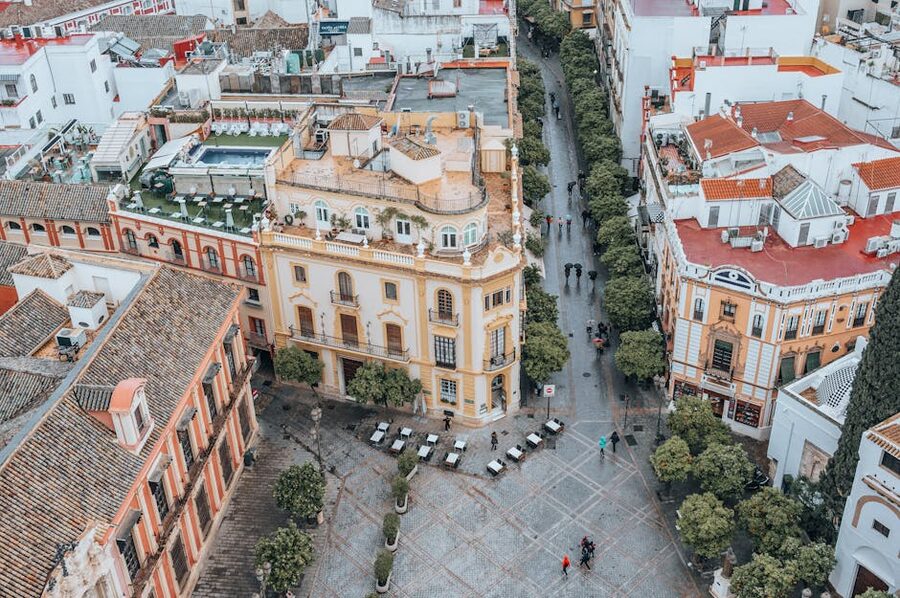
Stay in Santa Cruz or El Arenal. Both put you within a five-minute walk of the León Gate. Anywhere else and you’re spending twenty minutes getting to your 9:30 slot before you’ve had coffee.
Santa Cruz is the medieval Jewish quarter, three minutes from the Alcázar through narrow lanes that are almost car-free. El Arenal is across the cathedral square and slightly more upmarket. Triana, across the river, is great for flamenco at night but adds 15 minutes to your walk over.

Which Ticket Should You Actually Book?
If you’ve read this far you probably want a single answer.
For most people: book the standard entry ticket at $23. Get the 9:30 or 10:00 slot. Use the free Alcázar app for audio. Spend two and a half hours, walk out, eat lunch in Santa Cruz.
If it’s your first time and you’d benefit from context: book the 75-minute guided tour at $46. Then add another hour on your own to wander the gardens after the guide leaves.
If you’ve only got one Seville day: book the Cathedral, Giralda & Alcázar combo at $69. Accept that the pacing will be tight. Trade depth for breadth.
More Seville and Spain Reading
If you’re building a longer Seville itinerary, our Cathedral and Giralda guide is the natural pairing with this one. For broader Spain trip planning, the Madrid cluster is where most people start: the Prado and the Royal Palace guides cover the two big indoor sights, and if you’re doing a day trip out from Madrid, the Toledo and Ávila and Segovia guides will save you the same headache this one just walked you through.