
Milan looks like a small city when you study the map. The historic core fits inside the inner ring road, and most travel sites tell you it’s “easy to walk.” Then you actually try to march from Stazione Centrale down to the Navigli on a 31-degree afternoon and realise the place is bigger, hotter, and more elbow-to-elbow than the map made out. A hop-on hop-off bus quietly solves the problem. You climb the stairs to the open top, and the city stops being a logistical puzzle for a couple of hours.
Two operators run these buses in Milan, and they aren’t interchangeable. This is the booking guide I wish I’d had on my second visit, when I bought the wrong ticket and figured it out at 11am on stop number two.
In a Hurry: Top 3 Picks
- City Sightseeing Milan with Audio Guide for $26: Four routes, 43 stops, the most thorough coverage in the city. Book on GetYourGuide
- Milan Hop-On Hop-Off 24/48/72-Hour Ticket for $29: The other big name in town, simpler route map and a hostess on board. Book on GetYourGuide
- City Sightseeing Milan via Viator for $27: Same buses as pick 1, useful if you already have a Viator account. Book on Viator
- In a Hurry: Top 3 Picks
- What a Milan HOHO ticket actually buys you
- City Sightseeing Milan vs Milan Open Tour
- Quick comparison
- Routes and stops worth planning around
- Duomo (Piazza Duomo, in front of #17)
- Castello / Cairoli (Foro Bonaparte 10/12)
- Cenacolo (Via Caradosso 6)
- Stazione Centrale (Blue Line)
- La Scala (Via Manzoni 6)
- Quadrilatero della Moda (Open Tour Fashion Line)
- Best Milan hop-on hop-off tours we’d actually book
- 1. City Sightseeing Milan Hop-On Hop-Off with Audio Guide:
- 2. Milan Hop-On Hop-Off Bus Ticket for 24, 48, 72 Hours:
- 3. City Sightseeing Milan Hop-On Hop-Off via Viator:
- How to choose a duration: 24, 48, or 72 hours
- Best value pick
- Where to actually catch the bus
- What you’ll actually see from the top deck
- Practical notes the operators don’t tell you
- Quick history of sightseeing buses in Milan
- Common questions about Milan HOHO tickets
- Where do I buy tickets?
- Do I need to print my ticket?
- Is one day enough to ride all the routes?
- Can I change my booking date?
- How does the ticket clock work?
- Are there discounts for kids?
- What if I miss the last bus of the day?
- Where to keep planning your Milan trip
What a Milan HOHO ticket actually buys you
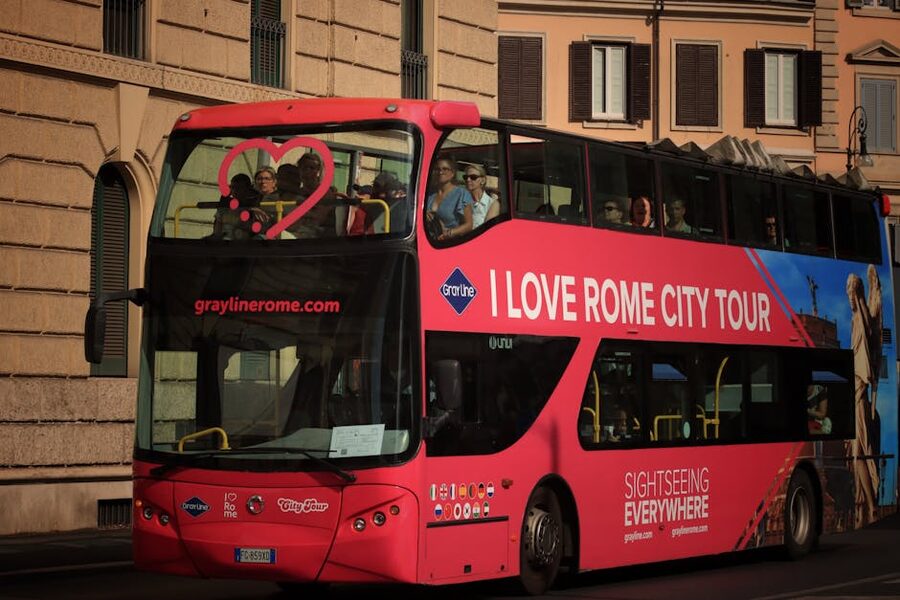
Strip away the marketing photos and a Milan hop-on hop-off ticket is three things stacked together. A seat on an open-top double-decker. An audio commentary in your language piped through disposable headphones. And the right to use that bus as many times as you like for 24, 48, or 72 hours from your first scan. The bus runs a fixed loop. You step off when something looks interesting, do it, and pick up a later bus from the same stop.
The clock on your ticket starts when you scan it on the bus, not when you bought it. So buying online the night before and using it the next morning costs you nothing in time. If you board for the first time at 5pm, your 24-hour ticket runs through to 5pm tomorrow. Both operators offer the same 24/48/72 framework. Free cancellation if you back out at least 24 hours before, mobile tickets work on board, headphones are handed out as you board.
The single most useful thing to know: kids 5-15 pay €10 flat with either operator, and under 5s ride free. That’s a real saving on a family of four versus most other Milan attractions, where children are charged at near-adult rates.
City Sightseeing Milan vs Milan Open Tour
You’ll see two brands at every stop. They look almost identical, but the underlying products are different in ways that matter for how you spend your day.
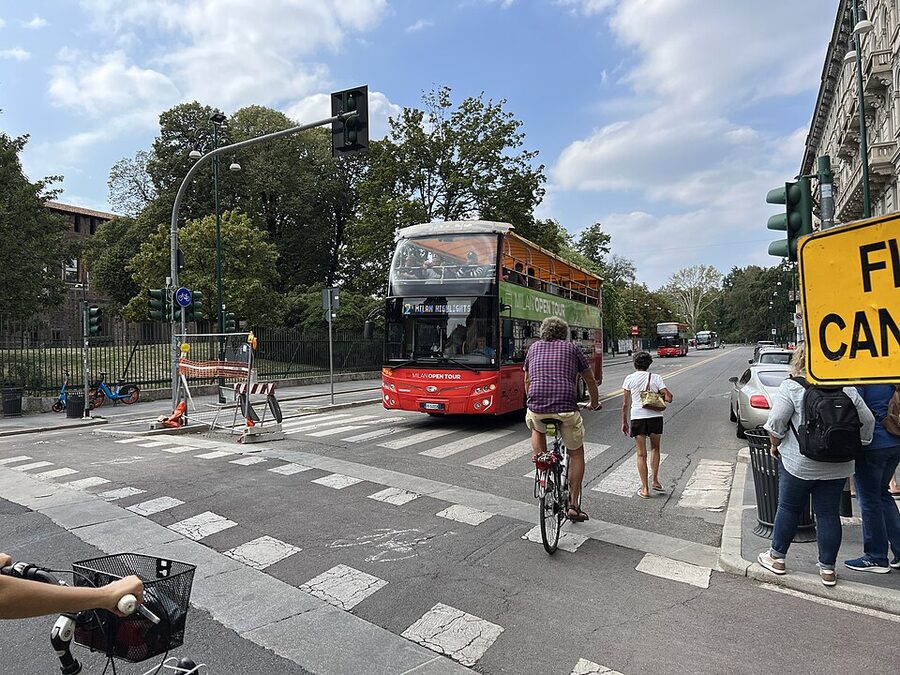
City Sightseeing runs four colour-coded routes that share key stops at Castello and Duomo, so you can switch between them. Red Line is the historic loop (50 minutes, the one most visitors should ride first). Blue Line takes you north into the modern Porta Nuova business district and over to Stazione Centrale. Yellow and Green Lines push out further to Brera, Sempione park and the canal areas. Forty-three stops total. They also have a Night Tour during summer weekends that’s bundled into the 72-hour ticket if you book Friday-Sunday between June and September.
The free Sightseeing Experience app shows where every bus is in real time. That tracking is the killer feature here. On a hot afternoon when the next bus is “due in 8 minutes”, you can decide between waiting in the shade or walking ten minutes to the next stop ahead. We covered the same operator in detail in our review of the City Sightseeing Milan audio-guide ticket, including which routes overlap and which are worth the detour.
Milan Open Tour goes simpler. Two routes, 37 stops, designed so you can do the whole highlights loop without changing buses. Their Highlights Line is essentially a “hit every postcard sight in 90 minutes” run. The Fashion/Design/Leisure Line covers the Quadrilatero della Moda, Brera and the canals. They put a hostess on board who answers questions the audio guide doesn’t, plus there are USB sockets on every seat for charging your phone. Audio in 11 languages including Arabic and Chinese, which neither competitor matches.
The catch is you have to choose a boarding time when you book Open Tour. Slots are 10:15, 11:00, 11:50, 12:20, 13:10, 14:15, 15:20, 16:00 and 17:00. Miss your slot, talk to the hostess, but it’s not “show up whenever”. Our breakdown of the Milan Open Tour ticket goes deeper on which slot makes the most sense for the routes.
Quick comparison
- If you want flexibility and tracking: City Sightseeing wins. Four routes, real-time app, no boarding slots.
- If you want simplicity and a human on board: Milan Open Tour. Two routes, hostess, USB charging.
- If you have 24 hours: Either works, lean Open Tour Highlights Line.
- If you have 48-72 hours: City Sightseeing’s extra routes earn their keep.
- For families with kids 5-15: Both charge €10 per child. Open Tour’s USB sockets matter more than you’d think on a long day.
Routes and stops worth planning around
The routes change occasionally. They were also disrupted in February 2026 by Olympic-related closures around Castello and the Yellow Line. Check the operator’s app the morning you ride. The skeleton hasn’t shifted in years though, and these are the stops to plan your day around.
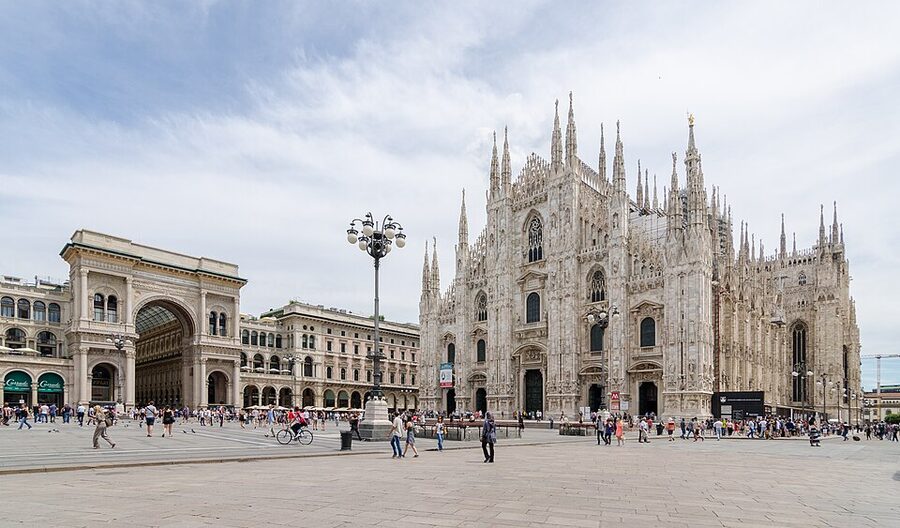
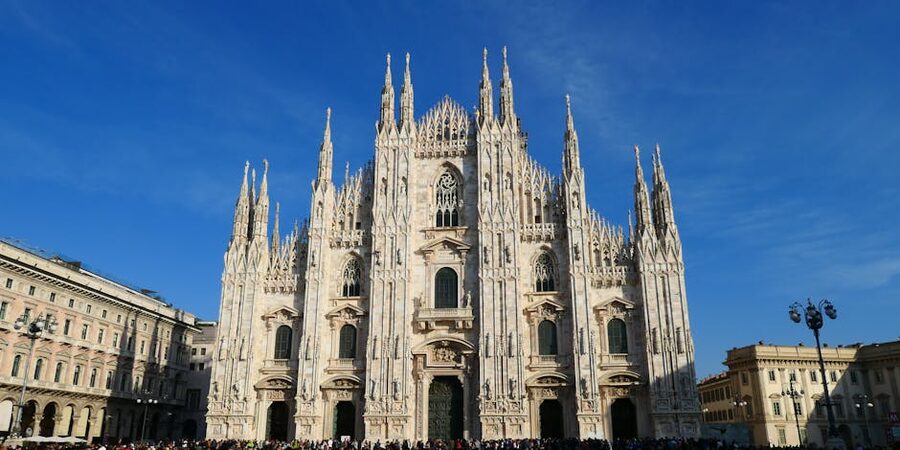
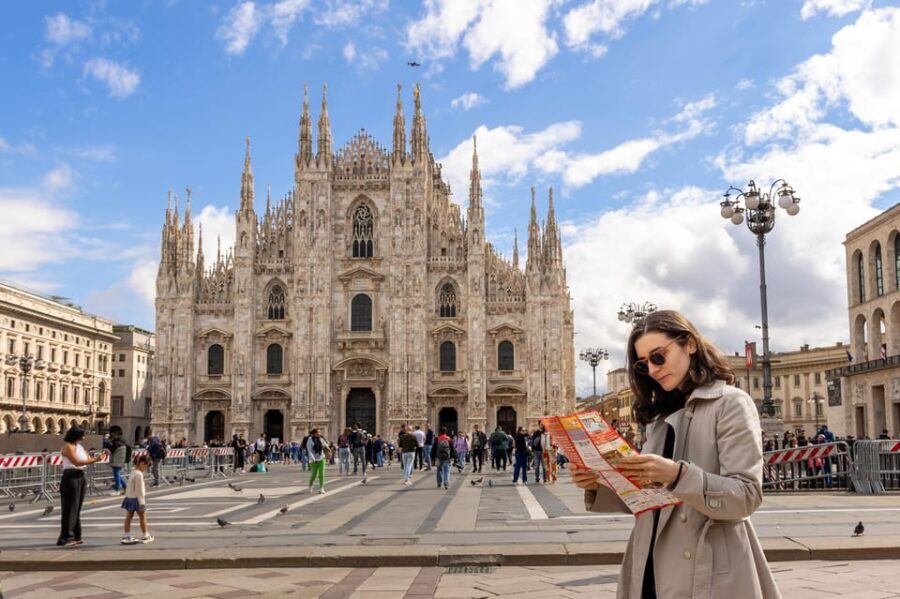
Duomo (Piazza Duomo, in front of #17)
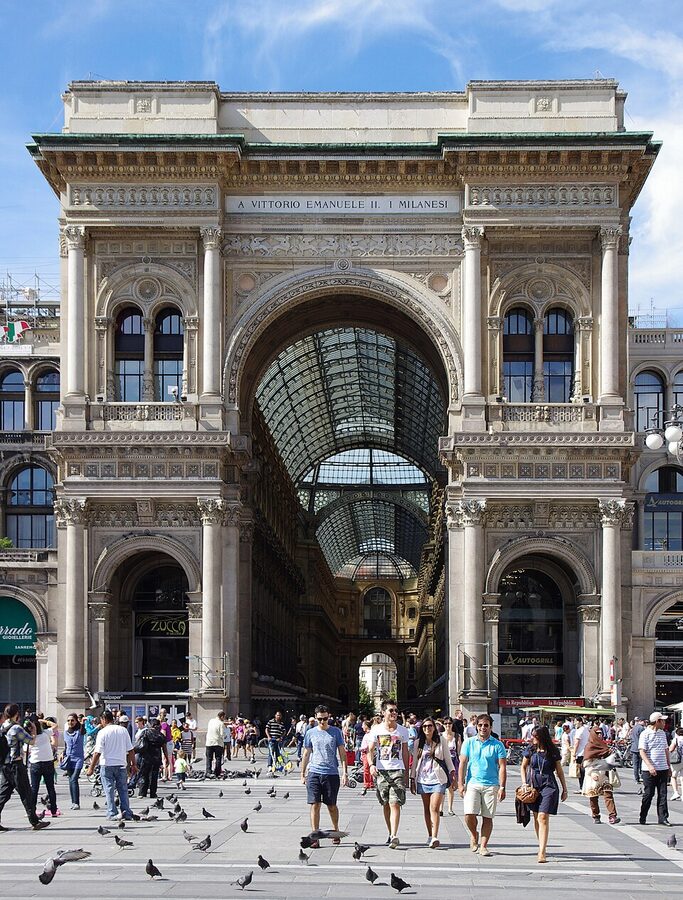
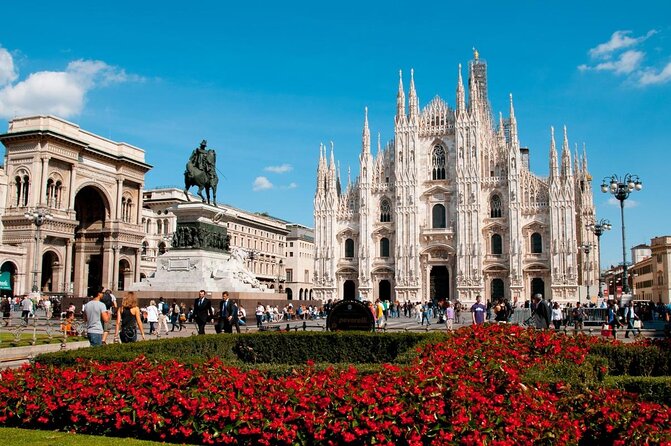
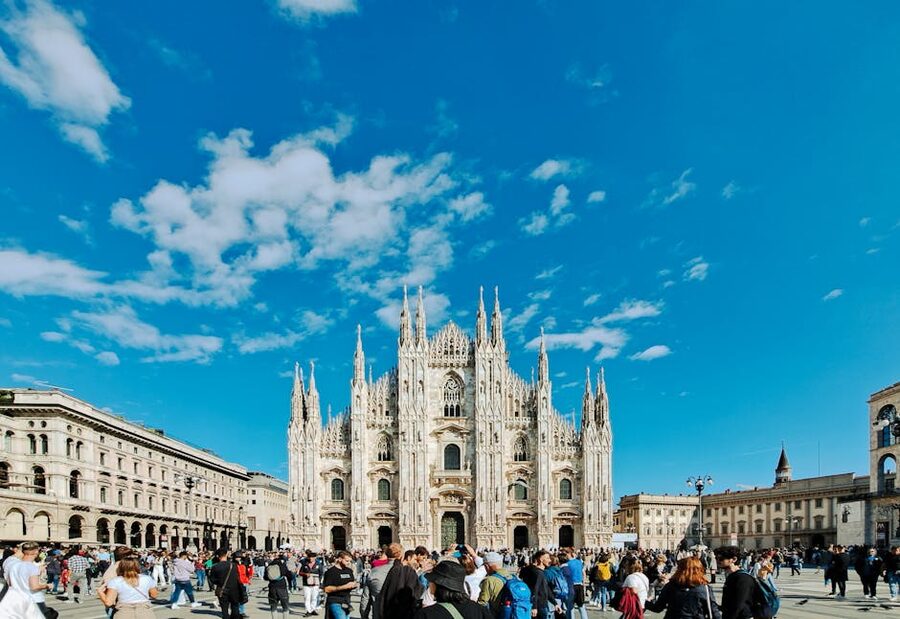
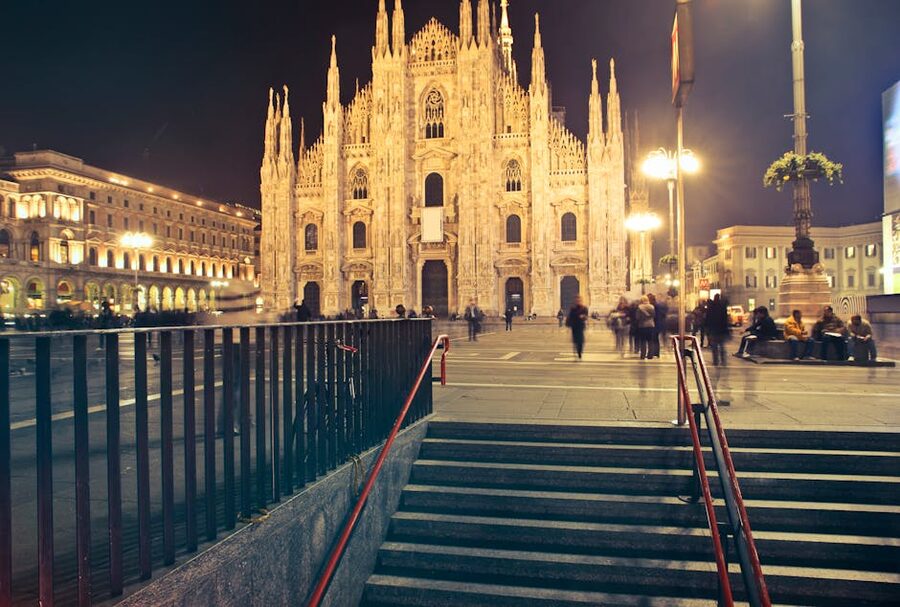
Every route stops here. It’s the most useful single stop on either operator. Drop off at Duomo and you’re three minutes from the cathedral entrance, the Galleria arcade, the Piazza Mercanti, and the metro lines. If you only have time for one stop, this is the one to take.
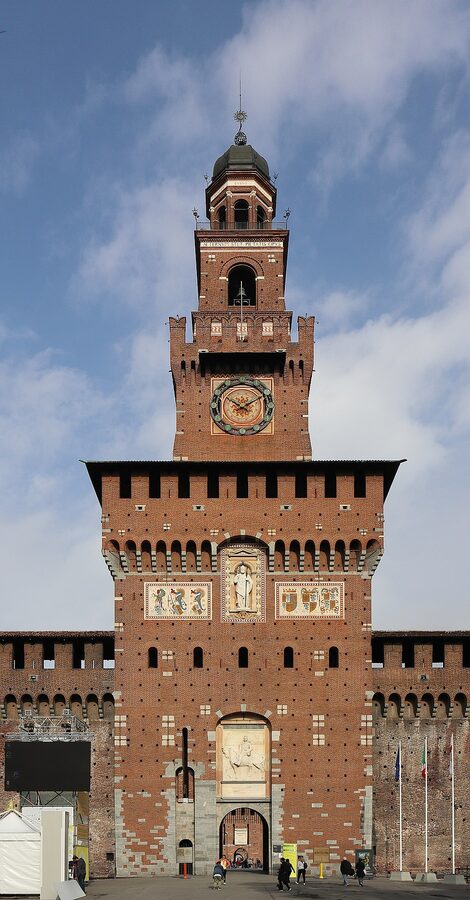
Castello / Cairoli (Foro Bonaparte 10/12)
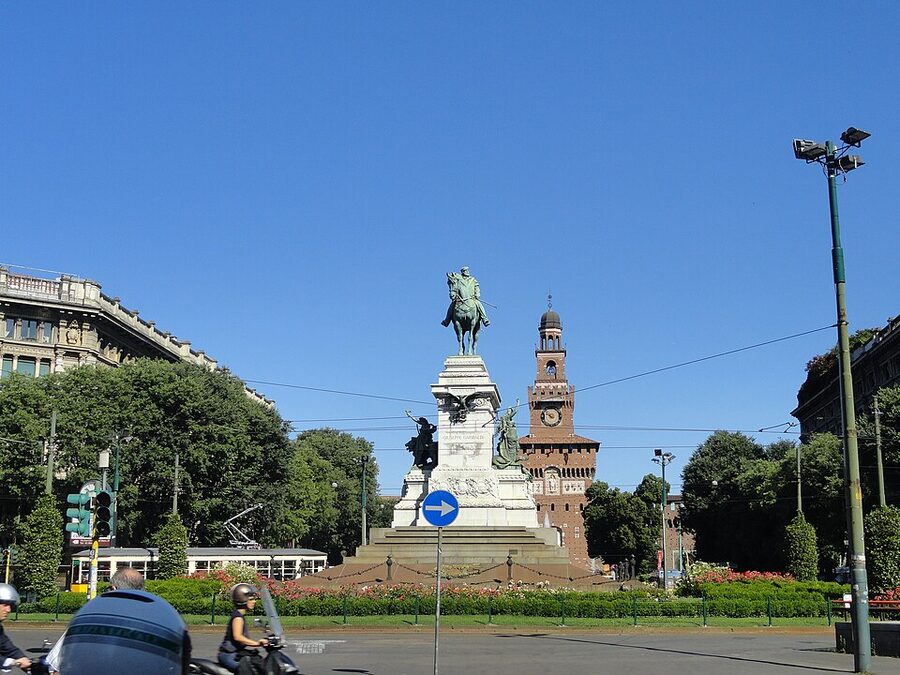
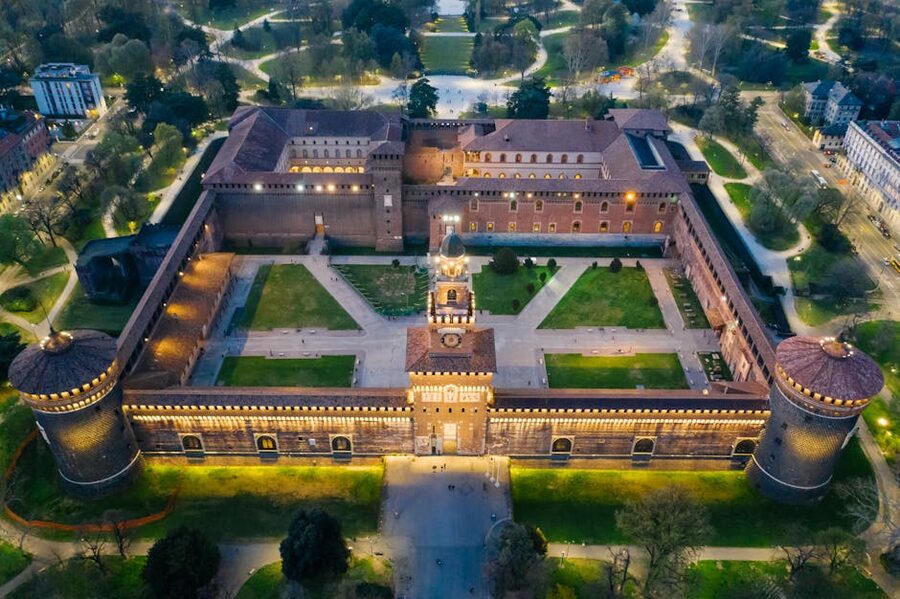
The other anchor. City Sightseeing departures actually start here, not at the Duomo. The Sforza Castle entrance is across the road, the Sempione park rolls out behind it, and Largo Cairoli has the metro stop and several bus interchanges. If your hotel is anywhere west of the city centre, this is probably your boarding stop.
Cenacolo (Via Caradosso 6)
This is the stop for Santa Maria delle Grazie and Leonardo da Vinci’s Last Supper. The bus drops you a four-minute walk from the church door. But you cannot just walk up and get in. You need a Last Supper ticket booked weeks in advance. Without one, this stop is a five-minute photo opportunity at the church facade and a hop back on the next bus. Our Last Supper booking guide covers how far ahead you need to book and what the alternatives are if it’s sold out.
Stazione Centrale (Blue Line)
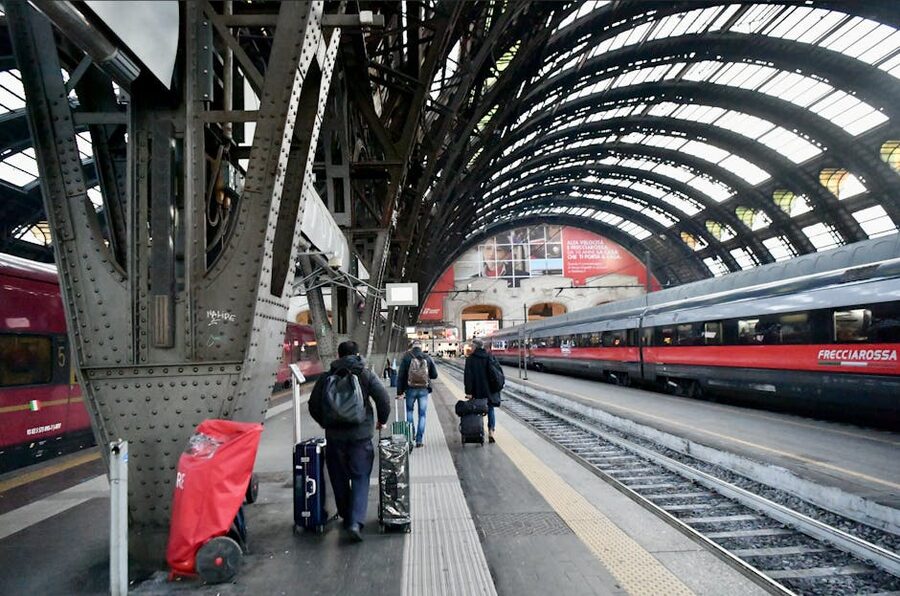
Useful only on the Blue Line. If you’re train-bound for Lake Como or the Bernina Express, this is how you ride into central Milan straight from your luggage drop. Pick up a return bus at Castello later. Worth knowing if you’re combining Milan with a Bernina Express day trip or a Lake Como excursion the next day.
La Scala (Via Manzoni 6)
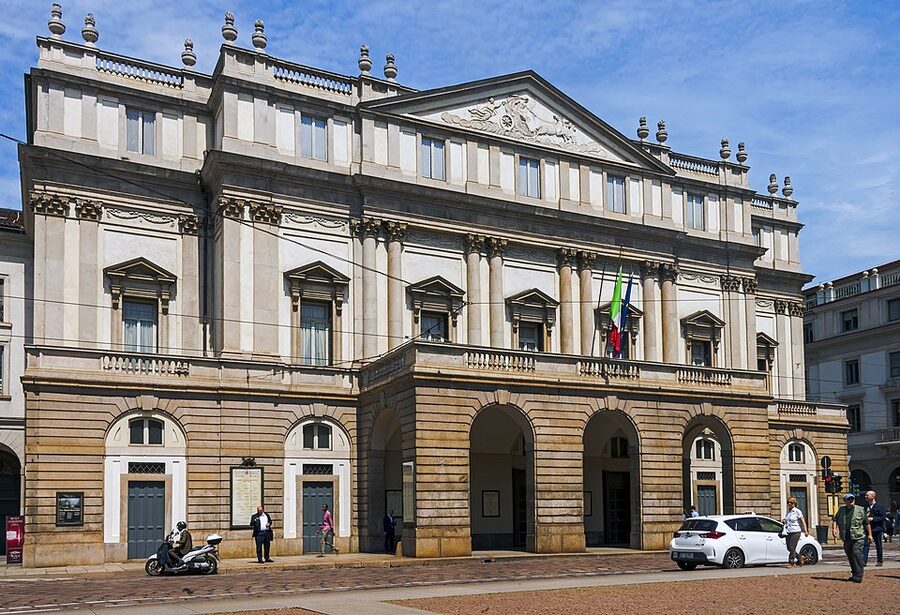
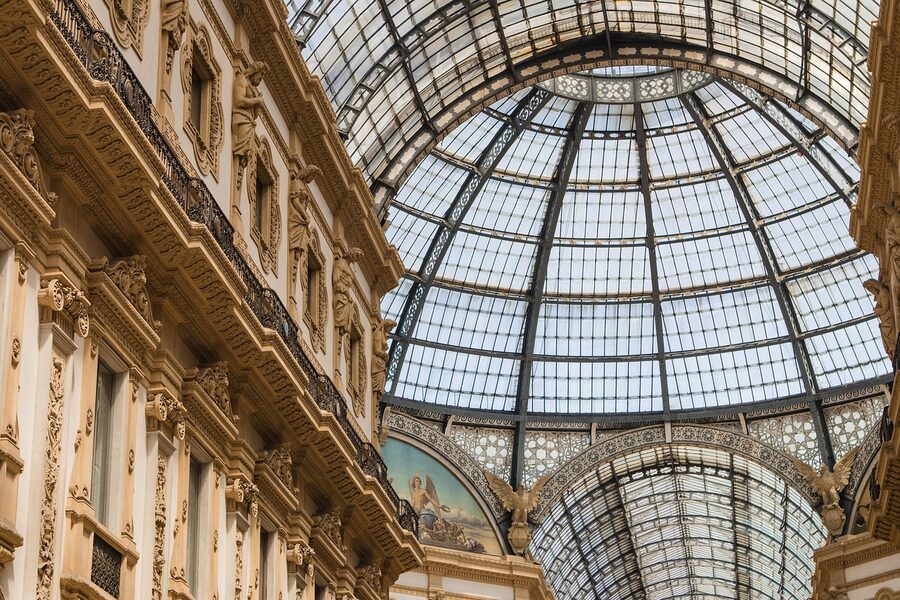
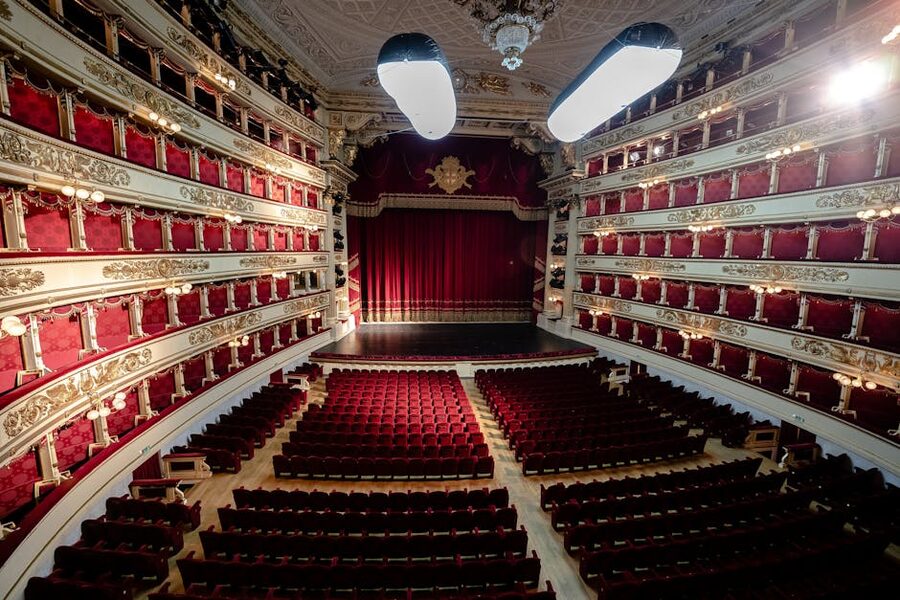
One stop after the Duomo on most routes. The opera house museum is small but excellent, and on a hot afternoon it’s mostly empty because everyone else is queuing for the Duomo rooftops. There’s also a combined La Scala + HOHO ticket if the museum was already on your list anyway, which packages both at a small saving.
Quadrilatero della Moda (Open Tour Fashion Line)
If shopping is part of why you’re in Milan, the Open Tour Fashion Line is the one. It loops through Via Montenapoleone and the surrounding fashion grid, then peels off through Brera and the design district. City Sightseeing skirts the edge of these neighbourhoods but doesn’t go through the heart of them.
Best Milan hop-on hop-off tours we’d actually book
Three options worth your money. Same skeleton in each case, different operator and detail.
1. City Sightseeing Milan Hop-On Hop-Off with Audio Guide: $26
This is the workhorse. Pick this if you want maximum coverage on a single ticket and if real-time bus tracking matters to you. Our full review covers the route quirks and which loop to ride first if you only have one day in Milan.
2. Milan Hop-On Hop-Off Bus Ticket for 24, 48, 72 Hours: $29
Pick this one if you want a hostess on board and USB charging at every seat. The simpler two-line map is also a relief if four-route grids stress you out. Our review walks through the boarding-slot system and which slot is best for the Highlights Line.
3. City Sightseeing Milan Hop-On Hop-Off via Viator: $27
Identical product, different storefront. Worth a look only if you’re already inside the Viator ecosystem, otherwise default to pick 1. Our deeper take compares the booking flow and refund handling on both platforms.
How to choose a duration: 24, 48, or 72 hours
This is where most people overthink it. Here’s the short version, based on how long you’re actually in Milan and how much else you’ve already booked.
24 hours: short visit, one full day. Pick the loop you most want. With City Sightseeing that’s the Red Line, with Open Tour the Highlights. Don’t try to squeeze every route into one day. You’ll spend more time on buses than off them.
48 hours: ideal for most travellers. Day one for the Red/Highlights loop, day two for the Blue Line up to Stazione Centrale and Porta Nuova or the Fashion Line. You can take real lunch breaks. You can do the Last Supper, the Duomo rooftops, and a Sforza museum without rushing.
72 hours: only worth it if you have three full days, or if you’re booking a summer weekend on City Sightseeing for the bundled Night Tour. The marginal cost over 48 hours is small (about €5), but you need to actually use that third day or it’s wasted. It also pairs well with day trips, since the Blue Line drop-off at Stazione Centrale doubles as your route to the train station.
Best value pick
If you’re staying two nights and three days in Milan, the 72-hour ticket on City Sightseeing booked Friday-Sunday in summer is the best deal in this category. It’s about €35 adult and gets you four routes plus the night loop. The night route is genuinely worth riding for the Sforza and Duomo lit up.
Where to actually catch the bus
Both operators publish stop lists with addresses, and both list way more stops than you actually need. Here are the four boarding hubs that handle most of the traffic.
- Largo Cairoli (Foro Bonaparte 10/12): City Sightseeing’s main starting point. Metro M1 Cairoli, in front of Sforza Castle. The kiosk on the square handles ticket exchanges and questions.
- Piazza Duomo (in front of #17): Both operators stop here. Easiest place to board if your hotel is in the historic centre.
- Stazione Centrale: Blue Line only (City Sightseeing). Useful if you’ve just arrived and want to ride into the centre on the open top instead of the metro.
- Piazza Castello / Foro Bonaparte: Open Tour’s pickup zone, two minutes’ walk from Cairoli. Don’t confuse it with the City Sightseeing stop.
If a stop on the route map is closed for an event (Olympic-related closures, marathons, fashion week), the bus skips it without warning. The app shows live route changes for City Sightseeing. Open Tour relies on a paper notice at the stop and the hostess on board, which is mildly old-school but tends to work fine.
What you’ll actually see from the top deck
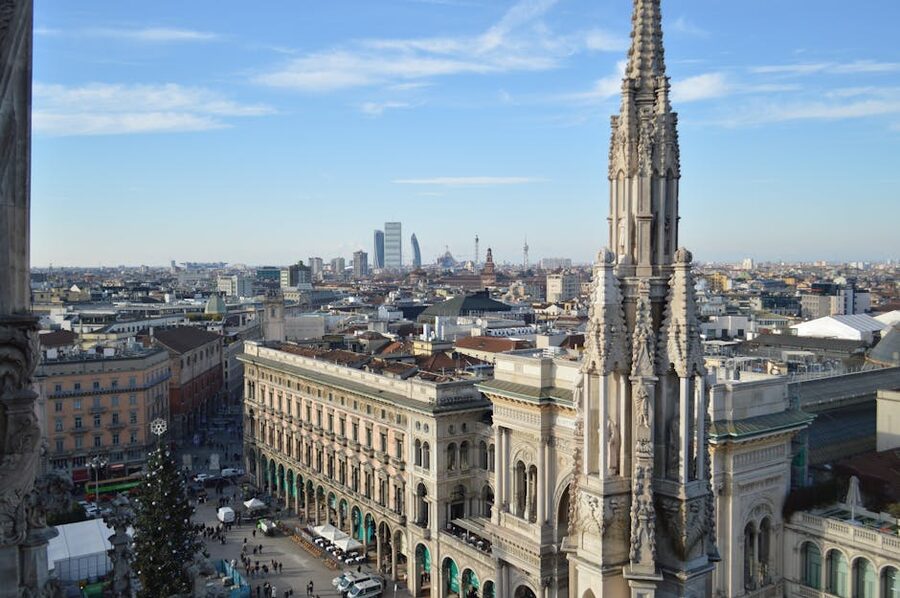
The order of sights from a Red Line ride out of Cairoli, in case you’re wondering whether the visuals justify the price. Each section gets a brief look from the bus, with the option to hop off if something grabs you.
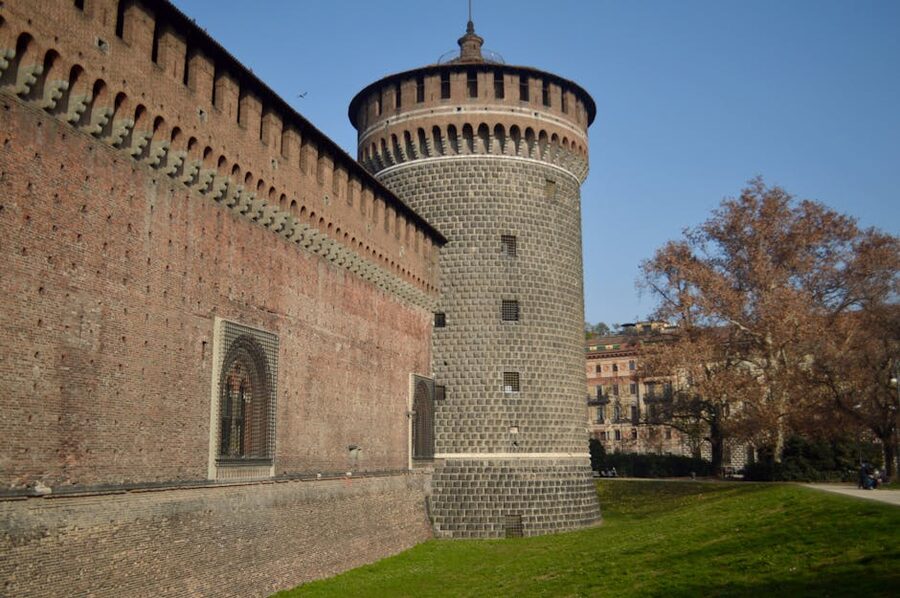
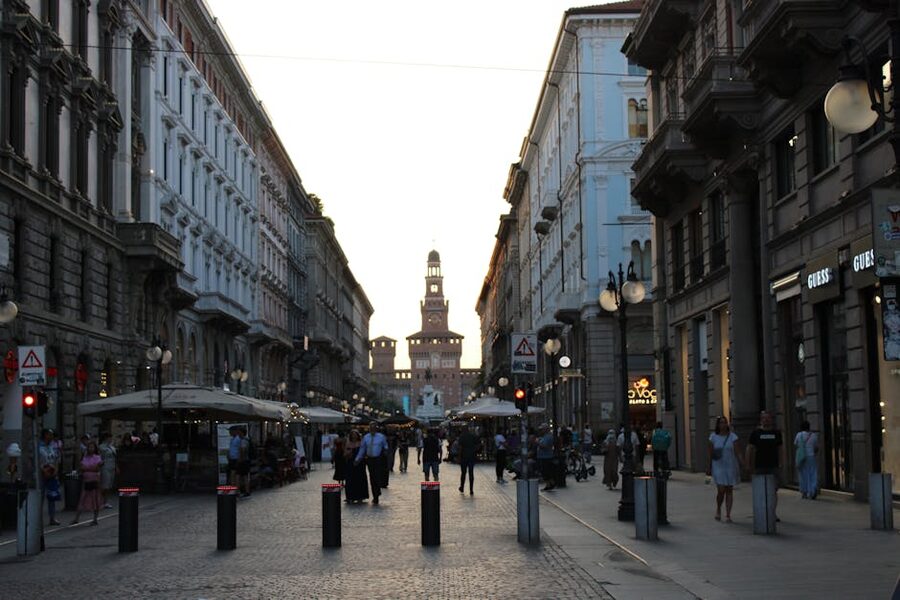
You leave Cairoli, pass the side of the Sforza Castle, run up Via Boccaccio toward Cadorna. Then a short hop to the Cenacolo stop, where Santa Maria delle Grazie and the Last Supper sit. The bus then turns east toward the Duomo, passing the Piccolo Teatro on the way. The Duomo stop hits you right in front of the cathedral’s south flank.
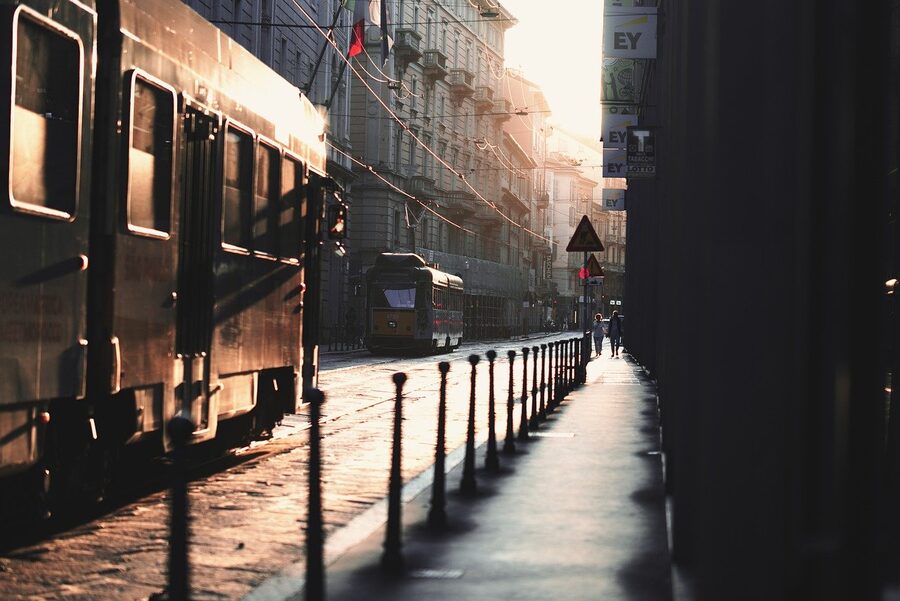
From the Duomo the loop swings up Via Manzoni past La Scala, then through the Manin and Moscova districts where the bus crosses the canal-end of Porta Nuova. The Brera area gets a glimpse but no stop on the Red Line. By the time you’re back at Castello, about 50 minutes have passed and you’ve seen the city’s spine.
Practical notes the operators don’t tell you
Buses get hot. By 1pm on a sunny April or summer day, the metal seat-rails on the top deck are seriously warm. Bring a light cover for them or sit further back where the awning provides shade.
The audio is hit-or-miss in the wind. Open-top buses + Milan traffic + a 20kph wind = parts of the audio commentary disappear. Stick to one ear if you can.
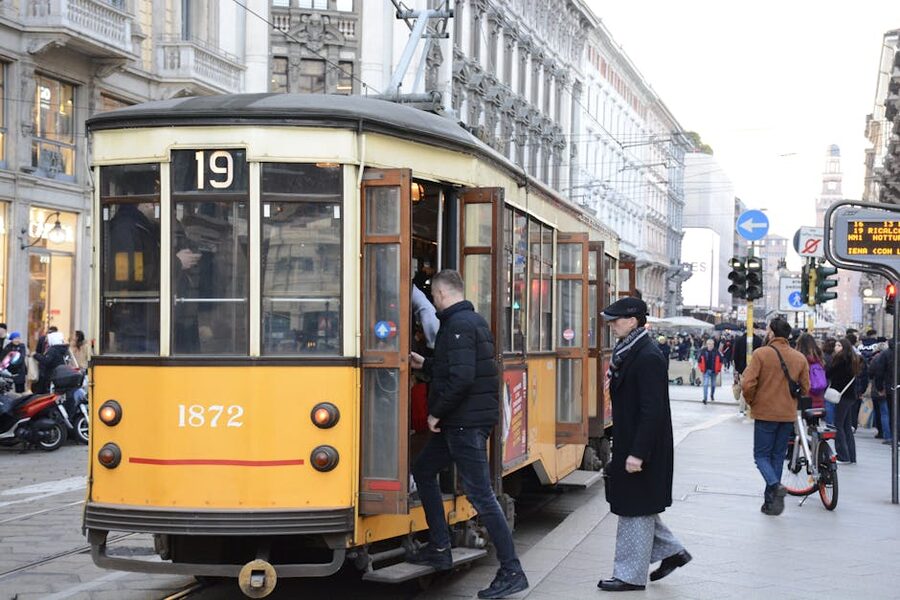
Headphones are disposable. They’re hygienic and a fresh pair every boarding. They also sound thin. If you care about the audio quality, bring your own 3.5mm headphones.
Olympic schedule disruptions. Routes are still being adjusted around the 2026 Winter Olympics. Yellow Line’s stop 8, Red Line’s stops 6-7 and Blue Line’s stop 3 closed early on February 2. Everything ran on a 14:00 cutoff on February 6. Check the operator’s app the morning of your ride if your visit is anywhere near a major event.
Combo tickets save real money. If you’re already paying to see the Duomo rooftops or La Scala, the combined ticket can knock €5-10 off versus separate purchases. Our Milan Duomo guide goes through the rooftop ticket variants and which combine with the bus and which don’t.
Quick history of sightseeing buses in Milan
Open-top tour buses in Milan are newer than you’d guess. The first official sightseeing service ran in the late 1990s as an extension of the city’s regular bus network. City Sightseeing, the Spanish-Italian operator, took over much of the route map in the early 2000s. Open Tour arrived later as a French entrant. Both adapted to the Italian market by leaning into double-deck stock built in the UK and Germany, retrofitted with audio systems for the Italian market.
The reason these buses use double-decker chassis at all is borrowed from London. The original idea was that you needed visible decks so tourists could spot the buses from a distance and so the photos sold themselves. It still works. Whatever else you can say about HOHO buses as a category, they make every postcard sight along the route slightly easier to find from street level.
Common questions about Milan HOHO tickets
Where do I buy tickets?
Online for the best price and a guaranteed seat at busy times. Both operators sell direct, and platforms like GetYourGuide and Viator stock the same tickets. You can also buy at the kiosk in Largo Cairoli or directly from the driver at any stop, but you’ll often pay €2-5 more and there’s no skip-the-queue benefit.
Do I need to print my ticket?
No. Mobile tickets work on both operators. Just show your phone when you board. The driver scans it, swaps you for a paper voucher, and hands you headphones.
Is one day enough to ride all the routes?
For Open Tour’s two routes, yes if you’re efficient. For City Sightseeing’s four routes, no. You’d be on a bus for most of the day with no time to actually hop off and see anything. Either go for 48 hours or pick two of the four routes and skip the rest.
Can I change my booking date?
Yes. Both operators allow free rescheduling up to 24 hours before your first ride. Beyond that you’re stuck with what you booked.
How does the ticket clock work?
It starts on first scan. Buy a 24-hour ticket today, board first at 17:00, ride until 17:00 tomorrow. The hours don’t run from the time of purchase or from the calendar date.
Are there discounts for kids?
Kids aged 5-15 pay €10 with either operator, regardless of duration. Under 5s ride free without a separate ticket. Family pricing is one of the better-value parts of these tickets.
What if I miss the last bus of the day?
You’re on the metro or in a taxi. Last departures are typically 16:40-17:00 from the central stops, depending on operator and route. The metro runs until about 00:30. There’s no all-night HOHO service in Milan.
Where to keep planning your Milan trip
If a HOHO ticket is part of a wider Milan plan, the next two pieces to lock in are usually the Duomo and the Last Supper. The Duomo rooftop tickets are easier to grab last-minute but the timed slots can sell out a week in advance in summer; our Milan Duomo and rooftop guide walks through which ticket type makes sense for each kind of visit. The Last Supper is the harder one. Tickets for Santa Maria delle Grazie open about three months ahead and disappear within a day or two for popular weeks, and our Last Supper booking guide is the place to start before you firm up dates. If you’re using Milan as a base for a day trip, Lake Como is the obvious one and the Bernina Express is the more dramatic choice. For the Da Vinci side of the city, our guide to the Milan Da Vinci museums picks between the two main options. And if you’ve got an evening free, a slow drift along the canals on a Navigli boat cruise is a different angle on the city than anything you’ll get from the bus.