
Here is the thing most guides forget to mention: if you walk into Gyeongbokgung Palace wearing a hanbok, you get in for free. That tiny rule quietly turns a photo session into the cheapest palace ticket in Seoul, and it is the reason there are professional hanbok photographers waiting by the palace gates every morning of the year.
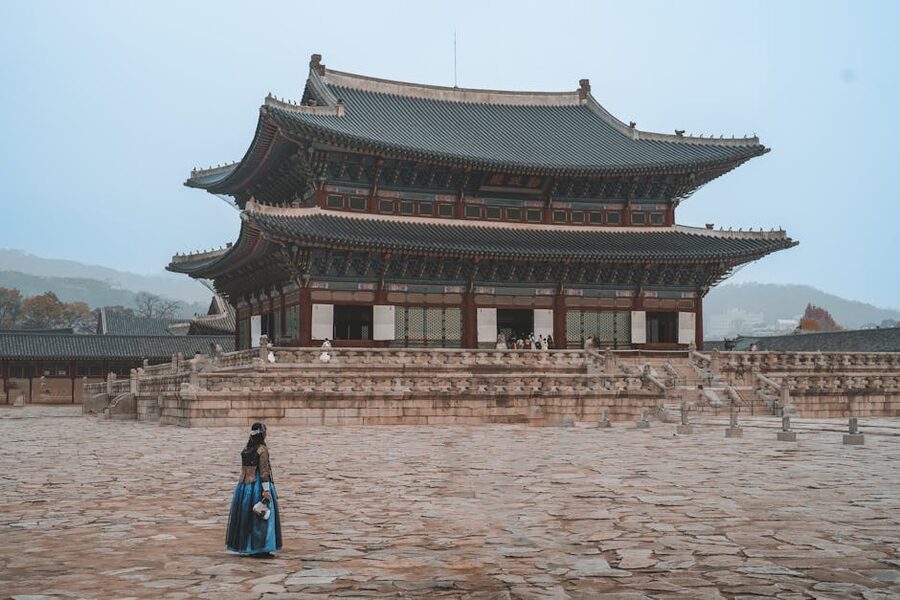
Pro hanbok photoshoots are a different beast from the DIY rental you might have seen on TikTok. You get a photographer who knows exactly where the afternoon light lands, a planned route around the palace grounds, and edited images that do not look like someone took them on a phone. This guide is how I would book one now, plus the three sessions I would actually send a friend to.
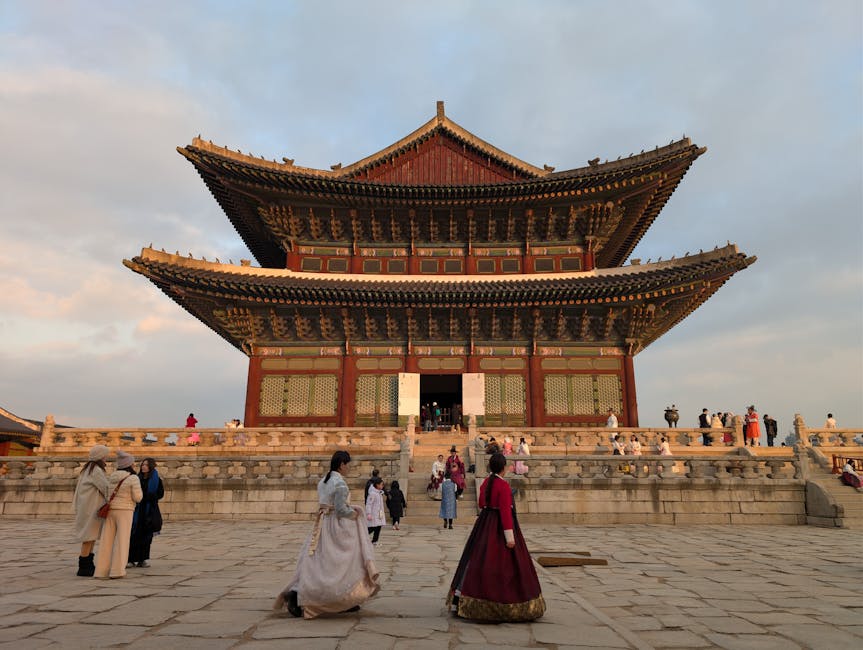
In a hurry? My top 3 Seoul hanbok photoshoot picks
- Hanbok Photoshoot and History Tour at Gyeongbokgung — from $60. The best-value professional session, history guide included. Check availability
- Korea Gyeongbokgung Palace Professional Hanbok Photography — from $109. Award-winning photographer Yong. The one to book if you want magazine-style images. Check availability
- Gyeongbokgung Hanbok Photoshoot Private Package — from $100. A private photographer and route for couples or families. Check availability
- In a hurry? My top 3 Seoul hanbok photoshoot picks
- Photoshoot vs rental: do you actually need a pro?
- The free palace entry trick (and why it matters)
- Where the photoshoots actually happen
- The 3 hanbok photoshoots I would actually book
- 1. Hanbok Photoshoot and History Tour at Gyeongbokgung Palace — from
- 2. Korea Gyeongbokgung Palace Professional Hanbok Photography — from 9
- 3. Gyeongbokgung Hanbok Photoshoot Private Package — from 0
- When to book, and how far ahead
- What a typical photoshoot day looks like
- What to wear under the hanbok (the part nobody warns you about)
- The Hanbok Advisor rule: let them pick your outfit
- How to pick between photographers
- Best time of day to book the shoot
- The short history: why hanbok at the palace is a thing
- Booking through a marketplace vs direct
- Common mistakes I see first-timers make
- Make a proper afternoon of it
Photoshoot vs rental: do you actually need a pro?
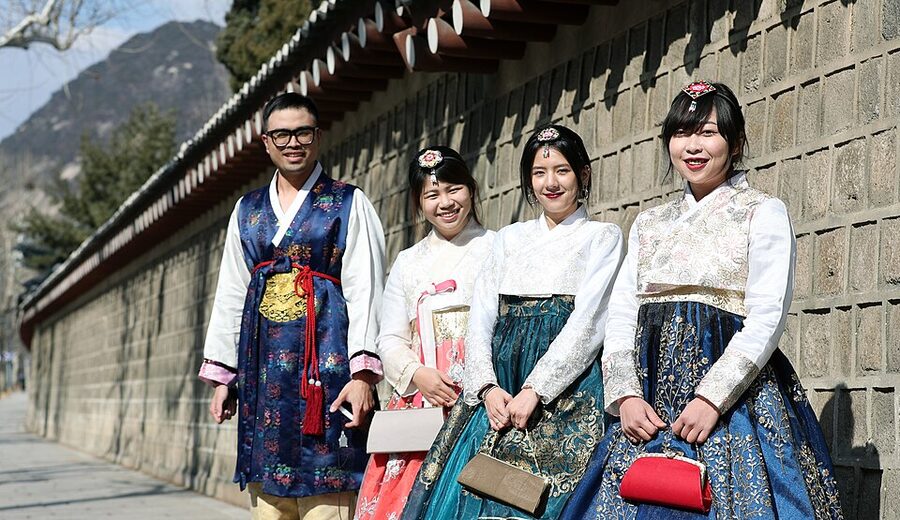
A rental gets you dressed. A photoshoot gets you photos you actually want to print. Those are two very different souvenirs and you should know which one you are buying before you pay for either.
If you just want to wander Gyeongbokgung in traditional dress and take phone pictures with friends, skip the pro shoot and read my separate guide to booking a hanbok rental in Seoul. The rental route costs about $6 to $15 and you can roam the palace for hours. What you will not get is an editor cleaning up the tourist in the background of your best shot, or a photographer who knows which courtyard has the clean wall for close-ups.
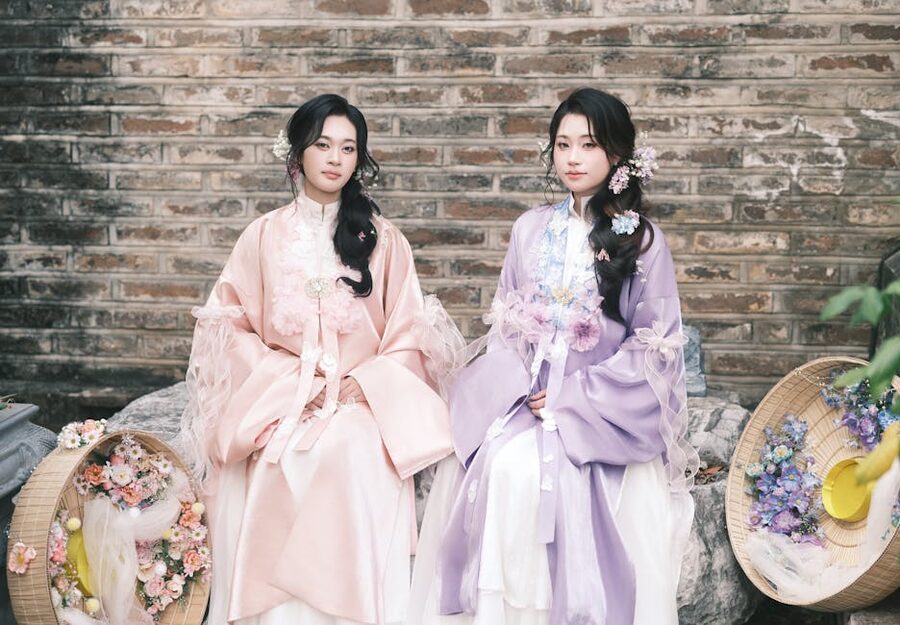
A pro shoot runs from about $23 for a short cinematic session to $150 or more for a two-hour private package with a team. The base cost gets you the photographer, the edit, and usually 20 to 50 delivered images. Most packages do not include the hanbok itself. That is an extra $10 to $40 depending on style and rental hours, which sounds like a catch until you realise you would want the nicer dress anyway.
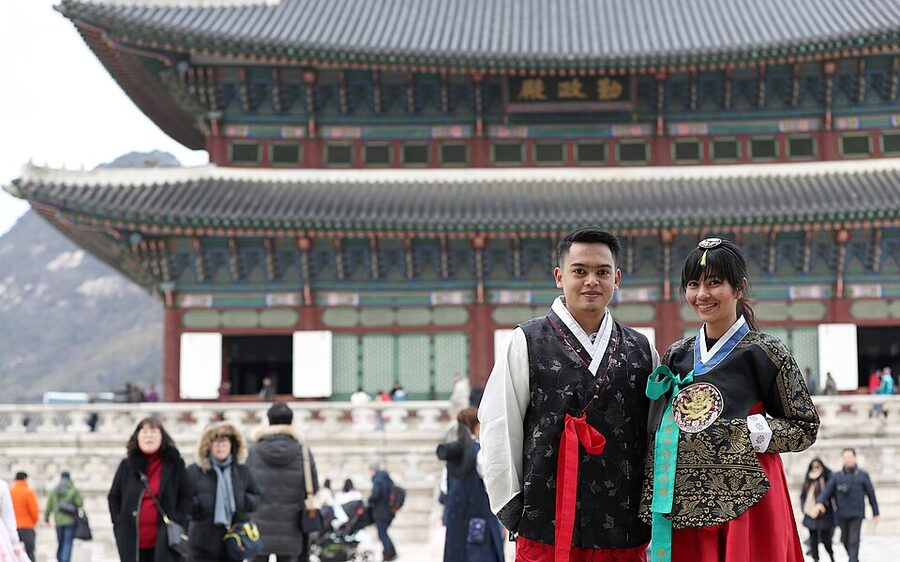
My rule: if this is a honeymoon, a proposal, a 50th birthday trip, or a first visit to Korea you are going to tell stories about for years, book the pro. If it is a Tuesday afternoon and you just want to play dress-up, the rental is plenty.
The free palace entry trick (and why it matters)
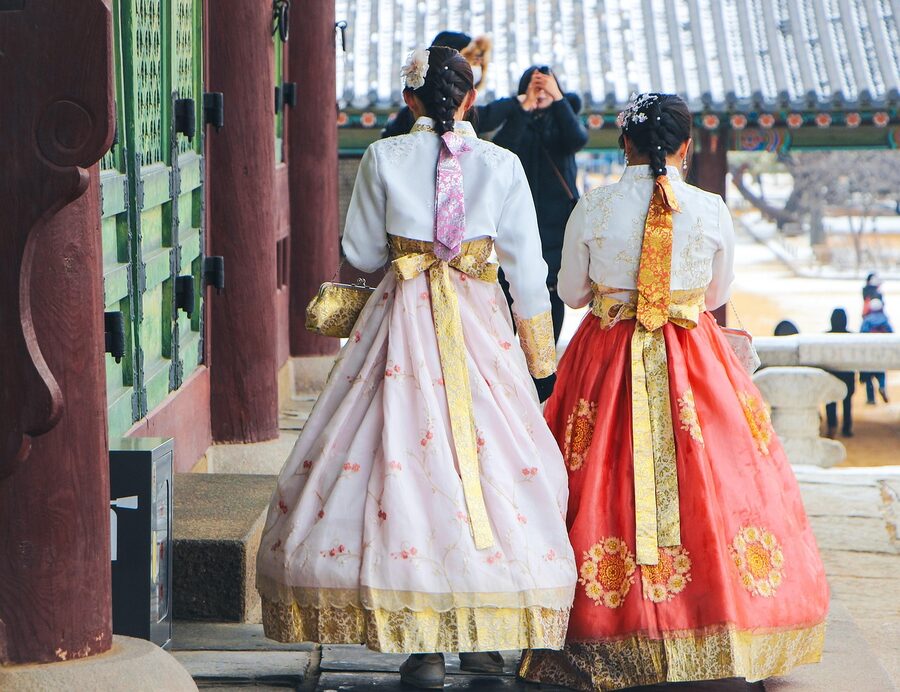
The Cultural Heritage Administration lets anyone in hanbok enter four Seoul palaces free: Gyeongbokgung, Changdeokgung, Deoksugung, and Changgyeonggung. Also Jongmyo Shrine. This is not a discount, it is a full waive on the entry ticket, and it was set up to help keep the tradition alive.
For a photoshoot this matters more than it sounds. Your shoot slot is usually 60 to 90 minutes. If you queue and pay at the ticket booth, you lose ten of those minutes immediately. Walk in in hanbok, nod at the staff, and the whole slot is yours. The photographer picks up the saved time in the best courtyards instead of standing in line with you.
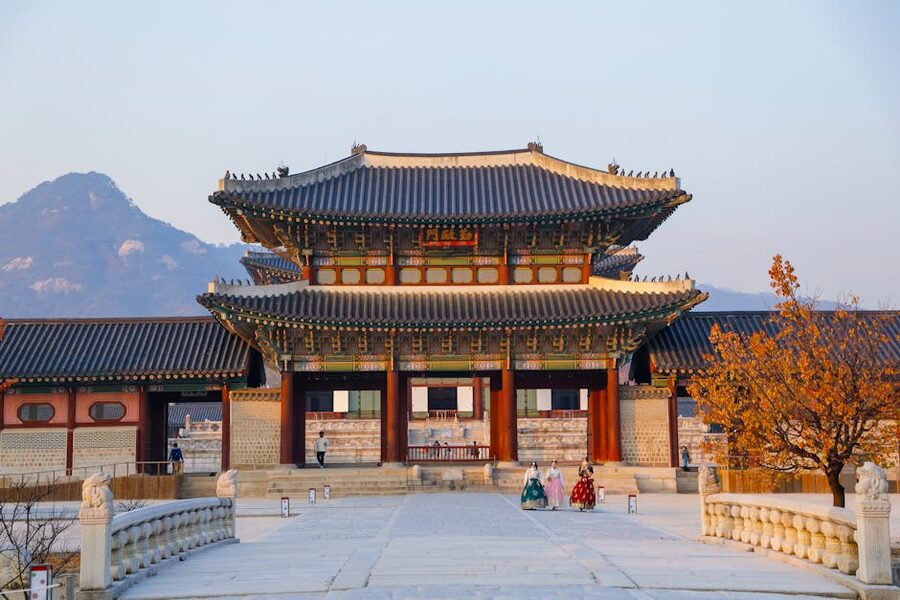
One catch. “Hanbok” here means traditional style. The palace guards have been known to turn back fusion hanbok, reality-show hanbok, and the cheap nylon versions that barely touch the ground. Stick with the classic long skirt or the matching male top and trousers from a reputable rental shop and you will sail through. Your photographer can tell you which shop to use.
Where the photoshoots actually happen
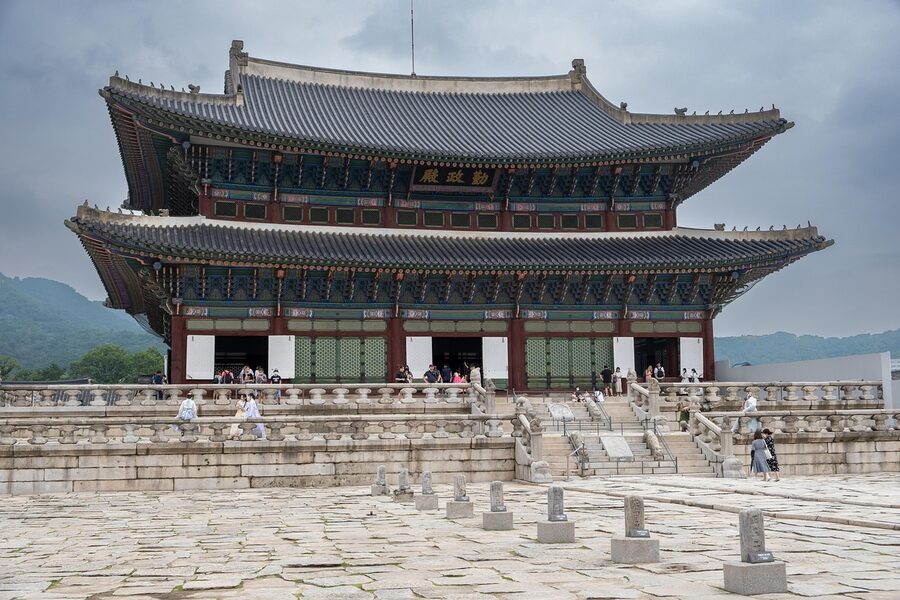
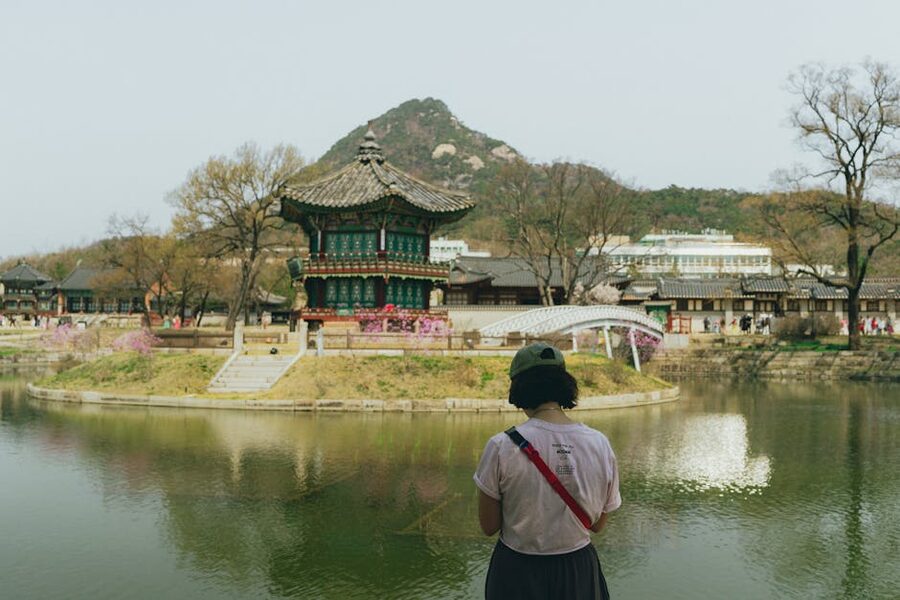
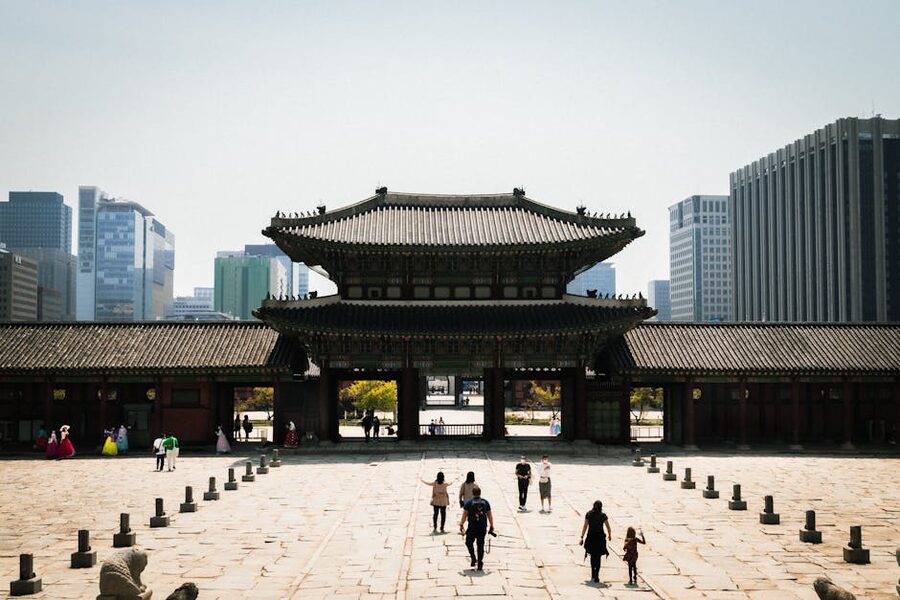
Gyeongbokgung is the default. It is the biggest, the most recognisable, and it has enough square metres of courtyard that your photographer can always find a quiet corner. Most packages in this guide use it as the main location.
That said, you have options. Here is what each one is good for:
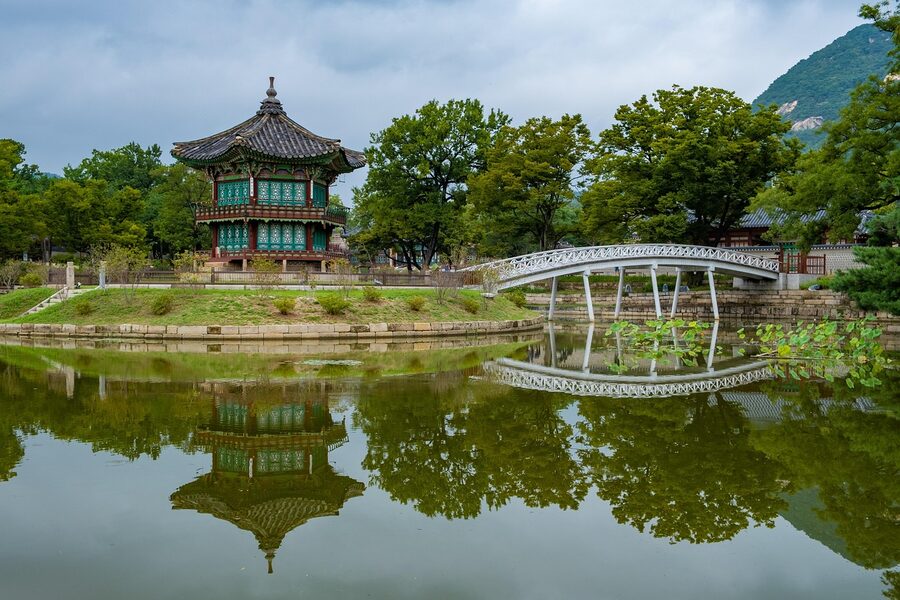
Gyeongbokgung Palace. Grand throne halls, sweeping stone courtyards, the iconic Gwanghwamun gate shot. Best for royal-style photos, bold group compositions, and anyone who wants the images people will immediately recognise as Seoul.
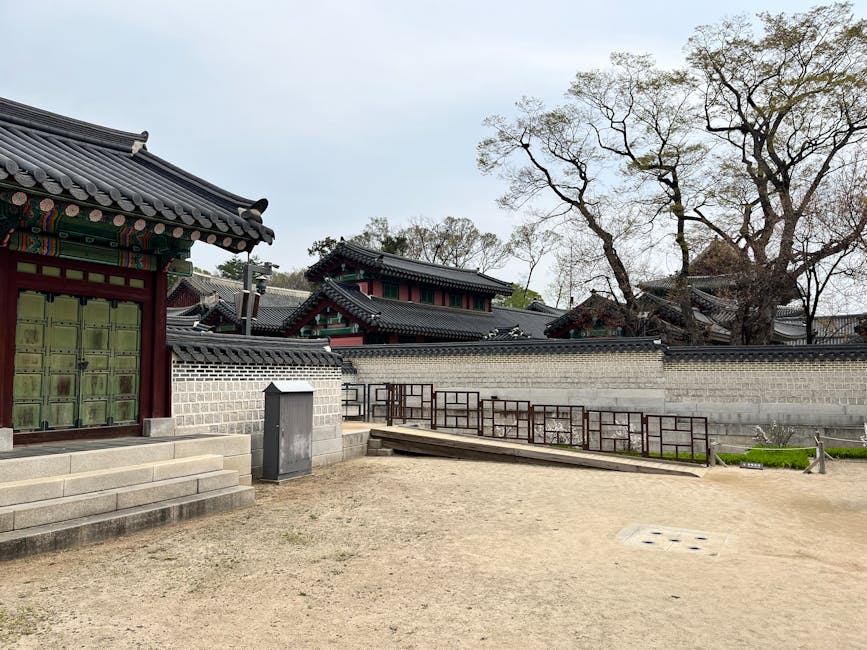
Changdeokgung Palace. UNESCO-listed and a fifteen-minute walk east of Gyeongbokgung. It feels older and more lived-in. Book this palace if you want quieter lanes, the Secret Garden path, and the kind of cinematic frames that do not scream “tourist site.”
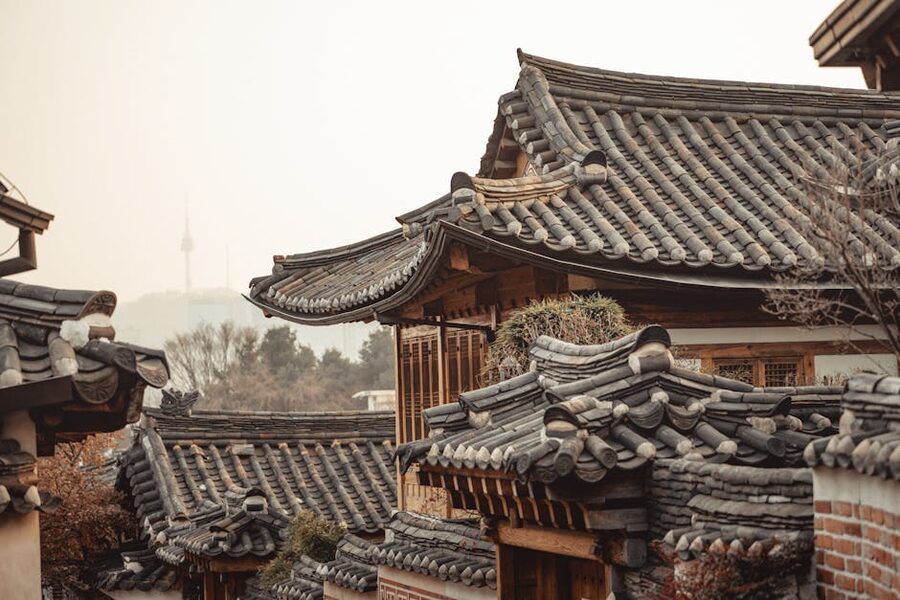
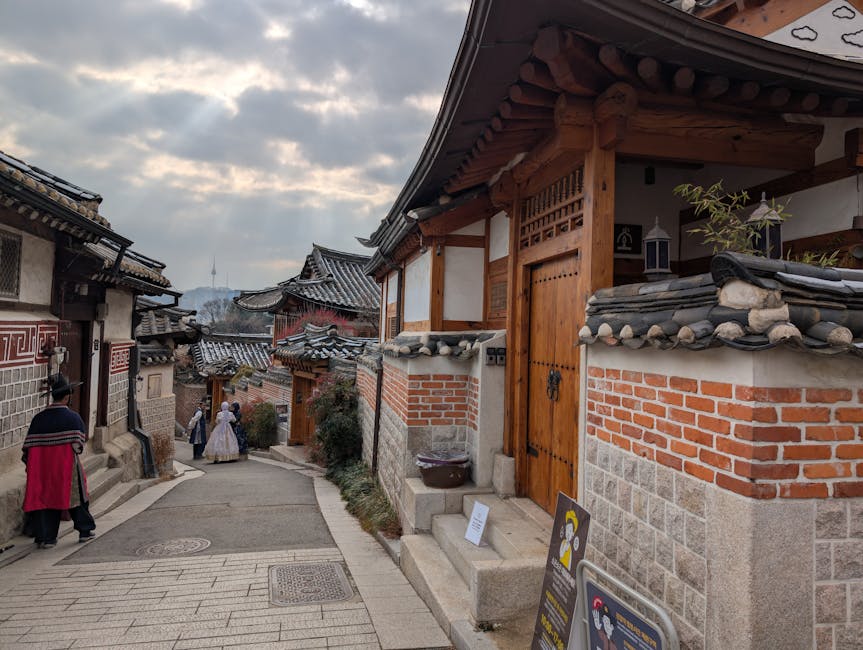
Bukchon Hanok Village. A preserved neighbourhood of wooden hanok houses between Gyeongbokgung and Changdeokgung. Narrow stone lanes, tiled roofs, the view down toward the city that shows up on every Korea tourism poster. Best for intimate couple shots, storybook family pictures, and lifestyle frames that look less formal than palace shots. The residents deserve respect, so keep voices low after 5pm.
Deoksugung Palace. Smaller, right in the middle of downtown, next to a row of Western colonial buildings. Good for shorter sessions on a layover, and there is less queueing. The palace is less photogenic overall but the changing-of-the-guard ceremony here is great if your slot aligns.
Most pros will build a route that covers two to three locations inside a single palace, or one palace plus a short walk into Bukchon. Ask upfront if they will mix locations. The packages I recommend below all bundle multiple spots inside Gyeongbokgung, which in my experience gives you more variety than one palace plus one rushed Bukchon stop.
The 3 hanbok photoshoots I would actually book
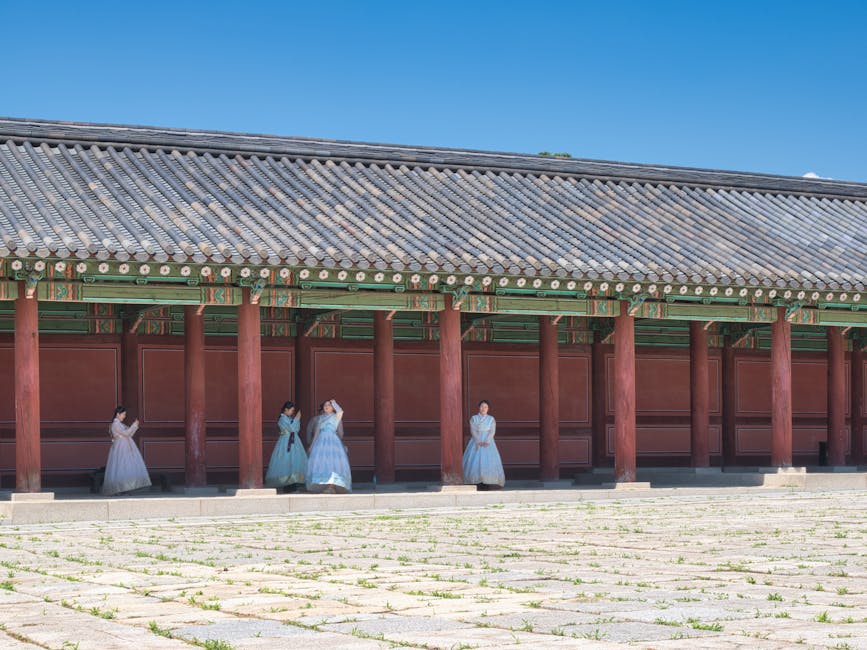
There are dozens of hanbok shoot listings on GetYourGuide and Viator and honestly most of them are fine. These three are the ones that keep coming up as the sessions people are actually happy with after the fact.
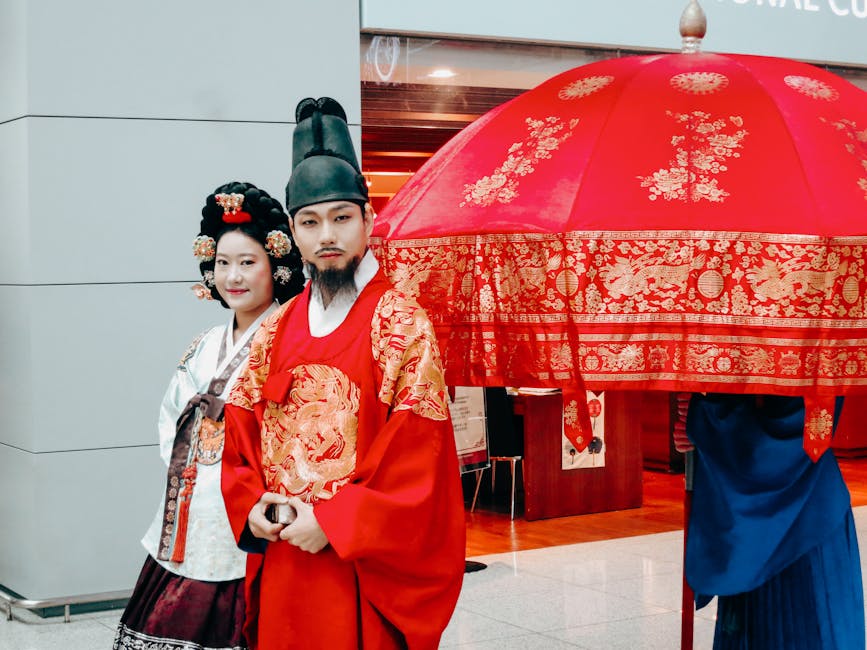
1. Hanbok Photoshoot and History Tour at Gyeongbokgung Palace — from $60
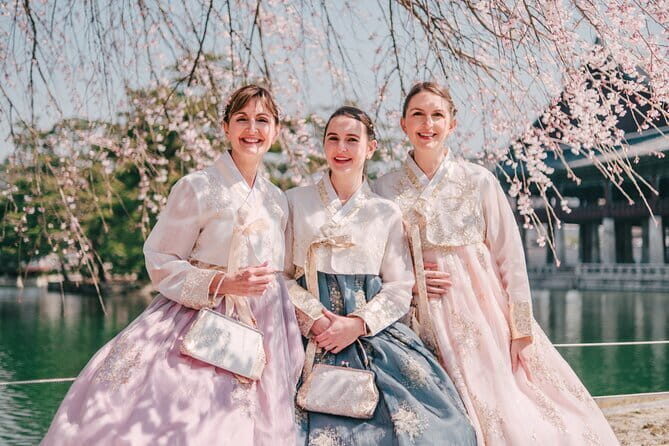
This is the one I would book first if I had never done a hanbok shoot before. You get a photographer and a small-group palace history tour in the same session, so you come away with the photos AND the story of what you are actually standing in front of. Our full review breaks down what is included in the $60 base tier. For the price it is the most reliable option in the city.
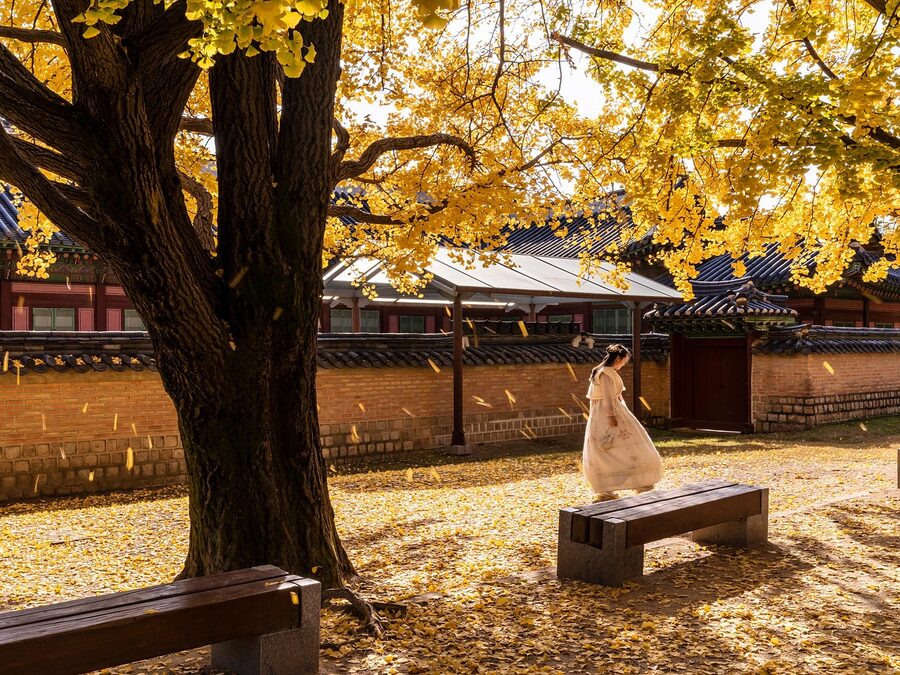
2. Korea Gyeongbokgung Palace Professional Hanbok Photography — from $109
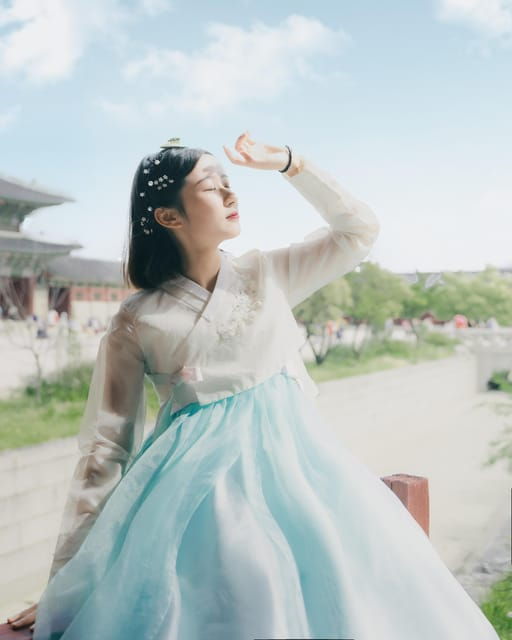
The photographer behind this one is an award winner named Yong and you can see the difference in the edits. Expect deeper colour grading, considered poses, and locations inside Gyeongbokgung that casual shoots never use. I go deeper on what makes Yong’s session different in our full review. It is the jump from “nice photos from our trip” to “we actually printed these.”
3. Gyeongbokgung Hanbok Photoshoot Private Package — from $100
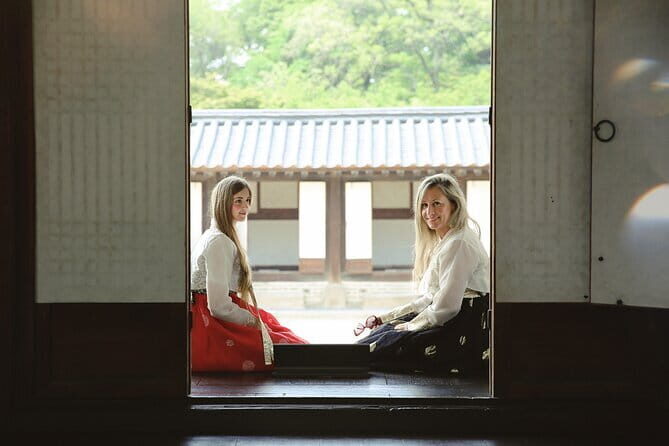
Pay a little more and get the photographer to yourself for the whole slot, plus a custom route through the palace. Our review has the details on what the private route actually looks like. This is what I would pick for a proposal, a 10-year wedding anniversary, or any shoot where I want complete control of the pacing.
When to book, and how far ahead
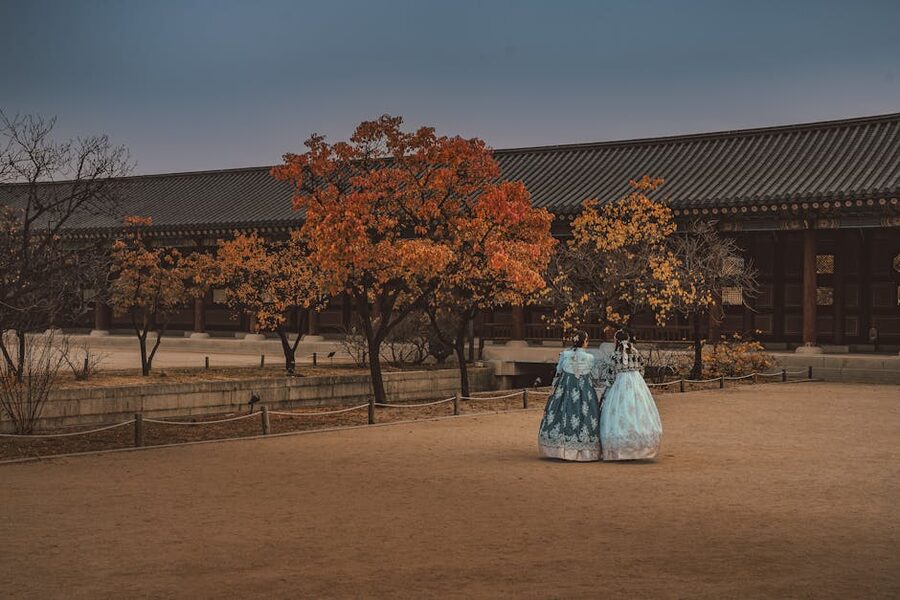
Two numbers to remember. Four weeks ahead for peak weekends in cherry blossom and autumn. One week ahead for everything else.
Peak is not a theory. Sakura hits Seoul around the first week of April and every hanbok photographer in the city is booked solid by early March. The same happens in mid-to-late October when the maples turn. If you are travelling in those windows, I would lock the shoot before the flights. Seriously.
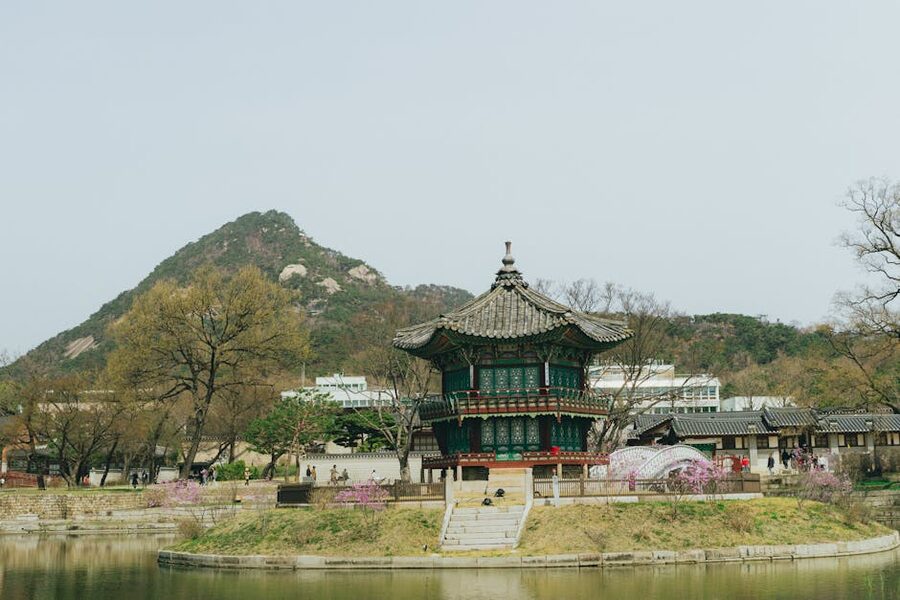
Off peak is easier. A weekday in February or August, I have seen same-day bookings on GetYourGuide with no trouble. Just know that quality varies a lot between photographers and booking ahead lets you pick the one with the portfolio you actually want, not whoever is still free.
Also: the photoshoot needs to match the palace’s opening hours. Gyeongbokgung closes on Tuesdays, Changdeokgung closes on Mondays. Your booking platform will usually grey out those days automatically but double-check if you are using a photographer’s own website.
What a typical photoshoot day looks like
I like to think of the day as three blocks: rental, shoot, rest.
Rental block (45 to 60 minutes). Arrive at the rental shop about two hours before the shoot starts. You will try on four to eight hanboks before landing on the one. The shops near Gyeongbokgung are used to this rhythm and the whole process is faster than it sounds, but do not arrive 20 minutes before your shoot or you will be running.
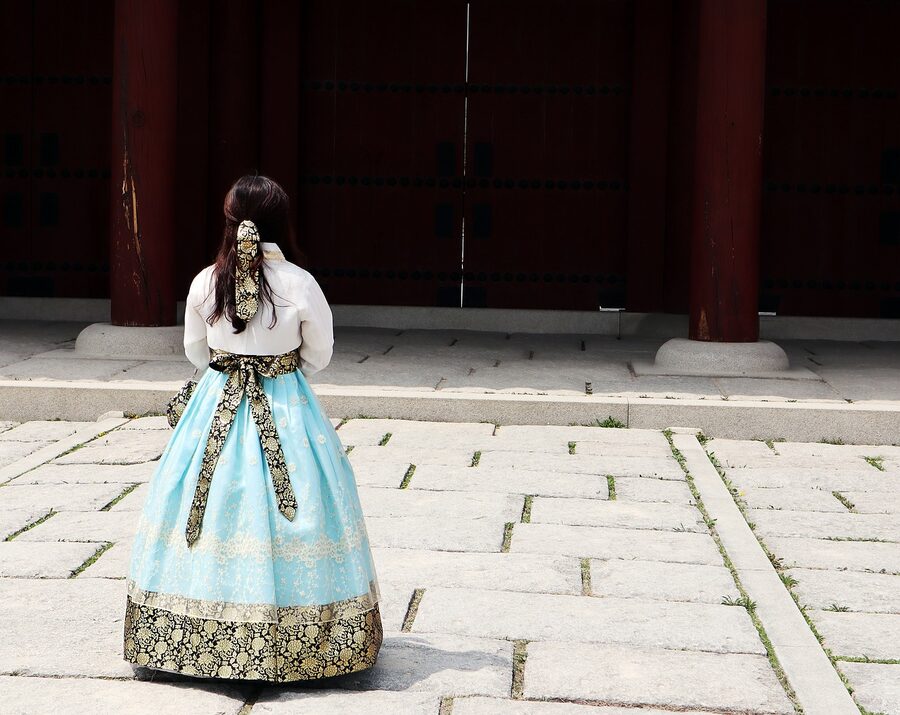
Shoot block (60 to 120 minutes). You meet your photographer at an agreed spot, usually Gwanghwamun gate. They walk you through the palace in a rough route, shooting at four or five locations. Expect the first ten minutes to feel awkward. That is normal. By location three you will have loosened up and those are the shots you will actually use.
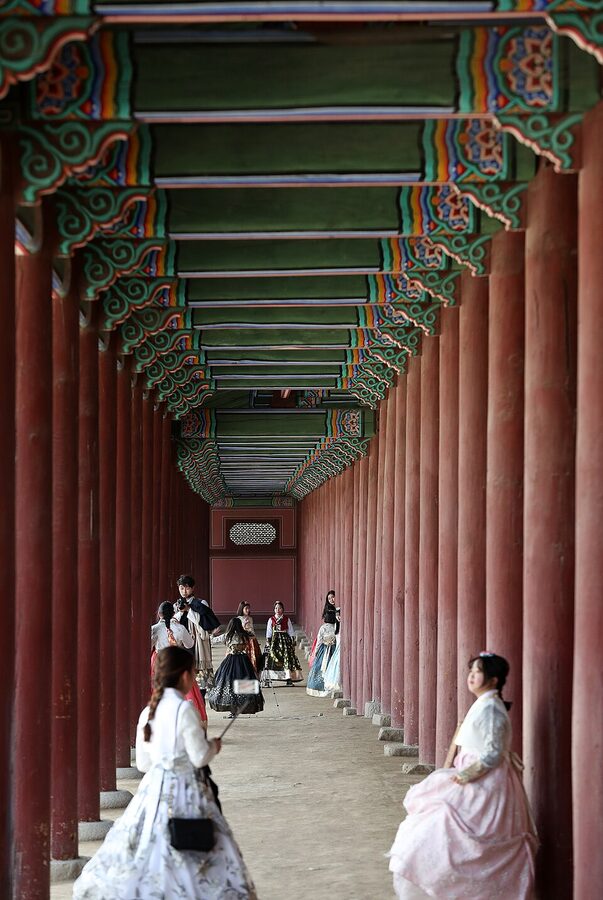
Rest block (rest of the day). After the shoot you hand the hanbok back at the rental shop and your photographer goes off to edit. Delivery varies. Some deliver within 72 hours, some take two weeks. Confirm before booking because two weeks means your photos land after you have flown home. Not a deal-breaker, but worth knowing.
What to wear under the hanbok (the part nobody warns you about)
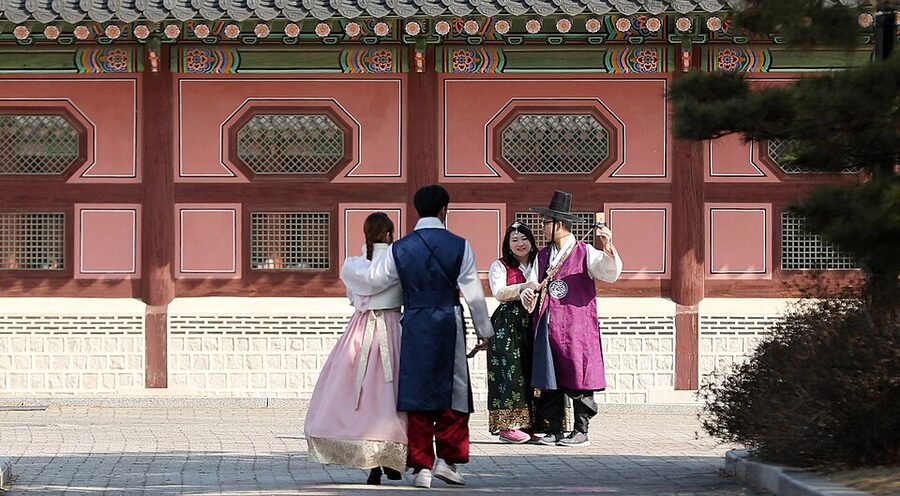
Nobody tells you this and then you show up and sweat through the whole shoot. A hanbok is layered. In summer it runs hot. In winter it is surprisingly thin.
My rules:
- Summer (June to August). A thin sleeveless top and short leggings or shorts underneath. Nothing cotton that will show sweat. The rental shop can offer a light slip but the one you bring yourself is always better.
- Shoulder seasons (March to May, September to October). A long-sleeve base layer. You will be out for 90 minutes and Seoul’s shade is cold even in May.
- Winter (November to February). Thermal leggings and a heat-tech top. You will also want an outer coat for the walk to the palace that you can stash with the rental shop. Your photographer might not wait while you peel off six layers.
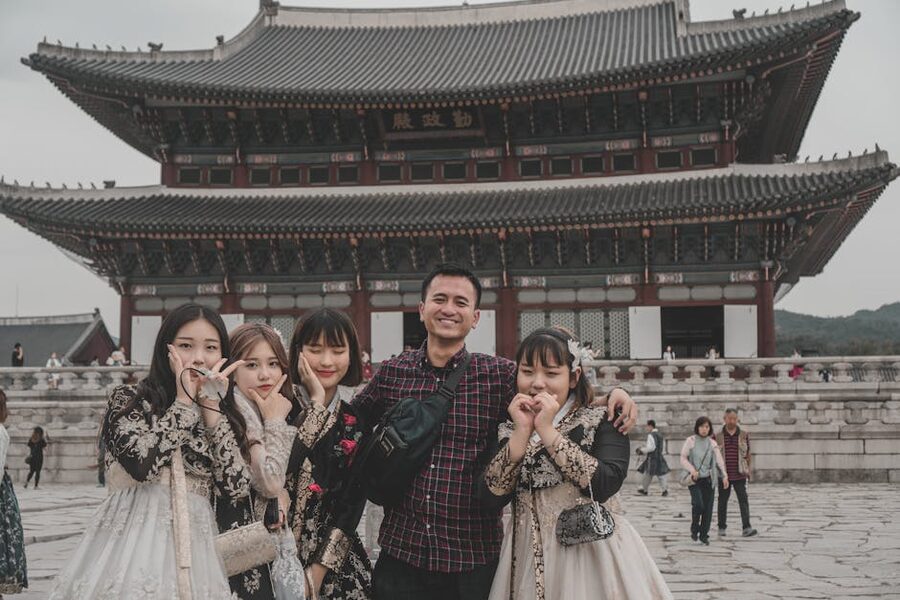
Shoes. The rental usually includes traditional gomusin, which are rubber slip-ons shaped like boats. They look great in photos but they are brutal on feet after an hour of walking stone. Bring flat ballet shoes or low trainers you can switch into for transit between spots, and slip the gomusin back on just before each shot.
The Hanbok Advisor rule: let them pick your outfit
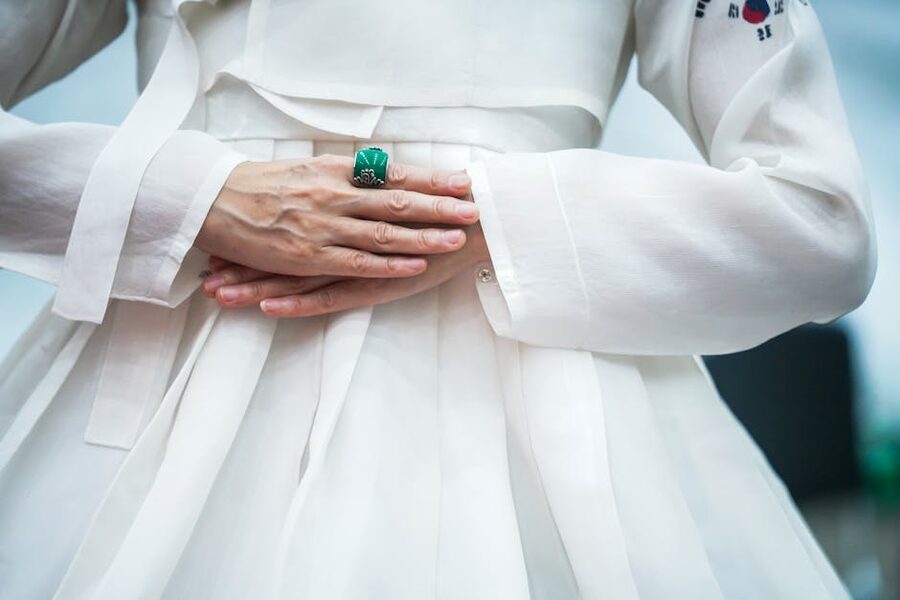
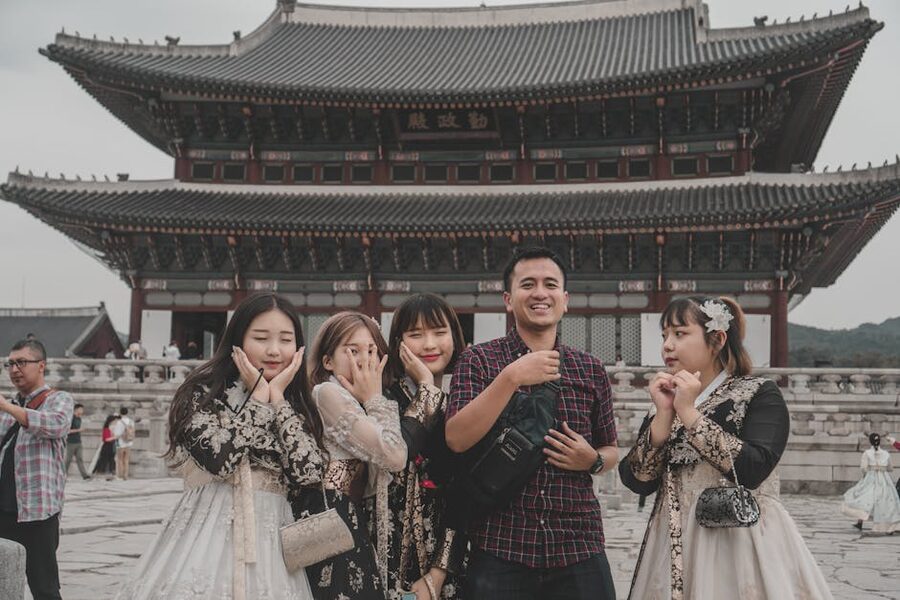
First-time hanbok shoppers all make the same mistake. They pick the brightest colour on the rack. It photographs muddy. High saturation on a modern screen does not always translate to great images, especially against the greys and reds of palace stone.
What works better, by a lot:
- Dusty pastels: jade, sage green, lilac, powder blue, dusty rose. These sit gently against palace walls.
- Rich jewel tones: deep burgundy, emerald, navy. These pop in autumn light.
- White with a coloured jeogori (top): the classic “princess” look and it almost never photographs wrong.
What to avoid: neon pink, electric yellow, and anything with a modern glitter finish. They photograph cheap even on expensive hanbok.
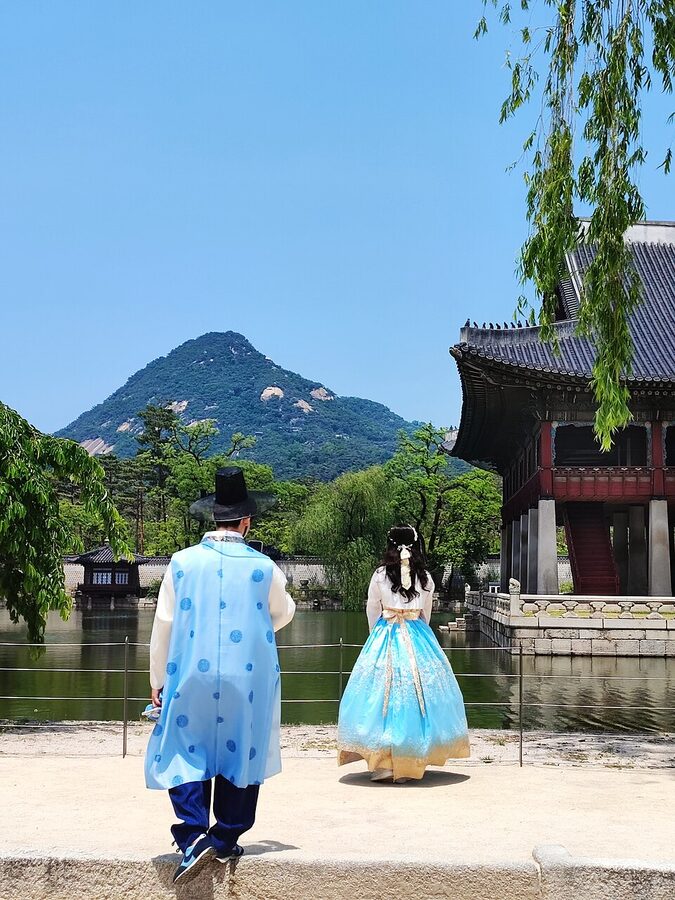
The trick I use: I tell the shop I want to be photographed at Gyeongbokgung, and I let them pick the top two options. The staff see the returned photos every day. They know which combinations pop and which disappear against the red wall paint. Listen to them.
How to pick between photographers
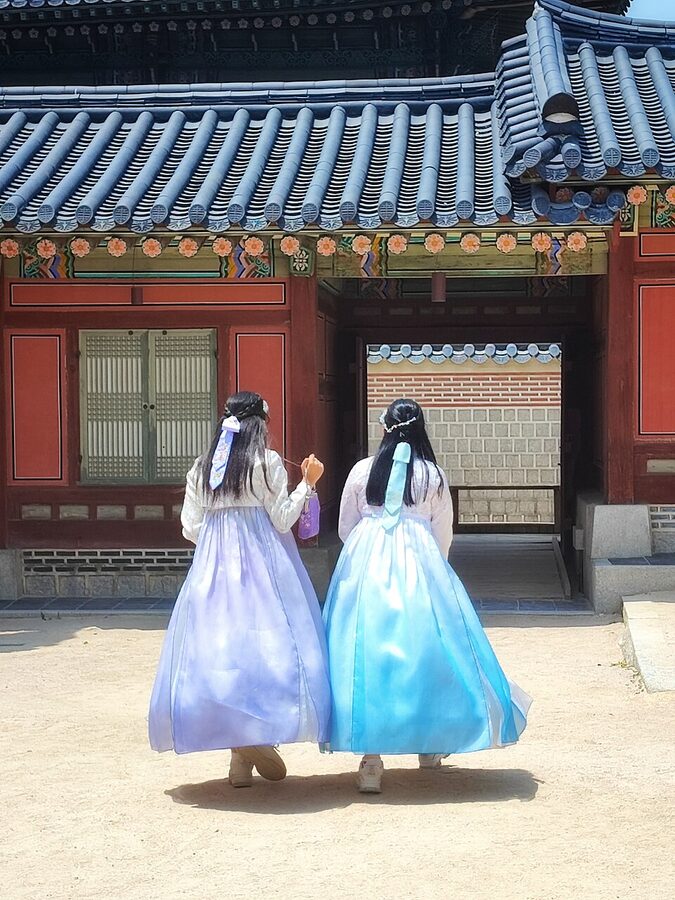
Shortcut. Open the listing, scroll to the sample photos. If they all look a bit yellow and overexposed, skip it. If every couple in every image is doing the same two poses, skip it. If the cover image is clearly shot on a cloudy day and the inside gallery is mostly sunny sunsets, someone is padding a portfolio.
What to look for instead:
- Variety in the gallery. Different couples, different weather, different spots inside the palace. This tells you the photographer actually shoots there regularly and is not recycling the same three angles.
- English-speaking listing. Not because English is required but because the platforms where photographers bother with bilingual listings tend to be ones where they answer messages fast and deliver on time.
- Clear delivery timeline in the description. 72 hours, seven days, two weeks. If it is not stated, ask before you book.
- Some indoor or alternative-weather images in the portfolio. Seoul weather turns. If the only photos are sunny, your rainy shoot will not go well.
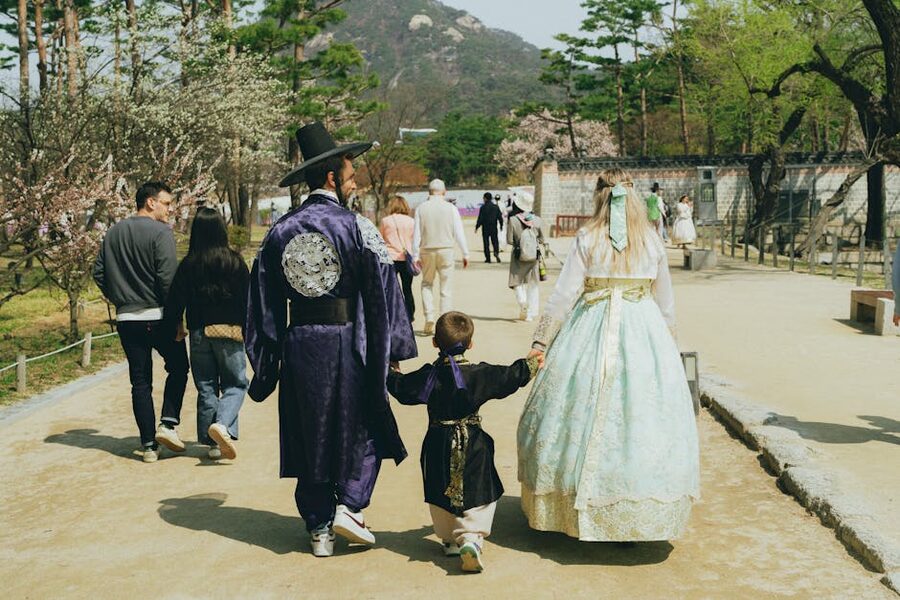
If you are travelling with kids or older parents, ask the photographer directly whether they have shot similar groups. Family pacing is different from couple pacing. A good family shooter knows when to call it and let the three-year-old have a snack break. A couple shooter will push through and hate the results.
Best time of day to book the shoot
Two good slots. First thing in the morning (palace opens at 9am) and the last slot before sunset.
Morning is cleaner. The palaces open at 9 and for the first hour you can get the main courtyards with almost no tourists. Light is cool and even, which suits pastel hanbok. If you are a morning person, this is the slot.
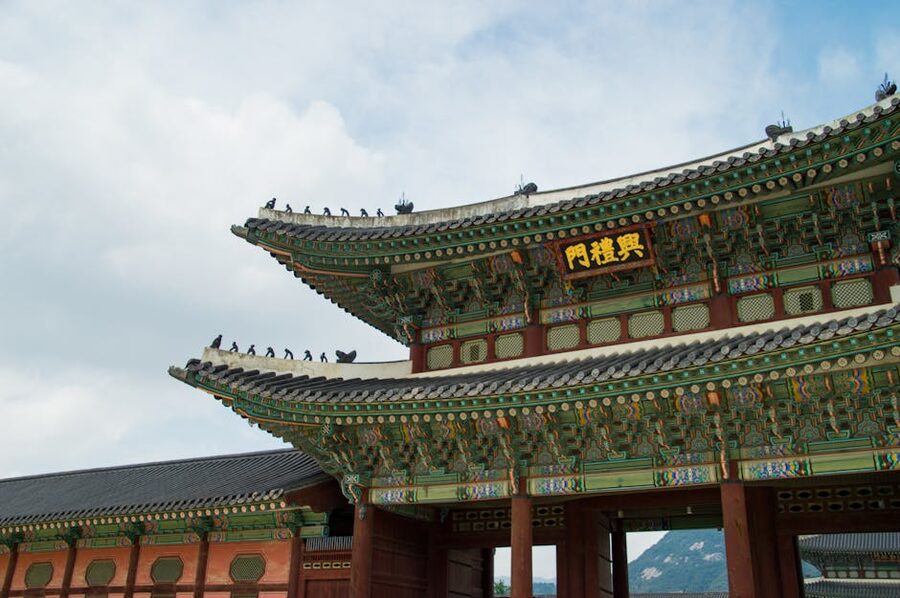
Late afternoon is warmer and more dramatic. Golden hour in Seoul lands around 4:30pm in winter, 7pm in high summer. Book your shoot to finish 30 minutes before sunset and the last 20 minutes will have that syrupy light that makes the dress glow. More tourists around but a good photographer will work around them.
Avoid noon. Hard overhead light, the busiest crowds, and the palaces can hit 35°C in August. Save those hours for lunch and a nap.
The short history: why hanbok at the palace is a thing
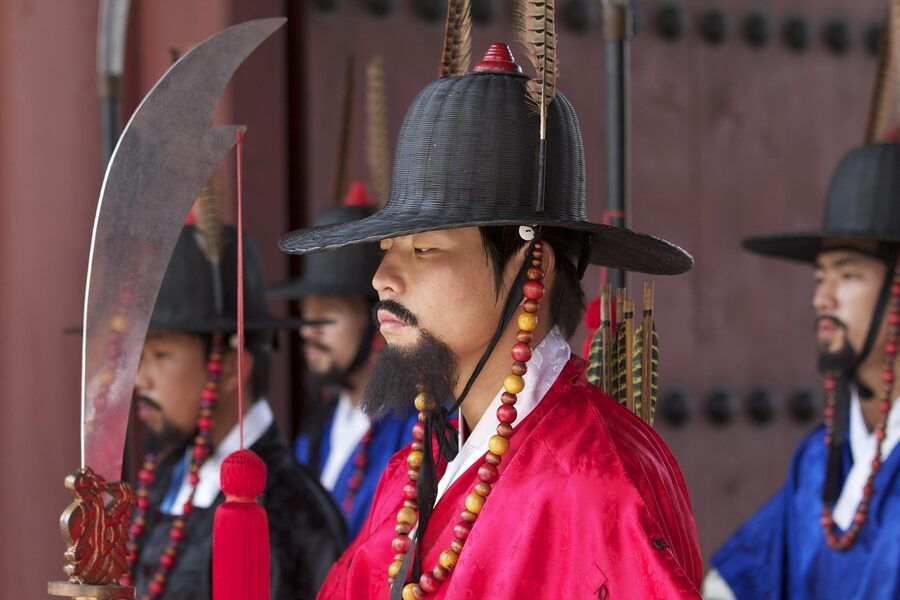
Hanbok is Joseon-dynasty dress, worn in Korea from about 1392 to 1910. Gyeongbokgung Palace was the Joseon royal seat. The palace was half-destroyed during the Japanese occupation of 1910 to 1945 and has been slowly reconstructed since the 1990s, which is why so much of it looks impressively new for a 600-year-old site.
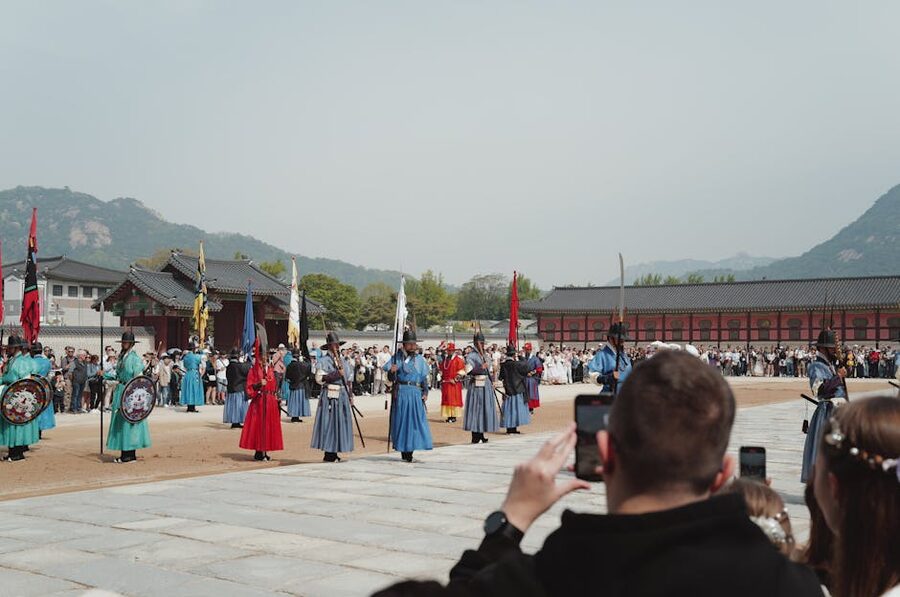
The free-entry-in-hanbok rule started in 2013 as part of a government push to revive interest in traditional dress after decades of it being seen as old-fashioned. It worked astonishingly well. Go to Gyeongbokgung on any Saturday now and easily a third of the visitors are in hanbok. That is what makes it feel so alive.
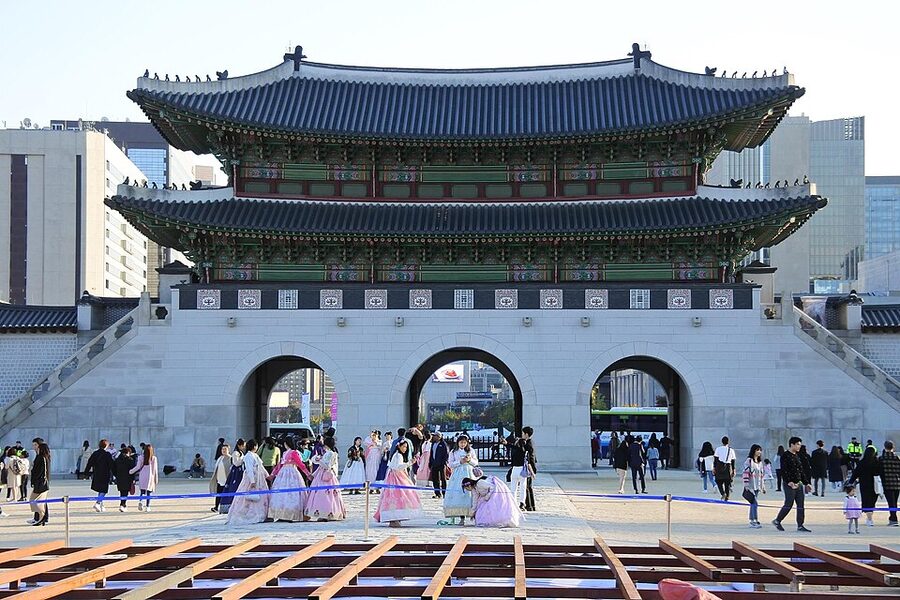
Good to know for small talk if your photographer speaks English. They love when travellers have a clue about the setting. Also, knowing where the throne hall (Geunjeongjeon) sits versus the king’s bedroom (Gangnyeongjeon) means you can ask for that specific backdrop rather than waving vaguely at “old buildings.”
Booking through a marketplace vs direct
You have three booking routes and they have different trade-offs.
GetYourGuide / Viator. This is where my top three picks live. You pay a marketplace fee (rolled into the price, usually), but you get a cancellation policy, platform support if anything goes wrong, and fast responses. For travellers on their first Korea trip I always recommend this route.
Klook / Trazy. Regional platforms with strong Korea catalogues. Prices are often $10 to $20 cheaper than GetYourGuide for the same shoot. Cancellation policies are usually 48 hours minimum. Worth checking if budget is tight.
Directly via photographer website. Cheapest but least protected. You message the photographer, wire payment, and hope. This works well if you have a specific photographer recommended to you. It is a bad first move if you are booking blind from outside Korea.
One more thing. If you want a specific photographer you have seen tagged on Instagram, just ask them directly. Most Korean photographers have a DM route and they will often offer a private rate that is lower than the marketplace listing. But do this only if you have time to message back and forth.
Common mistakes I see first-timers make
Short and sharp:
- Booking the shoot for 9am and the rental for 8:55am. The rental shop opens at 9 too. You need two hours, not five minutes.
- Picking the fanciest hanbok. More fabric means more weight and more sweat. In summer, the simpler hanbok photographs better because you are more relaxed in it.
- Expecting the hanbok price to be included. It almost never is. Budget $15 to $40 extra.
- Forgetting to ask for the raw files. Some photographers only deliver edited JPEGs. If you want high-res originals or the unedited set, ask before the shoot, not after.
- Booking three activities the same day. A hanbok shoot is an afternoon. Do not sandwich it between a Nami Island day trip and a Hongdae bar crawl. You will be exhausted and it will show in the photos.
One more thing nobody says. Eat before the shoot but not right before. A full lunch at 12 and a 2pm shoot is comfortable. A full lunch at 1:45pm and a 2pm shoot is miserable because hanbok waistbands are not kind.
Make a proper afternoon of it
A hanbok photoshoot is the kind of Seoul experience that pairs well with the rest of your day, not a standalone. After your shoot, while you are already dressed up and buzzing, wander up to Bukchon and take your own phone shots in the lanes. Or walk ten minutes east to Samcheong-dong for coffee and gallery-hopping. If you still want to keep the cultural thread going into the evening, a Korean cultural show is a natural next step, or pair the day with a kimchi-making class the morning after. On my first Seoul trip I booked the photoshoot for day two and spent the whole day after that thinking “right, now I want to see the rest of the city properly,” which is how I ended up on a private Seoul tour the following afternoon. Before I flew home I also squeezed in a personal colour analysis in Seoul to pick shades that actually suit me, a K-pop dance lesson that I was hilariously bad at, and on the way south a cooking class in Busan. The photoshoot was still the one I printed.