
On day one in Tokyo, jet-lagged and excited, a lot of first-timers try to hit Shibuya Crossing, Asakusa’s Senso-ji, Meiji Jingu, and Akihabara in a single day using the subway. On paper it looks doable — the dots aren’t that far apart on a map. In practice, you spend fifty minutes queuing for IC cards at Tokyo Station, another hour mis-reading the JR East/Tokyo Metro interchange at Otemachi, get off at the wrong Asakusa exit, run out of phone battery at the Meiji Jingu inner sanctum, and end the evening in Akihabara too drained to actually enjoy the arcades. You’ve technically “seen” four neighbourhoods. You couldn’t tell a friend anything specific about any of them.
That’s the mistake the Tokyo full-day guided coach tour is built to prevent. One bus, one guide, seven or eight hours, the whole iconic checklist done properly — with enough context that the places mean something after. This guide walks through exactly how to book one, which operator to pick for which kind of traveller, and the straight trade-offs the coach makes to pull it all off.
Short on time? Here are my top picks:
Best overall value — by a wide margin: Tokyo Full-Day Sightseeing Tour by Coach With Lunch Option — $129.25, 14,250+ reviews. Operated by Japan Panoramic Tours (the Hato Bus subsidiary), air-conditioned coach, 7-hour route covering Meiji Shrine, Senso-ji, Tokyo Skytree, and a Tokyo Bay cruise, with a bilingual guide and optional lunch add-on.
Best for personalisation: Tokyo Full-Day Private Tour With Government-Licensed Guide — $155.86 per person, 3,900+ reviews. You pick the itinerary, your guide holds a national licence, and pacing matches your group instead of a coach schedule.
Best GetYourGuide alternative: Tokyo: Full-Day Sightseeing Bus Tour — $122, 1,986 reviews. Same Japan Panoramic operator, listed on GYG with skip-the-line Skytree access built in and matcha tasting added to the route.
- Why this tour format exists at all
- What a Tokyo full-day coach day actually looks like
- Three tours worth booking
- 1. Tokyo Full-Day Sightseeing Tour by Coach With Lunch Option — 9.25
- 2. Tokyo Full-Day Private Tour With Government-Licensed Guide — 5.86 per person
- 3. Tokyo: Full-Day Sightseeing Bus Tour (GetYourGuide) — 2
- Coach vs private vs hop-on — who each format is for
- How to choose between the two Japan Panoramic listings
- When to arrive, what to wear, what to bring
- What the coach day gets right that DIY can’t
- What you’ll miss, frankly
- Booking timing and cost
- Who shouldn’t book a Tokyo full-day coach tour
- Getting around Tokyo after the tour
- Day-after plans — what to book next
Why this tour format exists at all
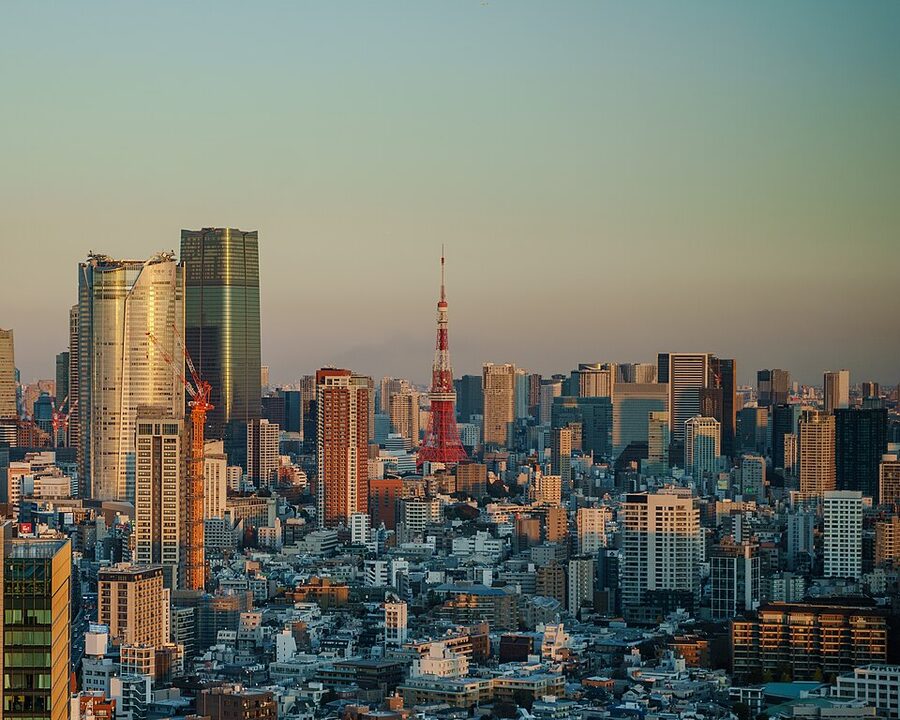
Tokyo has a size problem for first-time visitors. The main sights are spread across five wards — Chiyoda (Imperial Palace), Taito (Asakusa), Shibuya (Meiji, Shibuya Crossing, Harajuku), Minato (Tokyo Tower), and Sumida (Skytree) — and each is essentially a city inside the bigger city. The train network that connects them is genuinely the best in the world, but it’s also the most complex, split across JR East, Tokyo Metro, Toei Subway, and several private operators whose tickets don’t all interoperate.
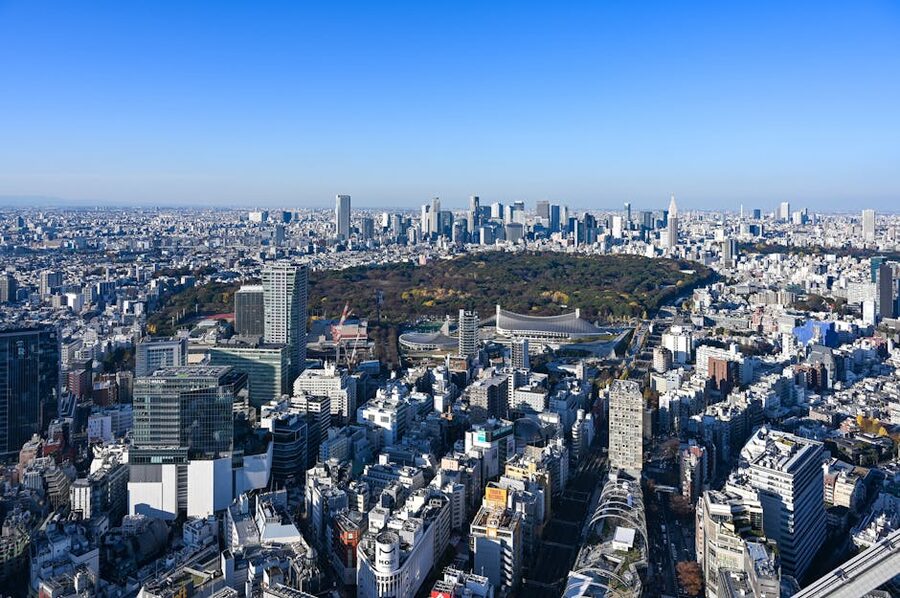
A full-day guided coach collapses that complexity. You pay a flat fee. A professional driver handles all the navigation. An English-speaking guide gives you the context you can’t get from a Google result. You sit down between stops, which matters more than you’d expect on a day when you walked 22,000 steps before lunch. And crucially, you get a rough pass over the whole city in one day — which means from day two onwards, when you go back to the one or two neighbourhoods you actually liked, you already know the lay of the land.
That’s the case for booking one. Whether it’s right for you depends on what kind of traveller you are, and that’s the rest of this guide.
What a Tokyo full-day coach day actually looks like
Nearly every operator runs a variation on the same geographical loop because the sensible way to do this in one day forces itself on the itinerary. Here’s the shape of a typical 8-hour Japan Panoramic Tours day, which is the route the three tours below all use some version of:
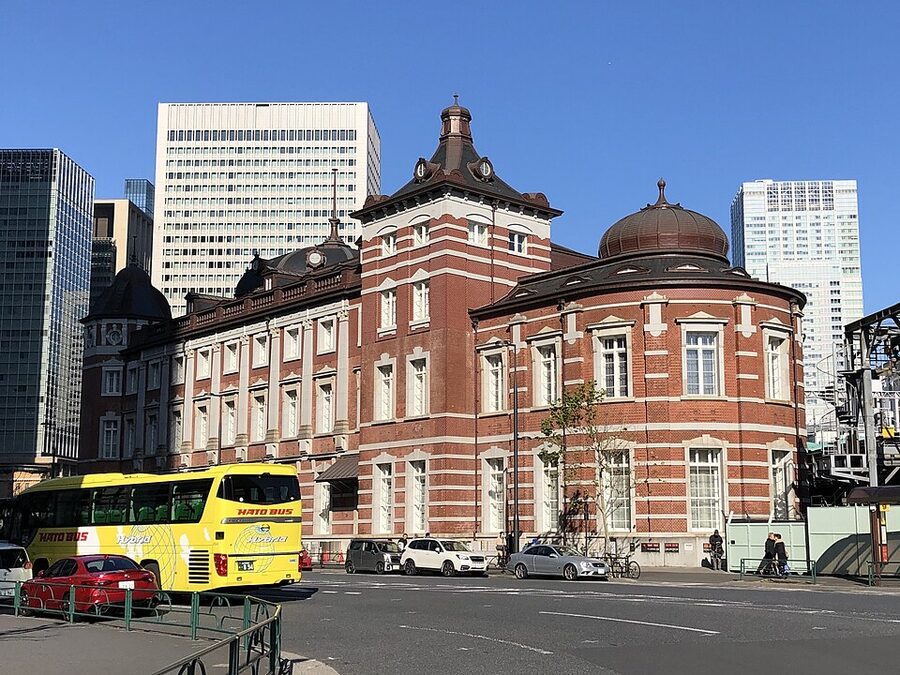
08:50 — Meet at Tokyo Station Marunouchi exit. Guides hold up paddles with the operator’s name. You board, and the coach rolls north through Chiyoda-ku.
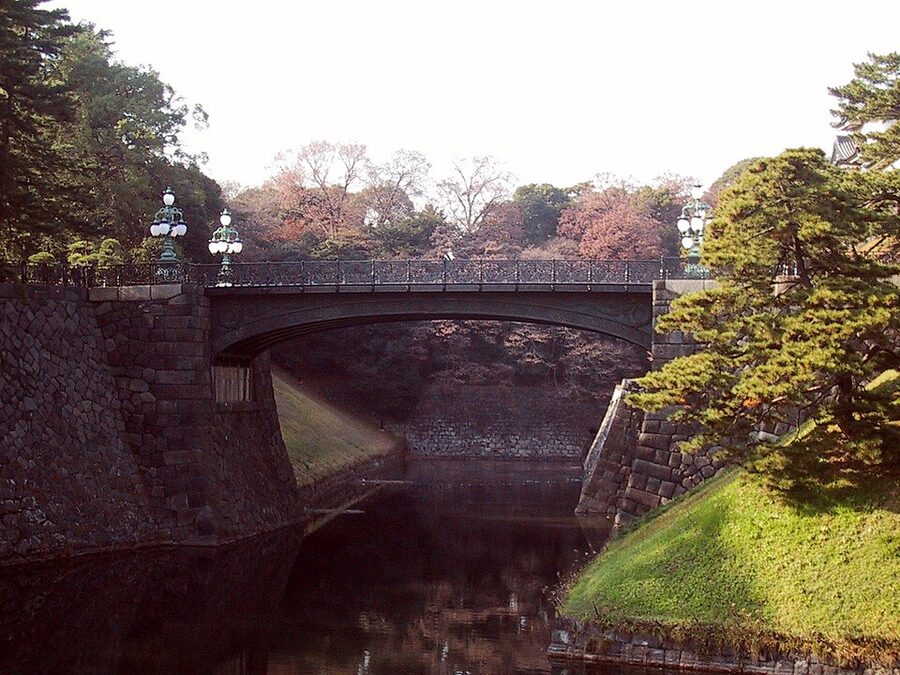
09:30 — Imperial Palace East Gardens and Nijubashi Bridge. A 30-minute walk-and-photograph stop. You don’t go inside the palace (it’s closed except on the emperor’s birthday), but you’ll see the bridge, the moat, and the pine-tree landscape.
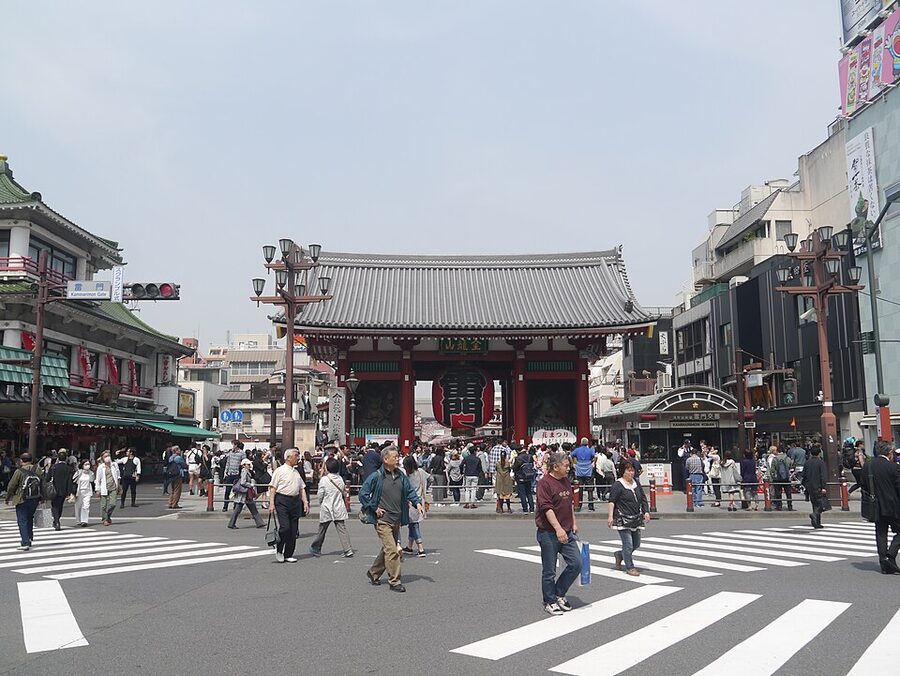
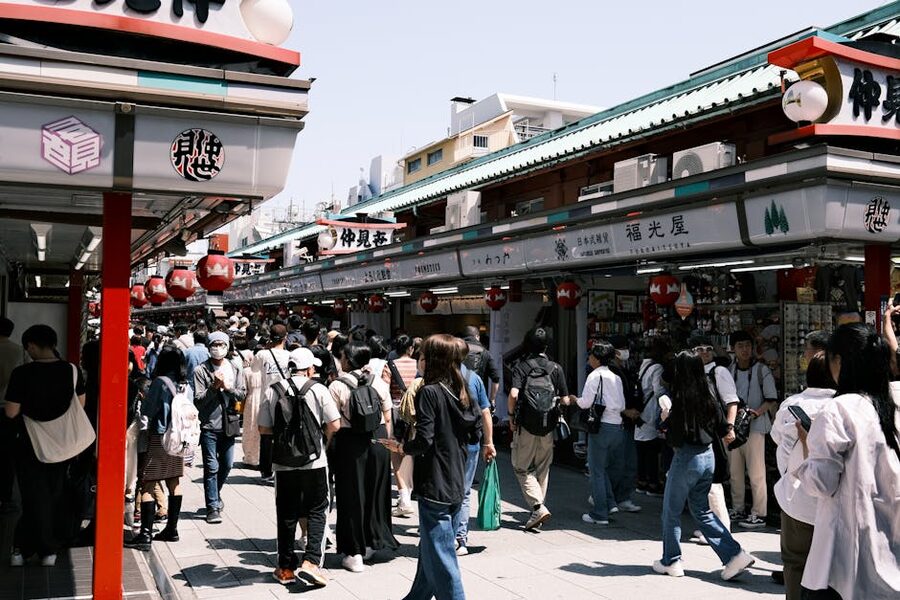
10:30 — Senso-ji Temple and Nakamise-dori, Asakusa. The first sit-down-and-look stop of the day. 60 to 75 minutes, including a walk under the Kaminarimon gate, down the 250m Nakamise shopping street, and into the main temple courtyard. Some tours build in time to try the ningyo-yaki (doll-shaped cakes) from the stalls along Nakamise.
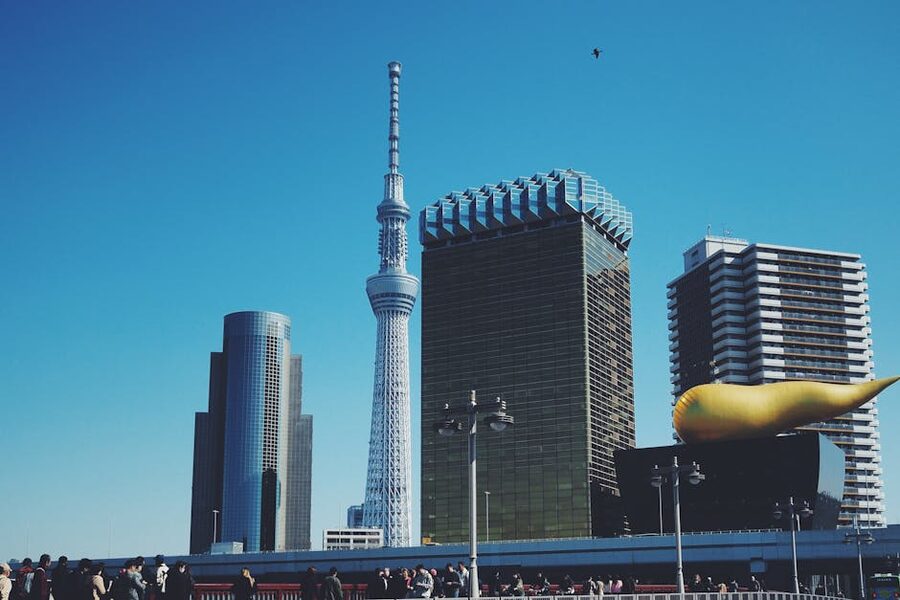
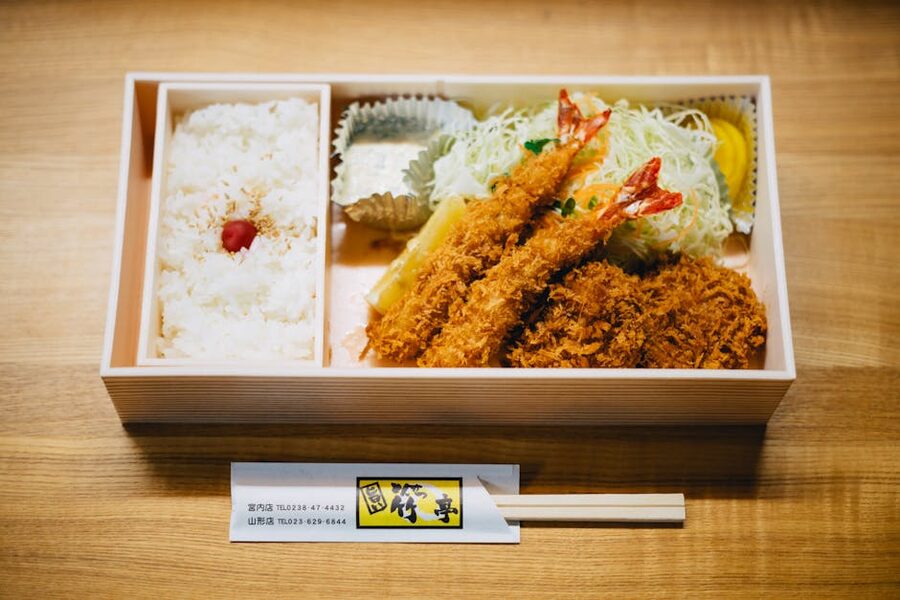
12:00 — Tokyo Skytree area. Either a lunch stop near the base (most coach tours include a set-menu Japanese lunch here, or send you to a food-court floor inside the Solamachi mall) and/or a skip-the-line ride up to the Tembo Deck at 350 metres. Whether Skytree admission is included depends on the specific package — read the inclusions carefully. The $129 Japan Panoramic “with lunch” tour includes lunch but not Skytree admission; the $122 GYG version includes Skytree admission but the lunch is a lighter matcha-tasting set.
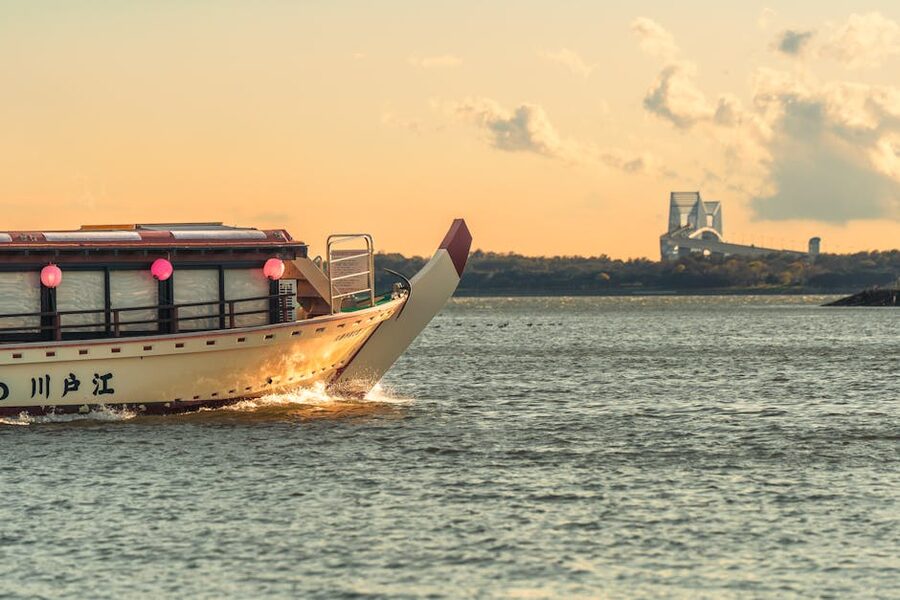
13:30 — Tokyo Bay cruise or coach transfer. Depending on operator, either you board a Sumida River / Tokyo Bay ferry for a 35-minute water transfer toward the Hamarikyu or Hinode pier, or the coach drives you on down through Ginza. The ferry leg is the break the day needs. You sit. You eat the onigiri you bought at Asakusa. You watch the Skytree shrink behind you and the towers of Shiodome rise ahead.
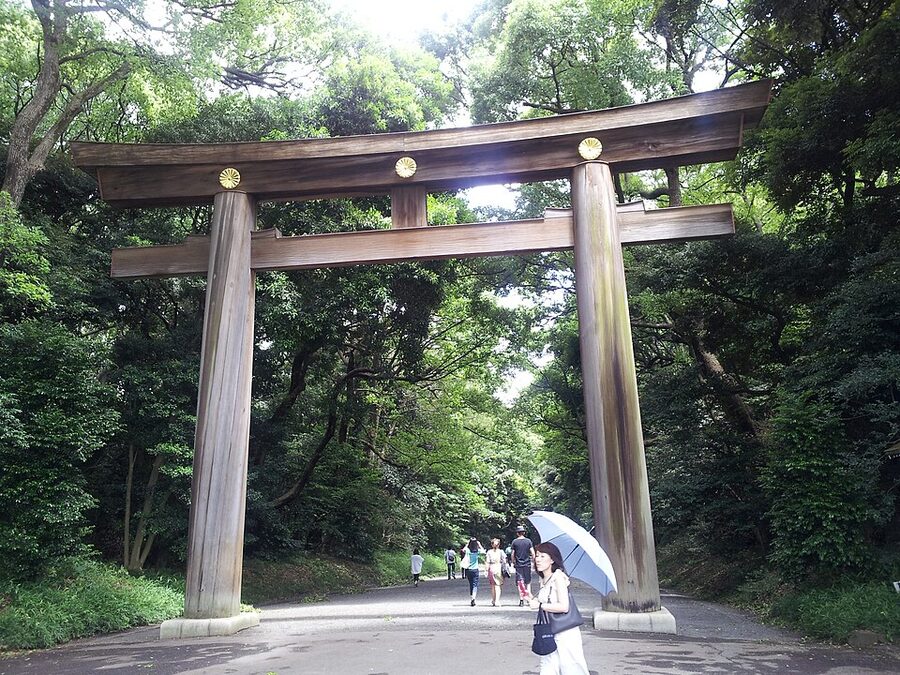
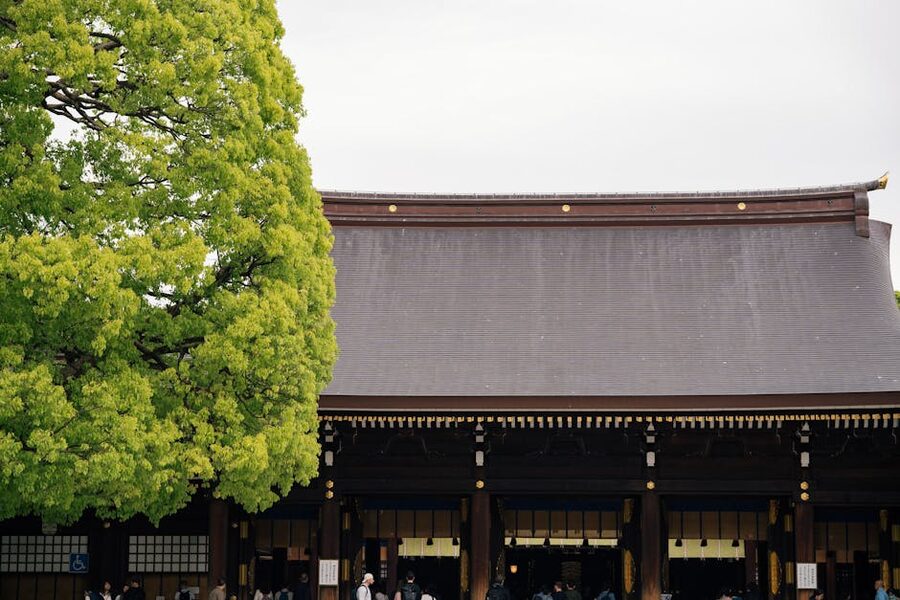
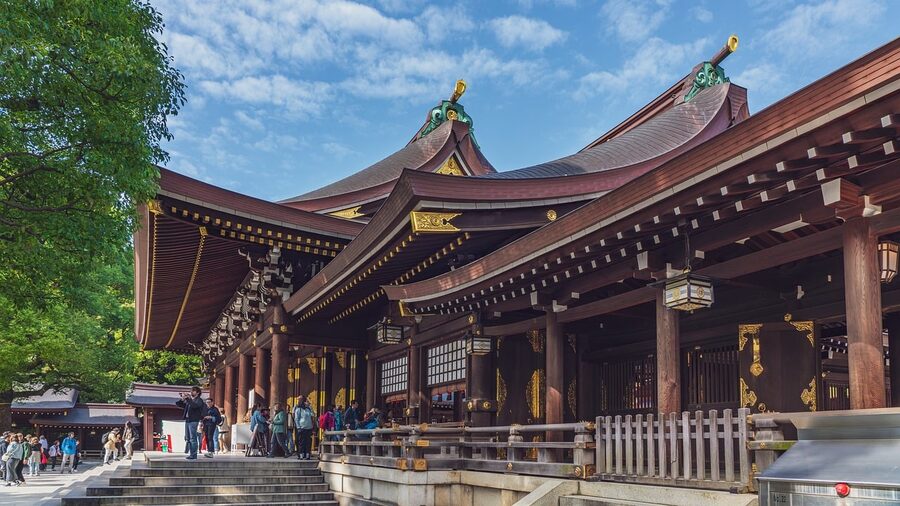
14:30 — Meiji Jingu, Shibuya-ku. The coach drops you at the Harajuku entrance. You walk 10 minutes under the torii gates and through the forest to the main shrine. This is usually the quietest part of the day — it’s deliberately scheduled as the contrast stop, and the guides lean into it.
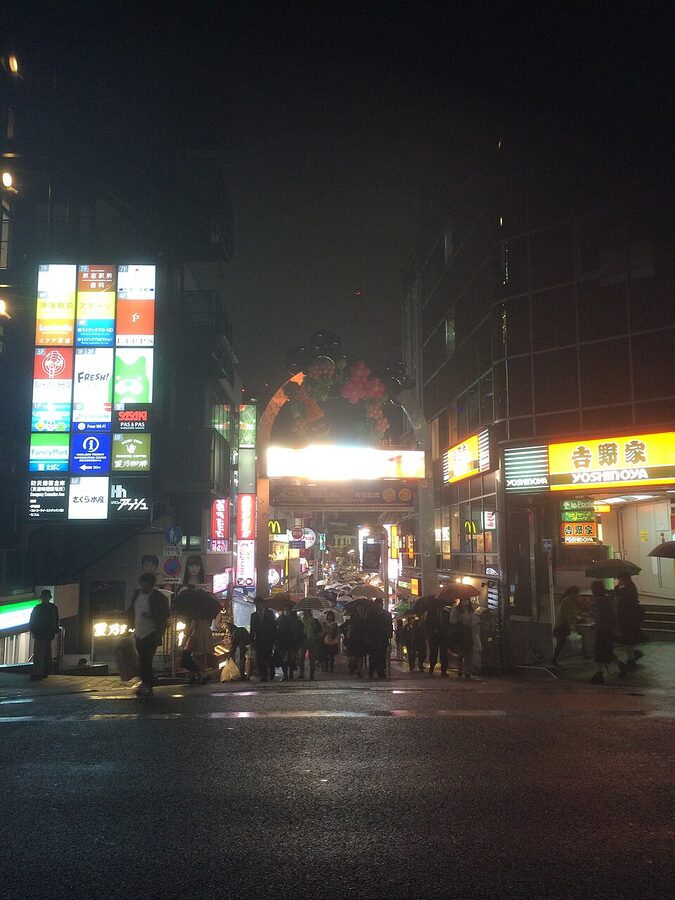
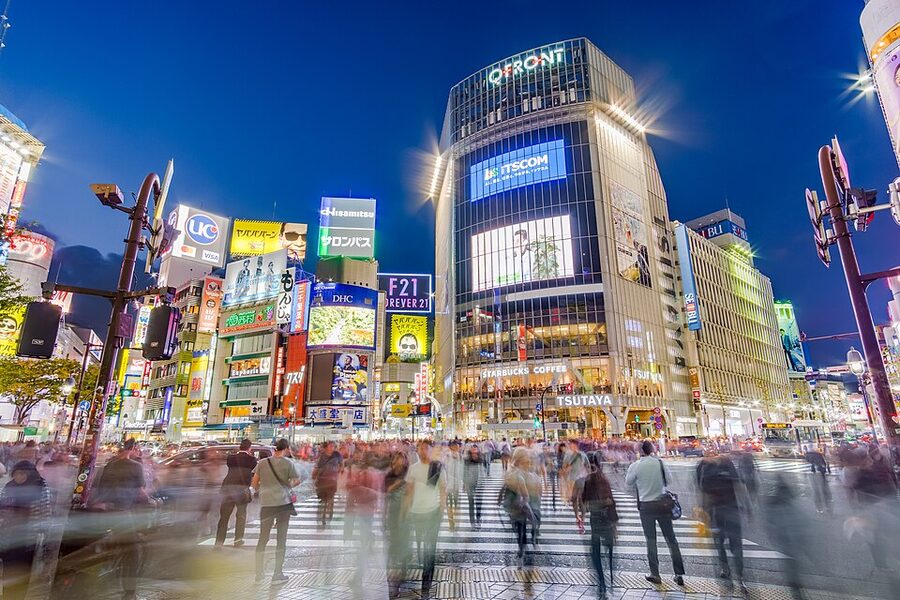
15:30 — Harajuku’s Takeshita Street and Shibuya Crossing. Most tours squeeze both into one compressed stop, which means you’ll walk down Takeshita-dori from the Meiji exit, maybe grab a rainbow crepe or a Daiso item, and then coach to the Shibuya Scramble for a 15-minute photo window at the crossing itself.
16:30 — Drop-off. Most coaches drop you at Shinjuku Station, Tokyo Station, or back at the original Marunouchi meeting point. A few will drop-off at hotels along the way if you ask in advance. The whole day is 7 to 8 hours gate-to-gate.
Three tours worth booking
I’ve pulled these three from our review database after cross-checking against the SERP-visible operators. They cover the three kinds of traveller who realistically want this format: value-hunters, personalisation-lovers, and people who book via GetYourGuide.
1. Tokyo Full-Day Sightseeing Tour by Coach With Lunch Option — $129.25
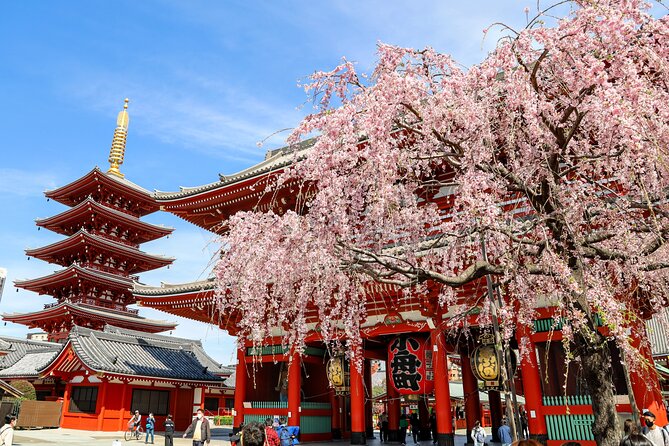
This is the Hato/Japan Panoramic Tours coach tour, the one every other operator is benchmarking against. 14,250 verified reviews is more than the next four Tokyo full-day tours combined, and the 5.0 rating is unusual at that volume. Hits Meiji, Asakusa, Skytree viewing deck (not admission), Imperial Palace, Odaiba ferry leg, and lunch — our full review covers the lunch dietary options and the exact schedule in more detail.
2. Tokyo Full-Day Private Tour With Government-Licensed Guide — $155.86 per person
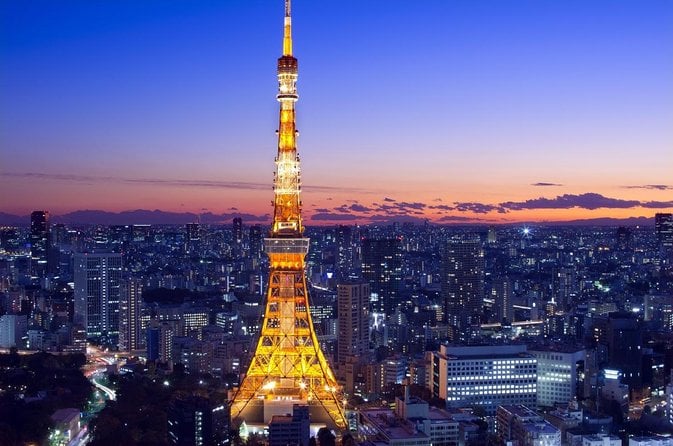
The trade is roughly $30 per person for the ability to swap out stops you don’t want — you can skip Meiji if you’ve already done it, add Ginza or Shinjuku Gyoen, start late, eat where you want. 3,900+ reviews and a National Licensed guide make this a different product from the standard coach; our full review goes into whose family size makes the maths work.
3. Tokyo: Full-Day Sightseeing Bus Tour (GetYourGuide) — $122
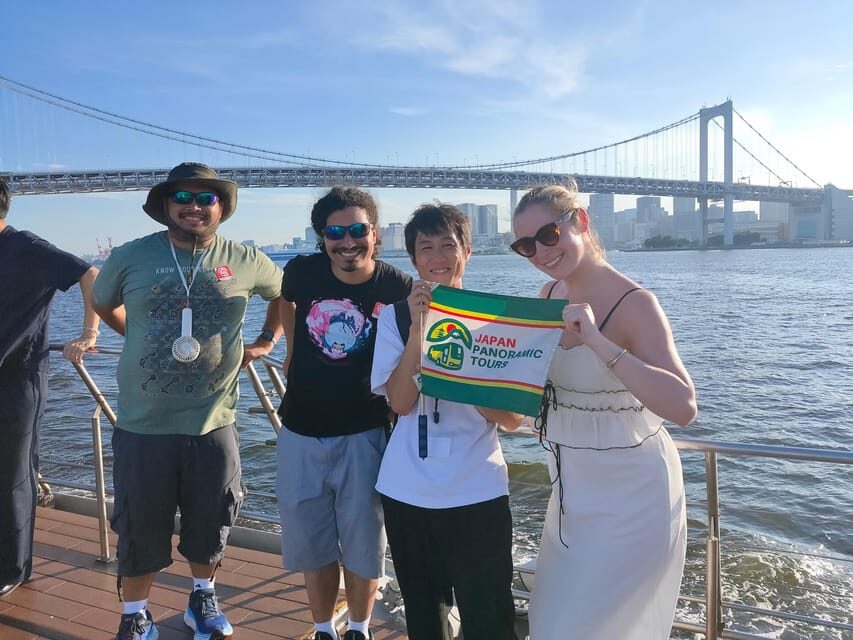
If you’re a GetYourGuide loyalty user this is the clean pick. Same operator (Japan Panoramic Tours, Hato Bus parent), marginally different mix: Skytree admission is included here, matcha tasting replaces the big set lunch, and the route adds Omotesando. 1,986 reviews at 4.7 — not the Viator scale but plenty of signal, and our review notes the multi-lingual audio system makes this one friendlier for non-English groups.
Coach vs private vs hop-on — who each format is for
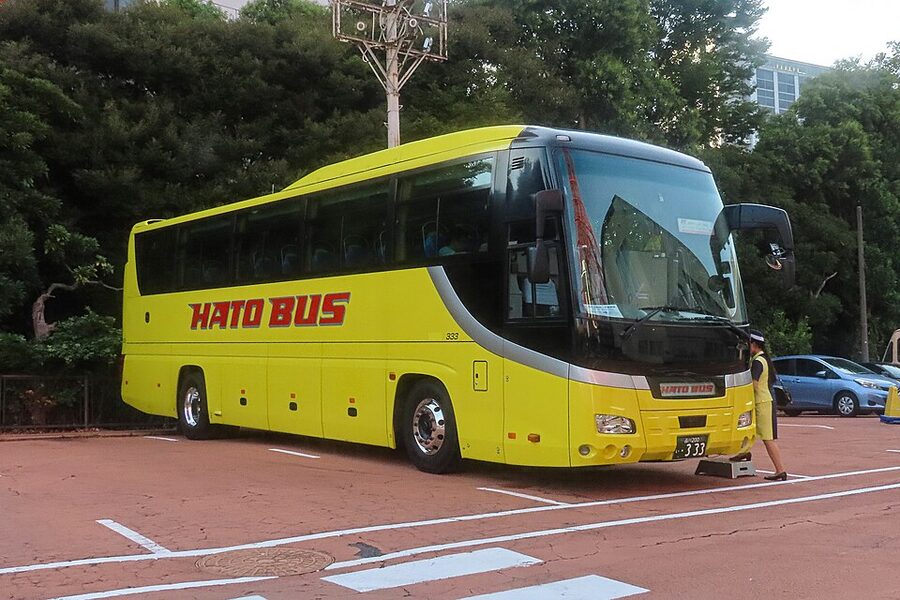
There are three distinct products that all get called “Tokyo city tour” and the differences matter more than the branding suggests. Pick the wrong one for your travel style and you’ll spend the day mildly annoyed.
Full-day guided coach (this article). Fixed route, fixed timetable, one group of 20-40 people with the same guide all day. You see the major sights in one day with professional context. You don’t choose where to stop, how long to stay, or when to eat. This is the right format for first-time Tokyo visitors, for over-60s and under-14s who’ll appreciate the coach seat between stops, and for anyone on a tight 2-3 day Tokyo trip who needs to triage what to come back to on day two.
Full-day private tour (Pick 2 above). Your group, your guide, your route. A government-licensed guide means Japanese qualification to discuss history and culture at a higher level than a coach-tour patter. Expensive if you’re a couple, scales well if you’re four or six people. Right for anyone who’s been to Tokyo before, for families with specific interests (e.g. anime-focused, sumo-focused, foodie-focused), and for anyone who has a specific list of things they want to see and who doesn’t want to renegotiate it with 30 strangers.
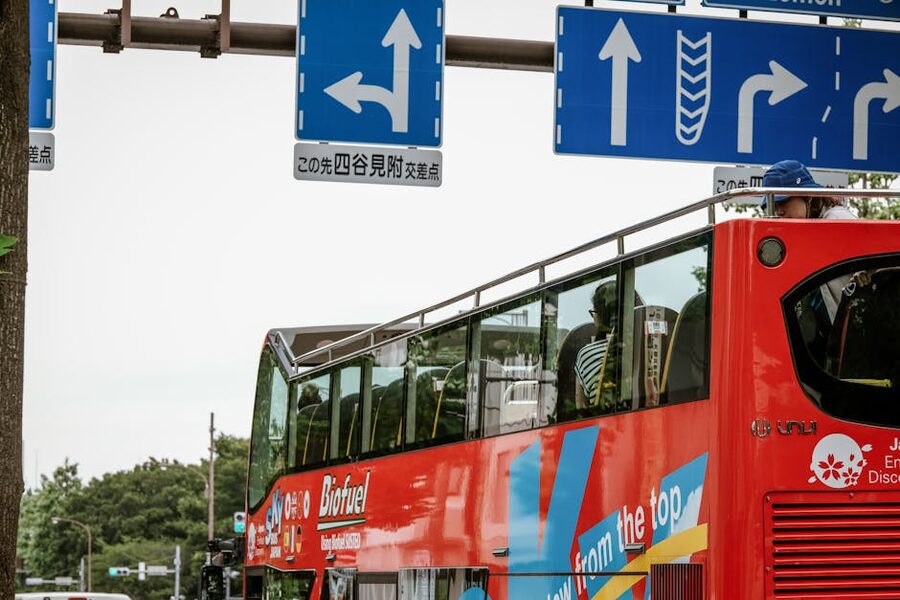
Hop-on hop-off bus (not covered here — see our Tokyo hop-on hop-off guide). A circulating double-decker that stops at major visitor spots on a 60-90 minute loop. You pay for the ticket and jump on and off where you want, at your own pace, across a whole day. No guide on board. No curated itinerary — you build your own route. Right for travellers who want mobility and flexibility but can’t face the subway, and for anyone with limited walking ability who wants a base for the day. Wrong for first-time visitors who don’t know what to prioritise — without the guide you end up jumping off at famous-sounding stops and discovering they were ten-minute photo opportunities, not afternoons of content.
The short version: if this is your first time in Tokyo and you don’t know what you don’t know, book the guided coach. If you’ve been before or have specific interests, book the private. If you just want a moving base for a self-directed day, book the hop-on.
How to choose between the two Japan Panoramic listings
Pick 1 and Pick 3 above are the same operator selling a similar product through two different booking platforms (Viator and GetYourGuide). The differences that actually matter:
Lunch vs Skytree admission. The Viator $129 tour includes a full set-menu Japanese lunch but charges extra if you want to actually go up the Skytree. The GetYourGuide $122 tour includes Skytree admission but gives you a lighter matcha-tasting set instead of the full lunch. If you want to go up Skytree on the same day, Pick 3 is the better maths — $7 cheaper and you don’t pay again at the base. If you want a substantial sit-down lunch, Pick 1.
Cancellation. Viator’s standard full refund is 24 hours out; GYG’s is also 24 hours out but with fewer grey-area holds on rescheduling. In practice, I’ve had better rescheduling experiences on GYG for weather-related changes.
Review volume. The Viator listing has been up longer and has 14,000+ reviews; the GYG listing has 1,986 but is newer. Both hover at 4.7-5.0. For this operator, I trust either platform’s reviews.
Language support. The GYG version is explicit about multi-lingual audio systems (Chinese, Korean, Spanish, Japanese, English). The Viator version is English-live with other languages available through the audio system depending on guide availability. If anyone in your group isn’t a confident English speaker, default to the GYG listing.
When to arrive, what to wear, what to bring
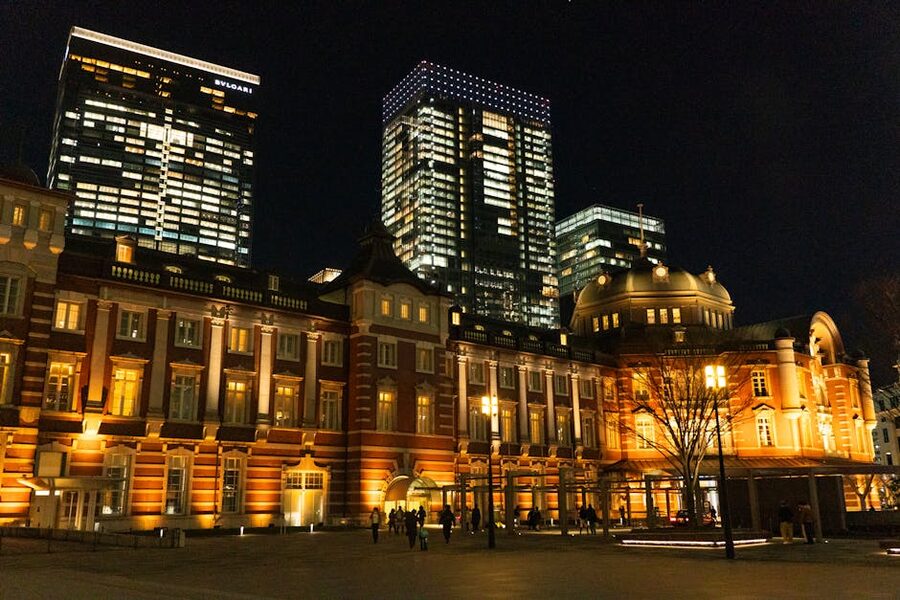
Arrive 15 minutes early. Not 5, not 30 — 15. Tokyo Station is vast, has 13 exits, and the wrong one costs you 10 minutes of walking. The correct exit for almost all operators is the Marunouchi South exit (丸の内南口). On the booking voucher the specific “kiosk” or “paddle” location will be stated. Screenshot that.
Wear walking shoes, not sandals. The coach does a lot of the physical work, but you still walk 4 to 6 kilometres across the day. Nakamise, the Meiji forest path, and the Shibuya crossing legs are on concrete and gravel respectively.
Bring a water bottle. Tokyo public drinking fountains aren’t a thing on the scale of European cities. Konbini (convenience store) water is cheap and good — the guide will usually point out a 7-Eleven at Asakusa if you need to top up.
Bring cash for Nakamise and Takeshita. The coach is paid for, lunch if included is paid for, but Nakamise food stalls and Takeshita impulse buys are often cash-only or card-with-surcharge. About ¥3,000-5,000 in small notes covers a day of impulse snacks and souvenirs.
Wifi: the guide’s hotspot won’t cover you. A pocket WiFi or eSIM for the phone is worth the $5-8/day. You’ll want to geotag photos and check logistics for day two while you’re sitting on the coach.
What the coach day gets right that DIY can’t
Beyond the obvious “you don’t have to navigate” answer, two things stand out after doing both versions of the day.
The context. Meiji Jingu was built in 1920 to honour Emperor Meiji, who presided over Japan’s 45-year transformation from a feudal island to a modern industrial power. That’s a sentence you read on a plaque and forget in ten minutes. A guide who tells you about it while you’re standing under the torii, points at the specific detail in the roof that marks it as Shinto rather than Buddhist, and then walks you past the sake barrels donated by breweries with a brief note on what sake used to mean to the imperial court — that context sticks. It’s the difference between seeing a shrine and understanding one.
The pacing. The coach’s schedule forces stops at the right length. Senso-ji for 60 minutes is exactly right — enough to walk Nakamise, see the temple, take photos, buy a cake. An hour longer and you’re just wandering and getting tired. An hour shorter and you leave feeling rushed. DIY travellers reliably miscalibrate this, either spending 2 hours at the temple and losing Meiji from the day, or blowing through in 20 minutes because the app says to keep moving.
What you’ll miss, frankly
The coach format exists because of trade-offs. These are the real ones, not the marketing-speak ones.
You won’t eat at a food tour-level restaurant. The included lunch on the Hato tour is genuinely decent Japanese set-menu food, but it’s not a 10-seat tsukemen bar in Koenji or a yokocho counter in Omoide Yokocho. If food is your primary Tokyo priority, do the coach tour on day one and then book a proper Shinjuku food tour or a Tokyo ramen tasting tour on day two. They’re different categories.
You won’t go up anywhere properly. Skytree admission on the GYG tour gets you to the 350m deck, but the upper 450m Tembo Galleria is not included. No tour I’ve seen includes Shibuya Sky, which is the view that genuinely matters for Shibuya. Plan separately for Skytree ticketing if you want the upper deck, or budget for a Shibuya Sky visit later in the trip.
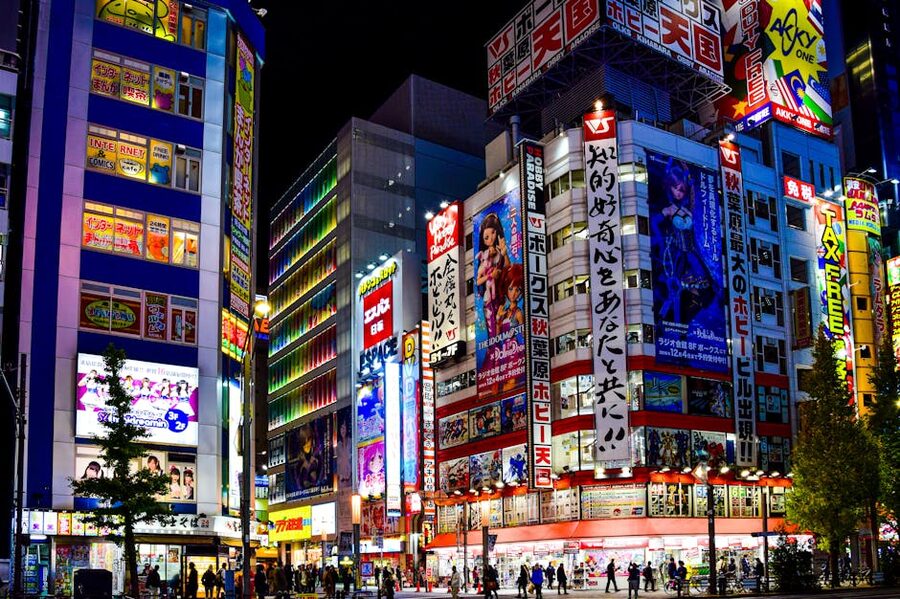
Akihabara isn’t on the itinerary. Despite being one of the four “first time Tokyo” must-sees in most travel listicles, the electric-town district doesn’t appear on any of the three tours above. The coach simply doesn’t go there — it’s not on the geographic loop that makes Meiji-Asakusa-Skytree-Shibuya work in a day. If Akihabara is a priority, it’s a half-day of its own on day two.
The Shibuya Crossing stop is brief. Coach tours usually give you 15 minutes at street level. For first-timers that’s enough to do the crossing once and get the shot, but it’s not enough for the full experience — the Hachiko statue, the Starbucks-view, the elevated deck at Tsutaya. If Shibuya itself is the experience you’re after, go back in the evening on day two.
You won’t have a real Tokyo-at-night experience. The tour ends at 4:30pm or 5pm. That’s before Tokyo switches modes. Plan something on your own for after the tour — a Shinjuku bar crawl, a ramen stop, a night view from the Tokyo Tower observation deck, or just a walk through the hotel’s neighbourhood with a konbini coffee and a good camera.
Booking timing and cost
When to book. At least 5 days out for weekday departures. 10 days for Saturday or Sunday departures. 21 days out for any date in cherry blossom season (late March to mid-April) or the week around the Autumn Leaves peak (mid-November) — these tours sell out. The national holidays to be aware of are Golden Week (late April into early May), Obon (mid-August), and Japanese New Year (Dec 29 – Jan 3), all of which have their own booking dynamics.
Price range. $120-135 for shared-coach, $150-180 per person for private (4+ people), $200+ per person for private with 2 people. Beyond about $250 per person you’re paying for luxury vehicle upgrades that don’t materially change the Tokyo experience.
Discounts. Both Viator and GetYourGuide run periodic 10% off codes that show up if you look at a tour, leave it in your cart, and come back the next day. Not dramatic savings, but enough to pay for that day’s lunch.
Cancellation. 24 hours ahead for both platforms. If the weather calls for typhoon-grade rain and the operator hasn’t cancelled but you want to, you’ll forfeit the booking. This doesn’t happen often but it’s worth knowing — the tour runs in moderate rain.
Who shouldn’t book a Tokyo full-day coach tour
I’ve argued the case for booking one. Here’s the straight inverse.
If you’ve been to Tokyo before. You already know the layout. You don’t need the orientation pass. Book a private tour or skip the format entirely.
If you have a week or more in Tokyo. With 5+ days, you can afford to do the sights one or two at a time and actually absorb them. The coach tour is an efficiency tool for 2-3 day trips.
If you hate group travel viscerally. Some people find being on a coach with 28 strangers mildly stressful. If that’s you, pay for the private tour — the cost difference ($30 per person) is small next to ruining your first day.
If your primary interest is food, anime, or a specific niche. A full-day generalist tour will touch your area lightly and leave you hungry. Book the specialist tour directly — food, ramen, or a dedicated Akihabara anime walk.
If you’re combining Tokyo with a Mt Fuji day. Don’t do a full-day Tokyo tour and a full-day Fuji tour back to back — you’ll be wrecked. See our Mt Fuji + Hakone day trip guide for the sensible split.
Getting around Tokyo after the tour
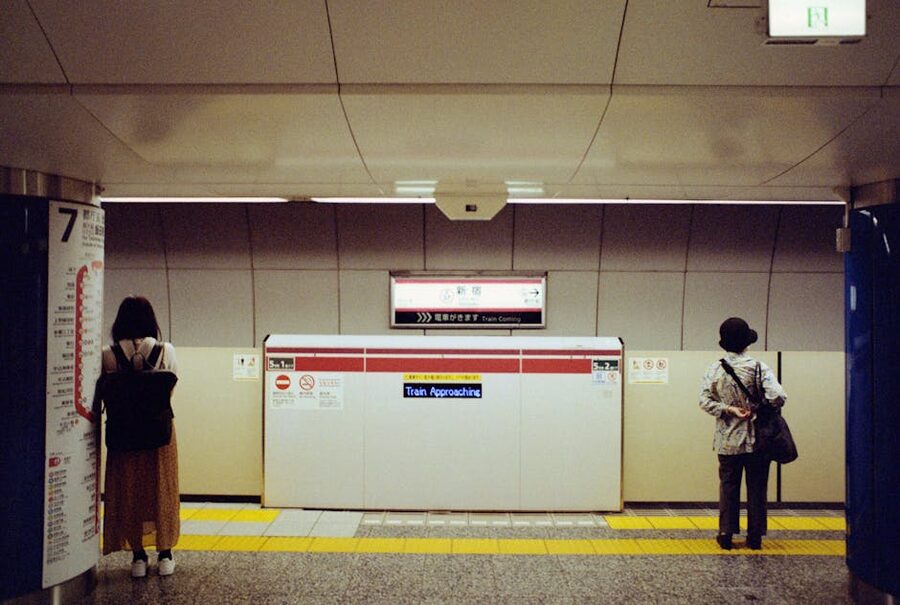
The day-two problem. Once the coach has given you the orientation, the follow-up question is how to get around on your own.
Get a Suica or Pasmo card. Available at any JR East or Tokyo Metro ticket machine. Load ¥3,000-5,000. Tap in, tap out on every train, subway, and most buses. It also works at convenience stores and many vending machines.
Avoid the 72-hour Tokyo Metro pass unless you’re taking 4+ rides a day. It’s ¥1,500 for 72 hours. Pay-as-you-go via Suica averages ¥200-250 per ride. Break-even at 6 rides in 3 days. If you’re not doing that much moving, stick with pay-as-you-go.
The JR Pass is not for Tokyo-only trips. It’s designed for intercity shinkansen travel. Don’t buy it if you’re staying in Tokyo.
Taxis are cheaper than New York, more expensive than most other things. ¥500 flag drop plus distance. Useful for short late-night hops when the trains stop at midnight, not for daytime tourism.
Day-after plans — what to book next
The coach tour works best as day one of a longer Tokyo itinerary, and the logical day-two move depends on what you responded to during the tour. If you loved the Skytree section, go back and do it properly with our Skytree admission guide — the upper deck views are a different class of experience than what the coach tour gives you, and there are several ticket types worth understanding. If Asakusa pulled you in, a dedicated Senso-ji walking tour fills in the history and backstreets that the coach doesn’t touch. Foodies should pivot to a Shinjuku food tour or a six-bowl ramen tasting to hit the Tokyo food scene properly, and anyone travelling with kids should look at teamLab Planets or Tokyo Disney for a contrast to the grown-up landmarks day. If the coach was your appetiser and now you want the Fuji trip, the proper Mt Fuji and Hakone day trip covers the sensible routing. Whatever you pick next, the point of the full-day tour is that you now know enough about Tokyo to spend the rest of the trip choosing deliberately rather than chasing.