
The Battambang bamboo train — known locally as a norry — is one of the strangest things still running on a functioning rail line anywhere in Southeast Asia. A norry is a three-metre bamboo platform resting loose on two independent steel axles, powered by a small 6-horsepower petrol engine that drives the rear axle with a fan belt.
There is no frame, no chassis, no brakes beyond a wooden stick the driver wedges against the wheel, and nothing bolting the platform to the wheels: the weight of passengers and cargo is what keeps it on the rails.
When two norries meet head-on, the lighter one is simply lifted off the track in under a minute — platform, axles, engine, the whole thing disassembled and reassembled on the other side — and the heavier one trundles through. It is the most Cambodian piece of engineering you will ever ride on.
n
This guide walks through the two bamboo train locations near Battambang (the original O Sra Lav line and the newer purpose-built tourist track), the three best-reviewed tours that bundle the bamboo train with the killing cave at Phnom Sampeau and the evening bat exodus, what a good tuk-tuk circuit actually looks like for a half or full day, and the practical details — prices, timings, what to wear, what to bring — that are worth knowing before you book.
n
This is also the final article in our Cambodia series — if you have been following along from Angkor Wat sunrise through the temples, cooking classes, and memorials, Battambang is the part of the trip that most people either skip or fall in love with. Battambang rewards the travellers who come.


- The tours worth booking
- 1. Battambang Tuk-Tuk, Bamboo Train, Killing/Bat Caves, Sunset — GetYourGuide
- 2. Afternoon Tuk Tuk Tour: Bamboo Train, Killing & Bat Caves, Sunset — Viator
- 3. Cambodia Countryside Tuktuk Tour — Battambang (Battambang Tours by Bun) — Viator
- Which tour should you pick?
- Old bamboo train vs. new bamboo train: which one do you actually ride?
- How a norry actually works
- What else is on the circuit: Phnom Sampeau and the bat cave
- Practical details: timing, prices, what to bring
- Timing the day
- Prices
- What to bring
- How to get to Battambang in the first place
- Is the bamboo train still worth it?
- A one-day Battambang plan around the bamboo train
- Where to stay in Battambang
- What to do before and after your Battambang day
- Frequently asked questions
- How long does the bamboo train ride last?
- Is the bamboo train safe?
- Can I book the tour on arrival in Battambang?
- Do I need a guide at the killing cave at Phnom Sampeau?
- What time should I arrive at the bat cave?
- Is the bamboo train experience good for children?
- Can I do the bamboo train and the bat cave in one evening without a full tour?
- Final thoughts
The tours worth booking
I reviewed tour data pulled from thousands of traveller reviews across Viator, GetYourGuide, and Klook to identify which Battambang bamboo train tours consistently earn high marks for guide quality, the right mix of stops, and honest handling of the fact that there are now two bamboo train locations. Three tours stood out.
All three combine the bamboo train with the killing cave at Phnom Sampeau and the evening bat cave exodus — the standard Battambang circuit — and all three use the same mode of transport around the countryside: a tuk-tuk, which is the right choice for the terrain and the pace.
1. Battambang Tuk-Tuk, Bamboo Train, Killing/Bat Caves, Sunset — GetYourGuide
This is the most reviewed Battambang day tour on any platform by a comfortable margin, and the rating has held at 4.9 stars across more than fourteen hundred reviews, which is the sort of consistency you only get when the operator has the logistics dialled in.
The tour is built around a full tuk-tuk circuit: you are picked up at your hotel in central Battambang in the morning (or around midday for a half-day version), taken out to the bamboo train first, then on to Phnom Sampeau for the killing caves and the pagoda on top of the mountain, and finally positioned at the foot of the bat cave just before dusk to watch the evening exodus.
The $9 starting price is the shared-group rate; private tuk-tuks for two or three people run a little higher.
What travellers mention most: The driver-guides. travellers name them individually and repeatedly — Sopheak, Pisey, Vannak — and describe drivers who stop for photos without being asked, explain what you are looking at in plain English, and adjust the pace when guests are tired.
Several travellers note that their guide took them to the old O Sra Lav bamboo train line rather than the newer tourist track on request, which tells you the operator has both options available and is flexible about it.
What to know: The bamboo train entrance fee ($5 per person) and the Phnom Sampeau entrance ($2) are not included in the $9 starting price — you pay those at each site. The tour runs every day. If you are booking the half-day version, the afternoon departure is the one that ends at the bat cave at sunset, which is the point of the whole thing, so book the afternoon slot unless you have a specific reason to go in the morning.
2. Afternoon Tuk Tuk Tour: Bamboo Train, Killing & Bat Caves, Sunset — Viator

Run by Samol Tuk-Tuk & Motorbike Tours, a small family-run operator based in central Battambang, this is the second most reviewed Battambang circuit and it holds a perfect five-star average across nearly eight hundred reviews.
The $15 price reflects the smaller group sizes — typically one tuk-tuk with two or three guests rather than the larger shared groups the GetYourGuide tour sometimes runs — and the slightly longer time spent at each stop.
The pickup is around 1:00 or 1:30 p.m. from your hotel, the order of the stops is the same as the GetYourGuide tour (bamboo train first, then Phnom Sampeau, then the bat cave at dusk), and you are back in town around 7:00 or 7:30 p.m. after the bat exodus ends.
What travellers mention most: Samol himself.
He drives many of the tours personally, speaks excellent English, and is repeatedly described as warm, knowledgeable, and genuinely proud of his home province. travellers mention that he explains the history of the rail line (originally built by the French in the early twentieth century and fallen into disuse after the Khmer Rouge era, which is why the norries exist at all — locals repurposed the abandoned tracks to move goods), stops at a village along the way to show guests how rice paper is made and how rice wine is distilled in a bamboo still, and is patient with travellers who want to spend extra time with the villagers.
The extra $6 over the GetYourGuide price buys you that context.
What to know: Entrance fees are again paid separately ($5 bamboo train, $2 Phnom Sampeau). The afternoon timing is fixed — this tour does not run in the morning — so if your onward bus or train leaves in the afternoon this tour will not fit your schedule. Group size is capped at four or five guests per tuk-tuk, so if you are a family of five you may be split across two vehicles, which the operator will confirm at booking.
3. Cambodia Countryside Tuktuk Tour — Battambang (Battambang Tours by Bun) — Viator

Bun is the longest-serving of the three operators and the one you book if you want a driver-guide who has been doing this specific circuit since before Battambang was on the tourist map.
His review count is smaller because he does not push volume — he runs one or two tours a day, personally, and takes two days off a week — but the rating has held at a perfect five stars and the travellers who find him tend to be the travellers who read carefully before booking.
The circuit is the standard one (bamboo train, killing cave at Phnom Sampeau, bat exodus at sunset), but Bun adds stops that the other two tours sometimes skip: a crocodile farm that is genuinely a working farm rather than a tourist show, a fish-paste fermentation village, and a small pagoda on the way back into Battambang where you can stop and watch the monks at evening prayers.
What travellers mention most: The honesty. travellers say Bun will tell you straight when a stop is not worth it, when you should skip the crocodile farm because it is too hot, when the old bamboo train line is closed for a rail repair and the new track is the only option. He is not running a standardised product, and that shows up in the reviews as gratitude from travellers who felt like they were getting a real day out rather than a script.
What to know: Same entrance fee structure ($5 and $2, paid at each site). Booking through Viator is worth it over trying to find Bun independently because the Viator reservation guarantees him as the driver, which is not always the case if you contact him through other channels where he sometimes refers travellers to other drivers in his circle. The tour runs only in the afternoon, same as Samol’s tour above.
Which tour should you pick?
n
All three tours cover the same core sites, all three run as an afternoon-to-dusk tuk-tuk circuit, and all three have overwhelmingly positive reviews. The decision is really about what you value most in a day out.
- Pick the GetYourGuide tour if you want the lowest entry price, the widest selection of departure times (including morning versions for travellers with limited schedules), and the highest volume of recent reviews to read before you book. It is the default choice for budget travellers and groups of four or more.
- Pick Samol’s afternoon tour if you want the full village-culture layer added on top of the standard circuit — the rice paper stop, the rice wine distillery, the slightly longer time at each stop — and you do not mind paying $6 more per person for it. This is the best choice for couples and small groups of two or three.
- Pick Bun’s countryside tour if you are a traveller who reads reviews carefully, values driver-guide personality above logistical polish, and wants a day that feels a little more personalised and a little less packaged. It is the smallest operation of the three, which means you may need to book a few days ahead during high season to secure him.
n
Old bamboo train vs. new bamboo train: which one do you actually ride?
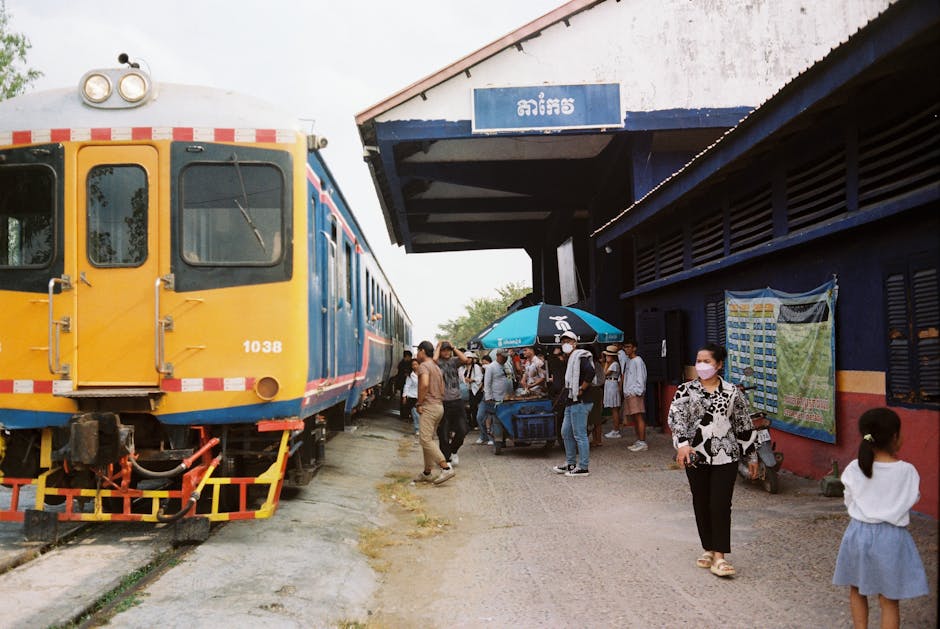
Since about 2017 there have been two places you can ride a bamboo train near Battambang, and the distinction matters. The original line runs from O Dambong (about seven kilometres southeast of the city) out to O Sra Lav village, roughly seven kilometres along a single-track stretch of the old Battambang–Phnom Penh rail corridor.
This is the bamboo train that featured in documentaries and travel articles for two decades, and for a long time it was the only one.
When the Cambodian government began rehabilitating the national rail line for a planned Phnom Penh–Poipet freight service, the O Sra Lav section was closed to norries for a period and then partially reopened — the situation on any given week depends on the rail repair schedule, and good local operators know the current status.
The “new” bamboo train, known as the Banan Bamboo Train, opened near the Wat Banan temple complex about twenty kilometres south of Battambang as a purpose-built tourist facility.
It is shorter (roughly one kilometre of track, out-and-back), runs on a loop rather than a single-track line so you do not experience the classic norry-meeting-another-norry lift-and-pass ritual, and has a larger souvenir market at the turnaround point. It is the easier, family-friendly option, and it is what you will be taken to by default by tours that prioritise reliability over authenticity.
The old line is better if you can get it. The ride is longer, the countryside is more open, the passing ritual when you meet another norry is the single most memorable thing about the whole experience, and the village at O Sra Lav is a working place rather than a purpose-built tourist stop.
The new line is the better choice if you are travelling with young children, if you have mobility issues that make the bumpier old line uncomfortable, or if the old line is closed for rail work that week.
When you book any of the three tours above, message the operator at booking and ask which line they are visiting on the day you go — if you have a preference, they will usually accommodate it, and if they cannot they will tell you why.
How a norry actually works
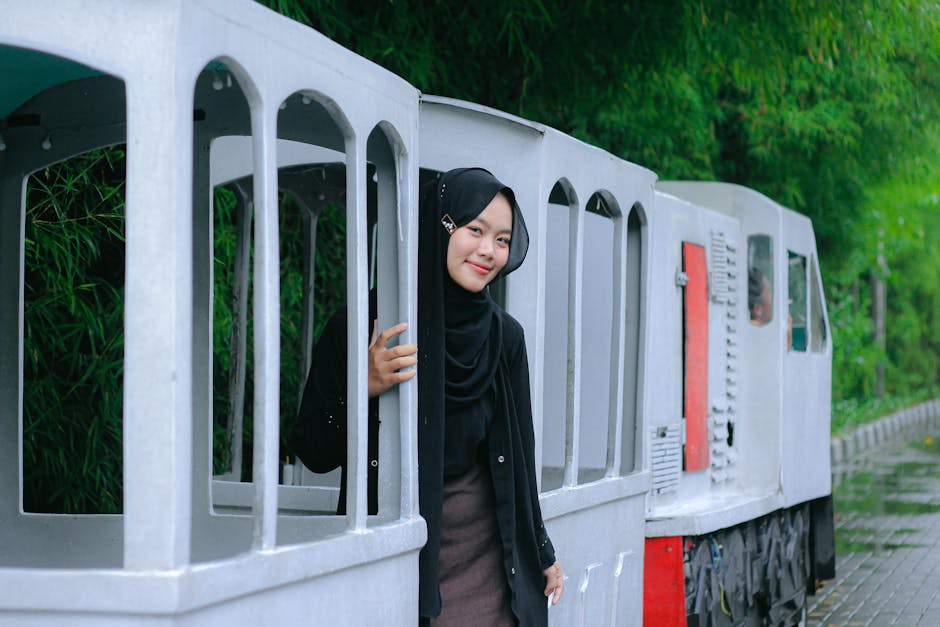
A norry is built around two independent steel axles with solid metal wheels — usually salvaged from old French or Vietnamese railway stock — spaced about 2.4 metres apart to match the single-gauge rail. On top of those axles sits a bamboo platform roughly three metres long and two metres wide, woven or bolted together from split bamboo slats on a light wooden frame.
The platform is not fastened to the axles at all. Your weight holds it down. The rear axle is driven by a fan belt running off a small petrol engine — typically a 6-horsepower motor of the kind used in motorcycles or tuk-tuks — and the driver controls speed by adjusting the throttle directly on the engine.
There are no brakes; to stop, the driver cuts the throttle and uses a short wooden stake to apply friction to a wheel.
Cruising speed is somewhere between 30 and 40 kilometres per hour, though travellers sometimes quote figures up to 50 km/h in specific conditions. It feels faster than that because you are sitting on a bamboo mat two feet off the ground with no sides, no seatbelts, and the wind in your face.
The line is rough — the rails are bent, the joints are unwelded in places, the gaps between sections can be several centimetres wide — and the norry rattles and bangs over each joint at a rate you feel through the bamboo. This is the entire point. The ride is the experience.
When two norries meet, the rule is simple: the one with less weight is lifted off. The platform comes off first (two people, thirty seconds), then the axles are pulled off the rails one at a time (another thirty seconds), and the other norry drives past. Then everything goes back on in reverse order, the engine is restarted, and the ride resumes.
The whole operation takes under two minutes if the drivers have done it before, which they have, thousands of times. It is one of the most elegant pieces of informal engineering you will see anywhere.
What else is on the circuit: Phnom Sampeau and the bat cave
The bamboo train by itself is a forty-minute experience, not a full day out, and this is why every Battambang tour bundles it with Phnom Sampeau — a limestone mountain about twelve kilometres southwest of the city that has three things worth seeing on it. At the top is Wat Sampeau, a working pagoda with a pair of golden Buddhas and a view over the plains toward the Thai border.
Partway down the mountain is the killing cave, a large natural cavern where the Khmer Rouge executed prisoners between 1975 and 1979 by bludgeoning them and dropping the bodies through a skylight in the cave roof; a glass memorial case near the cave entrance holds skulls and bones recovered during the excavation.
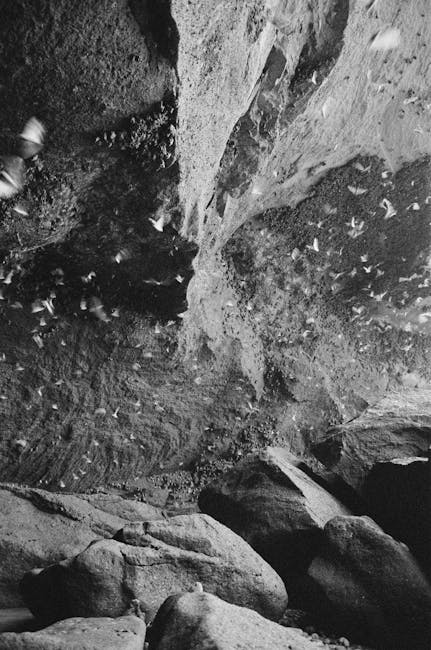
At the base of the mountain, on the opposite side, is the bat cave — a fissure in the rock face that is home to a colony of around five million wrinkle-lipped free-tailed bats.
The sequence matters. Most tours climb the mountain first (either by tuk-tuk on the paved access road or by a steep 800-step staircase if your driver is feeling generous and you are willing), stop at the pagoda, work down to the killing cave for a sombre fifteen minutes, and then come back down to the base in time to be positioned at the bat cave viewing area by about 5:30 p.m.
At dusk — the exact time varies with the season, but typically between 5:45 and 6:15 from November through February — the bats begin to emerge. They come out in a ribbon that lasts between thirty and forty-five minutes without a pause. The ribbon is made of millions of bats flying in a single continuous stream that curves out from the cliff face and heads east over the rice paddies.
It is hypnotic, and it makes almost no sound.
The killing cave is heavy material, and if you have already visited the Choeung Ek killing fields and S-21 in Phnom Penh, you may find the Battambang cave feels redundant or, conversely, feels like necessary context. Either response is valid. The cave is on the way to the pagoda and the bat cave, so you will likely pass it regardless; whether you stop and read the memorial plaques is up to you.
Practical details: timing, prices, what to bring
Timing the day
The bamboo train runs from early morning until about 5:00 p.m. Phnom Sampeau is accessible all day. The bat exodus happens once, at dusk. This constrains the day in a specific way: you want to ride the bamboo train in the early or mid afternoon, be up the mountain by 3:30 or 4:00 p.m., work down to the killing cave by 4:45, and be positioned at the bat cave viewing area by 5:15 at the latest.
A tour that starts at noon or 1:00 p.m. from central Battambang fits this schedule. A morning tour skips the bat cave entirely, which defeats the purpose — unless you have already seen the bats on a previous day, do not book a morning-only version.
Prices
- Bamboo train ride: $5 per person (both the old line and the Banan new line charge the same)
- Phnom Sampeau entrance: $2 per person
- Tuk-tuk up the mountain road (optional, if you do not want to climb the stairs): $5 to $10 for the vehicle, negotiable
- Bat cave viewing: free, but a $1 or $2 tip to the vendor at the base whose chair you occupy is appreciated
- Tour prices above ($9–$15) are for the driver-guide and transport only; add roughly $7 per person for the site entrance fees and the bamboo train ticket to get your total day cost
n
What to bring
-
n
- Cash. Small US dollars ($1, $2, $5 bills) are accepted everywhere in Battambang. Cambodian riel is also fine. Cards are not accepted at any of these sites.
- Sun protection. The bamboo train has no shade. A hat and sunscreen are essential, and sunglasses help with the dust the norry kicks up.
- Closed shoes. The mountain path at Phnom Sampeau is uneven and the killing cave entrance has loose rocks. Sandals are fine but flip-flops are not ideal.
- Water. Your tuk-tuk driver will usually provide one bottle per guest but bring extra if you dehydrate quickly.
- A light layer for after sunset. The ride back into Battambang on the tuk-tuk at 7:00 p.m. can be cool, especially between December and February.

How to get to Battambang in the first place
Most travellers reach Battambang from one of three places. From Siem Reap, the most common approach is a bus or shared van along National Road 6 and National Road 5, roughly 170 kilometres, about three to four hours depending on road conditions. Giant Ibis, Mekong Express, and Capitol Tours all run morning and afternoon departures; the Giant Ibis buses are the most comfortable.
A private taxi from Siem Reap to Battambang runs about $55 to $70 for the car and is faster (under three hours) if you are a family or small group splitting the cost.
From Phnom Penh, the bus journey is longer — about 290 kilometres and five to six hours — and most travellers break it with an overnight in either Pursat or direct from the capital on a morning departure. The bus fare is $8 to $15 depending on the operator.
There is also a boat option between Siem Reap and Battambang along the Stung Sangker river and across Tonlé Sap lake. This is a seasonal service that runs only when the water levels are high enough, typically August through February, and it takes seven to nine hours.
Reviews of the boat are mixed — the scenery through the floating villages is beautiful and genuinely different from anything you can see by road, but the seating is uncomfortable and the boats are often overloaded. If you are an unhurried traveller with a camera who wants to see floating villages that are not tourist productions, the boat is worth it.
n
If you are on a tight schedule or if you already visited the Kampong Phluk floating village from Siem Reap, take the bus.
Is the bamboo train still worth it?
n

There is a genre of travel writing that says the bamboo train “was great ten years ago but has become a tourist trap.” This is half right and half wrong, and the nuance matters.
It is true that the bamboo train is no longer a genuinely local form of transport. The norries were originally built by villagers to move rice, firewood, and livestock along the disused rail corridor; today they exist almost entirely to carry travellers on a seven-kilometre return trip, and the villagers who used them have mostly switched to motorbikes and pickup trucks.
It is also true that the souvenir stalls at the O Sra Lav turnaround can feel aggressive, and that the ride itself is short (about twenty minutes each way).
It is not true that this makes the experience worthless. The norry is still the only bamboo-and-engine contraption running on actual railway track anywhere in the world, the disassembly ritual is still the real thing, the rice paddies are still rice paddies, and the drivers are still local.
At $5 for the ride it is one of the cheaper small adventures you will have in Cambodia, and paired with the bat cave at sunset it makes for one of the best half-day circuits in the country. Come expecting a short, windy, loud ride through a rural landscape, rather than a profound cultural encounter, and you will be happy.
A one-day Battambang plan around the bamboo train
If you are building your own day in Battambang around the bamboo train — either because you prefer to assemble it piece by piece or because you are staying in town for two or three days and the afternoon tours are only one part of your plan — here is the shape that works:
Morning (8:00 a.m. to noon): Start with breakfast at one of the cafes on Street 2.5 in the old French quarter (Kinyei, Jaan Bai, or The Lonely Tree are all good), then spend two hours walking the old town: the colonial buildings along the riverfront, the central market, and the small Battambang Museum if it is open (opening hours are unreliable, so check the day before). This is a relaxed morning and a good contrast to the busier afternoon.
Lunch (noon to 1:30 p.m.): Lunch at one of the riverside restaurants on Psar Nath street. The fish amok and the beef lok lak are the dishes to order if you want something local; every menu has both. (If you want to learn to make them yourself, the Khmer cooking classes in Siem Reap cover both dishes in their standard four-dish menus.)
n
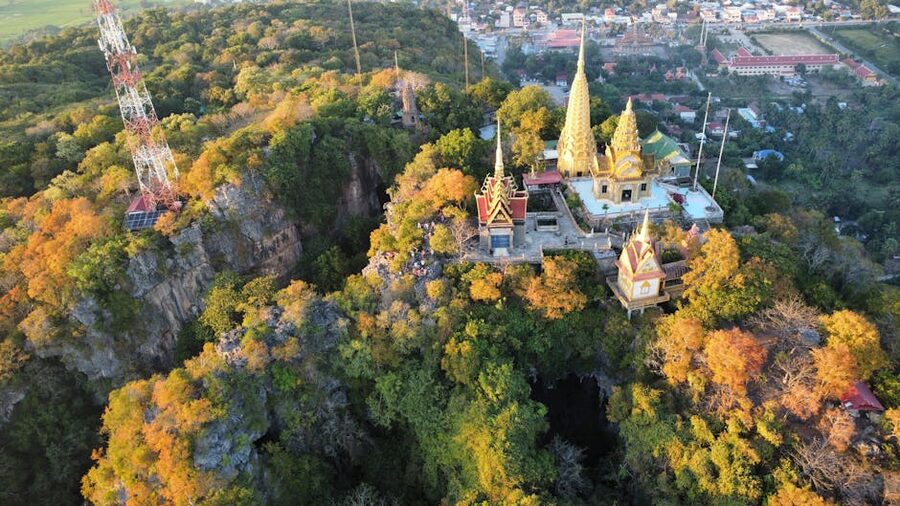
Afternoon (1:30 to 7:30 p.m.): Pick up the afternoon tuk-tuk tour from one of the three operators above. Bamboo train first, then Phnom Sampeau, then the bat cave at dusk. Back in town by 7:30.
Evening: Dinner at a sit-down place — Jaan Bai is the standout if you are willing to spend $15 to $20 for an elevated Cambodian-fusion menu, or Pomme is the cheaper option with equally good food.
If you have energy left after dinner, there is usually something happening at the Phare Ponleu Selpak circus school (not the same as the Phare Cambodian Circus in Siem Reap but the original Battambang school that trained those performers), which is worth seeing if there is a show on your night.
Where to stay in Battambang
n
Battambang has a small but solid accommodation scene that is noticeably cheaper than Siem Reap or Phnom Penh. Most independent travellers stay in the old French quarter near the river, which is walkable to everything in town and a five-minute tuk-tuk ride from the main bus station.
- Budget ($10–$20): Ganesha Family Guesthouse, Here Be Dragons, or Pomme Hostel. All three are clean, central, have reliable wifi, and can arrange bamboo train tours directly if you prefer to book at the front desk rather than online.
- Mid-range ($30–$60): Classy Hotel & Spa, Hotel Royal, or La Villa (a converted French-era mansion on the riverfront). La Villa is the most atmospheric of the three.
- Upscale ($80–$150): The Bambu Battambang Hotel or Maisons Wat Kor. Maisons Wat Kor is a countryside property about five kilometres from town, built in the style of traditional Khmer wooden houses, and is the one to book if you want quiet over convenience.
What to do before and after your Battambang day
Battambang is usually a two-or-three-night stop between the two big Cambodia anchor destinations. If you are working through a classic Cambodia itinerary, it fits naturally after Siem Reap and before either Phnom Penh or the land border to Thailand.
- Before Battambang: Siem Reap is the obvious predecessor, and if you are building a Cambodia trip from Bangkok or Ho Chi Minh City via Siem Reap, your Angkor days should come first. Our guides to booking an Angkor Wat sunrise tour and the Banteay Srei day trip cover the two temple tours most travellers combine with a Siem Reap stay.
- After Battambang: Phnom Penh is the most common next stop, and from there the classic route is either on to the coast at Kep and Kampot, or across the border to Vietnam or Thailand. If you are staying in Siem Reap longer rather than moving on, add a Khmer cooking class, a trip up Kulen Mountain, and an evening at the Phare Cambodian Circus.

Frequently asked questions
n
How long does the bamboo train ride last?
About 40 minutes total on the old O Sra Lav line: roughly twenty minutes out to the turnaround village, a ten-minute stop for drinks and souvenirs, and twenty minutes back. The Banan “new” line is shorter, about twenty-five minutes total including the turnaround stop.
Is the bamboo train safe?
It is as safe as any other informal Cambodian transport, which is to say the risks are real but small and the operators have been running the same routes for years. There are no seatbelts and no crumple zones; the main hazards are falling off if you try to stand up while the norry is moving, and dust in your eyes. Sit down, hold on, and you will be fine.
The norries are slow enough and light enough that the disassembly meetings at speed do not happen — drivers can see each other coming from hundreds of metres away.
Can I book the tour on arrival in Battambang?
n
Yes, but it is not the best strategy in high season. Between November and February, the afternoon tours with Samol and Bun often sell out a day or two in advance. Booking online through GetYourGuide or Viator guarantees you a slot; booking at your guesthouse on arrival usually works in low season but risks disappointment in peak months.
Do I need a guide at the killing cave at Phnom Sampeau?
No. There are information plaques in English at the cave entrance, the memorial glass case speaks for itself, and the site is small enough to understand without narration. Your tuk-tuk driver will give you context on the drive up the mountain, which is enough.
What time should I arrive at the bat cave?
Aim to be in position by 5:15 p.m. year-round. The exodus typically starts between 5:45 and 6:15 depending on the season, but it can begin earlier on overcast days and later on bright clear ones. Arriving 30 minutes early gives you time to find a good viewing spot — the best ones are along the road opposite the cave face with an unobstructed view of the opening.
Is the bamboo train experience good for children?
Yes, especially the newer Banan line, which is shorter, slower, and has a playground-like souvenir village at the turnaround. The old O Sra Lav line is fine for older children and teenagers but the bumps and the wind can be unsettling for very young kids. The bat cave is uniformly a hit with children of all ages.
Can I do the bamboo train and the bat cave in one evening without a full tour?
Yes, if you hire a tuk-tuk privately for the afternoon. The rate for a private tuk-tuk with driver for a four-hour afternoon circuit is roughly $20 to $25 for the vehicle (not per person). This works out cheaper than the group tours for a family of three or four, and slightly more for a couple. You lose the driver-guide who speaks good English and knows the context, which is the reason most travellers do book a proper tour.
Final thoughts
n
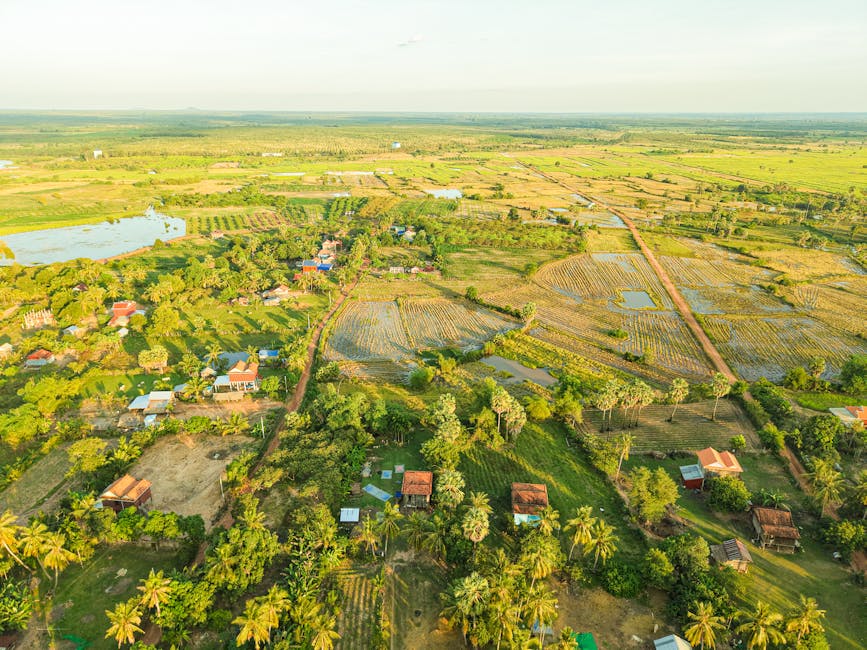
Battambang is the Cambodia stop that travellers either skip entirely or fall in love with.
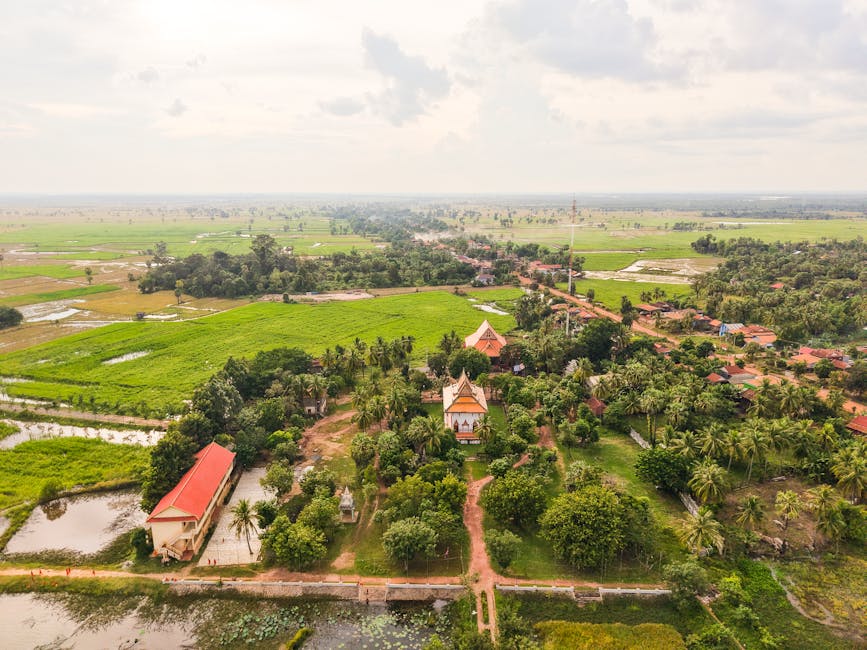
The bamboo train is the obvious anchor for a day out, but the real pleasure of a Battambang visit is the slower pace — the cafes, the French-colonial architecture, the quieter pace of the riverfront, the feeling of being in a provincial Cambodian town that has not yet been reshaped around tourism the way Siem Reap has.
Spend one afternoon on the bamboo train and the bat cave, spend another morning walking the old town, and you will understand why the travellers who make it here tend to stay longer than they planned. All three of the tours above will give you a good, well-organised afternoon; the decision between them is about small preferences rather than quality, and you will not regret any of the three.
And that wraps up the Cambodia series. From Angkor Wat sunrise to the bamboo train at dusk in Battambang, these eight guides cover the circuit most independent travellers end up doing in one form or another on a two-week trip through the country. Safe travels — Cambodia is a remarkable place, and the people you meet along the rail line outside Battambang are part of what makes it that way.