
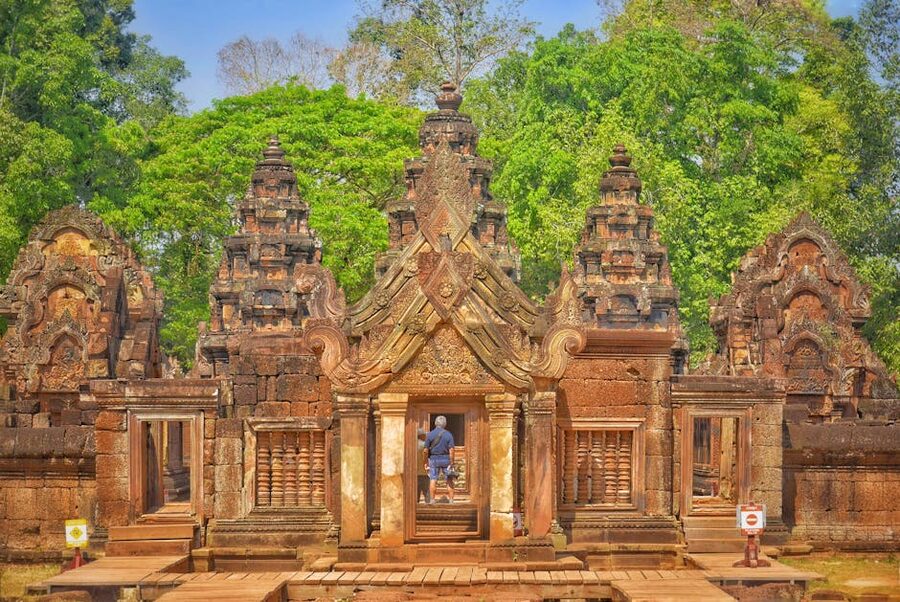
Banteay Srei is the only major temple at Angkor that wasn’t built by a king. It was commissioned in 967 CE by two Brahmin counsellors, carved from a deep rose-pink sandstone almost nowhere else in the complex, and it holds the finest, most delicate stone carvings anywhere in the Khmer empire — reliefs so precise and so small that archaeologists once assumed they had to be the work of women.
The French called it the “Citadel of Women” for that reason, and the name stuck, even though the original Khmer name translates closer to “Citadel of Beauty.” You can stand thirty centimetres from a thousand-year-old lintel and trace a monkey’s fingernail with your eye. Nothing else at Angkor gets that close.
The catch is that Banteay Srei sits 37 kilometres northeast of Siem Reap, well outside the Angkor Archaeological Park loop, and most day-trippers never get there.
Pair it with Beng Mealea or the Grand Circuit temples and you’ve got the best-value full day of temple-hopping in Cambodia — fewer crowds than Angkor Wat, better carvings, and a long drive through rice paddies that doubles as the countryside tour you didn’t know you wanted. This is the article I wish I’d had before picking a tour.
I’ll walk through the three best-reviewed tours that go here, explain exactly what each one includes, compare the remote-temple add-ons (Beng Mealea, Koh Ker, the Grand Circuit), and share the small logistical choices that make the difference between a great day and a sticky, exhausted one. No fluff — just what a friend who’s done this would tell you.
- Why Banteay Srei is worth the extra drive
- Where Banteay Srei sits on the map
- The three best tours for Banteay Srei (and what they actually include)
- 1. Full-Day Banteay Srei & 4 Temples Join-in Tour
- 2. Ultimate Private Guided Tour — Sunrise Angkor Wat, Bayon, Ta Prohm, Banteay Srei
- 3. Banteay Srei & 5 Temple Grand Circuit Tour (from Siem Reap)
- Which tour is right for you?
- What about adding Beng Mealea or Koh Ker?
- What to expect when you actually arrive at Banteay Srei
- The carvings to actually look for
- Practical details nobody tells you
- A word about Beng Mealea’s “landmines cleared” signs
- Combining Banteay Srei with the rest of your Siem Reap days
- Can you do Banteay Srei independently without a tour?
- What’s the best month to visit?
- Final booking tips
- Quick answers
Why Banteay Srei is worth the extra drive
Every tour-company leaflet in Siem Reap calls Banteay Srei a “must-see,” which is what they call everything. Here’s the honest version. Three things make this temple genuinely different from the rest of the Angkor complex.
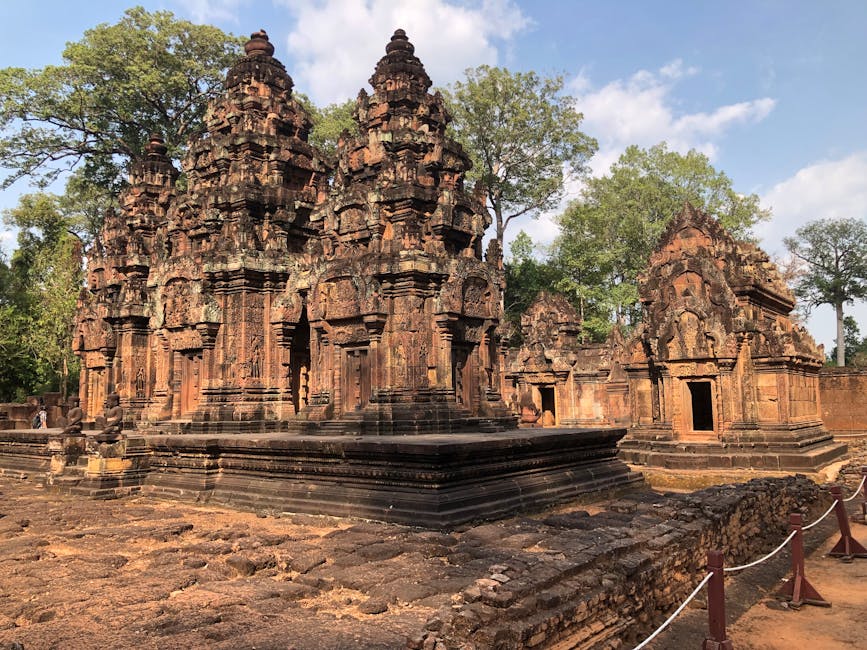
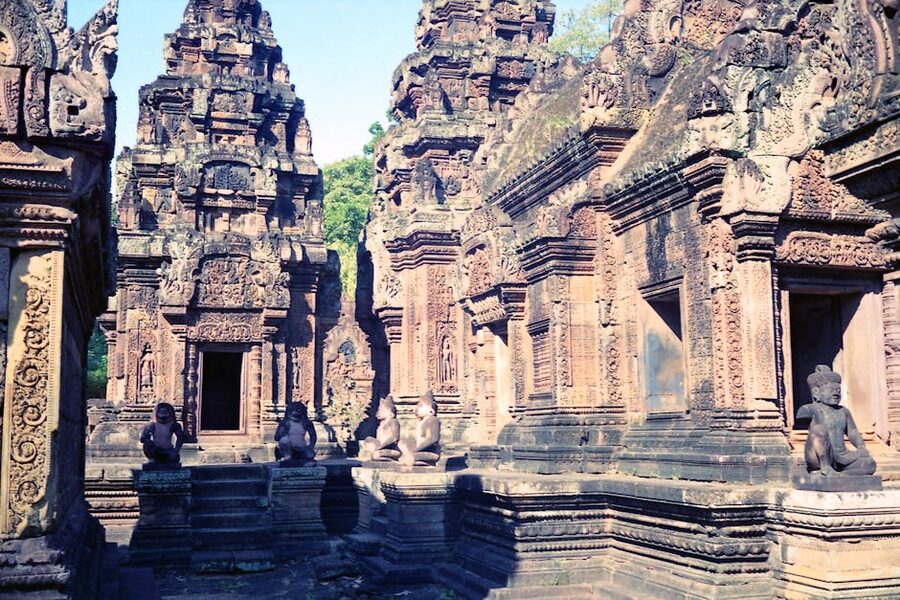
First, the stone. Banteay Srei was built from a hard, fine-grained pink and red sandstone that takes carving the way hardwood takes a chisel — sharp lines, deep undercuts, crisp edges that have survived a thousand rainy seasons. Most of Angkor is built from a softer grey sandstone that weathers into a blurry, dreamy softness. Banteay Srei looks, in places, like it was finished last Tuesday.
Second, the scale. The temple is tiny. The central sanctuary towers rise maybe ten metres. You can walk the whole outer enclosure in about ten minutes. This smallness, combined with the density of the carvings, means every surface is worked.
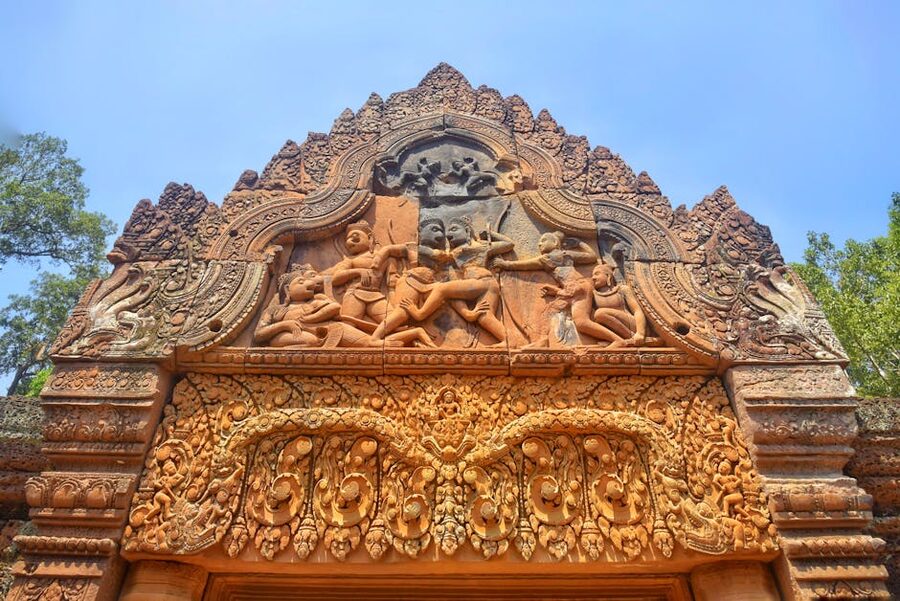
Every pediment, every lintel, every door jamb is a mythological scene — Vishnu as a lion-man tearing open a demon king, the monkey brothers Sugriva and Valin locked in their deadly duel from the Ramayana, Ravana shaking Mount Kailasa while Shiva and Parvati balance on top. A single afternoon here is a crash course in Hindu epic.
Third, the context. Because it’s 37 km out of town, the tour buses that dump a hundred people at Angkor Wat at sunrise don’t make it here until late morning at the earliest, and most leave by two. Mid-afternoon, you can sometimes have the inner enclosure almost to yourself, which is unthinkable at Angkor Wat or Ta Prohm.
Where Banteay Srei sits on the map
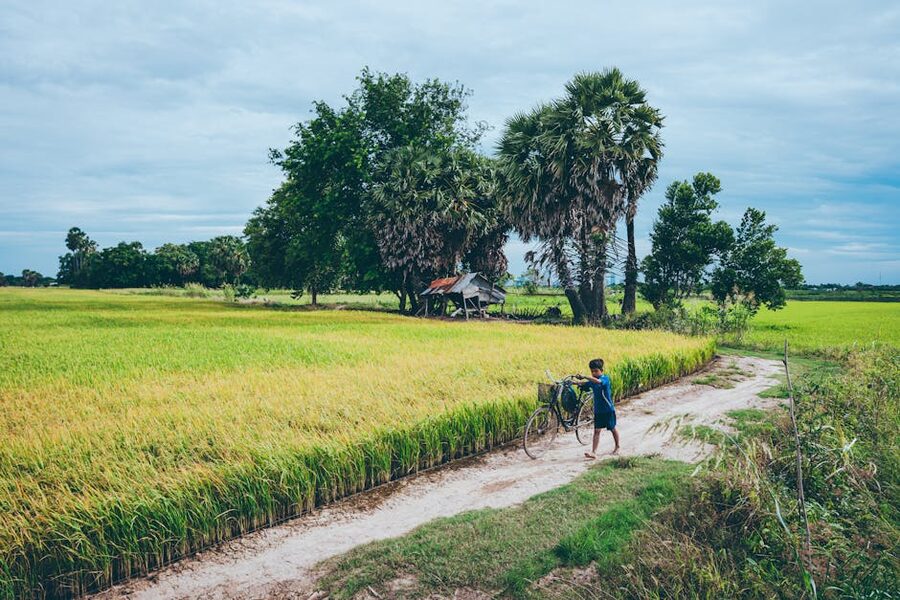
Siem Reap is flat. You leave town heading north, cross the Siem Reap river, and within ten minutes you’re on a two-lane road between rice paddies, sugar palms, and the occasional roadside stall selling palm sugar wrapped in banana leaf.
The road climbs almost imperceptibly toward the foothills of Phnom Kulen, the sacred mountain that feeds Siem Reap’s water table and where the Khmer empire was spiritually founded. Banteay Srei lies at the base of that rise, on the way to — but not quite at — the mountain itself.
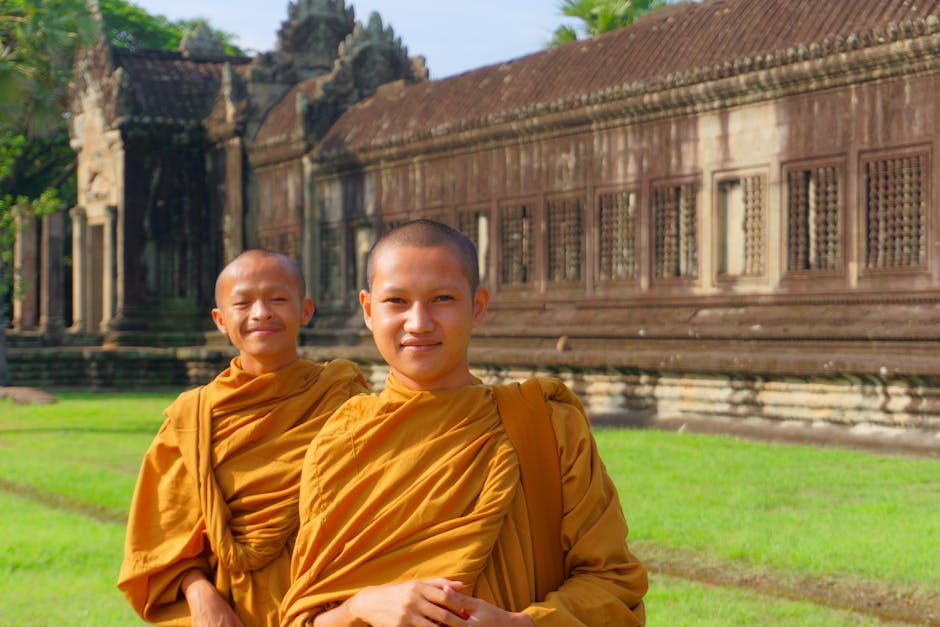
From central Siem Reap to Banteay Srei is about 1 hour 15 minutes by car, 1 hour 30 by minibus with stops. The road is sealed the entire way and in reasonable condition. You’ll see a handful of villages, a few saffron-robed monks on bicycles, and probably at least one roadside wedding if you go on a weekend. It’s the best “free” countryside tour included with any temple day in Siem Reap.
The three best tours for Banteay Srei (and what they actually include)
I pulled the top-reviewed Banteay Srei tours from our tour database — anything with at least 300 verified reviews and a rating above 4.8 — and three clear winners emerged. One budget join-in, one premium private, and one mid-priced Grand Circuit combo. They cover every reasonable budget.
1. Full-Day Banteay Srei & 4 Temples Join-in Tour
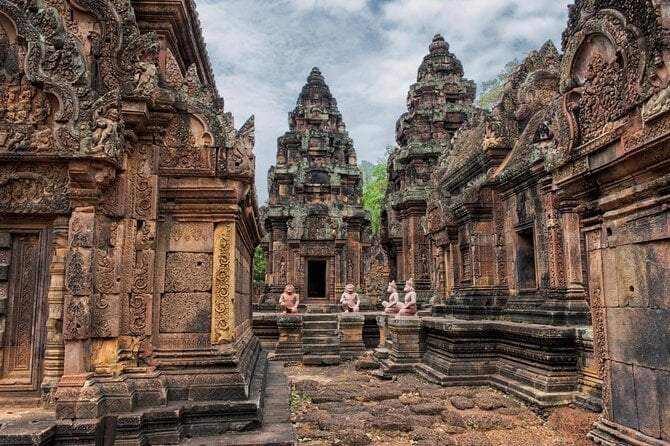
This is the tour almost everyone who comes to Banteay Srei on a budget ends up on. At $20 it’s astonishing value — air-conditioned minibus pickup from your hotel, an English-speaking guide, all temple transfers, and a circuit that includes Banteay Srei plus four other temples on the Grand Circuit: Pre Rup, East Mebon, Ta Som, and Preah Khan. Lunch and the $37 Angkor Pass are not included and you pay for both on the day.
What makes this tour work is that the driver knows the timing game. You hit Banteay Srei first thing after the morning rush, then loop back toward town via the Grand Circuit so you end at Preah Khan in the late afternoon light — which, if you haven’t seen Preah Khan with slanted sun coming through its collapsed galleries, is itself worth the $20. The shared minibus holds about twelve people and you will consistently hear mention how punctual the pickups are.
Honest caveats: it’s a join-in, so the pace is set by the group, and if you’re someone who likes to linger for an hour at a single temple, you’ll feel rushed. You also don’t get to choose the order. And the “English-speaking guide” quality varies — some travellers got an encyclopedic local historian, others got a driver who pointed and smiled. For $20 and five temples, it’s still the single best-value full day at Angkor.
2. Ultimate Private Guided Tour — Sunrise Angkor Wat, Bayon, Ta Prohm, Banteay Srei
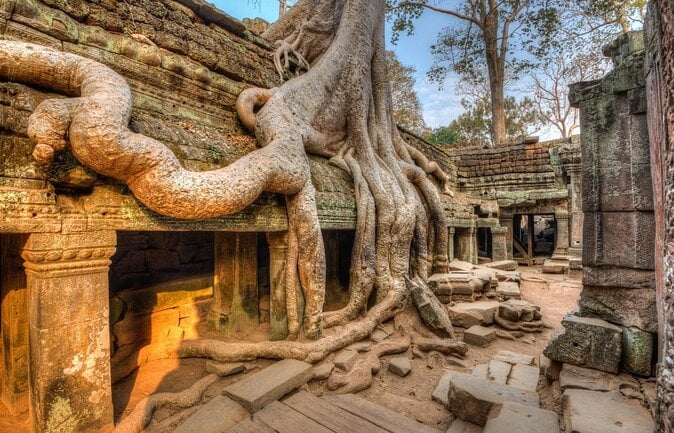
If you’re travelling as a couple or a small group and want to do Angkor properly in a single day, this is the one. The price is per vehicle, not per person — so a family of four pays $32.50 each, and a group of six pays about $22 each, which is cheaper than the shared tour above with none of the trade-offs.
You start at 3:30 am for Angkor Wat sunrise, hit Bayon’s smiling faces at Angkor Thom before the tour-bus wave arrives, then Ta Prohm (the tree-root “Tomb Raider” temple) while the air is still cool. Breakfast is at a quiet spot most crowds miss. Then a longer drive out to Banteay Srei, arriving around midday when — counterintuitively — the harsh light actually makes the pink sandstone glow most strongly. You’re back in Siem Reap by late afternoon.
The advantage over the $20 join-in isn’t comfort — both use air-conditioned vans — it’s time. A private guide will spend twenty minutes at a single pediment if you want to understand it, or speed through if you’re flagging. You set the pace.
Almost every review praises the guide’s depth of historical knowledge, which at a temple like Banteay Srei, where every square foot has a story from the Ramayana or Mahabharata, is the entire point. This tour is featured in our Angkor Wat sunrise guide as one of the top picks, and it’s the same operator.
Honest caveats: the 3:30 am pickup is brutal if you’ve just flown in. A 12-hour day in 35-degree heat is a lot. If you’re jet-lagged or travelling with small kids, consider splitting the same itinerary across two days.
3. Banteay Srei & 5 Temple Grand Circuit Tour (from Siem Reap)
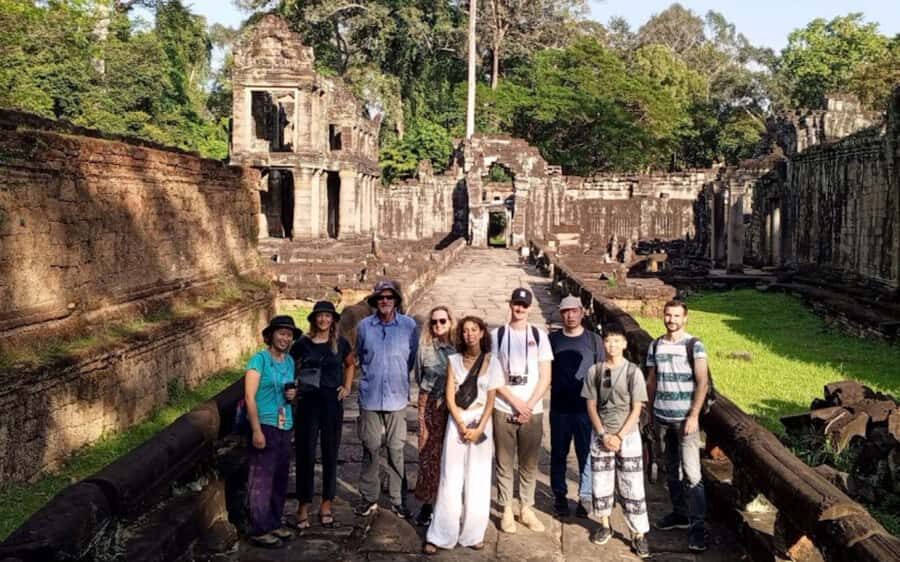
This is the GetYourGuide twin of option 1 — same operator, almost identical route, booked through a different platform. I include it because if you prefer GetYourGuide’s cancellation policy (free until 24 hours before in most cases) or their app, it’s the same experience. Some travellers also find GetYourGuide’s chat support faster in Europe time zones.
The route is Banteay Srei first, then the five temples of the Grand Circuit — Pre Rup, East Mebon, Ta Som, Neak Pean, and Preah Khan. That’s one extra stop compared to the Viator version (Neak Pean is on this one, off the other), and Neak Pean is a little worth seeing on its own — a small island temple in the middle of a baray, or artificial lake, reached by a wooden causeway.
Pick this one if you want a GetYourGuide booking or if you specifically want Neak Pean included. Otherwise there’s not much daylight between it and option 1.
Which tour is right for you?
Quick decision framework based on how you’re travelling.
Solo backpacker or couple on a budget: Option 1 or 3. $20 per person is almost unbeatable, and the join-in format means you’ll probably make a few friends over the course of the day. Pick Viator if you want English customer service in American hours, GetYourGuide if you want European-time support or the 24-hour free cancellation.
Family of four, or group of three-plus: Option 2. The math flips in your favour once you’re sharing the vehicle. Four people at $32.50 each means you get a dedicated guide, no strangers, a custom pace, and the sunrise experience — all for about $13 more per person than the budget option.
First-timer at Angkor who only has one day: Option 2. It’s the only one that combines Angkor Wat sunrise with Banteay Srei, which is the two-temple pairing almost everyone regrets missing.
Repeat visitor who has already done Angkor Wat: Option 1 or 3. You don’t need another sunrise; you need a full day of less-visited temples, which is exactly what the Grand Circuit tours deliver.
What about adding Beng Mealea or Koh Ker?
A handful of tour options bundle Banteay Srei with one of the deeper jungle temples — Beng Mealea, about 40 km further east, or Koh Ker, a former Khmer capital about 2 hours beyond that. Both are extraordinary and both change the calculation.
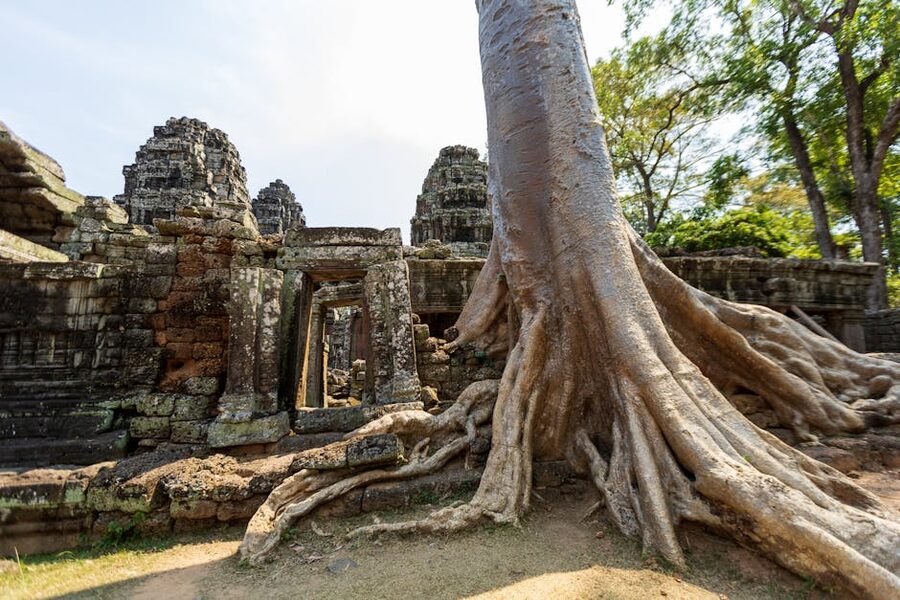
Beng Mealea is a massive collapsed temple in the jungle, left mostly unrestored, with wooden boardwalks winding through toppled galleries and tree roots strangling pediments. If Ta Prohm is “the Tomb Raider temple” then Beng Mealea is what Ta Prohm would look like if nobody had cleared the rubble. It’s atmospheric in a way that no restored temple can match.
Expect to pay around $49–54 per person for a combined Banteay Srei + Beng Mealea + Kulen Waterfall day, which is still fantastic value and one of the best single days you can do out of Siem Reap.
Koh Ker is serious effort. It’s a 10th-century Khmer capital built in a rush under King Jayavarman IV, centred on a 36-metre sandstone step-pyramid called Prasat Thom that looks more Mayan than Khmer. The drive is long — 2 to 2.5 hours each way from Siem Reap — and you lose most of a day to transit. Worth it if you’ve got two or more days in Siem Reap and want something genuinely different. Not worth it if you’re trying to squeeze Angkor into 24 hours.
If you want the best single combo day, a Banteay Srei + Beng Mealea tour beats every other permutation for value and variety. You get the finest carvings at Angkor in the morning, a jungle temple with almost no other visitors after lunch, and a drive through rural Cambodia connecting the two. For the Kulen Mountain add-on, see our separate Kulen Mountain waterfall guide.
What to expect when you actually arrive at Banteay Srei
Getting out of the van at Banteay Srei, the first thing you notice is that the air is different. You’re 37 km from town, the elevation has crept up a little, and if it’s morning there’s often a light mist hanging on the rice fields across the road. A wide walkway of flagstones leads from the parking lot past a small museum (skip unless you have an hour to burn) toward the temple entrance.
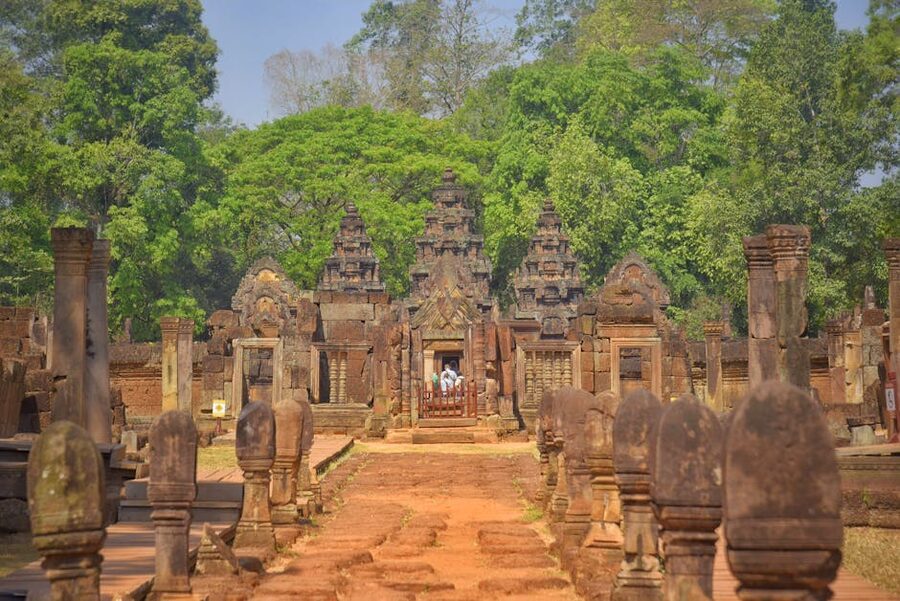
The walk is about 400 metres along a raised causeway through the outer enclosure. Take it slowly — the first gopura (entrance pavilion) has beautiful pediments that most people walk straight past. The temple itself sits inside a moat, surrounded by three nested rectangular walls.
You can only enter the innermost enclosure from a single narrow doorway on the eastern side, and there’s a rope barrier about a metre inside that keeps visitors from touching the sanctuary towers. This is a good thing — the soft corners of the carvings would have been polished smooth by now otherwise.
You’ll spend about 45 minutes to an hour here on a typical tour. That’s the right amount. The temple is small, the carvings demand close attention, and anything past an hour starts to feel like trying to read every page of an illuminated manuscript.
The carvings to actually look for
If your guide is good, they’ll walk you through these. If they’re not, here’s the checklist.
The east gopura lintel: Indra riding his three-headed elephant Airavata, surrounded by swirling clouds. It’s the first thing you see and one of the most complete scenes.
The central sanctuary’s southern pediment: Ravana shaking Mount Kailasa, with Shiva and Parvati perched on top and a crowd of terrified rishis and animals tumbling down the slopes. It’s the masterpiece of Banteay Srei — a single stone carved with maybe forty figures, each one individualised.
The library pediments: The two small “library” buildings on either side of the central sanctuary have some of the best pediments in Cambodia. The northern library shows Indra summoning rain on the Khandava forest fire; the southern shows Kama, the god of love, firing an arrow at a meditating Shiva.
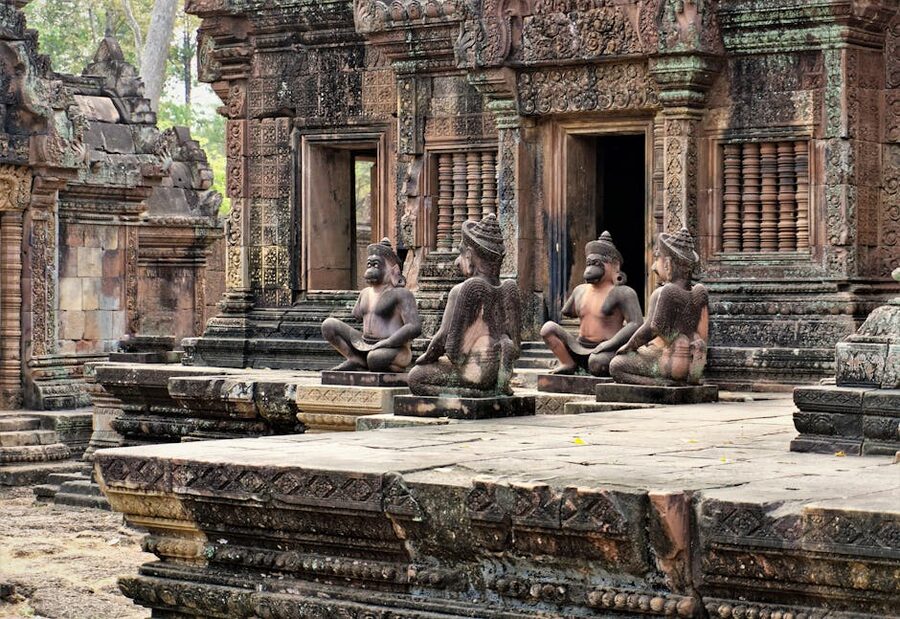
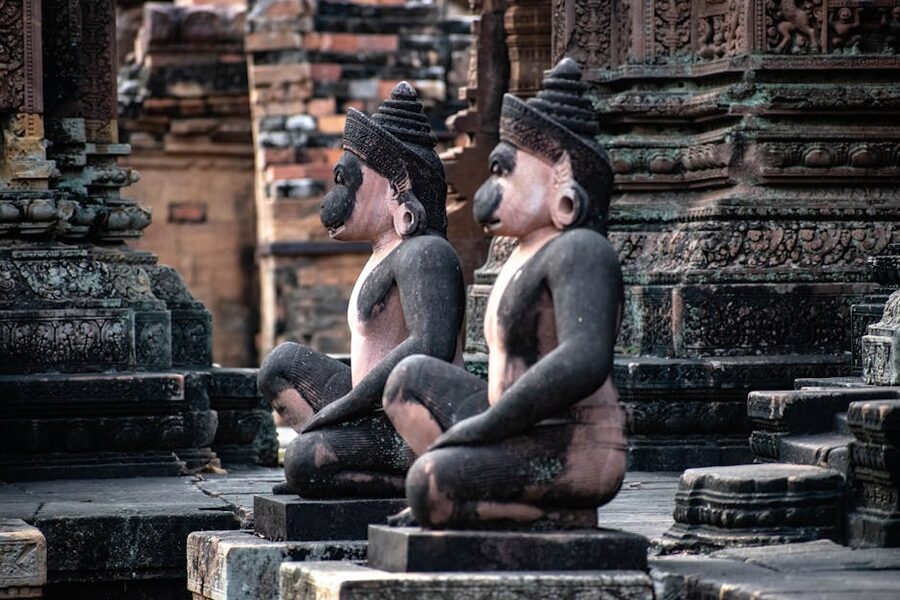
The guardian figures: The monkey and lion-man guardians at the base of the towers are reproductions — the originals are in the National Museum in Phnom Penh, and one of them was famously stolen by André Malraux in 1923 before he became France’s Minister of Culture. Yes, really. Look it up.
Practical details nobody tells you
Angkor Pass: You need one. A single-day pass is $37, a three-day is $62, a seven-day is $72. Buy it at the official ticket centre on the way out of Siem Reap — most tours stop there as part of the pickup. Bring a passport photo, but the ticket centre has a camera if you don’t. Children under 12 are free with a passport showing their age.
Dress code: Shoulders and knees must be covered to enter any Angkor temple, including Banteay Srei. A long sleeveless dress with a light scarf works; hiking shorts above the knee don’t. Sarongs are sold at the parking lot if you forget, but they’re expensive and the quality is poor. Pack properly.
Heat: Cambodia’s hot. March to May is brutal (35°C+ with high humidity). November to February is the sweet spot (dry, often cool in the mornings). June to October is the green season — fewer crowds, dramatic afternoon thunderstorms, and Banteay Srei’s pink stone looks its best against rain-dark skies. Bring at least 1.5 litres of water per person, a hat, and sunscreen. Your tour will have bottled water but not enough.
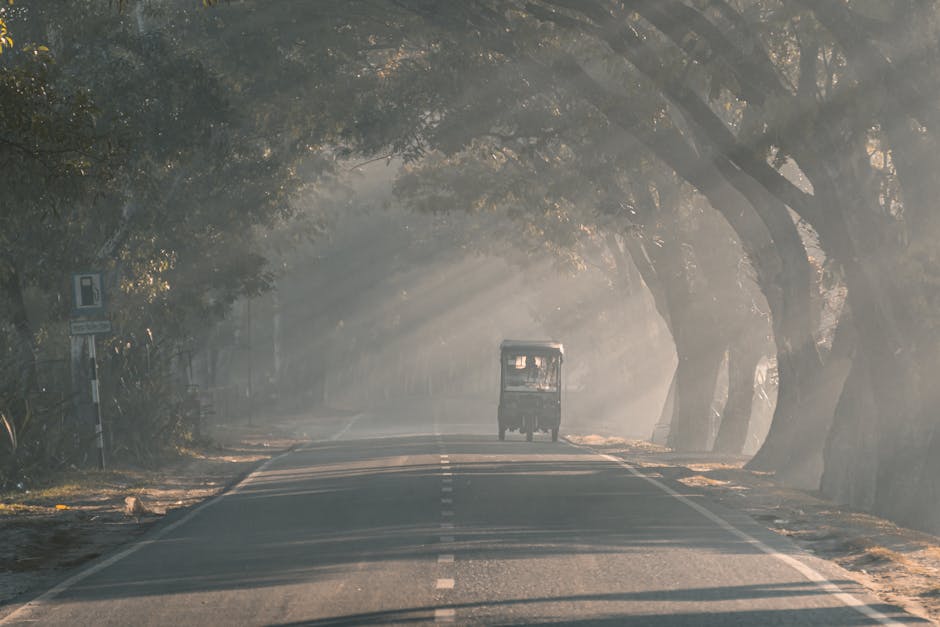
Tuktuk vs minibus: You can hire a tuktuk for Banteay Srei — expect to pay around $30–35 for the whole day. But 74 km round trip in an open vehicle on a dusty road, at Cambodian noon, is a lot. The $20 air-conditioned minibus is better in every way that matters except photographs.
Tipping: Guides expect $5–10 per person per day; drivers $2–3. It’s not compulsory but it’s deeply meaningful — local salaries are low, and the good guides are people who’ve studied Angkor for decades.
Food: There’s a row of simple restaurants by the parking lot at Banteay Srei doing fried rice and amok for about $4–5. It’s fine. If you’re on a join-in tour, lunch is usually at a larger restaurant halfway between Banteay Srei and the Grand Circuit temples. Private tours often stop at a better option near Ta Som.
A word about Beng Mealea’s “landmines cleared” signs
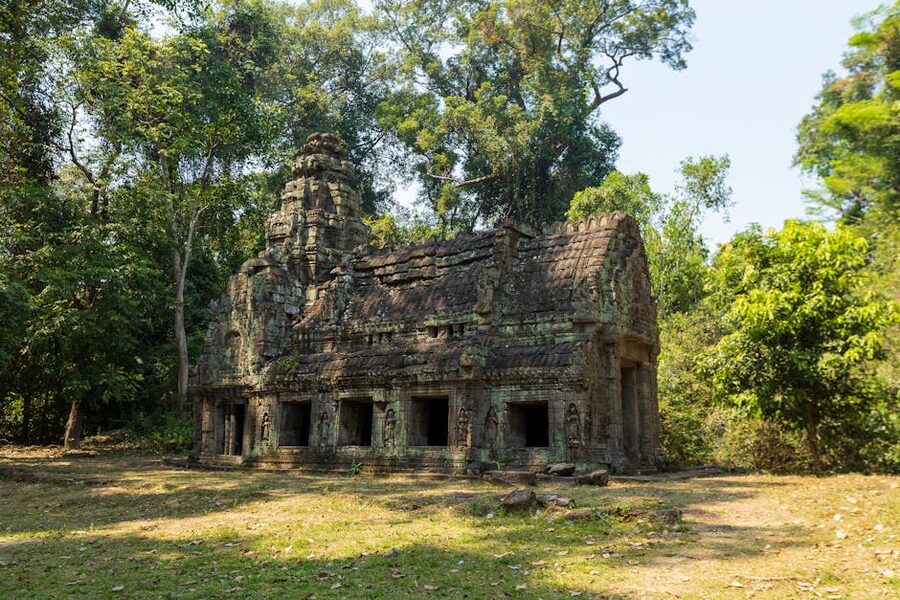
If you do go on to Beng Mealea, you’ll see old signs at the entrance warning about landmines. The site has been cleared for years — since the early 2000s — and the walking paths and boardwalks are all safe. The signs are a legacy from the initial clearance operations. Don’t wander off the marked paths (good practice at any Cambodian jungle site anyway) and you’re completely fine. This is a normal tourist temple now, not an adventure into an active minefield.
Combining Banteay Srei with the rest of your Siem Reap days
Most people come to Siem Reap for 3 to 4 days. Here’s the itinerary I’d recommend if Banteay Srei is in the mix.
Day 1 — Angkor Wat + Bayon + Ta Prohm. The classic “small circuit,” starting with Angkor Wat sunrise. This is the day everyone does. Book option 2 above if you want to add Banteay Srei to this same day (you’ll be wrecked by the end, but it’s doable). Or split it across two days if you can.
Day 2 — Banteay Srei + Beng Mealea + Kulen Waterfall. The “long day out of town.” Different landscape, different temples, minimal crowds, a swim at the waterfall to cool off. The best single day in Siem Reap if you only have two. Our Kulen Mountain tour guide covers this option in detail.
Day 3 — Tonle Sap floating villages + evening Phare Circus. A non-temple day to balance things out. See our Kampong Phluk guide for the floating village and the Phare Cambodian Circus guide for the evening show, which is the best hour of entertainment in Cambodia.
Day 4 — Cooking class + slow morning. A Khmer cooking class is the best “soft” day option — you learn to make fish amok and beef lok lak, eat what you cook, and get back to your hotel pool by 2 pm.
If your trip also takes you to Phnom Penh, add a day for the Killing Fields and S-21 tour. It’s sobering, necessary context for understanding modern Cambodia, and it shouldn’t be rushed.
Can you do Banteay Srei independently without a tour?
Technically yes. You hire a tuktuk or a car with a driver for the day, buy an Angkor Pass, and go. This will work out to roughly the same cost as the $20 join-in tour once you factor in lunch and a driver tip. What you lose is the guide — and at Banteay Srei specifically, the guide is most of the value. The carvings are dense and mythological; without someone to tell you what you’re looking at, you’ll still find it beautiful but you’ll miss 80% of what makes it extraordinary.
If you’re already deeply familiar with the Ramayana and Khmer iconography, going independently is fine. For everyone else, pay the $20 and get a guide.
What’s the best month to visit?
November and December are the sweet spot. The rain is over, the humidity has dropped, mornings are cool enough that you don’t need AC in the van, and the rice fields around Banteay Srei are a vivid, almost radioactive green from the wet season that just ended. Afternoon temperatures still hit 30°C but the mornings are beautiful. Crowds are manageable in November and build through December.
January and February are also excellent but drier — the rice has been harvested by then, so the landscape is more golden-brown. March to May is too hot for comfortable temple-hopping unless you’re used to it. June to October gets you dramatic skies, the green season colours, and roughly half the tourist numbers of peak season, with the trade-off being unpredictable afternoon downpours. The storms pass quickly and many travellers prefer the atmosphere.
Final booking tips
Book at least 48 hours in advance in peak season (November to February). Same-day is usually possible in shoulder season but risky — the highest-rated operators sell out first, and you’ll end up on the tours with 3.5-star ratings instead. Both Viator and GetYourGuide let you cancel free up to 24 hours before the tour, so there’s no real downside to booking early.
If you’re deciding between the $20 group tour and the $130 private tour, think about how many people you’re travelling with. Two people? Split the difference and take the group tour twice for the same total cost. Three or more? The private tour is almost always the better call. A family of five pays $26 each on the private tour and gets the whole day customised.
Finally — and this is the small thing that most guides won’t tell you — bring a small torch or use your phone light inside the central sanctuary towers at Banteay Srei. The inner walls have carvings that are invisible in ambient light but glow in raking torchlight. Most visitors miss them entirely.
Quick answers
How long does a Banteay Srei tour take? Most tours run 8 to 10 hours door-to-door from your Siem Reap hotel. If it’s combined with sunrise at Angkor Wat, closer to 12.
Is Banteay Srei included in the Angkor Pass? Yes. Your standard Angkor Pass covers Banteay Srei, Beng Mealea, the Grand Circuit, and the small circuit. Koh Ker is separate and costs an extra $15.
Is it safe? Yes. Siem Reap is one of the safest tourist towns in Southeast Asia. The tours are run by licensed operators, the roads are fine, and you’ll be in a group or with a guide the entire time.
Can kids handle it? Kids over about 6 enjoy Banteay Srei because the carvings tell stories and the temple is small enough to walk easily. The long days (and the early sunrise start on option 2) are harder. A shorter custom half-day with a private driver is a better call if your kids are under 10.
Why is it called “Citadel of Women”? A French misunderstanding of the name Banteay Srei, which literally means “Citadel of Beauty” or “Women’s Citadel,” combined with the delicacy of the carvings, led early French archaeologists to assume it had been built by or for women. The actual founders were male Brahmin counsellors to King Rajendravarman. The name stuck anyway.
How far in advance should I book? 48 hours minimum in high season, up to a week for the private sunrise tour. Same-day booking works in low season but limits your operator choices.
Do I need an Angkor Pass even for just Banteay Srei? Yes. Banteay Srei is inside the Angkor Archaeological Park ticketing zone, and the rangers at the entrance will check your pass.
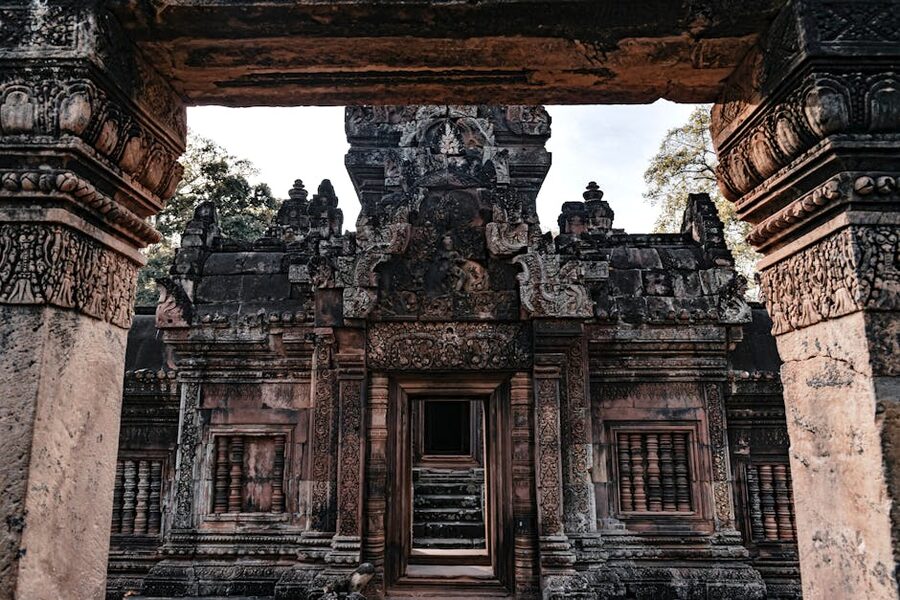
Banteay Srei is the temple that most first-time Angkor visitors skip and most second-time visitors put at the top of their list. It’s not the biggest or the most famous, but it is unquestionably the finest. Spend the extra hour on the road, bring a guide who can read the Ramayana out of the stone for you, and you’ll come away with the single best temple memory of your Cambodia trip.
The pink sandstone glows, the monkey brothers duel on a lintel, Ravana shakes Mount Kailasa above the central sanctuary, and for forty-five quiet minutes a thousand years collapse in on themselves. Book one of the three tours above, bring water and a torch, and go.