
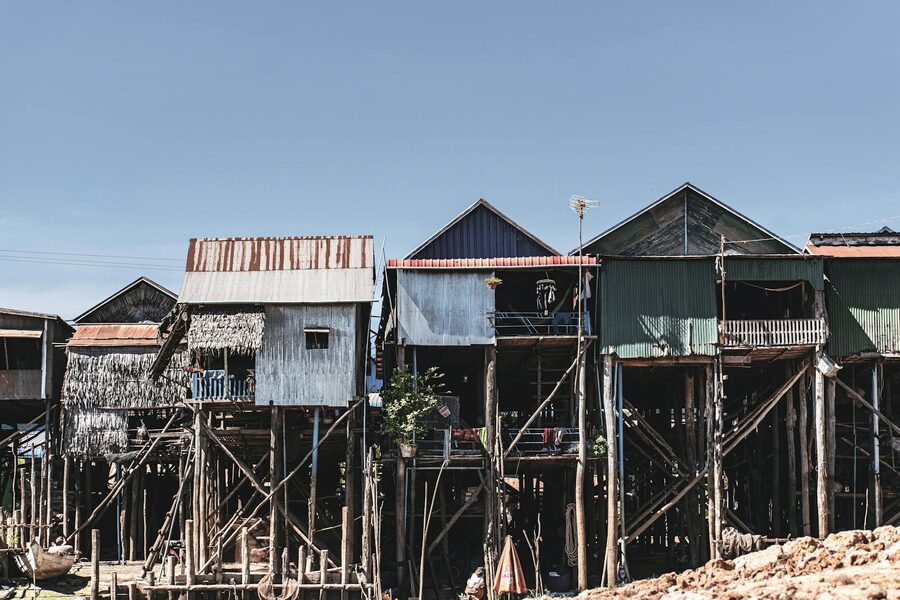
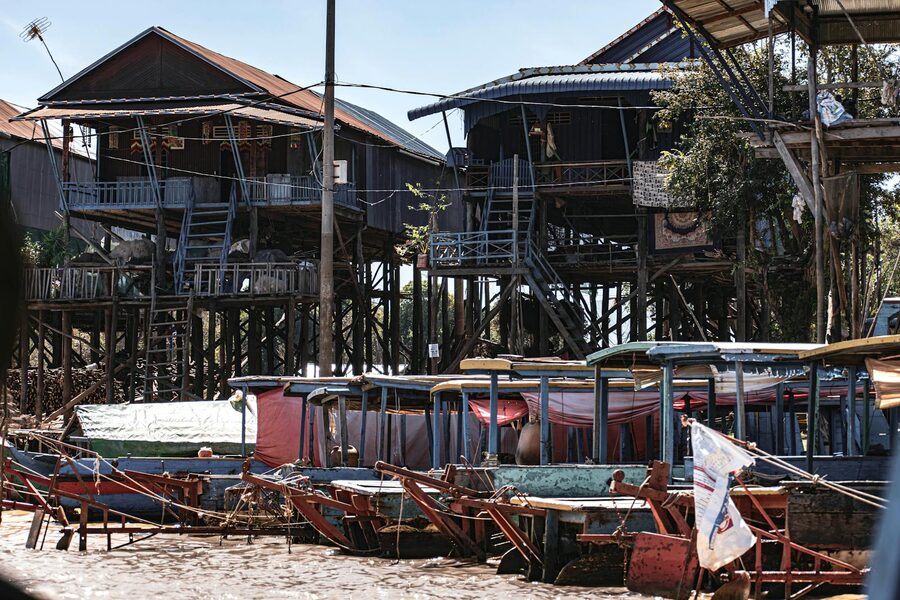
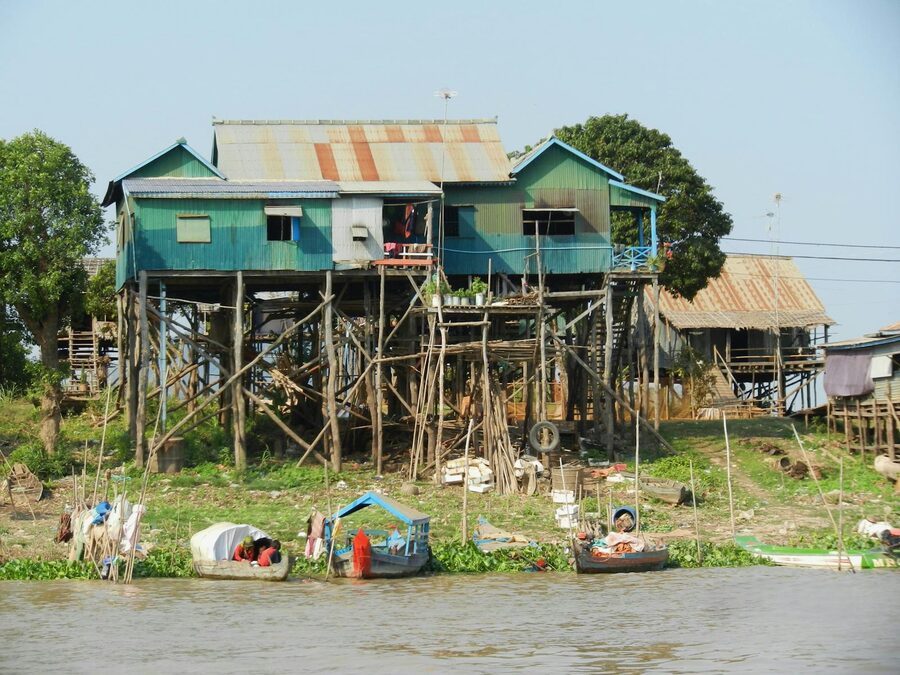
The first time I walked under a house in Kampong Phluk, I tilted my head back and could not see the floorboards. The stilts rise ten meters or more out of the dry earth in March — taller than a three-story building, with bamboo ladders and washing lines strung between them, and kids playing football in the shade where the lake would be in six months.
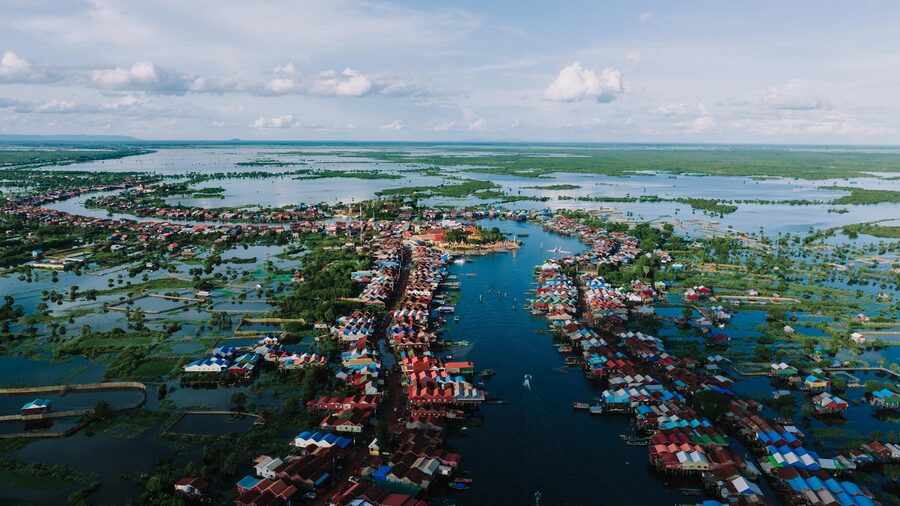
Nobody tells you this before you come. The “floating village” photos you see online are from August through November, when the Tonle Sap swells up and lifts a river right under the front doors. From December to May the water retreats, the stilts stand naked in the dust, and the whole place looks less like a Venice of the Mekong and more like a village that has learned to levitate.
Both versions are worth seeing. The trick is knowing what you’re booking, how to get there without getting ripped off, and which of the three local villages actually lets you see real life instead of a staged version of it. Here’s how to do it.
Short on time? Here are my top 3 picks:
Best overall: From Siem Reap Kampong Phluk Tour by Boat — $20. The one almost everyone books, six hours door to door, guide plus driver, pickup from your hotel.
Best for sunset: Sunset Tour of Floating Village Kampong Phluk — $21. Gets you onto the open lake at golden hour, which is the shot everyone wants.
Best if you have time to stretch out: Siem Reap Tonle Sap Floating Village and Boat Trip — $24. Small-group minibus version with a slower pace and longer time in the mangroves.
- Which Floating Village You’re Actually Booking
- How the Official Entry System Works
- DIY vs Guided Tour — What I Actually Recommend
- The Best Kampong Phluk Tours to Book
- 1. From Siem Reap Kampong Phluk Floating Village Tour by Boat —
- 2. Sunset Tour of Floating Village Kampong Phluk on the Tonle Sap —
- 3. Siem Reap Tonle Sap Floating Village and Boat Trip Tour —
- Wet Season vs Dry Season — Which Is Actually Better?
- How to Get There From Siem Reap
- Tips That Will Save You Time, Money, or Both
- What You’ll Actually See Out There
- Is It Ethical? The Honest Answer
- What to Bring
- Planning the Rest of Your Siem Reap Trip
Which Floating Village You’re Actually Booking
There are three floating villages around the Tonle Sap that show up in tour listings out of Siem Reap, and they are not interchangeable. Knowing which one you are buying a ticket for is the single most important decision you will make on this trip.
Chong Kneas is the closest to town, about 15 kilometers south. It is also the one I actively tell people to avoid. It has been run for travellers so long that the authenticity is long gone, prices are routinely inflated, and there are documented scams involving “donations” to an orphanage that is not really an orphanage. Skip it.
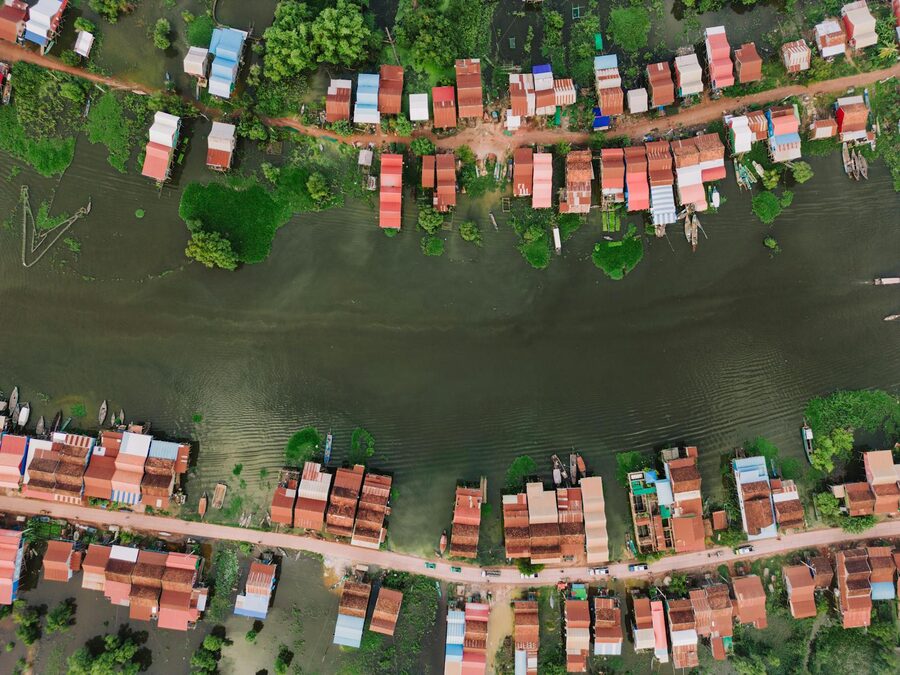
Kampong Phluk sits about 30 kilometers southeast of Siem Reap and is the sweet spot. It is still a real working village of around 3,000 people who fish and farm rice when the water drops. Tours are regulated, the boats run on a fixed rotation so local families share the income, and the mangrove rowboat section — more on that in a minute — is one of the best things you can do in Cambodia for five dollars.
Kampong Khleang is further out, about 55 kilometers, and is the biggest and least touristy of the three. You will see almost no other foreigners, and it is beautiful, but the drive is long and the experience is similar enough to Kampong Phluk that most people don’t bother with the extra two hours in the van.
For 95% of visitors, Kampong Phluk is the right answer, which is why every tour on this page goes there.
How the Official Entry System Works
Unlike Angkor Wat, there is no government ticket window for the floating village. What you pay covers three separate things, and understanding where your money goes will save you a headache when someone asks you for more cash halfway through the trip.
First, there is the village entrance fee, which is around $20-25 per person. This is the part that surprises independent travellers who try to DIY it — you cannot just show up at the pier and walk around. The fee includes a motorboat that takes you up the river, through the village, and out onto the lake itself. If you book through a tour, this is already baked into the price.
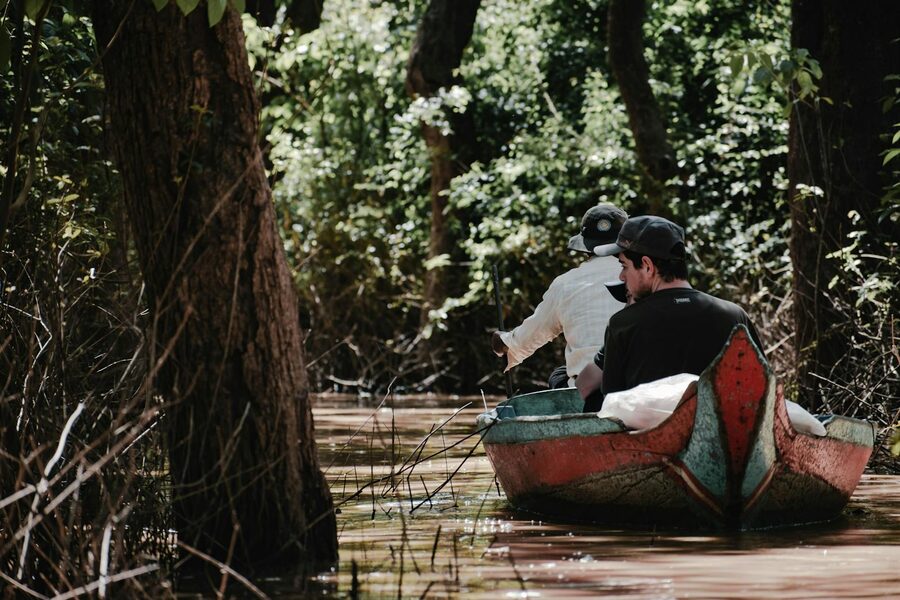
Second, there is the mangrove rowboat. When your motorboat reaches the flooded forest on the edge of the village, you transfer to a small wooden rowboat paddled by a local woman from the community. This is not included in most tour prices and costs an extra $5 per person paid in cash directly to the rower. Do it. It is the best twenty minutes of the whole trip and the money goes straight to a village family who would otherwise have nothing.
Third, there are tips and drinks. Expect to spend another few dollars on a cold drink at the lake-side floating restaurant (where your boat will stop) and a tip for your guide at the end. Budget $10 on top of the tour price for these extras and you will come out even.
If anyone tries to sell you extra “temple fees” or “boat association fees” on the day of the tour that weren’t mentioned at booking, they are making it up. Refuse politely and keep walking.
DIY vs Guided Tour — What I Actually Recommend
You can technically organize this trip yourself. Grab a tuk-tuk driver in Siem Reap, agree on a round-trip fare of maybe $20-25, drive to the boat dock at Kampong Phluk, pay the entrance/boat fee there, and ride around. On paper you’ll save maybe five or ten dollars over a guided tour.
In practice I would not do it that way, and here is why. The guided tours from Siem Reap include the drive, the boat, a knowledgeable English-speaking guide who can explain what you are looking at, and — most importantly — protection from the overcharging that happens routinely to independent arrivals at the pier. A tuk-tuk driver dropping you off alone is a target.
Tourists report being quoted $35 or more for the same boat ride that tour operators pay $15 for, because the boat men know you have no other way back.
The other problem is logistics. The drive to Kampong Phluk involves about an hour each way on a rough rural road that turns to soup in the wet season. In a tuk-tuk this is a bone-shaking, dust-covered ordeal. In an air-conditioned minibus it is a nap.
For twenty bucks, a guided tour is genuinely the right call here. Save the DIY approach for places where you can walk.
The Best Kampong Phluk Tours to Book
Three tours are worth your attention here. I’ve ranked them by how well they match what most visitors actually want, not by price or review count alone. All three use Kampong Phluk (the right village) and all three include hotel pickup.
1. From Siem Reap Kampong Phluk Floating Village Tour by Boat — $20
This is the one I’d point almost everyone at. It’s six hours door to door, includes pickup from your Siem Reap hotel in an air-conditioned van, and uses a proper guide rather than just a driver who hands you off to the boat operator. The price of $20 is about as low as it legitimately goes for this experience — anything cheaper should be treated with suspicion.
What I like is that they pace it right. You get time walking around the village during the part of the day when the stilt houses are most photogenic, the boat section is long enough to not feel rushed, and there is a proper stop at the floating restaurant where you can watch the lake from a table for half an hour before heading back.
Guide quality is consistently good — reading through the recent feedback, visitors keep mentioning the guides by name, which is a reliable sign that this operator treats their staff well and gets repeat bookings. The full review has more on what to expect and which time slot to pick.
2. Sunset Tour of Floating Village Kampong Phluk on the Tonle Sap — $21
One dollar more than the morning option and you get the best light of the day. This is the tour to book if you care about photos, or if you’ve been running around Angkor temples in the morning and don’t want to start your day at 7am.
The pickup is usually around 2pm and you’re back in Siem Reap by 7:30pm, so it also pairs well with a sunrise Angkor Wat trip the next morning — do Angkor at dawn, nap, lake at dusk. That is a proper first 24 hours in Siem Reap.
The catch is that the village itself gets about 30-45 minutes less attention on the sunset version because they push the timings to make sure you’re on open water when the light goes gold. If you want to properly walk around the stilt houses, the morning tour is better. If you want the view, book this one.
The rating on this one is a perfect 5.0 across the board, which does not happen by accident. Pon, Chout and the other guides who keep getting named in visitor feedback clearly know what they are doing.
3. Siem Reap Tonle Sap Floating Village and Boat Trip Tour — $24
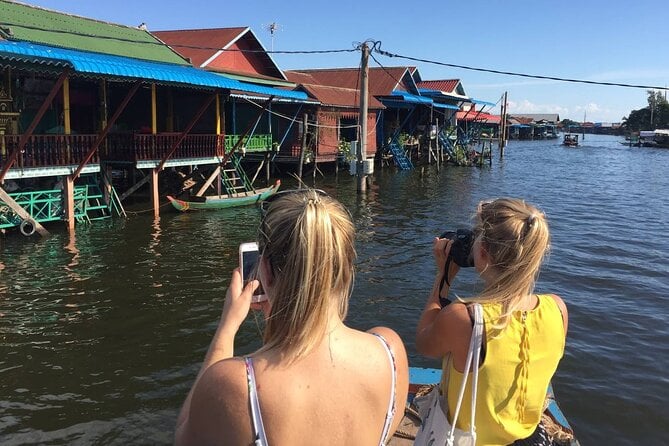
Slightly more expensive but with two differences that matter. The first is small group size — capped at around 12 people instead of the 16-20 you’ll get on the cheaper tours, which makes the whole day feel less like being herded. The second is extra time in the mangroves, which is the part of the trip most people wish had been longer.
This is also the one I’d pick if you’re visiting in the dry season between February and April. The main boat ride is less dramatic when the water is low, so spending more time in the flooded forest and the mangrove rowboat section becomes the highlight. The operator here knows that and builds the extra time in accordingly.
One reviewer said the row boat was her favourite part of the whole Cambodia trip, which tracks with my own experience — it is genuinely magical to sit in a hand-rowed boat in near silence with the sun flickering through the mangrove leaves. You can see more detail in the full review.
Wet Season vs Dry Season — Which Is Actually Better?
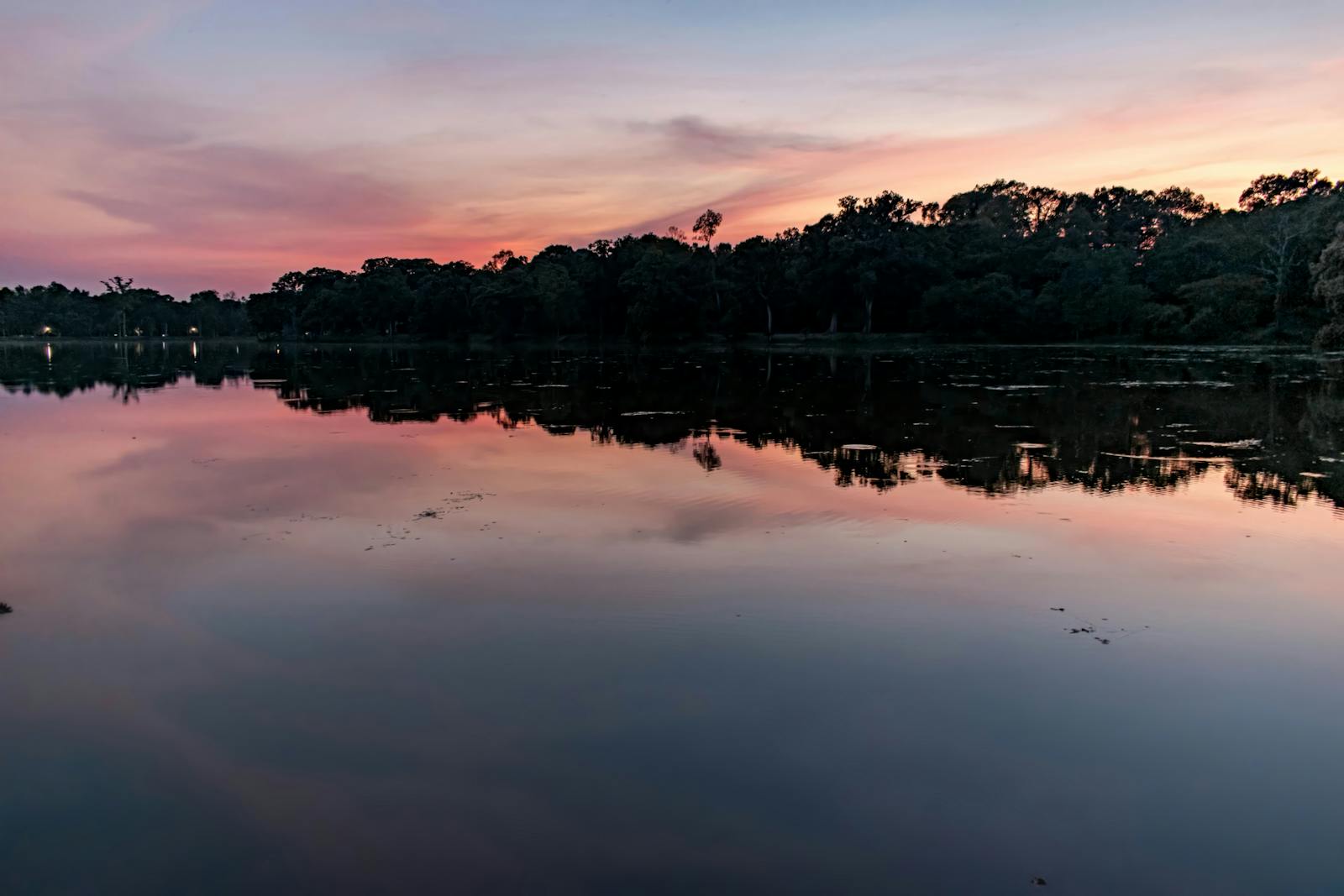
The honest answer is that they’re both good, but they are completely different experiences, and your ideal time to visit depends on which one you’d rather have.
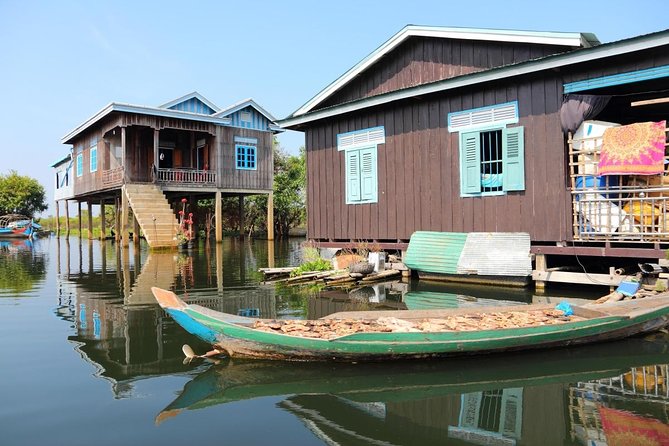
Wet season (roughly August through November) is when the Tonle Sap monsoon backflow peaks and the lake more than quadruples in surface area. The water comes right up under the stilt houses, the “floating village” marketing photos finally make sense, and you motor down streets that are underwater. This is the classic experience and the one most visitors expect. The downside is that the sky is often grey, afternoon rain can shorten tours, and the light for photos is flatter.
Dry season (roughly December through May) is the version I actually prefer, and it is much less crowded. The stilt houses look surreal and almost architectural, you can walk around the village on dry land, and the light is consistently brilliant — clear blue skies from 7am until sunset. The boat section is shorter because the channel to the lake is smaller, but you can still get all the way out onto the open water.
The one window to avoid is late May through early July. The lake is at its lowest, some operators temporarily suspend boat tours because the channel dries up too much, and the heat before the monsoon breaks is brutal. Check with your hotel before booking in June — some days the tours just don’t run.
How to Get There From Siem Reap
Kampong Phluk is about 30 kilometers southeast of Siem Reap and the drive takes 50-60 minutes depending on traffic and the state of the road. You have four ways to cover that distance:
Tour minivan (recommended): Every tour on this page includes this. Air-conditioned, professional driver, seats 12-20, picks you up from your hotel. You will be comfortable and you will arrive without dust in your eyes.
Private tuk-tuk: Round trip from Siem Reap runs $20-25 if you negotiate well. This is fine for two people who want flexibility and don’t mind the dust, but the road is rough. If you go this way, buy a bandana to pull over your face for the last 15 minutes — the final stretch is unpaved.
Private taxi: Around $35-45 round trip. Faster than the tuk-tuk and sealed against the dust but loses the open-air tuk-tuk charm and isn’t much cheaper than joining a group tour.
Bicycle: Don’t. It is 30 kilometers each way of rural Cambodian road in tropical heat, and then you still need to pay for the boat. A few tough travellers do it, but for most people it turns a day trip into a survival exercise.
Tips That Will Save You Time, Money, or Both
Bring small-denomination cash. The mangrove rowboat costs $5 per person in cash, the floating restaurant takes dollars or riel, and no one out there can change a $50 note. Carry tens, fives and ones.
Go in the morning if you hate heat. By 11am the sun is brutal and there is almost no shade on the boat. Morning tours leave Siem Reap around 7:30am and you’re back by lunchtime, which is a much more pleasant rhythm than pushing through the hottest part of the day.
Sit on the left side of the boat on the way out. It gives you the best view of the village houses as you approach, and most photographers end up moving seats halfway through the trip anyway.
Tip your mangrove rower directly. If you enjoyed the rowboat section, hand the rower an extra dollar or two at the end. The $5 fee is split multiple ways. Tips go straight into her pocket.
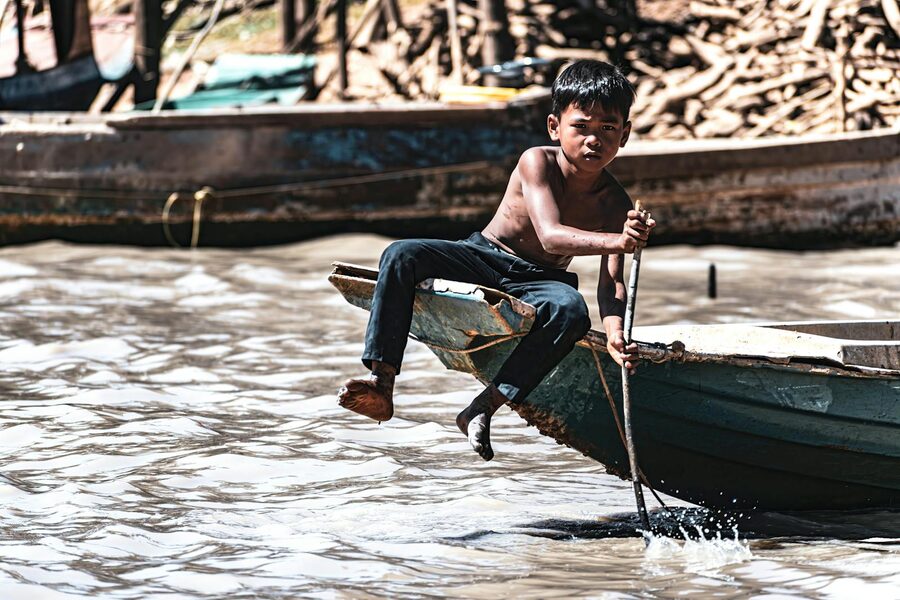
Don’t give money or sweets to kids. Every operator asks you not to and there is a good reason — it encourages begging rather than school attendance. If you want to help, buy something from the village shop or tip the adults.
Wear closed shoes. The boat landing is muddy in the wet season and splintery in the dry season. Flip-flops are fine once you’re on the boat but you want something proper for the walk between the van and the pier.
Book for any day except Sunday. Sundays see the biggest tour group crowds because local schools are out and some Cambodian families also visit. Weekdays are noticeably quieter.
Don’t bother with the crocodile farm stop. Some operators include an optional visit to a roadside crocodile farm on the way out. It is depressing, the animals are kept in bad conditions, and skipping it saves you 45 minutes. Ask in advance whether your tour includes this and request to skip it if possible.
What You’ll Actually See Out There
The trip follows a predictable arc and it helps to know what to expect so you don’t spend the first hour wondering when the “real part” starts. The real part starts from the moment you get out of the van.
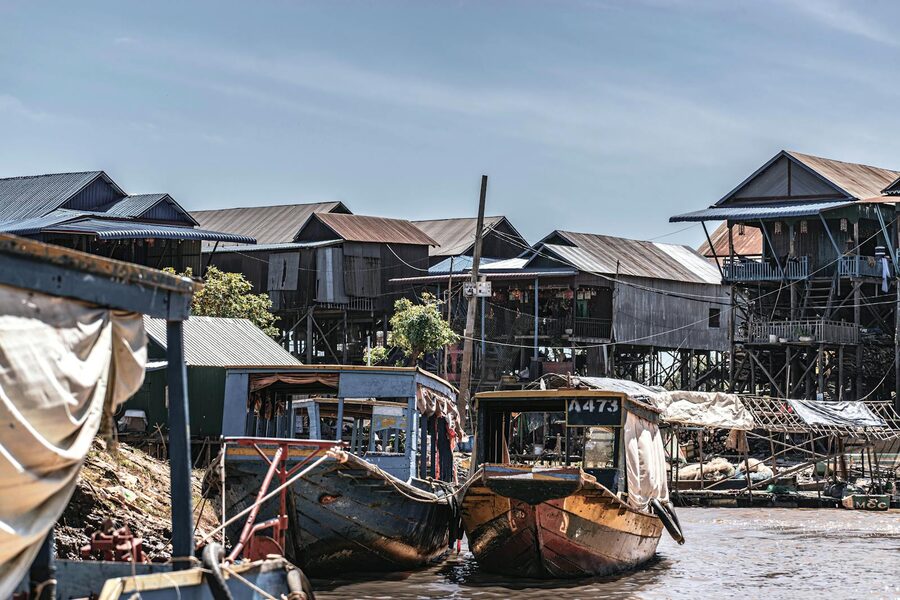
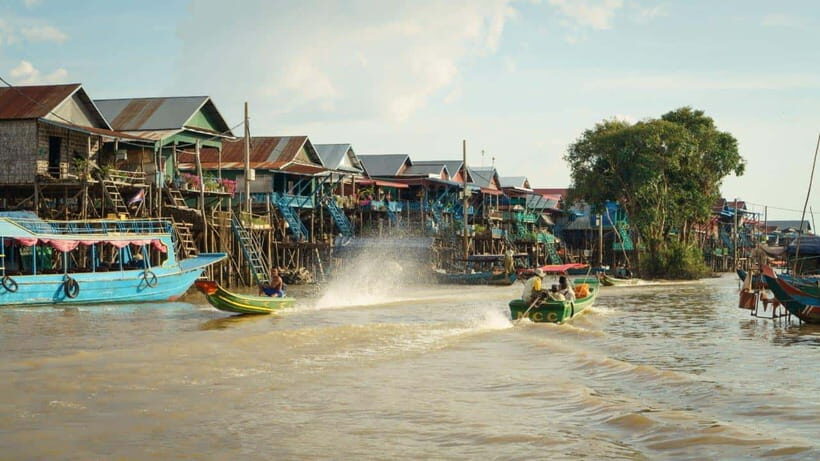
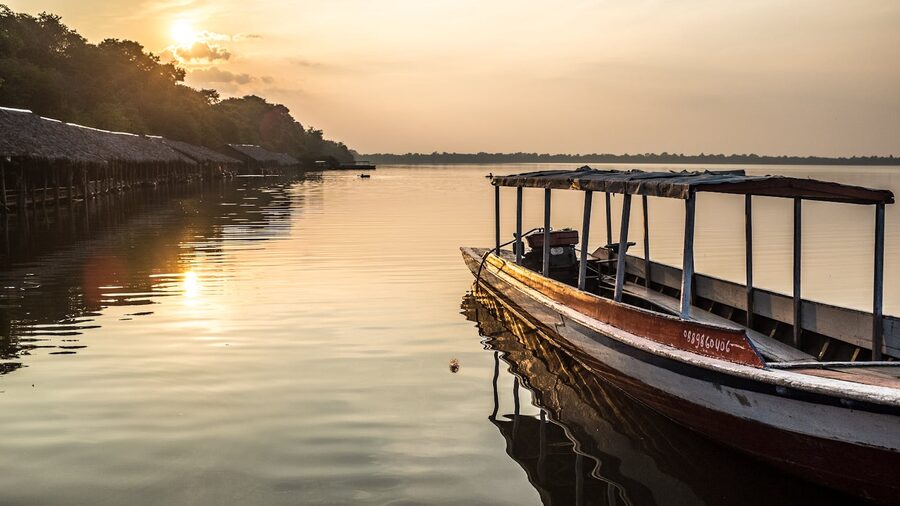
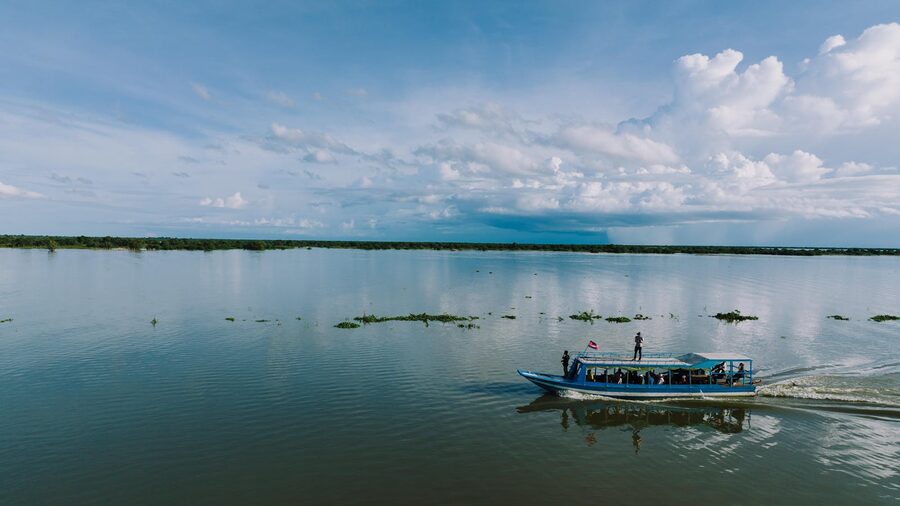
You arrive at the boat dock, which in the dry season is a set of wooden steps leading down to a brown river maybe fifteen meters wide, and in the wet season is a floating platform. Your tour group splits into motorboats of around 10-12 people each. The boats are long, flat-bottomed wooden vessels with an outboard motor and a corrugated roof — rough but reliable.
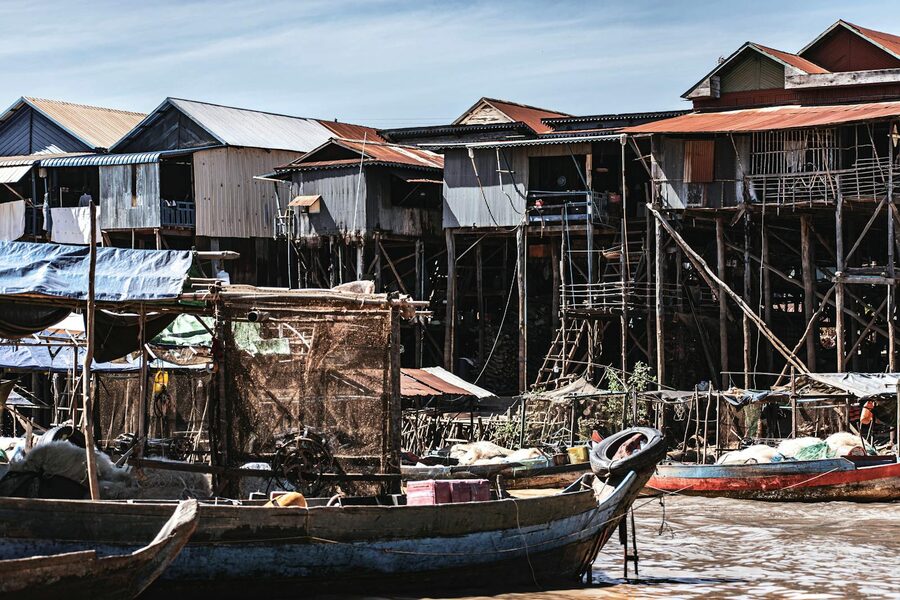
The first 15-20 minutes is the slow motor up the river through the village itself. This is when you crane your neck at the stilt houses, wave at kids doing homework in upstairs windows, and dodge the other boats and floating shops that come past. The river is basically the high street. You’ll see laundry strung between houses, women carrying baskets of fish, monks from the village temple, and occasionally a wedding party.
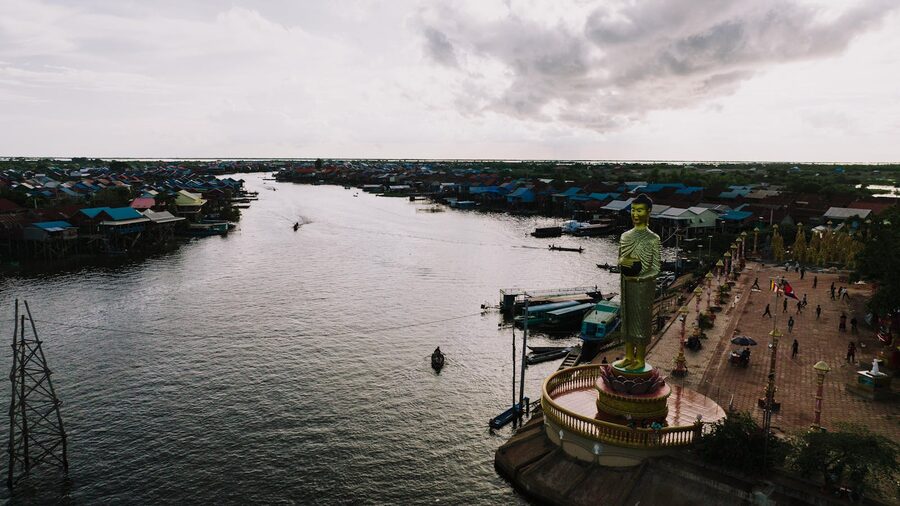
The river then opens out into the edge of the Tonle Sap itself. This is the moment most people weren’t expecting — the scale shift is dramatic. Tonle Sap is the largest freshwater lake in Southeast Asia and from the middle of it you can’t see any shore at all. Your boat will either continue out to a floating restaurant platform for a drink and a break, or it will turn aside into the mangrove forest for the rowboat section, depending on the tour.
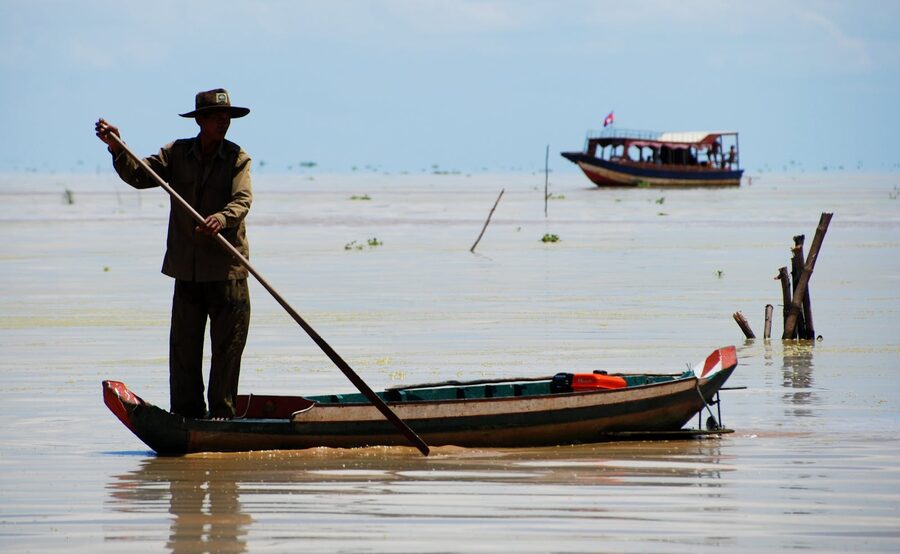
The mangrove rowboat is where I’d spend my extra dollars if I were you. A local woman — usually older, often with a toddler asleep on a cushion at her feet — hand-paddles a narrow wooden boat between the flooded trees. There is no engine noise. You hear birds, water lapping, and sometimes kids laughing from another boat you can’t see. It lasts about 20 minutes and feels like an hour in the best way.
On the way back you retrace your route through the village and return to the van. If you picked the sunset tour, you’ll have spent extra time out on the open lake watching the sky shift from white to gold to red. If you picked the morning tour, you’ll be back in Siem Reap in time for lunch somewhere decent.
Is It Ethical? The Honest Answer
This question comes up a lot and it deserves a straight answer, because “slum tourism” is a real concern and Kampong Phluk is a poor village.
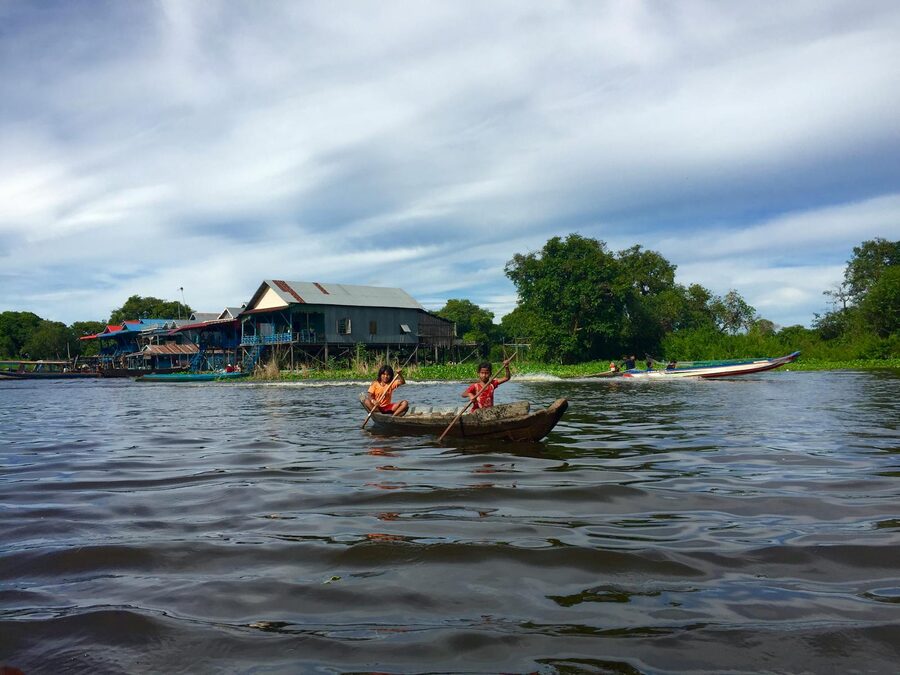
My take, after visiting and reading the NGO reports, is yes — this is one of the more ethical “village tour” experiences in Southeast Asia, provided you go with a reputable operator and avoid Chong Kneas. The reasons: the boat rotation system shares income across all the local families who own boats, the mangrove rowboat money goes directly to the rowers, and the village is not staged for travellers — people are living their actual lives whether you are there or not.
What makes it unethical is going to Chong Kneas with a random tuk-tuk driver, getting funneled into a fake “orphanage” donation scam, or pointing cameras at kids as if they were zoo animals. Don’t do those things and you are fine.
If you want to go further, buy something from the village shop on your stop, tip generously, and skip the crocodile farm add-on. None of that requires any sacrifice on your part.
What to Bring
Pack light but pack smart. You’ll be on a boat for a few hours and then back in a van, so overthinking it is a mistake. My short list:
- Sun hat and sunglasses. The boat has a roof but the reflection off the water gets you from below.
- Sunscreen. Apply before you leave the van. You’ll forget once you’re on the water.
- Water bottle. Most tours provide one but a second one is smart in the dry season.
- Insect repellent. For the mangrove section in the wet season. You won’t need it in the dry months.
- Small cash. As mentioned — tens, fives, and ones. $20-25 in addition to your tour price covers drinks, the rowboat, and tips.
- Camera or phone. Obviously. Bring a microfibre cloth — the lake throws up fine spray and lenses get hazy fast.
- A light scarf or bandana. For dust on the road, glare on the water, or covering your shoulders if you go past a temple.
What you don’t need: hiking boots, formal clothes, or more than one change of outfit. This is a half-day trip, not an expedition.
Planning the Rest of Your Siem Reap Trip
If Kampong Phluk is on your list, you’re almost certainly also doing the temples, which is the right instinct — a trip to Siem Reap without the Angkor complex is a wasted flight.
The no-brainer pairing is our guide to booking an Angkor Wat sunrise tour from Siem Reap, which explains how to handle the 5am start, which ticket type to buy, and why the standard small-group tour is almost always a better call than the private option for first-time visitors.
Do Angkor at sunrise and Kampong Phluk at sunset on the same day and you have the perfect first full day in Cambodia — it is a long day, but it is worth it.
A few practical notes on the booking process itself. All three tours in this guide are bookable online with free cancellation up to 24 hours in advance, so there’s no advantage to waiting until you arrive in Siem Reap to lock in a slot.
The hotel concierges will charge a markup of anywhere from $3 to $8 per person for the same tour, and the selection they offer is almost always limited to whichever operator has a local kickback arrangement with that particular hotel. Book it yourself the night before, email the voucher to yourself, and present it at pickup. Done.
One final thing. If you’re in Siem Reap for three days or more and you want to see all three floating villages out of curiosity, that’s fine, but don’t do it. The law of diminishing returns hits hard. See Kampong Phluk, skip Chong Kneas, and only bother with Kampong Khleang if you have a real interest in rural life and a tolerance for a long drive. Your extra day is better spent at a second Angkor visit or resting by a pool before you fly out.