
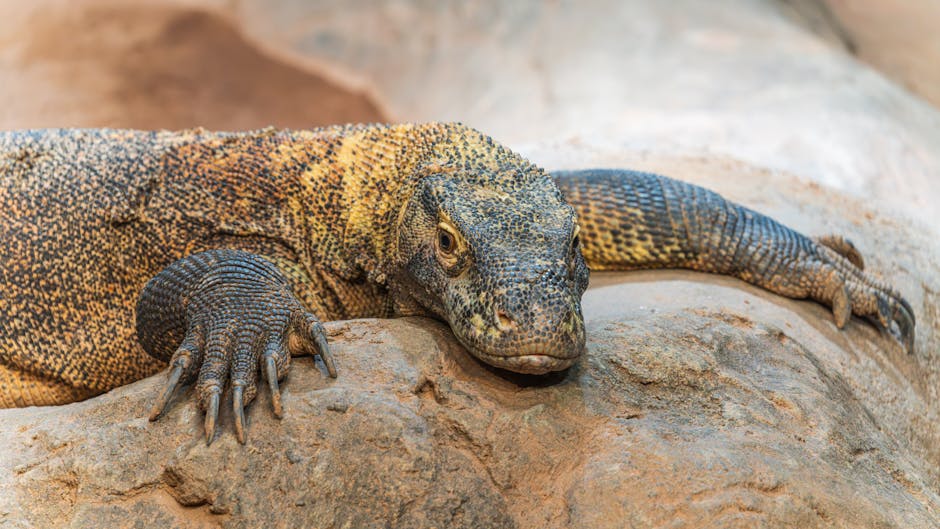
Komodo dragons are the largest lizards on earth — up to three metres long, ninety kilograms, venomous — and they live on exactly five small islands in eastern Indonesia and nowhere else on the planet. That is not an exaggeration or a marketing line. Komodo, Rinca, Gili Motang, Nusa Kode, and a tiny western sliver of Flores are the entire global range for this animal.
If you want to see a wild Komodo dragon, you fly to Labuan Bajo on Flores, board a boat the next morning, and cross a stretch of the Flores Sea that separates our ordinary world from theirs.
If you are trying to figure out how to book a Komodo Island tour and the options are making your eyes cross — one-day speedboat, two-day shared boat, private charter, liveaboard, fly from Bali versus fly direct, Viator versus GetYourGuide versus whatever the harbour tout is shouting about — this is the guide that will get you sorted.
We have cut through the noise, compared what actually gets booked, and lined up three tours at the top that between them cover every scenario. Then we go deeper into the logistics, the wildlife, the weather windows, and the things nobody tells you before you step onto a wooden phinisi at six in the morning.
- Quick picks: the three Komodo Island tours worth booking
- 1. One Day Komodo Trip With Bintang Komodo Tours — Viator
- 2. Labuan Bajo: One Day Tour to Explore Komodo National Park — GetYourGuide
- 3. Labuan Bajo: 2D1N Komodo and Pink Beach Shared Boat Tour — GetYourGuide
- What exactly is Komodo National Park?
- The dragons themselves — what you will actually see
- Padar Island — the hike that ends up on every postcard
- Pink Beach — and why it is actually pink
- Manta Point and the snorkelling
- One day or two days? The honest comparison
- Labuan Bajo — the town you fly into
- Best months to go
- What to pack for the boat
- Komodo dragon safety — what the rangers are actually doing
- Snorkelling and diving beyond the tour
- Booking tips — how to avoid the common traps
- One last thought on why Komodo matters
Quick picks: the three Komodo Island tours worth booking
These three between them cover the main scenarios — a one-day budget run from Labuan Bajo, a premium small-group day trip, and a two-day shared boat for travellers who want to see everything without paying charter prices. Pick the one that matches your time and budget.
1. One Day Komodo Trip With Bintang Komodo Tours — Viator
The highest-rated Komodo day tour on Viator, and the one we would send a first-time visitor to before anything else. Bintang has been running this exact itinerary out of Labuan Bajo for years, and the 5.0-star average across 1,038 reviews is the kind of number that does not happen by accident on a boat tour — it takes a crew that consistently gets the timing right, a skipper who reads the weather, and a ranger hand-off on Komodo Island that actually feels like a guided walk rather than a rushed parade.
You leave Labuan Bajo around 6:00 a.m., stop at Padar Island for the iconic three-bay hike, continue to Pink Beach for snorkelling, land on Komodo Island itself for the dragon walk with a park ranger, then swing past Manta Point on the way back where you jump in with (with any luck) a 4-metre reef manta cruising through the blue.
What makes it stand out: Bintang uses a proper speedboat rather than a slow phinisi, which means you actually fit all four stops into a single day without the rushed, half-baked feeling that plagues cheaper operators. English-speaking crew, snorkelling gear included, fruit and a simple Indonesian lunch on board, and free cancellation up to 24 hours before departure.
The boat caps at around 12–15 guests so you are not lost in a cattle-drive group of thirty. Labuan Bajo hotel pickup is included.
- 1,038 reviews, 5.0-star average — the top-rated Komodo day tour on Viator
- From $151.01 per person
- Roughly 11-hour door-to-door day, speedboat transfers between islands
- Padar Island hike, Pink Beach, Komodo Island dragon walk, Manta Point snorkel
- Lunch, snorkel gear, park entrance, and ranger fee all included
- Free cancellation up to 24 hours before the start
2. Labuan Bajo: One Day Tour to Explore Komodo National Park — GetYourGuide
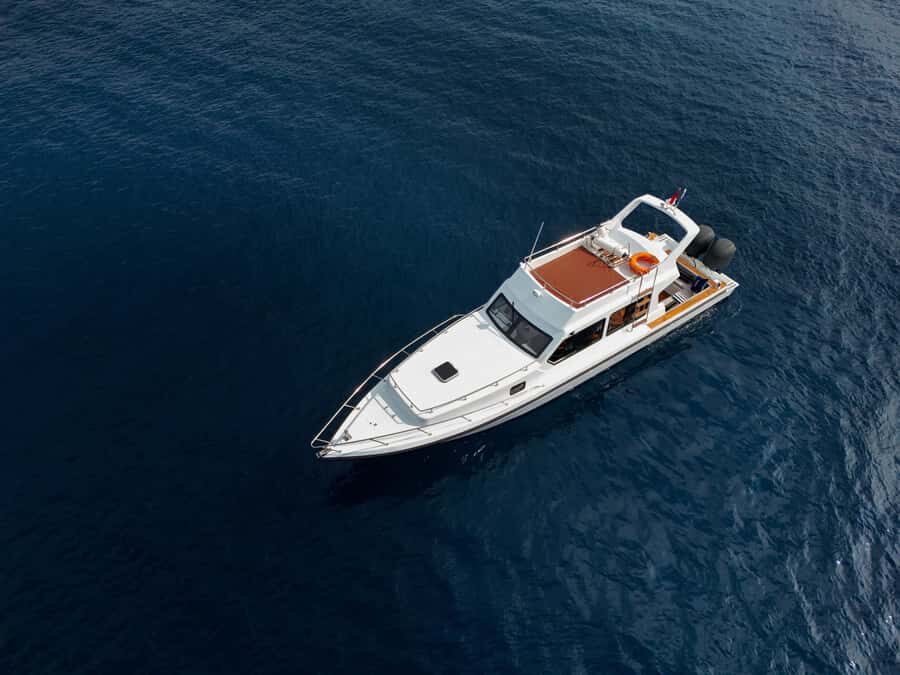
The best-value one-day option, and the one to pick if you are on a tighter budget but still want to hit the headline stops. The itinerary is the classic five-point sequence — Padar, Komodo Island (dragons), Pink Beach, Taka Makassar sandbar, and Manta Point — packed into a single 10-hour day on a fast boat.
The 4.8-star average across 529 reviews is strong, and the price sits well below the Bintang tour while still including snorkelling gear, a cooked lunch on board, and the park entrance fees (which have been a moving target lately, so having them bundled matters).
What to know before booking: this is the GYG cancellation-friendly option. You can cancel free up to 24 hours in advance, and the GYG app lets you rebook instantly if the seas look rough and the operator moves the day. The “to Explore” phrasing is accurate — you get a bit of everything rather than a long, lingering stop at any one spot.
If your priority is dragons plus snorkelling with mantas and you have one day in Labuan Bajo, this hits both without breaking the bank. The trade-off versus the Bintang tour above is group size (this one can run up to 20–25 passengers on a busy day) and the pace feels a shade quicker at each stop.
- 529 reviews, 4.8-star average
- From $99 per person — the best-value one-day Komodo tour
- 10-hour duration, Labuan Bajo harbour pickup
- Five stops: Padar, Komodo Island, Pink Beach, Taka Makassar, Manta Point
- Lunch, snorkel gear, park fees, and English-speaking guide included
- Free cancellation up to 24 hours before the start
3. Labuan Bajo: 2D1N Komodo and Pink Beach Shared Boat Tour — GetYourGuide
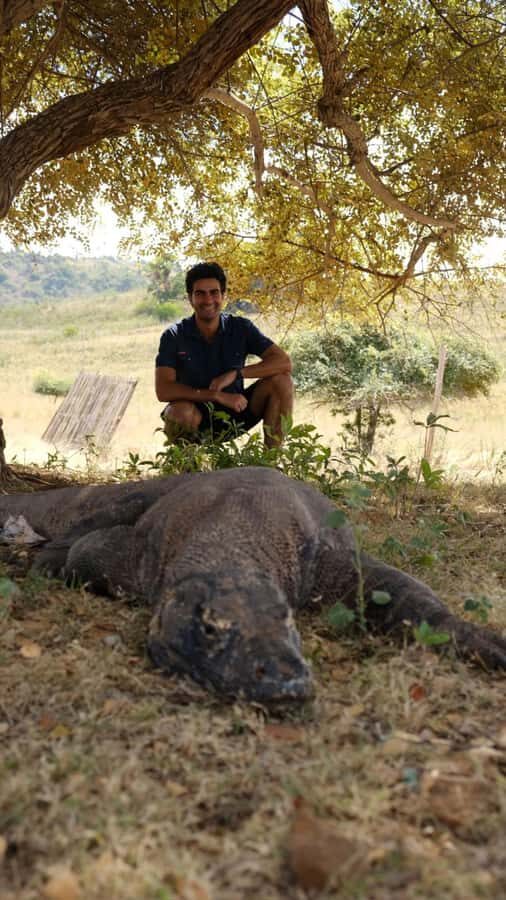
The two-day overnight option, and honestly the one we push hardest for travellers who actually want to experience Komodo rather than tick it. You sleep on a traditional phinisi wooden boat anchored in a calm bay, wake up for the Padar sunrise hike before the day boats arrive, have breakfast on deck watching fruit bats stream out of the mangroves, then hit Komodo Island, Pink Beach, Kanawa Island snorkelling, and Manta Point across two days instead of one frantic run.
The shared format means you split a proper phinisi with 10–14 other travellers rather than chartering at private rates, and the price — $183 per person for 2 days, 1 night including all meals, snorkel gear, and park fees — is roughly what you would pay for two separate day tours, but with an overnight on the water thrown in.
Best for travellers who: want the Padar sunrise hike without the brutal 3 a.m. pickup it requires from Labuan Bajo on a day tour, or who want the slow-boat, Komodo-as-an-archipelago feeling rather than a speedboat sprint.
The 4.8-star average across 294 reviews is consistent, and the overnight bay anchorage is where the whole trip goes from “nice day out” to “something I will remember for a decade”. Free cancellation up to 24 hours before departure. Bring a dry bag and a head-torch.
- 294 reviews, 4.8-star average
- From $183 per person — two days, one night, all meals included
- Traditional phinisi wooden boat, shared cabin or deck sleeping options
- Padar sunrise hike (before day boats arrive), Komodo Island, Pink Beach, Kanawa, Manta Point
- All meals, snorkel gear, park fees, and guide included
- Free cancellation up to 24 hours before the start
What exactly is Komodo National Park?
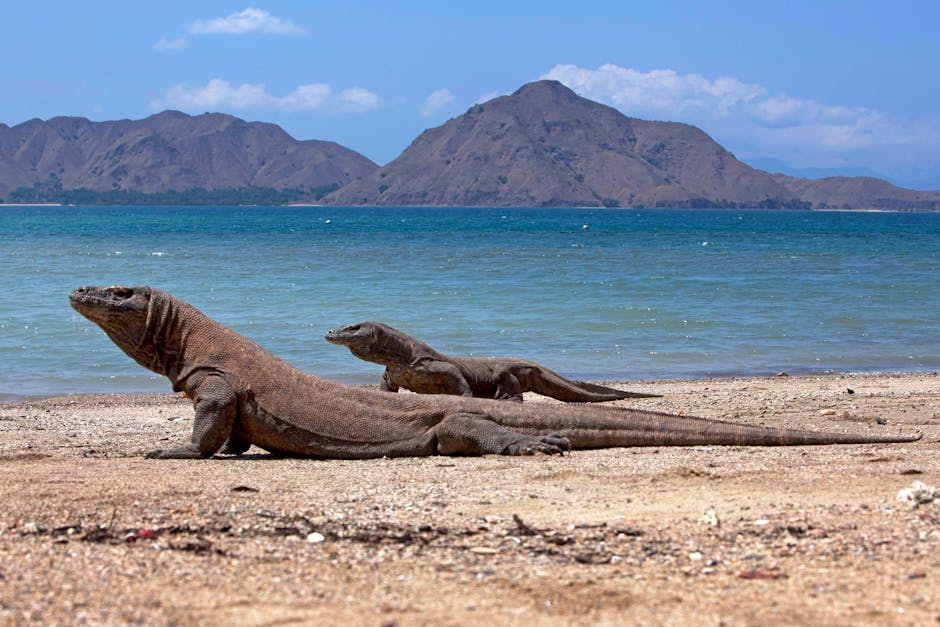
Komodo National Park is a 1,733 square kilometre protected area that includes 29 islands in the Lesser Sunda chain, sitting between Flores and Sumbawa in eastern Indonesia. The three islands that matter for most tours are Komodo, Rinca, and Padar, though Pink Beach, Manta Point, and Kanawa are all inside park waters and are what actually fills out the day.
UNESCO inscribed the whole park as a World Heritage Site in 1991, largely on the back of the dragon population but also for the reef biodiversity and the scrub-savannah landscape on the larger islands, which is nothing like the rainforest most travellers associate with Indonesia.
The park charges entrance fees that get layered on top of whatever you paid your tour operator — a conservation fee, a ranger fee, a snorkelling fee, a camera fee on some days — and the exact numbers change more often than any guidebook can keep up with.
The operators in our top three all bundle these fees into the tour price, which is one of the main reasons to book through a listed operator rather than walking the Labuan Bajo harbour and haggling with a tout at sunrise.
Once you are inside the park, you cannot go ashore on Komodo or Rinca without a licensed park ranger — they walk in front, behind, and beside you, carrying a forked wooden stick, and they are the reason the statistics on dragon attacks on travellers remain roughly “never” rather than “occasionally”.
The dragons themselves — what you will actually see
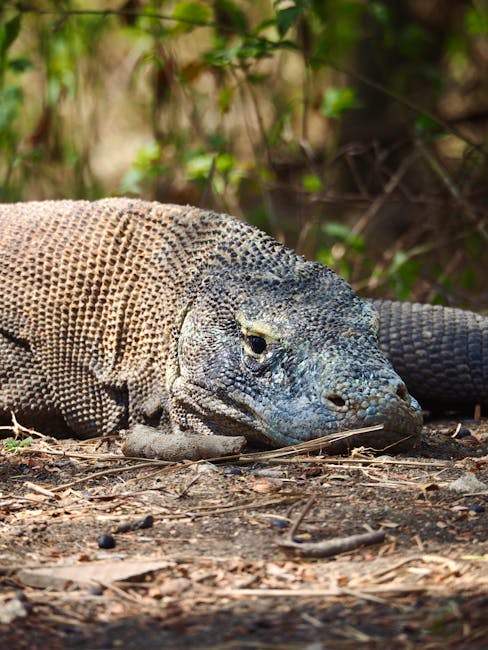
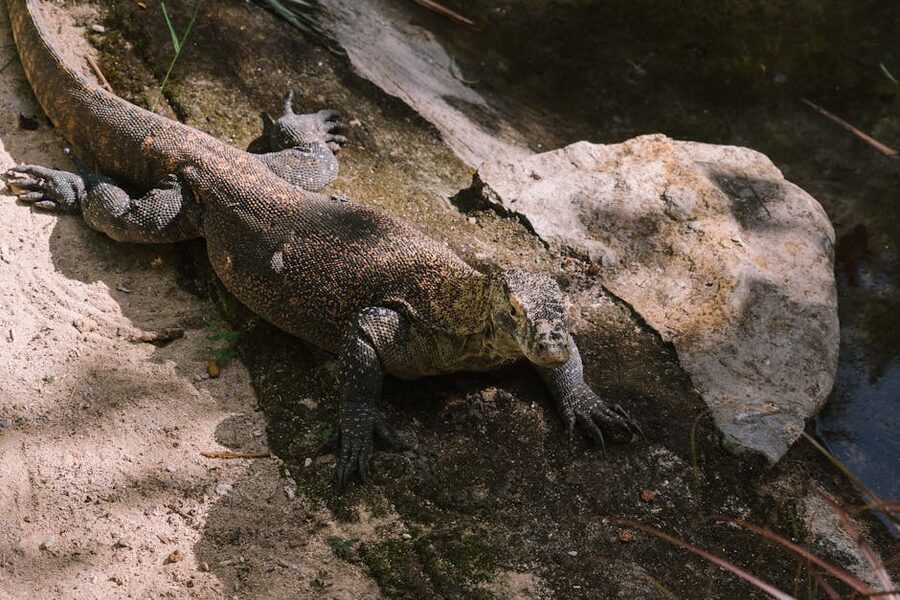
There are roughly 3,000 Komodo dragons left in the wild, and you will see between two and fifteen of them on a typical day tour depending on the season, the heat, and luck.
Mornings are best because the dragons come out to bask and raise their body temperature — the park ranger will lead you on a loop trail from the Komodo or Rinca ranger station that passes the known basking spots, the water hole, and the shaded areas where sub-adults wait out the midday sun.
The walks are short and flat, usually 30 to 60 minutes, and the ranger handles all the spacing and “do not step there” logistics.
A few things nobody mentions in the brochures. Adult dragons are genuinely, visibly enormous — the big males run 2.5 to 3 metres long and look more like a dinosaur than a lizard. They move in slow, deliberate steps for hours, and then snap into a 20 km/h sprint when something catches their attention, which is unsettling if you are closer than you thought.
Their saliva is loaded with toxic bacteria and a venom compound that prevents blood clotting, which is how they take down Timor deer and water buffalo three times their size — one bite, then trail the animal for days until it collapses. You are not going to get bitten (the rangers are very good) but you will leave with a new understanding of what “apex predator” means when you see one up close.
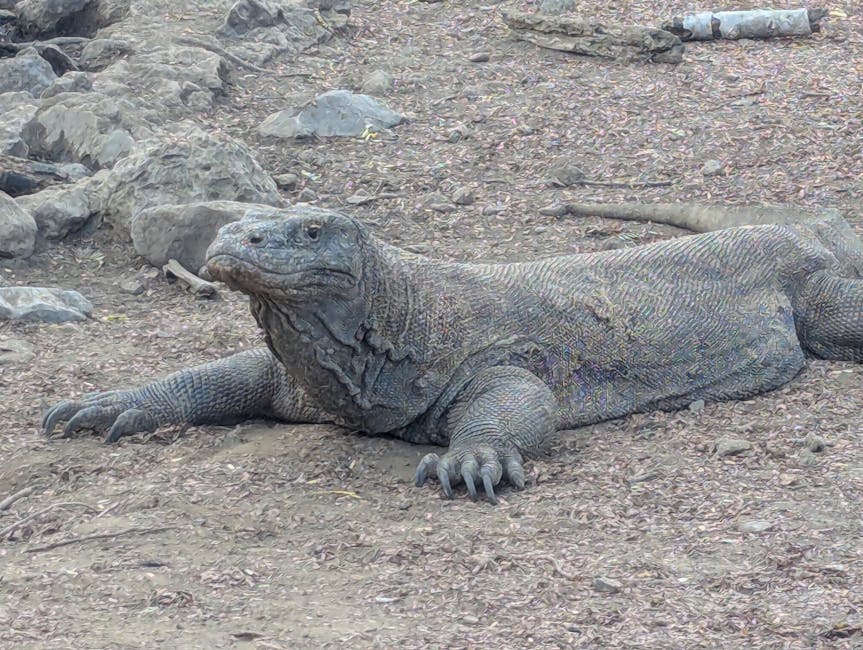
Rinca versus Komodo is a common question. Komodo Island is the name everyone knows and the park’s namesake, but Rinca actually has a higher dragon density and a more open landscape, which means sightings on Rinca tend to be more reliable and less crowded with other tour groups.
Most one-day tours from Labuan Bajo visit Komodo Island specifically because of the brand recognition; the two-day shared tours often slot in Rinca instead or as well. If your priority is maximising dragon sightings, Rinca is a slightly better bet. If your priority is standing on the island with “Komodo” in the name, Komodo it is.
Padar Island — the hike that ends up on every postcard
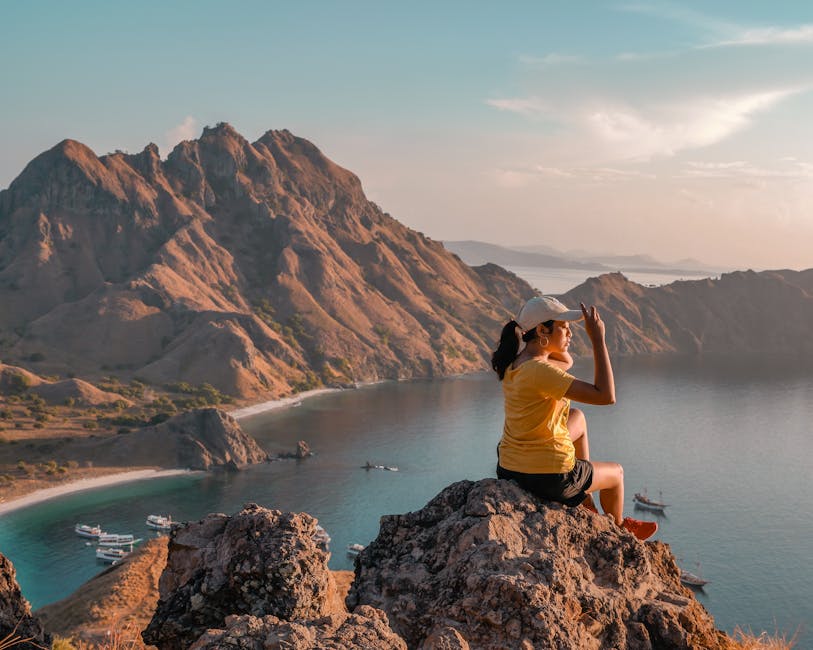
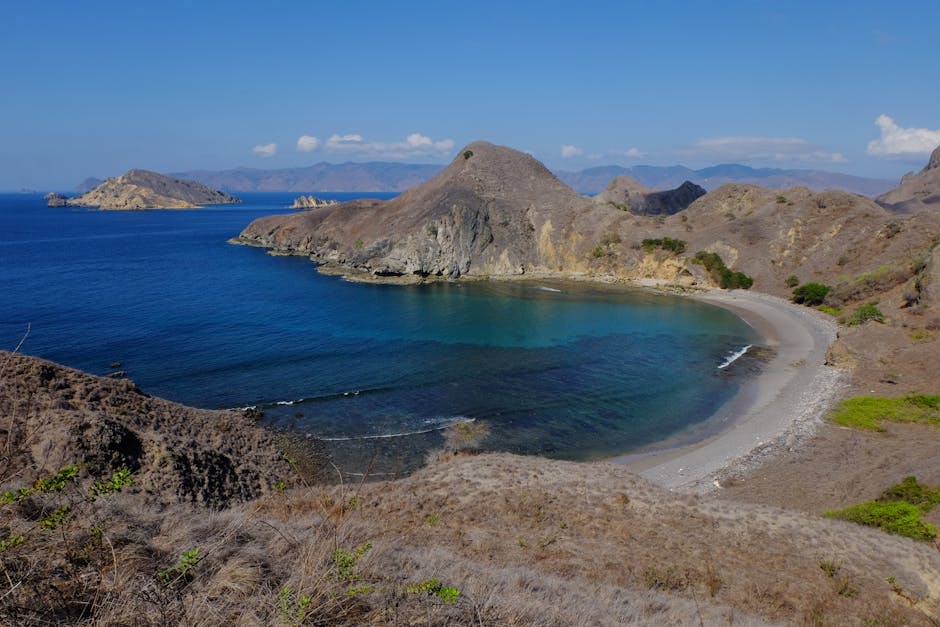
If you have seen a single photograph of Komodo National Park, it is almost certainly the view from the top of Padar Island. Three curved bays in three different colours — one black-sand, one white-sand, one pink — fanning out from a central ridge, with the dark-green savannah hills of the island dropping away on both sides.
The hike up is not long (about 45 minutes, 800 steps and a dirt path to the summit), but the final stretch is exposed and the midday heat can be brutal.
This is why sunrise on Padar is such a big deal, and why the two-day tours are worth the extra money for anyone serious about the view: you arrive at the top just as the first light hits the bays, before the day-tour crowds have even left Labuan Bajo harbour.
One-day tours from Labuan Bajo reach Padar at around 8–9 a.m., which is after sunrise but before the midday heat peaks. The light is still soft enough for photos, and the crowds are manageable but present. If you are doing a one-day tour, budget 90 minutes for the Padar stop — 45 minutes up, 15 at the top, 30 back down — and wear actual shoes rather than flip-flops. The path is loose volcanic gravel and it slides underfoot.
Pink Beach — and why it is actually pink
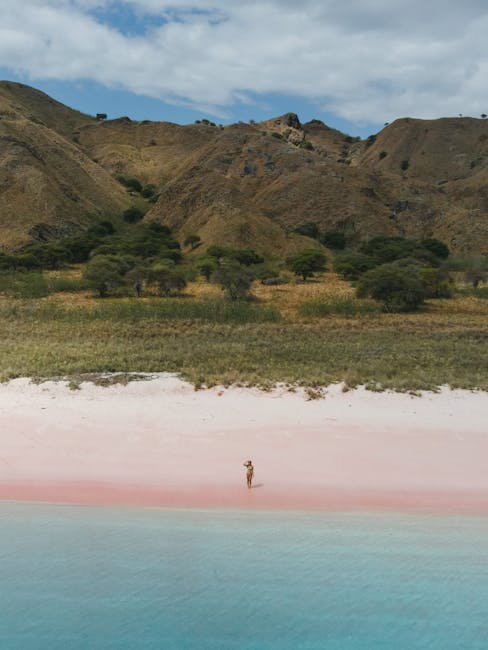
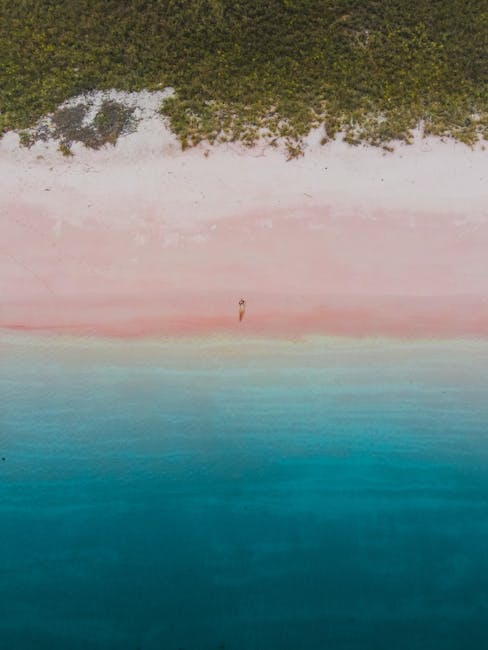
Pink Beach (the locals call it Pantai Merah) is one of only a handful of pink-sand beaches in the world, and the colour is real — not a filter, not a lighting trick.
The rose tint comes from microscopic fragments of red organ-pipe coral (Tubipora musica) that have been washed up and pounded into the white coral sand over thousands of years, giving the whole shoreline a faint blush in dry conditions and a genuine salmon pink when the sand is wet. Stand on it in bare feet and you can actually see the ratio of red fragments to white fragments shift with each wave.
The swimming and snorkelling here are excellent. A fringing reef sits maybe 15 metres off the shore, and the visibility on a calm day is 20–30 metres. You will see angelfish, butterflyfish, parrotfish, trigger fish, the usual reef suspects, plus turtles on roughly one in three visits.
Most tours stop for 45–60 minutes, which is enough to swim, snorkel, take photos, and grab a coconut from the handful of local vendors set up on the beach. Bring sunscreen — the reflection off the light-coloured sand is savage.
Manta Point and the snorkelling

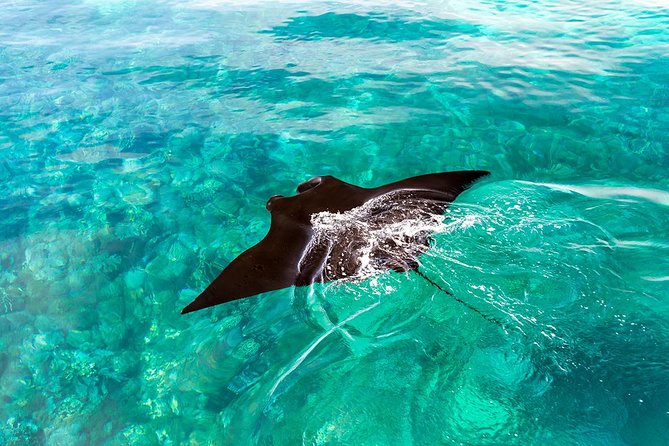
Manta Point is the name given to a cleaning station in the narrow channel between Komodo Island and Tatawa Besar where reef mantas (Mobula alfredi) cruise in to have their gills cleaned by small wrasses. On a good day, tours will see between one and eight mantas glide past the snorkellers at depths of 3–10 metres.
The mantas are completely indifferent to people, which is how you end up floating motionless on the surface while a 4-metre-wide shadow passes directly underneath you. It is the most reliable wild manta encounter in Southeast Asia and one of the reasons divers fly to Labuan Bajo specifically.
The catch: Manta Point is a drift snorkel. The current through the channel moves at 1–3 knots depending on the tide, and you will be carried along whether you want to be or not. The boat drops you at one end and picks you up at the other.
If you are a confident swimmer this is fine and genuinely exhilarating; if you are not, tell the crew before you jump in and they will hold onto a safety line with you. Also, mantas are not guaranteed — on some days the cleaning station is quiet — but the reef fish, turtles, and reef sharks along the drift are enough to make the stop worthwhile regardless.
One day or two days? The honest comparison
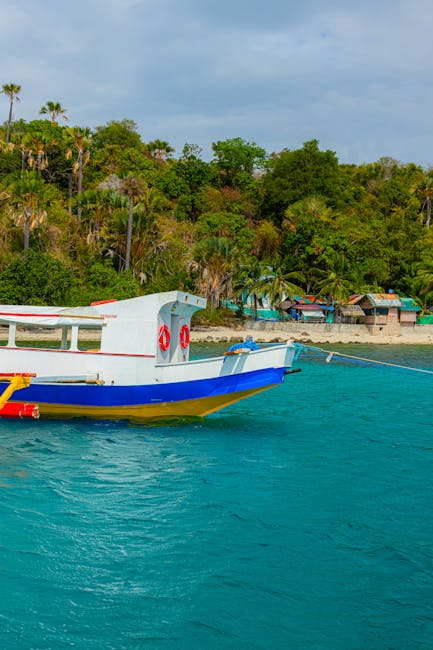
This is the question that gets asked most often, and the honest answer depends on what you value. A one-day tour gets you all the headline stops — Padar, Komodo Island dragons, Pink Beach, Manta Point — in a single 10-to-11-hour day, and you sleep in your Labuan Bajo hotel both nights. It is efficient, it is relatively cheap ($99–$151), and it fits into a tight itinerary where Komodo is one beat of a bigger Indonesia trip.
A two-day shared boat (around $180–$220) gives you roughly twice as much time at each stop, lets you do the Padar sunrise hike before any day boats arrive, includes Rinca or Kanawa or both as extras, and — the real payoff — lets you spend an evening anchored in a quiet bay watching fruit bats stream out of mangroves under a sky that is full of stars because you are hundreds of kilometres from any city.
You eat dinner on deck, sleep on a mat under the stars or in a basic cabin, and wake up already inside the park.
If you have the time, do two days. If you don’t, the one-day tour is still one of the best single-day experiences in Southeast Asia. What you should not do is squeeze a one-day tour into the same day as your flight in or out of Labuan Bajo. Boats get back to harbour between 5 and 7 p.m. on a good day, later if the sea is rough, and the airport is small enough that missing the one afternoon flight to Bali can strand you for 24 hours.
Labuan Bajo — the town you fly into
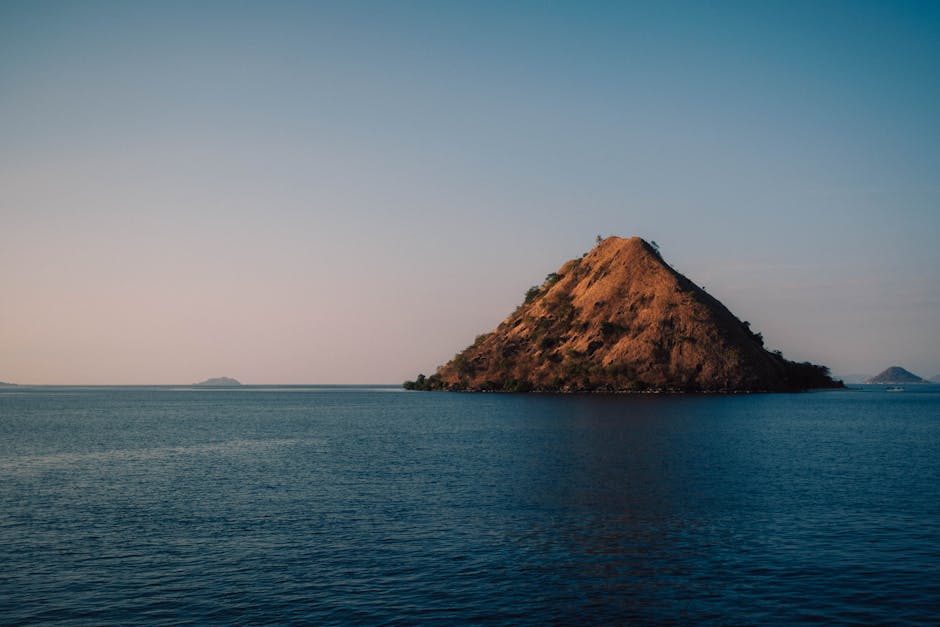
Labuan Bajo is a small port town on the western tip of Flores Island. It used to be a fishing village, then it became a backpacker stopover, and in the last decade it has turned into a full-blown tourism hub with boutique hotels, dive shops, waterfront restaurants, and an international airport that the Indonesian government keeps expanding.
Flights from Bali (Denpasar) take about 75 minutes and run multiple times a day on Garuda, Citilink, Wings Air, and Batik Air. From Jakarta it is about 2.5 hours direct. There are no international flights yet, but there is talk of adding a Singapore route.
You should plan on staying in Labuan Bajo the night before your tour and ideally the night after, too. The sunrise pickups are brutal — 4 to 6 a.m. depending on the tour — and you will be too wiped out to want to fly out the same evening.
Budget accommodation runs from $15 for a basic guesthouse near the harbour; mid-range hotels with pools and harbour views are $60–$120; a handful of boutique options hit $200+. The waterfront has a string of rooftop restaurants that catch the sunset over the harbour, and the prices are reasonable by Flores standards.
If you are planning the broader Indonesia itinerary, Komodo pairs naturally with Bali on either end. Fly Bali → Labuan Bajo, do the tour, fly back to Bali, then either head up to Yogyakarta for Borobudur and Prambanan or explore the classic Bali circuit with a Nusa Penida day trip or an Ubud tour.
Best months to go
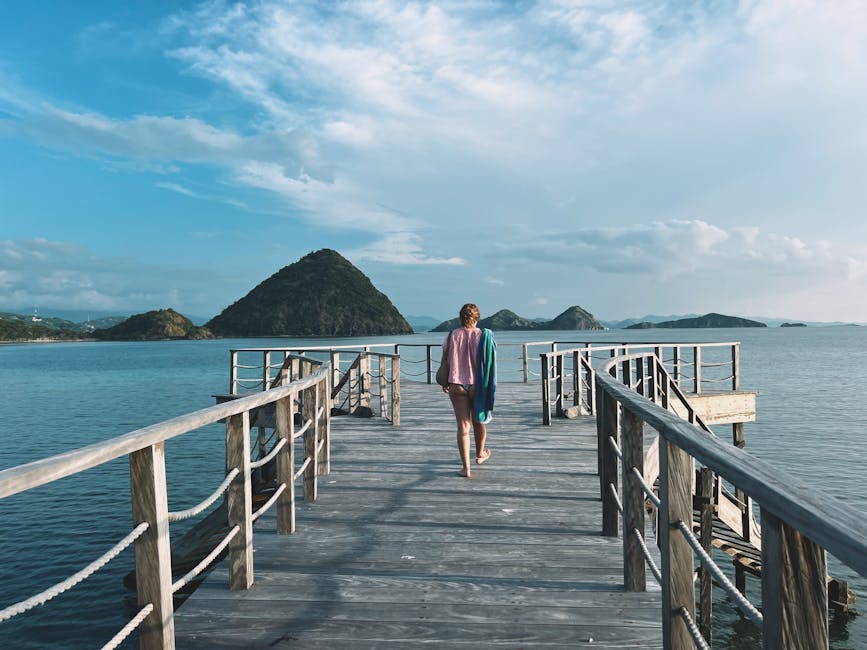
April through October is the dry season in eastern Indonesia, and this is when Komodo is at its most reliable. Seas are calm, tour departures run every day, the Padar hike is dry and stable, and the underwater visibility at Manta Point and Pink Beach is at its peak.
May, June, and September are the sweet spots — the seas are calm, the crowds are present but manageable, and the temperature is not yet at the full searing peak of August. Late July and August are peak season for European travellers and prices across Labuan Bajo rise accordingly; if you are on a budget, May and June are genuinely better.
November through March is the rainy season. Seas can get choppy enough that one-day tours are cancelled outright on the worst days, visibility at the snorkel sites drops, and the Padar hike becomes slippery.
That said, the rain comes in short bursts rather than all-day downpours, and the dragons are still active (they actually drink from the rain puddles, which is one of the only times you see them drinking at all). If you are in Indonesia during the wet season anyway, the tours still run on most days — just build in a buffer day so you can rebook if your first-choice date is scrubbed.
Dragon mating season is July through August, which is also when the males are most active and territorial, which means the best sightings of the year (and occasionally a rare fight). September through November is when the females lay eggs in old megapode mounds and guard them, which makes the ranger walks even more interesting if you happen to cross a nesting site.
What to pack for the boat
A Komodo boat day is not a relaxed Caribbean cruise. The sun is strong, the wind is constant, and you will spend 10 hours alternately roasting on an open deck and sliding around wet surfaces in flip-flops. Pack like this:
Closed shoes for the Padar hike and the dragon walk — trail runners or old sneakers.
Flip-flops will get you up Padar but not comfortably, and the rangers prefer closed shoes on Komodo and Rinca because of the gravel and the dragons. A wide-brim hat and SPF 50 sunscreen — the reflected light off water and pink sand is savage, and there is minimal shade on the boats. A rash guard or lightweight long-sleeve for the snorkel stops — the fish bites at Manta Point are non-existent but the sun exposure while floating on the surface for 30 minutes is worse than you think. Dry bag for your phone and camera. Motion sickness tablets if you are prone — the seas between islands can get choppy, especially on the Manta Point channel. A refillable water bottle — boats provide water but the single-use plastic pile on these trips is grim. Cash — for the coconut vendors at Pink Beach and tips for the ranger on Komodo Island.
Snorkel gear is included on every reputable tour. Bring your own mask only if you are fussy about fit — the rental gear is fine but gets basic after a few months of use. Fins are sometimes included and sometimes rented for a few dollars; ask when you book.
Komodo dragon safety — what the rangers are actually doing
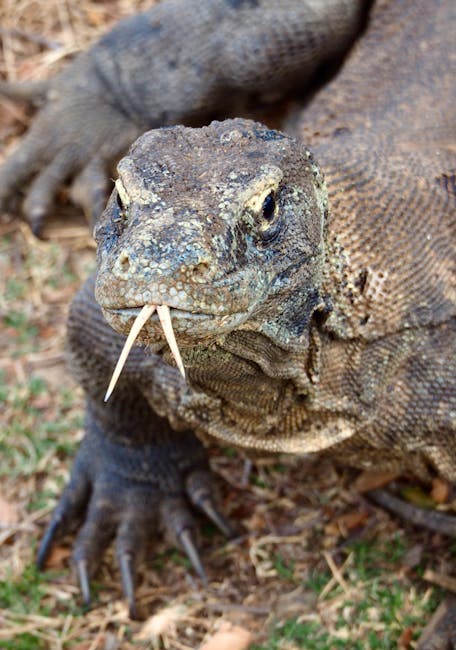
Every group that goes ashore on Komodo or Rinca is assigned a park ranger with a forked wooden stick (they call it a “tongkat”), and the forks are there to press against the side of a dragon’s neck to steer it away if one gets too close. This sounds old-fashioned until you realise it works — the dragons’ necks are sensitive enough that a firm nudge turns them.
The rangers train for years and they know which individuals are active, which are sleeping off a meal, and which are sub-adults to stay further from. They walk in a loose formation with one ranger up front and one behind.
Tourist injuries in the park are extraordinarily rare — fewer than a dozen reported incidents in the past 30 years, almost all involving people who strayed from the group or sat down on what turned out to be a concealed dragon. Follow the ranger’s instructions exactly, do not crouch down for a photo unless they say it is safe, and do not touch anything.
The dragons have been studied extensively and are not aggressive toward humans by default, but they are opportunistic carnivores with no reason to make exceptions for primates in hiking shorts.
One cultural note: the villages on Komodo Island itself still exist, and the islanders have lived alongside the dragons for centuries. The local story is that the dragons and the islanders are distant relatives — a myth about twin sisters, one of whom gave birth to a dragon — and you will see small offerings near the ranger station acknowledging that story. Treat the villages and the people with the same care you would anywhere else.
Snorkelling and diving beyond the tour
Komodo is one of the top three dive destinations in Indonesia alongside Raja Ampat and Bunaken, and if you are already a certified diver (open water or higher), it is worth adding at least one dive day to your Labuan Bajo stop.
The park has over 70 recognised dive sites, with the standouts being Batu Bolong (a pinnacle covered in fish action), Crystal Rock, Castle Rock, and Manta Alley — which is a different site from the snorkeller’s Manta Point and has bigger, more open-water mantas. Drift dives are the norm and the currents are strong, so intermediate-level certification is the practical minimum.
For snorkellers, the tours cover the main spots, but if you have an extra day in Labuan Bajo, several operators run half-day snorkel trips to Kanawa, Bidadari, or Sebayur islands just north of the harbour. These are cheaper ($30–50), less crowded, and the reef is still healthy. Good option for a rest day between a big Komodo tour and your flight out.
Booking tips — how to avoid the common traps
A few things that will save you money and headaches. Book online before you arrive in Labuan Bajo. Walk-up rates at the harbour are sometimes cheaper on paper but the quality control is wildly inconsistent — some boats are safe and professional, some are overloaded wooden tubs with no life jackets.
Viator and GetYourGuide both vet their listed operators and handle cancellation cleanly, which is the single best reason to book through them rather than with a harbour tout. Check the park entrance fees are bundled. Some cheaper boats quote a low price that does not include the park conservation fee, ranger fee, and snorkel fee, which can add $30–50 per person on the day.
The Viator and GYG listings above all include these.
If you want an even more off-beat Indonesia experience to pair with Komodo, the Mount Bromo sunrise tour in East Java, the Ijen Volcano blue fire tour, or a Gili Islands snorkeling trip from Lombok all make strong additions to the classic Bali–Komodo loop. The Mount Batur sunrise hike in Bali is a gentler volcano day for travellers who want the pre-dawn ritual without the logistics of East Java.
And if you are after more cultural side-trips, a Ubud cooking class, the Uluwatu Kecak fire dance, or a Bali waterfalls tour in Bali are easy to slot in after the boat day.
Plan for the port fees. Labuan Bajo harbour charges a small boarding fee (around 10,000 IDR) that the guides collect on the dock. Don’t wait until the last day. If the weather forecast looks bad, the operators will shift the tour date or refund you — but only if you have a day of buffer in Labuan Bajo.
Tight itineraries lose more money on Komodo than anywhere else in Indonesia because the sea has a vote. Tip the rangers. Not required, but 50,000 IDR ($3) per person at the end of the dragon walk is appreciated and goes to the people who literally stand between you and a 90 kg carnivore for an hour.
One last thought on why Komodo matters
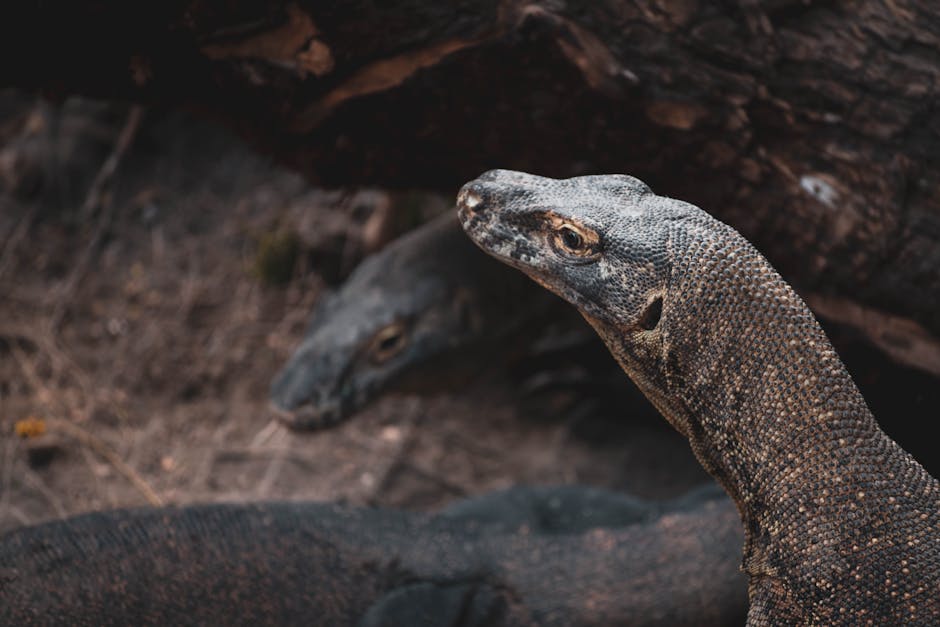
There is a reason you are reading a whole guide about how to get here. Komodo dragons evolved around four million years ago, long before humans were humans, and they survived a mass extinction that wiped out most of the megafauna in the rest of Indonesia.
The islands they still live on are a small, battered, and increasingly protected piece of the planet — a place where an animal older than our species still runs the landscape. Whatever other boxes you tick on a holiday, few of them will have that weight.
Book one of the three tours at the top of this page, sort out a night in Labuan Bajo on either side, pack closed shoes and sunscreen, and go. The boats leave around sunrise.
Prices, durations, and tour availability shift with the seasons — always check the live listing on Viator or GetYourGuide before you book. The Komodo National Park authorities also adjust entrance and conservation fees periodically; reputable operators update their inclusions accordingly, but it is worth a quick check at the time of booking.