Tokyo’s neon waterfront, Kyoto’s red shrine gates and a Mount Fuji viewpoint make a lively seven-day sampler. I like that coach transport, hotels and entry fees are arranged, and that a Shinkansen ride gives the itinerary a taste of Japan’s famous rail travel without requiring you to plan the connections yourself.
There is a catch: this is a fast-moving tour, not a slow cultural stay. The group may reach 40 people, the guide’s clarity and depth can matter a lot, and the day-by-day information has a few inconsistencies worth checking before you pay.
- At a glance
- Seven days, five stops, plenty of ground to cover
- Day 1: Arrive near Narita, not central Tokyo
- Day 2: Tokyo from Odaiba to Sensoji
- Day 3: Mount Fuji views, then a long coach ride
- Day 4: Ninja history, Osaka Castle and Dotonbori lights
- Day 5: Kyoto’s torii gates, bamboo and Golden Pavilion
- Day 6: Your own Osaka day
- Day 7: Depart from Osaka
- What the price covers, and what it does not
- Guide quality and group size matter
- Who should book this Japan tour?
- FAQ
- Does the tour visit Nara Park?
- Where does the tour start and end?
- Is the airport transfer included?
- What is included in the price?
- How large is the group, and what language is the tour guided in?
- Is the tour wheelchair accessible?
- The Best Of Tokyo!
- More 7-Day Experiences in Tokyo
- More Tours in Tokyo
- More Tour Reviews in Tokyo
- Not for you? Here's more nearby things to do in Tokyo we have reviewed
At a glance
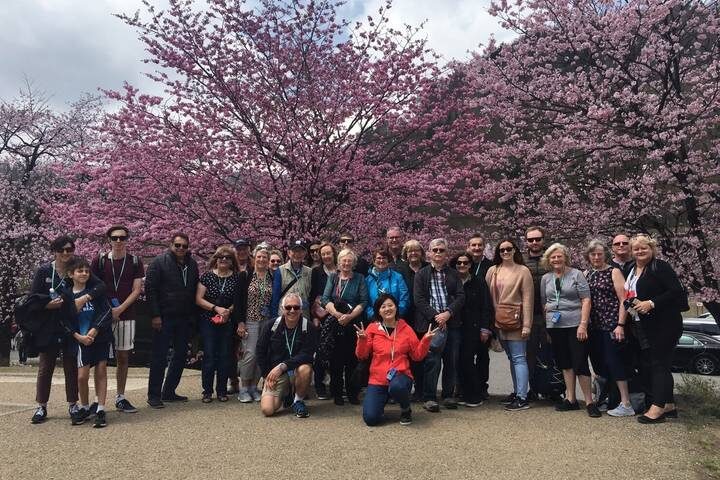
- The route crosses several regions: Tokyo, the Mount Fuji area, Hamamatsu, Osaka and Kyoto, ending in Osaka.
- A real Shinkansen segment is included: You ride from Osaka to Kyoto, with the train described as capable of speeds up to 320 kph.
- The schedule is sightseeing-heavy: Odaiba, Tsukiji, Sensoji, Osaka Castle, Fushimi Inari, Arashiyama and Kinkakuji are on the program.
- Nara is not in the detailed schedule: The overview mentions feeding deer in Nara Park, but none of the seven day descriptions includes a Nara visit.
- Six hotel nights and breakfast are covered: International flights, insurance, most meals and, for tours from 2025, airport transfers are not included.
- Expect a group, not a private guide: The stated size is 20 to 40 people, with English-language guiding and low-intensity activity.

👉 See our pick of the 25 Best Guided Tours In Tokyo
Seven days, five stops, plenty of ground to cover
This tour is designed to show you several Japanese city styles in one week: Tokyo’s scale, a Mount Fuji viewing area, Osaka’s food-and-neon energy, and Kyoto’s shrines and temples. It is a useful route if you have limited time and want the big names handled for you, rather than spending days comparing trains and hotel locations.
The trade-off is time. You move hotels, cover long distances by coach and see only a small slice of each city. I would think of this as an introduction, not a deep stay in Tokyo or Kyoto. If you already know Japan, or want unhurried time for museums, neighborhoods and meals, you may prefer a slower itinerary.
The operator lists an English-speaking guide throughout, coach transport on the overland portions, six nights in 3-star accommodation, daily breakfast and monument entrance fees as stated in the schedule. Those inclusions take care of much of the trip’s structure. But a guided tour does not necessarily mean a guide will explain every site in depth once you arrive, so it is worth asking how much on-site commentary is planned.
You can also read our reviews of more tours and experiences in Tokyo


Day 1: Arrive near Narita, not central Tokyo
The first night is listed at Hotel Mystays Premier Narita or a similar 3-star hotel. The supplied address is in Narita, about 15 minutes by car from Narita Airport, so this is an airport-side start rather than a night in central Tokyo.
You make your own way to the hotel and have the rest of the day free. That gives you room to recover from a long flight, but it also means you need to arrange your own arrival transfer for current departures. The tour information says airport transfers were included only through 2024 and are excluded from 2025 onward.
If you are choosing flights, the operator recommends arriving at Narita Airport. Confirm the arrival hotel and transfer plan before booking, especially if you land late or would rather not navigate transport after a long flight.
Day 2: Tokyo from Odaiba to Sensoji
The first full day takes in several very different corners of Tokyo. In Odaiba, you see Rainbow Bridge and the waterfront’s Statue of Liberty replica, then head to Tsukiji’s outer market, where food stalls and restaurants offer seafood, sushi and sashimi.
Lunch is not listed as included, so plan to pay for your own meal. Tsukiji is a good place to sample Japanese seafood, but you will have limited time within a group schedule. If you have a dietary restriction, check what options are practical rather than assuming the market will suit every need.
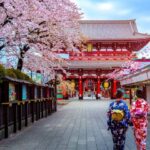
Next comes the Tokyo Metropolitan Government Building’s observation deck, roughly 200 metres above the city. It offers a broad view of Tokyo’s immense spread, and it is a worthwhile contrast to the close-up market streets. The final stop is Asakusa’s Sensoji Temple, reached through the Kaminarimon gate and its large lantern, followed by Nakamise-dori, a busy shopping lane for snacks and souvenirs.
This is a packed day, and the sites are spread across different parts of the city. The advantage is variety; the cost is that you may not have time to linger. Your listed hotel changes from the Narita-area property to Loisir Hotel Shinagawa Seaside or a similar 3-star hotel, so expect the first days to involve a shift in base as well as sightseeing.
Day 3: Mount Fuji views, then a long coach ride
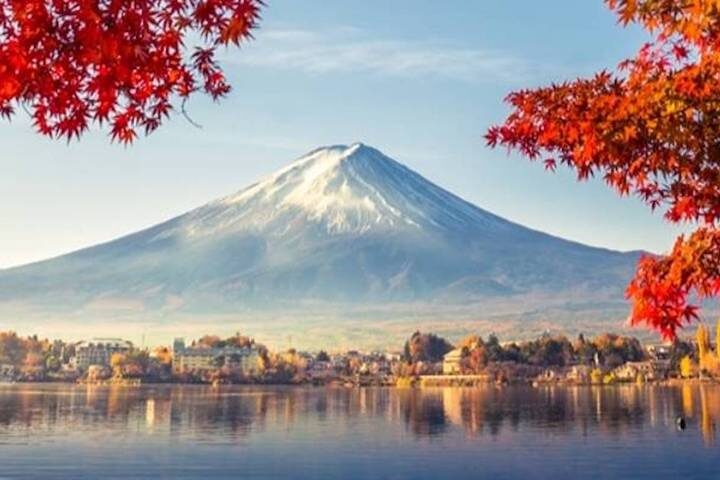
The group heads toward the Mount Fuji area, stopping at Gotemba Peace Park for views of the mountain. The view depends on conditions, so treat it as a chance to see Fuji rather than a guarantee of a clear, postcard-perfect sighting.
The next stop is the Mt. Fuji World Heritage Centre, designed by architect Shigeru Ban. Its cone-shaped form and wooden lattice exterior are intended to echo the mountain’s surroundings. Inside, exhibits cover Fuji’s geology, history and place in Japanese art and literature, adding context beyond the view from outside.
Afterward, the coach continues to Hamamatsu, where the evening is free. This is one of the longer travel days, and the town is mainly a stop along the route rather than a place with a scheduled evening program. The listed hotel is Hotel Associa Toyohashi or a similar 3-star property, so check the confirmed hotel and location if that detail matters to you.
A past Hamamatsu-area stay was described as having serious cleanliness and amenity problems. That does not establish the standard of the current hotel, but it is a reason to confirm the actual property rather than relying only on the phrase or similar.
Day 4: Ninja history, Osaka Castle and Dotonbori lights
The day begins at the Iga-ryu Ninja Museum in Iga City. The museum focuses on the history and culture of ninja, the spies and warriors associated with feudal Japan. A past family group especially enjoyed the ninja show, though the current schedule describes a museum visit and does not clearly promise a performance. Ask whether a show is included on your departure.
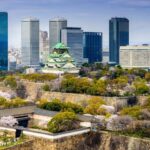
From Iga, the group continues to Osaka Castle, built in 1583 under Toyotomi Hideyoshi as part of Japan’s unification. The castle is one of the country’s best-known landmarks, and its history gives a useful counterpoint to the modern commercial districts later in the day.
Dotonbori closes the sightseeing day with bright signs, large billboards and a strong street-food reputation. It is a good place to get a first feel for Osaka after dark. Your hotel is listed as Hotel it Osaka Shinmachi or similar, where you stay for the next three nights.






Day 5: Kyoto’s torii gates, bamboo and Golden Pavilion
The schedule includes a Shinkansen ride from Osaka to Kyoto, with the train described as reaching speeds of up to 320 kph. It is a short but memorable sample of Japan’s high-speed rail, and train travel is part of the country’s everyday transport story as much as a headline attraction.
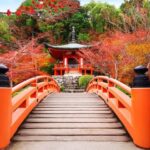
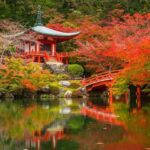
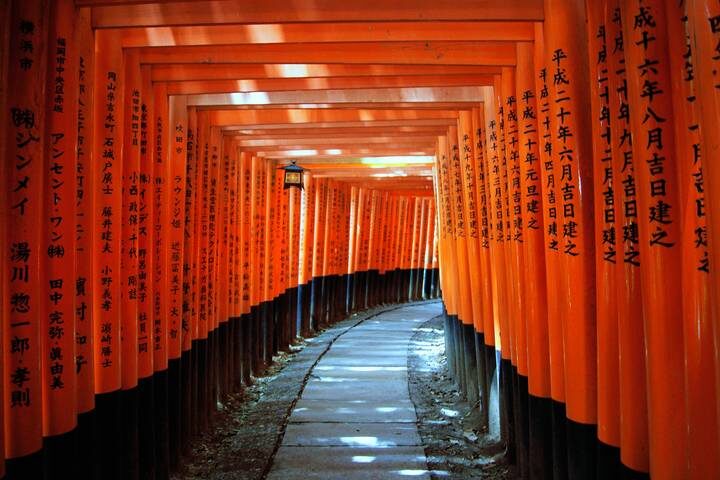
In Kyoto, the first stop is Fushimi Inari Taisha, the major shrine dedicated to Inari. Its many red torii gates create the image most people associate with the shrine. The tour does not specify how far you walk along the gates, so ask how much time is allocated if you want to climb beyond the main entrance area.
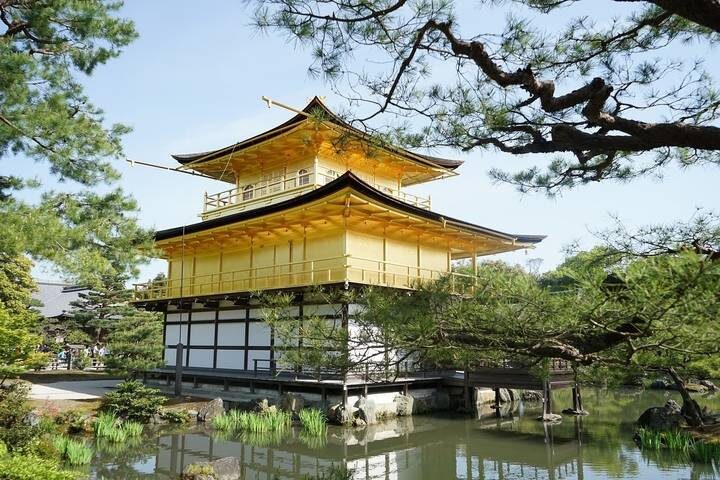
Arashiyama’s bamboo grove is next, followed by Kinkakuji, the Golden Pavilion. These are three of Kyoto’s signature sights in one day, but they are not the whole city. You should not expect spare hours for additional temples or neighborhoods unless the group schedule leaves them open.
The transport notes list a train from Osaka to Kyoto on Day 5 and a coach from Kyoto to Osaka on Day 6, while the hotel remains in Osaka. The exact return arrangement is not entirely clear from the schedule, so ask the operator how the group gets back after Kyoto sightseeing and when.
Day 6: Your own Osaka day
A free day is a welcome pause after several tightly planned sightseeing days. You can return to a place that caught your interest, explore another part of Osaka, visit a museum or spend the day at a café. The tour does not provide a set activity list for this day, so costs and plans are your responsibility.
This flexibility is valuable, but it is also why you should not count on a guide-led Osaka program throughout the week. If you want a particular restaurant, museum or performance, make your own plan and check opening details in advance. The tour’s description does not name specific optional activities.
Day 7: Depart from Osaka
The tour ends in Osaka, and you make your own way to the airport in time for your flight. Kansai International Airport is suggested for departure, with the operator noting its range of international flights.
Build in enough time for the airport journey, check-in and security. Since no airport transfer is included for tours from 2025, factor the transport cost into your budget and confirm the hotel’s final location.
What the price covers, and what it does not
The price is listed from $1,466, based on the cheapest room. Currency and final cost can vary, so confirm the amount for your departure and room arrangement. For the price, the core value is the combination of six hotel nights, daily breakfast, guided sightseeing, coach travel between cities, the Shinkansen segment and listed monument entry fees.
That package can make sense if you value having transport and the main route organized. You are paying for convenience as well as accommodation: the coach connects several destinations that would otherwise require separate travel planning, and the guide can help keep a group moving through a busy week.
Do not mistake the starting price for an all-in holiday cost. International and domestic flights, travel insurance, personal spending and most meals are excluded. Airport transfers are also excluded for tours from 2025 onward. Add those costs, plus lunches and dinners, before comparing this with a self-planned trip or another group tour.
Breakfast is included each day, but food is the lowest-rated category in the supplied category scores, at 3.8 out of 5, compared with 4.5 for transport and guiding. That may matter if meals are a major part of your trip. The schedule leaves room to buy food in places such as Tsukiji and Dotonbori, but it does not promise group dinners or a particular culinary program.
Guide quality and group size matter
Past guides named by customers include Makiko, Zu, AM, Masa, Ali and Sam. Several were praised for professionalism, cultural insight and clear historical context. But guide quality has not been uniform: one recent account described difficulty understanding the guide’s English, while another wanted more history and clearer presentation for a large group.
That makes the guide an important variable. The group size is listed as 20 to 40, which is large enough that commentary over a bus speaker or at a crowded site may not suit everyone. If you want detailed explanations at each stop, ask how the guide handles site visits, not just the bus journeys.
There have also been complaints about itinerary communication arriving late and about an advertised brewery tour that was no longer offered. The current seven-day schedule provided here does not include a brewery visit, so do not plan around one. Before departure, request the final day-by-day schedule and confirm that every activity you are counting on is still operating.
Who should book this Japan tour?
I would consider this tour if you want a guided first visit, have one week, and prefer to let someone else organize the long-distance transport and hotel changes. It should suit families and adults comfortable with group travel, light activity and a full schedule. The listed age range is all ages, but the tour is not wheelchair accessible.
It is less suitable if you want a small group, slow mornings, extensive time in Kyoto, or a guaranteed deep account of Japanese history at every stop. The Nara Park deer visit in the tour overview is not in the detailed seven-day schedule, so ask directly whether Nara is included on your specific departure. Do the same for the return journey from Kyoto to Osaka and the exact hotel names.
Book it for the broad route and the practical structure, not for a promise of unhurried exploration. If the guide, Nara stop or hotel standard is central to your decision, get those details confirmed in writing before committing.
7 Days Highlights of Japan by Tomato Travel
“Excellent tour guide good and very knowledgeable”
FAQ
Does the tour visit Nara Park?
Nara Park appears in the tour overview, but it is not listed in the detailed day-by-day schedule. Ask Tomato Travel whether Nara is included on your particular departure before booking.
Where does the tour start and end?
It starts in Tokyo and ends in Osaka. The first hotel is usually Hotel Mystays Premier Narita or similar, and the operator recommends arriving at Narita Airport.
Is the airport transfer included?
Airport transfers were included through 2024. For tours from 2025 onward, return airport transfers are not included, so you need to arrange your own transport.
What is included in the price?
The package includes six nights in standard 3-star hotels, daily breakfast, an English-speaking guide, coach transportation, the Osaka-to-Kyoto Shinkansen ride and listed monument entrance fees. Flights, insurance, personal spending and other meals are not included.
How large is the group, and what language is the tour guided in?
The stated group size is 20 to 40 people. The tour is guided in English.
Is the tour wheelchair accessible?
No. The operator says it cannot accommodate this tour for wheelchair accessibility.