
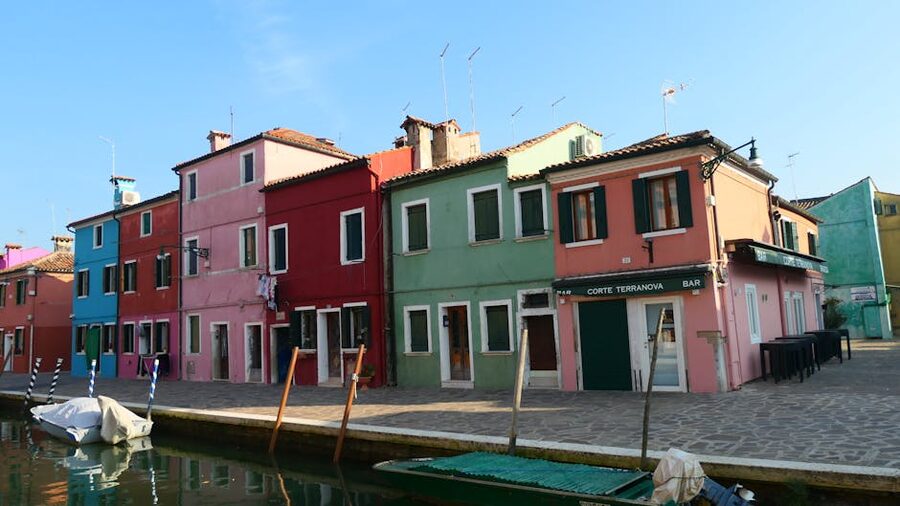
The first thing that hits you on Burano isn’t the colour, oddly. It’s the smell of fish stew drifting from a kitchen window, and the slap of laundry above a bright pink wall, and then somewhere a vaporetto horn echoes off the water. Then the colour catches up. And once it does, you realise nothing else in the Venetian lagoon looks like this.
Murano, Burano and Torcello sit a short ferry ride north of Venice, and they’re the easiest day trip on the planet to get wrong. This guide is how I’d actually do it, after spending more time on the lagoon than I care to admit.
In a Hurry? Top Picks
- Best Overall, $29: Glimpse of Murano, Torcello and Burano boat tour. Check availability
- Best for Glassblowing, $28: Burano, Torcello and Murano boat tour with glass demo. Check availability
- Shorter Day, $34: Murano and Burano with glass factory visit. Check availability
- In a Hurry? Top Picks
- Three Islands, One Day, In Order
- Boat Tour or DIY Vaporetto?
- Three Tours Worth Booking
- 1. Glimpse of Murano, Torcello and Burano Islands:
- 2. Burano, Torcello and Murano Boat Tour with Glassblowing:
- 3. Glass Factory, Murano and Burano Boat Tour:
- Murano: The Glass Island
- The Glass Demo
- What Else to See on Murano
- Burano: The Famous Colour Trick
- Lunch on Burano
- Lace, Briefly
- Torcello: The Mostly-Empty Island
- The Cathedral of Santa Maria Assunta
- Is Torcello Worth Visiting?
- Practical Information
- How to Get There From Venice
- Vaporetto Tickets and Passes
- How Long to Budget
- Best Time of Year
- Mistakes to Avoid
- What to Pack for the Day
- How This Day Trip Fits With the Rest of Venice
- Where to Stay if You’re Doing the Lagoon Day Trip
Three Islands, One Day, In Order
You can technically fit Murano, Burano and Torcello into a single day. Most people do. The trick is getting the order right and not blowing two hours on the wrong island. A guided lagoon tour sequences this for you; doing it yourself with vaporetto Line 12 takes a bit more thought.
Here’s how I’d run it. Leave Venice early, head straight to Burano first to beat the cruise crowds, double back to Torcello if you’re a history nerd, then finish on Murano on the way home. That way Murano (the busiest and closest to Venice) gets the leftover energy, which is fine because forty-five minutes there is genuinely all you need.
Boat Tour or DIY Vaporetto?
This is the big question and there’s no single right answer. I’ve done it both ways.
A guided boat tour costs around $28 to $34 and runs roughly 4.5 to 6 hours. You get a fast direct boat between islands, a guide who actually explains why Murano makes glass and Burano makes lace, and a glass-blowing demo at a working furnace. You also get a fixed schedule, which means if you fall in love with one island, tough.
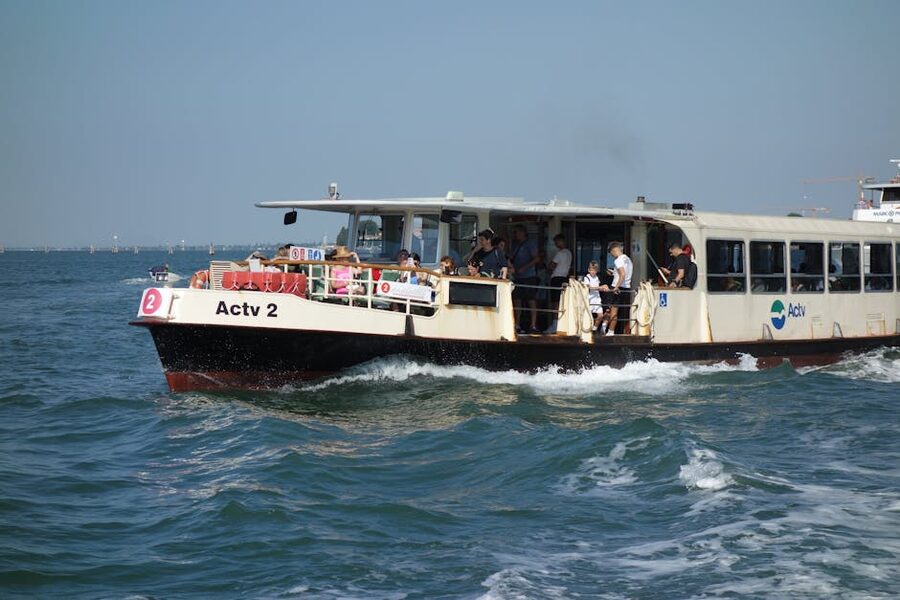
The DIY route uses the public vaporetto. A 24-hour ACTV pass costs €25 (roughly $27) at the time of writing, and you take Line 12 from Fondamente Nove. It’s about forty minutes to Burano. Cheaper, slower, and you can stay as long as you like on each stop.
My take: if it’s your first time in Venice, take the boat tour. The glass demo on Murano is the part the vaporetto doesn’t include, and you’d otherwise pay €5 to €10 to watch one independently. Plus you skip the standing-queue at the Fondamente Nove ticket window, which gets ugly in summer. The most-booked tour handles all the logistics for the price of a vaporetto pass plus one demo, which is hard to argue with.
If you’re doing it on a vaporetto pass anyway because you’ve already got one for getting around Venice, then DIY makes more sense. Skip the demo, eat lunch on Burano instead.
Three Tours Worth Booking
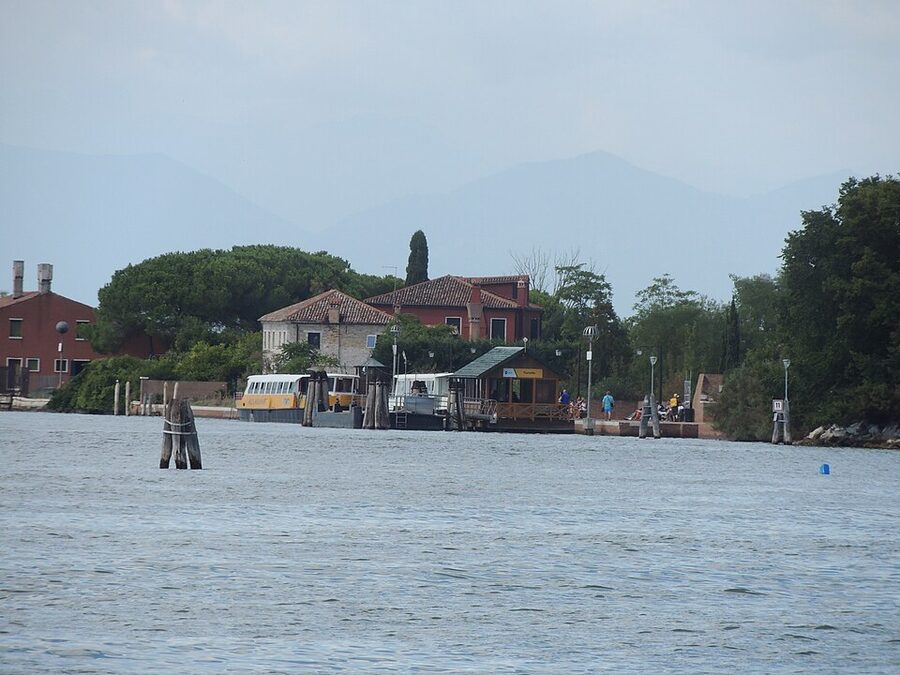
I went through the most-booked options on the lagoon and these three keep coming up. Each does the islands a slightly different way, so pick the one that matches what you actually want.
1. Glimpse of Murano, Torcello and Burano Islands: $29
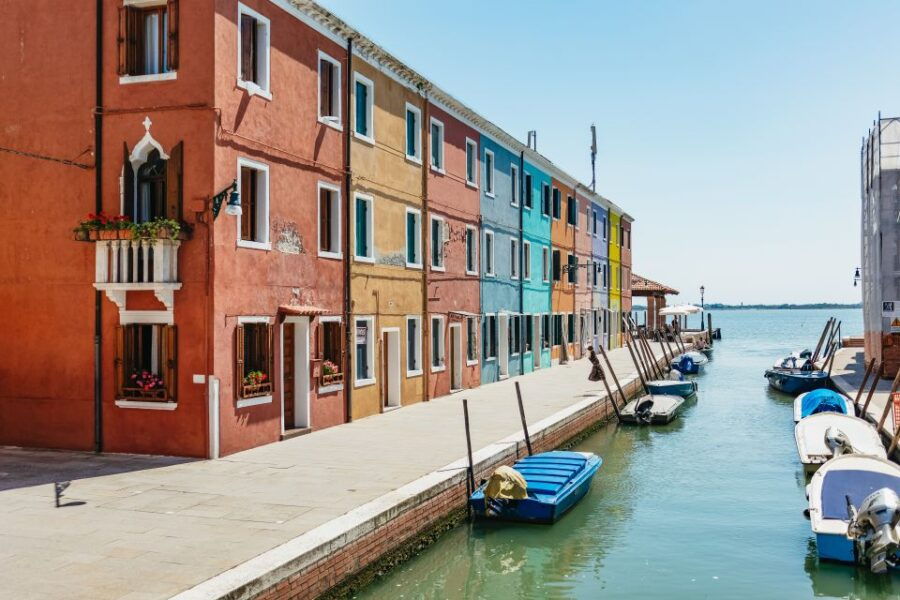
This is the one I’d start with. It’s the highest-volume tour on the lagoon for a reason: 4.5 to 5.5 hours, all three islands, glass demo included, and the price comes in cheaper than buying a daily vaporetto pass plus a paid demo. Our review of the Glimpse boat trip goes into the timing problems on Burano (lunch is tight) but for a first-timer this is the easy pick.
2. Burano, Torcello and Murano Boat Tour with Glassblowing: $28
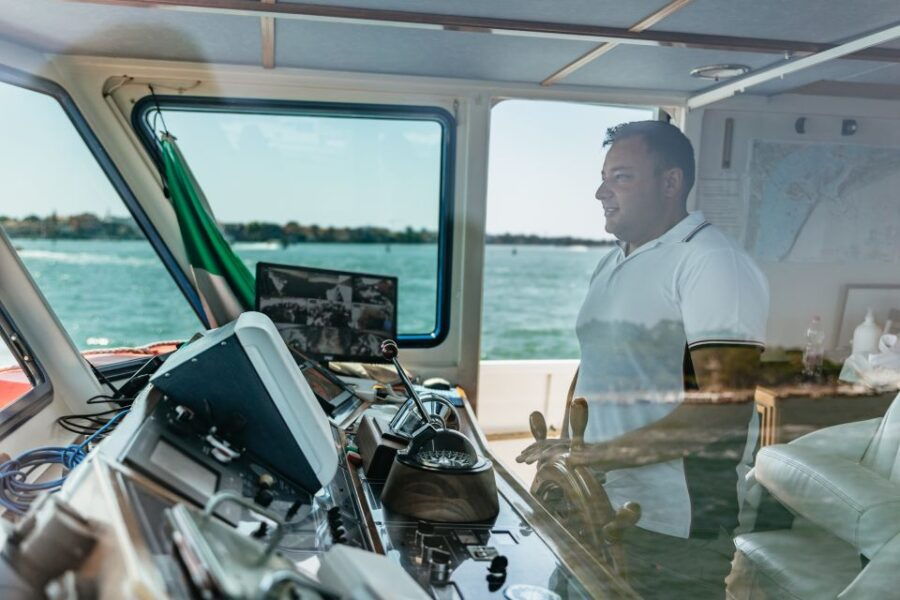
Slightly cheaper, runs longer at six hours, and gives you more breathing room. Our breakdown of this option notes the glass-blowing demo is the same standard furnace stop as the others, but the extra time on the islands means you’re not running back to the boat. Pick this over option 1 if you hate being rushed.
3. Glass Factory, Murano and Burano Boat Tour: $34
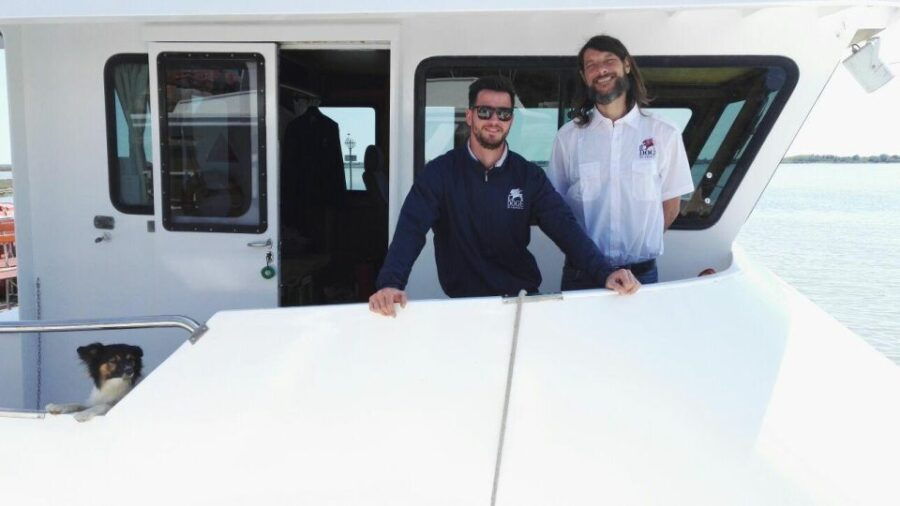
This is the half-day version. No Torcello, more Murano, more Burano. If you’ve only got an afternoon free or you’ve decided Torcello isn’t your thing, our review of the glass factory tour lays out why it’s actually the most efficient option for travellers with a single day in Venice.
Murano: The Glass Island
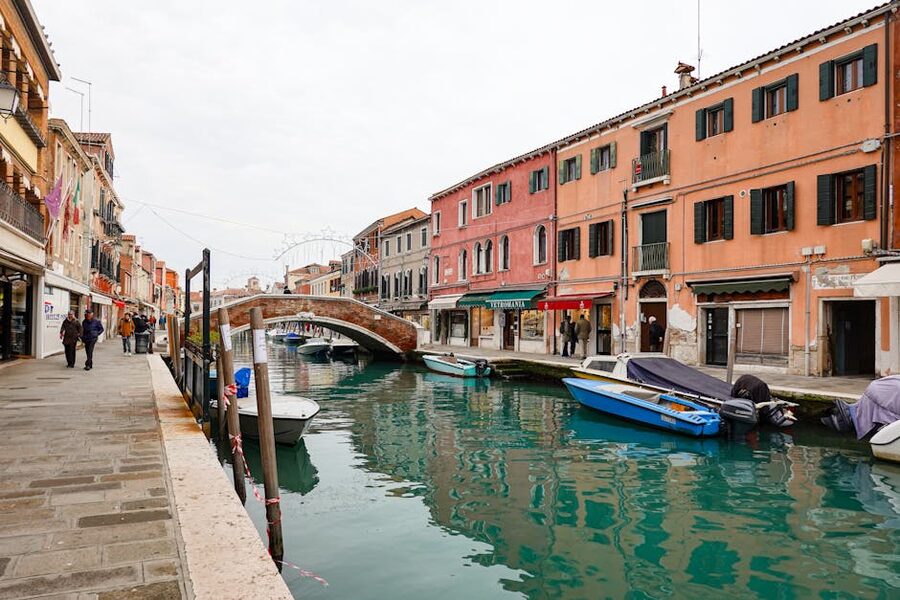
Murano is the closest of the three islands to Venice, about ten minutes by vaporetto from Fondamente Nove. It’s also the most crowded, especially in the morning when every cruise tour dumps off at once. If you’re doing the rest of Venice the same week, our gondola ride guide covers the late-afternoon return on the main island.
The reason to come is glass. There are still working furnaces here that have been running, in some form, since the thirteenth century, when Venice forced its glassmakers to relocate to Murano so that any fires wouldn’t burn down the main city. They came, they stayed, and they kept the secret of cristallo glass under a strict guild for about four hundred years. If a Muranese glassmaker tried to leave the island and take the recipe abroad, the Republic could send assassins after them. Genuinely. A half-day tour covers the historical context if you care; otherwise the demo at any of the working furnaces tells the story in twenty minutes.
The Glass Demo
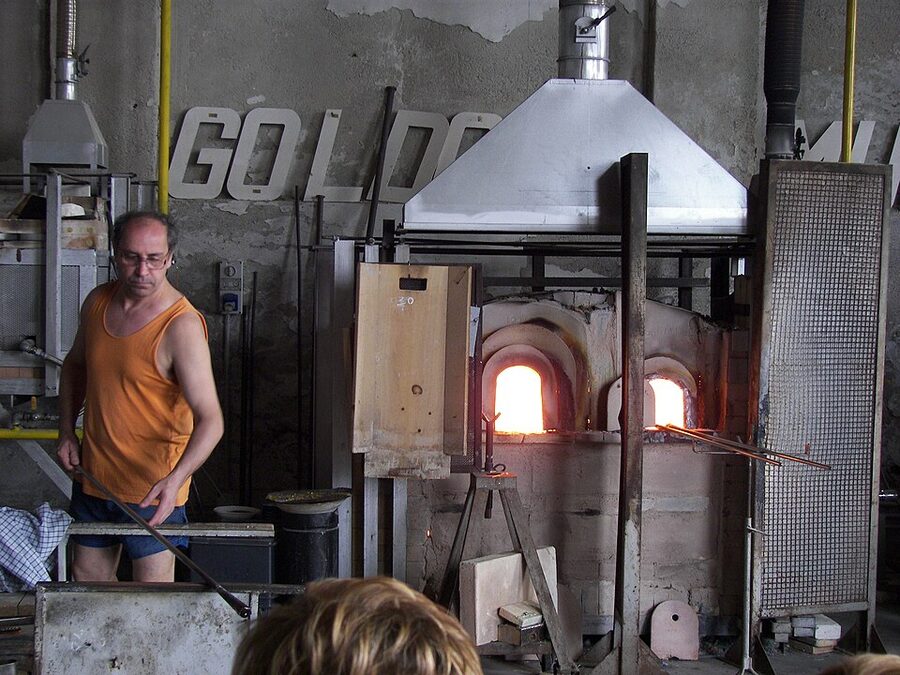
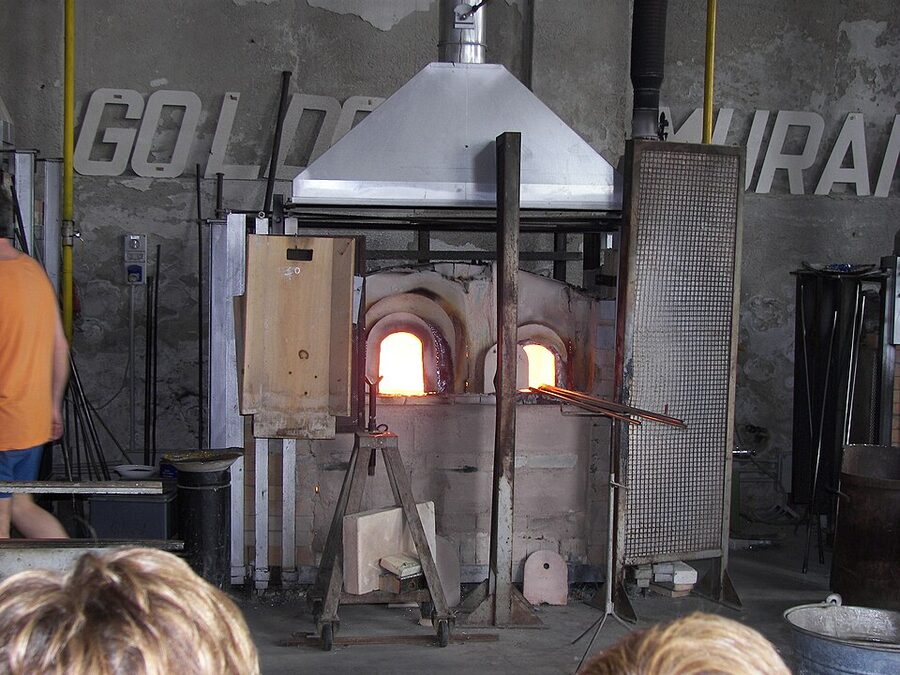
If you’re on a tour, the demo is included and held at one of the larger furnaces near the main canal. If you’re DIY, the cheapest paid demo costs around €5 and runs every twenty minutes or so at most working glasshouses. There’s also the loophole the local blogs have been recommending for years: stand at the open back door of certain working furnaces near Riva Longa and you can watch for free.
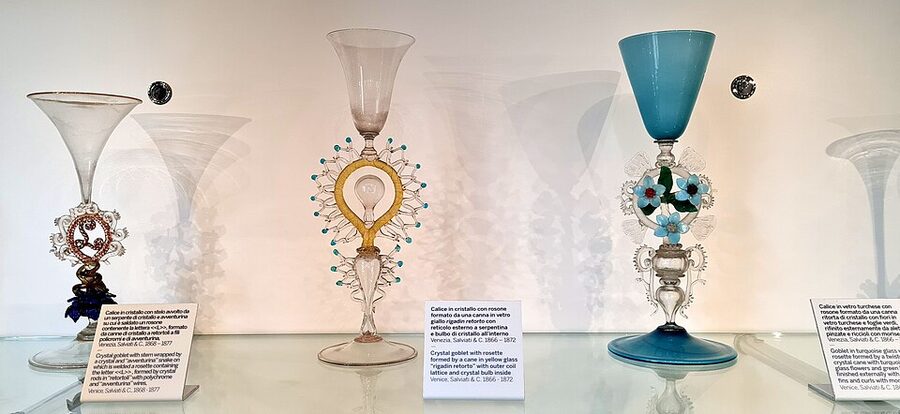
Skip the gift shop afterwards unless you want a souvenir. Real Murano glass is signed and stamped, and the pieces start around €40 for the smallest items. Anything sold for €5 in a basket near the door is from China, even if the seller insists otherwise. There’s been a counterfeiting problem on the island for at least twenty years.
What Else to See on Murano
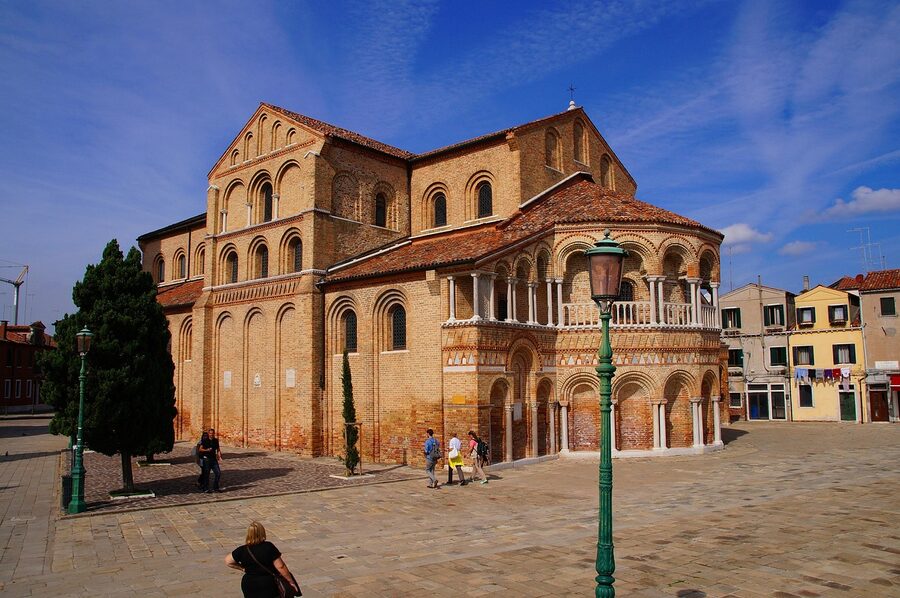
Beyond the glass, there’s the Basilica dei Santi Maria e Donato, which is twelfth century and free. The mosaic floor is the reason to go in. It’s geometric, slightly wonky from centuries of subsidence, and almost nobody bothers to step inside. The locals say there’s a dragon’s bone hanging behind the altar; in reality it’s a whale rib, but the legend is better.
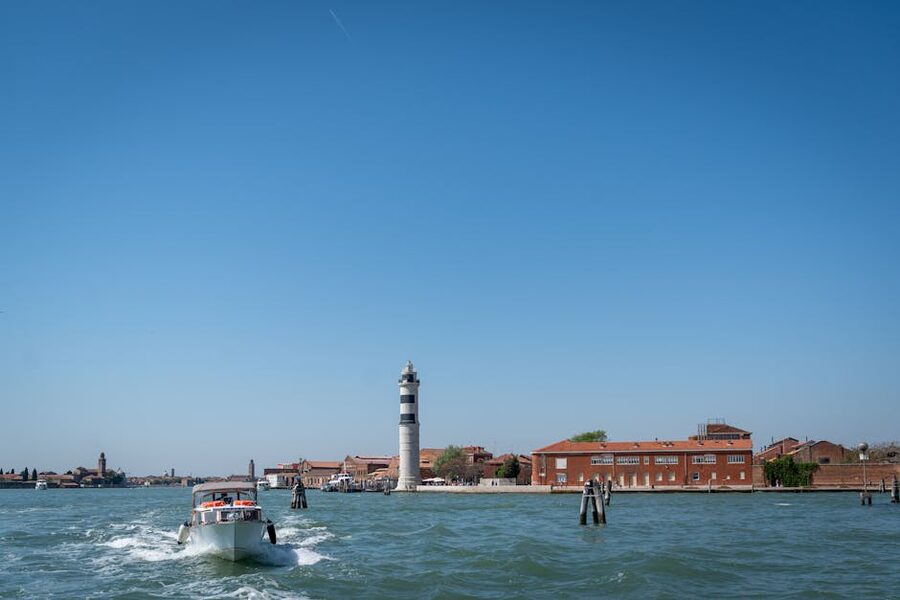
Don’t bother with the second hour on Murano. After the demo, a wander along Fondamenta dei Vetrai, and a peek at the church, you’ve seen what makes the island distinct. Some longer tours add a second factory stop, but the second factory is much like the first.
Burano: The Famous Colour Trick
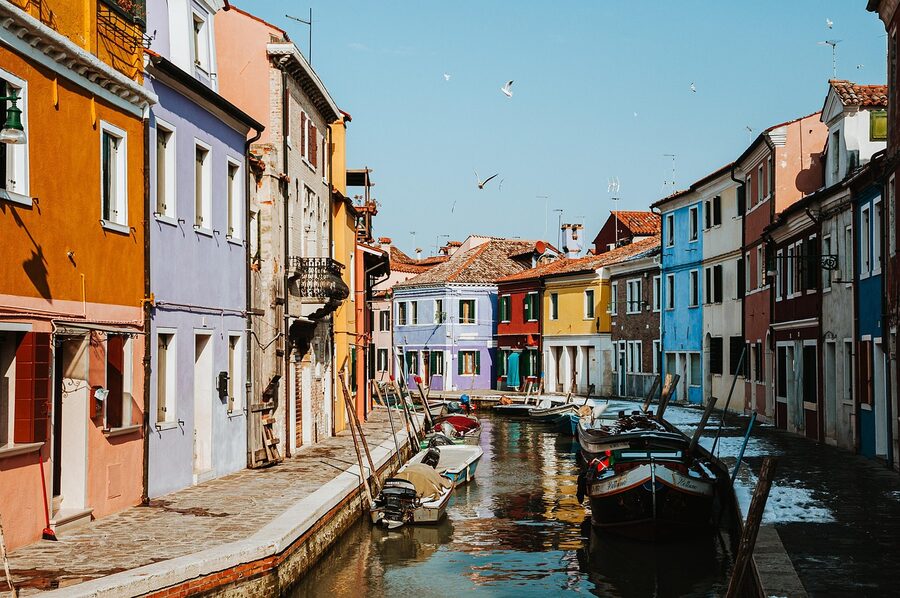
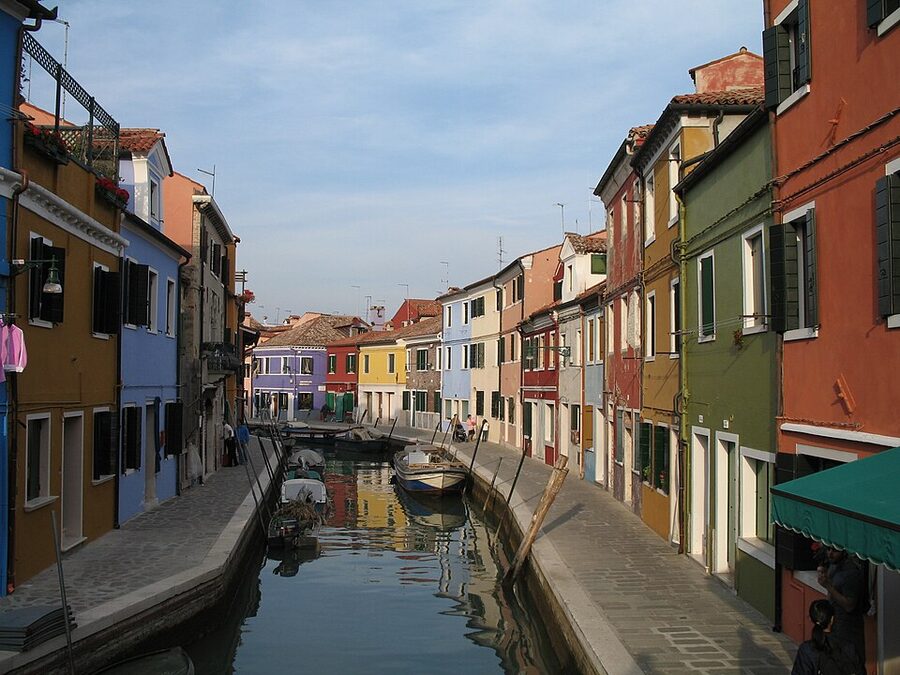
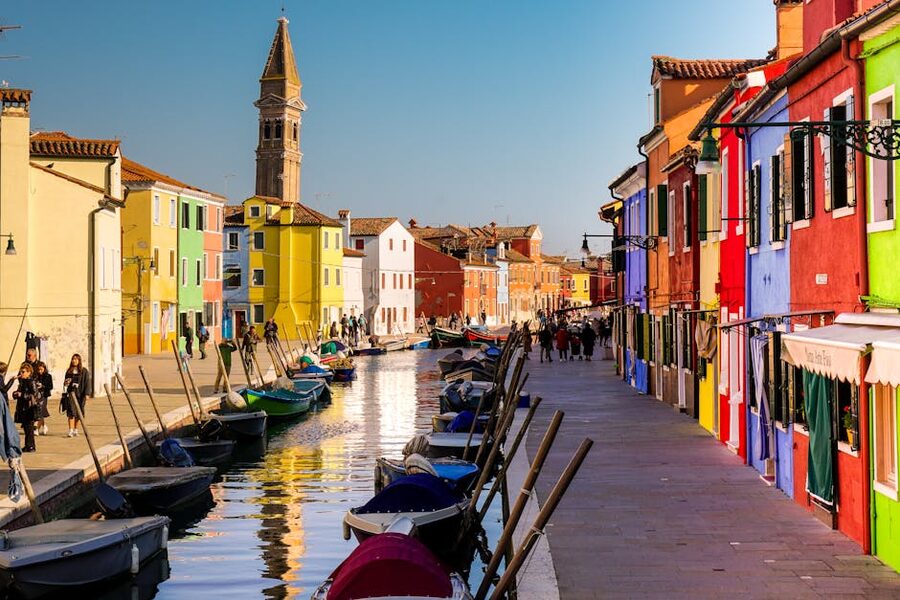
Burano is forty minutes from Venice by Line 12 vaporetto, or about twenty minutes from Murano on Line 9. It’s smaller than Murano, calmer, and the prettiest of the three. It’s also the most photographed bit of the entire Italian coastline by some estimates, which says something about Instagram and not much about Burano.
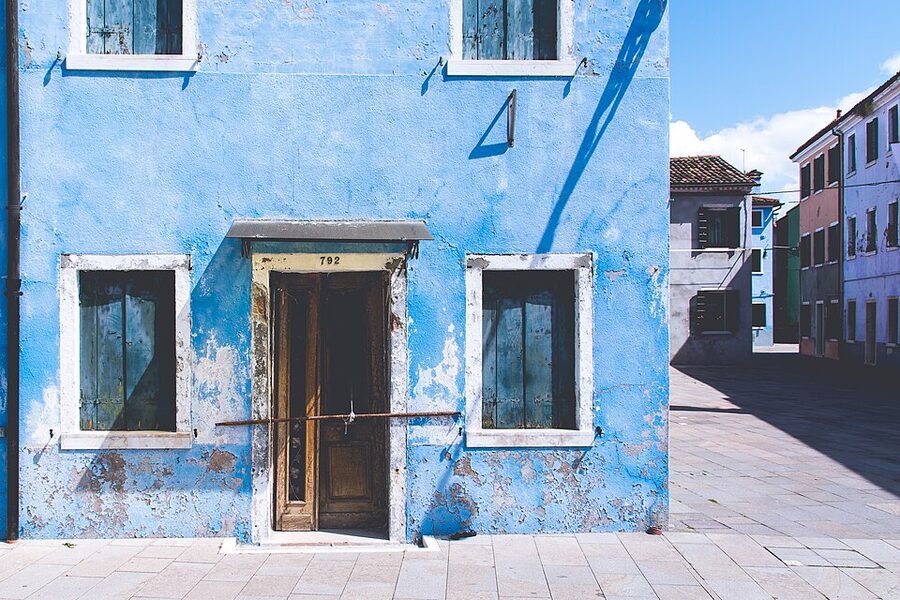
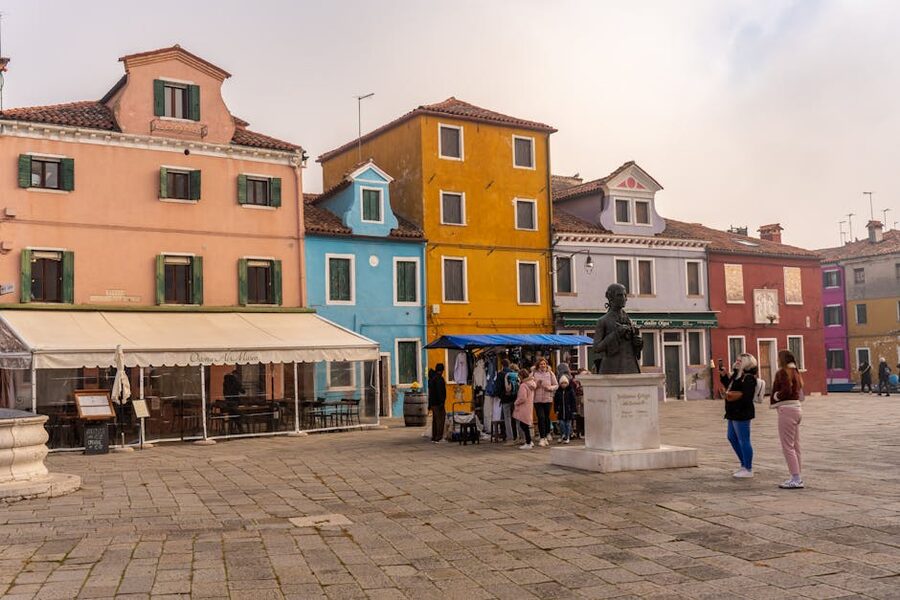
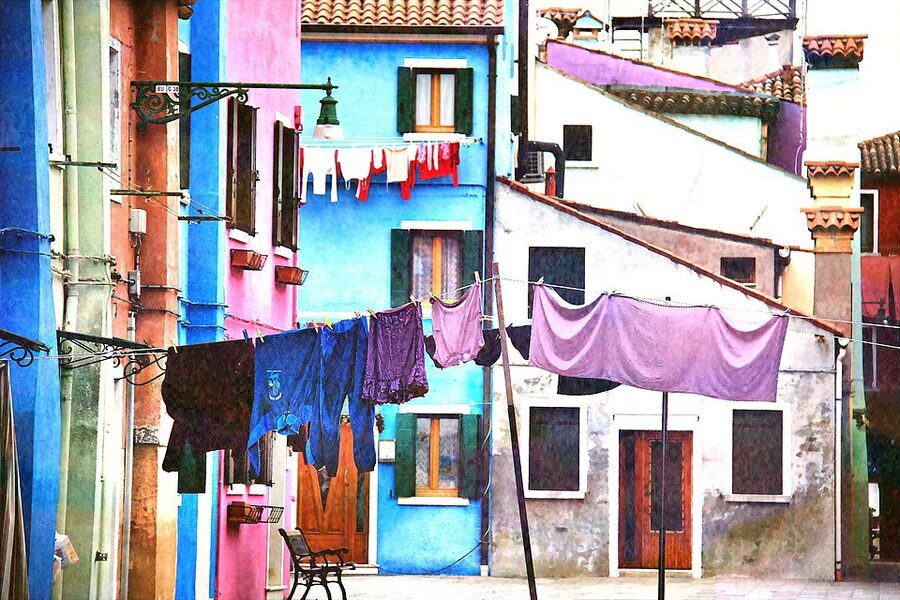
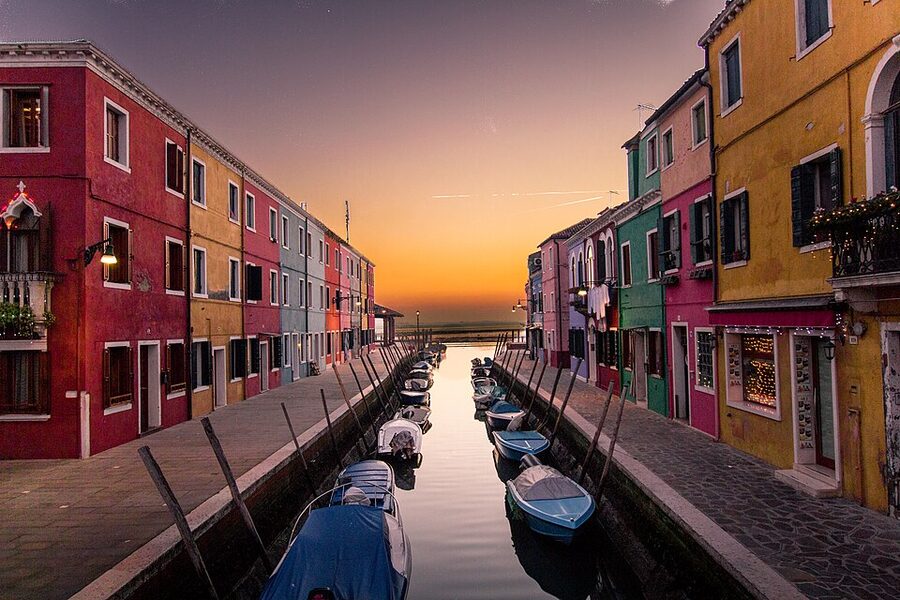
What you actually do here: walk. There’s a single rule on the island, which is that you cannot paint your house whatever colour you like. You apply to the council, they tell you which shade is allowed for your address, and you paint it that. The result is the saturated effect everyone’s seen in photos. The rule has been in place for centuries.
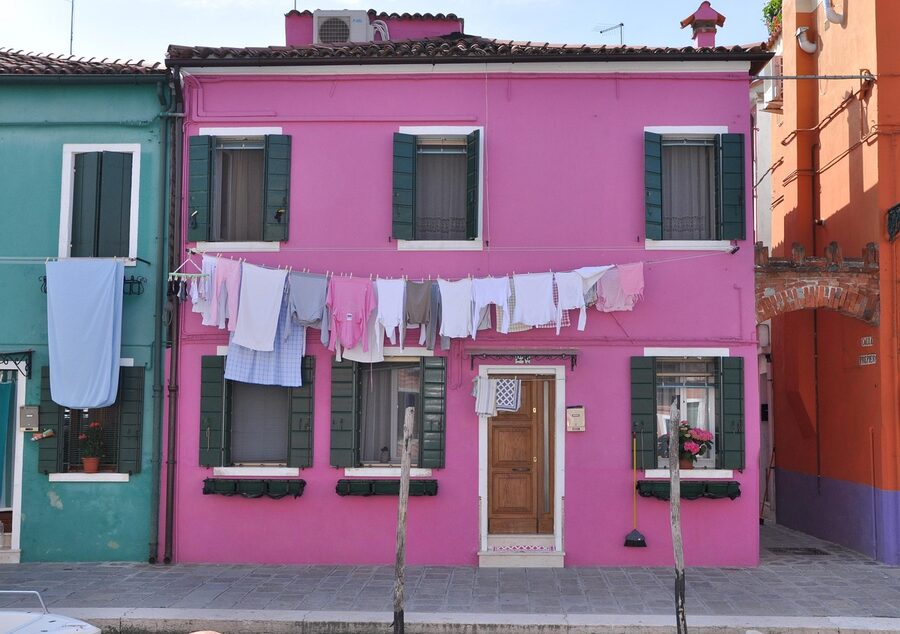
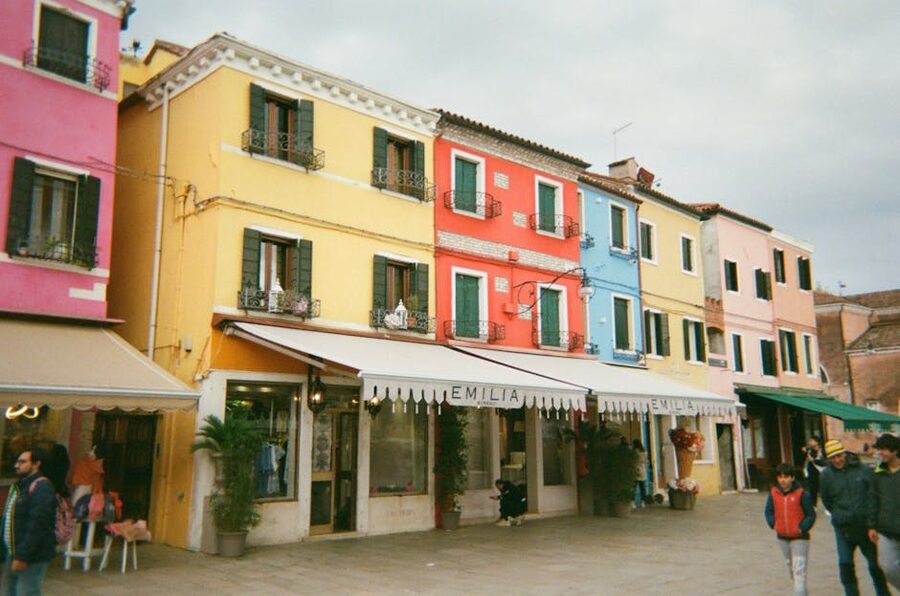
The crowds are real. By 11am the boats from Venice have stacked up and the main canal looks like a queue at a theme park. Get here early, ideally on the first or second vaporetto of the day, and you’ll have the streets mostly to yourself. On the panoramic boat tour you arrive on the late-morning slot which is fine for the colours but bad for the photos.
Lunch on Burano
If you’re staying for lunch, the famous spot is Trattoria al Gatto Nero, where Anthony Bourdain ate risotto on Parts Unknown. The catch: most boat tours only give you forty-five minutes here, which is exactly the timing problem covered in our review of the longer six-hour tour. It opens at 11am. The risotto di gò (made with a small lagoon fish called the goby) is the local specialty and runs around €25 a head for two courses. Reserve in advance because it fills.
For something cheaper, the bakery Panificio Palmisano on Via Galuppi sells bussolà buranello, a buttery shortbread cookie shaped in an “S” or a ring, for about €1.50 each. It’s the local snack and the bag will keep you going on the boat.
One warning. A coffee on Burano costs more than a coffee on St Mark’s Square in some cafes. Asked for a cappuccino at one place near the lace museum and got charged €6, which felt criminal even by Venetian tourist standards. Stand at the bar to drink it; the seated price is a different category entirely.
Lace, Briefly

Burano’s other tradition is needle lace. The Museo del Merletto on Piazza Galuppi is small, costs €5, and shows you the entire technique from the sixteenth century to today. For most people it’s a fifteen-minute visit unless you’re a textiles person, but the working lacemakers in the back room are properly impressive. Most of them are in their seventies and the craft is dying because nobody under forty wants to learn it. Small-group private boat tours sometimes include a lace demo as part of their Burano stop, but the museum option is fine without one.
Don’t buy the “Burano lace” sold at the souvenir stalls. Almost all of it is machine-made and almost all of it is from China. Real Burano lace starts around €100 for the smallest piece and signed certificates exist; if you want it, buy from the museum shop or one of the two or three legitimate workshops on Via Galuppi.
Torcello: The Mostly-Empty Island
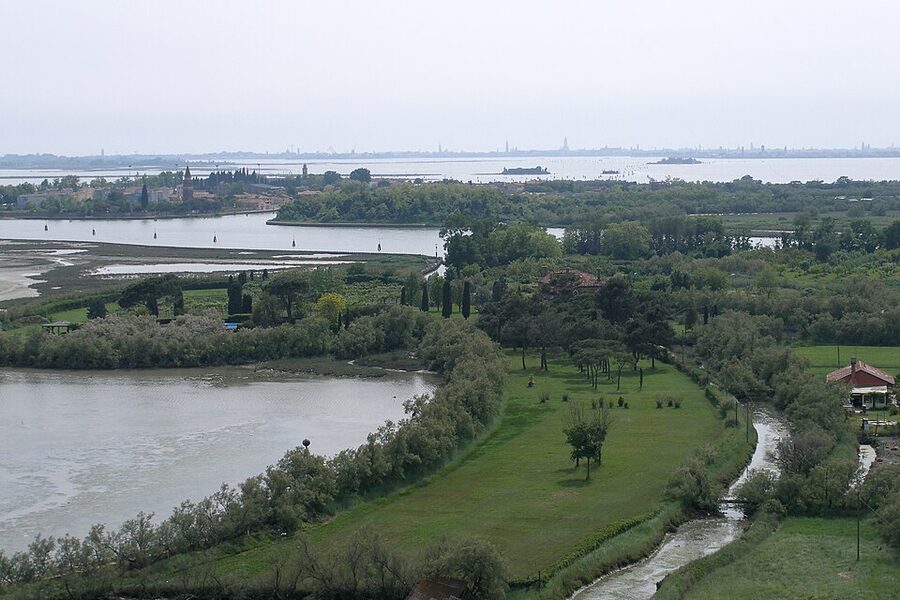
Torcello is twelve minutes from Burano on Line 9. There are about ten people living there, give or take, depending on the season. It used to have twenty thousand. The story of Torcello is essentially the story of Venice in reverse.
This is the island where Venice was actually founded, in the seventh century, before the lagoon-dwellers moved south to the protected channels around the Rialto. By the year 900 Torcello was the most powerful settlement in the lagoon. Then the river silted up, malaria came, the harbour closed, and everyone left. By the seventeenth century it was a ghost.
The Cathedral of Santa Maria Assunta
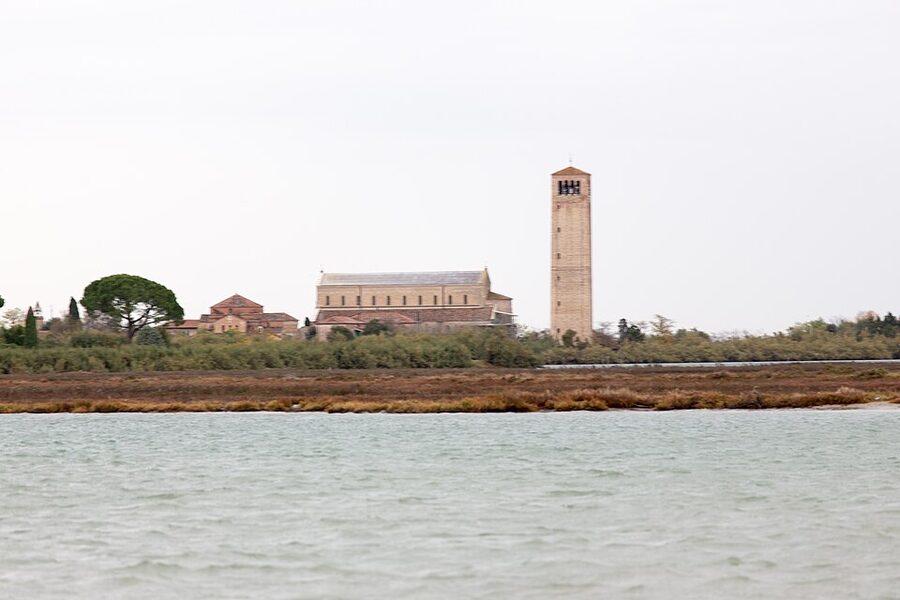
The reason to come is the cathedral. Entry is €5, or €12 for a combined ticket with the bell tower and the small museum. Inside there’s a Last Judgement mosaic on the rear wall that is, no exaggeration, one of the most striking pieces of medieval art in Italy. It’s twelfth century, it’s enormous, and it’s mostly intact. The east wall has a Madonna of the Hodegetria type, a single Byzantine figure in gold, fifteen metres high, with an expression that’s been described as “the saddest face in Christendom.”
Climb the bell tower if your knees still work. It’s about an extra €5 and the lagoon view from the top is the best on the day trip. You can see all the way back to St Mark’s on a clear day. The stairs are uneven and narrow.
Is Torcello Worth Visiting?
The real answer: it depends. If you care about Byzantine art, early Christian history, or empty places, Torcello is the entire reason to do this day trip. If you came to the lagoon for colourful houses and Instagram, skip it. The path from the dock to the cathedral takes about fifteen minutes through reeds and a couple of farms, and there’s basically no shade in summer.
The local restaurant on the island, Locanda Cipriani, is where Hemingway wrote part of Across the River and Into the Trees. It’s still operating. Lunch costs around €60 a head. Most day-trippers walk past it without realising.
Practical Information
How to Get There From Venice
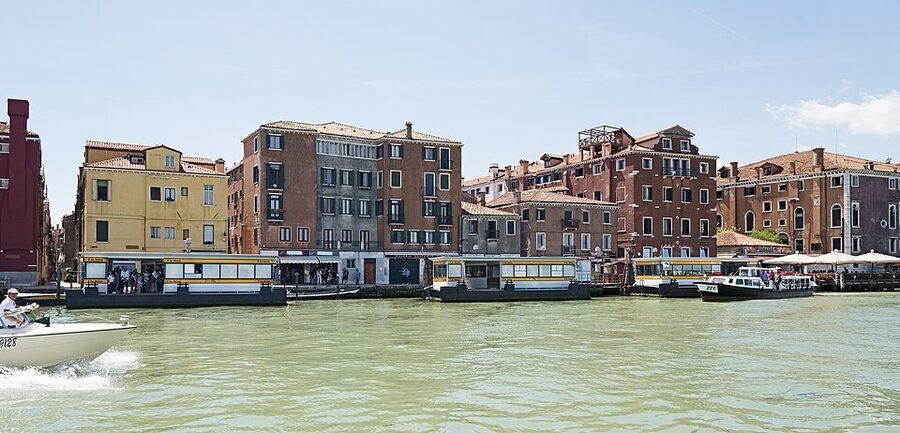
From Venice itself, you go from one of two stops. Fondamente Nove on the north side of the main island is the standard. F.te Nove is about a twelve-minute walk from St Mark’s, or a ten-minute walk from Santa Lucia train station via the Strada Nova. Line 12 from F.te Nove goes direct to Burano in forty minutes, then on to Torcello.
For Murano specifically, you can also take Line 4.1 or 4.2 from F.te Nove, which takes about ten minutes. Line 12 stops at Murano too, but only at the Faro stop, which is not the main glass district.
Tour boats leave from various points around St Mark’s Square (the San Marco vallaresso jetty is the main one) and from Santa Lucia. Pickup times are usually 9am or 9:30am.
Vaporetto Tickets and Passes
A single vaporetto ticket is €9.50 and lasts 75 minutes. For a day trip to all three islands you absolutely want a multi-hour pass. Options:
- 24-hour pass: €25
- 48-hour pass: €35
- 72-hour pass: €45
- 7-day pass: €65
If you’re under 30, the Rolling Venice card at €6 cuts the 72-hour pass to €33, which makes it cheaper than the 24-hour. Buy it at the ACTV machines or at the HelloVenezia kiosks at the train station.
How Long to Budget
The minimum for all three islands on a self-guided day is five hours, and that’s tight. I’d budget seven if you want lunch on Burano and the cathedral on Torcello. With a guided tour you’re locked into 4.5 to 6 hours, which works because the boat is faster than the public vaporetto.
If you only have an afternoon, drop Torcello, do Murano in an hour, Burano in two, and head back. The half-day glass factory tour compresses this into a manageable shape.
Best Time of Year
April to mid-June and September are the sweet spots. Summer is hot, crowded, and the lagoon smells when the tide goes out. Winter is quiet, atmospheric, and you’ll have Burano almost to yourself, but expect rain and high water (acqua alta) on some days. November and February are the low points; January is the absolute deadest week of the year.
Mistakes to Avoid
- Don’t take the slowest vaporetto. Line 12 is direct; Line 4.1 stops a dozen times before reaching Murano.
- Don’t eat at the restaurants directly on the main canal of Burano. Walk one street back and the prices drop by a third.
- Don’t buy “Murano glass” or “Burano lace” from souvenir stalls. It’s almost certainly fake.
- Don’t skip Torcello if you’ve come this far and the weather’s good. Twenty extra minutes for a twelve-hundred-year-old basilica is worth it.
- Don’t try to do this trip plus the Doge’s Palace in the same day. You’ll burn out and resent both.
What to Pack for the Day
Sunscreen and a hat, even in October. The lagoon reflects sun in ways that catch you off guard. A water bottle (refill at any of the public fountains in Venice; tap water on the islands is variable and bottled prices double on Burano). Cash for the demos and small purchases; many of the older shops on Burano don’t accept cards. A real camera if you have one, because phone photos of Burano never quite capture what’s actually there.
If it’s October to March, bring layers. The boat ride to Burano in an open-top vaporetto in February is properly cold and the wind off the lagoon cuts through everything. I’ve seen people in summer dresses on the deck in winter and they regret it within five minutes.
How This Day Trip Fits With the Rest of Venice
The lagoon islands are a half- or full-day commitment that pairs well with a Venice trip of two days or more. If you’ve only got 24 hours in Venice, skip it; you need that day on the main island for the Doge’s Palace and the basilica.
If you’ve got two days, do the lagoon on day two and the main island on day one. The basilica and the palace are the priority and pre-booking saves you queue time. Florence’s Uffizi works the same way if you’re heading there next. Skip the bigger cluster of guides for now and just bookmark this one for when you’re actually planning.
Where to Stay if You’re Doing the Lagoon Day Trip
Stay in Venice itself, not on the islands. There’s accommodation on Burano (a couple of small boutique places) but the prices are mainland-or-higher and you’ll lose two hours a day on commutes. The Cannaregio district near Fondamente Nove is the best base if you’re planning to do the lagoon early; you can walk to the boat in five minutes from anywhere on the eastern side.
Castello and San Polo are also fine. Skip San Marco unless you want to pay extra for the postcard view; the islands trip is exactly the same regardless of where in Venice you sleep, and you’ll save money east of the Rialto.
If Venice is your final stop and you’re flying home from Marco Polo, leave a buffer day after the islands. The lagoon trip is the kind of thing you’ll wake up the next morning still thinking about, and you don’t want to spend that morning rushing to an airport.