
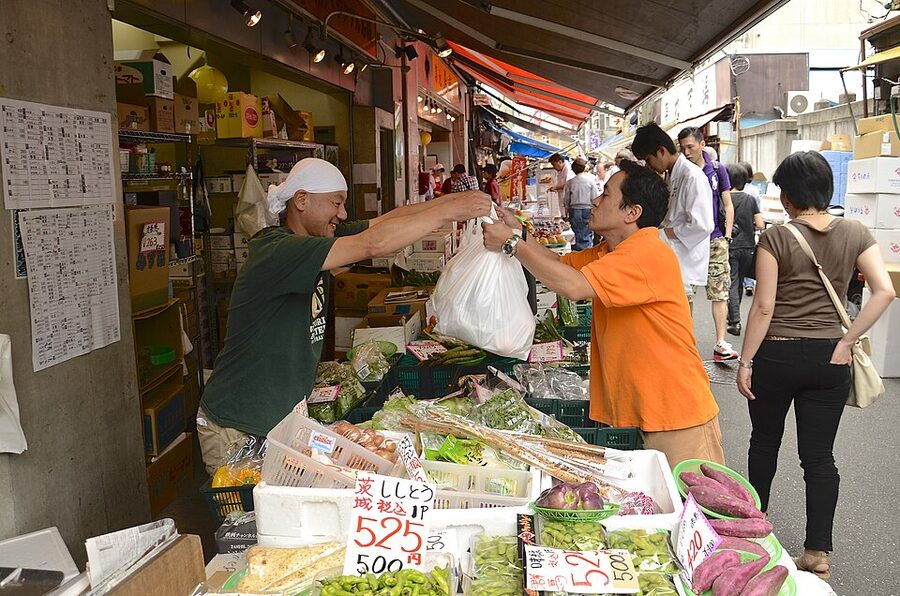
The fishmonger at a corner stall on Uogashi Yokocho has been slicing tuna here since 1973. His hands show it: eight fingers with the tips slightly shortened from decades of knife work, all the nails black-stained from handling iron blades and wet fish before the sun comes up.
He will hand you a slice of otoro before you have finished asking what it is. No English, no menu card, just a thick pink curl of fat-streaked belly meat on a square of shiso leaf and a small nod that means eat it now while it is cold.
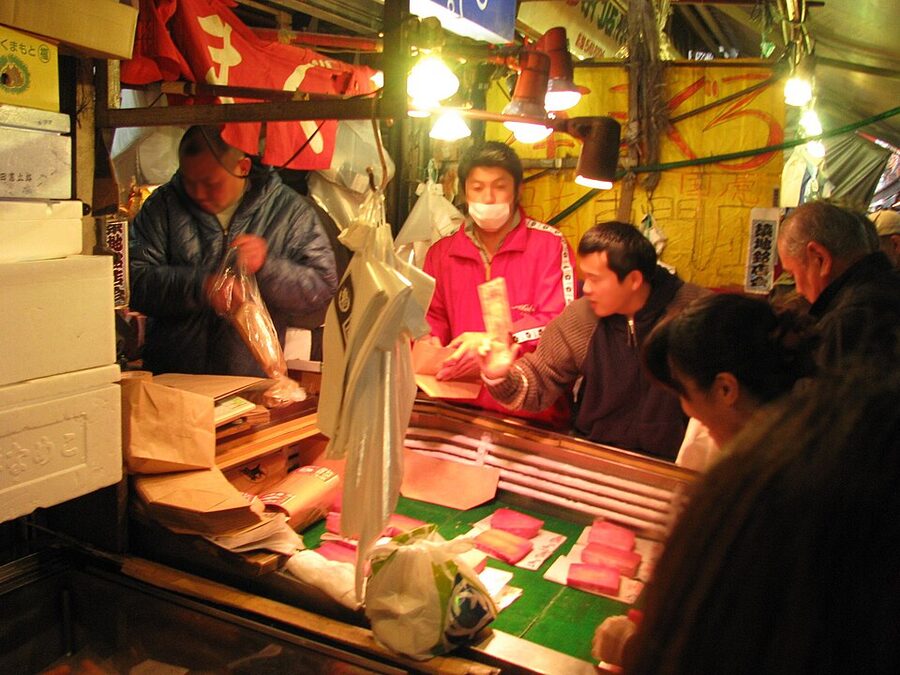
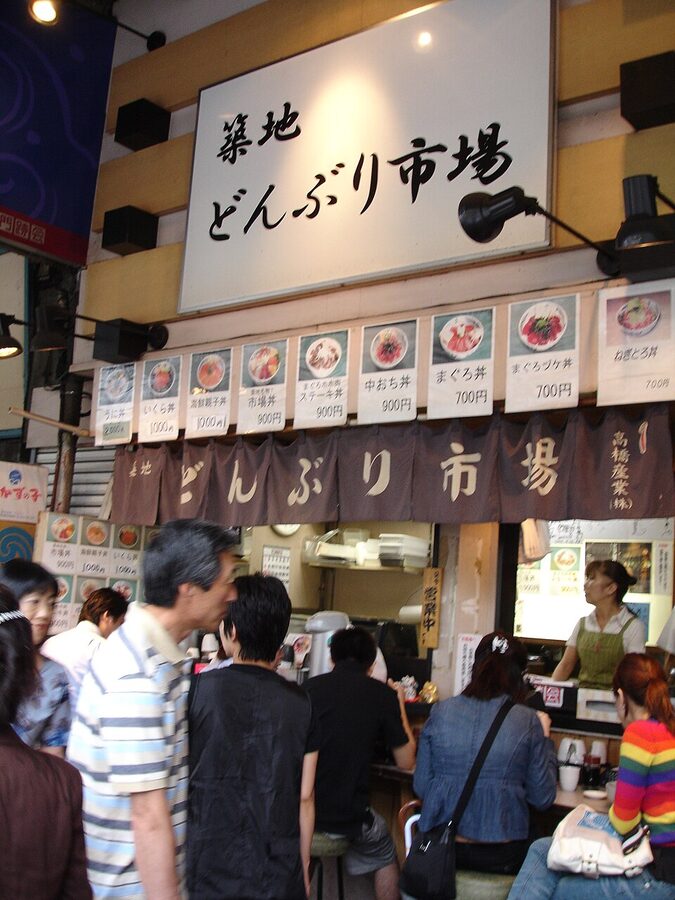
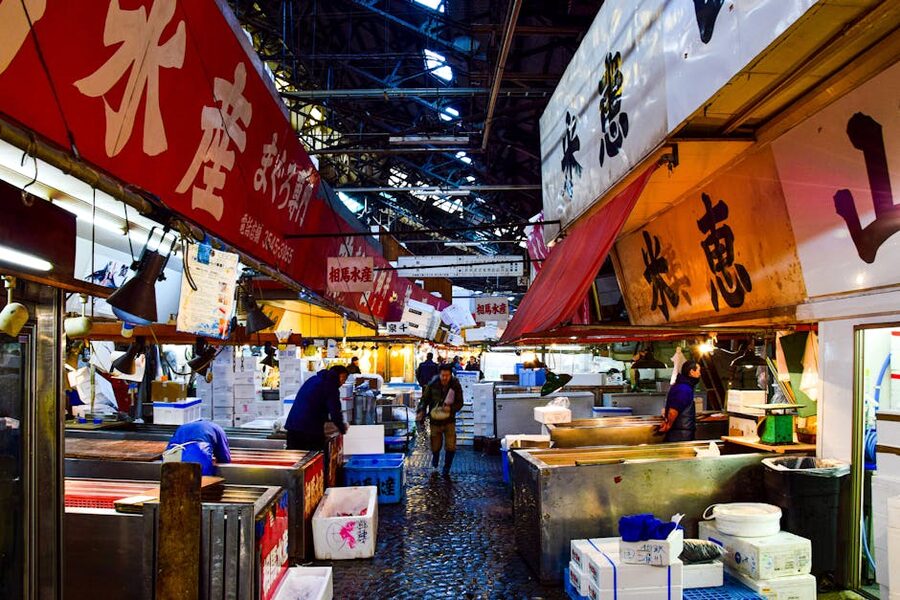
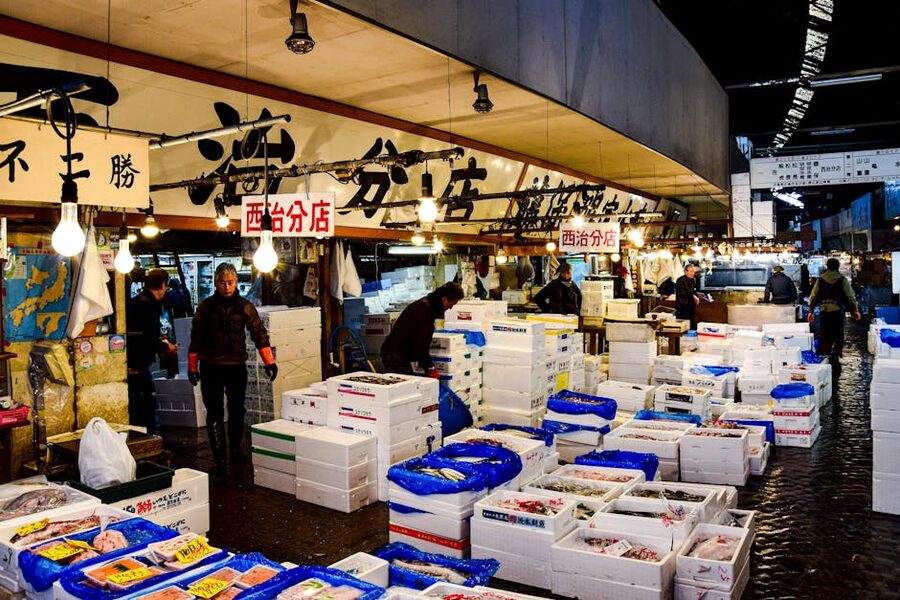
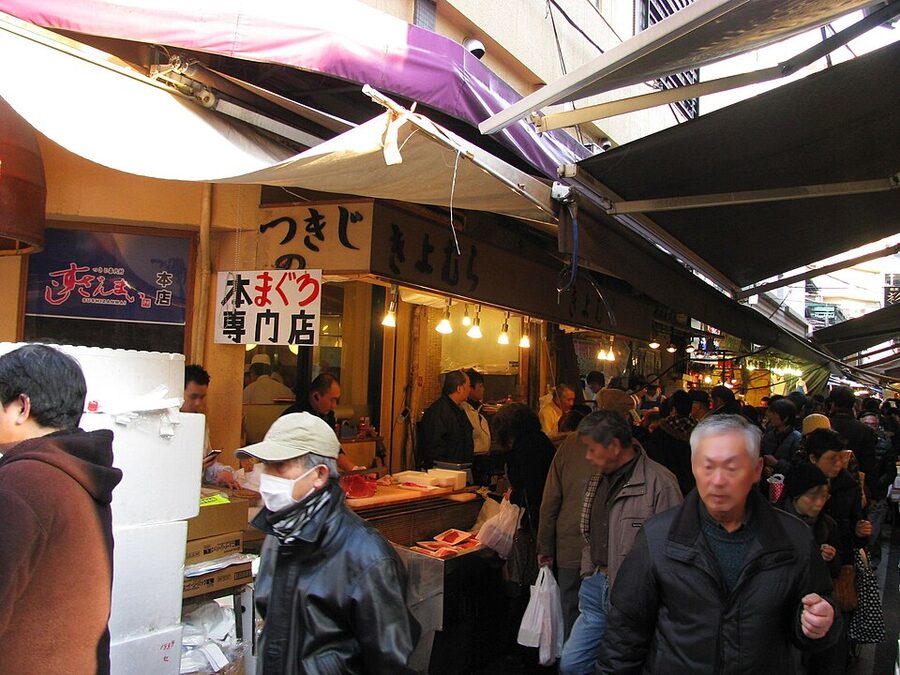
This is Tsukiji Outer Market — what survived the famous 2018 move when the inner wholesale market packed up and shifted two and a half kilometres south to a new facility at Toyosu. The outer market did not go anywhere. It is 400-plus shops and stalls spread across four blocks of central Tokyo, open six days a week, and still the best place in the city to eat fresh fish for under 2,000 yen a bowl.
The food tours that run here are how you actually find the good stalls instead of eating at whichever shop has the longest queue and the most photos of smiling foreigners in the window. I have done three of them across two trips, and I wrote this guide to stop you wasting your money on the wrong one.
Short on time? Here are my top picks:
Best all-rounder: Tokyo: Tsukiji Fish Market Food and Walking Tour — $22, eight to ten tastings across four blocks with a guide who is actually a food professional, not a generic city guide.
Best if you want to make sushi: Tsukiji Fish Market Visit + Sushi Making — $104, the market walk plus a hands-on sushi class afterwards where you learn to roll your own maki and press nigiri under a real chef.
Best premium street-food version: Tokyo: Tsukiji Fish Market Street Food Tour with Tasting — $96, a smaller group, more stops, and a set of tastings that goes beyond the usual sashimi-and-tamago loop.
- What Tsukiji Actually Is Now
- The 3 Best Tsukiji Food Tours
- 1. Tokyo: Tsukiji Fish Market Food and Walking Tour —
- 2. Tsukiji Fish Market Visit With Sushi Making Experience — 4
- 3. Tokyo: Tsukiji Fish Market Street Food Tour with Tasting —
- The Food — What You Will Actually Eat
- The Inner Market That Moved — Toyosu
- How to Choose Between the Three Tours
- Timing — When to Go
- Getting There and Getting Around
- Practical Tips
- More Tokyo Food and Market Experiences
What Tsukiji Actually Is Now
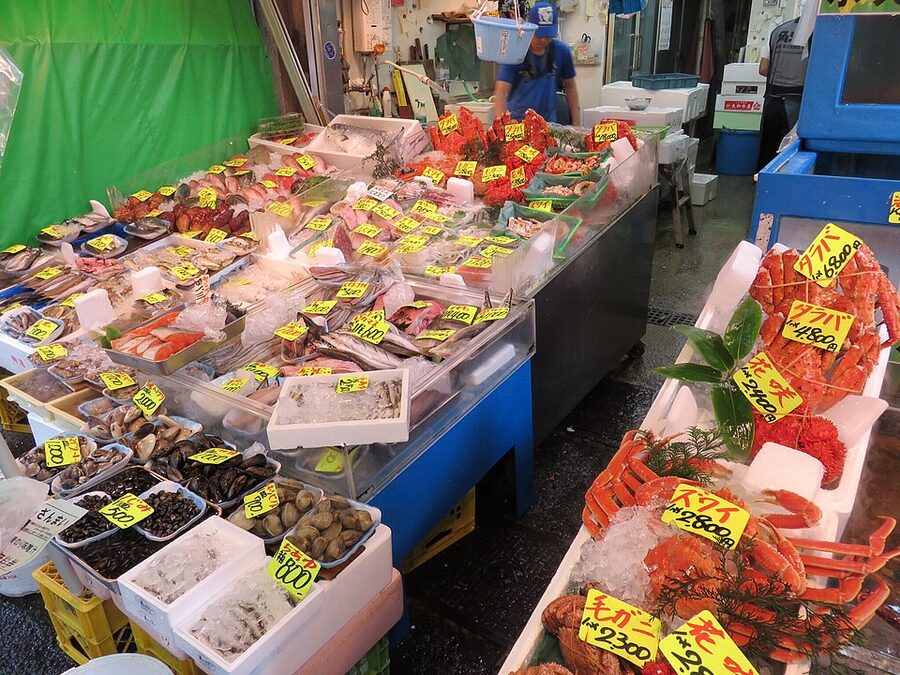
Here is the distinction that matters, because half the articles you will read online still get it wrong. The old Tsukiji had two parts: the inner wholesale market, where the 5am tuna auction happened and where restaurant buyers and professional fishmongers bought fish by the crate, and the outer market, the network of retail shops and restaurants around the edges that served the professionals and, increasingly, visitors.
In October 2018 the inner wholesale market moved to Toyosu, a purpose-built facility on reclaimed land in Koto Ward. The auction went with it. The buyers went with it. The trucks went with it. What stayed at Tsukiji was the outer market — and that is the four-block grid of shops, sushi bars, knife merchants, tea stalls and tamago specialists that the food tours walk you through today.
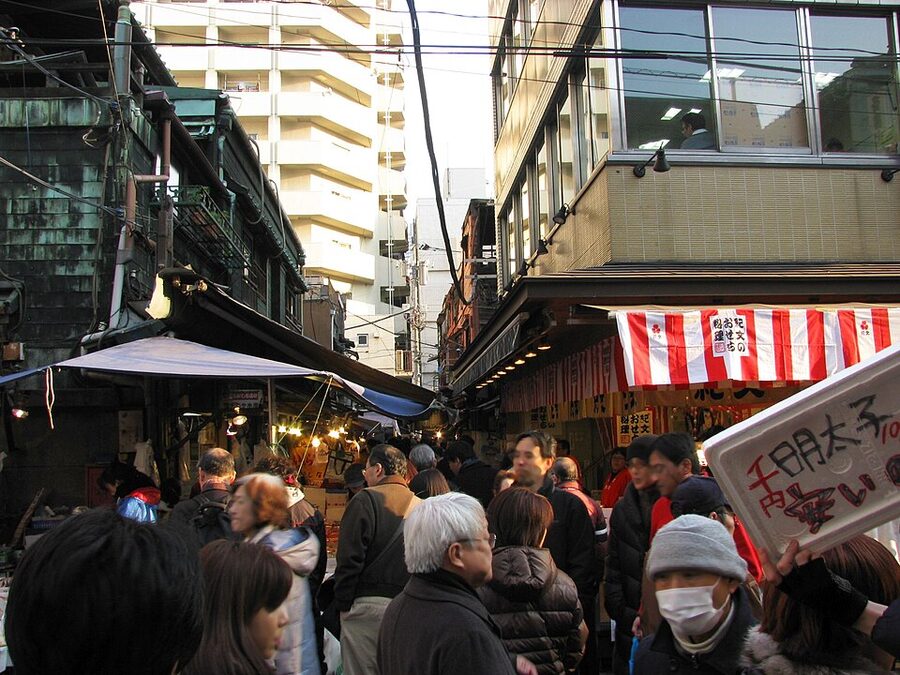
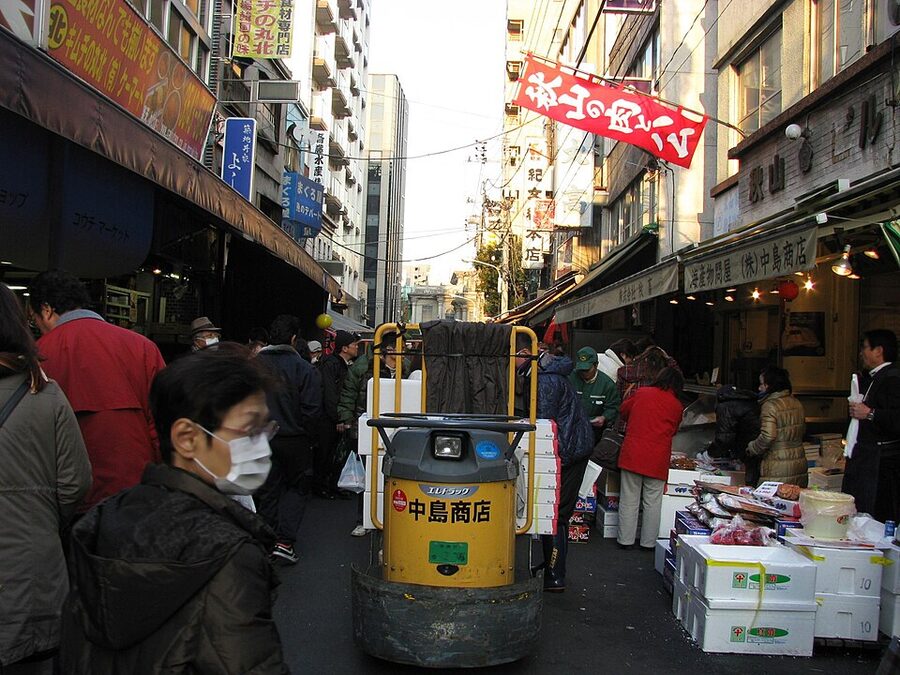
The upside of the move: Tsukiji is calmer now. The turret-truck traffic is gone. You can walk the main streets without dodging forklifts carrying 200kg frozen tuna. The shops that survived the change are the ones that had direct relationships with the public anyway — the tamago places, the sushi counters, the knife shops, the dashi stands.
The downside: the 5am theatre is gone. If you came to Tokyo specifically for the live auction, that happens at Toyosu now, and I will cover how to see it lower down. For most visitors, though, the outer market is what you actually wanted — food you can eat, shops you can walk into, people who will talk to you.
The outer market is called Jogai — literally “outside the market.” On Google Maps you will see it marked both as “Tsukiji Outer Market” and “Tsukiji Jogai Shijo.” Same place. It is ten minutes on foot from Ginza if you want to chain a morning here with an afternoon of department-store browsing, or you can run it together with a temple visit via the Asakusa Sensoji walking tour for a full day that covers Tokyo’s two most photographed food-and-culture pockets.
The 3 Best Tsukiji Food Tours
1. Tokyo: Tsukiji Fish Market Food and Walking Tour — $22
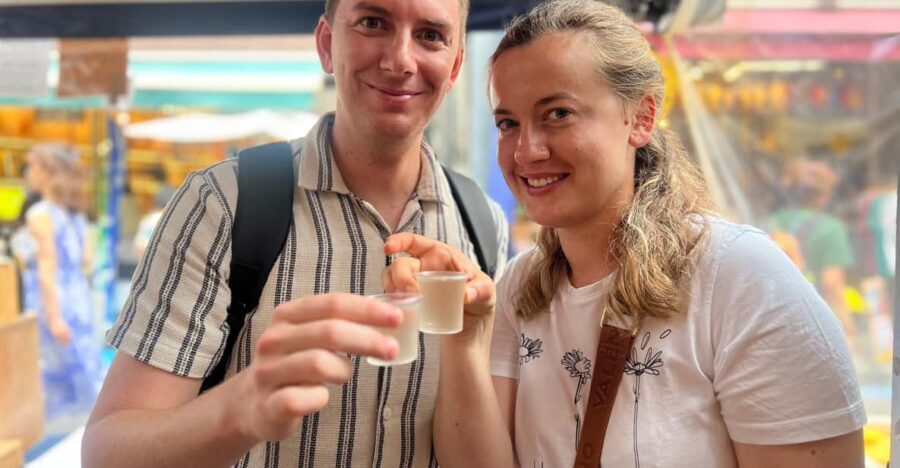
At $22 per person this is the best entry point to the outer market, and our review breaks down the eight-to-ten stops stop by stop, including which ones are mandatory and which you can skip if your stomach runs out of room before the tour ends. The guide is usually a Japanese food professional who will translate the menus and the shop signs — that commentary alone is worth the entry price if you have never eaten at a stall where nobody speaks English.
The route covers tamago from one of the three famous Tsukiji egg specialists, a tuna sashimi stop where you try three cuts side by side so you can actually taste the difference between akami, chutoro and otoro, and a bowl stop for either uni or negitoro before the tour ends. Group sizes stay small — usually under ten people — and you do a lot of walking on cobbled uneven ground, so leave the wheeled luggage at the hotel.
2. Tsukiji Fish Market Visit With Sushi Making Experience — $104
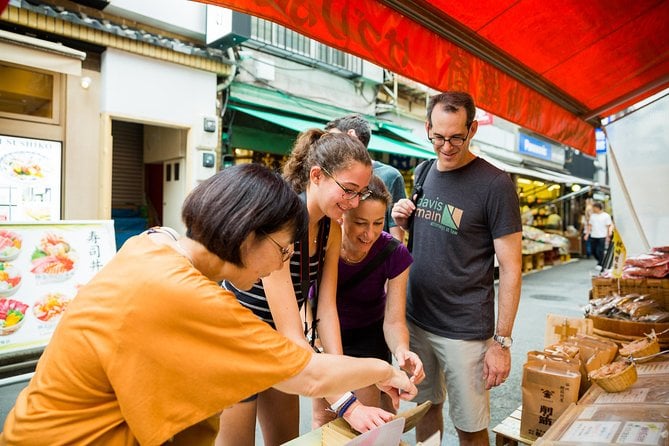
This is the tour I recommend for people who want a souvenir skill, not just a souvenir photo, and our full review goes into the mechanics of the class portion — how the rice is prepared, which cuts of fish you work with, what the shari-to-neta ratio actually means. The market walk comes first, about an hour across the main streets with tastings included, and then you move to a kitchen studio nearby where a sushi chef runs a 90-minute class.
At $104 per person it is nearly five times the price of the walking tour, but the sushi-making adds real value if you have already done a city food tour before or you are travelling with teenagers who get bored of just eating. You leave with muscle memory, a set of photos of your own lopsided nigiri, and a decent idea of why the cheap sushi back home is cheap.
3. Tokyo: Tsukiji Fish Market Street Food Tour with Tasting — $96
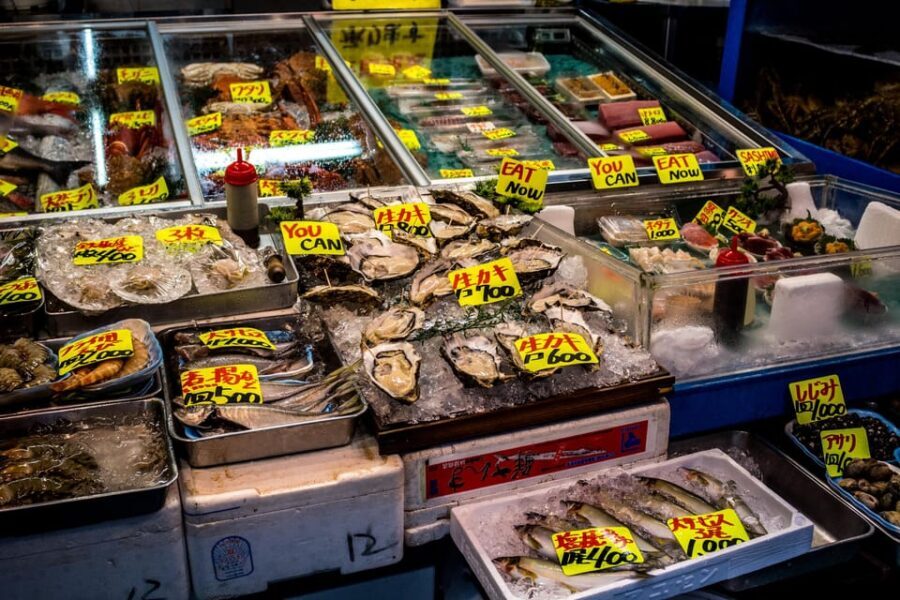
If you are foodie-focused and want the version that goes wider than the standard sashimi-and-tamago loop, this is the one. Our review walks through the full list of tastings — usually ten to twelve, against the eight-to-ten on the $22 tour — and notes that the group caps are smaller, which means more time at each stall and more actual conversation with shopkeepers instead of shouting over a crowd.
At $96 you are paying for access and pace rather than radically different food, but the add-on stops genuinely matter — the wagashi counter in particular is one most walking tours skip because it is off the main drag, and the kombu-and-dashi tasting gives you a base for understanding every bowl of miso soup you will eat for the rest of the trip. Good for couples, solid for serious food travellers, probably overkill for first-timers.
The Food — What You Will Actually Eat
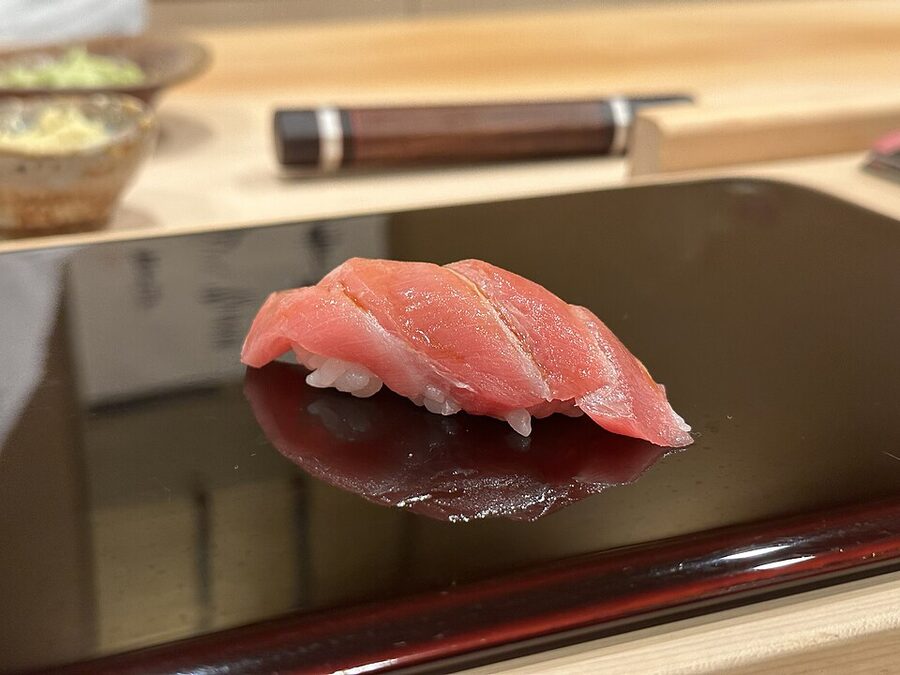
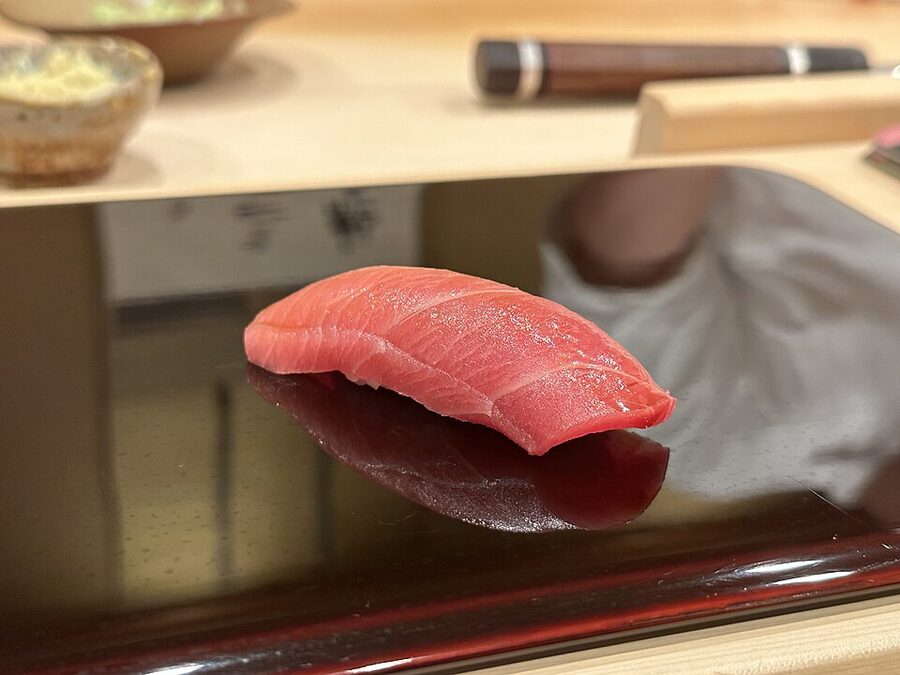
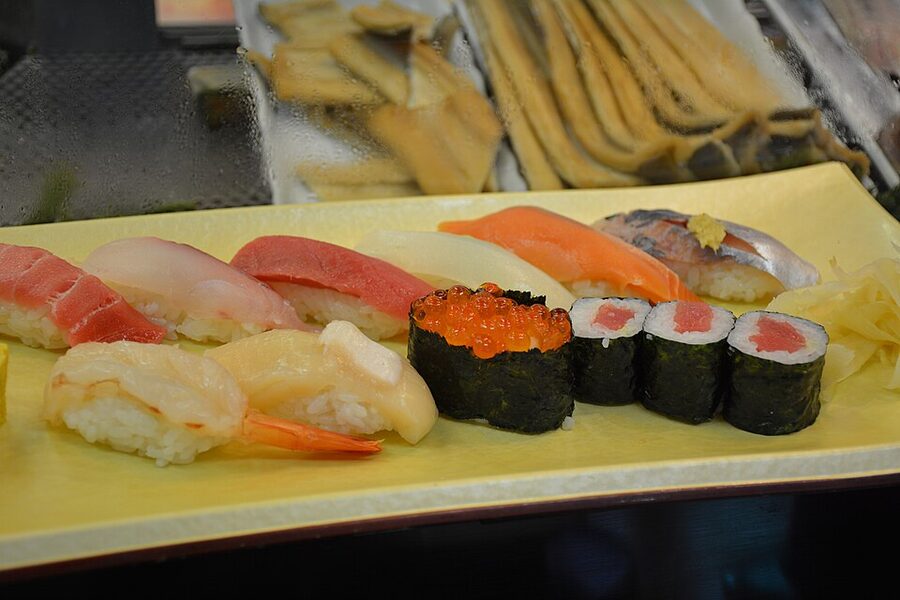
Tuna is the anchor of any Tsukiji tour. You will typically get three cuts so you can taste the spectrum — akami (the lean red back-meat, clean and slightly metallic), chutoro (the medium-fat section from the belly, softer, almost creamy) and otoro (the fattiest cut, pale pink, where the fish tastes less like protein and more like butter on your tongue).
A good guide will stop you tasting them in random order. Start with akami to calibrate your palate, then chutoro, then otoro. The other way round and everything after the otoro tastes thin.
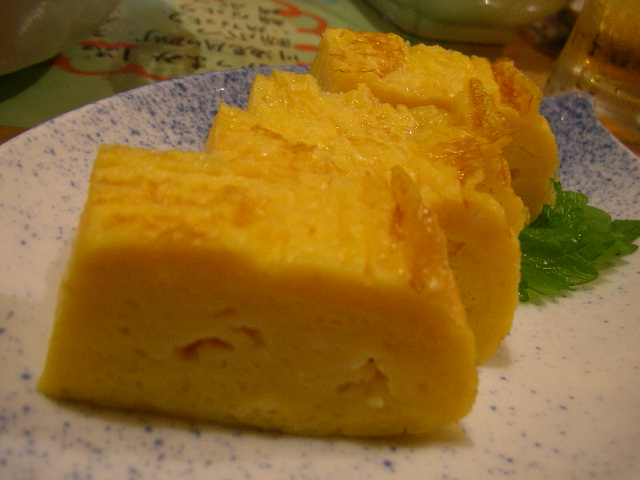
Tamagoyaki is the second compulsory stop. This is the sweet rolled egg omelette that every Tsukiji tour visits because three of the famous specialist shops are within 200 metres of each other. Marutake is the one most guides choose — the skewered squares cost 200 yen, are handed to you still warm from the rectangular pan, and taste like a very polite French omelette that has been through a sugar glaze.
You eat it off a wooden skewer, standing up, in the street. That is part of the point. The shops were never designed for seated diners — they were built to sell breakfast to the market workers who would eat on the way to their next errand.
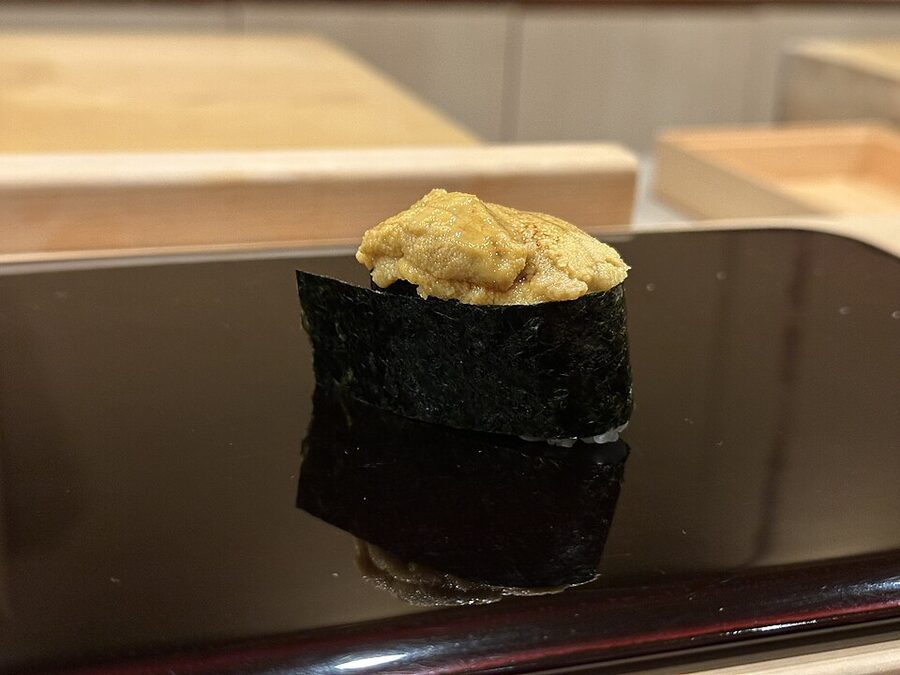
Uni is the third stop many guides save for last, because sea urchin is the one ingredient that genuinely divides opinion. It comes scooped into a gunkanmaki — a short cylinder of rice wrapped in a collar of nori, filled with the bright orange roe sacs.
The taste is briny, sweet, and slightly metallic, with a texture somewhere between set custard and the inside of a fresh oyster. People who love it eat it three times in a row. People who hate it hate it immediately. There is no middle ground.
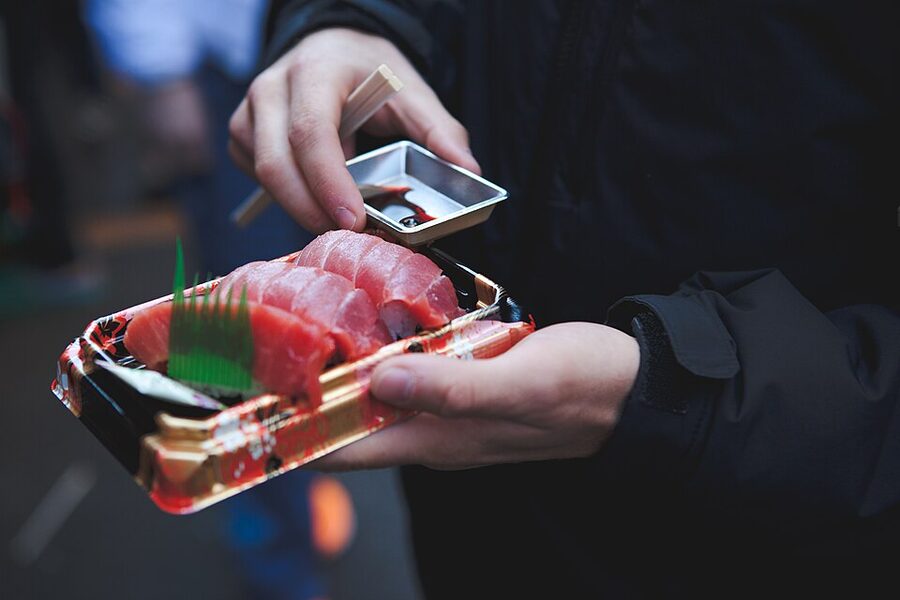
Sashimi plates show up on most tours as a sit-down stop, usually at a small counter where you take a stool and get served by the owner. A mid-range plate will have four or five cuts — yellowtail, salmon, white-fish sashimi like tai sea bream, tuna, and whatever the chef recommends from the morning delivery. The same plate in a Ginza restaurant two blocks away costs three times as much for worse fish.
Donburi bowls — rice topped with seafood — are the other format you will meet. Kaisendon is the all-rounder (rice under a mixed bed of seven or eight sashimi cuts), unadon is grilled eel glazed with a sweet sauce, and negitoro-don is minced fatty tuna with spring onions, stirred through rice that is still warm from the cooker.
Beyond the big-hitters, expect to taste whatever is seasonal. In winter that means fatty yellowtail (buri), oysters, and grilled scallops straight off a hot plate. In summer you will get lighter white fish, hamaguri clam soup, and cold somen noodles from one of the stalls that sells nothing else. Every guide adjusts their route to the season — tell them if there is something you particularly want, and they will either route towards it or tell you straight that it is not in season.
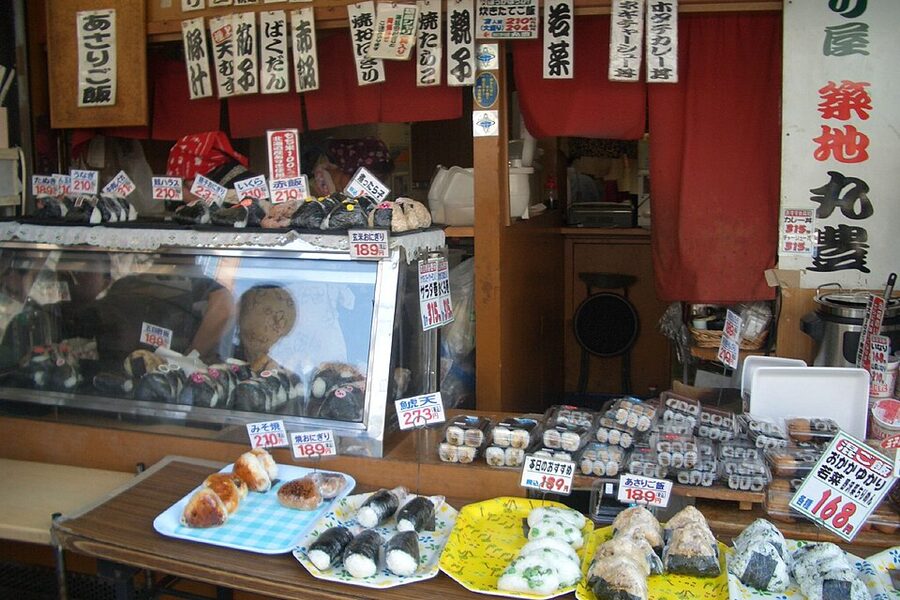
Rice balls — onigiri — are the final stop some tours make for what is effectively a takeaway. The specialist shops inside the market shape them to order and fill them with umeboshi (pickled plum), salmon flakes, kombu or pickled vegetables. One costs 200 to 400 yen and keeps well enough that you can save it for lunch on the train to Nikko the next day if you are doing the full Kanto circuit.
The Inner Market That Moved — Toyosu
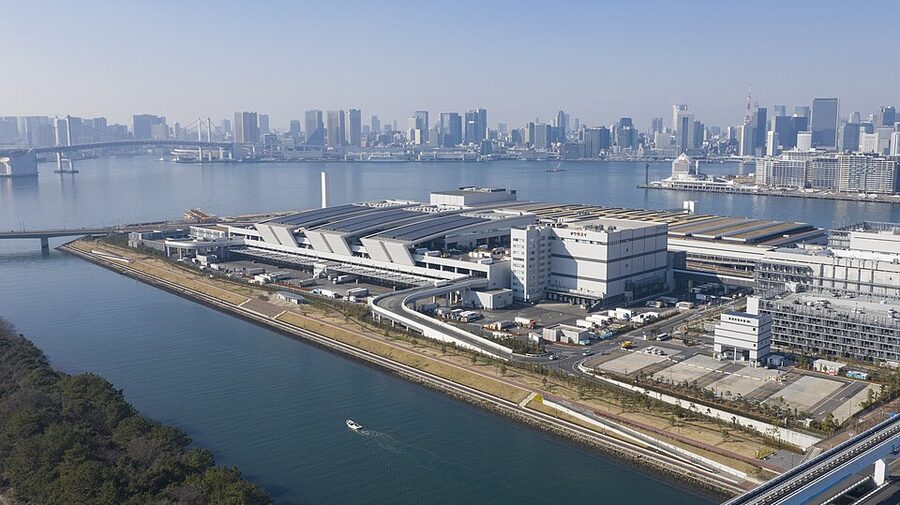
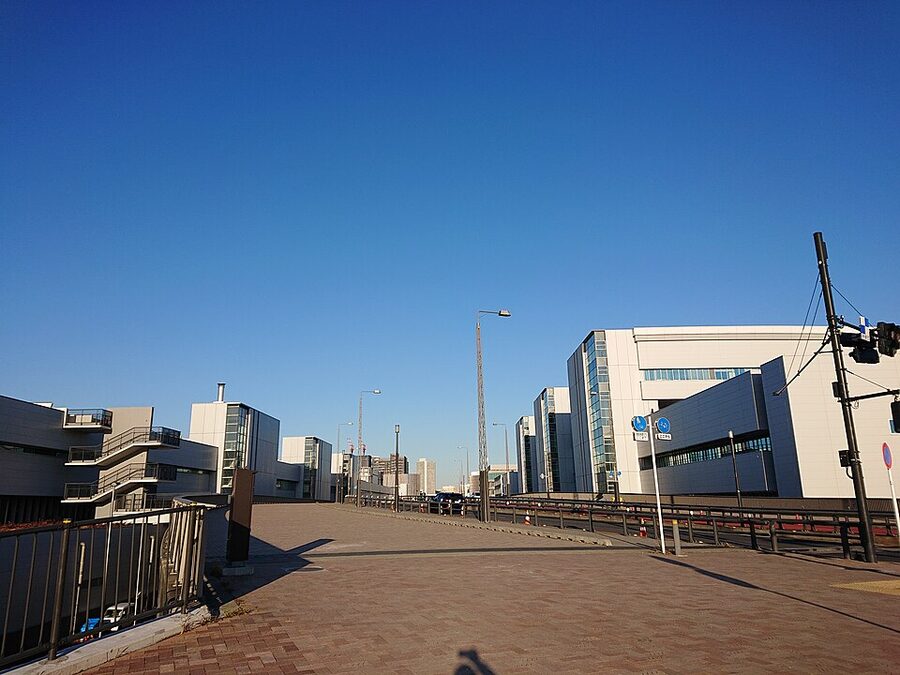
If you specifically came to Tokyo for the 5am tuna auction, that happens at Toyosu now, not Tsukiji. Toyosu is the new wholesale market — three buildings on reclaimed land in Koto Ward, purpose-built, sealed off from visitors behind glass-walled viewing corridors. It is a working commercial facility, not a walking market.
The auction itself starts around 5:30am, and you can watch it from the observation deck at the tuna wholesale building. The upstairs viewing area is free but capped — you need a permit for the ground-level close viewing, and those have to be booked through a city-run ballot system weeks in advance.
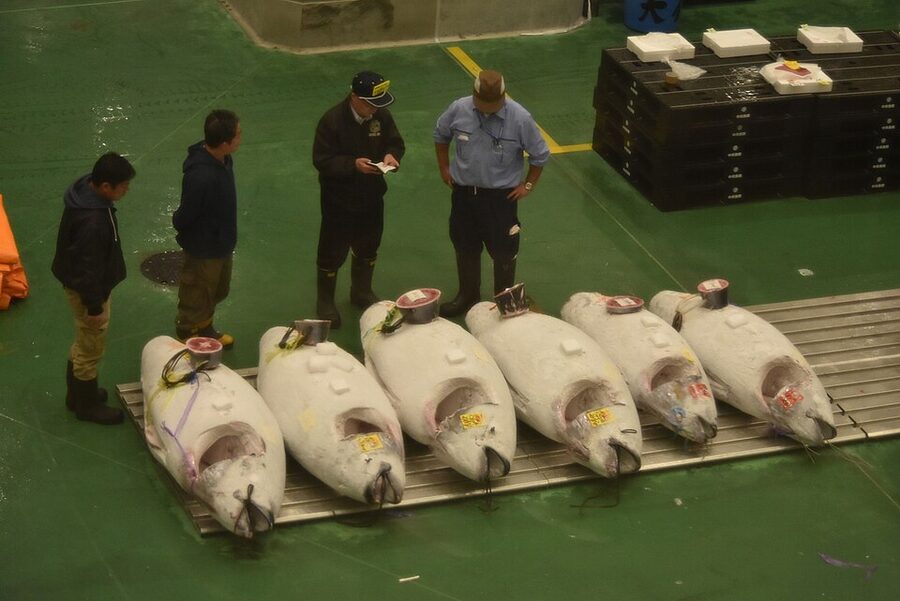
The experience is strange. You are three metres above the action, behind thick glass, unable to hear anything, watching what looks like a silent movie of men in rubber boots ringing handbells and flapping hand signals at each other. It is fascinating for about fifteen minutes and then you have seen it.
There are also restaurants on-site at Toyosu — some of the Tsukiji shops that catered specifically to the wholesalers moved with the market, so you can get sushi breakfasts in the upper floors. These are good but expensive, and the mood is nothing like Tsukiji Outer Market.
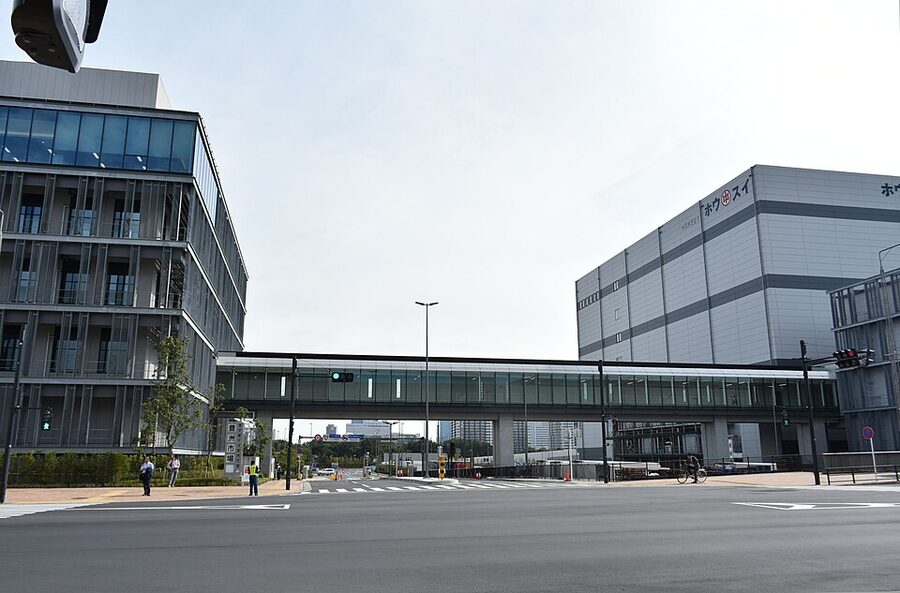
My advice: if you are a market obsessive, have already done a Tsukiji food tour, and can get yourself out of bed at 4:30am, Toyosu is worth a morning. If you are a normal human being with eight days in Japan, skip it and do the Tsukiji Outer Market food tour instead. The food is better, the hours are sane, and you will leave with more to talk about at dinner. Toyosu pairs well with a morning visit to teamLab Planets, since both sit in the same southeast Tokyo waterfront district — a 10-minute walk between them.
How to Choose Between the Three Tours
If you have never been to a Japanese food market before, book the $22 walking tour. It covers the same ground as the pricier versions, the tastings are generous, and the group stays small enough to feel like a tour rather than a crowd. The guide will translate menus, explain terms like shari, neta, akami and chutoro, and give you the vocabulary to order at a counter on your own the next day.
If you have already done a food tour in another city and you want something you can take home, book the $104 sushi-making version. The market walk is slightly shorter — about 60 minutes instead of 90 — but the kitchen portion afterwards is genuinely instructional, not a demo. You leave able to make nigiri that looks like nigiri, which is a real skill to bring home.
If you are foodie-focused and want the wider menu, book the $96 street-food tour with tasting. The extra money gets you more stops, longer stops, and guides who tend to be specialists rather than generalists — several of the food-tour-with-tasting guides have actual restaurant backgrounds. The wagashi and kombu stops in particular do not show up on the cheaper tours.
I would not book more than one of these on the same trip. Two Tsukiji tours back to back is overkill — pick the one that fits your level and use the time you save to eat somewhere else in Tokyo. A ramen tour in the evening of the same day pairs beautifully, since you have already eaten raw fish all morning and your stomach is ready for hot broth.
Timing — When to Go
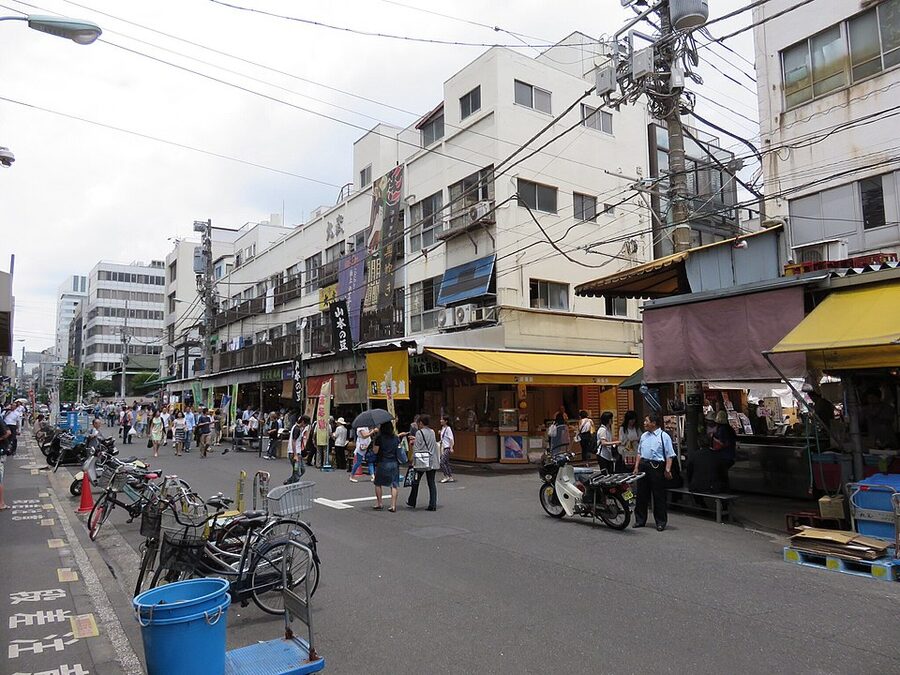
The market is nominally open from 5am to 2pm, but the useful hours are narrower than that. Most shops get going between 6 and 7am, peak sushi-counter activity is 8 to 10, and food-tour groups concentrate between 9am and noon. After 1pm things wind down fast — by 2pm many of the smaller stalls are already shuttering.
The tours mostly run in that 9-to-11 window, which is the sweet spot. Too early and not all the stalls are open. Too late and the counter seats at the popular shops are gone.
Closed days matter. The market is closed all Sundays, most Wednesdays, national holidays, and the entire New Year’s period (late December through early January). Individual shops also close on their own schedules. A Wednesday tour is risky — check the specific week on the market’s official monthly calendar before booking.
Weekdays are best. Tuesdays, Thursdays and Fridays give you a fully operational market with fewer visitors than Saturday. If you are locked into a weekend trip, take the earliest Saturday slot you can — 8am tours are noticeably quieter than 10am ones.
Season-wise, late autumn through early spring is the best time to visit Tsukiji for fish. October brings back the fatty yellowtail. November and December are prime winter-tuna season. January and February are peak for oysters and crab. Summer fish are good too — early summer hamo (pike conger) is a speciality — but the heat makes walking and standing in line less fun.
Getting There and Getting Around
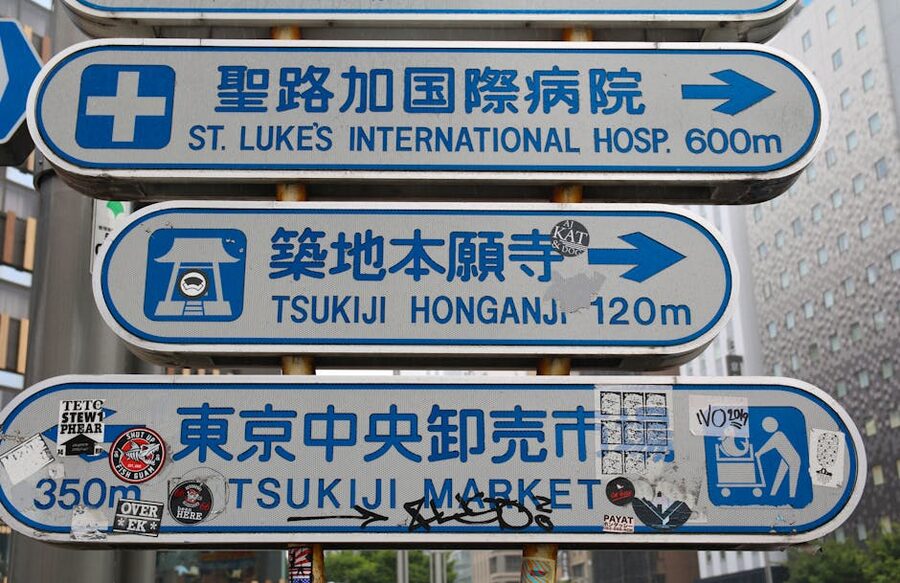
Tsukiji Station on the Hibiya Line is the closest stop — Exit 1 puts you a five-minute walk from the main gateway. Tsukijishijo Station on the Oedo Line is the alternative, equally close. Both are easy transfers from Tokyo Station, Ginza or Shinjuku.
If you are walking from Ginza, it is about 15 minutes on foot down Harumi-dori — flat, signposted in English, and you can swing past the Kabuki-za theatre on the way. Coming from the other direction, Shimbashi is a 15-minute walk via the old Dentsu building if you want to chain a morning at the market with an afternoon at Tokyo Skytree or the Hama-rikyu gardens.
Post-tour, the area around the market has more options than you might expect. Ginza is right there for coffee and department-store dessert counters. The Hama-rikyu gardens are a ten-minute walk and a sensible decompression spot after a heavy morning of food. If you are heading further afield, Shimbashi Station connects to the monorail out to Odaiba — a useful afternoon pivot if you have kids in tow and want to continue with something like the go-kart tour or an evening at a sumo show.
Practical Tips
Book the tour two to three days ahead in normal months and a week ahead during cherry-blossom season or Golden Week. The $22 walking tour sells out slowest because of the daily capacity, but the smaller-group premium tours (six to eight places) go fastest when the weather turns warm. Same-day booking is possible on quiet weekdays, but do not rely on it.
Dress for a working kitchen environment, not a fashion stroll. Closed-toe shoes are effectively required — the streets are wet from ice-melt and fish-water from before 8am, and open sandals are a bad idea. Bulky backpacks, flowing sleeves and wheeled luggage are all awkward on the narrow alleys. A cross-body bag and sensible shoes are the winning combo.
Cash is still preferred at most of the smaller stalls. The $22 tour covers all food, so you do not need much, but bring 2,000 to 3,000 yen for add-ons like sake pairings, an extra tamagoyaki skewer or a takeaway onigiri. The larger sushi counters and the established shops on the main street take cards now, but the hole-in-the-wall places often still do not.
Do not eat breakfast beforehand. I cannot stress this enough. Every tour runs through multiple tastings plus at least one sit-down bowl, and by the end you will have eaten the equivalent of two full meals. If you arrive having already had hotel-breakfast toast and eggs, you will physically not be able to finish.
Dietary restrictions are workable but worth flagging at booking. Pescatarian is easy — the whole tour is fish. Vegetarian is harder, but the $22 and $96 tours both have version routes that include tamago, pickles, rice balls with vegetable fillings and wagashi sweets, enough for a full morning without fish. Strict vegan is difficult — ask before you book. Shellfish and uni allergies need clear advance notice, since samples are passed around in groups.
Camera etiquette matters. Individual shops vary — some have “no photos” signs and will shout at you if you point a lens at their counter. Follow your guide’s lead. Close-up shots of food are fine almost everywhere. Shots of the owners working without asking first are a quick way to get kicked out. A simple “shashin ii desu ka” — “is a photo okay” — covers you 99% of the time.
Leave room in your schedule for afterwards. A Tsukiji morning lasts until noon, and you want a couple of hours of low-key recovery before your next thing. Hama-rikyu gardens, a Ginza coffee stop, or the walk over the Kachidoki Bridge for the view of the Sumida River are all good decompressors. If you are booking the sushi-making version, block four hours total from tour start to finish — it runs longer than you think.
More Tokyo Food and Market Experiences
Tsukiji sits at the centre of a cluster of Tokyo food experiences worth chaining together. The Tokyo ramen tasting tour is the natural evening counterpoint — you have eaten raw fish all morning, now try a hot broth night-out. If you want to extend the seafood theme further south, the Osaka Shinsekai food tour is the best equivalent in western Japan, and the Kyoto Gion food tour takes the opposite approach — kaiseki traditions, no rush, no conveyor belts.
For day trips out of Tokyo that pair well with a Tsukiji morning, Nikko and Kamakura-Enoshima are the two easiest choices — both are under two hours each way, and you can pick up a Tsukiji onigiri or a packed sashimi box for the train. Within the city, a Tsukiji breakfast fits naturally with an afternoon at teamLab Planets over in Toyosu, or a quieter walk through Asakusa’s Sensoji Temple area on the other side of the Sumida River.
Whichever tour you book, be hungry, be on time, and do not eat breakfast first. The rest will look after itself.