Sumo makes more sense when you can hear the foot-stamping, see the salt scatter and feel the force of a wrestler’s charge from close range. This one-hour show in Ryogoku pairs those demonstrations with an English introduction and a chance to step into the ring yourself.
I like the mix of cultural explanation and live action, which gives you more than a photo op, and the open invitation to take part, so the show can be lively even if you arrive knowing little about sumo. One consideration: the interactive bout is playful, not a chance to test yourself against a wrestler at full strength, and the venue is not suitable for wheelchair users.
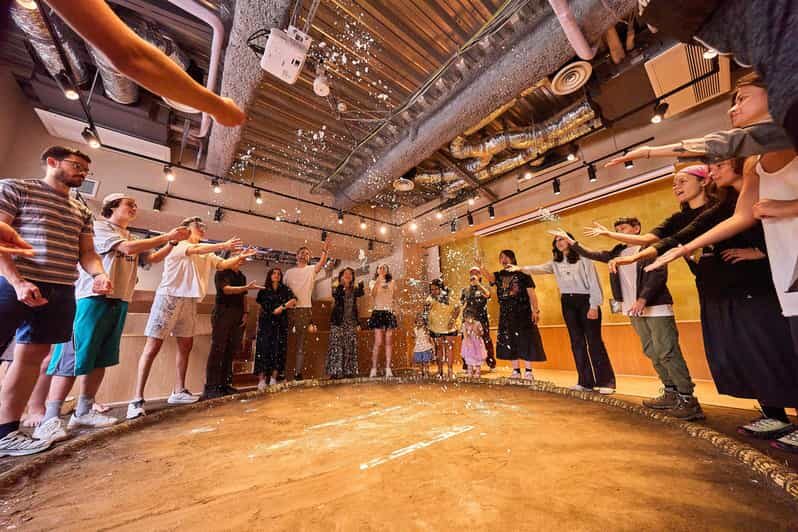
- Watch sumo rituals up close: See shiko foot-stomping and the throwing of purifying salt.
- Follow an English-language introduction: Learn basic rules, history and customs from the MC.
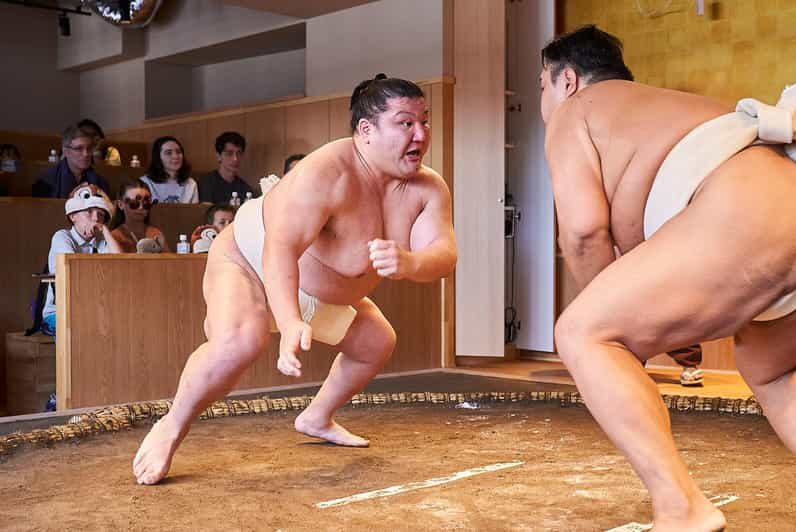
- See live sparring: Wrestlers demonstrate sumo at close range, with the force and sound of each collision.
- Volunteer for a friendly challenge: Audience members can take a turn in the ring with a wrestler.
- Take home a ring-side photo: Pose next to the wrestlers during the photo session.
- Plan for an hour: The ticket includes a welcome drink, commentary and Q&A, but not food or extra drinks.
- Ryogoku sets the scene for sumo
- A welcome drink and an easy introduction
- Shiko, salt and the rituals before a bout
- Close-up sparring brings the force home
- Your turn in the ring is optional
- The photo and Q&A round out the hour
- What gets you
- A few practical details before you book
- Who will get the most from this show?
- FAQ
- How long does the sumo show last?
- Where does the experience take place?
- Is the show conducted in English?
- What is included in the ticket?
- Is food included?
- Do I have to take part in the sumo challenge?
- What should I bring and wear?
- Is the experience suitable for wheelchair users?
- The Best Of Tokyo!
- More Shows & Entertainment in Tokyo
- More Tours in Tokyo
- More Tour Reviews in Tokyo
- Not for you? Here's more nearby things to do in Tokyo we have reviewed
Ryogoku sets the scene for sumo
 1 / 8
 2 / 8
 3 / 8
 4 / 8
 5 / 8
 6 / 8
 7 / 8
 8 / 8
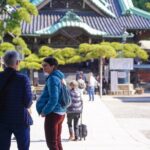
The show takes place in Ryogoku, Tokyo’s historic sumo district. That setting gives the subject a useful sense of place before the first wrestler steps into the ring. You are not just watching a generic sports display; you are learning about a national sport in an area closely associated with it.
The show is designed for visitors who want an introduction without needing to know the rules in advance. An English-speaking MC guides you through the hour, explaining sumo’s history, customs and basic rules as the action unfolds. Hosts named Aki and Suto-san have led sessions, though the specific MC can vary.
Keep your expectations in the right lane: this is an interactive demonstration, not a ticket to a tournament. Its appeal is the close view of the athletes, the explanation of what you are seeing and the chance to join in. If you want to watch formal competition, this format is a different kind of sumo experience.
You can check availability for your dates here:
👉 See our pick of the 25 Best Guided Tours In Tokyo
A welcome drink and an easy introduction
The event begins with a welcome from the MC and a complimentary drink. It is a small touch, but it helps the hour start on an inviting note rather than feeling like a lecture. Additional drinks and food are not included, so plan to eat separately if you want a meal.
The opening explanation gives you the context to follow the demonstrations. Sumo is full of ritual and rules, and the show calls attention to details that can be easy to miss if you simply watch two wrestlers collide. The MC introduces the history and customs, then connects that background to what happens in the ring.
The English commentary is a major practical advantage for international visitors. Some people may find a speaker’s delivery easier to follow than others, but the event also uses English-language video support, and the demonstrations make much of the action clear. If you are new to sumo, don’t worry about learning every rule. The basic explanations are there to help you appreciate the ceremony and physical skill.
You can also read our reviews of more tours and experiences in Tokyo
Shiko, salt and the rituals before a bout
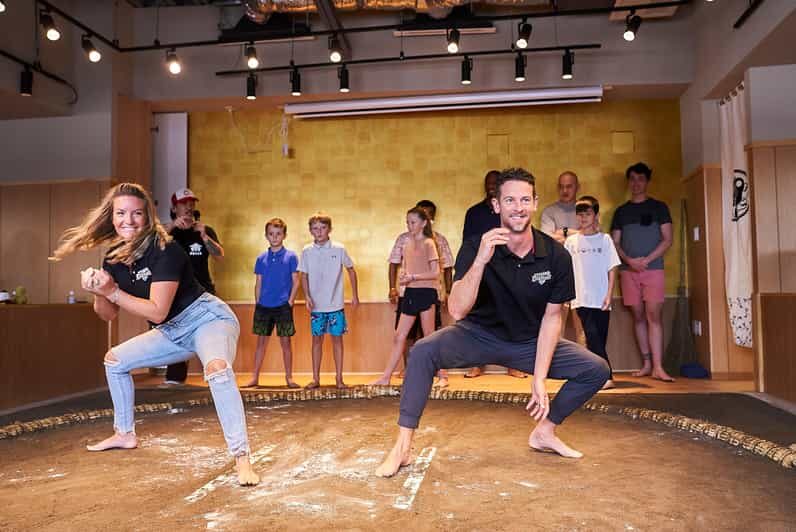
One of the most memorable parts is seeing the ritual gestures at close range. Wrestlers demonstrate shiko, the deliberate foot-stomping that is a familiar part of sumo, as well as the dramatic throwing of salt to purify the ring. These are not just colorful flourishes: they show that sumo has ceremony as well as strength at its heart.
That context gives the action more meaning. A stomp can look like a simple warm-up until someone explains its place in sumo; the salt becomes more than a theatrical toss. You get a compact lesson in how ritual shapes the sport, without needing to read a rulebook beforehand.
The show also covers training sequences and techniques. That part is especially useful if you are curious about how wrestlers prepare, rather than only wanting to see a bout. The format keeps the explanations connected to demonstrations, so you can watch a movement and then understand what it is meant to do.
Close-up sparring brings the force home
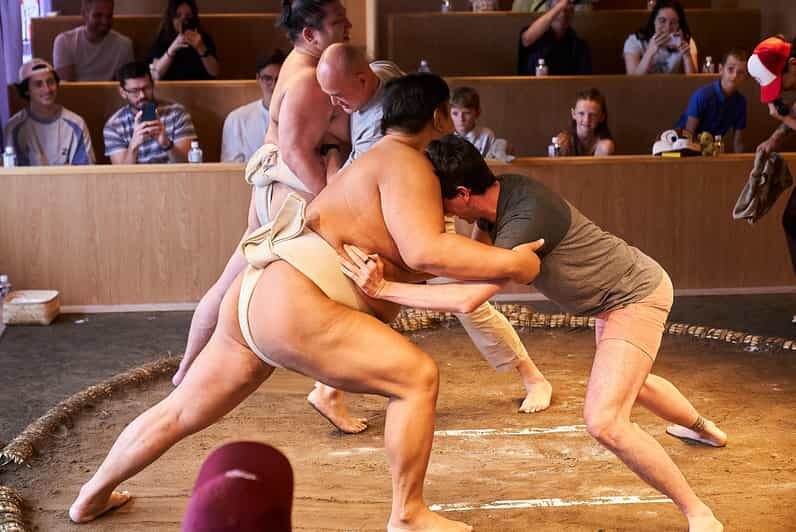
When the wrestlers begin sparring, the tone shifts from explanation to impact. You hear the collision and see how quickly the athletes move, even with their size. Being close to the ring makes the contrast striking: sumo is not simply two large bodies pushing; timing, balance and technique are part of the contest.
The sparring is a demonstration, and the MC helps explain what is happening. That means you can enjoy the physical spectacle without needing to understand every rule or move. A dedicated explanation of what is not allowed in the ring can also help you see how the sport is governed, not just how it looks.
This is the strongest part of the show for anyone who wants to understand why sumo commands attention. The power is obvious, but seeing the athletes control it at close range adds respect for their athleticism. The hour is short, so the sparring works best as a vivid taste of the sport rather than an exhaustive technical lesson.
Your turn in the ring is optional
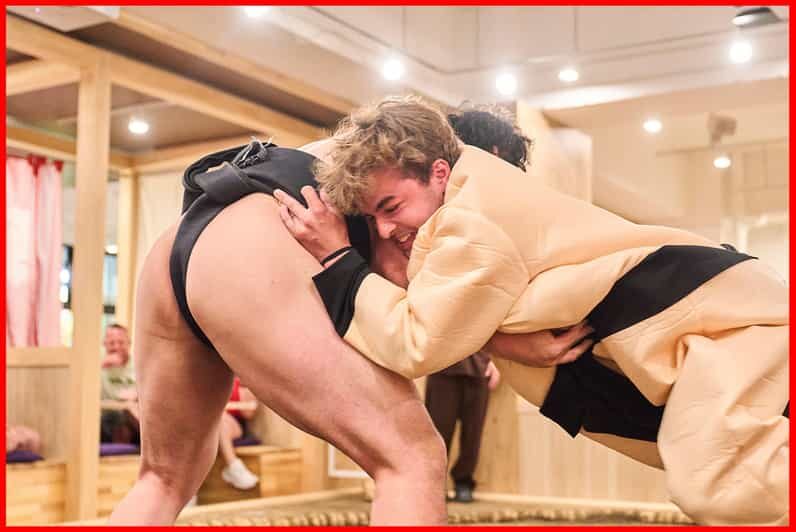
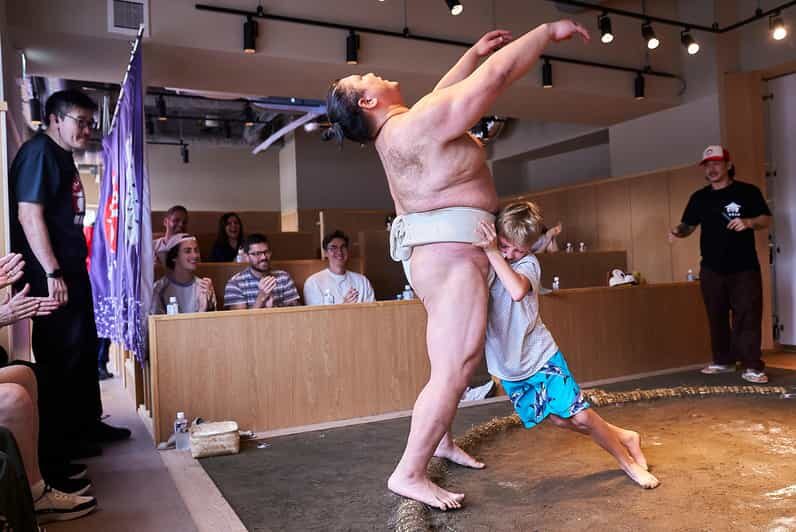
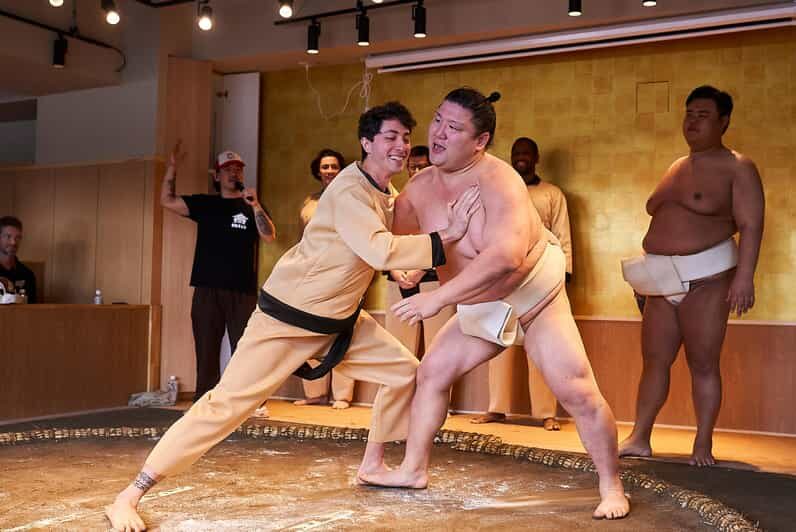
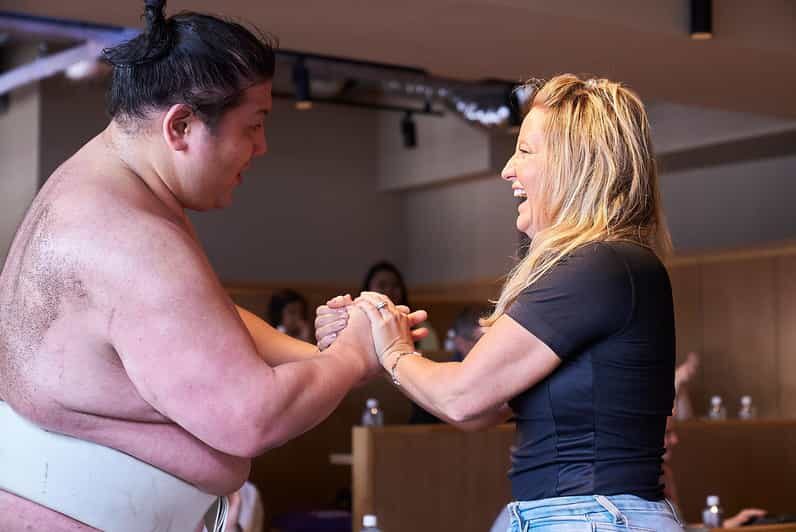
The interactive challenge is the show’s most distinctive feature. Volunteers can step into the ring and face a wrestler in a lighthearted match. The wrestlers go easy on participants, making the challenge suitable for fun and laughter rather than a serious contest.
You do not need to volunteer to enjoy the event. Watching others take a turn can be entertaining in its own right, and the MC keeps the audience involved. If you do want to try, wear comfortable clothes and be ready to follow the staff’s instructions. The experience is meant to be safe and playful, but it is still a physical activity with a much larger athlete.
The invitation to participate is not just a gimmick. It gives you a memorable way to appreciate the wrestlers’ size, balance and strength from a different perspective. It also makes the show a good choice for families and groups with mixed interests, since some people can join in while others watch.
Children can enjoy the humor and audience participation, and children as young as three and seven have taken part in family outings. Still, a child who is wary of the size of the wrestlers may prefer to watch first. The staff are described as friendly with children, but it is sensible to let each child decide whether the ring is for them.
The photo and Q&A round out the hour
After the demonstrations and challenge, the session includes time for questions. This is a chance to ask about the rules, training or rituals that caught your attention. The Q&A is a useful final step because it lets you follow your own curiosity instead of relying only on a set script.
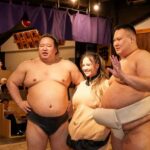
The photo session gives you a souvenir with the wrestlers inside the ring. Standing beside them makes the difference in scale clear, and it is an easy way to mark the experience without needing to take part in a bout. Bring a camera or phone, as photography is one of the main things you will want to do.
The photo opportunity is included, rather than an add-on listed among extra costs. Alongside the interaction and explanation, it helps make the hour feel like a complete activity. If you are choosing between this and a show that is purely observational, the chance to pose and ask questions is a meaningful difference.






What $30 gets you
At $30 per person, the price covers an hour of English commentary, a welcome drink, demonstrations, an interactive challenge, a Q&A and a photo session. That is good value if you want a focused cultural activity with both explanation and participation. You are paying for an organized introduction to sumo, not simply a short performance.
The value depends on what you want from sumo. If your priority is a formal tournament, this is not a substitute for one. But if you are short on time, new to the sport or traveling with family, it offers several ways to connect with the subject in one compact visit.
Remember that food and additional drinks cost extra. The supplied details do not specify group size or the exact number of wrestlers in each session, so I would not book on the assumption of a particular cast or a private experience. The core elements are the same: a host-led introduction, sumo demonstrations, audience participation and a photo.
A few practical details before you book
The full activity lasts one hour, and starting times depend on availability. Comfortable clothes are recommended, especially if you might volunteer for the challenge. Bring a camera for the photo session, and note that smoking is not allowed indoors.
The venue is not suitable for wheelchair users. If access needs are a concern, this is an important limitation to consider before booking. The experience is offered in English, and free cancellation is available up to 24 hours in advance for a full refund. A reserve-now, pay-later option is also offered.
The most frequently praised qualities are the friendly wrestlers and staff, the energetic host, and the amount of audience involvement. That combination matters: a demonstration can feel distant if you only sit and watch, but here the explanation, jokes, challenge and questions keep the hour moving. The show is lighthearted, yet it still gives you a basic understanding of sumo’s customs and physical demands.
Who will get the most from this show?
I’d consider this a strong fit if you want a short, accessible introduction to sumo while in Tokyo. It suits first-timers especially well: you do not need to know the rules, the MC provides English commentary, and the rituals and sparring give you something concrete to watch. It also works for families who enjoy audience participation and a bit of good-natured silliness.
It is less suitable if you want a long, technical account of sumo or prefer a quiet, formal performance. The format is deliberately engaging, with humor and volunteer participation at its center. People who are uncomfortable with physical challenges can simply watch, but the event’s energy comes partly from inviting the audience into the action.
I would book it if you want a memorable hour that balances cultural context with close-up spectacle, especially if someone in your party is keen to try the ring challenge. At $30, the included commentary, drink, Q&A and photo make it a well-rounded activity. Choose something else if you need wheelchair access or specifically want to see tournament competition.
Tokyo: Sumo Show & Interactive Experience with Photo
FAQ
How long does the sumo show last?
The experience lasts one hour. Check availability for the session’s starting time.
Where does the experience take place?
It takes place in Ryogoku, the historic heartland of sumo in Tokyo.
Is the show conducted in English?
Yes. An English-speaking MC provides live commentary, and English-language video support is also used.
What is included in the ticket?
The ticket includes entrance, one welcome drink, the interactive challenge, a photo session, English commentary and a Q&A session.
Is food included?
No. Food and additional drinks are not included.
Do I have to take part in the sumo challenge?
No. Audience members can volunteer, but participation is optional.
What should I bring and wear?
Bring a camera and wear comfortable clothes.
Is the experience suitable for wheelchair users?
No. The experience is listed as not suitable for wheelchair users.
You can check availability for your dates here: