
Why is buying a ticket to a 1,900-year-old temple still one of the most confusing parts of a Rome trip? The Pantheon went from free to ticketed in July 2023 and the booking system Italy chose for it is, charitably, not great. Foreign cards bounce, the calendar only shows the current week, and “skip the line” doesn’t actually mean what most travelers think it means.
The good news is that none of this is actually hard once you know where the traps are. There are three real options for getting in, and which one is right for you depends on whether you want to save money, save time, or save the headache of dealing with the Italian government’s website.
Short on time? Here’s what to book:
Best with audioguide: Pantheon Fast-Track Ticket and Official Audioguide — narrated by professional voices, skip-the-ticket-office line, the most-booked Pantheon option on the market.
Cheapest with priority entry: Pantheon Reserved Entry Ticket with Interactive App — $13. Reserved time slot plus a phone-based interactive guide.
If you want a live human: Pantheon Skip-the-Line Entry and Guided Tour — small group with an actual guide for context the audioguides can’t give.
- The Three Ways In
- What Tickets Actually Cost
- The Best Pantheon Tickets and Tours to Book
- 1. Pantheon Fast-Track Ticket and Official Audioguide — €15-ish
- 2. Pantheon Reserved Entry Ticket with Interactive App —
- 3. Pantheon Priority Entry Ticket and Interactive App —
- How to Book on the Official Site (and Why You Probably Shouldn’t)
- What “Skip the Line” Actually Means
- When to Go
- What You’re Actually Looking At
- Inside: What to Actually Look At
- Practical Things That Aren’t on the Tickets
- Getting There
- What to Eat Nearby
- Common Mistakes to Avoid
- What Else to Do Around the Pantheon
The Three Ways In
The Pantheon has, technically, three ticket channels. They are not equal.
Option 1: At the door — €5 cash or card at the kiosks just outside the entrance. Same price as buying ahead. The line moves faster than it looks because tickets are timed, so the queue is mostly people waiting for their slot, not people waiting to pay. If you walk up at 11am on a Tuesday, you’re probably looking at 15 to 20 minutes.
Option 2: Musei Italiani official site — €5, same price as the door. This is Italy’s central ticket portal for state-run museums. You’ll have a slot reserved before you arrive. The catch: the website only releases tickets for the current week, the calendar interface is unintuitive, and foreign credit cards frequently bounce at checkout. More on this below.
Option 3: GetYourGuide with audioguide — around €10-15 with the official audioguide bundled in. Pickup at a partner location near the building, not at the entrance itself. This is what most travelers actually book, because it includes the audio narration and removes the headache of dealing with Musei Italiani.
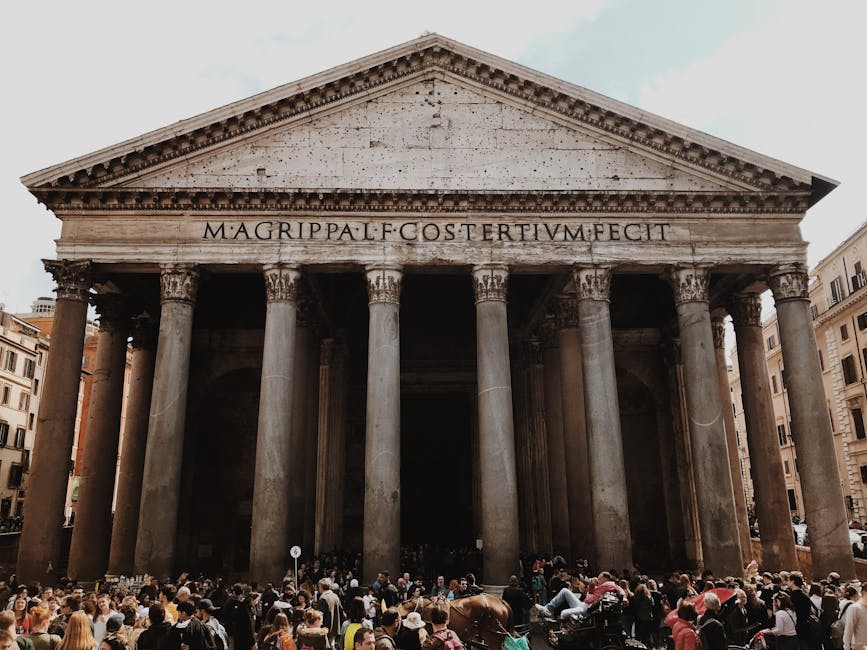
One thing to know up front before any of these: the Pantheon is still an active Catholic basilica (Santa Maria ad Martyres, since the year 609). Modest dress is enforced — knees and shoulders covered. They will turn you away at the door in summer if you turn up in a tank top and shorts. I’ve watched it happen.
What Tickets Actually Cost
The official price is straightforward. The discounts and exemptions are the part nobody explains.
Adult: €5. Same whether you buy at the door, on Musei Italiani, or pre-purchase through a tour reseller. The €15-ish price you see on third-party sites includes the audioguide and the booking handling — the underlying ticket is still €5.
Under 18: free. But you still need to book a free ticket in advance through Musei Italiani or pick one up at the door. They’ll check IDs.
EU citizens 18-25: €3. ID required. This includes British citizens with EU residence, but not UK passport holders since 2021.
Rome residents: free. Show a residence card.
Other free categories: disabled visitors and their carers, AIRE-registered Italians abroad, several professional categories (journalists, EU teachers with relevant ID, ICOM members). The full exemption list is on the official Pantheon Roma website.
If you’re a tourist over 25 with no special status, your sticker price is €5 at the door or whatever the booking platform charges with the audioguide layered on top. There are no real discounts for groups, students from non-EU countries, or families. It’s a flat fee.
The Best Pantheon Tickets and Tours to Book
Almost everyone visiting the Pantheon wants two things: skip the ticket-office queue, and have someone or something explain what they’re looking at. These are the three options that actually do that, ranked by what most readers will want.
1. Pantheon Fast-Track Ticket and Official Audioguide — €15-ish
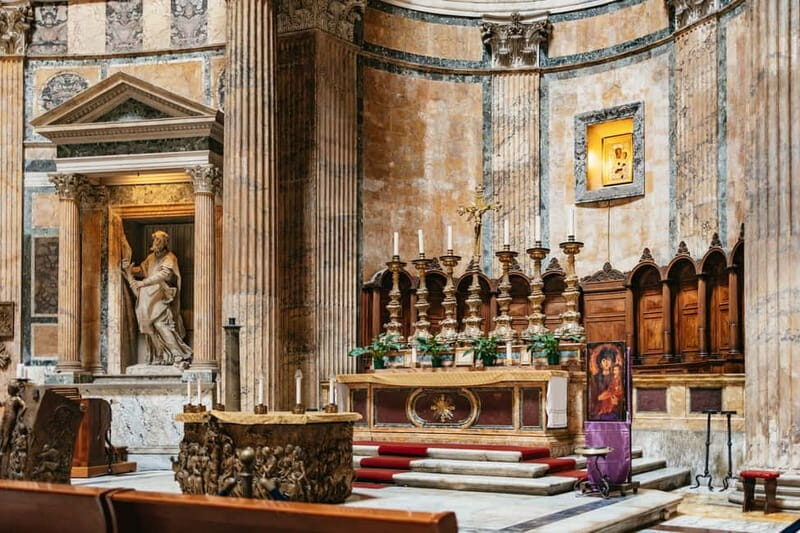
This is the default pick and the most-booked Pantheon option on the market. You get the €5 entry plus the official audioguide, which is narrated by professional voices with original music — not a robotic text-to-speech app. Our full review covers what the audio actually tells you and how it compares to reading the plaques. The skip-the-line element is real in the practical sense: you avoid the cash kiosk queue and walk straight to the timed-entry door.
Self-guided, so if you want a live person to ask questions, look at option 3. For everyone else, the audio is good enough that you’ll happily spend 45-60 minutes inside instead of the 15-minute glance most ticket-only visitors do.
2. Pantheon Reserved Entry Ticket with Interactive App — $13
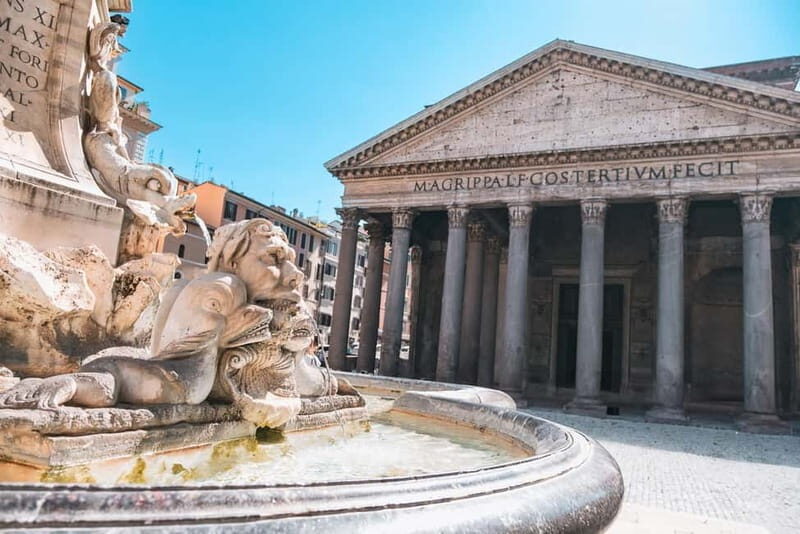
The budget pick. At $13, this is barely more than the door ticket and you get a reserved time slot plus an interactive smartphone app for context. Our review goes through how the app handles the history versus the live audioguide. It’s a step down from the official audio in narration quality, but a real step up from staring at the plaques in silence.
The trade-off: the app needs your own phone, your own headphones, and a charged battery. If you arrive on hour 8 of your sightseeing day with 9% battery, this is not the ticket for you.
3. Pantheon Priority Entry Ticket and Interactive App — $14
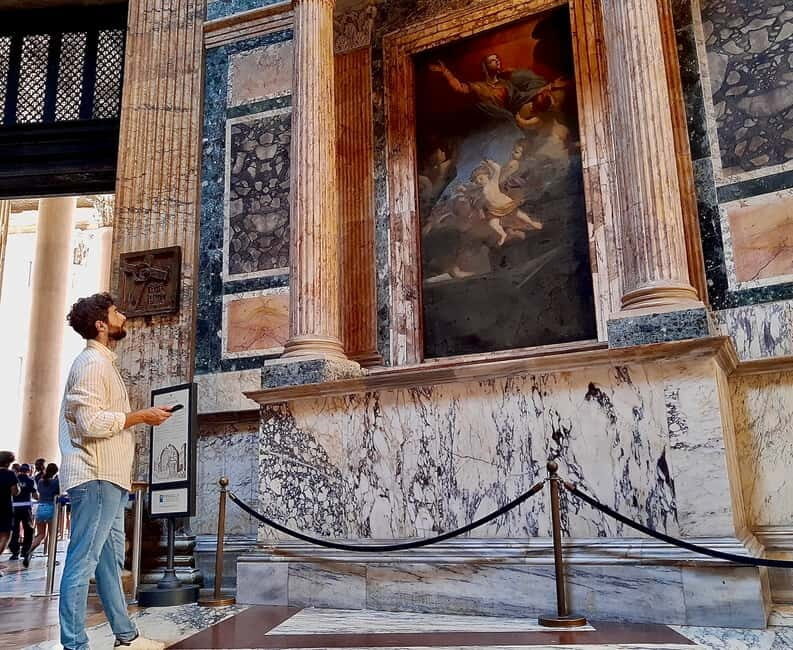
The “and the rest of central Rome” pick. Same priority entry as option 2, but the bundled app extends beyond the Pantheon to cover the Spanish Steps, Trevi Fountain, and Piazza Navona — all of which are within a 15-minute walk. Our review explains how the multi-stop app works as a half-day walking guide. Same caveat as option 2 about phone battery.
If you’ve already booked a separate audioguide tour like the option-1 ticket, this one is redundant. If you haven’t, this is the most efficient €14 you’ll spend in central Rome.
Beyond these three, there are small-group guided Pantheon tours with a live guide, and alternative priority-entry app combos if availability on the top three is bad on your dates. The pricing structure is similar across all of them — the entry fee is €5 no matter what; the cost is in whatever explanation layer you bolt on top.
How to Book on the Official Site (and Why You Probably Shouldn’t)
If you really want to pay only €5 and avoid third-party fees, the official channel is Musei Italiani. It is the central booking system Italy’s culture ministry runs for all state museums. It’s also notorious in the Rome travel forums.
The process, condensed:
1. Go to museiitaliani.it. Click on tickets. You’ll land on a calendar.
2. Critical detail nobody warns you about: regardless of how many months show on the calendar, only the current week is actually bookable. If you’re planning two weeks ahead, you can’t. Tickets release on a rolling weekly basis.
3. Pick your date. Pick your slot. Click continue. Pick your ticket types and quantities.
4. The system will offer a guest checkout. Don’t use it. The guest path is glitchy in ways that randomly cost you the booking. Make an account. The 90 seconds you spend registering will save you the 30 minutes of debugging when guest checkout silently fails.
5. Add names for each ticket. ID will be checked at the door for any discounted ticket, so spell it correctly.
6. Payment screen. This is where most foreign visitors get stuck. Direct credit card payments from non-Italian cards frequently throw an error message with no explanation. The reliable workaround is to click “other methods” and pay through PayPal or Apple Pay. Both work consistently. Direct card entry does not.
7. Ticket lands in your email as a PDF with a QR code. Print it or save it on your phone. They scan at the door.
I do not recommend this route for first-time Rome visitors who haven’t booked Italian state museums before. The €5-15 you save versus a third-party booking is not worth the risk of arriving in Rome without a ticket because the payment failed and the next available slot is in three days. For Romans, residents, or anyone with an Italian-issued card who needs the discounted rate, it makes sense. For tourists on a one-week trip, the GetYourGuide route with the audioguide is significantly less stressful for an extra €10.
What “Skip the Line” Actually Means
Every Pantheon listing on every booking site says “skip the line.” None of them are technically lying. All of them are slightly misleading.
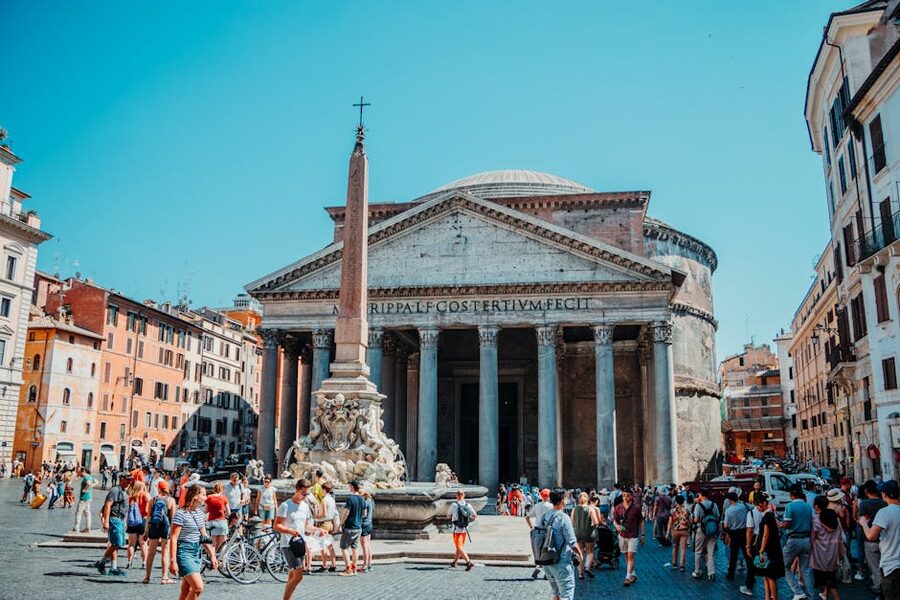
Here’s how it actually works. Every ticket is timed for a 30-minute window. When that window opens, everyone with a ticket for that slot lines up at the door, gets their QR code scanned, and goes inside. There is no “premium” lane that bypasses this. Your fast-track ticket gets you past the kiosk-purchase line — the people standing there are buying their ticket for the next available slot, often two or three windows later. That’s the line you skip.
Once you’re in your slot’s queue, everyone in that queue moves at the same pace, fast-track or not. The wait is usually 5 to 10 minutes from the front of the queue to walking through the bronze doors. In peak season at 11am or 2pm, the queue is longer because it’s a 30-minute window of accumulated arrivals. Early-morning slots (9 to 9:30am) and late-afternoon slots (after 5pm) are reliably the shortest waits.
The practical takeaway: pre-booking saves you from waiting to buy. It does not let you walk past everyone else on entry. If your goal is to be inside with the fewest other tourists, book the first slot of the day. The light through the oculus is also at its best in the first hour and last hour of opening.
When to Go
Opening hours: 9am to 7pm daily, with last entry at 6:30pm and the ticket office closing at 6pm. Closed on January 1, May 1, and December 25. The “open hours” are also subject to overrides for religious services — the Pantheon is a working church, and high-profile masses, weddings, or papal events will close it for tourist visits, sometimes at short notice. The official Pantheon site posts a schedule of these events; check before you book a fixed slot if your dates are tight.
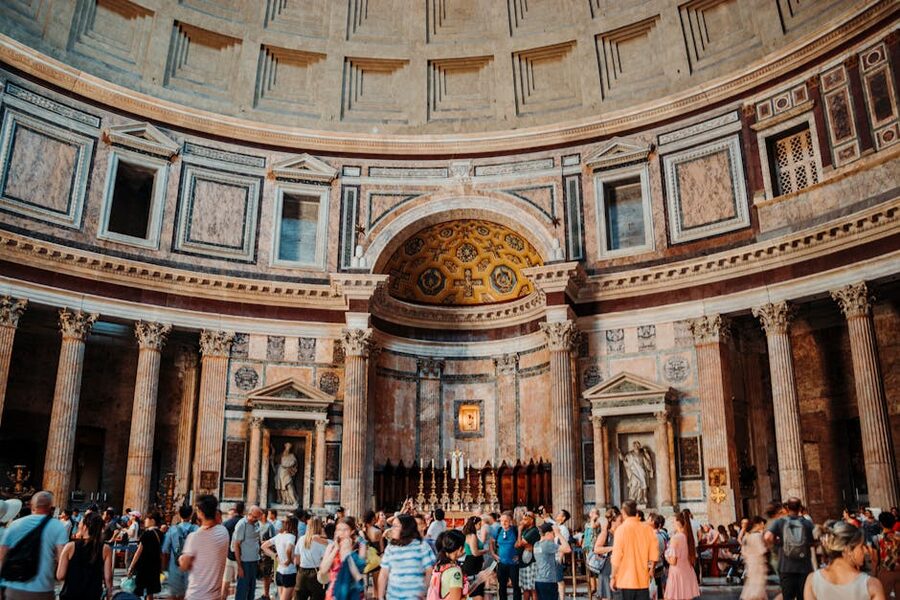
Best time of day: 9am sharp, when it opens. The light from the oculus hits the lower walls in the first hour. The crowds haven’t built. You can hear yourself think. By 11am the rotunda is full and the acoustics turn into a wall of voices.
Worst time of day: midday in July and August. The portico is in shade so the line is bearable, but the rotunda interior is packed shoulder-to-shoulder and the heat off the bodies inside the marble space is genuinely unpleasant.
What to do if it rains: go anyway. The oculus is open to the sky, which means rain falls inside. The floor has subtle drainage holes — Romans designed the marble grading 1,900 years ago and it still works — and watching rain cone-shape down through the dome is one of the experiences you can’t get any other way. The crowd thins out exactly when the show gets good.
What You’re Actually Looking At
The Pantheon’s confusing thing — the reason it has survived when nearly every other ancient Roman building in central Rome is a ruin — is that it was converted to a Christian church in 609 AD. That’s why the marble is intact, the bronze doors still close, and the dome hasn’t collapsed. Active churches got maintained. Pagan temples got quarried for stone.
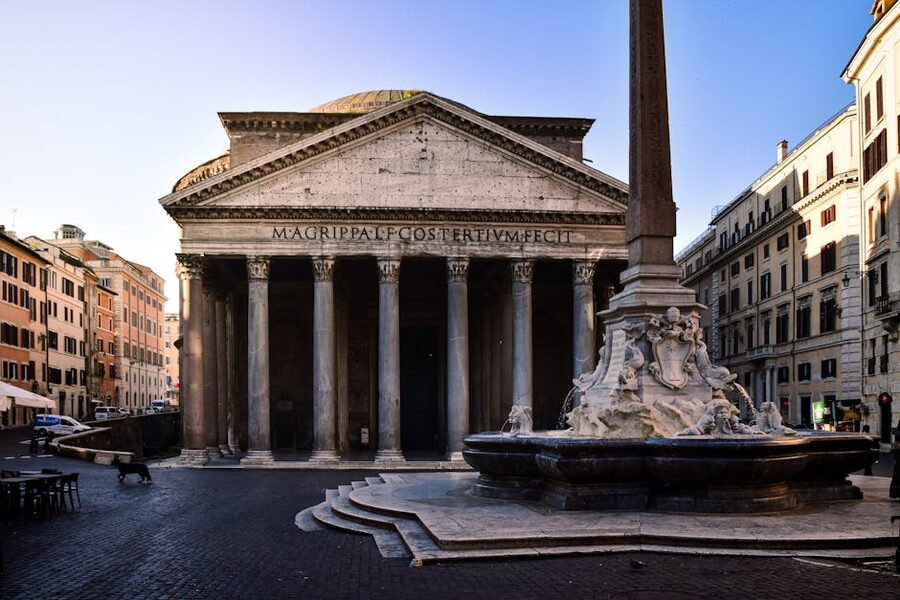
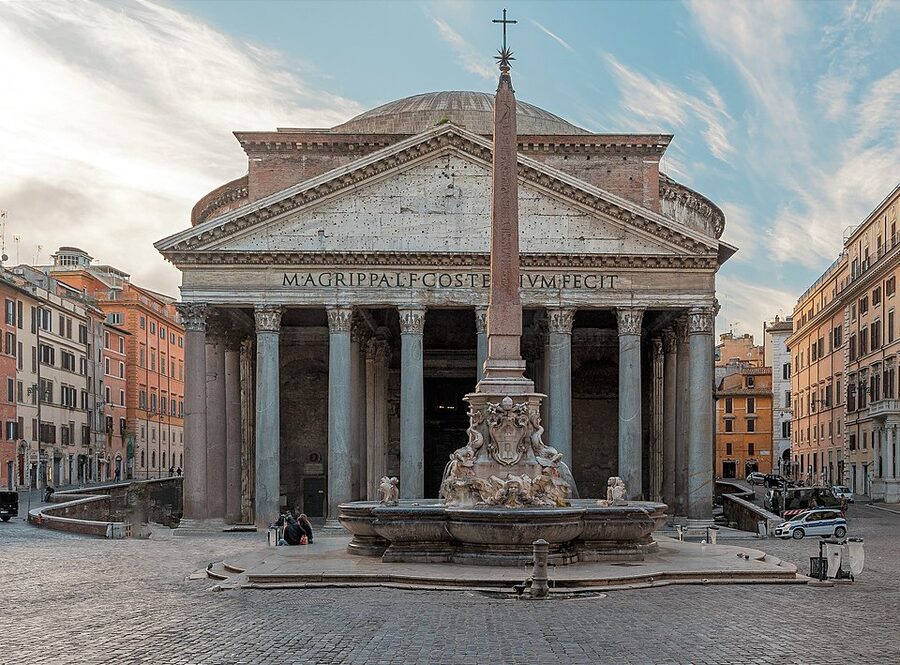
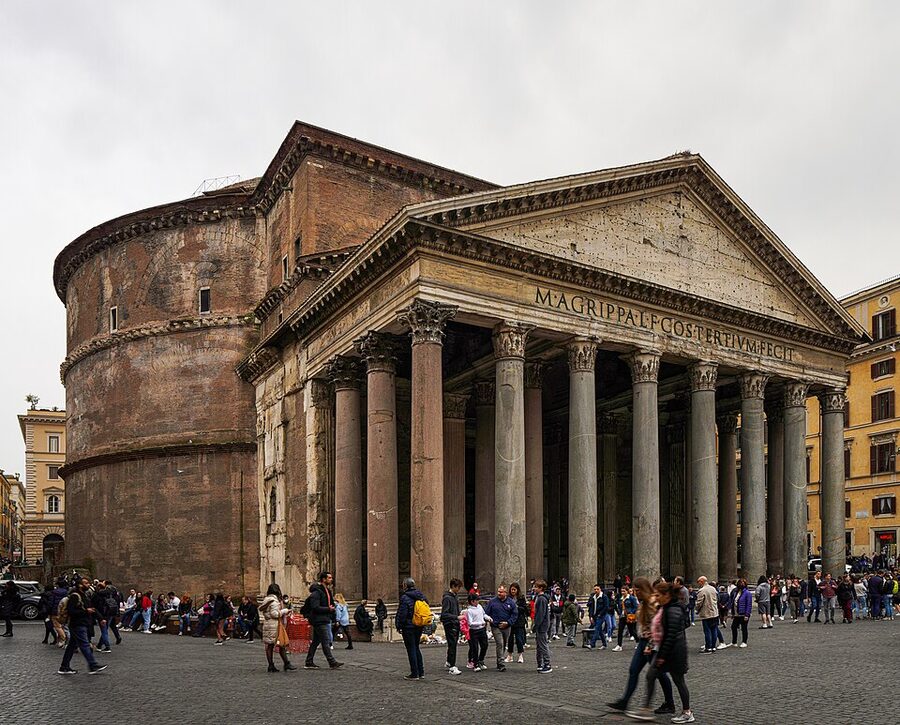
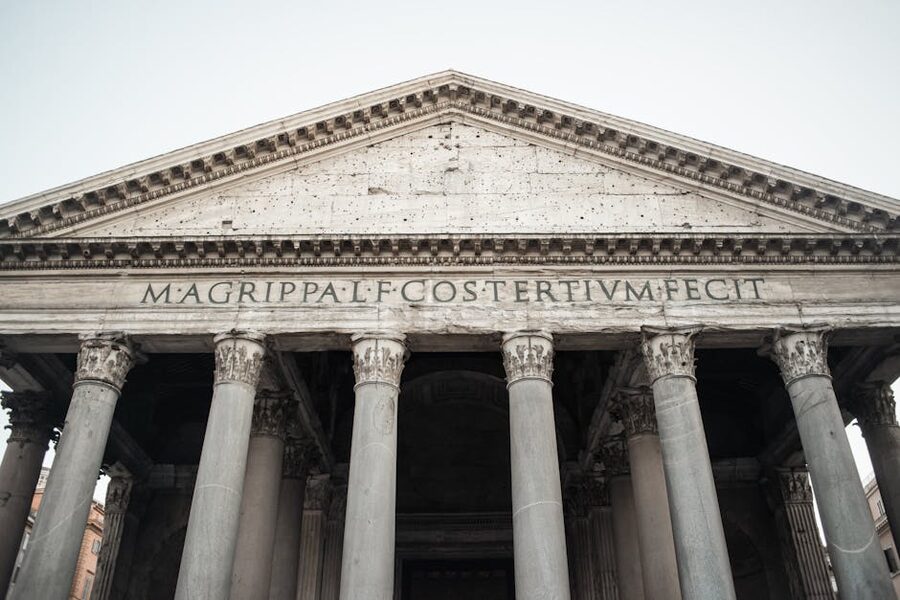
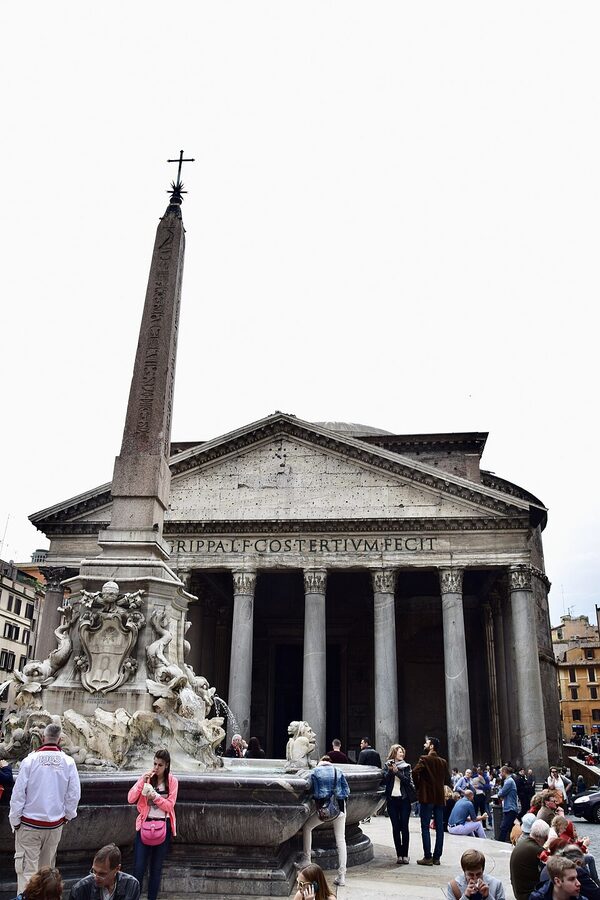
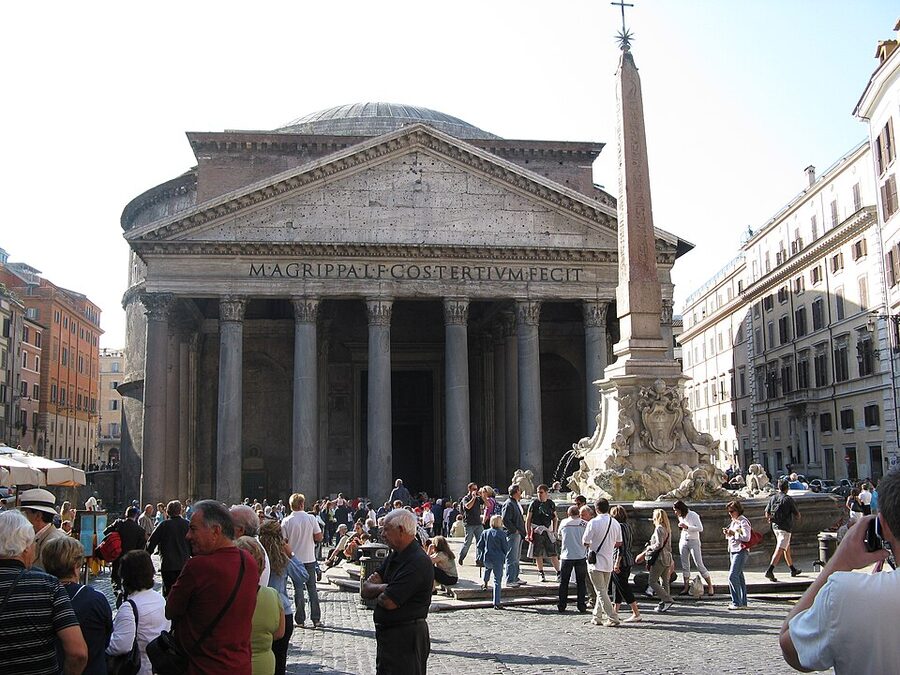
The current building is the third Pantheon on this site. The first was Marcus Agrippa’s, 25 BC, burned down. The second was Domitian’s, also burned down. The current one is Hadrian’s reconstruction around 125 AD. Hadrian kept Agrippa’s original inscription on the portico — “M·AGRIPPA·L·F·COS·TERTIVM·FECIT,” meaning Marcus Agrippa, son of Lucius, consul for the third time, made it — even though Hadrian rebuilt the entire structure. Roman emperors didn’t usually do that. Hadrian was making a deliberate statement about continuity.
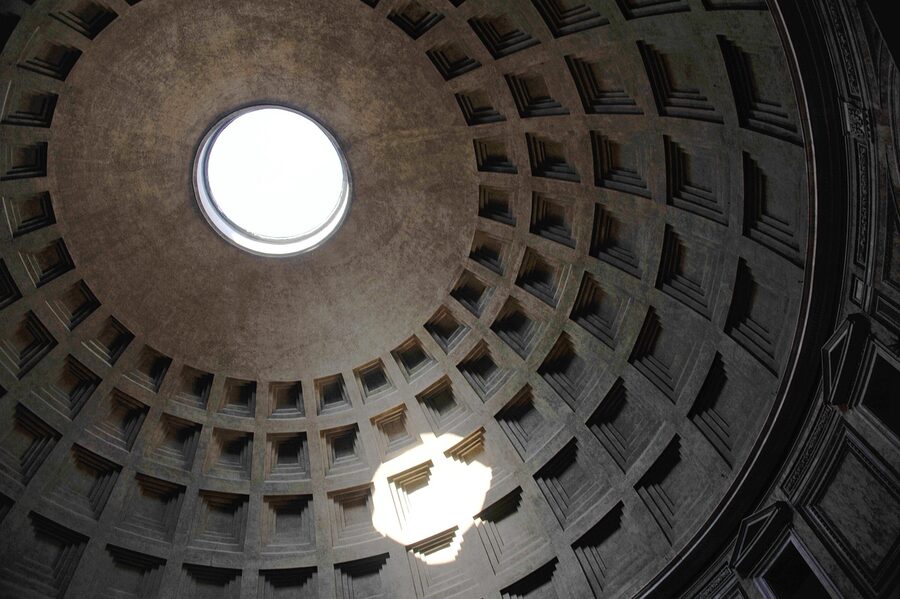
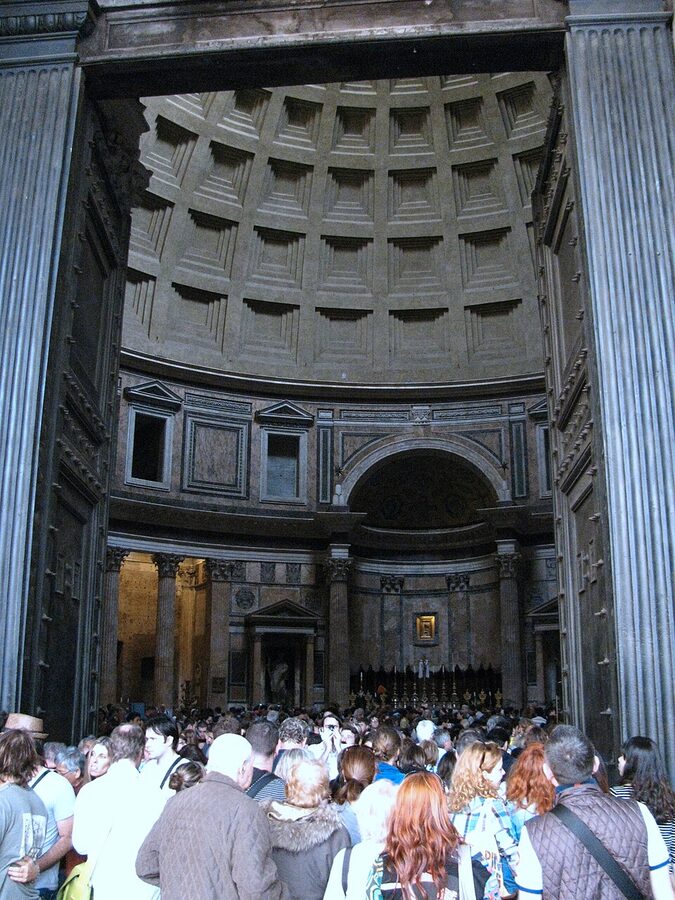
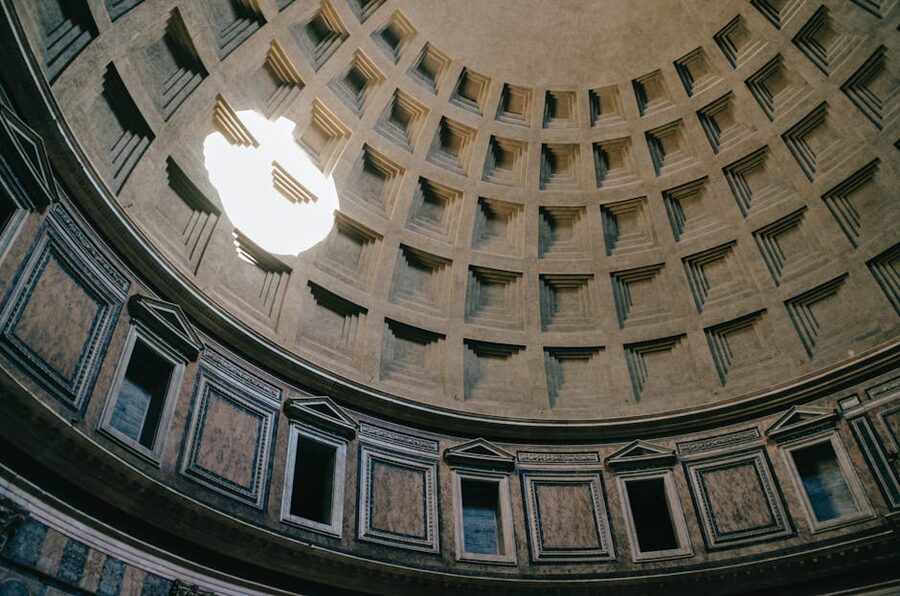
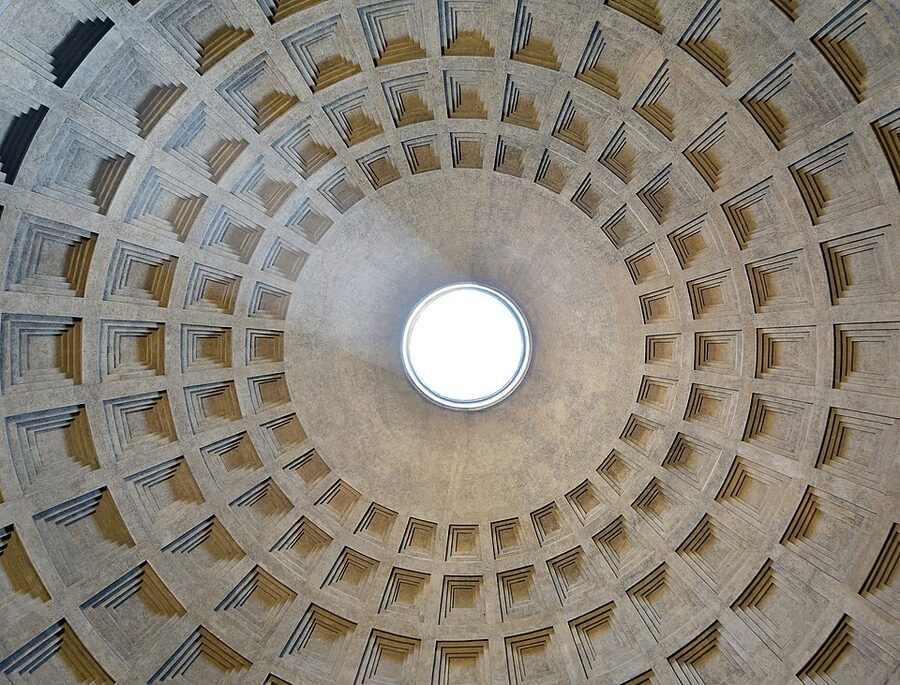
The dome itself is the engineering miracle. 43.3 metres in diameter, the same as its height from floor to oculus — the building fits inside a perfect sphere. It was the largest dome in the world for 1,300 years, until Brunelleschi’s Florence Duomo overtook it in the 1430s. It is still the largest unreinforced concrete dome in the world. Modern engineers use rebar for far smaller spans. The Romans used a graduated concrete mix — heavier aggregates at the base, progressively lighter ones (pumice, volcanic tufa) toward the top — to reduce stress on the lower walls. Nobody wrote the recipe down. The technique was lost for over a thousand years.
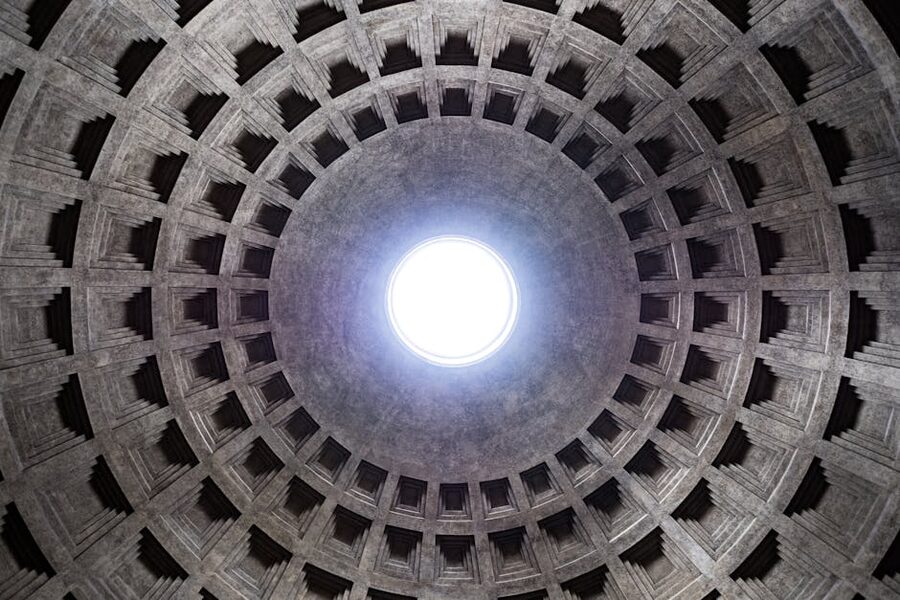
And then there’s the oculus. 9 metres across, no glass, open to the sky. It’s not a skylight — it’s a structural necessity. A solid dome at this scale would have collapsed under its own weight. The oculus is the relief valve that lets the geometry hold. The fact that it doubles as the most theatrical light source in any building in Rome is almost incidental.
Inside: What to Actually Look At
Most ticket-only visitors spend 10 to 15 minutes inside, look up at the dome, take a photo, and leave. With an audioguide or app you can comfortably stretch this to 45 minutes. Here’s what’s actually worth lingering on.
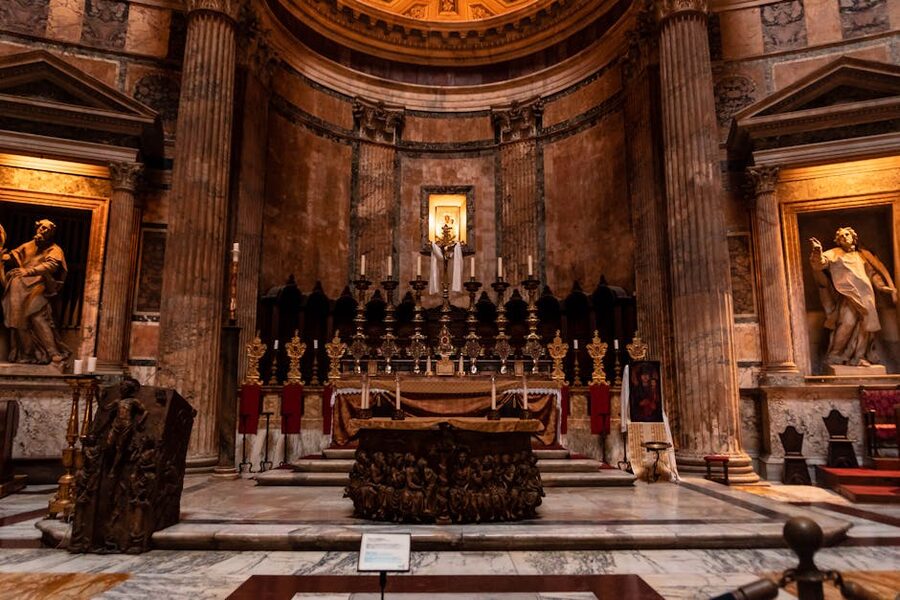
The bronze doors. They’re 7 metres tall, original from the 2nd century, and still hung on their original hinges. They’re among the only surviving original bronze doors from antiquity in the world. Every other Roman bronze door was melted down during one war or another. These survived because the building was a church and the doors had to keep working.
The marble floor. Look down at the slight curve in the centre — it’s not flat. The floor is gently convex toward the edges to handle the rain that falls through the oculus. The drainage holes are visible if you look. The marble pattern of squares and circles you’re standing on is largely original.
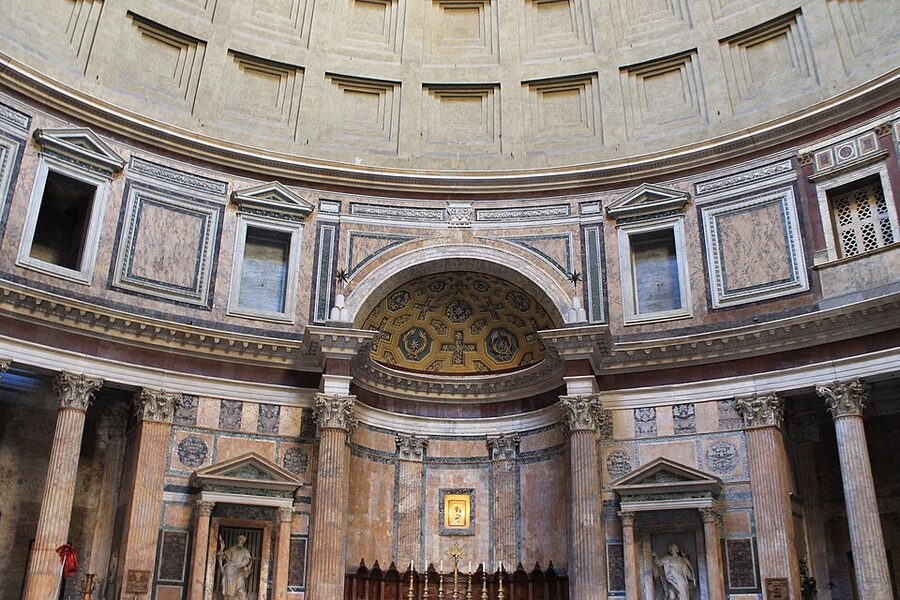
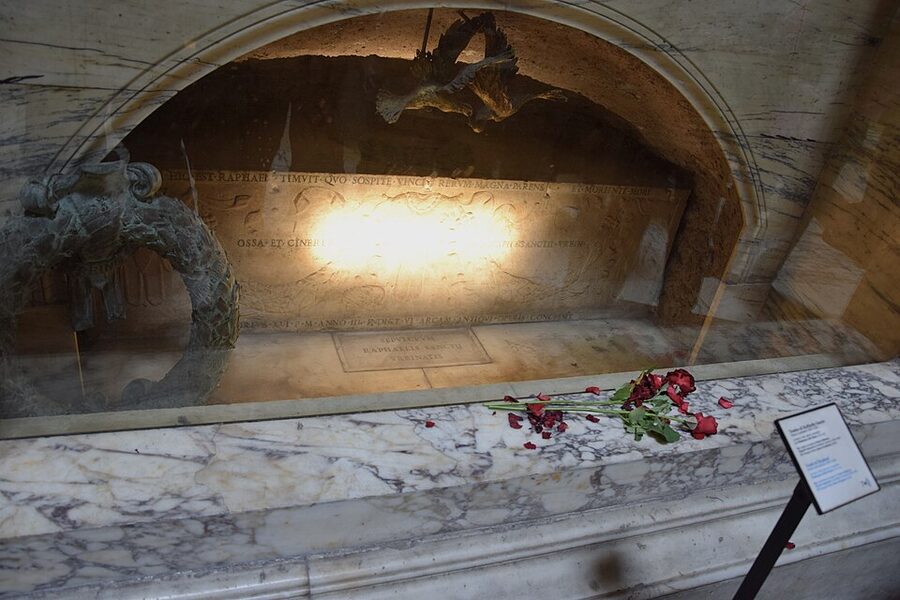
Raphael’s tomb. The painter is buried in the third niche on the left as you come in. The Latin epigram on the sarcophagus, written by Pietro Bembo, translates as: “Here lies Raphael, by whom Nature feared to be conquered while he lived, and to die when he died.” It’s pointed and beautiful and most visitors walk past without noticing.
The royal tombs. Italy’s first two kings, Vittorio Emanuele II and Umberto I, are buried in side niches. There are usually fresh flowers — Italian monarchists still visit. The tombs have honour guards on weekends.
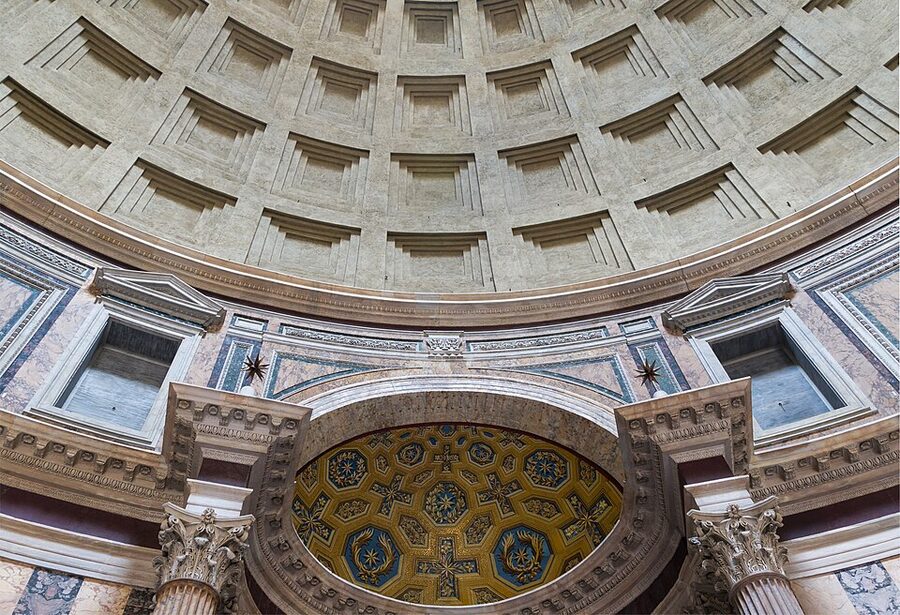
The oculus directly above. Stand under it. Look up. Don’t take a photo first. The geometry doesn’t translate to a phone screen. You need the actual scale.
Practical Things That Aren’t on the Tickets
Toilets. There aren’t any inside the Pantheon. The nearest public ones are at the cafes around Piazza della Rotonda, which expect a purchase, or the McDonald’s on Via Giustiniani three minutes away, which doesn’t really.
Bag policy. Small bags fine. Large backpacks technically need to be checked, but in practice they only enforce it for things over rucksack size. Cameras, water bottles, food — all fine.
Photography. Allowed everywhere inside. No flash, no tripods. Phone shots of the oculus mostly come out badly because the dynamic range is too extreme; expose for the dome, the sky blows out white; expose for the oculus, the dome goes black. There is no good fix on a phone. Just accept it and move on.
Mass. Sunday morning mass is open to the public and free. It happens around 10:30am, runs about 45 minutes. If you go, you’re not visiting as a tourist — you’re attending a service. Behave accordingly.
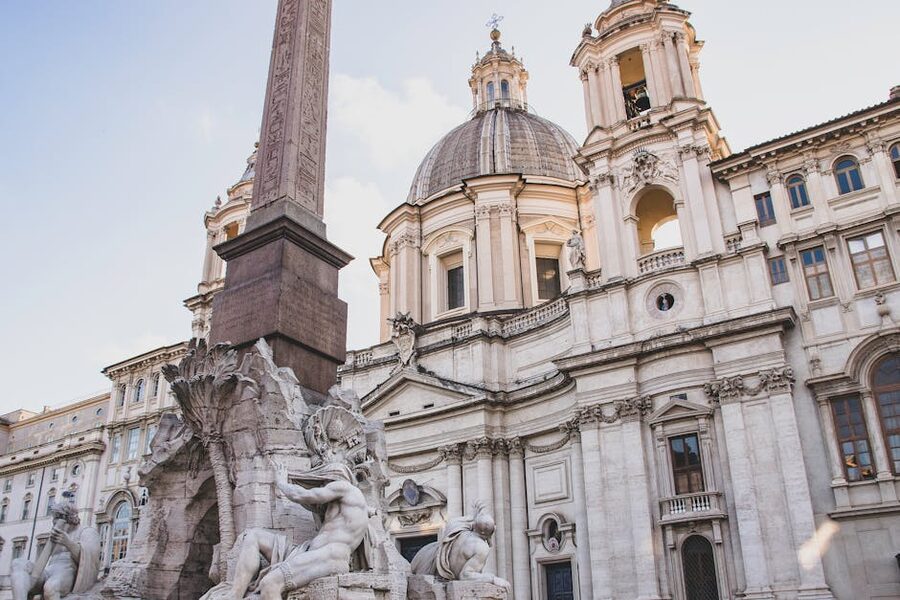
Combining with other sights. Piazza Navona is 5 minutes’ walk west, Trevi Fountain is 8 minutes east, and the Spanish Steps are 12 minutes northeast. The whole central Rome triangle works as a 3-4 hour morning walk if you start at the Pantheon at 9am. If you’re also doing the major attractions across town, our Colosseum, Roman Forum and Palatine guide covers how to time those into a single day, and the Vatican Museums and Sistine Chapel guide handles the half-day commitment that side of the city needs.
Getting There
The Pantheon has no metro stop directly outside it. The nearest stations are Barberini (Line A, 12-minute walk) and Spagna (Line A, 14-minute walk). If you’re already in central Rome on foot, anywhere west of Termini you’re within 20 minutes’ walk anyway.
Buses 30, 40, 62, 64, 70, 81, and 87 stop at Largo di Torre Argentina, which is 4 minutes’ walk south. Largo di Torre Argentina is where Julius Caesar was killed, in case you want to bundle the historical detour. The Roman ruins are visible at street level.
Taxis can drop you on Via del Seminario or Via della Rotonda, both within 50 metres of the entrance. They will not be able to drive into the piazza itself — it’s pedestrianised — and the surrounding streets are tight. Walking the last block is faster than the taxi crawl.
If you’re Pantheon-and-other-sights hopping with multiple stops, the city’s hop-on-hop-off bus stops within walking distance — both the City Sightseeing service with audioguide and the Big Bus open-top route drop near Piazza Venezia, 8 minutes’ walk south. The Roma Pass covers the public transport network and a couple of major attractions, but doesn’t include the Pantheon — separate ticket required. If your feet are already done by mid-trip, the private golf cart tour of central Rome covers the Pantheon, Trevi, Navona, and Spanish Steps in about three hours without making you walk between them.
What to Eat Nearby
The cafes lining Piazza della Rotonda are tourist-priced. €6 for an espresso that should cost €1.20. The view is pretty, but the coffee isn’t. If you want a coffee with the Pantheon in your sightline, expect to pay for the postcard.

Walk one block in any direction and prices reset. Sant’Eustachio Il Caffè is 3 minutes’ walk south — espresso under €2 standing at the bar, considered by Romans to be one of the city’s three best coffees. Tazza d’Oro on Via degli Orfani is even closer (1 minute) and famous for its granita di caffè con panna in summer. Both are stand-at-the-bar Roman style, and ordering at a table costs more.
For something more substantial, the area between the Pantheon and Campo de’ Fiori has a heavy density of restaurants. Quality is wildly variable. The closer to the tourist sights, the worse it tends to be. If you have time and want a guided eating walk through the better Roman neighbourhoods, the Trastevere twilight food tour with Eating Europe covers the neighborhood across the river that’s still mostly Roman, and the street food tour with a local guide walks the markets and neighborhood spots in central Rome. For people who want to learn rather than just eat, the pasta and tiramisu class near the Vatican turns three hours into actual cooking knowledge.
Common Mistakes to Avoid
Booking on Musei Italiani too early. If your dates are more than a week out, the slot you want isn’t released yet. Don’t keep refreshing — wait until the Sunday or Monday before your trip and book then.
Showing up in summer in shorts and a tank top. They will turn you away. The dress code is enforced more strictly here than at most Rome churches because the Pantheon gets enough volume that the staff have time to police it. Bring a thin scarf or a light overshirt.
Trying to enter at 6:50pm thinking it’s open until 7. Last admission is 6:30pm. The ticket office closes at 6pm. If you’re cutting it tight, plan for a 6pm arrival or earlier.
Confusing the GetYourGuide pickup point with the entrance. When you book through a third party, you collect the ticket and audioguide at the operator’s location near the Pantheon — not at the Pantheon entrance itself. Read the booking confirmation carefully. People queue at the wrong door regularly and lose their slot.
Booking a guided tour on a religious holiday. The Pantheon closes for major Catholic events at short notice. If your trip overlaps with Easter, Christmas, or any Marian feast day, double-check the official events schedule before you commit.
Skipping it because “it’s free anyway.” It’s not, since 2023. The free entry rule ended that summer. If you’re working off a guidebook or blog post older than that, the information is wrong.
What Else to Do Around the Pantheon
If you’ve covered the Pantheon and have an hour or two left in the day, the closest worthwhile add-on is Castel Sant’Angelo, a 15-minute walk west across the Tiber. It’s the old papal fortress with views over the river and the Vatican beyond. The Borghese Gallery requires more lead time — tickets sell out 2-3 days ahead in peak season — but it’s the small museum in Rome that everyone forgets to book and then regrets. For underground Rome with a different angle, the crypts and catacombs underground tour takes you into the early Christian burial sites outside the city walls.
If you’ve got a full extra day and want to get out of the city, Pompeii with an archaeologist guide is the obvious day trip. It’s three hours south by train and worth the commitment if your Italy trip is heavy on the ancient stuff. Doing the Pantheon, Colosseum, and Pompeii in the same week gives you a fairly complete picture of Roman public architecture across the empire’s prime.