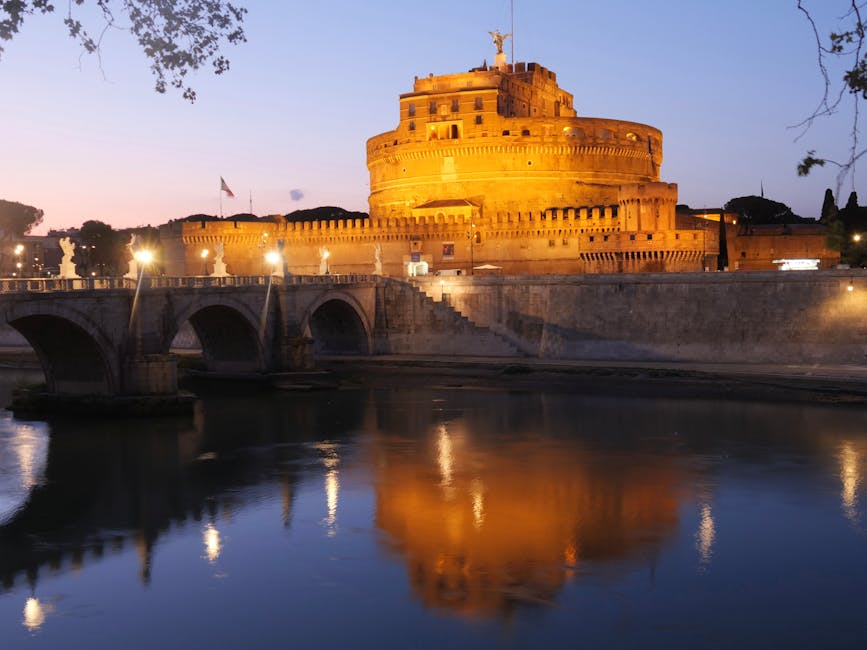
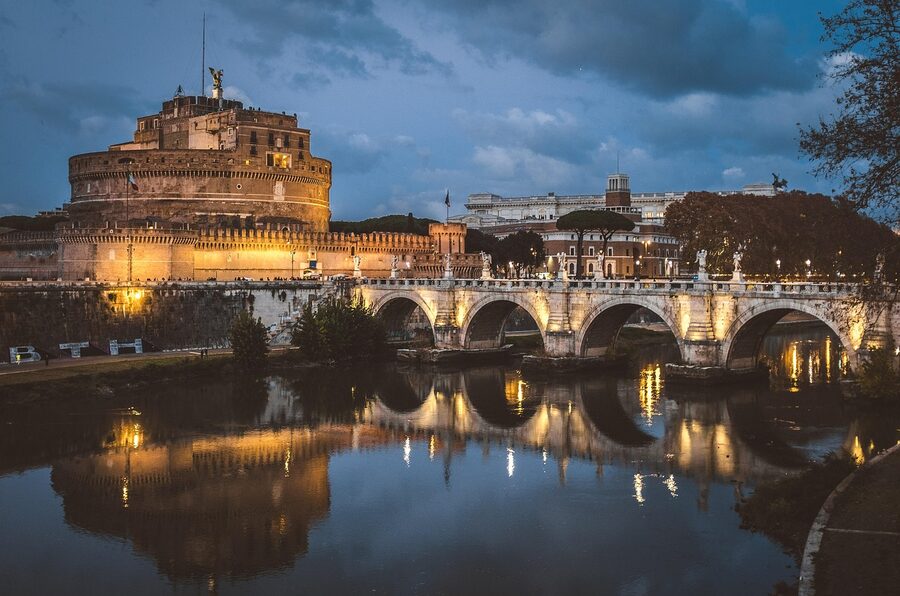
A friend of mine spent her first morning in Rome standing in the wrong line. She had walked across Ponte Sant’Angelo at 9am, joined the crowd at the front gate, and waited 45 minutes only to be told the queue she was in was the on-the-day cash window. Her actual ticket, the one she’d booked online weeks earlier, had a separate, almost empty entry around the side.
She still tells the story every time Castel Sant’Angelo comes up. Not because the castle disappointed her, but because the ticket logistics there are unusually badly signposted. You can do everything right and still end up in the wrong queue.
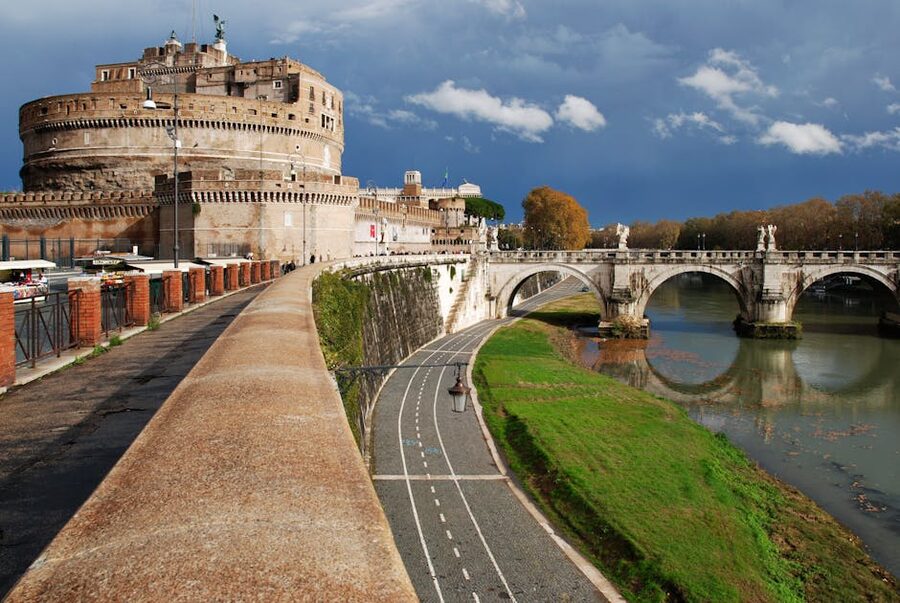
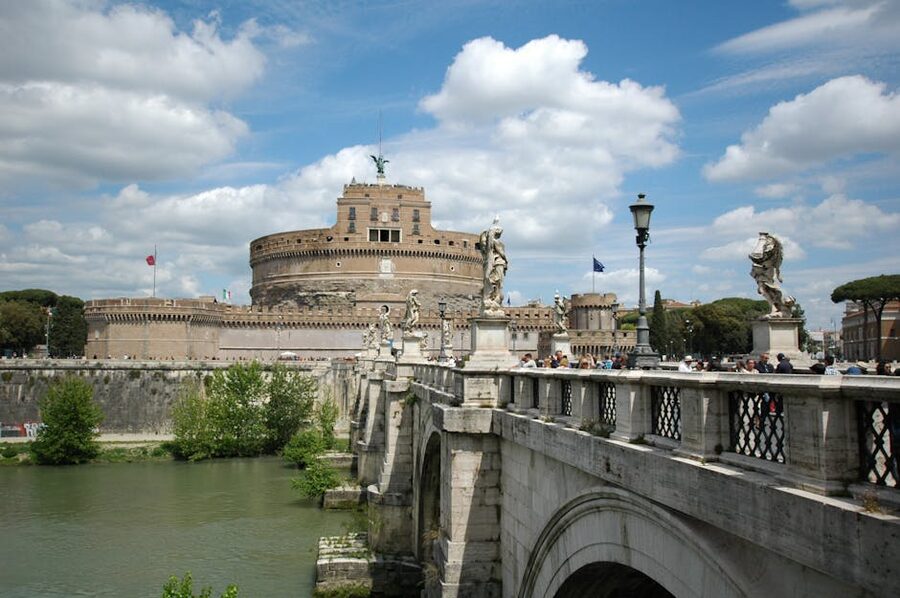
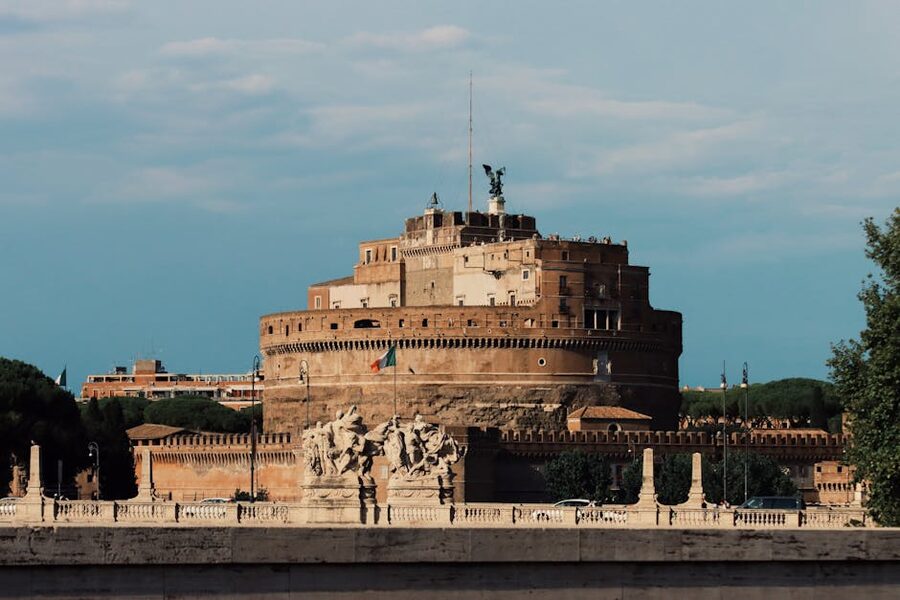
This guide covers what to actually book, where to enter, and how the place is set up inside. There’s also a short history section near the bottom because the building has had about six different jobs in two thousand years and that’s part of what makes a visit interesting.
Short on time? Here’s what to book:
Best overall: Castel Sant’Angelo Entry Ticket and Audioguide. The most-booked option on the market. App-based audio guide, free cancellation up to a day before.
Cheapest with priority entry: Rome: Castel Sant’Angelo Entry Ticket and Audio App, $23. Skip-the-line plus a smartphone audio app. The budget pick that still gets you past the cash queue.
Highest rated: Rome: Castel Sant’Angelo Entry Ticket with Audioguide. Multi-language audio, priority entry, the consistent favourite for repeat visitors.
- How Tickets Actually Work
- The Three Tickets Worth Booking
- 1. Castel Sant’Angelo Entry Ticket and Audioguide ()
- 2. Rome: Castel Sant’Angelo Entry Ticket and Audio App ()
- 3. Rome: Castel Sant’Angelo Entry Ticket with Audioguide ()
- What You’ll Actually See Inside
- The Helicoidal Ramp and Roman Foundations
- Papal Apartments and the Sala Paolina
- The Angel Terrace
- Combination Tickets and Whether They’re Worth It
- Getting There and Practical Stuff
- A Short History (Worth Five Minutes)
- Best Times to Go (and When to Skip)
- What to Pair It With
- Common Booking Mistakes
- What Else to Read Before You Go
How Tickets Actually Work
Castel Sant’Angelo has two ticket channels and they don’t behave the same way.
The official one is run through CoopCulture, the contractor that manages most state-museum bookings in Rome. Full price is €16. Reduced is €2 for EU citizens aged 18-25. There’s a free Monday slot once a month, but you have to book ahead because spots vanish within hours. The CoopCulture site is in Italian first, English second, and the English version sometimes lags a release behind. Foreign cards work most of the time. Most of the time.
The other channel is GetYourGuide and Viator, who resell timed-entry tickets bundled with audio guides or skip-the-line access. You pay more, usually $19-34, but you get an app, a confirmation email in English, and customer service that responds. This is what most non-Italian visitors actually book.
The decision is mostly about whether you want narration. €16 with no audio gets you in. Around $20-34 gets you in plus a guided experience that’s worth roughly an extra hour inside. The castle has seven floors and twenty-something rooms; without context you’ll wander past most of it.
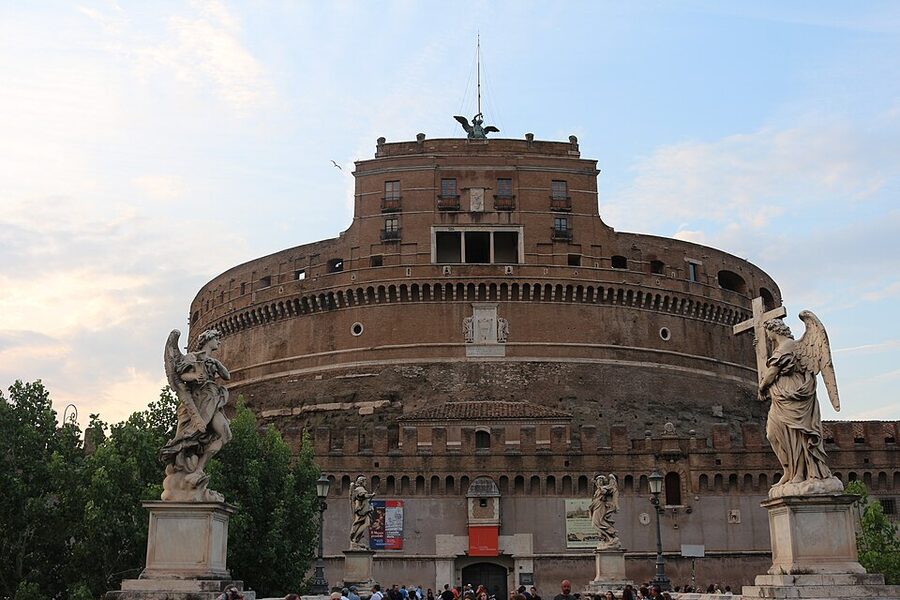
One thing that catches people out: the on-the-day kiosks at the front of the castle are for walk-ups paying cash. If you’ve pre-booked online, you do not queue here. You go to the voucher exchange near the entrance gate, swap your QR code for a paper ticket, and walk straight in. The signage for this is small. If you can’t find it, ask anyone in a uniform; they’ll point you the right way.
If you’re already buying timed tickets for the Vatican Museums on the same trip, save your Castel Sant’Angelo slot for late afternoon. You’ll be 6 minutes’ walk away after the Vatican and the castle’s last entry is 6pm. It pairs with the Vatican itinerary better than any other Rome attraction.
The Three Tickets Worth Booking
Out of the dozen or so listings, three handle nine in ten visits. Each one solves a different problem.
1. Castel Sant’Angelo Entry Ticket and Audioguide ($34)
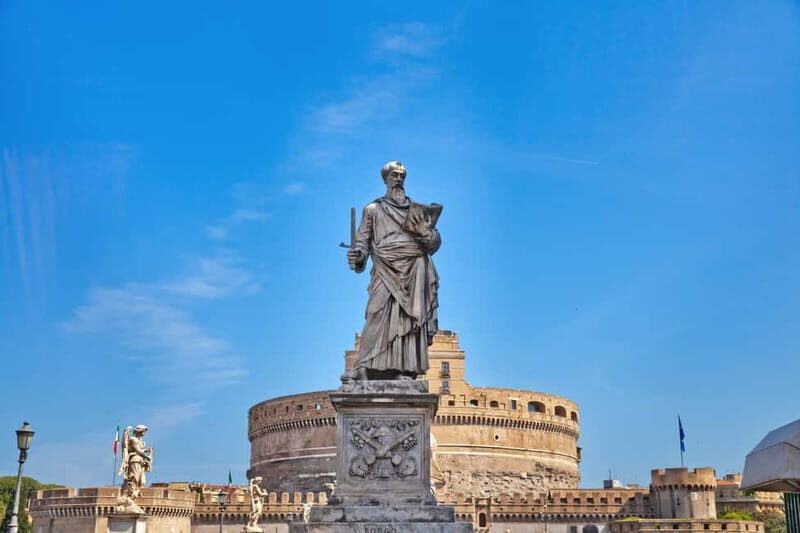
This is the most-booked Castel Sant’Angelo ticket on the market and the option I’d send a friend to first. You get timed entry plus a smartphone audio guide via the POPGuide app, which has eighteen tracks covering every major room. Our full review goes through what the audio actually tells you and which tracks are worth lingering on. The flexibility is the real win. You can re-listen to a track in a different room or skip ahead if a section bores you.
One caveat worth flagging: the castle has a lot of stairs, especially on the climb up to the Angel Terrace. If you’re with someone who can’t manage steep ramps, this isn’t the right tour. There’s no lift to the top.
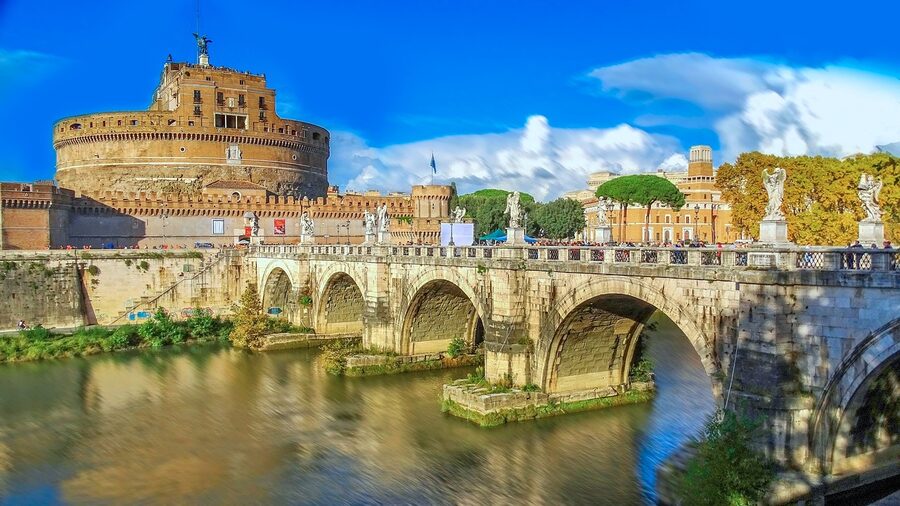
2. Rome: Castel Sant’Angelo Entry Ticket and Audio App ($23)
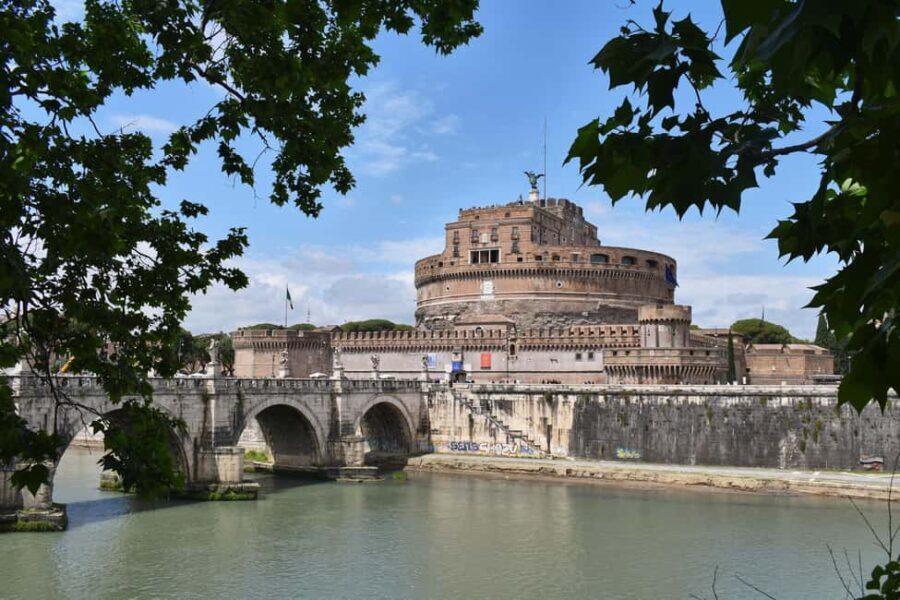
If you’re price-sensitive and don’t need the official audio, this is the option to grab. $23 gets you skip-the-line entry plus an audio app on your phone, with multi-language coverage and a route through the main rooms. Our review compares it directly to the official audioguide. Short version, you lose some narration polish but you save about $11 and you keep all the practical benefits.
Best for first-timers who want a working tour at the lowest price. Bring a charged phone and earphones; this is not a tour you can do on speakerphone without dirty looks.
3. Rome: Castel Sant’Angelo Entry Ticket with Audioguide ($19)
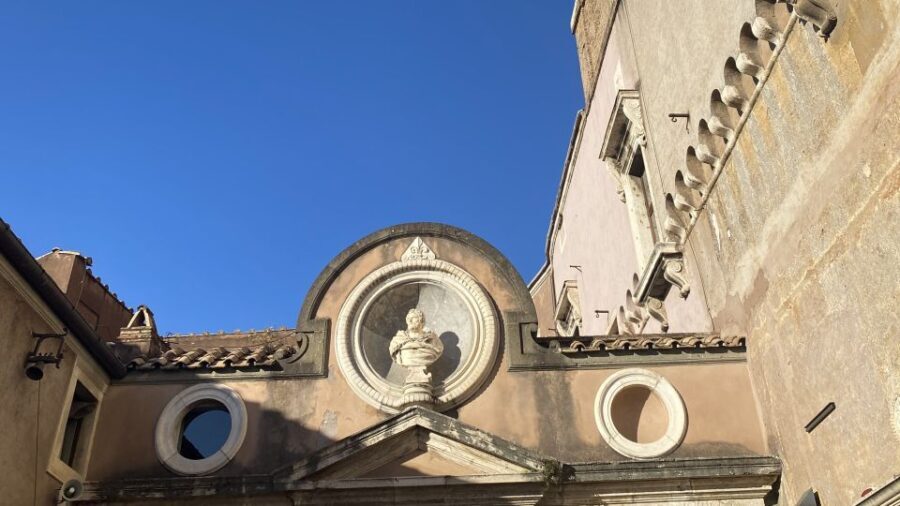
This one gets the best ratings of any Castel Sant’Angelo ticket and it’s the cheapest of the three serious options. $19 for priority entry plus an audioguide in your language. Our review goes through what makes the audio quality stand out. The narration is genuinely good: clear, paced well, and not the usual robotic text-to-speech you get on cheaper tours.
If I were booking this trip from scratch tomorrow, this is what I’d pick. Same flexibility as the $34 option, half a star better in user reviews, fourteen dollars cheaper. The trade-off is a slightly less polished app interface, but for the price difference it’s the right call.
What You’ll Actually See Inside
The interior is laid out across seven levels, starting at the Ambulacrum of Boniface IX (an outer courtyard between the original cylinder and the later defensive walls) and rising up through frescoed papal apartments to the Angel Terrace at the very top.
The path is mostly self-directing. Numbered rooms suggest an order, but you can wander at your own pace, double back, or skip ahead. With the audioguide running, plan on two hours; without it, an hour is enough for the main rooms.
The Helicoidal Ramp and Roman Foundations
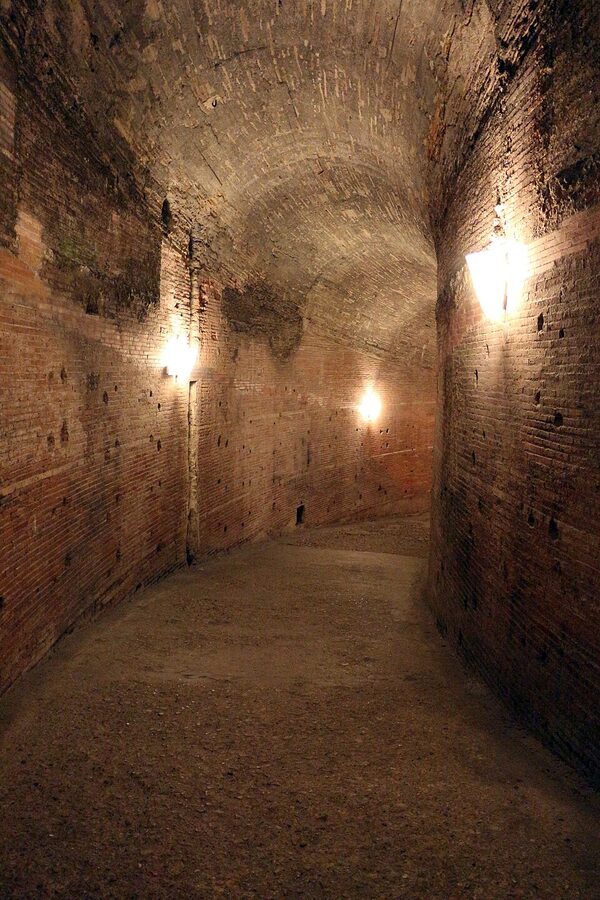
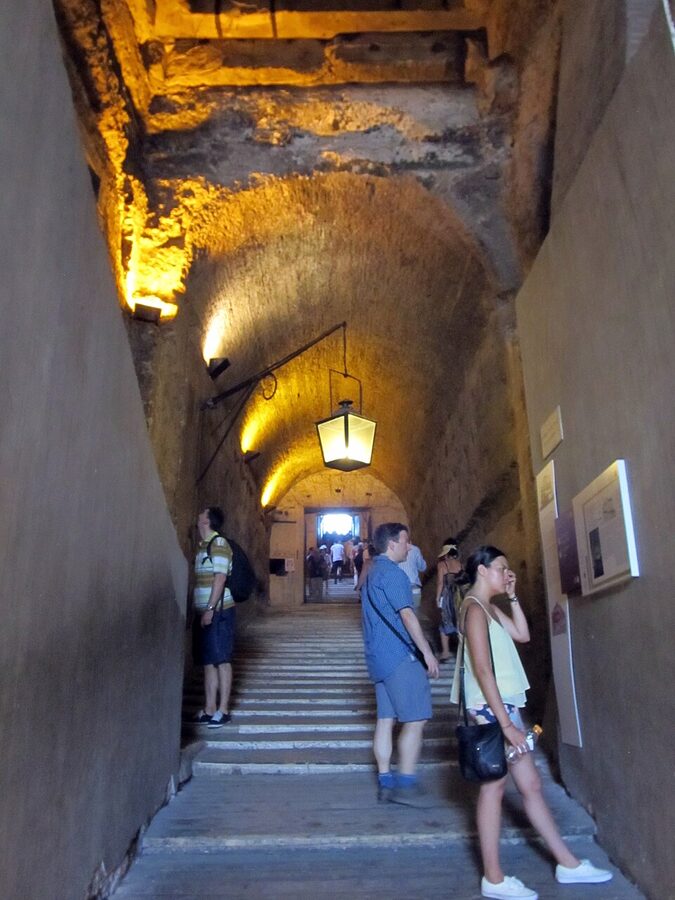
You enter through a corridor that’s been there since 139 AD. This is the original ascending ramp built into Hadrian’s mausoleum, the route his ashes took to the burial chamber at the top. The walls are unfinished travertine and the slope is steep enough that you can feel it in your calves. It’s atmospheric in a way the rest of the castle isn’t.
The ramp empties into the Atrium and the Urn Chamber, where Hadrian’s funerary urn would have sat. The original urn is long gone, sacked, repurposed, or destroyed at some point during the building’s medieval lives, but the chamber survives. Stand here for a minute. You’re inside a 1,900-year-old Roman tomb.
Papal Apartments and the Sala Paolina
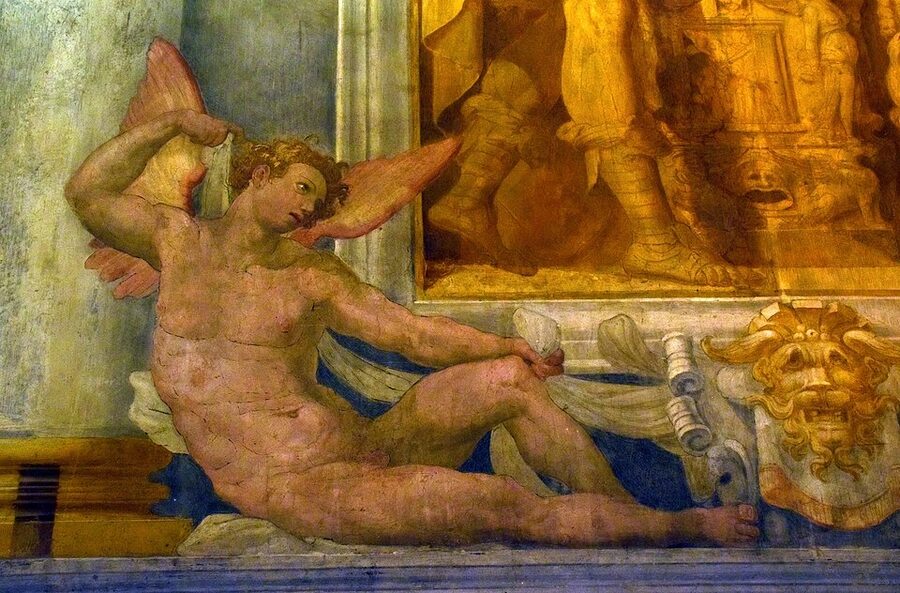
Climb up two more levels and the building changes character entirely. This is where the popes lived when Rome got dangerous, and they decorated accordingly. The Sala Paolina, the main reception room, is covered ceiling to floor with Renaissance frescoes commissioned by Pope Paul III in 1545. Trompe-l’oeil architecture, classical scenes, and grotesque ornamentation in the manner of Raphael’s Vatican loggias.
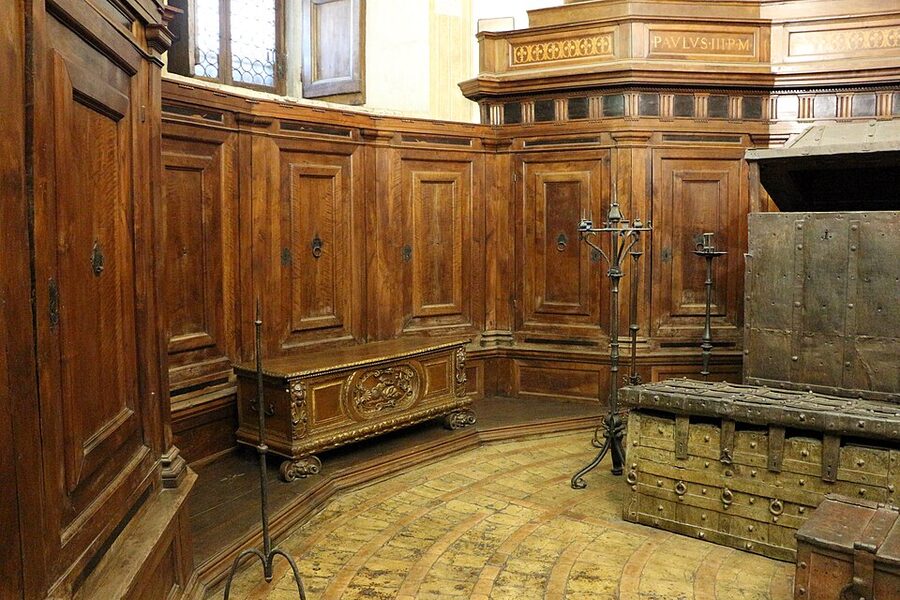
Past the Sala Paolina you get the Library, the Treasury Room (still has the original wooden chests where the papal treasure was kept), and the small chapel. The frescoes are the reason these rooms exist as a museum and not just a fortress curiosity.
The Angel Terrace
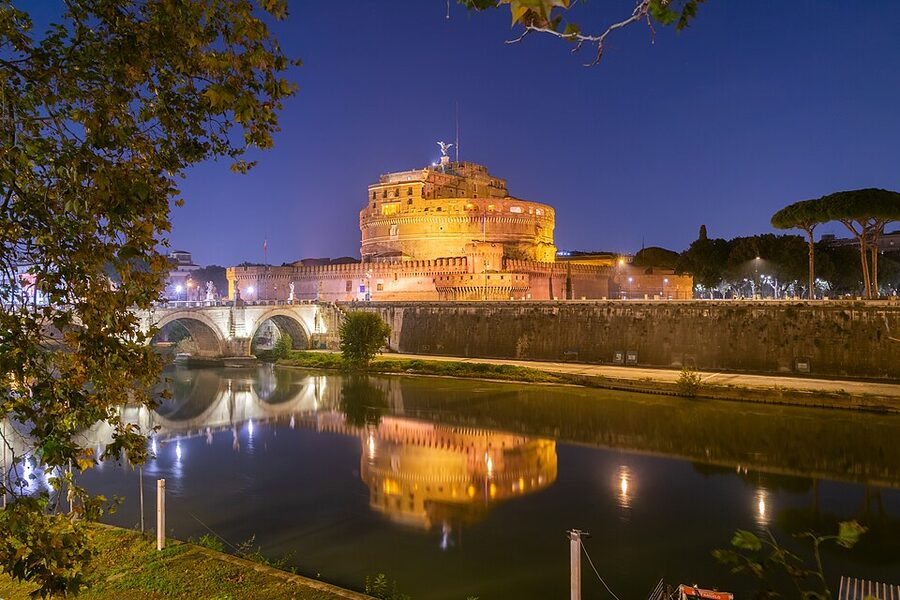
The top is the reason most people come. The Angel Terrace is a flat roof under a bronze statue of the Archangel Michael sheathing his sword, and the view is unobstructed in every direction.
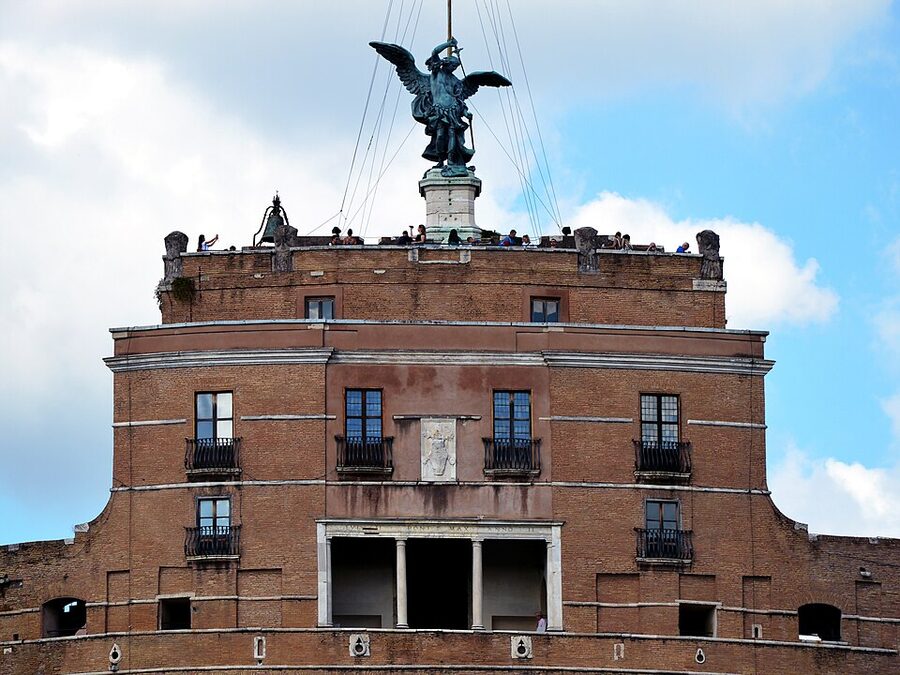
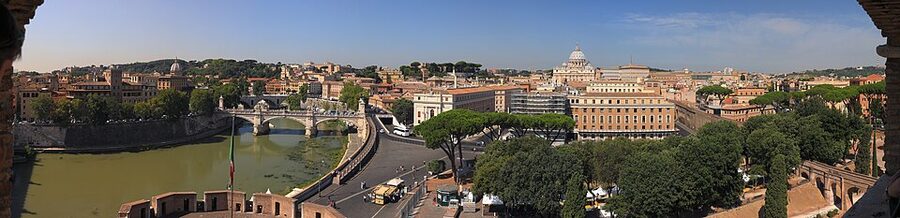
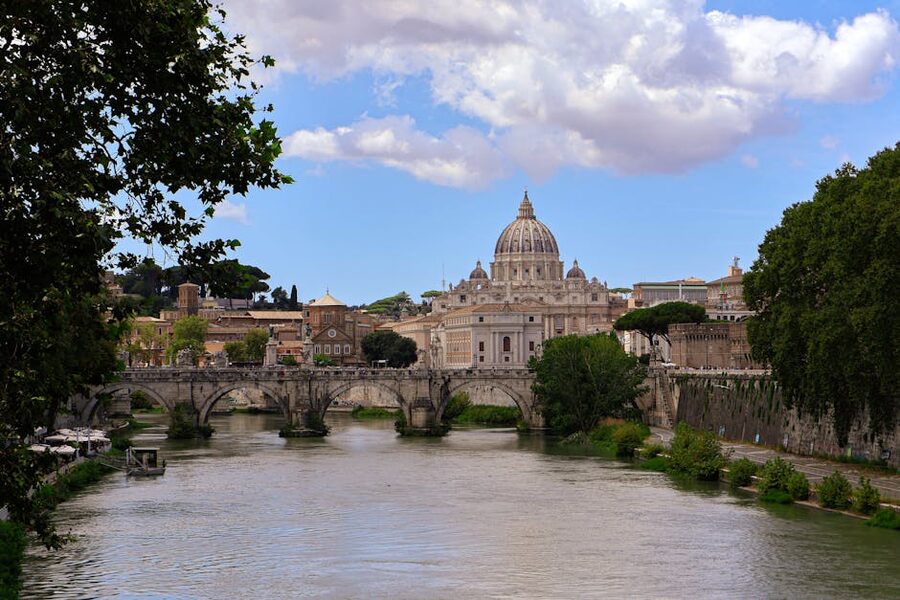
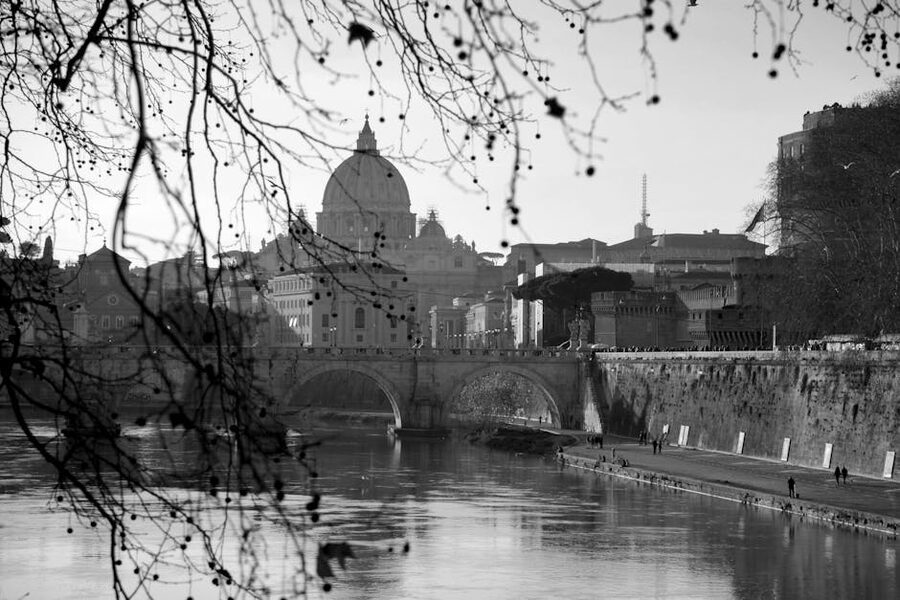
Sunset is what you want. The terrace stays open until 7pm and the last entry is 6pm, so book a 4pm or 5pm slot in summer and you’ll watch the light hit St Peter’s dome from one of the best vantage points in the city. In winter, swap that for a midday slot. The sun goes down behind the Vatican by 4:30pm and you’ll be on the wrong side of the building for it.
The wind on the terrace is real. Even on a hot August afternoon there’s a cross-breeze that catches you off-guard if you’re in a thin shirt. Bring a layer.
Combination Tickets and Whether They’re Worth It
Castel Sant’Angelo is one of the few Rome attractions where combo tickets actually save money. The standard combinations run €35-79 and bundle the castle with a second site that has its own messy ticket system.
The Castel + Pantheon combo runs around $35 and gives you fast-track entry to both. If you were going to do the Pantheon anyway (and most people do), this is genuinely good value because the Pantheon’s standalone fast-track tickets are usually $13-15 on their own.
The Castel + St Peter’s Basilica + Dome combo is the heavy-hitter at $79. Reserved entry to the basilica, a guided dome climb, and timed entry to Castel Sant’Angelo, all in one purchase. If you’re already planning the dome climb, the math works out fine because the dome guided tour alone costs around $50.
The Castel + Borghese Gallery combo is for people who already know they want both. The Borghese Gallery requires reserved entry (there is no walk-up) and the bundled ticket gives you both reservations in a single transaction. Useful, but only if you’ve already decided the Borghese is on your list.
The Castel + Hop-on Hop-off Bus bundle starts around $52. The hop-on bus is the 3-circuit panoramic ticket with audio commentary, plus your skip-the-line castle entry. If you’ve already decided to do the hop-on bus, the combo saves about $5-10 versus buying separately.
What I’d skip: the Roma Tourist Card if you’re only doing two attractions. The card is priced for travelers doing four or more sites, and at €88 it only pays back if you’d otherwise spend €100+ on individual tickets. For a focused 3-day trip, a single combo ticket plus a separate Roma Pass for transit is usually the better split.
Getting There and Practical Stuff
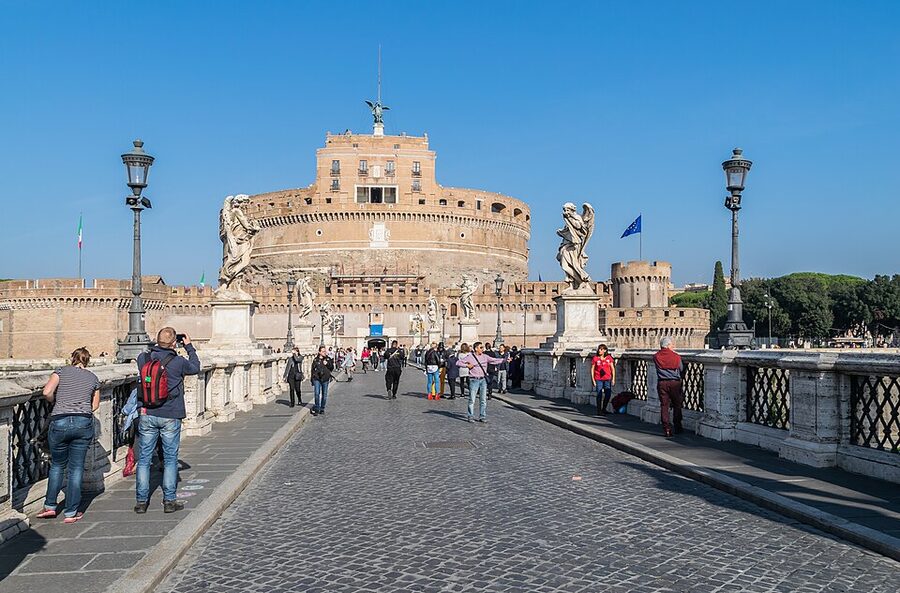
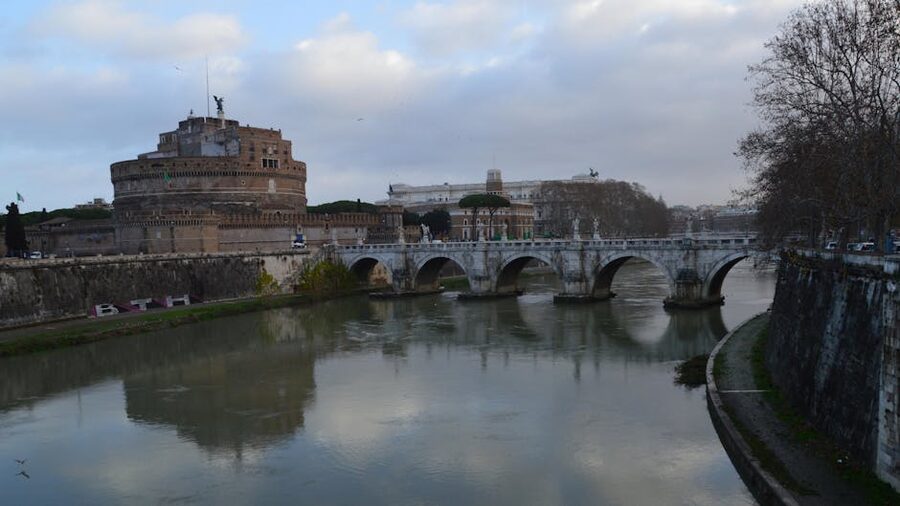
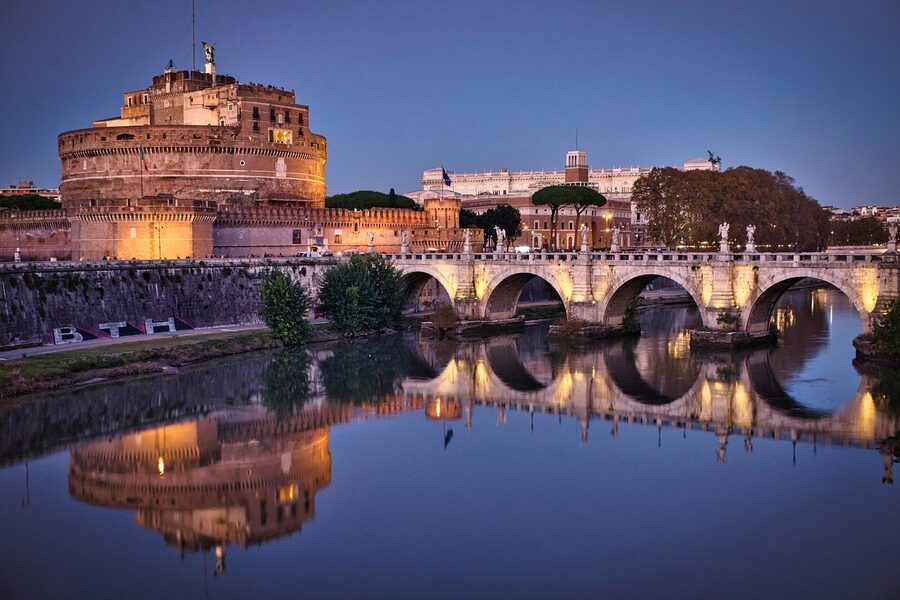
The address is Lungotevere Castello 50, on the right bank of the Tiber. The closest metro is Lepanto on Line A, about 12 minutes’ walk. The closest bus stops are along Lungotevere Vaticano and Piazza Pia. From St Peter’s Square you walk down Via della Conciliazione and you’re at the front gate in 8 minutes. From Piazza Navona you cross Ponte Sant’Angelo and you’re at the front gate in 10.
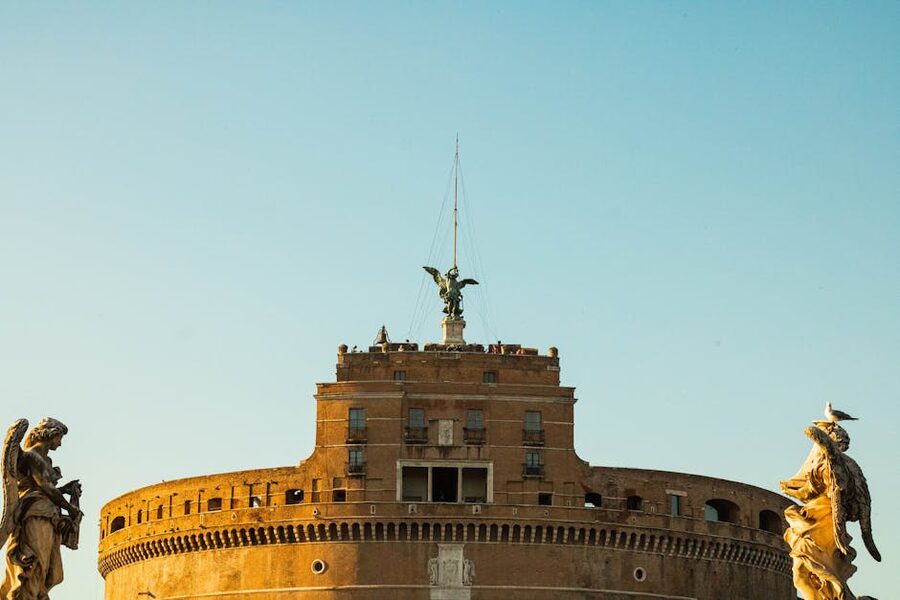
Opening hours are 9am to 7:30pm, every day. Last entry is 6pm. Closed on Mondays, except for the once-a-month free Monday slot, which fills up the second it opens. The best times to visit are first thing at 9am or the last 90 minutes before close. Midday is the worst: peak tourist load, peak heat in summer, peak queue at the voucher exchange.
Photography is allowed everywhere except a few of the smaller frescoed rooms, which have signs. No flash anywhere indoors. Bags larger than a small backpack go through the cloakroom; security is airport-style at the entrance.
If you’re cycling Rome (and people do, despite the traffic), there’s a bike rack at the river-side entrance. The private golf-cart tours drop you here too if you’ve booked one of those.
A Short History (Worth Five Minutes)
Most attractions in Rome have done one job. Castel Sant’Angelo has done about six.
It started as a tomb. Hadrian commissioned it around 123 AD as a mausoleum for himself and his successors, and it was finished in 139 AD, a year after he died. For about a hundred years it housed the ashes of Hadrian, his wife, his adopted son, and the emperors who came after him. The cylindrical core you see from across the river is essentially that original Roman building.
By 401 AD it had been converted into a fortress. The Romans plugged the entrances, raised the walls, and built defensive bastions on the corners. When the Visigoths sacked Rome in 410, the castle was already in fortified use.
The name Sant’Angelo dates from 590 AD. According to the story, Pope Gregory the Great led a procession through Rome during a plague and saw the Archangel Michael sheathing his sword above the castle, a vision interpreted as the plague ending. The current bronze statue dates from 1753, but earlier marble and bronze versions have stood there for almost 1,500 years.
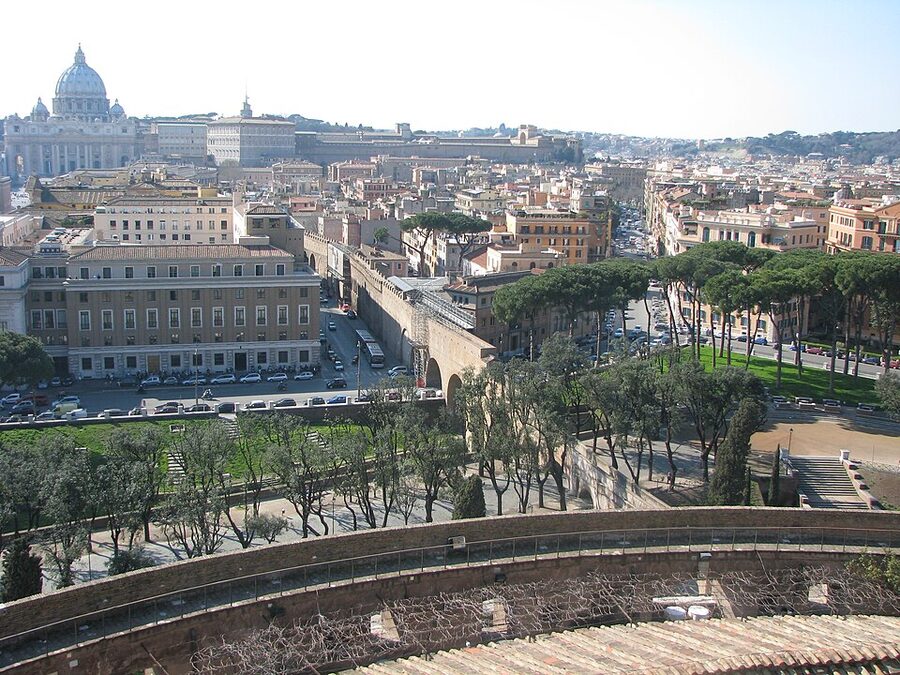
From the 14th century the popes used it as a fortified residence, with a covered escape corridor (the Passetto di Borgo) running directly from the Vatican to the castle. When trouble came, popes ran. Clement VII used the Passetto in 1527 to escape the Sack of Rome. He sat out the siege inside the castle while Charles V’s troops looted the city outside.
It served as a prison from the 14th to the 19th century. Giordano Bruno was held here before his execution in 1600. The astronomer Galileo was questioned within these walls. Cellini, the Renaissance goldsmith, was imprisoned here twice and once escaped by climbing down on knotted bedsheets.
By 1901 it was a museum, which it remains today.
Best Times to Go (and When to Skip)
March to May and late September to early November are the sweet spots. Mild weather, soft light, and the worst of the tour-bus crowds aren’t there yet. Peak season is mid-June through mid-September; expect 30-45 minute waits at the voucher exchange around midday.
Weekday afternoons are your best bet for fewer crowds inside. Saturdays and Sundays draw more local Italian visitors, especially in the morning. School groups arrive in waves on Tuesday and Thursday mornings between 10am and noon. If you can avoid those slots, do.
Skip it entirely if you’ve only got a half-day in Rome and you’ve never seen the Colosseum or the Roman Forum. Castel Sant’Angelo is a great visit but it’s a second-tier landmark by Roman standards. On a 1- or 2-day trip, the Colosseum, Vatican, and Pantheon take priority.
Also skip if your interest is exclusively Roman antiquity. The medieval and Renaissance layers are the bulk of the visit; the Roman parts are mostly the helicoidal ramp and the urn chamber. If you came to Rome for emperors and gladiators, prioritise the Colosseum Underground and the Forum first.
What to Pair It With
The Vatican is the obvious pairing. It’s a 6-minute walk and you can do them in the same half-day. Most people do the Vatican Museums and Sistine Chapel in the morning, lunch in Borgo Pio, then walk over to Castel Sant’Angelo for an afternoon slot. St Peter’s Basilica goes between them if you’re doing all three.
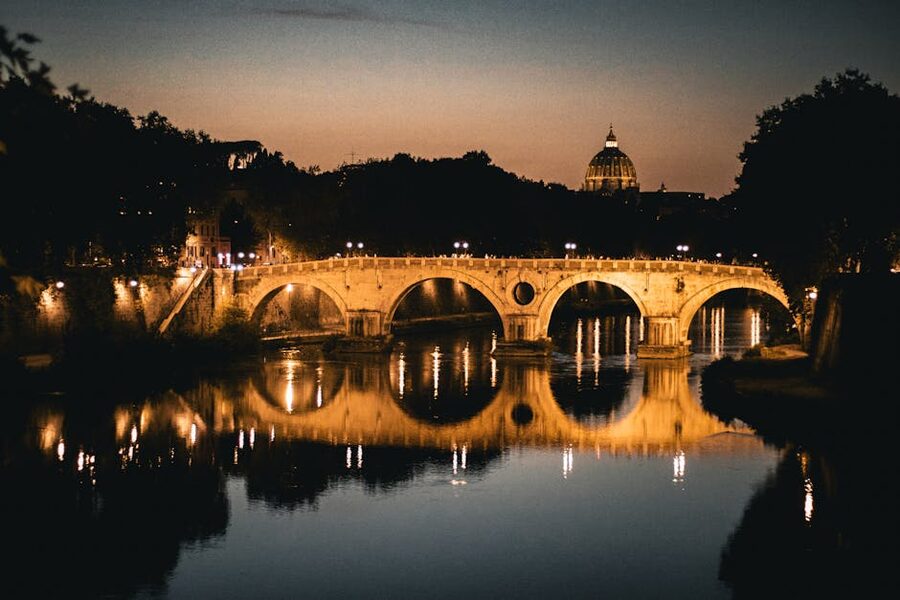
The Pantheon and Trastevere are both about 20-25 minutes’ walk away. If you’re heading into Trastevere afterward for dinner, walk: cross back over Ponte Sant’Angelo, head south through Piazza Navona, and cross to Trastevere over Ponte Sisto. That’s a 25-minute walk through some of the prettiest blocks in Rome. Plenty of restaurants, and worth picking up a twilight food tour to do the eating with a guide.
If you’re booking a cooking class, the pasta and tiramisu class by the Vatican is 7 minutes’ walk from the castle. Late afternoon castle visit, evening cooking class, dinner you made yourself. A solid full-day plan.
Common Booking Mistakes
The wrong queue is the big one. If you’ve pre-booked online, do not stand in the cash window line. Walk to the voucher exchange (it’s signposted but small), swap your QR code, and head to the entry gate.
The other one is the cancellation window. Most GetYourGuide tickets allow free cancellation up to 24 hours before. The official CoopCulture tickets do not. If your plans are still loose, book the GetYourGuide option. The price difference is worth the flexibility.
People also assume “skip the line” means walking directly to the front of the entry gate. It doesn’t. It means skipping the cash kiosk queue. The actual entry gate has a security check that everybody goes through. There’s no way to skip that, and it adds 5-10 minutes during peak hours.
Last one: people miss the free Monday. The first Sunday of each month is free for everyone (no booking required), but spots are limited and queues are massive. If you’re flexible and patient, it’s free. Otherwise, book a paid slot.
What Else to Read Before You Go
If this is one stop on a larger Rome itinerary, the Pantheon and the Vatican are the two attractions you’ll book around the same time, and both have ticket systems that need their own approach, so read our guide to the Pantheon and the longer one on the Vatican Museums and Sistine Chapel before you set the rest of your dates. The Colosseum and Roman Forum guide covers the third leg of the classic Rome triangle, and if you’re doing the dome climb at St Peter’s, the timing of those two slots is the puzzle most people get wrong.