El Nido has four official island-hopping tours, and they’re labelled A, B, C and D. Each one visits a different set of islands, each has its own character, and there is absolutely no overlap between them. Tour A is the one almost everyone books first — it’s the lagoons tour, and the lagoons are what you came for.
If you only do one island-hopping day in El Nido, this is the one. If you do more than one, start here anyway.
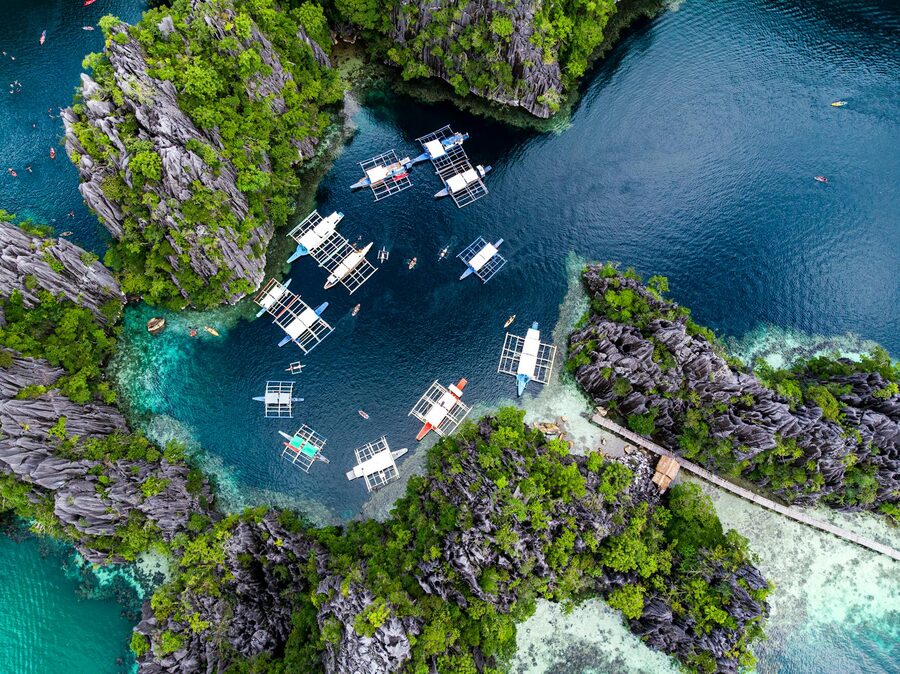
Tour A runs around the northern half of Bacuit Bay and stops at Big Lagoon, Small Lagoon, Secret Lagoon, Shimizu Island and 7 Commandos Beach. It’s the most popular of the four tours by a wide margin — local operators told me something like 70% of El Nido visitors pick Tour A first, which is why the lagoons get busy around 10am and thin out again after 2pm.
I’ve booked Tour A twice now, through two different operators, and I’ve picked up enough to save you a few mistakes. Here’s everything I’d tell a friend flying into Puerto Princesa tomorrow.
Short on time? Here are my top 3 picks:
Best overall: El Nido Island Hopping Tour A — Lagoons and Beaches — $23. The classic A route with lunch included, run by the biggest operator in town.
Best alternative (less crowded): El Nido Tour B — Cudognong Cave — $25. Fewer boats, Snake Island sandbar, a sea cave you can swim through.
Best for smaller crowds: El Nido Tour C — Hidden Beaches & Shrine — $29. Matinloc Shrine, Hidden Beach, Helicopter Island — further out, much quieter.
- What Tour A Actually Covers
- How Booking Actually Works
- Shared vs Private vs Joiner — What the Pricing Levels Actually Mean
- The Best El Nido Tour A Options to Book
- 1. El Nido Island Hopping Tour A — Lagoons and Beaches —
- 2. El Nido Tour B — Cudognong Cave & Snake Island —
- 3. El Nido Tour C — Hidden Beaches & Shrine —
- When to Go — Seasons and Timing
- How to Get to El Nido in the First Place
- What to Bring on the Boat
- The Big Lagoon Kayak Decision
- Tips That Will Save You Real Time
- What You’ll Actually See Inside the Lagoons
- What Tour A Won’t Show You
- Planning the Rest of Your Southeast Asia Trip
- One Last Thing
What Tour A Actually Covers
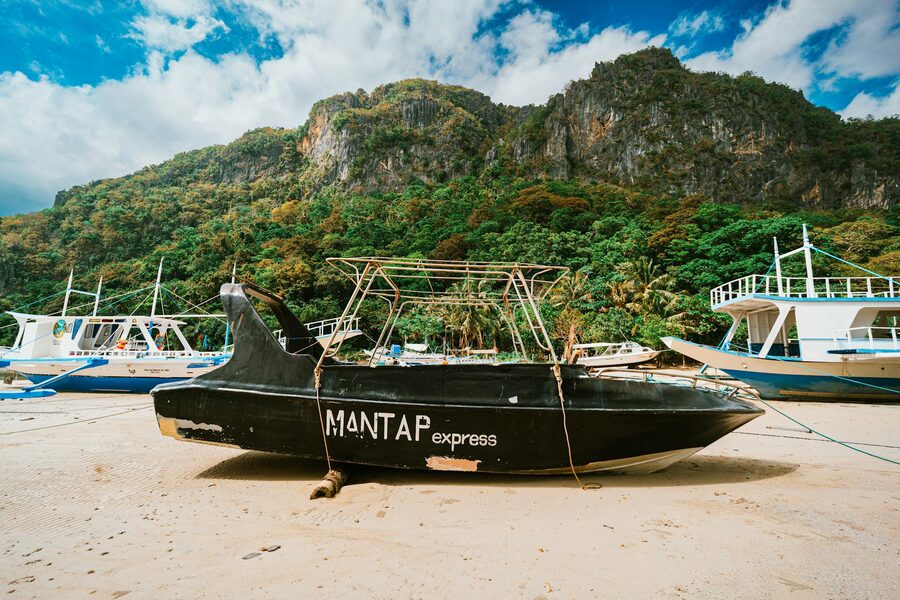
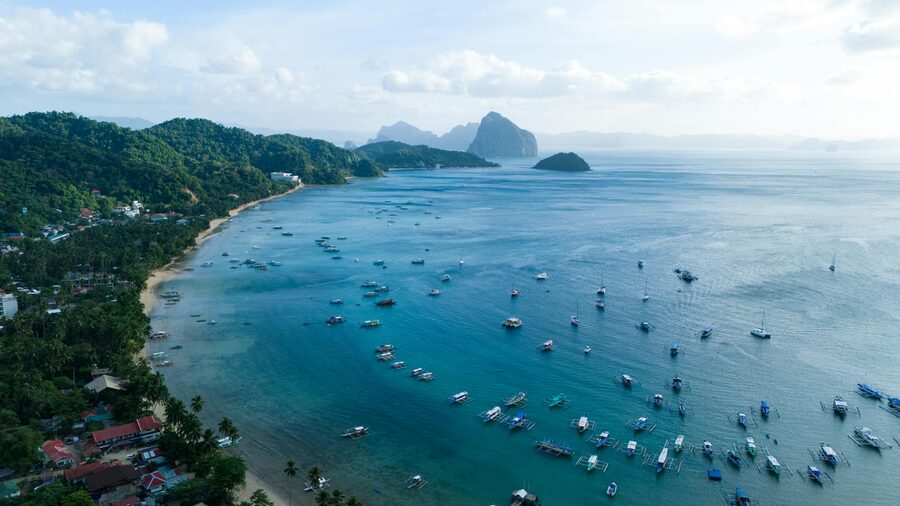
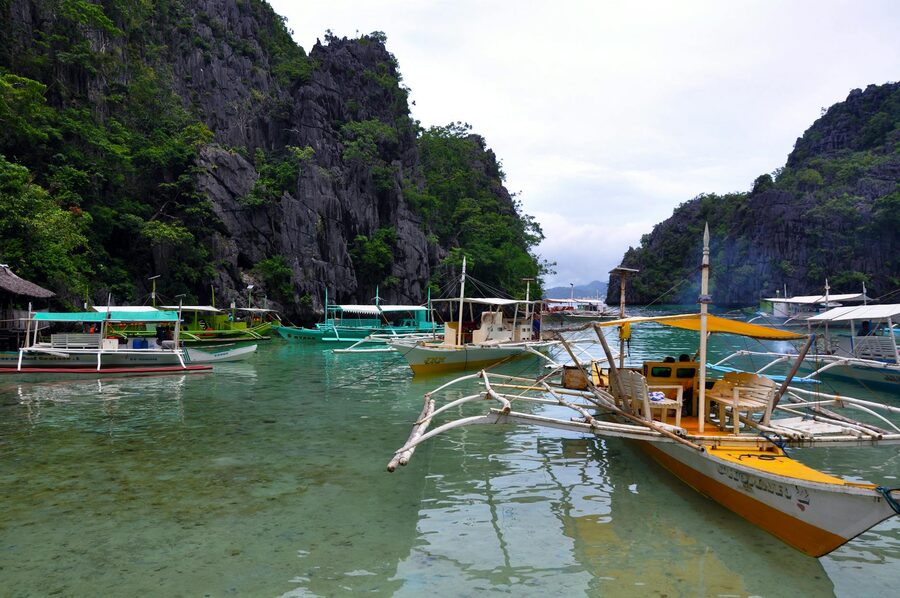
Tour A sticks to the inner ring of Bacuit Bay, the cluster of islands closest to El Nido town. The boats are traditional Filipino bancas — wooden outriggers with a long bamboo frame, no sails, one big diesel engine. They fit anywhere from 15 to 25 people depending on the operator, and they’re the only way to move around the bay. Speedboats don’t exist here. Neither do catamarans. If you wanted luxury, you booked the wrong place.
The five stops on a standard Tour A are:
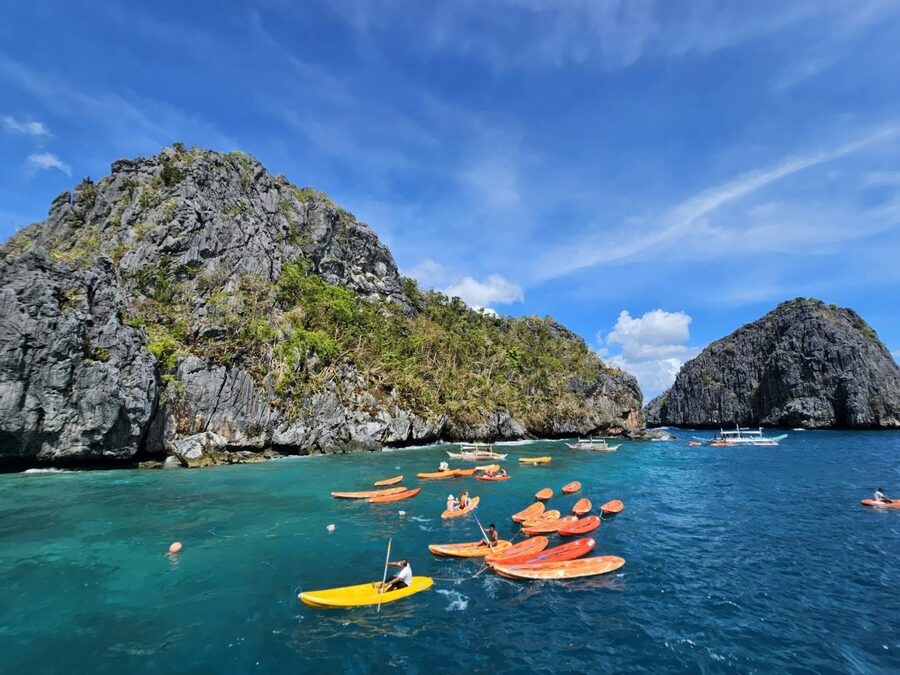
- Big Lagoon — A 45-minute kayak session through a cathedral of limestone walls. This is the signature photo.
- Small Lagoon — Accessed through a narrow entrance only kayaks fit through. Smaller, quieter, weirder.
- Secret Lagoon — You swim through a crack in the rock into a tiny hidden pool. About 15 minutes, more novelty than substance.
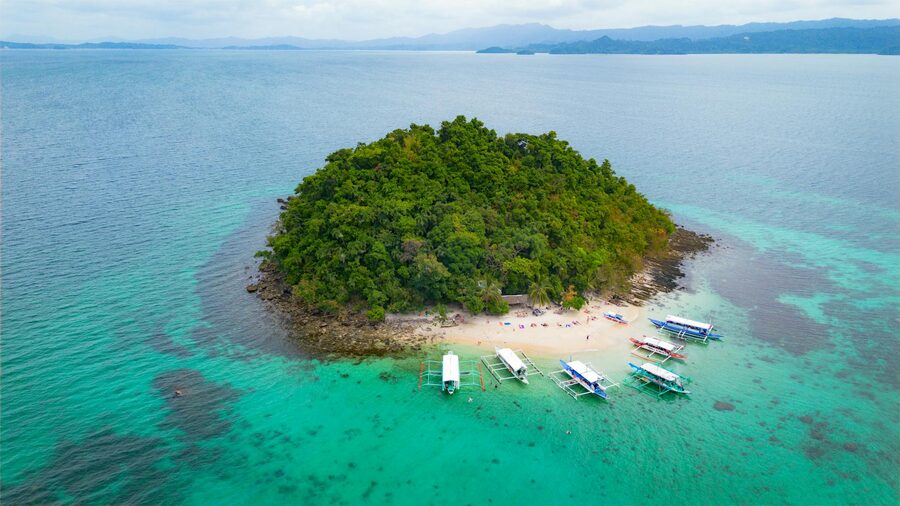
- Shimizu Island — Lunch stop. The crew grills fresh fish, pork and chicken on the beach while you snorkel.
- 7 Commandos Beach — The final stop, a wide sandy beach with a beach bar and coconut trees. You get about 45 minutes here before sunset sends you home.
Total day is about 8 hours door to door — pickup around 8:30am, back at the pier around 4:30pm. Lunch, a packet of water and usually a snorkel mask are included. Kayak rental at Big Lagoon is extra (300 pesos, about $5, cash only).
How Booking Actually Works
There is no central ticket office for the official A/B/C/D tours. Every dive shop, hostel, hotel and travel agent in El Nido town sells them, and they all sub-contract to the same handful of licensed boat operators. The prices are fixed by the Tourism Office at around 1,400-1,500 pesos (roughly $25-27) for the shared tour with lunch, which is the rate you’ll see chalked on boards all along the main street.
Three ways to book:
1. Walk in the day before. This is how locals expect you to do it. Stroll into town the afternoon before your boat day, check a few shops for price (they’re all identical — the price is fixed), pay cash, get a paper ticket, show up at the beach at 8am. This works 80% of the time. It does NOT work in peak season (December-February) when tours book out two or three days ahead.
2. Book online through GetYourGuide or Viator. Slightly more expensive (around $23-29) but you get instant confirmation, English-speaking customer service, and free cancellation up to 24 hours before. This is what I do. I’d rather pay $2 extra and know the boat is confirmed than walk around town looking for a shop with availability after a long travel day.
3. Book through your hotel. Fine in a pinch but usually the most expensive option. Hotels mark up the base rate.
One detail most guides miss: there’s a separate environmental fee of 400 pesos (about $7) you have to pay in cash at the Tourism Office before you can board any boat. It’s valid for 10 days and covers all four tours. The first time I booked, the operator forgot to mention it, and I had to sprint to the Tourism Office at 7:45am before our 8am departure. Pay it the day before if you can.
Shared vs Private vs Joiner — What the Pricing Levels Actually Mean
You’ll see three words over and over on tour boards: shared, joiner, and private. They mean different things.
Shared tour (also called Joiner): You join a boat with 15-25 other people. The tour follows the fixed A route. Price: around $23-27 with lunch. This is what 95% of travellers book. It’s what I recommend.
Private tour: You rent the whole boat. Same A route, but no strangers. Price jumps to $160-300 per boat (not per person), so it’s only worth it for a group of 4+ splitting the cost. You can also slightly tweak the order of stops with a private boat, which helps if you want to hit Big Lagoon before the 10am crowd.
Joiner: Confusingly, this is sometimes used as a synonym for shared, and sometimes to mean “you join a boat that’s already half-full.” In practice, treat it as shared.
The price fork here matters: if you’re solo or a couple, the shared tour is the only sensible option. If you’re a group of 4-5, do the math — private for $250 split four ways is $62 a head, nearly triple the shared rate. Only worth it if you hate strangers or want a specific non-standard route.
The Best El Nido Tour A Options to Book
Here are the three tours I’d actually book, in order. All three come from operators I’ve either used myself or watched run their boats in person from the main beach. I’ve tried to pick variety across the three Tour A-style routes so you can compare — the first is the straight Tour A shared boat, the second is Tour B (good alternative if Tour A is booked out or you want fewer crowds), and the third is Tour C if you’re doing two days in El Nido and want the further-out route.
1. El Nido Island Hopping Tour A — Lagoons and Beaches — $23
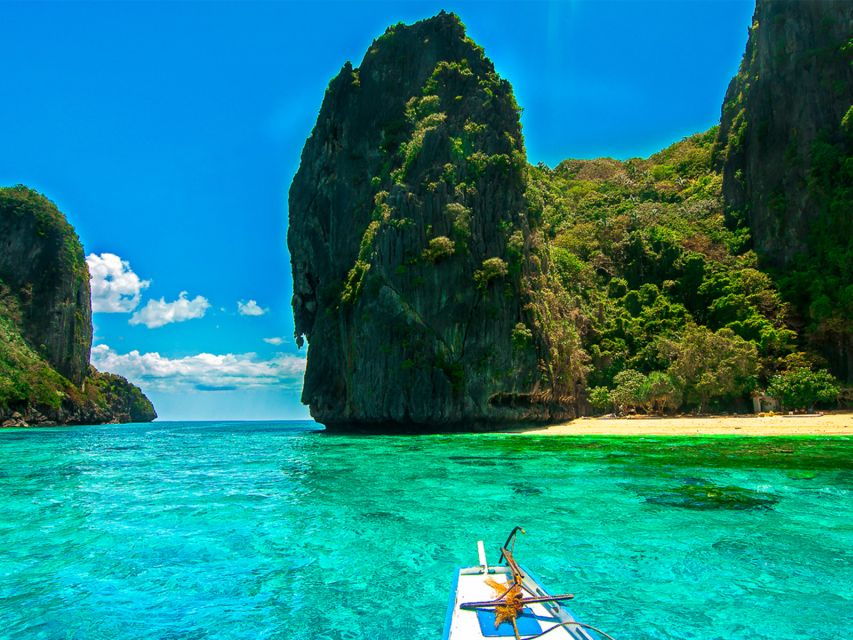
This is the Tour A we recommend first, and it’s the one I’d book on a first trip to El Nido. The route covers the five classic stops — Big Lagoon, Small Lagoon, Secret Lagoon, Shimizu Island and 7 Commandos Beach — on a shared banca with lunch cooked fresh on the beach at the lunch stop.
What makes this one stand out in a sea of identical Tour A operators is the quality of the buffet lunch. Most Tour A tours include lunch in the price, but the quality varies wildly. This one consistently serves grilled fish, pork, chicken, vegetables, rice and fresh fruit — enough that solo travellers have written to me saying it was the best meal they had in the Philippines. At $23 including lunch, snorkel gear and the boat, it’s also the cheapest of the three I’d recommend.
The only real downside is the group size — expect 15-22 people on your boat, which is normal for a shared Tour A but means Big Lagoon gets cramped when multiple boats arrive at once. Book for a Tuesday or Wednesday if you can — weekends add day-tripping locals from Puerto Princesa.
2. El Nido Tour B — Cudognong Cave & Snake Island — $25
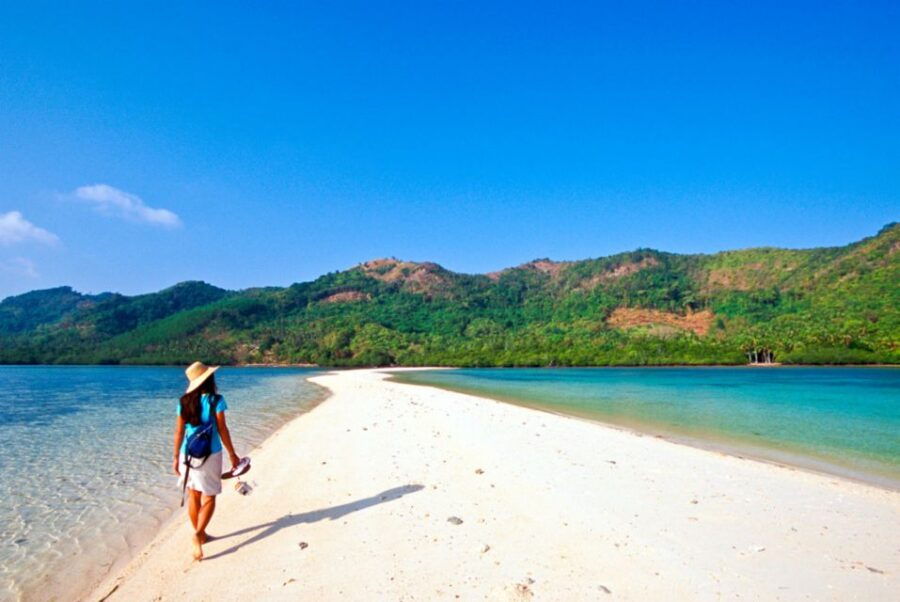
If Tour A is sold out, or if you’re spending more than one day in El Nido and want something different, Tour B is the one to book next. It covers Snake Island (a 200m sandbar that connects two islands at low tide, and disappears completely at high tide), Cudognong Cave (a sea cave you can swim right through), Pinagbuyutan Island and Entalula Beach.
I like Tour B specifically because it has far fewer boats. Where Tour A can feel like a traffic jam at Big Lagoon, Tour B’s Snake Island is usually a handful of boats and a couple of dozen people at most. The sea cave at Cudognong is the best single moment of any El Nido tour for me — you swim through a dark tunnel, turn a corner, and come out in a hidden cove with light streaming down from a hole in the ceiling.
At $25 with lunch, it’s only $2 more than Tour A but attracts maybe a third of the crowds. The catch is there’s less drama — no lagoons, no kayaking photo-ops. If you want Instagram shots, do A. If you want the day with fewer people, do B.
3. El Nido Tour C — Hidden Beaches & Shrine — $29
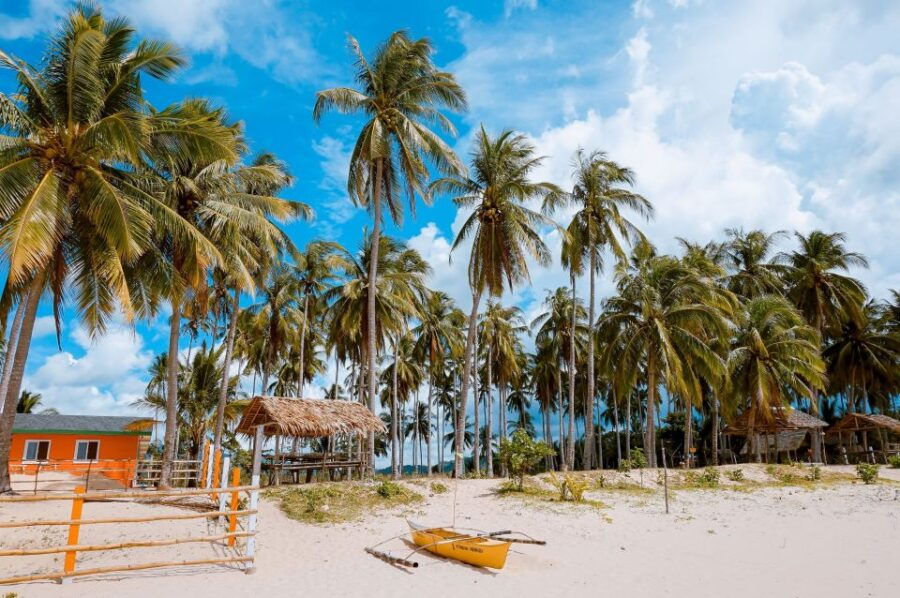
If you’re in El Nido for 3 or more days, do Tour A first and then Tour C on day two. This is the “hidden beaches” tour and it runs the longest route of the four — about an hour each way to reach Matinloc Shrine, which is the furthest point. Stops include Matinloc Shrine, Hidden Beach, Secret Beach, Helicopter Island and Talisay Beach.
What makes Tour C worth the higher price is the scenery once you’re out there. Helicopter Island is a near-perfect sloping rock formation that looks exactly like its name. Hidden Beach is a small cove you can only reach by swimming through a gap in the cliff wall. Secret Beach is even more hidden — walled in on three sides by karst. It’s the tour that feels the most like a proper expedition.
At $29 with lunch, it’s the most expensive of the three by a small margin, but it includes the environmental fee for the shrine and more fuel for the longer route. Don’t book Tour C on a rough weather day — the open crossing to Matinloc is the one stretch of El Nido water that gets genuinely choppy.
When to Go — Seasons and Timing
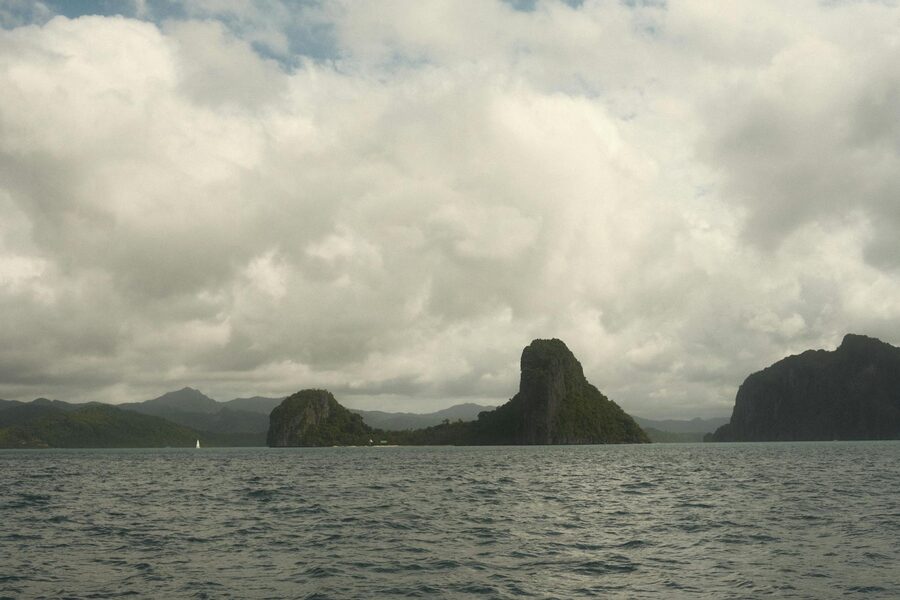
The Philippines has two seasons and El Nido follows them closely. Dry season runs late November through May, with the absolute peak being December to February — these are the months of blue skies, calm water and near-guaranteed tours. They’re also the months when tours book out days in advance, prices creep up, and Big Lagoon can feel like a boat parking lot.
Wet season runs June through October. This doesn’t mean it rains all day — it means afternoon thunderstorms rolling in around 3pm most days, humid mornings, and the occasional typhoon. Tours still run unless the coast guard closes the bay. In fact, my favourite El Nido morning was a glassy-calm wet-season day in August where we had Big Lagoon almost to ourselves because half the other boats had cancelled that morning in anticipation of afternoon rain that never came.
The sweet spot: early December and late May. Weather is dry or nearly so, but crowds haven’t ramped up (early Dec) or have thinned out (late May). If I were booking a trip right now, I’d pick the last week of November or the first week of December.
For time of day: aim for the earliest Big Lagoon arrival possible. Most shared tours reach Big Lagoon around 9-10am, which is when it peaks. If you can get a boat that leaves at 7:30am (some private tours do this), you can have the lagoon almost empty for 30-40 minutes before the first shared boats arrive.
How to Get to El Nido in the First Place
El Nido sits at the northern tip of Palawan island, and getting there is the hardest part of the whole trip. There’s no direct international flight. Your options are:
1. Fly into Puerto Princesa (PPS), then drive/bus 5-6 hours north. This is how most budget travellers do it. Flights from Manila or Cebu to Puerto Princesa are cheap (often under $30 one way on Cebu Pacific or Philippine Airlines). From Puerto Princesa airport, you can take a van service (Fort Wally or Daytripper, about $15, 5-6 hours, air-conditioned) or a bus (Roro, slower, $8). Book the van in advance in peak season.
2. Fly direct into El Nido (ENI). AirSWIFT runs small turboprops from Manila and Cebu direct to El Nido’s Lio Airport, which is 15 minutes from town. The flights are much more expensive ($150-250 one way) but save you an entire day of driving. Worth it if you have limited time.
3. Ferry from Coron. If you’re combining El Nido with Coron (and you should — it’s the other half of the Bacuit experience), there’s a daily fast ferry that takes about 4 hours. Cost is around $35 one way. Montenegro Shipping and Jomalia both run it. Book a day ahead in peak season.
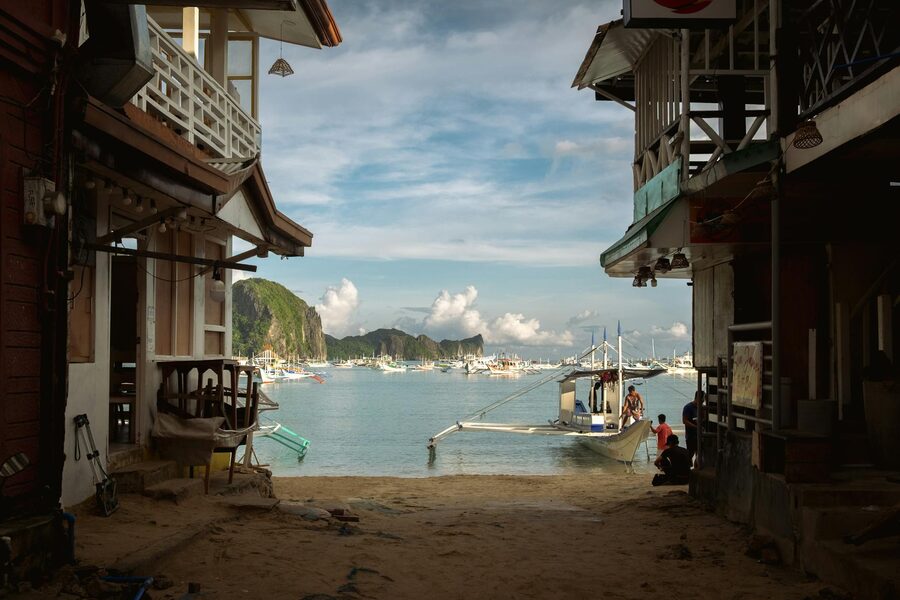
From the main El Nido town, every boat tour leaves from the same long beach at the south end of town. Walking distance from most guesthouses. The boats don’t have docks — they just beach themselves on the sand and you walk out in knee-deep water to board.
What to Bring on the Boat
A shortlist from someone who’s done this twice:
- Cash in small bills — for kayak rental (300 pesos) and the environmental fee if you haven’t paid it yet (400 pesos).
- Dry bag — the boat gets wet. Your phone will too if you don’t protect it. Cheap ones sell for 150 pesos in town.
- Reef-safe sunscreen — required by the marine protected area rules, and the rangers do check at Big Lagoon. Regular sunscreen gets confiscated.
- Rash guard or long-sleeve UV shirt — the equator sun on open water will cook you. Reapply sunscreen on your face and ears every 90 minutes regardless.
- Water shoes or old sneakers — some of the beach landings have sharp rocks. Flip-flops work but they float away.
- GoPro or waterproof phone case — the best shots are in the water, not from the boat.
- Your own snorkel mask — the included ones are fine but often small. Bringing your own is more comfortable if you have the space.
- Refillable water bottle — the boat provides one small bottle per person, which is not enough for a full day.
What NOT to bring: single-use plastics (they’re technically banned in Bacuit Bay), expensive cameras with no waterproofing, or anything you can’t afford to drop overboard.
The Big Lagoon Kayak Decision
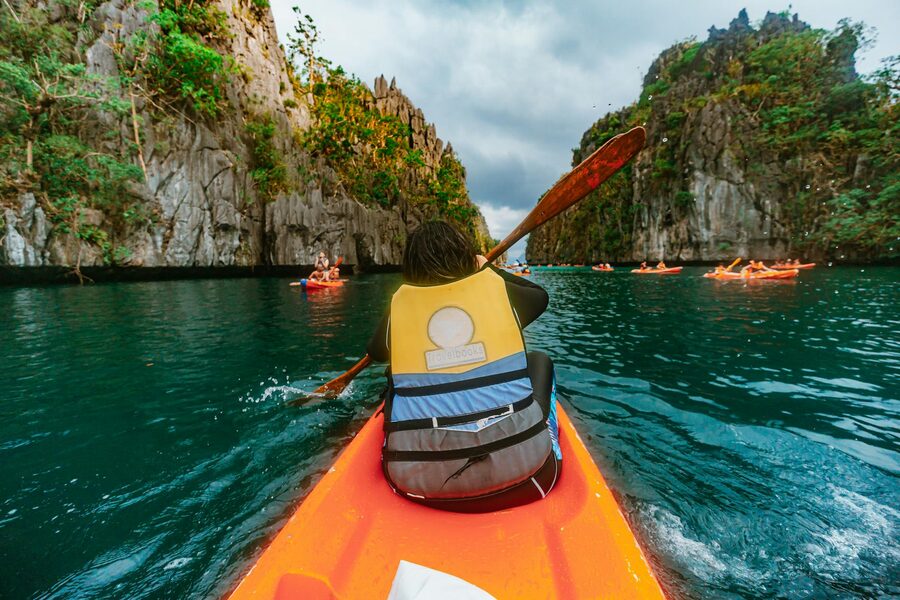
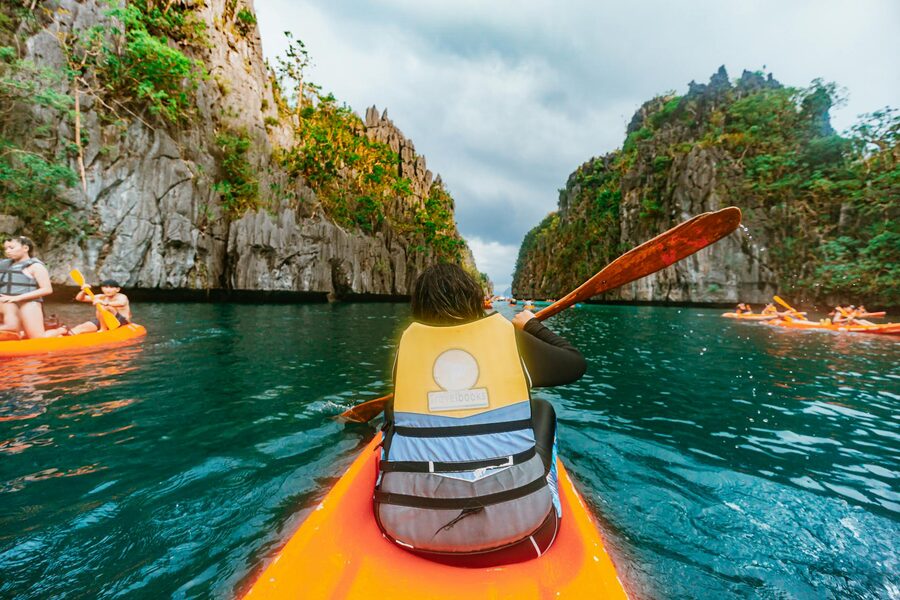
This is the one choice that trips up first-timers. When you arrive at Big Lagoon, you have two options: kayak into the lagoon (extra 300 pesos) or swim in (free). Almost everyone who swims ends up regretting it.
Here’s why: Big Lagoon is big. It’s about 800 metres long, with the best scenery at the very back. You can swim in, but you won’t reach the back before your boat’s departure window ends (tours give you about 45 minutes here). Most swimmers only make it about a third of the way. The kayak is fast enough to let you reach the back, take photos, and paddle out with time to spare.
Rent the kayak. It’s $5. Don’t try to save it.
Small Lagoon is different — you have to kayak in, because the entrance is a narrow slot in the rock that only a kayak fits through. Same 300 peso rental. Most operators let you use the same kayak across both lagoons if you’re efficient.
Tips That Will Save You Real Time
Lessons from doing this twice and watching first-timers make the same mistakes both times:
- Book Tour A for your FIRST day in El Nido, not your last. If the weather cancels your tour, you want buffer days to rebook. Booking on your last day is how you fly out without seeing Big Lagoon at all.
- Pay the 400-peso environmental fee the day before at the Tourism Office in the main square. Otherwise you’re running across town at 7:45am while your boat waits.
- Skip the flimsy snorkel mask the operator gives you and bring your own if you have one. The cheap ones leak.
- Get in the water at Shimizu Island immediately — the crew takes about 45 minutes to prep lunch, and the best snorkelling spot is 20 metres off the beach. Most people sit on the sand and scroll their phones. Swim.
- Tip the crew at the end. 100-150 pesos per person (around $2-3) is standard and very much appreciated. The boat crew do heavy physical work in the sun for a whole day.
- Don’t skip 7 Commandos Beach just because your legs are tired. It’s the most relaxing stop of the day and has the best sunset light.
- If Big Lagoon is crowded when you arrive, ask the crew to do the stops in reverse order. Some boats can accommodate this; most can’t, but it never hurts to ask.
What You’ll Actually See Inside the Lagoons
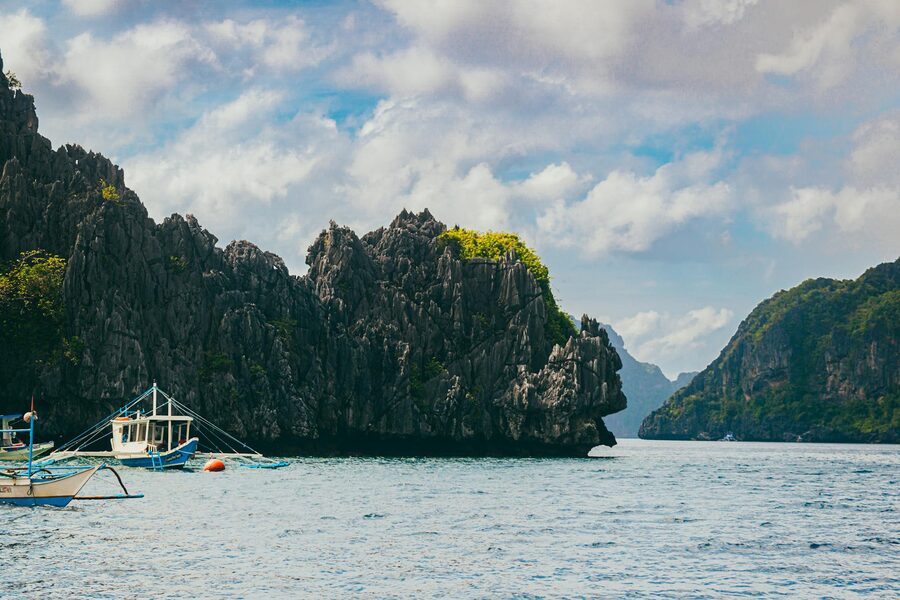
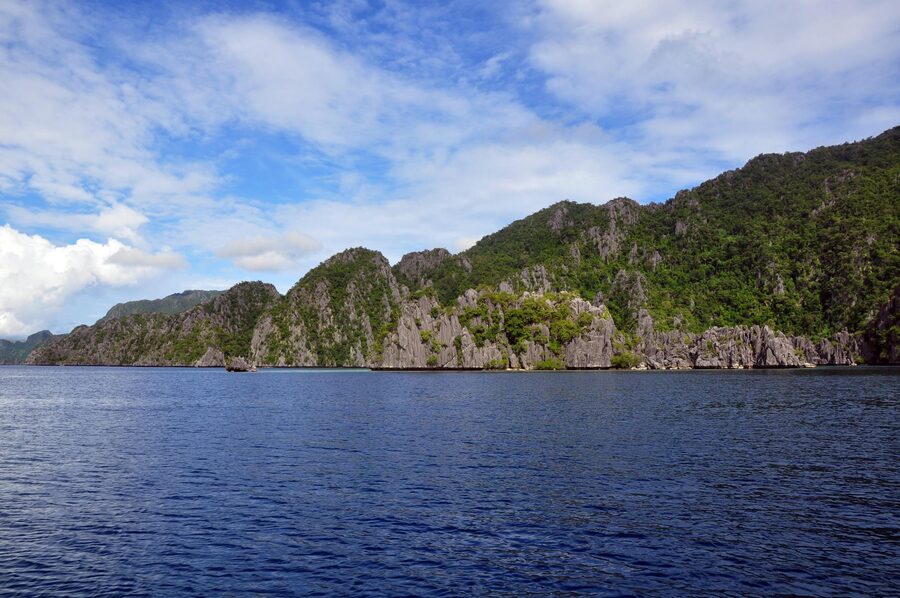
The geology here is the same karst limestone that you see in Ha Long Bay in Vietnam, Krabi in Thailand, Phang Nga Bay in Phuket, and Raja Ampat in Indonesia. It’s 250-million-year-old marine sediment that was lifted up out of the sea by tectonic movement, eroded by rain into sharp pinnacles, and then partly drowned again when sea levels rose. The “lagoons” are what’s left when a cave ceiling collapses and seawater floods the inside.
Big Lagoon is about 800 metres long and up to 40 metres deep in places. The water colour comes from a combination of fine white sand on the bottom and limestone particles in suspension — pure sediment, no algae. It’s at its brightest between 10am and 2pm when the sun is directly overhead.
The wildlife you’re most likely to see:
- Parrotfish — bright green and blue, everywhere in the shallows around Shimizu Island.
- Clownfish — in the anemone clusters at 7 Commandos Beach, a couple of metres offshore.
- Sea turtles — possible but not guaranteed. I’ve seen them twice in five Tour A/B/C days. Your crew will point them out if they spot one.
- Monitor lizards — the local monitors live on Shimizu Island and will sometimes come down to the lunch area looking for scraps. Harmless, but don’t try to feed them.
There’s no coral bleaching or destruction here the way there is in parts of the rest of the Philippines. The Bacuit Bay marine protected area was one of the first in the country and the rangers enforce the rules seriously.
What Tour A Won’t Show You
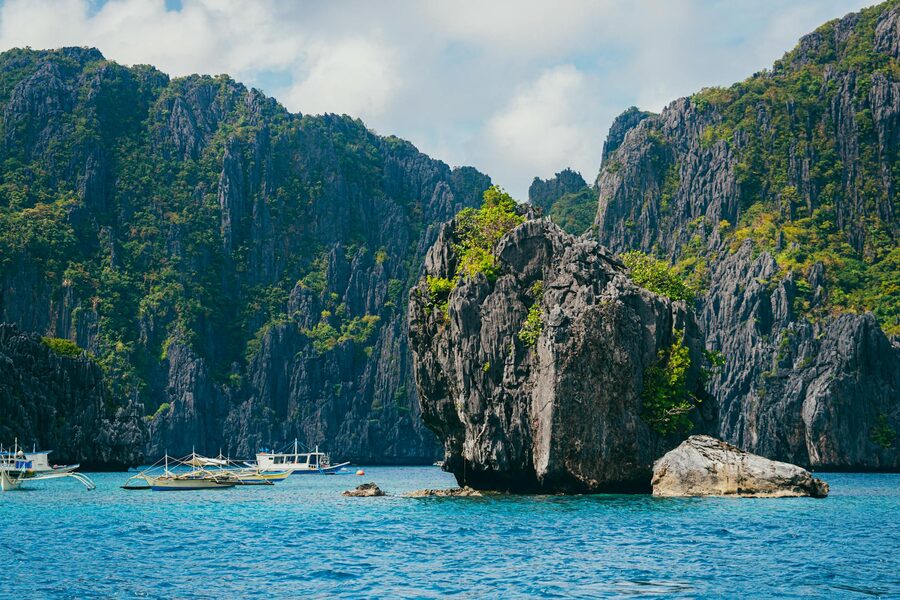
Worth being honest: Tour A is the most photographed of the four tours, but it’s not the most adventurous. You’ll be on a boat with 15-25 other people. You’ll queue to kayak into Big Lagoon. You’ll eat the same buffet lunch as everyone else at the same beach. It’s a beautiful, fun, very structured day — not a private expedition.
The things you won’t experience on Tour A:
- The hidden beaches of the outer Bacuit (those are on Tour C)
- Snake Island’s disappearing sandbar (Tour B)
- Any night diving or phosphorescence (needs a separate booking)
- Real solitude (needs a private boat, which costs 10x the shared rate)
If your priority is getting the iconic El Nido lagoon shots, Tour A is the fastest, cheapest and most reliable way to do it. If your priority is avoiding crowds, book Tour C or Tour B instead, or combine Tour A with an overnight expedition boat (multi-day Tao Philippines trips from El Nido to Coron are the gold standard here).
Planning the Rest of Your Southeast Asia Trip
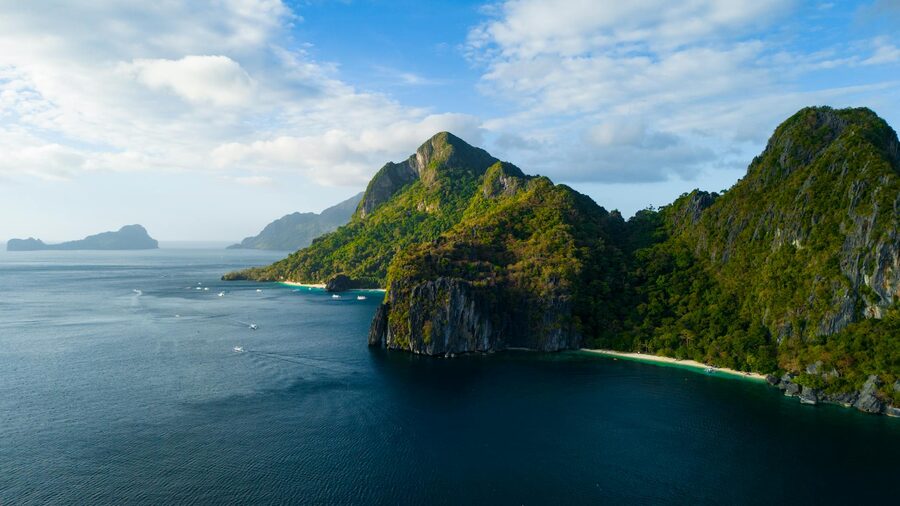
El Nido works beautifully as part of a longer Southeast Asia loop, and the Bacuit Bay karst scenery has a handful of cousins across the region that most travellers want to pair with it.
If Thailand is on your list, the Krabi 4-Island tour and Phi Phi day trip from Phuket visit the exact same limestone geology on a very different budget, and the Phang Nga Bay and James Bond Island tour covers the hidden sea caves that Tour B’s Cudognong hints at.
For something further afield, the Komodo Island day trip from Labuan Bajo in Indonesia is the closest equivalent to an El Nido experience — same island-hopping, same banca-style boats, with dragons instead of lagoons. If Bali is on the route, Nusa Penida from Bali and the Gili Islands snorkelling trip scratch the same itch.
And for a mainland Malaysia pairing, the Langkawi mangrove boat tour is the closest you’ll get to El Nido’s vibe on a Malaysian budget. Finally, Vietnam’s Halong Bay cruise is the original karst-landscape boat trip that El Nido is constantly compared to — worth doing both at least once in your life if you can swing it.
One Last Thing
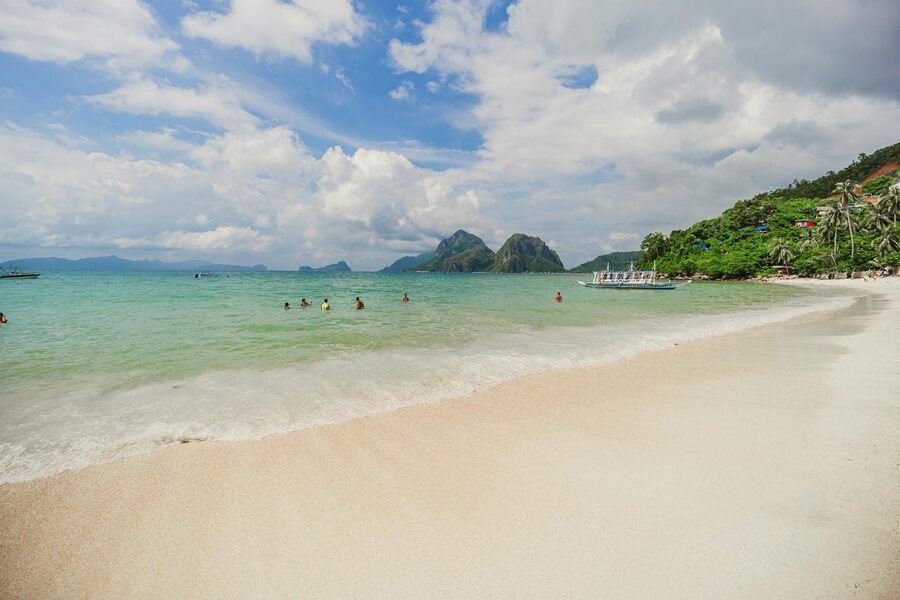
El Nido is going through a tourism boom. The number of boats in the bay has doubled in the last ten years, and the town’s infrastructure hasn’t kept up. Power cuts happen. Wi-Fi is unreliable. Roads get washed out. Things run on “Filipino time,” which is real and means +30 minutes on everything.
Book Tour A anyway. The crowds will only get bigger from here. The lagoons are still, genuinely, among the most beautiful things you can see in Southeast Asia, and the banca-boat experience is one of those travel moments that your photos won’t capture properly no matter how many you take. Show up, pay the $23, rent the kayak, tip the crew, come home with sand in your shoes. That’s the trip.