
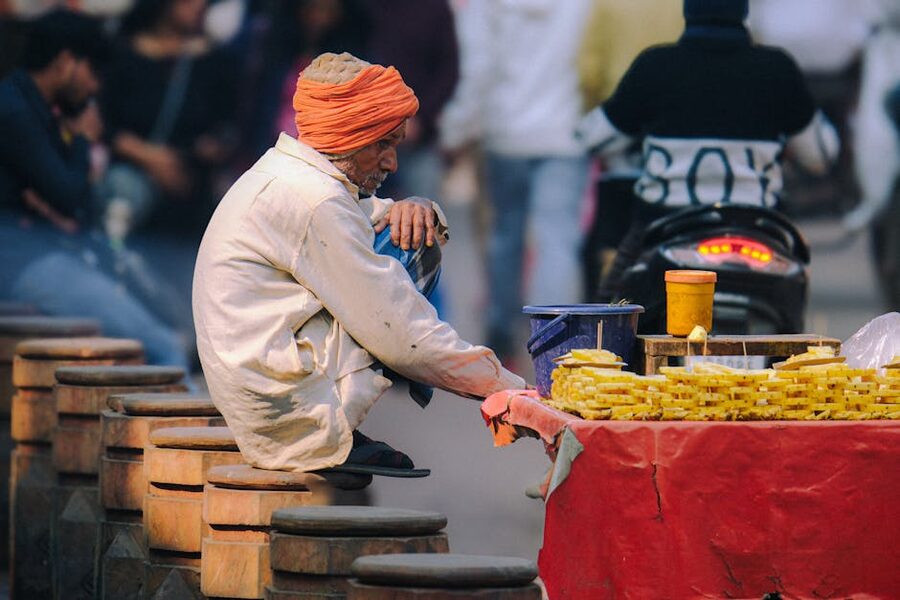
The smell hits you first — warm ghee pooling in a flat iron pan, cardamom pods splitting open in hot milk, the sharp green snap of fresh coriander being chopped at three separate stalls at once, and underneath all of it the faintly sweet, faintly burnt edge of puris puffing up in oil that has been reused since the shop opened at six in the morning.
This is the sensory signature of Chandni Chowk at nine on a winter weekday: a two-block density of frying, stewing, simmering, and toasting that has no direct equivalent anywhere else on the subcontinent, and that the standard Delhi sightseeing loop — India Gate, Qutub Minar, Lotus Temple, done by lunchtime — completely misses.
If you want to understand how the old Mughal capital actually fed itself for 350 years and still feeds a couple of hundred thousand people a day, you do not walk around Chandni Chowk by yourself with a guidebook.
n
You book a food and heritage walk with a guide who knows which of the 120-odd shops on the main bazaar lane have been continuously owned by the same family since the 1790s and which ones are tourist traps that opened last year.
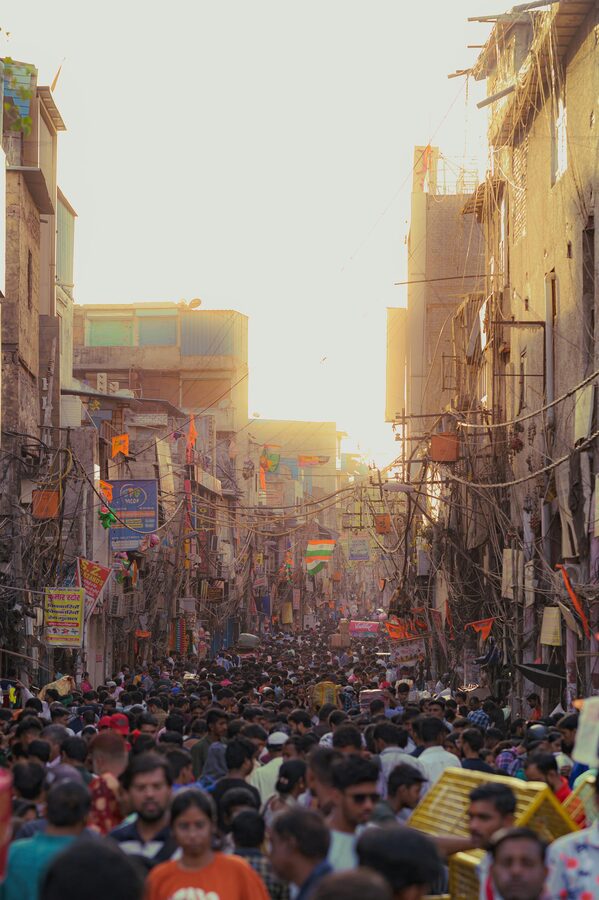
The core problem with Old Delhi for a first-time visitor is not the food — the food is the best part — but the density. Chandni Chowk was laid out in 1650 by Jahanara Begum, Shah Jahan’s eldest daughter, as the main processional street of the new Mughal capital of Shahjahanabad, and the basic street grid has not changed since.
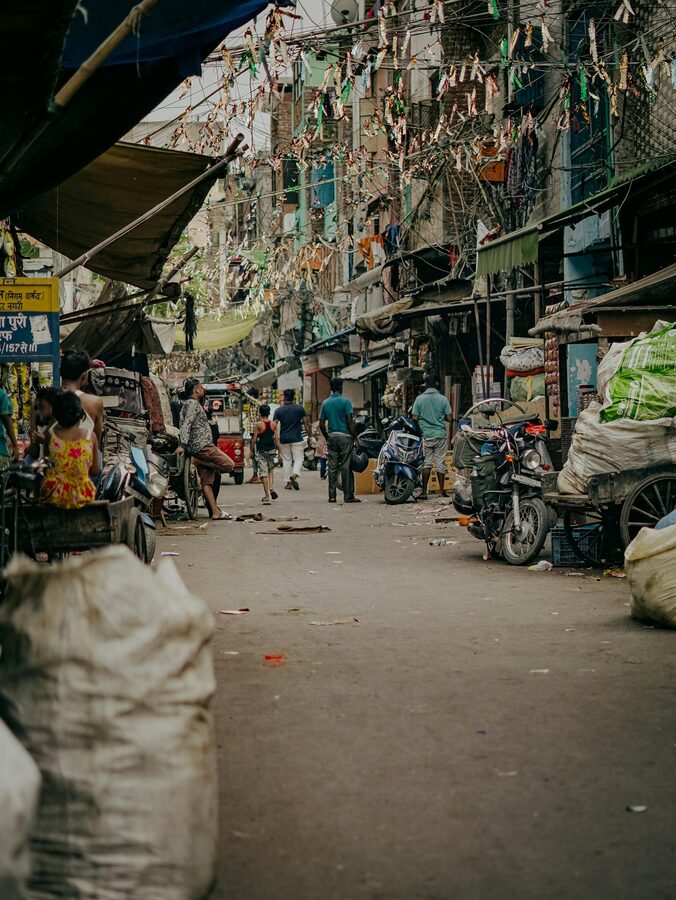
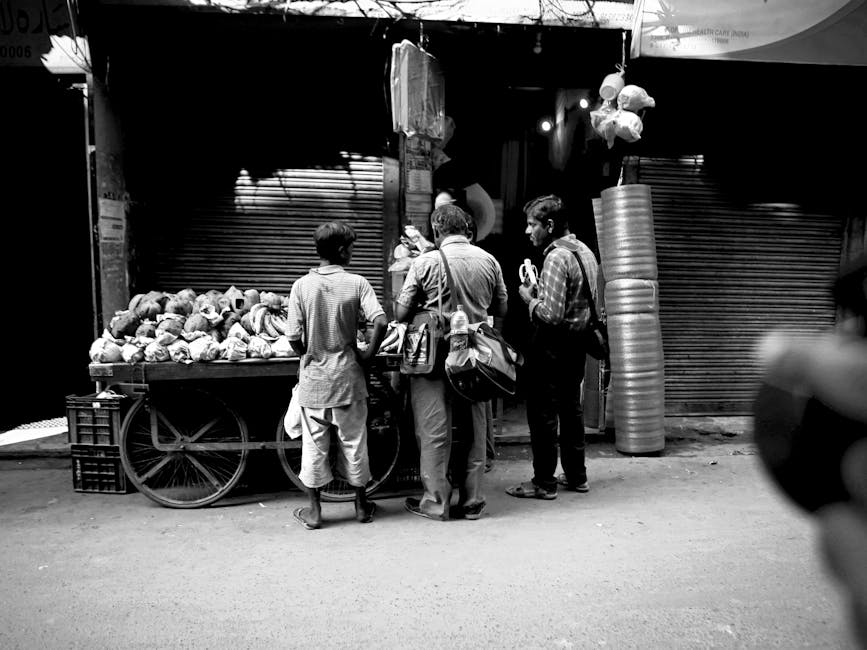
The lanes are narrow, the cycle rickshaws are constant, the sidewalks are occupied by sleeping dogs and fruit carts and people on phones, the shop signs are in three alphabets, and the sheer volume of stuff — bolts of silk, cages of chickens, stacks of brass pots, mounds of dried red chiles, wedding invitations on gold foil, open vats of hot milk, jars of rose petal syrup — is immersive in a way that guidebook descriptions completely fail to capture.
A good guide solves this problem by doing the one thing you cannot do for yourself on day one: they tell you which stalls to stop at, which ones to skip, and what to eat in what order so that your first encounter with Old Delhi street food is memorable for the right reasons instead of the wrong ones.
This guide walks through the three best Old Delhi food and heritage walks on the major booking platforms by verified review count and rating, covers what you actually eat and see on each, and answers the practical questions (timing, stomach safety, what to wear, how to get there) that most tour descriptions skip over.
All three are small-group walking tours with a specialist guide and all three include enough food that you should not eat breakfast beforehand. Prices are per person at time of writing.
- The 3 Best Old Delhi Food and Heritage Walks
- 1. Old Delhi Food and Heritage Walk (Viator)
- 2. Old Delhi Food, Heritage & Cultural Walk With Rickshaw Ride (Viator)
- 3. Old Delhi Street Food Tour (Viator)
- Which Tour Should You Actually Book?
- What You Actually Eat on an Old Delhi Food Walk
- Bedmi Puri with Aloo Sabzi
- Paratha from Paranthe Wali Gali
- Chaat — Aloo Tikki, Dahi Bhalla, Papdi Chaat
- Jalebi
- Kachori and Samosa
- Kulfi
- Chai and Lassi
- The Heritage Stops: What You Actually See
- The Red Fort Exterior and the Lahori Gate
- Gurudwara Sis Ganj Sahib
- Jama Masjid
- The Inner Havelis — Naughara, Kinari, and Dariba Kalan
- Khari Baoli
- The Stomach Question (Addressed Directly)
- Practical Things Nobody Tells You
- When to Go
- What to Wear
- Cash, Tips, and Shopping
- How to Get There
- Combining With Other Delhi Experiences
- A Note on Vegetarians, Vegans, and Food Restrictions
- Should You Do the Walk If You Only Have One Day in Delhi?
- Final Practical Summary
The 3 Best Old Delhi Food and Heritage Walks
I ranked every Old Delhi food walk on the major platforms by verified review count and average rating, filtered out the bus-based “Delhi in a day” packages that drop a group at Chandni Chowk for forty-five minutes and call it a food tour, and kept the three walks with the deepest review bases and clearest on-the-ground operator presence.
All three are priced between $40 and $53, all three run about three to four hours, and all three hold a 5.0 average across a combined total of roughly 3,000 verified reviews — which is the kind of consistency you do not see often on Viator for any city.
1. Old Delhi Food and Heritage Walk (Viator)
This is the most-reviewed Old Delhi food walk on any major platform, and the combination of a 5.0 average across nearly 1,700 verified reviews is the single cleanest data point you will find for a guided experience in Delhi.
The walk runs in the morning (usually a 9 am or 9:30 am start) and covers the full east-to-west arc of the Chandni Chowk bazaar, from the Red Fort end down past the Sunehri Masjid and the Gurudwara Sis Ganj Sahib to the Fatehpuri Masjid at the western end, with roughly eight to ten tasting stops along the way and two or three deeper heritage stops where the guide actually takes you inside a Mughal-era haveli or a working temple kitchen rather than just walking past the facade.
What’s good: The tasting sequence is the work of a guide who has obviously thought about it in the way a restaurant sommelier thinks about a wine pairing flight.
You start light — a small cup of chai at a stall that has been open since the 1920s, followed by one hot jalebi straight out of the ghee — and then move through the savory middle (bedmi puri with aloo sabzi, kachori, a few bites of chole bhature) before finishing on the heavy stuff (a paratha from Paranthe Wali Gali, a small plate of dahi bhalla, one of the legendary Old Delhi kebabs if the timing works) and ending on a sweet at a sweet shop that has supplied the same three or four specific Delhi families for four generations.
The heritage stops are real: the guide takes you off the main bazaar into the inner gallis to see a couple of the surviving havelis, explains the architecture of the jharokhas (the overhanging carved wooden balconies the Mughal nobility used to watch street processions without being seen), and walks you through the Gurudwara Sis Ganj Sahib for a twenty-minute stop to explain why Old Delhi has such a strong Sikh community (it is one of the most important Sikh pilgrimage sites outside Punjab and marks the spot where the ninth Sikh Guru was martyred in 1675).
The small group size (typically six to eight people, sometimes fewer) means you can actually hear the guide.
What’s not: The morning timing means you are doing the walk when the bazaar is waking up rather than at peak lunchtime chaos — some visitors find the morning quieter and more pleasant, others feel they missed the “real” Chandni Chowk rush. If you want the peak-density experience, consider an afternoon or evening walk instead (Tour #3 below runs a later slot).
The walk does not include the famous Karim’s near Jama Masjid — for the Mughlai lunch experience, you either have to add it yourself after the tour or book a different walk. Vegetarian travellers are fully covered (most of the tasting sequence is already vegetarian), but strict vegans will miss several stops that use ghee and paneer.
2. Old Delhi Food, Heritage & Cultural Walk With Rickshaw Ride (Viator)

This is the premium version of the Old Delhi walk, and the thing that distinguishes it from every other tour on the list is the stop at Masterji Kee Haveli — a restored early-twentieth-century courtyard mansion in the inner Kinari Bazaar that the family has opened as a private cultural visit for small tour groups. 742 verified five-star reviews puts it in the top handful of Delhi experiences on Viator by rating consistency, and the format (walk plus haveli visit plus cycle rickshaw leg through the textile lanes) is the one most often mentioned by travellers as “the best thing I did in India.” The extra $10 over Tour #1 buys you two things: the haveli visit with the resident family and a cycle rickshaw ride through the narrowest parts of the Kinari and Dariba Kalan bazaars that you literally cannot walk through as a group because there is no room.
What’s good: The haveli stop is the draw.
Masterji Kee Haveli is a working family home with a restored central courtyard, a small private museum of family heirlooms from the pre-Partition era, a traditional kitchen where the family matriarch prepares chai and a small plate of home-cooked Old Delhi snacks, and — the part everyone remembers — a rooftop view over the tangled geometry of Kinari Bazaar that you are never going to see from a guidebook.
n
The family tells the story of the house, the neighborhood, the changes since the 1947 Partition, and what it is like to raise children in a 120-year-old house in the middle of the densest square kilometer of urban India.
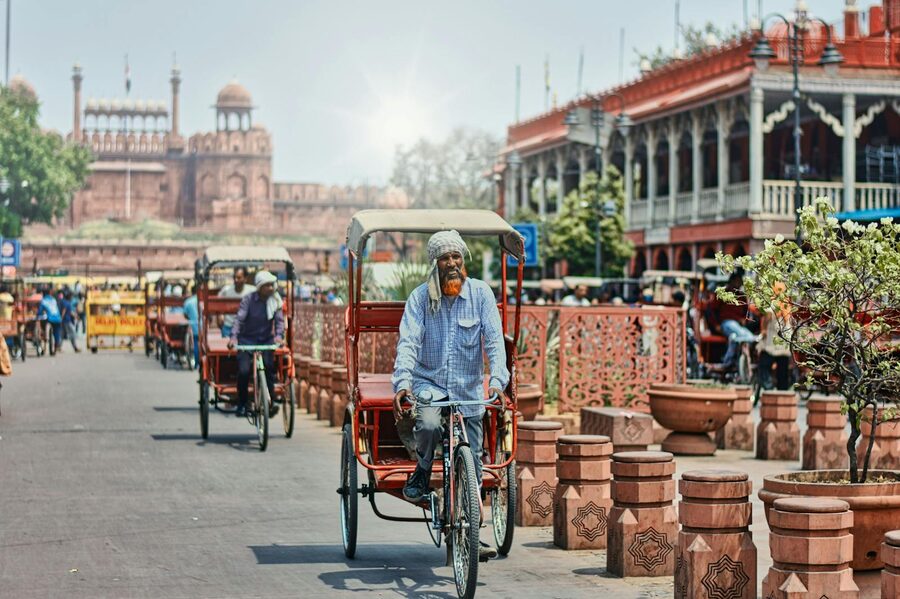
The cycle rickshaw leg is not a gimmick — the inner bazaar lanes (Kinari for wedding trimmings, Dariba Kalan for silver jewelry, Naughara for the restored Jain havelis) are genuinely too narrow and too crowded for a walking group, and the rickshaw lets you see them at the right pace.
The tasting sequence overlaps with Tour #1 on the big items (jalebi, parathas, chaat) but substitutes a couple of stops that reflect the Kinari-side vendor network the operator has built relationships with over the years.
What’s not: The highest price of the three, and the cycle rickshaw portion means you are sitting for about 30 minutes rather than walking, which is fine if you were already tired at that point but slightly less immersive than pure walking.
The haveli stop is extraordinary if the family is having a good day and feels like engaging with visitors — on rare occasions it can feel perfunctory if the matriarch is tired or the house is being used for a private event, and the operator handles this well by running a slightly different internal itinerary on those days, but it is worth knowing that the experience has a human variability to it.
Not recommended for travellers with serious mobility issues — the rickshaw is fine but the pre- and post-rickshaw walking sections still cover about 2.5 kilometers of uneven lanes.
3. Old Delhi Street Food Tour (Viator)
This is the food-focused counterpart to Tour #1 — less emphasis on the heritage stops and more on the tasting sequence, with an itinerary that covers ten to twelve separate stalls and sweet shops in a slightly tighter loop around the central Chandni Chowk block. 497 verified five-star reviews makes this the third-most-reviewed Delhi food experience on Viator, and the price point ($40.17) is the lowest of the three by a small margin.
This is also the tour that runs the most flexible scheduling — you can book morning, afternoon, or occasionally an early-evening slot, which matters if you only have one day in Delhi and your morning is already committed to the Red Fort or Humayun’s Tomb.
What’s good: The depth of the tasting sequence. If what you care about is actually eating as much Old Delhi street food as your stomach can hold rather than spending time on heritage architecture, this is the walk to book. you will consistently hear mention leaving “unable to eat dinner” which is exactly the right outcome for a 3-hour food tour priced at $40.
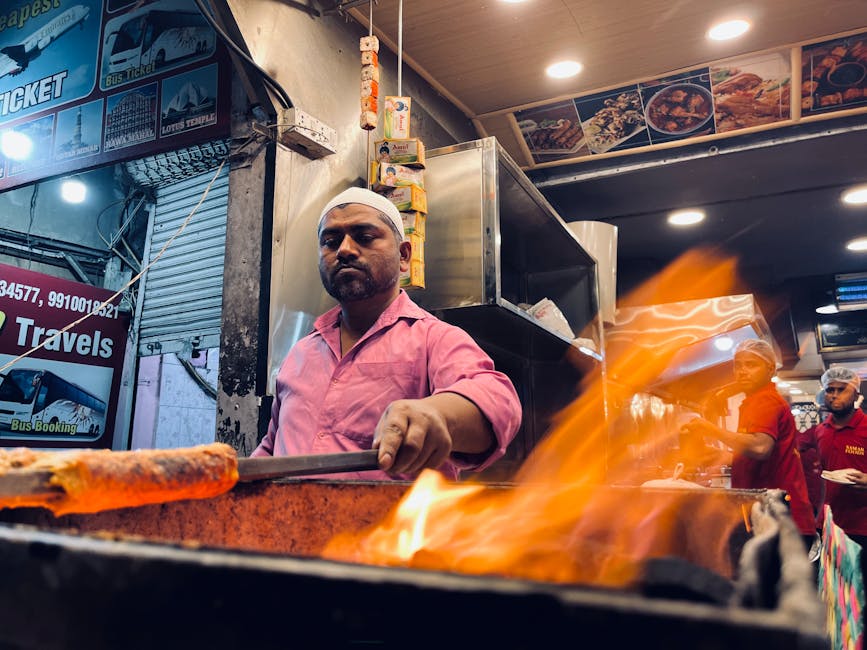
The specific stops change with the guide and the day but the rotation typically includes: Paranthe Wali Gali for the stuffed parathas (the lane has been making them since 1872 and there are exactly three surviving shops at the end of the gali, all owned by branches of the same extended family); a pani puri stall where the guide knows the owner personally; a chaat shop for aloo tikki or dahi bhalla; a kebab stall in the Matia Mahal district near Jama Masjid if the tour runs in the afternoon/evening slot; a jalebi stop at one of the big sweet shops on the main bazaar; a lassi stall; and a cardamom-milk-tea stop at the end.
The guide also carries sealed bottled water and knows which vendors wash their pans between customers and which do not. The afternoon and evening slots are the best time to see Chandni Chowk at full commercial density, which is the “real” Old Delhi experience if that is what you are after.
What’s not: Less heritage content than Tour #1 or Tour #2. If you wanted to understand the Mughal history of Old Delhi, the Sikh gurudwaras, the pre-Partition architectural heritage, or the sociology of the old quarter — that is not the focus here, and you will get a sentence or two of context at each stop rather than a proper walking history lesson.
The tighter geographic loop also means you cover less of the bazaar than Tour #1. For travellers who specifically want a food-first walk with minimal heritage padding, this is the right choice; for travellers who want the balanced walk, book Tour #1 instead.
Which Tour Should You Actually Book?
Straightforward. If you want the balanced walk — food plus heritage plus a proper introduction to Old Delhi’s history — and the most-reviewed experience on the platform, book Tour #1. If you want the premium experience with the haveli visit and the cycle rickshaw ride, and you do not mind paying $10 more for what most travellers describe as the best single tour they did in India, book Tour #2.
If you care primarily about the food and want the deepest tasting sequence at the lowest price with the most flexible scheduling, book Tour #3.
All three are 5.0-rated across a combined total of nearly 3,000 verified reviews, which is a category consistency you almost never see on a Delhi tourism product, so you can book any of the three with confidence and the choice really comes down to which format suits what you want out of the morning.
The one scenario where none of these is right: if you only want the Instagram shot of Paranthe Wali Gali and do not actually want to do a three-hour walk, skip the tour entirely and take a taxi straight to the lane. It is a five-minute detour off the main bazaar and you can photograph the paratha shop signage from the street without anyone stopping you. But you will miss 95% of what makes Chandni Chowk worth the trip, so that would be a strange decision.
What You Actually Eat on an Old Delhi Food Walk
n
The specific stops vary by guide and by season, but the standard Chandni Chowk food walk rotates through a recognizable sequence of maybe fifteen signature items, most of which have been sold from the same shops for well over a century.
What follows is not every dish you will eat on every tour but the core repertoire — the things you should know about before you get there so you can actually appreciate what you are tasting rather than treating it as a string of unfamiliar sensations.
Bedmi Puri with Aloo Sabzi
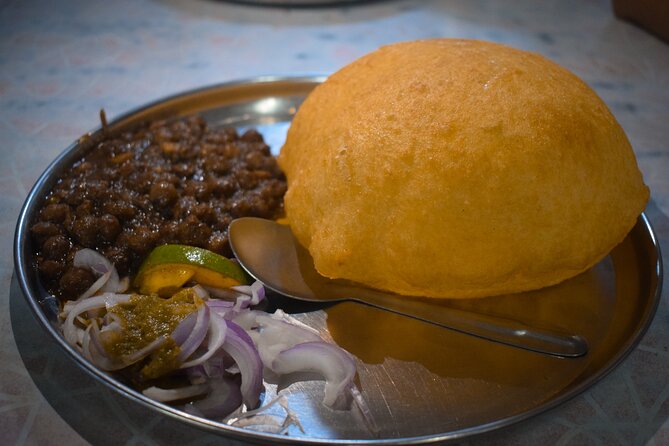
The classic Old Delhi breakfast, and usually the first proper tasting stop on a morning walk. Bedmi puri is a small, puffed, deep-fried bread made from wheat and urad dal flour — it looks like a golden balloon when it comes out of the oil — and it is served with aloo sabzi, a thin, sour, tamarind-spiked potato curry spooned into a leaf bowl.
You tear the puri, scoop the curry, and eat the whole thing standing at the counter. The shops that specialize in bedmi puri usually also sell halwa (a sweet, ghee-drenched semolina pudding) which is the traditional accompaniment for a hearty winter breakfast.
If the guide orders halwa with your bedmi, the whole combined plate is called nagori halwa and it is one of the older Delhi breakfast traditions, dating back to the nineteenth century.
Paratha from Paranthe Wali Gali
The single most famous food stop in Old Delhi and the one every tour includes.
Paranthe Wali Gali — literally “the lane of the paratha makers” — is a narrow alley branching off Chandni Chowk that has been a parathewala district since at least 1872, with the three surviving shops at the closed end of the lane (Pandit Gaya Prasad, Pandit Kanhaiya Lal, and Pandit Babu Ram) all claiming descent from the original nineteenth-century founders.
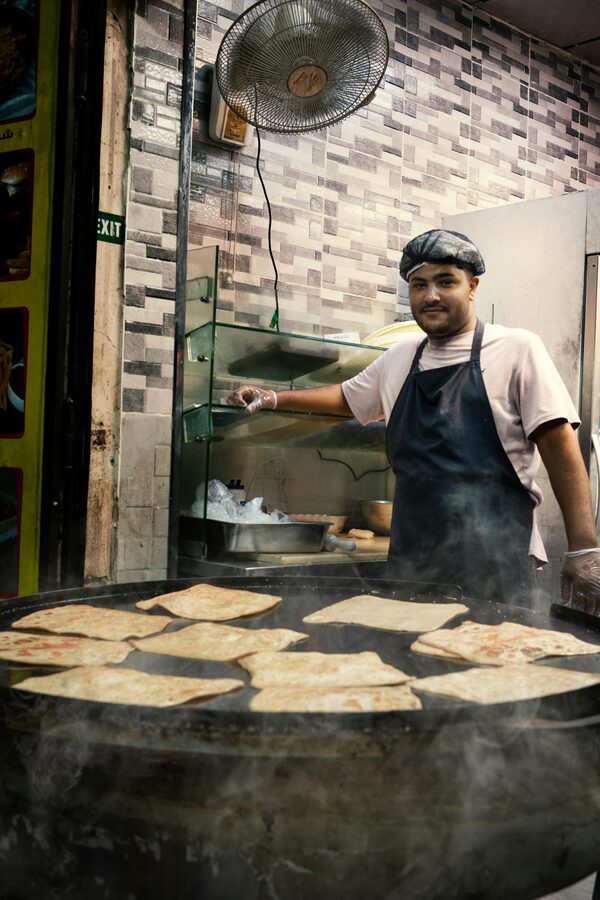
The parathas themselves are stuffed flatbreads fried in ghee on a flat iron pan, and the surviving shops offer between twelve and twenty-five varieties each — traditional fillings like aloo (potato), gobi (cauliflower), and mooli (radish), plus the more unusual ones the lane is actually famous for: stuffed with almonds, with lady fingers, with bitter gourd, with rabri (sweetened reduced milk), with papad.
Each paratha comes on a steel plate with four small sides — a dollop of mango pickle, a spoon of banana-chutney, a small bowl of sweet tamarind chutney, and a spoon of yogurt — and you assemble each bite with your fingers. Two parathas per person is the standard tour portion and it is more food than it sounds.
Chaat — Aloo Tikki, Dahi Bhalla, Papdi Chaat
Chaat is the general category name for the cold, sour, spicy, tamarind-and-yogurt-heavy snacks that Delhi is genuinely world-famous for.
The three you will almost certainly try on any walk are aloo tikki (a shallow-fried potato cake topped with chutneys and yogurt), dahi bhalla (soft lentil dumplings drowned in whipped yogurt with tamarind chutney and a dusting of red chile and roasted cumin), and papdi chaat (crisp fried flour chips topped with diced boiled potato, chickpeas, yogurt, and the same chutney combination).
n
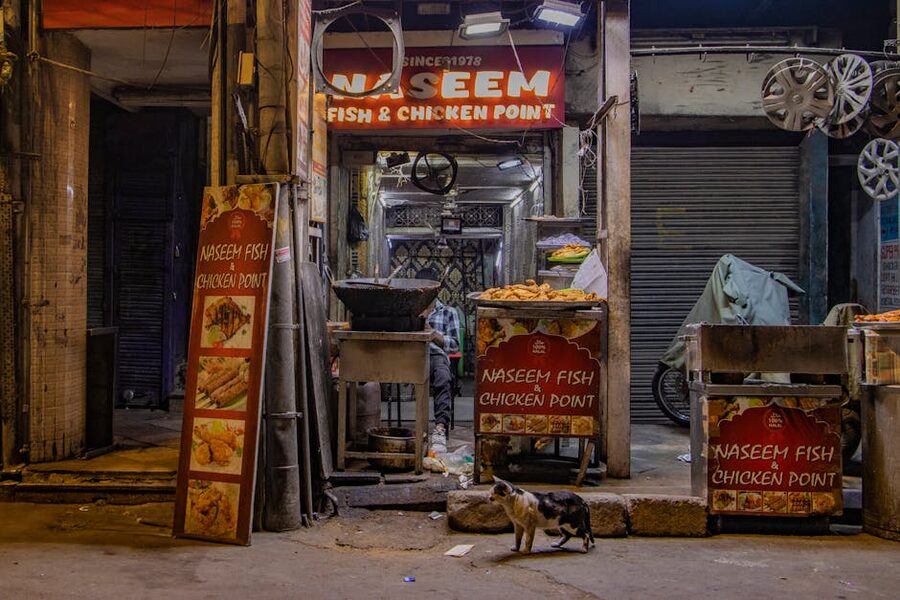
The single most famous chaat shop in Old Delhi is Natraj Dahi Bhalla on the main bazaar — it has been on the same spot since the 1940s and serves exactly two items (dahi bhalla and aloo tikki), and the morning queue is real. A good guide will either take you to Natraj or to a lesser-known stall with comparable quality and zero queue, depending on the day.
Jalebi
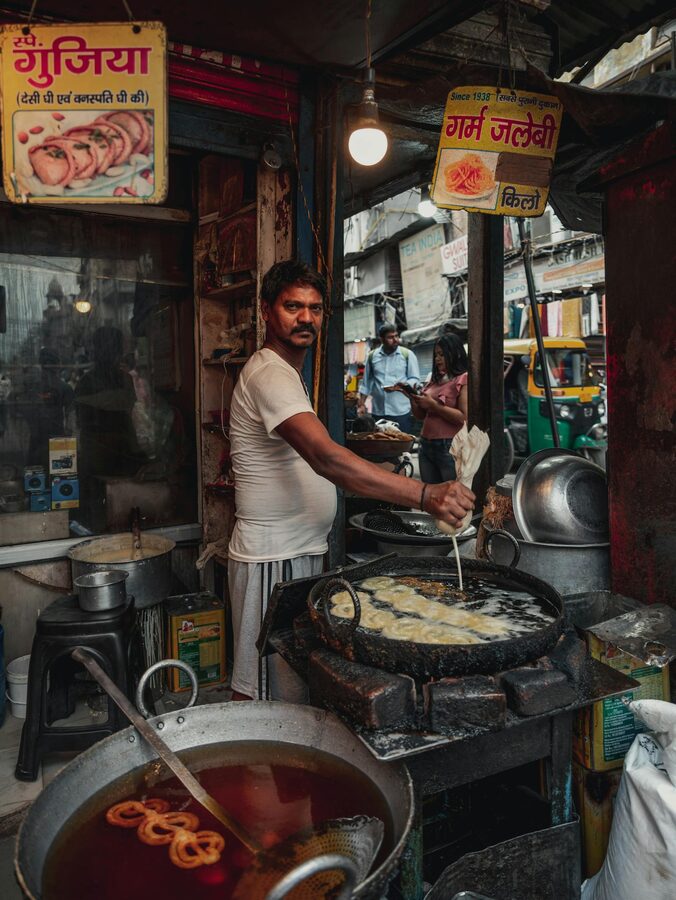
The sweet stop everyone remembers. Jalebi is a batter of wheat flour, water, and a little yogurt piped in looping spirals directly into hot ghee, fried to a deep gold, and then dunked into warm sugar syrup. The result is a crisp, hot, sticky, intensely sweet coil of fried dough that you eat with your fingers while it is still cooling down.
The specific sweet shops in Chandni Chowk that are famous for jalebi — the Old Famous Jalebi Wala at the corner of Dariba Kalan, in particular, has been making them since 1884 — use ghee rather than vegetable oil, which is the thing that separates a great jalebi from a tourist-stall one, and the difference is substantial. One jalebi per person is the right tour portion.
Any more and you will not make it through the rest of the walk.
Kachori and Samosa
Kachori is a round, deeply fried pastry with a spiced lentil filling — crisp on the outside, densely savory on the inside, served with the same tamarind-and-green-chile chutney combination as the chaat.
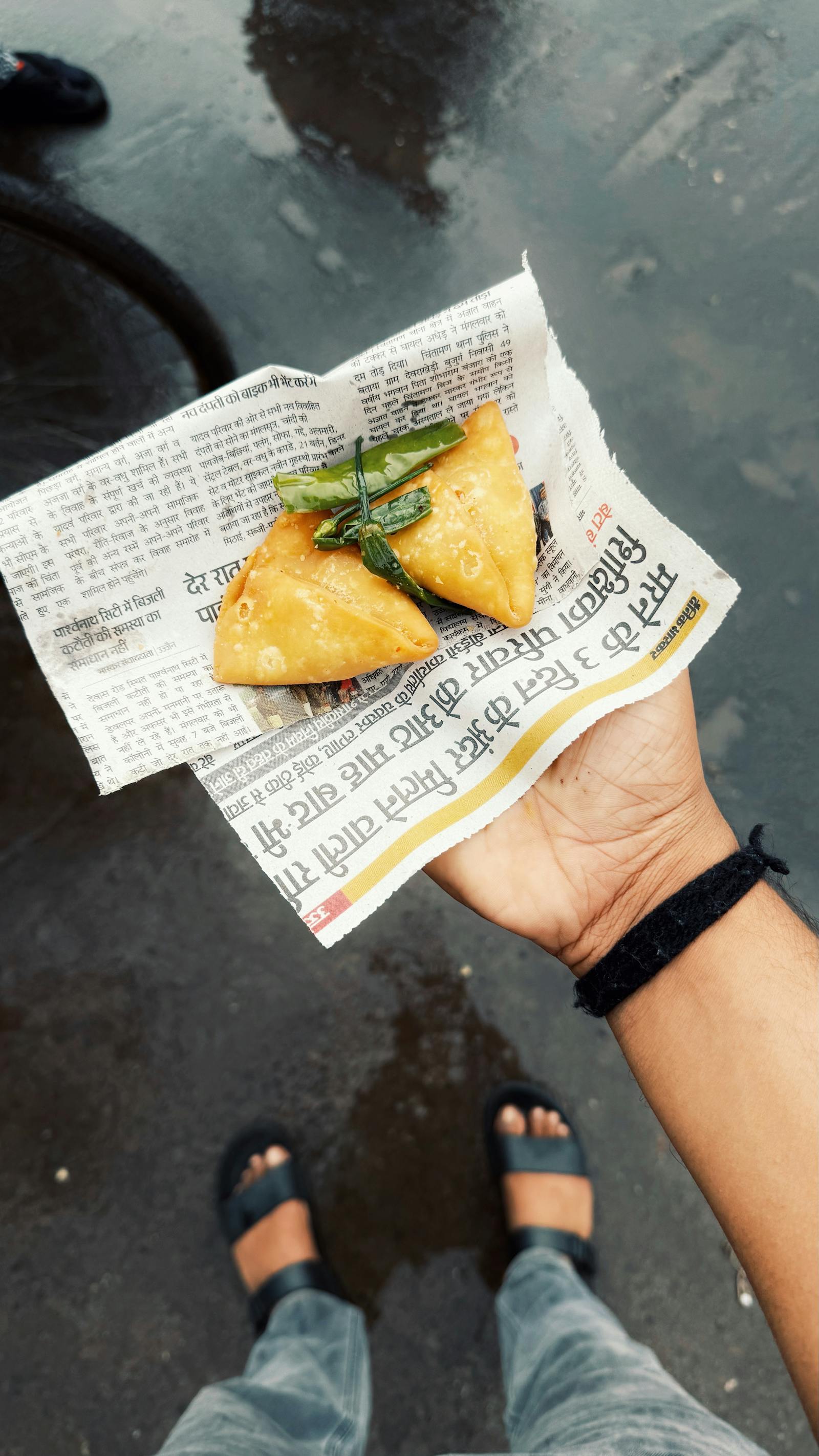
Samosa is the triangular fried pastry stuffed with spiced potato that every Indian restaurant outside India serves; the Old Delhi version is smaller, crisper, and served hot with a different chutney mix than the westernized version. Both are usually part of the mid-walk tasting sequence as a way of pacing the tour between the lighter breakfast items and the heavier paratha stop.
Kulfi
The traditional Indian ice cream, and the thing the Kuremal Mohan Lal Kulfi Wale stall in Kucha Pati Ram has been famous for since 1908.
Kulfi is made by slowly reducing full-fat milk with sugar until it thickens, then freezing it in cone-shaped metal molds — the result is denser, creamier, and more intensely flavored than western ice cream, and the classic Old Delhi version is served with a thin drizzle of rose syrup and a few strands of saffron.
Kuremal is famous for the stuffed-fruit variation where a whole mango, pomegranate, or pineapple is hollowed out, filled with kulfi, refrozen, and sliced at the counter. Not every tour includes the kulfi stop (it depends on the route and the season) but if yours does, save room for it — it is usually the last stop of the walk.
Chai and Lassi
The two drinks you will definitely have on any walk. Chai in Old Delhi is the traditional version — black tea boiled directly with milk, water, sugar, and crushed cardamom pods in a single pan on an open gas burner, then strained through a cloth into small glass cups and served scalding hot.
The chai stalls on the main bazaar have been run by the same families for decades and the specific brew at each one is recognizably different — spicier at one shop, sweeter at another, more heavily reduced at a third. A lassi is whipped yogurt diluted with water and sweetened (or salted, depending on the regional variant), sometimes with rose syrup or mango pulp added.
The big brass cups at the traditional lassi stalls near the Fatehpuri Masjid hold nearly a liter and are the traditional summer antidote to the Delhi heat.
The Heritage Stops: What You Actually See
A proper Old Delhi food and heritage walk is not just a string of tasting stops — the heritage portion is what separates a $43 guided walk from a $10 DIY food crawl, and it is the part first-time visitors are usually most surprised by. The core heritage stops on the standard Chandni Chowk route are these.
The Red Fort Exterior and the Lahori Gate
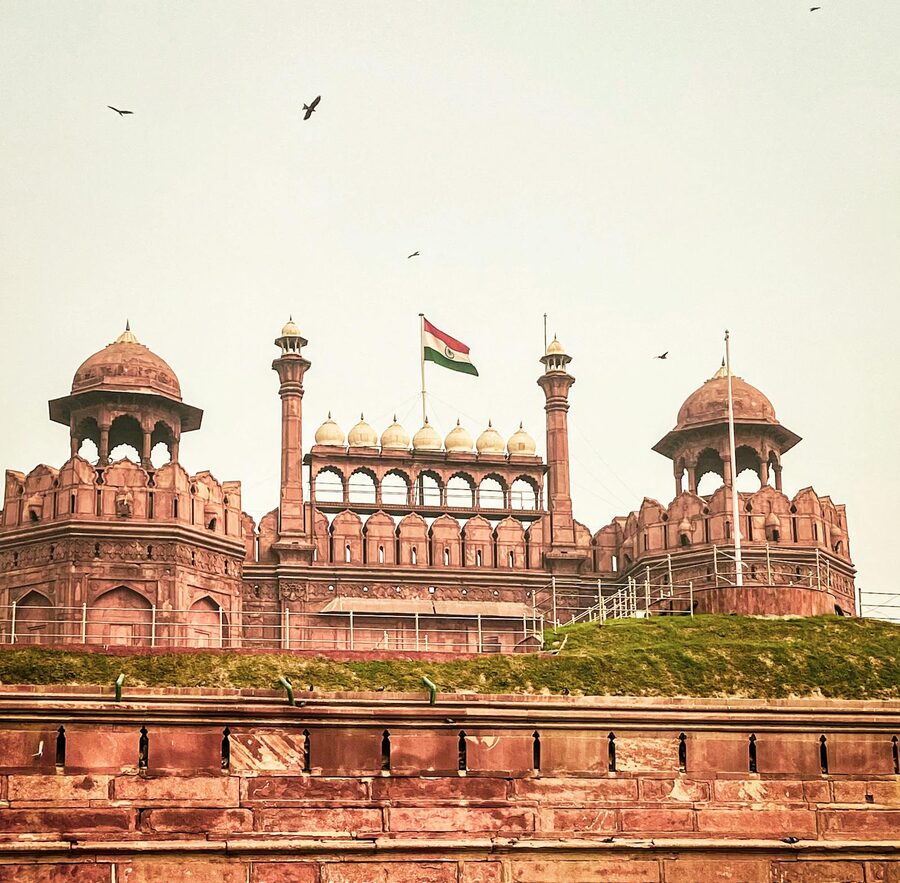
Most food walks start just outside the Red Fort, at the Lahori Gate end of Chandni Chowk, because that is the historical start of the bazaar — the street was laid out specifically as the ceremonial processional route from the Lahori Gate westward to the Fatehpuri Masjid, and walking it in that direction lets the guide tell the story in chronological order.
You do not enter the Red Fort on a food walk (that is a separate two-hour monument visit and the tour does not have time for it), but the guide will explain the building’s role in seventeenth-century Mughal Delhi and why the bazaar that fed the imperial court is still, 375 years later, the working commercial heart of the old city.
Gurudwara Sis Ganj Sahib
About a third of the way down the main bazaar, on the north side of the street, is the Gurudwara Sis Ganj Sahib — one of the nine historical gurudwaras in Delhi and the site that marks the place where Guru Tegh Bahadur, the ninth Sikh Guru, was publicly executed in 1675 on the orders of the Mughal emperor Aurangzeb.
Every food walk stops here for 15 to 20 minutes — the guide will arrange a headscarf for you (Sikh etiquette requires covered hair inside the gurudwara), a small free meal or sweet from the langar (the community kitchen that feeds anyone who walks in, free, every day, as a foundational Sikh religious practice), and a brief explanation of why Old Delhi has such a strong Sikh community and why this particular gurudwara is one of the holiest pilgrimage sites in the faith outside Punjab.
The visit is moving even if you are not religious and it is one of the parts of the walk everyone remembers.
Jama Masjid
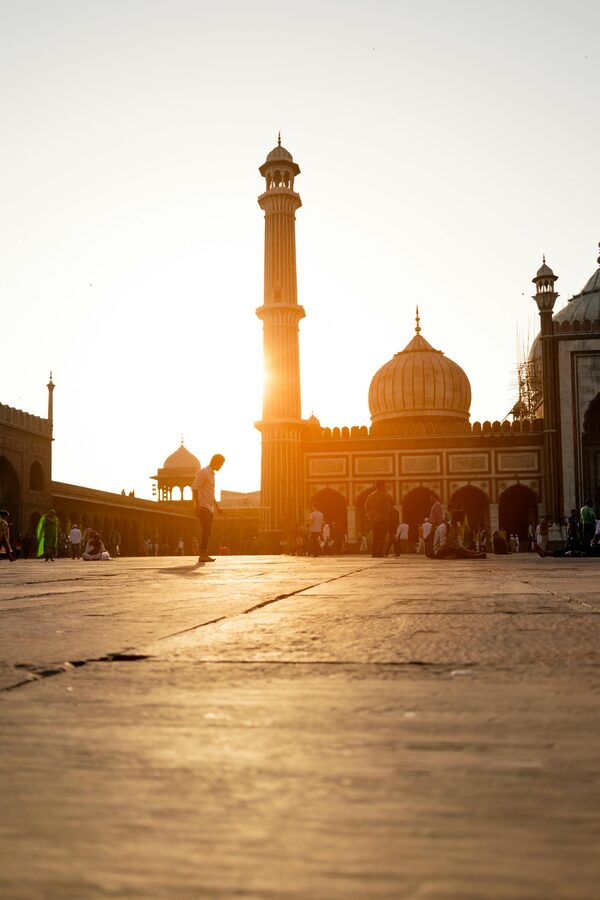
At the eastern edge of the bazaar, visible from several points along Chandni Chowk, is the Jama Masjid — the largest mosque in India, commissioned by Shah Jahan in 1650 and completed in 1656, and historically the congregational mosque of the Mughal capital.
Most food walks either include a short external viewing stop at the Jama Masjid or drop you off within walking distance of the main steps at the end of the tour for an optional self-guided visit.
n
The mosque itself is open to visitors (with a modest camera fee if you are carrying a phone or a camera, and with proper modest dress — long trousers, covered shoulders, and a headscarf for women, which the mosque provides free at the entrance), and the view from the top of the southern minaret over Old Delhi is one of the best vantage points in the city.
The Inner Havelis — Naughara, Kinari, and Dariba Kalan
The deeper heritage stops on the longer walks (Tour #1 and especially Tour #2) take you off the main bazaar into the inner gallis — the narrow lanes that run north and south from the central street and that most first-time visitors never see.
Naughara is a small cul-de-sac lane off Kinari Bazaar with nine restored eighteenth-century Jain havelis, the facades painted in bright pink and green and yellow, that is the single most photogenic heritage stop in Old Delhi and is never crowded because almost no one knows it exists.
Kinari Bazaar is the wedding-trimmings lane — the shops sell gold thread, silver lace, bridal garlands, and the decorative borders that get sewn onto Indian wedding clothes — and it is visually spectacular at the right time of day. Dariba Kalan is the old silver jewelry lane, dating to the seventeenth century, and is where most of the family-run silver workshops of Shahjahanabad still operate.
The longer walks include a stop or a pass-through of all three.
Khari Baoli
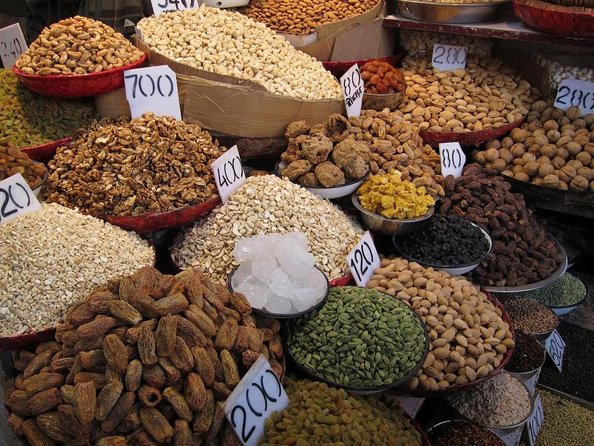
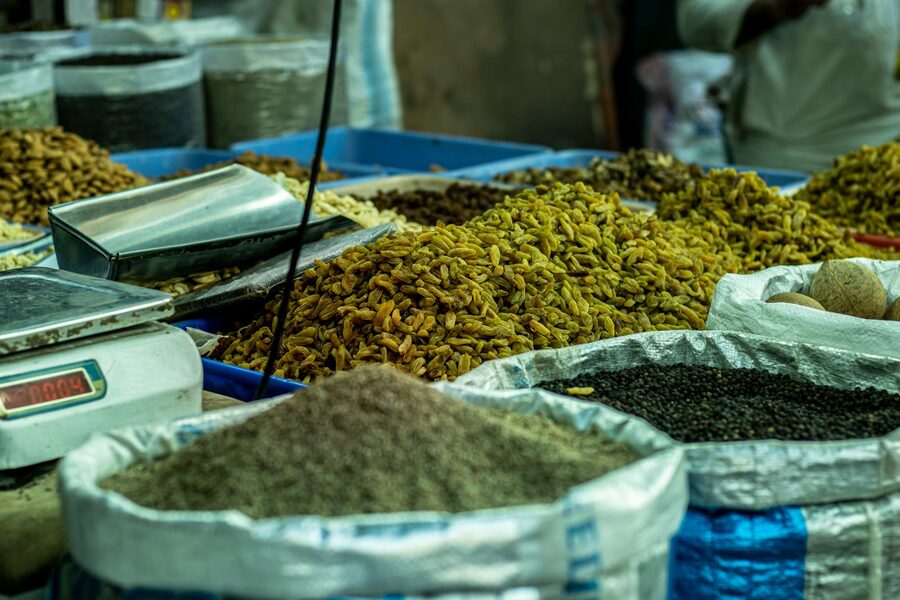
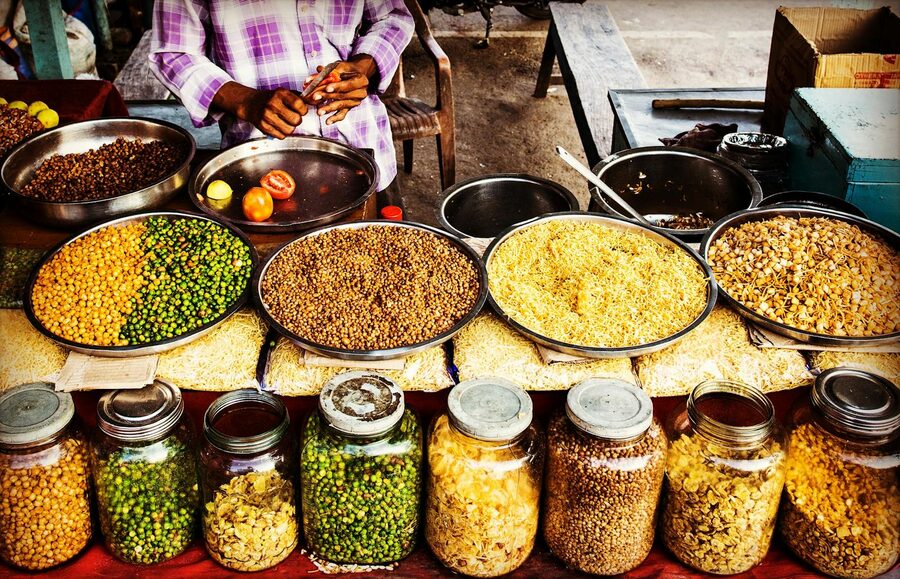
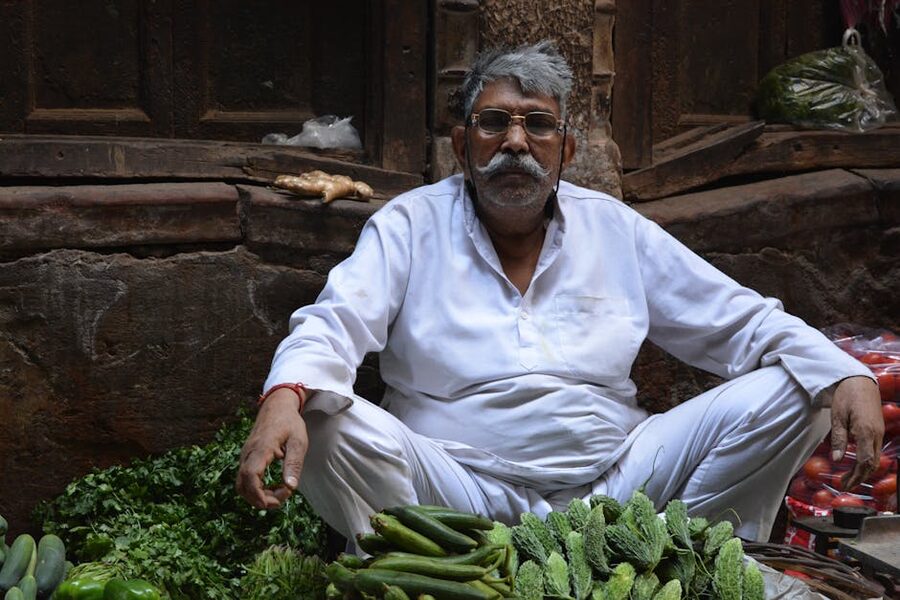
At the western end of the bazaar, just past the Fatehpuri Masjid, is the Khari Baoli spice market — the largest wholesale spice market in Asia, a five-hundred-year-old trading district where the open sacks of whole red chiles, turmeric roots, coriander seeds, cardamom pods, cumin, black pepper, and dried ginger are stacked three and four high in front of every shop.
The smell of the street is immediate and unforgettable — a layered cloud of dried-chile heat, turmeric earthiness, and toasted cumin — and the photography alone is worth the visit. Tour #1 and Tour #3 sometimes include a walking pass through Khari Baoli depending on the route of the day; if yours does, it is usually the visual high point of the walk.
The Stomach Question (Addressed Directly)
The honest answer first: yes, you can eat street food in Old Delhi on a guided walk without getting sick, and the reason is that the guide is curating the stalls for you.
The vendors the tour operators use are vendors the guides have been working with for years, which means the turnover is high, the pans are cleaned between batches, the water is filtered or not used at all in the cooking, and the fried items are cooked in front of you at a temperature hot enough to sterilize anything.
The stalls the guides avoid are the ones with slow turnover, standing water, uncovered sweets, or raw salad ingredients washed in tap water. The difference between a bad street food experience and a good one in Delhi is almost entirely a function of which specific stalls you eat at, and that is the exact problem a guided walk solves for you.
The practical rules are: drink only sealed bottled water (the guide will provide this), avoid the chutneys on any stall the guide does not specifically endorse (chutneys are often made with tap water and raw herbs), skip the raw salad garnishes if you have a sensitive stomach (sliced raw onion and cilantro on a chaat is the one item even cautious travellers might want to decline), eat the hot fried items without worrying (they are the safest food on the street), and say no to anything the guide does not personally recommend.
If you follow those rules on a well-reviewed walking tour, the odds of a bad reaction are low — travellers on Viator and GetYourGuide very rarely report stomach problems from the morning walks, and when they do it is almost always traced back to something they ate separately at their hotel the night before.
One more thing: if you have a genuinely sensitive digestive system or you are at the end of a long trip where you are already exhausted, the morning walk is safer than the evening walk because the stalls are fresher at 9 am than at 7 pm. If you have a cast-iron stomach and you want the full sensory chaos, book the evening slot and eat everything.
Practical Things Nobody Tells You
n
When to Go
The best time for an Old Delhi food walk is between November and February, when the Delhi weather is mild (15 to 25°C, low humidity, clear skies) and the narrow bazaar lanes are genuinely pleasant to walk through. October and March are shoulder months — still walkable but starting to get warm by midday.
April and May are brutal — 40°C+ in the shade, the lanes bake like an oven, and the combination of heat and the sensory load of Chandni Chowk can be legitimately overwhelming even for experienced travellers. June to September is monsoon season and the lower-lying parts of the bazaar flood periodically; the tours still run but the walking is harder.
Aim for December or January if you have flexibility.
For time of day, the morning slot (9 or 9:30 am start) is calmer and the stalls are fresher; the afternoon slot (usually 2 pm) is the peak commercial density; the evening slot (5 or 6 pm, if offered) is the busiest, the most photogenic under lantern light, and the one that includes the Matia Mahal kebab district near Jama Masjid for Mughlai-style dinner food.
What to Wear
Closed-toe walking shoes with grip — the lanes can be slippery with spilled tea and occasional standing water. Lightweight cotton trousers or a long skirt (modesty is the local standard in Old Delhi, and a gurudwara stop is part of the itinerary where bare legs would be inappropriate). A light long-sleeved shirt.
A scarf or light shawl (you will need it to cover your head inside the gurudwara, and the mosque visit if you add one). Sunglasses and a cap. A small daypack with at least one liter of bottled water. Hand sanitizer — use it before every tasting stop. Tissues (you will eat standing up and there are no napkins).
n
Do not wear expensive jewelry or carry a visible wallet — the bazaar is safe but it is also the densest crowd of your trip and it is good practice to put valuables in an internal pocket.
Cash, Tips, and Shopping
Bring ₹1,000 to ₹1,500 (about $12 to $18) in small notes.
The tour itself is prepaid online, but you may want to leave a tip for the guide (₹200 to ₹500, or $2.50 to $6) and there will be one or two opportunities to buy something small — a packet of tea from the chai shop, a small box of sweets from the sweet shop, a handful of whole spices from a Khari Baoli stall — that you pay for in cash directly to the vendor.
Nothing on a food walk is expensive in western terms. The biggest single cash decision most tour-goers face is whether to buy a small sack of Khari Baoli spices to take home; if you are tempted, the sealed packs of whole spices (cardamom, cumin, black pepper) are legal to bring into most western countries and they are the best souvenir from Delhi by a wide margin.
How to Get There
Old Delhi is connected to the rest of the city by the Delhi Metro Yellow Line — the Chandni Chowk station is directly under the western end of the bazaar and it is the fastest and cheapest way to arrive from anywhere in central Delhi. From Connaught Place (the standard hotel district), it is three stops and ten minutes on the metro, fare about ₹20 (25 cents).
From the airport, take the Airport Express Line to New Delhi station and transfer to the Yellow Line; the total time is about 45 minutes and the cost is under ₹100. Uber and Ola work reliably in Delhi and are the alternative if you have luggage or prefer to avoid the metro; a taxi from Connaught Place to the Red Fort entrance is roughly ₹150 to ₹250 ($2 to $3) depending on traffic.
Give yourself at least 20 minutes of buffer before the tour start — Old Delhi traffic is notoriously unpredictable and the tours leave on time.
Combining With Other Delhi Experiences
A morning Old Delhi food walk pairs naturally with an afternoon monument loop — the Red Fort, Humayun’s Tomb, and Qutub Minar can all be covered in a single afternoon from the end of the walk.
If you have more than one day in Delhi, the logical companion is a guided Old and New Delhi city tour that covers the British colonial side of the capital — the India Gate, the Rashtrapati Bhavan, Connaught Place, and the rest of Lutyens’ Delhi — in a single full-day loop.
Most travellers also pair Delhi with a day trip to the Taj Mahal from Delhi, which is the classic Golden Triangle opener, and then a Jaipur city tour for the pink-city leg of the triangle.
For travellers heading on to Mumbai, the Mumbai full-day sightseeing tour is the counterpart to the Delhi walk on the commercial-capital side of the country, and the Dharavi walking tour in Mumbai is the informal-economy equivalent to what Chandni Chowk shows you about Delhi’s working food culture.
For a food-focused counterpoint in eastern India, the traditional Bengali cooking class in Kolkata is the logical next step for travellers who want to learn to cook Indian food rather than just eat it, and a Mohammad Ali Road street food tour in Mumbai gives you the late-night Mughlai dinner scene in the old Muslim quarter of the western capital.
If India is part of a longer trip, a Varanasi and Sarnath full-day tour with a Ganga Aarti boatride and a Rishikesh spiritual evening tour give you the religious and riverine side of North India to balance the commercial bazaar of Old Delhi.
A Note on Vegetarians, Vegans, and Food Restrictions
n
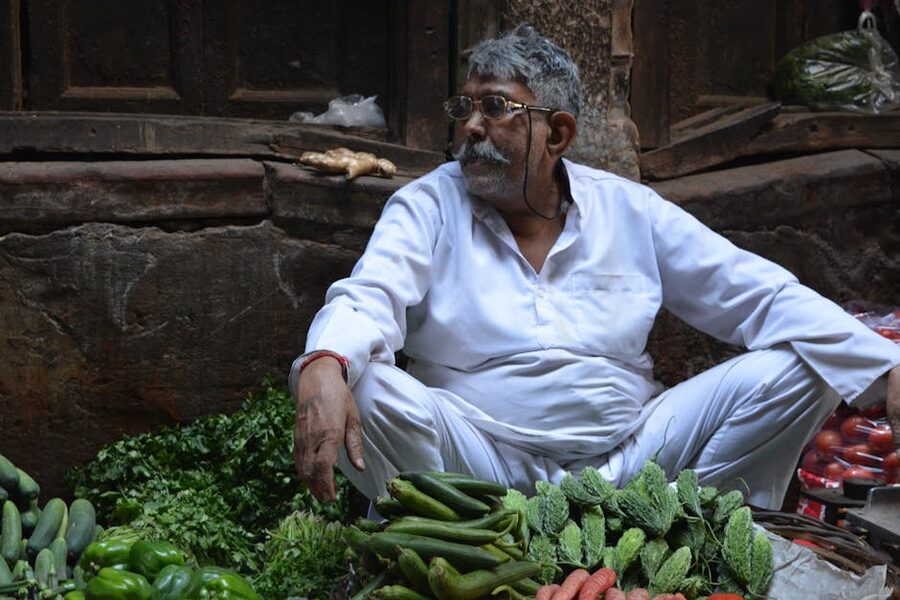
Old Delhi is a genuinely easy city for vegetarian travellers — the overwhelming majority of the tasting sequence on every food walk is already vegetarian, because the Hindu and Jain food traditions of Delhi are overwhelmingly vegetarian and the Mughal-Muslim layer of the city’s food culture is concentrated in specific districts (Matia Mahal near Jama Masjid, where the kebab and biryani shops are). travellers who do not eat meat will miss nothing on a Chandni Chowk-centered morning walk.
Vegans have a harder time because ghee, paneer, and yogurt are used in most of the classic items — the bedmi puri halwa is usually made with ghee, the parathas are fried in ghee, the lassi is yogurt, the sweets are heavy in milk products.
Tell the operator at booking and they can flag vegan alternatives at each stop, but realistically a vegan traveler will be making a lot of substitutions and might prefer a custom private walk. Gluten-free travellers can work around the sequence (most of the chaat, kulfi, and drinks are gluten-free; the parathas and puris obviously are not).
Nut allergies are usually manageable with advance warning to the guide. Any serious allergy — especially peanut — should be communicated to the operator before booking rather than on the morning of the walk.
Should You Do the Walk If You Only Have One Day in Delhi?
n
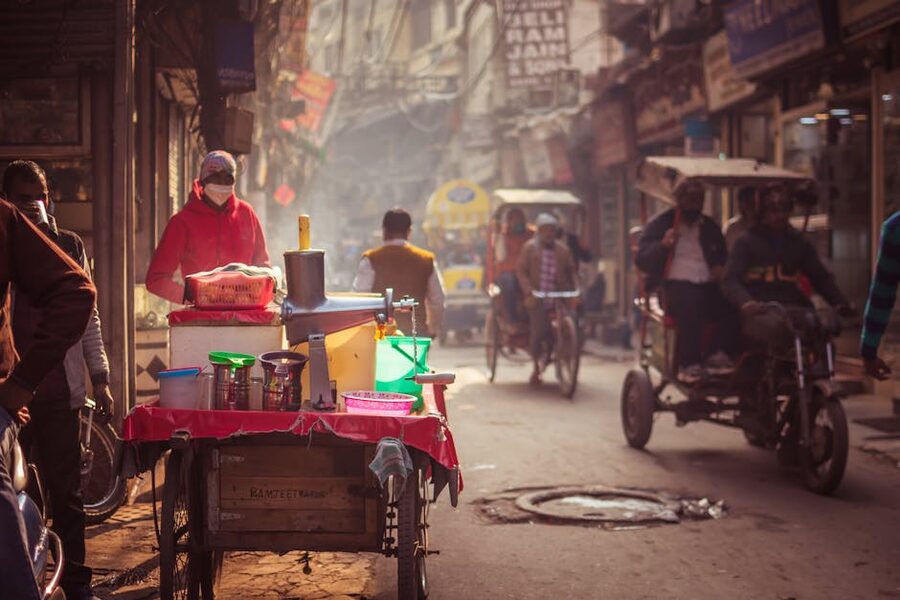
Yes. A morning Old Delhi food and heritage walk is the best use of a first half-day in the city and will leave you with a better working understanding of what Delhi actually is than any monument-focused bus tour.
The reason is that Old Delhi is the oldest continuously lived-in part of the Mughal capital, the bazaar has been running from the same footprint since 1650, and a guided walk is the only realistic way to see it on a first visit without either getting lost or missing everything that matters.
After the walk you still have a full afternoon for the Red Fort, Humayun’s Tomb, or Lutyens’ Delhi, and you have eaten enough that you can skip lunch and go straight to the monument visit.
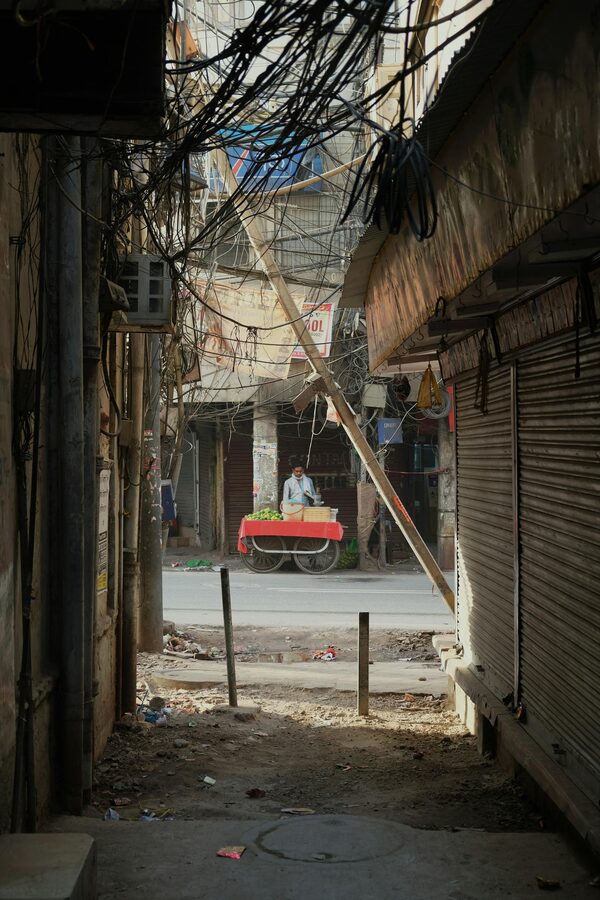
If you have two days in Delhi, do the food walk on the morning of the first day and the Taj Mahal day trip on the second. If you have three, add a Lutyens’ Delhi / New Delhi half-day to the itinerary. If you have a week, add Jaipur and Agra for the full Golden Triangle and save Old Delhi for a second, slower, half-day walk through the Khari Baoli spice market on foot.
The one thing to avoid: do not try to do Old Delhi yourself on a first trip without a guide.
The density, the pace, the alphabet soup of shop signs, and the sheer question of what to eat and where from among 120 shops selling broadly similar things are genuinely too much to solve in an afternoon, and the small number of travellers who try it almost universally report that they walked around, felt overwhelmed, ate one paratha at a random shop, and left without understanding what they had seen.
Book the walk.
Final Practical Summary
n
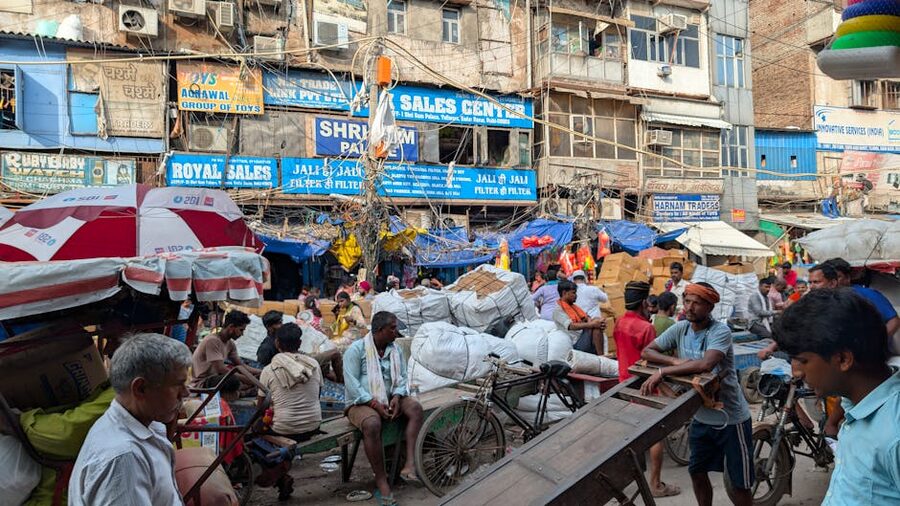
Book Tour #1 (the Old Delhi Food and Heritage Walk, Viator, $43) for the balanced walk with the deepest review base and a proper blend of food, heritage, and Sikh gurudwara visit.
Book Tour #2 (the Food, Heritage & Cultural Walk With Rickshaw Ride, $52.73) for the premium experience with the Masterji Kee Haveli visit and the cycle rickshaw leg through the narrow textile bazaar — this is the one most travellers call the single best thing they did in India.
Book Tour #3 (the Old Delhi Street Food Tour, Viator, $40.17) for the food-focused walk with the deepest tasting sequence, the lowest price, and the most flexible scheduling including an afternoon or early-evening slot.
Go in the morning in December or January, wear closed-toe shoes and long trousers, bring ₹1,000 in small cash, carry bottled water and hand sanitizer, do not eat breakfast beforehand, cover your head at the gurudwara, follow the guide’s recommendations at each stall and skip the ones they do not specifically endorse, put your phone away for most of the walk and actually look at what you are walking through, and accept that what you are about to see is a 375-year-old working bazaar feeding a couple of hundred thousand people a day — not a tourist attraction, not a museum, not a food court, but the actual commercial heart of the old Mughal capital, still running more or less the way it always has, under layers of cooking smoke and cardamom and the clatter of cycle rickshaw bells.
If you come with that attitude, Chandni Chowk will be the most memorable three hours of your Delhi trip.