
Shah Jahan started building the Taj Mahal in 1632 for his wife Mumtaz Mahal, who died giving birth to their fourteenth child. It took 22 years, around 20,000 workers, and over 1,000 elephants to finish it. The white marble was hauled in from Rajasthan, the jade came from China, the turquoise from Tibet, and the sapphires from Sri Lanka.
Four hundred years later, the fastest way to see it is a day trip from Delhi.
I’ll walk you through exactly how to book one — the three formats that actually work (private car, superfast train, all-inclusive), what the ticket system looks like on the ground, and the specific tours I’d book if I were doing this tomorrow.
Short on time? Here are my top 3 picks:
Best overall: Private Taj Mahal Tour From Delhi by Car — $62. The flexible option — your own driver, your own guide, leave when you want.
Best premium: Taj Mahal Day Tour From Delhi by Superfast Train — $100. Skip the 3.5-hour car drive each way — the Gatimaan Express does it in 100 minutes.
Best value: All Inclusive Taj Mahal Day Tour From Delhi by Car — $62. Same price as the basic car tour but with meals, entrance tickets, and Agra Fort bundled in.
- How the Official Ticket System Works
- Private Car vs Superfast Train: Which Format to Book
- The Best Taj Mahal Day Tours to Book
- 1. Private Taj Mahal Tour From Delhi by Car —
- 2. Taj Mahal Day Tour From Delhi by Superfast Train — 0
- 3. All Inclusive Taj Mahal Day Tour From Delhi —
- When to Visit
- How to Get to Agra
- Tips That Will Save You Time
- What You’ll Actually See Inside
- Agra Fort: The Other Half of the Day
- Is a Day Trip Enough?
- Delhi: Where Your Day Starts and Ends
- What Else to Book on Your Trip
How the Official Ticket System Works
The Taj Mahal uses a timed-entry ticket system managed by the Archaeological Survey of India. Foreign travellers pay Rs 1,100 for standard entry, which includes shoe covers and a bottle of water. Add Rs 200 if you want to enter the mausoleum itself — that’s the white building with the tombs. The vast majority of visitors pay the extra 200 and I’d tell you to do the same. You came all the way to Agra for the inside, not the lawn.
Tickets are technically available at the gate, but anyone who tries to buy them there on a day trip is losing an hour they don’t have. Every day tour I’d actually recommend bundles the ticket into the price and hands you a printout at the gate. That’s non-negotiable for a day trip — you need to move fast.
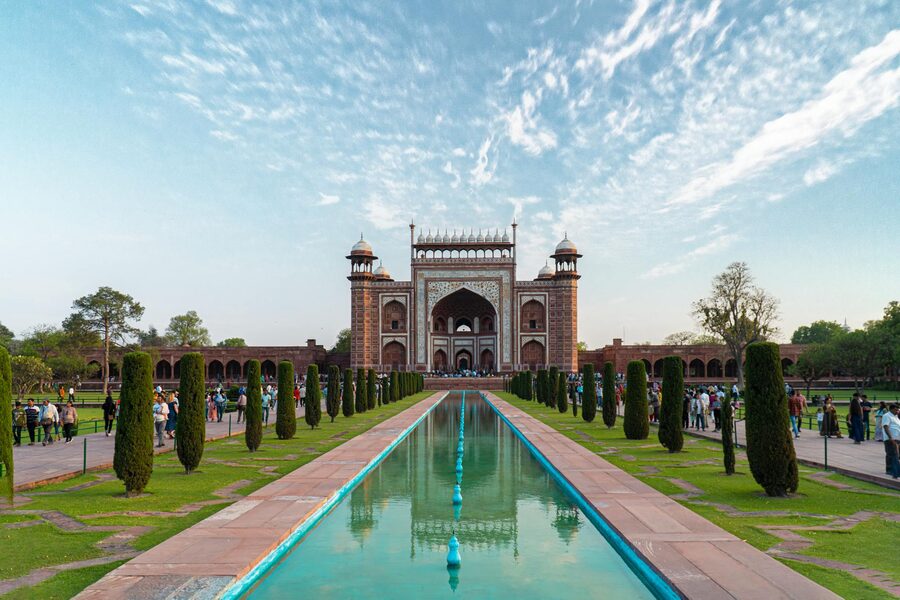
Entry is through one of three gates — east, west, or south. The south gate is reserved for locals now, which leaves east and west for everyone else. East gate is slightly less chaotic but has a longer walk from the parking area. West gate gets you in faster but the security queue can back up on weekends. Your tour guide picks based on the day and the traffic situation.
The Taj is closed every Friday. If your only free day in Delhi is a Friday, you’re either doing Agra Fort alone or shifting your trip by a day. There’s no workaround.
Opening hours run from 30 minutes before sunrise to 30 minutes after sunset. Last entry is 45 minutes before closing. There’s a night viewing option on full-moon nights, but it’s a separate ticket, requires booking a day ahead at the ASI office in Agra, and isn’t part of any day tour I know of — that’s a two-day trip minimum.
Private Car vs Superfast Train: Which Format to Book
The three formats are: private car round-trip, superfast train round-trip, and all-inclusive (usually by train, sometimes by car). They cost roughly the same — $60 to $110 depending on inclusions — but they give you very different days.
Private car is the most flexible and, honestly, the hardest. You leave Delhi at 6am to beat the traffic. The Yamuna Expressway is fast and modern but the drive still takes 3.5 hours on a good day and closer to 5 on a bad one. You get to Agra around 10am, do the Taj and the Fort, have lunch, and leave by 3pm to get back to Delhi by 8. It’s a long day in a car. The upside: you can stop where you want, linger where you want, and the driver waits.
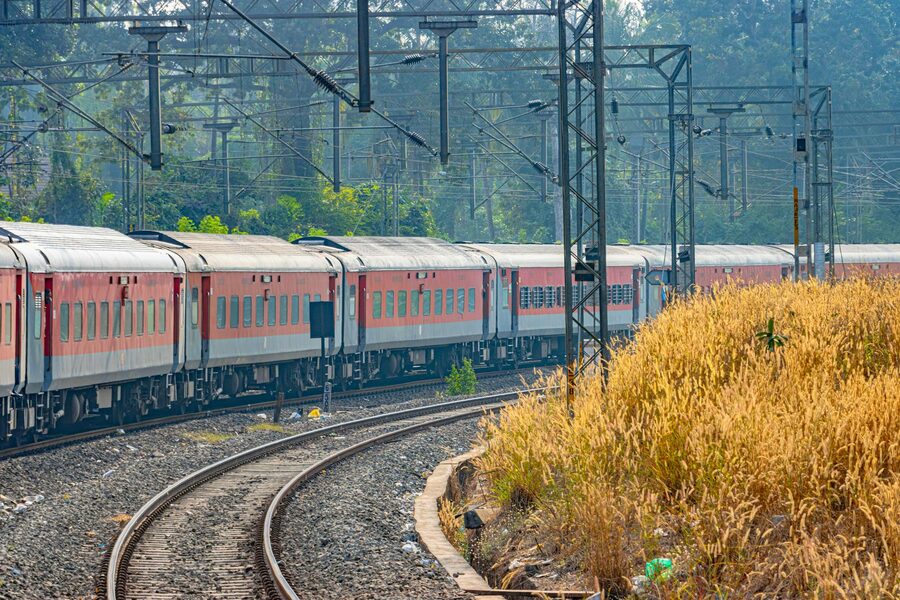
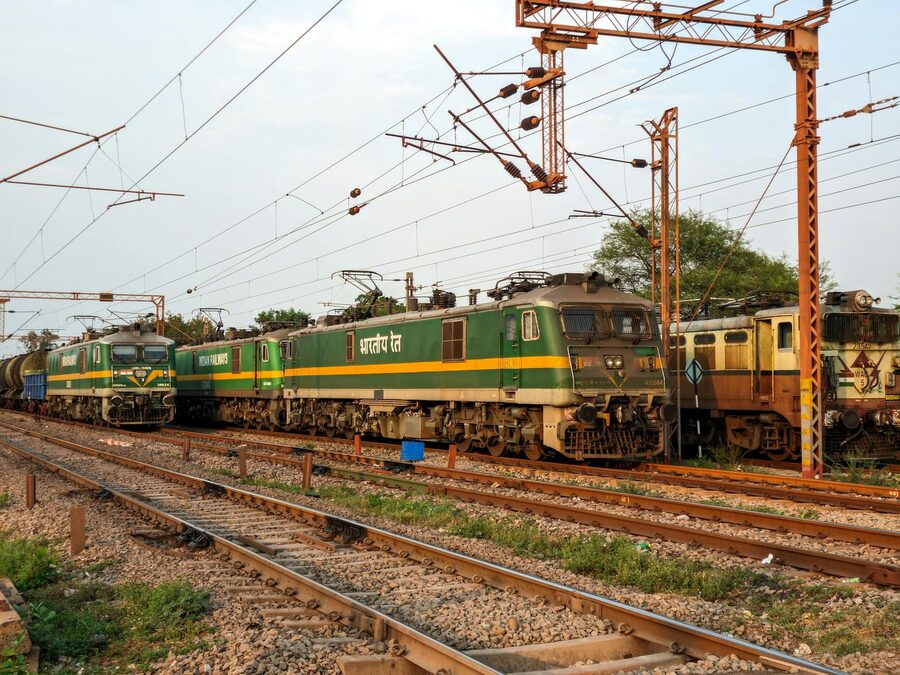
Superfast train is my default recommendation if you’re not traveling with kids under six or elderly parents who struggle with early starts. The Gatimaan Express leaves Delhi around 8am and hits Agra Cantt station in about 100 minutes. You do the Taj and Fort in Agra, then catch an afternoon train back. You’re sitting in an air-conditioned reserved seat for the boring bits instead of sitting in traffic on the Yamuna Expressway. It’s just a much nicer day.
All-inclusive means everything is bundled into one price — entry tickets for the Taj and Agra Fort, lunch at a decent restaurant (usually on the hotel circuit), water, and sometimes an electric rickshaw ride from the parking area to the monument gate. The savings add up.
Two Taj entries alone are around Rs 2,600, lunch runs Rs 600–1,200 per person, and then there’s the rickshaw, water, Agra Fort entry (Rs 650 foreign price), and tips. If you book the base car tour and then pay for all of that yourself, you’re at the same final number — so just take the all-inclusive.
The Best Taj Mahal Day Tours to Book
These are the three tours I’d actually book from Delhi. All three have north of 3,500 reviews, all three sit at a 5-star rating, and between them they cover the three formats above.
1. Private Taj Mahal Tour From Delhi by Car — $62

This is the most-booked Taj day trip out of Delhi for a reason. You get a private air-conditioned car with a driver, a guide who meets you in Agra, and the freedom to do the day on your own schedule. Pickup is between 5:30am and 7am from your Delhi hotel depending on the operator and you’re typically back between 8 and 10pm.
At $62 for a private vehicle and guide, it’s the cheapest private option I’ve seen that doesn’t feel like you’re being rushed through. The value lives in the flexibility — if Agra Fort runs long, you adjust. If you’re wrecked after the Taj and need a real lunch break, you get one. The private car tour is what I’d book if I were traveling with one other person and wanted the day to feel unhurried.
The trade-off is the drive. Seven hours in a car round-trip is no joke, and if you’re prone to motion sickness the Yamuna Expressway has a few long curves that can do you in. Book this one if you value flexibility over comfort.
2. Taj Mahal Day Tour From Delhi by Superfast Train — $100
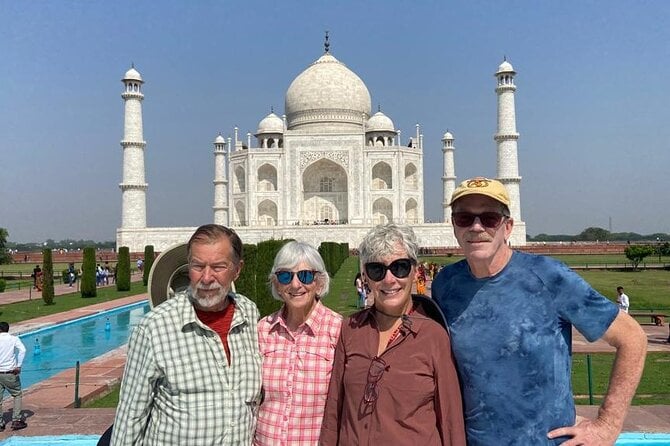
This is the tour I’d book if I could only book one Taj day trip for a first-timer. You skip the seven-hour car slog entirely. The morning starts with a hotel pickup, a short drive to New Delhi Railway Station, and then you’re on the Gatimaan Express — India’s fastest train — for about 100 minutes of breakfast service and scenery. You arrive in Agra fresh, not depleted.
In Agra you get a private car and guide for the day: Taj Mahal first thing, Agra Fort after lunch, and usually a look at either Mehtab Bagh or Itimad-ud-Daulah (the “Baby Taj”) if you have the energy. Then it’s back to the station for an afternoon train to Delhi, where you’re dropped at your hotel by around 10pm.
At $100 it’s the most expensive of the three, but that’s what a comfortable day costs. The superfast train tour is the top-rated option because the format works — you arrive ready to actually see the monument instead of ready for a nap.
3. All Inclusive Taj Mahal Day Tour From Delhi — $62

Same $62 price tag as the basic car tour, but with entry tickets, lunch, and Agra Fort all baked in. If you compare the math at the gate — Rs 1,300 for full Taj entry, Rs 650 for Agra Fort, Rs 800 for a decent lunch, Rs 200 for electric rickshaws — you’re already past what the base tour saves you. There’s almost no scenario where the all-inclusive tour doesn’t come out ahead.
This is the one to book if you don’t want to think about anything on the day. Your guide hands you the ticket at the gate. Lunch is pre-booked at a restaurant on the hotel circuit. Agra Fort is already on the schedule. You just show up and move from stop to stop.
It runs by car by default but some operators swap to superfast train on request for a surcharge. Ask when you book — if you’re on the fence between this and the train-based option, paying the extra for train transit on an all-inclusive is the sweet spot.
When to Visit
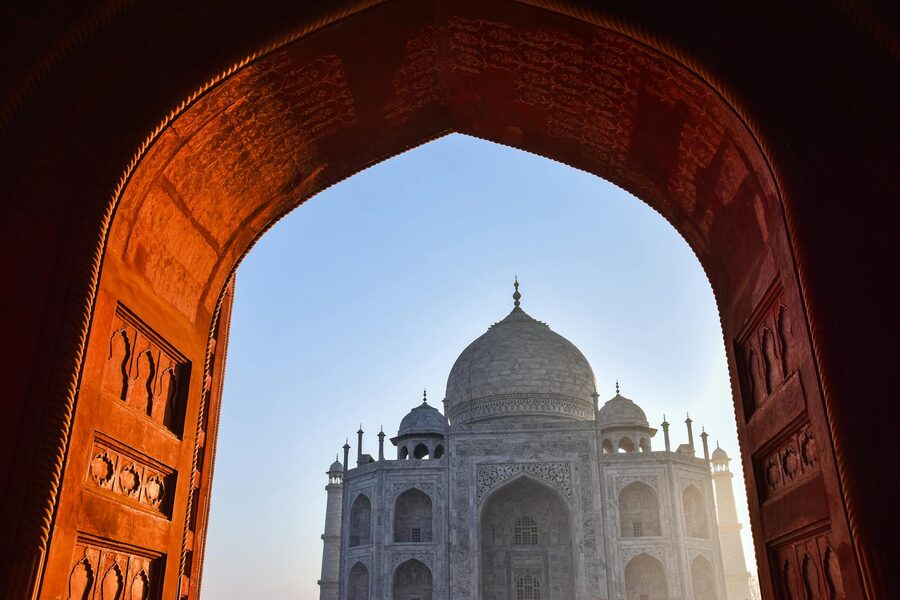
The best months to do this trip are October through March. Temperatures sit between 10°C and 25°C, the skies are generally clear, and the humidity is bearable. November and February are the sweet spots — December and January can get dense fog in the mornings that delays trains and ruins sunrise photos.
April through June is hot. Like, 42°C in the shade hot. The marble gets so warm your shoe covers start sticking, the walk from the parking area to the gate becomes a death march, and by 11am you’re cooked. I would not recommend doing this trip in May or June unless you have zero flexibility.
July to September is monsoon. The crowds drop, the price drops, and the Taj against storm clouds is a genuinely dramatic sight — but you’re rolling the dice on rain, and the river behind the mausoleum swells and starts to smell. It’s a viable off-season if you’re comfortable with weather risk.
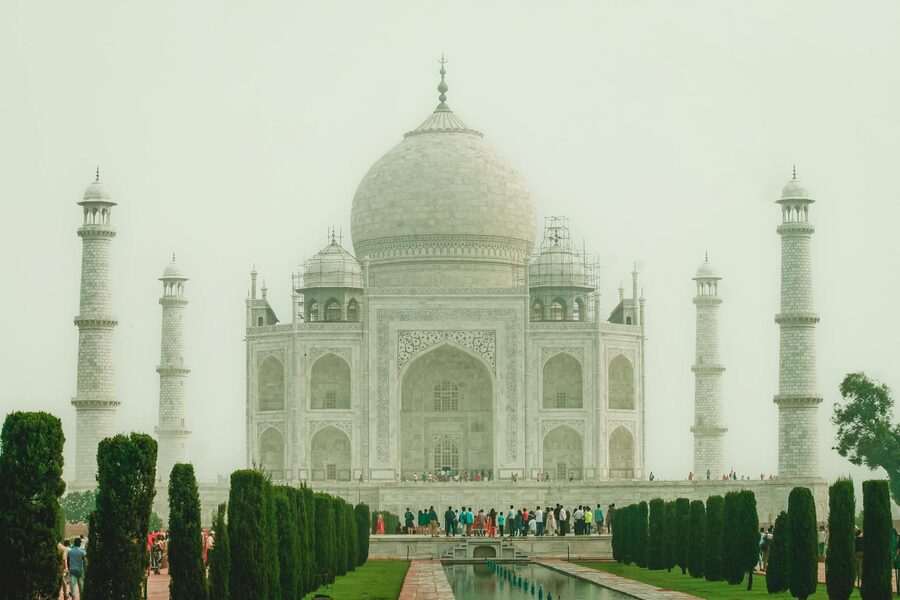
On any day of the week (except Friday, when it’s closed), the crowd curve is the same: quiet at sunrise, jammed from 10 to 2, thinning after 3. If your tour has a choice between morning and afternoon, morning wins — you get better light and cooler temperatures.
How to Get to Agra
There are three ways to cover the 230km between Delhi and Agra on a day trip, and your tour format has already picked one for you:
Yamuna Expressway by car: 3 to 4 hours depending on traffic and toll booth queues. The road is modern, four-lane, with decent rest stops. Most private car tours use this route. Depart before 6am to beat the Delhi rush and you’ll arrive at the Taj around 9:30am.
Gatimaan Express (train): About 100 minutes Delhi Hazrat Nizamuddin to Agra Cantt. It’s the fastest train in India — 160 km/h top speed. Executive Class gets you a meal and reclining seats. Tickets are hard to book on IRCTC as a foreigner without an Indian phone number, which is why paying a tour operator to handle them is worth it.
Shatabdi Express (train): Slightly slower (around 2 hours) but more daily departures. Some tours use this instead of the Gatimaan — either works. Both are comfortable, both have AC, both have an attendant service.
Don’t even consider driving yourself. Indian highway traffic rules are improvisational at the best of times and there’s no upside to taking on the stress when a private car with driver costs $62.
Tips That Will Save You Time
- Bring your passport. Ticketed entry requires photo ID. A drivers license or a phone photo of your passport will not cut it — they want the original.
- Leave your tripod, drone, and big camera bag in Delhi. Tripods and drones are banned. Camera bags get heavy security checks that eat 20 minutes of your visit.
- Wear shoes you can slip on and off. You cover them with provided shoe covers at the mausoleum steps — sandals or slip-ons make this 30 seconds instead of five minutes.
- Don’t bring food into the complex. It’s confiscated at security. Eat before you enter, or wait until your tour does lunch at whichever hotel they’ve pre-booked.
- Ask your guide about the Taj Museum. It’s inside the complex, free with your ticket, small enough to do in 20 minutes, and most guides skip it unless you ask. Worth the stop for the original Mughal miniatures and the building plans.
- Carry small rupee notes. Shoe covers and water are included with foreign tickets but tips for the rickshaw driver from the parking lot to the gate are not. Rs 50 is the standard.
- Book your tour for a day that isn’t Friday. I mentioned this already but it bears repeating because people still show up on Fridays and are devastated.
- If you’re going in winter, wear layers. Pre-dawn pickups in Delhi in December can be close to freezing and the train stations are unheated. By 11am you’ll be in the sun wanting to strip down to a t-shirt.
What You’ll Actually See Inside
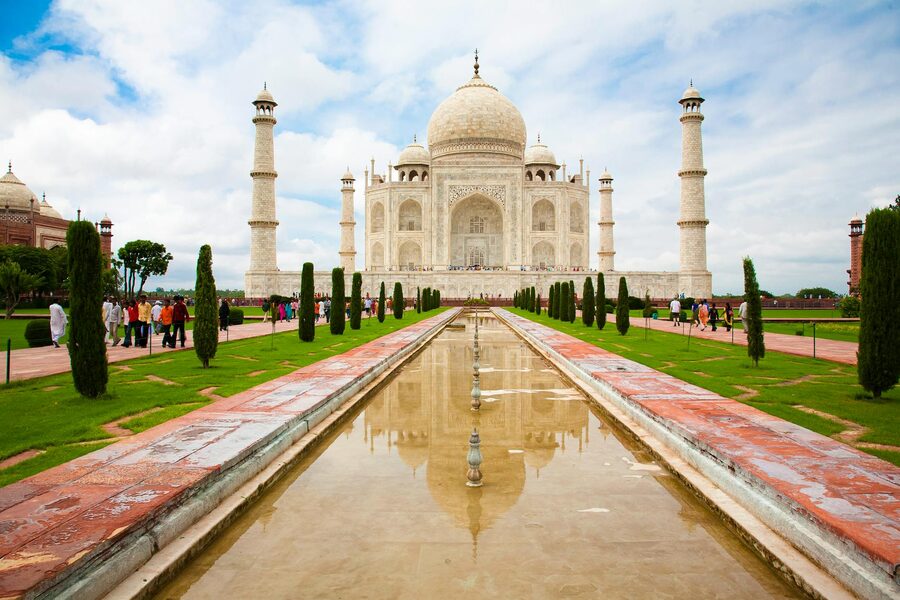
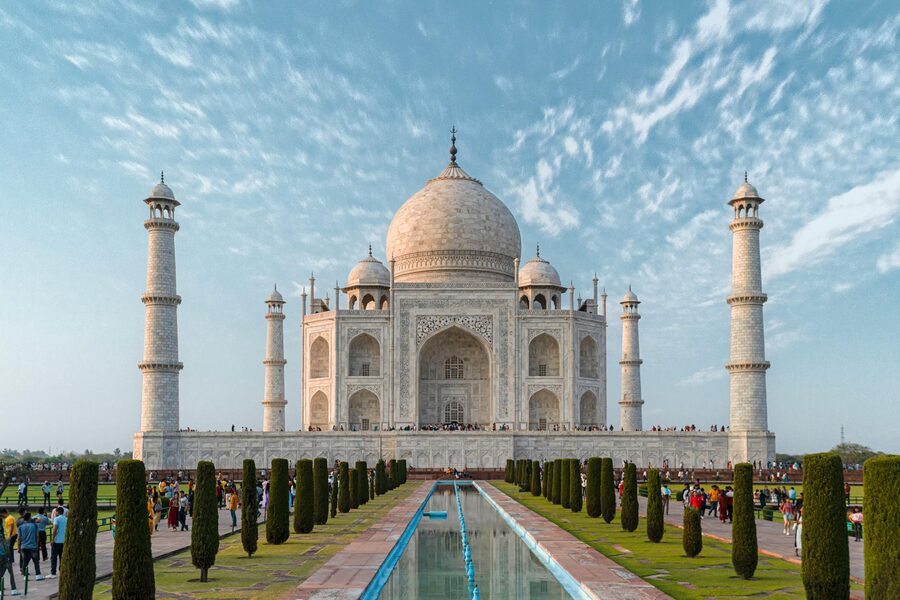
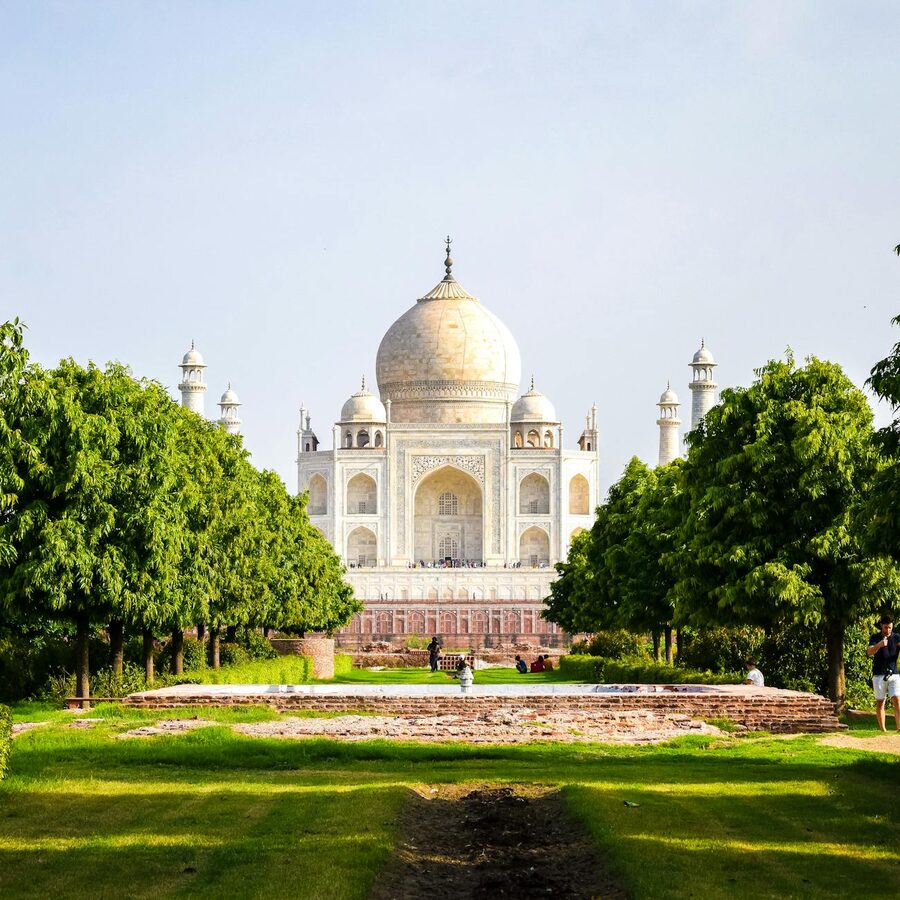
The Taj Mahal complex is much bigger than the white marble mausoleum most people picture. You enter through the Great Gate — a red sandstone archway that’s a masterpiece in its own right — and the first view of the Taj from the gate’s inner arch is the one that breaks people. Your guide will park you there for a photo, then let you walk down the central causeway toward the mausoleum.
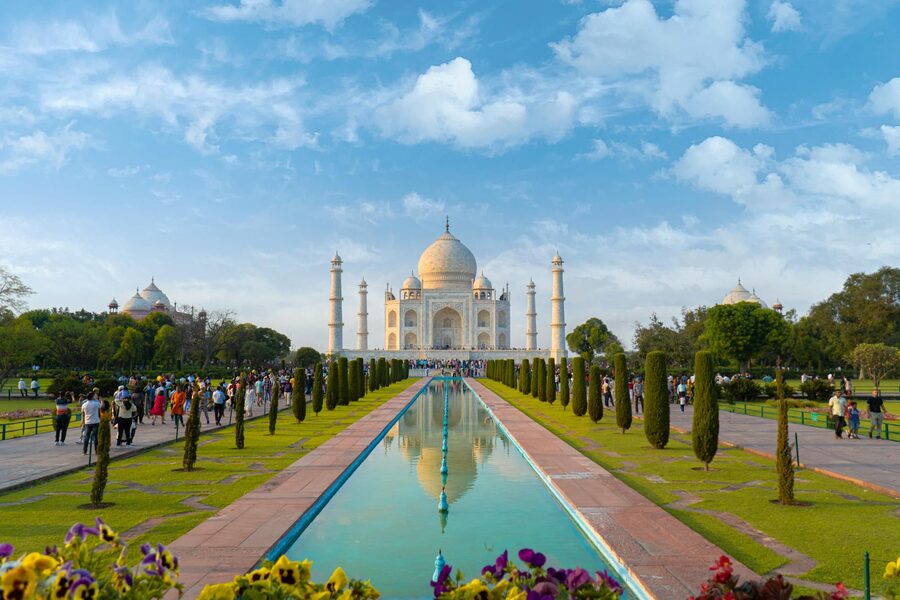
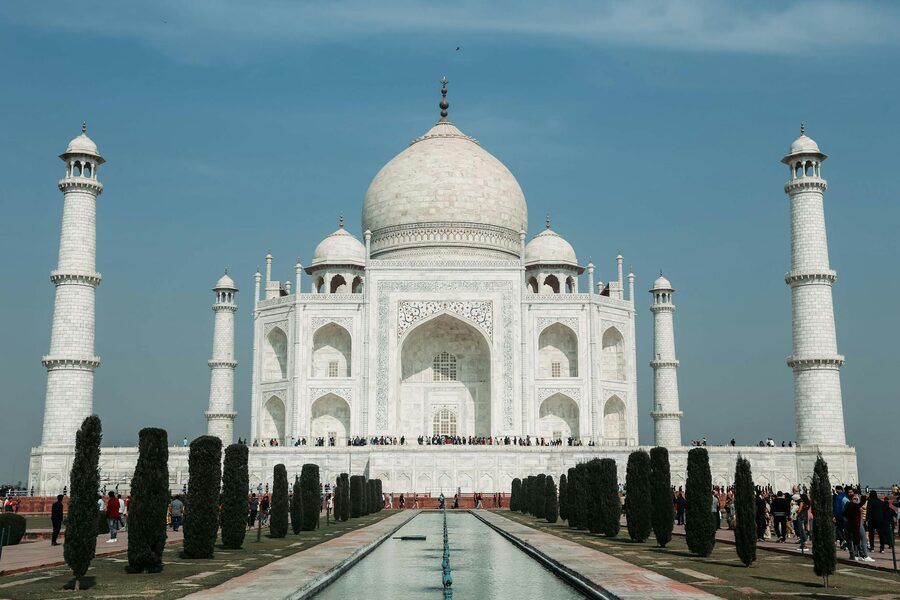
The reflecting pool splits the approach in half. Cypress trees line the water on both sides. There are fountains that sometimes run and sometimes don’t depending on maintenance. The formal Mughal char bagh gardens surrounding the pool are quartered into four symmetrical sections meant to represent paradise — that’s the Persian influence showing up.
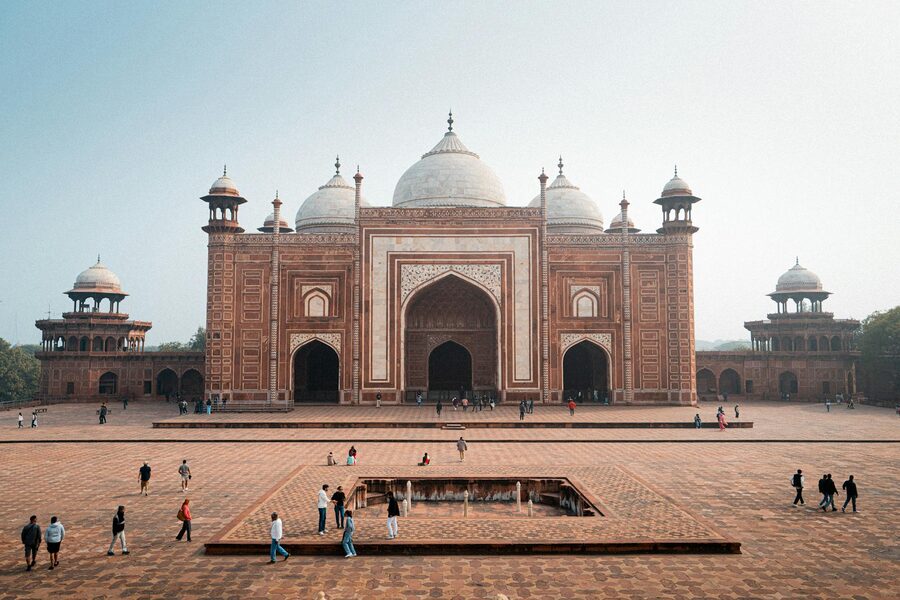
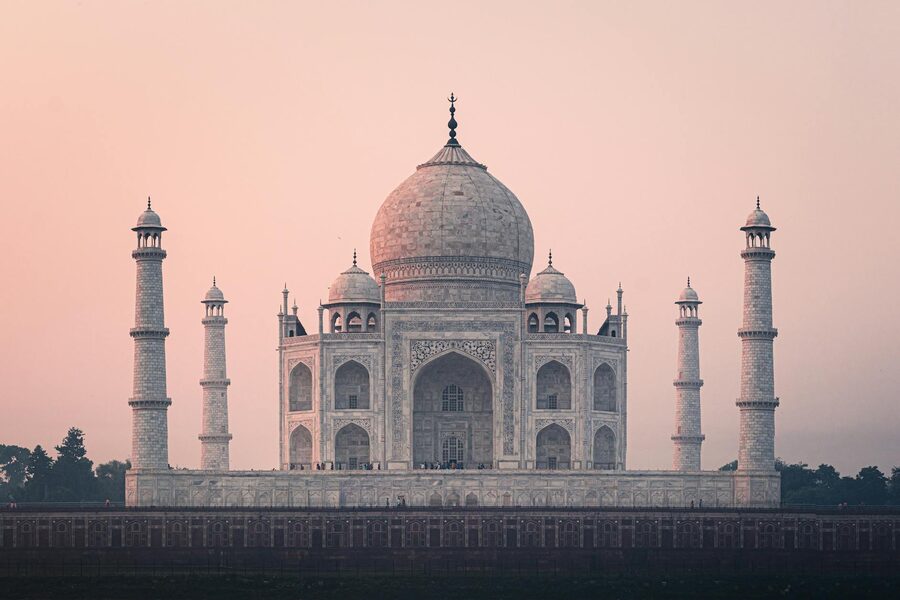
Either side of the mausoleum is flanked by a red sandstone building. The one on the west is an active mosque (closed to non-Muslims on Fridays, which is part of why the whole complex closes that day). The one on the east is a jawab — a mirror-image “answer” built purely for architectural symmetry. It serves no religious function. Both are worth a five-minute stop for the detail work.
Inside the mausoleum itself, the cenotaphs of Shah Jahan and Mumtaz Mahal sit in the central chamber under an eight-sided screen of carved white marble. These aren’t the actual tombs — the real burial crypt is one floor below, closed to visitors. The screen is covered in pietra dura inlay: precious stones set into the marble in floral patterns.
Some of the flowers have forty or more individual inlay pieces in a single bloom. Get close to the screen with a phone flashlight and you’ll see what the guide is talking about.
Agra Fort: The Other Half of the Day
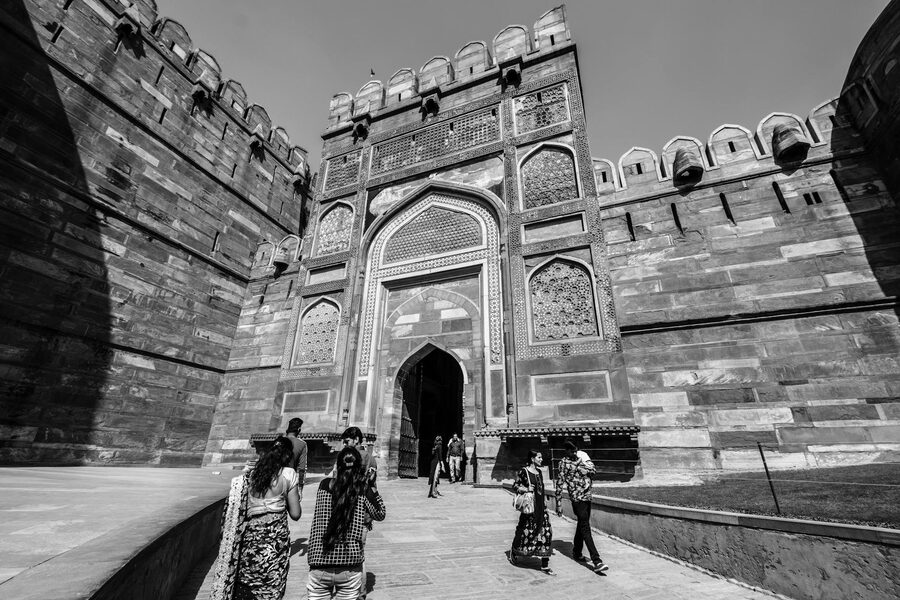
Every decent Delhi day tour adds Agra Fort to the itinerary because it’s 15 minutes from the Taj and it’s where Shah Jahan — the same emperor who built the Taj — was imprisoned by his own son Aurangzeb for the last eight years of his life. From the Musamman Burj, the octagonal tower where Shah Jahan was held, you can see the Taj Mahal across the Yamuna. Guides love this detail and so do I because it’s the kind of thing that actually sticks.
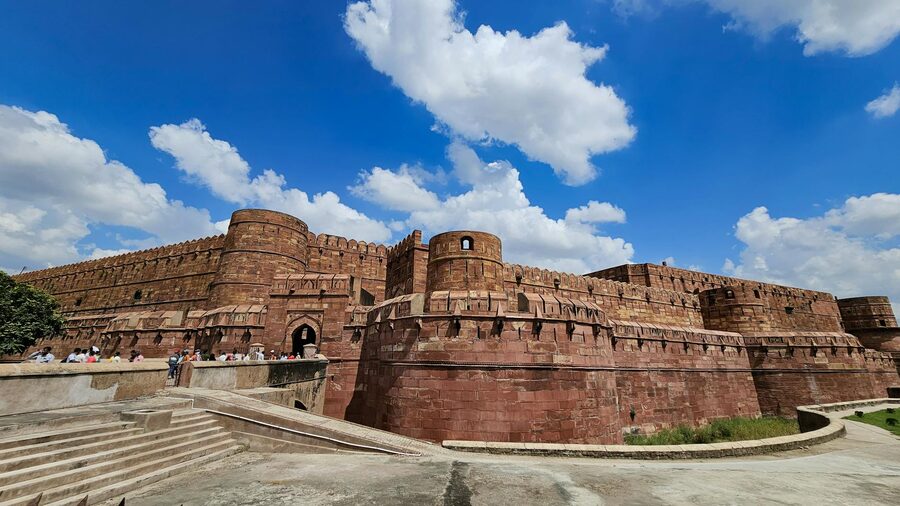
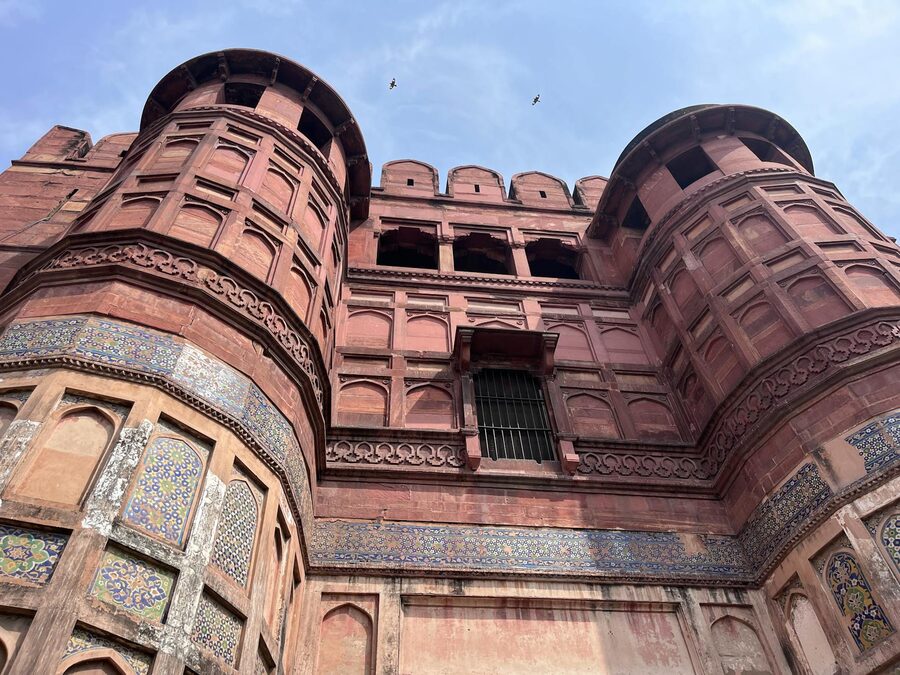
The fort is massive — only about a quarter of it is open to visitors, the rest is still used by the Indian Army. The open portion covers two main palace complexes: the red sandstone Jahangir Palace (earlier Mughal style, built by Akbar) and the white marble Khas Mahal and Diwan-i-Khas (later style, built by Shah Jahan). You can see the architectural shift from austere sandstone to ornate inlaid marble happen within a single building.
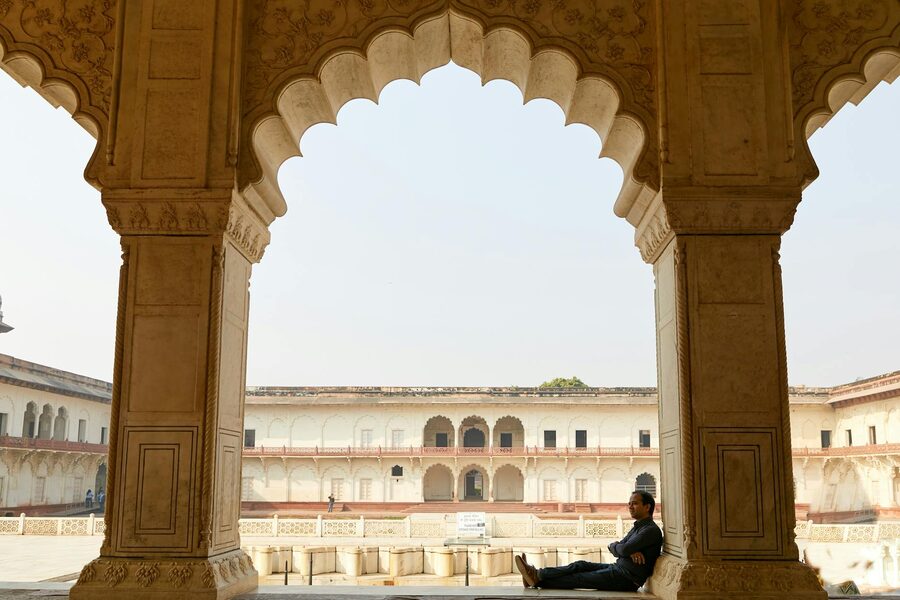
Budget 90 minutes here. Less than that and you’re just ticking a box; more than that and you start cutting into your return drive. Entry is Rs 650 for foreigners (often bundled into your tour price).
Is a Day Trip Enough?
Honest answer: barely. A day trip gets you the Taj, Agra Fort, and maybe a five-minute look at Itimad-ud-Daulah or Mehtab Bagh if you’re quick. What you miss is the leisurely second visit to the Taj at a different time of day (sunrise and sunset look like two different buildings), Fatehpur Sikri (the abandoned Mughal capital an hour outside Agra), and any actual exploration of Agra the city.
For 80% of first-time visitors to India, a day trip is the right call. You came to see the Taj Mahal, the day trip lets you see the Taj Mahal, and you free up the rest of your itinerary for other cities. If you’re a die-hard architecture person or on a dedicated Rajasthan trip, book an overnight — but that’s a different article.

Delhi: Where Your Day Starts and Ends
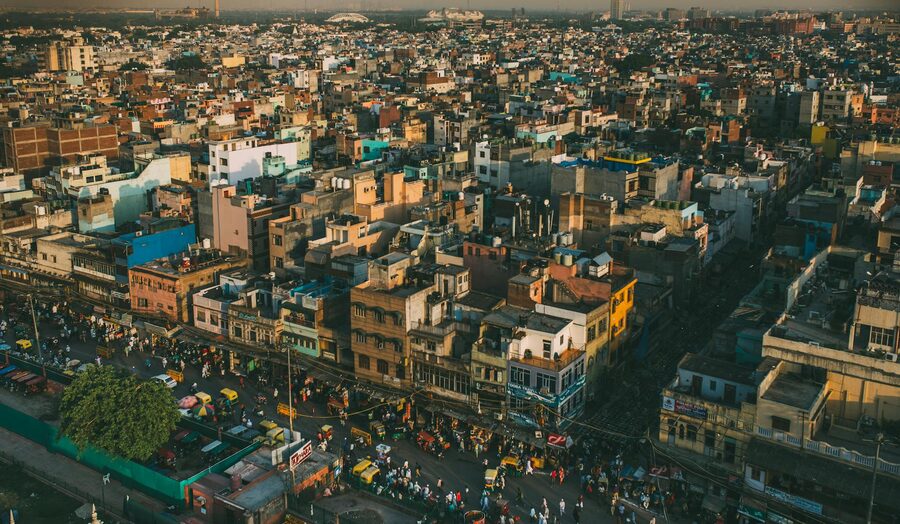
All three tours pick you up from your Delhi hotel and drop you back there. If you’re staying near Connaught Place, Karol Bagh, or Paharganj, pickup times are the earliest because you’re closest to either the expressway on-ramp or the railway station. Aerocity and South Delhi hotels get picked up 20–30 minutes later.
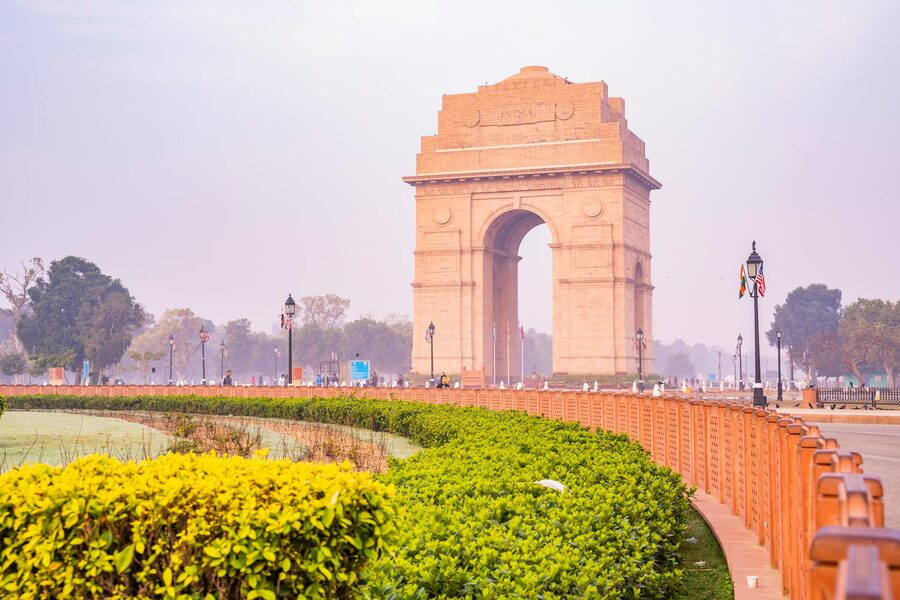
Before or after your Agra day, Delhi itself deserves at least a day for Red Fort, Jama Masjid, Humayun’s Tomb, and Qutb Minar. If you’re short on time, combine your Taj trip with a half-day Delhi city tour on another day — most operators will package them together at a discount.
What Else to Book on Your Trip
If India is one stop on a longer Asia itinerary, you’ll probably pair Delhi with Thailand, Vietnam, or both — they’re the standard South Asia-Southeast Asia loop. For Thailand I’d pair the Taj with an Ayutthaya day trip from Bangkok since it’s a similar deal: ancient capital, temple ruins, half-day out of the modern city. The Grand Palace and Wat Pho tour in Bangkok is another obvious match — more royal architecture, more history, a solid first day in any Asian capital.
If you’re flying into Delhi and out of Ho Chi Minh City, book the Cu Chi Tunnels tour on the Vietnam side for a similar half-day format, and do a Halong Bay cruise from Hanoi if you’ve got an extra day. For Cambodia, the Angkor Wat sunrise tour from Siem Reap is the closest thing in Southeast Asia to the Taj experience — giant monument, brutal early wakeup, once-in-a-lifetime payoff.
And if you want to keep it Thailand-only, the White Temple day trip from Chiang Rai and a Chao Phraya dinner cruise in Bangkok are my two favorite evening bookings anywhere in the region.
Wherever you go next, book the Taj first. It’s the one experience where “I’ll figure it out when I get there” does not work — tours sell out, Fridays exist, and you’ll end up paying triple at the gate for the privilege of waiting in line. Spend the 90 seconds booking in advance and let someone else drive.