Japanese calligraphy gives you more than a souvenir: it lets you slow down and try a traditional art form with your own hands. In this 90-minute Asakusa workshop, I like the mix of patient, English-speaking instruction and practical brush practice, plus the chance to make a kanji artwork to take home. Instructors have included Mei, Kiyo, and Loc, though the teacher may vary by session.
One consideration: this is a short introduction, not an advanced calligraphy course. You’ll learn basic strokes and make a personal piece, but you should book it for the hands-on cultural experience rather than expect mastery in an hour and a half.
- Key points to know before you book
- Why calligraphy makes a good Asakusa break
- The 90-minute lesson, step by step
- Brush, ink, and the fude pen
- Choosing your kanji and making a keepsake
- The instructors and the learning atmosphere
- What .85 gets you
- Planning your visit to Asakusa
- Who will enjoy this workshop most
- Should you book the Asakusa calligraphy class?
- FAQ
- How long is the calligraphy workshop?
- Where does the class meet?
- Is the workshop suitable for beginners?
- Is instruction available in English?
- What materials are provided?
- Can I take home the artwork I make?
- Is there an age limit?
- The Best Of Tokyo!
- More Workshops & Classes in Tokyo
- More Tours in Tokyo
- More Tour Reviews in Tokyo
- Not for you? Here's more nearby things to do in Tokyo we have reviewed
Key points to know before you book
- You get 90 minutes of guided practice: The session moves from a brief introduction to tools, strokes, kanji, and your finished artwork.
- Beginners are welcome: No prior calligraphy experience is required, and the instructor explains the basics in English.
- You use two kinds of writing tools: Practice with a traditional brush, then try a modern fude pen for more controlled lines.
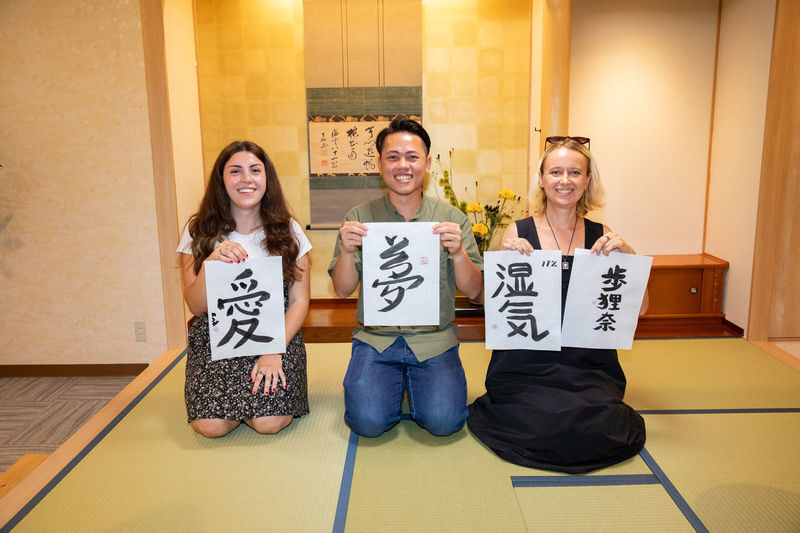
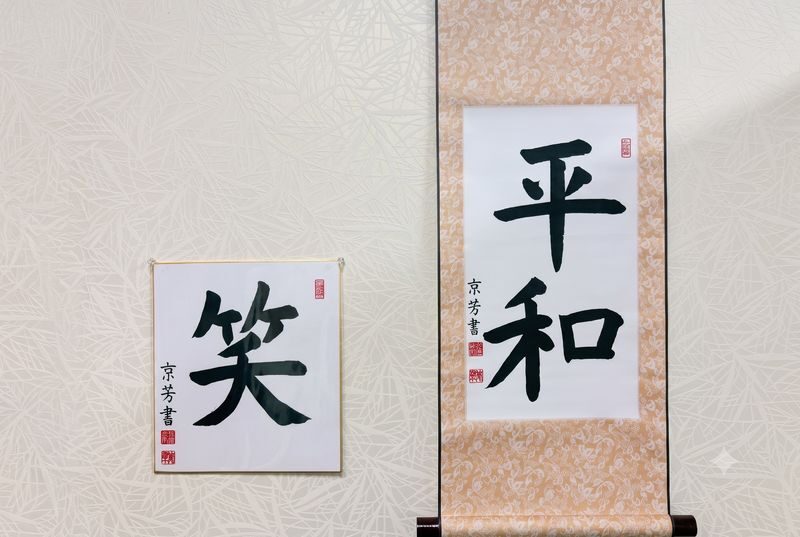
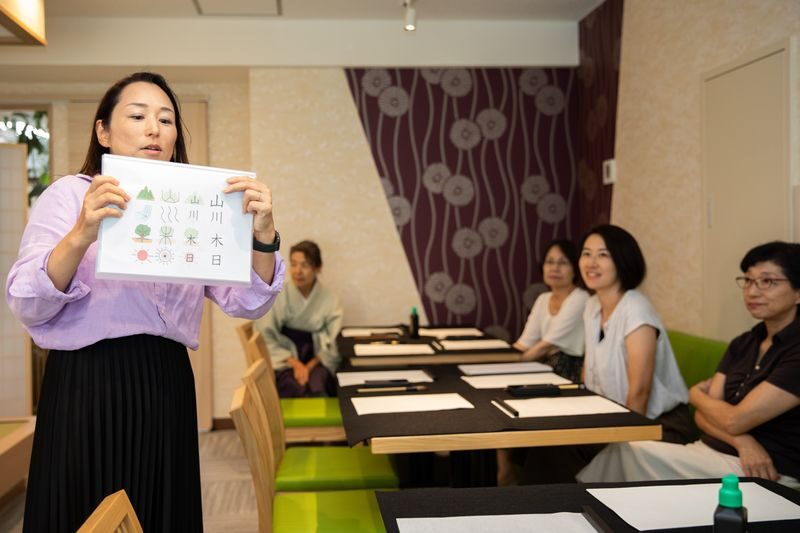
- You choose a character for your own piece: Sample designs help you select a kanji to write on a scroll, postcard, or another decorative item.
- The workshop is in central Asakusa: Meet at Tokyo Tourist Lounge Asakusa, a useful cultural break while you’re spending time in the area.
- The listed price starts at $37.85: Materials and your artwork are included, so you’re paying for guided instruction and a keepsake, not just a seat in a room.

👉 See our pick of the 25 Best Guided Tours In Tokyo
Why calligraphy makes a good Asakusa break
Asakusa is a fitting place to try Shodo, the art of Japanese brush writing. Calligraphy is both writing and visual expression: the shape, spacing, and weight of each stroke matter alongside the character’s meaning. Even a short beginner class can help you notice those details in a way that simply looking at a finished work cannot.
I like that the workshop is built around doing, not just watching. You learn a little about the Japanese language and calligraphy, then get a brush in your hand and practice. That balance makes the session approachable if you’re curious about Japanese culture but don’t want a lecture or a long formal lesson.
The setting also gives you a change of pace from sightseeing. You’ll meet at Tokyo Tourist Lounge Asakusa, on the fifth floor of Collection Kaminarimon Building at 2 Chome-18-15 Kaminarimon, Taito City. The workshop is described as a small-group activity, which should make it easier to ask questions and get individual guidance than in a large class. No exact group size is specified, so don’t count on a particular number of participants.
You can also read our reviews of more tours and experiences in Tokyo


The 90-minute lesson, step by step
The session begins with about 10 minutes on the Japanese language and the history of calligraphy. This short introduction gives you context for the activity without using up most of the time on background. It’s useful if you’re new to kanji, though the focus is still on making your own work rather than studying language in depth.
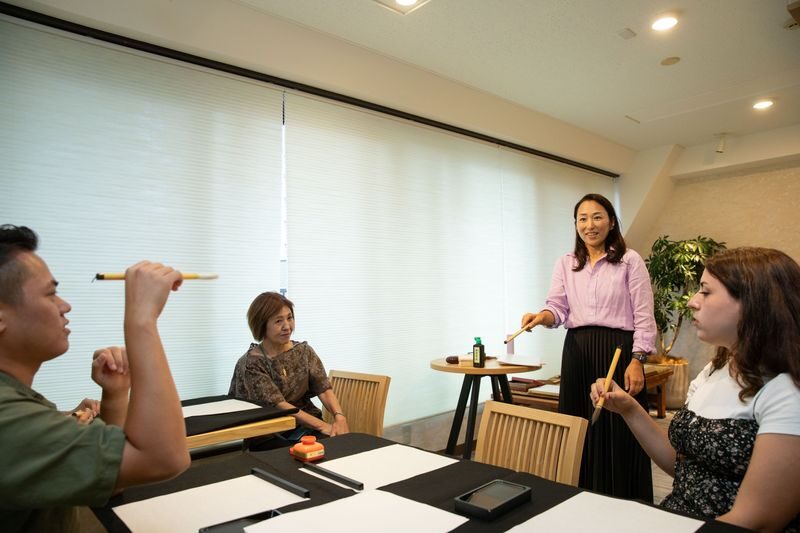
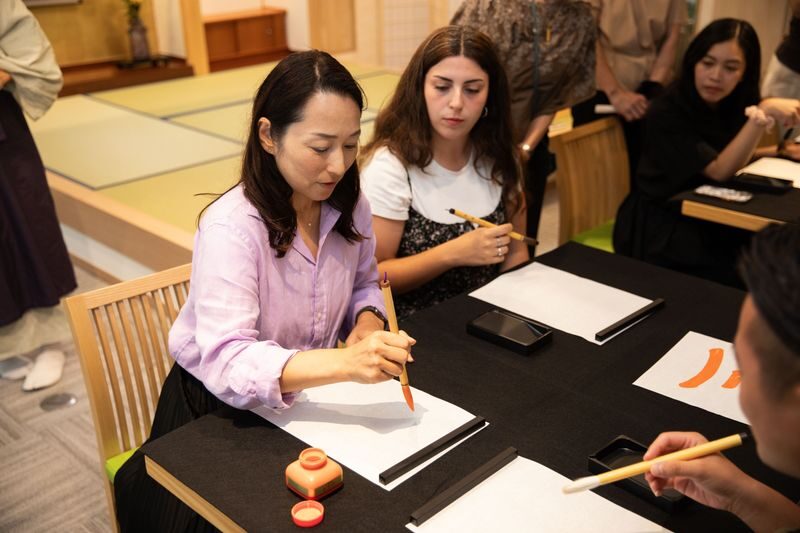
Next comes a 10-minute introduction to the tools and basic brush techniques. Calligraphy brushes respond differently from ordinary pens: pressure, angle, and movement affect the line. You’ll get an initial explanation before practicing, so you don’t have to arrive knowing how to hold or guide the brush.
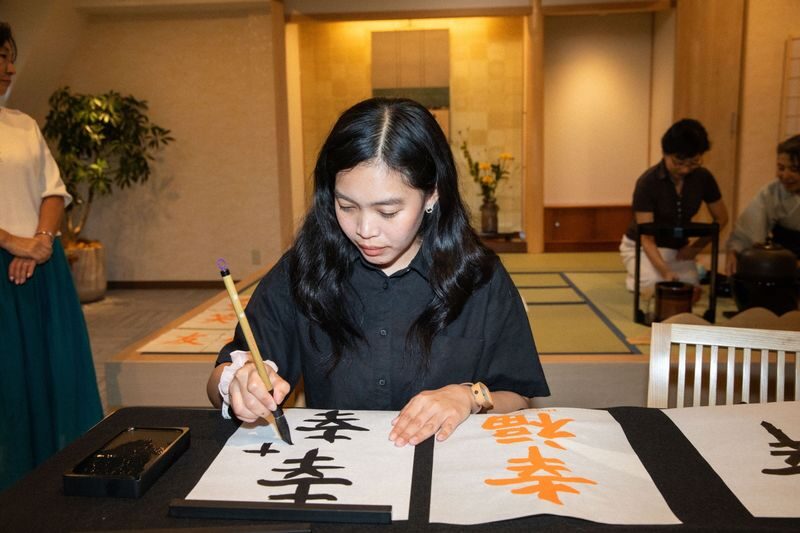
The first practice section lasts about 15 minutes and focuses on basic strokes with a traditional calligraphy brush. This is where you can start to get a feel for controlling ink and making deliberate marks. Expect practice, not instant perfection. The point is to learn how the brush behaves and build a little confidence before moving on to a full character.
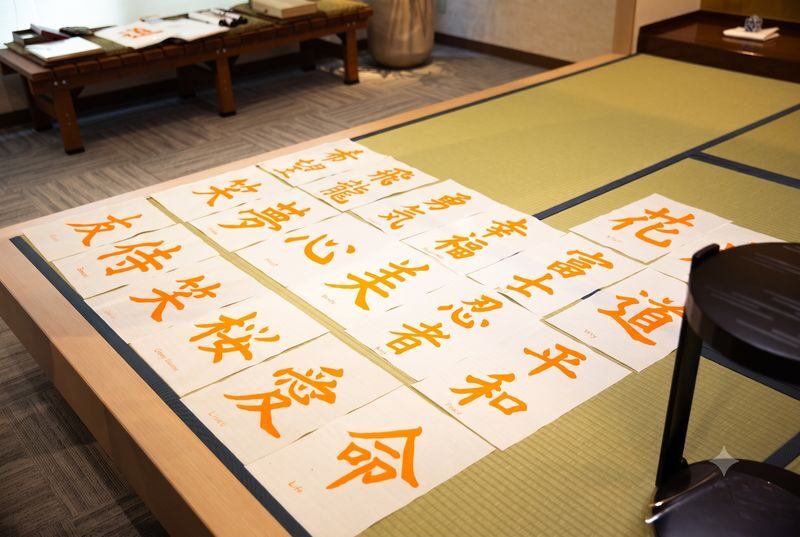
Then you’ll choose a favorite kanji from several sample designs and spend about 20 minutes writing it yourself. Having examples to choose from helps if you’re not sure where to start. You can concentrate on the character’s shape and stroke order, with the instructor there to guide your attempts. Since this is a beginner class, it’s reasonable to treat your first efforts as part of the learning, not as the finished product.
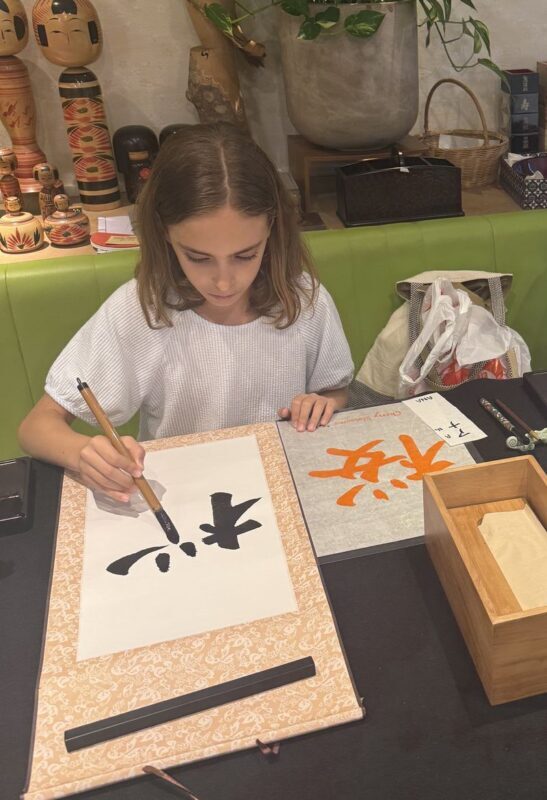
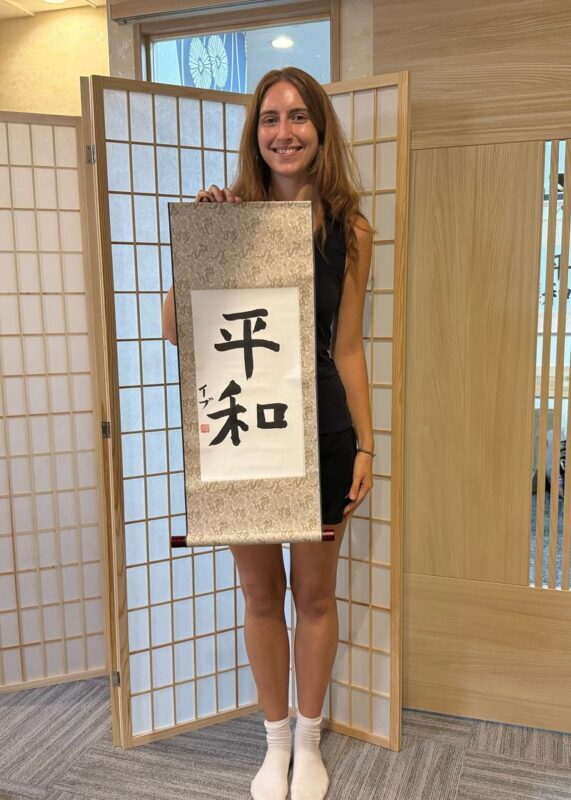
The final 35 minutes are set aside for your own artwork. You’ll write your chosen kanji on a hanging scroll, postcard, or another decorative item, creating a piece to take home. That generous block of time is a real strength: you’re not simply handed a pre-made souvenir at the end. You have time to practice and then make something personal, with the work and small imperfections that come with learning a new skill.
Brush, ink, and the fude pen
Traditional brushes are central to the class, and using one is a big part of what makes this feel different from a standard craft activity. You’ll practice brush control and stroke order, two fundamentals that affect how a character looks and feels. The instructor’s demonstrations and corrections matter here, especially if you’ve never used a calligraphy brush before.
The workshop also includes a modern fude pen. It offers a more controlled way to make lines, which can be helpful when you’re learning or refining a character. Having both tools lets you compare the feel of traditional brush writing with a pen designed for brush-style marks. You don’t need to bring either tool, or other calligraphy supplies, since the required materials are provided.
Choosing your kanji and making a keepsake
The choice of kanji gives the artwork a personal touch. You’ll select from sample designs, then write your chosen character on a decorative item such as a hanging scroll or postcard. The available formats may vary, as the activity also describes the final piece more generally as a decorative item.
If you’re choosing a character because it has a special meaning for you, take a moment to check that you understand what it means before writing it. The session includes an introduction to Japanese language, but it isn’t described as a detailed translation service. The sample designs give you a practical starting point, and the instructor can help you work on the writing itself.
Your finished piece is the most tangible value in the workshop. It’s made by you, during the class, and serves as a reminder of a specific afternoon in Tokyo. That makes it more personal than a generic souvenir, though the result will naturally reflect your experience level. Come ready to enjoy the process, not to produce flawless calligraphy on the first try.
The instructors and the learning atmosphere
English-speaking instruction is included, which makes a real difference in a class built around precise movements and unfamiliar terms. Instructors named for this workshop include Mei and Kiyo, with Loc also mentioned in connection with a session. The instructor may differ on your date, but the class is set up for English-speaking participants and beginners.
The strongest feature of the teaching is its encouraging, patient approach. Mei has been praised for explaining the basics clearly and for being patient with learners. Kiyo has also been described as a strong teacher who encouraged plenty of practice. Those qualities are especially useful in calligraphy, where a rushed demonstration can leave you unsure how to reproduce a stroke.
Families are welcome, and the activity has no age limit. One family with a toddler found that the instructor made an effort to keep the child entertained, but that is an example rather than a promise for every session. If you’re bringing a young child, consider whether they’ll be comfortable with a 90-minute class that includes focused practice.






What $37.85 gets you
The workshop starts at $37.85 for the 90-minute session. That price includes the class, traditional brushes, required calligraphy materials, a modern fude pen, an English-speaking instructor, and your finished artwork. You don’t need to budget separately for the basic supplies used during the activity.
For that price, the value depends on what you want from the class. If your goal is a quick, guided introduction to Shodo and a personal keepsake, the combination of instruction, practice, and materials makes sense. If you’re looking for a long course or advanced technique, this is not the right format. The 90 minutes are carefully divided among background, practice, and making your final piece.
Other personal expenses are not included. No other major costs are specified for the workshop itself, but check the current booking details for the price on your chosen date and package.
Planning your visit to Asakusa
Arrive at the meeting point five minutes before your scheduled start. The address is Tokyo Tourist Lounge Asakusa, Collection Kaminarimon Building, 5F, 2 Chome-18-15 Kaminarimon, Taito City, Tokyo 111-0034. The activity asks you to show a mobile voucher, so have it ready when you arrive.
The voucher is valid only for the date and time specified on your booking. Confirmation is expected within minutes; if it doesn’t arrive, contact customer support. You can cancel for a full refund if you do so at least 24 hours before the activity date, using local destination time.
The class lasts 90 minutes, which makes it easy to fit into a day in Asakusa without giving up a full afternoon. It’s a good option if you want a quieter activity between sightseeing stops, or if you’d like to do something hands-on in the neighborhood rather than spend the whole day moving from one landmark to the next.
Who will enjoy this workshop most
I’d choose this class if you’re new to calligraphy and want a low-pressure way to try it. The beginner structure, English instruction, supplied materials, and sample kanji make it accessible without much preparation. You don’t need to know Japanese or bring any tools.
It can also work well for families, couples, or anyone who likes making things. The final artwork gives the activity a clear purpose, and the short practice exercises help you build toward it. If you’re traveling with a child, remember that there is no age limit, but the class still involves a stretch of seated, focused activity.
You may prefer another experience if you want a specialist-level lesson, a longer course, or a tour focused mainly on Asakusa’s history. This workshop offers a concise introduction to one art form, not an all-purpose cultural tour. Its appeal is the chance to learn by doing, with a piece of your own to carry home.
Should you book the Asakusa calligraphy class?
Book it if you want a practical, beginner-friendly cultural activity and like the idea of making your own Japanese calligraphy artwork. The lesson’s clear sequence, English instruction, and dedicated time for a finished piece make it a useful choice for a relaxed 90-minute stop in Asakusa.
Skip it if your main goal is advanced calligraphy training or a deep study of Japanese writing. For most curious first-timers, though, this is a sensible way to spend part of an Asakusa visit: you’ll learn basic brush skills, try a fude pen, and leave with a souvenir you made yourself.
Tokyo Japanese Calligraphy Workshop in Asakusa
“A huge thank you to Kiyo and Loc for a wonderful calligraphy experience. We had such a special time learning about the art of Shodo. Kiyo was a fan…”
FAQ
How long is the calligraphy workshop?
The workshop lasts 90 minutes. It includes a short introduction, tool and brush instruction, practice, kanji selection, and time to create your own artwork.
Where does the class meet?
Meet at Tokyo Tourist Lounge Asakusa, Collection Kaminarimon Building, 5F, 2 Chome-18-15 Kaminarimon, Taito City, Tokyo 111-0034.
Is the workshop suitable for beginners?
Yes. No prior knowledge or calligraphy experience is required. The instructor introduces basic techniques and guides you through practice.
Is instruction available in English?
Yes. An English-speaking calligraphy instructor is included.
What materials are provided?
Traditional brushes and the required calligraphy materials are provided, along with a modern fude pen.
Can I take home the artwork I make?
Yes. You create a calligraphy artwork to take home. The activity describes options including a hanging scroll, postcard, or another decorative item.
Is there an age limit?
No. The activity has no age limit.