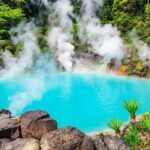
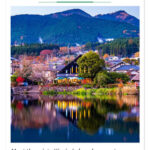
Beppu’s hot springs are the star of this day out: at Umi Jigoku, a deep blue pool sends up clouds of steam, while Kamado Jigoku gathers several hot-spring pools in one compact stop. I like the contrast between those geothermal sights and the slower pace of Yufuin, with its lanes, cafés, and views toward Mount Yufu.
I also like the option of riding the dark-green Yufuin no Mori train, whose wood-paneled interior and large windows make the journey part of the outing, not just transport. Guides such as Li, Coco, and Kevin have been praised for clear explanations and attentive help, a real plus on a busy day with several stops.
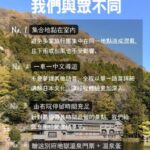
The main drawback is that the advertised routes do not all match. Some packages include the train or Dazaifu, while the detailed schedule also lists a zoo and does not show either stop. Confirm exactly which route and tickets your chosen option includes before booking, and expect a full day with limited time at each place.
- Key points before you book
- A big Kyushu day, with one important booking check
- Riding the Yufuin no Mori, if your package includes it
- Umi Jigoku: Beppu’s steaming blue pool
- Kamado Jigoku and the other Beppu stops
- Yufuin: allow time for a proper wander
- Dazaifu and the wildlife park: route-specific extras
- The guide and the pace
- Practical details for the day
- Should you book this Fukuoka day trip?
- FAQ
- Does every package include the Yufuin no Mori train ticket?
- Is admission to Umi Jigoku included?
- How long does the tour last?
- How much time is scheduled in Yufuin?
- Does the tour visit Dazaifu Tenmangu Shrine?
- What is included in the tour price?
- Where does the tour return, and should I book something afterward?
- More Spa & Hot Springs in Yufu
- More Tours in Yufu
- More Tour Reviews in Yufu
- Not for you? Here's more nearby things to do in Yufu we have reviewed
Key points before you book
- The train depends on your package: Some options are sold as Yufuin no Mori tours, but the train ticket is not included in every option.
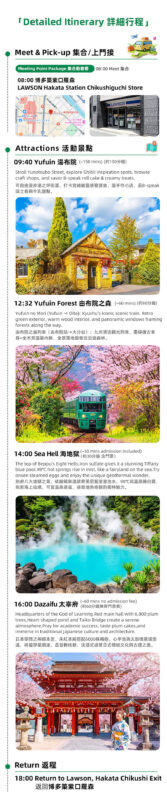
- Beppu’s hot-spring stops are brief: The schedule allows 30 minutes at Umi Jigoku and a short visit to Kamado Jigoku.
- Yufuin gets more time: One route gives the town 150 minutes, while the detailed day schedule shows a Yufuin visit at 14:30 without stating its duration.
- Route details vary: Dazaifu, Mount Yufu’s trailhead, Nyoirin-ji Temple, and Kyushu Natural Zoological Park appear in different descriptions, not all in the same timed itinerary.
- Expect an early start and late return: Departure is 08:30, with an estimated return to Hakata Station’s Chikushi Exit at 18:30.
- Bring extra spending money: Meals, drinks, personal purchases, and some attraction admissions are not included in every package.
A big Kyushu day, with one important booking check
This tour is designed to connect several places that can be awkward to combine on your own in one day. From Fukuoka, you may visit Beppu’s hot springs and Yufuin, with some versions adding the Yufuin no Mori train, Dazaifu, a temple, a mountain viewpoint, or a wildlife park.
That variety is its strongest selling point, but it also means the tour is not one fixed itinerary. The supplied schedule and package descriptions differ on both the route and what is included. Before you pay, check the exact package name, route, admissions, and whether the train ticket is part of the price. A title that mentions the train does not by itself confirm you have a rail ticket.
The listed starting prices range from $44.25 overall, with options shown at $55.30 for the Beppu classic route, $63.95 for a version that includes the Sea Hell ticket but not the train ticket, and $98.30 for a Yufuin no Mori train tour with a Sea Hell ticket. Prices can change, so treat these as a guide rather than a quote.
The lower-priced option may be good value if you want transport between several distant stops and are happy to pay separately for some admissions. A higher price may make sense if it includes the rail ticket you want, but compare the package details rather than assuming that all versions cover the same sights.
You can also read our reviews of more tours and experiences in Yufu
Riding the Yufuin no Mori, if your package includes it
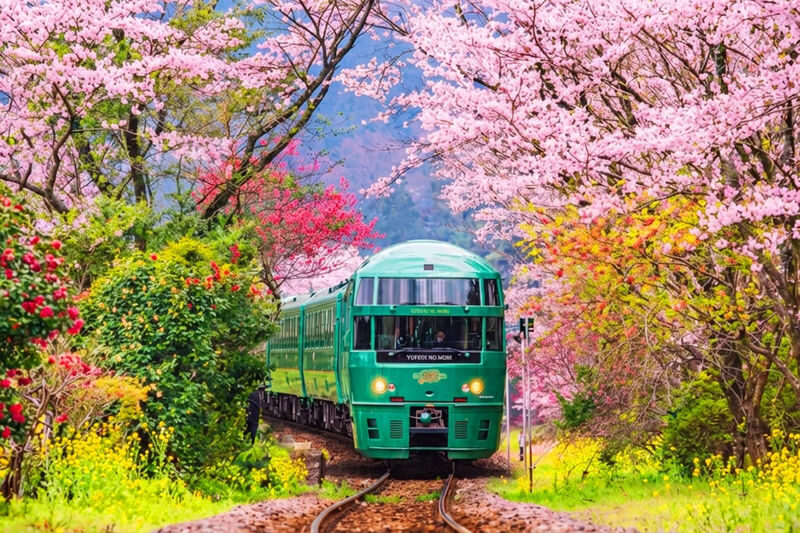
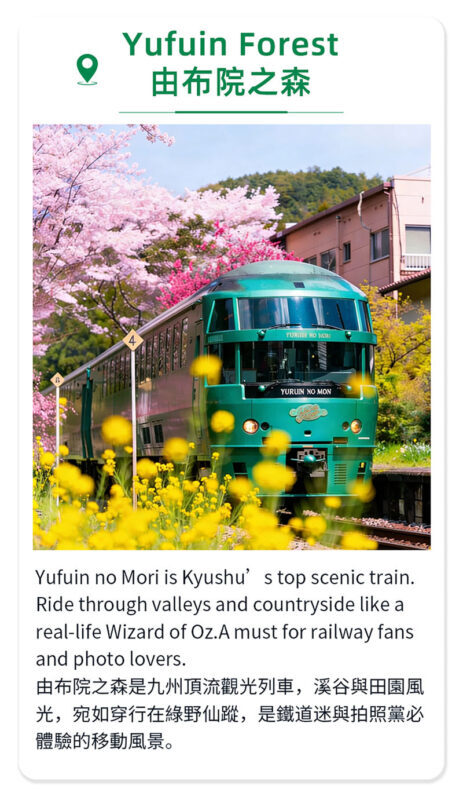
The Yufuin no Mori is a sightseeing train with a dark-green exterior and a warm, wood-lined interior. Large windows frame forest, valley, and rural views along the route. If you enjoy rail journeys, this is more than a way to get from one station to another: it gives you a change of pace between town visits and hot-spring stops.
The described train segment runs from Yufuin Station to Oita Station. That detail matters because it is not the same as a round-trip rail outing from Fukuoka. The tour also describes round-trip transfers from a meeting point, so check how the bus and train legs fit together in the package you are considering.
Most important, the train ticket is explicitly excluded from at least one option. Another option is described as a Yufuin no Mori tour, but you should still confirm the specific ticket and route before booking. If the rail ride is your main reason for going, do not leave this until departure day.
The train’s appeal is the passing scenery and the distinctive carriage, not a long stop to explore along the way. Take a seat by the window if you can, and keep your camera handy, though the actual views depend on weather and the route.
Umi Jigoku: Beppu’s steaming blue pool
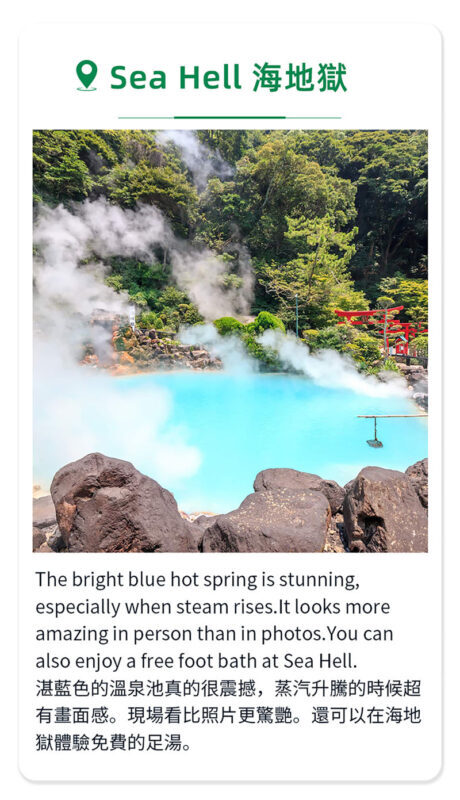
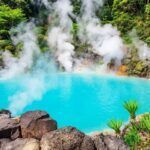
Umi Jigoku, or Sea Hell, is one of Beppu’s best-known hot-spring sights. The pool’s striking blue color comes from iron sulfate in the water, and steam rises from its surface. The spring is extremely hot, so this is a place to look and take photos, not to bathe.
The day schedule allows about 30 minutes here. That is enough for a focused visit to the pool and a quick look around, but not a leisurely exploration. There may also be hot-spring-steamed eggs available to try; food and drinks are generally listed as extra expenses, so budget for purchases.
Admission is not included in every package. One option includes the Sea Hell ticket, while the Beppu classic route is described as having tickets included. Check the exact terms, since package names and inclusions differ.
Umi Jigoku is visually memorable, but it is only one of Beppu’s hot-spring sites. If you want a long, slow soak, this is not that kind of stop. It is a short introduction to Beppu’s geothermal character, with the steam and unusually colored water doing most of the talking.
Kamado Jigoku and the other Beppu stops
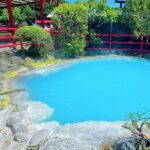
Kamado Jigoku, also called Kitchen or Oven Hell, is described as a small collection of six hot-spring pools in one garden. Their colors shift with light, and the site includes forceful jets of hot water and steam. The account behind its name connects the spring’s heat with cooking offerings for a shrine festival.
The timetable places this stop after Umi Jigoku, but does not give a clear duration. Like Sea Hell, it is a geothermal attraction rather than a bathing facility. Admission is listed as an extra for some options, so confirm whether your selected package covers it.
Other route descriptions mention Nyoirin-ji Temple, known for thousands of frog statues, and the trailhead for Mount Yufu. The temple’s frogs are associated with safe return, while Mount Yufu is a striking volcanic peak with a gentle path near the trailhead. A short visit there can offer fresh air and mountain views, but it is not the same as climbing to the summit.
These sights sound appealing, but they are not all shown in the timed schedule. Treat them as route-specific possibilities, not guaranteed stops, unless your chosen package spells them out.
Yufuin: allow time for a proper wander
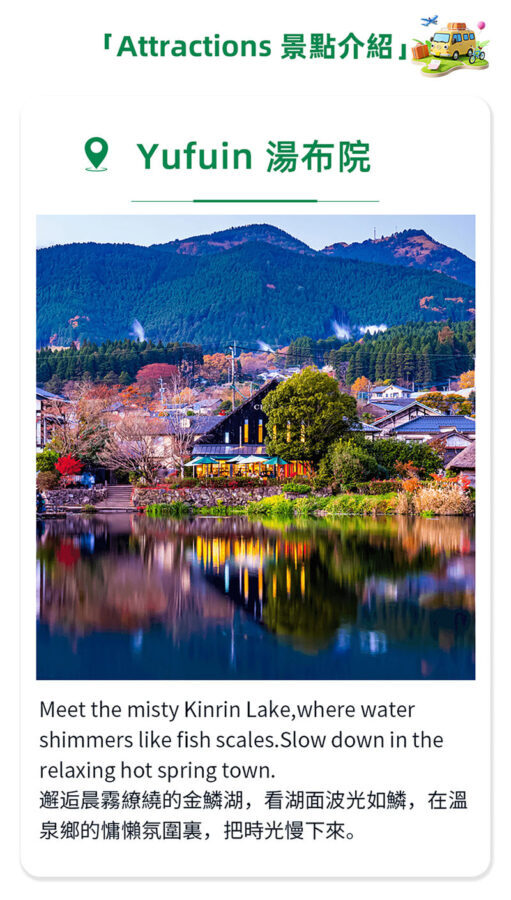
Yufuin is the town stop most likely to reward a little unhurried exploring. One route allots 150 minutes, enough to walk Yunotsubo Street, browse handicraft shops, pause for a sweet, and head toward Lake Kinrin. The town sits among mountains, which gives it a quieter feel than a large city.
Yunotsubo Street is the practical place to browse and snack. B-speak Swiss rolls and milk desserts are among the treats highlighted for the area, while Lake Kinrin is known for its misty appearance in the morning. The scheduled visit appears to happen in the afternoon, so do not count on seeing the lake in morning mist on this tour.
A different itinerary description gives Yufuin a 14:30 arrival but no stated departure time. That makes the 150-minute allowance useful only if it applies to your package. Check the actual schedule if you care about how much time you will have for the shops or lake.
Mount Yufu forms a scenic backdrop, but the town and the trailhead are separate kinds of stops. If you want a walk in the hills, confirm that the trailhead is included and ask how much time is set aside. The tour is built around several places, so a short nature stop should not be mistaken for a substantial hike.
You can also read our reviews of more tours and experiences in Yufu
Dazaifu and the wildlife park: route-specific extras
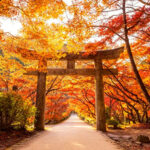
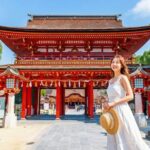
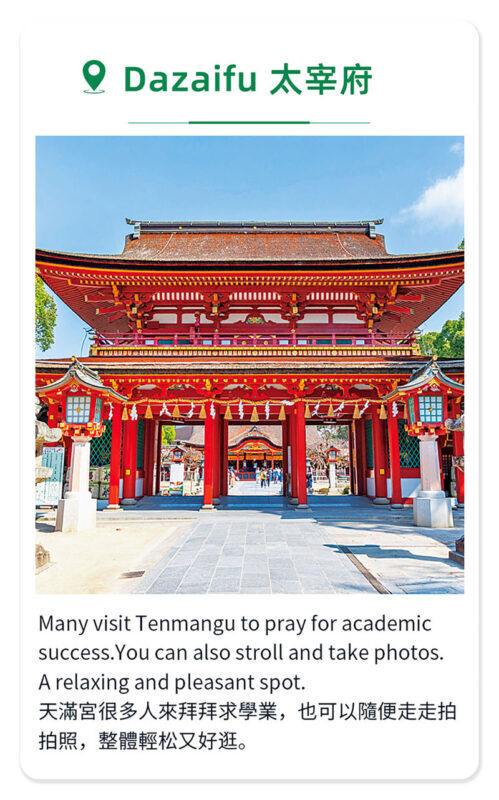
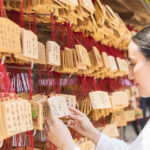
Dazaifu Tenmangu Shrine appears in the tour’s highlights as a final stop, with time to pray for academic success and try Umegae Mochi, a local sweet. The shrine is described as Japan’s head shrine for the god of learning. Yet Dazaifu is not included in the detailed timed schedule provided, which instead lists Beppu, a zoological park, and Yufuin.
Kyushu Natural Zoological Park is also listed in that schedule. Its animal-shaped jungle buses travel through the park, where visitors can feed animals such as lions, elephants, and black bears, and see animals including giraffes, rhinos, and zebras. Admission is not included in the general inclusions, and the listed stop has a 12:25 time but no duration.
These are very different additions to the day. Dazaifu brings shrine culture and local food; the zoological park is a family-oriented animal visit. Do not assume you will see both, or either, based on the broad tour title. Confirm the selected route before making plans around a specific stop.
The guide and the pace
The clearest strength beyond the sights is guide support. Several named guides, including Li, Coco, Kevin, Yang, Zhang, and Daisy, have been singled out for friendly service, clear explanations, humor, patience, and help with timing or recommendations. The guide language is listed as English, Chinese, or Japanese, but the exact language available for your departure should be confirmed.
That assistance can be especially useful when the day involves multiple attractions, ticket arrangements, and a long drive. A guide can explain the stops and keep the group moving, while you avoid sorting out every transfer yourself. The trade-off is that a group schedule gives you less freedom than an independent trip.
The pacing is the main concern. One account of the day describes the itinerary as extensive and a little rushed, while others found their day smooth and well managed. Both can be true: a helpful guide can keep things orderly, but cannot turn a short stop into a slow afternoon.
Practical details for the day
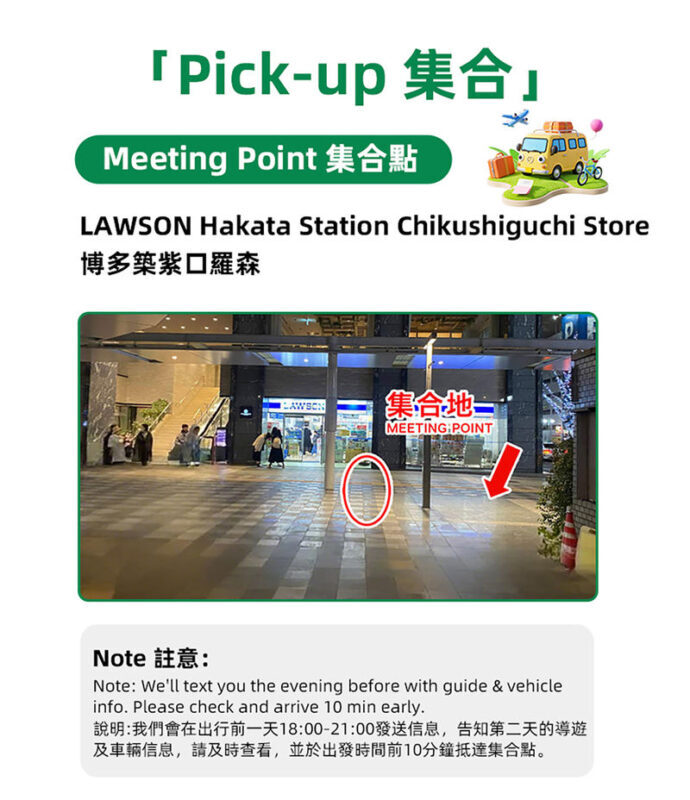
The departure is at 08:30, and you are asked to arrive 10 minutes early. The guide and vehicle details are sent to your reserved email around 20:00 to 21:00 the evening before, though peak-season messages may arrive later. Check your spam folder if nothing appears.
The estimated return is 18:30 at Hakata Station’s Chikushi Exit. Traffic and weather can change that arrival time, and the operator advises against booking another activity, flight, or Shinkansen for the same evening. That is sensible advice for a long day trip.
Round-trip transfers, tolls, parking, fuel, ticketing service fees, and a guide are listed as included. Meals, drinks, personal expenses, and tips are not. Some attraction admissions are also excluded, depending on the package. Bring money for food and optional purchases, and do not count on a provided child seat, since none are available.
The activity is not recommended for people with impaired mobility, pregnant women, or people with certain medical conditions such as high blood pressure or epilepsy. The age guidance says participants must be under 70, and infants and children must be included in the passenger count. Wear weather-appropriate clothes and closed shoes; flip-flops, shorts, tank tops, and sleeveless shirts are discouraged.
Should you book this Fukuoka day trip?
Book it if you want a guided, transport-supported day that links Beppu’s hot springs with Yufuin, and you are comfortable with a full schedule. It can be particularly useful if you would rather not plan the transfers yourself, or if you are traveling with children and the selected route includes the zoological park.
Choose carefully if the Yufuin no Mori train, Dazaifu, or a particular Beppu stop is essential. The route and ticket inclusions vary, and the timed schedule does not line up neatly with every attraction named in the tour descriptions. Confirm those details before paying.
For a more relaxed visit, or for a serious hike up Mount Yufu, an independent stay in the area may give you more time. For a one-day sampler from Fukuoka, the guided trip offers a lot in one package, as long as you go in knowing which package you are actually buying.
Kyushu Yufuin no Mori Train Experience | Beppu Romantic Day Trip: Yufuin Town, Umi Jigoku Hot Spring, Dazaifu Tenmangu Shrine (Departing from Fukuoka)
“Tour Guide Li was enthusiastic, responsible, and extremely approachable. He patiently and thoroughly explained the itinerary, making it very clear…”
FAQ
Does every package include the Yufuin no Mori train ticket?
No. One option explicitly says the train ticket is not included, while another is presented as a Yufuin no Mori train tour. Check the exact package details before booking.
Is admission to Umi Jigoku included?
It depends on the package. A Sea Hell ticket is included in some options, while other admissions may be extra. Confirm the inclusions for your selected route.
How long does the tour last?
The scheduled departure is 08:30, with an estimated return at 18:30 to Hakata Station’s Chikushi Exit. Traffic and weather can affect the return time.
How much time is scheduled in Yufuin?
One route gives Yufuin 150 minutes. Another schedule lists arrival at 14:30 but does not state the visit length, so check the schedule for your selected package.
Does the tour visit Dazaifu Tenmangu Shrine?
Dazaifu Tenmangu appears in the tour highlights, but not in the detailed timed itinerary provided. Confirm whether it is included in your chosen route.
What is included in the tour price?
Round-trip transfers, tolls, parking, fuel, ticketing service fees, and an English, Chinese, or Japanese-speaking guide are listed as included. Meals, drinks, personal expenses, and some attraction admissions are not included.
Where does the tour return, and should I book something afterward?
The estimated return point is Hakata Station’s Chikushi Exit at 18:30. Since traffic and weather may cause delays, avoid booking another activity, flight, or Shinkansen for that evening.