Aqua Park Shinagawa turns an aquarium visit into a show, with glowing jellyfish tanks, a tunnel of swimming rays and a dolphin performance staged with music, lights and water. The dolphin show is the main event for many people, but the smaller displays give you plenty to look at between performances.
I like the easy access from Shinagawa Station and the chance to re-enter on the same day, which makes it easier to plan around show times. I also like that the exhibits are varied without requiring a full-day commitment. The trade-off is that this is a popular, compact attraction, so crowds can make it hard to linger at every tank.
- Quick take: what to know before you go
- Entering a city aquarium designed for atmosphere
- Jellyfish, tropical fish and the Wonder Tube
- The dolphin show: plan your visit around the Stadium
- A few hours well spent, with a crowd caveat
- What the ticket includes, and what it costs
- Getting there and using your e-ticket
- Who should book Aqua Park Shinagawa?
- FAQ
- How much does an Aqua Park Shinagawa ticket cost?
- Where is Aqua Park Shinagawa?
- How do I get to the aquarium by train?
- What does the ticket include?
- Can I re-enter after leaving?
- Is the dolphin show included?
- Do children aged three and under need a ticket?
- Do I need internet access to use my Klook voucher?
- The Best Of Tokyo!
- More Tickets in Tokyo
- More Tours in Tokyo
- More Tour Reviews in Tokyo
- Not for you? Here's more nearby things to do in Tokyo we have reviewed
Quick take: what to know before you go
 1 / 5
 2 / 5
 3 / 5
 4 / 5
 5 / 5
- The dolphin show is the highlight: Performances use water, lights and sound, and the atmosphere changes between daytime and evening shows.
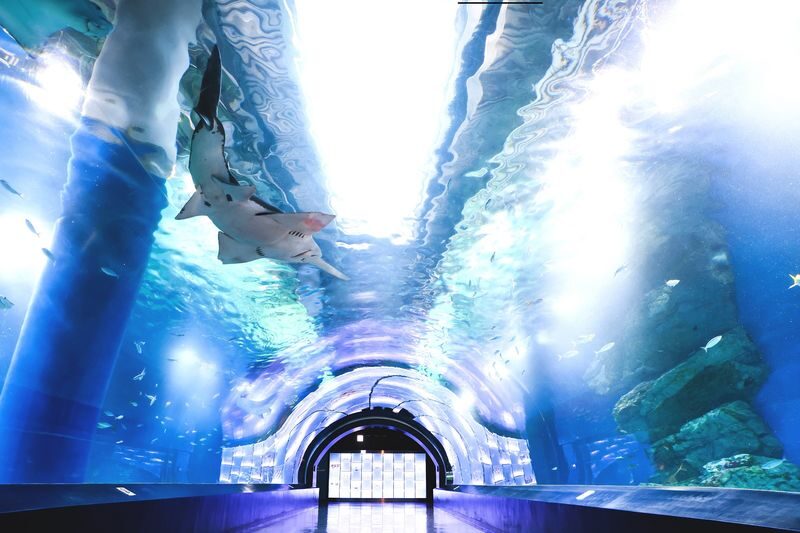
- Look for the Wonder Tube: Sawfish and manta rays pass overhead as you walk through the underwater tunnel.
- The exhibits are built around light: Jellyfish, tropical fish and other marine life appear in carefully lit displays.
- It’s close to a major rail hub: The aquarium is about a two-minute walk from Shinagawa Station’s Takanawa exit.
- Front-row seats come with a splash warning: The first few rows can get very wet, so bring a raincoat or plan to sit farther back.

👉 See our pick of the 25 Best Guided Tours In Tokyo
Entering a city aquarium designed for atmosphere
Aqua Park Shinagawa is not a traditional, quiet aquarium where you simply follow a row of tanks. Its displays combine marine life with colored lighting, music and decorative installations, giving the visit a theatrical feel. That approach makes the aquarium engaging for children and for adults who enjoy visual presentation, though it may not suit you if you want a hushed, highly scientific visit.
The first area sets the tone with fish, floral art and an illuminated carousel. A touch-panel tank with jellyfish adds an interactive detail, while the LED lighting makes the displays feel more like part of an indoor show than a standard gallery. It’s an inviting start, but it can also feel busy at peak times, so pause to get your bearings before moving on.
The aquarium’s sections are spread across multiple floors, with different spaces to explore rather than one long, straightforward route. That variety helps the visit feel full despite its central Tokyo location. It also means you should allow time to follow the route at your own pace, especially if you’re visiting with children or want to wait for a particular performance.
You can also read our reviews of more tours and experiences in Tokyo



Jellyfish, tropical fish and the Wonder Tube
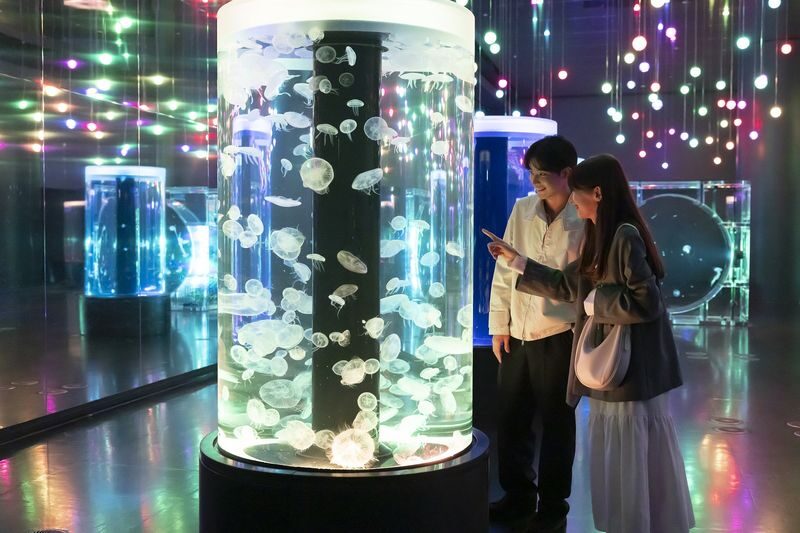
The Jellyfish Ramble is one of the most distinctive areas. Tanks filled with jellyfish glow in changing colors, turning their slow movement into part of the visual experience. It is a good place to stop and watch for a while, though the lighting can make this feel more like an art installation than a natural-history exhibit.
Little Paradise focuses on tropical fish and other sea creatures. The exhibits can change with the seasonal theme, so the exact displays may differ from one visit to another. I’d treat this as a chance to see a broad mix of small aquatic life, not as a fixed checklist of species.
Then comes the Wonder Tube, where sawfish and manta rays swim above and around you. The tunnel gives you a different perspective from viewing a tank through glass, and the rays are especially striking as they glide overhead. It’s a natural spot for photographs, but be patient if the walkway is crowded and other people are waiting to pass.
Aqua Jungle adds another change of pace, with aquatic life and jungle environments represented in themed displays. Taken together, these areas offer more variety than the entrance might first suggest. The aquarium is compact compared with a sprawling destination aquarium, but you can spend a satisfying amount of time moving between its differently styled spaces.
The dolphin show: plan your visit around the Stadium
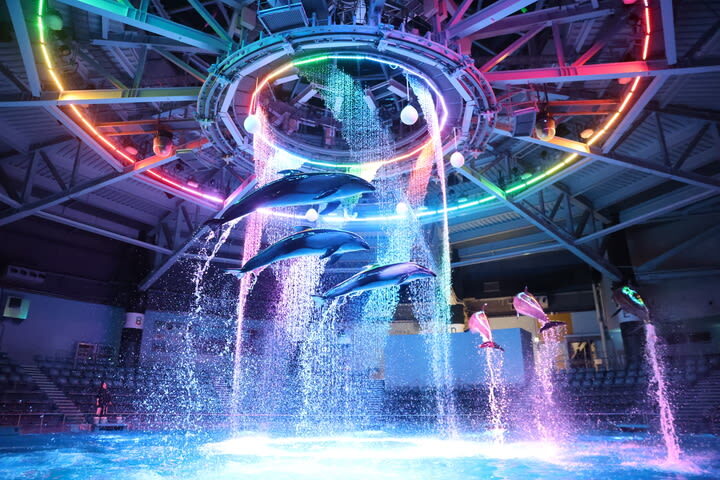
The Stadium is the main performance space, where aquatic shows combine water effects, lighting and sound. Dolphin performances are the best-known attraction, and the staging gives them a strong sense of occasion. The show is not long, so check the day’s schedule when you arrive and plan the rest of your route around it.
Performances can vary by time of day and season. Daytime and evening shows may use different lighting effects, so seeing two performances could give you a noticeably different experience, if your schedule and ticket allow. The venue changes its shows throughout the day and across seasons, so don’t assume the performance will look exactly the same on every visit.
Arrive around ten minutes early if you want a better choice of seats. The first four rows are considered splash zones, and spray can reach farther back in some areas. A raincoat is sensible if you choose the front rows; ponchos have been available to buy on site, but it’s safer to bring your own if you know you want the full splash experience.
If getting wet is not part of your plan, sit farther back and follow staff guidance. The splash varies by seat, so even nearby places in the same row may not get the same amount of water. Keep phones and other valuables protected, especially if you’re seated close to the pool.
The performances are a strong reason to visit, but don’t let them crowd out the rest of the aquarium. One useful strategy is to explore the exhibits while a show is underway, then return for a later performance. Same-day re-entry is permitted, so you can also step out and come back, as long as you keep the ticket, wristband or stamp needed for re-entry.
A few hours well spent, with a crowd caveat
Aqua Park Shinagawa works well as a short city outing. Its compact layout means you can see a range of marine exhibits and catch a show without setting aside an entire day. The exact time you need depends on how long you linger and how the performance schedule fits your plans, but allow a few hours if you want to explore at an unhurried pace.
Crowds are the main drawback. During busy periods, you may have to move with the flow rather than stand close to each tank, and popular show seating can fill up. If you want calmer viewing, consider arriving outside peak periods when possible, and use the show time as an opportunity to visit the exhibits that are less busy then.
The aquarium is also a practical choice on a rainy day or as an evening activity, since the displays and performances are indoors. Nearby Shinagawa Station makes it easy to add to a Tokyo itinerary without arranging a separate transport excursion. It’s a convenient stop, though convenience and dramatic staging are a larger part of the appeal than a huge, open aquarium environment.
What the ticket includes, and what it costs
Admission starts at $17.70 for the fixed-date ticket with a flexible time slot. It covers entry to Aqua Park Shinagawa, but transport, food and drinks, accommodation and personal purchases are not included. The Coral Cafe bar serves snacks, so it can be a handy pause during your visit, but budget separately for anything you buy there.
For the price, the value depends on what you want from an aquarium. If you mainly want to see the dolphin show and enjoy carefully lit displays, the combination can make the ticket feel worthwhile. If you’re looking for a very large aquarium with extensive time spent studying tanks, the compact scale and busy periods may make the admission feel expensive.
The ticket allows same-day re-entry, which adds flexibility. You can leave and return for a show or fit the aquarium around other plans nearby, but keep your proof of entry with you. The ticket is valid only on the date selected, and operating hours vary by season, so check the official site before setting your schedule.





Getting there and using your e-ticket
The address is 4-10-30 Takanawa, Minato-ku, Tokyo. From Shinagawa Station, use the Takanawa exit; the aquarium is about a two-minute walk away. Shinkansen, JR and Keikyu lines serve the station, making this one of the easiest attractions to reach by train.
Your Klook voucher must be opened in the app or on the website and shown on a phone with internet access. Staff need to validate it, so don’t try to operate the ticket yourself. If it shows as used before staff have scanned it, it is no longer valid, so keep the screen ready and let the venue staff handle the process.
The selected time is the entry time, with flexible entry from that time until closing, subject to the ticket conditions and any crowd controls in place. The voucher is valid only on the selected date. Children aged three and under enter free, while paid tickets should be selected for the correct age category.
Opening times can change, and the venue may be closed or reserved on some dates, including for special events. Check current hours before you go. The entry information also lists a mask requirement, hand disinfection and a temperature check, with entry refused at 37.5°C or higher; confirm the current rules before your visit, since operating requirements can change.
Who should book Aqua Park Shinagawa?
I’d recommend it if you want an easy-to-reach Tokyo attraction that mixes marine exhibits with live entertainment. Families may find the short walking distances and show format especially useful, while couples or solo visitors can enjoy the illuminated tanks and the tunnel without needing to make a full-day plan.
It’s also a good fit if you have a specific interest in the dolphin show, manta rays or jellyfish displays. The freedom to re-enter on the same day is a genuine practical bonus, particularly if you want to explore nearby before returning for a performance.
Think twice if crowds bother you, if you want to spend a long time at each tank, or if you’re uncomfortable with the show’s splash zone. The aquarium’s strength is its combination of atmosphere, accessible location and performance, not sheer size. Book it for the show and the visual experience, and arrive with realistic expectations about crowds and scale.
Maxell Aqua Park Shinagawa Ticket
“Great dolphins show besides the aquarium of fishes, jellyfishes, sawfishes, penguins and more.”
FAQ
How much does an Aqua Park Shinagawa ticket cost?
The fixed-date ticket starts at $17.70. The price covers aquarium admission; transport, meals, drinks and personal expenses are not included.
Where is Aqua Park Shinagawa?
It is at 4-10-30 Takanawa, Minato-ku, Tokyo 108-8611.
How do I get to the aquarium by train?
Take a train to Shinagawa Station and use the Takanawa exit. The aquarium is about a two-minute walk away, and the station is served by Shinkansen, JR and Keikyu lines.
What does the ticket include?
It includes admission to Aqua Park Shinagawa. Transport, accommodation, meals and beverages, personal expenses and any queue ticket are excluded.
Can I re-enter after leaving?
Yes. Re-entry is permitted on the day of your visit. Keep your ticket, wristband or stamp to show at the entrance.
Is the dolphin show included?
The ticket includes admission to the aquarium, where the Stadium hosts aquatic shows. Show schedules and productions can change during the day and by season, so check the current schedule at the venue.
Do children aged three and under need a ticket?
Children aged zero to three can enter free. Select the correct ticket type for other ages.
Do I need internet access to use my Klook voucher?
Yes. Open the voucher in the Klook app or website on a phone with internet access and present it to staff. Let the staff validate the ticket rather than operating it yourself.