Tokyo’s neon-lit streets are only the beginning of this 11-day journey across Japan. You’ll ride the bullet train to Hiroshima, cross to Shikoku by ferry, sleep at a Buddhist monastery on Mount Koya, then wind through Kyoto, mountain towns and Nikko before returning to Tokyo.
I like two things in particular: the route links famous sights with places many first-time visitors might not reach on their own, and the overnight stays at a monastery and a ryokan bring welcome variety to the hotel routine. The main consideration is pace: there are several long transfers, and the guide may explain the tour in both English and Spanish.
At a glance
- Tokyo to Hiroshima by bullet train: Cover about 800 kilometers in roughly four hours, then visit the Peace Memorial Park, Atomic Bomb Dome and Peace Memorial Museum.
- A night on Mount Koya: Stay in a Buddhist monastery, eat a vegetarian dinner and join an Ajikan meditation session if available.
- A broad sweep of Japan: The route includes Tokyo, Hiroshima, Shikoku, Kobe, Osaka, Kyoto, the Japanese Alps, hot-spring towns and Nikko.
- A mix of transport: Expect coach travel, the bullet train, ferries, a cable car and subway rides, rather than eleven days on a bus.
- Physical effort is usually light, with exceptions: Kotohira Shrine requires a climb of 785 steps, and Jigokudani Monkey Park involves a walk along forest trails.
- From $4,004, before flights: The price includes accommodation and buffet breakfasts, plus some meals and admissions. Flights are not included.

👉 See our pick of the 25 Best Guided Tours In Tokyo
- At a glance
- A big Japan route, with little time to linger
- Tokyo starts with temples, towers and a subway ride
- Hiroshima brings a quieter, more serious day
- Shikoku adds island travel and a 785-step climb
- Kobe, Osaka and a monastery night on Mount Koya
- Kyoto’s famous sights in one busy day
- Tsumago and Matsumoto break up the drive north
- Monkeys, mountain roads and a ryokan in Ikaho
- Nikko closes the circuit before Tokyo
- What the price covers, and where value depends on you
- Who should choose this tour?
- Should you book it?
- FAQ
- Are flights included in the ,004 starting price?
- Where does the tour start and end?
- Is the tour guided in English?
- How large can the group be?
- Are all meals included?
- Is the Mount Koya accommodation a regular hotel?
- How physically demanding is the tour?
- The Best Of Tokyo!
- More Tours in Tokyo
- More Tour Reviews in Tokyo
- Not for you? Here's more nearby things to do in Tokyo we have reviewed
A big Japan route, with little time to linger
 1 / 10
 2 / 10
 3 / 10
 4 / 10
 5 / 10
 6 / 10
 7 / 10
 8 / 10
 9 / 10
 10 / 10
This tour is built for variety. In eleven days, you’ll move from Tokyo’s large-scale city sights to Hiroshima’s memorials, Shikoku’s temples and gardens, Kyoto’s major shrines, and the Japanese Alps’ hot springs and macaques. Nikko adds one final dose of ornate temple architecture before you return to Tokyo.
That range is the tour’s strongest selling point. You won’t need to plan rail connections, ferry transfers, hotel changes or admission logistics across several regions. A guide and organized transport take care of much of that, making the route a practical choice if you want to see a lot without assembling the trip yourself.
The trade-off is time. Some stops are brief, and the daily schedule can involve several destinations and hours on the road. Think of this as a fast introduction, not a slow stay in each city. If Kyoto, Tokyo or Hiroshima is your main reason for visiting Japan, consider whether you’d rather spend more nights in fewer places.
You can also read our reviews of more tours and experiences in Tokyo.


Tokyo starts with temples, towers and a subway ride
Your first day is deliberately spare. A shared shuttle takes you from the airport to the hotel, leaving time to recover from the flight. You’ll receive details about the tour in the afternoon, but the rest of the day is open.
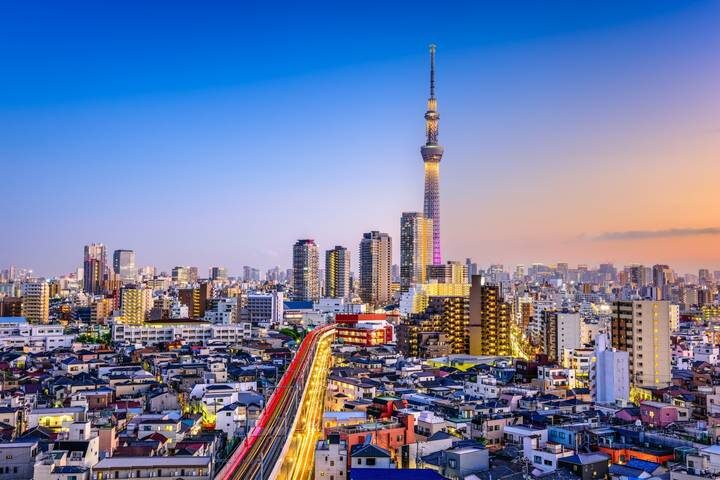
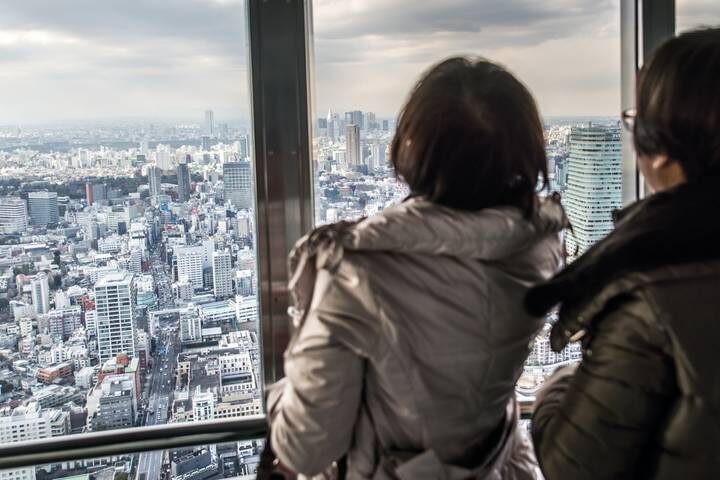
The second day packs in Tokyo’s contrasts. At Zojoji Temple, you’ll see the Tokyo Tower rising behind the temple grounds and pass rows of small Jizo statues. Shibuya Crossing is viewed from the bus, so don’t expect a long stop to cross the intersection yourself. Meiji Shrine offers a quieter change of mood, while the visit to Tokyo Skytree includes access to the Tembo Deck at 350 meters.
The day continues at Sensoji Temple and Nakamise Street in Asakusa, with drive-bys through Akihabara and Ginza. In the evening, you’ll take the subway with your guide to Shinjuku for a walk and an included dinner at a local restaurant. That guided outing can help you get your bearings in a district that can feel like a lot to take in on your first night.
The full city tour lasts about seven hours, followed by the evening visit, so it’s a long day. Skytree access can be limited by weather or exceptional circumstances; an alternative city viewpoint is offered if that happens.
Hiroshima brings a quieter, more serious day
On Day 3, you’ll take the bullet train from Tokyo to Hiroshima, a journey of about four hours and 800 kilometers. That fast rail link turns a substantial distance into a manageable travel morning, though it still makes for a full day.
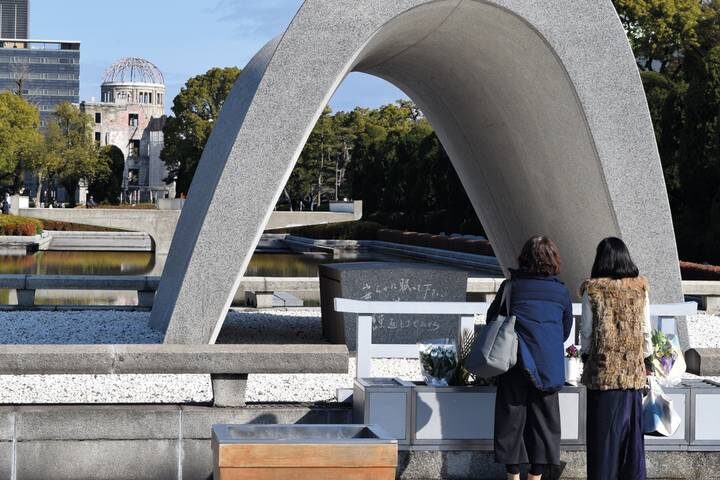
The Peace Memorial Park, Atomic Bomb Dome and Peace Memorial Museum give the visit its emotional weight. The museum is an important stop, but allow yourself some mental space afterward. This is not simply another item to tick off between train rides.
Later, a ferry takes you to Itsukushima Island, where you’ll visit the shrine built partly over the sea. You’ll have time to see the shrine and walk around the island center, with lunch on your own. The day ends back in Hiroshima, where dinner is included. The order of the Hiroshima visits may change, but the listed stops remain part of the plan.
Shikoku adds island travel and a 785-step climb
A roughly two-and-a-half-hour ferry ride brings you from Hiroshima to Shikoku. The crossing is more than a transfer: it gives you a sense of how much Japan’s geography depends on islands and sea routes.
In Matsuyama, you’ll take a cable car up to the castle, visit Ishiteji Temple and eat an included lunch. Admission to Dogo Onsen, a traditional bathhouse dating to the 19th century, rounds out the day. The bathhouse visit is a chance to encounter Japan’s bathing culture, though the tour information does not specify how long you’ll have there.
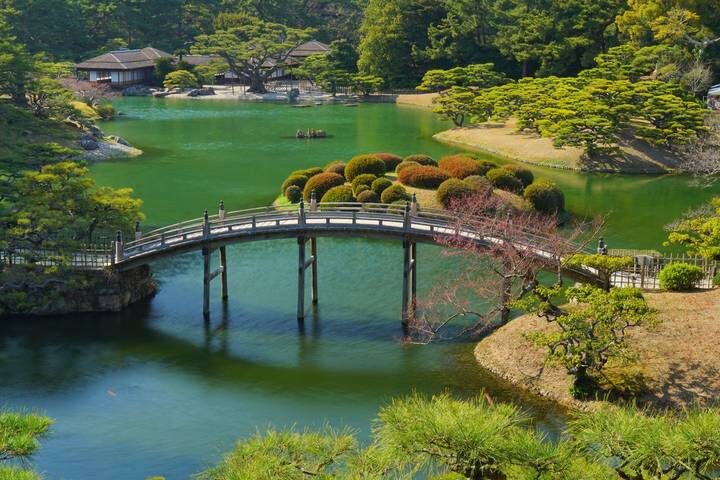
The next day is a long sequence of stops. At Kotohira, you’ll climb 785 steps to a Shinto shrine dedicated to the god of sailors. It’s a meaningful pilgrimage site, but the stairs make this one of the tour’s clearest physical challenges. Ritsurin Garden in Takamatsu gives you a gentler pace and a change of scenery, followed by an included lunch.
In Naruto, you’ll visit a bridge with a glass floor, where the view down to the sea and its whirlpools comes from 45 meters above the water. The route then crosses bridges between islands before reaching Kobe. This is a varied day, but expect time in the vehicle between its stops.
Kobe, Osaka and a monastery night on Mount Koya
In Kobe, you’ll visit the Earthquake Memorial Museum, which recalls the 1995 earthquake and the city’s recovery. On some dates, the visit may be replaced by a sake museum or a trip up Kobe Tower, so the exact Kobe stop is not guaranteed.
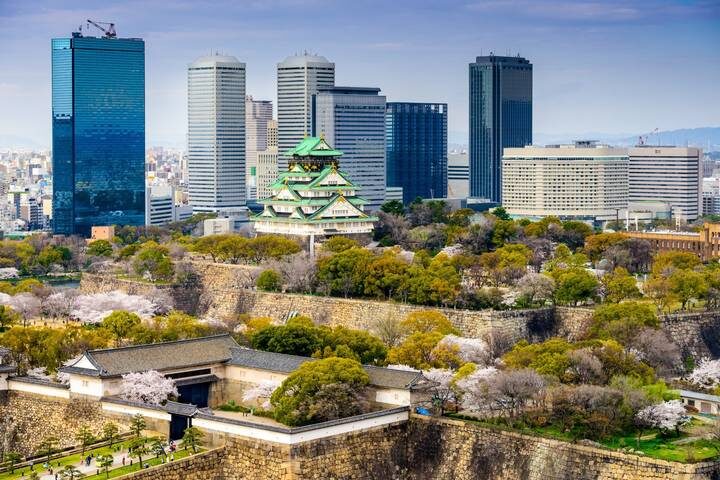
The group then passes through Osaka on the way to Mount Koya, a major center of Shingon Buddhism with around 120 temples and monasteries. At Okuno Mausoleum, you’ll walk among a large forest cemetery, described as holding more than 200,000 graves. Kongobuji Temple, originally built in 1593, adds a formal temple visit to the day.
The overnight stay is a highlight, but set your expectations correctly. Monastery rooms are simple, with tatami mats and shared bathrooms rather than private facilities. Dinner is vegetarian, and the monks are scheduled to lead an Ajikan Zen meditation practice. The meditation may not be available on peak dates, and limited temple capacity can mean an overnight stay in a nearby hotel instead. You may also attend a religious ceremony before breakfast.
The setting and change in routine make this one of the tour’s most distinctive nights. It is not a luxury-hotel stop. If you value comfort and a private bathroom above a traditional stay, this is worth considering before you book.






Kyoto’s famous sights in one busy day
You’ll leave Mount Koya early after a traditional Japanese breakfast at the temple and travel to Kyoto. The city served as Japan’s capital from 794 to 1868, and its temples and imperial sites make a strong contrast with Tokyo’s modern scale.
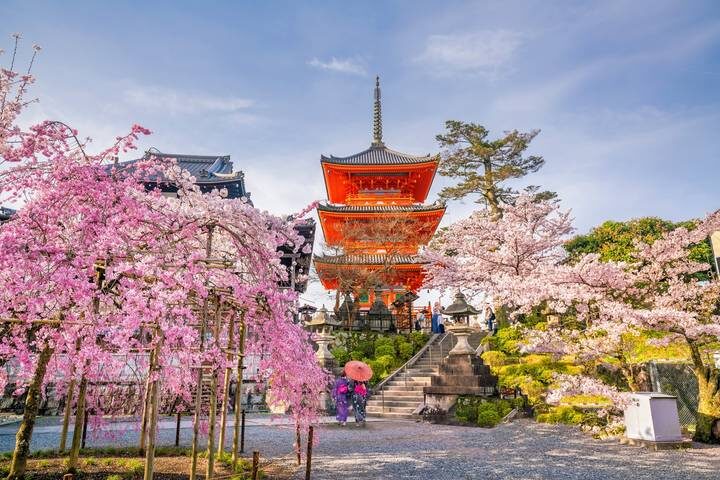
The day includes Fushimi Inari Shrine, the Imperial Palace and Kinkaku-ji, the Golden Pavilion, with its gardens. There’s also free time before a visit to Gion, a traditional district associated with geisha culture. Having some unstructured time is useful, but the schedule does not provide a full day to explore Kyoto independently.
The tour’s included guided city visits are listed for Tokyo and Kyoto. The wider tour is described as fully guided, but the guide can change during the trip, and some departures may use bilingual English and Spanish explanations. One past participant found the two-language format challenging, especially when trying to catch place names and later research them. If you depend on detailed commentary, ask the operator what language arrangement applies to your specific departure.
Tsumago and Matsumoto break up the drive north
The next morning, you’ll head for Tsumago, a small village known for its wooden houses. You’ll have free time to walk around and an included lunch before continuing to Matsumoto.
Matsumoto Castle, a 16th-century structure nicknamed the Crow, is the main stop there. You’ll also have some free time in the city before the coach carries on to Nagano. These towns provide a welcome shift from major cities, though this day combines several hours of travel with visits, so your time at each place is limited.
Monkeys, mountain roads and a ryokan in Ikaho
In Nagano, you’ll visit Zenko-ji Temple, a major pilgrimage site associated with Japan’s first Buddhist image, and take part in a Gomakuyo ceremony intended to bring good fortune. The tour then heads into the Japanese Alps to Jigokudani Monkey Park.
The visit includes a walk along forested trails, past rivers and hot springs where Japanese macaques live. The monkeys’ movement is unpredictable, particularly in autumn when food availability in the mountains affects whether they come down to the park. The park visit may be closed if they do not appear, so treat it as a chance to see them rather than a promise of a close-up encounter.
The route continues through high mountain scenery, reaching about 2,172 meters and passing semi-active volcanoes. In Kusatsu, you’ll stroll through the town park, which has open-air hot springs, and get free time for lunch. The Kusatsu stop may be canceled because of weather from November through April, an important detail for departures in those months.
In Ikaho, you’ll walk through the old center and its stone stairways, then spend the night at a ryokan. A traditional Japanese dinner is included, and hot-spring bathing is recommended. This is another change from standard hotel accommodation, with a more traditional setting and a meal that feels part of the stay rather than simply a convenient stop.
Nikko closes the circuit before Tokyo
On Day 10, you’ll visit Nikko-Toshogu Shrine, known for its ornate design and a room associated with the sound of a dragon. You’ll also see Taiyuinbyo Mausoleum and walk along Kanmangafuchi Abyss, where Jizo statues line the riverbanks. There’s some free time in the town center before the return to Tokyo, scheduled for about 6:30 p.m.
That is a full final sightseeing day followed by a long return journey. Your last night is in Tokyo, and breakfast is included on Day 11 before the tour ends. If you have an international flight that morning, check your plans carefully; the tour information does not include a departure transfer.
What the price covers, and where value depends on you
The tour starts at $4,004 for the cheapest room category. The price covers ten nights of accommodation, breakfast buffet, an arrival transfer, transport between destinations, a guide and many listed admissions. Five lunches and four dinners are included in the overall meal plan, though not every meal is covered. You’ll need to budget separately for flights, some meals and any optional activities.
The hotels are selected for quality, price and location, with nearby public transport noted, but most are not in city centers. Hotel standards, room sizes and beds can vary between properties. The monastery is a special case, with simple rooms and shared bathrooms. Specific hotels are listed as alternatives, so the exact property may depend on the departure.
The value is strongest if you want an organized route through many regions and would otherwise need to coordinate trains, ferries, buses and accommodation yourself. It is less compelling if you prefer long, flexible stays or want to choose every hotel and meal. The advertised tour operator rating is 4.1 out of 5, while the tour itself has only one recorded rating in the supplied information, so there is limited tour-specific feedback to weigh alongside the itinerary.
Who should choose this tour?
I’d consider it for a first visit if you want a broad survey of Japan, appreciate having transport and major admissions arranged, and are comfortable moving hotels often. Families and mixed-age groups can join, and the tour is rated low intensity overall, but that label does not remove the shrine stairs or the forest walk to the monkey park.
It also suits people curious about religious traditions and regional life, not just major-city sightseeing. The monastery stay, Gomakuyo ceremony, Dogo Onsen, ryokan night and ferry crossings give the route a wider character than a simple Tokyo-Kyoto circuit.
Before booking, check the exact departure date, hotel names, language setup and whether the Mount Koya meditation is expected to run. Ask how much free time is planned at the stops you care about most. The group size can range from 2 to 72, so the feel of the trip may vary considerably.
Should you book it?
Book this tour if your priority is to see a lot of Japan in eleven days without managing every connection yourself. The strongest reasons are the broad route, the bullet train and ferry journeys, and the unusual overnight stays at Mount Koya and in Ikaho. Choose a slower itinerary instead if you want deeper time in Tokyo or Kyoto, dislike long travel days, or need a guaranteed single-language guide. At this price, the value comes from the range and logistics, not from luxury or a leisurely pace.
Capitals of Japan by Europamundo – 11-Day Tour from Tokyo (2026-27 Departures)
FAQ
Are flights included in the $4,004 starting price?
No. Flights are not included. The price also excludes some meals and optional activities.
Where does the tour start and end?
The tour starts in Tokyo, with a shared shuttle transfer from the airport to the hotel. It ends in Tokyo after breakfast on Day 11.
Is the tour guided in English?
English is listed as the tour language, with English-speaking guides noted in Tokyo and Kyoto. Depending on the group, explanations may be given in English and Spanish by one guide or by two tour leaders. Confirm the arrangement for your departure.
How large can the group be?
The stated group size ranges from 2 to 72 people.
Are all meals included?
No. The meal plan lists buffet breakfasts, five lunches and four dinners. Other meals are at your own expense.
Is the Mount Koya accommodation a regular hotel?
Not necessarily. The plan includes an overnight stay in a Buddhist monastery, with simple tatami rooms and shared bathrooms. If temple capacity is limited, accommodation may instead be in a nearby hotel.
How physically demanding is the tour?
It is rated low intensity, but you should be ready for some walking. The climb to Kotohira Shrine involves 785 steps, and Jigokudani Monkey Park requires a walk on forest trails.