
The coach turns off the A40 and drops down into the High Street at Bourton-on-the-Water. Stone bridges over the Windrush. Ducks paddling beside families with ice creams. Twenty minutes later you’re standing on Arlington Row in Bibury, looking at the medieval weavers’ cottages William Morris once called the most beautiful village in England, and you realise you’ve left London barely four hours ago.
This is the day-trip-from-London format the Cotswolds was made for. One coach, four or five honey-stone villages, back in the city by dinner. This guide covers the standard ten-hour loop, the variant routes (plus Oxford, plus Stonehenge, plus Blenheim), and how to pick the right operator for the kind of day you actually want.
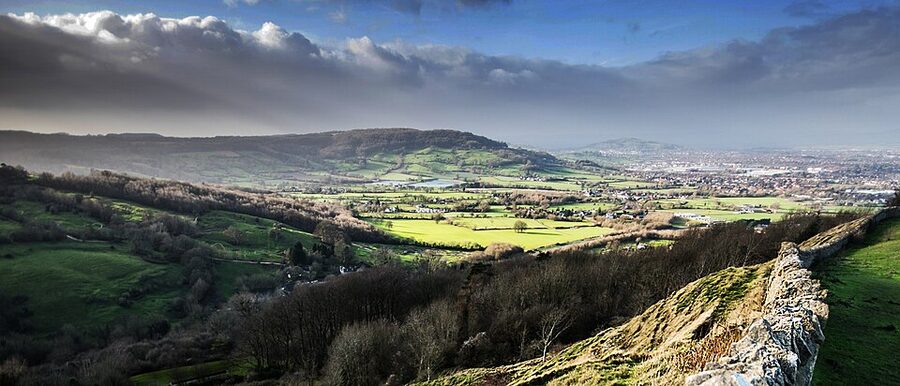
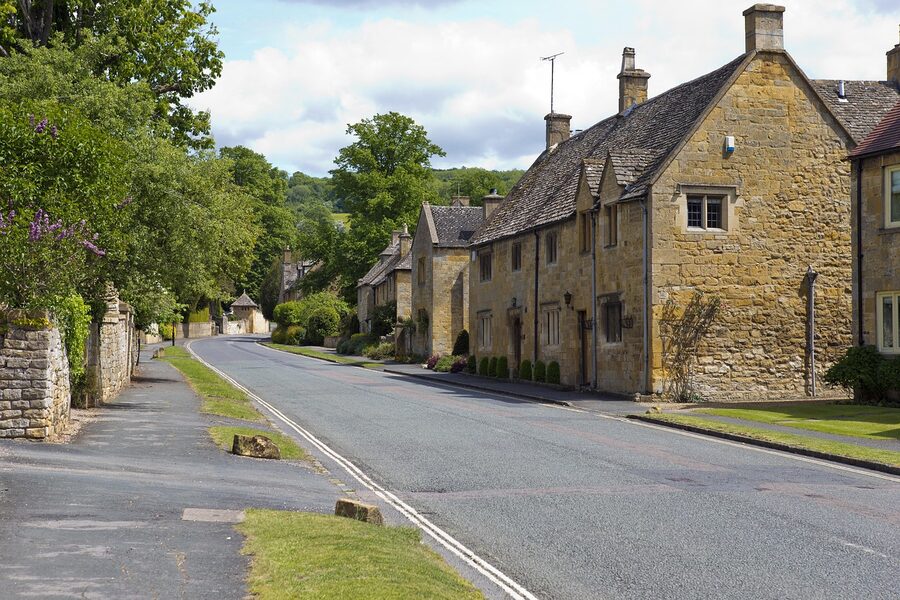
The Cotswolds is an Area of Outstanding Natural Beauty (AONB) covering about 800 square miles across Gloucestershire, Oxfordshire, Worcestershire, and Wiltshire. The “honey-stone” colour everyone talks about comes from local Jurassic limestone quarried in the region. When the late-afternoon sun hits it, the buildings glow gold. That’s the visual that sells every coach trip, and it’s not a marketing fiction.
The standard day from London runs about 10 hours and covers four or five villages. You’ll do roughly 200 miles of driving, stop at each village for 30-90 minutes, and arrive back in central London around 6:30-7pm. It’s a long day, but it’s the only practical way to see this many villages without a car.
Short on time? Here are my picks for the three best Cotswolds day trips from London:
Most-booked overall: From London: Full-Day Cotswolds Small-Group Tour, around $113. Small-group minibus, 9.5 hours, four-village classic loop.
Best add-on for the academics: From London: Cotswolds and Oxford Guided Day Trip, around $106. 10.5 hours, drops Castle Combe but adds an hour in Oxford.
If you want lunch sorted: From London: Full-Day Cotswolds Tour With Lunch, around $106. 11 hours, includes a sit-down pub lunch and a Stratford-upon-Avon stop.
- What’s the Standard Cotswolds Loop?
- Bourton-on-the-Water (the photogenic crowd-pleaser)
- Bibury (the photo stop)
- Stow-on-the-Wold (the medieval market town)
- Burford (the descent and the high street)
- Castle Combe (the film set)
- Pick the Right Coach Tour
- 1. From London: Full-Day Cotswolds Small-Group Tour, 3
- 2. From London: Cotswolds and Oxford Guided Day Trip, 6
- 3. From London: Full-Day Cotswolds Tour With Lunch, 6
- The Variant Routes
- Plus Stonehenge and Avebury
- Plus Blenheim Palace and Downton Abbey
- Plus Oxford villages
- What the Day Actually Looks Like
- What’s Actually Included (and What Isn’t)
- What to Wear and Bring
- The Wool Trade That Built These Villages
- Best Time of Year
- Doing It Without a Tour
- How This Compares to Other London Day Trips
- The Day Itself: What You’re Getting
- Pairing This With Other Trips
What’s the Standard Cotswolds Loop?
Every operator runs slightly different stops, but the classic loop hits a version of these five villages: Bourton-on-the-Water, Bibury, Stow-on-the-Wold, Burford, and Castle Combe. Most tours pick four of those five depending on direction of travel. Here’s what each one is actually for.
Bourton-on-the-Water (the photogenic crowd-pleaser)
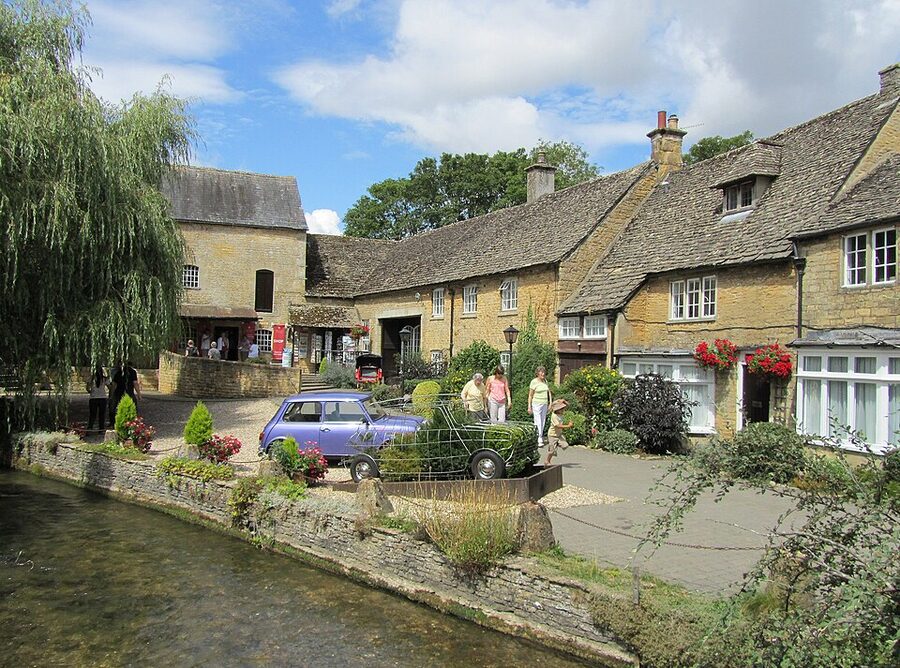
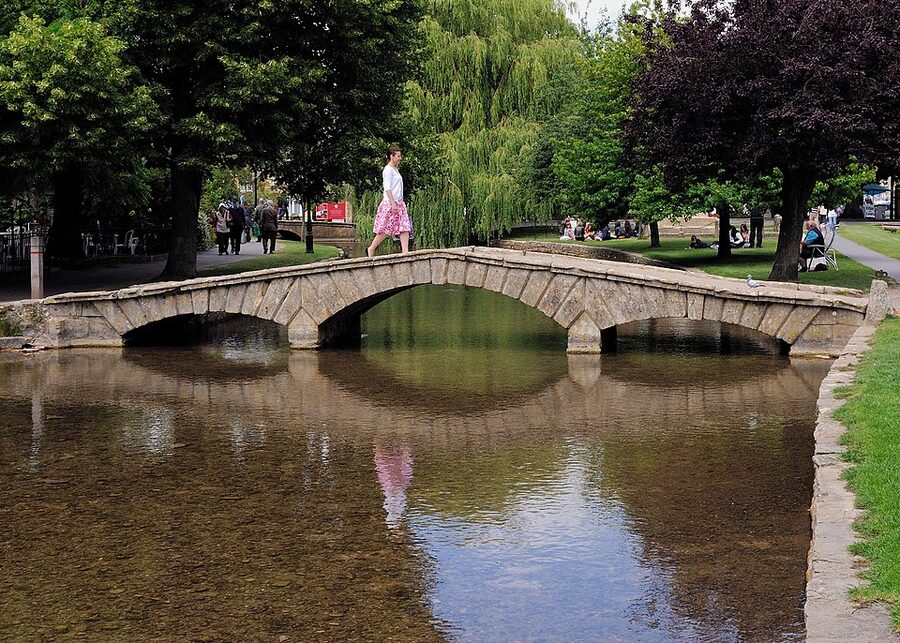
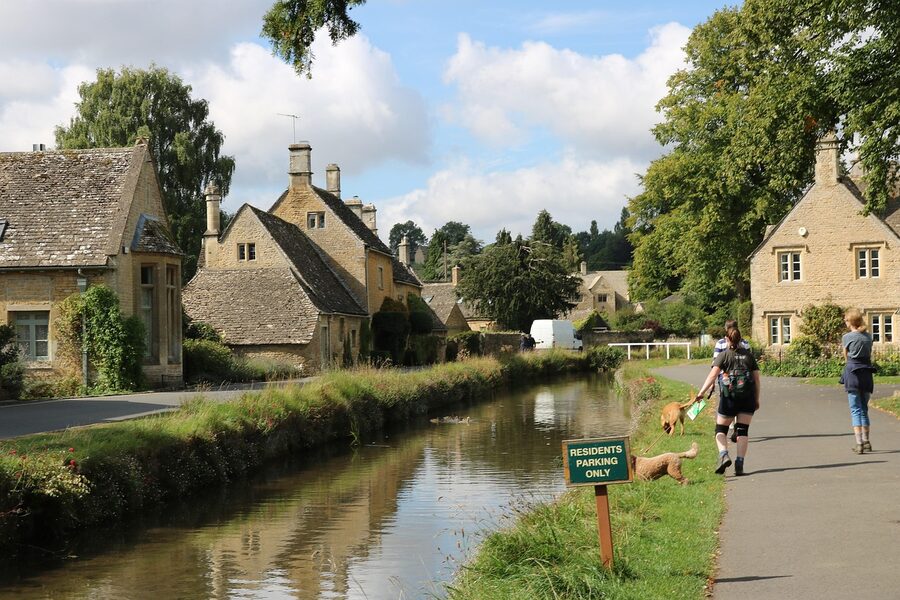
This is the village that puts Cotswolds on the front of the brochure. Five low stone bridges cross the Windrush, the cafés spill out onto the green, and the whole place feels like a film set. It’s also the busiest. On a sunny weekend you’ll be elbow-to-elbow with day trippers from the Midlands.
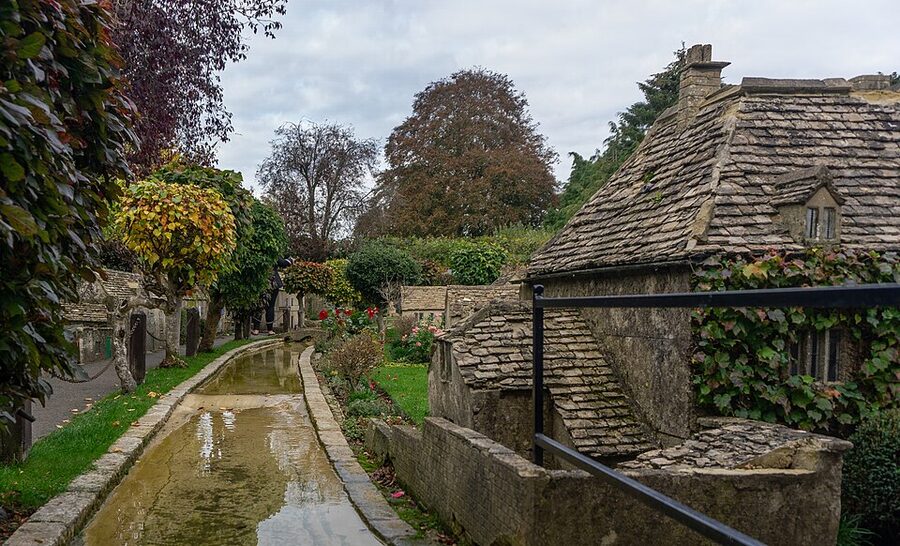
Two attractions are worth knowing about. The Model Village is a 1:9 scale replica of Bourton built in the 1930s out of the same local stone. It sounds twee but it’s genuinely fun and only takes 20 minutes. The Cotswold Motoring Museum is a small classic-car collection in an old mill, also 20-30 minutes.
For lunch: Bakery on the Water does a sausage roll that’s worth the queue. Most of the riverside pubs serve fine but unspectacular pub food. Don’t expect a culinary highlight. The setting is the point.
Bibury (the photo stop)
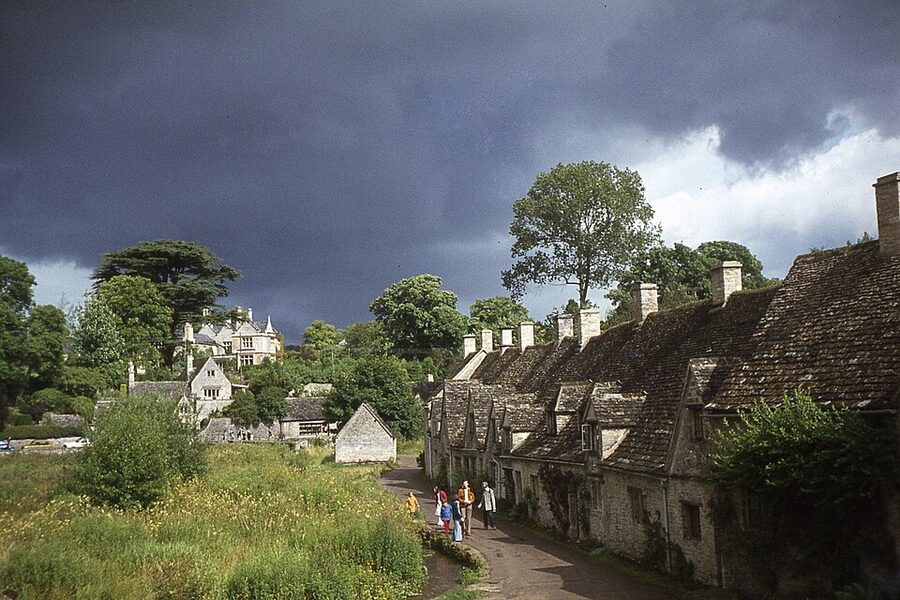
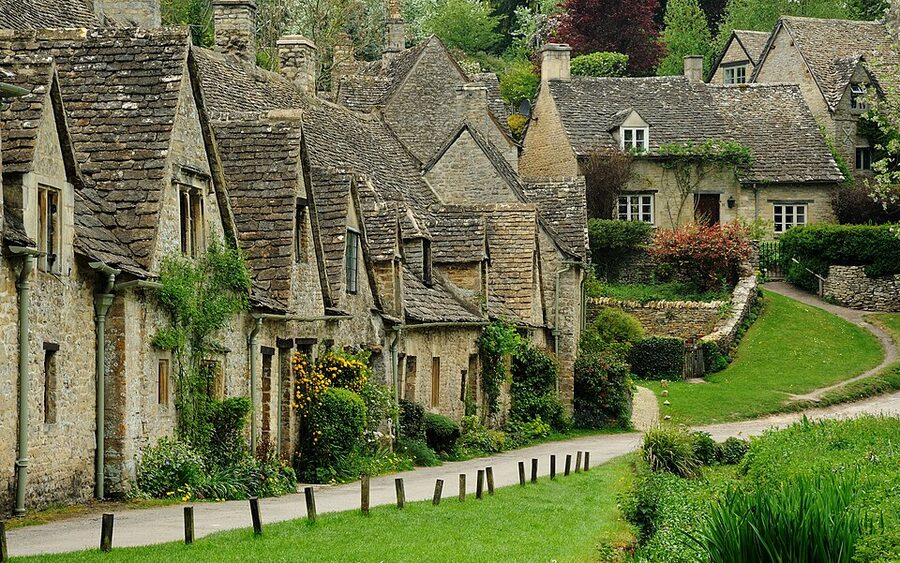
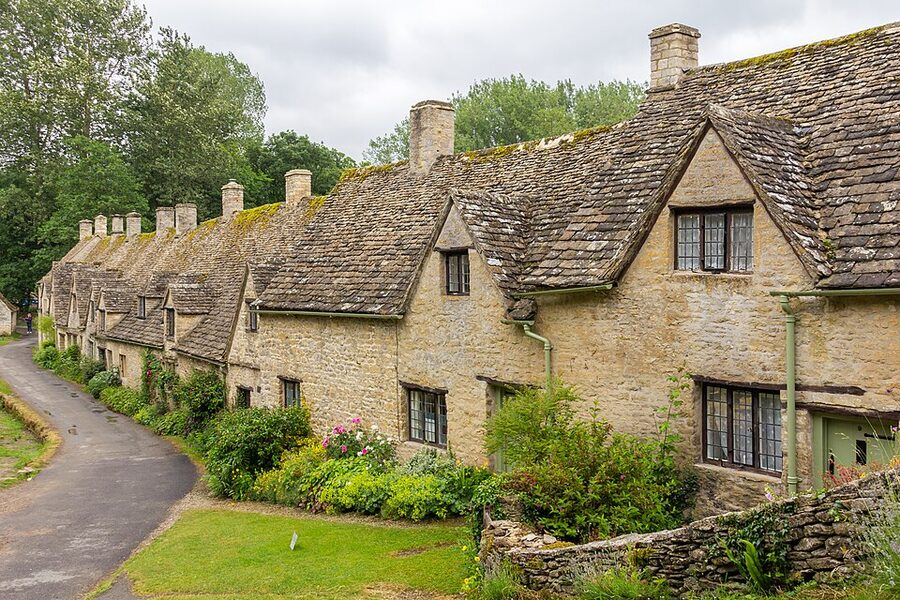
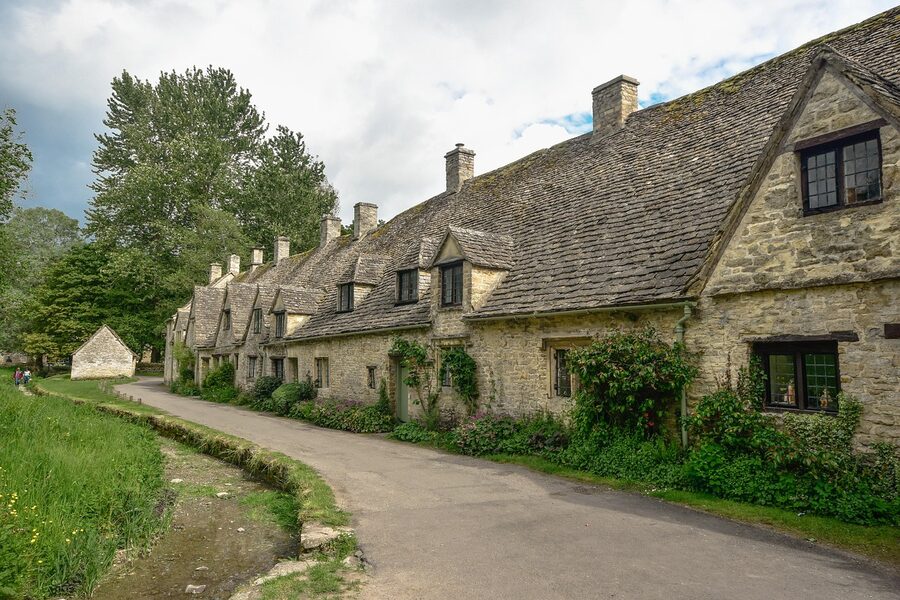
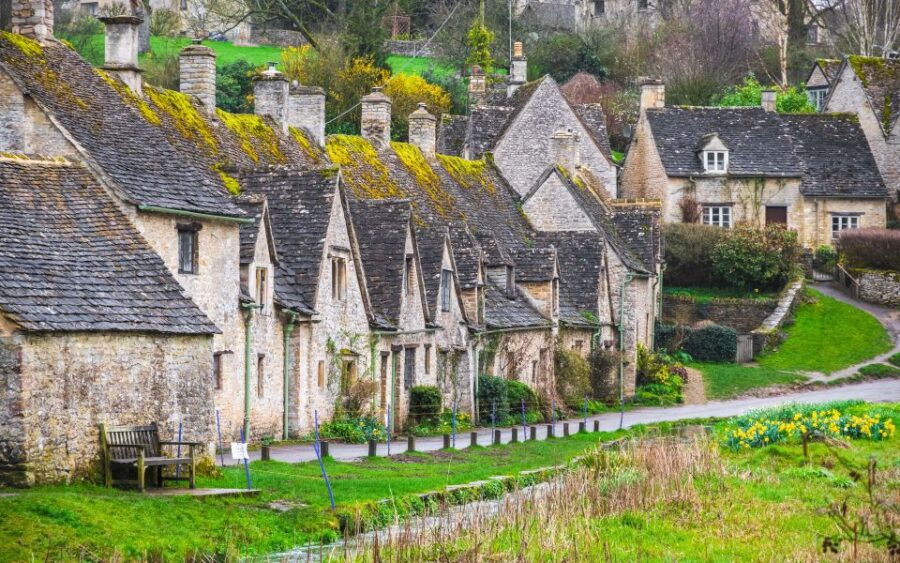
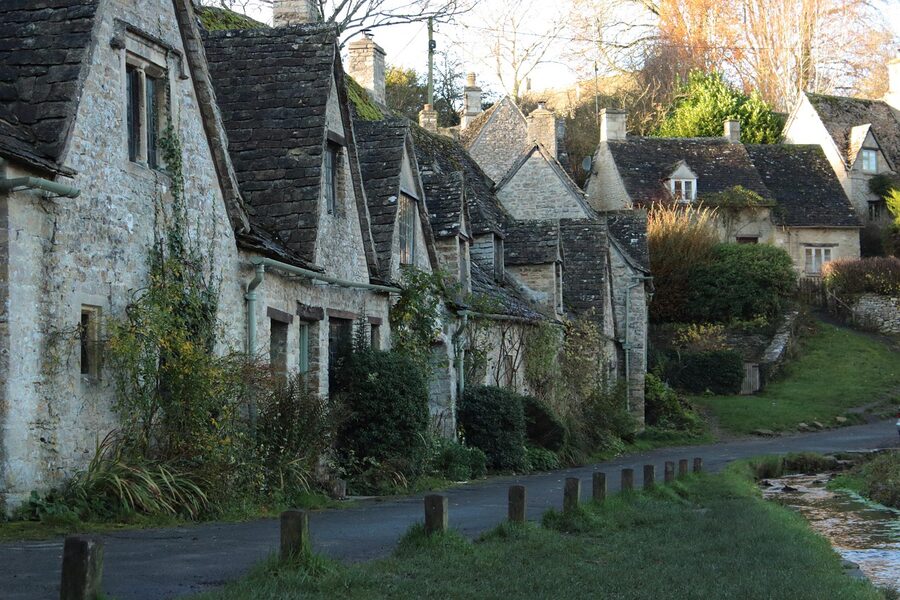
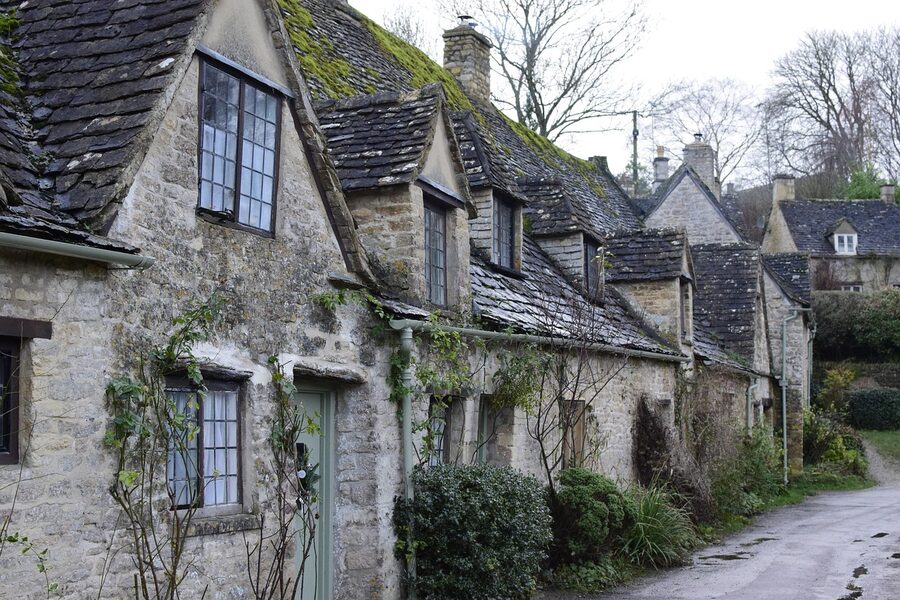
Bibury exists on most itineraries for one reason: Arlington Row. Fourteen connected cottages built around 1380 as a monastic wool store, converted to weavers’ housing in the 1600s, and untouched architecturally for the last 400 years. William Morris visited in the 1880s and called Bibury the most beautiful village in England. The line stuck.
You won’t get long here. Most operators allow 30-40 minutes, which is exactly enough for the Arlington Row photo, a walk along the River Coln, and a peek into St Mary’s church. Don’t waste time looking for a high street. Bibury doesn’t really have one.
The cottages are private homes, which means no entry. The villagers have a complicated relationship with tourism. There was a famous case in 2017 where a yellow car parked on Arlington Row was painted out of every photo posted online (until the owner got tired of the abuse and sold it). Be respectful, take your photo, move on.
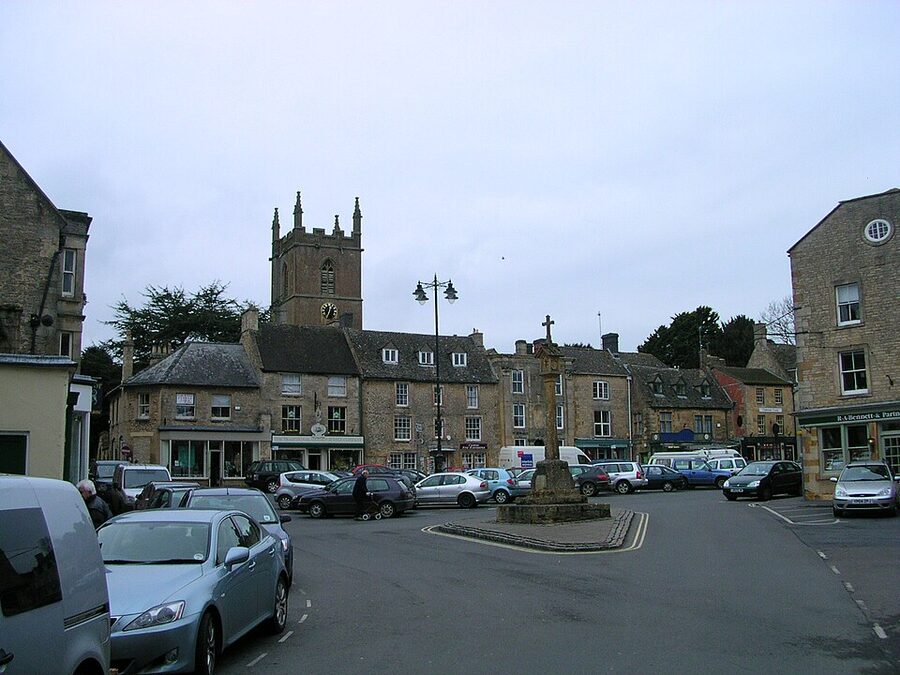
Stow-on-the-Wold (the medieval market town)
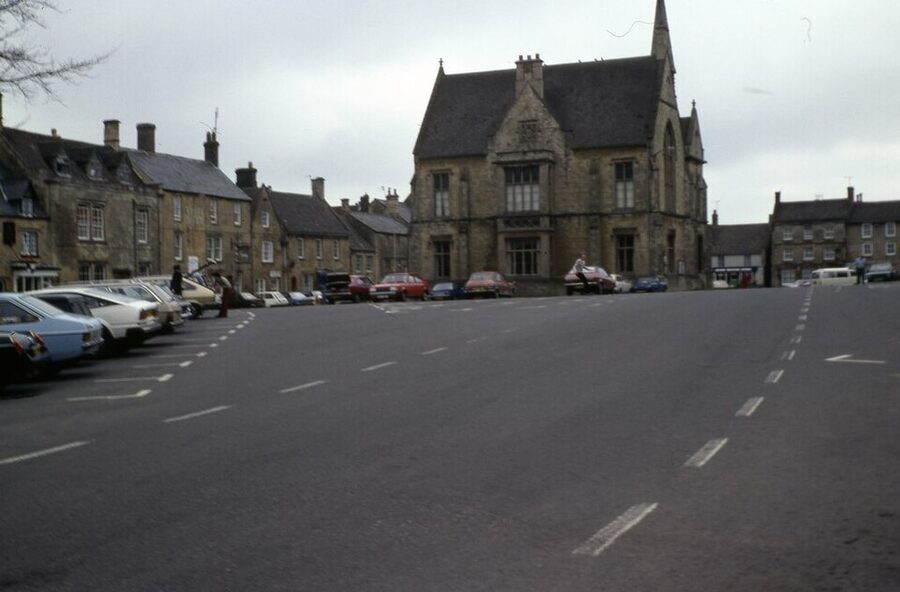
Stow is the Cotswolds’ answer to “but where did people actually live and work?” The market square is huge by village standards, lined with shops, pubs, and the old wool exchange buildings. You can still see the medieval stocks on the south side of the square. It feels less stage-managed than Bourton or Bibury.
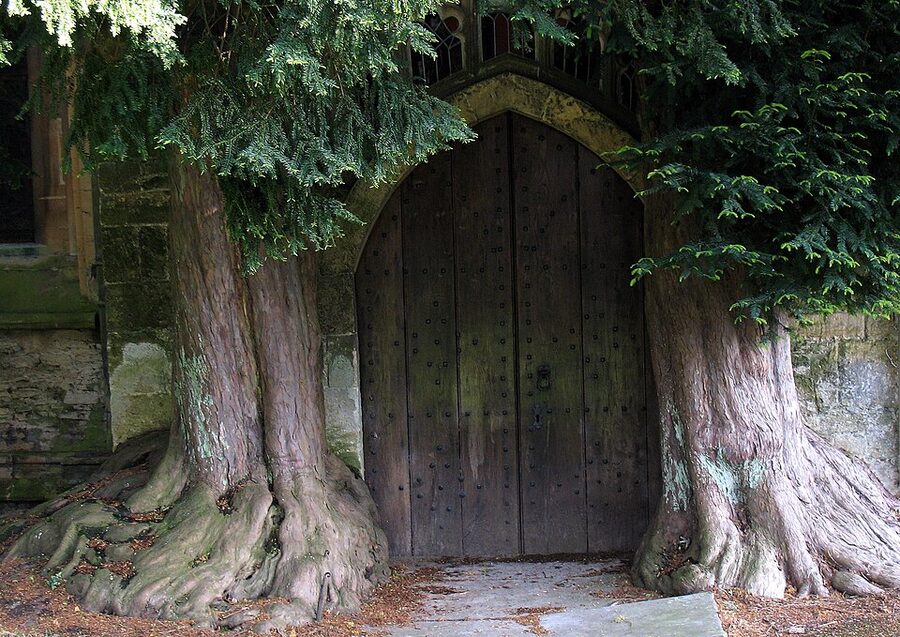
The thing everyone photographs is the Yew Tree Door at St Edward’s Church. Two ancient yews flank a north door so completely that the trees and the doorway look like one organic structure. It’s been called the inspiration for the Doors of Durin in Lord of the Rings (Tolkien lived in nearby Oxford). That’s contested, but the door is genuinely Tolkien-y.
The Porch House on Digbeth Street claims to be the oldest pub in England (947 AD). The claim is also contested. Either way, it’s a pleasant Saxon-era building still serving food, and most coach tours stop within 50 metres of it.
Burford (the descent and the high street)
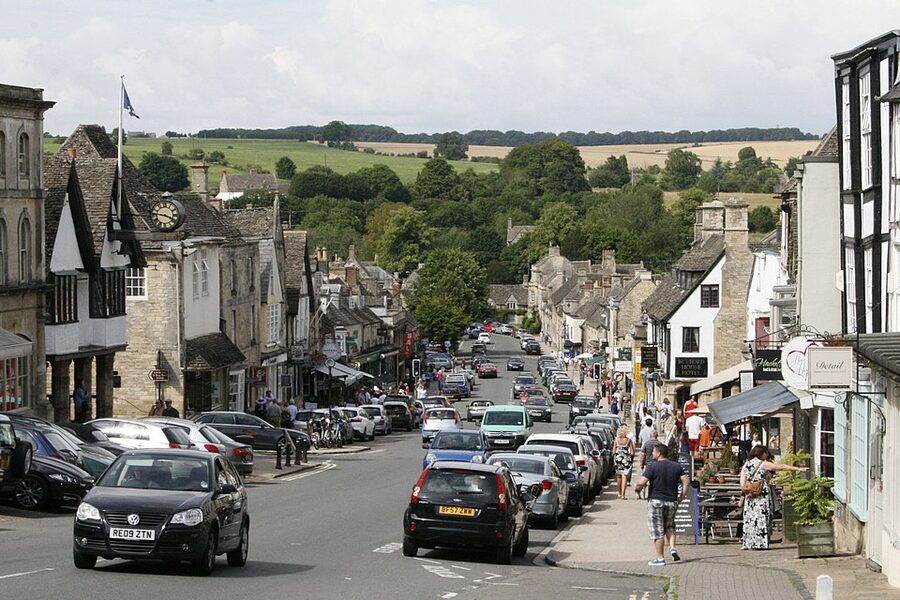
Burford is the gateway to the Cotswolds from the east. The town sits on a hill, and the high street runs straight down it. From the top, you look over a row of stone shopfronts to the medieval bridge and the river beyond. It’s the most photogenic high street in the region.
The shops are mostly antiques, art galleries, and food halls. Huffkins Bakery has been making lardy cakes here since 1890 (lardy cake is sweet, dense, and full of dried fruit, originally a labourer’s lunch food, now a regional speciality). Burford Garden Centre on the outskirts is a destination in itself but coach tours never include it.
If your operator includes Burford, you’ll typically get 45-60 minutes. Walk to the bottom of the high street and back. That’s the tour. You won’t have time for the church (worth visiting if you do, the Levellers were imprisoned and shot here in 1649) or the priory.
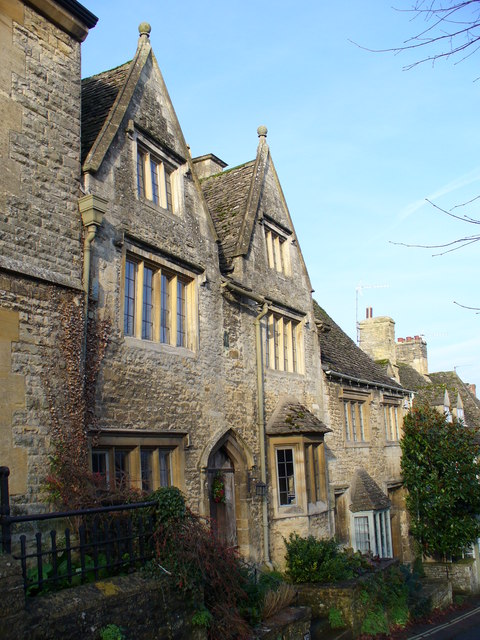
Castle Combe (the film set)
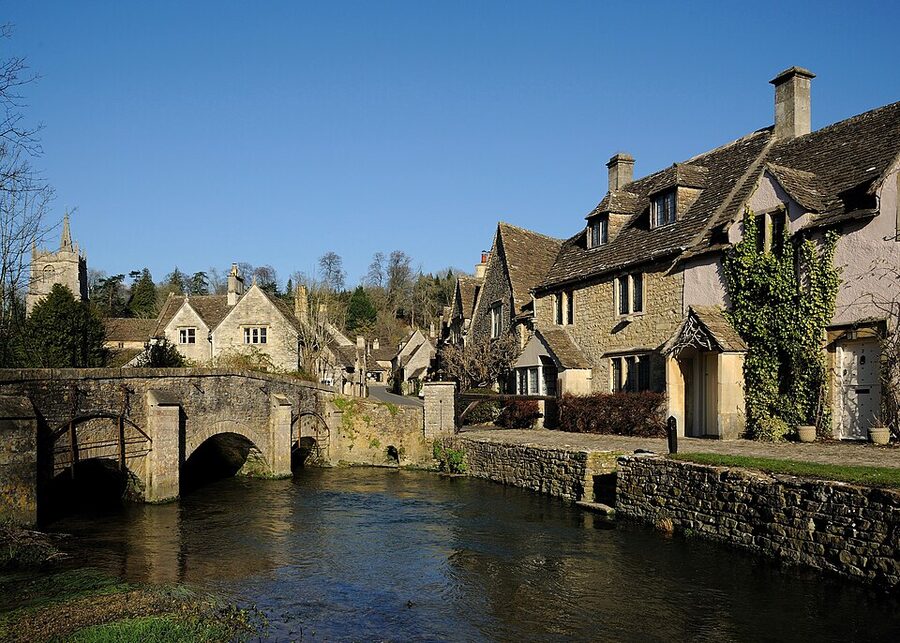
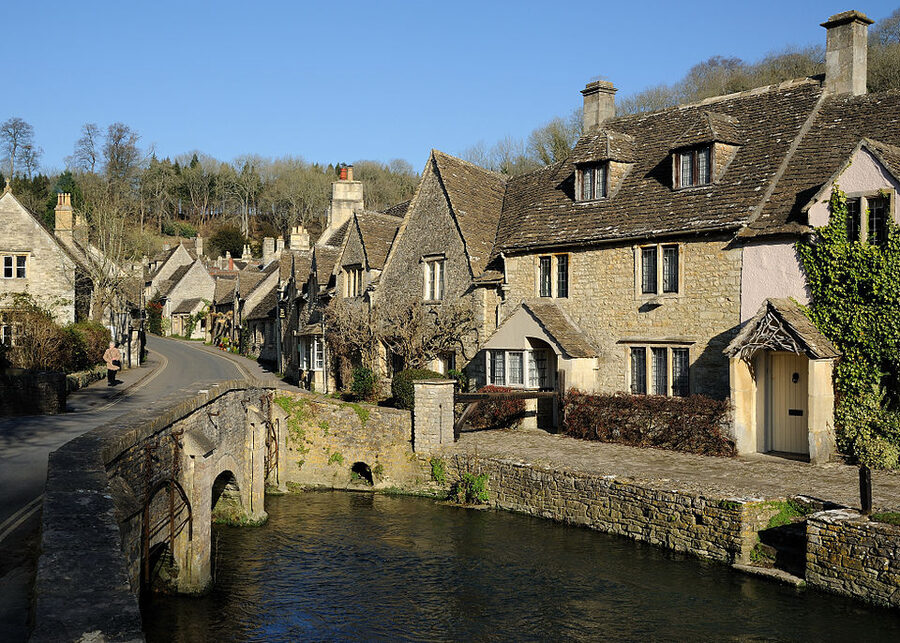
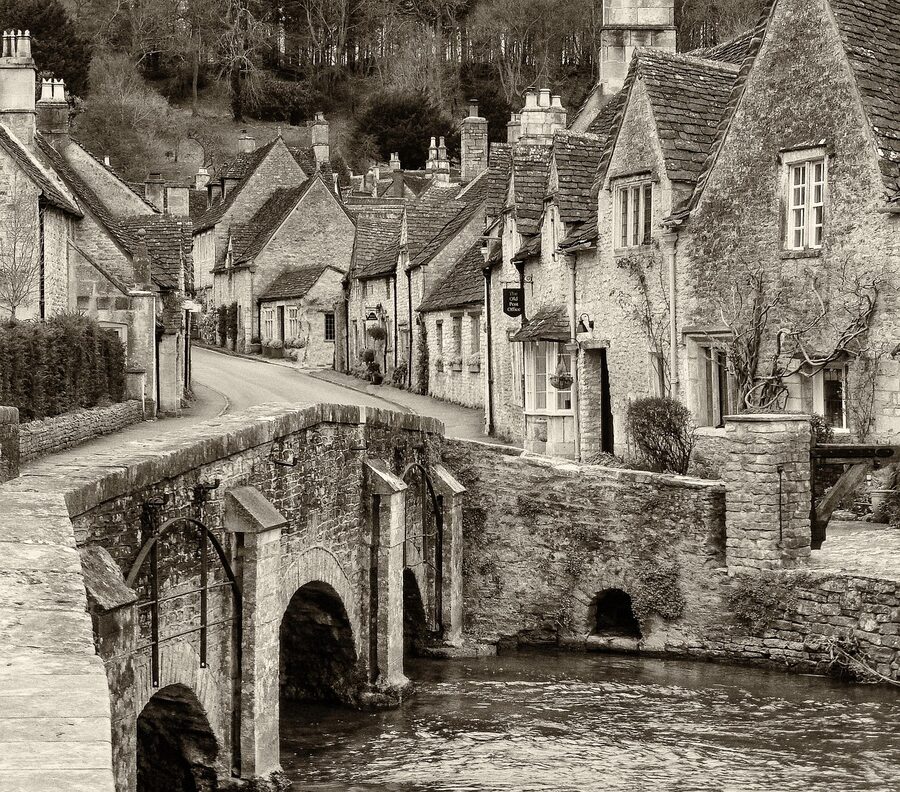
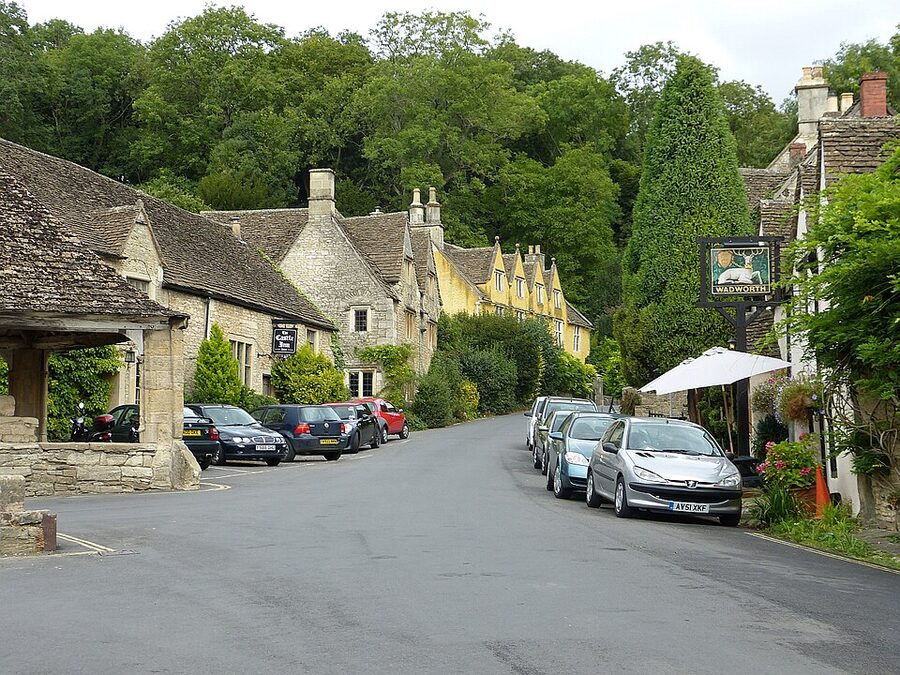
Castle Combe is the village that filmmakers use when they need “England, 1700-ish, no anachronisms please.” The 1967 Doctor Doolittle was the first big production. War Horse, Stardust, The Wolfman, and various BBC adaptations followed. There are no overhead cables, no satellite dishes, no street signs. The market cross at the top of the village is 14th-century. The bridge over the Bybrook is medieval.
It’s also tiny. The whole village is about 200 metres from end to end. Coach tours typically give you 45 minutes, which is more than enough. Walk to the bridge, take the photo, walk back up to the market cross, look at the church (St Andrew’s, with a 15th-century clock that’s one of the oldest working faceless clocks in Britain), and you’re done.
One practical note: Castle Combe is in Wiltshire, not Gloucestershire. It’s the southernmost stop on most loops and adds significant driving time. Tours that include Castle Combe usually skip Stow or Burford to make the geography work.
Pick the Right Coach Tour
There are basically four kinds of Cotswolds day-trip operator running out of London. The differences matter, so here’s the breakdown.
Small-group minibus operators (about 16 passengers max): comfortable, faster, can use lanes coaches can’t, more stops per day. The Evan Evans small-group flagship is the benchmark. Around $113.
Big-coach operators (49 passengers): cheaper per head, slightly slower at each stop because of unloading time, less flexibility on routing. Golden Tours is the main player here. Often around $80-90.
Hybrid combo tours that pair Cotswolds with Oxford, Stratford, Stonehenge, or Blenheim: these compress village time and add a major-attraction stop. Good if you want to tick more boxes; less good if you want to actually feel the Cotswolds.
Private day-tour operators running 4-8 person vans with bespoke routes: most expensive ($300+ per head if booked solo, $120-150 per head with a group of four), but you pick the villages and pace. Worth it for a special occasion or photographers.
1. From London: Full-Day Cotswolds Small-Group Tour, $113
This is the small-group classic and the version most readers should default to. Four villages (typically Bibury, Bourton, Burford, and Castle Combe), about 9.5 hours, picked up centrally in London. Run by Evan Evans, who’ve been doing London day trips since 1939. Our full review covers the route variations and which guides to ask for.
The reason small-group beats big-coach for the Cotswolds specifically: the village lanes are narrow. A minibus can park closer, unload faster, and turn around in places a 49-seater can’t. You get more time on the ground at each stop. Pro tip: book a window seat on the right-hand side; most of the photogenic pulloffs are on that side of the road heading west.
2. From London: Cotswolds and Oxford Guided Day Trip, $106
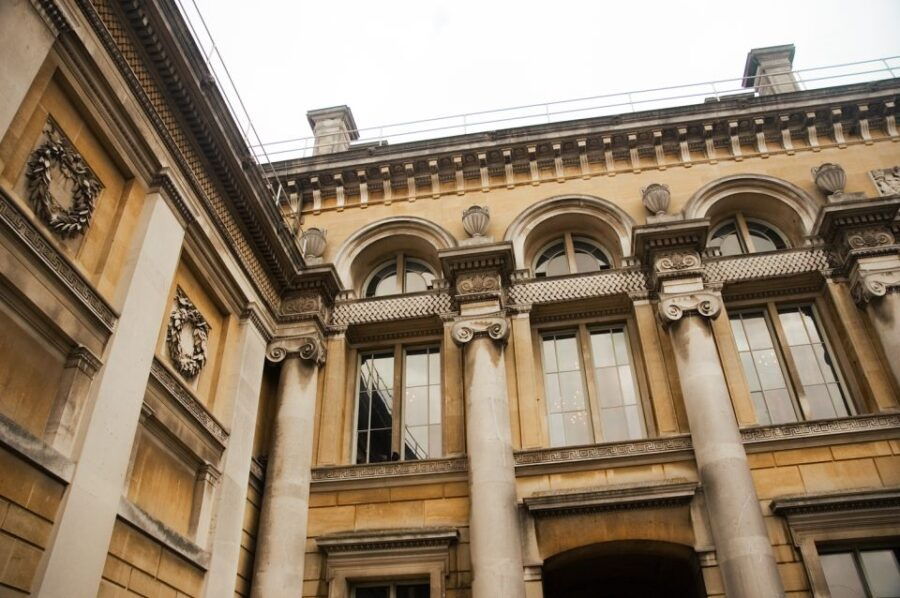
This is the route to pick if you have one day and Oxford matters to you. The trade-off: you lose Castle Combe, and the village stops are tighter. You’re effectively trading the south-of-Bath leg for an Oxford add-on. Our Cotswolds and Oxford combo review breaks down what you actually see in Oxford on this short stop, and our standalone Oxford walking-tour guide covers the city in proper detail if you’d rather do it as its own day.
Ninety minutes in Oxford is enough for the Bridge of Sighs, the Radcliffe Camera exterior, a quick walk past Christ Church, and not much else. Don’t expect to go inside any college on this combo tour. If college interiors matter, do Oxford as its own day.

3. From London: Full-Day Cotswolds Tour With Lunch, $106
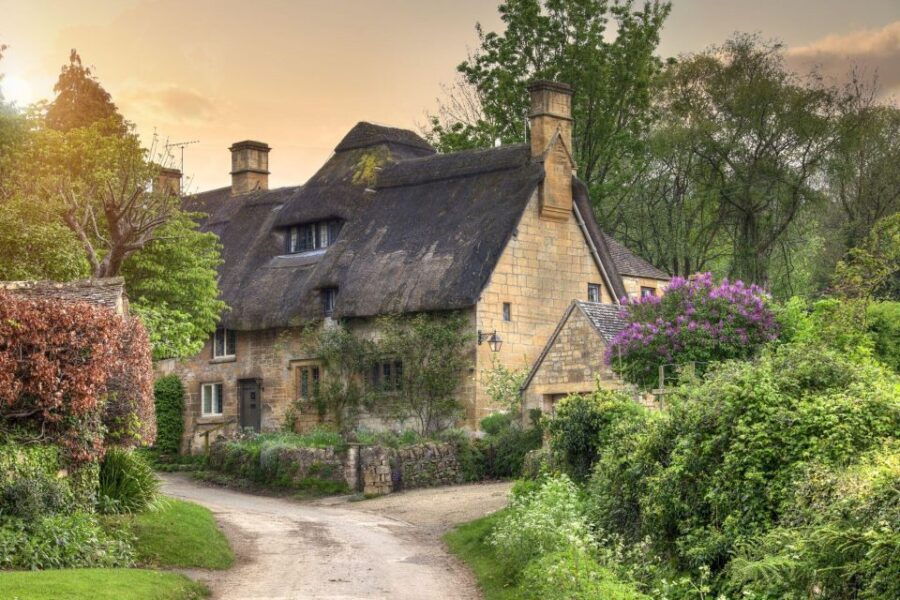
Cotswolds lunch is its own minor stress. Bourton and Stow get hammered at peak times and 45 minutes can disappear before you’ve even ordered. This tour solves that by booking everyone into a country pub mid-route. You also get a Stratford-upon-Avon stop on the way back, which is unusual and worth knowing about. Our lunch tour review covers the typical pub on the route and what’s actually included in the meal.
This is the version I’d pick for parents travelling with older relatives, anyone who finds independent lunch logistics annoying, or first-time UK visitors who haven’t done a country-pub meal before. The Stratford stop is short (about 90 minutes) but it’s enough to walk past Shakespeare’s Birthplace and Holy Trinity Church. Pro tip: dietary requirements need to be flagged at booking, not on the day.
The Variant Routes
Beyond the standard four-village loop, the operators sell several combo routes. They all sacrifice village time for a bigger headline attraction. Whether that’s worth it depends on what you actually want.
Plus Stonehenge and Avebury
The Stonehenge, Avebury and Cotswolds combo hits two prehistoric sites and one or two villages. It’s the most ambitious route and the village time is genuinely tight (often just Castle Combe, for 30 minutes). Pick this only if Stonehenge is a non-negotiable and you’re treating the Cotswolds stop as a bonus. If Stonehenge matters more than the villages, our standalone Stonehenge half-day guide is the better starting point.
Plus Blenheim Palace and Downton Abbey
The Cotswolds, Blenheim Palace and Downton Abbey route swaps villages for a stately-home stop. Blenheim is Winston Churchill’s birthplace and an enormous baroque palace. The “Downton Abbey” stop is usually Bampton, where the village scenes were filmed. This works if you’ve already done the village circuit on a previous trip and want something different.
Plus Oxford villages
The Oxford and Cotswolds villages day trip is a different shape from the standard combo: it’s weighted toward the villages, with Oxford as a brief drive-through rather than a 90-minute stop. This is a good middle option if you want to see Oxford from the coach window but not lose Cotswolds time to it.
What the Day Actually Looks Like
Pickup is typically 8am from a central London depot. Most operators use Victoria Coach Station or Russell Square. A few do hotel pickups but they’re rare and add time. Be at the depot 15 minutes early; the coach won’t wait.
The drive to the first village is about 2-2.5 hours depending on traffic. Most coaches go via the M40 and A40 to Burford or via the M4 and A429 to Castle Combe. The M40 route is the more scenic; you start to see Cotswold stone buildings about 20 minutes before the first stop.
The middle four hours are the village stops. Each one gets 30-90 minutes. The guide will tell you exactly how long and where to be back at the coach. Coaches don’t wait for stragglers. Set a phone alarm.
The drive back to London is 2-3 hours. Most operators arrive back at the depot between 6pm and 7pm. Add 30 minutes for tube transfer to your hotel. Don’t book a 7:30pm dinner; you’ll be late.
What’s Actually Included (and What Isn’t)
The fine print matters more here than on most day trips because the inclusions vary so much by operator. Here’s what’s typically in and out.
Included on most tours: coach transport, live guide on the coach, basic commentary at each stop, parking fees. Some include lunch (the Evan Evans lunch version) or one paid attraction (rarely).
Not included on most tours: lunch, drinks, entry fees for paid attractions (Bourton’s Model Village £4.50, Bibury Trout Farm £6, Cotswold Motoring Museum £7), gratuities (£3-5 per person for the guide is normal), souvenirs.
Hotel pickup: usually not included. You go to the depot. Some operators offer pickup as a paid add-on for central hotels, around £15-20 extra.
Headsets: not used. The guide narrates over the coach PA system. Sit toward the front if you want to hear well; the back of a 49-seater is sometimes hard to follow.
What to Wear and Bring
This is England. The weather changes hourly. The villages are mostly cobbled or stone-paved, sometimes wet, sometimes uneven. Specifics that actually matter:
Footwear: closed-toe shoes with grip. Trainers or walking shoes are fine. Heels are a bad idea. The cobbles in Castle Combe and the steep high street in Burford are the worst offenders.
Layers: a packable rain jacket and a light fleece. The temperature drops 3-5C from the Thames Valley to the Cotswold tops, especially in spring and autumn. The coach itself will be warm.
Cash: some Cotswolds shops are still card-machine-temperamental. £20-30 in cash covers most contingencies. The pubs all take cards; the small bakeries and ice-cream stalls are mixed.
Camera batteries: if you’re shooting photos, bring spares. The interesting light is concentrated in 2-3 windows during the day and you don’t want to be down to 5% at the wrong moment.
Phone signal: patchy. Vodafone and EE are best; Three is unreliable in the deeper valleys. Don’t rely on Google Maps to find your way within villages; the guide will give you a meeting point.
The Wool Trade That Built These Villages
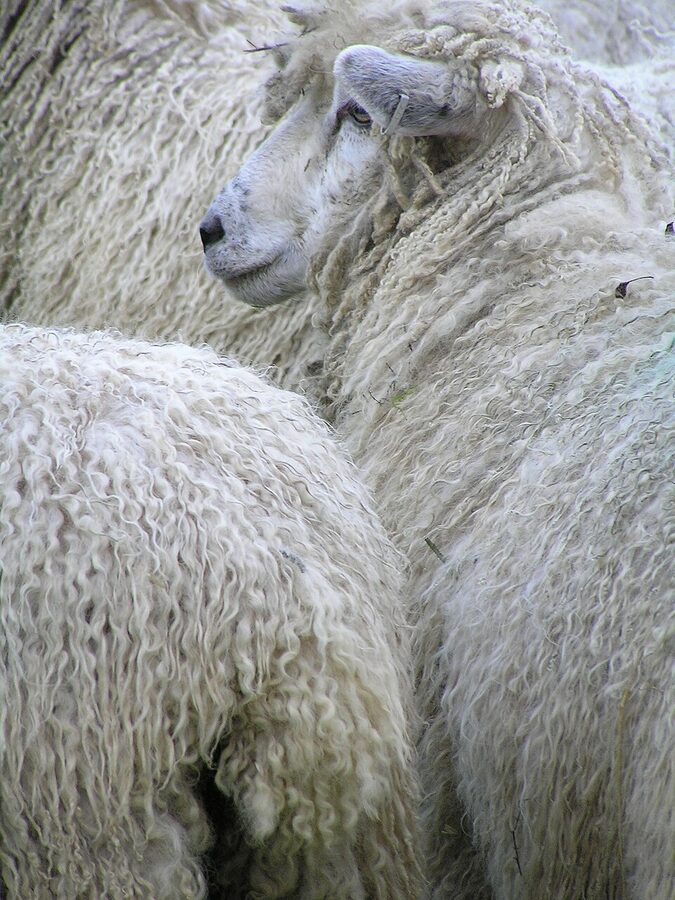
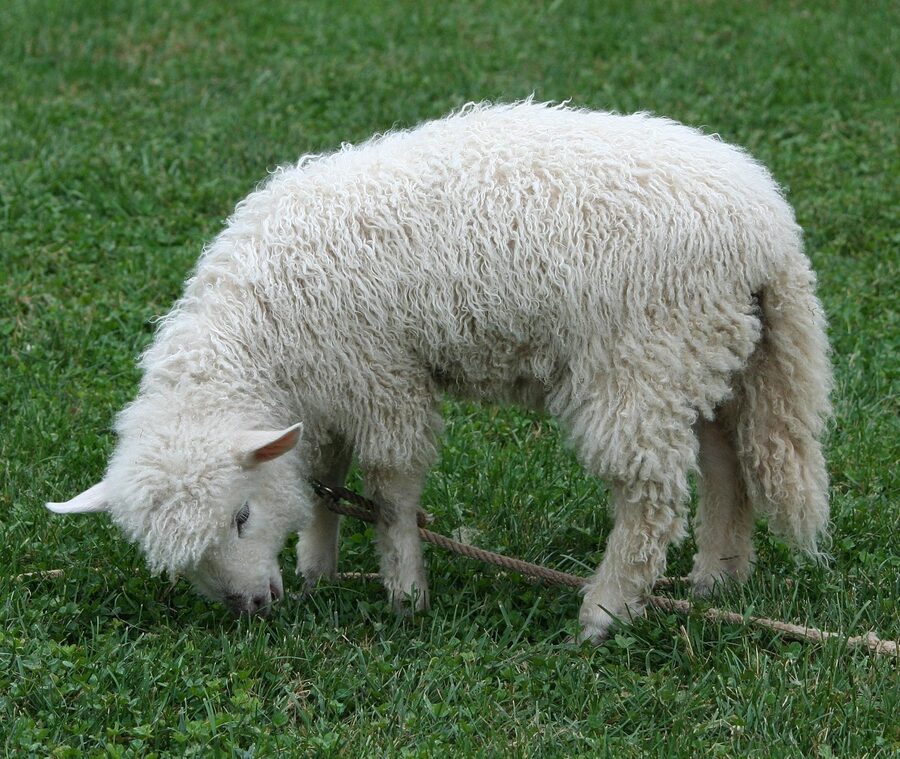
Almost every “perfect English village” you see on this trip is the same building: a wool merchant’s house from 1450-1600. The Cotswolds was the centre of the medieval English wool trade. At its peak, the Cotswold Lion (a long-fleeced sheep breed) produced wool that traders sold to Flanders for prices that built fortunes.
The honey-stone churches in Northleach, Cirencester, Chipping Campden, and Burford are called “wool churches” because rich merchants funded them as monuments. They’re enormous for villages of 1,500 people, with elaborate Perpendicular stonework that would have been ostentatious even in a medium-sized cathedral city.
By 1700 the trade had moved to Yorkshire and the Cotswolds went into a 200-year recession. That’s why the villages look the way they do: the building stopped, the population stagnated, and the medieval and Tudor architecture survived because nobody had money to demolish it. The aesthetic you’re paying to see is basically preserved economic decline. The fact that this happened is what makes the modern Cotswolds visually unique.
Best Time of Year
Late April to early June, or late September to mid-October.
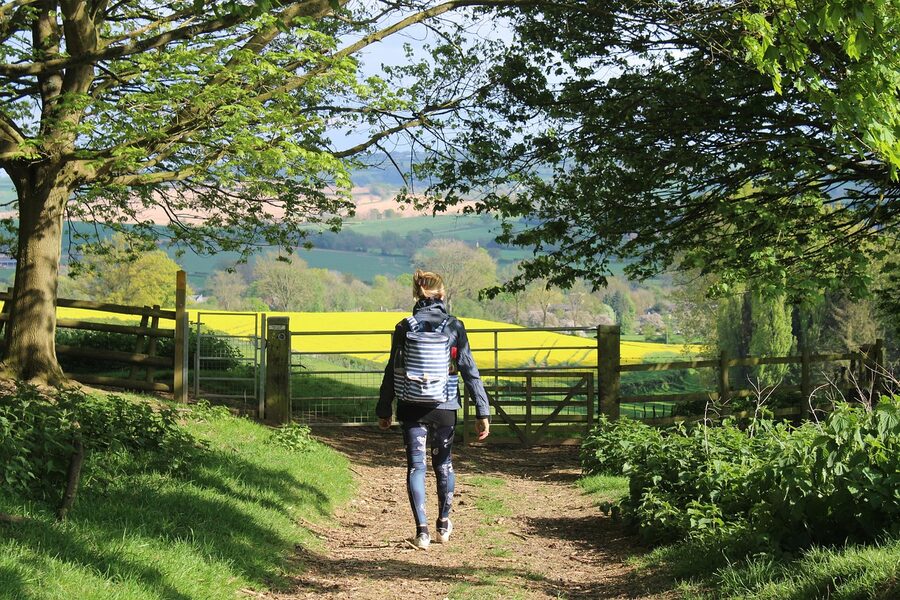
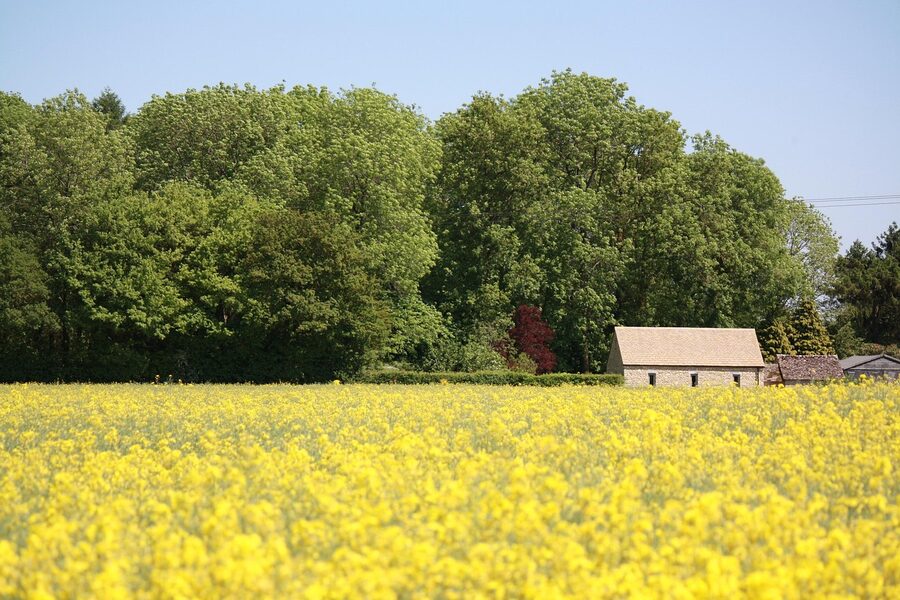
Late April to early June gives you bluebells in the woods, oilseed rape in the fields, lambs in the paddocks, and long daylight without midsummer haze. The villages aren’t yet at peak crowd. Coach tours run reliably and the weather is mostly dry.
Late September to mid-October gives you the autumn colour, cooler and clearer light for photos, and the post-summer drop in tourist numbers. Some attractions start closing for winter (Bourton’s Model Village goes to weekend-only from late October) but the villages themselves don’t really shut down.
July and August are the busiest. Castle Combe and Bibury can feel like a queue rather than a village. Avoid Saturdays in particular.
Winter is genuinely beautiful but coach numbers drop. Some smaller-group tours don’t run November through February. Check before booking. The light from a winter morning sun on Cotswold stone is one of the best things in England, but you have to time it right.
Doing It Without a Tour
You can DIY the Cotswolds from London but it’s harder than it looks. Two methods work.
Train plus local bus: direct from London Paddington to Moreton-in-Marsh (about 1h45). From there, the Pulhams 801 bus runs to Bourton-on-the-Water and Stow-on-the-Wold. You can do those two villages comfortably in a day. Bibury, Burford, and Castle Combe are not reachable by easy public transport. Train tickets booked in advance are about £50 return. Add £6 for the bus. Total cost is about half a coach tour but you only see two villages, not four or five.
Hire a car: rent at Heathrow or Paddington Hertz, drive yourself. Total cost for a day is around £80-100 with fuel and parking. You can do six or seven villages if you start early. The downside: village parking is limited, finding spaces in Bourton or Castle Combe on a summer Saturday is genuinely difficult, and the lanes between villages are narrow with no overtaking. Driving in the Cotswolds is more stressful than driving on a UK motorway. Worth doing if you’re a confident driver and you want to control the pace; not worth it for nervous overseas visitors.
For most international travellers in London for a few days, the coach tour is the right answer. You don’t lose half a day to logistics, you don’t deal with parking, and the guide gives you context you’d miss on your own.
How This Compares to Other London Day Trips
The Cotswolds is one of four classic day-trip directions from London. Each has a distinct character.
Cotswolds vs Windsor: the Cotswolds is the half-day deeper, the rural alternative, the Anglophile fantasy. Windsor is the half-hour west, the royal residence, the historical heavyweight. Our Windsor Castle ticket guide covers the alternative if you want a proper monument and a working royal palace.
Cotswolds vs Stonehenge: villages versus prehistory. The Cotswolds wins on accessibility and “is this real life?” charm. Stonehenge wins on bucket-list weight. They pair surprisingly well as a combo (above) but as standalone day trips they’re entirely different experiences.
Cotswolds vs Oxford: rural versus urban historic. Oxford gives you college quads, Hogwarts dining halls, and the Bodleian Library. The Cotswolds gives you no buildings older than 1500 but lots of them in a row. If you can only do one, pick based on if you’d rather see one famous city or four pretty villages.
Compared to similar day trips elsewhere in Europe: the Cotswolds loop is structurally similar to a few other capital-city escapes. The Madrid to Toledo day trip is the Spanish equivalent of “honey-stone medieval place near a major capital” (Toledo is the single-city version, the Cotswolds is the multi-village version). The Lisbon Sintra day trip is the Portuguese parallel: half-day each way, multiple stops, photogenic architecture. The Madrid three-cities tour covers the same logistical territory if you’re heading to Spain on the same trip.
The Day Itself: What You’re Getting
The Cotswolds day trip is one of the best-value tourist experiences in Britain. Ten hours, four or five villages, a guide who knows the wool-trade history, a coach you don’t have to drive, and you’re back in London by dinner. For somebody on a tight London itinerary, it’s the right way to see this part of England.
The frustrations are real and worth knowing about. You don’t get long in any single village. Castle Combe and Bibury in particular feel like queueing for a photo more than experiencing a place. Bourton can be properly overrun in summer. Lunch is rushed unless your tour books it. And the villages themselves are partly performances now; the locals tolerate tourism more than they enjoy it.
That said, I’d still pick the small-group format over a self-drive day for most first-time visitors. The mental load of driving narrow lanes, parking in tight villages, and finding lunch is a lot when you’re jet-lagged. Let the coach handle it. Take your photos. Eat the lardy cake. Get back to London before the pubs close. The villages will still be there next time and you’ll have a better idea of which one you want to come back to.
Pairing This With Other Trips
If you’re staying in London for a few days and want to combine day trips, the Cotswolds pairs naturally with the standalone Oxford walking-tour day (one rural, one academic) or the Windsor Castle ticket day (one countryside, one royal). The Stonehenge half-day works as a different shape of trip altogether and slots well into a four-day London itinerary.