
The first time I booked a Stonehenge “half-day” from London, I had grand plans for the afternoon. Lunch in Soho, a walk along the South Bank, maybe a museum. None of that happened. The coach pulled back into Victoria at 3:45pm, and by the time I’d worked my way through the bus station and onto the tube, the day was effectively over.
Half-day is the most misleading label in London tourism. Plan for six hours door-to-door, sometimes seven if Friday traffic on the M3 misbehaves.
Short on time? My quick picks:
Cheapest entry, no transport: Stonehenge Admission Ticket, just the timed entry, around $33. Pair with a train if you’re going DIY.
Best for first-timers: Half-Day Stonehenge Tour from London, coach plus skip-the-line entry, the most-booked option on the route.
Fastest in and out: Stonehenge Express Half-Day Tour, no padding stops, drop-off at Victoria Station, around five hours total.
- Short on time? My quick picks:
- What “half-day” actually means
- Why the train + Stonehenge Tour bus is often cheaper
- Express versus standard half-day: the real difference
- Audio guide or no audio guide?
- Inner circle access: the version most people don’t know exists
- The 3 best Stonehenge tickets and tours
- 1. Stonehenge Admission Ticket: from
- 2. From London: Half-Day Stonehenge Tour with Admission Ticket: from
- 3. From London: Stonehenge Express Half-Day Tour: from
- What two hours on site actually looks like
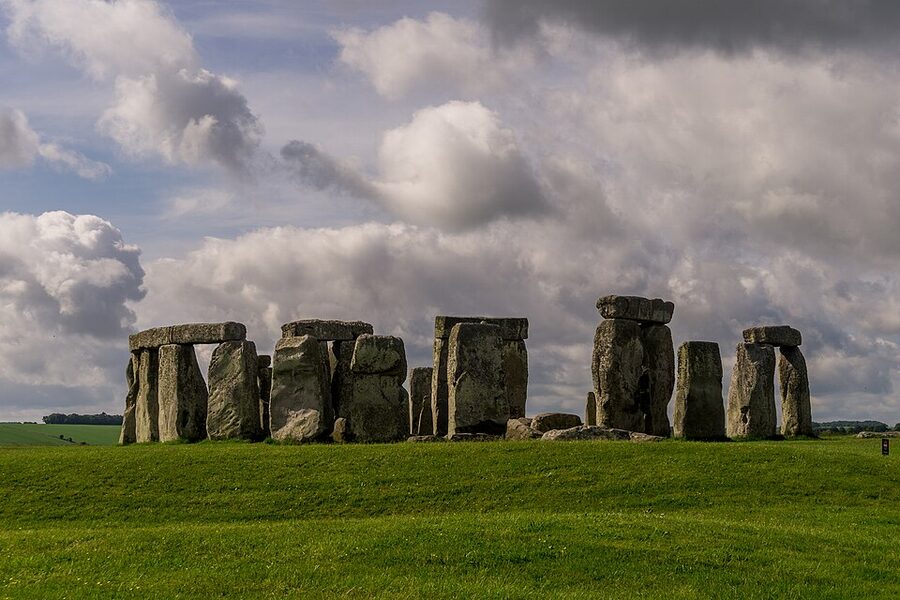
- What you actually see at the stones
- Best time of day, best time of year
- Getting there: practical logistics
- How this trip differs from the day-trip combos
- The mistake I made the first time
- Things to do nearby if you’re going DIY
- What to bring
- Common questions
- Where to wander next
What “half-day” actually means
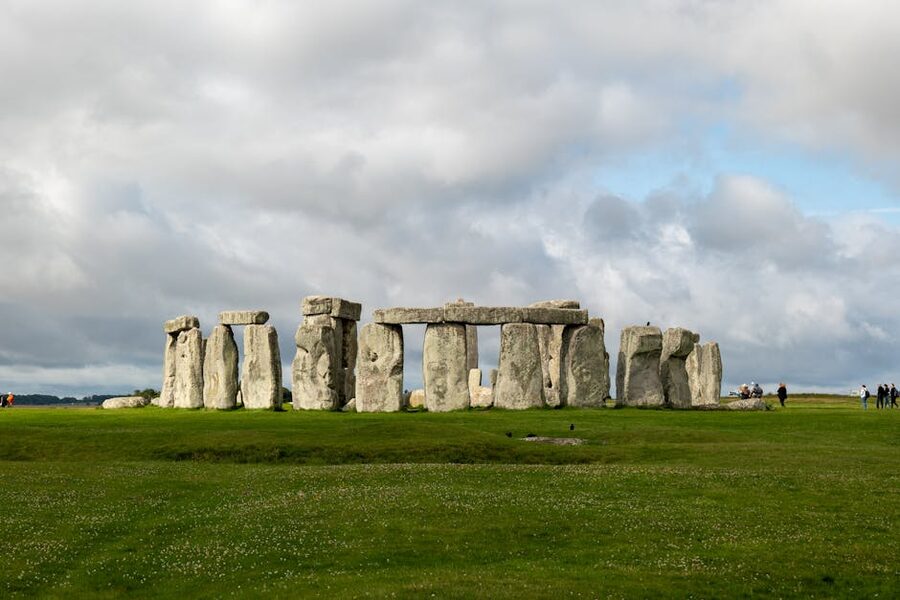
The maths is simple once you see it written out. London to the Stonehenge Visitor Centre is around 90 miles. On a quiet morning the coach does it in 1 hour 45 minutes, but afternoon return runs commonly stretch to 2 hours 15 with traffic on the A303.
Add the standard 2 hours at the site (which is genuinely the right amount of time, more on that below), the coach turnaround, and the walk from your central London meeting point. You’re looking at:
- Pickup window in central London: 8:00 to 8:30am
- Arrive Stonehenge: roughly 10:00am
- Site time: 2 hours, sometimes a bit less if the coach left late
- Depart Stonehenge: around noon
- Arrive back at Victoria: 2:30 to 3:45pm depending on traffic
That’s the express version. Standard half-days often add a brief lunch stop and run closer to 6.5 hours total. So when you book, block out the entire morning and most of the afternoon. Don’t make 4pm dinner reservations. Don’t try to slot in a museum afterwards. You’ll be tired, the bus station crowd at Victoria is brutal, and you’ll regret the optimism. If you want a guided London experience for the rest of the day, slot it for the next morning instead, maybe a historic pub walk or a Jack the Ripper walking tour.
Why the train + Stonehenge Tour bus is often cheaper
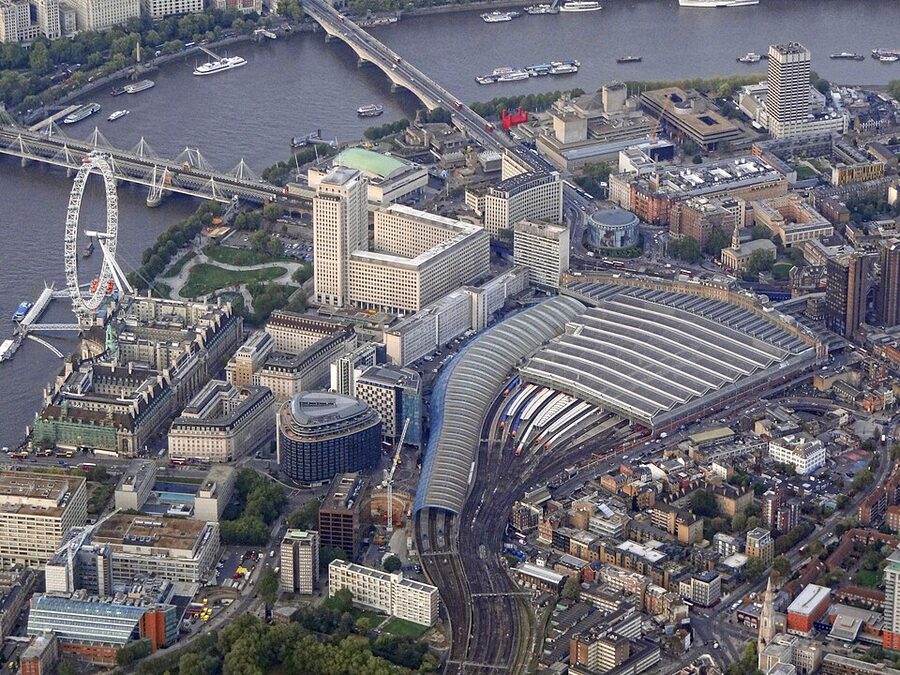
Here’s the part most coach passengers don’t know about. You can do this entire trip independently from London Waterloo for less money, with more flexibility, and a better view.
The setup is:
- Train: Waterloo to Salisbury, around 1 hour 30 minutes, roughly every 30 minutes during the day
- Stonehenge Tour bus: Hop-on hop-off shuttle from Salisbury station to the Visitor Centre, about 30 minutes each way, runs roughly hourly
- Admission: Buy your timed-entry Stonehenge ticket in advance, English Heritage operates the site and slots sell out in summer
Booked in advance, an off-peak return train fare can be cheaper than a day ticket on the coach. The Stonehenge Tour bus also stops at Old Sarum, the original Salisbury hilltop fort, which is genuinely interesting and adds context to the whole prehistoric landscape. Coach tours skip it entirely.
The catch: timing matters. If your train is delayed (and South Western has its share of weekend engineering works), you could miss your timed slot at the stones. And the shuttle bus does NOT run outside general admission hours, which kills the inner circle option I’ll get to in a moment.
Who should DIY:
- Anyone comfortable with UK trains and timed-entry logistics
- Travellers who want to see Salisbury itself, not just the stones
- Solo travellers and couples (groups of 4+ may find coach tours work out similar in cost)
- Anyone planning to spend more than 2 hours on site
Who should book a coach:
- First-time UK visitors who don’t want to handle separate tickets
- Anyone with limited time who wants the package handled
- Travellers who’d rather sleep on the bus than deal with connections
Express versus standard half-day: the real difference
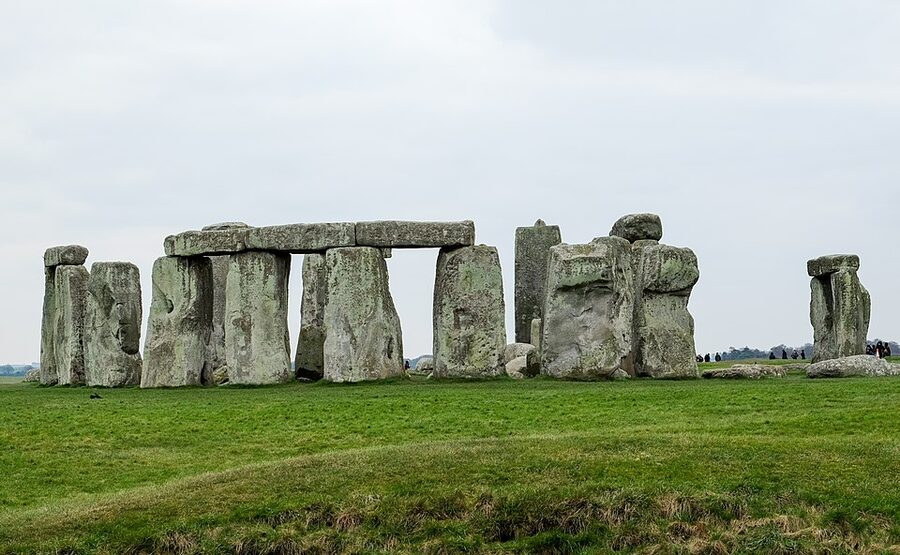
Both the express and the standard half-day put you on the same coach for the same drive to the same place. The difference comes down to two things: whether the bus stops anywhere on the way, and where it drops you off in London.
Express tours go direct. Pickup at Victoria, straight to the Visitor Centre, two hours on site, straight back. No lunch stop, no commentary stops, no detour through a service station. Drop-off at Victoria. Total time: around five hours.
Standard half-days often include a brief stop at a service station or coaching inn, plus a guide who narrates the route. Slightly longer total time (6 to 6.5 hours), and depending on the operator, you may get a cooked lunch option you can pre-book.
If your goal is just to see Stonehenge and get back to London for an afternoon plan, take the express. If you actively want a longer day with a guide explaining the Wiltshire landscape on the way down, the standard works. The site time is the same either way: around two hours. Nobody gets longer because Stonehenge runs on timed entry slots and English Heritage controls the pacing.
Audio guide or no audio guide?
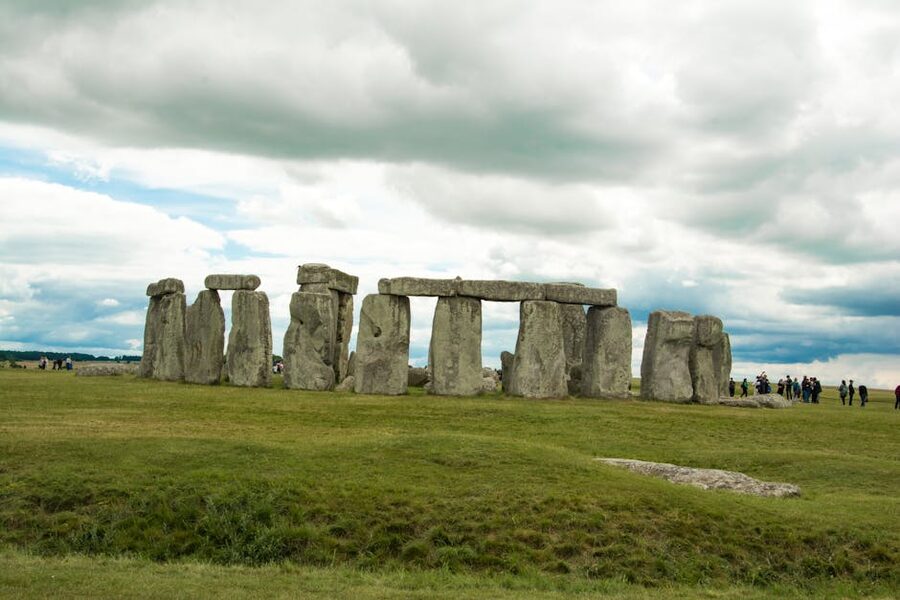
Some tours include an audio guide, others don’t. The audio version is genuinely useful here because the site has no signage near the stones themselves. Without commentary you’re staring at a Neolithic ring with no context. With it, you learn which stone is the Heel Stone, why the bluestones came from 240km away in Wales, and what the Aubrey Holes were probably for. It’s information you’d otherwise have to read up on beforehand.
The English Heritage app is free and covers the same ground if you’ve got data and headphones. Most coach operators just provide a basic audio device with English commentary; if you want another language, check before you book. Some tours offer audio in 12+ languages, others are English-only.
If your tour doesn’t include audio and you’re not the type who reads guidebooks beforehand, download the official English Heritage Stonehenge audio app on your phone the morning of the trip. It’s free with admission and covers the full circuit.
Inner circle access: the version most people don’t know exists
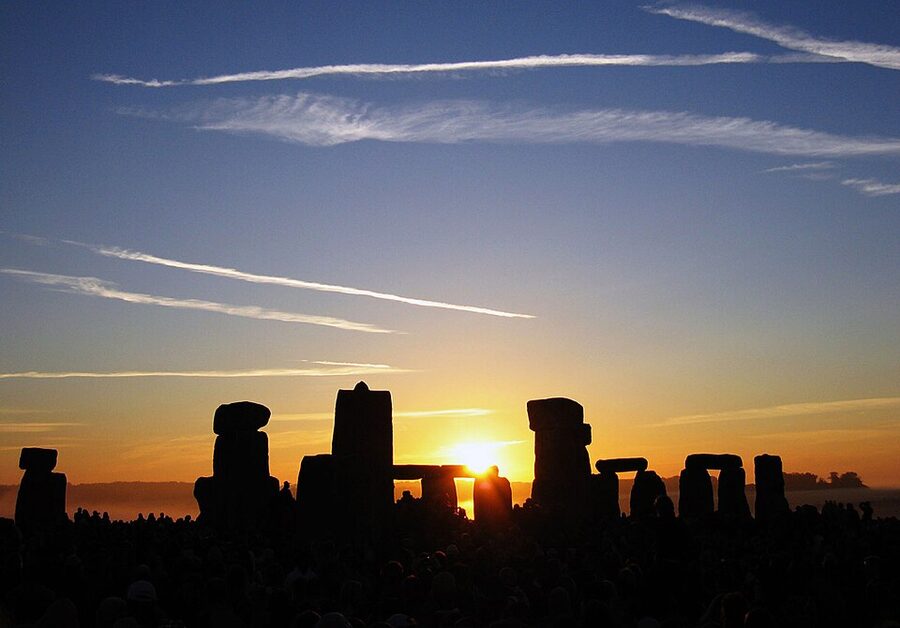
This is the option that almost nobody on a regular half-day tour knows about. English Heritage runs Stone Circle Access sessions at sunrise and sunset, capped at 30 people per slot. You walk inside the ring. You can stand next to the trilithons. You can (carefully) touch the stones.
The catches:
- Sessions sell out months ahead, particularly anything around the summer solstice
- The Salisbury shuttle bus doesn’t run outside opening hours, so DIY is genuinely difficult
- Most “inner circle” tours from London are full-day, not half-day, because they leave at 4am for sunrise or return at midnight from sunset
- Cost is significantly higher than standard admission
If this is your goal, book the dedicated inner-circle tour package early, ideally three months out for summer dates. It’s a different experience from the daytime visit, more atmospheric and far less crowded. Most people who’ve done both say the inner circle was worth the price and the daytime visit was the one they’d skip if forced to choose.
The 3 best Stonehenge tickets and tours
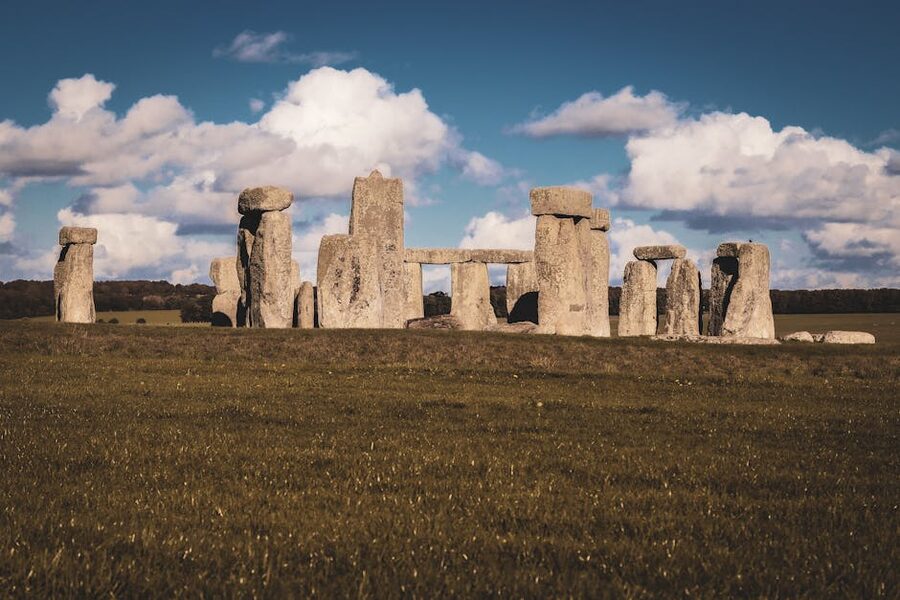
I’ve narrowed the booking options down to three. One for DIY travellers who already have transport sorted, one for the standard coach experience, and one for people who want the trip done as efficiently as possible.
1. Stonehenge Admission Ticket: from $33
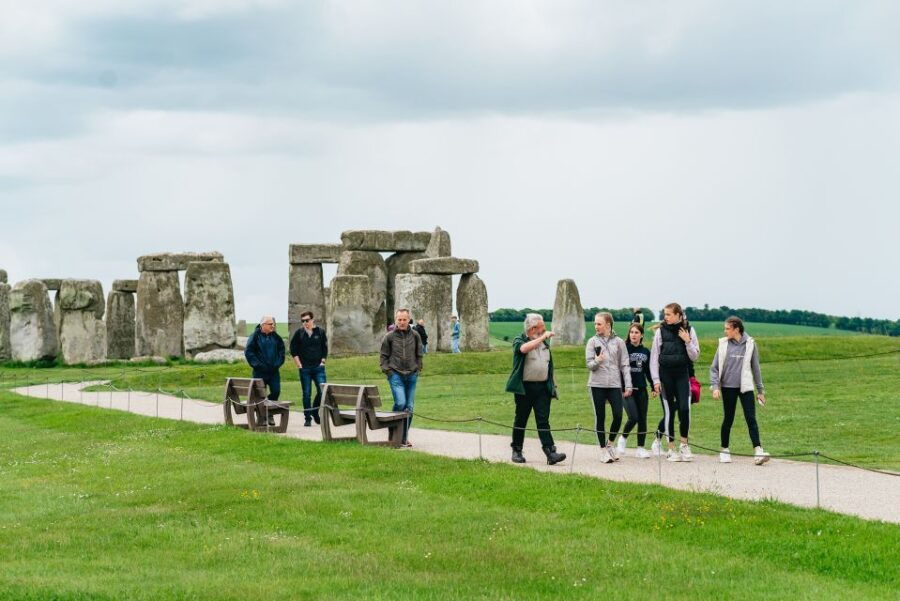
This is the official English Heritage timed-entry ticket and the option I recommend if you’re driving yourself, taking the train to Salisbury, or already on a tour package without admission included. Our full review covers the timed-slot system and what’s included at the visitor centre. It’s the most-booked Stonehenge ticket on the market and English Heritage runs the site, so this is the genuine article rather than a third-party reseller.
2. From London: Half-Day Stonehenge Tour with Admission Ticket: from $89

The classic package and the easiest option for first-time visitors. Coach pickup near Victoria, skip-the-line timed entry, two hours at the site, return drop-off in central London. Our review goes into the meeting point logistics and what’s actually included on the bus. Pick this if you don’t want to think about train timetables or shuttle connections.
3. From London: Stonehenge Express Half-Day Tour: from $79

The fastest version of the standard half-day, and my pick if you’ve got an afternoon plan you don’t want to lose. Our full review covers the audio guide languages and the Victoria meeting logistics. No lunch stop, no detour, just London to stones and back. Around five hours door to door.
What two hours on site actually looks like
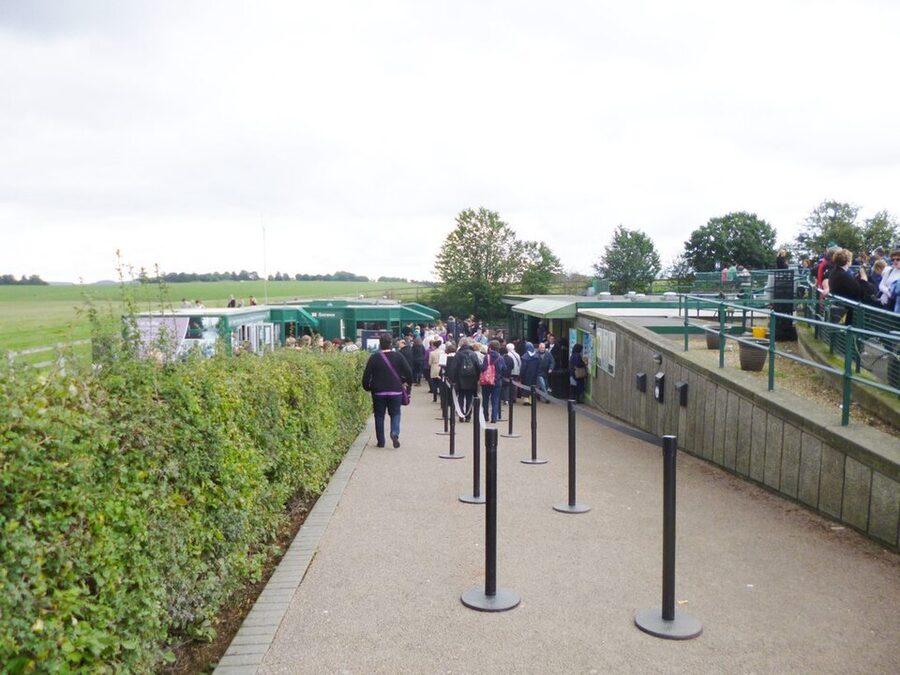
Two hours sounds tight. It isn’t, once you see how the site is laid out.
You arrive at the Visitor Centre, which is 1.5 miles from the actual stones. There’s a shuttle that runs constantly between the centre and the monument; you can also walk it (about 25 minutes) along a designated path that gives you the slow approach. I’d walk one way and shuttle the other.
At the Visitor Centre:
- The exhibition gallery, around 250 archaeological objects from the surrounding landscape including a 5,500-year-old facial reconstruction of a Neolithic man
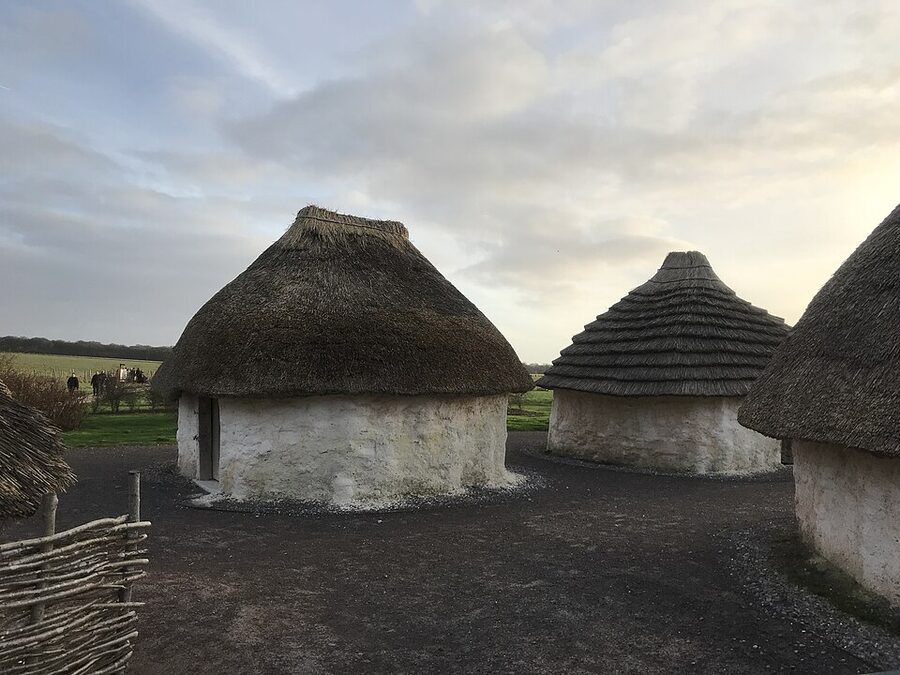
- Recreated Iron Age roundhouses with thatched roofs (you can go inside)
- The cafe, which is fine but expensive (a coffee and a sandwich is around £15)
- Toilets, gift shop, and the only retail anywhere on site
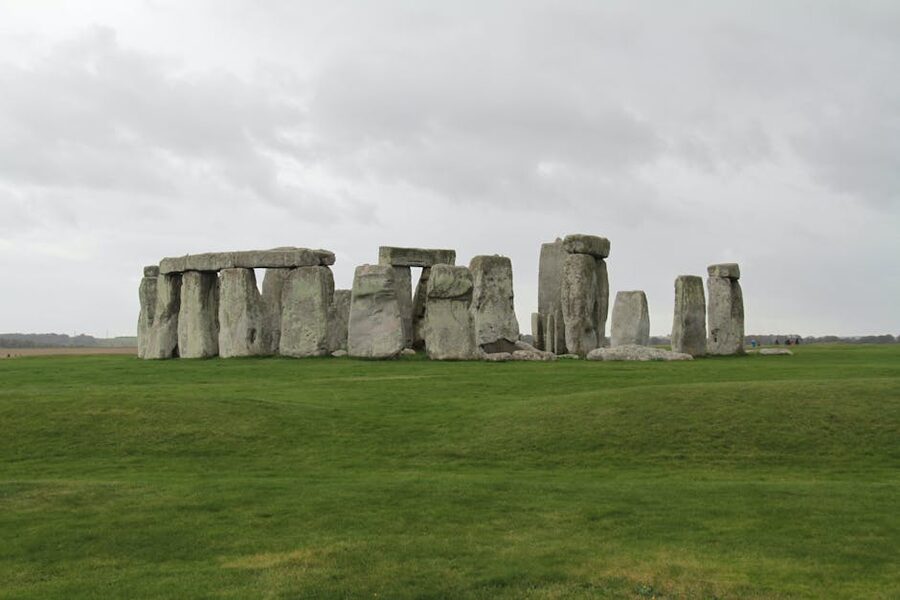
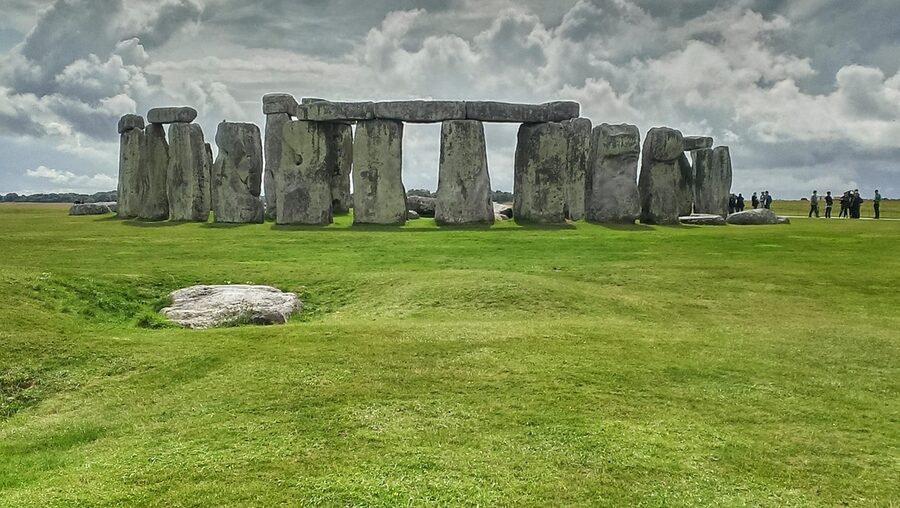
At the stones themselves, you walk a perimeter path that loops around the circle. It takes about 25 minutes to do at a normal pace, longer if you stop to listen to the audio guide at each numbered station. There are 9 audio points around the loop. Do them all if you want the full story.
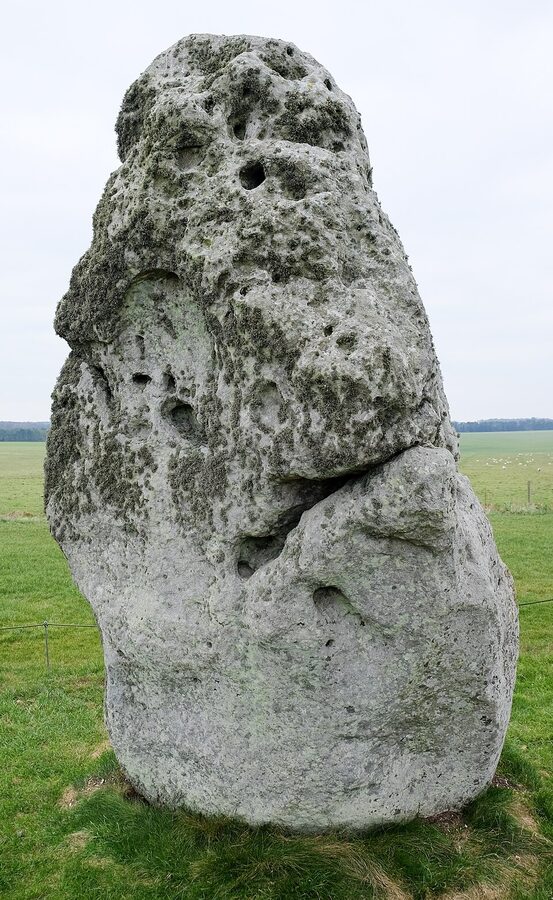
The path keeps you about 10 metres from the outer ring of sarsen stones, which sounds further than it feels. You can fit the entire circle in one camera frame from several spots. The Heel Stone, which sits outside the ring on the avenue, aligns with the summer solstice sunrise and is the marker most coach tours photograph.
What you actually see at the stones
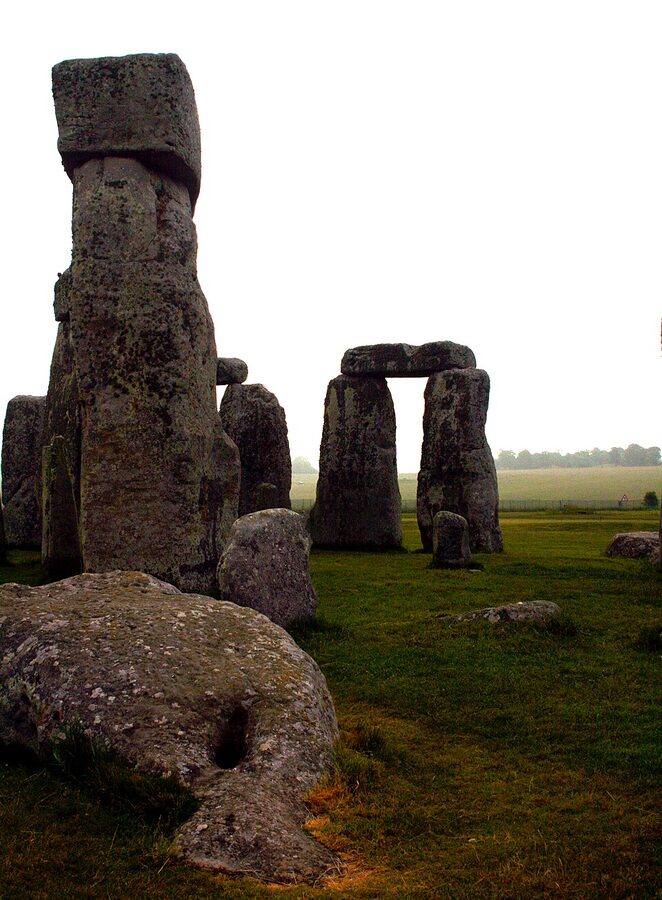
Three stone types make up the monument:
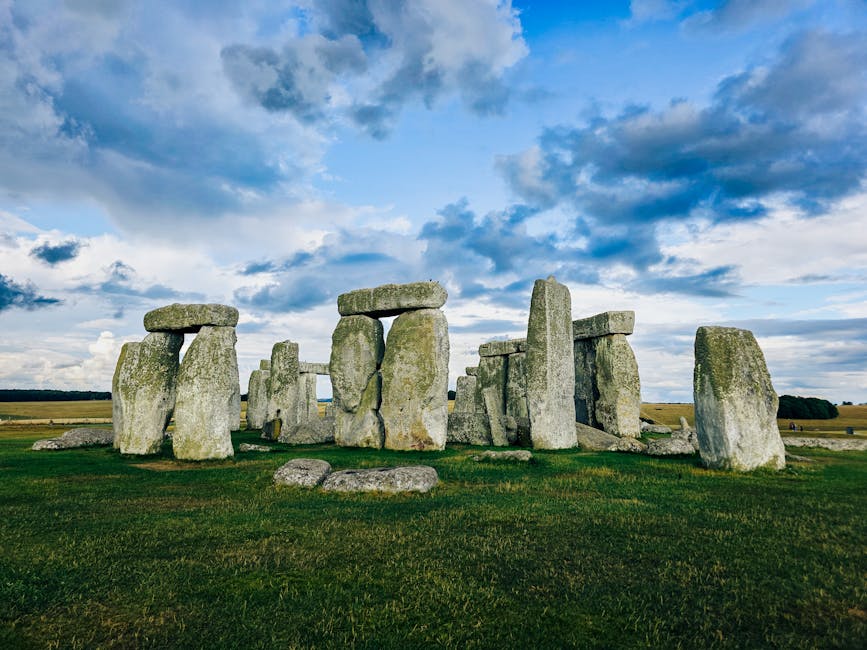
- Sarsen stones form the outer ring and the five inner trilithons. Local sandstone, hauled about 25km from the Marlborough Downs. The biggest weighs around 30 tonnes.
- Bluestones sit inside the sarsen ring. Quarried in the Preseli Hills in Wales, around 240km away. Nobody is fully sure how Neolithic people moved them, though current theory favours a sea-and-river route.
- The Altar Stone, until recently thought to be Welsh, was reclassified in 2024 to a sandstone source in north-east Scotland. Cue much rewriting of textbooks.
The site you see today is a fraction of what was once there. The full Stonehenge landscape, a UNESCO World Heritage site, covers around 26 square kilometres and includes hundreds of burial mounds, the parallel earthworks of the Cursus, and the Avenue (the ceremonial approach road that aligns with the solstice axis). You can walk parts of it, free of charge, on the public footpaths around the visitor centre. Most coach tours don’t tell you this.
Best time of day, best time of year
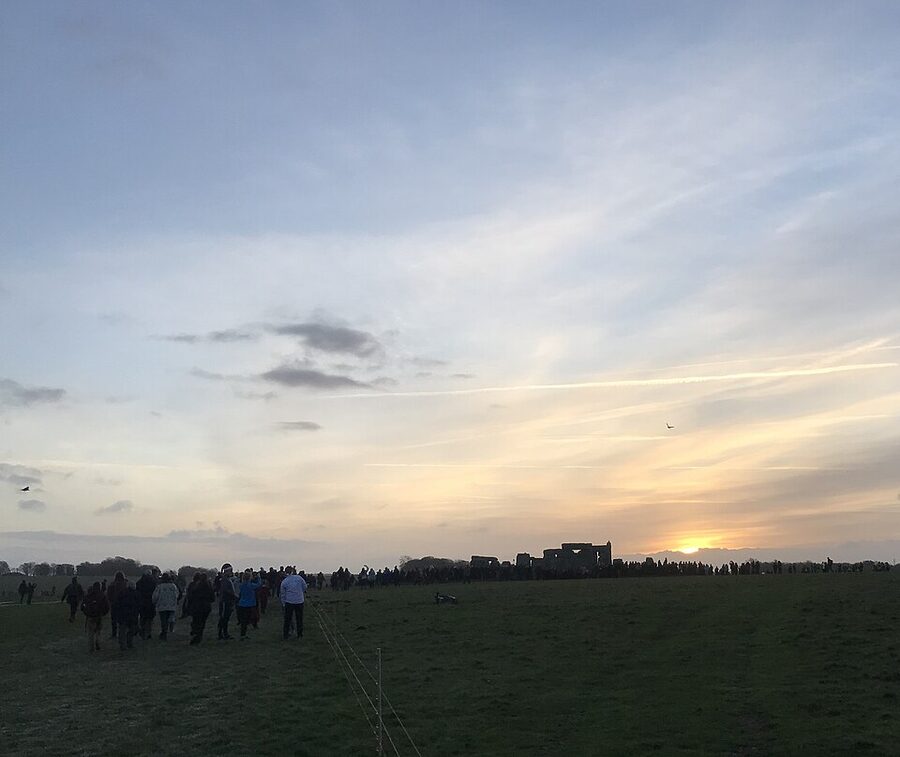
Morning is unambiguously better than afternoon. The first coach slot lands you at the stones around 10am, before the bulk of the day-trip traffic arrives. By 1pm the path is genuinely crowded, particularly in July and August.
By month:
- April to early June: longer days, less rain than autumn, and not yet at peak crowds. My pick.
- July to August: peak crowds, peak prices, and the only time you’ll get a guaranteed sunset visit. Book everything two months ahead.
- October to early December: fewer visitors, dramatic skies, but the Visitor Centre closes earlier and last admission moves up.
- December to February: bleak in the best way, often quiet enough to feel like you have the path to yourself for stretches. Bring layers, the Salisbury Plain wind is no joke.
The summer solstice (June 21) and winter solstice (December 21) are the two days when the standard fence rules are suspended and free open access is granted to the stones overnight. It’s a festival, not a peaceful visit. Tens of thousands of people show up. If that’s your thing, brilliant. If you want a contemplative experience, avoid those weekends entirely.
Getting there: practical logistics
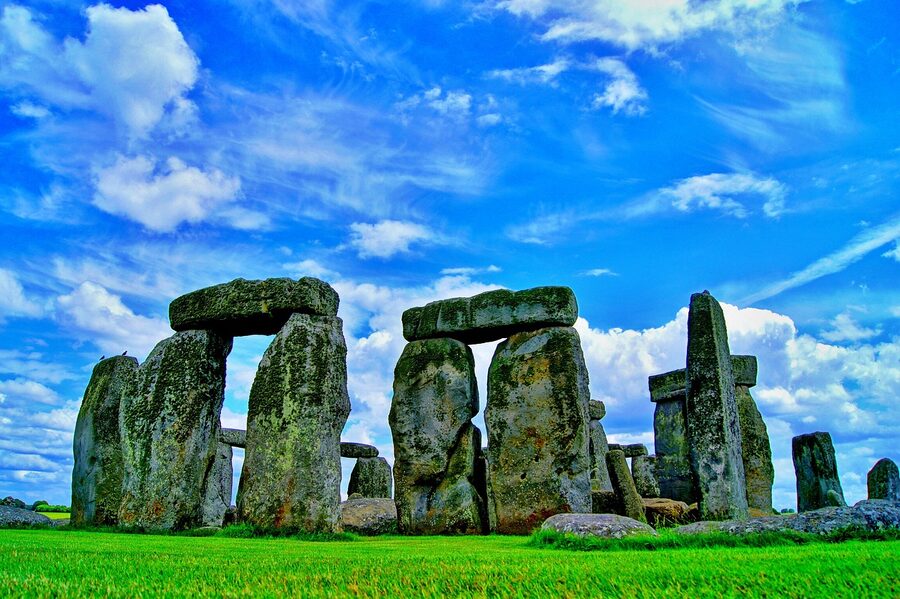
Coach pickups in London almost all run from a cluster around Victoria, Buckingham Palace Road, or central hotel pickups. If your hotel is in Bloomsbury, Kensington, or the City, allow 20 to 40 minutes to reach the meeting point on the tube before the coach leaves. Coaches don’t wait for late arrivals. Bring a printout or screenshot of your booking confirmation; you’ll need it to board.
If you’re going by train:
- Waterloo to Salisbury, South Western Railway, around £50 return on the day, £25-30 if booked in advance and off-peak
- Salisbury station to Stonehenge: the dedicated “Stonehenge Tour” hop-on hop-off bus, around £18 day pass which includes Old Sarum and runs even on quieter days
- Walk-up admission at the stones is sometimes available but not guaranteed; book the timed-entry ticket online before you go
Buy your Stonehenge admission through GetYourGuide rather than directly through English Heritage if you want free 24-hour cancellation. The English Heritage site is fine but their cancellation window is tighter.
How this trip differs from the day-trip combos
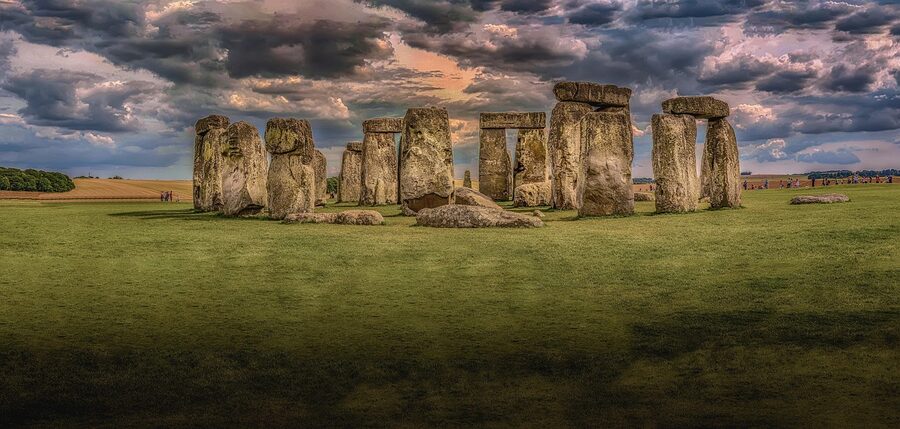
Stonehenge half-days exist alongside three popular full-day combinations from London. Worth knowing what you’d gain or lose by switching.
The Stonehenge and Bath day trip pairs the stones with Bath’s Roman baths and Georgian crescents. It’s roughly 11 hours total and gives you about 90 minutes at Stonehenge versus the 2 hours on a half-day. Worth it if you want both sites and won’t be back. Skip it if Stonehenge is the priority and you want longer at the stones.
The Stonehenge, Windsor and Bath combo tries to fit three sites into one day. It works as a sampler, but every stop feels rushed. I’d only book this if you have a single day in the UK and want to tick off three icons. Otherwise, do them separately.
The Windsor, Oxford and Stonehenge route adds Oxford’s college quad to the mix. Same problem: each site gets the bare minimum. If you want to do Oxford properly, book a dedicated Oxford walking tour instead. If Windsor’s the priority, the standalone Windsor Castle ticket guide covers your options for that.
The Cotswolds-plus-Stonehenge variant via Avebury (a different stone circle, larger but less famous) is a different beast again. If you want stones plus countryside villages, look at the Cotswolds day trip options.
The mistake I made the first time
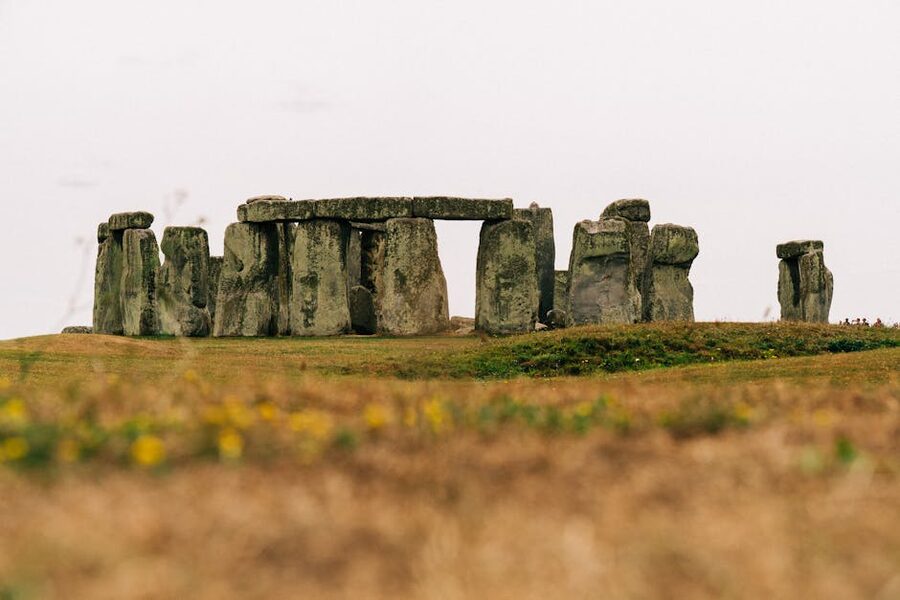
Two things I’d do differently if I were starting over.
One: I’d have booked the express, not the standard. The lunch stop on my standard half-day was a motorway service station with a Costa Coffee. It was not a culinary highlight. Pack your own sandwich, take the express, save the time.
Two: I’d have brought proper rain gear. Salisbury Plain is exposed and the weather can change inside an hour. Bring a waterproof, even in summer. The audio devices coach companies hand out are often not waterproof either, so a hood that fits over the headphones helps.
One thing I’d absolutely repeat: I went in the morning slot. The afternoon coach gets the path at peak crowd density and the light is flatter. Morning, even on an overcast day, gives you better photos and more space to walk.
Things to do nearby if you’re going DIY
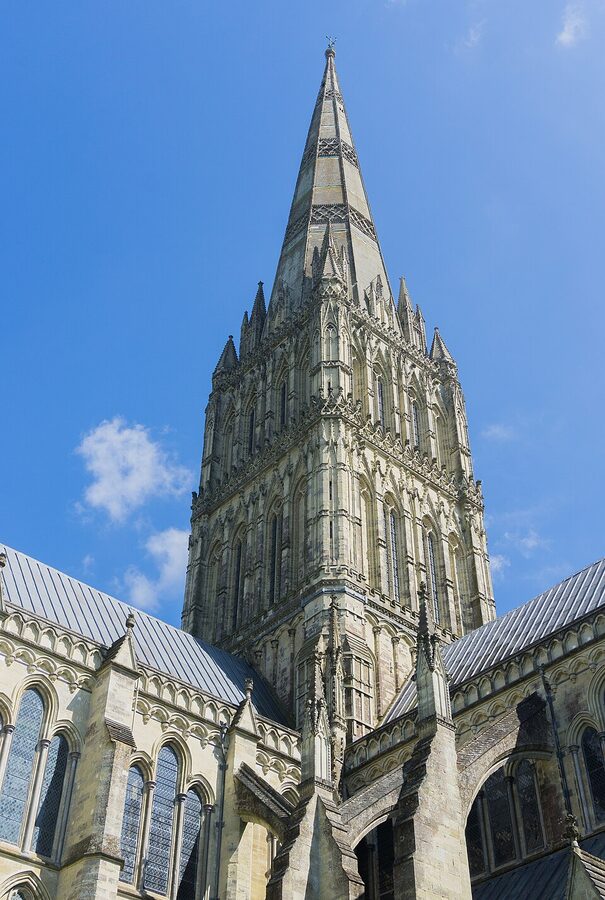
If you’re doing the train route and have a spare two hours in Salisbury, the cathedral is the obvious stop. It’s a 10-minute walk from the station, holds the best-preserved of the four surviving original Magna Carta copies (1215), and the Chapter House display is included in your suggested £10 donation. The cloisters are the largest in any English cathedral and they’re free to wander.
Old Sarum, the original Iron Age hill fort that the Stonehenge Tour bus also serves, is worth 45 minutes. It’s where Salisbury was before they moved the cathedral down to the valley in 1220. The earthworks are dramatic and you get a good view of the Wiltshire landscape.
The Cathedral Close in Salisbury is the largest in England and has the medieval King’s House (now the Salisbury Museum). The museum has actual finds from the Stonehenge landscape, including the famous Amesbury Archer, an early Bronze Age burial discovered just 5km from the stones. It pairs perfectly with the visit.
What to bring
The site is more exposed than you’d think. A short list:
- Waterproof jacket, regardless of forecast. Wiltshire is unpredictable.
- Layers. The path is a 25-minute loop and the wind picks up on the open plain.
- Headphones with a 3.5mm jack if you want better audio than the loaner devices, or AirPods if your tour offers a Bluetooth audio option. Check first.
- Snacks. The Visitor Centre cafe is the only food on site and prices are typical for a captive market.
- A camera with a wide lens. Phone cameras work fine; just remember the path doesn’t get any closer than 10 metres from the stones, so a zoom helps for stone-by-stone shots.
- Your booking confirmation, screenshot or printed.
Common questions
Can you actually touch the stones? Only on Stone Circle Access sessions (sunrise or sunset, booked separately, sells out fast) or during the solstices. Standard daytime admission keeps you on the perimeter path.
Is it worth visiting if I’ve seen the Avebury stone circle? Yes, but they’re different experiences. Avebury is larger, you can walk among the stones, and a village sits inside the circle. Stonehenge is more iconic, more crowded, and visually more dramatic because of the lintels. If you’ve done Avebury and want the Stonehenge silhouette photo, the express half-day is the efficient way.
How early do I need to book? For peak summer (July-August), book at least three weeks ahead. For solstice access or inner circle, three months minimum. Off-peak (October-March), a week is usually fine.
Is it accessible? Yes. The shuttle bus from the Visitor Centre to the stones is fully wheelchair-accessible, the perimeter path is paved and largely flat, and English Heritage offers companion-free admission for disabled visitors. Check their site for current accessibility statements.
What about kids? Two hours at Stonehenge is about right for primary-age kids. The Visitor Centre exhibition is genuinely engaging (the facial reconstruction always lands). Younger kids may find the perimeter walk long; bring a stroller or carrier.
Where to wander next
If you’re stitching together a longer London-based itinerary, the natural pairings with this trip are the other big out-of-town day excursions. The Windsor Castle visit works well as a separate half-day on a different morning, since both are around an hour each way and you don’t want to compress them. The Oxford walking tour is the cultural counterpoint, spires and quads instead of stones and grass. And if you’ve got a free Sunday left in your trip, the Cotswolds villages day works as your countryside fix. The format also echoes nicely with the Alhambra in Granada if you’re stitching together other European day trips: ancient site, half-day from a capital, timed-entry tickets you book months ahead.