
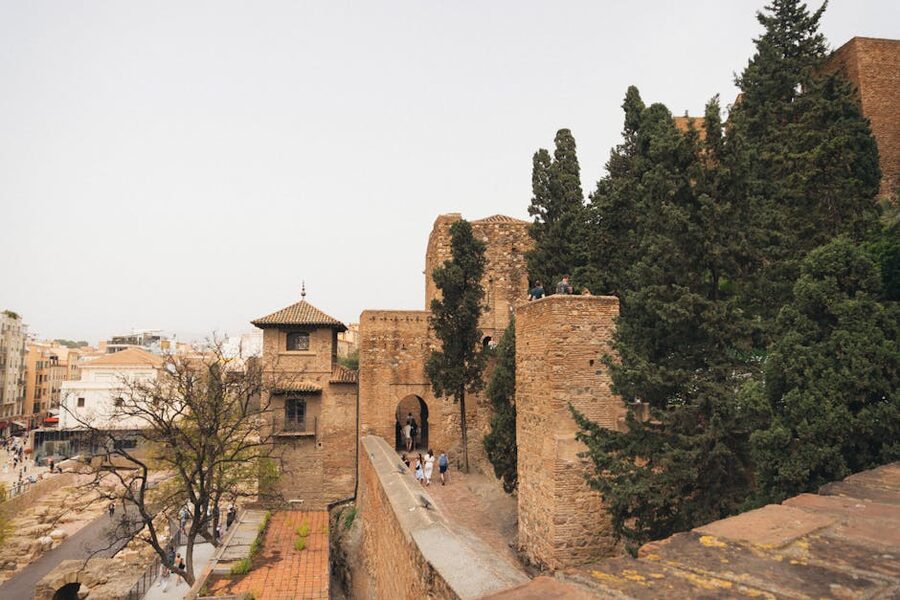
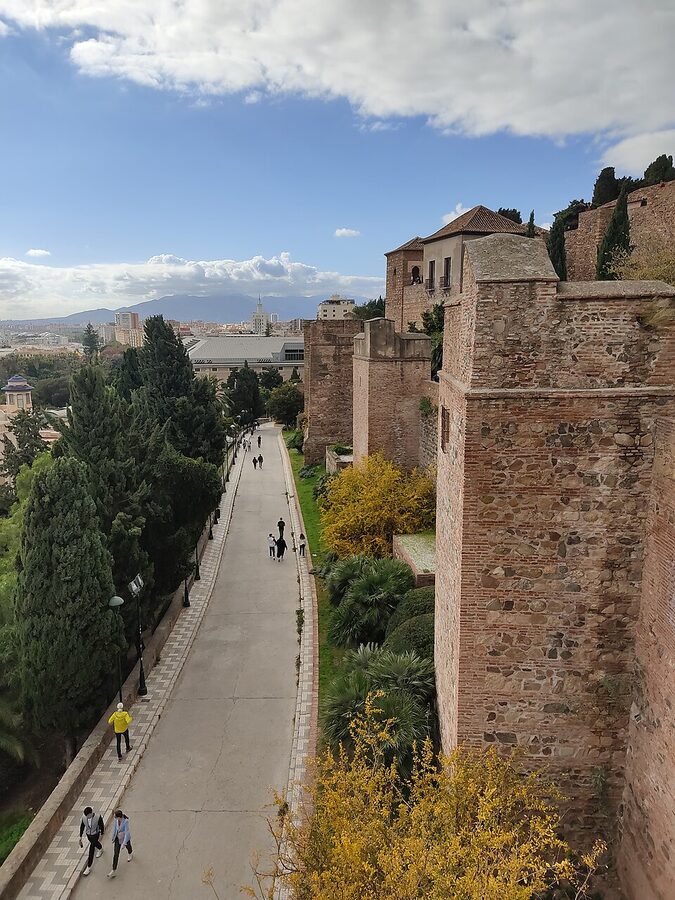
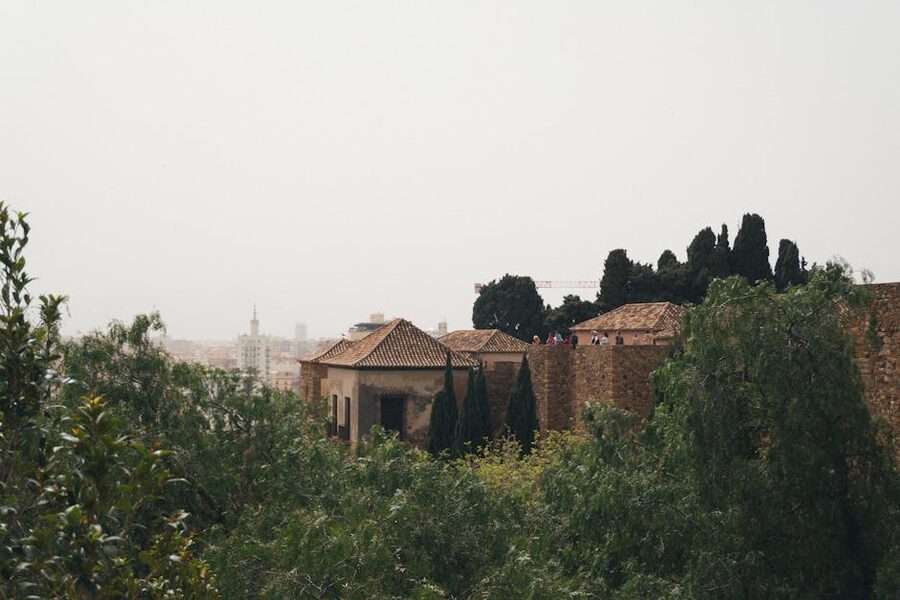
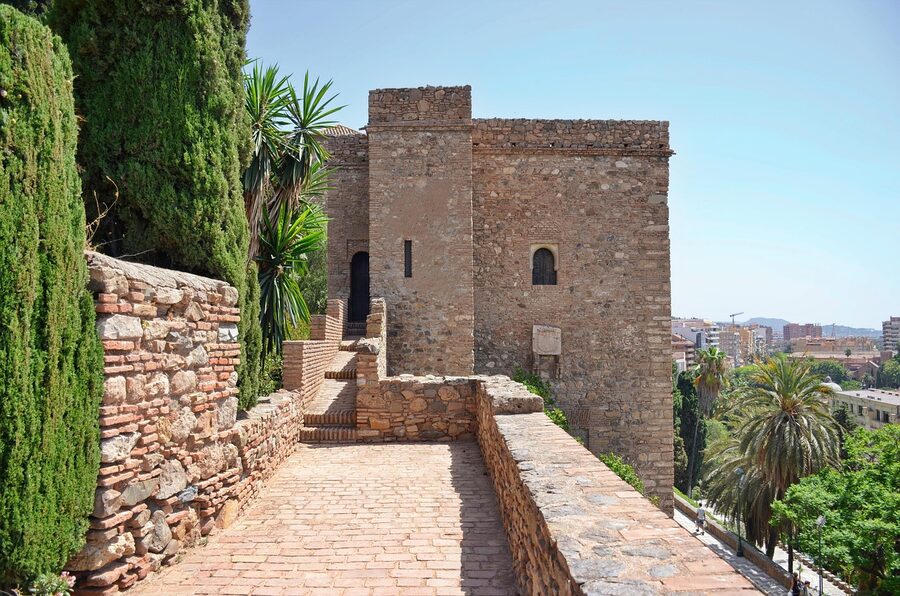
Halfway up the Alcazaba’s stepped switchbacks, with the orange trees throwing patchy shade and the path pivoting back on itself for the fourth time, I turned around and saw the Roman Theatre tucked beneath the fortress wall like a stone shell someone had pressed into the hillside. Two thousand years between the two of them, stacked on the same slope. That single view is the reason you climb.
I’ve done this climb in summer (sweaty and worth it) and in February (perfect, no queue). The trick to booking it is small but matters. Single ticket or joint with Gibralfaro. At the gate or online. Free Sunday window or guided. Below is the version of those choices I wish someone had laid out for me on my first visit.
- In a Hurry? My Quick Picks
- The Three Sites, in One Sentence Each
- What You’ll Pay (Real Numbers)
- The Free Sunday Window
- Opening Hours, Worth Knowing
- Tickets at the Gate vs Online
- Three Tours I’d Actually Book
- 1. Málaga Alcazaba and Roman Theatre Guided Tour with Entry: around
- 2. Malaga Tour with Cathedral, Alcazaba and Roman Theatre: around
- 3. Park, Port and Castle Gibralfaro Segway Tour: around
- Self-Guided or Guided?
- The Climb to Gibralfaro
- Is Gibralfaro Worth the Extra?
- The Roman Theatre, Quickly
- Performances at the Roman Theatre
- What to Wear and Bring
- How It Compares to Other Andalusian Palaces
- Combining With Other Málaga Things
- A Short History (For the Curious)
- Common Mistakes Visitors Make
- Accessibility Notes
- If You’re Coming on a Cruise
- Best Time of Year
- Where Else to Go in the Andalusian Loop
- More Spain Guides
In a Hurry? My Quick Picks
Best small-group tour, around $14: the Alcazaba and Roman Theatre Guided Tour with Entry. The most-booked option in the city, 90 minutes with a guide, both monuments included, skip-the-line entry. This is what I’d book if I had to pick one thing.
Adding the Cathedral, around $46: the Cathedral, Alcazaba and Roman Theatre walking tour. Three hours, all three monuments, one guide. Good value if you’re only in town for a day.
For the Gibralfaro hill, around $42: the Park, Port and Castle Gibralfaro Segway tour. Skips the steep walk up to the higher fortress. Worth it if you want both castles without burning your calves.
The Three Sites, in One Sentence Each
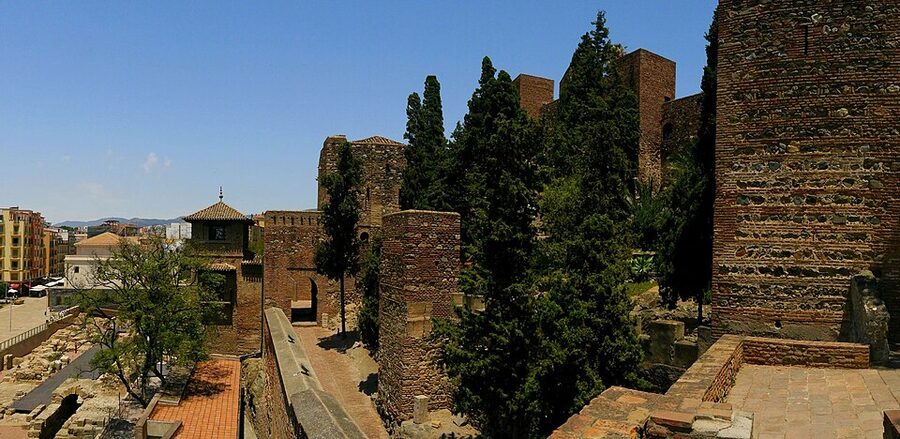
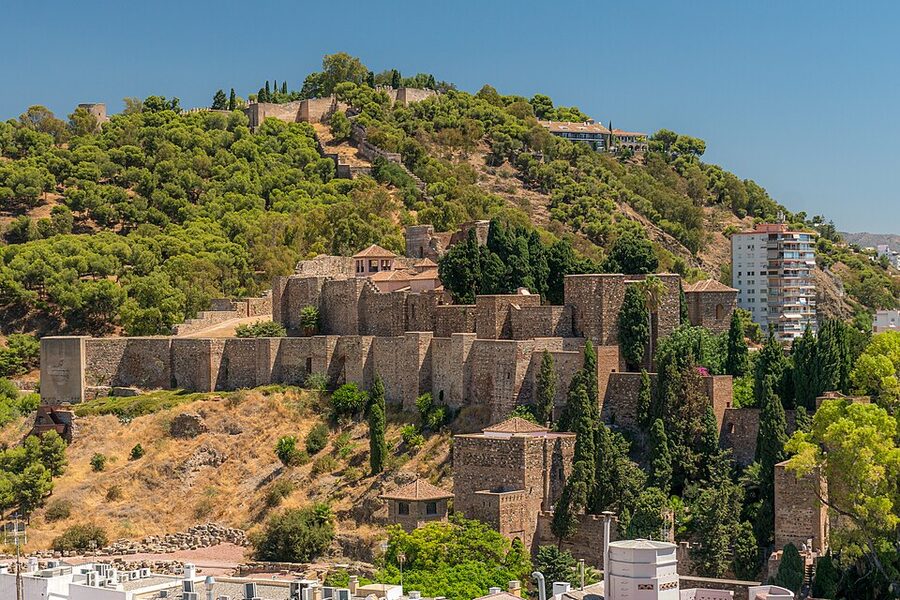
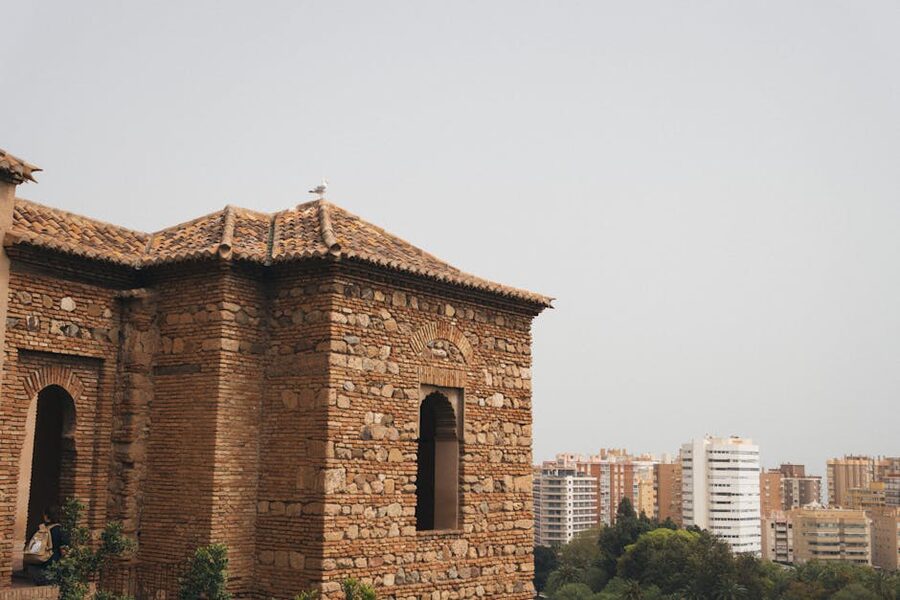
The Alcazaba is an 11th-century Moorish fortress and palace complex, built by the Hammudid dynasty on top of older Phoenician and Roman foundations. The Roman Theatre is a 1st-century BC stone semicircle at the foot of the Alcazaba, cut into the hillside, lost under medieval construction for centuries and rediscovered in 1951. Gibralfaro is the higher castle on the hill above, connected to the Alcazaba by a fortified passage called the Coracha and a steep walking path. You can do all three in a half-day if you move steadily.
What You’ll Pay (Real Numbers)
The official ticket prices are low. That’s the first thing to know. The Alcazaba on its own is about 3.50 euros. Gibralfaro on its own is the same. A combined ticket for both, sold at the lower Alcazaba ticket machines or up at Gibralfaro, costs 5.50 euros. The Roman Theatre below is free. Always free. You can wander the orchestra and read the interpretive panels without buying anything.
Reduced tickets exist for students, retirees over 65, registered unemployed, and disabled visitors. They run 1.50 euros for the Alcazaba alone, 2.50 euros for the joint ticket. Bring an ID document. Non-EU visitors should bring a passport because national ID cards from outside the EU sometimes don’t get accepted at the gate.
Children under six are free. Six to fifteen pay reduced.
The Free Sunday Window
Every Sunday after 14:00, the Alcazaba is free. Year-round, no booking, just turn up. Same goes for Gibralfaro. This is the single biggest hack for budget visitors and it’s the worst-kept secret in Málaga, which means the queue at the gate from about 13:30 onwards is long.
If you’re aiming for free Sunday entry, my advice: get to the Calle Alcazabilla gate by 13:15 with a coffee. The line builds fast after 13:45. By 15:00 you can be waiting half an hour. Last entry is 19:15 in summer (April through October) and 17:15 in winter (November through March), so you’ve still got plenty of time inside.
Pre-booked guided tours run on Sundays too, but the entry is paid even after 14:00 if you’re going through a tour operator. The free window only applies to the standard self-guided ticket.
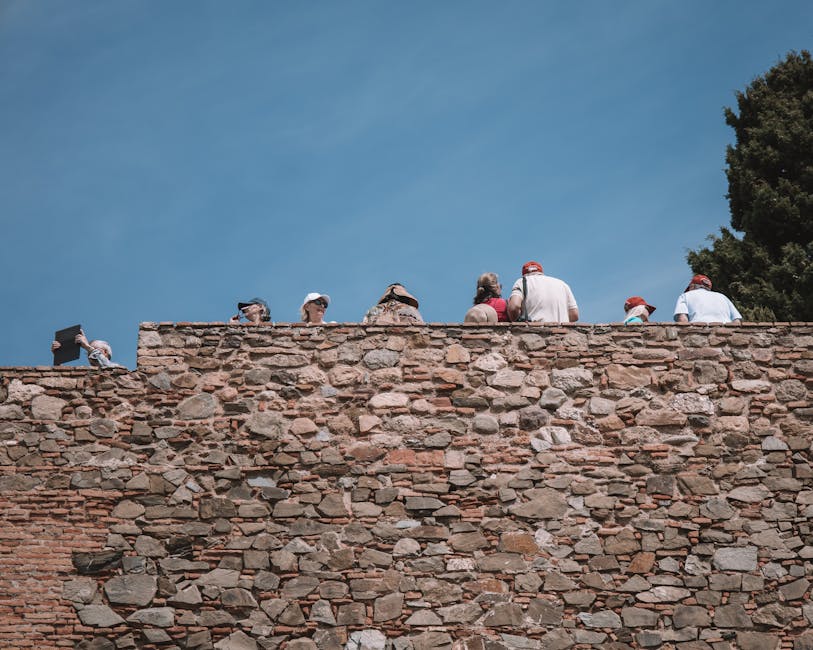
Opening Hours, Worth Knowing
Both monuments run on the same schedule and it changes twice a year:
- Summer (1 April to 31 October): 09:00 to 20:00, last entry 19:15.
- Winter (1 November to 31 March): 09:00 to 18:00, last entry 17:15.
The Roman Theatre Visitors Centre on Calle Alcazabilla has its own hours, generally 10:00 to 18:00 Tuesday to Sunday, closed Mondays. The theatre’s outdoor archaeological site itself is fenced off but visible at any hour because the whole front is open to the street.
If you’re doing the Alcazaba and Gibralfaro back to back, start at 9:00 sharp at the lower entrance, climb to Gibralfaro by 11:30, eat at the Parador up there, descend by mid-afternoon. That’s the pace I’d aim for. Less if you’re not in a hurry.
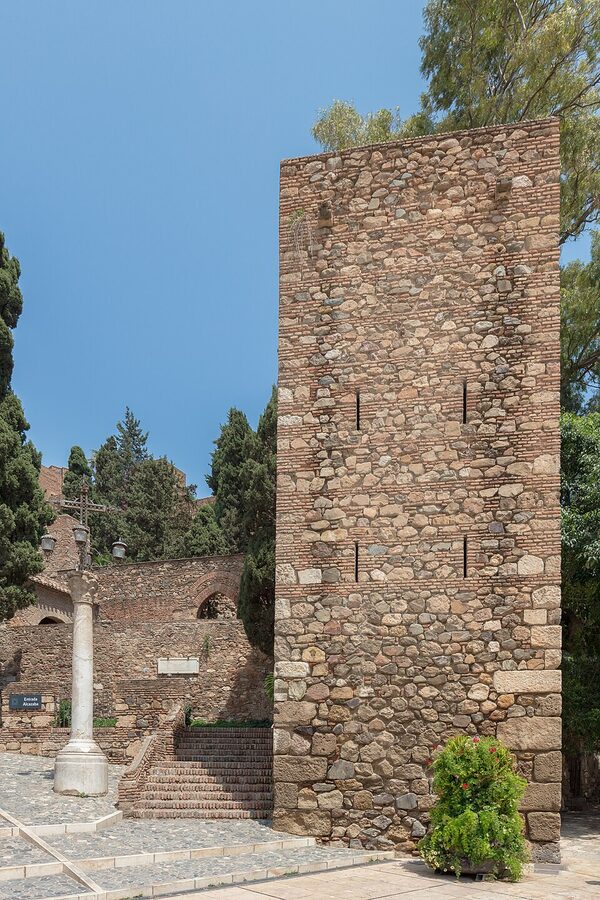
Tickets at the Gate vs Online
You have three real options.
1. Ticket machines at the lower Alcazaba entrance. Calle Alcazabilla, right next to the Roman Theatre. The machines take card and cash, have an English-language toggle, and sell single Alcazaba, single Gibralfaro, and joint tickets. Queues at the machines move faster than you’d think because most people are paying card. In low season (November to February, weekdays) you’ll wait five to ten minutes. In summer or weekends, fifteen to thirty.
2. The official council site. Sells the same tickets as the machines, no markup. The downside: no cancellations once you’ve booked. If your plans shift, you’re out the cost. The upside: you skip the machine queue and walk straight to the turnstile. Worth doing if you’re a planner.
3. Third-party platforms (GetYourGuide, Viator). They mostly sell guided experiences with the entry included. Free cancellation up to 24 hours before the start. Slightly higher cost than the bare ticket because you’re paying the guide. This is the route I take when I want context I can’t get from the panels alone.
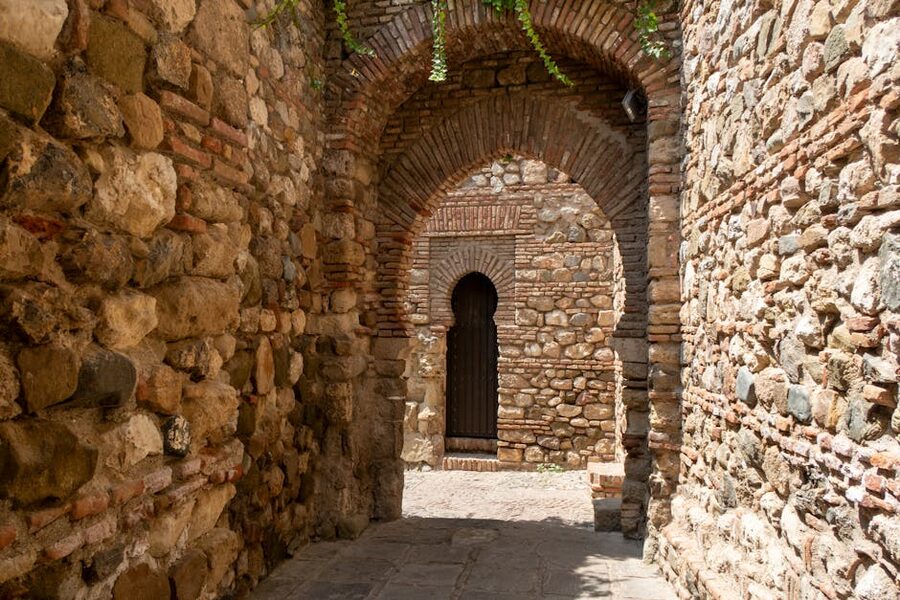
Three Tours I’d Actually Book
The DB I work from has every available tour in the city ranked by booking volume. After cross-checking what I’ve personally taken with what gets the highest repeat-booking numbers, three rise to the top. Here they are.
1. Málaga Alcazaba and Roman Theatre Guided Tour with Entry: around $14

This is the city’s most-booked Alcazaba tour by a wide margin. Our full review of the Alcazaba and Roman Theatre guided tour covers the guide rotation and how the route through the inner palace differs from the self-guided path. Book a 10:00 or 11:00 slot to dodge the cruise-ship rush after lunch.
2. Malaga Tour with Cathedral, Alcazaba and Roman Theatre: around $46
This stitches together the Cathedral, the Alcazaba, and the Roman Theatre in a single guided morning. Our notes on the cathedral, Alcazaba and Roman Theatre combo walk through how the route flows and where you’ll lose time waiting between sites. Skip this if you’ve already booked our Picasso Museum guide ticket and only need the fortress, but pick it up if you want one cover-it-all morning.
3. Park, Port and Castle Gibralfaro Segway Tour: around $42
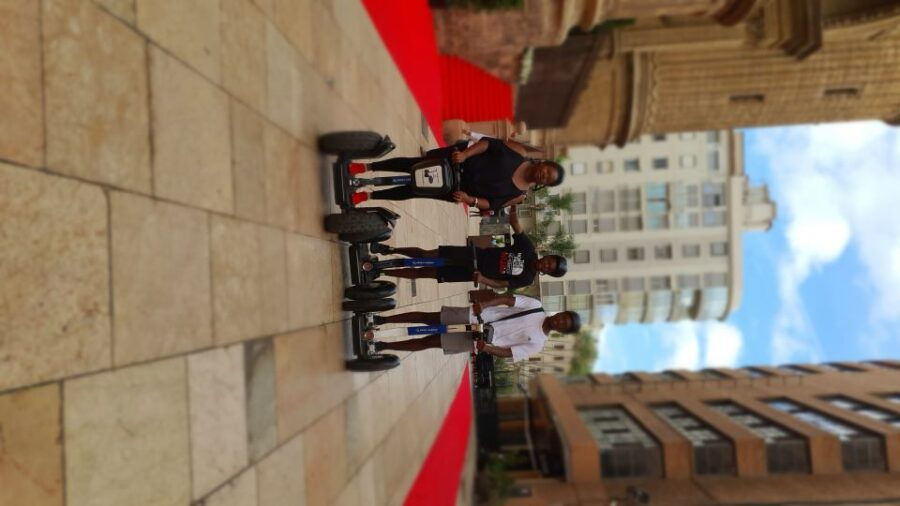
The walk up to Gibralfaro is steep enough that some people skip it. The segway tour solves that. Our Gibralfaro segway writeup covers the riding-with-no-experience question (the answer: yes, easily) and how the route stitches the seafront and the castle ramparts. Bring sunglasses, the views from the top are bright.
Self-Guided or Guided?
Both are fine. Here’s how I’d decide.
Go self-guided if you’re a museum-text reader, you’ve been to Granada’s Alhambra already, or you want to take photos at your own pace. The interpretive panels at the Alcazaba are bilingual (Spanish and English), well-translated, and they cover the history reasonably well. The free orientation map at the gate is useful. You can absolutely do this site on your own and come away knowing what you saw.
Go guided if it’s your first major Andalusian fortress, you have less than a day in Málaga, or the architectural detail (Caliphal vs Almoravid construction phases, the reused Roman columns in the inner walls) means anything to you and you want a guide pointing them out. The 90-minute guided tour I recommended above is the right length. Two hours plus and your kids start melting.
The Climb to Gibralfaro
This is the part most guides under-explain. There are three ways up.
The walking path from the Alcazaba. Inside the lower fortress, follow signs for “Subida al Gibralfaro” or the Coracha. The fortified walking corridor connects the two castles. It’s about 800 metres, mostly uphill, on a paved path. Twenty to thirty minutes at a steady pace. Free if you’ve already paid your Alcazaba entry.
The road from outside, on foot. Calle del Mundo Nuevo and Camino del Monte zigzag up the southern slope. Forty minutes from Plaza de la Merced. Steeper than the inner path but you don’t need an Alcazaba ticket.
Bus 35. Runs from the city centre (Avenida de Cervantes near the cathedral) up to the Gibralfaro stop, every 30 to 45 minutes. About 1.40 euros. Twelve minutes of switchbacks in a small bus, slightly white-knuckle but fast. This is what I do when I’m with people who don’t want to climb.
Is Gibralfaro Worth the Extra?
Honest answer: yes, if you have time. No, if you only have two hours total.
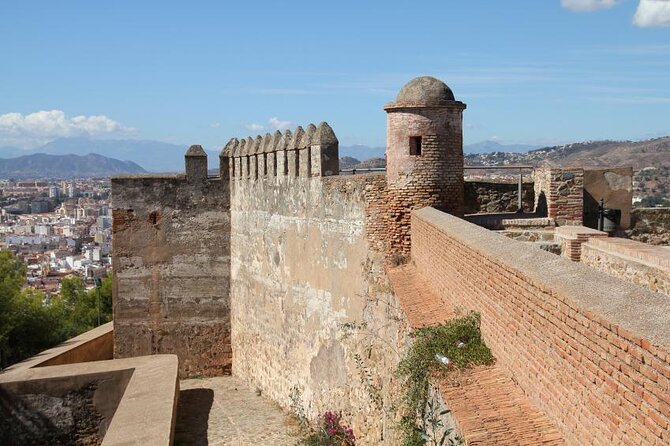
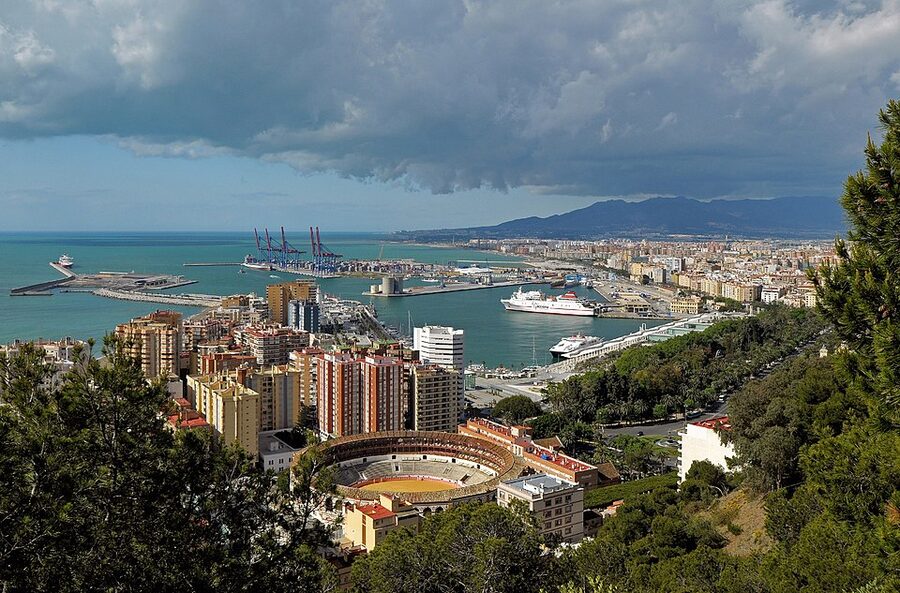
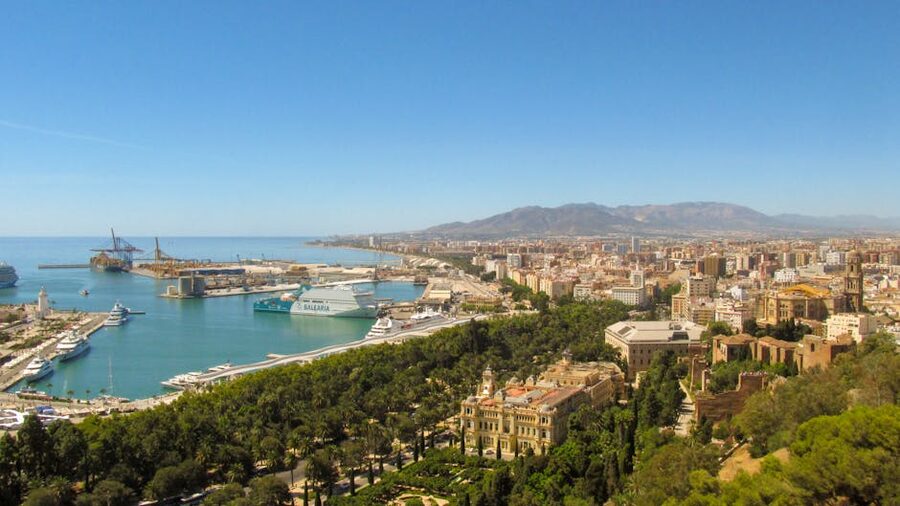
Gibralfaro is a fortified perimeter and a small interpretation centre. The ramparts are great. The interior is mostly empty. What you’re really paying for is the view. From the southern walls you see the bullring, the port, and the Mediterranean. From the northern walls you see the back of the Alcazaba and the city’s spread inland. It’s the best photo spot in the city, full stop. But if you’ve already done the Alcazaba and you’re tired and hungry, the lower fortress alone gives you a strong sense of the place.
If you’re going up, time it for late afternoon. The light hits the city face-on around an hour before sunset and the photos go from “fine” to “really fine” in about ten minutes. The Parador café has a terrace that frames the same view, with a beer.
The Roman Theatre, Quickly
You walk past it on the way in. Most people pause for two minutes and move on. Don’t. Spend ten.
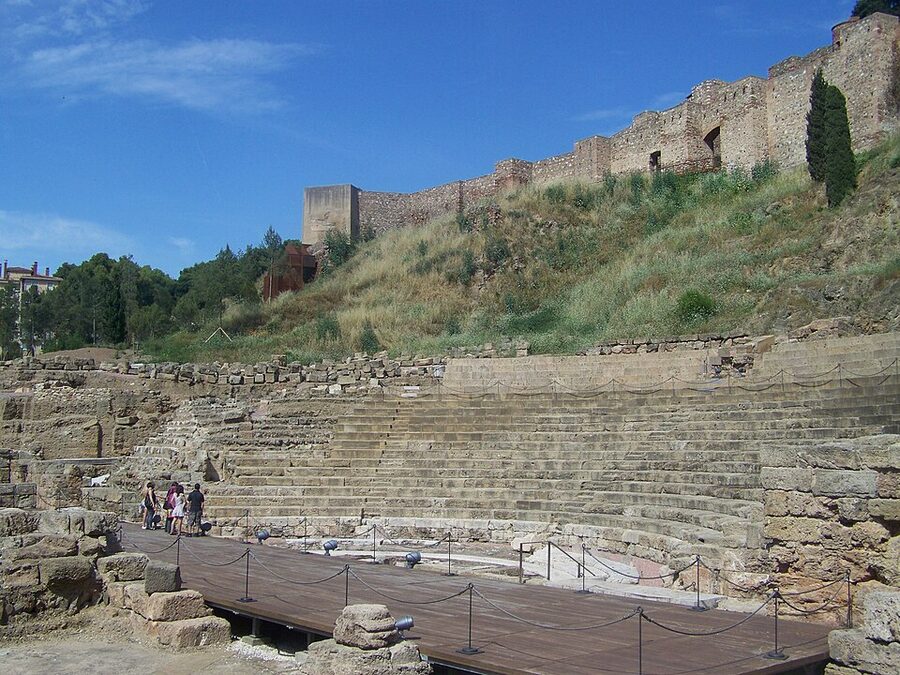
The theatre dates from the 1st century BC, built under Augustus. It seated about 220 spectators. Far too small for a major Roman colony, which is part of why it was forgotten so completely. The site was buried for centuries, used as a quarry by the Moors building the Alcazaba above (some of the column shafts in the upper fortress are sliced from theatre marble), then covered by post-Reconquista housing. It was rediscovered by accident in 1951 during construction work for the old Casa de la Cultura, which was eventually demolished to expose the theatre fully.
The Visitors Centre on Calle Alcazabilla has a small archaeological exhibit with finds from the excavation: pottery, a mosaic fragment, some inscriptions. Free. Twenty minutes inside, longer if you read everything. The orchestra and lower seating are visible from the street outside the centre even when it’s closed.
Performances at the Roman Theatre
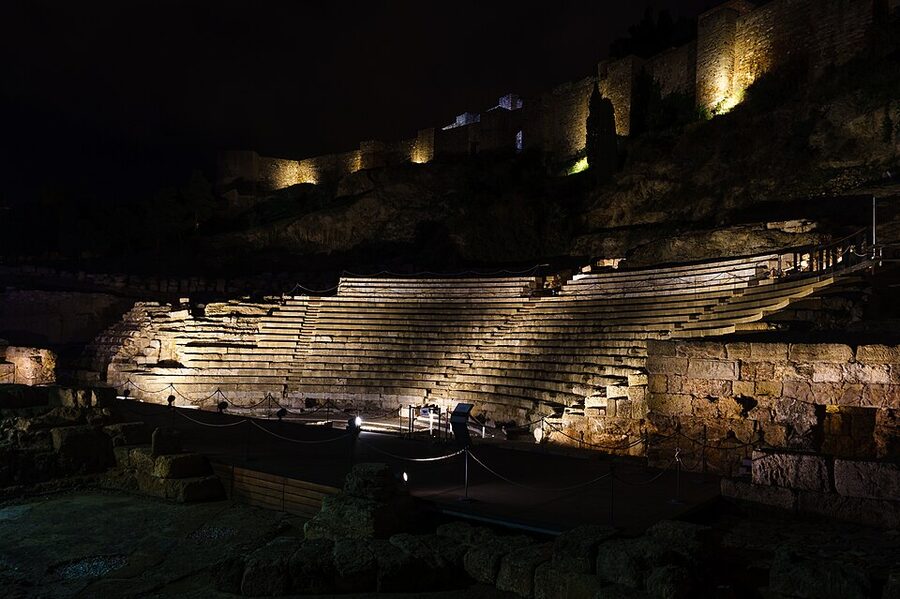
In summer (late June to early August), the city stages a small classical-theatre festival in the open theatre itself. Tickets are usually 12 to 25 euros depending on the production. They sell through the Málaga city culture portal, not GYG or Viator. If you’re in town in July, check the schedule. Watching a Greek tragedy on the actual Roman stones, with the Alcazaba lit up behind you, is the best evening I’ve had in this city.
What to Wear and Bring
Real talk after multiple visits in different conditions.
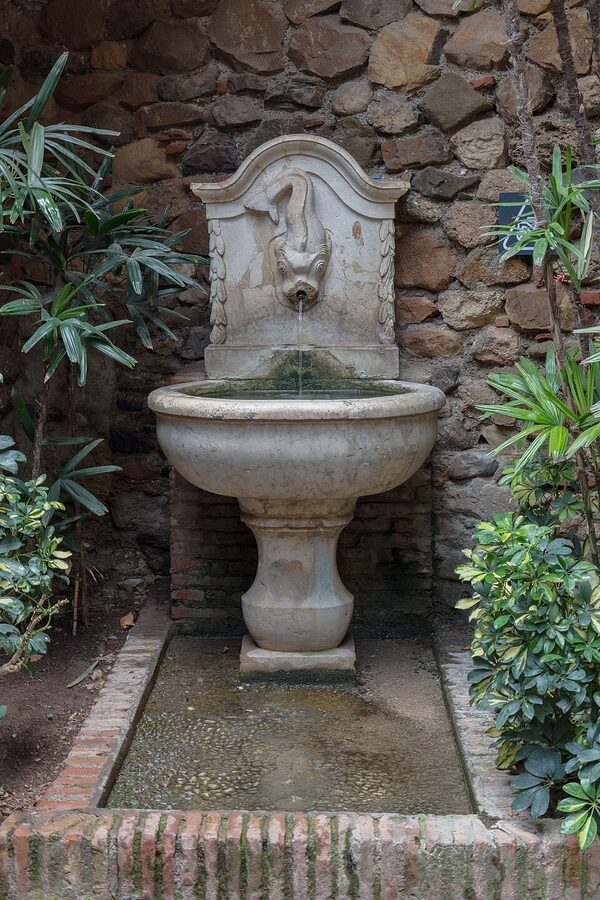
Sun cover from May to October. The Alcazaba has shade in pockets but the upper terraces are exposed. A hat, sunglasses, water bottle. The site has one fountain near the entrance and that’s it. In July and August at midday it’s brutal.
Grippy shoes. The polished steps are fine going up. Going down they’re slippery, especially after light rain. Avoid leather soles or new trainers with stiff rubber.
One small backpack only. Larger bags get queried at the entrance. There’s no formal cloakroom.
Cash isn’t necessary anywhere. Card works at machines, gates, the visitor centres, and the Parador café. Tipping the guide a couple of euros at the end of a tour is appreciated, not expected.
How It Compares to Other Andalusian Palaces
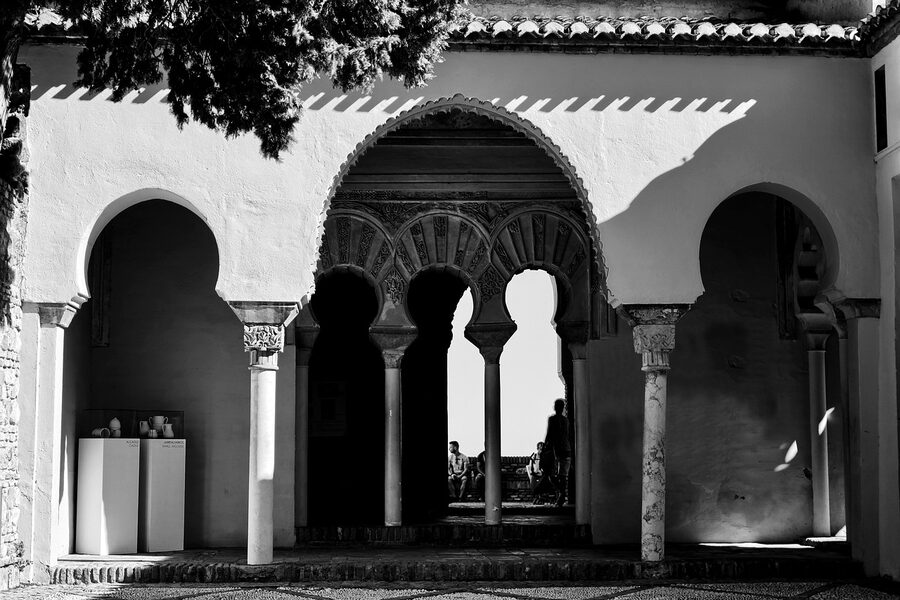
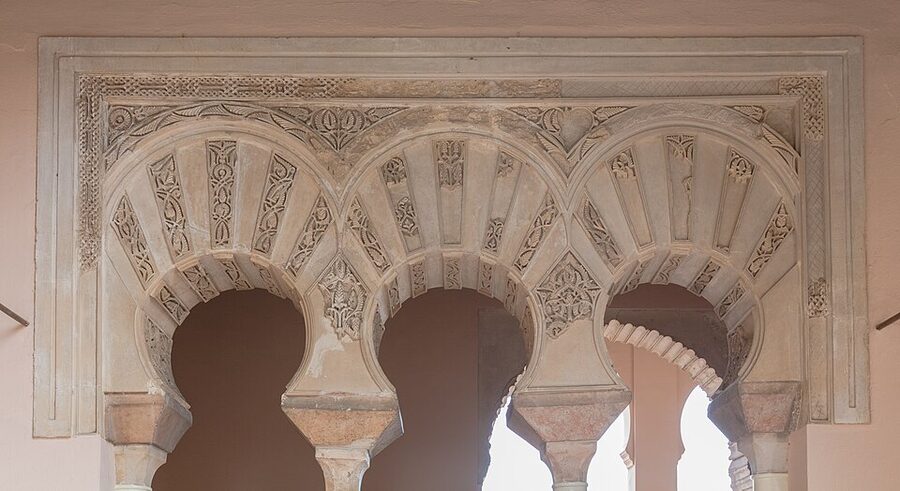
People who arrive at the Alcazaba having already seen Granada’s Alhambra sometimes feel underwhelmed for the first ten minutes. That’s a real risk and worth flagging. The Alhambra is enormous, immaculately preserved, and built by the Nasrid dynasty at the high point of Andalusian palace-building. The Alcazaba is older, smaller, and rougher. The interior decoration is sparser. Some of the rooms are reconstructions.
What the Alcazaba has that the Alhambra doesn’t: the Roman Theatre directly underneath, the urban setting (you’re in the middle of the city, not a hill above it), and the much shorter queue. You can usually book the Alcazaba a day in advance. The Alhambra wants three months.
If you’ve also seen Seville’s Alcázar, the Alcazaba reads as the older, less polished cousin. Seville’s site is grander but heavily Mudéjar-rebuilt, with most of the visible decoration dating from the 14th century. Málaga’s is more clearly Moorish-fortress in feel and less palace. Both are worth doing.
The same goes for Córdoba’s Mezquita, which is a different kind of beast (a converted mosque-cathedral, not a fortified palace), and Casa de Pilatos in Seville, which is a private 16th-century mansion in the Mudéjar style. If you’re touring Andalusian palaces seriously, the Alcazaba slots in as the earliest of the bunch and the only one with substantial Moorish military architecture still standing.
Combining With Other Málaga Things
If you’ve got a full day, here’s how I’d stack it.
Morning, 9:00 to 12:30: Alcazaba and Roman Theatre on a guided tour, then climb to Gibralfaro. Lunch at the Parador café up top.
Afternoon, 13:30 to 16:00: walk down via the southern path, then onto the Cathedral and our Museo Picasso Málaga in the old town. Both are within 200 metres of each other.
Evening: tapas in the streets behind the cathedral, then a flamenco show at one of the small venues like Kelipé or Vino Mio. Late dinner after.
If you’ve got two days, the Caminito del Rey day trip is the natural day-two move. It’s a 90-minute drive north, gorgeous gorge walk, takes most of the day. The Ronda and Setenil de las Bodegas tour is the other big day-trip out of Málaga and worth it for the bridge alone.
A Short History (For the Curious)
The Phoenicians founded Málaga (Malaka) around 770 BC on this exact slope. The Romans took over in the 2nd century BC. The theatre below the Alcazaba was built under Augustus in the late 1st century BC and abandoned around the 3rd century AD. Visigoths held the city briefly. Then the Moorish conquest in 711 brought Malaka under the Umayyad Caliphate of Córdoba.
The Alcazaba itself was built between 1057 and 1063 by Badis ibn Habus of the Hammudid dynasty, on top of older Phoenician and Roman fortifications. The site was expanded under the Nasrids in the 13th and 14th centuries. The fortress fell to the Catholic Monarchs in 1487 after a brutal three-month siege. The local Moorish population was sold into slavery; the Alcazaba was converted into Castilian military quarters and the Roman foundations slowly disappeared under new construction.
In the 19th and early 20th centuries, the upper city had become a slum. Major archaeological restoration started in the 1930s and was interrupted by the Spanish Civil War. The post-war restoration uncovered the Roman Theatre in 1951 (during work for a new cultural building), led to the demolition of overlapping later structures, and slowly turned the Alcazaba into the visitable site you see today. Restoration is technically still ongoing. Some of the inner palace rooms are reconstructions on original foundations rather than wholly preserved structures.
Common Mistakes Visitors Make
I see the same five errors over and over. Skip them.
Booking the wrong gate. Two entrances exist. The lower one on Calle Alcazabilla puts you next to the Roman Theatre and lets you climb the fortress in the natural sequence. The upper one near Gibralfaro means you walk down through the Alcazaba and finish at the bottom, then you have to climb back up if you want to see Gibralfaro after. Always start at the lower gate unless you’re driving and parking up top.
Climbing in midday August. The polished stone steps reflect heat. Visitors regularly bail halfway. If you’re locked into a summer trip, do this monument at 9:00 sharp or 17:30 at earliest.
Skipping the Roman Theatre. It’s free, it’s right there, it predates everything else by a thousand years. Spend ten minutes at minimum.
Trying to do Alcazaba, Gibralfaro, and the Cathedral in one quick morning. It can be done but you’ll see none of it well. Two of the three is the right number for a half day.
Not booking guided tours in advance for July or August. The flagship guided tour I recommended above sells out 24 to 48 hours ahead in peak season. By the morning of, your best slots are gone. If you know your dates, book ahead.
Accessibility Notes
The Alcazaba is partially accessible. There’s a panoramic glass elevator on Calle Guillén Sotelo (near the back of the lower fortress) that takes you most of the way up, free for visitors with reduced mobility. From there, the inner palace is on a single level with paved paths. The lower terraces and the long switchback climb are not wheelchair-friendly. If you can manage gentle slopes but not stone steps, the elevator route is your friend.
Gibralfaro is harder. The walking path up has stairs in places and is fairly steep. Bus 35 stops at a small drop-off near the entrance, then there’s about 100 metres of mixed-surface walking. Inside Gibralfaro the rampart walk has uneven stone and stairs in two sections. If steady walking is fine but stairs are not, you can do half the perimeter and skip the rest.
The Roman Theatre Visitors Centre is fully accessible. The outdoor archaeological site has step-free viewing from Calle Alcazabilla.
If You’re Coming on a Cruise
The Málaga cruise terminal is a 12-minute walk from the Alcazaba lower entrance. Easy. The route goes through Plaza de la Marina and up Calle Molina Lario, with the cathedral on your left. You don’t need a taxi.
For a half-day cruise stop (5 hours on shore) my recommended itinerary: Alcazaba and Roman Theatre on the standard 90-minute guided tour, then 30 minutes of cathedral exterior and a quick coffee, then back. Skip Gibralfaro. The hill walk eats too much of your shore window and you don’t want to be late back.
For a full-day cruise stop (8 hours plus), do the Alcazaba in the morning, Gibralfaro at the top of the hour, lunch at the Parador, walk down by the southern road, and finish with the Picasso Museum or a tapas circuit before reboarding.
Best Time of Year
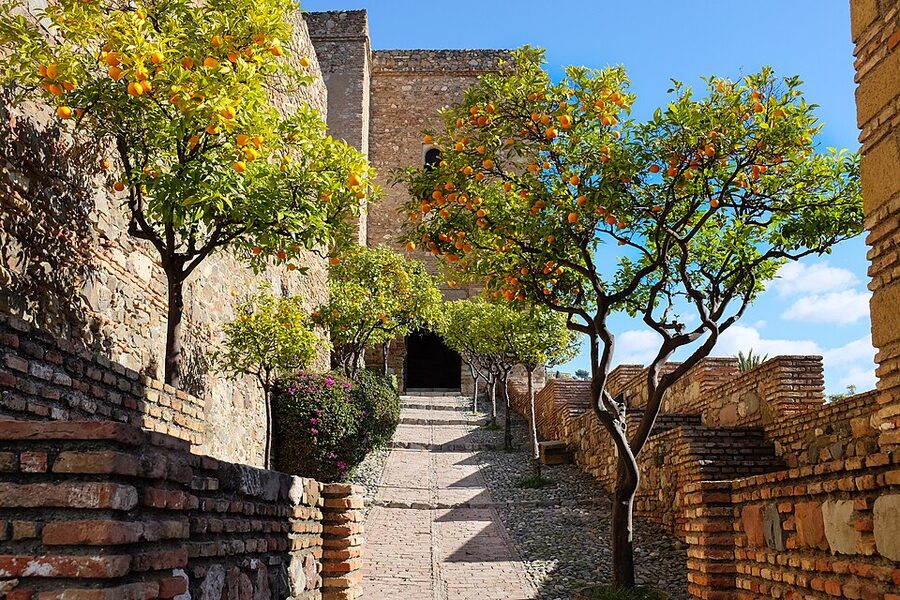
Spring (March, April, early May) is my favourite. The orange trees in the courtyard are flowering, the temperature is 18 to 24 degrees, the queues are thinner. May is perfect.
Autumn (mid-September through October) is almost as good. Slightly more humid, slightly fewer flowers, but the light is gorgeous and the swimming season hasn’t ended at the beach if you want to combine.
Winter (November through February) is fine and quiet. Tickets are easy to get, the queues are short, the temperature stays around 14 to 18 degrees during the day. The orange trees are fruiting. Some afternoons can be windy and the upper terraces feel exposed. Bring a light jacket.
Summer (June to August) is the worst combination of heat, queues, and crowds. Avoid if you can. If you can’t, go at 9:00 sharp or wait until 18:00 onwards.
Where Else to Go in the Andalusian Loop
Most people who do the Alcazaba are in Málaga for two or three days as part of a wider Andalusian trip. If that’s you, my favourite combinations: pair Málaga with Granada’s Alhambra for the full Moorish-architecture arc; add Seville’s Cathedral and the Royal Alcázar for the western half of the loop; or take a day trip out to Gibraltar if you want a passport stamp and Barbary macaques. Our companion Jerez Andalusian horse-show guide covers the Cádiz-side highlight if you’re swinging that way too.
More Spain Guides
If you’re stitching a longer trip, the natural next reads are our Alhambra booking guide for Granada, the Royal Alcázar of Seville for the western Andalusian leg, and the Mezquita of Córdoba if you want the most surprising building of the four. Add the Caminito del Rey for a day in the gorges if you’ve got the time.