
My friend Sarah did this trip on her second day in Madrid, jet-lagged and slightly skeptical. She came back at 8pm, dropped into a chair at a tapas bar near Sol, and said the same thing three times in a row: “I can’t believe we did Toledo and Segovia in one day.” Then she ordered a second glass of wine and started showing me photos of the Alcázar at golden hour. That’s the trip in a sentence.
Toledo and Segovia sit on opposite sides of Madrid, both around an hour out by motorway. Doing them solo in one day is technically possible by train and bus, but it’s a stress nightmare. A guided coach trip absorbs the logistics and gets you skip-the-line tickets to the two interiors that actually matter: the Cathedral in Toledo and the Alcázar in Segovia. This is the guide for anyone deciding which of these tours to book and what to expect when the day starts at 7am.
- In a hurry? Three picks for booking right now
- Why bundle Toledo and Segovia at all?
- The morning: Segovia first, usually
- What you actually see inside the Alcázar
- The Segovia Cathedral question
- Lunch logistics
- Toledo in the afternoon
- Inside the Cathedral of Toledo
- The Alcázar of Toledo (sometimes a free-time option)
- The actual best tours to book
- 1. Madrid: Segovia and Toledo Tour with Alcázar and Cathedral:
- 2. Madrid: Toledo and Segovia Guided Tour with Tickets and Lunch:
- 3. Toledo and Segovia Full-Day Tour with an Optional Visit to Ávila:
- What to wear and bring
- Best time of year to do it
- A bit of history that helps you understand what you’re looking at
- Common mistakes to avoid
- Should you do this trip at all?
- While you’re planning your Madrid days
In a hurry? Three picks for booking right now
Best overall (most reviewed): Madrid: Segovia and Toledo Tour with Alcázar and Cathedral. Around $48. Twelve hours, both monuments inside, the standard everyone else copies.
Best with food included: Madrid: Toledo and Segovia Guided Tour with Tickets and Lunch. Around $46. A traditional Spanish lunch in Toledo means you skip the panic of finding a restaurant in 45 minutes.
Add Ávila if you’ve got energy: Toledo and Segovia Full-Day Tour with an Optional Visit to Ávila. Around $46. Three UNESCO sites in 11 hours. Tiring, but the medieval walls of Ávila are something you don’t forget.
Why bundle Toledo and Segovia at all?
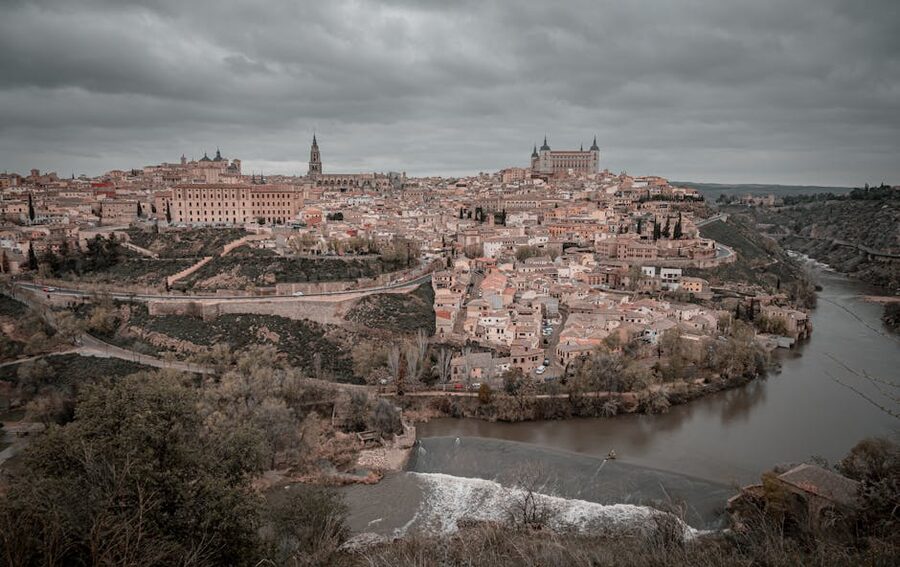
Toledo is south of Madrid. Segovia is northwest. They’re 165 kilometres apart by road. On paper, putting them in one day sounds insane.
It works for two reasons. First, both old towns are small. You can walk Toledo’s tourist core in two hours and Segovia’s in maybe ninety minutes. Second, the highway network out of Madrid is excellent and the coaches use express lanes. Once you’ve seen the Alcázar of Segovia and the Cathedral of Toledo, you’ve seen the headline acts. Lingering longer mostly adds tapas, and you can do that back in Madrid.
The case against splitting them across two separate days is honesty about how most people travel. If you’ve got four nights in Madrid and want to see the Prado, the Royal Palace, a flamenco show, and Toledo and Segovia, you simply don’t have the days for two day-trips. The combo wins by default.
The morning: Segovia first, usually
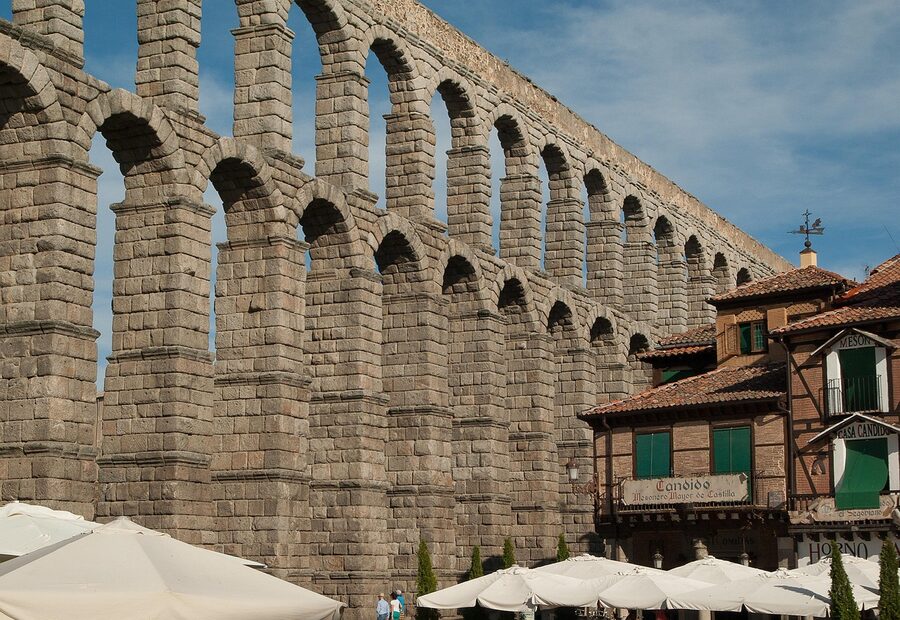
Most of the major operators run Segovia in the morning. The reasoning: the bus leaves Madrid around 8am, hits Segovia by 9:30, and you get the Roman aqueduct and the Alcázar before the tour-bus crowds peak around midday. By the time you’re back on the coach for Toledo, the sun is high and the cobbles are heating up.
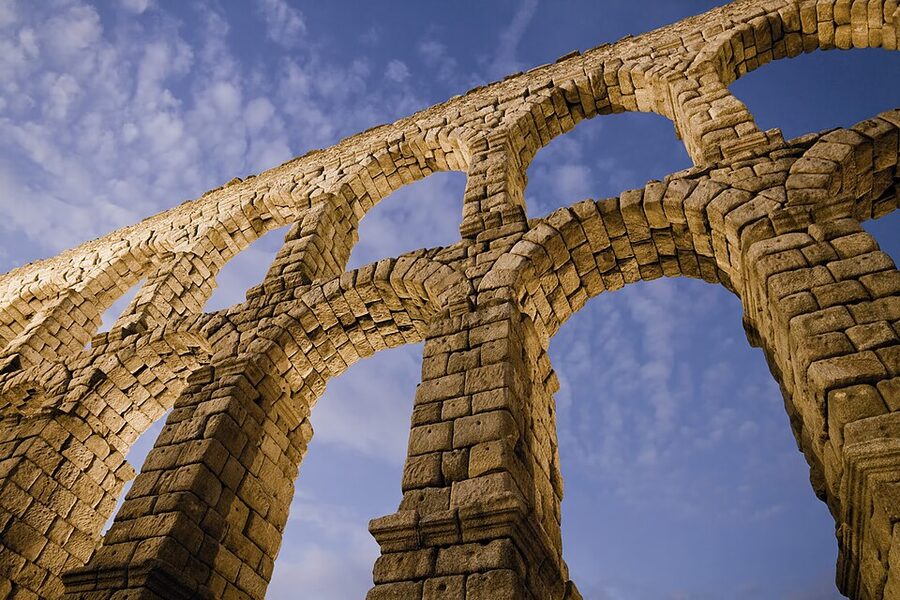
The Aqueduct is your first stop. It’s free, it’s outdoors, and your guide will give you 15 to 20 minutes here for photos. Don’t be lazy. Walk both sides of it. The two-tier section near Plaza del Azoguejo is the iconic shot, but the lower stretch where it meets the city wall has fewer people in frame.
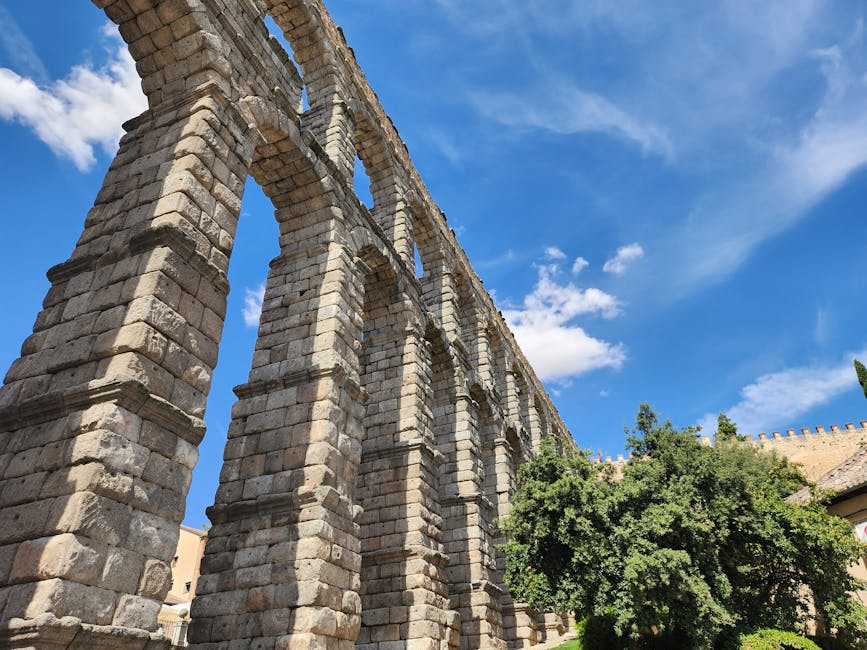
From the Aqueduct you walk uphill through the old town to the Alcázar. It takes about 15 minutes if you don’t stop. Most guides stop. Fine, but be aware that this is when the day starts feeling rushed if you fall behind the group.
What you actually see inside the Alcázar
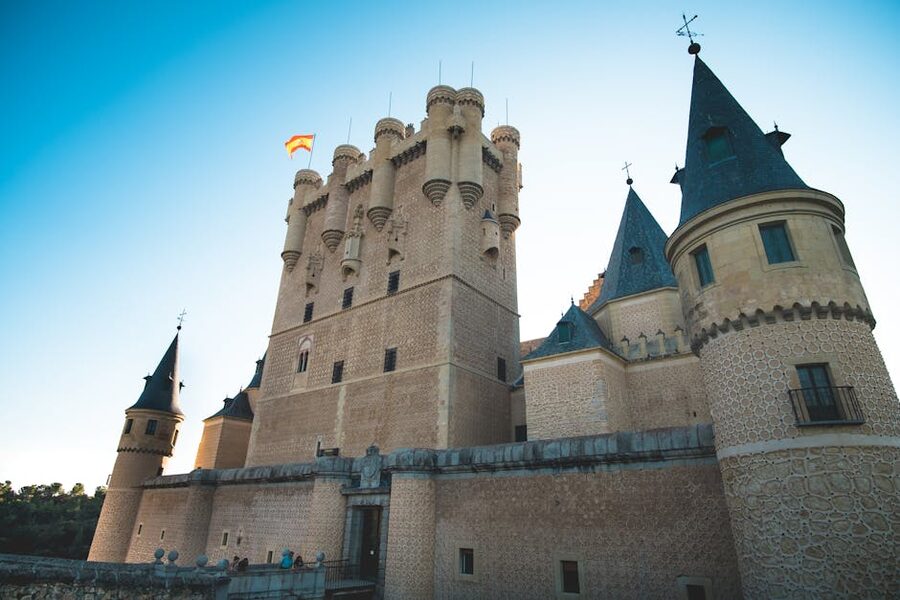
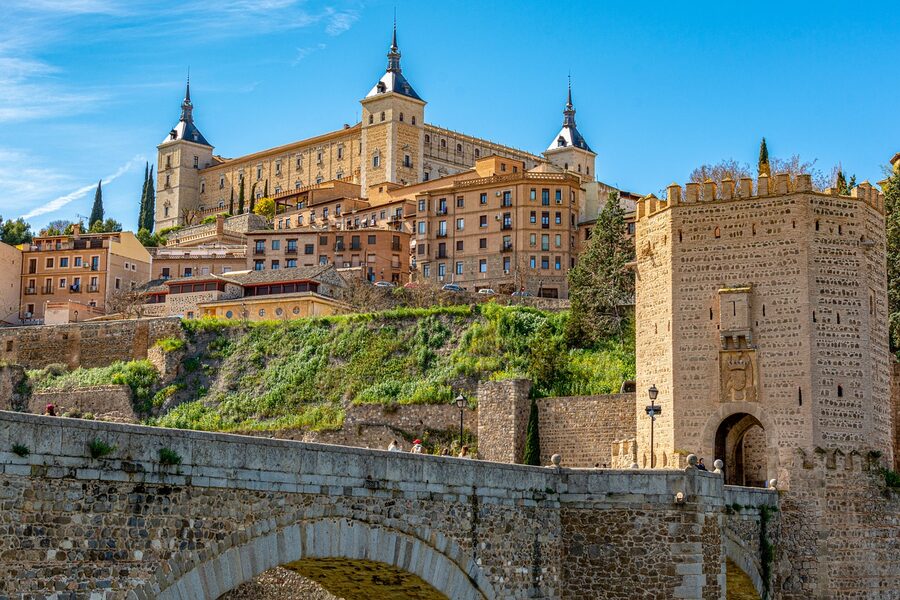
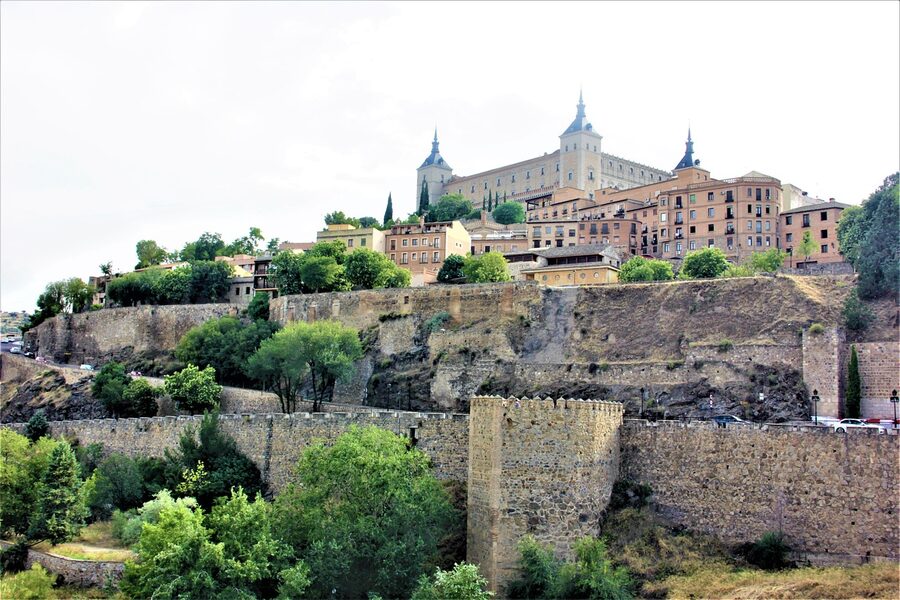
The Alcázar of Segovia is the must-do interior in this town. Built on a rocky outcrop where two rivers meet, it’s been a Roman fort, a Moorish citadel, a royal palace for the Castilian kings, and (briefly) an artillery school. It burned in 1862 and was rebuilt with all the fairy-tale spires you see today. Some of it is restoration. Most travellers don’t notice or care.
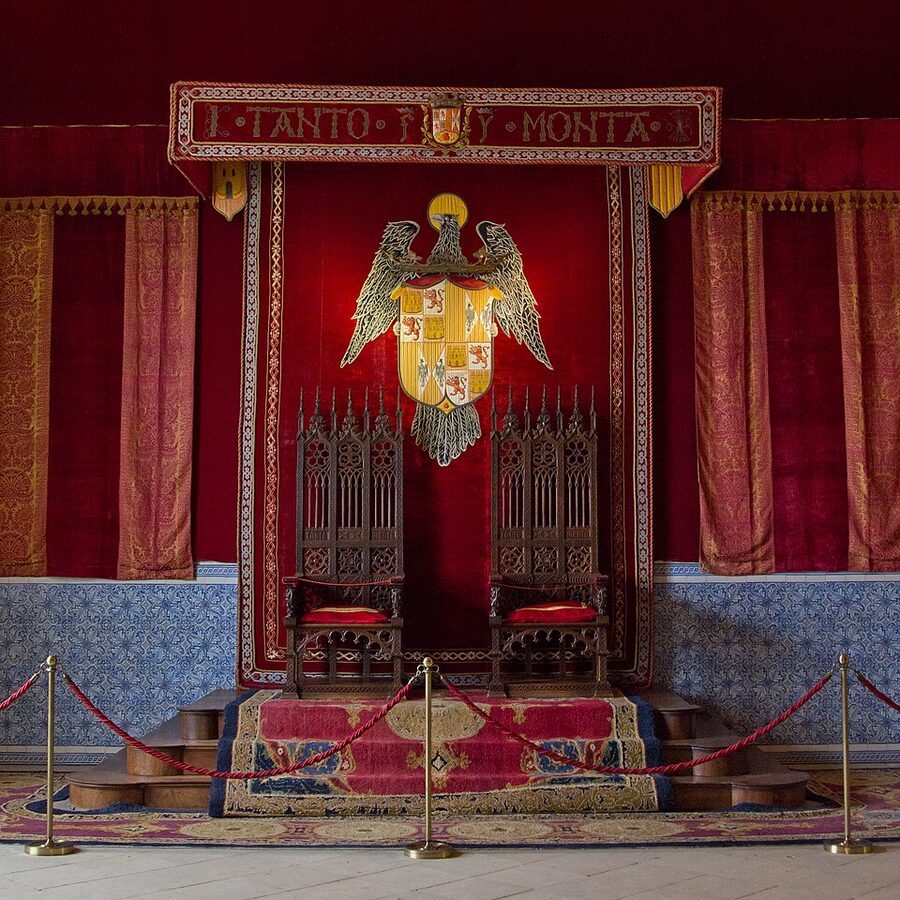
Inside you’ll walk through the Throne Room, the Gallery, the Hall of the Kings (with its frieze of Spanish monarchs in gilded niches), and the armoury. Most tours include the keep climb, which is 152 stone steps up a tight spiral staircase. Skip it if you’re claustrophobic. Take it if you can; the view of the surrounding plain is worth the calf burn.
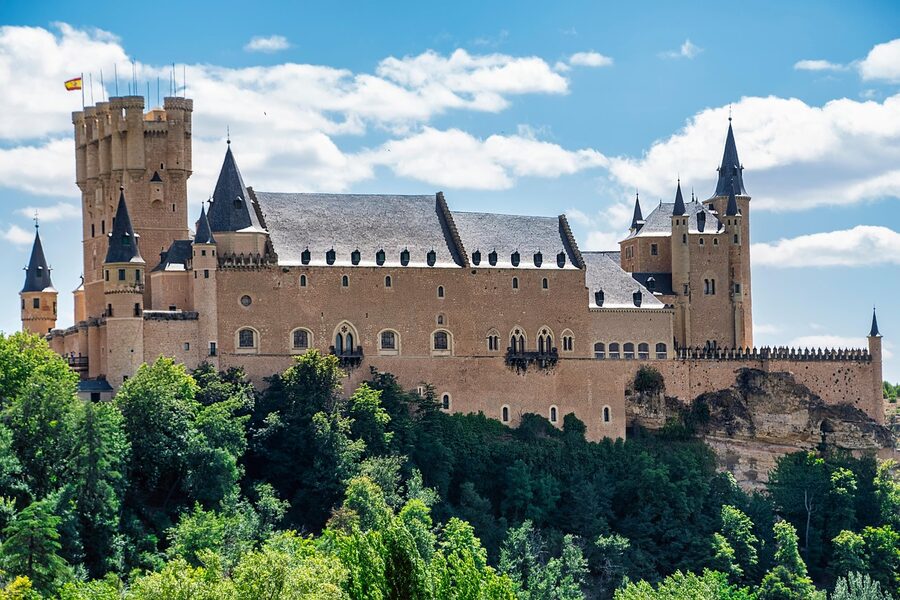
One thing tours don’t always tell you: the Alcázar ticket your group buys usually does NOT include the keep tower. That’s an extra 2.50 euros at the desk inside. Bring coins. The queue is fast but cashless can be patchy.
The Segovia Cathedral question
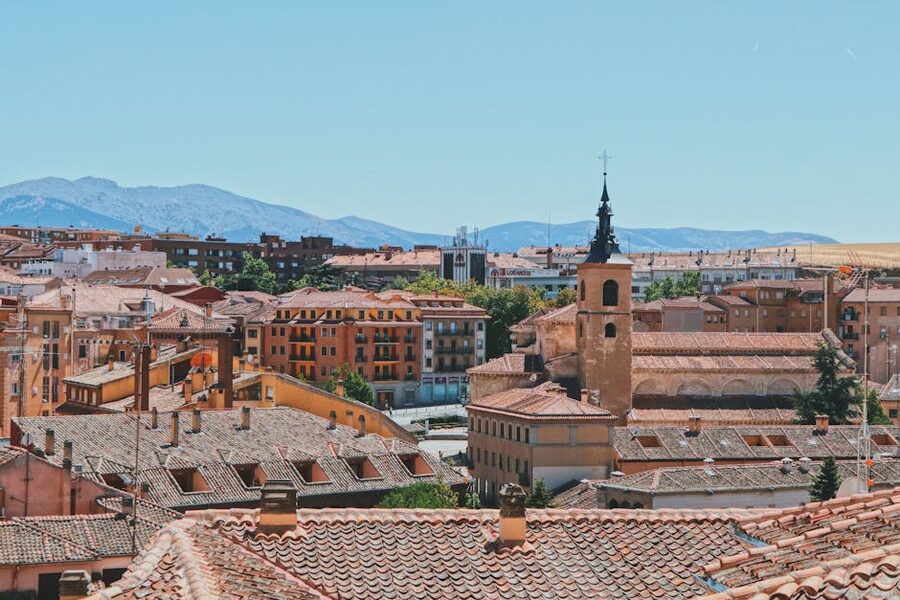
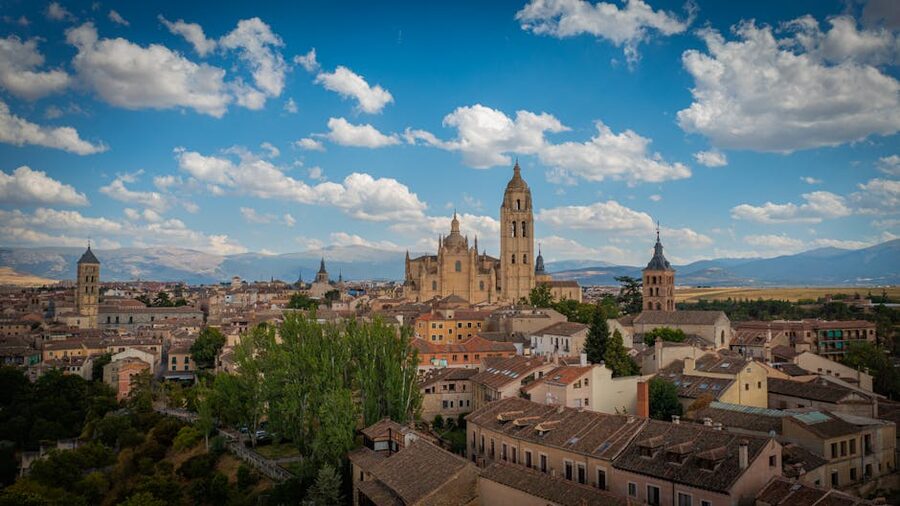
The Cathedral of Segovia is the last great Gothic cathedral built in Spain, finished in 1768. It’s stunning. It’s also rarely included in standard combo tours, because timing is brutal: there’s not enough margin to fit interior visits to two cathedrals AND the Alcázar AND get to Toledo for the afternoon.
If seeing the inside of Segovia Cathedral is non-negotiable for you, you’ll want a tour that explicitly mentions cathedral access in Segovia, or you’ll need to come back another day. Most people walk past it, take the photo, and accept the trade-off. I think that’s the right call.
Lunch logistics

Almost every tour does lunch in Toledo, not Segovia. The reason is geography: Toledo’s old town has more restaurants per square metre and the bus parking is closer to where you eat. Segovia famously serves cochinillo (suckling pig), but a 45-minute lunch slot doesn’t really do justice to a two-hour roast.
Three lunch options to know about before you book:
- Lunch included. The tour with tickets and lunch bundles a sit-down meal at a vetted Toledo restaurant. Costs around the same as the standalone tours, which means lunch is effectively free. This is what I recommend if you don’t want to think.
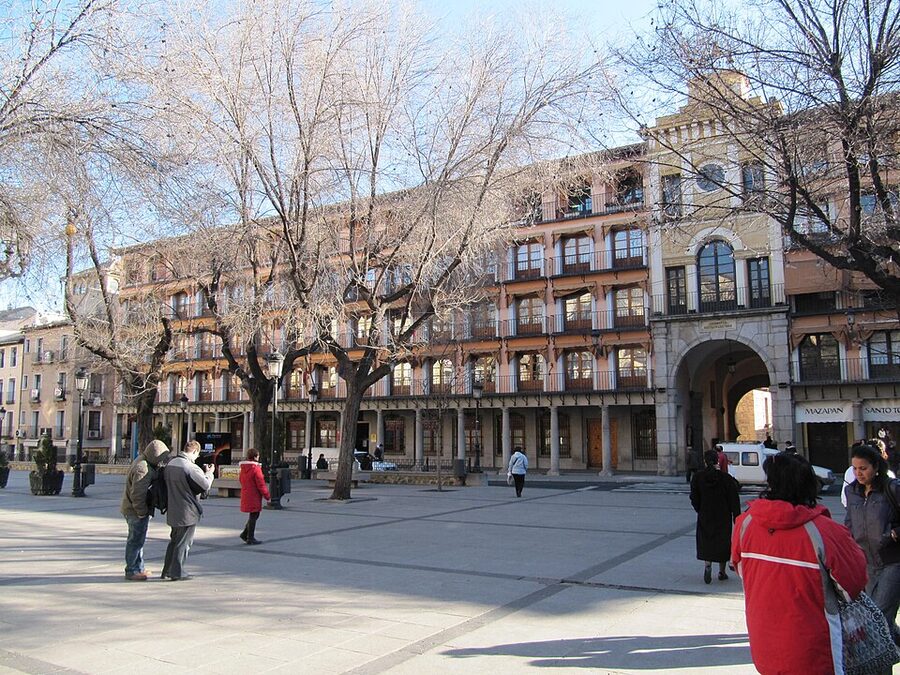
- Lunch on your own in Toledo. You’ll typically have 60 to 90 minutes free. Stick close to Plaza de Zocodover and you’ll find half a dozen menú del día options for around 15 euros. Skip the cafés directly facing the cathedral; they charge a tourist tax.
- Picnic. Buy something at a Madrid supermarket before the bus leaves. Eat it at the Mirador del Valle viewpoint. Saves time and money. Looks slightly ridiculous if everyone else is at a tablecloth lunch, but you’ll have an extra 40 minutes for the cathedral.
Toledo in the afternoon
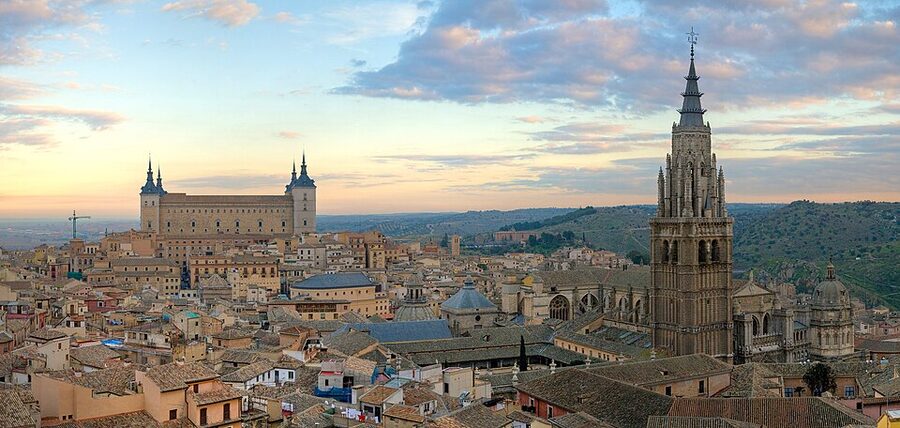
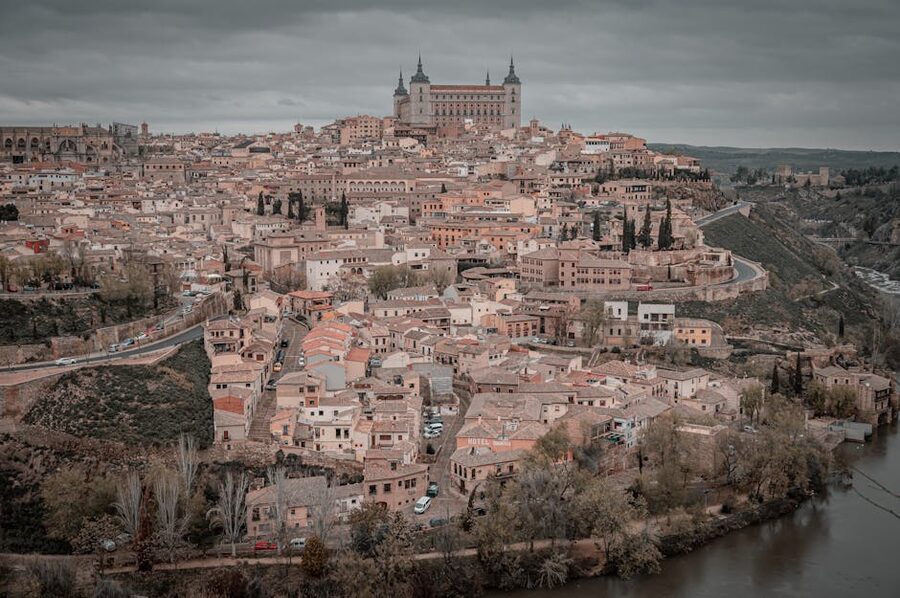
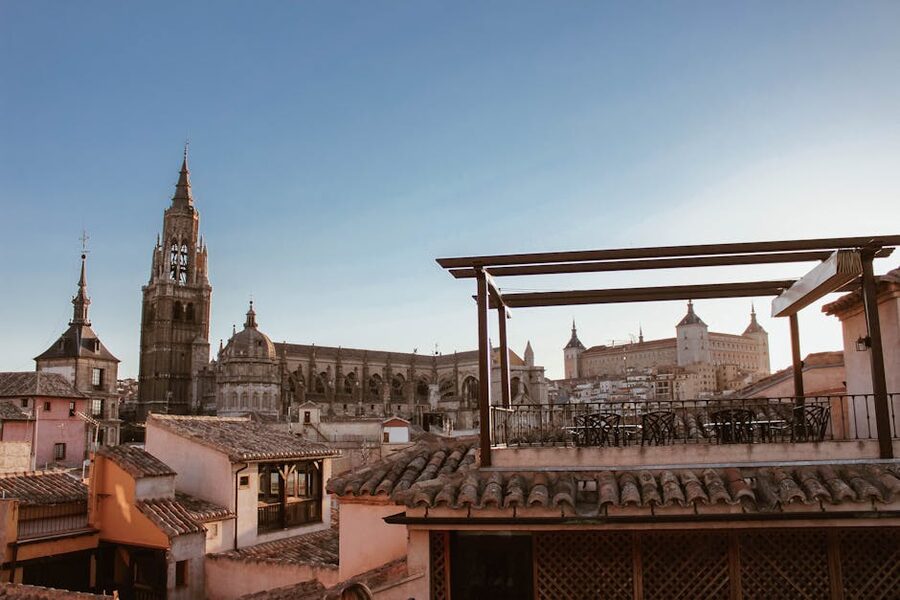
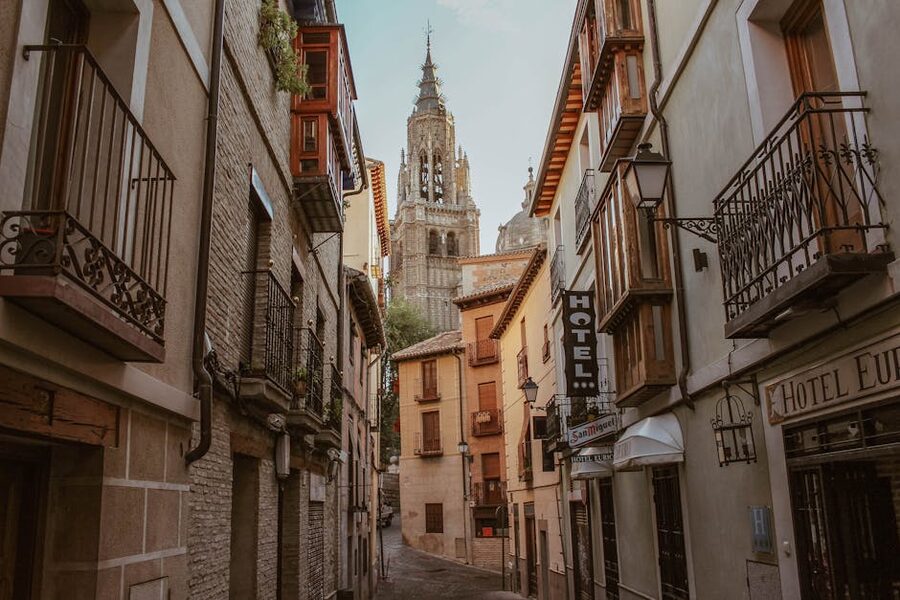
Toledo is the city UNESCO calls a “city of three cultures”: Christian, Jewish, Muslim. The old town sits on a rocky hill nearly enclosed by the Tagus river, which means the streets are steep and the buses park down the hill. You’ll usually be dropped off and an escalator system carries you up to street level. It’s a strange transition; you climb for two minutes and emerge into a medieval lane.
Most tours start with the Mirador del Valle photo stop on the south side of the river. Then a brief drive into the old town for a guided walk past the synagogues, the Plaza de Zocodover, and the Jewish quarter. The big indoor visit is the Cathedral.
Inside the Cathedral of Toledo
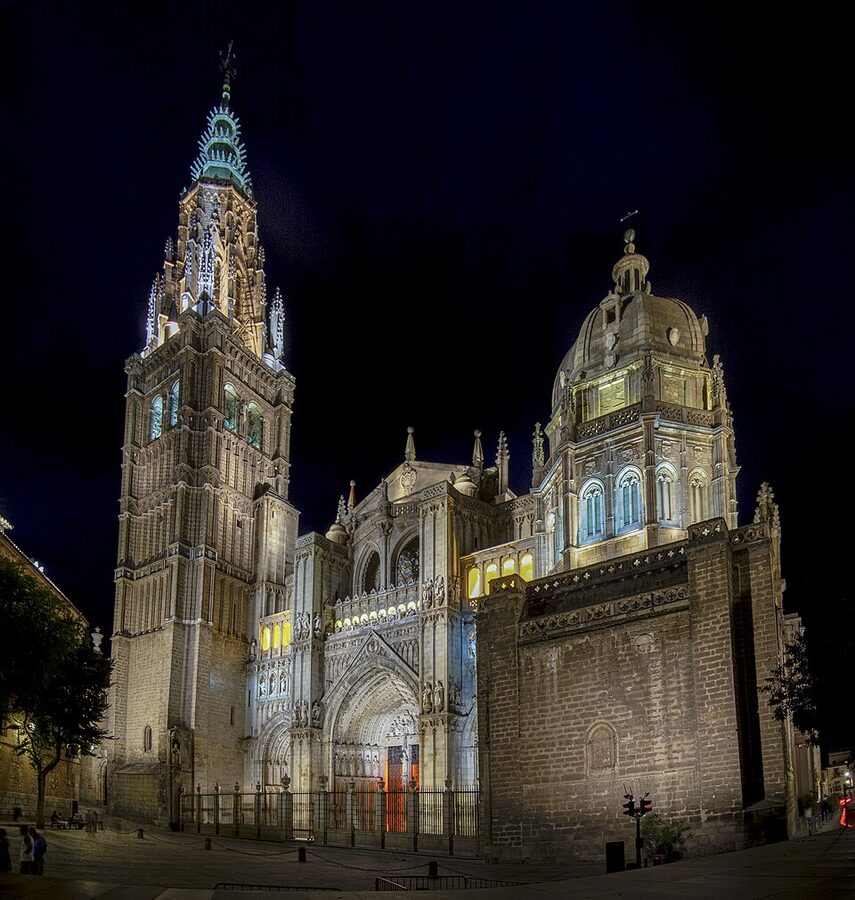
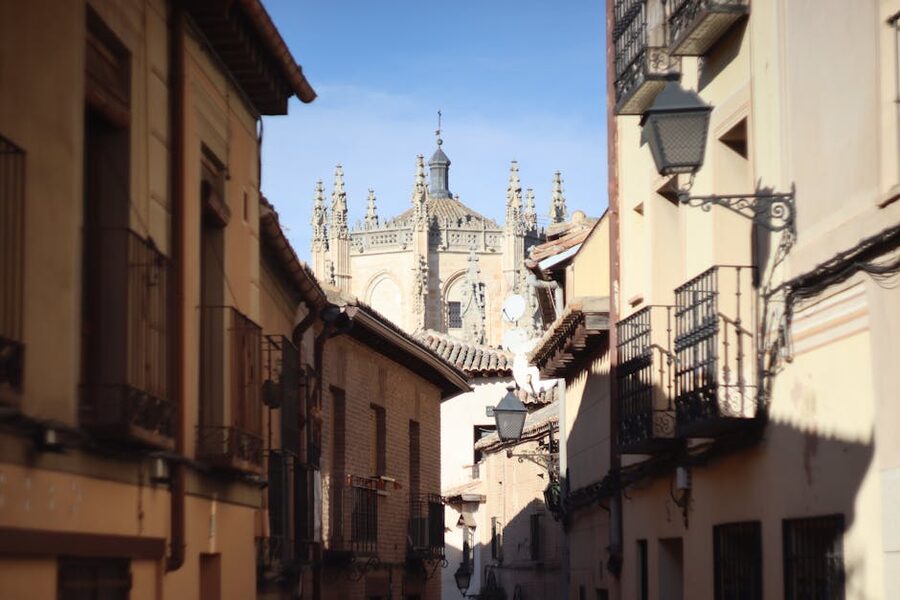
The Cathedral is the second largest in Spain after Seville and arguably the most ornate. Construction started in 1226 on top of an earlier mosque, finished structurally in 1493, and the decoration kept being added until the 18th century. The result is overwhelming. You go from one chapel to another and every single one feels like the highlight.
The El Transparente altarpiece is the part everyone photographs. It’s a Baroque carved sunburst lit by a hidden skylight cut into the ceiling. The effect was meant to be miraculous in candlelight. It still kind of is. Spend more than 30 seconds standing under it.
The other thing to know: the Cathedral has a dedicated treasury museum with the Custodia de Arfe, a 4-foot-tall solid silver and gold processional monstrance from 1517. It comes out for the Corpus Christi procession every June. The rest of the year it’s behind glass and quietly mind-blowing.
One warning: photography is allowed in most of the Cathedral but flash is not, and the staff are strict. If you really want the El Transparente shot, position yourself, breathe out, and shoot at high ISO. Don’t try a flash; you’ll get a polite reprimand and rightly so.
The Alcázar of Toledo (sometimes a free-time option)
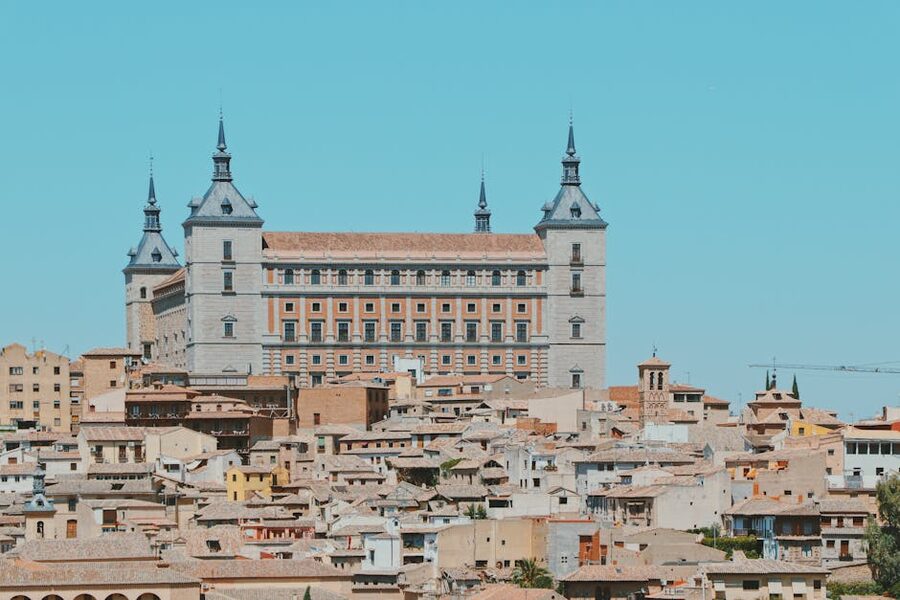
Toledo’s Alcázar is a square stone fortress with four corner towers, originally Roman, rebuilt by Charles V in the 1500s, badly damaged in the Spanish Civil War, and reopened as the Army Museum in 2010. It’s not part of standard combo tours. If you’ve got 60+ minutes of free time and you’re a history buff, it’s worth the climb for the rooftop views and the Civil War siege display. Most travellers skip it and use the time for tapas.
The actual best tours to book
I’ve narrowed this down to three, ranked by how reliably they deliver. All three are full-day round trips from Madrid with hotel-area pickup or central meeting points, and all three include the two interiors (Alcázar of Segovia and Cathedral of Toledo). The differences come down to lunch, group size, and whether Ávila is on the table.
1. Madrid: Segovia and Toledo Tour with Alcázar and Cathedral: $48
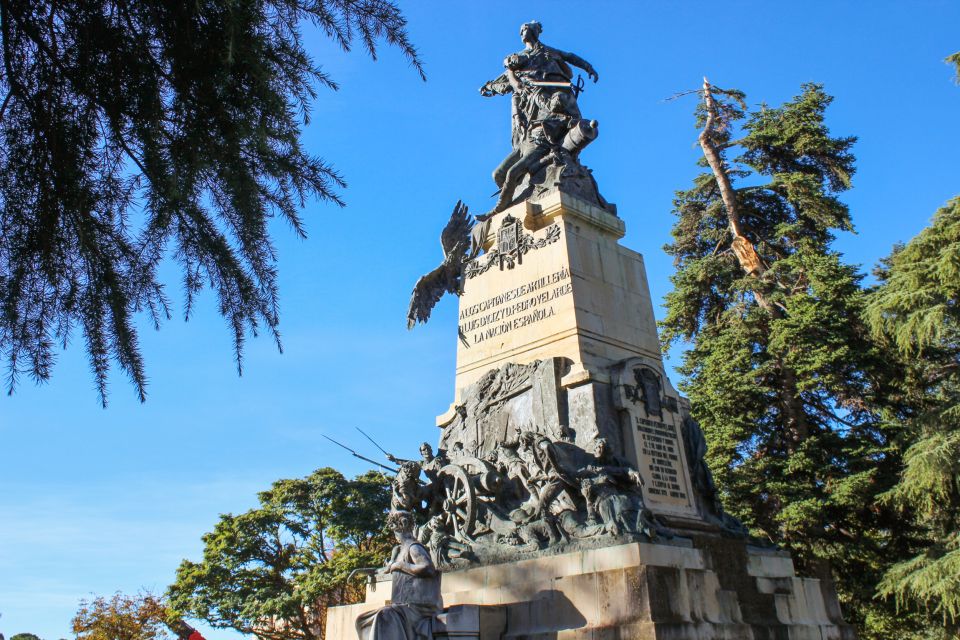
This is the most-booked combo in the category. Twelve hours, English-speaking guide, skip-the-line entry to both monuments, and the price holds steady at the lower end of the market. My full review goes into the timing breakdown and what to expect at each stop. If you want the most popular, well-tested choice and don’t mind handling your own lunch, this is the pick.
2. Madrid: Toledo and Segovia Guided Tour with Tickets and Lunch: $46
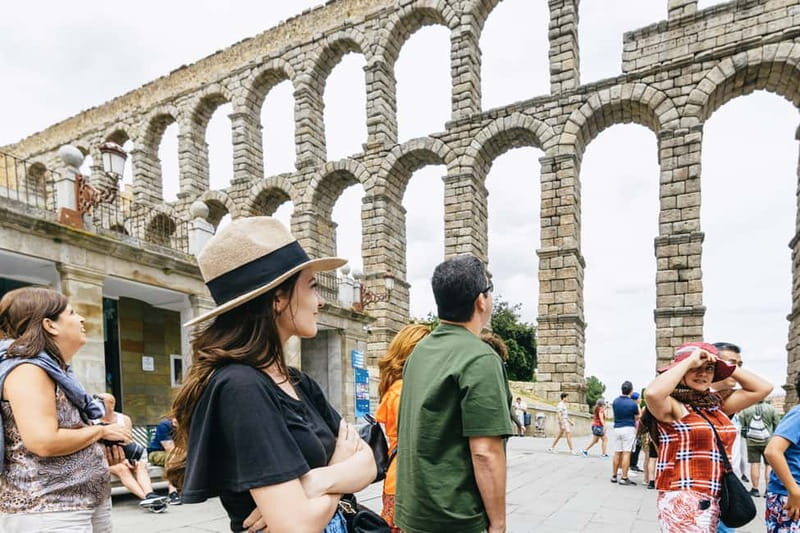
Same skeleton as the option above, but with a traditional Toledo lunch baked in for the same money. The trade-off is a slightly more rushed afternoon since the lunch slot eats into your free time. Our review walks through what’s actually on the lunch menu and where they typically take you. Honestly, if I were doing this trip with my parents or with kids, I’d pay the same price for the food included.
3. Toledo and Segovia Full-Day Tour with an Optional Visit to Ávila: $46
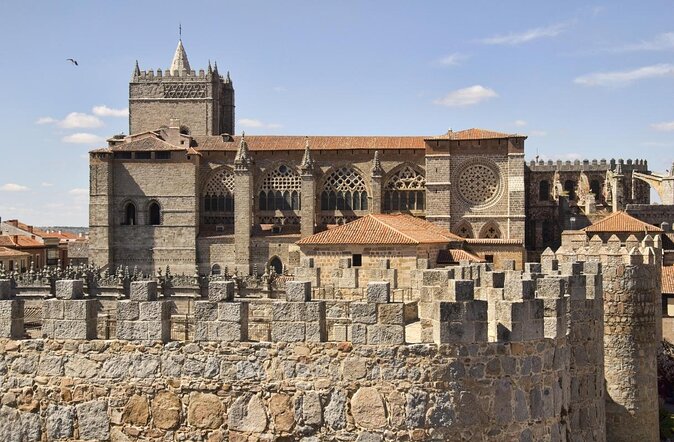
This Viator option lets you opt into Ávila as a third city for a few extra euros. Eleven hours, three UNESCO sites, and a noticeably tighter pace. The full review covers what gets cut from Toledo or Segovia when you add Ávila to the route. I’d only book this if you genuinely want to see all three and you’re physically ready for a long day.
What to wear and bring
Both old towns are built on rock with cobbled streets and steep gradients. Toledo is the harder walk; Segovia is more strolling. Real walking shoes are non-negotiable. I once watched a woman in heels visibly regret every step from the Aqueduct up to the Alcázar.
Layers matter. Mornings in Segovia at 1,000 metres altitude can be cold even in May. By the afternoon Toledo can be 10 degrees warmer. A light jacket you can stuff in a daypack is the move.
Bring water. Most tours include a few rest stops with vending machines, but bottled water inside the cathedrals isn’t allowed. A 500ml refillable bottle saves money and saves you from rooting through your bag at security.
Cash. Smaller (under 10 euro) purchases at certain Toledo souvenir shops and at the Alcázar keep tower are easier with coins. Spain is mostly card-friendly, but day-trip locations are the slowest to update.
Best time of year to do it
April to early June is the sweet spot. Cathedrals are still cool. Cobbled streets aren’t blazing. The afternoon light in Toledo gets golden and stays golden for hours.
July and August are doable but punishing. Toledo’s old town is essentially a stone oven by 2pm. If you’re going in summer, book the earliest tour available so you’re indoors during peak heat.
October and November are quietly the best months. Tour buses thin out, the cathedrals are empty enough that you can actually pause without holding up traffic, and you’ll occasionally get clear cold mornings that make the photos sharper. The trade-off is rain risk, but most tours run regardless.
December is interesting. Toledo does a Christmas market, the cathedrals look stunning at dusk, and Segovia’s Alcázar is dramatic in low winter light. Just bring a real coat.
A bit of history that helps you understand what you’re looking at
Toledo was the capital of Visigothic Spain (5th-8th centuries) and then the capital of Castile (11th-16th centuries). It only stopped being the capital when Philip II moved court to Madrid in 1561, mostly because Madrid had better water and wasn’t already maxed out on real estate. For 500 years before that, Toledo was where Christian, Jewish, and Muslim scholars worked side by side translating Arabic philosophy and Greek classics into Latin. That coexistence is the layer you’re walking through. The old town’s tangled streets and surviving synagogues aren’t quaint; they’re the architectural memory of a multi-religious medieval state.
Segovia was a Roman provincial city, then a Visigothic stronghold, then a Castilian royal seat where Isabella I was proclaimed queen in 1474. The royal seat connection is why the Alcázar is so well-preserved (relative to other castles in central Spain). It was rich enough and important enough to keep maintaining. The Aqueduct is even older: built around 50 AD by Roman engineers, it carried water from the Acebeda river 17 kilometres away into the city, and stayed in continuous use until the late 19th century. Two thousand years of working infrastructure.
Common mistakes to avoid
Don’t try to add the Cathedral of Segovia interior. Standard combo tours don’t have time. If you really want it, you need a Segovia-only day trip on a different day.
Don’t expect a sit-down lunch unless your tour says it’s included. Spanish lunch culture is two hours minimum. A 45-minute tour stop is for a sandwich, not a meal.
Don’t book the cheapest tour without checking what’s included. Some sub-$40 options skip both interior visits and you spend the day walking around the outsides of buildings. The interiors are the point.
Don’t bring a giant backpack. Both cathedrals have bag size limits. Anything bigger than a 20L daypack and you’ll be queuing at the cloakroom while your group moves on without you.
Don’t expect a quiet, contemplative experience. These are the busiest day trips in central Spain. The cathedrals are loud. The Alcázar is loud. If you want silence, come back independently and visit early on a Tuesday morning in November.
Should you do this trip at all?
Honestly, yes. Here’s the case: most travellers in Madrid for less than a week will not return to Spain anytime soon. Toledo and Segovia are 90% of what people imagine when they imagine medieval Spain. To skip them and just do Madrid would be like going to Italy and only seeing Rome.
The case against doing the combo specifically (versus splitting it into two days) is if you really care about Segovia Cathedral, or if you want to eat cochinillo properly, or if you just hate organised group tours. Otherwise, the combo is the most efficient way to see both. You’ll get back to Madrid by 8pm, find a place to eat, and feel like you got your money’s worth.
While you’re planning your Madrid days
If this is your first trip to the city, the combo day trip pairs naturally with the Madrid classics. A morning at the Prado Museum sets the artistic context for what you’ll see in the cathedrals. The Royal Palace in Madrid is a useful counterpoint to the older castles you’ll see at Segovia. And after a long day on a coach, nothing fixes your legs quite like a Madrid flamenco show in the evening. For a different angle on the city itself, a panoramic city tour the day before your Toledo trip helps you orient. And if you have an extra day after the combo and want a deeper Toledo experience, look into a standalone Toledo day trip from Madrid with more time inside the old town.