
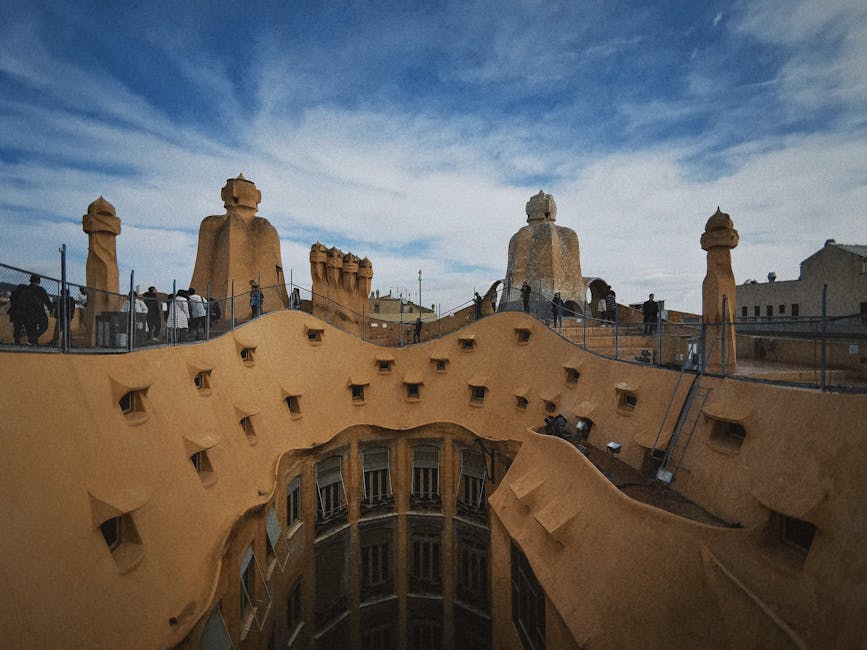
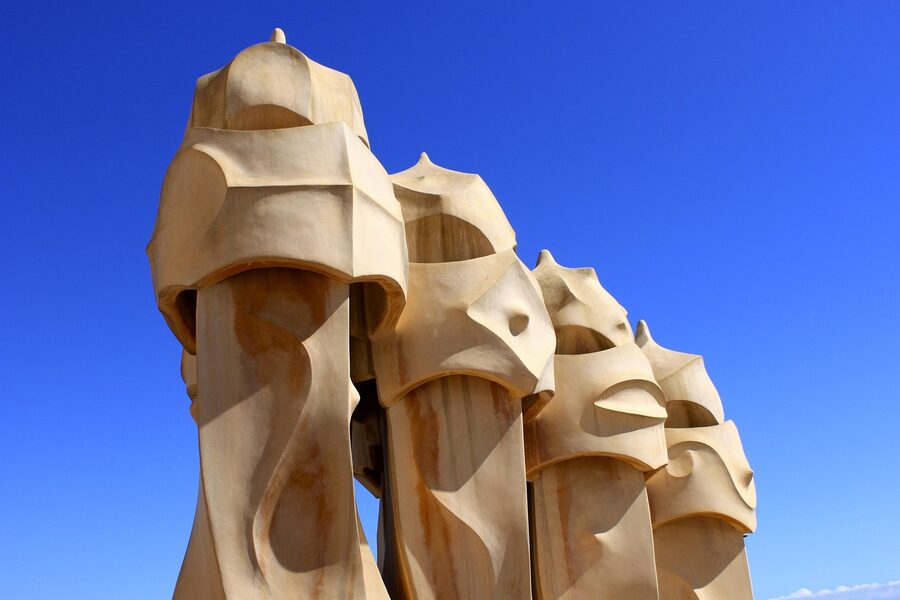
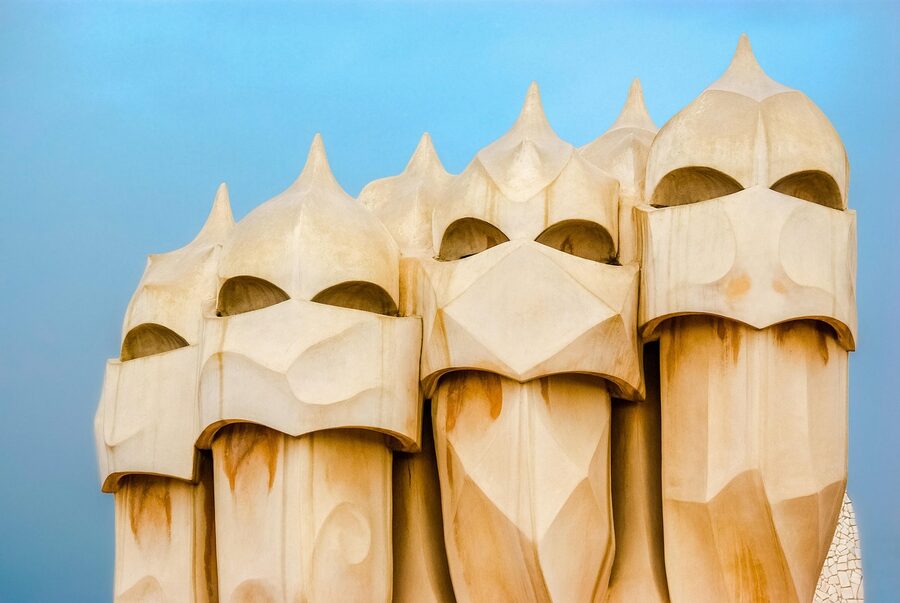
You climb the last narrow staircase, push through a low doorway, and the rooftop opens up. Helmeted chimneys lean toward you like sentries. Sagrada Família peeks through a gap in the stone. Whatever you paid to get in, you forgot about it three seconds ago.
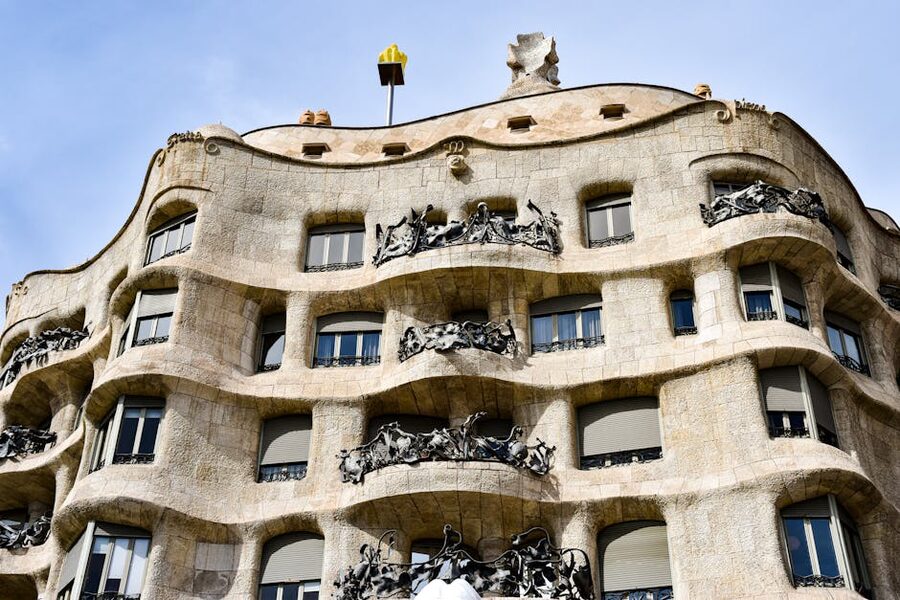
That’s La Pedrera. Booking the right ticket is what gets you to that moment with a shorter queue, the better light, and your sanity intact.
In a Hurry? My Top Picks
- Standard skip-the-line ticket with audio guide from $33: the default pick if you want to set your own pace and cover everything. Book on GetYourGuide
- Early-morning guided tour from $47: small group, before public opening, sunrise on the rooftop. Book on GetYourGuide
- Pedrera Night Experience from $47: rooftop projections, glass of cava, very different mood. Book on GetYourGuide
- In a Hurry? My Top Picks
- What the Standard Ticket Actually Includes
- How Much It Costs and What’s Worth Paying More For
- When to Go (And When Not To)
- Guided Tours: When the Audio Guide Isn’t Enough
- The Pedrera Night Experience Is Its Own Thing
- Combo Tickets: Worth It or Not?
- Getting There
- Inside: What You’ll Actually See
- The Warrior Rooftop
- The Espai Gaudí Attic
- The Pedrera Apartment
- The Two Courtyards
- Top Tours and Tickets I’d Actually Book
- 1. La Pedrera-Casa Milà Skip-the-Line Ticket with Audio Guide:
- 2. Casa Milà Early-Morning Access Guided Tour:
- 3. The Pedrera Night Experience:
- The Building Itself: Quick Backstory
- Photography Tips for the Building
- What to Eat Nearby
- Common Booking Mistakes I See
- What I’d Pair It With
- So, Should You Bother?
What the Standard Ticket Actually Includes
The bog-standard skip-the-line ticket with audio guide is the one most visitors should book. It covers everything you came for: the Warrior rooftop, Gaudí’s attic (the Espai Gaudí museum), the period apartment on the fourth floor, and both inner courtyards. The audio guide runs in eleven languages and triggers automatically as you move room to room.
What it doesn’t include is a human guide. If you want someone to actually tell you stories, scroll down to the guided options. For a first visit on a normal day, the audio guide does the job. It’s also the cheapest way in.
Tickets are timed. You pick a half-hour entry slot when you book, and you should aim to arrive five minutes before. Once you’re inside, there’s no time limit. Plan for 1.5 to 2 hours if you take it slow on the rooftop, which you will.
Kids under 7 are free. Ages 7 to 12 get a discounted rate, and there are smaller discounts for students and over-65s with ID. The site is partially accessible: the courtyards, attic, and apartment are fine for wheelchairs. The roof has uneven levels, so chair circulation up there is limited even though the lift gets you to the door.
How Much It Costs and What’s Worth Paying More For
Standard tickets start around $33 per person. That’s the floor price for adult entry with audio guide. Combo and guided options sit at the next tier (mid-$40s to $60s), and the Premium small-group experience climbs into three figures. The official La Pedrera site and resellers like GetYourGuide tend to sit at the same baseline price, so you’re not really saving by buying direct.
Where I do think it’s worth paying more: the early-morning guided tour and the night experience. Both swap the daytime crowd for something quieter and weirder, and you get a guide or a projection show that the standard ticket doesn’t include. The combo with Casa Batlló is also a sensible upgrade if you were going to do both anyway, because it forces you to plan the day rather than wing it.
Where I think you can skip the upsell: anything badged “Premium” with a glass of cava attached. You’re paying a lot for a small group and a private apartment, and unless you’re a serious Gaudí fan, the standard rooftop and attic give you most of what makes the building worth visiting.
When to Go (And When Not To)
The two best windows are the first ticket of the day (9 to 9:30am) and the last hour before close. Both give you a thinner crowd on the roof, which is the only place crowds genuinely matter at La Pedrera. The middle of the day, especially 11am to 2pm, is rougher. Tour groups stack up in the apartment rooms and the rooftop gets bottlenecked at the photo spots.
Day of week matters less than time of day, but Monday and Tuesday tend to be the quietest. Saturdays are heaviest. Holidays and Easter week are heaviest of all, and you should book at least two weeks ahead for those slots if you want a 9am ticket.
Most of the year the building runs 9am to 6:30pm with last entry at 5:30pm. In summer (roughly mid-June to mid-September), it stretches to 8:30pm. Christmas week often gets extended hours too. Always check the official calendar the day before you go because closing times do shift.
Weather only matters because of the rooftop. La Pedrera doesn’t close in rain, but the roof gets slippery and they sometimes restrict access if it’s properly lashing. If forecast looks ugly and you have flexibility, slide your booking by a day. Cancellation policies vary by reseller; GetYourGuide tends to allow free cancellation up to 24 hours before, which is the easiest way to keep your options open.
Guided Tours: When the Audio Guide Isn’t Enough
The audio guide gets you the basics. A live guide gets you the texture: the apprentice who supposedly twisted a balcony in a single afternoon, the political fight Pere Milà had with the city over building height, the reason the rooftop chimneys are shaped the way they are (a mix of acoustics, draft, and Gaudí showing off).
The standout option is the early-morning guided tour. You’re inside before the doors open to the public, group sizes are small, and the rooftop in the first light is a different building. The downside is the price (about $47 vs $33 for standard) and the start time (around 8am, which is brutal if you’ve come from a late dinner the night before).
If you’re bouncing between Gaudí sites, the Park Güell ticket guide covers the same logic for that one. Park Güell also rewards an early slot, and you can usually do the morning at La Pedrera and the afternoon at Park Güell without running yourself ragged.
The Pedrera Night Experience Is Its Own Thing
This is the one I’d splash on if you’ve already done the daytime visit on a previous trip, or if you genuinely don’t care about the apartment and the attic and just want the rooftop. The night experience runs after standard closing, around 9 to 11pm in winter and 8:40 to 10:20pm in summer. You go up to the roof, settle in, and they project an audiovisual show across the chimneys and stone. Then you get a glass of cava.
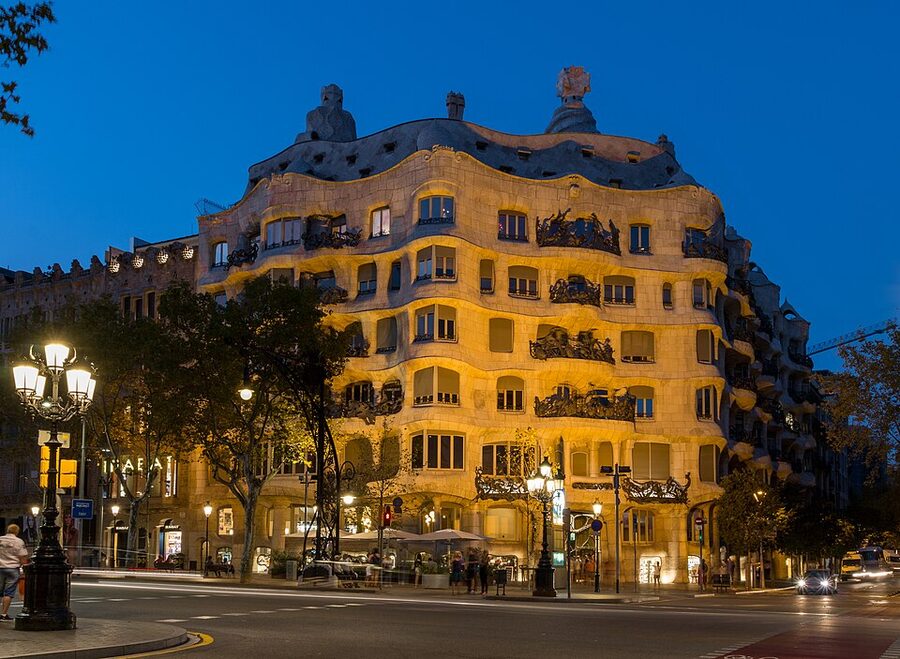
It is shorter than the standard visit (about 80 minutes) and it skips the apartment, attic, and most of the interior. So if it’s your first time at La Pedrera, do not make this your only visit. Pair it with a daytime ticket on a different day, or use the night show as a second-trip thing.
The cava is decent. The projection show is the kind of thing that’s stunning the first time and a bit on-the-nose the second. Couples seem to love it. Solo travellers I know who tried it described it as “fine, but I’d rather have spent the money on a proper guided tour”.
Combo Tickets: Worth It or Not?
The big two combos are Casa Batlló + La Pedrera and Park Güell + La Pedrera. Both pull together the headline Gaudí stops on a single booking, which sounds appealing until you realise you can do exactly the same thing by booking each one separately and saving roughly the same amount. The discount is usually small, in the range of a few euros.
Where combos genuinely help: they force you to commit to a date and entry window for both, so you’re not standing on Passeig de Gràcia at 4pm trying to figure out if Casa Batlló will still have tickets left for that night. If you struggle with planning, that single booking is worth it. If you’re a planner who books everything two weeks out anyway, just buy the tickets individually. You’ll have more flexibility on time slots.

If you want the all-in-one Gaudí marathon, our Sagrada Família ticket guide walks through how to fit Gaudí’s basilica into the same day, and our Casa Batlló guide compares the Blue, Silver, and Gold entry tiers if you go down the combo route.
Getting There
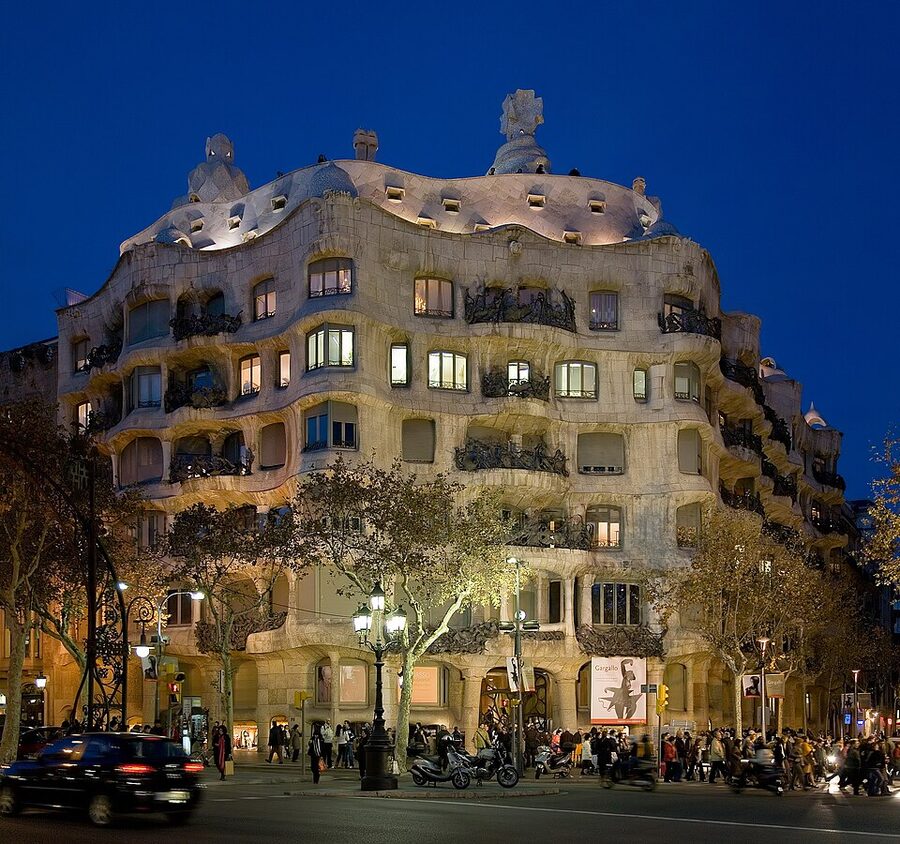
The address is Passeig de Gràcia 92. The closest metro is Diagonal on lines L3 (green) and L5 (blue), exit Provença, which spits you out about a 90-second walk away. The FGC station is Provença, also under the building. Trains from Plaça Catalunya take three minutes.
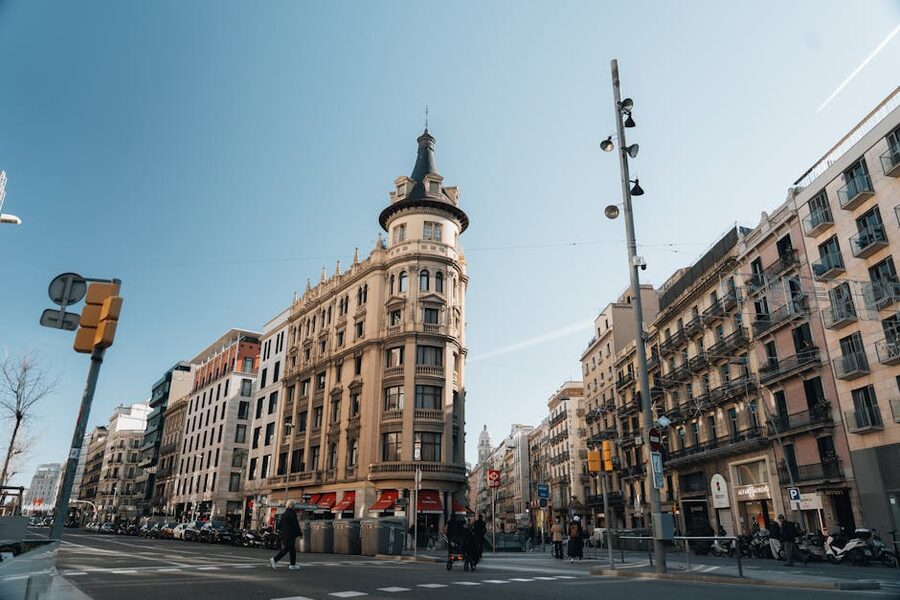
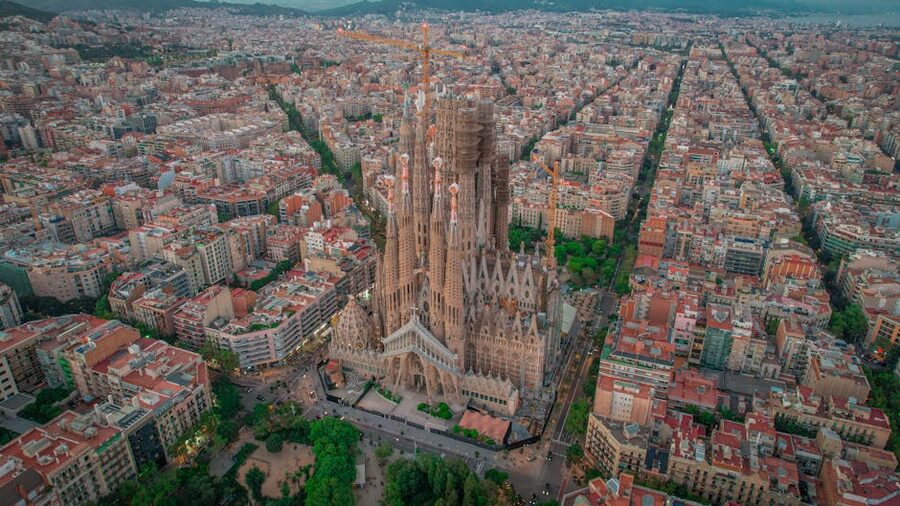
Buses 7, 16, 17, 22, 24, and V17 stop at Provença la Pedrera right outside. The Barcelona hop-on hop-off bus also stops here, which makes La Pedrera one of the easier Gaudí sites to swing past on the red route. From Sagrada Família it’s a 15-minute walk down Carrer de Provença, and you don’t need a metro at all between them.
Driving is a non-starter. Parking in central Barcelona is expensive and the streets around the building are pedestrianised or one-way. From the airport, the metro takes about 45 minutes (L9 Sud to Torrassa, change to L1, change again to L3 at Plaça Catalunya). A taxi is faster (around 25 minutes off-peak) and sits around 35 to 40 euros.
Inside: What You’ll Actually See
The Warrior Rooftop
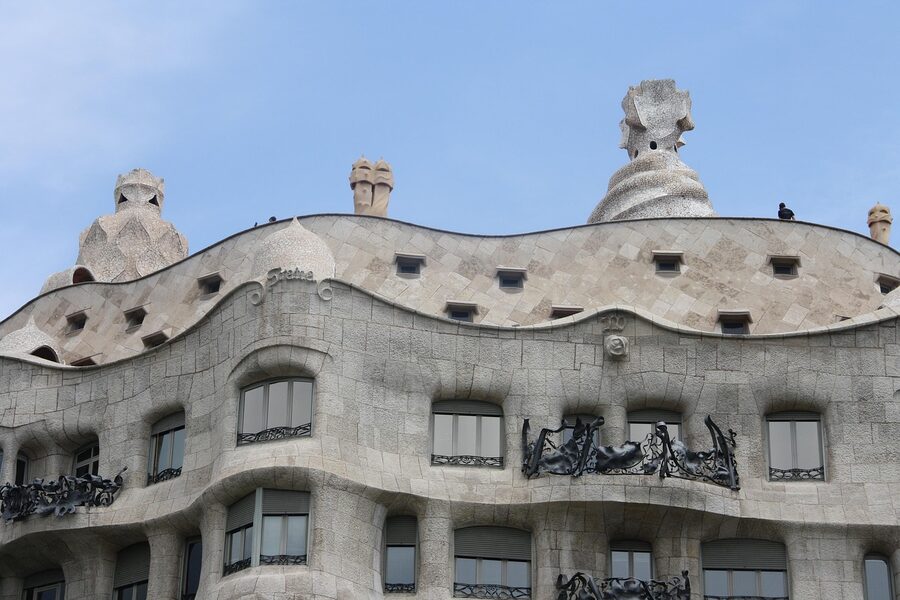
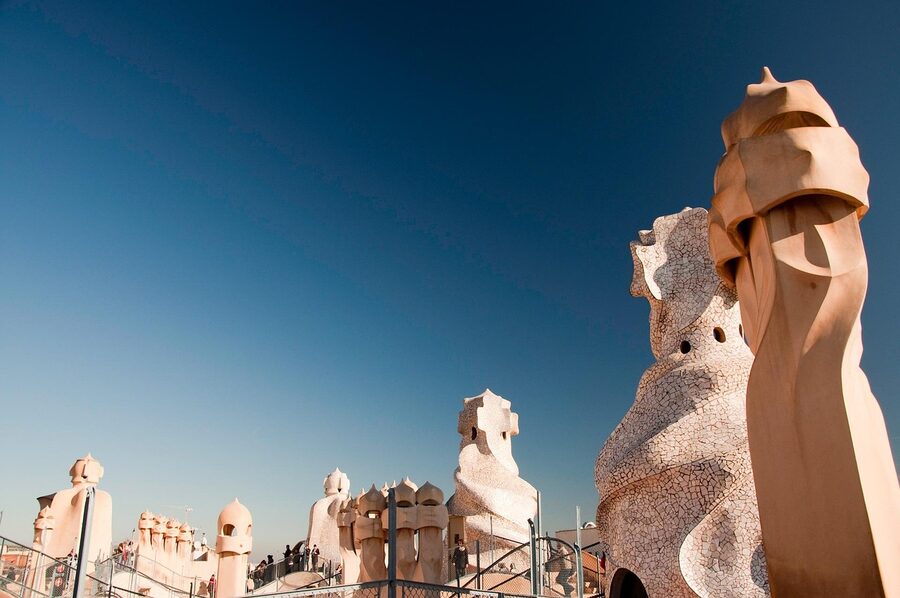
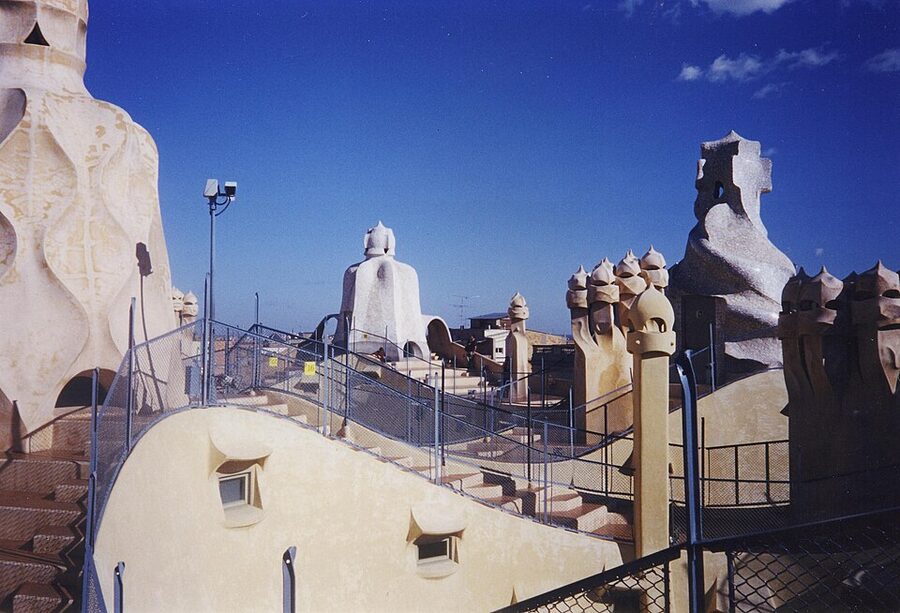
This is the room you came for, even though it’s outdoors. The chimneys, vents, and stairwells are all sculpted into helmet-shaped figures (locals call them els espantabruixes, the witch-scarers). They’re not decorative. Each one hides plumbing or vents kitchen smoke or guides wind across the roof to keep the apartments cool below. Gaudí just couldn’t bear to make any of it look industrial.
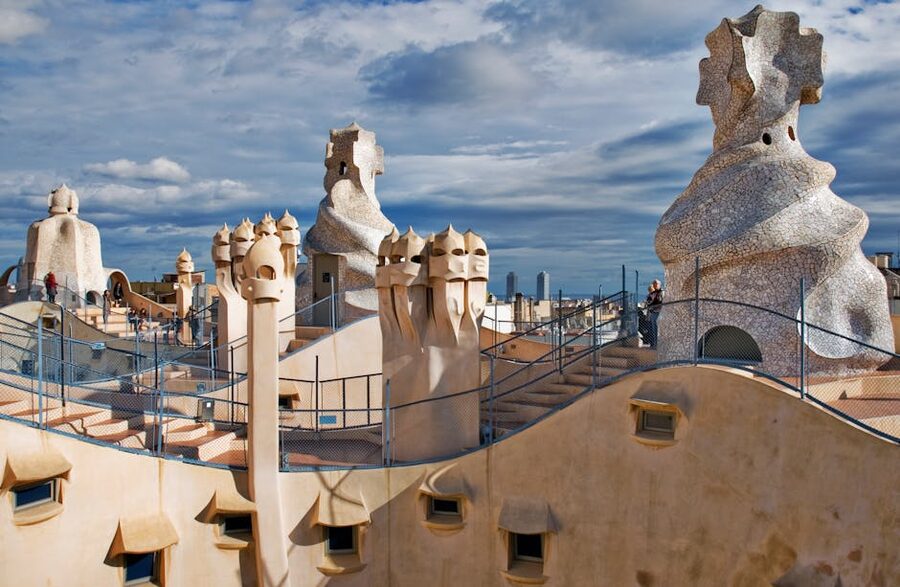
From the front edge you get a clean view down Passeig de Gràcia and across the Eixample grid. From the back, you can see Sagrada Família in the distance. Golden hour gives the chimneys a copper tone. Mid-afternoon flattens them. If you only get one shot of La Pedrera, take it on the rooftop, not from the street.
The Espai Gaudí Attic
One floor below the roof is the attic, now home to a small Gaudí museum called Espai Gaudí. The space is a forest of catenary brick arches, each one sharing the load so the apartments below don’t need any heavy beams. It’s the closest you’ll get to seeing Gaudí’s structural logic without an engineering degree.
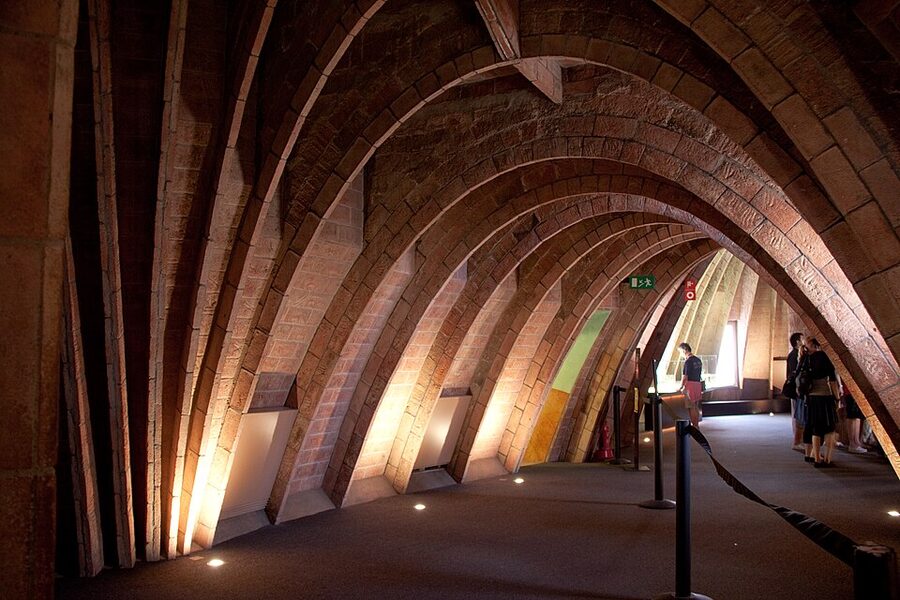
The exhibition itself is split between scale models, drawings, and reproductions of his other buildings. Some of it is dry. The room you should slow down in is the one with the hanging-chain model photos, which show how Gaudí used inverted catenary curves to design Sagrada Família. It’s the single best explanation of his method anywhere in Barcelona.
The Pedrera Apartment
The fourth floor has been preserved as a 1912 Eixample bourgeois apartment. Original tile floors, period furniture, kitchen with the original wood-burning stove, the lot. It’s smaller than you’d expect from outside, because the building’s curves eat floor space.
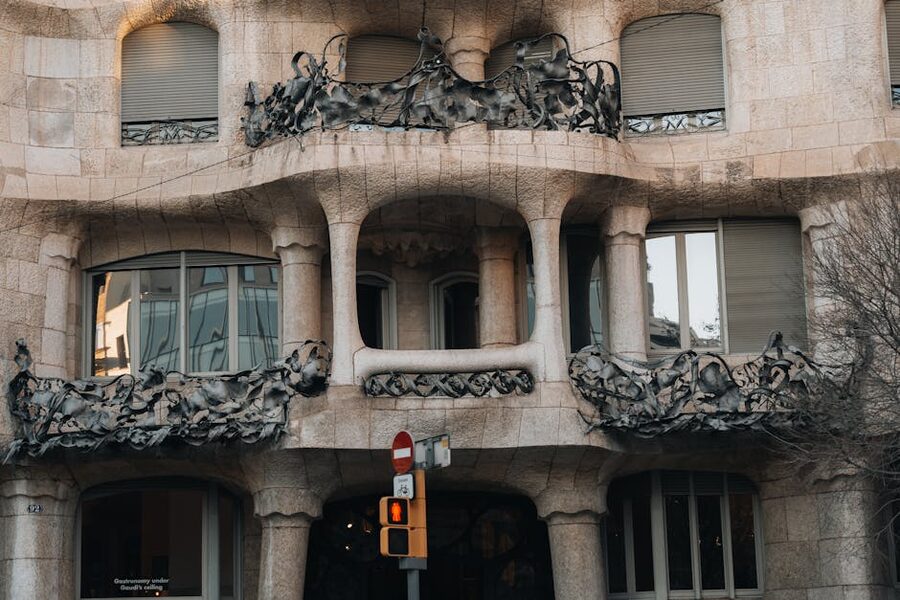
Pay attention to the door handles. Gaudí cast some of them from his own grip impression, which is why they sit so naturally in your palm. The hinges, light switches, and built-in cabinetry are all custom. The whole apartment is a study in how seriously he treated the boring bits of a house.
The Two Courtyards
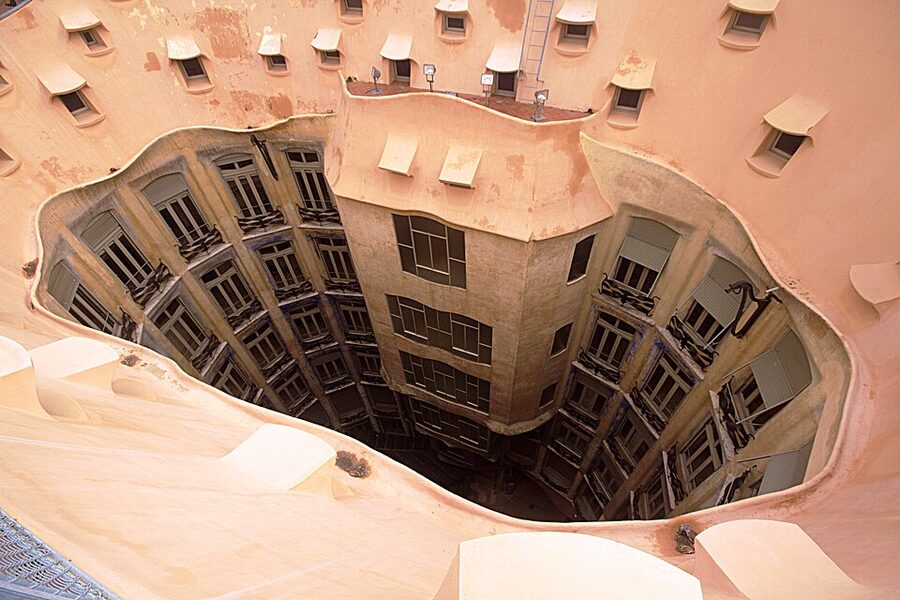
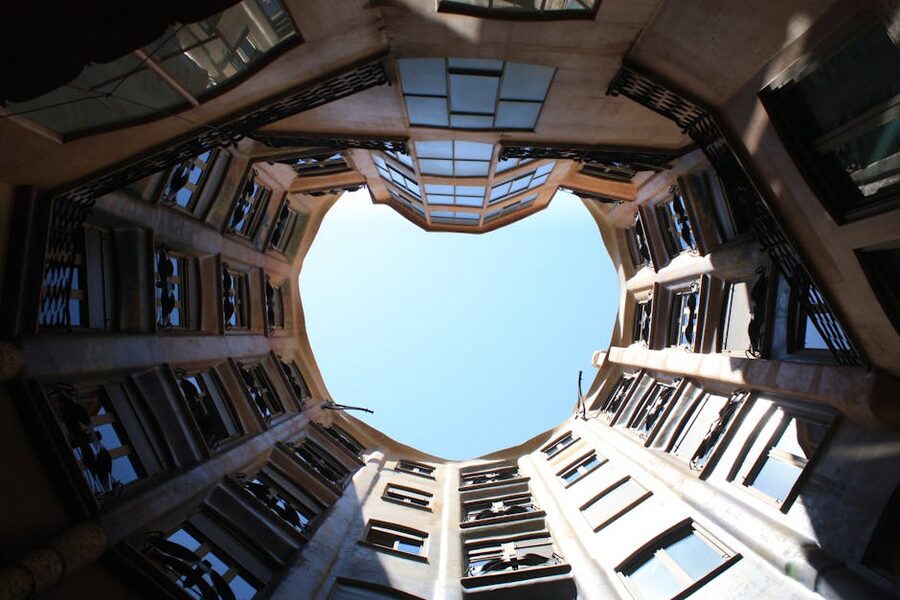
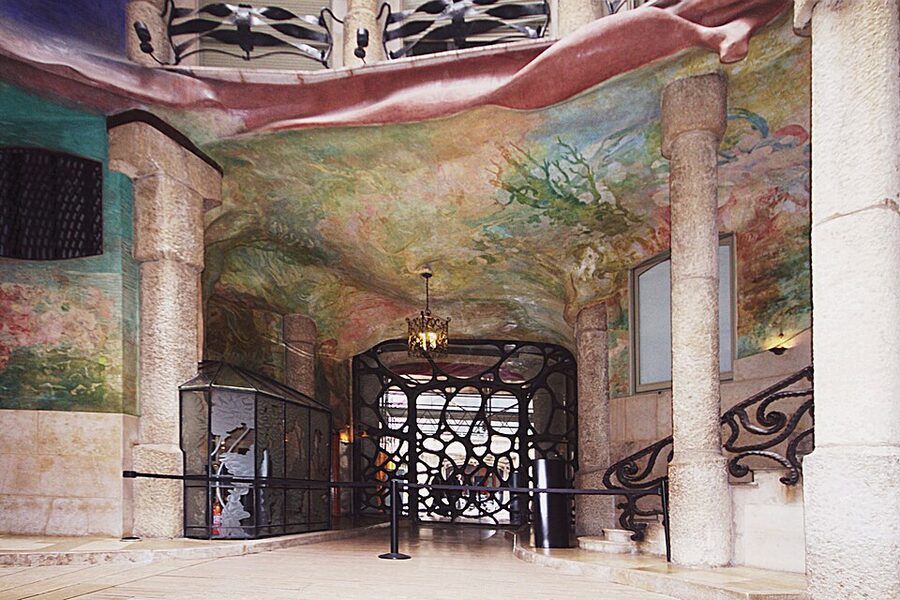
Down on the ground floor are two interior light wells, painted with floral motifs that climb the full seven storeys. They function as ventilation shafts and natural daylight pipes for the inner apartments. They also sound great. Stand in the centre and clap once. The curved walls bounce the sound back and you can hear the geometry of the place.
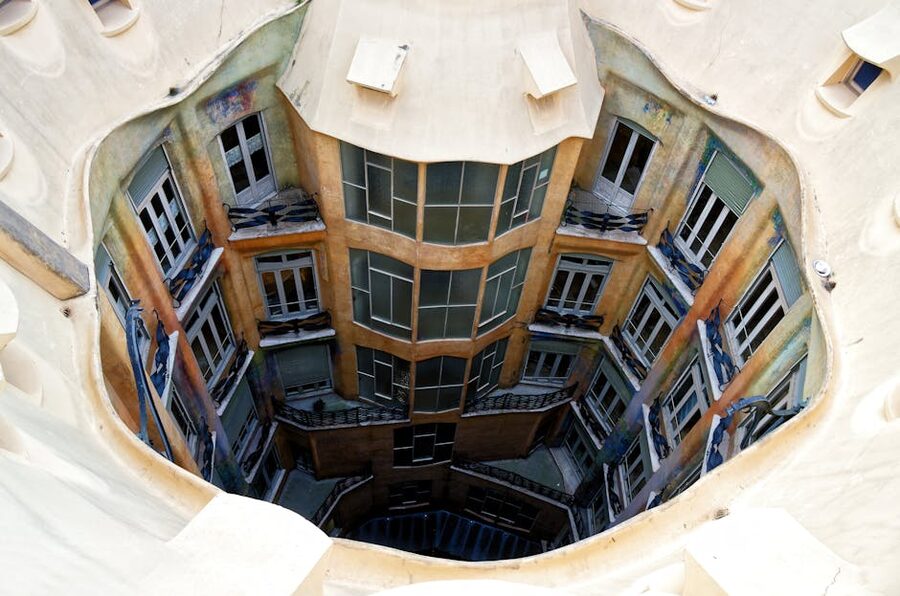
The colours used in the courtyard murals are different from those in the more famous Casa Batlló trencadís. Less mosaic, more painted plaster. Fewer Instagram tags, but quieter to photograph because most of the daytime crowd skips the courtyard floor and heads straight up.
Top Tours and Tickets I’d Actually Book
1. La Pedrera-Casa Milà Skip-the-Line Ticket with Audio Guide: $33
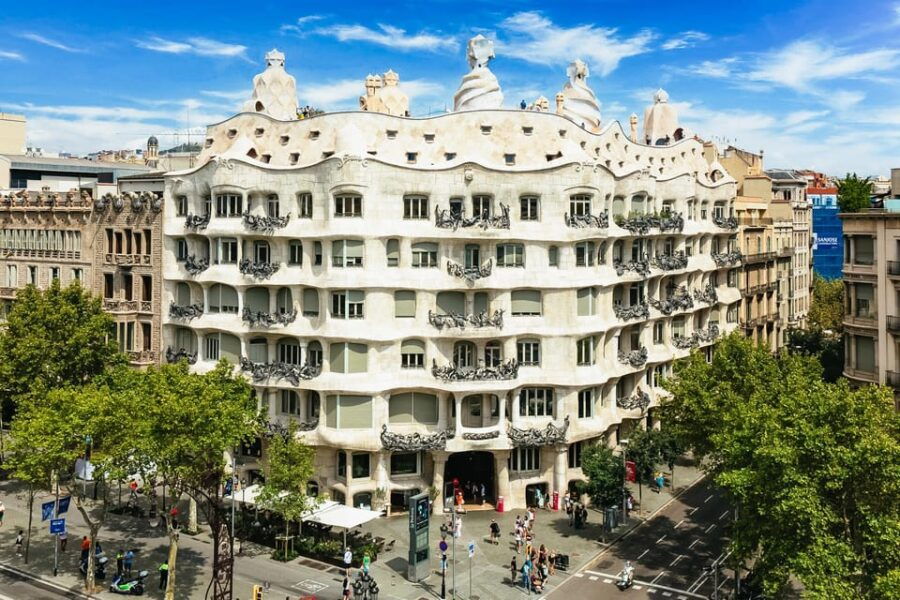
If you only book one ticket here, this is it. It sits as the most-booked option on the market by a wide margin, and our full review of this ticket goes deeper on what the audio guide actually covers. The reputation tracks with what I see on the day: the audio is well-paced, the queue jump is real, and you can spend as long on the roof as you want.
2. Casa Milà Early-Morning Access Guided Tour: $47
The early-morning slot is what I’d book if I wanted to actually understand what I was looking at. Our deeper review of this tour covers what the guide adds beyond the audio. Group sizes stay small, the rooftop hits golden light, and the apartment rooms aren’t packed with other tour groups. Solid 4.7 average across 200+ reviews. The 8am-ish start is the only catch.
3. The Pedrera Night Experience: $47
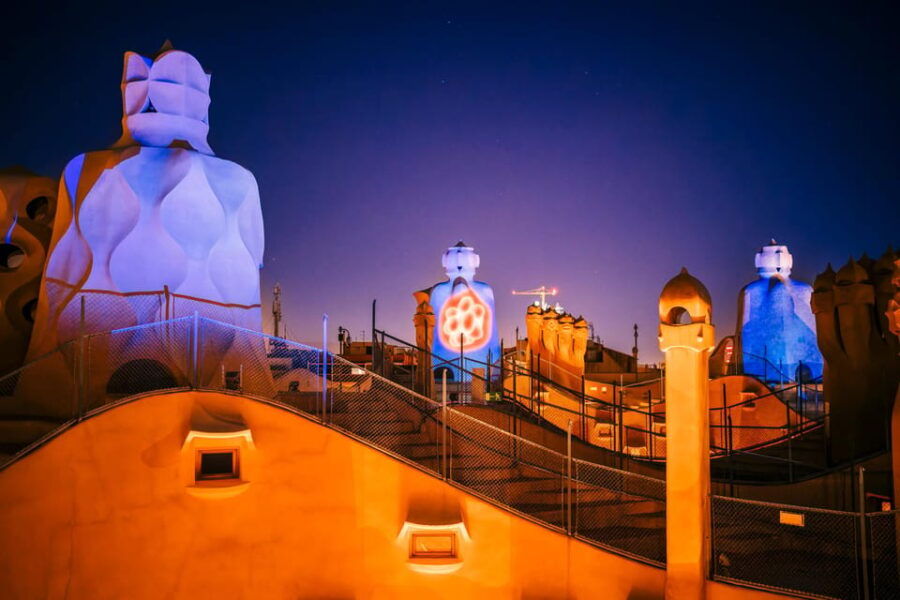
This is the second-trip option, or the one to book if you’ve decided the rooftop is the only bit you really care about. Our night experience review walks through what’s actually included and what’s skipped. About 80 minutes total, you don’t see the apartment or the attic, but the projection show on the chimneys is genuinely well done. Couples rate it highest. The reviews tell you it lands more often than it doesn’t.
The Building Itself: Quick Backstory
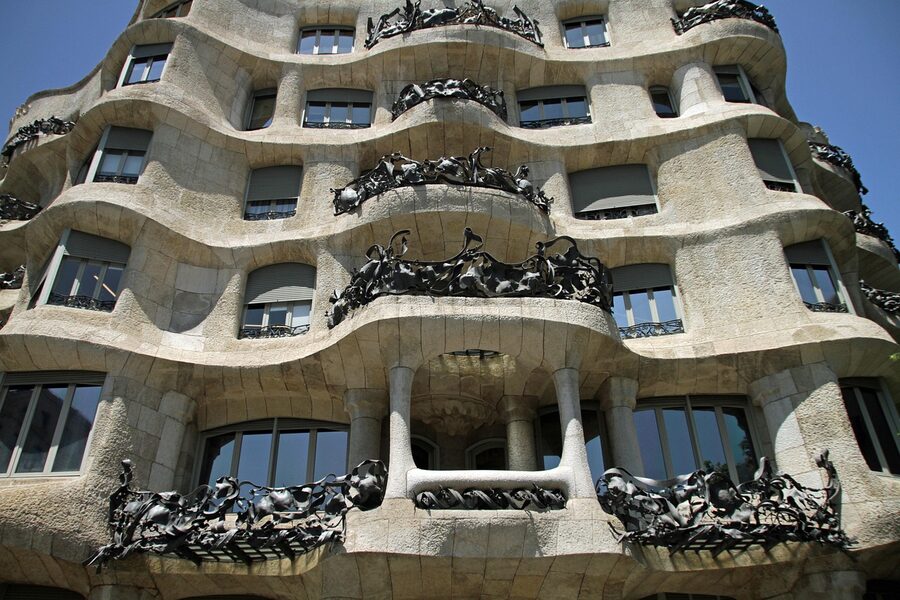
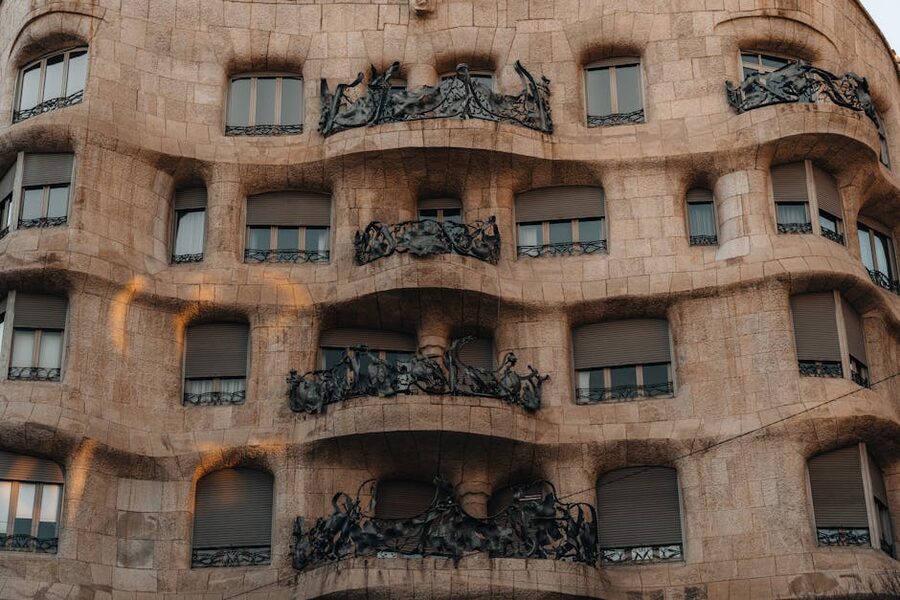
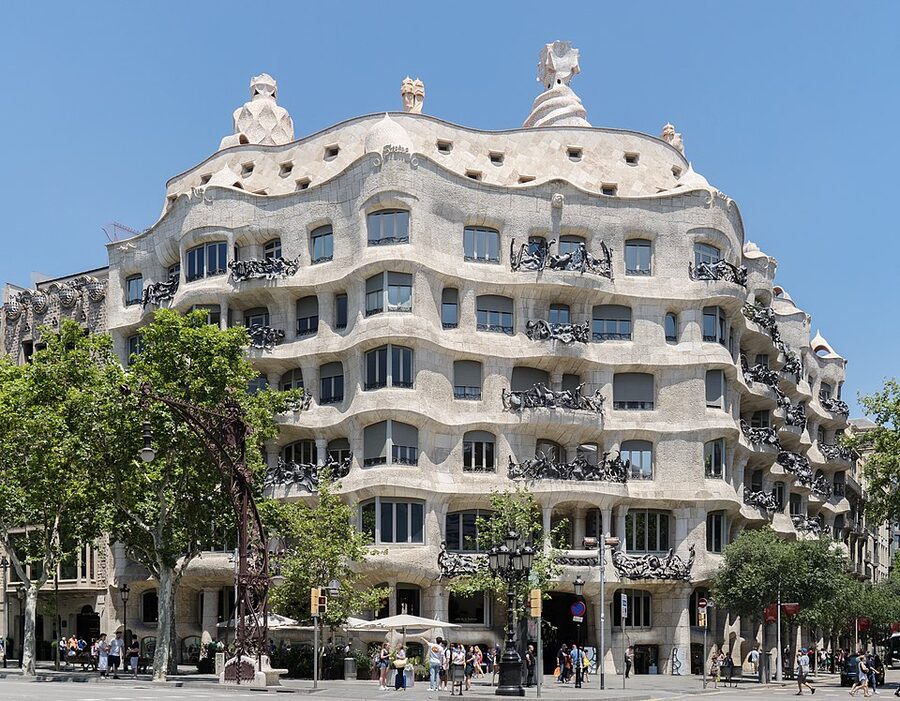
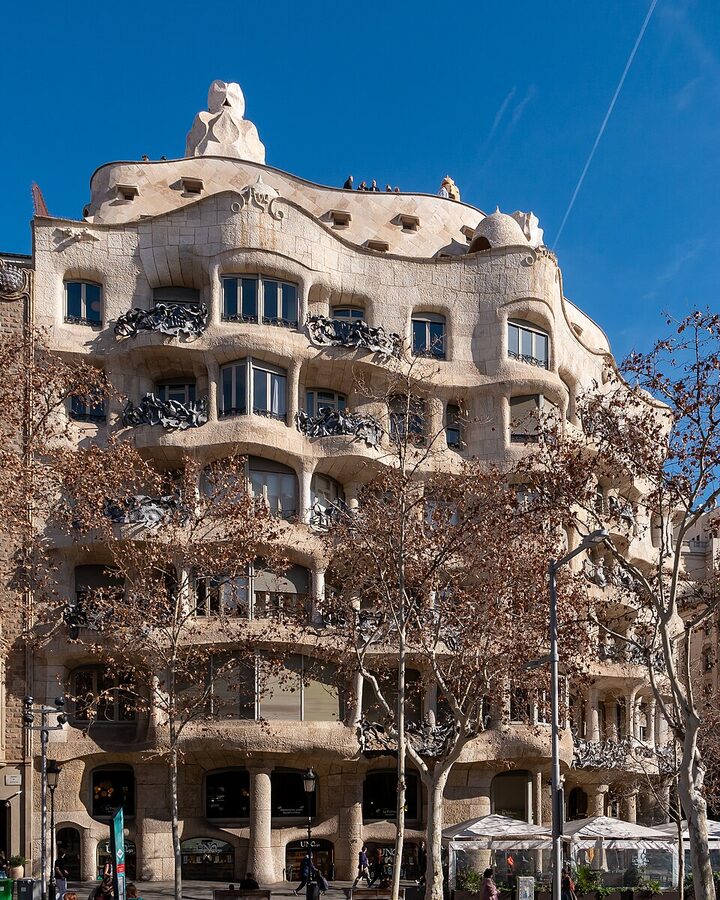
Pere Milà commissioned Gaudí in 1906 to design a residential block on Passeig de Gràcia, then the most fashionable address in Barcelona. The brief was an apartment building for the upper-middle Eixample crowd. Gaudí, on what was already his late-career roll, gave them a stone wave with no straight walls, no load-bearing internal walls (the catenary arches in the attic do all that work), and a rooftop full of helmeted chimneys.
The locals hated it at first. The nickname “La Pedrera” means “the quarry” and was originally an insult about how raw the stone facade looked. Pere Milà fought a running battle with the city council over building height regulations, and Gaudí himself walked off the job before completion after a row over the rooftop crucifix the church wanted (he refused; they didn’t get it). The Catholic Church then refused to bless the building, which is partly why no rooftop crucifix exists today.
It became a UNESCO World Heritage Site in 1984 as part of the broader works of Gaudí. The Catalunya La Pedrera Foundation now runs it, and the entry fees fund both the building’s maintenance and a culture programme that uses the upper floors for talks and exhibitions.
Photography Tips for the Building
The single best facade shot is from the opposite corner of Passeig de Gràcia and Carrer de Provença. There’s a small pedestrian island that gets you the angle without lampposts in the way. Wait for buses to clear. After rain, the puddles by the bus stop give you a reflection trick that works surprisingly well on a phone.
On the rooftop, the chimney-with-Sagrada-Família framing is the standard shot, and there’s usually a small queue at the prime spot. Walk around to the back of the rooftop and you’ll find the same composition without the wait. For portraits, place your subject one step below a chimney to crop out the safety rails. 35mm to 50mm flatters faces.
Tripods aren’t allowed inside. A mini phone clamp is fine. The attic is the place to shoot vertical panoramas of the catenary arches; the courtyards work best as look-up shots from the centre. Ask staff before you put your phone flat on the floor; sometimes they’re fine, sometimes they want you off the ground for safety.
What to Eat Nearby
You’re on Passeig de Gràcia, which is fancy money territory. Right inside the building, Cafè de la Pedrera does tapas and salads under the original ceilings. It’s a tourist setup but the room is genuinely beautiful and the price isn’t outrageous for the location.
Two blocks east on Pau Claris, Bar Mut is a small wine bar that takes its produce seriously. Reserve if you want a table at lunch. Cervecería Catalana on Carrer de Mallorca 236 is the classic Barcelona tapas bar, busy at all hours, no reservations. Worth the queue if you’ve got a group. El Nacional on Passeig de Gràcia 24 bis is a grand food hall with a seafood counter, grill, and dessert bar all under one roof. Not the best version of any of those things, but reliable when you can’t agree on a single cuisine.
If you’re cobbling together Gaudí stops with a tapas crawl, our Barcelona tapas walking tour review covers the small-group options that pair sites with food, which is what I’d actually do on a tight schedule.
Common Booking Mistakes I See
Buying a no-audio-guide ticket to save five euros. Don’t. Without the audio guide, you’re walking past rooms and chimneys with no context at all, and the rooms are not self-explanatory. Pay the small extra for the audio version.
Booking the night experience as your only visit. As covered above, you’ll miss the apartment, the attic, and most of the daytime context. Pair it with a daytime ticket or skip it for now.
Showing up without a printed or saved QR code. The building’s connectivity is fine but the queue moves faster if you have your code already pulled up. Take a screenshot before you walk in.
Trying to bring a backpack into the apartment rooms. There’s a left-luggage room on the ground floor; use it. Big bags slow you down on the spiral stairs and the staff will redirect you anyway.
Underestimating the time. Two hours sounds like a lot until you realise the rooftop alone eats forty-five minutes if you actually look at the chimneys. Don’t book a 5pm slot if you have a 7:30pm dinner reservation across the city.
What I’d Pair It With
If you’ve got a half-day after La Pedrera, Casa Batlló is a five-minute walk down the same street and a good contrast (it does look like rough cut stone), wilder interiors, shorter visit. Park Güell is a 20-minute metro ride uphill and rewards a longer afternoon. The Montserrat half-day tour is the classic escape if you want a mountain monastery instead of more Gaudí.
So, Should You Bother?
Yes, but pick your slot. La Pedrera is one of the few Barcelona buildings that’s better in person than in photos, and the rooftop is genuinely the kind of place you’ll think about months later. It’s also one of the easier Gaudí sites to enjoy: less crowded than Sagrada Família, more architectural than Casa Batlló, less of a hike than Park Güell. Book the standard skip-the-line ticket for first-timers, the early-morning guided tour if you want depth, and the night experience only as a second visit. You’ll be on the chimneys watching the Eixample grid run to the sea before you’ve finished your coffee.