
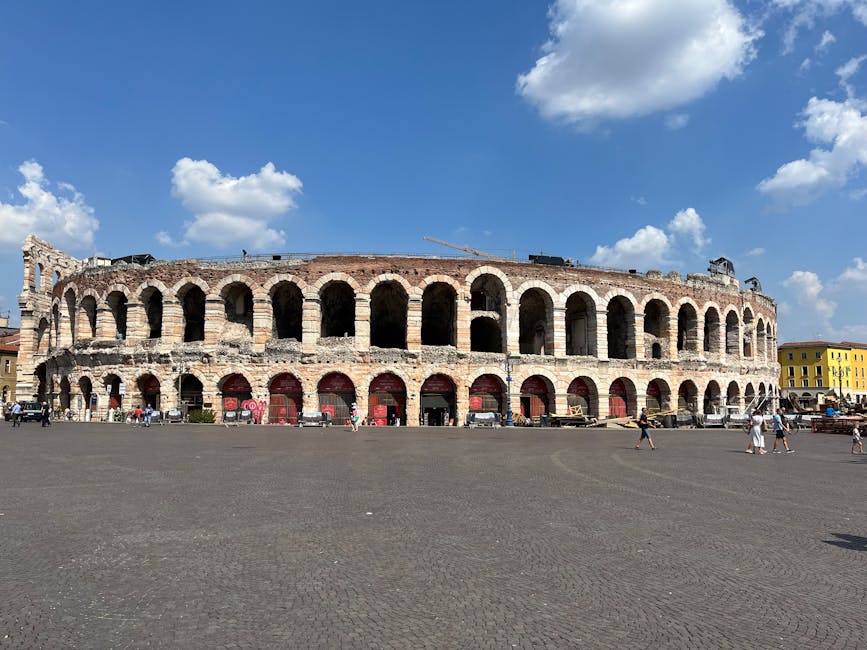
The Verona Arena is older than the Colosseum. Built around 30 AD, it has stayed in continuous use for nearly two thousand years, which is something the Colosseum cannot claim. Sit on the stone seats during an opera night and you are sharing the same view that Roman crowds had, watching Verdi instead of gladiators.
- Short on time? My quick picks
- What the Verona Arena actually is
- Tickets and prices in 2026
- The skip-the-line situation
- Opening hours and the opera-season catch
- How long inside
- Best time of day to visit
- Getting to the Arena
- Combining the Arena with the rest of Verona
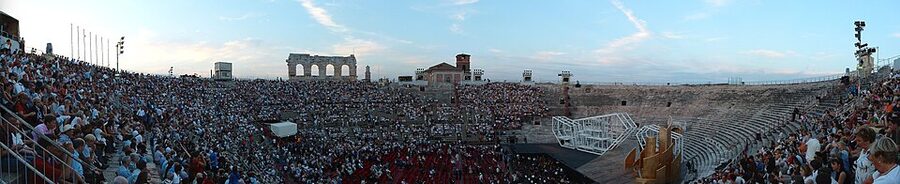
- What it’s like inside during the opera season
- The history that makes it special
- Tours worth booking
- 1. Verona City Card with Arena Priority Entrance: around
- 2. Verona Arena Skip-the-Line Guided Tour: around
- 3. Verona Small Group Walking Tour with Arena Tickets: around
- Food, drink, and where to sit afterwards
- Practical things people forget
- The Roman trick most visitors miss
- What to do next in Verona
- One more reason to come back
- More from our Italy desk
Short on time? My quick picks
If you only have a minute, these are the booking options I would tell a friend to use:
- Verona City Card with Arena Priority Entrance (around $35). Fastest way in via gate 5, and it also covers Juliet’s House, Castelvecchio and city buses.
- Verona Arena Skip-the-Line Guided Tour (around $41). 45 minutes inside with a guide who actually knows the gladiator stories.
- Small Group Walking Tour with Arena Tickets (around $81). Pairs the Arena with the rest of the historic centre in one go.
What the Verona Arena actually is
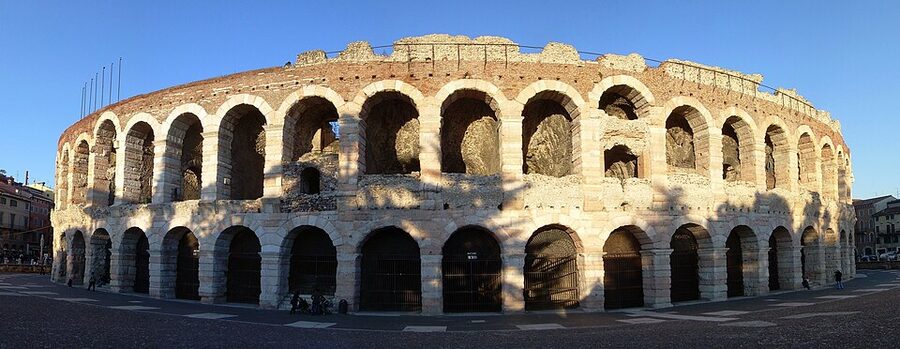
It is a Roman amphitheatre. It sits on Piazza Brà in the centre of Verona. It is the third-largest surviving amphitheatre in Italy, behind the Colosseum and the one in Capua, and it is in much better shape than either of them. The stone is Veronese pink limestone, which is why the whole thing glows slightly orange at sunset.
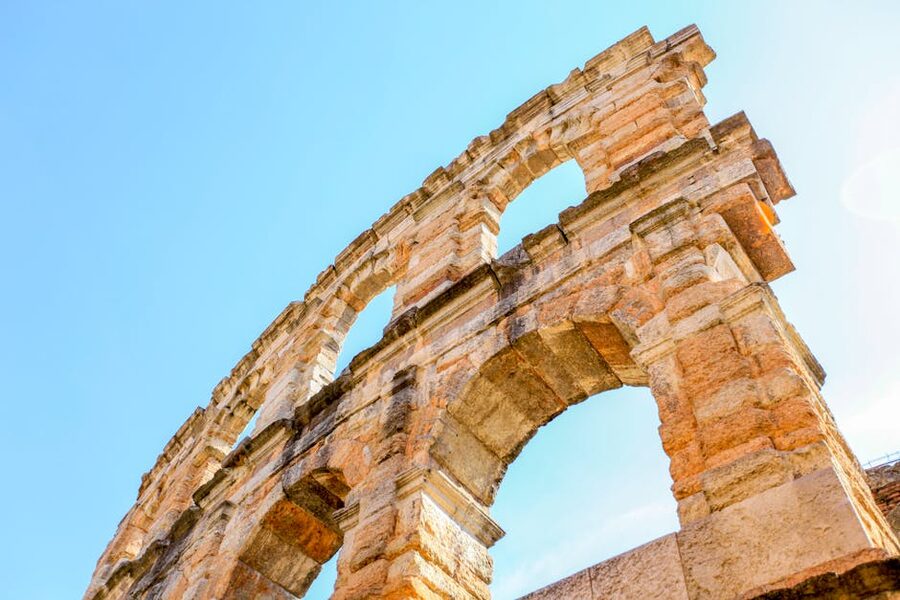
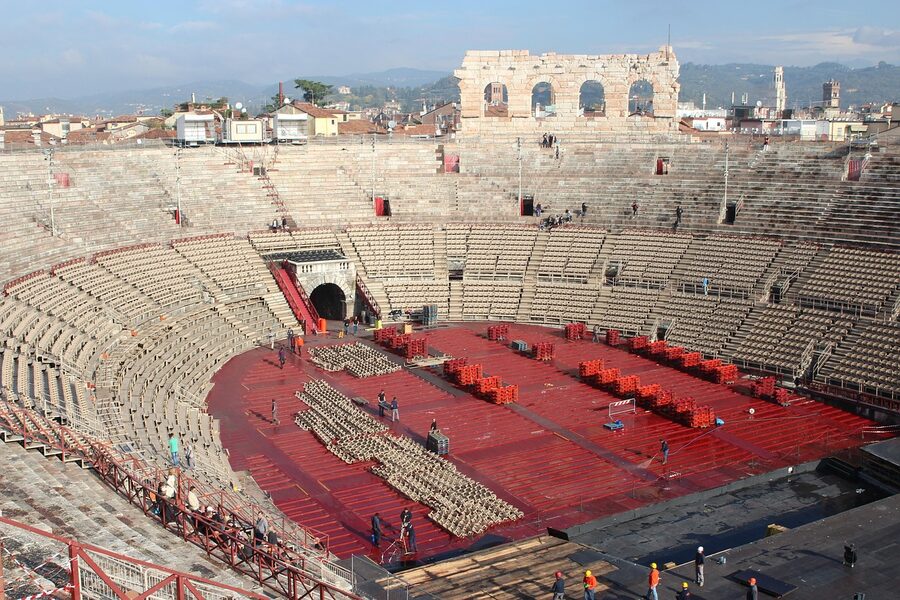
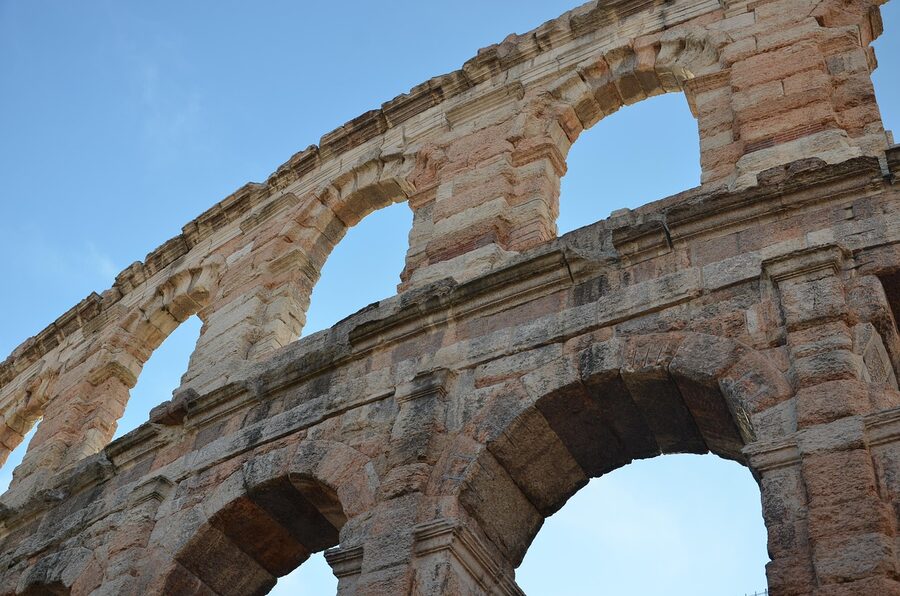
The seating capacity today is around 15,000. In Roman times it was higher. The original outer ring would have made the building taller and more imposing, closer to the Colosseum’s silhouette, but a 12th-century earthquake took most of it down and locals quarried the rubble for centuries. Only a four-arch fragment of that outer wall is left, in the corner closest to Via Mazzini.
Tickets and prices in 2026
The tariffs are simple. General admission is €12, reduced is €9 (for groups of 15+ and seniors over 65), and people aged 18-25 pay €3. Children under 18 are free. The free admission for everyone on the first Sunday of the month was scrapped a couple of years back and is now reserved for Verona residents only. Don’t show up expecting a free entry on those Sundays unless you live there.
You can buy at the box office in Piazza Brà or online via the Verona Museums website. The box-office queue is the bigger issue. In high season it can run 30-40 minutes by mid-morning, so even at €1 of online booking fee, paying online is a no-brainer. Tickets are non-refundable and non-transferable, so book for a day you are sure of.
For most travellers, the smartest move is the Verona Card with priority entry. It folds the Arena ticket into a 24- or 48-hour pass that also covers Juliet’s House, the Lamberti Tower, Castelvecchio Museum, the Basilica of San Zeno, and unlimited rides on the ATV city buses. Even if you only do the Arena and one other site, the maths works out. Our full review of the Verona Card goes through the maths in detail.
The skip-the-line situation
This is where the Verona Card earns its keep. With a standard ticket you queue at the main entrance with everyone else. With the Verona Card you go to gate 5, which has a dedicated priority lane. In July and August that difference is the difference between 5 minutes and 40 minutes.
If you don’t want the Verona Card, the alternatives are a guided tour like the Verona Arena Skip-the-Line Guided Tour, which has its own meeting point and cuts the wait, or the small-group walking tour that bundles tickets in. Both lead you in through the same priority lane the card uses.
The hop-on hop-off bus also stops at the Arena and includes priority entry on its premium ticket, but that is only worth it if you were going to use the bus anyway.
Opening hours and the opera-season catch
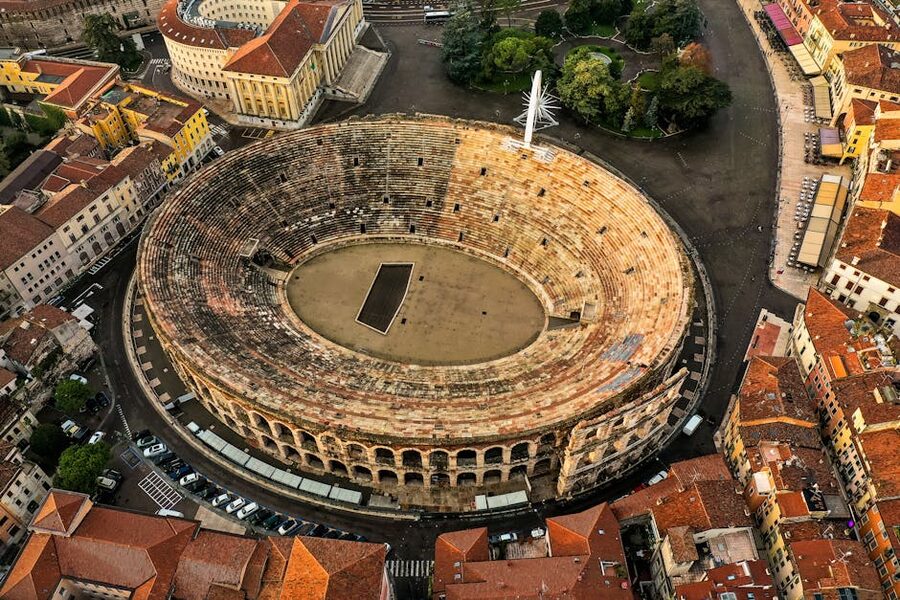
Standard visiting hours are Tuesday to Sunday, 9:00 to 19:00, with last admission at 18:30. Mondays open later, at 13:30. The Arena is closed on December 25 and January 1, and on a couple of festival days that change year to year.
The big asterisk is the opera season. From mid-June to early September the Arena Opera Festival takes over. On performance days, daytime visiting hours are cut short, usually closing at 15:00 or 16:00 to let the production crew set the stage. If the show is sold out and a matinee rehearsal is happening, parts of the seating area might be roped off even during the visiting window.
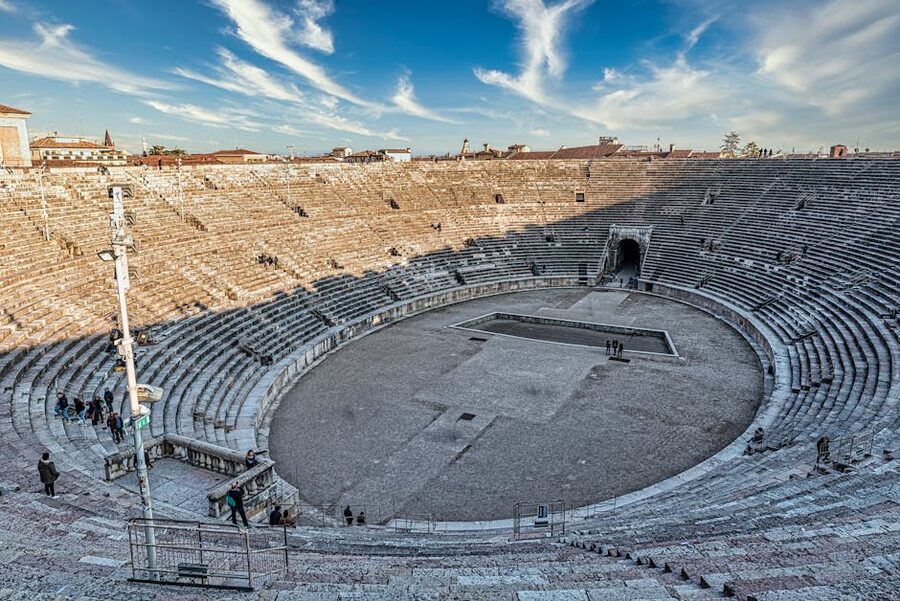
From April through to October more broadly, modern theatrical sets sit on the arena floor. You can still go in, but the floor view will not be the clean Roman oval you might be expecting. If you want the bare-stones look, visit between November and March. Cold, fewer tourists, but the building itself is unchanged.
How long inside
For a self-paced visit with the audio guide, plan for 45 to 60 minutes. That is enough to walk the full ring at floor level, climb to the top of one of the tiers for the view back over Piazza Brà, and read the small museum panels near the entrance. A guided tour adds about 30 minutes of context.
If you bring kids or you want photos at every angle, give yourself 90 minutes. If you are doing the Arena as part of a packed Verona-in-one-day itinerary, an hour is plenty. The site is not enormous. The Roman setting is the magic, not the scale.
Best time of day to visit
Go first thing in the morning if you want it quiet. The 9:00 opening means almost nobody is inside until about 9:30, and the light through the arches is soft enough for clean photos. Tour groups land between 10:30 and 12:00, so 9:00 to 10:00 is the sweet spot.
The other good window is late afternoon, around 17:00, when the harsh sun softens and the limestone goes properly pink. The downside is that this overlaps with afternoon tour groups, so it is busier than morning.
Skip the middle of the day in summer. The Arena interior has very little shade and the stone radiates heat. By 14:00 in July it can be over 35°C inside the bowl. The arched corridors behind the upper tiers (between gates 12 and 14, in particular) hold a useful breeze and shade if you do get caught out.
Getting to the Arena
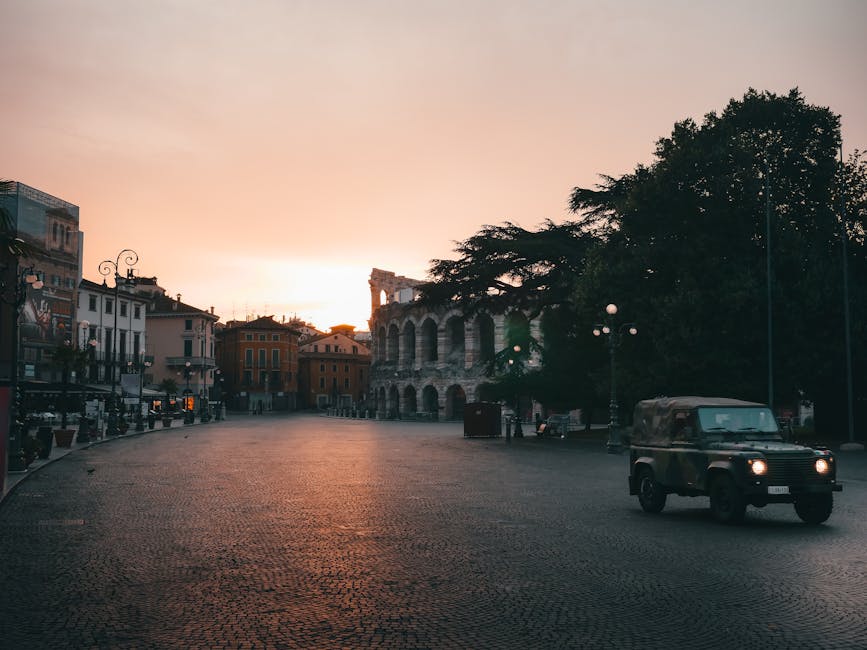
The Arena sits on Piazza Brà in the historic centre. Verona’s main train station, Verona Porta Nuova, is about 1.4 km away, a 15-20 minute walk down Corso Porta Nuova, or three stops on city buses 11, 12, 13, 51, 52, 72, 73, or 90, all of which the Verona Card covers.
If you are coming from Lake Garda, ATV bus 162 or 164 from Peschiera del Garda runs to Porta Nuova in about an hour. The train is faster (around 15 minutes from Peschiera, every 30 minutes). For day trippers from Milan or Venice, the train is the cleanest option. Verona Porta Nuova has direct trains to both, and from there the walk through the historic centre is half the experience.
If you arrive by car, the closest paid parking is Parcheggio Arena on Via Bentegodi, about 400 metres from Piazza Brà. The historic centre has a ZTL (limited-traffic zone), so don’t drive into the piazza itself unless your hotel is registered to let you in.
Combining the Arena with the rest of Verona
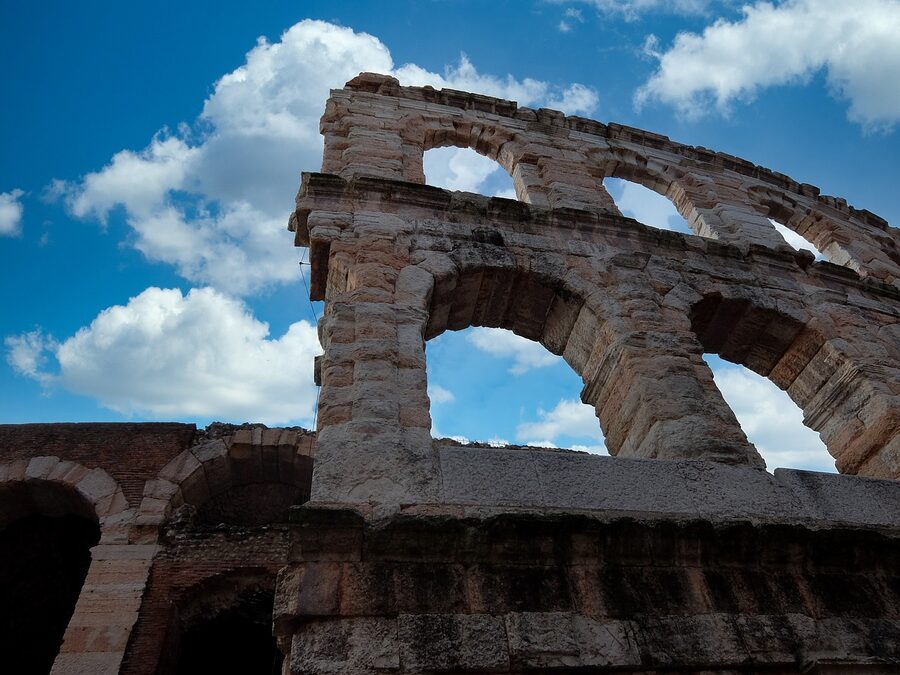
The Arena alone takes an hour. Verona itself deserves at least a day. If you have one day, the natural loop is: Arena in the morning, lunch on Piazza delle Erbe, Juliet’s House (small, overrated, fun anyway), Castelvecchio and the Scaliger Bridge, then a glass of Valpolicella on Castel San Pietro at sunset for the panoramic view back over the river.
The Verona Card pulls a lot of those into one ticket. Juliet’s House (€8 alone) and Castelvecchio Museum (€9 alone) together already cost more than the 24-hour card. Lamberti Tower (the bell tower with the lift to the top) and the Basilica of San Zeno round it out. My full breakdown of the card covers what is and isn’t worth the included entry.
If you want one guided experience that covers the lot, the small-group walking tour with Arena tickets works well. It bundles the Arena, the cable car up to Castel San Pietro, and the historic centre into a single 2.5 hour walk.
What it’s like inside during the opera season
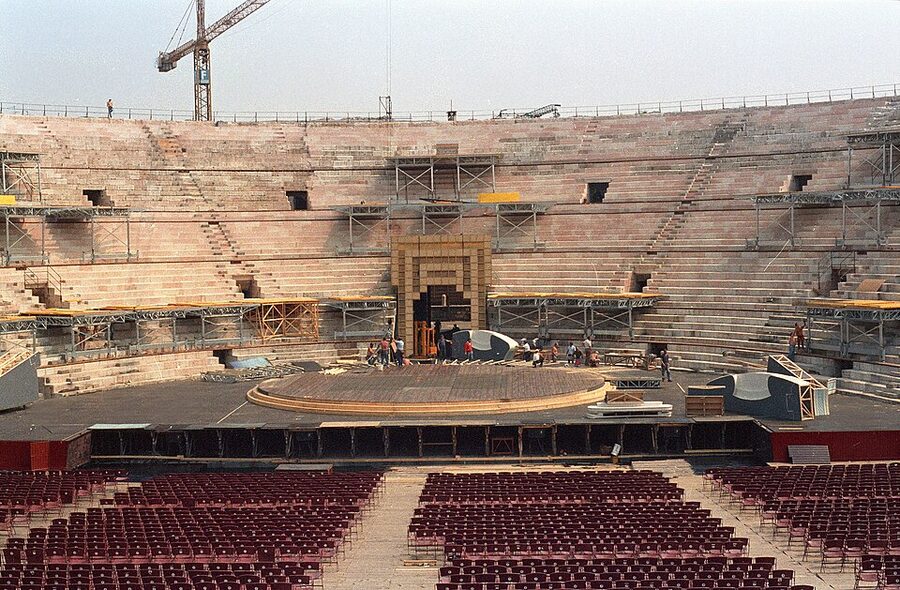
Going to an opera at the Arena is a separate experience from the daytime visit. Tickets are sold by the official Arena Opera Festival channel, not the museum ticketing system. They start at around €30 for the cheapest gradinata (unreserved stone steps, you sit on a cushion you bring or rent for €5) and go up to €230 for poltronissima (a numbered seat right by the orchestra).
The cheap seats are not a compromise. The acoustics in the bowl are extraordinary. Voices carry without amplification, and the higher angle gives you the full theatrical staging that the better seats sometimes can’t see in full. The trade-off is that gradinata seats are first-come, first-served within your ticket category, so you queue at gate opening (two hours before showtime) to claim the best spots.
You will see locals showing up in evening dress, and you will see backpackers in shorts. Both are fine. The dress code is whatever you like. The one rule that’s strictly enforced: no large bags, no professional cameras, and no umbrellas (they get confiscated and stored at the entrance).
If you want to see an opera but the festival schedule doesn’t line up with your trip, the best alternative is the Arena di Verona Opera Ticket page, which I keep updated with the current season’s lineup and starting prices.
The history that makes it special
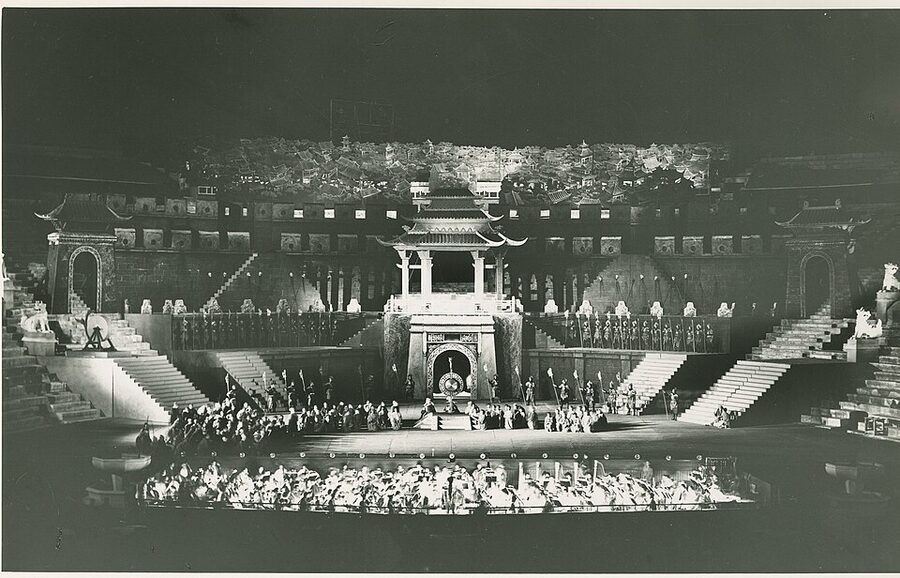
The Arena was built around 30 AD under Emperor Claudius. That makes it about 40 years older than the Colosseum in Rome. It originally seated 30,000 people for gladiator shows, public executions, and naumachiae (mock naval battles, when they flooded the floor).
The earthquake of 1117 collapsed the outer ring. For most of the medieval period the building was used as housing, with families building shacks in the arches and along the upper tiers. By the Renaissance the city had cleared it out and started using it as a venue for jousts, bullfights, and public spectacles. Goethe came in 1786 and called it “the first significant ancient monument I have seen, and how well it has been preserved.”
The opera tradition started in 1913, when a local tenor named Giovanni Zenatello produced Aida there to mark the centenary of Verdi’s birth. The production was a hit, the festival became annual, and apart from a pause during the two World Wars it has run every summer since. Today it is the largest open-air opera venue in the world.
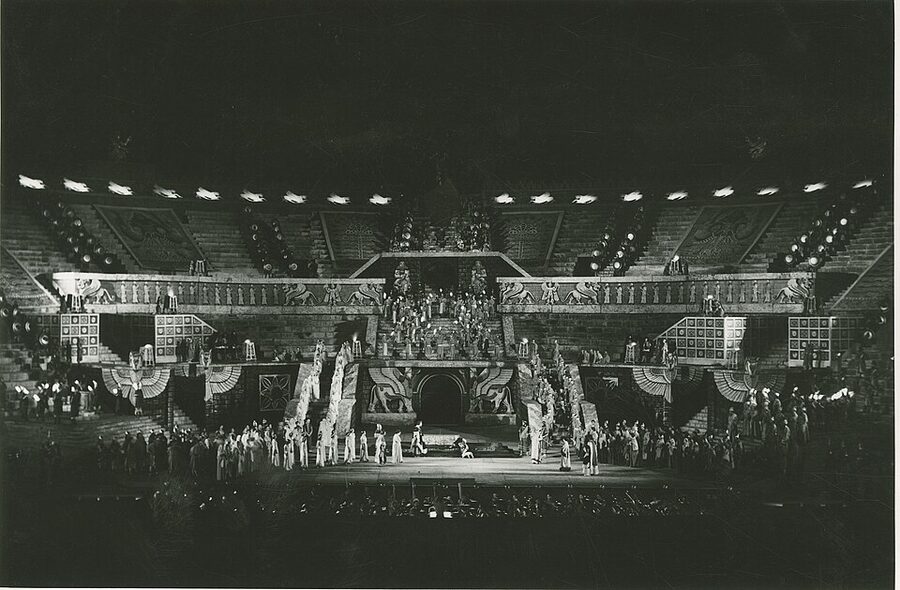
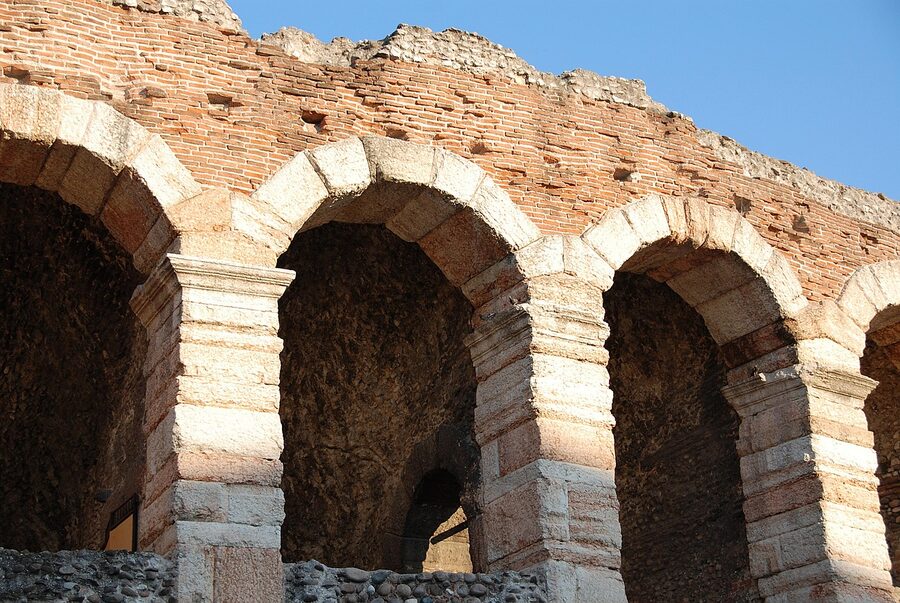
Walk the corridors and you can still see the original stone benches, the staircases (vomitoria, the fast-exit passages), and the channels Romans cut for drainage. UNESCO World Heritage status came in 2000, as part of the wider “City of Verona” listing.
Tours worth booking
Three tours stand out for the Arena specifically. I would start with the City Card unless you specifically want a guided experience.
1. Verona City Card with Arena Priority Entrance: around $35
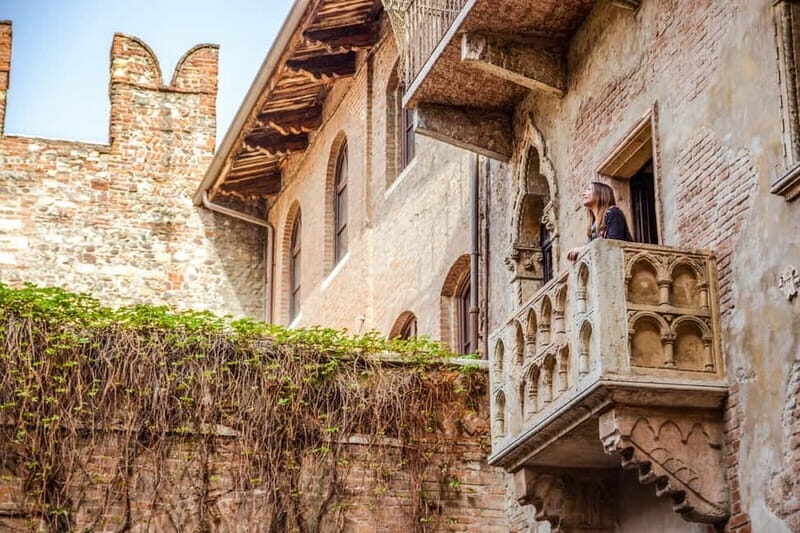
The most-booked Verona Arena option on the market, and easily the best for a self-paced visit. Our full review covers the 24-hour vs 48-hour decision and which partner sites are actually worth the included entry. Priority entry at gate 5 is the part most people don’t realise they need until they see the main queue.
2. Verona Arena Skip-the-Line Guided Tour: around $41
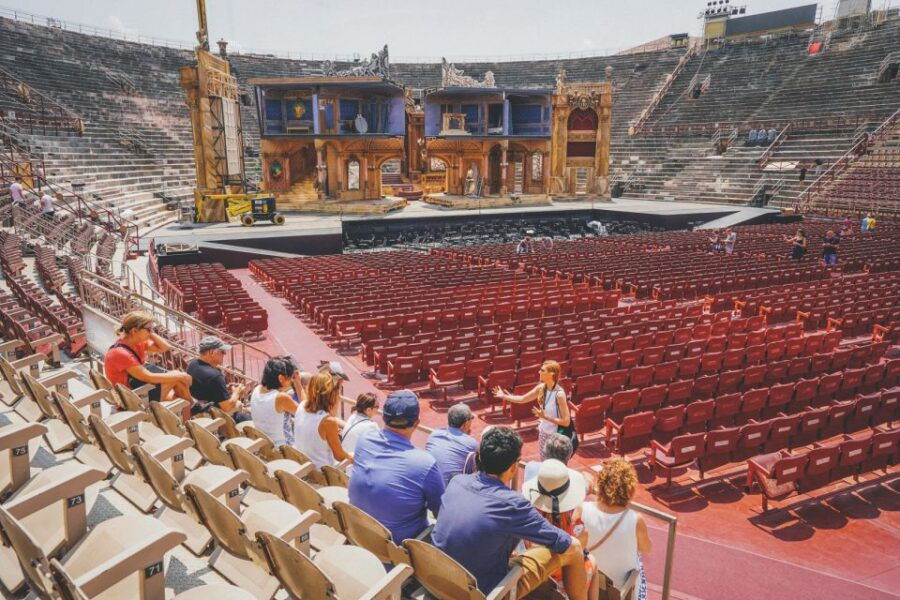
Pick this if you specifically want a guide for the Arena and nothing else. It is 45 minutes, exclusively inside, with a guide who actually knows the gladiator-era detail. Our full review notes that the guides here have outperformed the city walking-tour guides in recent feedback. They go deep on the building rather than skimming it as part of a longer route.
3. Verona Small Group Walking Tour with Arena Tickets: around $81

This is the one to book if it’s your first time in Verona and you want everything in one go. The price is higher because you get a guide for the whole historic centre, not just the Arena. Our full review walks through the route and the cable car option, which I would add if it’s offered.
Food, drink, and where to sit afterwards
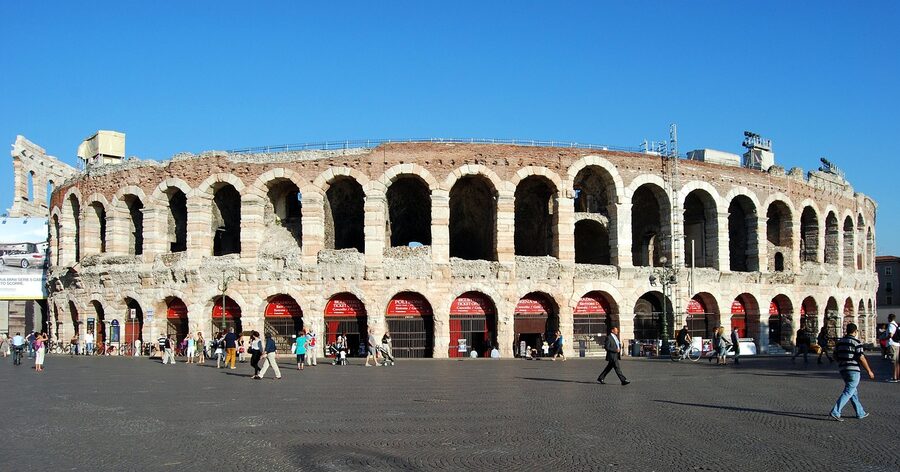
The cafés directly on Piazza Brà charge a Piazza Brà premium. A coffee that costs €1.20 at a counter elsewhere will be €4.50 at a table here. Worth it once for the view of the Arena, not worth it for lunch. Walk five minutes east to Piazza delle Erbe or south down Via Pallone for proper Veronese pasta and Valpolicella by the glass at half the price.
If you want a sit-down dinner in view of the Arena, Ristorante Greppia or Antica Bottega del Vino are the locals’ picks. Both are inside the Liston colonnade. Book ahead during opera season. The dinner trade picks up sharply around 18:00 on performance days.
Practical things people forget
Bag size matters. Anything bigger than a small daypack has to go in the cloakroom (€1) at the entrance. Don’t bring your full Italy luggage with you.
The interior floor is uneven and the steps are worn. Trainers or flat shoes are right; heels are a bad idea, especially on opera nights when you might be climbing the gradinata after dark.
There are no toilets inside the visit area. The public toilets are on Piazza Brà under the Liston, on the south side. Use them before going in.
Photography is allowed throughout for personal use. Tripods need permission from the museum office. Drones are forbidden in central Verona, full stop.
If you visit during opera season and want to see what the daytime Arena looks like clean, stop by on a Monday morning when most of the previous night’s set has been struck and the floor is being reset. It’s the closest you get to the empty bowl during summer months.
The Roman trick most visitors miss
The numbered gates on the inner ring are not just modern signage. The numbers were cut into the stone two thousand years ago. Romans had ticket numbers that matched a specific cuneus (wedge of seats). Walk around the inner corridor and look up at each arched entrance. You can still see the carved Roman numerals above several of them.
The drainage channels in the floor are also original. Romans engineered the surface to slope very slightly toward a central drain, so the Arena could be flooded for naval-battle simulations and then emptied in a few hours. The drain itself, beneath the modern wooden stage, is still there.
What to do next in Verona
Once you’ve done the Arena, the natural next stops are Juliet’s House (overrated but unavoidable, and the courtyard is free to enter), Castelvecchio Museum and the bridge across the Adige, and the climb up to Castel San Pietro for the panoramic view back over the river bend. The Verona Card covers the first two and the bus to the bottom of the Castel San Pietro hill.
If you have time for a half day outside the city, Lake Garda is 30 minutes away by train. Sirmione (the peninsula village with the castle) is the easiest day trip and pairs well with a morning at the Arena. If you are coming from Milan, the Milan to Verona, Sirmione and Lake Garda day trip bundles all of it into one logistics-free package.
And for context-setting on Verona itself, the Verona History and Hidden Gems Walking Tour takes you through the Roman, medieval and Scaliger layers of the city in around two hours, ending back at the Arena.
One more reason to come back
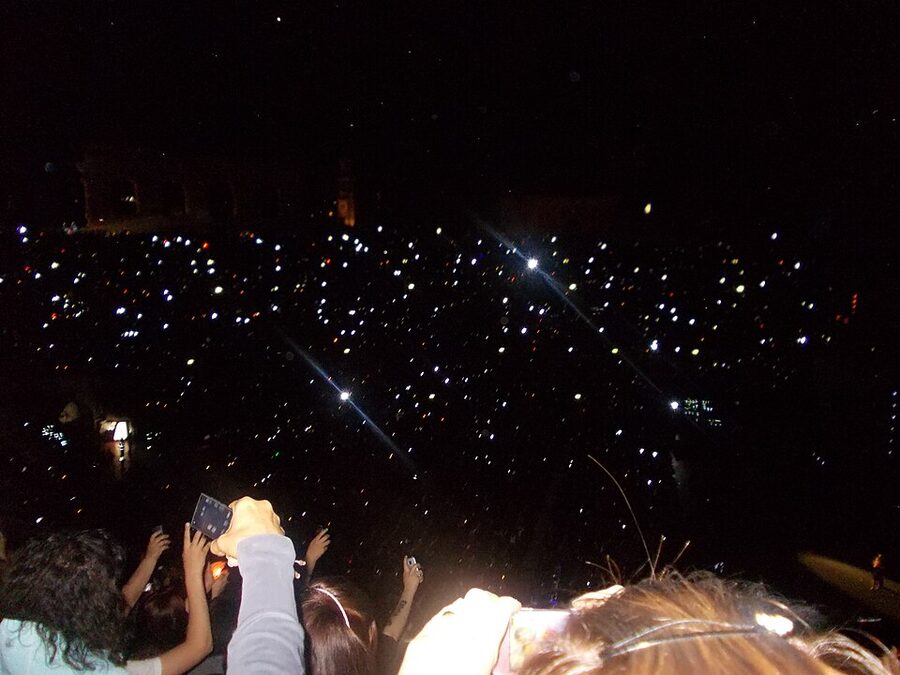
The daytime visit is the easy sell. The opera, or one of the summer pop concerts, is the reason a lot of people end up booking a second trip. If you only have one Verona visit in you, do it during opera season and pair the daytime tour with an evening show. If you can split the visit across seasons, January for the empty bowl and July for an Aida performance is the dream combination.
More from our Italy desk
If the Arena is part of a wider Italy trip, a few of our other guides pair well. For travellers heading south after Verona, our Pompeii and Amalfi day trip from Rome guide is a logical next stop if you’ve never seen Vesuvius’s shadow over a Roman ruin. If your Italian Roman ruins itinerary is the theme, the Naples Amalfi boat tour to Positano and Ravello covers the coastal angle, and Sicily’s Mount Etna day trip from Catania goes for the geological extreme. None of them are Verona, but all of them are the kind of single-anchor day Italy does best, exactly like this one.