
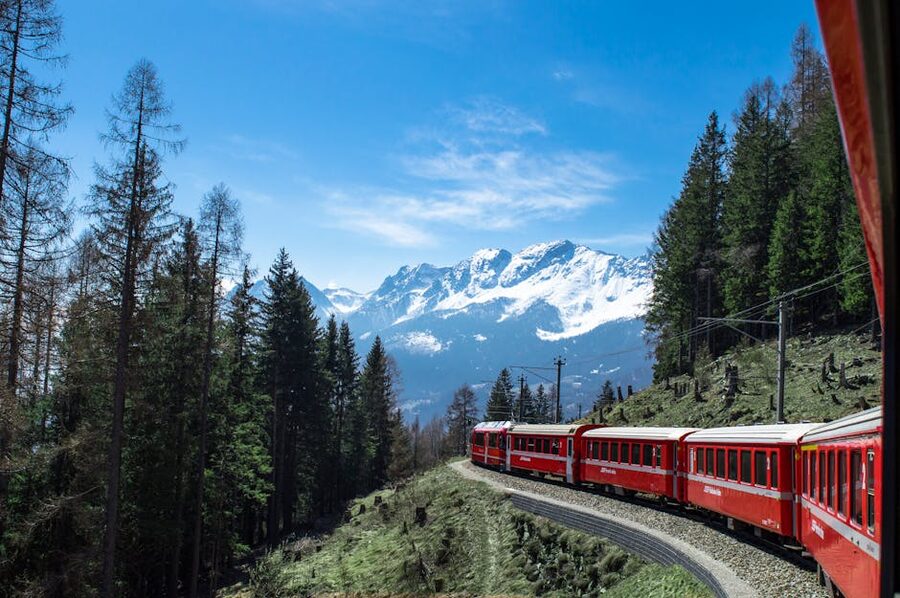
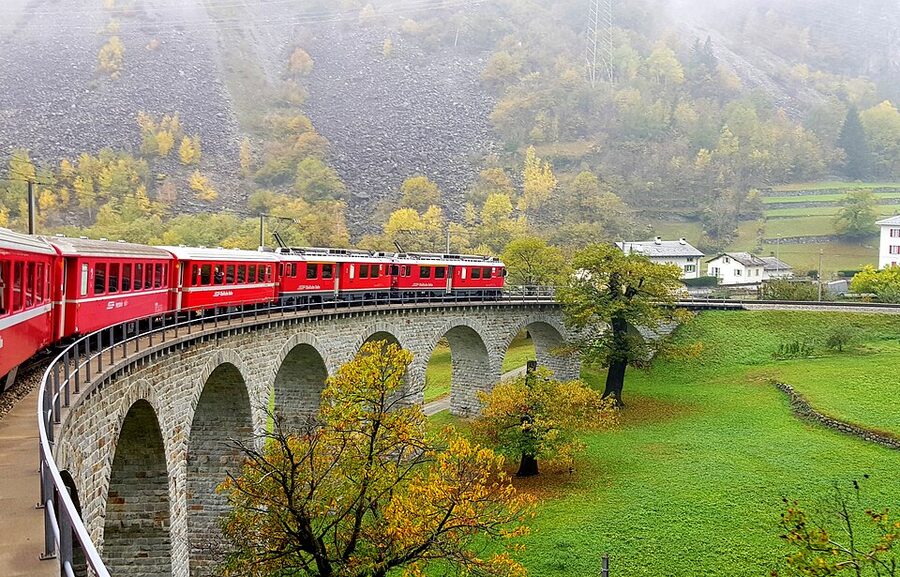
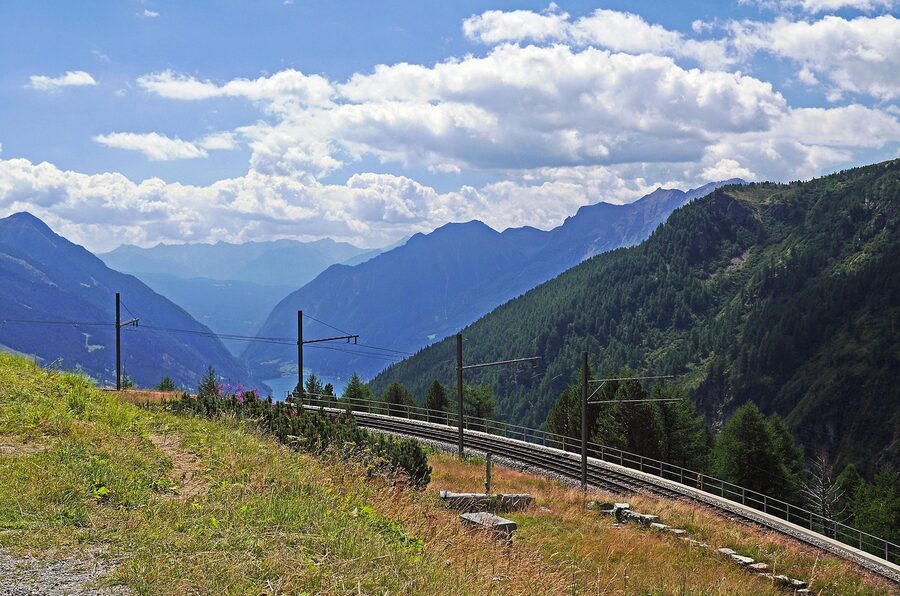
Here’s the surprising part: the Bernina line is the highest transalpine railway in Europe that doesn’t use a rack or a tunnel to do the job. The little red train just climbs. It hauls itself from a vineyard town at 429 metres up to 2,253 metres at Ospizio Bernina on plain adhesion track, with curves so tight the carriages look back at themselves.
From Milan, you can ride that whole stretch and be home by dinner. This guide walks through how to actually book it: the DIY train route, the organised coach-plus-train tours, and which ticket type is worth paying for.
In a Hurry? Top Picks for Booking the Bernina from Milan
- Best all-rounder ($122): Bernina Train and St Moritz Day Trip from Milan on GetYourGuide. Coach to Tirano, train to St Moritz, coach back. Bilingual guide, the format that works.
- Lake Como combo ($159): Lake Como Cruise, St Moritz and Bernina Red Train. Three big sights stitched into one (long) day if you only have one shot at the region.
- Premium small group ($168): Bernina Express Tour Swiss Alps and St Moritz on Viator. Perfect 5-star score, smaller group feel, slightly slower pace.
- In a Hurry? Top Picks for Booking the Bernina from Milan
- What the Bernina Line Actually Is (and Why It’s Worth a Day Trip)
- The Two Ways to Do It from Milan
- Option 1: DIY It on Trenord and Rhaetian Railway
- Option 2: Organised Coach-and-Train Tour
- Which Tour I’d Actually Book
- 1. From Milan: Bernina Train and St. Moritz Day Trip (2)
- 2. From Milan: Lake Como Cruise, St. Moritz and Bernina Red Train (9)
- 3. Bernina Express Tour Swiss Alps and St Moritz From Milan (8)
- The Bernina Express vs the Regional Train
- Where to Sit (This Matters More Than You Think)
- The Brusio Spiral Viaduct, the Stretch Everyone Photographs
- St Moritz: What to Do With Your 90 Minutes
- Costs in Plain Numbers
- When to Go
- The Highest Stretch: Lago Bianco and Ospizio Bernina
- The Glacier You’ll See From the Train
- Practical Stuff That Trips People Up
- If You Have More Than One Day
- Booking the Bernina From Lake Como Instead
- Common Questions People Ask
- Beyond the Bernina: Where to Go Next
What the Bernina Line Actually Is (and Why It’s Worth a Day Trip)
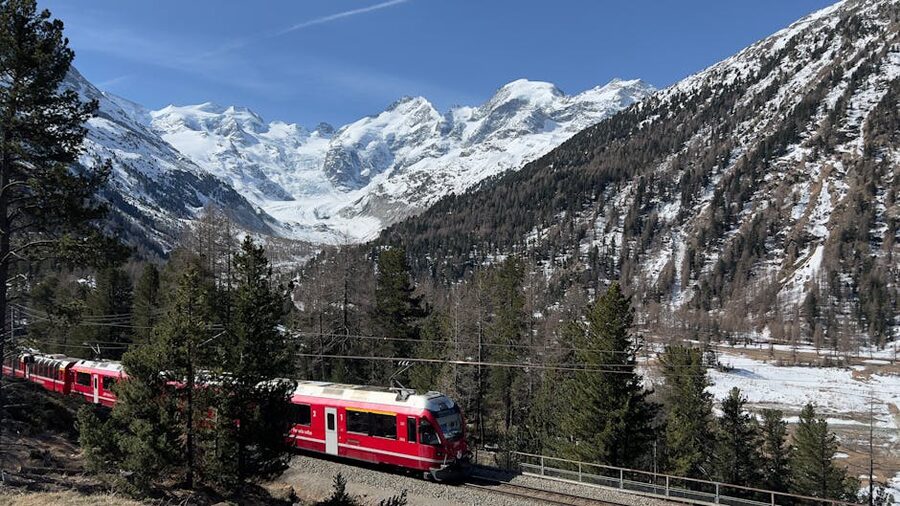
The Bernina is one of two routes the Rhaetian Railway protects under UNESCO. Construction started in 1896. The whole line opened in 1910. It connects Tirano in the Italian valley of Valtellina with Pontresina and onward to the resort town of St Moritz, climbing roughly 1,800 metres in about two and a half hours.
What makes the engineering wild is that it does this on metre-gauge track with no rack and pinion. Most steep alpine railways cheat with a toothed rail to grip the gradient. The Bernina just spirals and switchbacks. The Brusio loop near the Italian border is the most famous of these tricks, a 360-degree open-air viaduct that lets the train descend without losing your stomach.
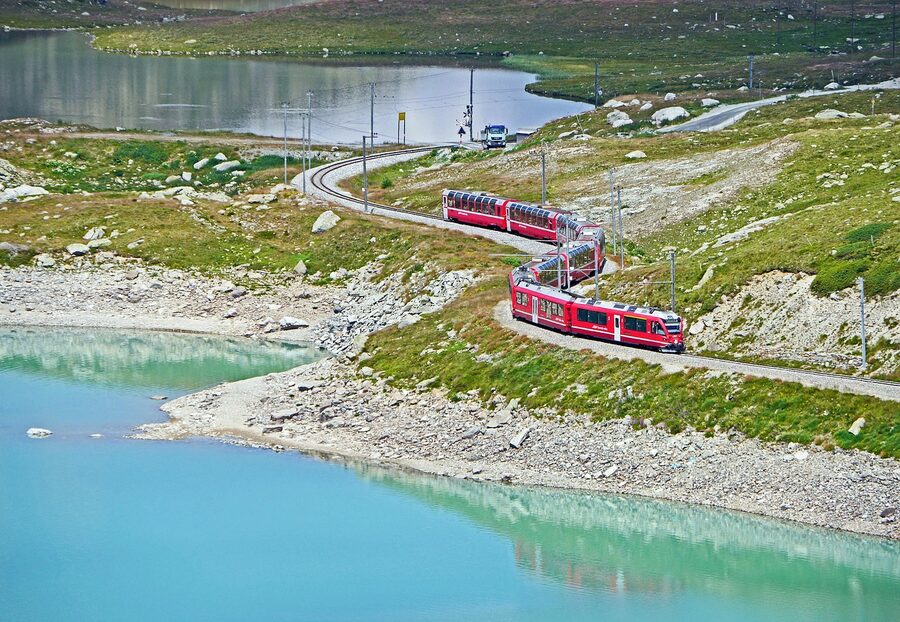
The train calls at 25 stations between Tirano and Chur. For a day trip from Milan you only do part of the route, Tirano up to St Moritz or Pontresina, which is the prettiest bit anyway. The full Tirano-to-Chur push takes about four hours and isn’t really doable as a same-day return from Lombardy.
The Two Ways to Do It from Milan
You have two real options. Both work. They suit different travellers.
Option 1: DIY It on Trenord and Rhaetian Railway
This is the cheap, flexible route. Buy a Trenord ticket from Milano Centrale to Tirano, change platforms in Tirano (the Italian station and the Swiss RhB station are next to each other, across a small piazza), and grab a regular RhB regional service to St Moritz.
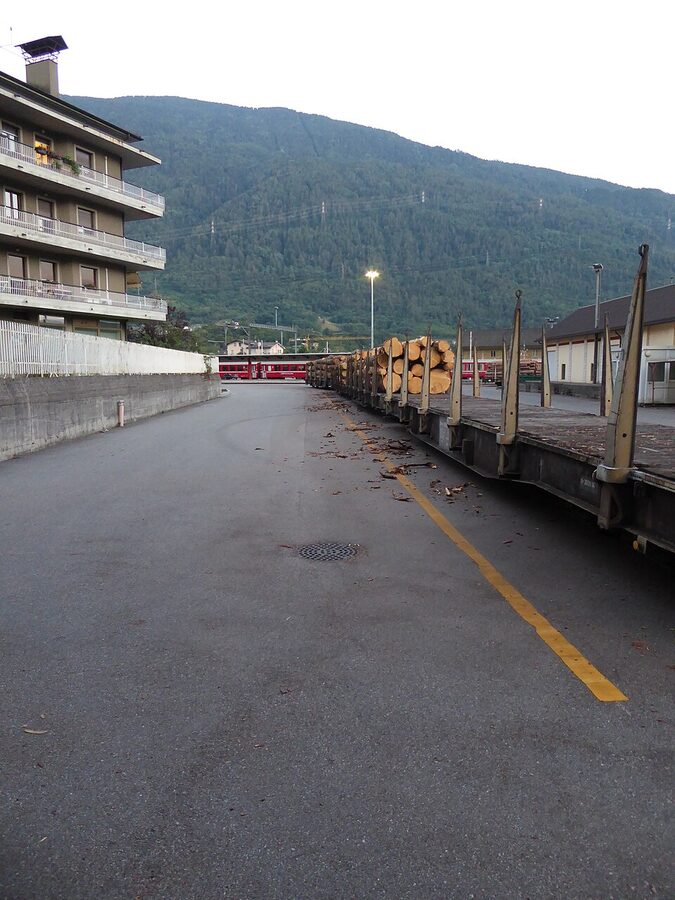
Trenord trains leave Milano Centrale roughly every two hours. The trip takes about 2h 30m. You don’t need a seat reservation. A return ticket is around €25 to €30 in second class if you book in advance on the Trenord site or the app. Walk-up fares are similar.
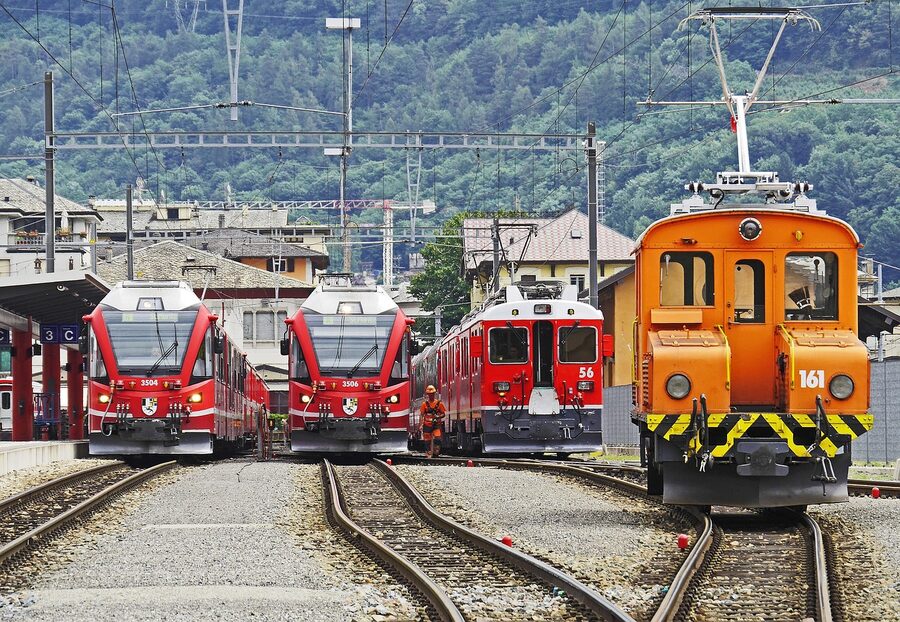
For the Tirano-to-St Moritz leg, you have a choice. The official “Bernina Express” panoramic train is the postcard one with the giant curved windows that don’t open. It runs once or twice a day in each direction and requires a separate seat reservation on top of your ticket. Reservations cost about CHF 32 in summer and CHF 28 in winter. The ticket itself is around CHF 35 second class one way.
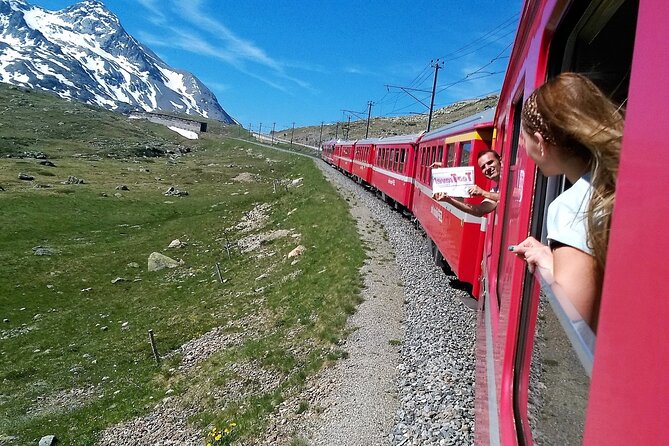
Or you take a regular regional Rhaetian Railway service. Same line, same scenery, same red carriages, but with smaller windows that do open. No reservation needed. Many travellers (and rail enthusiasts) prefer the regional because you can lean out a window and shoot photos without glass glare. I’d take the regional myself.
Total cost DIY in second class, return: roughly €90 to €110 per person, depending on which Bernina train type you pick. First class adds about 50%. Total day length: 12 to 13 hours from leaving your Milan hotel to getting back.
The catch with DIY: you have to time the return tightly. The last regional from St Moritz back to Tirano leaves around 18:00, and the connecting Trenord to Milan goes around 20:24. If anything is delayed, you’re sleeping in Tirano. It happens. Build buffer.
Option 2: Organised Coach-and-Train Tour
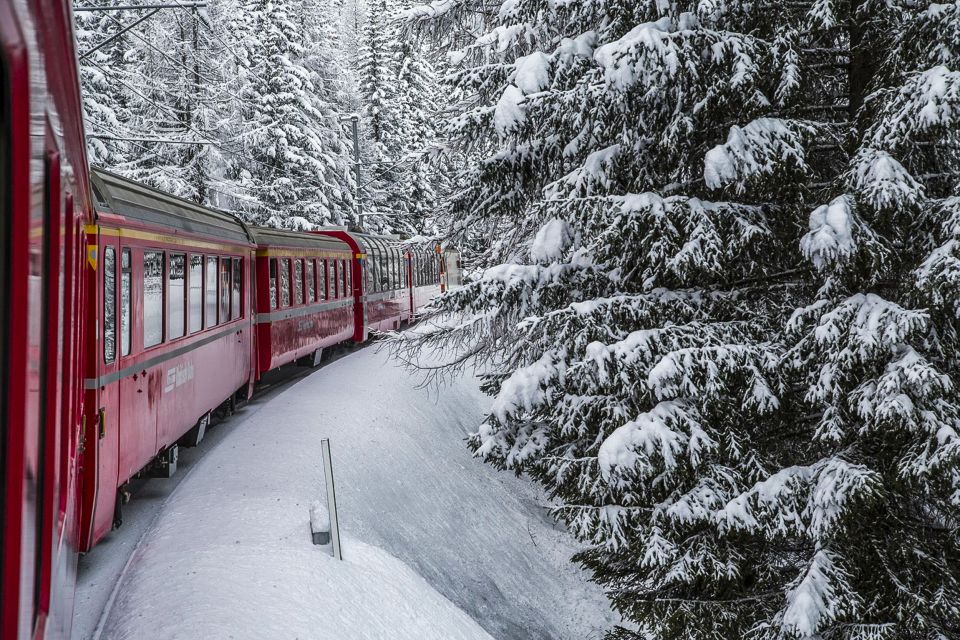
This is the format most people end up booking, and it’s the one I’d recommend if it’s your first time. A coach picks you up near Milano Centrale around 6:50 to 7:15 in the morning. You drive up the western shore of Lake Como to Tirano (roughly three hours, with a coffee stop). You board the Bernina train (regional, usually) for two hours up to St Moritz. You get a couple of hours in St Moritz to walk the lake and grab lunch. The coach meets you in St Moritz and drives back to Milan along a slightly different route.
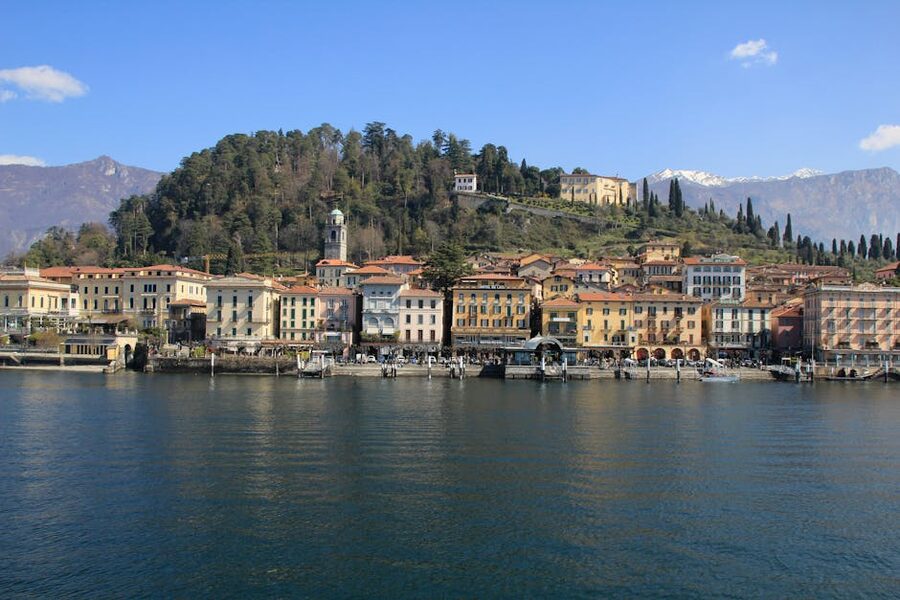
Why the coach format works: you skip the 5am alarm, you skip the connection panic in Tirano, and you only ride the train one direction so you don’t get train-fatigued. You also see Lake Como twice, which is a free bonus.
The downside: you don’t ride the Bernina round-trip, so you miss the southern section’s afternoon light. Also the day is still long, normally 11 to 12 hours from pickup to drop-off.
Pricing for organised coach-train tours from Milan typically lands in the $110 to $170 range. The cheaper end uses regional trains in second class. The pricier ones use the panoramic Bernina Express carriages and put you in a smaller group. Our full review of the GetYourGuide pickup-and-drop tour goes through the breakdown, and the scenic-train day-tour alternative covers the smaller-coach option from a different operator.
Which Tour I’d Actually Book
Three I’d put in front of someone planning this for the first time. They’re sorted by what most travellers actually pick first.
1. From Milan: Bernina Train and St. Moritz Day Trip ($122)
This is the volume booker for a reason. The pacing is right, the price is fair, and the bilingual English-and-Spanish guide setup means you actually get history along the way instead of just “here’s a lake.” Our review covers the meeting-point logistics and what’s worth bringing for the train leg.
2. From Milan: Lake Como Cruise, St. Moritz and Bernina Red Train ($159)
Pick this if you only have one shot at northern Italy and you want to mash three sights into one day. The Lake Como cruise is short (about 30 minutes around Bellagio) but it’s the real thing, with proper boat time on the water. The full review walks through whether the extra €37 over the basic Bernina tour is worth it (verdict: yes, but only if you’re tight on days).
3. Bernina Express Tour Swiss Alps and St Moritz From Milan ($168)
This is the small-group option that runs through Viator. Reviews are unusually consistent at 5 stars, and you get the panoramic carriage with the curved windows on the train leg. Our review notes the weather caveat: in heavy snow the panoramic windows fog more than regular ones, so the group format earns its premium most clearly in shoulder season.
The Bernina Express vs the Regional Train
This trips up a lot of first-time bookers. “Bernina Express” is one specific train. Most of the trains that run that line are regional services, not the Bernina Express. Both look red. Both run the same track. They are not the same product.
The official Bernina Express is a named service with panoramic carriages, two daily runs in each direction, and a mandatory seat reservation. You can’t just walk on. Tickets sell out in summer.
The regional service uses smaller red carriages with regular opening windows, no reservation needed, and runs roughly every hour during the day. Same scenery, same line, same red.
If you’re DIY-ing this, my pick is the regional unless you specifically want the giant curved windows. Photos through panoramic glass have reflections you can’t shake. Open windows beat sealed windows for shooting. Locals who live on the line use the regional.
Tour operators almost always book regional carriages too, because the panoramic Bernina Express has limited reservations they can’t reliably block. If a tour markets itself as using the panoramic train, read the fine print and check it’s both legs. The premium Viator small-group tour is one of the few that does this consistently.
Where to Sit (This Matters More Than You Think)
The line runs roughly south to north from Tirano to Pontresina then St Moritz. The bigger views are mostly to the east of the track on the way up, which means the right-hand side of the carriage if you’re facing forward.
For the Brusio spiral viaduct (the famous 360-degree loop just north of Tirano), the right side gets the better angle on the way up. Coming back down, switch to the other window.
The Lago Bianco section near the summit has water on both sides at different points. Genuinely no wrong seat there. The Alp Grüm stop briefly opens up a view of the Palü glacier; sit on the right going up.
If your tour includes a reserved seat on the panoramic carriage, you don’t get to choose. Just stand up and walk to the empty side at key moments. The corridors are wide enough that this isn’t rude, and locals do it.
The Brusio Spiral Viaduct, the Stretch Everyone Photographs
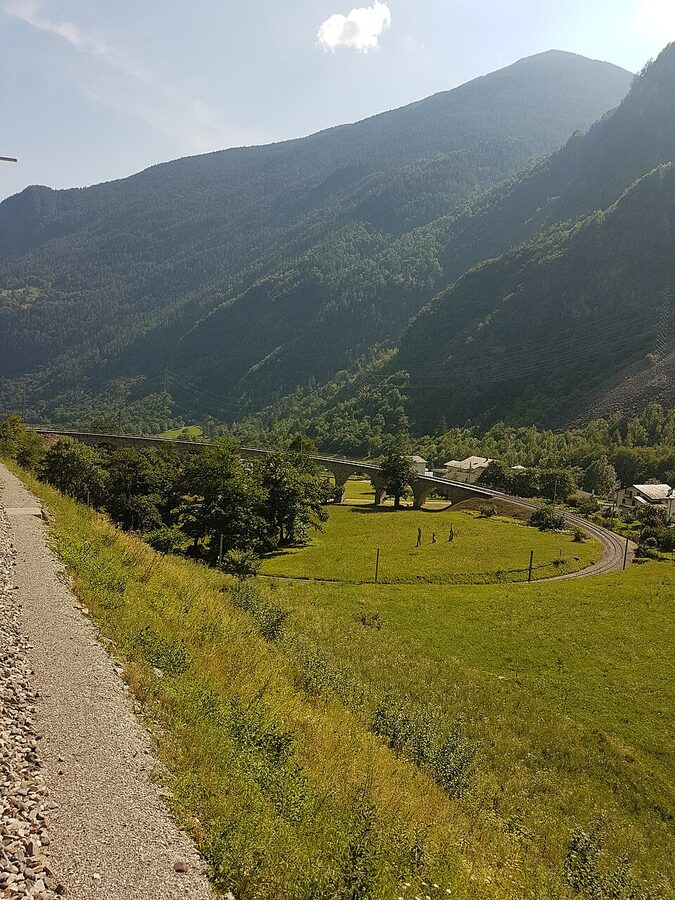
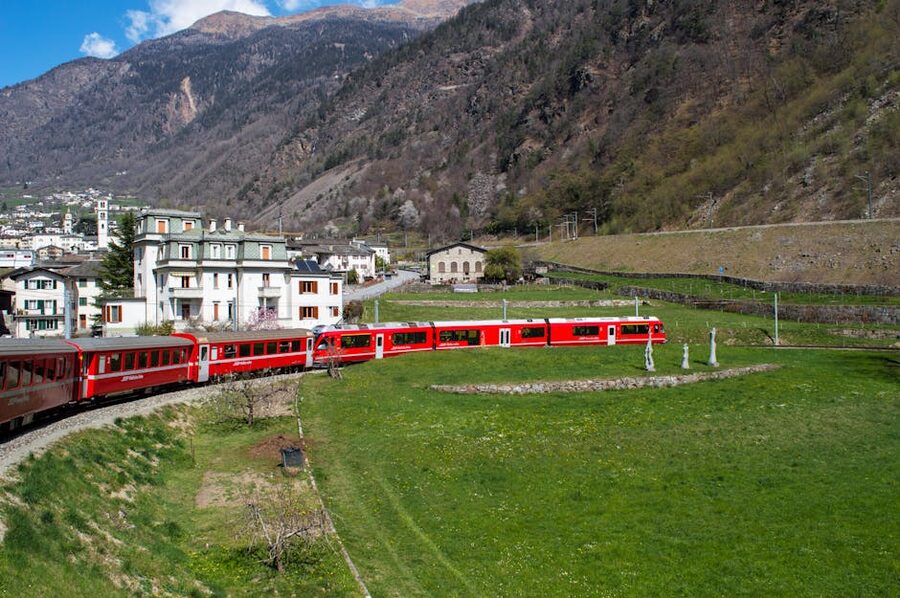
About 8km north of Tirano, the train hits a problem: it needs to drop fast through Brusio without using a tunnel or a rack rail. The solution from 1908 is a 360-degree spiral viaduct in the open. The line curls completely under itself and crosses its own path.
From inside the train, you’ll feel the curve more than see it. The full spiral is best viewed from outside, which is why most photographs of the Bernina are taken here on a hike rather than from a window. If you have time on the way back through Brusio, jump off and walk the path that loops the viaduct. The trail starts behind the small station and takes about 25 minutes round-trip.
Tour groups don’t usually stop at Brusio. If you want the iconic shot of the train wrapping around itself, you need to DIY this leg. The standard GYG tour drives past it on the coach but the angle isn’t great from the road.
St Moritz: What to Do With Your 90 Minutes
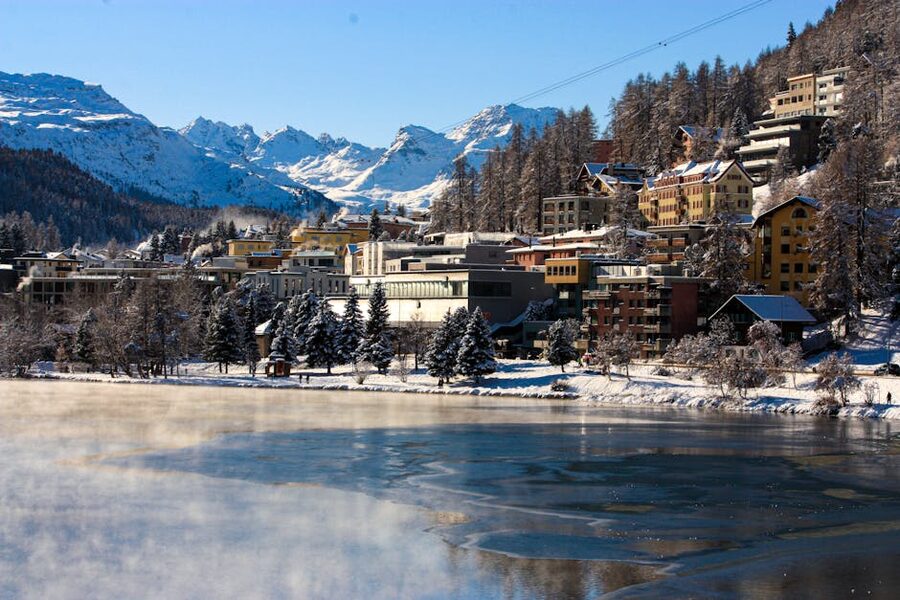
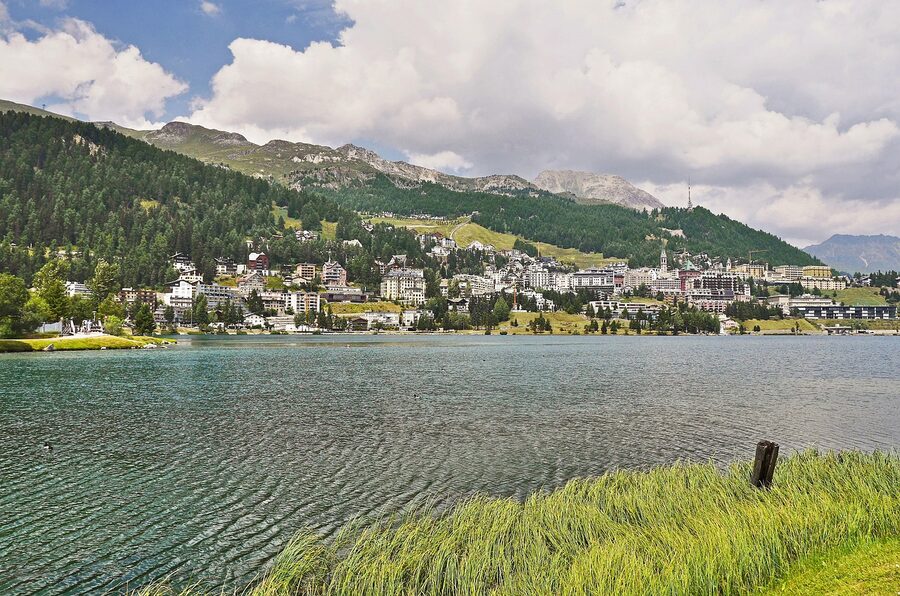
St Moritz is small. The whole town centre is maybe a 15-minute walk end to end. Most coach tours give you 90 minutes to two hours, which is enough for one of three things, not all of them.
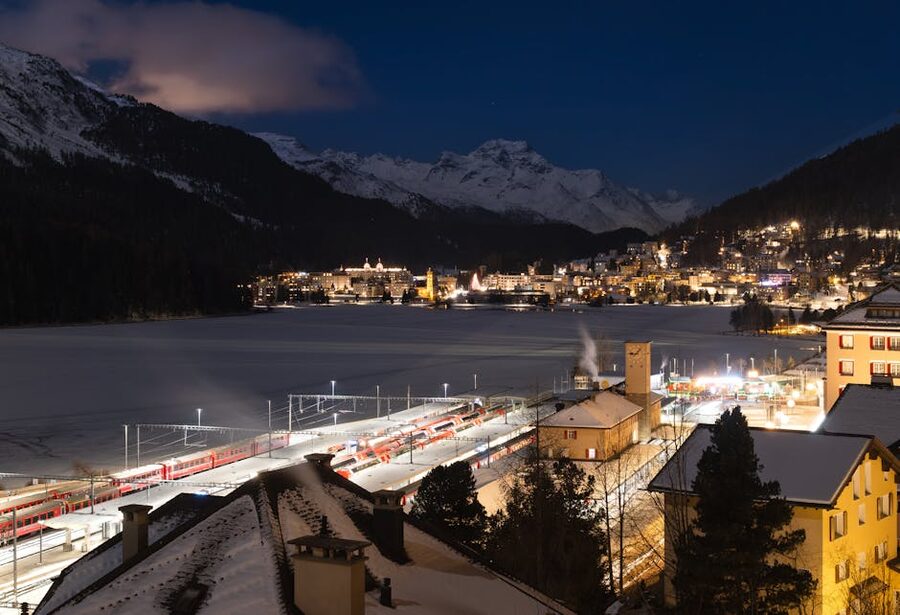
My pick: walk the lake path. From the station head south past the Hotel Reine Victoria toward the lake. The path circles the eastern shore for about 20 minutes one way, with St Moritz Bad on the far end and luxury hotels lining the western edge. In winter you can walk on the lake itself when it’s frozen and signed.
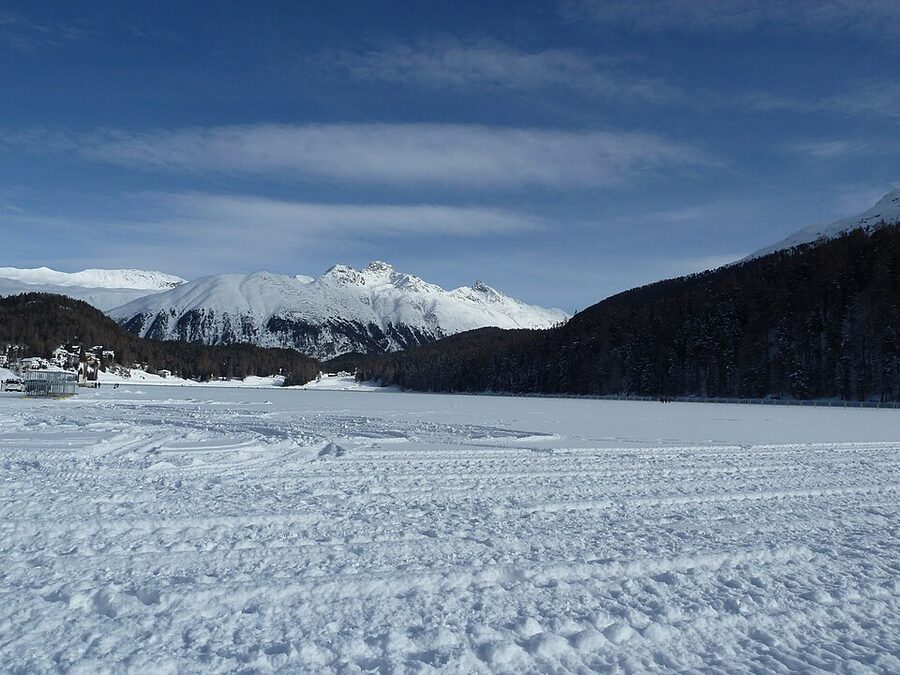
Second option: Hauser’s Café for cake. It’s a five-minute walk from the station. They’ve been doing the same Engadiner nusstorte (a caramelised walnut tart) for decades and the take-away tin is the cleanest souvenir you’ll get here. Expect to pay around CHF 8 a slice in.
Third option: the Segantini Museum. Small, single-painter, focused on Giovanni Segantini’s late alpine work. CHF 15 entry, closed Mondays. Skip this if you’ve only got 90 minutes total because you’ll feel rushed.
One thing to skip: the Leaning Tower of St Moritz. Yes, there’s a leaning church tower in town. It’s mildly interesting for thirty seconds and not worth re-routing for.
Costs in Plain Numbers
Here’s how the numbers break down at current prices, second class. I’m rounding because the Trenord side fluctuates with day-of-week.
DIY return, regional trains both ways: €25 to €30 Trenord return + CHF 70 RhB return = around €95 total. Cheapest option, requires planning.
DIY return with one panoramic Bernina Express leg: Add CHF 28 to 32 reservation = around €120 total. You also need to pre-book the seat.
Organised coach-train tour: $110 to $170 depending on operator and group size. Includes lunch options at extra cost in some cases.
Private tour, hotel pickup, smaller group: $300+ per person at the high end. The private Bernina-and-wines option sits at this tier. Worth it for parties of three or four splitting the cost, otherwise overkill.
Add roughly €15 to €25 for food in St Moritz no matter what tier you book. Switzerland is expensive. A basic sandwich and a coffee will run you CHF 18 in town. Bring your own train picnic from Milan if you want to keep it tight.
When to Go
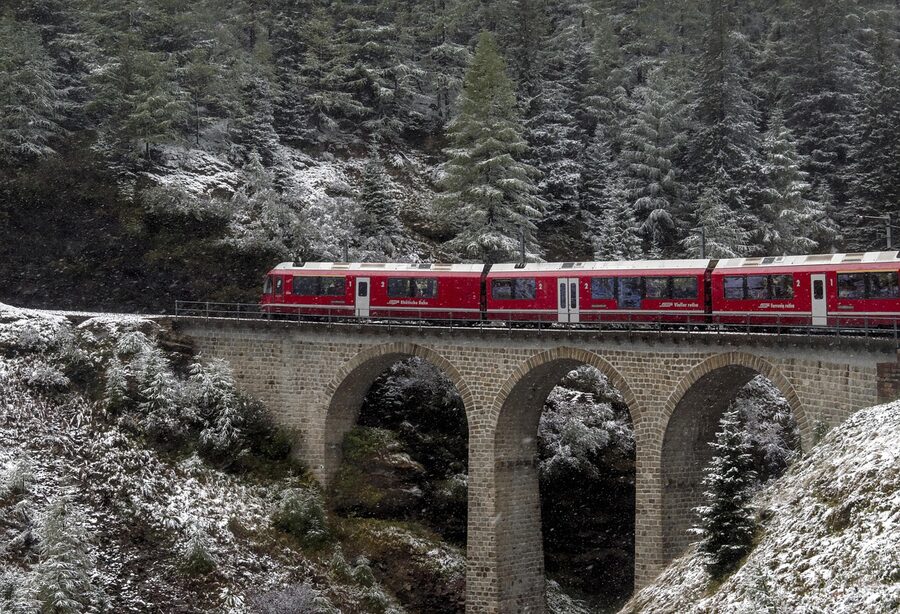
The Bernina runs year-round and the experience changes a lot with the season.
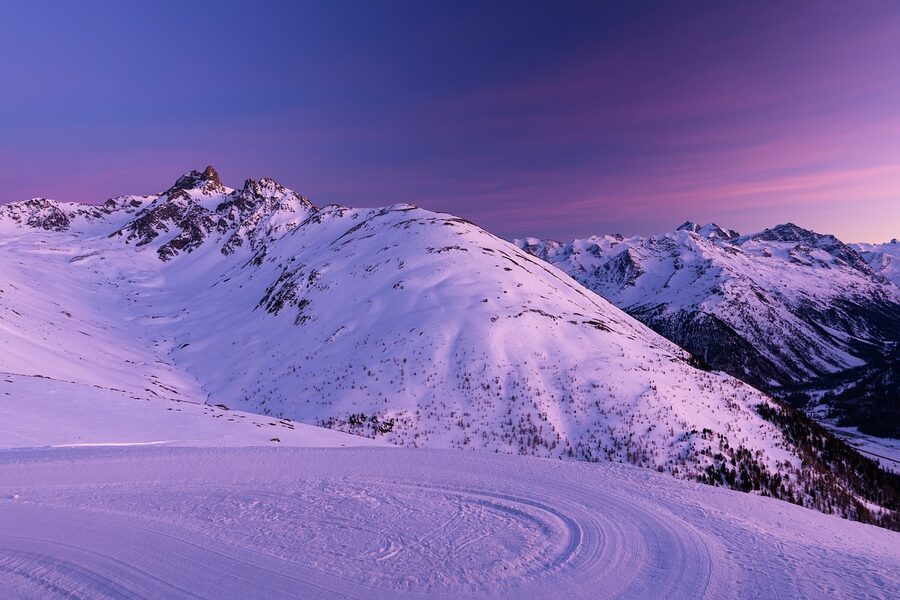
Winter (December to early April): The classic look. Snow on the peaks, frozen Lago Bianco at the summit, ski crowds in St Moritz. Daylight is short, so you’ll start in the dark and possibly end in twilight. Tour operators don’t usually cancel for snow on the line, but visibility at the pass can be hit-or-miss. Bring layers.
Spring (April to early June): Probably the worst time. The snow is melting and dirty, the wildflowers haven’t kicked in yet, and the lakes are still frozen but ugly. Skip this window unless your dates are locked.
Summer (mid-June to August): Peak crowds, peak prices, peak meadow flowers. The valleys are green, the higher peaks still hold snow, and the train runs at maximum frequency. Book at least a week ahead in July and August. Mid-week is noticeably less packed than weekends.
Autumn (mid-September to mid-October): My personal favourite. The larches around Pontresina turn yellow and the whole Engadine looks gold for about ten days. Crowds drop sharply after Italian schools restart. Weather is the gamble; you’ll get either glass-clear days or fog at the summit, no in-between.
The Highest Stretch: Lago Bianco and Ospizio Bernina
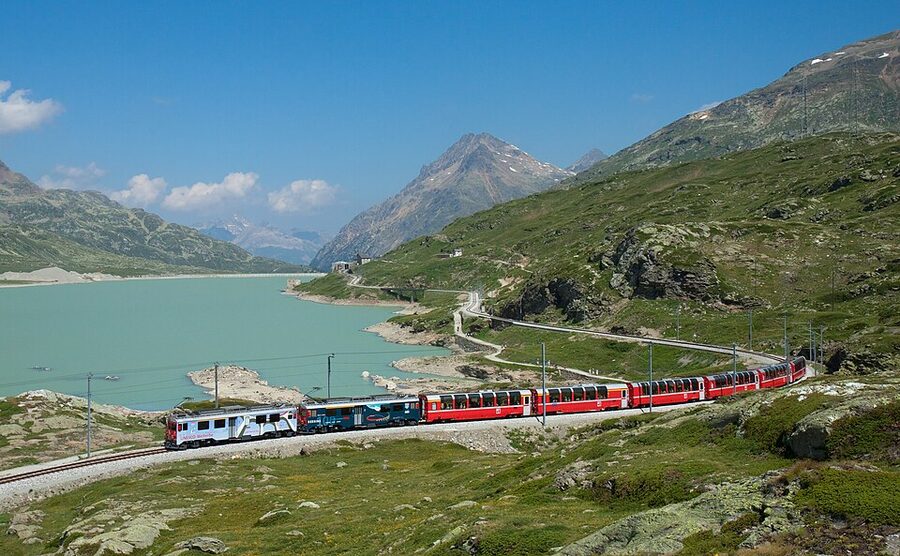
The summit of the line is at Ospizio Bernina, 2,253 metres. The train sits there briefly. Outside the carriage there’s a small hospice (hence the name) and a chapel that’s been there in some form since the 1600s. A bell hangs in the open air. People used to ring it before crossing the pass on foot to ward off avalanches.
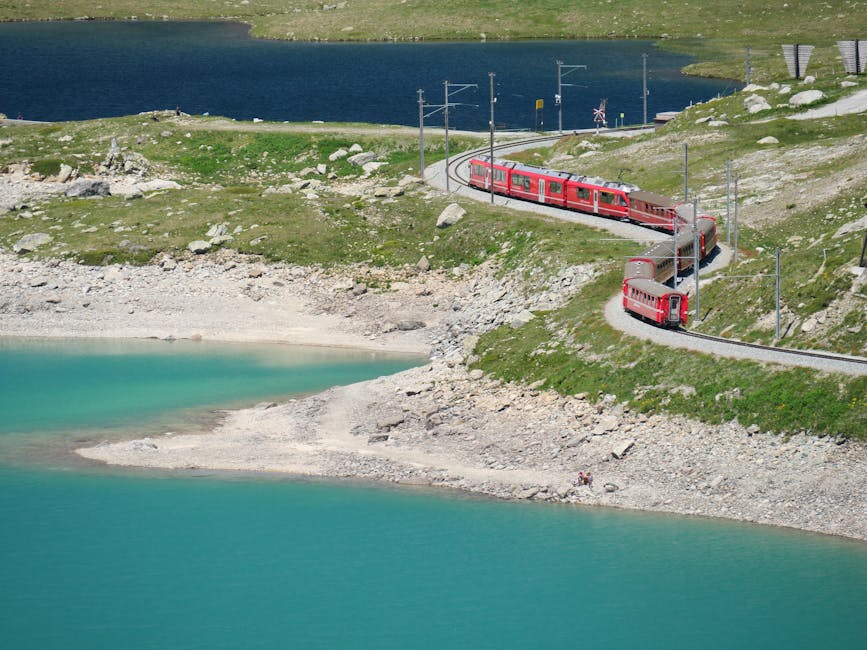
Just south of Ospizio, the line runs along Lago Bianco and Lej Nair, two glacier-fed lakes that sit on either side of the watershed. The colours are unreal: pale, milky blue from the suspended rock flour. You’ll have about three minutes of straight track to photograph them before the line starts switchbacking down toward Alp Grüm.
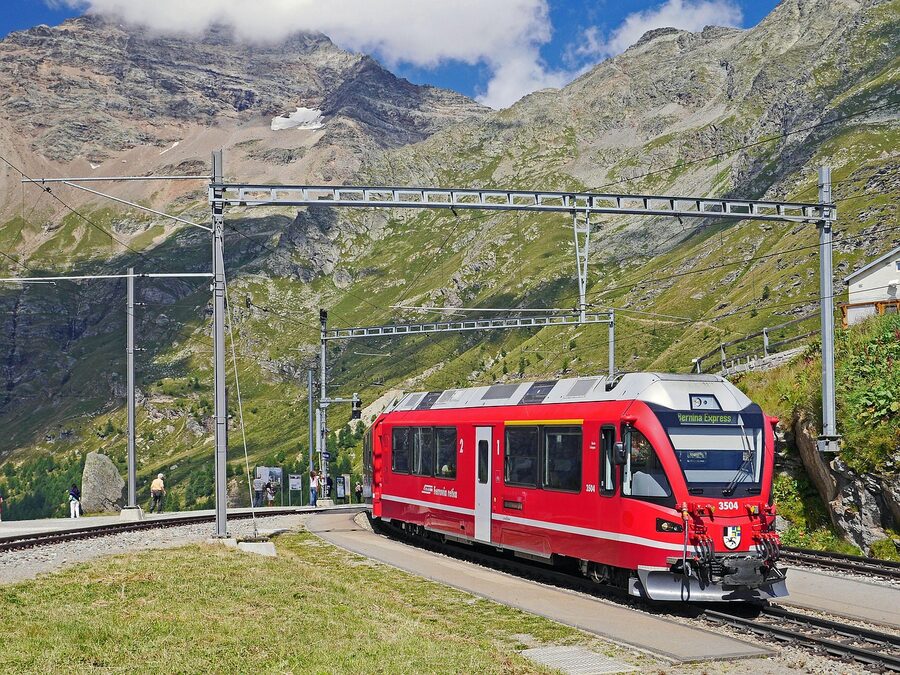
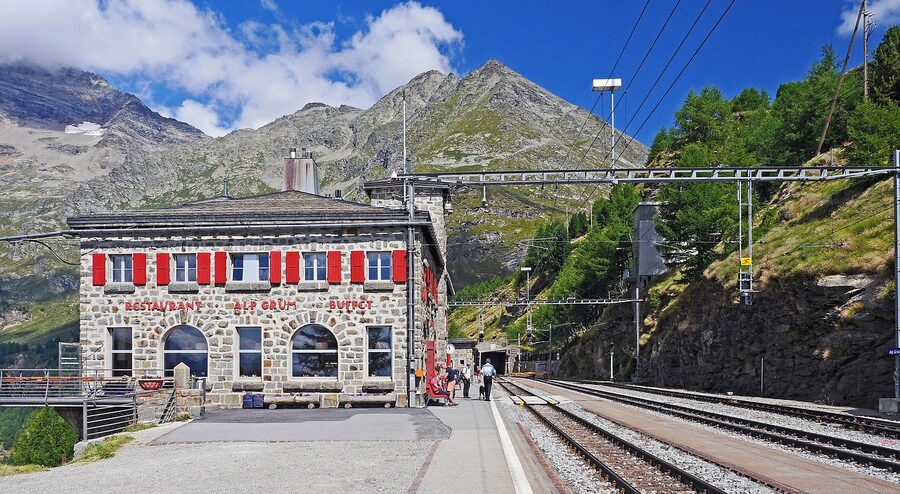
Alp Grüm is one of the prettiest middle stops on the entire line. The station sits on a shelf of rock with the Palü glacier on the opposite side of the valley. If you DIY the trip, you can break the journey here, walk the loop trail to the glacier viewpoint (about 30 minutes round-trip in summer, impassable in winter), and catch the next train. Tour groups stay on board.
The Glacier You’ll See From the Train
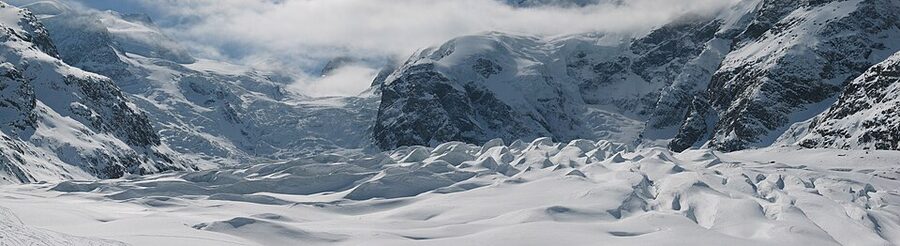
Between Bernina Suot and Pontresina, the train brushes past the lower edge of the Morteratsch glacier. You won’t see the whole glacier from the carriage, just a wedge of ice through the trees. The viewpoint is brief, maybe 90 seconds.
If you have a free day on either end of the Bernina trip, the Morteratsch glacier walk is one of the best short hikes in the Engadine. The trail starts at Morteratsch station (the next stop after Pontresina coming from St Moritz) and follows an old moraine path to the toe of the glacier. About 2 hours round-trip in summer. Markers along the way show where the ice reached in 1880, 1920, 1960, 2000. The retreat speeds up as you walk forward in time, which is the whole point.
Practical Stuff That Trips People Up
Passport. You’re crossing into Switzerland. Switzerland is in Schengen, so EU citizens don’t need to show anything. Non-EU travellers (UK, US, Canadian, Australian, Japanese) need their passport on them. Border officers occasionally board the train at Tirano. They almost never do checks coming back, but bring it anyway.
Currency. Switzerland uses Swiss francs (CHF). Many places in St Moritz take euros at a slightly bad rate. Card payment works everywhere. Don’t change money in advance for a day trip; the rate will eat the convenience.
Phone signal. Patchy on the Italian side around Tirano, fine in St Moritz. EU SIMs roam in Switzerland but it’s not free; check your plan because Swiss roaming charges are notorious.
Toilets. All RhB trains have them. The Trenord regional service from Milan to Tirano sometimes doesn’t (the older sets), so use the bathroom at Milano Centrale before boarding. There’s no buffet car on either leg.
Food. If you’re DIY-ing, buy lunch in Tirano. There’s a tiny deli called El Trigo Pasta Fresca a five-minute walk from the Italian station that does proper sandwiches and arancini. Eat them on the train. Restaurant prices in St Moritz will give you a small heart attack.
Luggage. The carriages have small overhead racks but no proper luggage compartment. If you’re crossing with a big suitcase (en route to elsewhere in Switzerland, for example), you’ll be wrestling it. Day-trippers with a daypack are fine.
Power outlets. Newer RhB carriages have plugs at every seat. Older ones don’t. The Trenord regionals are hit and miss. Charge before you leave.
If You Have More Than One Day
Two days beats one for this trip. You arrive in St Moritz around 13:00, you have until check-out the next morning, and you can ride the panoramic Bernina Express back south in clear afternoon light without rushing. If you build the trip into a longer Milan stay, slot the Bernina between your Duomo and rooftop visit on day one and your Last Supper booking on day three. That way you’re not back-to-back on cathedrals.
Pontresina is a better base than St Moritz if you’re staying. It’s three minutes down the line, half the price, and feels like a real Engadine village instead of a luxury resort. Two-star hotels start around CHF 130 a night in shoulder season.
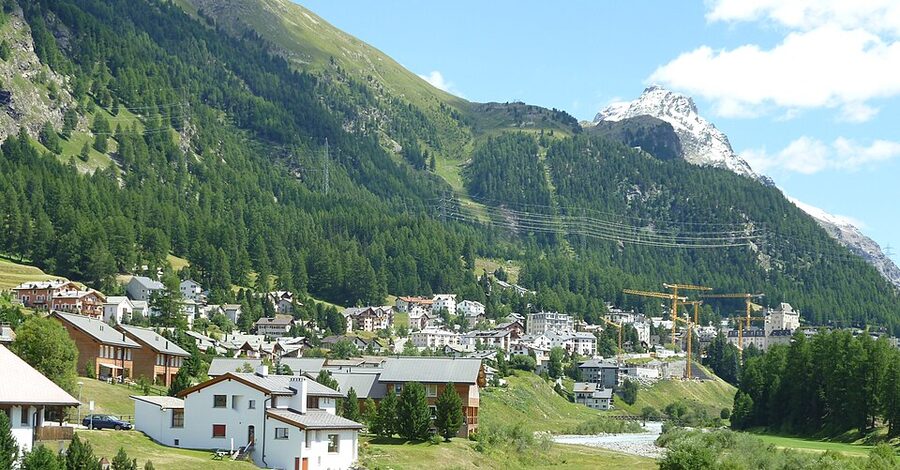
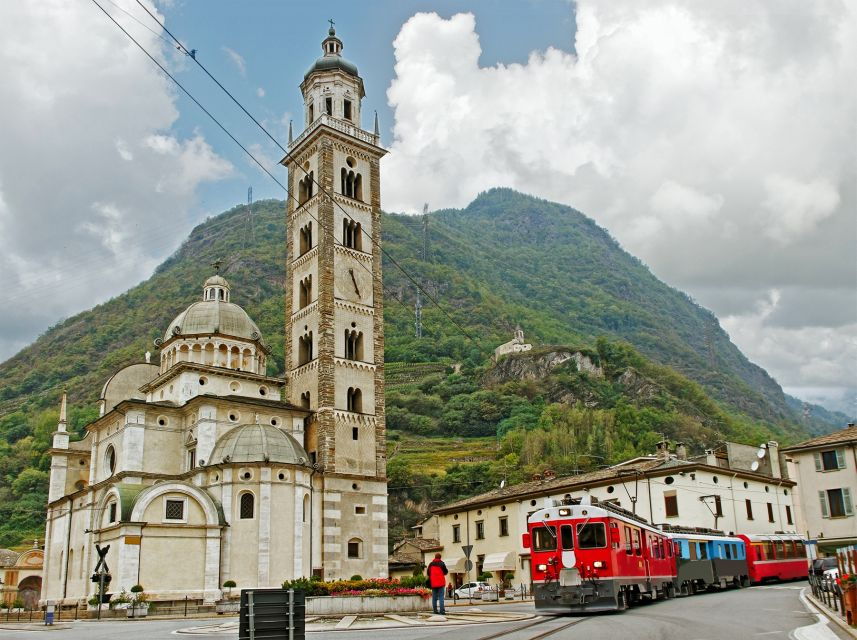
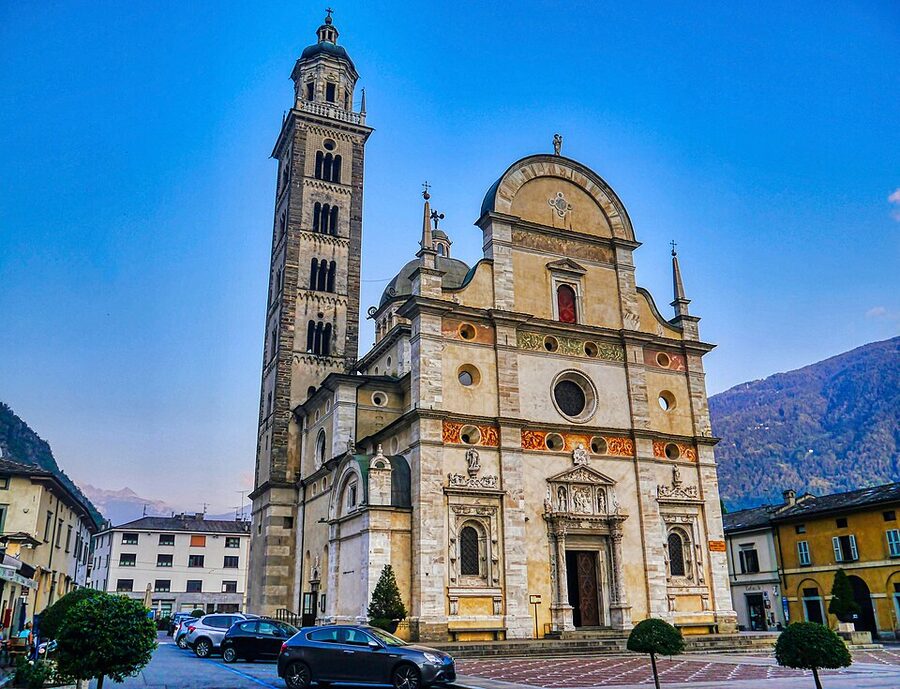
If you can swing two days but St Moritz looks like a stretch, consider stopping in Tirano instead. The town itself is pleasant for a half day (the Madonna di Tirano basilica is genuinely impressive) and Italian-side hotel prices are roughly half of Swiss-side prices. You can do the round-trip Bernina ride from Tirano without rushing, then push back to Milan in the morning. Same train, more breathing room.
Booking the Bernina From Lake Como Instead
If you’re already on Lake Como rather than Milan, the math changes. The northern lake towns (Colico, Varenna) actually sit closer to Tirano by train than Milan does. From Varenna, you can be in Tirano in about 90 minutes via Colico with one easy change. Most “from Milan” tours offer pickups in Como town as well.
This makes the day trip noticeably more humane: 9 to 10 hours instead of 12 to 13. If you’re spending a night on Lake Como anyway and want to ride the Bernina, do it from there.
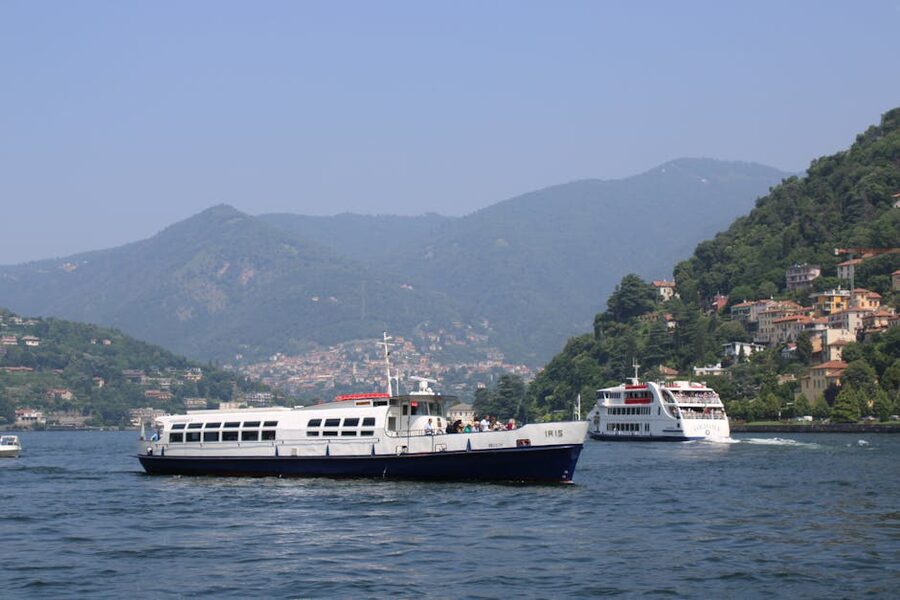
For travellers who want to combine all three big sights of the area in one shot, the Lake Como cruise plus St Moritz plus Bernina combo remains the most efficient single-day package. It’s brutal in length but it does deliver. Our companion Milan-to-Lake-Como guide explains how to split that combo into two saner days if you’d rather.
Common Questions People Ask
Can I do the Bernina Express round-trip in one day from Milan? Technically yes, in summer. You’d need the 5:20 train from Milan and the late return. It’s 14+ hours and you don’t have time to leave the platforms in St Moritz. Don’t do this. Either take a tour and ride one direction by coach, or stay overnight.
Is the Swiss Travel Pass worth it for one day? No. A one-day Swiss Travel Pass is around CHF 92. Your Bernina-and-back ticket from Tirano to St Moritz is around CHF 70. The pass only beats the point-to-point if you’re using it three to four days running. For a day trip from Milan, buy individual tickets.
Eurail and Interrail? Both passes cover the regional train but you still pay the seat reservation if you want the panoramic Bernina Express, which can run up to CHF 38 in summer. The Trenord leg from Milan is free with both. Useful if you’re already using a pass for a wider trip.
Can kids handle this? Yes, as long as they like trains. The Bernina line is genuinely engaging for anyone old enough to look out a window, and the regional carriages have flexible seating. Both major operators allow children at reduced rates. The 12-hour day length will wreck a toddler though. Aim for school-age and up.
Wheelchairs and reduced mobility? The panoramic Bernina Express is fully accessible if you reserve in advance. Most regional carriages have one accessible coach. Tirano station has an elevator between the Italian and Swiss platforms. Coach-tour operators vary; ask before booking.
Beyond the Bernina: Where to Go Next
If the Bernina was your first taste of the Italian-Swiss border region, the obvious next step is a proper Lake Como day, ideally split between Bellagio and Varenna by ferry. The same Milan-as-base setup works fine, just with the lake as the main event instead of a side dish. Back in the city itself, the two unmissable things are the rooftop of the Duomo and Da Vinci’s Last Supper. Both need pre-booked tickets, and Last Supper specifically sells out weeks in advance, so plan early. If you’ve got a longer Italy run going, the Uffizi and the Colosseum underground deliver the cultural-monument equivalent of the Bernina’s wow factor.