
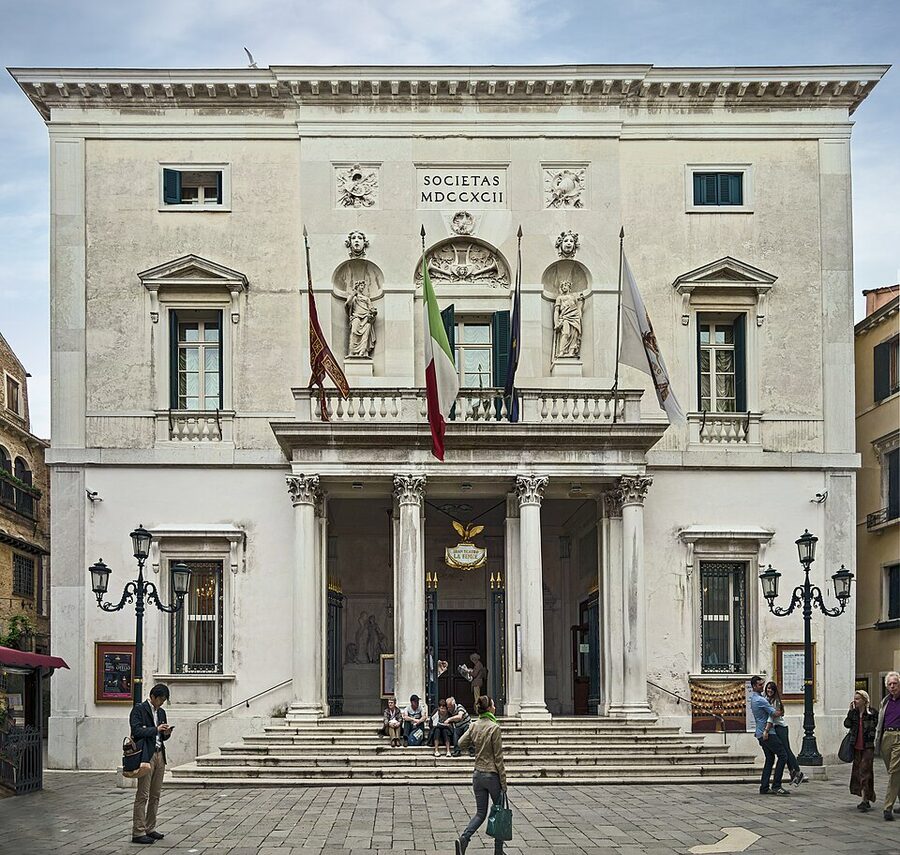
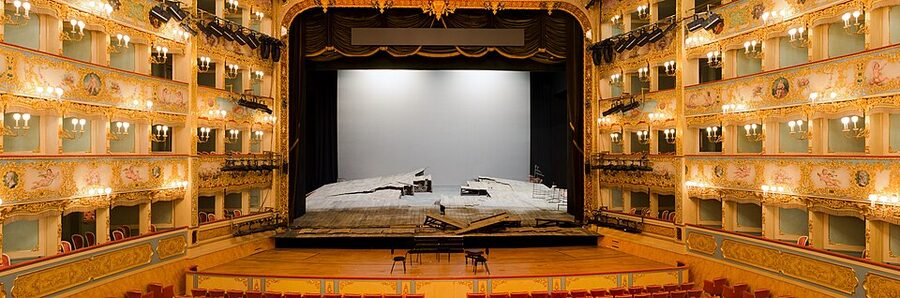
Here’s a fact that surprises most visitors: La Fenice has burned to the ground three times since 1774, and the Italian word fenice literally means phoenix. The theatre we walk into today is the third rebuild, finished in 2003 after a 1996 arson left it as four blackened walls and a pile of ash.
And it sounds, looks, and feels exactly like the one that opened in 1837. They rebuilt it stucco by stucco from old photographs and a Visconti film. That’s the building you’ll be standing in.
In a Hurry?
- Self-guided audio tour ($14): the cheapest way in, runs all day. Book the audio entry
- Guided 1-hour tour ($28): small group, you get the backstage stories the audio skips. Book the guided tour
- Live opera in a palazzo ($107): not La Fenice itself but the closest thing in Venice if the season’s sold out. Book the palace opera
- In a Hurry?
- Two ways in: audio guide vs guided tour
- What you actually see inside
- The auditorium (the one you came for)
- The stage and orchestra pit
- The Sale Apollinee (the foyer rooms)
- Three tours worth booking, ranked by what you actually get
- 1. La Fenice Entry Ticket with Audio Guide:
- 2. The Majestic Teatro La Fenice: Guided Tour:
- 3. Traveling Opera at Palazzo Barbarigo-Minotto: 7
- Seeing an actual performance: cheaper than you think
- What’s worth seeing if you don’t know opera
- The fires (and why this matters when you’re standing inside)
- How to get to La Fenice
- What it costs to add this to your day
- Practical tips that actually save you time
- If you’re going to a performance: what to wear and what to expect
- One more piece of trivia worth knowing
- While you’re in Venice
Two ways in: audio guide vs guided tour
This is the first decision and it matters. La Fenice sells two visitor tickets when there’s no rehearsal blocking the auditorium.
The audio guide ticket ($14, around 12 euros at the box office) is what 80% of day visitors buy. You walk in, grab a multilingual audio handset, and wander the auditorium and the Sale Apollinee at your own pace for about 45 minutes. Skip-the-line entry is included if you book online, which on a busy summer day saves you a real queue at the door. Our review of the audio entry goes into how the audio is structured and where it’s worth lingering.
The guided tour ($28, runs at fixed times) is a small-group walk with a live guide for about an hour. You hear the backstage version of events: which fires were accidents and which weren’t, where Maria Callas had her dressing room, why the royal box has a different acoustic from the stalls. If you care at all about the building’s history, take the guide. If you just want to see it and tick it off, the audio is fine.
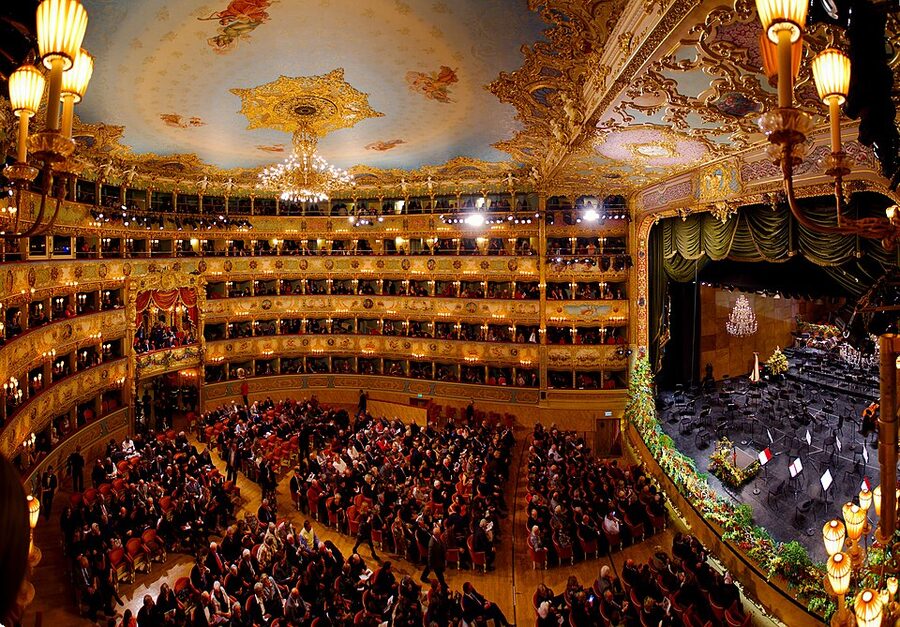
The third option is what most visitors don’t realise exists: a performance ticket. You can sit in this room for an actual opera or concert, and ticket prices start lower than the guided tour. More on that further down. If the season’s sold out by the time you book, the next-best opera experience in Venice is the traveling opera at Palazzo Barbarigo-Minotto, a 16th-century palace on the Grand Canal.
What you actually see inside
The visit is essentially three rooms. Don’t expect a long museum tour with a hundred labelled objects. La Fenice is small. That’s part of the appeal.
The auditorium (the one you came for)
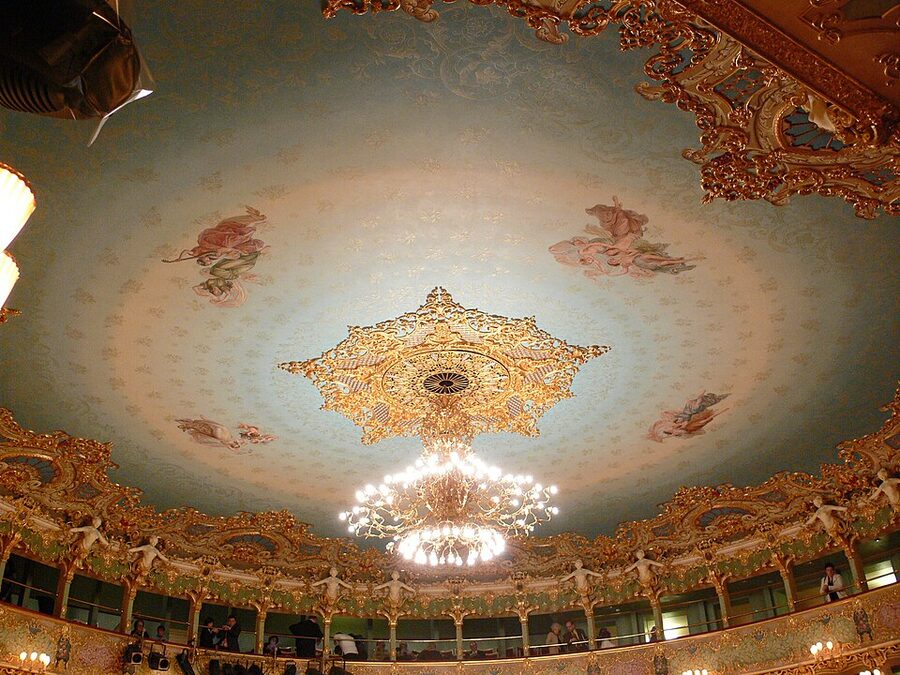
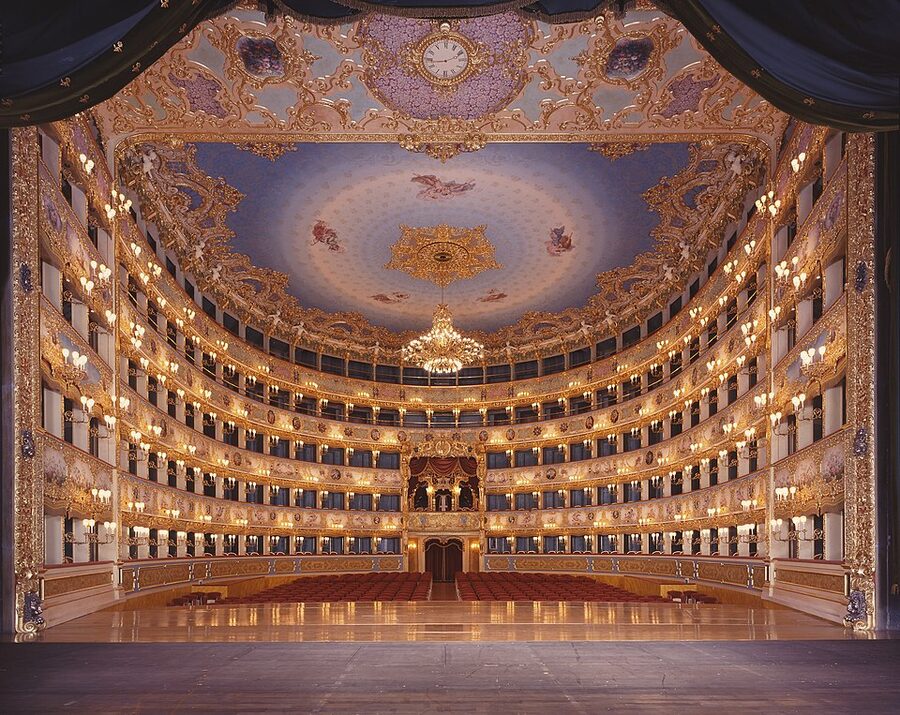
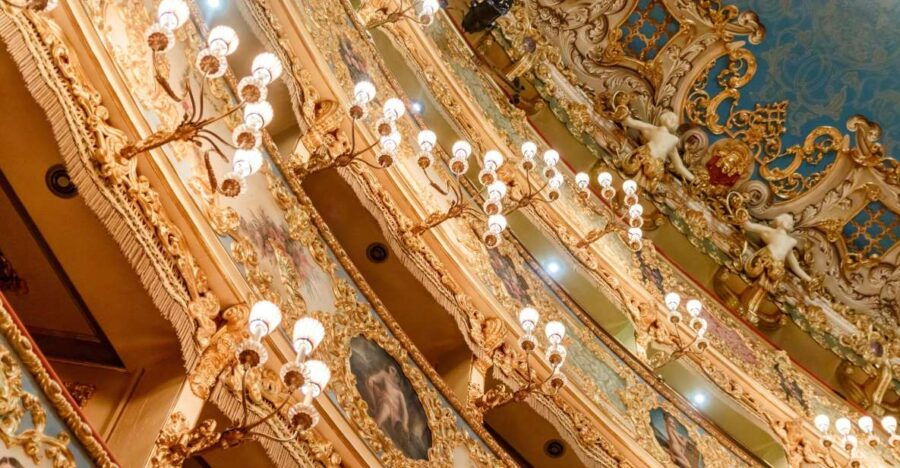
It’s a horseshoe with five tiers of boxes, gilt everywhere, and that pale blue that only Venetian theatres seem to use. The ceiling is painted with figures playing music, a chandelier hangs in the centre, and the curtain has the phoenix on it. Capacity is about 1,000, which sounds tiny for a famous opera house and is.
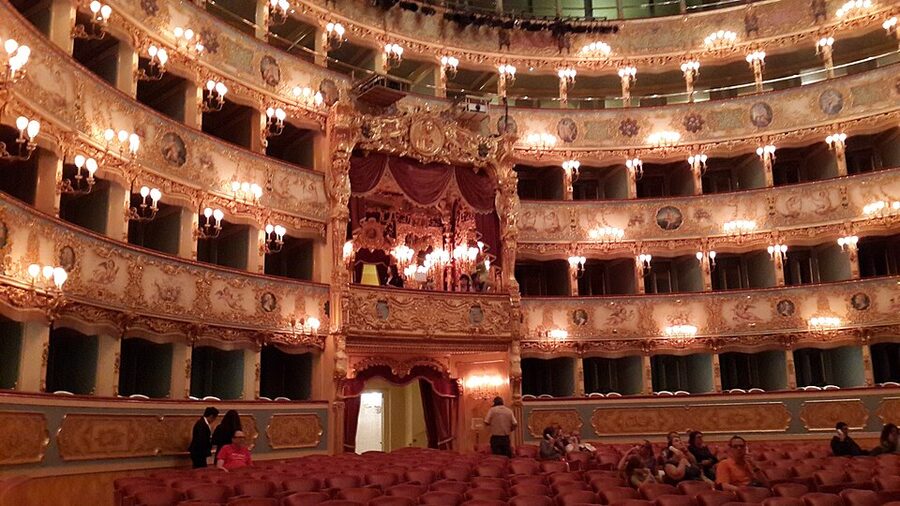
Most visitors stand in the stalls or sit briefly to take it in, then climb up to one of the box tiers for the elevated view. The audio tells you which premiere happened where: Verdi’s La Traviata on this stage in 1853, Rigoletto in 1851, Stravinsky’s The Rake’s Progress in 1951. You’re standing on the spot. Our walkthrough of the audio entry notes the exact bench positions where the Traviata and Rigoletto stories are best told.
The stage and orchestra pit
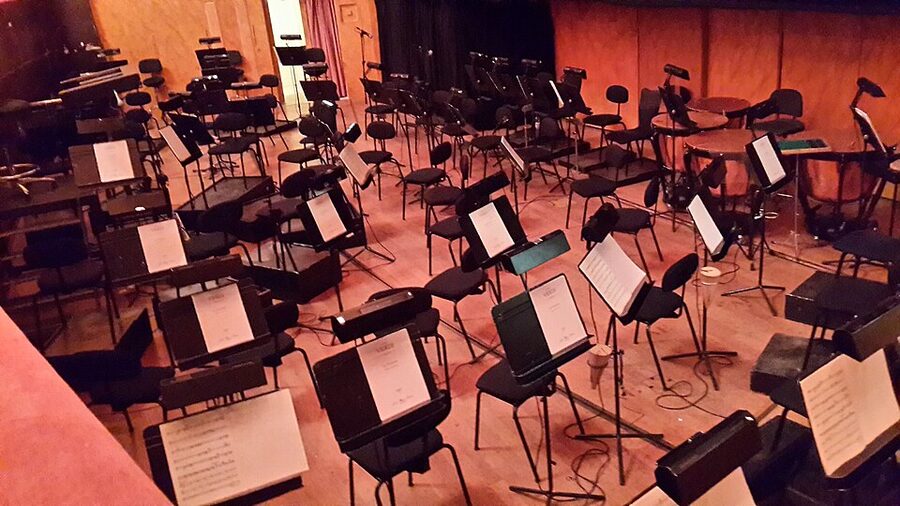
If the curtain is up during your visit (it usually is for tour groups, sometimes not for self-guided), you can look down into the orchestra pit and across the stage itself. The pit is deeper than it looks from the stalls. Conductors call it one of the most acoustically alive in Europe because the wood-shell auditorium throws sound back at the stage like a bowl.
The Sale Apollinee (the foyer rooms)
Five reception rooms upstairs, sometimes called the Apollonian Rooms. This is where ticket-holders mingled at intermission in the 19th century. The decoration is lighter than the auditorium, lots of pale blue and gold, and the rooms are still used for chamber concerts and private events today.
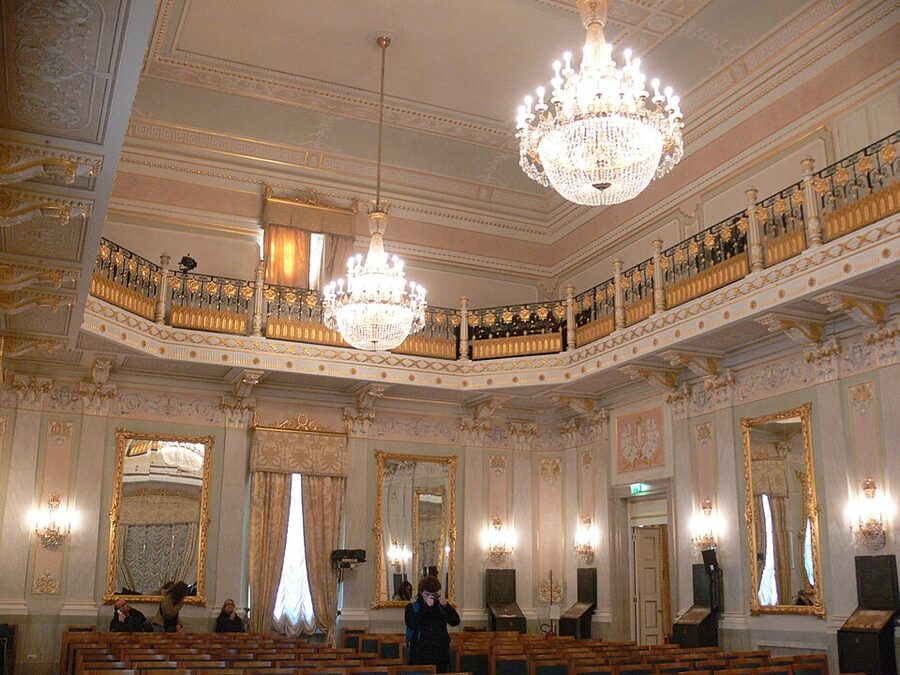
The audio guide spends maybe four minutes on these rooms. Not enough. Read the panels yourself, sit on a bench for a moment, and look at the painted figures in the corners. The rebuild teams used 19th-century photographs and original sketches to repaint every panel. The work is closer to forgery than restoration, in the best way.
Three tours worth booking, ranked by what you actually get
I’ve put these in the order I’d buy them based on review volume, price, and what the tour actually delivers. The audio entry is by far the most-bought ticket because it’s cheap and the building speaks for itself, but the guided tour gives you more if you have an hour to spend.
1. La Fenice Entry Ticket with Audio Guide: $14

This is the one to book if you only have an hour in the area. The audio is well-paced for a self-guided visit and the multilingual options cover the obvious languages plus a few you don’t always see. Our review of the audio ticket covers exactly which rooms the audio lingers on and where it skims. It is one of the most-booked Venice tickets on the market.
2. The Majestic Teatro La Fenice: Guided Tour: $28
If you have time and care about the building, take this one. Our full review notes that the small group size matters here because the rooms are tight and a 30-person tour would be miserable. Reviewers consistently call out the guide quality, and at twice the price of the audio ticket it’s still cheap by Venice standards.
3. Traveling Opera at Palazzo Barbarigo-Minotto: $107

This isn’t a substitute for La Fenice. It’s a different experience, and a lot of people prefer it. The audience moves between rooms of the palazzo as the singers do, so a Verdi aria might be performed three metres from your chair. Our review walks through how the format works and which performances are the best to see. It is consistently one of the highest-rated opera experiences in Venice.
Seeing an actual performance: cheaper than you think
This is the part the guidebooks usually skip. You don’t have to be wearing diamonds and renting a box for the season to see opera at La Fenice. The cheapest seats during the opera season run from about 30 euros, which is less than dinner for two on the Riva.
Booking is done direct on the official theatre website (teatrolafenice.it) for performance tickets. Tour-platform sellers don’t usually carry the cheap-seat inventory because the margins are too thin. Buy direct, pick a date about three months out, and you’ll find availability for almost any performance except premieres and the New Year’s Day concert.
The categories you’ll see when booking:
- Stalls (Platea): 100 to 250 euros depending on row. Best sound, best view, the obvious choice if budget isn’t an issue.
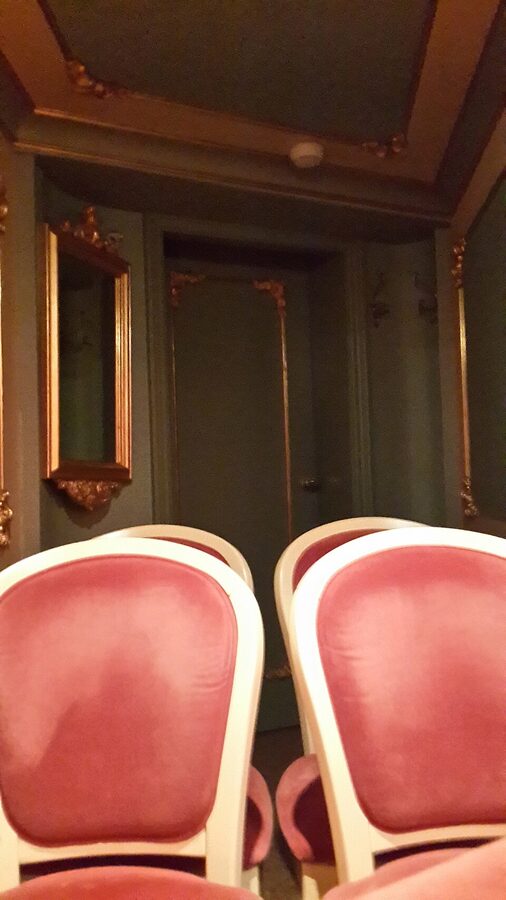
- Box (Palco): 80 to 200 euros for a chair inside one of the tiered boxes. The boxes seat four, and you’ll be in there with strangers unless you book the whole box. The closer to centre, the better the view.
- Gallery (Galleria): 30 to 80 euros, the top tier. Restricted view of the stage but full view of the auditorium and excellent sound. This is where I’d sit.
If the season ticketing looks daunting, look for the Sale Apollinee chamber concerts instead. These are 30-40 euro recitals in the upstairs rooms, often featuring young singers from the Conservatory or visiting chamber musicians. Less famous, much cheaper, and you actually get to use one of those gilt rooms instead of just looking at it. The booking interface is identical to the main season tickets and the guided daytime tour covers how the Sale rooms are used during the active concert calendar.
What’s worth seeing if you don’t know opera
If you’ve never been to an opera and want to start with something approachable, look for these on the schedule:
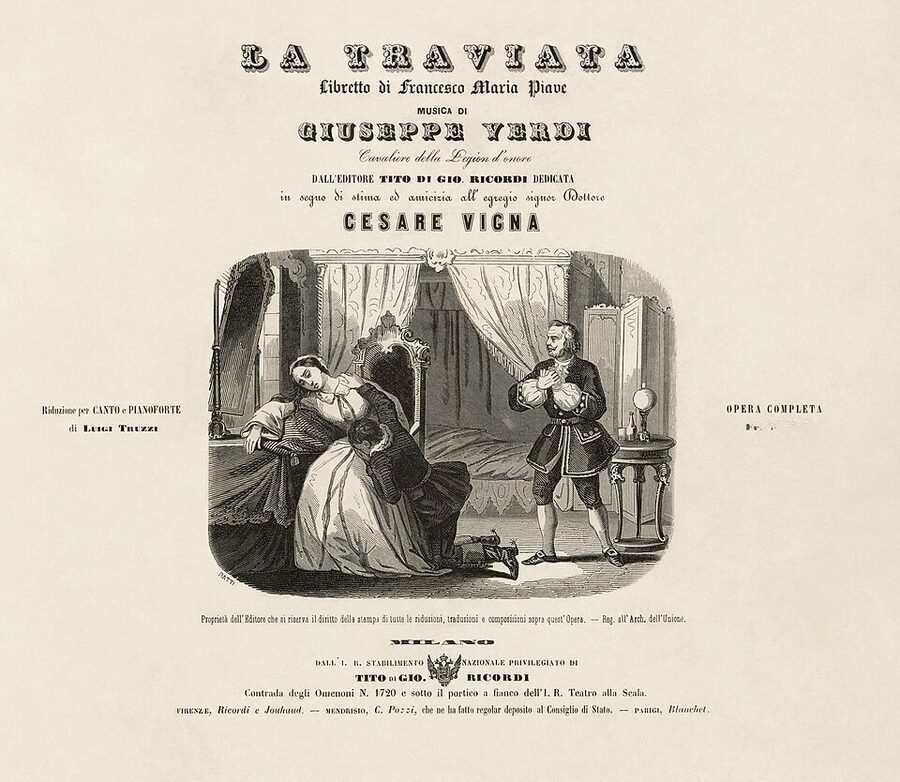
- La Traviata: premiered here in 1853, three hours, the tunes you’ve already heard a hundred times in films. Easy entry point.
- The Magic Flute (Mozart): light, comic, two and a half hours. Not Italian repertoire but La Fenice does it well.
- Rigoletto: also premiered at La Fenice, 1851. Darker than Traviata but the famous arias are unmistakable.
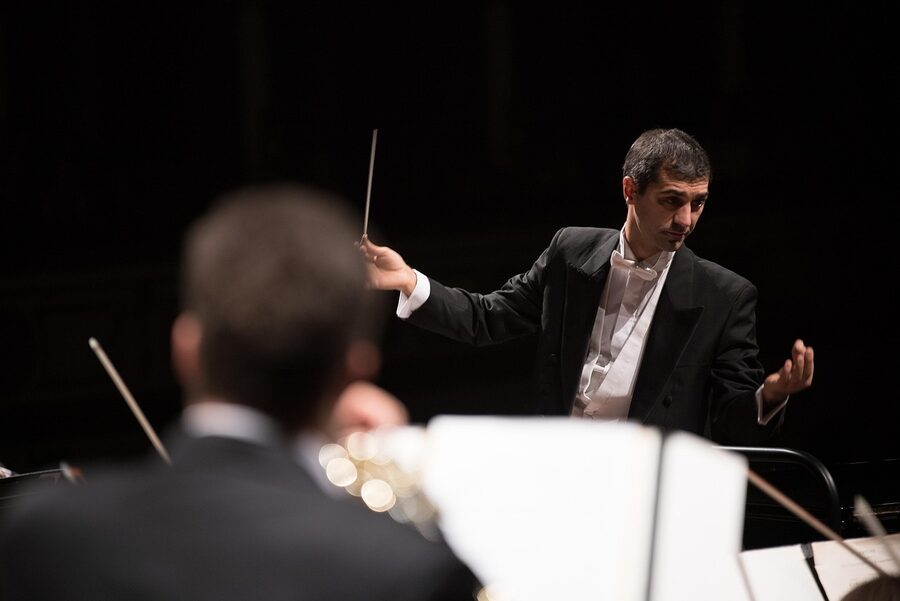
- A symphony concert if you want shorter (90 minutes, no costumes, full orchestra in the same gold room).
Skip Wagner unless you’re already a fan. Five hours of German in those gilt boxes is not the introduction you want.
The fires (and why this matters when you’re standing inside)
Three fires. December 1836, January 1996, and a smaller blaze in 1774 before the building was even called La Fenice. The 1996 one was arson. Two electricians who’d been billing for work they hadn’t done set the place alight to cover their tracks during a renovation. The fire took six hours to put out, the wooden auditorium burned to nothing, and the news cameras showed the world a Venice landmark reduced to a brick shell.
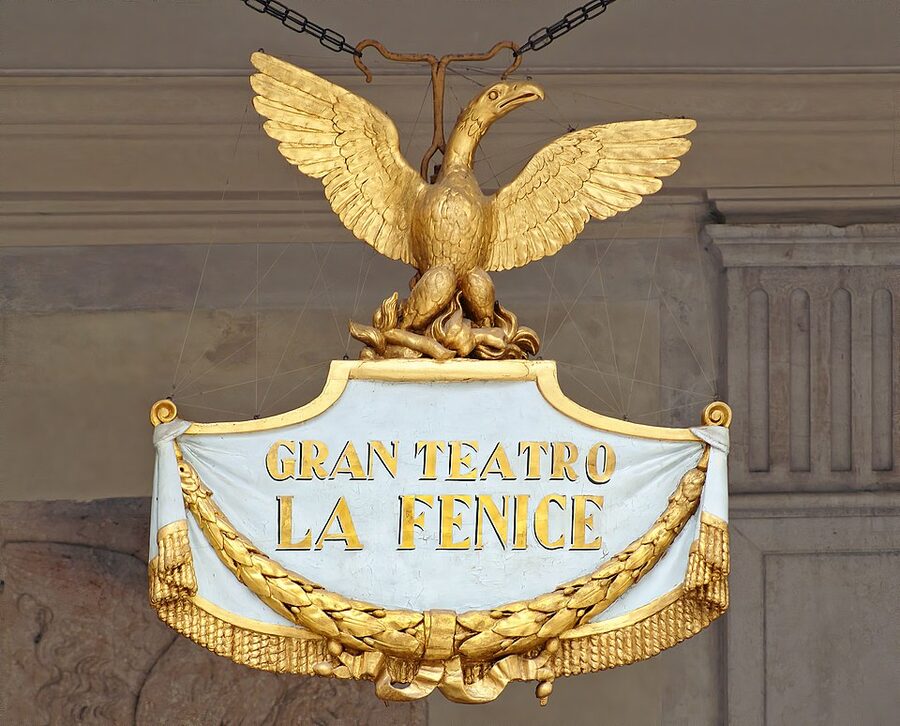
The rebuild took seven years and 90 million euros. They used 19th-century photographs, surviving sketches, and footage from a 1954 Visconti film called Senso shot inside the theatre to copy every detail. When La Fenice reopened in November 2003 with Riccardo Muti conducting, the consensus was that they’d done the impossible: the new building sounded the same as the old one. That’s the auditorium you walk into today.
Why this matters when you’re inside: nothing in the room is genuinely old. Everything you see was made between 1996 and 2003. The gilt is new. The plaster is new. The chairs are new. But it’s not a fake. It’s the same room, rebuilt by people who treated the old photographs as scripture. You’re standing in something closer to a perfect copy than a museum piece, and that itself is interesting.
How to get to La Fenice
The theatre sits on Campo San Fantin, a small square in the San Marco sestiere about five minutes’ walk from St Mark’s Square. There is no obvious approach. Every route to it involves narrow streets and at least one bridge.
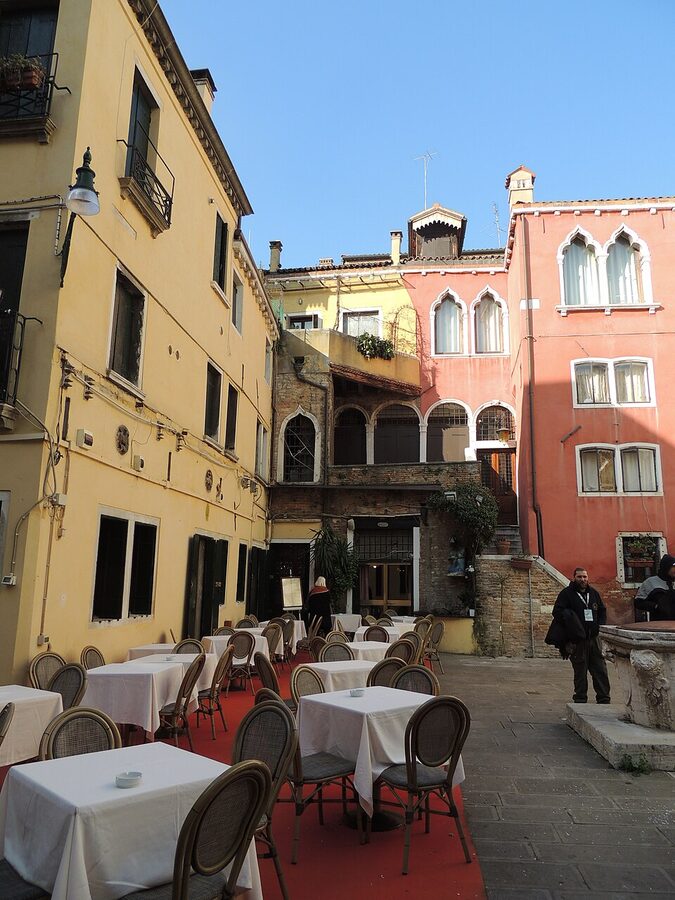
From St Mark’s Square: walk west through Calle Larga San Marco, cross the small bridge over Rio dei Barcaroli, and you’ll come out into Campo San Fantin in about six minutes. The signs are inconsistent so download an offline map.
From Rialto Bridge: head west and a bit south. Allow 12-15 minutes and at least one wrong turn.
From Santa Lucia train station: vaporetto line 1 or 2 to San Marco-Vallaresso, then a five-minute walk. Or walk the whole way (about 30 minutes) if you don’t mind the calles.
If you’re booking a guided tour, the meeting point is usually inside the theatre lobby itself rather than out in the campo, so don’t be late and don’t expect a guide with a flag in the square. Show up at the entrance ten minutes before your time.
What it costs to add this to your day
The audio entry is one of the cheapest cultural sites in Venice, full stop. At 12 euros it’s less than half what you’ll pay for the Doge’s Palace or for an entry-level Murano glass tour. The guided tour at 25 euros is still under most museum prices.
If you’re stacking the day with other San Marco sights, La Fenice fits cleanly between a morning at the Doge’s Palace and an afternoon coffee on Campo San Fantin. It’s about five minutes’ walk from the palace and the basilica, so the whole San Marco art-and-architecture loop can be done in a single morning if you start early. Booking a fast-track basilica ticket for the same day saves at least 40 minutes in the queue.
Practical tips that actually save you time
- Book online, not at the box office. The skip-the-line is real. On a hot August afternoon the door queue can run 30 minutes.
- The audio takes about 45 minutes. Plan for an hour with photo stops and the Sale Apollinee. Don’t try to squeeze it into 30 minutes between other tickets.
- No flash photography in the auditorium. They will tell you off, especially if a rehearsal is happening upstairs. Phone shots are fine without flash.
- Bring a light layer. The auditorium is climate-controlled and noticeably cooler than the streets in summer.
- Closed for visits during stage rehearsals. Check the official site before you book if you’re picking a specific morning. Performance days often have limited or no daytime visits.
- The cafe in Campo San Fantin charges 8 euros for an espresso seated. Stand at the bar instead and pay 1.50.

If you’re going to a performance: what to wear and what to expect
La Fenice is more relaxed than La Scala or Vienna. You will not be turned away in jeans, but you will look out of place. Smart casual is the safe call. Italians dress up for the opera, not absurdly, but jacket-and-no-tie levels of effort.
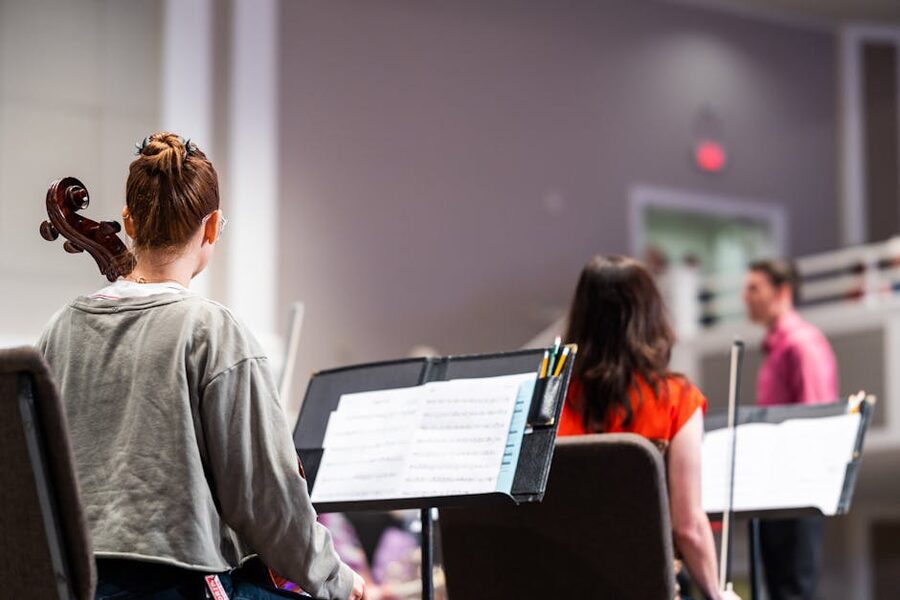
Doors open about 45 minutes before curtain. There’s a cloakroom (free), bars in the Sale Apollinee for intermission drinks (20 euros for two glasses of prosecco, par for the course), and a slow but functional bag check.
Intermissions are long. A three-hour Verdi will run nearly four with two breaks of 25-30 minutes each. The bar fills up immediately so go straight there or wait until the second half of the break.
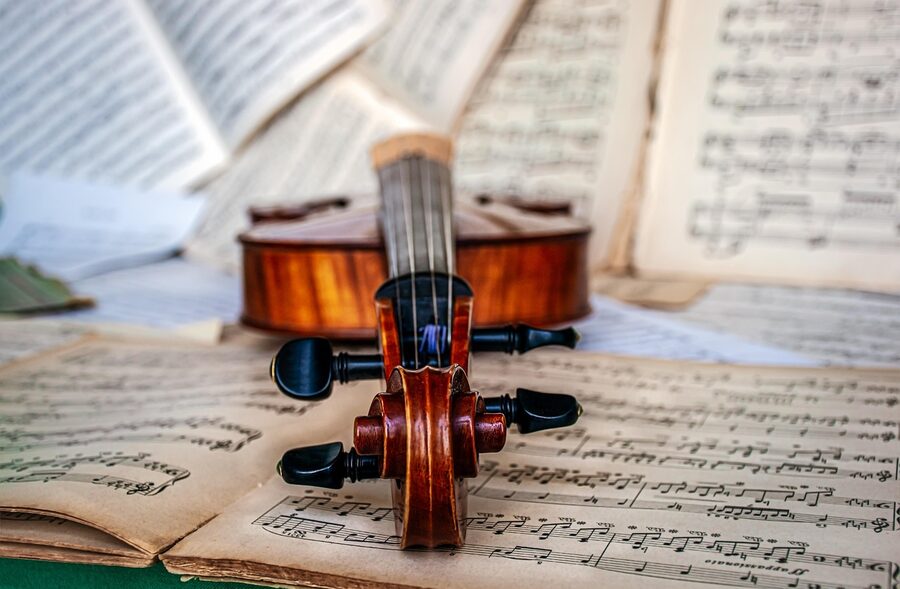
Surtitles are projected in Italian and English on screens above the stage. If you’re a first-timer, read the synopsis on Wikipedia before you go. Operas are easier to follow if you already know what’s about to happen.
One more piece of trivia worth knowing
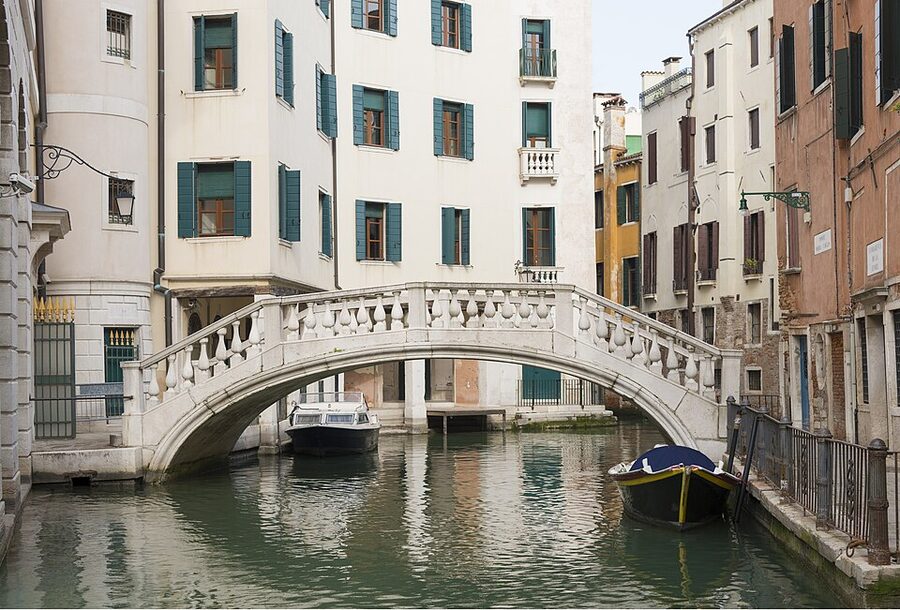
The little bridge behind the theatre is called Ponte Maria Callas. It was renamed in 2008 on the centenary of her birth. Callas sang at La Fenice eleven times between 1947 and 1954 and considered it one of her favourite houses, partly because the small auditorium amplified the bel canto singing she was famous for.
While you’re in Venice
La Fenice is a 90-minute add-on, not a half-day, so it pairs best with one or two bigger sights. The most natural rhythm is the Doge’s Palace mid-morning, lunch in San Marco, La Fenice in the afternoon, and a gondola ride at sunset. If you have a second day, the boat trip out to Murano, Burano, and Torcello is the easiest way to escape the centre.
One last thing. The audio guide ends with a recording of the audience cheering on opening night in 2003 after the rebuild. They cheered for a full ten minutes. The recording cuts it short, but that’s the moment to stand still and listen.