
The bar was six stools wide. The bartender was also the owner, the cook, and apparently the DJ — a jazz record crackled from a speaker wedged between bottles of Yamazaki. I ordered a highball and he poured it with the precision of a watchmaker: ice, whisky, soda water, exactly two stirs, set down on a paper coaster. The whole bar had the square footage of a walk-in closet. There were two other customers and somehow it felt full. Welcome to Golden Gai.
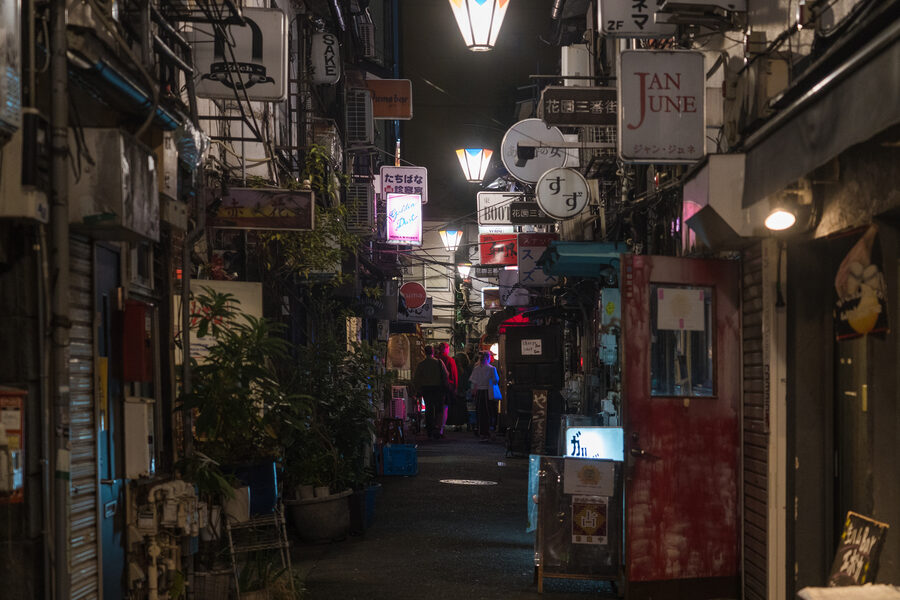
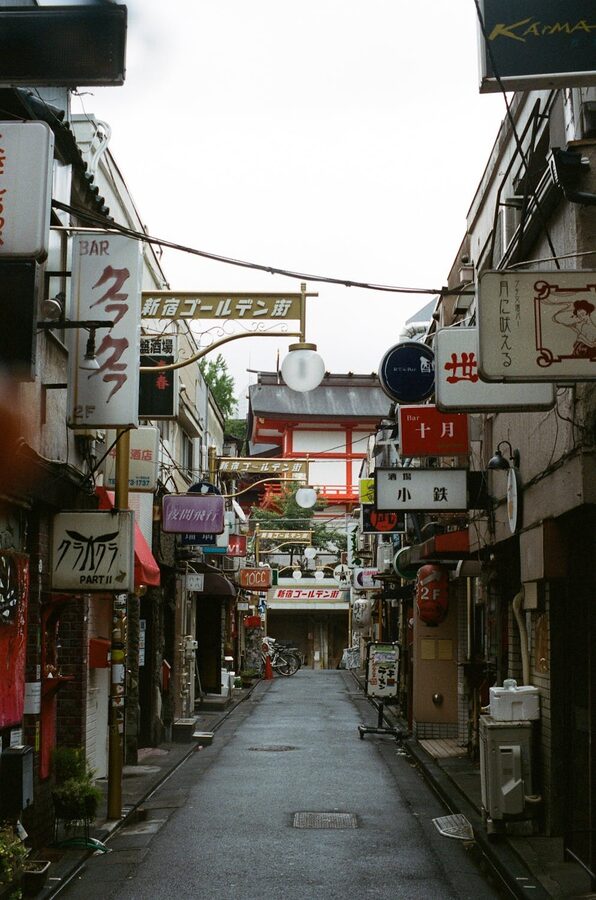
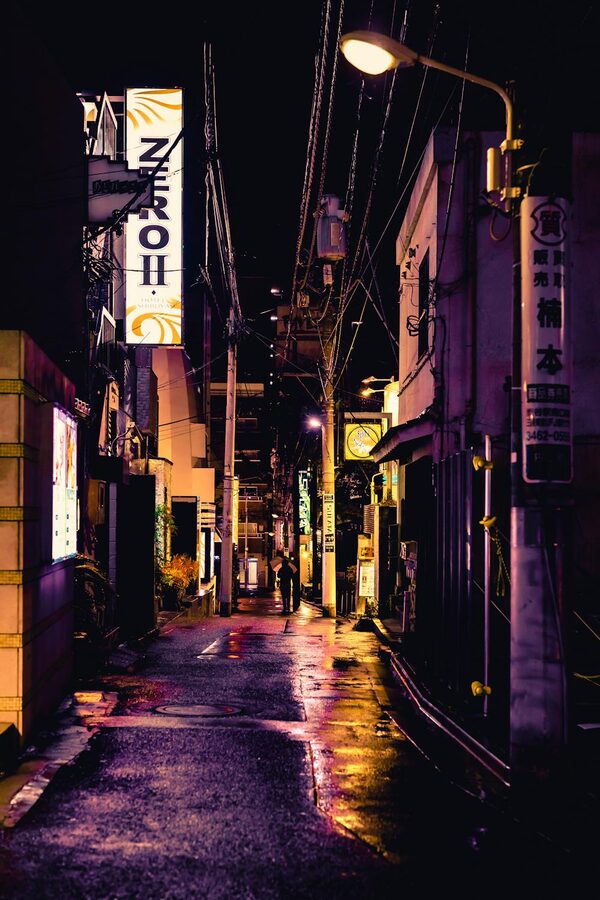
Shinjuku at night is not one thing. It’s a neon canyon of department stores and electronics shops on one side. A maze of 200 bars the size of phone booths on another. A yakitori alley that smells like charcoal smoke and soy sauce in between. And behind all of it, Kabukicho — Tokyo’s largest entertainment district, where the neon gets louder and the streets get stranger the deeper you go.
Walking through Shinjuku at night on your own is overwhelming. You’ll gravitate toward the bright, obvious places — the chain izakayas with English menus and the tourist bars with cover charges. The night walking tours take you to the places you’d walk right past: the unmarked doors, the second-floor bars, the alleys that look like dead ends but open into entire worlds.
Short on time? Here are my top picks:
Best guided walk: Shinjuku Local Bar & Izakaya Walk — $34. The most popular option with nearly 1,800 bookings. Covers Golden Gai, Omoide Yokocho, and hidden izakayas with a local guide.
Best budget option: Shinjuku Night Walking Tour & Secret Backstreets — $25. Perfect 5.0 rating. Walking tour focusing on history and culture rather than drinking.
Best for photography: Shinjuku District Night Walking Tour — $29. Hits all the most photogenic spots with a guide who knows the best angles.
- The Three Shinjukus — What the Tours Cover
- Omoide Yokocho (Memory Lane)
- Golden Gai
- Kabukicho
- Which Tour to Book
- 1. Shinjuku Local Bar & Izakaya Guided Walking Tour —
- 2. Shinjuku Night Walking Tour & Secret Backstreets —
- 3. Shinjuku District Night Walking Tour —
- Golden Gai — A History of Survival
- Understanding Shinjuku’s Geography
- Omoide Yokocho — From Black Market to Bucket List
- What to Eat in Shinjuku at Night
- Practical Tips
- Kabukicho — Tokyo’s Most Misunderstood District
- Comparing Shinjuku to Shibuya at Night
- Shinjuku After the Tour
The Three Shinjukus — What the Tours Cover
Omoide Yokocho (Memory Lane)
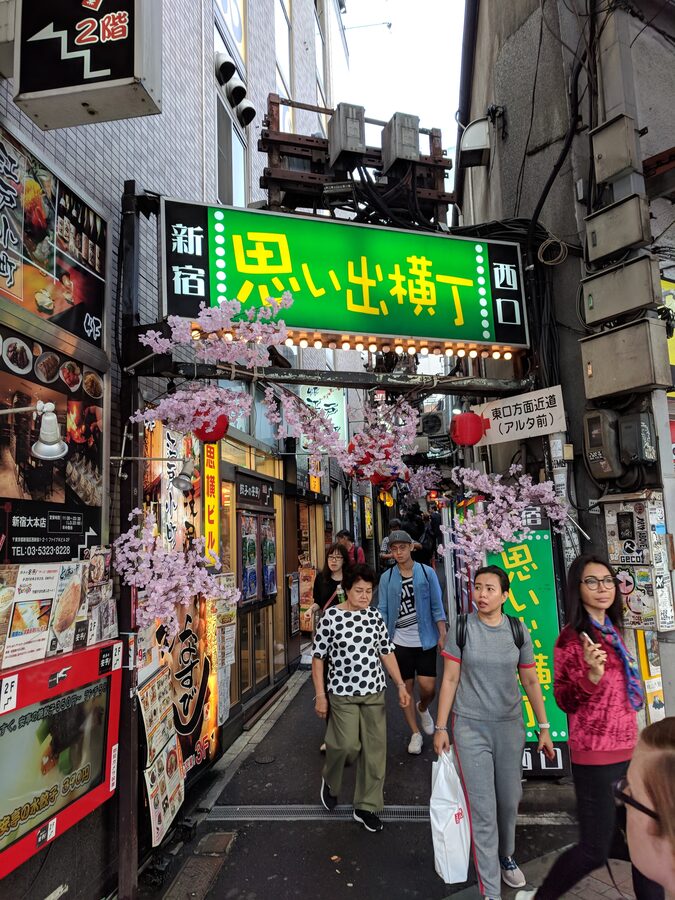
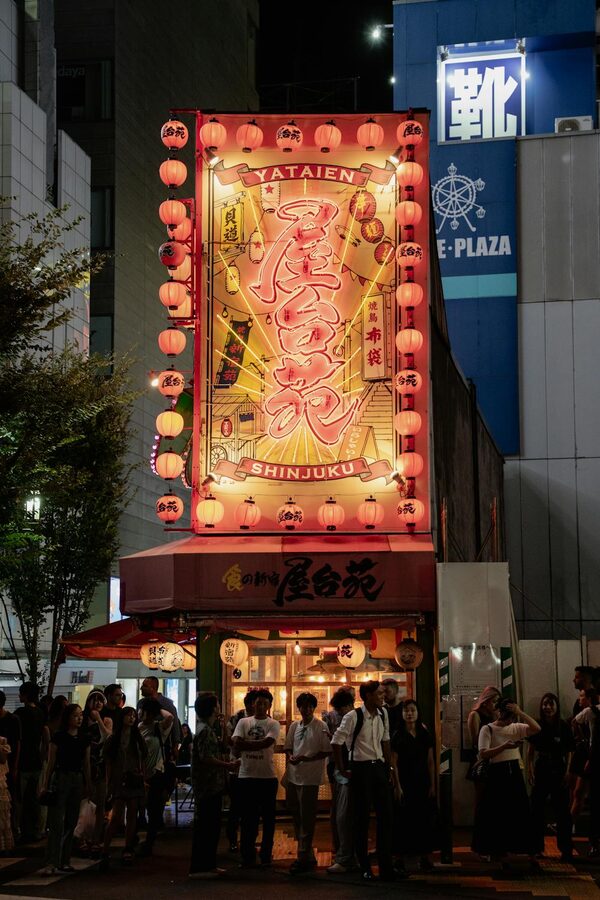
This tiny alley running parallel to Shinjuku Station is about 80 metres long and maybe three metres wide. Packed into it are roughly 80 yakitori stalls and small restaurants, most with counter seating for 6-8 people and a charcoal grill running right in front of you. The smoke from the grills drifts across the alley and mixes with the steam from ramen pots. It smells incredible.
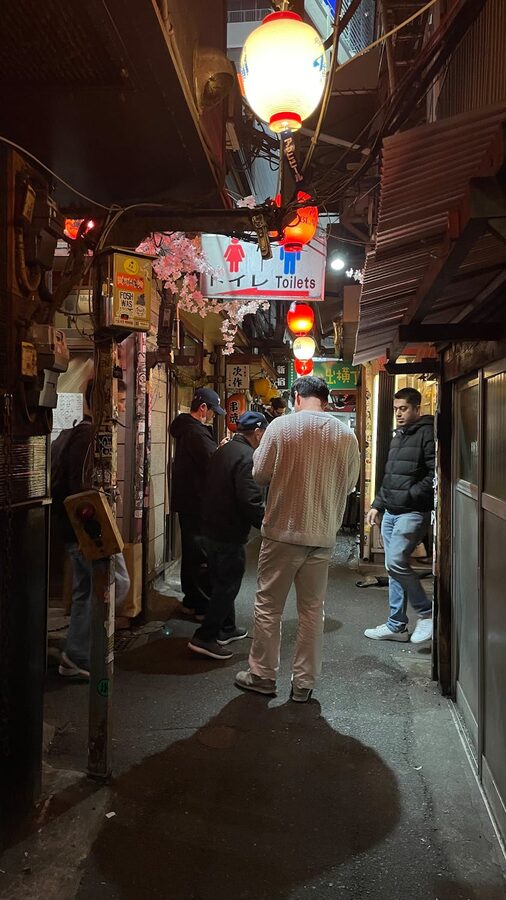
Omoide Yokocho has been here since the post-war black market era. When the war ended in 1945, the area around Shinjuku Station became an informal marketplace where returning soldiers and displaced civilians sold whatever they could get their hands on. The food stalls evolved from that — cheap grilled skewers and rice, sold from makeshift counters to hungry workers. Eighty years later, the stalls are permanent but the feeling hasn’t changed much.
Golden Gai
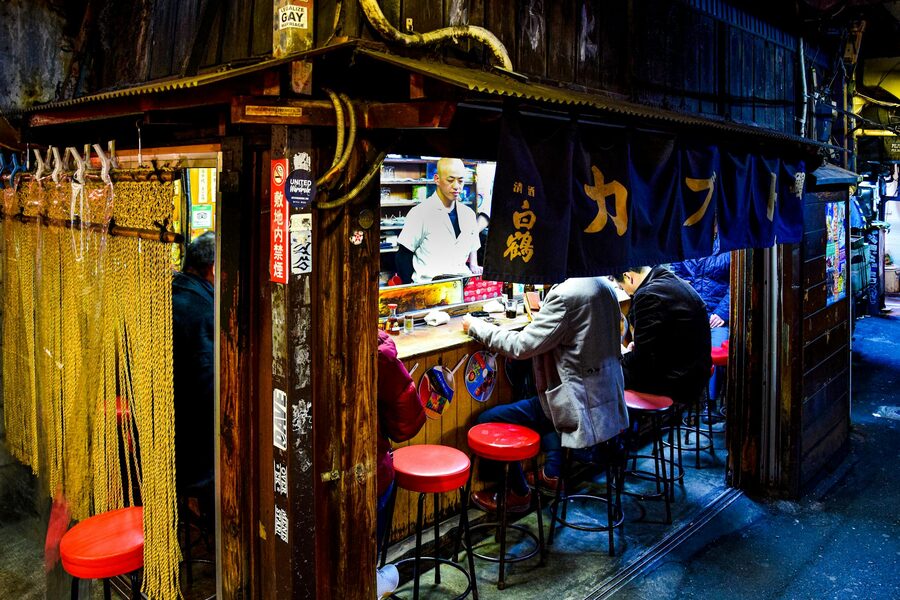
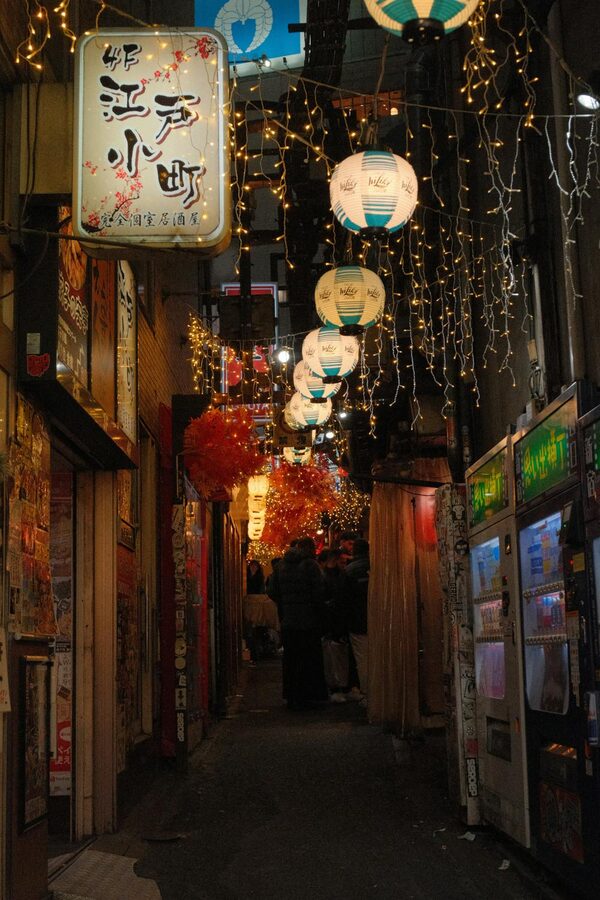
Six narrow alleys, roughly 200 bars, most smaller than your bathroom. Golden Gai is the most famous bar district in Japan and one of the most unusual drinking experiences in the world.
Each bar has a theme, a personality, and usually a regular crowd. There are jazz bars, punk bars, film-nerd bars, anime bars, bars where the owner is a retired sumo wrestler, bars where you have to know the password. Some charge a cover (called “table charge” or “otoshi” — typically 300-500 yen) and some don’t. Some welcome travelers eagerly and some have signs that say “regulars only” in Japanese.
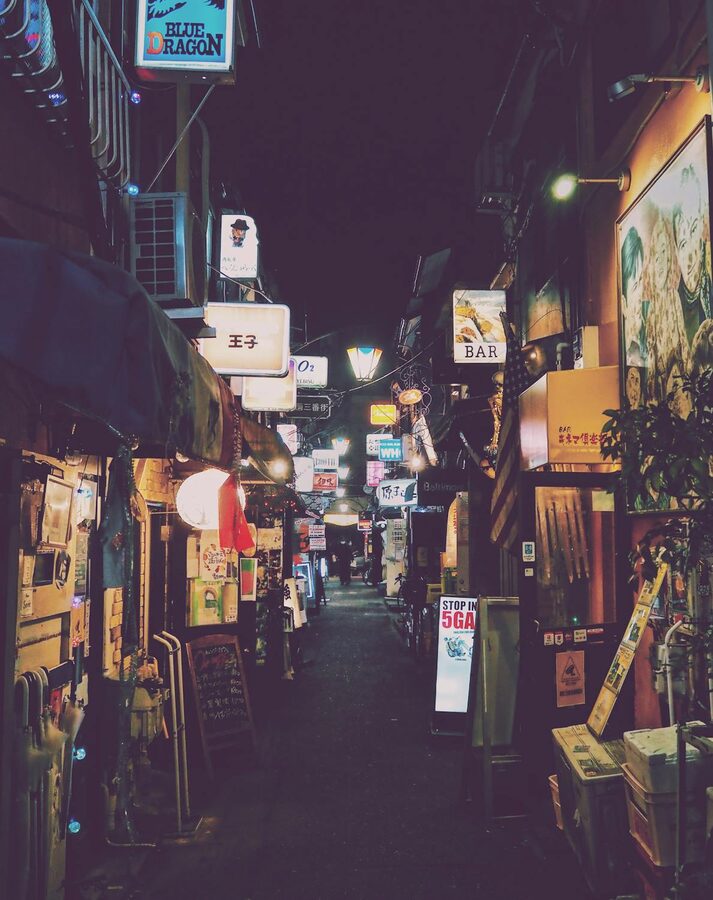
The night walking tours that include Golden Gai typically take you to 2-3 bars that the guide has a relationship with. This matters. Walking into a random Golden Gai bar alone as a tourist can be awkward — many bars operate on a relationship basis and cold visitors aren’t always welcome. With a guide who knows the owners, you skip the awkwardness and go straight to conversation.
Kabukicho
Tokyo’s largest entertainment district. By day it’s a slightly run-down grid of karaoke boxes and pachinko parlours. By night it’s a wall of neon, music, and energy that’s unlike anything else in Japan.
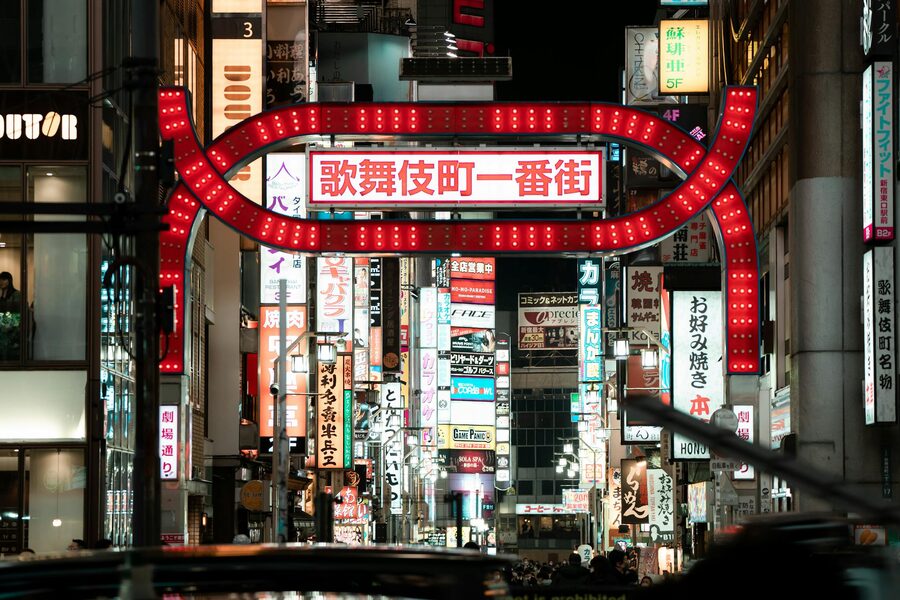
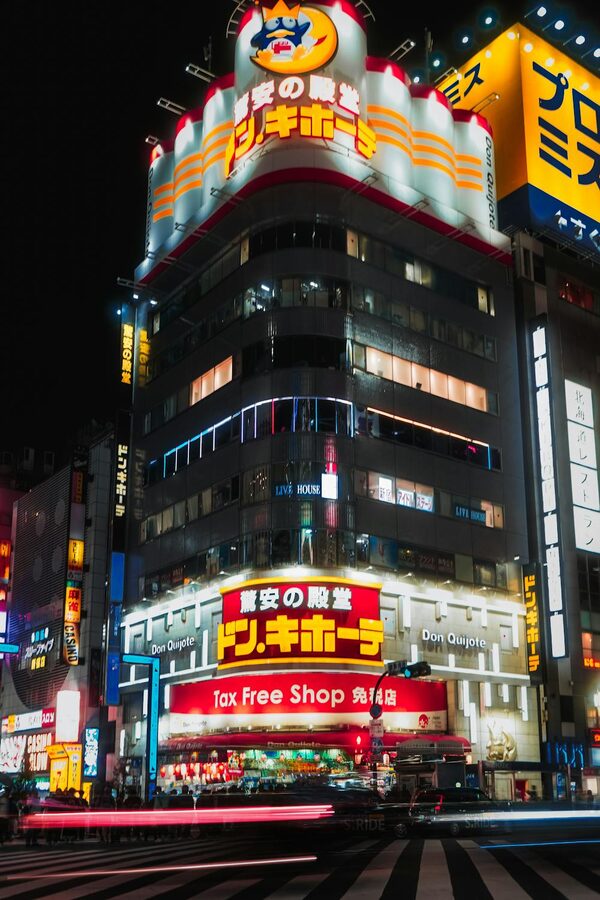
The tours don’t go deep into Kabukicho’s more adult-oriented areas — they stick to the main streets, the historical points, and the photogenic spots. But the guides do explain the district’s history, from its origins as a planned entertainment quarter (it was supposed to house a kabuki theatre, hence the name — the theatre was never built) to its reputation as Tokyo’s red-light district to its current reinvention as a mainstream entertainment hub.
Which Tour to Book
1. Shinjuku Local Bar & Izakaya Guided Walking Tour — $34
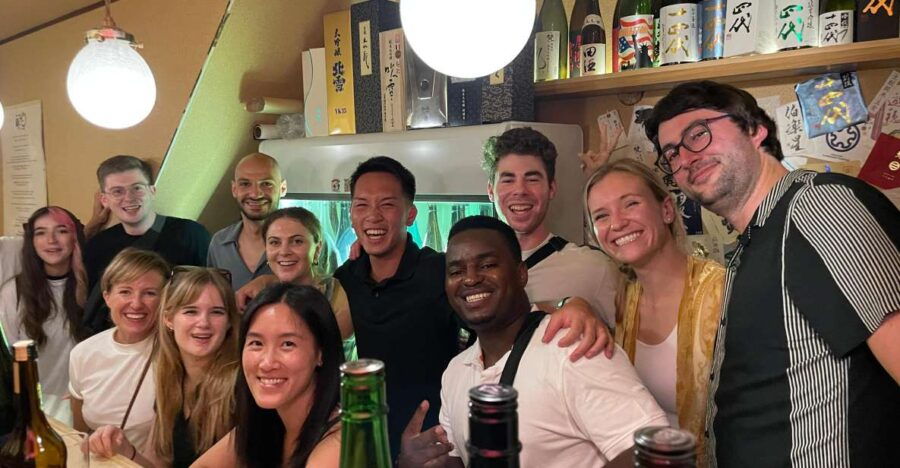
The most popular Shinjuku night tour by a wide margin. At $34 per person for about 3 hours, this covers Golden Gai, Omoide Yokocho, and several hidden izakayas in between. The format is walking-tour-meets-pub-crawl: the guide takes you through the streets, explains the history and culture, and stops at 2-3 bars and food spots along the way. Drinks and food are self-pay at each stop.
The 4.9 rating across nearly 1,800 bookings says everything. The guides are local English-speakers who treat this as their passion project rather than a job. Our review covers the typical route and what to budget for drinks. Expect to spend an additional 2,000-4,000 yen on food and drinks during the tour.
2. Shinjuku Night Walking Tour & Secret Backstreets — $25
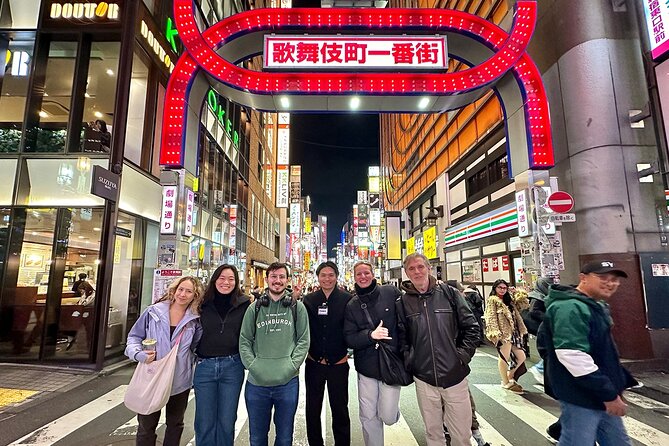
The budget option with a perfect 5.0 rating. At $25 per person, this is a walking tour first and a drinking tour second — more focused on Shinjuku’s history, architecture, and hidden corners than on bar hopping. The guide takes you through the backstreets and explains the stories behind the neon. You’ll still pass through Golden Gai and Omoide Yokocho but the emphasis is on seeing and understanding rather than eating and drinking.
A bonus: the tour includes a free original video of your experience, which is a nice touch that most tours don’t offer. If you want the cultural context of Shinjuku at night without the bar bills, this is the smarter choice.
3. Shinjuku District Night Walking Tour — $29
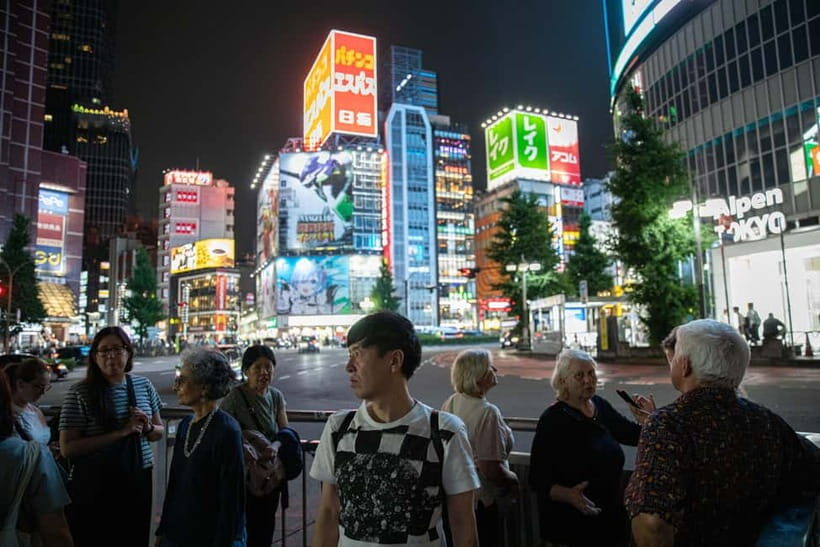
The middle option. At $29 per person for a 2-hour tour, it’s shorter than Tour 1 but covers all the highlights. The format is a guided walk through Kabukicho, Golden Gai, and the surrounding backstreets with commentary on history and culture. Good for photographers who want to know where to point their camera and travellers who want a taste of Shinjuku nightlife without committing to a 3-hour pub crawl.
Golden Gai — A History of Survival
Golden Gai almost didn’t make it. In the 1980s, during Japan’s bubble economy, developers targeted the six-alley block as prime redevelopment land. The wooden bars — many of them little more than shacks — sat on some of the most valuable real estate in Tokyo. The plan was to demolish everything and build a high-rise.
The bar owners refused to sell. Mysteriously, fires started breaking out in Golden Gai — in a district made entirely of wood. Between 1985 and 1988, several buildings burned under suspicious circumstances. The owners suspected arson from developers trying to force them out. They organised, hired lawyers, and fought the development plans. They won.
Today Golden Gai is a designated cultural district, protected from redevelopment. The bars are worth more as bars than any building that could replace them. A tiny wooden shack in Golden Gai now generates more per square metre than most Tokyo restaurants — partly from nostalgia, partly from the global fame that came with being the district that refused to die.
The irony is that the same fire-prone wooden construction that made Golden Gai vulnerable to arson is now what makes it special. These buildings couldn’t be rebuilt under modern fire codes. They exist because they’ve always existed. Remove them and they’re gone forever.
Understanding Shinjuku’s Geography
Shinjuku is confusing to navigate, even for Tokyo residents. The station has over 200 exits (not a typo) and the surrounding area is divided into distinct zones that feel like different cities.
West Shinjuku is the corporate side — glass towers, hotels, the Tokyo Metropolitan Government Building. Almost no nightlife. You pass through it on the way to somewhere better.
East Shinjuku is where the action is. Kabukicho sits immediately northeast of the station. Golden Gai is tucked behind Kabukicho’s main strip. Omoide Yokocho runs along the tracks on the west side of the east exit (yes, it’s on the west side of the east area — Shinjuku naming conventions make no sense).
The tours typically start at the east exit and work north through Omoide Yokocho, then east into Kabukicho, then loop back through Golden Gai. The total walking distance is about 3-4 kilometres but with stops it takes 2-3 hours.
The guides know the shortcuts — through parking garages, under railway bridges, across tiny parks that connect the zones. Following the main streets would triple the distance and miss all the interesting stuff.
Omoide Yokocho — From Black Market to Bucket List
The name Omoide Yokocho means Memory Lane — a romantic name for a place that started as an illegal market. After Japan’s defeat in 1945, food shortages and economic collapse created a black market economy. Small stalls selling food and alcohol sprung up around major train stations, and Shinjuku Station — already the busiest hub in Japan — became a natural centre.
The stalls that survived became permanent. The permanent stalls became restaurants. The restaurants became an institution. Today Omoide Yokocho has about 80 establishments, most of them specialising in yakitori (grilled chicken skewers), with a few ramen shops, a tiny standing sushi counter, and at least one place that serves nothing but organ meats and beer.
The food is cheap even by Tokyo standards. A full yakitori dinner with 6-8 skewers and a beer costs 1,200-1,800 yen. The quality ranges from decent bar food to genuinely excellent — the guides know which is which.
What makes Omoide Yokocho special isn’t any single restaurant. It’s the experience of eating in an open-air alley where the smoke from 80 charcoal grills mixes into a single atmospheric haze, the chefs are shouting orders across three-metre counters, and your elbow is touching the stranger next to you who turns out to be a salaryman who’s been eating here every Thursday for 20 years. That doesn’t happen at a restaurant with an English menu and a Yelp listing.
What to Eat in Shinjuku at Night
Yakitori at Omoide Yokocho. Start with negima (chicken and spring onion), tsukune (ground chicken meatball), and kawa (chicken skin, grilled until crispy). Skip the safe choices and try something adventurous — sunagimo (gizzard) and hatsu (heart) are surprisingly good and cost about 120-150 yen per skewer.
Highballs at Golden Gai. The whisky highball (whisky, soda water, ice) is Japan’s unofficial national drink. Golden Gai bars serve them properly — with Japanese whisky, strong carbonation, and that two-stir technique that bartenders treat as sacred. Expect to pay 600-900 yen per drink depending on the bar.
Standing ramen near the station. Several standing-only ramen shops operate near Shinjuku Station’s east exit, serving bowls for 400-700 yen. The quality is excellent because the competition is fierce — if a standing ramen shop in Shinjuku isn’t good, it closes within months. The guides sometimes end the tour at one of these spots as a late-night cap.
Late-night gyoza. After 10pm, small gyoza shops open around Kabukicho catering to the post-drinking crowd. A plate of 6 gyoza costs about 400 yen and they’re always made fresh because the turnover is constant. The dipping sauce (soy, vinegar, chilli oil) varies by shop and people have strong opinions about ratios.
Practical Tips
Bring cash. Golden Gai and Omoide Yokocho are almost entirely cash-only. Budget 3,000-5,000 yen for drinks and food if you’re on the bar-hopping tour. ATMs are available at every convenience store (7-Eleven works with international cards) and there’s a Family Mart at the entrance to Golden Gai.
Table charges are normal. Many Golden Gai bars charge an “otoshi” (table charge) of 300-500 yen per person. This gets you a small appetiser and the right to sit in someone’s tiny bar. It’s not a scam — it’s how these bars survive. The guides know which bars charge what and will tell you before you enter.
Don’t photograph inside bars without asking. Some Golden Gai bars have strict no-photography policies. The interiors are personal — decorated by the owner over decades with memorabilia, photos, and objects that tell a story. Photographing the exterior and the alleys is fine and encouraged.
Friday and Saturday are busiest. The atmosphere is electric but the waits are longer and some bars fill up quickly. Weekday nights (especially Tuesday-Thursday) are quieter — easier to get seats, more conversation with the bartenders, fewer queues at Omoide Yokocho. The trade-off is less energy.
The last trains leave around midnight. Most Shinjuku tours start at 6-7pm and finish by 9-10pm, which gives you time to catch the train. If you stay later (and you might — Shinjuku doesn’t slow down until 4am), taxis and the N’EX night bus are your options. A taxi from Shinjuku to most central Tokyo hotels costs 1,500-3,000 yen.
Kabukicho — Tokyo’s Most Misunderstood District
Kabukicho has a reputation. For decades it was known as Tokyo’s red-light district — a place of hostess clubs, love hotels, and yakuza-adjacent businesses. Guidebooks told travelers to avoid it. Travel blogs called it dangerous.
The reality in 2026 is very different. Kabukicho has gentrified dramatically over the past decade. The Tokyu Kabukicho Tower opened in 2024 — a 48-storey entertainment complex with a hotel, cinema, live music venue, and rooftop bar. The yakuza presence has been pushed underground by police crackdowns. The streets are well-lit, heavily surveilled, and as safe as anywhere in Tokyo (which is to say, extremely safe).
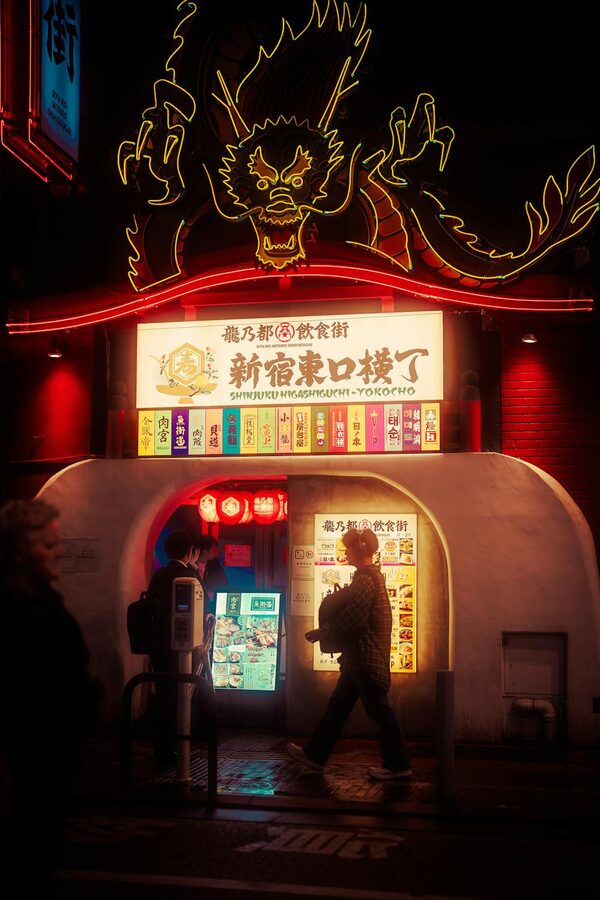
What remains is the energy. Kabukicho still feels edgier than the rest of Shinjuku — the signs are louder, the touts more persistent (politely declining and walking on works every time), and the variety of entertainment is wider. Robot restaurants, VR gaming centres, themed cafes, karaoke towers, and yes, the host and hostess clubs are still there, though increasingly catering to travelers who want the experience rather than locals who need the company.
The night walking tours use Kabukicho as the exciting counterpoint to Golden Gai’s intimacy and Omoide Yokocho’s nostalgia. They walk the main streets, explain the history, point out the notable buildings, and keep moving. It’s a look-don’t-touch section — the guides know exactly how deep to go and when to turn around.
Comparing Shinjuku to Shibuya at Night
If you’re deciding between a Shinjuku night tour and exploring Shibuya instead, the difference is straightforward: Shinjuku is deeper, Shibuya is broader.
Shinjuku’s nightlife is concentrated and layered. You can spend an entire evening in Golden Gai alone, visiting 3-4 bars without walking more than 50 metres. The depth comes from the variety within a small space — each bar is a different world, each alley has a different character, and the contrast between Omoide Yokocho’s smoky grit and Golden Gai’s curated charm is stark.
Shibuya’s nightlife is spread across a wider area with fewer hidden gems. The main attractions — Shibuya Crossing, Center Gai, the backstreet clubs — are more accessible without a guide. Shibuya skews younger and more international. If you want to dance, go to Shibuya. If you want to drink whisky in a bar the size of a phone booth while a retired jazz musician plays vinyl records, go to Shinjuku.
The ideal Tokyo nightlife plan, if you have two evenings: do the guided Shinjuku tour on night one (you need a guide for Golden Gai and Omoide Yokocho), then explore Shibuya independently on night two (you don’t need a guide for Shibuya’s main attractions).
Shinjuku After the Tour
A Shinjuku night tour pairs naturally with a Shinjuku food tour earlier in the evening — eat first, walk later. The food tours cover different territory (ramen shops, yakitori alleys, standing sushi bars) and finish around 7-8pm, which is exactly when the night walking tours start.
For Tokyo nightlife beyond Shinjuku, our Tokyo bar hopping guide covers tours that hit multiple districts. The yakatabune dinner cruise is a completely different kind of evening — traditional boat dining on the Sumida River — and the Tokyo Drift JDM car experience starts around the same time as the walking tours but takes you in the opposite direction — out of Shinjuku and onto Tokyo’s expressways.