
Mumbai has more than 20 million people crammed onto a seven-island peninsula the size of central London, generates roughly 6% of India’s GDP, houses the country’s central bank and the Bombay Stock Exchange, and produces around 1,800 films a year at the Film City studio complex in Goregaon — more than Hollywood.
It is simultaneously India’s financial capital, its commercial capital, its Bollywood capital, and by a long way its most densely populated city. Roughly 40% of the population lives in informal settlements. The airport handles 50 million passengers a year. The local train network moves 7.5 million people every single day, which is more than the entire population of Denmark.
None of that prepares you for stepping out of the arrivals terminal at Chhatrapati Shivaji International and realizing that Mumbai is not one city but about fourteen cities jammed on top of each other, separated by a dense network of flyovers and colonial-era train lines.
n
A full-day guided city tour on your first or second day is the most efficient way to get an overview of a place that refuses to have a coherent shape.
Below are the three Mumbai sightseeing tours I’d actually book, pulled from the combined GetYourGuide and Viator catalog by verified review count and rating, plus a walkthrough of what you’ll see, what to eat, and the practical stuff nobody tells you.
- The 3 Best Mumbai Full-Day Sightseeing Tours
- 1. Mumbai: Full-Day Sightseeing Tour of Mumbai (GetYourGuide)
- 2. 5-Hour Private Mumbai Sightseeing Tour (Travellers Choice Award Winner — Viator)
- 3. Highlights of Mumbai Private Sightseeing Tour (Travellers Choice Award — Viator)
- Which Tour Should You Actually Book?
- What You’re Actually Seeing: The Mumbai Circuit
- Gateway of India
- Elephanta Caves (Optional Add-On)
- Chhatrapati Shivaji Maharaj Terminus (CST)
- Dhobi Ghat (Mahalaxmi)
- Dharavi
- Malabar Hill, Hanging Gardens, and the Towers of Silence Viewpoint
- Mani Bhavan Gandhi Museum
- Marine Drive and Chowpatty Beach
- Haji Ali Dargah
- What to Eat in Mumbai
- Practical Things Nobody Tells You
- When to Go
- What to Wear and How to Get Around
- Money and Safety
- Tipping Your Guide and Driver
- Bathrooms and Air Quality
- How Much Time Do You Actually Need in Mumbai?
- Common Mistakes to Avoid
- The Honest Summary
The 3 Best Mumbai Full-Day Sightseeing Tours
I narrowed the field to full-day guided city tours that cover the core Colaba–Fort–Malabar Hill–Dhobi Ghat–Dharavi circuit in a single day, sorted by verified review count and rating.
All three include an air-conditioned car with driver and an English-speaking licensed guide, which is non-negotiable for this city — Mumbai’s summer heat and traffic patterns make anything else a miserable experiment. Prices are per person at time of writing and vary with group size because they’re private tours.
1. Mumbai: Full-Day Sightseeing Tour of Mumbai (GetYourGuide)
This is the single most-reviewed full-day Mumbai city tour on any major platform. 1,822 verified reviews at 4.9 average is the cleanest data point you’ll get for a guided experience anywhere in India under $50. The $24 price is for a group of four sharing the car; the per-person rate for two people works out closer to $45, roughly half the cost of a comparable tour in Delhi.
The itinerary is the full circuit: 8:30 am hotel pickup, Gateway of India and the Taj Mahal Palace exterior first, Dhobi Ghat, Mani Bhavan Gandhi Museum, the Hanging Gardens on Malabar Hill, lunch near Marine Drive, then Dharavi and CST terminus, closing with Marine Drive sunset.
What’s good: Amaze Tours is a small family-run operator with guides repeatedly called out by name in reviews (Riyazuddin, Sagar, Sunil). Hotel pickup is included from anywhere in South Mumbai and the Andheri airport hotels — about 90% of where foreigners stay. The 8:30 am pickup gets you to the Gateway of India before the Elephanta ferry queues build up.
What’s not: Entry fees aren’t included — budget about ₹1,000 ($12) per person. Lunch isn’t included. The 10 am slot puts you in Dharavi in the worst afternoon heat, so always push for the early pickup. If you want to actually walk inside the Taj Mahal Palace Hotel lobby, say so when you book; otherwise the guide defaults to a 10-minute exterior stop.
2. 5-Hour Private Mumbai Sightseeing Tour (Travellers Choice Award Winner — Viator)

n
A perfect 5.0 rating across 1,565 Viator reviews is genuinely rare — roughly 1,500 people giving the maximum rating in a row on a platform that doesn’t filter critics. This is the compact version of the full-day tour, for travellers with only a morning or an afternoon.
The itinerary cuts the fat: Gateway of India, Taj Mahal Palace exterior, CST, Dhobi Ghat, Mani Bhavan, Hanging Gardens and the Towers of Silence viewpoint on Malabar Hill, Marine Drive, optional Dharavi add-on. In the car by 9 am, back at your hotel by 2 pm.
What’s good: The shorter duration is the entire value proposition. If you’ve landed on a cruise ship at the Colaba terminal or you’re transiting between flights, a 5-hour tour fits a single half-day and gets all the marquee sights.
Magical Mumbai Tours are specifically organized around cruise schedules. travellers repeatedly mention the guides (Alam and Sunil) as unusually knowledgeable about Bollywood history and the Moorish, Indo-Saracenic, Victorian Gothic, and Florentine architectural mix of South Mumbai.
What’s not: 5 hours means no Elephanta Caves and no real Dharavi. If you want a specialist Dharavi walking tour, book it separately. Entry fees aren’t included. For solo travellers the per-person rate is effectively the whole car, so the economics only work for couples or groups.
3. Highlights of Mumbai Private Sightseeing Tour (Travellers Choice Award — Viator)
The third pick is the slightly more premium version of the same operator behind Tour #1, listed on Viator with a longer window. Another perfect 5.0 rating, this time across 915 reviews. It’s on the list because it gives you the most flexibility of the three — the itinerary is genuinely customizable, the duration flexes from 6 to 8 hours, and the operator is willing to swap out stops on the fly.
If you know you want to skip Malabar Hill and spend the extra time at Dharavi or Elephanta, this is the tour that will actually do it.
What’s good: The flexibility. travellers mention guides (Loki most often) taking them to specific food stops like Kyani & Co. — a 120-year-old Parsi café — or swinging by Chor Bazaar for a 20-minute antique browse. Book this if you’ve done your reading and you want specific stops the headline itineraries don’t cover.
What’s not: The headline price is the highest of the three. No lunch included. Because this is the customizable version, you need to actually know what you want before you book — a vague request for “the highlights” gets you the same itinerary as Tour #1 at a higher price. Spec out the route with the operator in advance.
Which Tour Should You Actually Book?
Simpler than it looks. If you have a full day in Mumbai and you’re traveling as a couple or a small group, book Tour #1 — it’s the most-reviewed, the cheapest per-person when you add a second person, and the Amaze Tours operator behind it is the most consistently praised small operator in the city.
If you’re on a cruise ship stopping at Colaba or you only have a half-day window (a morning or an afternoon between flights), Tour #2 is the right call because it’s purpose-built for that schedule and the 5-hour window genuinely fits the marquee sights without rushing.
If you’re a serious traveler who has already done some homework and wants a customized route with specific food stops or neighborhood add-ons, Tour #3 is the flexibility play — tell the operator exactly what you want before booking and they’ll build the day around it.
The one scenario where none of these three is right: if you want to spend the whole day at Elephanta Caves, skip the city tour entirely and book a dedicated Elephanta half-day — the ferry ride across the harbor plus the climb up to the caves plus the hour inside the rock-cut temples is a full four hours on its own, and cramming it into a Mumbai city tour reduces both experiences to a rushed checkbox. Do them on separate days if you have the time.
What You’re Actually Seeing: The Mumbai Circuit
n
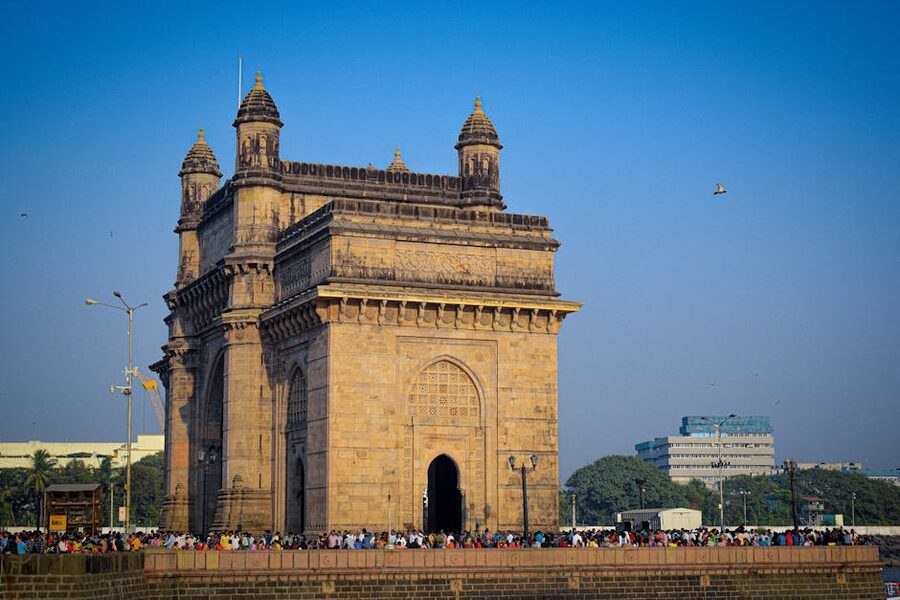
Every full-day Mumbai city tour hits the same headline sights because the city’s historical core is concentrated in a tight 8-km strip from Colaba at the southern tip up through Fort and Churchgate to Malabar Hill. Here’s what each one is and why it’s on the itinerary.
Gateway of India
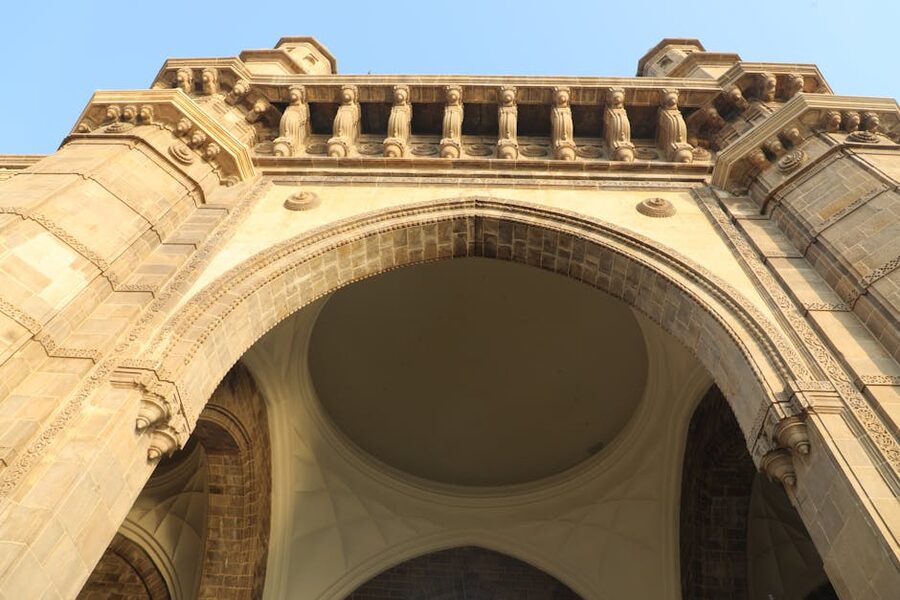
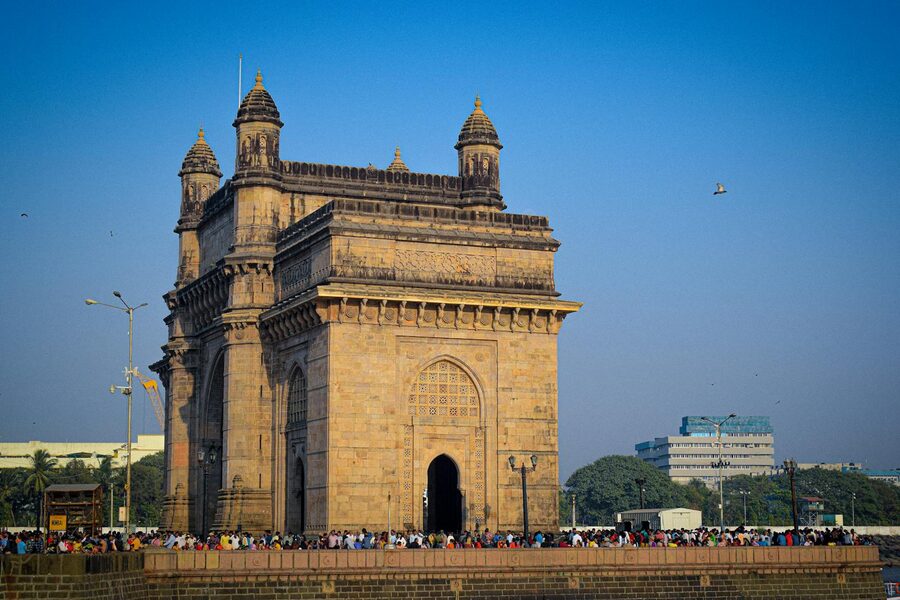
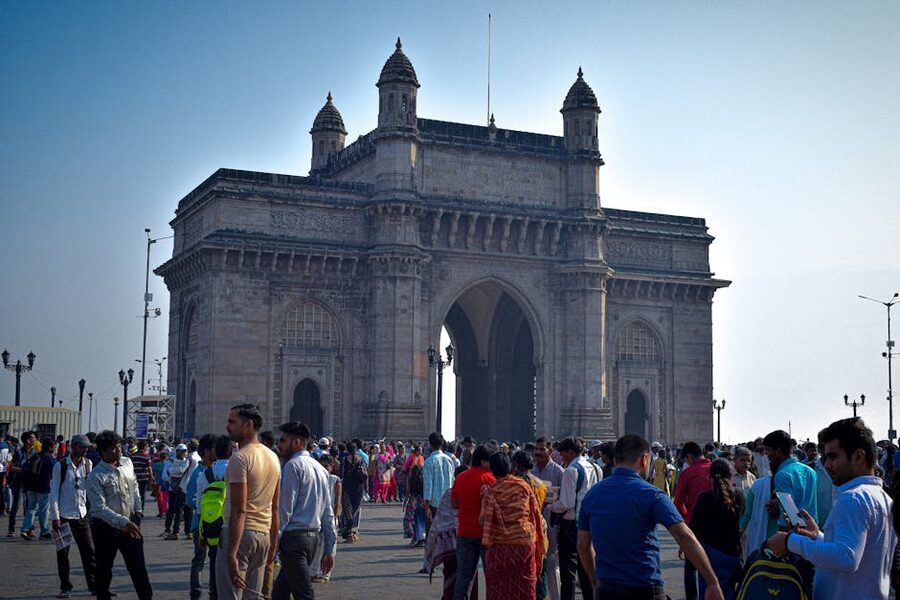
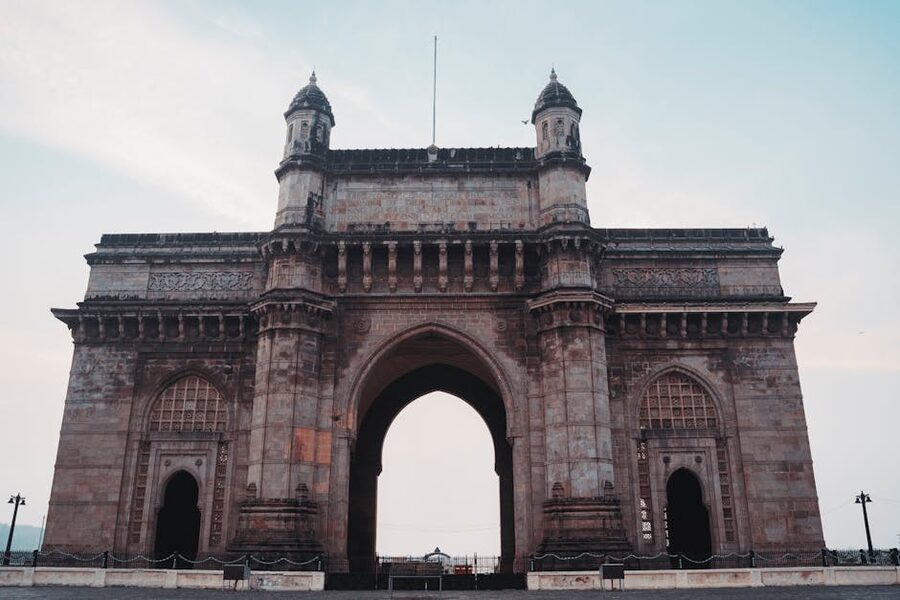
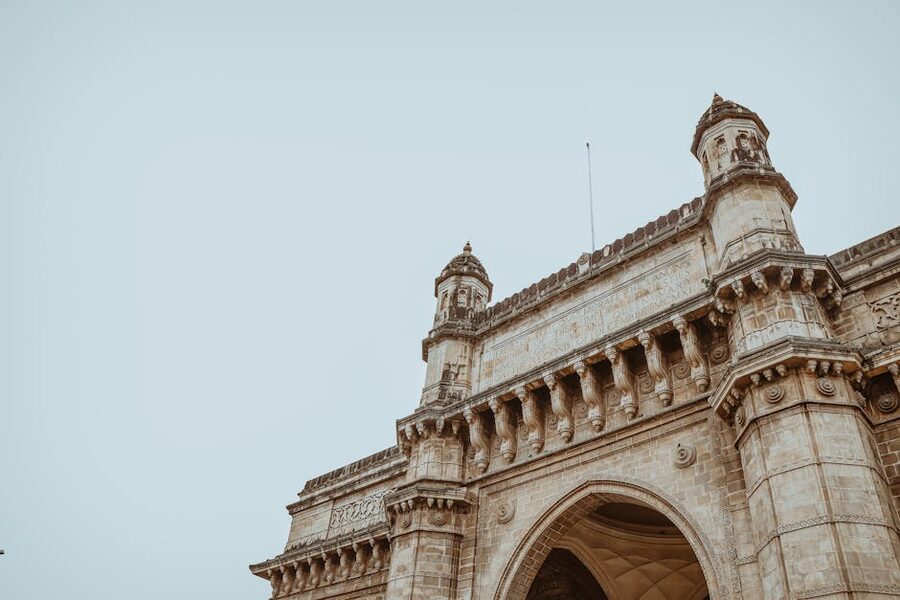
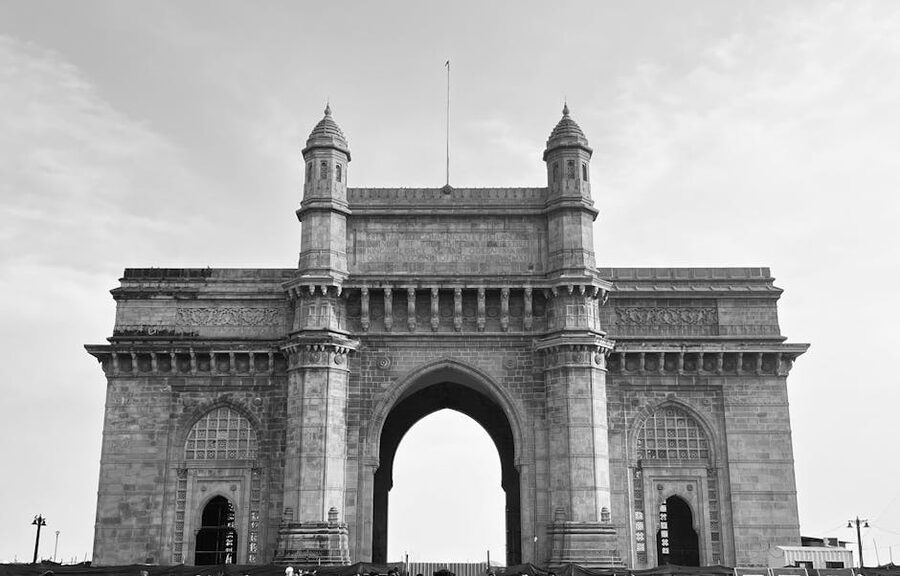
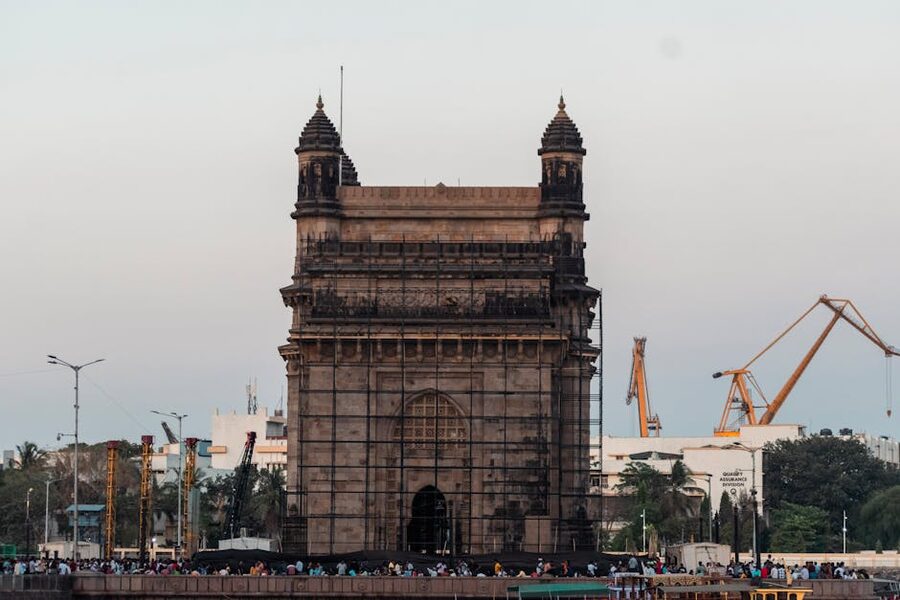
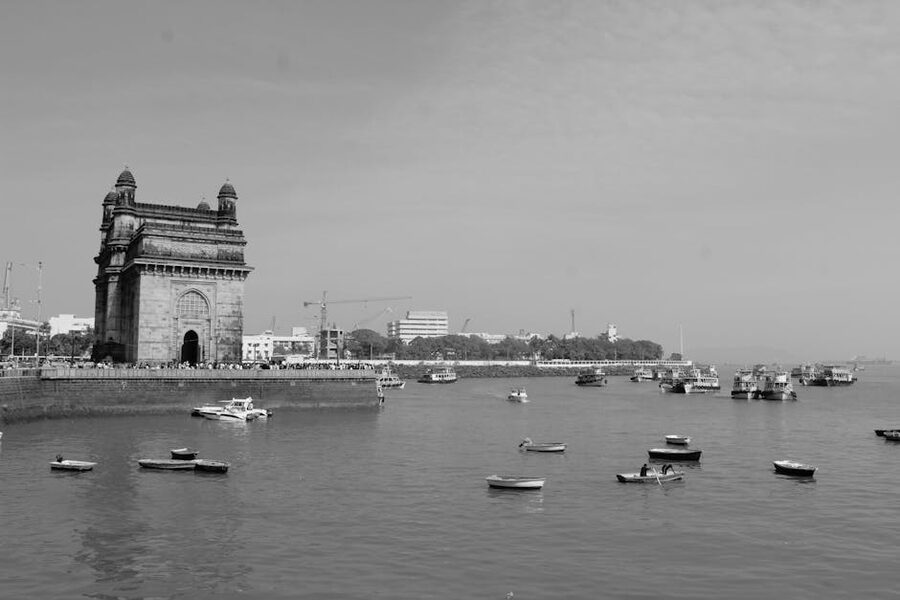
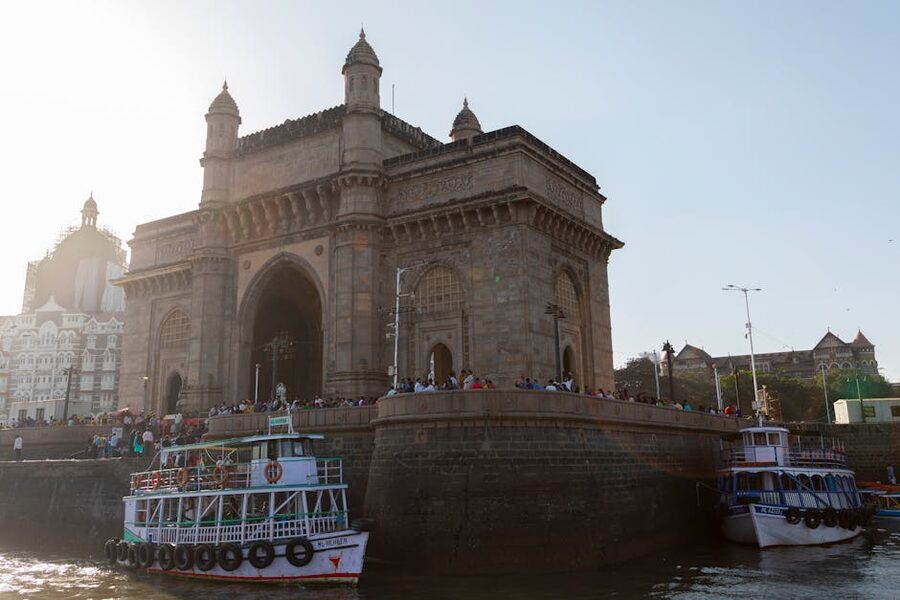
The basalt archway facing Mumbai Harbor at the end of the Apollo Bunder promenade is the symbolic starting point of every Mumbai city tour and, historically, the symbolic starting point of British India itself.
It was commissioned in 1911 to commemorate the visit of King George V and Queen Mary — the first reigning British monarchs to visit the Indian colony — and was finally completed 13 years later in 1924 in a style the architect George Wittet called Indo-Saracenic Revival: a combination of Hindu, Muslim, and Gujarati elements fused into a 26-meter arch with a central dome modeled loosely on the 16th-century architecture of Ahmedabad.
The arch looks out over the harbor toward Elephanta Island. Symbolically, it also marked the route by which the last British regiment departed India on February 28, 1948 — the First Battalion of the Somerset Light Infantry boarded the troop ship Empress of Australia at this exact spot, sailing the arch into a new role as the ceremonial endpoint of the British Raj rather than its gateway.
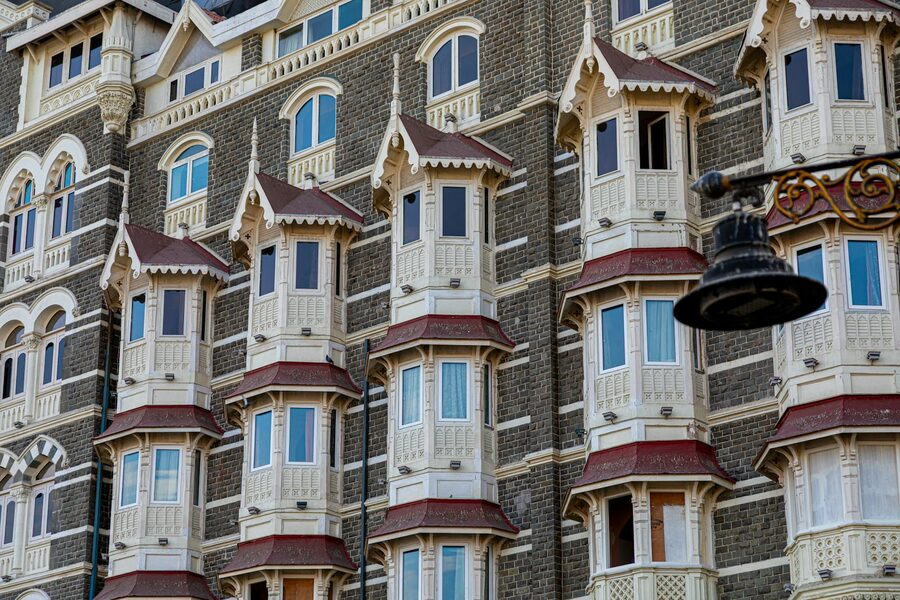
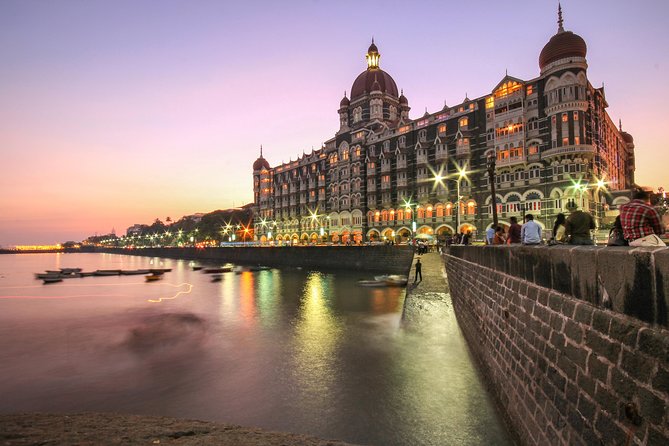
Directly across the small plaza from the Gateway stands the Taj Mahal Palace Hotel, and the two buildings are usually visited as a pair.
The Taj is older than the Gateway (opened in 1903, the first luxury hotel in Mumbai) and has its own distinct origin story: industrialist Jamsetji Tata is said to have been turned away from the whites-only Watson’s Hotel and reportedly vowed to build a hotel where anyone could stay.
Whether the whites-only snub story is fully accurate or has been polished by generations of retelling, the core fact is true — the Taj was built as a deliberate architectural statement by Indian capital at a time when most of colonial Mumbai was owned by European interests.
It was also the principal site of the November 2008 terrorist attacks, and you’ll see the small memorial to the victims inside the lobby if your tour takes you in.
Most tours spend 20–30 minutes here. Photo from the Taj side facing the Gateway (the morning light is behind you, not in your face), and walk the promenade east for 100 meters to see the small statue of Shivaji and the ferry terminal for Elephanta.
Elephanta Caves (Optional Add-On)
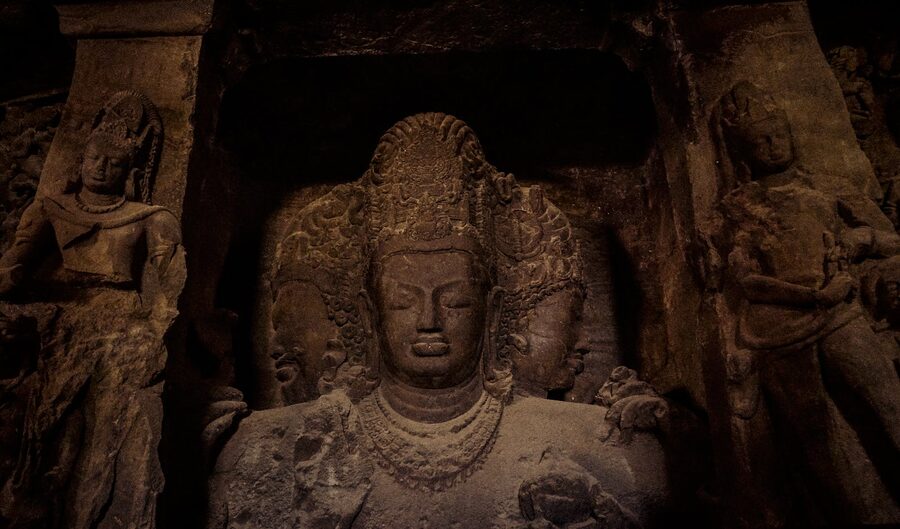
A UNESCO World Heritage Site on an island 10 km offshore in Mumbai Harbor. The ferry takes about an hour each way and runs from the jetty next to the Gateway of India from 9 am to 2 pm, with the last return ferry leaving the island at 5:30 pm. The caves themselves are a series of rock-cut Hindu temples carved into a basalt hillside between the 5th and 8th centuries CE, dedicated primarily to Shiva.
The centerpiece is the Trimurti Sadashiva — a six-meter-tall three-faced bust of Shiva carved directly into the rock wall, showing the god as creator, preserver, and destroyer simultaneously.
It’s one of the most impressive single carvings in Indian religious art, and the fact that it has survived 1,300 years of weathering (including Portuguese colonial troops who reportedly used it for target practice in the 16th century) is remarkable on its own.
n
If you add Elephanta to a full-day city tour, expect to lose 4 hours of the day to the ferry, the climb from the jetty to the caves (120 steps up a covered path where you’ll be offered palanquin rides that I’d skip), the hour inside, and the return. A dedicated Elephanta Caves half-day guided tour is the better option if you’re committed to seeing the temples properly.
Chhatrapati Shivaji Maharaj Terminus (CST)
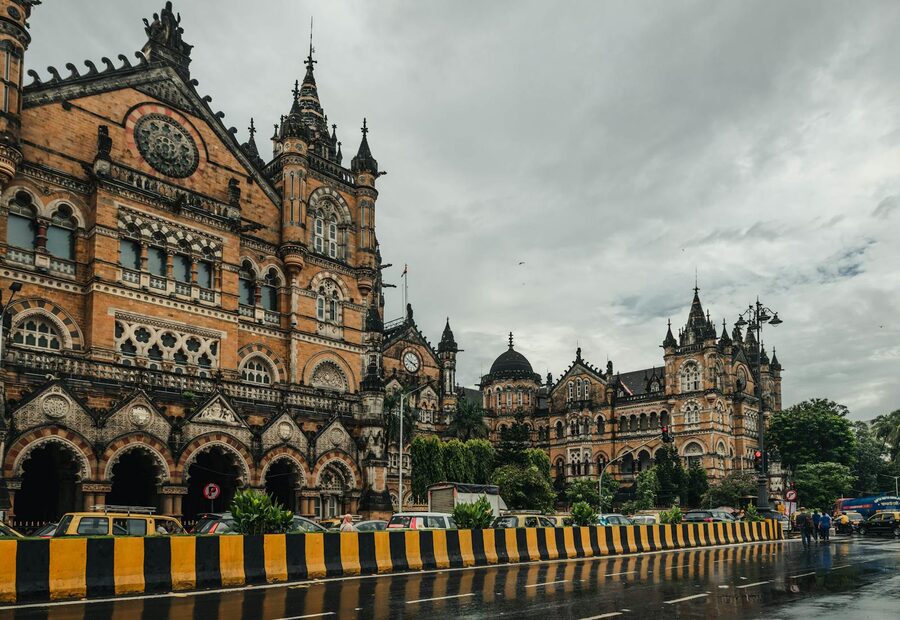
The Victorian Gothic railway station at the north end of Fort is a UNESCO World Heritage Site in its own right, built between 1878 and 1888 and originally named Victoria Terminus. It was designed by F.W.
Stevens in a style that fuses Italian Gothic with traditional Indian motifs — gargoyles become monkeys, stone peacocks flank the entrances, and the main ticket hall’s stained-glass windows carry images of locomotives surrounded by Mughal floral patterns.
The building is still a working train station — about 3 million commuters pass through it every day — which is the thing that makes it worth stopping for. You can walk into the central concourse as long as you don’t have a bag the size of a suitcase (security screening is minimal but real), and watching the actual morning rush at CST is a better Mumbai experience than any museum visit.
It was also the main filming location for the choreographed “Jai Ho” closing dance sequence of Slumdog Millionaire, which has become the thing Indian guides mention first when they walk you through the ticket hall.
Dhobi Ghat (Mahalaxmi)
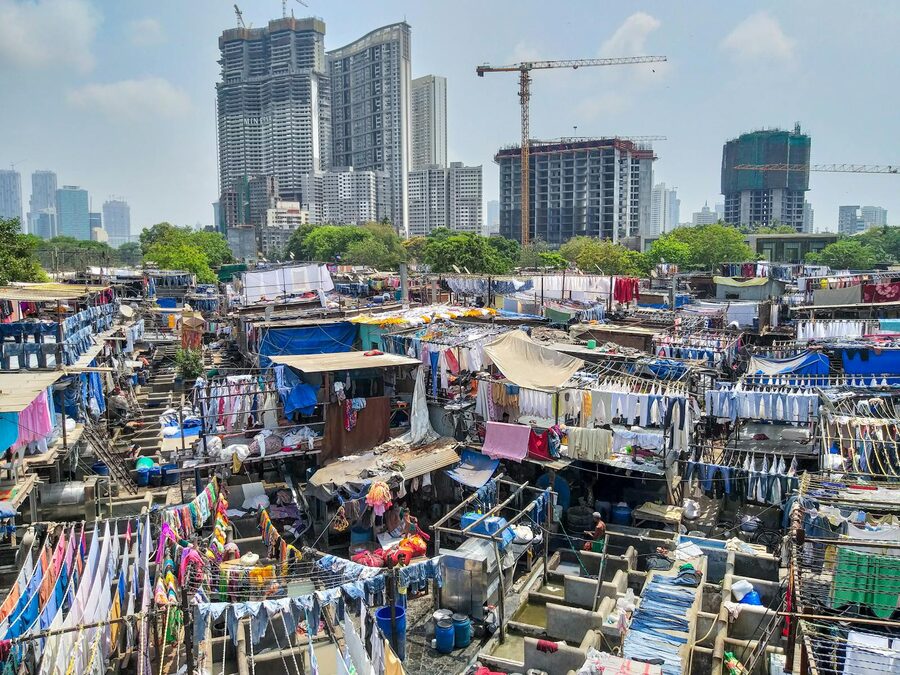
The world’s largest open-air laundry.
Dhobi Ghat is a grid of 730 concrete washing pens in the Mahalaxmi neighborhood, where about 7,000 dhobis (laundrymen, most of them from the Kanoji caste in Maharashtra) wash, dry, press, and sort an estimated one million pieces of clothing every day — hotel linens from Marine Drive, hospital sheets, schoolboy uniforms, the shirts of office workers across South Mumbai.
The operation has been running in roughly its current form since the late 19th century and it’s one of the most photographed sites in the city for the simple visual reason that it’s bright white against concrete against the occasional burst of colored fabric. The usual viewing point is the pedestrian overpass on Mahalaxmi station road — your guide will park at one end and walk you across.
n
Worth 15–20 minutes for the view and a brief explanation. Do not try to walk down into the ghat itself without a specialist guide — the dhobis are working and some of the newer Instagram-driven tourism has genuinely become a nuisance for them, so the etiquette now is to observe from the overpass and leave.
Dharavi
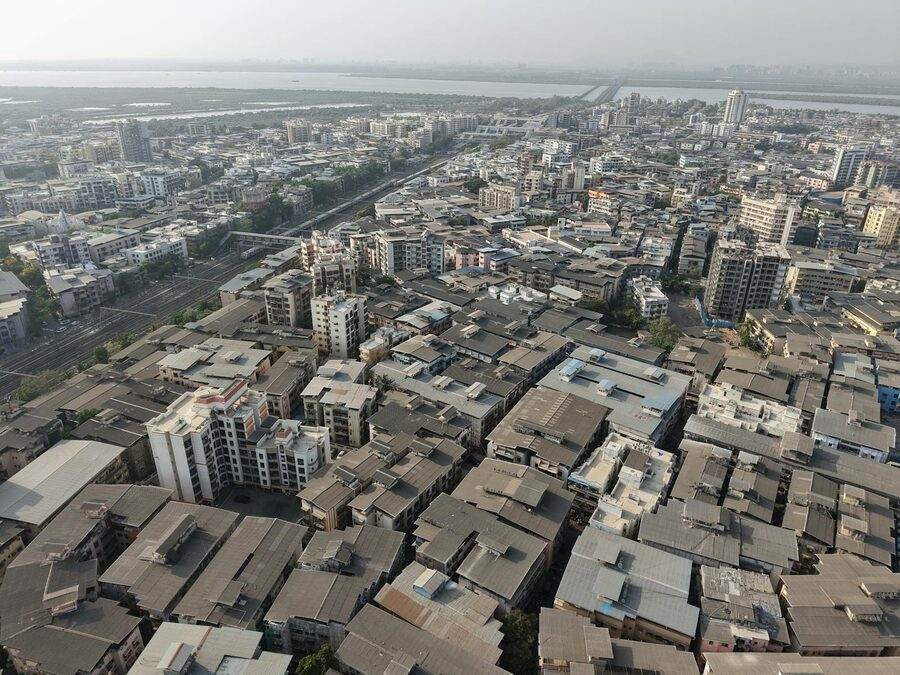
Asia’s largest informal settlement, home to between 700,000 and 1 million people depending on whose count you trust, crammed into 2.1 square kilometers between the Mahim and Sion railway lines.
Dharavi is usually described to foreign visitors as a “slum,” which is technically correct but misses most of what it actually is — the informal economy of Dharavi generates somewhere between $650 million and $1 billion a year in economic output, with small factories producing leather goods, pottery, recycled plastics, embroidered textiles, and the famous fried snack papadum for the entire Mumbai market.
The cliché that it is a dense network of narrow lanes and two-story buildings is true; the cliché that it is a place of misery is only partially true — most Dharavi residents have jobs, most have running water and electricity, and many would rather upgrade their homes in place than be relocated to the high-rise housing the city government keeps proposing.
A 90-minute walking tour with a specialist Dharavi guide is the right way to see it. The GetYourGuide option — Mumbai Dharavi, Dhobi Ghat, and Dabbawallas tour — is a well-reviewed 3-hour walk that also covers the Dhobi Ghat and the city’s famous dabbawala lunch delivery network.
Large operators like Reality Tours (booked direct) pioneered the model in 2005 with a strict no-photography rule inside the lanes. If your city tour includes a “Dharavi drive-by” only, it’s not worth doing — either commit to the walking tour or skip it entirely.
Malabar Hill, Hanging Gardens, and the Towers of Silence Viewpoint
Malabar Hill is the wealthiest residential neighborhood in Mumbai and the highest point in the southern peninsula.
The hill holds three related stops that every city tour drives past: the Hanging Gardens (a terraced park built in 1881 on top of a municipal water reservoir, with topiary shrubs and a view of Marine Drive), the adjacent Kamala Nehru Park with its “Boot House” children’s playground, and the Towers of Silence — the Zoroastrian dokhma where Mumbai’s Parsi community practices sky burial, placing their dead on circular stone platforms where they are consumed by vultures.
The towers themselves are strictly off-limits to non-Parsis (they are behind high walls inside a wooded compound) but your guide can show you the approach road and explain the history of the Parsi community in Mumbai, which has shaped the city more than its small current population of about 40,000 suggests.
Budget 30 minutes combined for the Hanging Gardens stop and the drive through the Malabar Hill residential streets. The view from the Kamala Nehru Park walkway over Marine Drive and the Queen’s Necklace is the best free panorama in South Mumbai.
Mani Bhavan Gandhi Museum
A small two-story house on Laburnum Road in Gamdevi where Mahatma Gandhi stayed during his visits to Mumbai between 1917 and 1934.
The house has been preserved more or less as it was in the 1930s, with Gandhi’s bedroom upstairs (the cotton bedding, his spinning wheel, his walking stick, his letters to Tolstoy and Franklin Roosevelt), a library of several thousand books on Gandhian philosophy, and a ground-floor museum with photographs and documents from the independence movement.
It’s compact — 45 minutes is enough — but it’s the best single-room introduction to the Indian independence movement you’ll find in Mumbai. Entry is free; donations are accepted.
Marine Drive and Chowpatty Beach
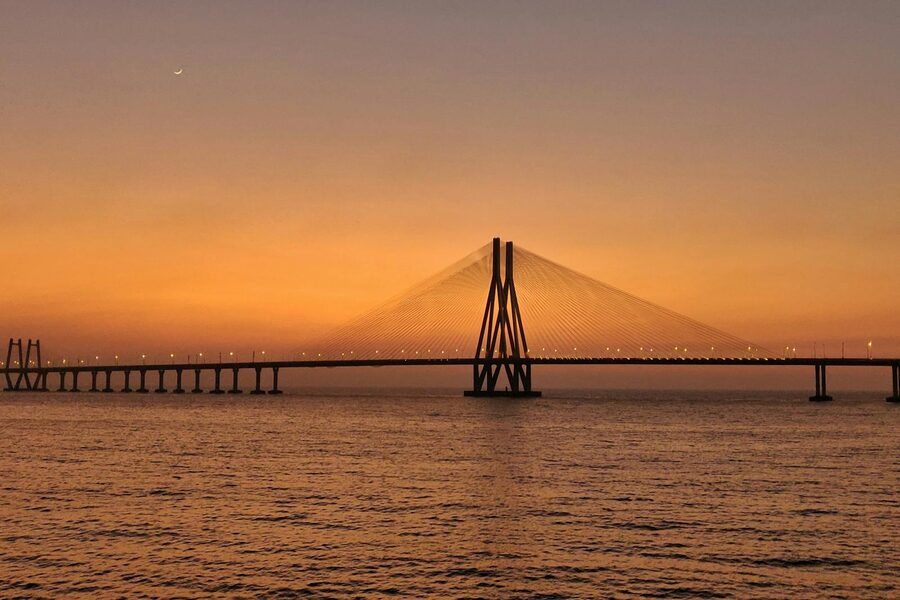
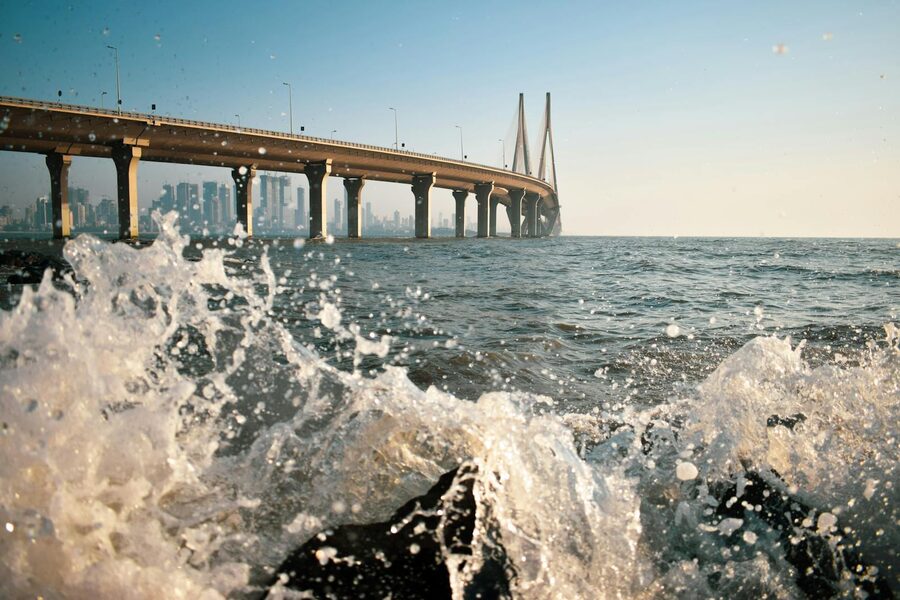
The 3.6-kilometer curved promenade from Nariman Point north to Chowpatty Beach is Mumbai’s most famous street, and a sunset drive along its length is how most city tours close the day.
It was laid out in the 1920s as part of the Backbay Reclamation project — the land under Nariman Point was created by dumping fill into what had been open sea — and the curve of the Art Deco buildings lining the drive is the reason Mumbai has the world’s largest concentration of Art Deco architecture outside of Miami Beach.
The street is called the Queen’s Necklace because the streetlights along the curve, when lit at night and viewed from Malabar Hill, look like a string of pearls.
Chowpatty Beach at the northern end is where Mumbai comes in the evening — families, couples, horse-drawn carriages, chaat-walas selling pav bhaji and bhel puri, the occasional astrologer under a colored umbrella. Swimming is not advisable (the water is not clean), but walking the sand at 6 pm and eating bhel puri is the one near-mandatory Mumbai evening ritual.
Haji Ali Dargah
A 15th-century Islamic shrine on a small islet in Worli Bay, reached by a 500-meter causeway that floods at high tide and is only walkable for about eight hours a day. The shrine contains the tomb of Pir Haji Ali Shah Bukhari, a wealthy Sufi saint and merchant from Bukhara who, according to legend, gave up his fortune before performing the Hajj and died on the pilgrimage.
His coffin is said to have floated back to the Mumbai coast and washed ashore at the small islet where the dargah now stands. The building itself is a blend of Indo-Islamic architecture with a central marble dome and a long causeway that becomes an open-air bazaar at low tide.
It is a working shrine — Muslims and non-Muslims both visit, though women are not permitted in the inner sanctum following a 2011 ruling. A 15-minute stop for photos from the causeway entrance is standard on most city tours.
What to Eat in Mumbai
Mumbai is the most food-diverse city in India by a significant margin, because it has always been the place where internal migrants from every Indian state come to work, and every one of those migrant communities brought its kitchen.
Gujarati thali, Parsi dhansak, Udupi South Indian dosa, Goan vindaloo, Mangalorean seafood, Punjabi tandoor, Mughlai biryani, and the city’s own native inventions — vada pav and pav bhaji — all exist within a 20-minute drive of each other. Most full-day city tours stop for lunch at a generic buffet restaurant because it’s easier for the guide.
Tell your guide before the tour starts that you want to eat somewhere specific, and they will route around your preference.
The signature dishes you should actually try in Mumbai:
- Vada Pav. The unofficial national dish of Mumbai — a spiced mashed-potato patty deep-fried in chickpea-flour batter and slammed inside a Portuguese-style bread roll with green chutney and dry garlic-chili powder. Invented in the 1960s by Ashok Vaidya outside Dadar station as a cheap lunch for textile-mill workers. For a guided walk through the actual working street food lanes, book the Mumbai street food and night markets tour with a local foodie guide.
- Pav Bhaji. A buttery mashed-vegetable curry with toasted bread rolls. Sardar Pav Bhaji on Tardeo Road has been the benchmark since 1966.
- Bhel Puri. Puffed rice, onion, tomato, coriander, tamarind chutney, and sev, mixed to order. Best eaten on Chowpatty Beach at sunset.
- Parsi Café Food. A fusion of Iranian, Gujarati, and British colonial influences — dhansak, salli boti, berry pulao, caramel custard. Kyani & Co. (1904), Britannia & Co. (1923), and Jimmy Boy are the three original cafés still running.
- Bombay Duck. Not a duck — a small fish (Harpadon nehereus) sun-dried and deep-fried. Trishna in Kala Ghoda is the benchmark.
n

Lunch stops your guide can walk you to: Britannia & Co. (Ballard Estate, Parsi, berry pulao, ₹600, closed Sundays), Trishna (Kala Ghoda, Mangalorean seafood, butter-garlic crab, ₹2,500, book ahead), Swati Snacks (Tardeo, Gujarati vegetarian, ₹500), Bademiya (Colaba, late-night kebab stall, ₹500), or Leopold Café (Colaba, famous for Shantaram and the 2008 attacks, ₹800 with a drink).
Practical Things Nobody Tells You
n
When to Go
November through February is ideal: 25–30°C, low humidity, clear skies. March starts to warm up. April and May are brutal (35°C+ with 80% humidity). The monsoon is June to September — Mumbai gets 2,200 mm of rainfall and the streets flood regularly. Aim for December or January for the best weather of the year.
What to Wear and How to Get Around
Comfortable walking shoes with closed toes. Lightweight cotton trousers, sunglasses, hat, small daypack with water. A scarf for women is useful as sun protection and as a head covering at religious sites. Ola and Uber both work in Mumbai and are the default for movement outside the tour.
Auto-rickshaws are not permitted south of Mahim, so in Colaba and Fort you’ll be using the classic black-and-yellow Premier Padmini taxis — the meters actually work, which is unusual for India. The Mumbai local trains are worth riding once during off-peak hours (11 am to 4 pm); buy a first-class ticket (₹30) for a less-packed car.
Money and Safety
Carry ₹2,000–3,000 in small notes for entry fees, street food, and tips. Most sit-down restaurants take cards; the bazaar economy runs on cash. Mumbai is one of the safest major cities in India for foreign visitors — the street-level crime rate is lower than Delhi or Bangalore. Women travellers often report Mumbai feels noticeably easier than North Indian cities.
Tipping Your Guide and Driver
Standard practice on a private full-day tour is ₹500–800 ($6–10) for the guide and ₹300–500 ($4–6) for the driver, given at the end of the day in cash. It is not built into the booking price and both of them rely on it — driver salaries in the tour industry run ₹12,000–16,000 a month before tips. If the guide was excellent (unprompted historical explanations, routing you around the traffic jams, choosing a genuinely good lunch stop), tip at the upper end.
Bathrooms and Air Quality
Mumbai has fewer decent public bathrooms than most Indian cities. The Taj Mahal Palace Hotel lobby has clean bathrooms you can use if you walk in purposefully. The air is meaningfully better than Delhi’s in winter because the sea breeze scrubs the particulates every night, but it’s still above WHO thresholds in the dry season — if you have asthma, bring your medications and consider a mask during the Dharavi or Crawford Market portions.
How Much Time Do You Actually Need in Mumbai?
n
One full day is the minimum for the core city tour — that’s what Tours #1 and #3 deliver in 8–10 hours. Two days is significantly better: one day for the full guided circuit above, a second day for Elephanta Caves in the morning (half day) and a walking tour of Kala Ghoda and the Fort colonial architecture in the afternoon.
Three days lets you add either a Dharavi walking tour with Reality Tours (half day) or a food-focused walking tour through the Bohri Mohalla Muslim neighborhood near Mohammed Ali Road, which has some of the best kebabs and biryani in the city.
A serious Mumbai visit is four days; most travellers on a multi-city India trip give it only one and leave feeling like they missed something, which is accurate.
If you’re combining Mumbai with the Taj Mahal or the Delhi city tour, don’t try to do them as a single loop — Mumbai is 1,400 km south of Delhi and most travellers fly between them. A sensible India itinerary gives you 3 nights in Delhi, a day trip to Agra for the Taj, 2 nights in Jaipur as part of the Golden Triangle, then flies south to Mumbai for 2–3 nights.
If you’d rather have it all prebooked end-to-end, a 4-day private luxury Golden Triangle package bundles the entire Delhi-Agra-Jaipur loop with car, driver, and hotels. travellers who have more than a week in India should also look at adding a Varanasi full-day tour with the Ganga Aarti, a Rishikesh spiritual evening tour, or a Goa Dudhsagar Waterfall and spice plantation trip as a second-week add-on.
Kerala backwaters and a Kochi guided tuk tuk tour are another worthwhile southern detour.
Common Mistakes to Avoid
- Booking a 10 am or 11 am start. Mumbai traffic between 10 am and 1 pm is genuinely the worst in India. Always book the 8:30 am slot or earlier.
- Trying to fit Elephanta Caves into a half-day tour. The ferry alone is 2 hours round trip — do Elephanta on a separate day.
- Doing a Dharavi drive-by instead of a walking tour. The drive-by is the worst of both worlds. Either book the walking tour with Reality Tours or skip Dharavi entirely.
- Eating lunch at a buffet restaurant because your guide stopped there. Tell your guide in advance: Britannia & Co., Swati Snacks, or Trishna.
- Skipping Marine Drive at sunset. It’s the single best free experience in Mumbai — end the tour there between 5:30 and 6:30 pm.
The Honest Summary
n
Mumbai rewards commitment. A one-day city tour will give you the marquee sights and a surface-level understanding of how the southern peninsula fits together, and for most travellers on a multi-city India trip that’s exactly what you need — a guided overview of the Gateway of India, the colonial Fort district, Marine Drive, the Dhobi Ghat, and a sunset walk on Chowpatty Beach.
Book Tour #1 for the full day, Tour #2 if you’re on a cruise or a tight half-day window, Tour #3 if you want a customized route. Pick a morning start, eat lunch somewhere specific rather than letting the guide pick, tip the driver, and understand going in that whatever you see, you’re seeing about 3% of the actual city. Mumbai is not a place you finish; it’s a place you sample.
The sample is enormous and it is worth every minute of the day you spend on it.
Start early. Eat the vada pav. Tip the guide. Watch the Queen’s Necklace light up from Chowpatty.