
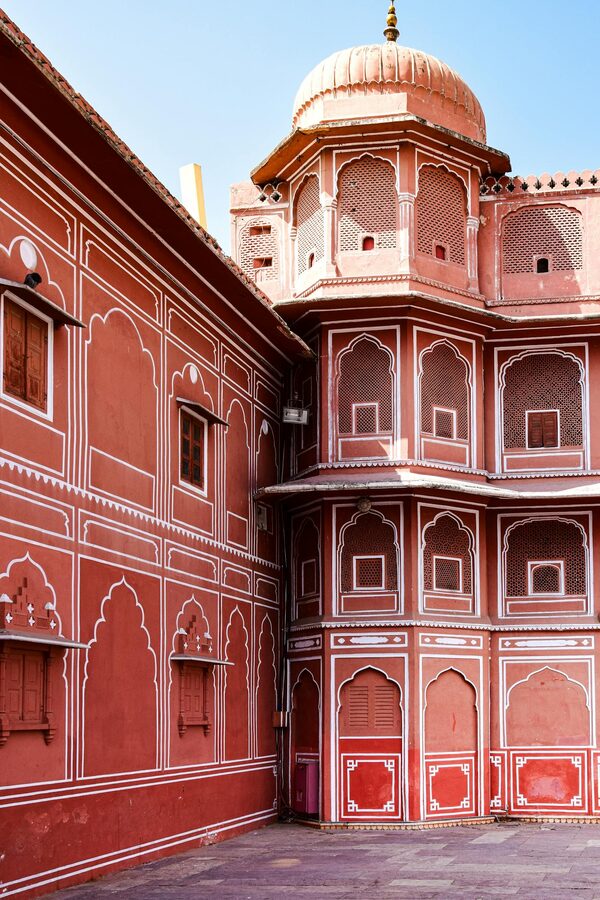
Jaipur was painted pink on royal orders. In 1876, when the Prince of Wales (the future Edward VII) announced he was coming on tour, the Maharaja Sawai Ram Singh II ordered the walled Old City washed in terracotta pink — the Rajput color of hospitality — to welcome him. The pink stuck.
A hundred and fifty years later every façade inside the ramparts is still, by municipal bylaw, painted that exact chalky salmon color, which is why the city is called The Pink City and why your camera’s white balance is going to lie to you all day.
That strange, washed, flamingo-colored light is the reason a proper city tour of Jaipur works differently from a city tour of Delhi or Mumbai.
The architecture isn’t scattered through a modern metropolis — it’s contained inside a 6-square-kilometer walled grid designed in 1727 by Vidyadhar Bhattacharya, the royal astronomer and urban planner, on principles lifted straight from the ancient Hindu Vastu Shastra treatises. Nine blocks, nine planets, seven gates, a straight central bazaar.
The whole Old City is essentially one very large open-air museum, and the best of the Mughal-Rajput monuments sit either inside its walls or in a tight ring around it. A private full-day tour with a car and a licensed guide is, honestly, the only efficient way to hit the headline sights without melting in the Rajasthan sun or drowning in the auto-rickshaw hustle.
Below are the three tours I’d actually book, pulled from the combined Viator and GetYourGuide catalog by verified review count and average rating, plus a full walkthrough of what you’ll see, what to eat, and the practical stuff nobody tells you.
- The 3 Best Jaipur City Tours (Full Day)
- 1. Jaipur: Private Full Day Sightseeing Tour By Car with Guide (GetYourGuide)
- 2. 3-Hour Morning Bike Tour of Jaipur (Viator)
- 3. 3-Days Private Luxury Golden Triangle Tour to Agra and Jaipur From New Delhi (Viator)
- Which Tour Should You Actually Book?
- What You’re Actually Seeing: The Jaipur Circuit
- Amber Fort (Amer Fort)
- Jal Mahal (The Water Palace)
- City Palace
- Jantar Mantar
- Hawa Mahal (Palace of Winds)
- Optional Extras (if time allows)
- What to Eat in Jaipur
- Practical Things Nobody Tells You
- When to Go
- What to Wear
- Getting Around Outside the Tour
- Money and Bargaining
- Shopping Actually Worth Doing
- Bathrooms
- Tipping Your Guide and Driver
- How Much Time Do You Actually Need in Jaipur?
- Nearby Day Trips and Extensions
- Common Mistakes to Avoid
- The Honest Summary
The 3 Best Jaipur City Tours (Full Day)
I narrowed the field to private guided tours that cover the combined Amber Fort, City Palace, Jantar Mantar, and Hawa Mahal circuit in a single day, sorted by review count and rating. All three have English-speaking guides and an air-conditioned car included, which is not optional if you’re traveling in anything warmer than December. Prices are per person at time of writing and fluctuate with group size because they’re private.
1. Jaipur: Private Full Day Sightseeing Tour By Car with Guide (GetYourGuide)
This is the sharpest-priced full-day Jaipur city tour on any major platform, and the 1,839 verified reviews at a 4.9 average are the cleanest data point you’re going to find for a sub-$10 guided experience anywhere in India.
The $4.88 starting price is misleading in the good way — it’s the rate for a group of six sharing the car, and the all-in per-person cost for a solo traveler with a private car and guide works out closer to $25, still cheaper than almost any competitor on this route.
The itinerary is the full classical circuit: hotel pickup at 8:30 am, drive out to Amber Fort for the 9 am opening (you beat the coach tours by an hour), City Palace and Jantar Mantar after lunch, Hawa Mahal photo stop in the late afternoon, and optional extras at Nahargarh or Jal Mahal depending on how fast you moved through the mornings.
What’s good: The guides are specifically called out in reviews by name — Raj, Arun, Vikram are the repeat winners — which tells you the operator has a small stable of senior licensed guides rather than a rotating casual pool.
Hotel pickup and drop-off are included from anywhere inside the Jaipur Municipal Corporation area (that covers the MI Road hotels, the Bani Park homestays, and the Civil Lines luxury blocks — roughly 95% of where foreigners stay). The 8 am pickup puts you inside Amber Fort before the coach buses arrive, which is the single most important logistical move for the entire day.
What’s not: Entrance tickets are not bundled at the headline price — budget about ₹1,500 ($18) per person for Amber Fort + City Palace + Jantar Mantar combined. The elephant ride up to Amber Fort is an extra ₹1,100 ($13) and I’d actually skip it for ethical reasons (more on that below).
Lunch isn’t included and the default stop is a tourist-oriented thali restaurant near City Palace — fine, not memorable. If you want to eat where Jaipuris actually eat, tell your guide before booking and ask to stop at Rawat Mishtan Bhandar on Station Road or LMB in Johari Bazaar.
2. 3-Hour Morning Bike Tour of Jaipur (Viator)
This is not a substitute for a full-day city tour — it’s a complement, and it’s on the list because a perfect 5.0 rating across 1,253 reviews is rare enough that it’s worth the mention.
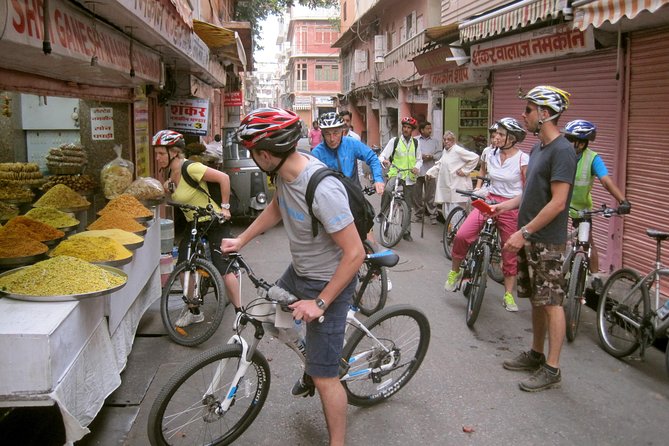
The tour starts at 6:30 am from a meeting point near the Hawa Mahal, hands you a bicycle (they have a small fleet of Trek hybrids sized for most adults), and takes a small group of 6–8 through the walled city bazaars before the traffic wakes up.
You see the Old City from its quietest angle: vegetable vendors setting up, chai stalls firing their stoves, cows being milked in Sanganeri Gate doorways, the pink façades catching the first horizontal light. You also stop at a working flower market and get breakfast at a local sweet shop — stuffed kachori and a small cup of ginger-saffron tea — which is included in the price.
What’s good: The timing is the entire value proposition. Jaipur’s Old City is genuinely rideable at 6:30 am and genuinely not at any other time. The guides are experienced cyclists who know which gates to enter through to avoid the tractor traffic, and the route threads the alleys behind the main bazaar streets where you see residential Jaipur instead of tourist Jaipur.
The 5.0 rating is unusually honest — travellers mention the small group size (capped at 8), the quality of the bikes, and the breakfast specifically, which is the kind of detail you don’t fake.
What’s not: It’s 3 hours, not a full-day tour — you still need a car-and-guide day for Amber Fort, City Palace, and Jantar Mantar. Combine it with Tour #1 across two days, not the same day. The 6:30 am start is brutal after a long train from Delhi — don’t book it for your first morning in Jaipur.
And if you’re not a confident cyclist, the Old City streets, even at dawn, have enough loose gravel, speed bumps, and sudden potholes to require basic bike-handling skills; the operator does a 5-minute safety check before you roll out and will refund you if you’re not comfortable, but come prepared to actually ride.
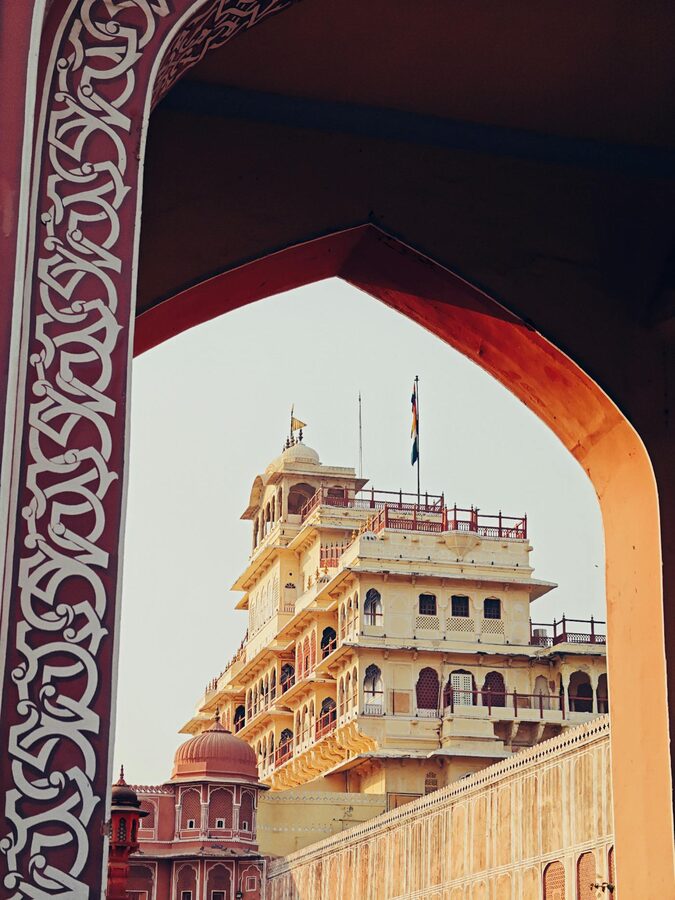
3. 3-Days Private Luxury Golden Triangle Tour to Agra and Jaipur From New Delhi (Viator)
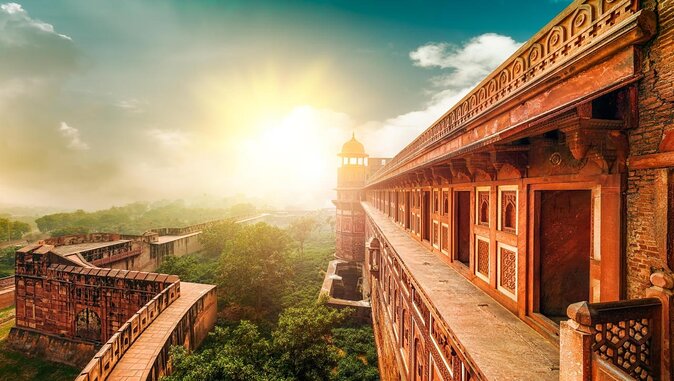
Most people who visit Jaipur are doing it as part of a Golden Triangle loop — Delhi, Agra, Jaipur — and a dedicated full-day city tour from your Jaipur hotel is redundant if you already have the circuit booked.
This 3-day private tour is the most-reviewed luxury version on Viator, with a clean 5.0 rating across 1,098 verified bookings, which for a three-day multi-city operation is a remarkable consistency signal.
The itinerary is the standard loop: day 1 pickup in Delhi, morning Old + New Delhi sightseeing, afternoon drive to Agra (3.5 hours on the Yamuna Expressway); day 2 sunrise Taj Mahal, Agra Fort, afternoon drive to Jaipur (4.5 hours); day 3 full Jaipur circuit — Amber Fort, City Palace, Jantar Mantar, Hawa Mahal — then drive back to Delhi.
It’s 900 km of driving in total, but with a dedicated car and driver the whole three days, so you never touch a public bus, train, or tuk-tuk.
What’s good: 4 and 5-star hotels are included on both overnight stops — the standard tier books you into the Crystal Sarovar or similar in Agra, and a heritage haveli like Umaid Mahal or the Alsisar in Jaipur — and the $127 per person rate for a couple sharing is an excellent value when you factor in the hotels, the car, the driver, all the transfers, the breakfast buffets, and the guide fees.
Licensed monument guides are provided at each stop rather than having the driver pretend to be a guide (which is a common corner-cutting tactic on budget Golden Triangle packages). Hotel pickup from any Delhi address is included. you will consistently hear mention the car is a Toyota Innova Crysta or equivalent, not a 15-year-old Tata Sumo, which matters across 900 km.
What’s not: Monument entry tickets are not included — expect about ₹3,500 ($42) per person in total entry fees across all three cities. Lunches are not included either — budget another $30 per person for three days of lunches. If you’re a solo traveler, the per-person rate roughly doubles because the hotels are priced on double occupancy.
And 3 days is genuinely tight for the Golden Triangle if you want any time to breathe — most travellers I know who’ve done the 3-day version wish they’d done 4 days with an extra night in Jaipur.
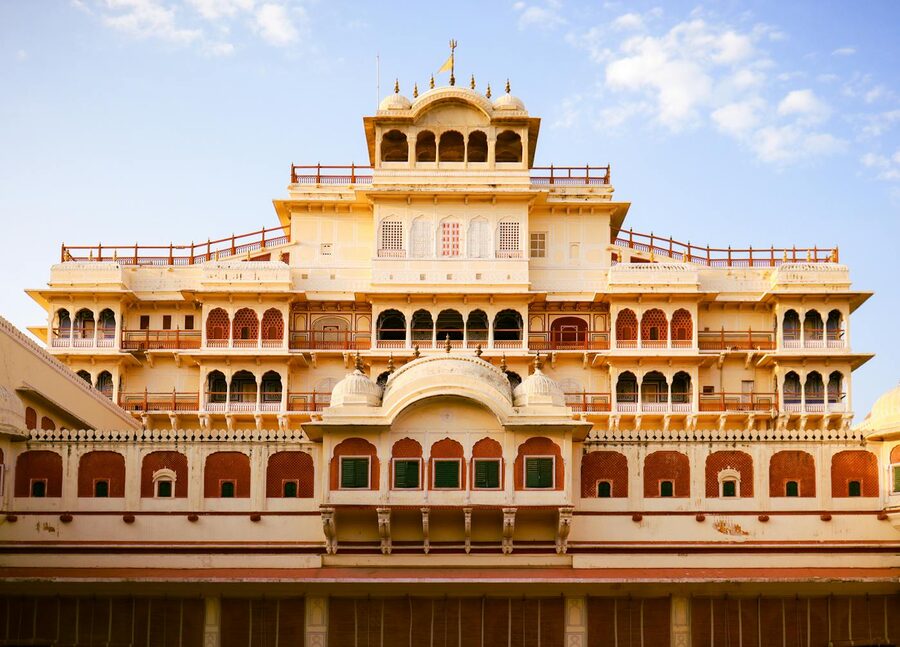
Which Tour Should You Actually Book?
Simpler than it sounds. If you’re in Jaipur as part of a pre-booked Golden Triangle package, you already have a city tour — Tour #3 covers it. If you’re in Jaipur independently for a day or two, Tour #1 is your main booking because it’s the cheapest full-day circuit on any platform and the 1,839 reviews are too many to fake.
Add Tour #2 on a second morning if you’re staying two nights and want the Old City bazaar experience at dawn — it’s the best $32 you’ll spend in Rajasthan. If you only have 24 hours in Jaipur total, skip Tour #2 and just do Tour #1; the walled city bazaars are already part of that itinerary, just at a busier time of day.
The one scenario where none of these three is the right pick: if you’ve landed in Jaipur without Agra on your itinerary and want to do a Taj day trip as an add-on, you’re better off booking a separate Taj Mahal day trip from Delhi on a different day, or looking at the same-day Jaipur-to-Agra round trip which runs roughly 10 hours door-to-door.
What You’re Actually Seeing: The Jaipur Circuit
Every full-day Jaipur city tour hits the same headline sights because the city was built on a grid and the monuments are within 15 km of each other. Here’s what each one is and why it’s on the itinerary.
Amber Fort (Amer Fort)
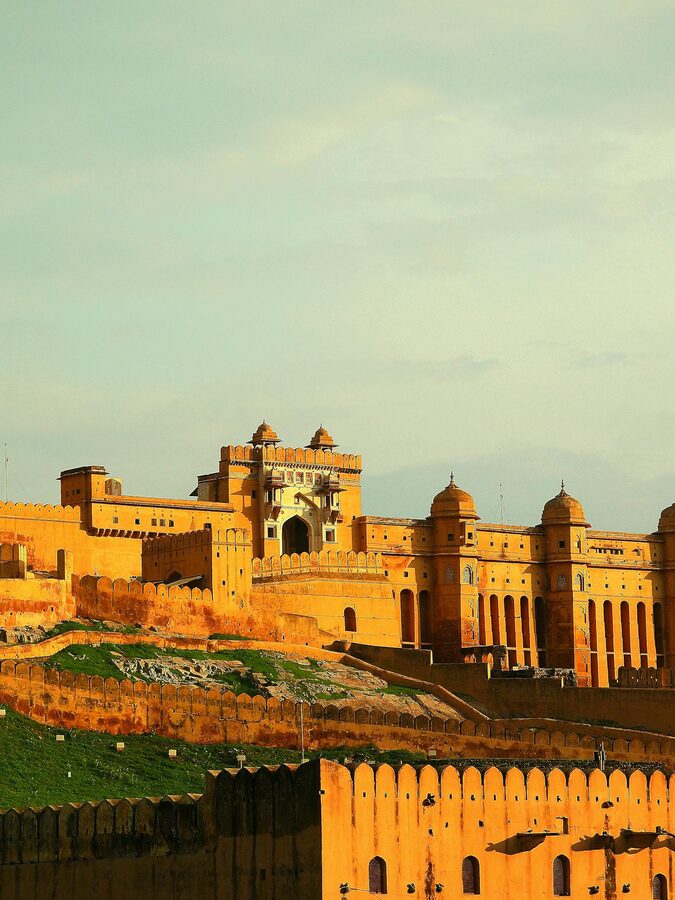
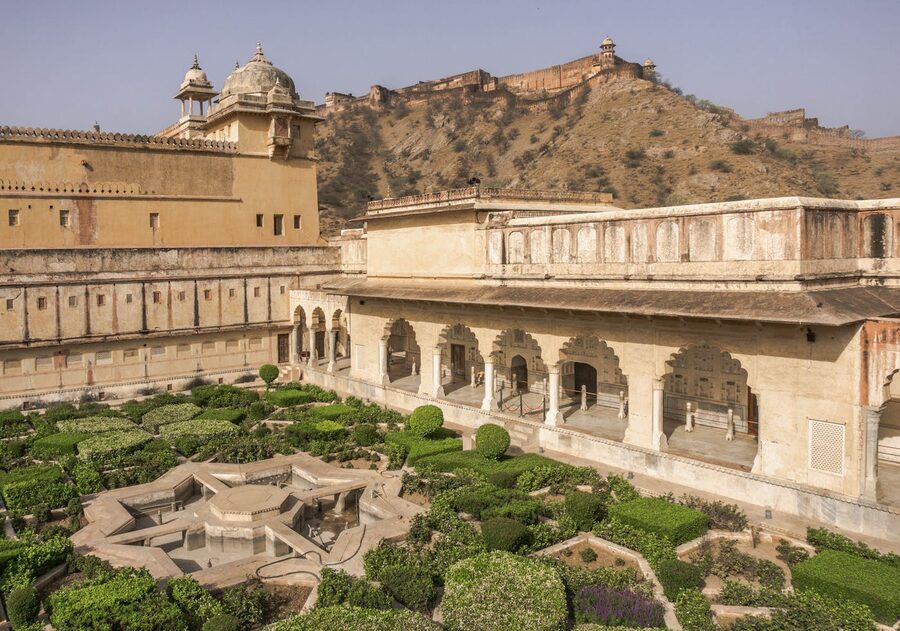
Amber Fort sits 11 km north of central Jaipur on a ridge of the Aravalli Range, overlooking Maota Lake. Construction started in 1592 under Raja Man Singh I, one of the Mughal emperor Akbar’s senior generals, and the fort was expanded continuously for the next 150 years by his successors.
It was the capital of the Kachhwaha Rajputs before Jaipur itself was founded — Jaipur was a planned replacement built when the ridge-top position became too cramped and water-starved for a growing administrative city.
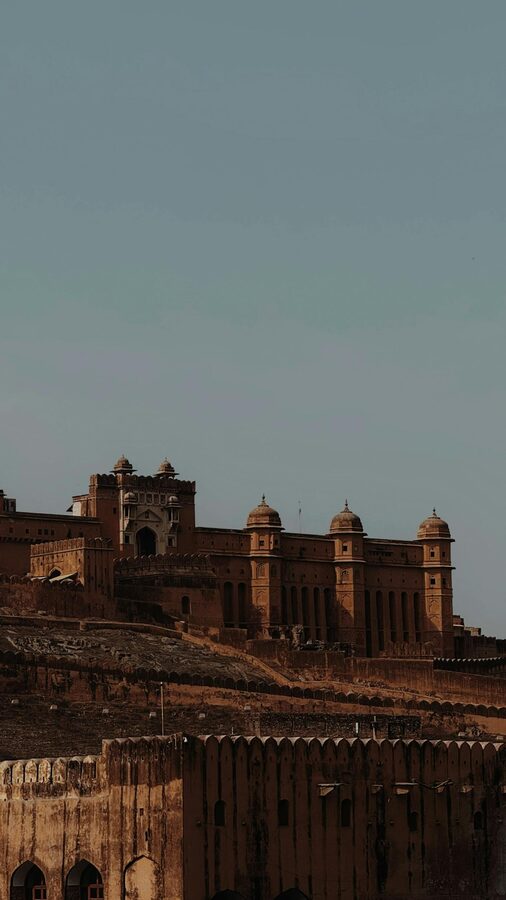
You enter through Suraj Pol (the Sun Gate) on the eastern side — historically the ceremonial entrance because it faces the sunrise — into the Jaleb Chowk, the main courtyard where cavalry formations once mustered. From there the fort unfolds through four successive courtyards, each higher than the last:
- Diwan-i-Aam (Hall of Public Audience). A hypostyle hall with 27 pillars where the Raja heard petitions from commoners. The ceiling is unpainted sandstone — this was deliberately the “public” side of the fort, showing restraint rather than royal excess.
- Ganesh Pol. A spectacular painted gateway — frescoed in mineral pigments and real gold leaf — that leads to the private royal quarters. Every Amber Fort photograph on Instagram was taken facing this gate.
- Sheesh Mahal (Mirror Palace). The reason most people come. A private audience chamber whose walls and ceiling are inlaid with thousands of tiny Belgian mirror shards, so that a single candle flame multiplies into a constellation. The mirrors were installed in the early 17th century. Your guide will demonstrate the candle trick if the room isn’t overcrowded.
- Sukh Niwas (Hall of Pleasure). The cooled apartment where the royal women lived. A carved channel of water runs through the floor, fed by an aqueduct from the hills above — the water evaporates as wind blows across it, dropping the room temperature by 5–8°C even in June. Early air conditioning.
- Zenana. The queens’ quarters — a separate compound with individual apartments for each of the Raja’s twelve wives, designed so none could see into another’s quarters.
Budget a minimum of 90 minutes inside the fort. Most tours allow 2 hours including the climb up from the parking area. Entry is ₹550 ($6.50) for foreign adults, ₹100 for Indians.
About the elephant ride up to the main gate: skip it.
Most operators will offer it as an add-on (roughly ₹1,100 per person, paid separately at the ticket booth) because it’s a photo-op that pre-dates modern concerns about captive elephant welfare, but animal rights organizations have documented that many of the Amber Fort elephants are worked six days a week in hot conditions, with ongoing injury issues.
The standard Jeep shuttle up the same road costs ₹400 and takes seven minutes. You’re not missing anything — the views from the Jeep are identical, and the walk up from the main parking area is only 10 minutes if you’d rather do it on foot.
Jal Mahal (The Water Palace)
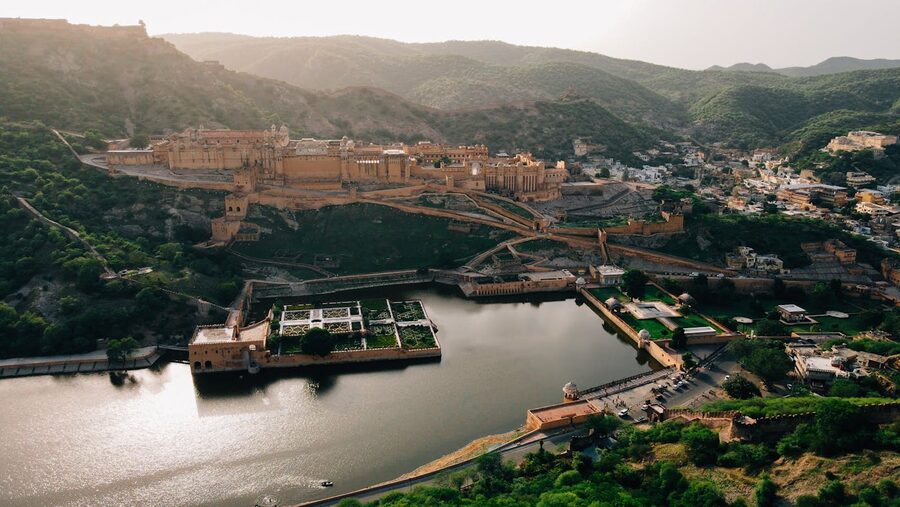
A photo stop, not a walkable monument. Jal Mahal is a 18th-century royal pleasure palace sitting in the middle of Man Sagar Lake, halfway between central Jaipur and Amber Fort. Four of its five stories are underwater when the lake is full — only the top story is visible above the waterline, which is the whole point of the architecture.
It was built as a duck-hunting lodge for the royal family and is currently closed to the public (restoration is ongoing and has been, semi-informally, since the 1990s). Your car will stop at the causeway on the lake’s southern edge for a 10-minute photo break. Sunrise and late afternoon are both excellent — the palace reflects cleanly in the still water when the wind dies down.
City Palace
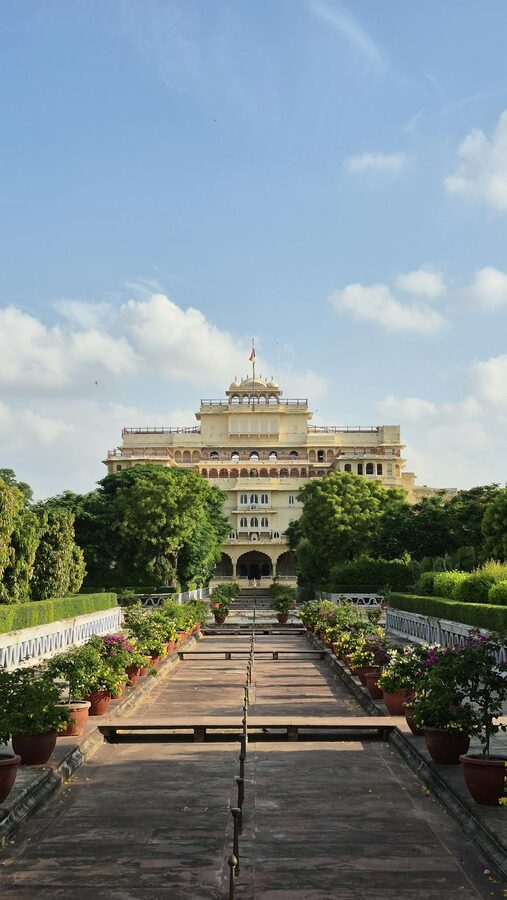
Back inside the walled Old City. The City Palace complex was built by Sawai Jai Singh II starting in 1727, the same year he founded Jaipur itself, and it still houses the descendants of the royal family — a wing called Chandra Mahal is the private residence of the current Maharaja, Padmanabh Singh, and you cannot enter it.
The rest of the complex is a museum and it’s massive: courtyards, armories, a textile gallery with 18th-century brocade robes, and the Diwan-i-Khas (Hall of Private Audience), which contains two silver urns so large they’re listed in the Guinness Book of World Records — each holds 4,091 liters of water, and the Maharaja Sawai Madho Singh II used them to carry Ganges water with him on a 1902 trip to London for King Edward VII’s coronation because he wouldn’t drink English tap water.
Budget 75–90 minutes. Entry is ₹700 ($8.50) for foreign adults for the standard museum ticket, or ₹3,500 for the composite ticket that adds the private Royal Grandeur tour through rooms normally closed to the public. The composite ticket is overpriced unless you’re a serious architecture nerd.
Jantar Mantar
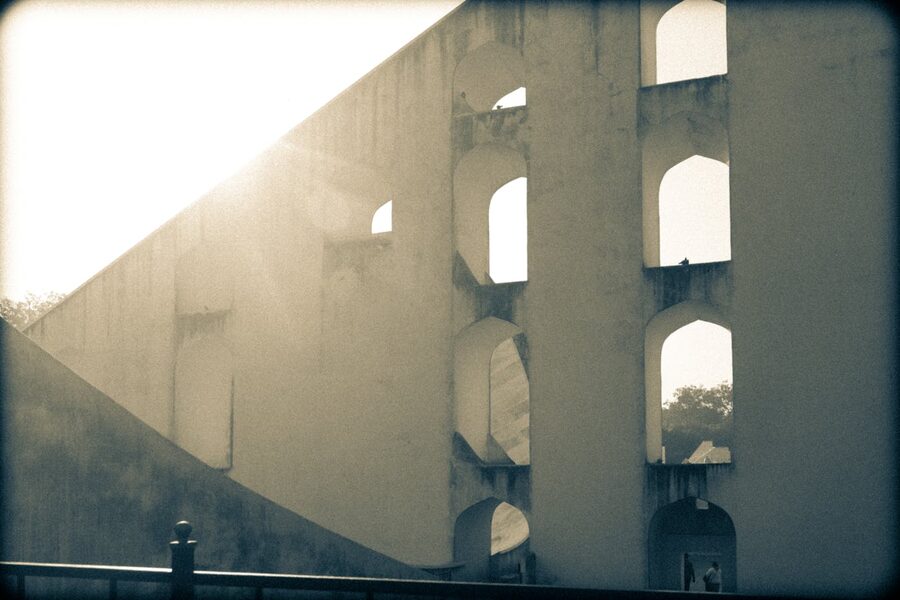
A 250-meter walk from the City Palace’s southern gate. Jantar Mantar is an open-air astronomical observatory built between 1728 and 1734 by Sawai Jai Singh II, who was a working astronomer as well as a ruler. It contains 19 fixed instruments, all built in stone and brass at enormous scale because Jai Singh had noticed that smaller brass instruments lost accuracy with small-scale fabrication errors.
The largest instrument on the site is the Samrat Yantra, a 27-meter sundial that measures local solar time to within 2 seconds — which, for a stone sundial built in 1734, is a genuinely extraordinary engineering achievement. It’s a UNESCO World Heritage Site.
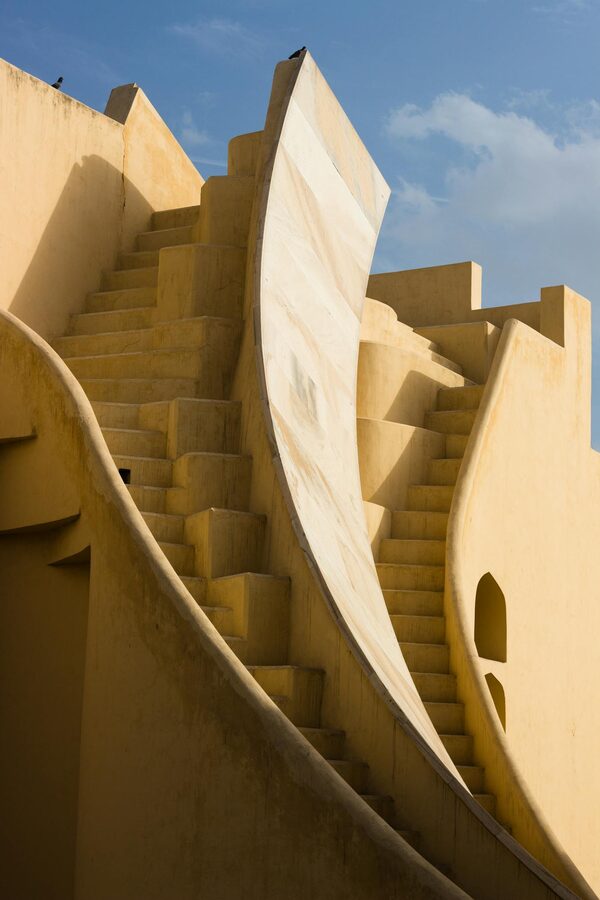
Budget 45 minutes. Entry is ₹200 ($2.40). Your guide will walk you through three or four of the principal instruments — the Samrat Yantra sundial, the Rashi Valaya (twelve zodiac instruments), the Jai Prakash Yantra (a hemispheric instrument used for measuring planetary positions against a marble grid). It helps enormously to have a guide who knows how the instruments actually work — without one, it looks like an abstract sculpture garden.
Hawa Mahal (Palace of Winds)
The five-story red-and-pink sandstone façade that is the single most-photographed building in Jaipur. It was built in 1799 by Maharaja Sawai Pratap Singh, designed by Lal Chand Ustad in the shape of Krishna’s crown, and it’s really not a palace at all — it’s a screen. The rooms behind the façade are small and plain.
The 953 latticework windows (called jharokhas) were designed so that the women of the royal household could watch the street processions on the main bazaar below without being seen themselves, which is the origin of the “Palace of Winds” name — cool air funnels through the lattice and ventilates the chambers behind.
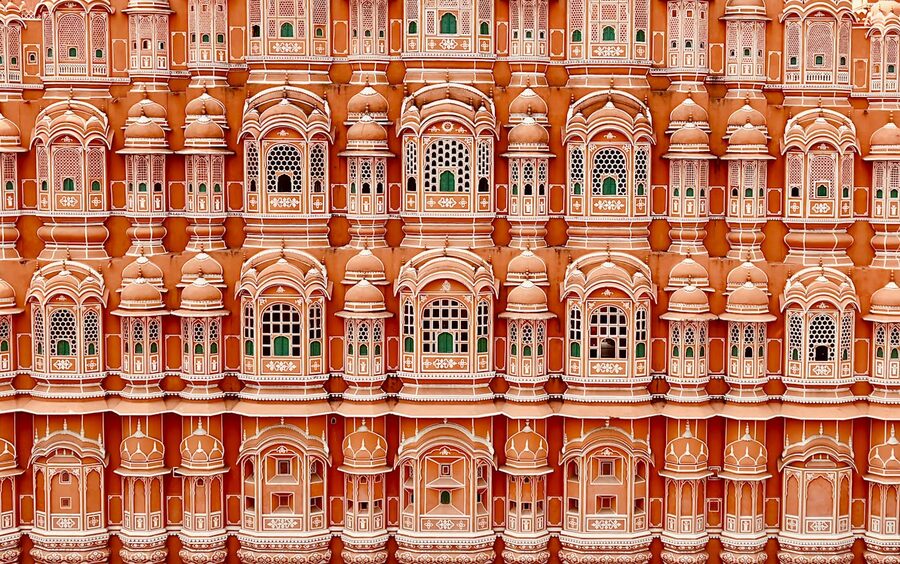
Most city tours stop here for 20 minutes and take photos from across the road at the Tattoo Café rooftop — the view is better from there than from inside. If you do want to go in, the entry fee is ₹200 and you’ll spend 30 minutes walking the narrow staircases up to the top. Mornings between 8 and 9:30 am are the best light for the façade; the sun hits it directly from across the bazaar.
Optional Extras (if time allows)
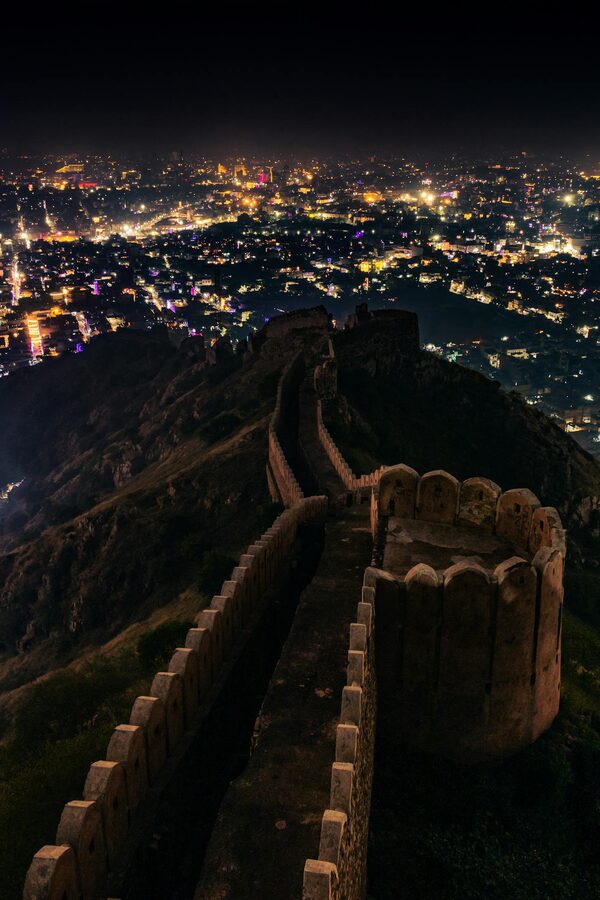
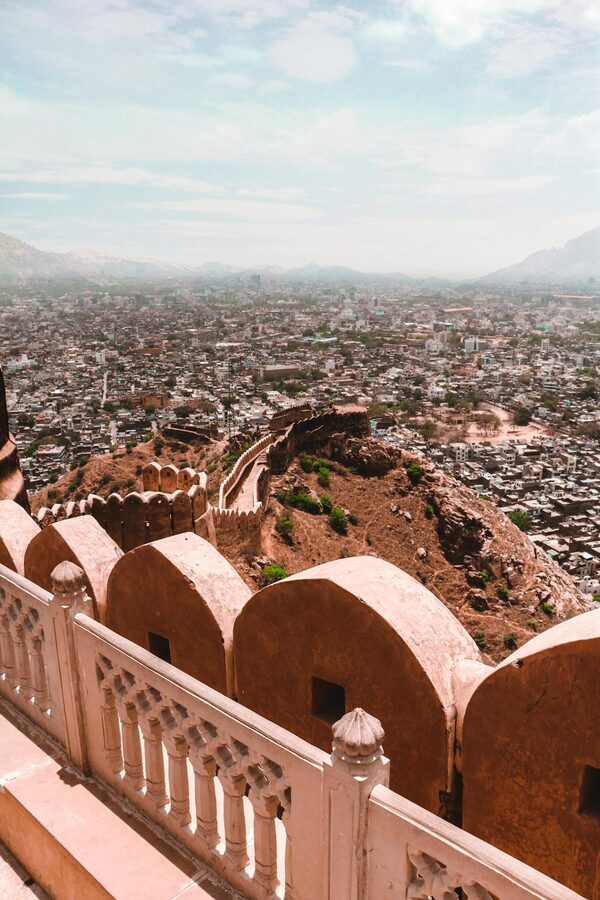
- Nahargarh Fort. 6 km north of the Old City, on a ridge overlooking Jaipur. Built in 1734 as a retreat fort. The main draw is the sunset view over the entire pink grid of the walled city — honestly one of the best panoramas in India. If your guide has a flexible itinerary, ask for this instead of Jal Mahal as your late-afternoon stop. Entry ₹200.
- Jaigarh Fort. Directly above Amber Fort, connected by a 2-km walled corridor. Houses the Jaivana cannon, which was cast on-site in 1720 and is (at 50 tons) the world’s largest wheeled cannon. Historically important, visually impressive, and usually skipped because it takes an extra 45 minutes.
- Albert Hall Museum. A Victorian-era museum in the Ram Niwas Garden just south of the Old City walls. Indo-Saracenic architecture, mostly Rajasthani textiles and weapons inside. Worth a stop for the exterior; the interior is second-tier.
- Patrika Gate. A 2016 landmark at Jawahar Circle — not historically significant, but genuinely the best place for photographs of pink sandstone archways framed by painted ceilings. 15 minutes, free, and it’ll be the photo you actually post from Jaipur.
What to Eat in Jaipur
Jaipur is a Rajasthani food city, which means a specific regional cuisine built around lentils, desiccated vegetables (the desert didn’t grow many fresh ones historically), ghee, and spiced yogurt.
It’s different from the Punjabi-dominant food you’ll eat in Delhi and different from the Mughal-influenced food you’ll eat in Agra — this is the place to actually try the regional specialties, and most full-day tours skip all of them in favor of generic tourist thalis. Tell your guide before the tour starts what you want to eat and they’ll route lunch accordingly.
The signature dishes you’ll only get properly in Jaipur:
- Dal Baati Churma. The Rajasthani state dish — three separate components served together on a steel thali. Dal is a spiced lentil curry. Baati are round hard-baked wheat dumplings, broken open and dunked in ghee. Churma is crushed baati tossed with sugar, cardamom, and more ghee, eaten as a dessert course. It’s the calorie density of a cold-climate desert cuisine applied to a hot-climate city, which makes no sense until you realize that historical Rajasthani life involved a lot of long camel rides and very little refrigeration.
- Laal Maas. A fiery red mutton curry made with Mathania chilies, yogurt, and garlic, originating in the royal kitchens of Rajasthan where it was cooked over wood fires in clay pots for six or seven hours until the meat fell off the bone. The color is scarlet and the heat is real. Handi Restaurant on MI Road does the benchmark version.
- Gatte ki Sabzi. Steamed chickpea-flour dumplings simmered in spiced yogurt gravy. The original Rajasthani “vegetable” dish invented to get around the fact that fresh produce was rarely available — gatte is a flour-based substitute that absorbs the yogurt sauce the way a real vegetable would.
- Ker Sangri. A sautéed desert-plant dish made from two native Rajasthani ingredients: ker (a wild caper-berry) and sangri (a long dried bean pod from the khejri tree). Sharp, chewy, completely unlike anything outside Rajasthan. You won’t love it the first time. The second time you will.
- Ghevar. A disc-shaped honeycomb dessert deep-fried in ghee and soaked in sugar syrup, traditionally made during the Teej festival but available year-round. Rawat Mishtan Bhandar opposite Sindhi Camp bus station is the gold standard.
For specific lunch stops your guide can actually walk you to:
- Rawat Mishtan Bhandar (Station Road). A legendary Jaipur sweet shop that also does an excellent pyaaz kachori (onion-stuffed fried pastry) for breakfast and a solid thali at lunch. Crowded, fast, authentic. About ₹250 per head.
- LMB (Laxmi Mishthan Bhandar, Johari Bazaar). Pure vegetarian, inside the Old City, 295 years old (seriously), famous for the “LMB thali” which is a rotating set menu of six or seven Rajasthani dishes plus dal baati churma and ghevar. About ₹650 per head. The dining hall is air-conditioned, which matters.
- Handi (MI Road). The laal maas specialist. Non-vegetarian, sit-down, mid-range. About ₹1,200 per head for two people sharing.
- Sanjay Omelette (MI Road). A street-food institution that does 42 varieties of omelette and absolutely nothing else. Breakfast only. ₹100 per head.
- Chokhi Dhani. This is the ethnic-village-restaurant theme park on the Tonk Road south of the city, and it’s touristy but it’s touristy in a way a lot of travellers actually enjoy — folk dance, camel rides, puppet shows, and unlimited Rajasthani thali on leaf plates. Skip if you want authentic, book if you’re traveling with kids. ₹900 per head, dinner only, 6 pm onwards.
Practical Things Nobody Tells You
When to Go
October to March is the only realistic window. November through February is ideal: daytime temperatures of 20–25°C, clear skies, cool evenings requiring a light jacket. March gets warm fast (28–32°C). April to June is brutal — temperatures routinely exceed 42°C and the walled Old City becomes a heat trap by 11 am.
July to September is the monsoon, which in Jaipur is unreliable and short; the rain will cool things down but it also turns the unpaved paths at Amber Fort into mud. If you have any flexibility, aim for December or January — you’ll get clear skies, open-neck-shirt weather, and the lowest humidity of the year.
What to Wear
Comfortable walking shoes with closed toes (you’ll be walking cobblestones, gravel paths, and sandstone steps worn smooth by 400 years of foot traffic — flip-flops are a recipe for a turned ankle). Lightweight trousers or a long skirt are better than shorts for temple visits and because the afternoon sun in Rajasthan is stronger than it looks.
A scarf or light cotton shawl for women, useful both as sun protection and as an improvised head covering at any working temple. Sunglasses and a hat. A small daypack with water — the tours will stop at shops but it’s easier to have your own.
Getting Around Outside the Tour
Ola and Uber both work in Jaipur and they’re the safest default for any unaccompanied movement around the city. Auto-rickshaws are everywhere but the meters are essentially fictional — always agree a price before you get in, or ask your hotel to call one with a set fare. For short distances inside the walled Old City, a bicycle rickshaw (₹50–100 per short hop) is faster than a tuk-tuk because the streets are too narrow for cars and the rickshaw can cut through gaps.
Money and Bargaining
Carry 2,000–3,000 rupees in small notes for entry fees, rickshaws, and street purchases. Monuments accept card payment at the ticket booth (sometimes — the machines are frequently down), but the bazaar economy runs on cash. ATMs at MI Road and outside the City Palace work on most international cards.
Bargaining in Johari Bazaar and Bapu Bazaar is expected — start at 40% of the opening price, settle around 60–65%. If the shop has marked prices and a “fixed price” sign, don’t bother. Government emporiums (Rajasthali on MI Road, for example) have fixed prices and are a decent baseline for what things should cost.
Shopping Actually Worth Doing
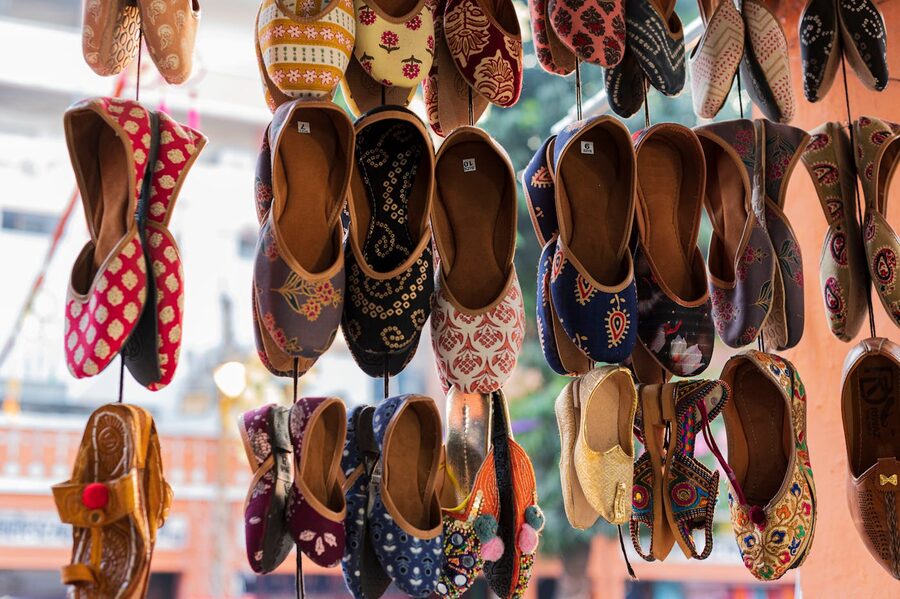
Jaipur is famous for three things you can genuinely buy better here than anywhere else in India: block-printed textiles (the Bagru and Sanganer villages south of the city are where the originals come from), semi-precious stones (the city is a global cutting center for emeralds, rubies, and tanzanite), and hand-enameled silver jewelry (meenakari work). Johari Bazaar is the jewelry strip.
Bapu Bazaar is the textile strip. If you want to see block-printing happening live, Anokhi’s museum in Amber village runs a small workshop, and the original Anokhi store in C-Scheme is the best-curated modern outlet for traditional block-prints.
Bathrooms
Amber Fort, City Palace, and Jantar Mantar all have maintained public bathrooms at the entry gates — Amber Fort’s are the cleanest of the three. Hawa Mahal does not, so use the facilities at City Palace before you walk over. The Tattoo Café across the street from Hawa Mahal lets you use their bathroom if you buy a ₹100 lime soda, which is well worth it.
Tipping Your Guide and Driver
Standard practice on a private full-day tour is ₹500–800 ($6–10) for the guide and ₹300–500 ($4–6) for the driver, given at the end of the day in cash. It’s not in the booking price and they rely on it — driver salaries in the tour industry are in the ₹12,000–15,000/month range before tips. If the guide was excellent (unprompted explanations, knowledge of the history, routing you around the crowds), tip at the upper end.
How Much Time Do You Actually Need in Jaipur?
Minimum is one full day for the standard Amber Fort + City Palace + Jantar Mantar + Hawa Mahal circuit — that’s what Tour #1 above delivers in 8 hours. Two days is better: one day for the monument circuit, one day for everything else (Nahargarh sunset, Old City walking, textile shopping in Bapu Bazaar, an early-morning bike tour or a cooking class).
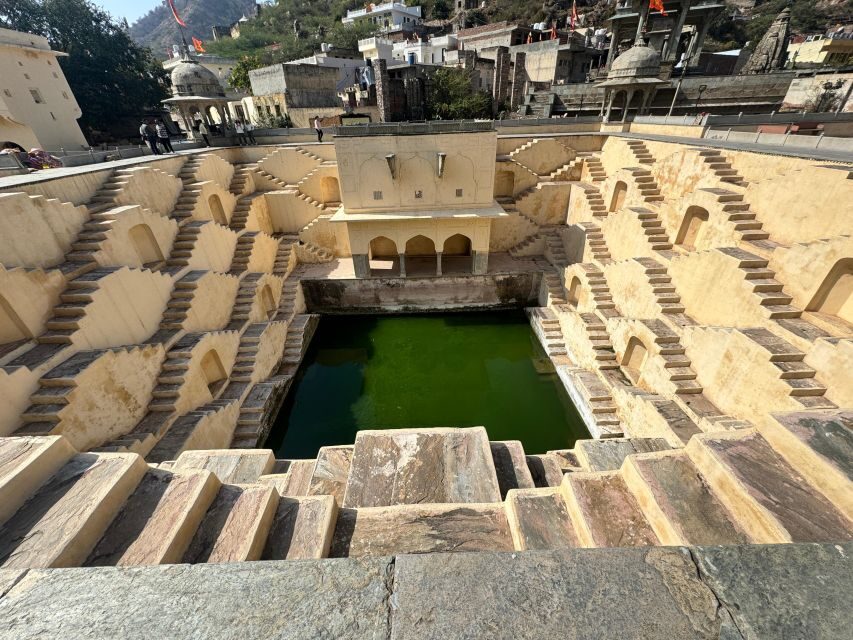
Three days lets you add a half-day trip out to the Abhaneri step-well and Bhangarh “haunted fort” about 90 km east of the city, or a textile village visit to Bagru or Sanganer.
If you’re on the classic Golden Triangle loop, most itineraries allocate 1.5 days to Jaipur and rush through Amber Fort and City Palace on day one and Jantar Mantar and Hawa Mahal on the morning of day two before heading back to Delhi. That’s survivable but tight — you won’t have time to eat well or shop or take the Nahargarh sunset. If you can add one more night, do it.
Nearby Day Trips and Extensions
Jaipur is the anchor of Rajasthan and the jumping-off point for most multi-day Rajasthani itineraries. If you have more than two nights, a few worthwhile extensions:
- Agra and the Taj Mahal. 240 km east, 4.5 hours by the Yamuna Expressway (via Bharatpur). A same-day round-trip is brutal but doable if you leave by 5 am and sleep on the drive back. More commonly this is done as an overnight, paired with the Taj Mahal from Delhi or as part of the full Golden Triangle loop.
- Pushkar. 150 km west, the holy lake town with 52 ghats and the only Brahma temple in India. A day trip is possible (3 hours each way), but an overnight is more relaxed — the sunset aarti on Pushkar Lake is worth planning around.
- Ranthambore National Park. 180 km south-east, one of India’s best tiger reserves, peak season November to April. You need to book a safari permit in advance (online at the Rajasthan Tourism website) and budget two nights to get at least two safari slots. Serious wildlife travellers add this as the natural counterpoint to Jaipur’s cultural density.
- Jodhpur (The Blue City). 340 km west, 6 hours by car or train. The Mehrangarh Fort is the most impressive medieval fort in India — bigger and better preserved than Amber. You need two nights minimum.
- Abhaneri Step-Well (Chand Baori). 95 km east on the Agra road. A 9th-century step-well with 3,500 steps descending 30 meters into the earth — one of the deepest and most geometrically impressive step-wells in India. Easy half-day side-trip from Jaipur if you’re driving to Agra.
- Delhi. 270 km north, the other end of the Golden Triangle. If you haven’t already done a Delhi city tour, the Old and New Delhi city tour is the natural pairing for a multi-city trip — most international visitors fly in and out of Delhi so you’ll be there anyway.
Common Mistakes to Avoid
A few things that regularly go wrong and are easy to prevent:
- Arriving at Amber Fort after 10 am. By 10:30 the coach tours from Delhi have arrived and the Ganesh Pol and Sheesh Mahal become genuinely unpleasant. Book a tour that pickups at 8 am or earlier — you want to be inside the fort at 9 am sharp.
- Booking an afternoon Hawa Mahal photo stop. The façade faces east. Morning light between 7:30 and 10 am hits it directly; by noon it’s in shadow and the pink goes flat. Ask your guide to reorder the day so Hawa Mahal is the first or second stop.
- Taking the elephant ride up to Amber Fort. Skip it. The Jeep is cheaper, faster, and doesn’t involve captive animals working in the sun.
- Trusting “gemstone investment” shops. Jaipur has a real and well-earned reputation for semi-precious stones — and a parallel reputation for sophisticated gem scams targeting foreigners. Buy small pieces from reputable government-certified shops (Gem Palace on MI Road is the recognized high-end institution). Never buy “investment” gems that a shop offers to sell at cost and re-buy at a profit. That is always a scam. Always.
- Walking alone through the Old City bazaars after dark. Not dangerous in the violent sense, but the closing streets get aggressive touts, rickshaw drivers who don’t take no for an answer, and the occasional pickpocket around the Hawa Mahal crowds. Evening shopping is best with the tour guide or in a hotel car.
- Skipping Jantar Mantar because “it’s just a garden.” Without a guide who knows the instruments it does look like a garden. With a good guide it’s a 45-minute crash course in 18th-century observational astronomy, and you’ll come away understanding something genuinely impressive. Don’t skip it.
The Honest Summary
Jaipur rewards effort. If you book a standard mid-range Golden Triangle package and drive through the city at tour-coach pace, you’ll see Amber Fort and the City Palace and you’ll go home with a phone full of photos of a pink façade, and that’s a perfectly reasonable trip.
If you book Tour #1 above, stay two nights, add Tour #2 for the dawn Old City bike ride, eat dal baati churma at LMB, and watch the sun set over the pink grid from the Nahargarh ramparts, you’ll come away understanding why Jaipur is the city in India that most travellers describe, later, as the place they’d go back to first.
The monuments are remarkable, but the thing that sticks is the density — 4 centuries of Rajput royal ambition, Mughal influence, British administrative footprint, and modern Indian street life, all packed into a six-square-kilometer walled grid that is still, by law, the color of diluted strawberry milk. There’s nothing else quite like it.
Book a full day with a licensed guide. Start early. Skip the elephant ride. Eat the dal baati churma. Tip the driver.