
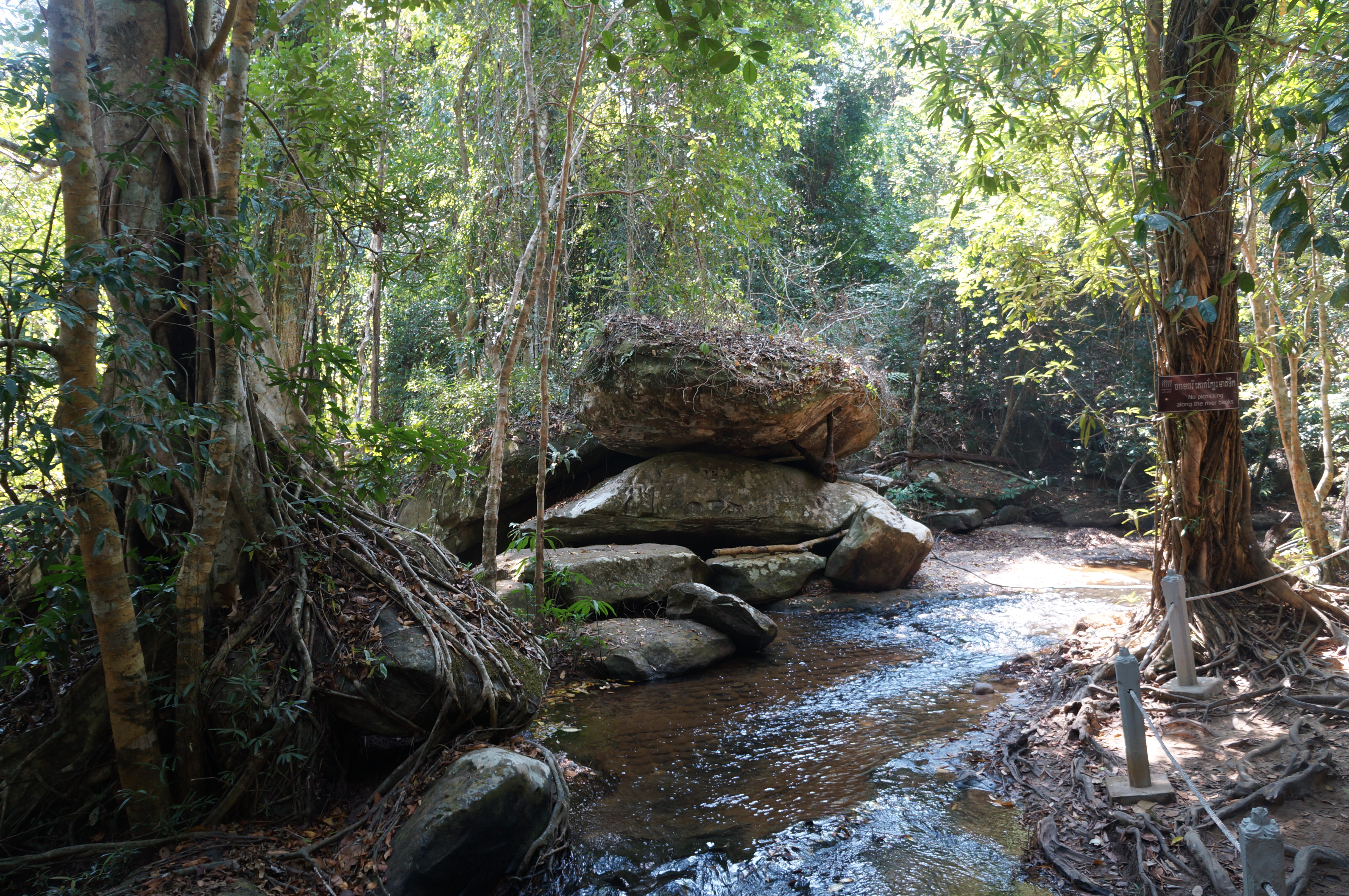
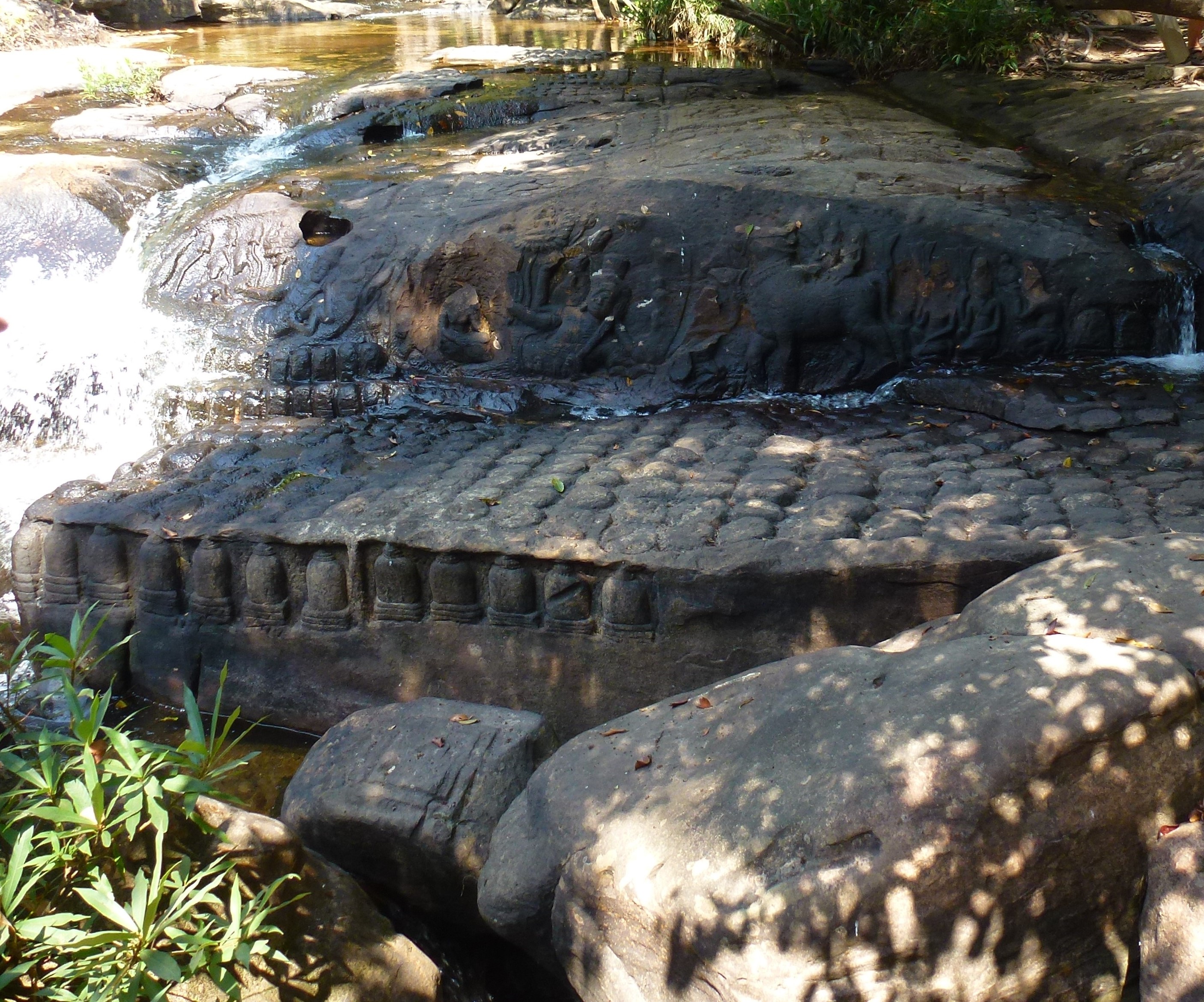
The 1000 Lingas aren’t statues standing on a riverbank or carvings hidden in a cave. They’re chiseled directly into the sandstone bed of a shallow jungle river on the slopes of Phnom Kulen, and you see them through moving water.
Step across the stream at Kbal Spean in the dry months and rows of small phallic stones, reliefs of Vishnu reclining on a serpent, and images of the god Brahma emerge beneath your feet as the current ripples across them.
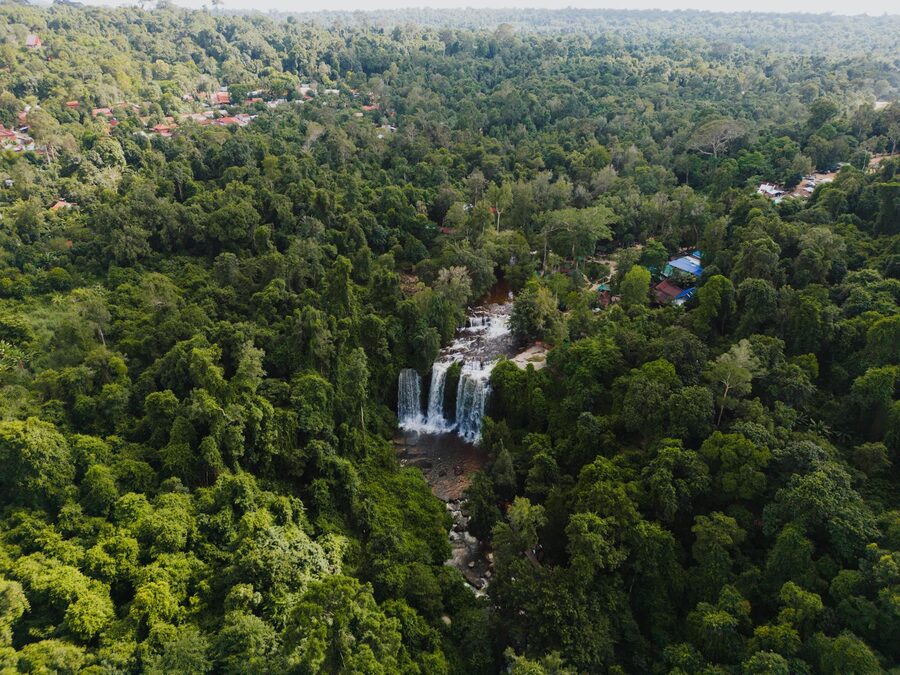
Upstream, the Kulen river drops twice — a quick cascade the locals use as a shallow pool, then a 20-metre curtain crashing into a deep plunge basin where dozens of visitors swim on any given afternoon. The whole place was a sacred mountain capital a thousand years before Angkor Wat was even planned, and a half-day tour from Siem Reap takes you through all of it.
This is the article I wish I’d had before booking Kulen Mountain for the first time. I’ll walk through exactly what the three best-reviewed tours include, where they differ, what the drive is actually like, what you need to bring, and the small logistical decisions that make the difference between a good day and a frustrating one. No affiliate fluff — just the details a friend who’s done this a few times would tell you over coffee.
- Why Kulen Mountain is worth the drive
- The three tours worth considering
- 1. Kulen Waterfall & 1000 Lingas Join-In Tour (Viator — most reviewed)
- 2. Kulen Mountain Small-Group Tour and Picnic Lunch (GetYourGuide)
- 3. Siem Reap: Kulen Mountain, Beng Mealea & Tonle Sap (GetYourGuide — the marathon)
- Which tour should you pick?
- What the 1000 Lingas actually are
- What the waterfalls are like
- The reclining Buddha at Preah Ang Thom
- Practical logistics
- What to wear and bring
- Entrance fees
- The one-way road rule
- Food and water
- When to visit Kulen Mountain
- How Kulen compares to other Siem Reap day trips
- Can you do Kulen Mountain without a tour?
- Common questions I get asked about Kulen Mountain
- Is Kulen Mountain safe for kids?
- Is the waterfall swimming safe?
- Do I need to book in advance?
- Can I wear shorts and a tank top?
- How much should I tip the guide?
- What should I do in the evening after Kulen?
- Will there be WiFi or phone signal?
- Is it worth it if I’ve already seen Angkor Wat?
- Building your Siem Reap itinerary around Kulen
- Final thoughts
Why Kulen Mountain is worth the drive
Siem Reap sits in the Cambodian lowlands. Phnom Kulen is the closest real mountain — about 50km to the northeast, rising a modest 487 metres above the plains but looming huge culturally and historically. This is where King Jayavarman II declared Cambodia’s independence from Java in 802 CE and named himself a devaraja, a god-king, setting the ritual foundation that the Khmer empire would build on for the next six centuries. Angkor Wat exists because Kulen came first.
For a modern visitor, the mountain delivers four distinct things in a single day: a long, scenic drive through rice paddies and bamboo forest; the 1000 Lingas riverbed carvings at Kbal Spean; the twin waterfalls at Phnom Kulen National Park; and the reclining Buddha at Preah Ang Thom, a 17-metre figure cut from a single massive boulder at the summit.
Most tours hit three of the four. A few ambitious ones do all of it plus Beng Mealea or a Tonle Sap floating village stop on the return.
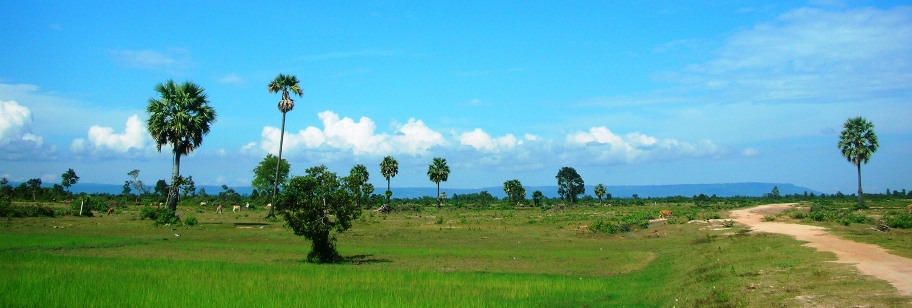
The drive matters more than you’d think. Once you clear Siem Reap’s outskirts you’re on narrow roads winding past villages where kids wave from doorways, water buffalo graze in flooded fields, and sugar palms lean at improbable angles. The final climb up the mountain is on a one-way road — traffic goes up before noon and down after noon, which is why virtually every tour leaves Siem Reap early and returns in the afternoon. It’s not flexible; it’s a national park rule.
The three tours worth considering
I pulled tour data from tens of thousands of traveler reviews across Viator, GetYourGuide, and Klook to find which Kulen Mountain tours consistently score well and handle the logistics properly. Three rose to the top. They all cost about the same — $48 — but they’re structured differently and suit different travellers.
1. Kulen Waterfall & 1000 Lingas Join-In Tour (Viator — most reviewed)
This is the volume champion — more than 2,400 reviews at a perfect five-star average, which is extremely hard to hold once a tour scales past a few hundred bookings.
The structure is classic small-group join-in: they collect you from your Siem Reap hotel between 7:30 and 8:00 in a “luxury minivan” (read: air-conditioned Toyota Hiace or similar with actual legroom and cold bottled water), drive 90 minutes out to Kbal Spean, spend about two hours walking the 1.5km uphill trail to the 1000 Lingas carvings, then continue to Phnom Kulen waterfall for lunch and swimming, with the reclining Buddha as a quick stop before heading back.
You’re home by mid-afternoon.
What people love: travellers praise the guides repeatedly by name — there’s a small rotation of local Khmer guides who explain the Hindu iconography and Jayavarman II’s history in a way that makes the site click. The van pickup is genuinely door-to-door, which saves you the tuk-tuk scramble in the morning dark. Lunch is included and it’s a proper Khmer set menu at a local restaurant near the waterfall, not a convenience-store boxed lunch.
What to know: The Kbal Spean hike is the real workout — it’s uphill, it’s roots and rocks, and in the wet season it’s slippery. Good shoes matter more than guides let on. If you have knee issues this tour is probably too strenuous.
2. Kulen Mountain Small-Group Tour and Picnic Lunch (GetYourGuide)
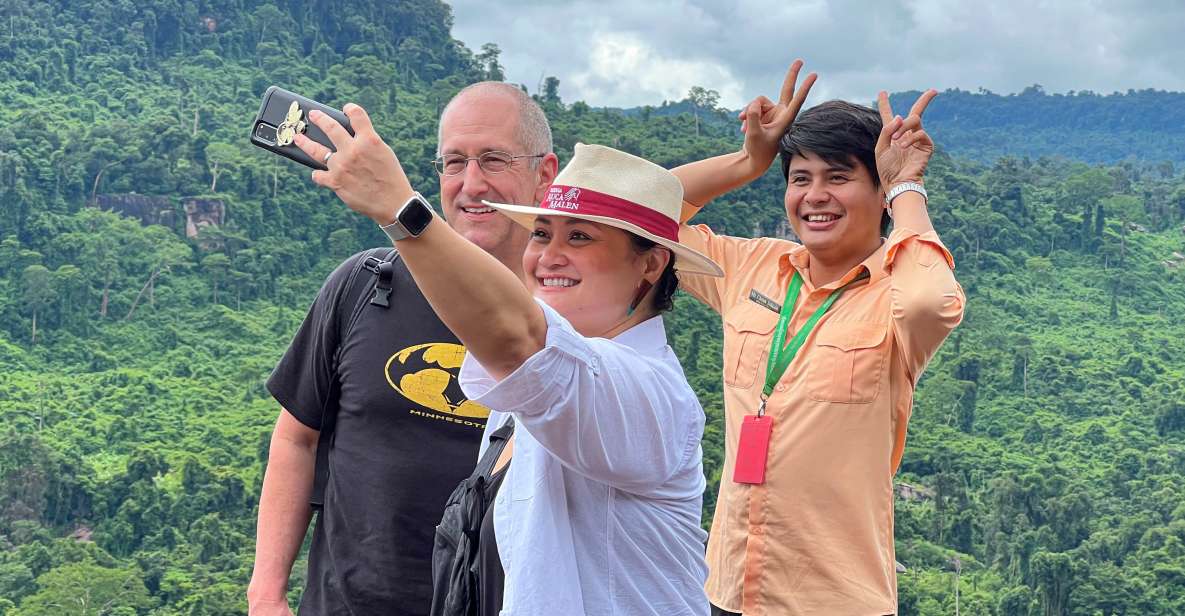
This is the sister tour on a different platform — same core itinerary but with the picnic lunch as a deliberate feature rather than a restaurant stop. Group size caps lower (usually 10 maximum), the vehicle is typically a minivan or SUV depending on headcount, and the picnic is set up near the upper waterfall on a shaded platform.
It’s a more relaxed pace than the Viator version, with an extra 45 minutes to an hour spent around the waterfall because you’re not losing time to a restaurant transfer.
What people love: The picnic itself. travellers describe fresh mango, sticky rice wrapped in banana leaf, grilled chicken, and iced jasmine tea carried up by the guides. Eating above the waterfall with the sound of the cascade below is the moment most people remember most. The smaller groups also mean the guide can actually answer individual questions instead of herding a busload.
What to know: Because it’s smaller and slower it doesn’t always hit both Kbal Spean AND the reclining Buddha — you’ll usually pick one. If the 1000 Lingas are your priority, confirm at booking that Kbal Spean is in the itinerary for your specific departure date. GYG’s listing lets you message the operator before booking.
3. Siem Reap: Kulen Mountain, Beng Mealea & Tonle Sap (GetYourGuide — the marathon)
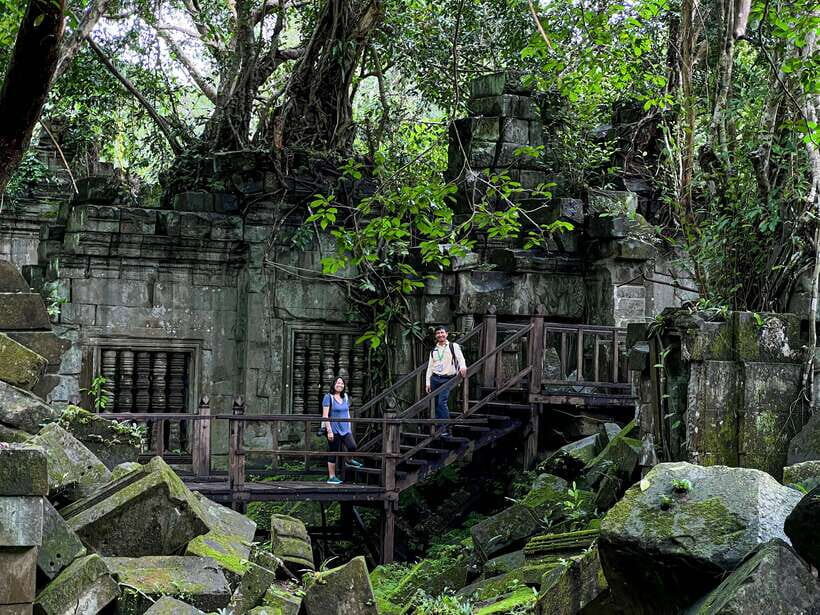
This is the combo tour for people who either have one spare day in Siem Reap and want to cram three signature sites into it, or for travellers who’ve already seen Angkor Wat and want to experience the other Cambodia in one swing.
You start at Kulen in the morning (waterfall + reclining Buddha, usually skipping Kbal Spean to save time), drive to Beng Mealea — the “jungle temple” that Angkor was before restoration, with trees growing through collapsed galleries — and then finish at Kampong Phluk floating village on Tonle Sap lake for sunset. Ten hours, door to door.
What people love: The variety. Waterfall, ruined temple, floating village — three wildly different Cambodias in one day. Photographers especially rate this tour because the light changes dramatically: hard midday sun at Kulen, dappled jungle shade at Beng Mealea, then golden hour over the lake.
What to know: It’s genuinely a long day. You’ll be in the vehicle for 4+ hours total, and by the time the Tonle Sap sunset finishes you’re still 45 minutes from Siem Reap. Not ideal with kids under 10 or if you’ve been hiking Angkor temples the previous day. Pack snacks, sunscreen, and a power bank for your phone.
Which tour should you pick?
Short version:
- First time in Siem Reap, want to see everything Kulen offers: Take the Viator Join-In Tour. It hits Kbal Spean, both waterfall levels, the reclining Buddha, and includes a sit-down lunch. 2,400+ reviews at 5 stars don’t happen by accident.
- You’re slow travellers, foodies, or you want a small group: Take the GetYourGuide Small-Group with Picnic. The pacing is gentler and the picnic above the waterfall is the memory you’ll come home with.
- One day left in Siem Reap, want to maximise what you see: Take the Kulen + Beng Mealea + Tonle Sap combo. You’ll sacrifice depth for breadth, but you’ll see three completely different Cambodias.
- History nerds who care specifically about the 1000 Lingas and Hindu iconography: Viator Join-In, and ask for the guide who specialises in Jayavarman II’s history. Several travellers name him directly. Pair it with a dedicated Angkor Wat sunrise tour on another day for the full story arc.
What the 1000 Lingas actually are
Kbal Spean translates roughly as “bridgehead” in Khmer — the site sits where the River of a Thousand Lingas crosses a natural stone bridge before continuing downhill toward Angkor. The carvings were made between the 11th and 13th centuries, mostly during the reigns of Suryavarman I and Udayadityavarman II, though earlier work goes back to the 9th century.
The theory, never entirely proven but widely accepted, is that priests carved lingas — phallic representations of Shiva’s creative energy — into the riverbed to sanctify the water before it flowed down to the Angkor temples, effectively blessing the empire’s capital from upstream.
What you actually see are hundreds of small cylindrical carvings in ordered rows across the river floor, plus larger relief panels on the banks showing Vishnu reclining on the serpent Ananta, Shiva and Parvati, Brahma on a lotus, and various avatars. In the dry months (November through April) the water is clear and shallow enough to walk the streambed in sandals and see everything. In the wet months the river runs harder and some carvings are only visible in glimpses.
The hike in is about 1.5km each way on a marked trail that climbs through dry dipterocarp forest. Allow 90 minutes for the round trip plus time at the site itself. There’s no food or water at the top — carry what you need.
What the waterfalls are like
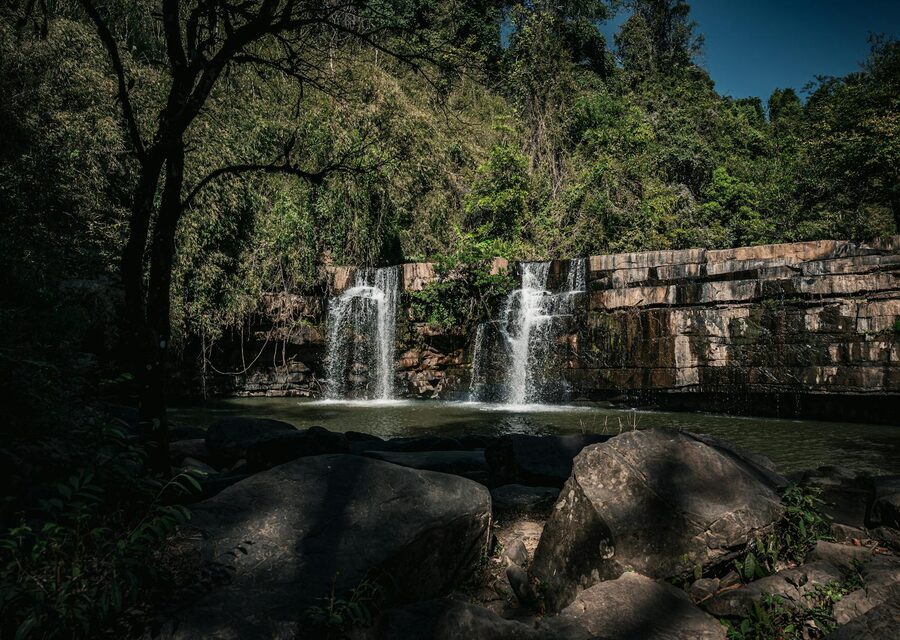
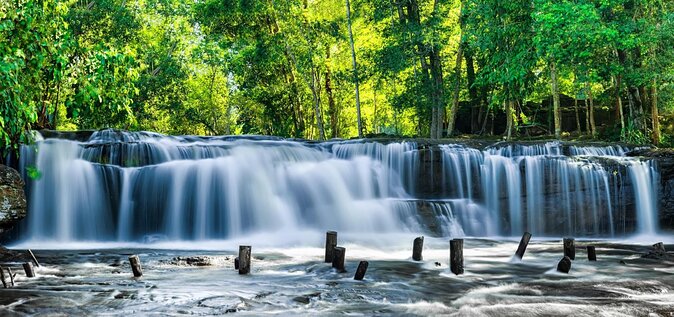
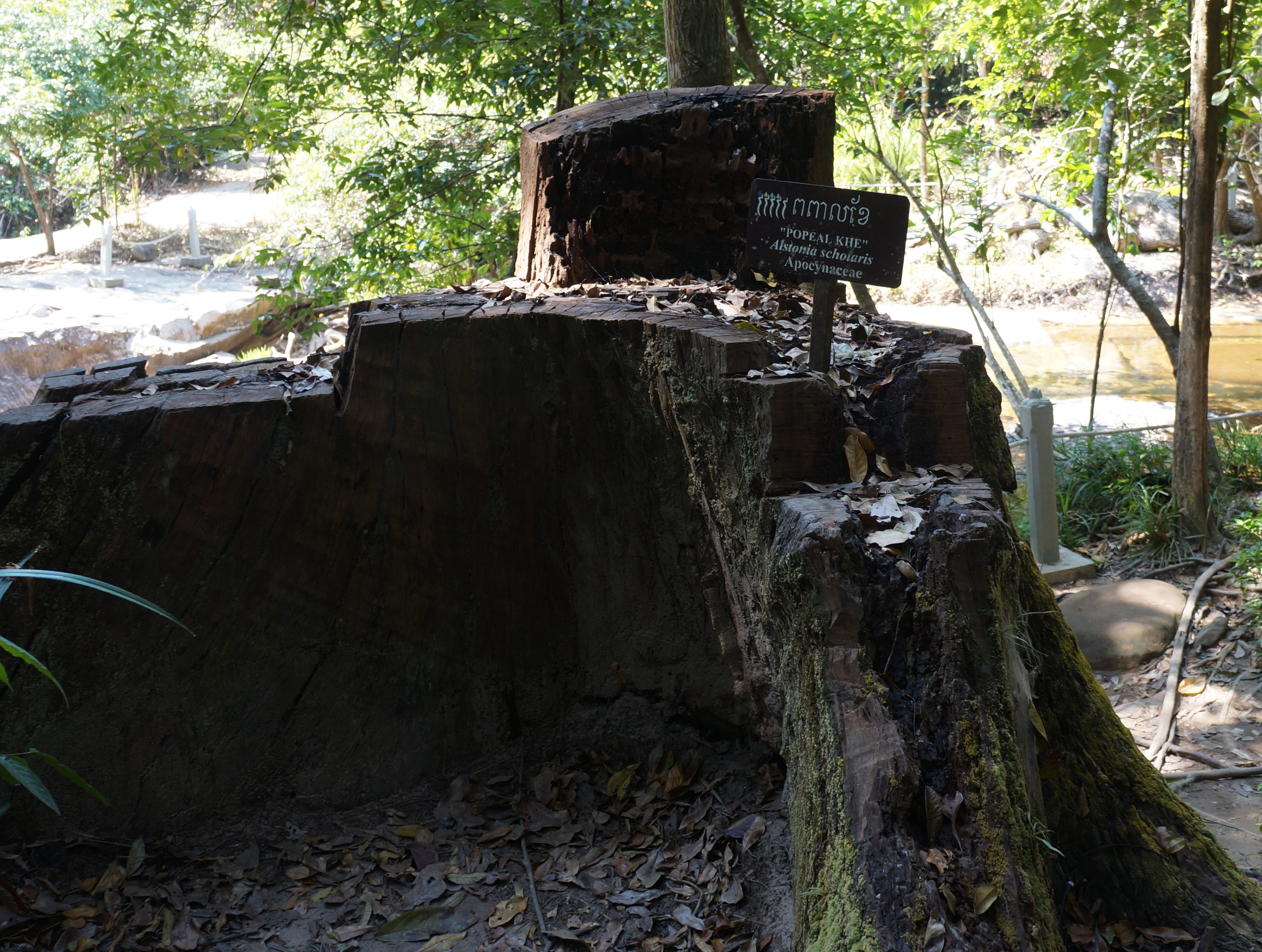
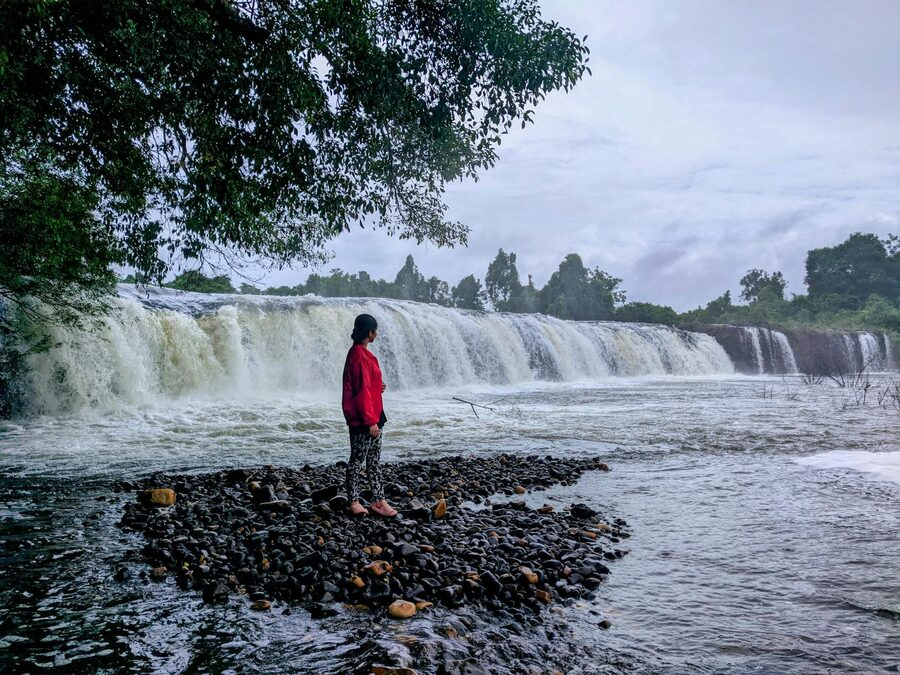
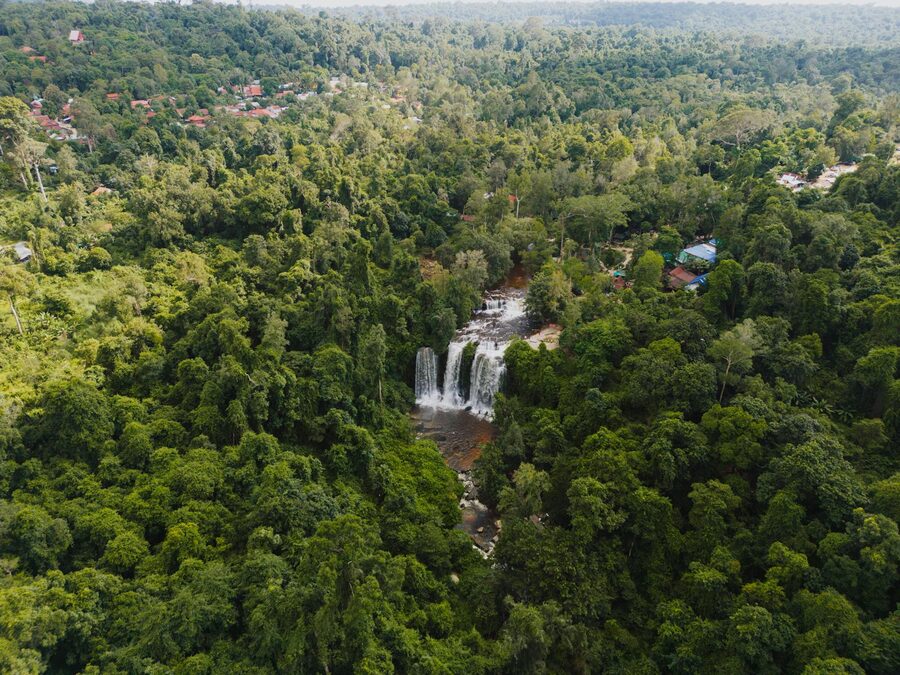
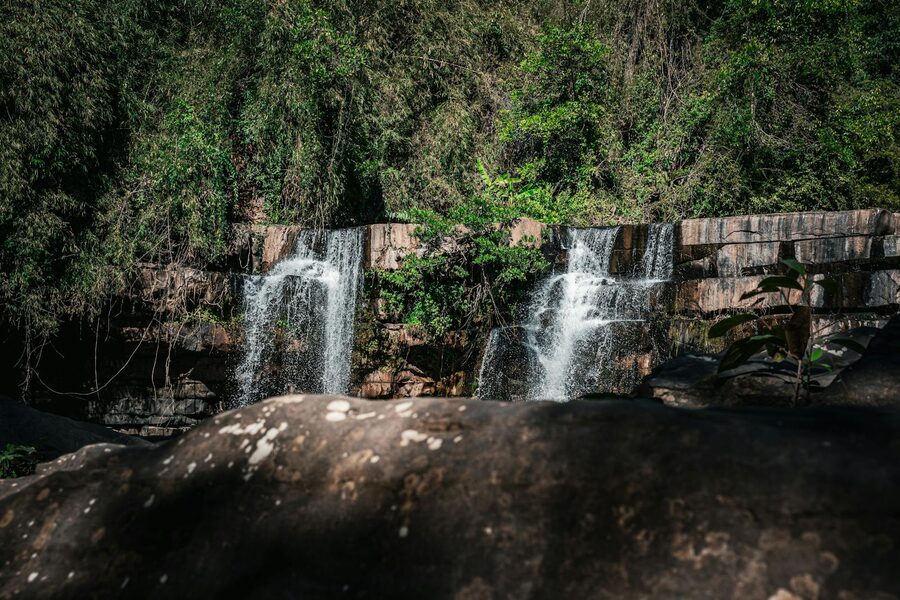
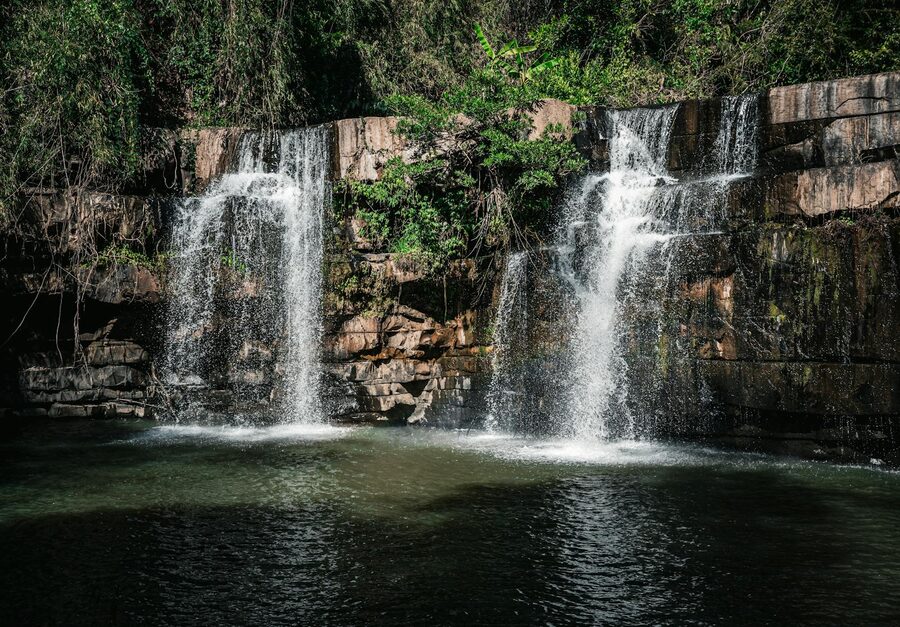
Phnom Kulen waterfall has two levels. The upper fall is a short, wide cascade about 5 metres high — it looks like a natural weir, and it’s where most local Cambodian families spread out picnic mats and let children splash in the shallow pools. The lower fall is the Instagram money shot: water drops 15 to 20 metres in a single curtain into a dark, deep plunge pool surrounded by jungle. You reach the lower fall by a wooden staircase from the upper level.
Yes, you can swim in the lower pool. It’s cold (genuinely cold — the water has been shaded by the jungle all day) and the current at the base of the falls is strong enough that you shouldn’t try to swim directly under the cascade, but the pool itself is wide and safe if you stay away from the churn. Bring a swimsuit under your clothes. Changing rooms exist but they’re basic.
The dry season is better for swimming because the water is clearer and the current is gentler. In the wet season (May through October) the falls are enormously more dramatic but the pool is brown with sediment and faster-moving. Your call based on what kind of photos you want.
The reclining Buddha at Preah Ang Thom
Carved from a single massive sandstone boulder at the summit of the mountain in the 16th century, the reclining Buddha at Preah Ang Thom is eight metres long and sits inside a small pagoda built around it. You take off your shoes, climb a short wooden staircase, and enter a dim room where the Buddha fills the entire far wall.
Locals make offerings of incense and lotus flowers — it’s a working shrine, not a museum, so keep conversations quiet and don’t point your feet at the statue when you sit.
Tours give you 20 to 30 minutes here, which is enough. The views from the platform outside the pagoda are the real reward: on a clear day you can see across the Cambodian plains all the way to the glint of Tonle Sap lake in the distance.
Practical logistics
What to wear and bring
- Closed-toe shoes with grip — flip-flops will betray you on the Kbal Spean trail and the wet waterfall rocks. Running shoes or light hikers are ideal.
- Swimsuit under your clothes — there are changing rooms but they’re primitive and queues form around lunchtime.
- Quick-dry towel — most tours don’t provide one. A microfibre travel towel weighs nothing.
- Modest top covering shoulders and knees — not required for the waterfall, but expected at the reclining Buddha pagoda. A light scarf works.
- Insect repellent — the jungle around Kbal Spean has mosquitoes, particularly at dawn and dusk.
- Cash — in small US dollar denominations ($1s and $5s). You’ll want it for bottled water at the summit stalls and tips for guides. Cambodia uses dollars alongside riel; tourist sites price in dollars.
- Power bank — if you’re on the 10-hour combo tour, your phone will die before Tonle Sap sunset.
Entrance fees
The Phnom Kulen National Park entrance fee is $20 per person for foreign visitors, and it’s separate from the Angkor Archaeological Park ticket. Your tour operator almost always includes this in the booking price but double-check when you book — a few budget tours don’t, and $20 per person adds up fast for families. Kbal Spean has its own small fee (usually bundled in) and the reclining Buddha pagoda is free but expects a small donation.
The one-way road rule
As I mentioned, the road up Phnom Kulen is one-way. Traffic moves up from 7am until noon, then down from 1pm until about 5pm. If you’re running a private tour with your own driver and you don’t leave Siem Reap early enough to be at the base of the mountain by 11am, you cannot go up that day. This is why every group tour leaves before 8am — they’re timing the window. Don’t let a taxi driver tell you it’s flexible. It isn’t.
Food and water
There are basic food stalls at the upper waterfall selling noodle soup, fried rice, grilled chicken skewers, and cold drinks. Prices are about double what you’d pay in central Siem Reap but the food is fine and the setting is memorable. Most tours either include lunch at one of these stalls or bring a picnic. If you’re on the private or combo tour and lunch isn’t included, expect to spend about $5 to $8 per person at the waterfall stalls.
When to visit Kulen Mountain
Best overall: November to February. Dry season, cool mornings, clear water in the riverbeds, and the jungle is at its greenest because it hasn’t fully dried out yet. This is also Cambodia’s peak tourist season, so tours fill up — book at least a week ahead.
Dramatic waterfalls, fewer crowds: June to September. Wet season means the falls are three times the volume you see in dry-season photos, the jungle is lush, and the crowds thin out because people assume it’ll rain all day (it usually only rains for an hour in the afternoon). Downsides: slippery trails, cloudy swimming pools, and the Kbal Spean carvings are harder to see under faster water.
Avoid: March and April. This is Cambodia’s hot season, temperatures routinely hit 38°C (100°F), and the Kbal Spean hike becomes genuinely punishing. The waterfall is also at its thinnest because the rivers are drying out.
How Kulen compares to other Siem Reap day trips
If you have three or four days in Siem Reap, Kulen Mountain is the strongest non-Angkor day trip — the combination of history, nature, and swimming gives you a complete change of pace from wandering temples. It’s more interesting than the Kampong Phluk floating village tour if you only have time for one (though Kampong Phluk is wonderful in its own way and cheaper), and more active than the Khmer cooking class which works better as an evening activity.
If you have more time, pair Kulen with a dedicated Angkor Wat sunrise tour on a different day. Doing both in the same day (which some tours try to sell) is a terrible idea — you’ll be exhausted, you’ll miss the stories, and you’ll resent both.
And if you’re looking for a lower-key evening activity after your Kulen day, the Phare Cambodian Circus is the best use of $35 in Siem Reap. It’s a social enterprise run by the same organisation that trains Cambodian street kids in performance arts, and the show is genuinely world-class.
Can you do Kulen Mountain without a tour?
Technically yes. Practically no, and here’s why.
You’d need to rent a car with a driver for the day (about $90 to $120, so already more expensive than a group tour for a couple), pay the park entrance fee separately ($20), figure out the one-way road timing yourself, and navigate Kbal Spean and the reclining Buddha with no context or translation.
The waterfall is easy enough to enjoy solo, but the 1000 Lingas are genuinely meaningless without someone explaining what you’re looking at. That carved panel of Vishnu reclining on a serpent? You’ll walk right past it without a guide.
The only scenario where independent travel makes sense is if you’re staying in Siem Reap for a week or more, you’ve already done a guided tour once, and you want to go back for a slower second visit with a packed lunch. In that case a tuk-tuk won’t work (too slow for the distance) but a taxi for the day is reasonable.
Common questions I get asked about Kulen Mountain
Is Kulen Mountain safe for kids?
The waterfall and reclining Buddha are kid-friendly with normal supervision. Kbal Spean is harder — the 1.5km uphill hike over roots and rocks is tough for children under 8 and for anyone carrying a toddler. Most family groups I’ve seen either skip Kbal Spean or do a shortened version that only goes to the first carvings.
Is the waterfall swimming safe?
Yes, with common sense. Stay out of the direct churn at the base of the cascade, don’t dive (rocks are close under the surface in parts), and keep non-swimmers to the shallow edges. The pools have no lifeguards. Cambodian families swim here in huge numbers every weekend without incident.
Do I need to book in advance?
In dry season (November to February), yes — at least three days ahead, preferably a week. Small-group tours sell out because they’re capped at 10 to 12 people. In the wet season you can often book the day before, but you lose the flexibility of picking your preferred operator.
Can I wear shorts and a tank top?
At the waterfall and on the hike, absolutely. At the reclining Buddha pagoda, you’ll be asked to cover shoulders and knees. Carry a light scarf or sarong and you’re fine.
How much should I tip the guide?
Standard tipping in Cambodia for a good tour guide is $3 to $5 per person per day. Drivers get $2 to $3. In US dollars, not riel. Tipping isn’t mandatory but it’s appreciated and it’s a huge part of how guides actually make a living — tour commissions are thin.
What should I do in the evening after Kulen?
Rest your legs. If you still have energy, the Phare Cambodian Circus evening show is the best single use of $35 in Siem Reap, and it’s a very different flavour of Cambodia — contemporary performance rather than ancient stone. Alternatively, a Khmer cooking class scheduled for the next morning gives your Kulen hike legs a gentle day to recover.
Will there be WiFi or phone signal?
Cambodian SIM cards (buy one at Siem Reap airport for about $5 with 10GB) give you signal at the base of the mountain and occasional bars at the summit. Kbal Spean and the deep jungle areas around the waterfall have nothing. Tell anyone who’s expecting to hear from you that you’ll be unreachable for most of the day.
Is it worth it if I’ve already seen Angkor Wat?
Yes — more so, actually. Angkor Wat is the culmination of Khmer temple building; Kulen is the origin. Seeing them in that order gives you the full arc of the story. travellers who do Angkor first and then Kulen the next day consistently rate the Kulen day more highly in their reviews because the context clicks into place.
Building your Siem Reap itinerary around Kulen
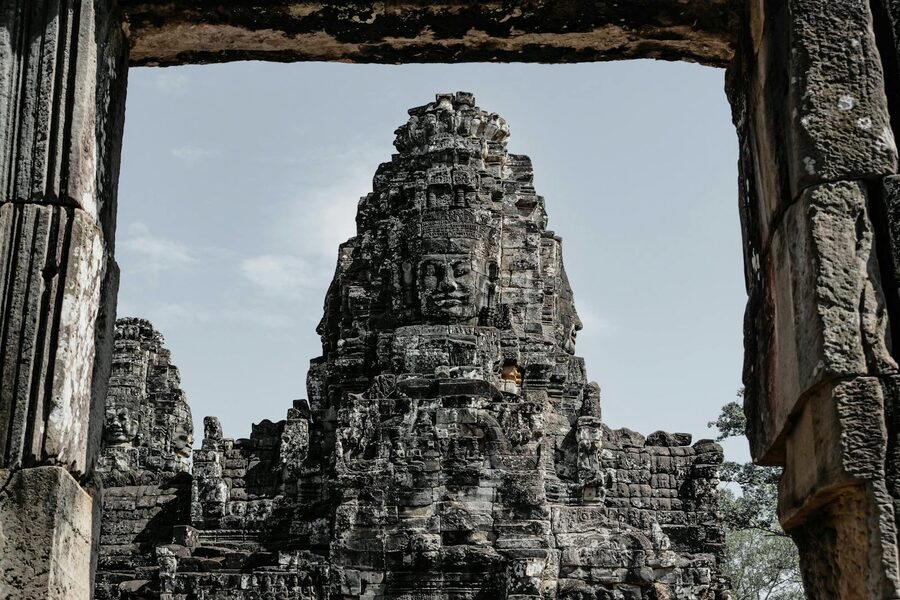
If you’ve got four days in Siem Reap, here’s the rhythm I’d recommend: Day 1 is Angkor Wat sunrise plus Bayon and Ta Prohm — book the classic Angkor Wat sunrise tour and you’ll be back at your hotel by lunchtime, wrecked but happy. Day 2 is Kulen Mountain using the Viator Join-In Tour — active, scenic, swimming, lunch included.
Day 3 is a lazy morning at the hotel, then an afternoon Kampong Phluk floating village sunset tour so you can see Tonle Sap without committing a whole day. Day 4 morning is a Khmer cooking class and the evening is the Phare Cambodian Circus.
That’s five activities in four days, no repeats, no burnout, and you’ve seen all five distinct faces of Siem Reap: ancient empire, sacred mountain, lake life, home cooking, and modern arts.
Final thoughts
Kulen Mountain is the day that made Siem Reap feel whole for me. Angkor Wat is transcendent but it’s also crowded, carefully managed, and very much on the tourist track. Kulen still feels like a place Cambodians go to picnic with their own families on weekends, where the water is cold and the history is literally underfoot.
Book the Viator Join-In if you’re not sure, the small-group picnic if you want a softer pace, or the big combo if you’re on a tight schedule — all three are genuinely excellent, and at $48 they’re the cheapest strong day trip in the Angkor region.
Whichever you pick: wear real shoes, bring the swimsuit, carry cash in small bills, and listen to your guide when they explain what’s carved in the river. That’s where the mountain stops being a photo op and becomes something you actually remember.