
Borobudur is the world’s largest Buddhist temple, a nine-tier stone mountain built from roughly two million volcanic blocks around 800 CE, when the Sailendra dynasty ruled central Java. Twenty kilometers away, across rice fields and sugarcane, stands Prambanan, the largest Hindu temple compound in Indonesia, finished about fifty years later by a rival court.
Two of the greatest religious monuments in Southeast Asia, sitting within a single morning’s drive of each other, built by two different kingdoms, in two different faiths, buried for centuries under jungle and volcanic ash, and now both UNESCO World Heritage Sites — this is what makes a Borobudur and Prambanan day tour from Yogyakarta the single most-booked activity in all of Java.
I’ve spent weeks looking through Yogyakarta tour listings on GetYourGuide for veronikasadventure.com, reading review after review, and the Borobudur-Prambanan combo is a category of its own. The three tours I’m writing about today have a combined 3,836 reviews at 4.9 stars. That’s not a fluke. That’s thousands of travellers saying the same thing: do both temples in one day, with a driver who knows the traffic around Magelang, and you’ll remember it for the rest of your trip.
This guide explains exactly how to book the right one for you — whether you want the famous sunrise from Setumbu Hill, a guaranteed climb-up permit, or the cheapest option that still gives you a guide and hotel pickup.
- Why Borobudur and Prambanan together
- The climb-up rule that changes everything
- The three tours worth booking
- 1. From Yogyakarta: Borobudur Sunrise + Climb-up + Prambanan ()
- 2. From Yogyakarta: Borobudur Climb-up Guarantee + Prambanan (1)
- 3. Yogyakarta: Borobudur Climb-up + Prambanan Guide Tour ()
- What you’ll actually see at Borobudur
- What you’ll actually see at Prambanan
- Sunrise or no sunrise?
- Getting to Yogyakarta in the first place
- Practical details nobody tells you
- What to add to your Yogyakarta trip
- Related Indonesia guides on this site
- The bottom line
Why Borobudur and Prambanan together
You can visit each temple separately. Plenty of people do. But here’s the thing — the tour companies in Yogyakarta have been running the combined day trip for decades, and the logistics are worked out to the minute. Borobudur sits 40 km northwest of the city. Prambanan sits 17 km east. Driving between them (not via Yogya) is about 90 minutes on a good day, and any decent tour builds that drive into the itinerary so you’re not backtracking.
The standard flow: leave your hotel around 3:30 AM for a sunrise version, or 5:30 AM if you’re doing a regular climb-up. Hit Borobudur first, when the stone is cool and the haze over the Kedu Plain is still thick. Break for lunch somewhere around Muntilan or back near Yogya. Arrive at Prambanan mid-afternoon, spend two hours on the Hindu complex, and roll back to your accommodation before dark.
Ten to twelve hours door to door. One driver, one guide, one ticket you don’t have to stand in line for.
The alternative is taking a Trans Jogja bus to Prambanan (doable, around 20,000 rupiah) then a separate Damri bus to Borobudur the next day. You’ll save maybe $30. You’ll also spend two half-days on public transport, miss the sunrise window entirely, and still need to buy climb-up tickets at the gate — which, since the 2023 restoration rules, are capped at 1,200 visitors per day and sell out.
The climb-up rule that changes everything
Since early 2023, you cannot walk up onto Borobudur’s upper terraces without a special “climb-up” permit. Normal entry lets you walk the surrounding park and photograph the temple from ground level. To actually step onto the structure — to see the 504 Buddha statues, the bell-shaped stupas on the topmost platform, the reliefs carved into every wall — you need the additional ticket, and you need it in advance.
The permits are issued in timed slots of 150 visitors. Groups rotate through with a designated Borobudur guide and you’re required to wear fabric slippers (upasana sandals) that protect the andesite. The rule exists because decades of unrestricted foot traffic were wearing grooves into the stone. The same thing happened at Angkor Wat before UNESCO stepped in.
What this means practically: the tours below that say “climb-up guarantee” are the ones that pre-purchase the permit for you. Turn up at the park without that guarantee and — depending on the day — you might spend your morning walking the perimeter, unable to get onto the monument itself. For a lot of travellers, that’s the entire reason they came to Java.
The three tours worth booking
I narrowed the GetYourGuide listings down to three based on review volume (1,000+ each), rating (4.9 minimum), and the variables that actually matter: sunrise access, climb-up guarantee, and price. Here they are, ranked by what most travellers pick.
1. From Yogyakarta: Borobudur Sunrise + Climb-up + Prambanan ($60)

This is the tour most people want when they search “Borobudur sunrise.” You get picked up between 3:00 and 3:30 AM, driven to Setumbu Hill (Punthuk Setumbu) — a viewpoint 2.5 km west of Borobudur — and you climb up in the dark to a wooden platform that overlooks the temple silhouette. When the sun clears Mount Merapi on the eastern horizon, you watch Borobudur emerge from the mist in the Kedu Plain below. It’s the shot you’ve seen on every Java travel poster.
After sunrise you drive down to Borobudur itself, enter with your climb-up permit (pre-booked and guaranteed), and spend 60–90 minutes walking the terraces with the guide. Lunch is usually a local Javanese restaurant in Muntilan. Prambanan in the afternoon. Back to your hotel between 4 and 5 PM.
At $60, this is the best value in the category. The sunrise permit alone is worth $35 if you book it separately at the park gate — assuming you can even get one, which you often can’t.
Best for: First-time visitors to Java who want the full photographer’s experience and don’t mind the 3 AM wake-up.
2. From Yogyakarta: Borobudur Climb-up Guarantee + Prambanan ($101)

Same climb-up guarantee, same Prambanan afternoon, but without the pre-dawn sunrise leg. Pickup is a civilized 5:30 to 6:00 AM. You arrive at Borobudur around 7:30 when the park opens, beat the tour-bus crowds by about ninety minutes, and get the climb-up slot at 8:00 or 8:30. Lunch at a local restaurant. Prambanan by early afternoon.
The $41 price gap over the sunrise version covers a smaller group size (this one caps at 8 travellers, versus 15 on the cheaper tour) and a dedicated driver who doesn’t move on to another group at midday. You also get bottled water, entrance tickets to both temples, and the guide speaks English at a higher level — the operator is known for hiring licensed guides with museum backgrounds rather than general drivers.
Best for: travellers who care about context more than sunrise photos — if you want the reliefs explained panel by panel, this is the one.
3. Yogyakarta: Borobudur Climb-up + Prambanan Guide Tour ($24)

This is the budget option and it’s genuinely good. $24 is less than a single taxi fare between the two temples in most cities. What you give up: tour entrance tickets are not included (budget another 650,000 IDR, roughly $42, for both temples plus the climb-up permit), lunch is on your own, and the pickup is from a central meeting point in Yogyakarta rather than your hotel door.
What you get: a licensed guide at both sites, air-conditioned transport between them, and a flexible 5–10 hour window depending on how long you want to linger. The operator still guarantees the climb-up slot, which is the main thing that separates this from just showing up on your own.
Run the numbers and the total cost with entry fees comes out around $66–70 — still cheaper than option 1 once you factor in the ticket savings the sunrise version bundles. The reason I’d pick this is if you’re staying at a hostel in the Sosrowijayan or Prawirotaman district and you don’t mind walking 10 minutes to the meeting point.
Best for: Backpackers, long-term travellers, and anyone who’d rather keep the cost down and use the savings to stay an extra night in Yogya.
What you’ll actually see at Borobudur
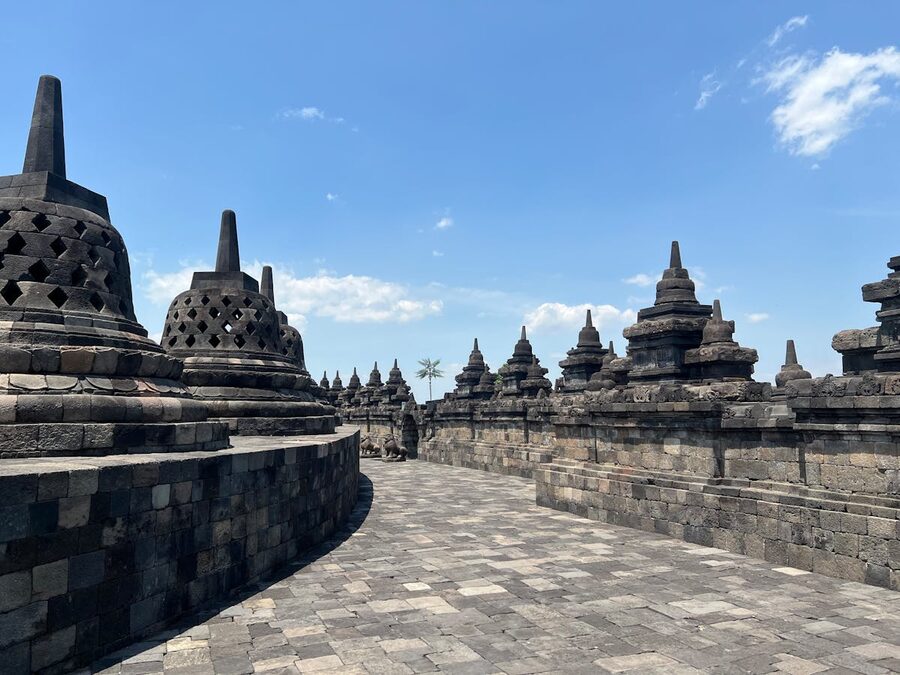
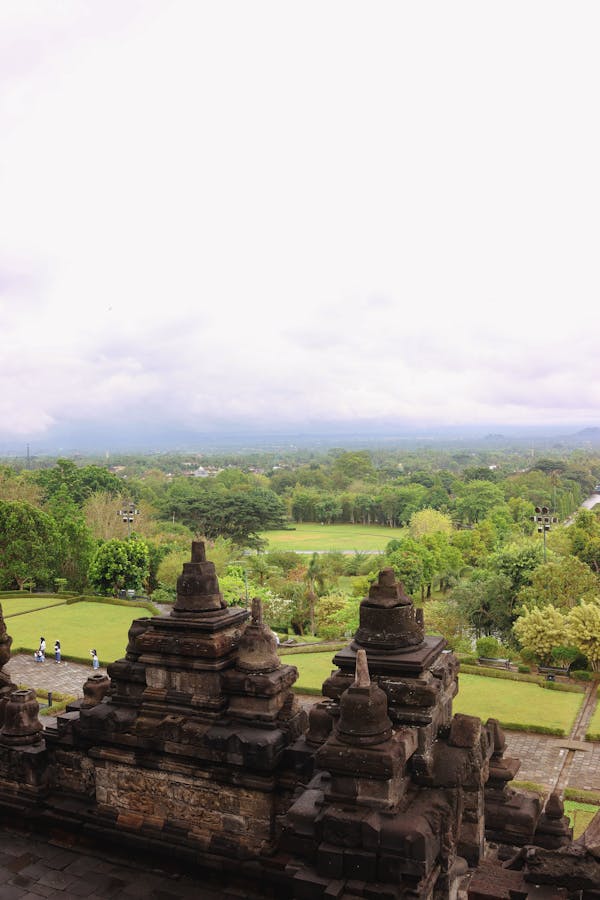
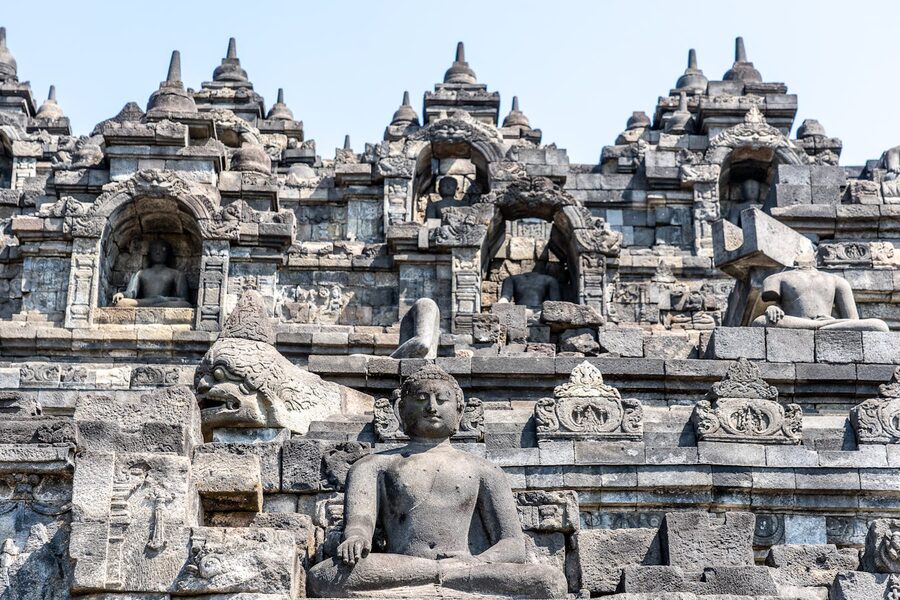
The temple is laid out as a three-dimensional diagram of Buddhist cosmology. You enter at the base (Kamadhatu, the world of desire), walk up through five square terraces carved with reliefs telling the life of Buddha (Rupadhatu, the world of forms), and emerge onto three round terraces topped by 72 bell-shaped stupas arranged in concentric circles (Arupadhatu, the world of formlessness). At the center sits the main stupa, sealed and empty — a symbol of nirvana.
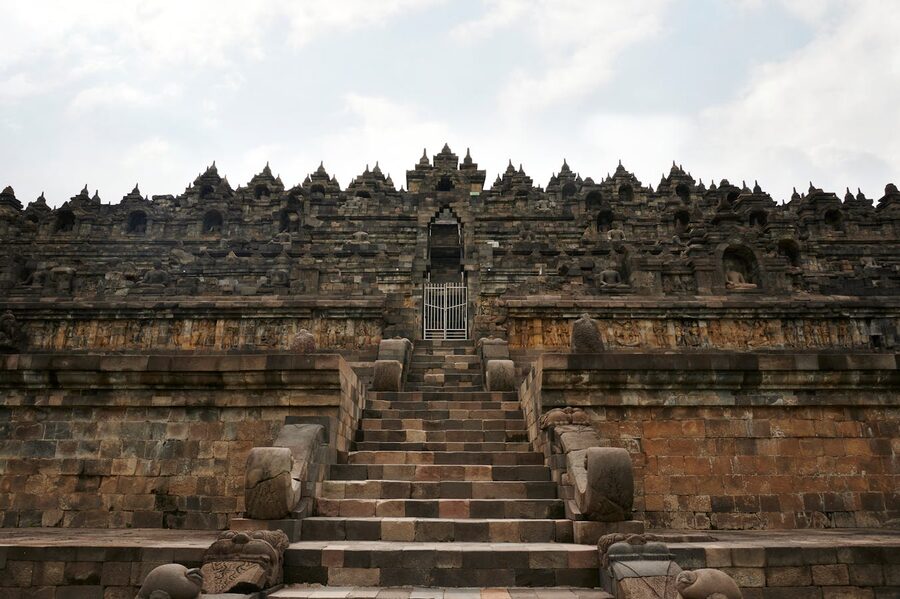
The reliefs are the part most visitors underestimate. There are 2,672 of them, and if you walked past every single one you’d cover two and a half kilometers of carved stone.
Jataka tales (stories of Buddha’s past lives), scenes from the Lalitavistara Sutra, and on the hidden base — covered by a retaining wall in the 9th century for structural reasons — karmic reliefs showing the consequences of good and bad deeds. A good guide will take you to at least a dozen of the most famous panels and explain what you’re looking at.
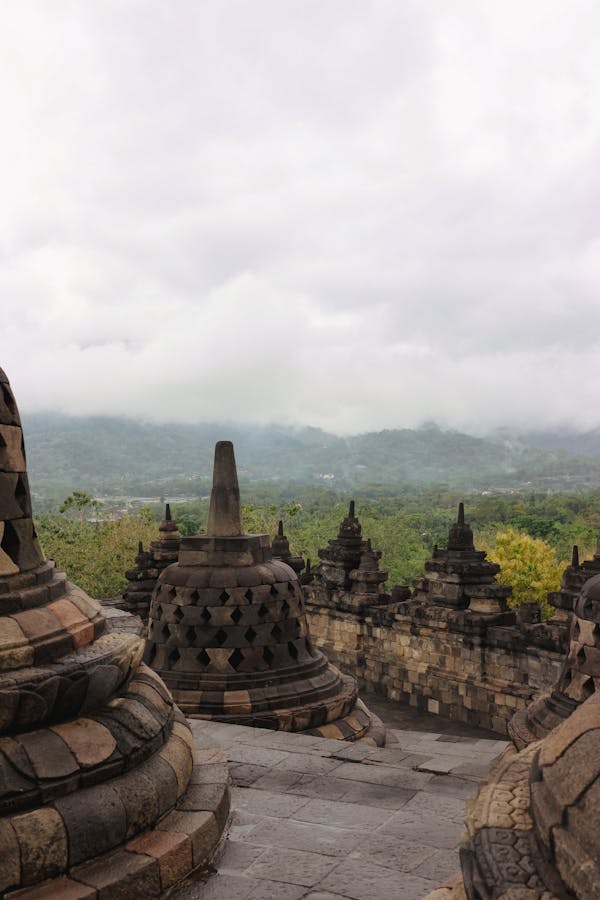
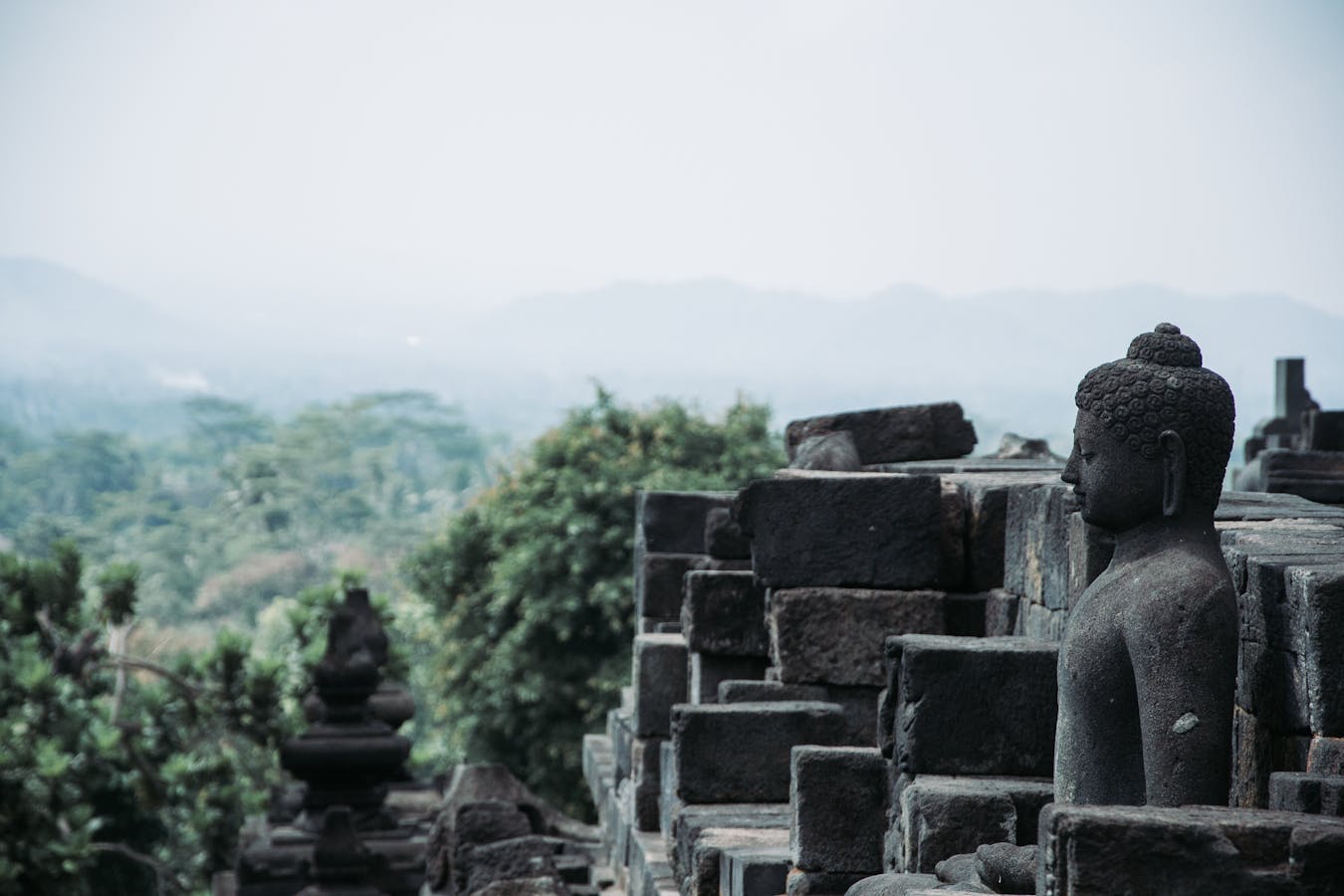
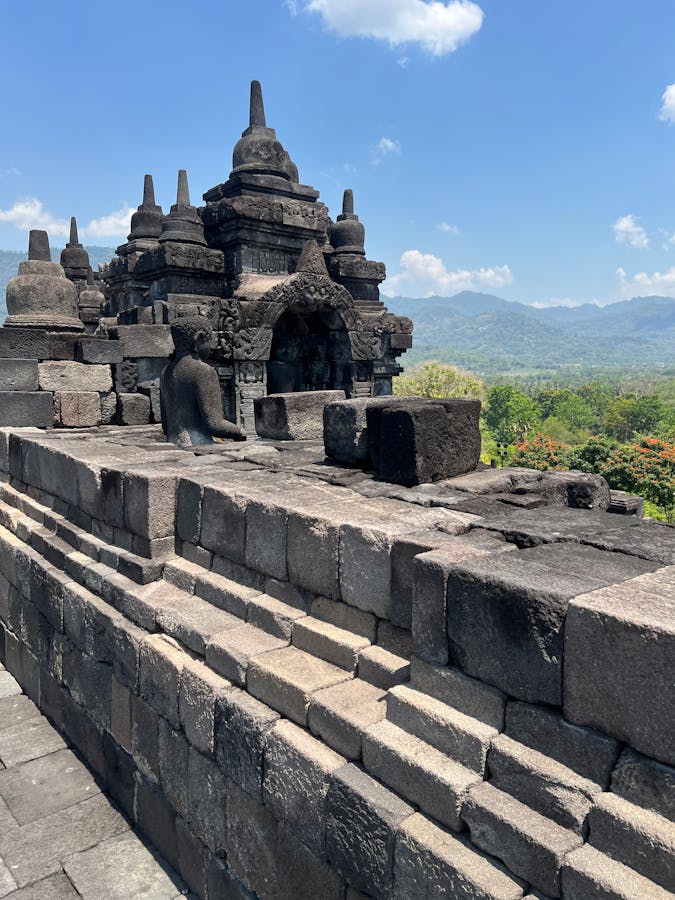
The 72 perforated stupas on the upper terraces each contain a Buddha statue visible through the diamond or square lattice. Reaching inside to touch the Buddha — a common tourist ritual until 2014 — is now forbidden, and the stupas are roped off. You can still photograph them and see the statues clearly.
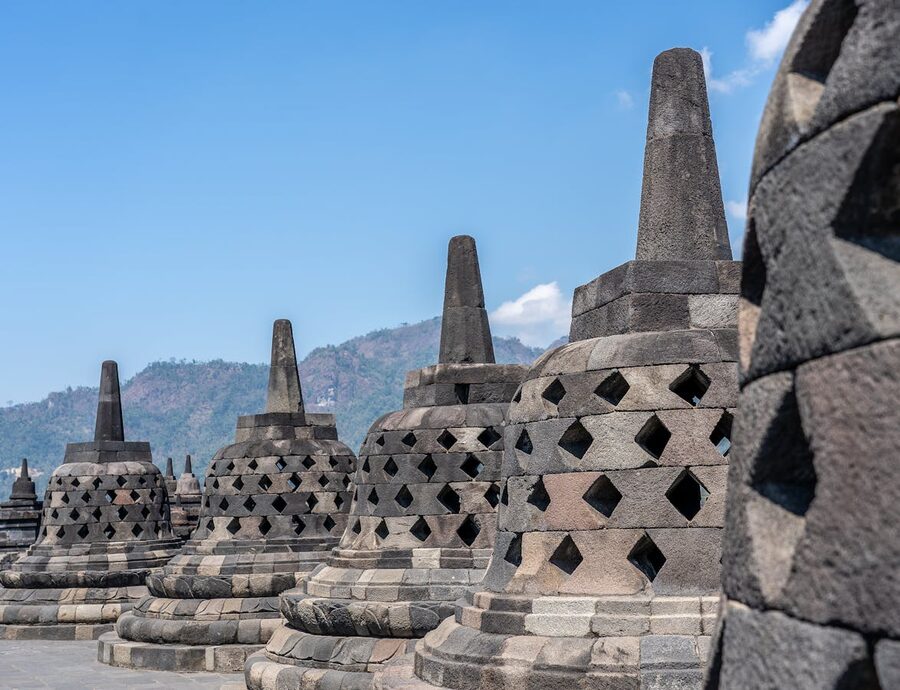
Borobudur was rediscovered in 1814 by Thomas Stamford Raffles, the same British colonial administrator who founded Singapore. He heard reports from locals about a “hill of statues” near Magelang, sent a Dutch engineer named Cornelius to investigate, and Cornelius spent six weeks with 200 laborers clearing volcanic ash, soil, and vegetation. The temple had been abandoned around 1500 CE — nobody fully knows why — and the jungle reclaimed it for three centuries.
What you’ll actually see at Prambanan
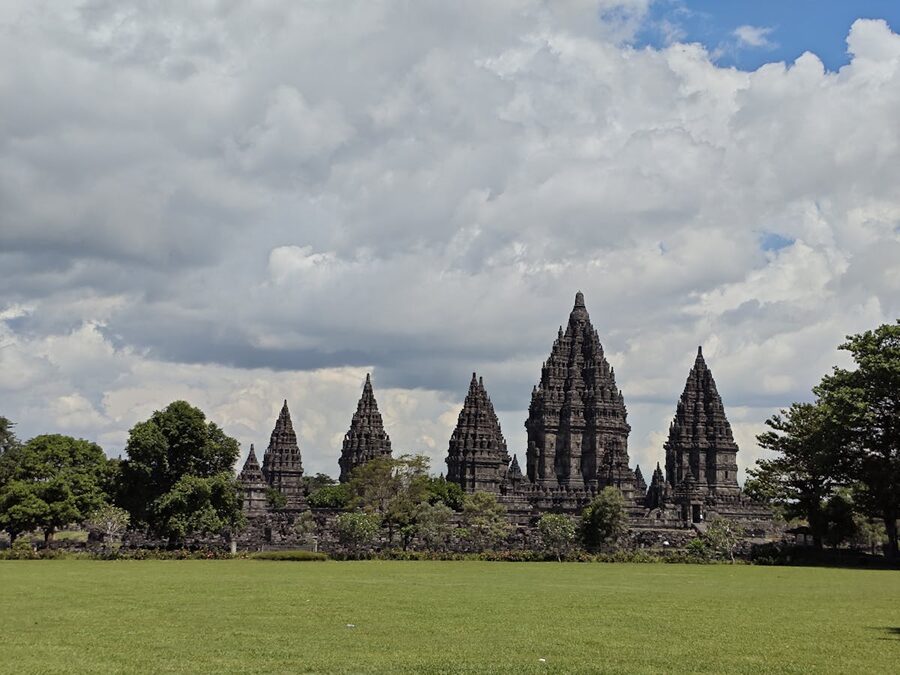
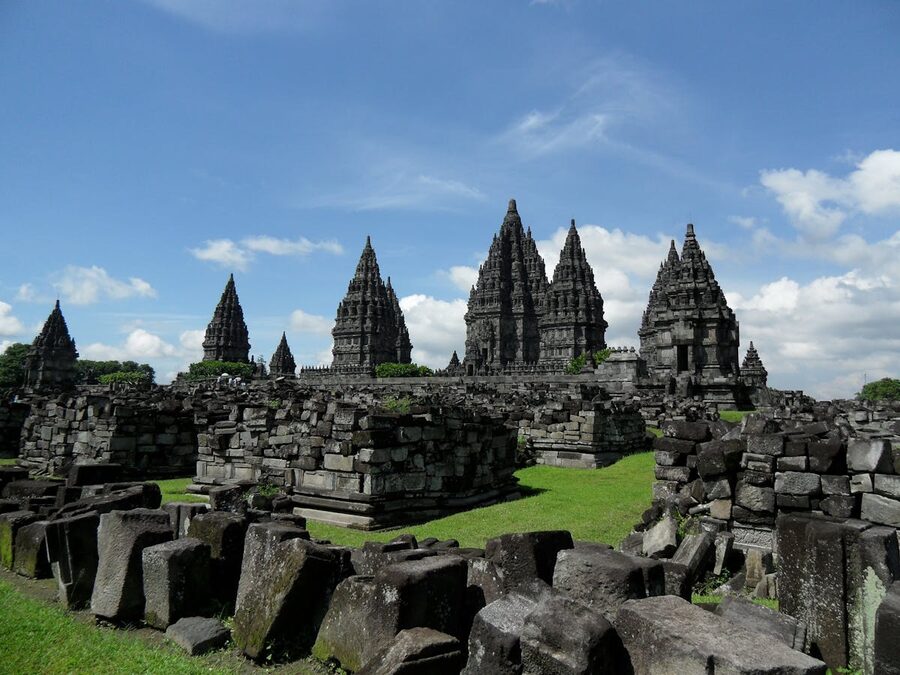
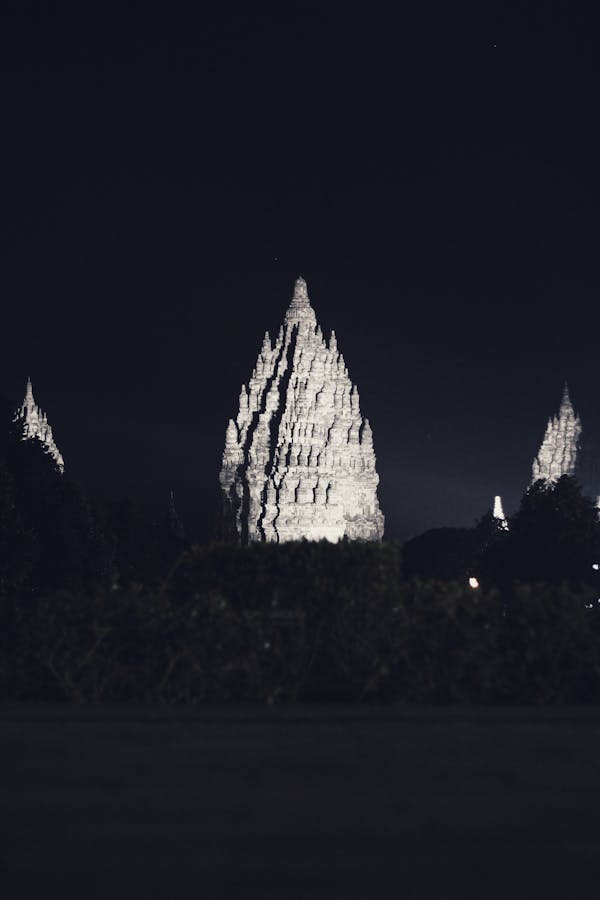
Prambanan is a complete contrast. Where Borobudur is a solid stone mountain, Prambanan is a forest of pointed spires — the original complex had 240 individual temples, most of them crumbled, with the three central Trimurti shrines (Shiva, Vishnu, and Brahma) restored to their 9th-century heights of 47, 33, and 33 meters.
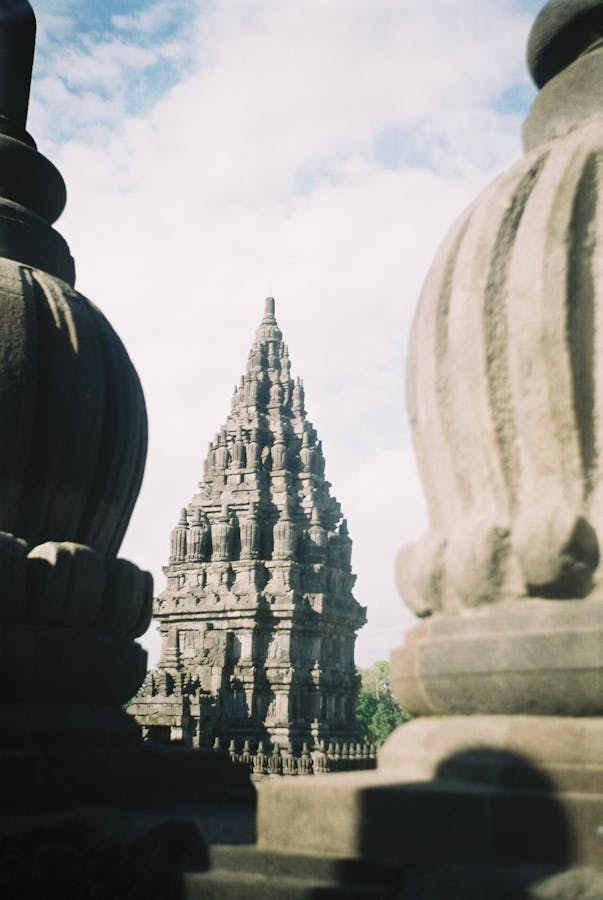
The Shiva temple is the tallest and the one most visitors climb into. Inside, you’ll find a four-meter statue of Shiva as Mahadeva, with three smaller chambers housing statues of his son Ganesha, his consort Durga (known locally as Rara Jonggrang — “the slender virgin”), and the sage Agastya. The reliefs along the outer balustrade tell the Ramayana, one of the two great Sanskrit epics of Hindu tradition.
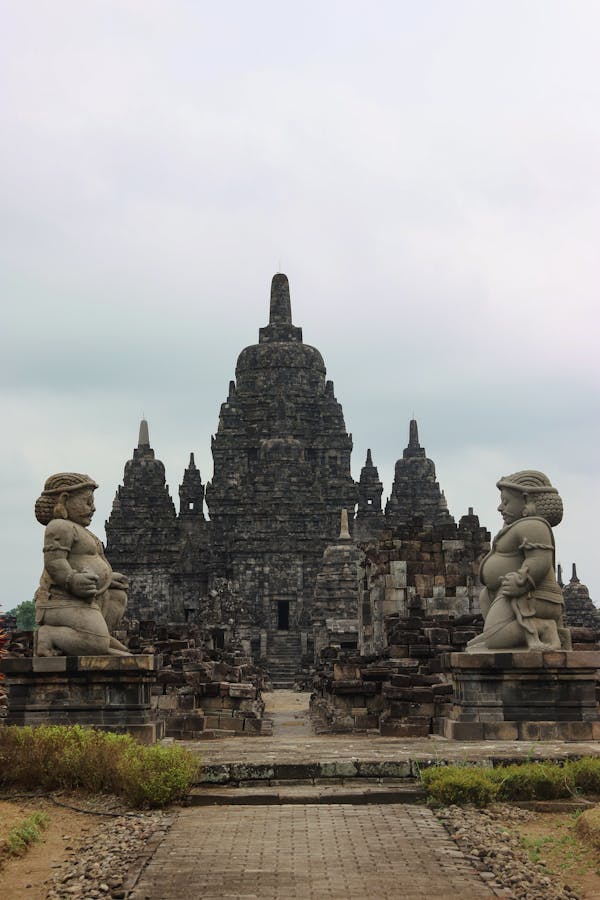
What shocked me when I read up on Prambanan for this guide is how much damage the 2006 Yogyakarta earthquake did. The magnitude 6.3 quake cracked dozens of pinnacles and shifted stones across the entire complex. The restoration took more than a decade. Some of the smaller candi you see on the ground, still toppled into neat piles, have been left that way as a reminder.
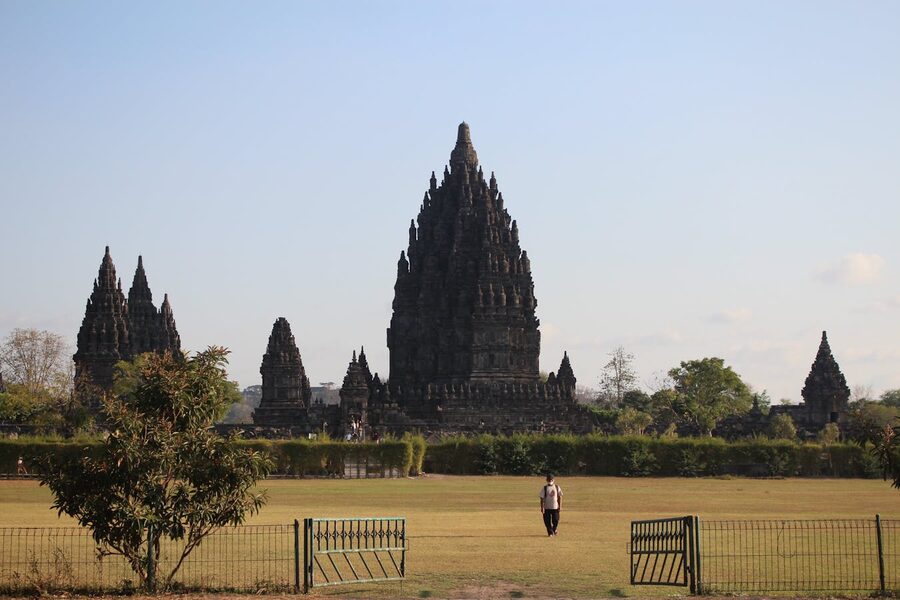
The light at Prambanan is best in the late afternoon — which is exactly when the combined tours arrive. The sandstone turns a warm honey color in the slanting sun, and the silhouettes of the spires against the Merapi volcano to the north are the kind of thing you remember years later.
Sunrise or no sunrise?
I’ve gone back and forth on this while writing, and here’s my honest take. The Setumbu Hill sunrise is famous because it works around a rule — you cannot enter Borobudur itself before 6:30 AM unless you’re on the now-discontinued “Manohara” sunrise package (canceled in 2022 because the foot traffic was damaging the stone). Setumbu Hill is the workaround. It’s a privately owned viewpoint on a hill west of the temple, and the operators there sell entry for around 30,000 IDR.
The view is real and the photos are spectacular. But — and this is the caveat nobody mentions — you are watching Borobudur from 2.5 kilometers away. You cannot see the reliefs. You cannot see the Buddha faces. You see a silhouette with mist and a rising sun, and it’s beautiful, but it’s also a postcard from a distance.
Some travellers show up expecting to be standing on the temple as the sun rises and feel slightly cheated when they realize they’ll be on a different hill entirely.
My take: if you’re into photography, or if the Setumbu sunrise is something you’ve already got in your head from Instagram, book the sunrise tour. If you’d rather explore the temple itself without being exhausted at 7 AM, skip the sunrise and go with the 5:30 AM pickup option. You’ll still beat the midday crowds.
Getting to Yogyakarta in the first place
Yogyakarta has its own international airport (YIA, Yogyakarta International Airport), which opened in 2020 about 45 km west of the city. Direct flights connect it to Kuala Lumpur, Singapore, and most Indonesian hubs. From Jakarta, there’s a 7-hour Argo Dwipangga train (around $30 in executive class) or an 80-minute flight. From Bali, figure on a 90-minute flight to YIA or the smaller Adi Sucipto airport which now handles mostly domestic.
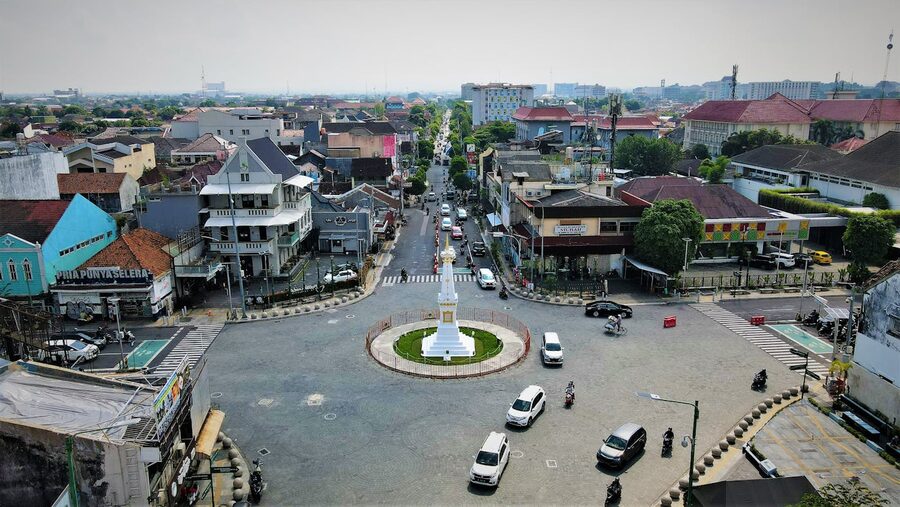
Stay in the Prawirotaman district if you want quiet boutique hotels and good cafes, or Sosrowijayan (near Malioboro) if you want to be in the thick of the backpacker scene. Either area is fine for tour pickups — the operators all cover central Yogya. Hotels farther out near Adi Sucipto airport sometimes incur a small surcharge (30,000–50,000 IDR) for pickup.
Practical details nobody tells you
A few things worth knowing before you book:
The climb-up permit is stone-strict on shoes. You’ll be issued upasana slippers (free, included) at the base of the temple. Your regular shoes go in a bag you carry. The slippers have grippy soles and they work fine, but wear socks if you’re squeamish about shared footwear.
Bring sun protection. The Kedu Plain gets hot fast after 9 AM and there’s almost no shade on the upper terraces of Borobudur. Hat, sunscreen, sunglasses. Water is sold at the park but it’s cheaper to bring your own.
Dress code is loosely enforced but respected. Both temples are active religious sites. You’ll be given a sarong to wrap around your legs if you’re in shorts — it’s included, no fee. Sleeveless tops are fine.
Prambanan has a temple cat situation. Dozens of them live in the complex, cared for by the park staff. If you’re a cat person this is a small joy. If you’re allergic, be aware.
The guide tip is not included. Standard tip is 50,000–100,000 IDR (about $3–6) for a good guide. The driver gets a similar amount from the group, usually pooled.
What to add to your Yogyakarta trip
One day for the temples is plenty, but it would be a waste to fly to Yogya just for Borobudur and Prambanan. Add two more days and you can fit in:
The Sultan’s Palace (Kraton). The walled royal complex at the center of Yogyakarta is still the official residence of the Sultan and houses the court gamelan ensemble. Daily performances included in the entry ticket.
Taman Sari water castle. A 1758 bathing complex built for the Sultan’s harem, with underground tunnels and a mosque hidden beneath the pool. Small entry fee, guide optional but helpful.
Mount Merapi jeep tour. Merapi erupts every few years and the 2010 eruption left a scar you can drive through at dawn in an old Willys jeep. Half-day trip from Yogya, easy to book the same day.
Malioboro Street at night. The main shopping street of Yogyakarta fills with food carts, street musicians, and batik vendors after sundown. Not a formal attraction, just a thing you wander through.
If you have a full week, the Ijen blue fire trek in East Java and Mount Bromo sunrise are both doable as overnight trips from Yogya. Most travellers combine Yogya with either Bali (short flight) or go overland east to Surabaya and Mount Bromo.
Related Indonesia guides on this site
If you’re putting together a longer Indonesia itinerary, these other guides will help you plan the rest:
- How to Book an Ubud Tour in Bali — the cultural heart of Bali, temples, rice terraces, monkey forest.
- Mount Batur Sunrise Hike and Hot Spring — the other famous Indonesian sunrise, on an active Bali volcano.
- Nusa Penida Day Trip from Bali — Kelingking Beach, Angel’s Billabong, and the cliff coast.
- Uluwatu Kecak Fire Dance and Jimbaran Dinner — the Bali equivalent of a cultural night out.
- Bali Waterfalls Tour — Tibumana, Tukad Cepung, and Tegenungan in one day.
- Tanah Lot and North Bali Tour — the ocean temple and the less-visited north coast.
- Gili Islands Snorkeling Trip — day trip from Lombok or Bali to the three Gilis.
- Bali ATV Quad Bike Adventure — tunnel, gorilla cave, and jungle rafting combo.
The bottom line
If you’re choosing between the three tours above and you’re not sure which one to book, here’s how I’d decide. Sunrise shot, first-time visitor, want the full experience — book tour 1 ($60) and set your alarm for 3 AM. Serious about the history, want a small group and a better guide — book tour 2 ($101) and sleep in a little. Backpacking, budget-conscious, happy to handle tickets at the gate yourself — book tour 3 ($24) and save the rest for Bali.
Whichever you pick, the thing I’d emphasize one more time is the climb-up guarantee. It’s the difference between walking on a thousand-year-old stone mountain and walking around it. All three tours above include it. The random “Borobudur day trip” listings you’ll see on other platforms often don’t, and at the gate you may not get a slot. Book ahead.
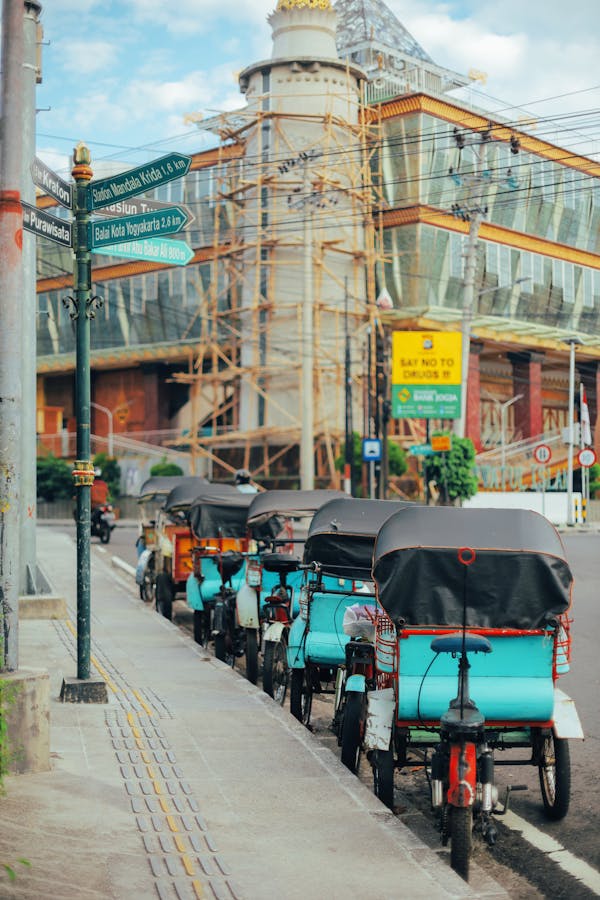
Yogyakarta sits in a part of Java that most Bali-bound travellers skip entirely. That’s their loss. Two UNESCO sites in one day, the Sultan’s palace a short becak ride from your hotel, volcano jeep tours, silversmithing villages, batik workshops, and some of the best Javanese food in Indonesia. Borobudur and Prambanan are the reason you fly in. Everything else is why you stay.