
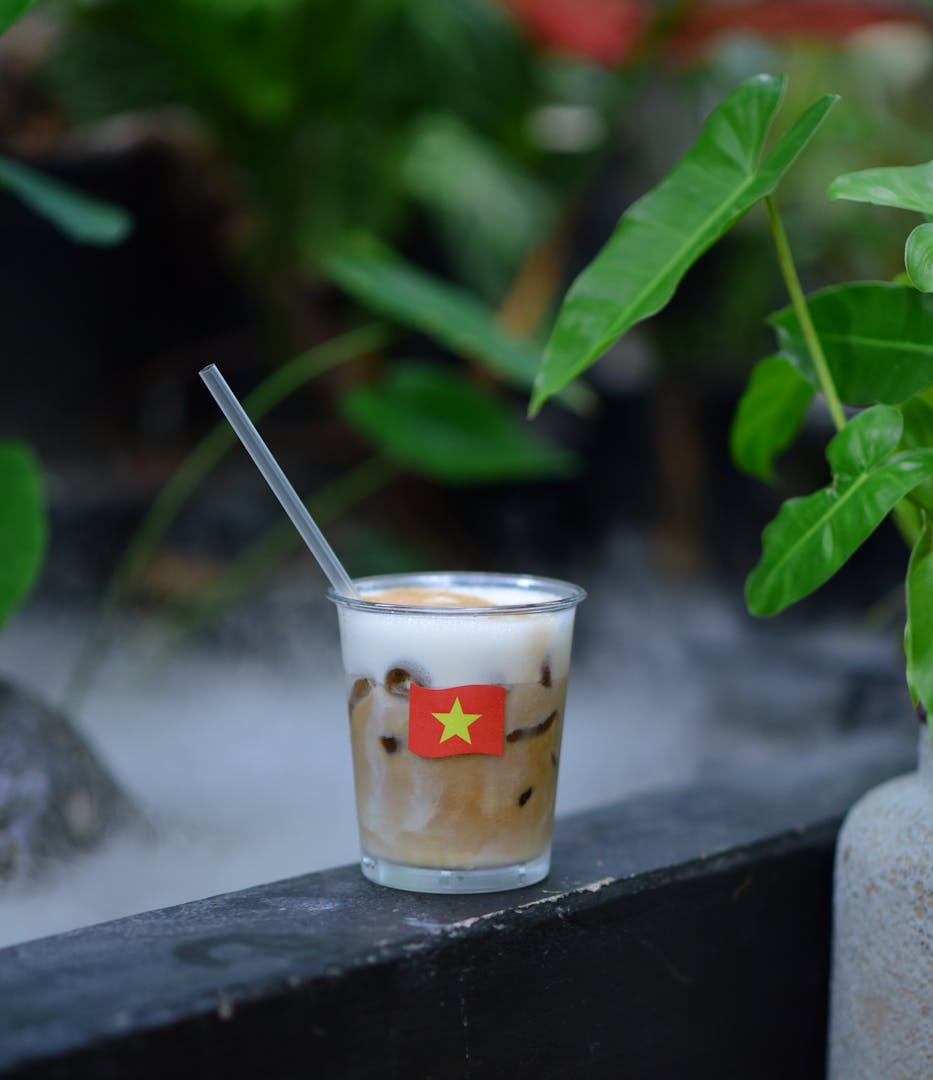
Vietnamese coffee isn’t really coffee in the way most of the English-speaking world understands the word. It’s a completely different drink built from a different bean, brewed with a different device, sweetened with a different dairy product, and served at a different speed.
Drop a flat white drinker into a back-alley cafe in Hoi An and hand them a ca phe sua da and they’ll come away slightly rattled — because the thing in the glass tastes more like melted coffee ice cream mixed with dark chocolate than anything that ever came out of an espresso machine in Melbourne or Seattle.
That gap — between what visitors expect and what actually lands on the table — is the reason coffee classes in Hoi An have exploded over the last five years. travellers wander in thinking they’ll learn to pour water through a filter, and walk out having rewired their understanding of what a coffee plant even is. They discover that 97 percent of Vietnamese coffee is robusta, not arabica.
They learn that condensed milk came before fresh milk because of colonial-era refrigeration gaps. They taste an egg yolk whipped into their cup and find out why Hanoi invented it during a 1940s dairy shortage. They meet a small metal drip contraption called a phin and realize the slow theatre of watching it drip is half the point.
This guide is for anyone heading to Hoi An who wants the whole story — not just “here’s a class, book it and show up,” but the why behind the drink. What robusta actually tastes like when it’s grown properly. How the French planted the first trees in 1857 and how Dalat became the country’s coffee capital.
Why Vietnamese coffee culture looks nothing like Italian, Ethiopian or Australian coffee culture. And, yes, where and how to book the best hands-on class in Hoi An if you want to bring the whole thing home with you.
- Why Vietnamese Coffee Tastes Like Nothing Else on Earth
- The French, the Beans, and a 170-Year-Old Accident
- Meet the Phin: The Smallest, Slowest, Most Beautiful Coffee Device in Asia
- The Four Classic Vietnamese Coffee Drinks You Need to Know
- Ca Phe Sua Da (Iced Coffee With Condensed Milk)
- Ca Phe Trung (Egg Coffee)
- Ca Phe Cot Dua (Coconut Coffee)
- Ca Phe Den (Black Coffee)
- What a Hoi An Coffee Class Actually Teaches You
- Our Pick: The Best Vietnamese Coffee Class in Hoi An
- Hoi An Vietnamese Coffee Culture and Coffee Making Class
- Where Else to Drink Great Coffee in Hoi An
- When to Take the Class in Your Hoi An Trip
- How to Book the Class (And What to Expect)
- Bringing Vietnamese Coffee Home
- Pairing Coffee With the Rest of Your Vietnam Trip
- What Makes Hoi An Specifically Great for Learning Coffee
- A Few Honest Warnings Before You Book
- Final Word
Why Vietnamese Coffee Tastes Like Nothing Else on Earth
To understand Vietnamese coffee, you have to start with the bean, because this is where almost every Western assumption falls apart. When a barista in Brooklyn or Berlin talks about “specialty coffee,” they almost always mean arabica — the lighter, fruitier, more acidic species that grows at altitude in places like Ethiopia, Colombia and Panama.
Arabica is what the third-wave coffee movement built its religion around. It’s what gets rated by cuppers on the Specialty Coffee Association’s 100-point scale. It’s the bean behind every “notes of blueberry and jasmine” tasting card.
Vietnam grows almost none of it. The country is the second-largest coffee producer in the world after Brazil, and roughly 97 percent of its crop is robusta — a tougher, hardier species with about twice the caffeine, a thicker body, and a much earthier, more bitter flavor profile.
For decades, Western coffee snobs dismissed robusta as the cheap stuff that goes into instant packets and Italian espresso blends for crema. And plenty of Vietnamese robusta does still end up in Nescafé tins and supermarket blends.
But here’s what the snobs got wrong. Good robusta, grown carefully on the red basalt soils of the Central Highlands and roasted dark the Vietnamese way, produces a cup that is genuinely unlike anything else. It’s thick. It’s chocolaty. It has a caramel-burnt-sugar note that comes from the deep roast.
It has enough caffeine that one small glass will carry you through a full morning of walking around an old town. And because the Vietnamese method pairs it with sweetened condensed milk, the bitterness and the sweetness meet in a way that neither arabica nor milk-based espresso drinks can quite replicate.
Once you’ve had the real thing — brewed slowly through a phin, dripped onto a base of thick condensed milk, poured over ice — it’s hard to go back to a flat white and not feel like something is missing. That “something” is the robusta body.
The French, the Beans, and a 170-Year-Old Accident
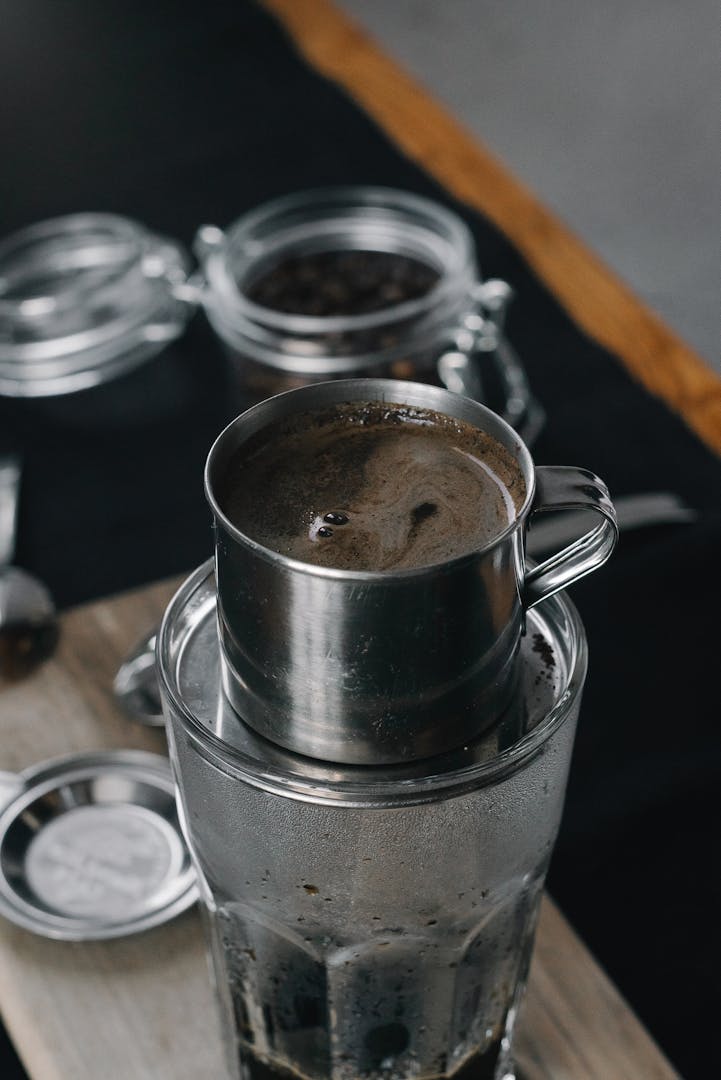
Vietnam wasn’t always a coffee country. For most of its history, it was a tea country — green tea, lotus tea, jasmine tea — and coffee was unknown. That changed in 1857 when a French Catholic priest brought the first arabica seedlings to what was then French Indochina and planted them in the north. The experiment worked, colonial plantations spread, and by the early 20th century the French had established commercial coffee farms across the central plateau.
The real turning point came after reunification in 1975, when the Vietnamese government made a strategic bet: they would push robusta hard, focus on the Central Highlands around Buon Ma Thuot and the Dalat region, and build an export industry from scratch.
By the early 2000s, Vietnam had overtaken Colombia to become the world’s number two coffee producer and the world’s number one robusta producer. It’s a staggering climb for a country that didn’t commercially grow a single bean 170 years ago.
If you want to actually see where most of this coffee comes from, the Central Highlands town of Dalat is the gateway. It’s a cooler, mountainous place with French colonial villas and pine forests, and it sits in the middle of the country’s coffee belt.
Plenty of travellers pair a visit to Dalat with Hoi An further up the coast, and the region has its own ecosystem of farm tours, canyoning trips and waterfall hikes — we’ve covered the best of those in our guide to Dalat waterfalls and canyoning day trips.
If coffee is your thing, spending a day or two in Dalat before or after Hoi An gives you a direct look at the farms that feed the whole country’s cup.
Meet the Phin: The Smallest, Slowest, Most Beautiful Coffee Device in Asia
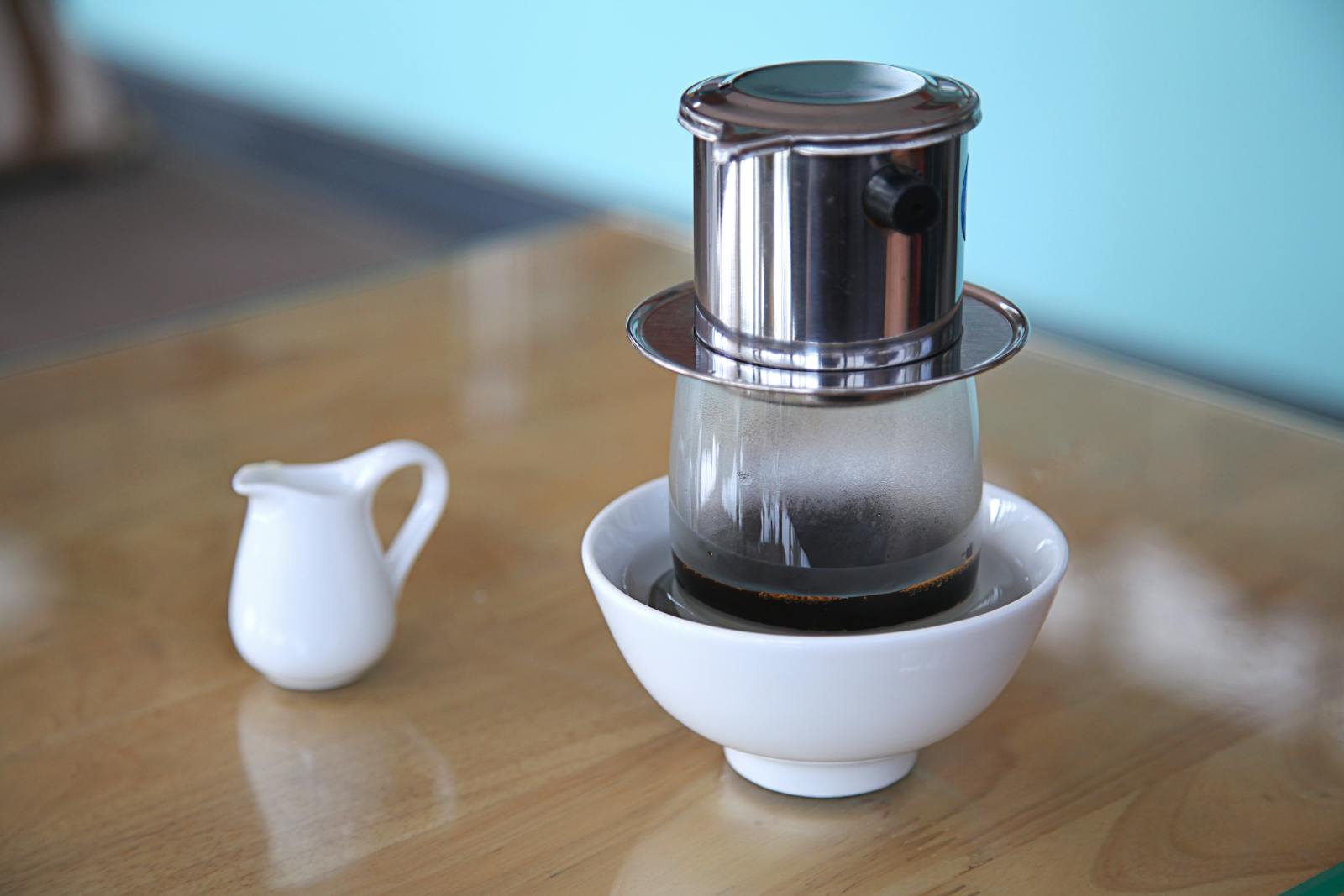
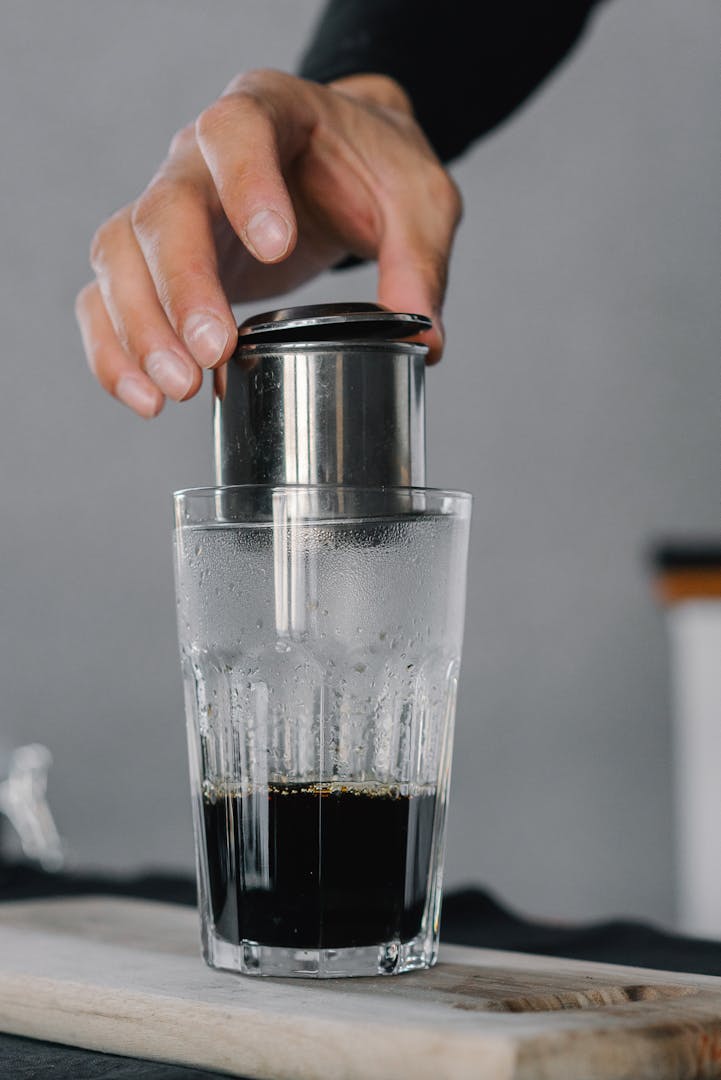
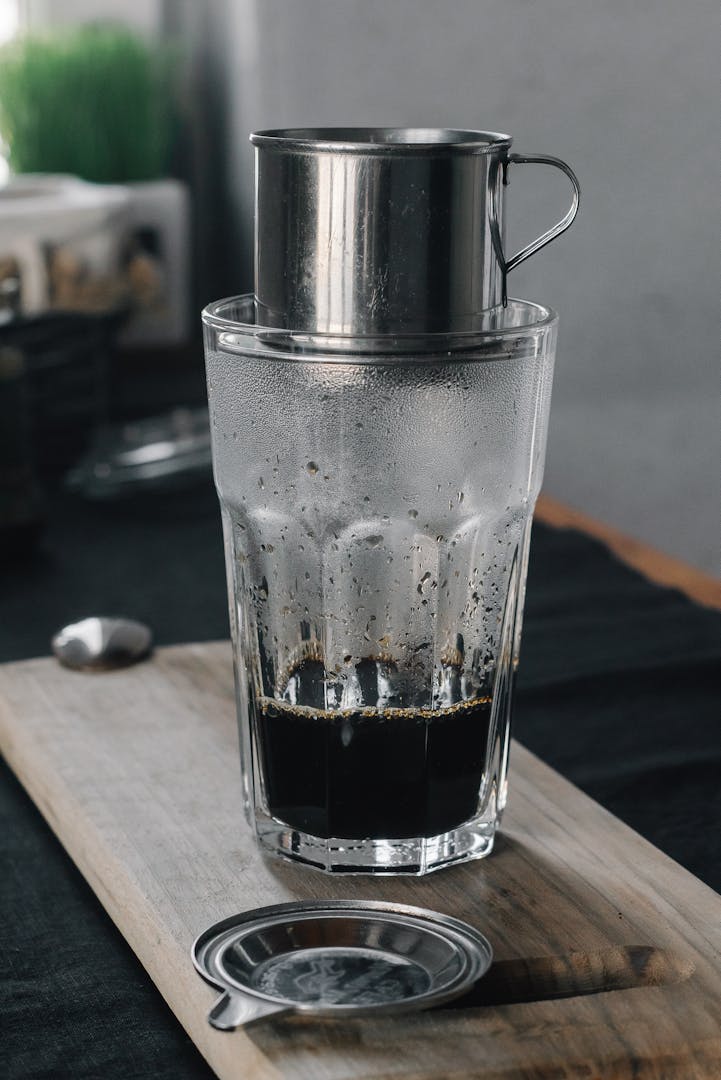
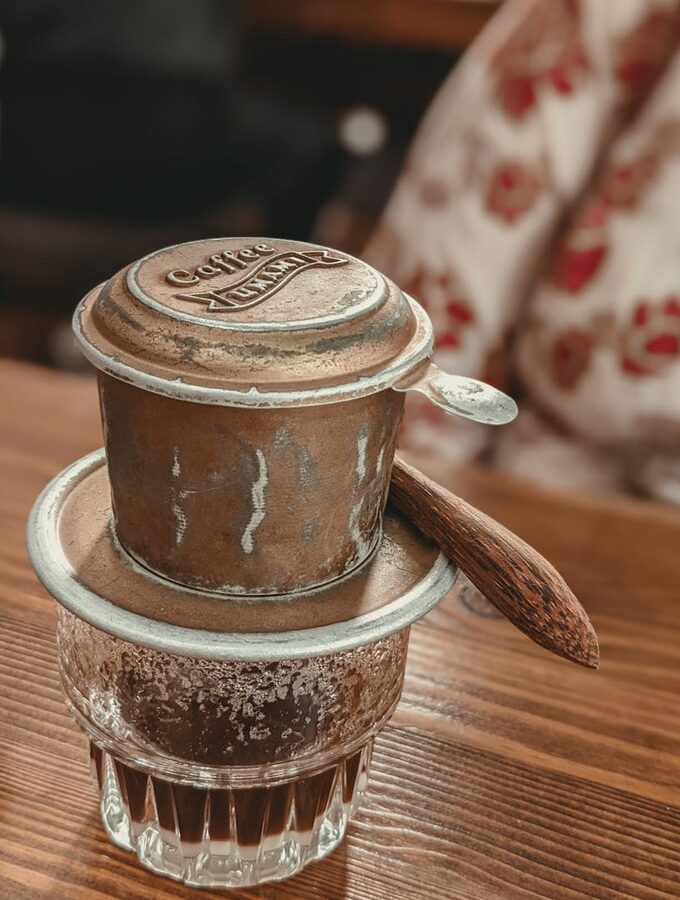
The other thing that makes Vietnamese coffee so different is the brewing device, because every other coffee culture in the world has basically consolidated around two tools — the espresso machine and the pour-over — and Vietnam said, “nope, we’re doing our own thing.” The phin is a small stamped metal filter, usually aluminum or stainless steel, that sits directly on top of your glass.
You scoop ground coffee into the base, press it down gently with a perforated plate, pour hot water on top, cover it with a small lid, and then wait. And wait. And wait some more.
A phin takes about four to five minutes to fully drip through. That’s a geological age in modern coffee terms — nearly ten times longer than an espresso shot and twice as long as most pour-overs. But the slowness is the feature, not the bug.
It gives the robusta enough contact time with the water to extract all the thick, syrupy, chocolatey compounds you want, without over-extracting into ashy bitterness. It also turns coffee from a transaction into a ritual. You order a phin, you sit down at a tiny plastic stool, and you watch the drops fall for five minutes while the street moves around you. Nobody is in a hurry.
Nobody is standing at a counter tapping a card reader. The phin forces you to slow down, which is arguably the most valuable thing any coffee device has ever done for humans.
The build of a phin is dead simple — four parts — which is also why every Vietnamese coffee class teaches you to use one. There’s a cup that holds your grounds, a tamper plate you press down on top, a saucer the whole thing sits on, and a lid. You can pick up a decent one at Hoi An central market for under a dollar. They travel well, they never break, they don’t need electricity, and they will outlast any $400 espresso machine in your kitchen.
The Four Classic Vietnamese Coffee Drinks You Need to Know
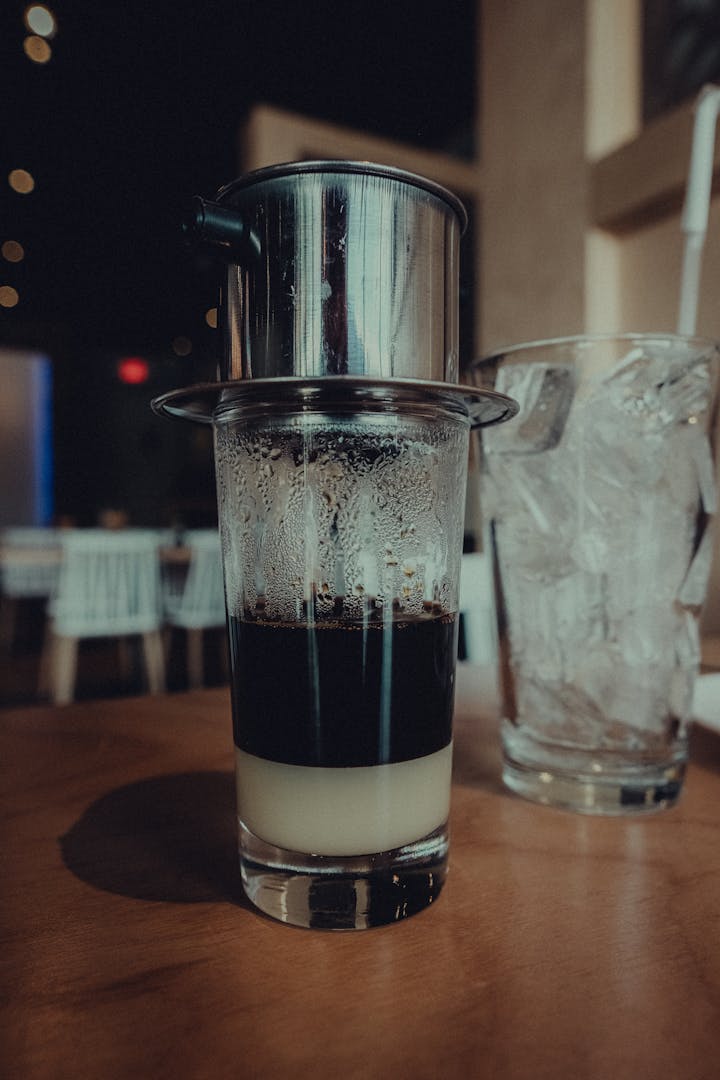
Once you’ve got robusta and a phin, the Vietnamese drinks canon has a handful of classics that every cafe, street stall and hotel lobby in the country will serve. These are the four you’ll see on every menu, and the ones a good Hoi An coffee class will walk you through start to finish.
Ca Phe Sua Da (Iced Coffee With Condensed Milk)
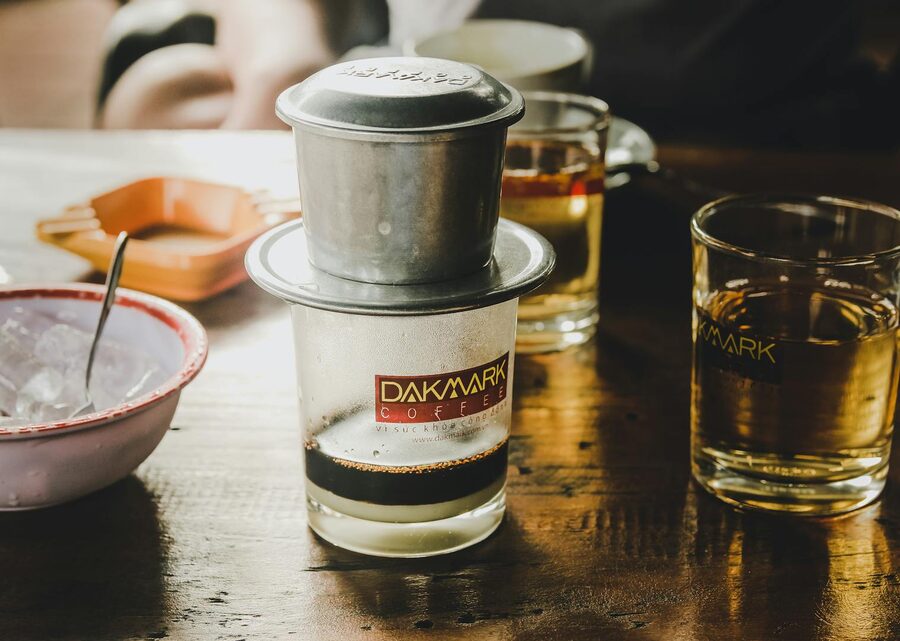
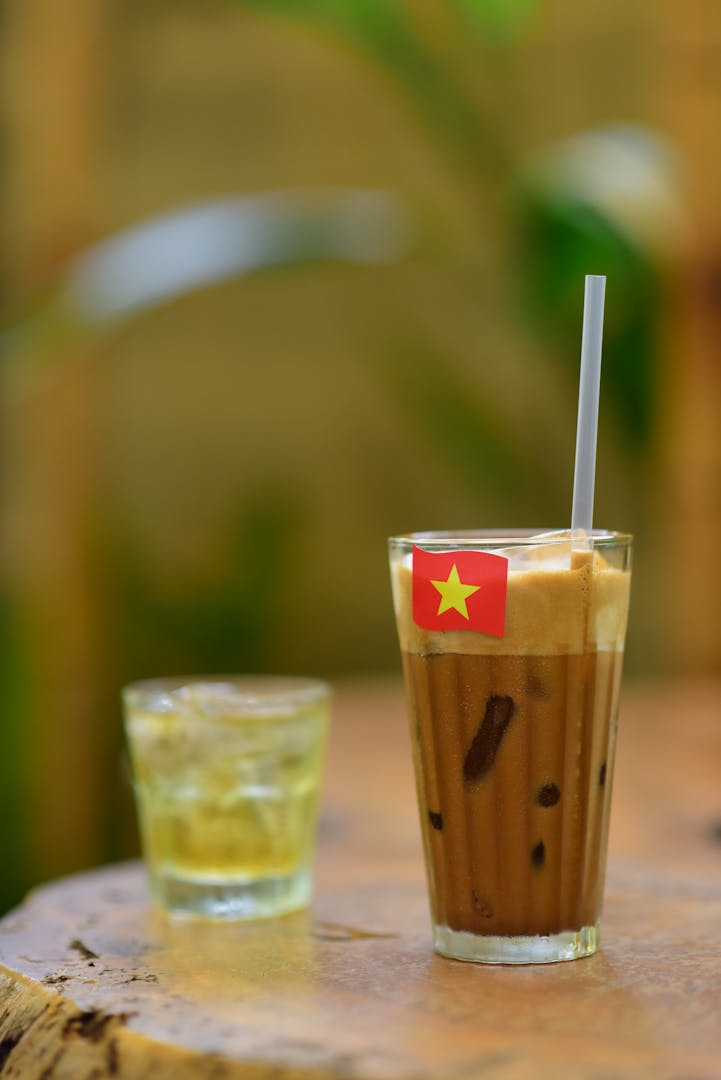
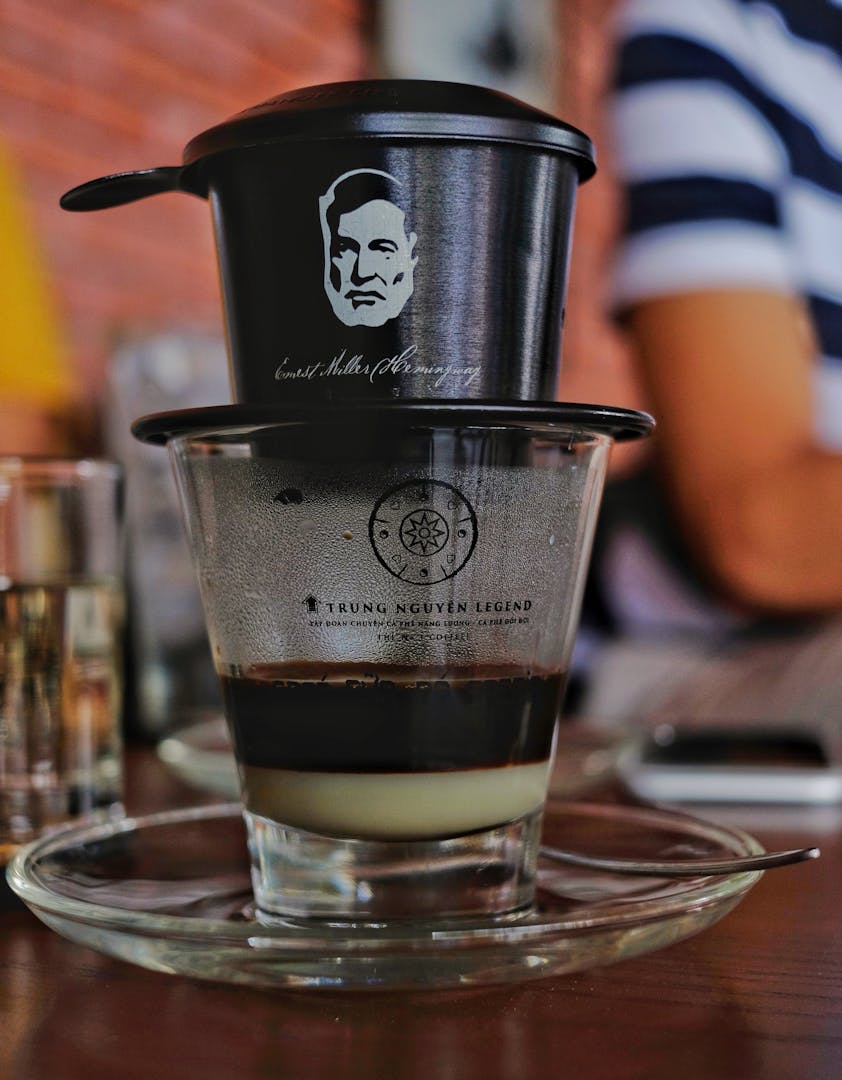
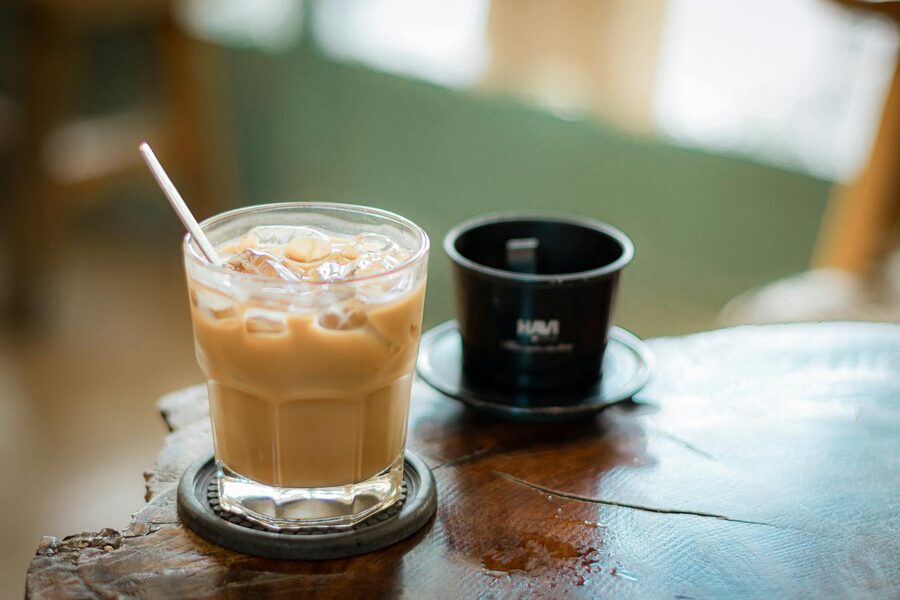
This is the one. If you’ve had exactly one Vietnamese coffee in your life, it was probably this. Ca phe sua da means “coffee milk ice” in literal Vietnamese, and it’s the national drink. A tablespoon or two of sweetened condensed milk goes into a tall glass.
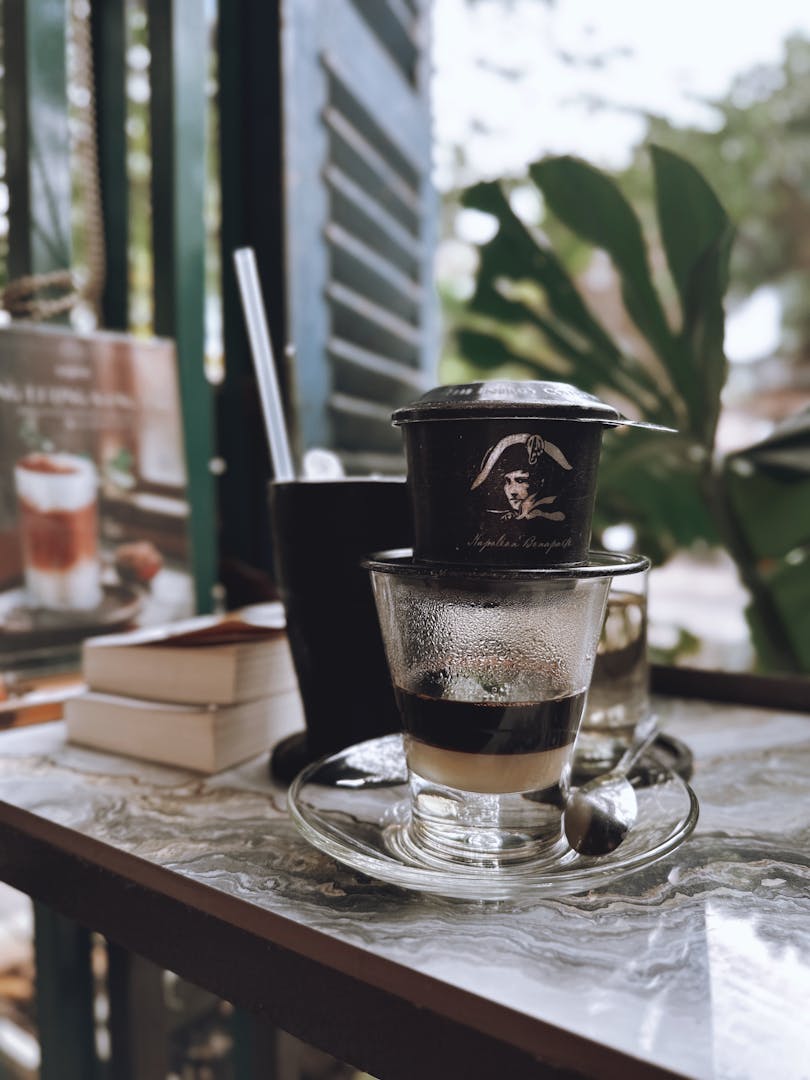
The phin sits on top of the glass and drips the hot, concentrated robusta directly onto the milk — so by the time it’s done, you have a sharp division between a white-beige layer and a near-black layer. You stir it together, pour the whole thing over a glass of crushed ice, and drink it like the best dessert you’ve ever had.
The reason condensed milk became standard is historical — Vietnam’s dairy industry was weak during the colonial and post-colonial decades, and fresh milk spoiled too fast in the tropical heat, so French and Vietnamese cafes reached for the long-life tinned stuff instead. It stuck. It’s now inseparable from the drink.
Ca Phe Trung (Egg Coffee)
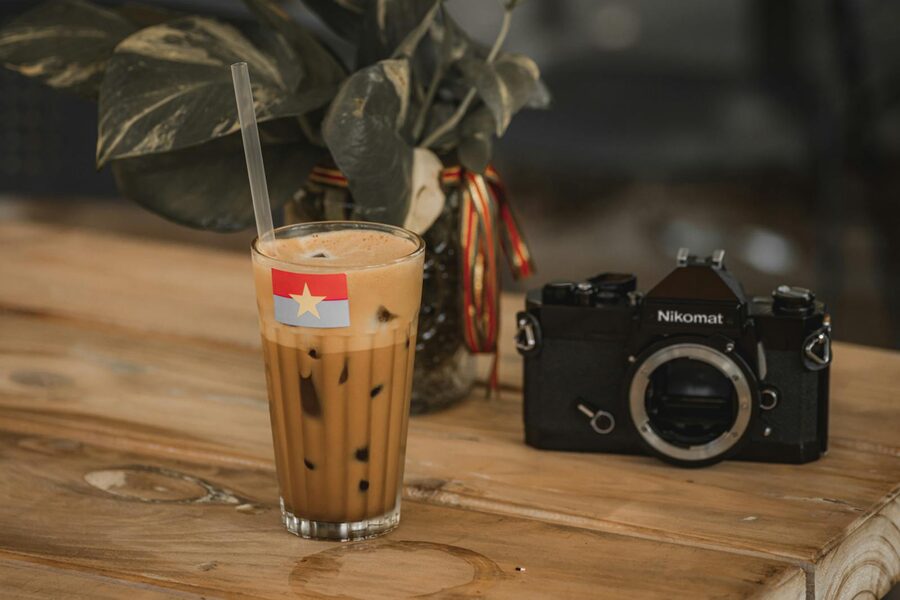
Hanoi’s invention. During a 1946 milk shortage at the Metropole Hotel, a bartender named Nguyen Van Giang swapped in whipped egg yolks and sugar where condensed milk should have been, and accidentally created one of the most beloved coffees in Southeast Asia. An egg coffee is an inch of near-frozen whipped egg yolk, sugar and a splash of condensed milk on top of a base of hot strong robusta.
You eat the first centimeter of yolk foam with a spoon like a custard, then work your way down into the coffee underneath. It tastes like tiramisu in a glass. It’s richer than it sounds, and it’s a must-try even if you normally hate eggs. You’ll find egg coffee in Hoi An’s best cafes, and a proper class will show you exactly how to whip the yolk until it stays upright.
Ca Phe Cot Dua (Coconut Coffee)
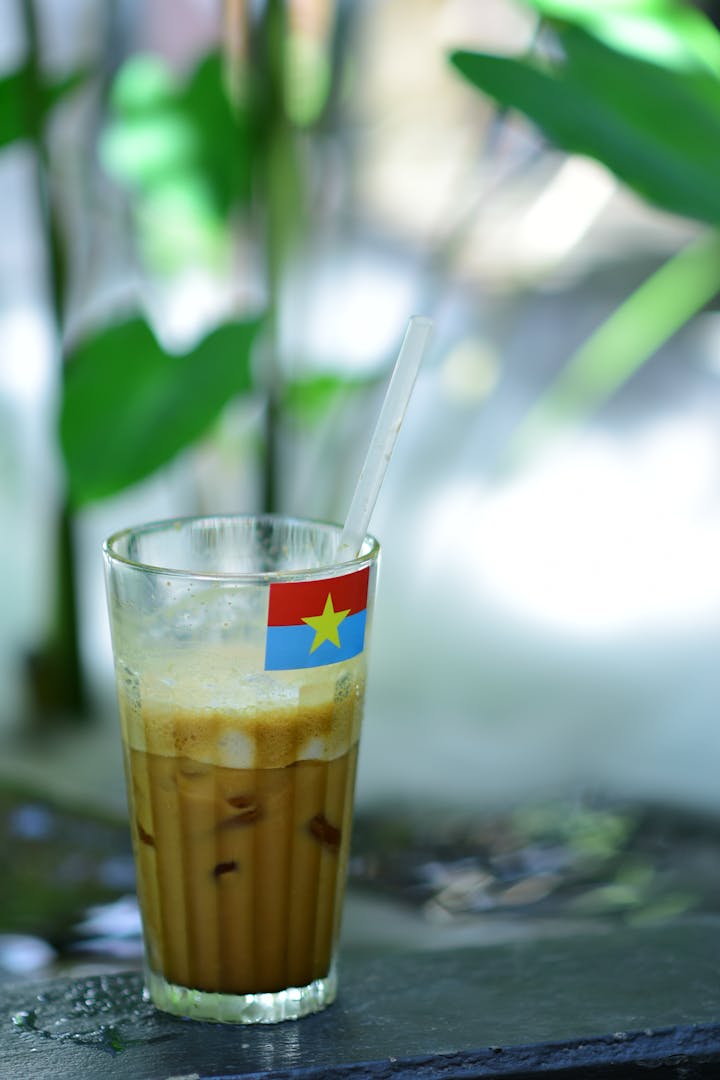
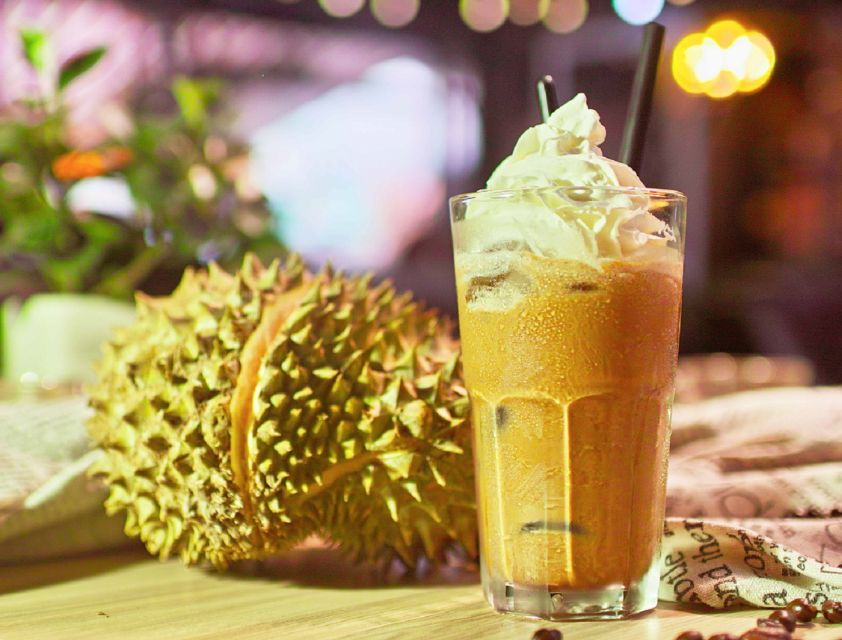
Coconut coffee is newer — it exploded in popularity around 2015 thanks to a Hanoi chain called Cong Caphe — but it’s become a firm fixture on cafe menus across the country, and especially in beach-adjacent Hoi An where coconut milk is everywhere. A shot of strong phin coffee gets blended with frozen sweetened coconut milk until the whole thing looks like a caramel-colored slushie.
It’s closer to a dessert than a coffee, and on a 35-degree Hoi An afternoon it’s the best thing you can put in your body. Every decent cafe in the old town will have one on the menu. They’re not traditional, but they’re delicious.
Ca Phe Den (Black Coffee)
The purist option. Ca phe den is just robusta dripped through a phin, no milk, no sugar (though some people add a little rock sugar on request). Served hot (nong) or over ice (da), this is the drink older Vietnamese men sit with for an hour at a street stool, reading the newspaper and watching the world go by.
It’s thick, dark, and about as far from a filter coffee at an American diner as you can get. If you want to actually taste what Vietnamese robusta is capable of on its own, order a ca phe den da and sip it slowly. It’s an education.
What a Hoi An Coffee Class Actually Teaches You
Reading about Vietnamese coffee is one thing. Actually sitting down at a small table with a host, a bag of freshly-roasted robusta, a phin of your own, and ninety minutes of patient instruction is a totally different experience — and it’s the single best way to take the whole culture home with you instead of just passing through it on the way to somewhere else. A good Hoi An coffee class covers four things in sequence.
First, the history. You start with a short talk about where Vietnamese coffee comes from — the French arrival, the shift to robusta, the climb to number two global producer, and the reasons Vietnam’s bean looks nothing like what you’d get in a cafe back home. This framing matters because it makes the rest of the class click. You stop thinking, “why does this taste different” and start thinking, “of course it tastes different.”
Second, the raw product. You get to see, smell and sometimes taste the beans themselves — green robusta, roasted robusta, and often a side-by-side comparison with arabica so you can feel the difference in your hand. Most classes will show you a roasting setup, and some let you do a small batch yourself on a home roaster. The smell alone — thick, chocolatey, almost like burnt caramel — is worth the price of admission.
Third, the phin. This is the hands-on heart of the class. Your host walks you through how to load it, how hard to tamp, how much water to pour, and why you absolutely cannot rush the drip. You brew your own cup — usually a few cups, honestly — and start to feel in your fingers how the device works. You’ll ruin at least one pour. That’s part of the lesson. By the end of the class, you’ll know how to get a thick, syrupy, properly extracted cup out of a phin every time.
Fourth, the drinks. You actually make the classics. Most Hoi An classes teach you ca phe sua da, egg coffee, and sometimes coconut coffee or salt coffee depending on the host. You whip the egg yolk, you learn the ratios, you taste your own version next to the instructor’s, and you leave with the recipes written down.
If the class is run well, you’ll leave carrying a small goodie bag with a phin, a small bag of beans, and the confidence to recreate the whole thing in your kitchen.
Our Pick: The Best Vietnamese Coffee Class in Hoi An
There are quite a few coffee classes running in Hoi An these days — small home-based operations, add-ons to cooking schools, and a handful of dedicated coffee studios.
The one we send everyone to is the Vietnamese Coffee Culture and Coffee Making Class, because it hits the sweet spot on every metric that matters: small groups, a proper two-hour session that covers history and hands-on brewing, an extremely well-reviewed host, and a price that’s low enough to make it a no-brainer even if you only have a casual interest in coffee.
Hoi An Vietnamese Coffee Culture and Coffee Making Class
This is as close to perfect as a two-hour coffee class gets. You spend the first half learning about Vietnamese coffee history, the robusta-versus-arabica story, and the role of the phin. Then you get hands-on: grinding beans, loading and brewing your own phin, whipping egg yolks for egg coffee, and mixing a ca phe sua da exactly the way a Hanoi cafe would do it.
Your host walks you through each drink step by step, you taste everything you make, and you leave with the recipes and the confidence to recreate them at home. Small group size keeps the experience intimate. The 4.9 rating across more than four thousand reviews is nearly unheard of for a tour product at this price.
What’s included: All ingredients and equipment, history and culture overview, hands-on phin brewing, egg coffee and condensed milk coffee preparation, unlimited tastings, recipes to take home.
Good to know: Runs multiple times a day, so it’s easy to slot into a Hoi An itinerary. Located a short walk from the old town. Small groups, so book a day or two ahead in high season.
Where Else to Drink Great Coffee in Hoi An
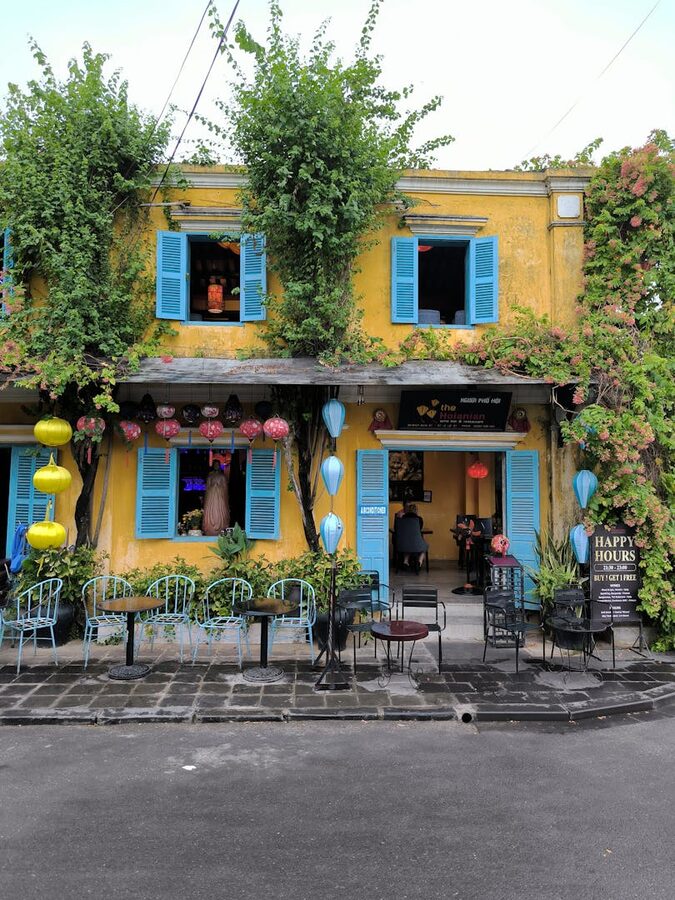
A class will teach you how to brew. But Hoi An’s cafe scene is one of the best in Vietnam outside of Hanoi and Ho Chi Minh City, and once you know what to order, wandering from cafe to cafe becomes a proper activity in its own right. The old town is thick with small cafes tucked into old shophouses, riverside spots with views over the Thu Bon, and a handful of roasters who are genuinely pushing the craft forward.
A few of the spots I’d send anyone with a morning to spare. Phin Coffee is a dedicated phin-focused cafe a short walk from the Japanese Covered Bridge — they serve single-origin Vietnamese robusta brewed the traditional way, and the owner is happy to talk through the beans if you ask. Hoi An Roastery runs a handful of locations around the old town and roasts on site, so you can taste the day’s roast at the counter. Mia Coffee House, on Phan Boi Chau street, is a fan favorite for egg coffee and sits on a quiet back street away from the tourist crush. 92 Station is the place to go for coconut coffee with a riverside view.
And Reaching Out Tea House, while it’s technically a tea house, also serves beautifully presented coffee and is run entirely by deaf and hard-of-hearing staff — communication is via written cards and it’s one of the most peaceful rooms in Hoi An.
When to Take the Class in Your Hoi An Trip
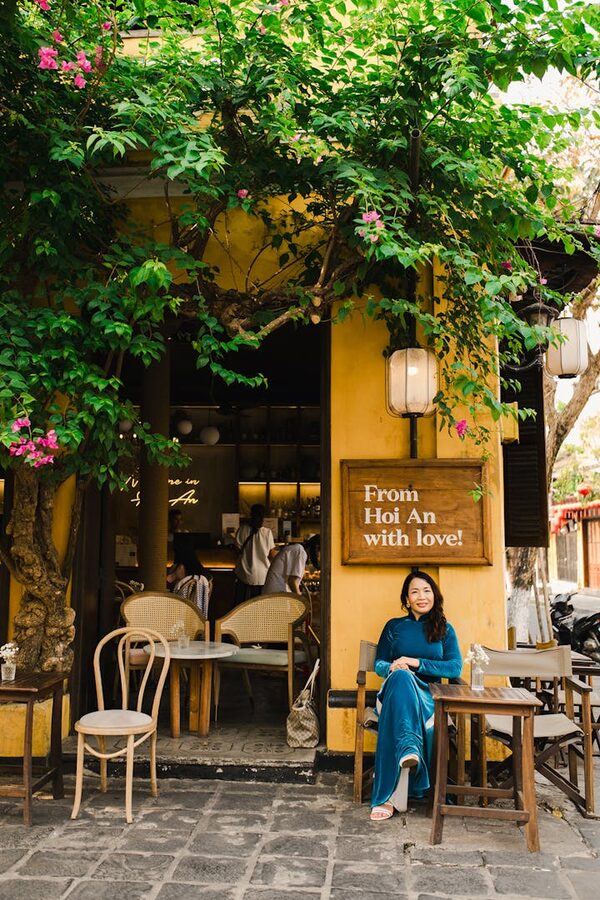
Hoi An rewards slow travellers, and the best trips I’ve seen have been ones where people stay at least four or five nights and give themselves room to wander. If you only have two days, the coffee class is still worth squeezing in — it’s only two hours and it’ll be the most distinctive thing you do all week — but the magic really happens when you have enough time to loop back to the cafes afterward with what you’ve learned.
My suggested rhythm. Take the coffee class on your second morning, after you’ve had one day of wandering the old town and getting your bearings. Then spend the rest of that day cafe-hopping with fresh eyes — you’ll notice things about the phins, the grind size, the milk ratios that you never would have caught the day before.
Day three is when I’d do a cooking class, because you’ve now got the coffee context to pair with the food. Day four could be a basket boat ride in the coconut forest or a tailor appointment. Day five, if you’re in town for a lantern-making class or the monthly full moon lantern festival, that slots in here beautifully.
The coffee class early in the trip is the move because it changes how you order and experience coffee for the rest of your Vietnam trip — not just Hoi An. You’ll start noticing the differences between a proper phin pour and a rushed one, and you’ll have opinions about condensed milk ratios that you never thought you’d have.
How to Book the Class (And What to Expect)
Booking is straightforward. The Vietnamese Coffee Culture and Coffee Making Class is listed on GetYourGuide with live availability, and because it runs multiple times per day, you can usually get a slot within 24 hours of booking. In high season (February through April, and again around Tet) I’d book a few days out to be safe. The price is $14 per person, which is extraordinary value for a two-hour hands-on class with all ingredients and a small goodie bag included.
A few practical things worth knowing. The class runs rain or shine — it’s indoors, with small groups of usually 4 to 8 people. Wear clothes you don’t mind getting a tiny bit of coffee on (unlikely but possible). Come hungry-ish — you’ll drink three to four coffees during the class, so if you’re caffeine-sensitive, don’t stack it on top of an already-strong morning coffee.
And bring a pen or your phone for notes, because the recipes and ratios are the kind of thing you’ll want to reference when you get home and try to recreate it.
The location is a short walk or cheap grab ride from the center of the old town. The host will send you exact directions and a phone number after booking. If you’re staying in An Bang Beach, build in 15 minutes of travel time each way.
Bringing Vietnamese Coffee Home
Half the fun of a coffee class is that you can actually bring the whole thing home with you in hand luggage. A phin costs less than a dollar at Hoi An central market. A 250g bag of fresh roasted robusta from any of the cafes mentioned above will run you around $5 to $8 and lasts a month if you drink a cup a day. A tin of sweetened condensed milk from any Vietnamese grocery is pennies. That’s it.
That’s the whole setup. You can recreate a ca phe sua da in your kitchen tomorrow for less than a dollar a cup, and it will taste exactly the same as the one you had on a tiny plastic stool in Hoi An.
A few practical tips for bringing coffee home. If you’re buying beans, buy whole — Vietnamese pre-ground goes stale quickly in humid baggage, and your local grinder will handle robusta fine. Look for beans roasted in the last two to three weeks (most Hoi An roasters print the roast date on the bag). Vacuum-seal or resealable pouches are your friend.
And if you’re flying home to a country with strict agricultural rules — Australia and New Zealand especially — roasted coffee is generally fine, but check your border rules before packing multiple kilos.
For the phin itself, any size works. The most common is the single-serving phin (about 150ml), but I’d actually recommend the two-cup phin if you’re planning to share with a partner or make iced coffee, because the extra capacity gives you more flexibility. The central market has dozens of stalls selling them. Don’t pay more than 30,000 VND (about $1.25) for a basic aluminum one — they’re a commodity item and the stallholders know travellers will overpay.
Pairing Coffee With the Rest of Your Vietnam Trip
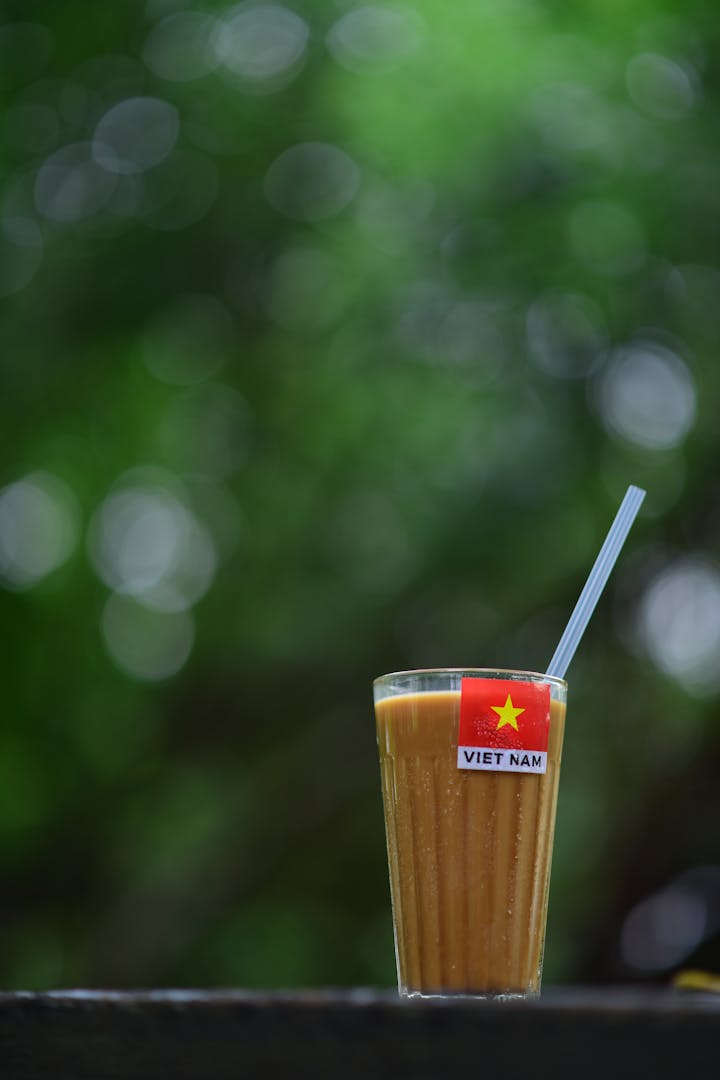
The coffee class is one of the easier things to slot into a longer Vietnam itinerary because it’s short, it’s indoor, and it doesn’t demand any particular fitness level. If you’re doing the classic three-city Vietnam route — Hanoi, Hoi An, Ho Chi Minh City — the Hoi An class is your chance to learn the ritual, and then you can use that knowledge in the cafes of the other two cities.
In Hanoi, the egg coffee birthplace, the must-visit spots are Cafe Giang and Cafe Dinh, both owned by the Nguyen Van Giang family who invented the drink. In Ho Chi Minh City, the street-level cafe culture is loud, chaotic and wonderful — pair a walking food tour with a coffee stop on one of the city’s motorbike food tours and you’ll cover ground you couldn’t get to on foot.
For food context around all of this, the Hanoi street food tours we recommend also typically include a coffee stop, and the Hanoi jeep and motorbike food tours tend to end with an egg coffee at a family-run cafe, which is the perfect way to cap a night.
If you’re adding Hue or Da Nang to the trip, both cities have solid coffee scenes but lack a dedicated class the way Hoi An does, so do the class in Hoi An and drink in the other cities. For a day trip out of Hoi An, the Marble Mountains and Lady Buddha area in Da Nang is easy to pair with an afternoon cafe crawl, and a Hue city tour including the Imperial Citadel is an easy day trip from Hoi An if you want some imperial history in the mix.
And if you’re going further north, the Ha Giang loop passes through highland coffee country and you’ll find tiny roadside phin spots at almost every homestay, or you can base in Hanoi and do day trips like a Ninh Binh day trip, which is the perfect excuse to bookend the day with an egg coffee at a Hanoi cafe.
What Makes Hoi An Specifically Great for Learning Coffee
It’s fair to ask: why learn Vietnamese coffee in Hoi An specifically? Hanoi is technically the home of egg coffee. Dalat is the coffee-growing capital. Ho Chi Minh City has the biggest cafe chain culture. So why Hoi An?
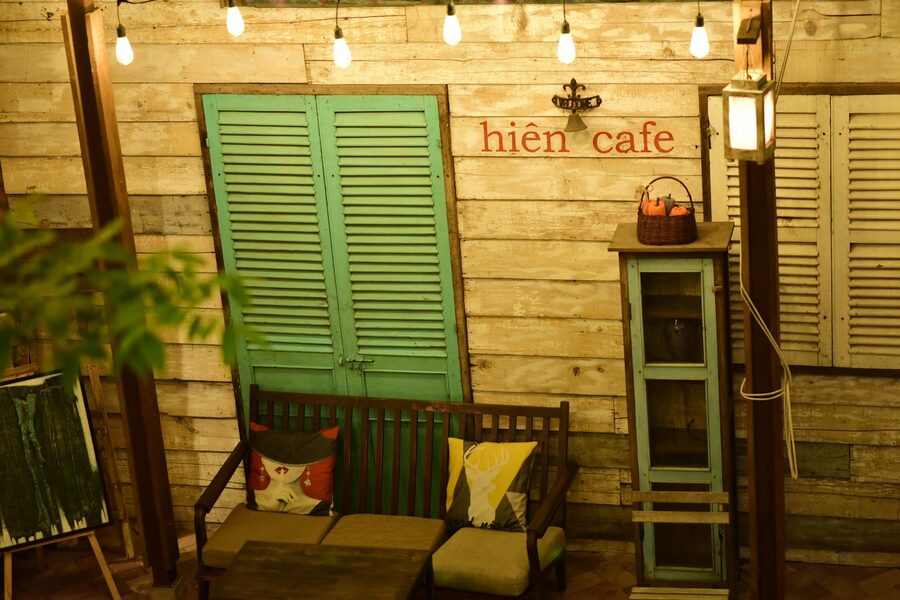
The honest answer is that Hoi An has built the best ecosystem for travellers who want to slow down and learn. It’s a small, walkable town with almost no motorbike traffic in the old quarter — which means you can actually sit on a stool outside a cafe and hear yourself think. The tourism infrastructure is mature but still feels intimate, and the community of class operators is unusually good.
Coffee classes here tend to be run by hosts who genuinely love the subject, not by big booking-aggregator operations pushing volume. Classes are small, personal, and hands-on in a way that a 30-person workshop in a bigger city simply can’t be.
Hoi An is also a town that rewards curiosity. It’s where travellers take cooking classes, lantern classes, tailor-fitting sessions, basket boat rides, and photography walks. A coffee class fits right into that rhythm. You’re not shoehorning an educational experience into a city that’s built for nightlife and traffic; you’re adding one more craft-focused afternoon to a town where everything is craft-focused.
A Few Honest Warnings Before You Book
A few things to set expectations honestly. First, Vietnamese coffee is strong. If you’re caffeine-sensitive and you drink three cups during a class, you will feel it. Budget an easy afternoon afterward — no activities that require steady nerves. Second, condensed milk is sweet, and traditional Vietnamese ratios lean heavier on the sweetness than a Western palate might expect.
The good news is that at home you can adjust the ratio freely; in a class, try the traditional amount first before deciding it’s too much. Third, if you’re lactose intolerant, be aware that condensed milk is dairy — but ca phe den (black) and coconut coffee are both dairy-free options and will be happily made for you.
Fourth, and most importantly: go in with an open mind about robusta. If you come in thinking, “oh, I only drink arabica, robusta is beneath me” — an attitude a surprising number of specialty coffee fans arrive with — you’ll miss the point. Vietnamese robusta, brewed Vietnamese-style, is a genuinely great drink on its own terms. It’s not arabica and it’s not trying to be. Judge it on what it is, not on what it isn’t, and you’ll walk away with a new favorite coffee style.
Final Word
Hoi An’s coffee scene is one of the most underrated travel experiences in Southeast Asia. It’s not loud, it’s not Instagrammy in the obvious way, and it won’t show up at the top of most “things to do in Vietnam” lists. But if you give it a few hours and take a proper class, it’ll reshape how you think about coffee for the rest of your life.
The combination of a different bean, a different brewing device, a different sweetener, and a different sense of time adds up to a drink — and a ritual — that the rest of the world has no real equivalent for.
Book the class, sit at the small plastic stools, watch the phin drip for five minutes, drink a ca phe sua da you made with your own hands, and then walk back into the lantern-lit streets of the old town with a new appreciation for how the slowest cup of coffee in Asia is also one of the best. Take a phin home. Make it again next Tuesday morning in your kitchen.
Let a little of Hoi An live on in your cupboard. That’s the whole point of travel, and Vietnamese coffee is one of the rare souvenirs that actually delivers on it.