
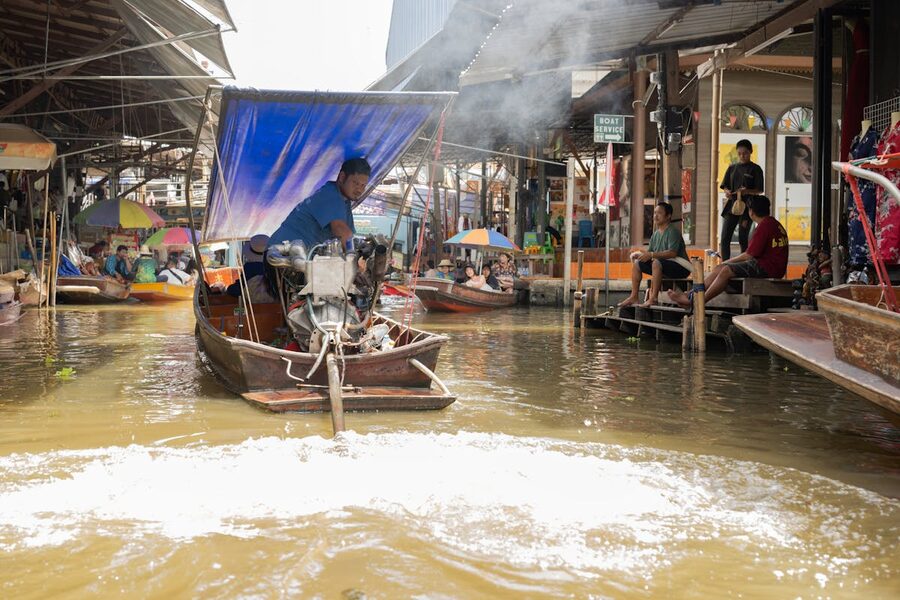
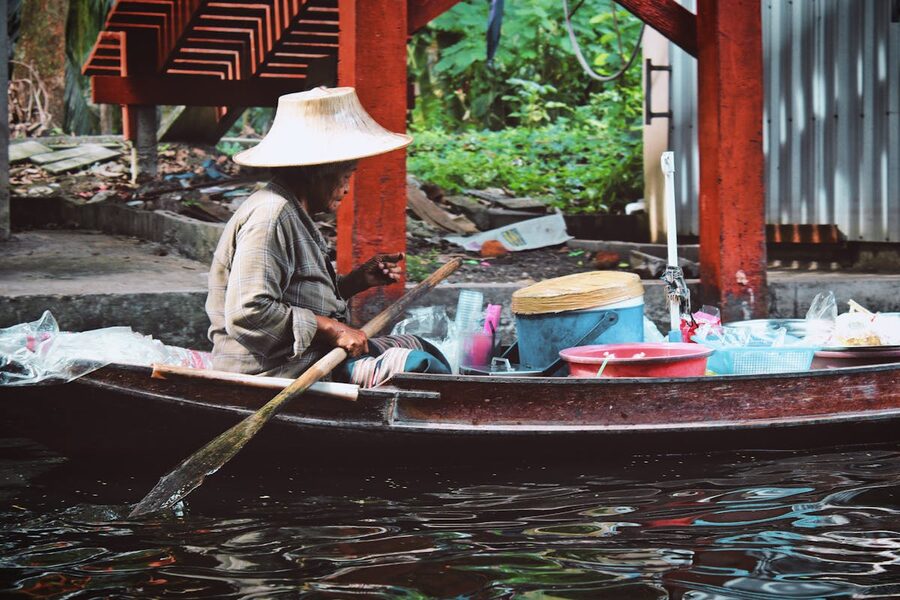
The smell hits you before you see anything. Charcoal smoke and coconut milk, frying garlic and something sweet you can not quite place. It is 6:45 in the morning, the canal is still half-dark, and the first vendor boats are already bumping into each other as they jockey for position along the wooden walkways. This is Damnoen Saduak before the tour buses arrive, and for about 45 minutes, it belongs to the people who actually live here.
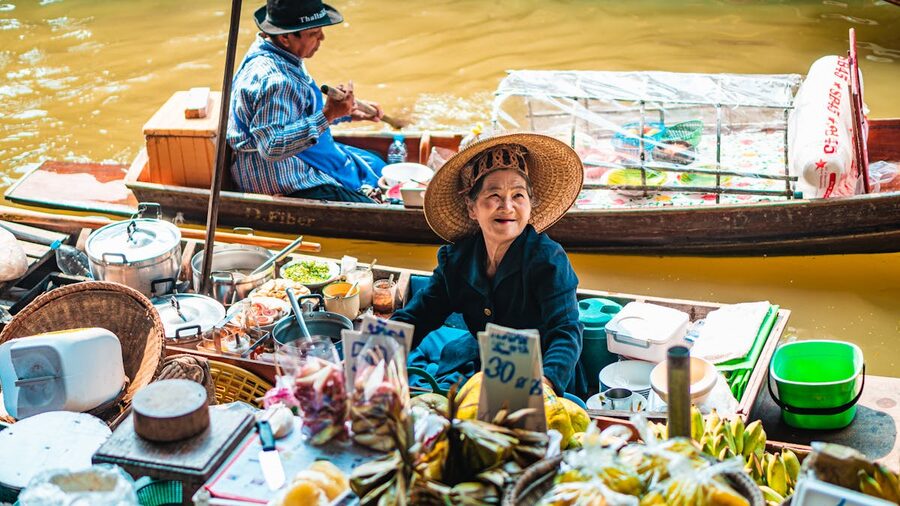
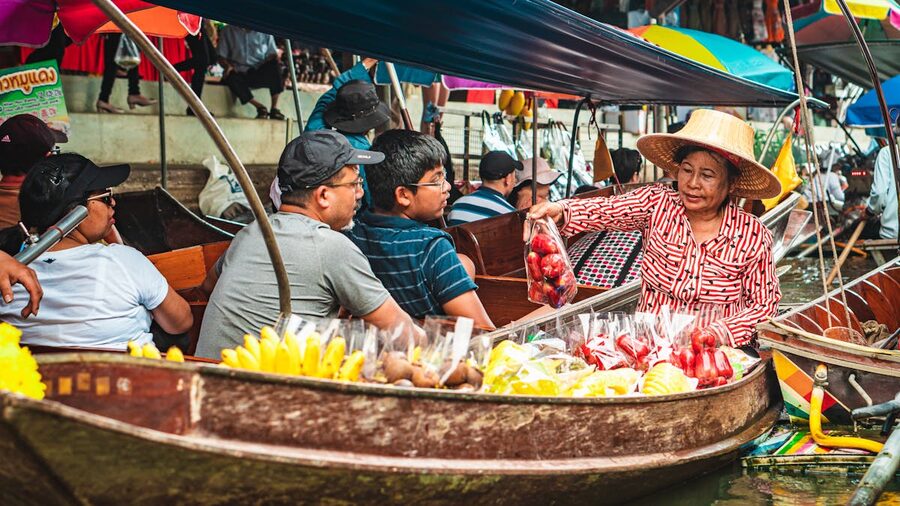
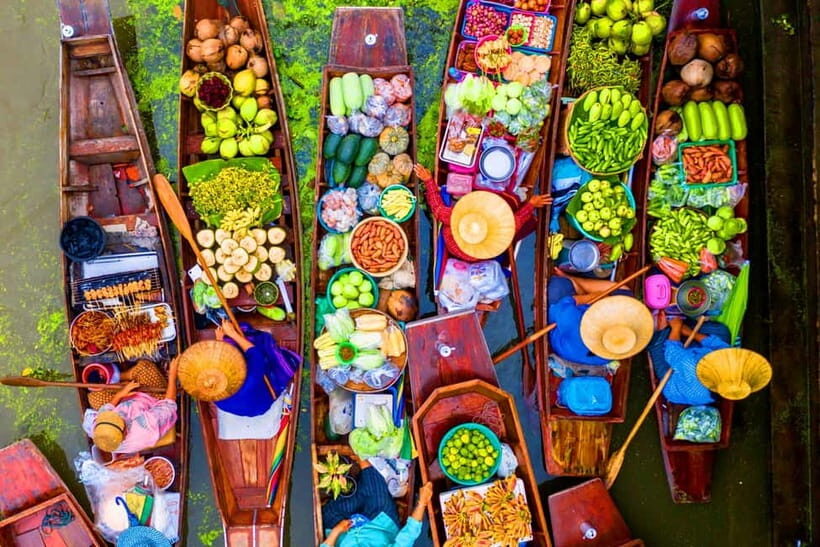
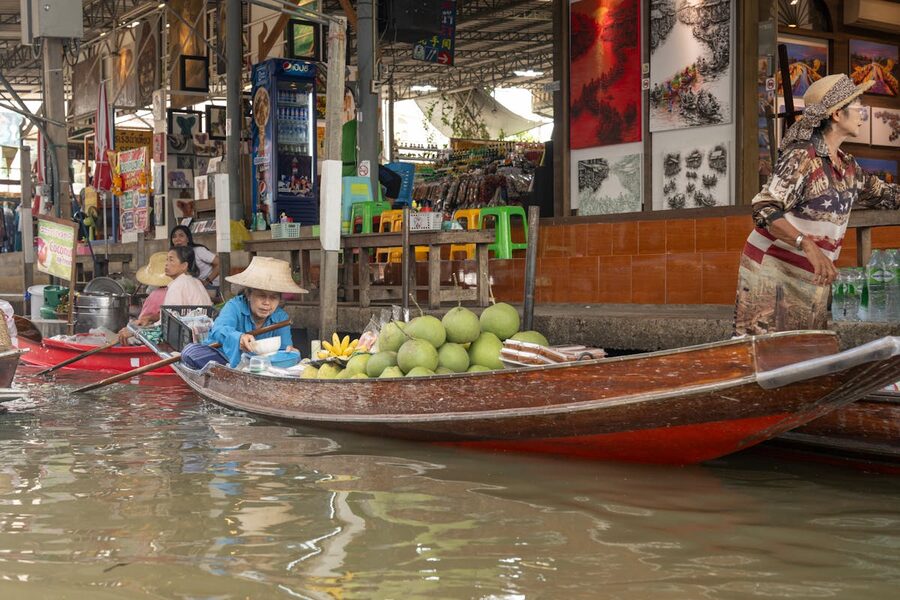
I was not expecting much. Every travel forum has someone calling the floating markets “too touristy” or “not worth the drive.” They are wrong — but they are also kind of right. Timing is everything. Show up at 10am and you will feel like you are walking through a theme park. Show up at 7am and you will watch a grandmother haggle over a basket of rambutans from the back of her wooden boat while her husband fries bananas in a wok balanced on the bow. That is the version of this place worth waking up for.
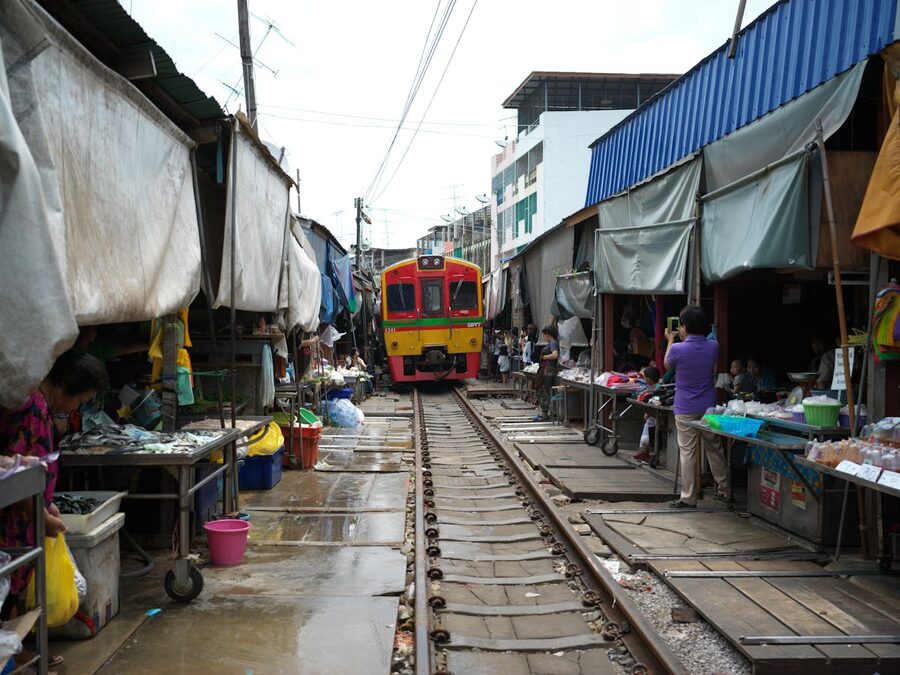
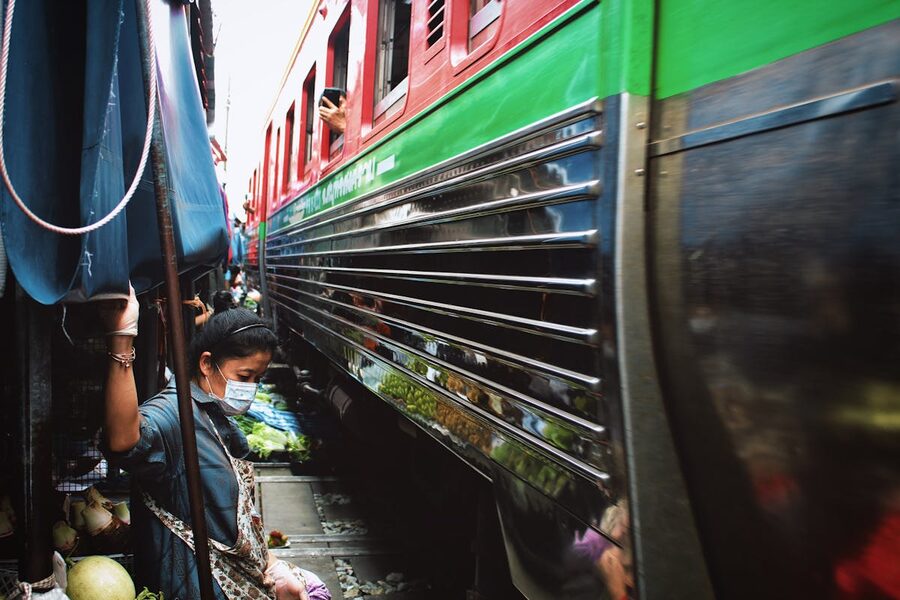
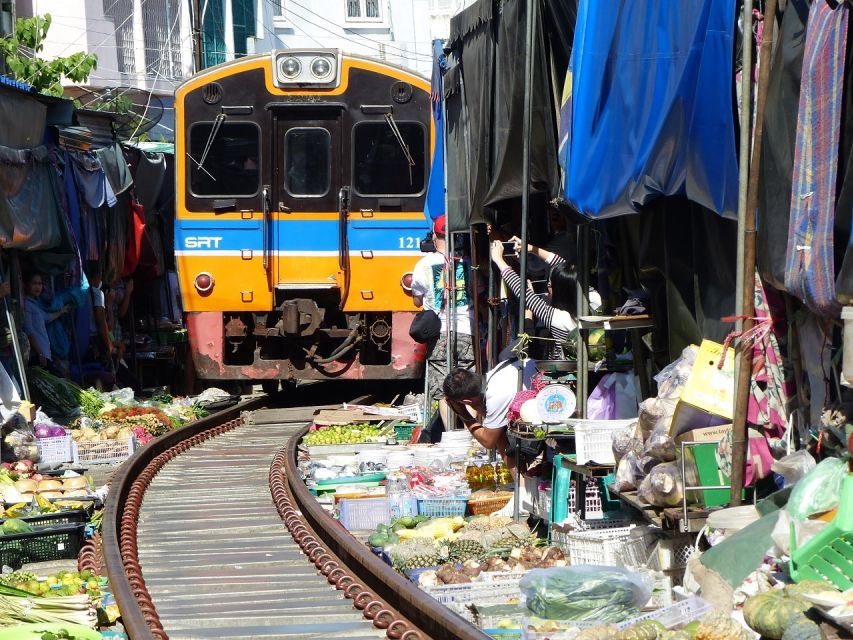
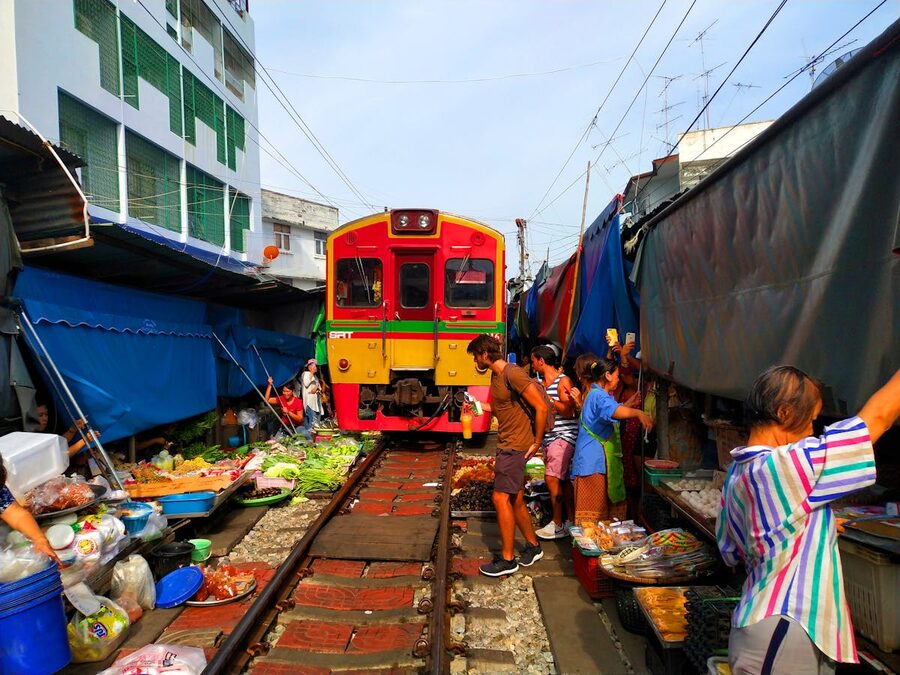
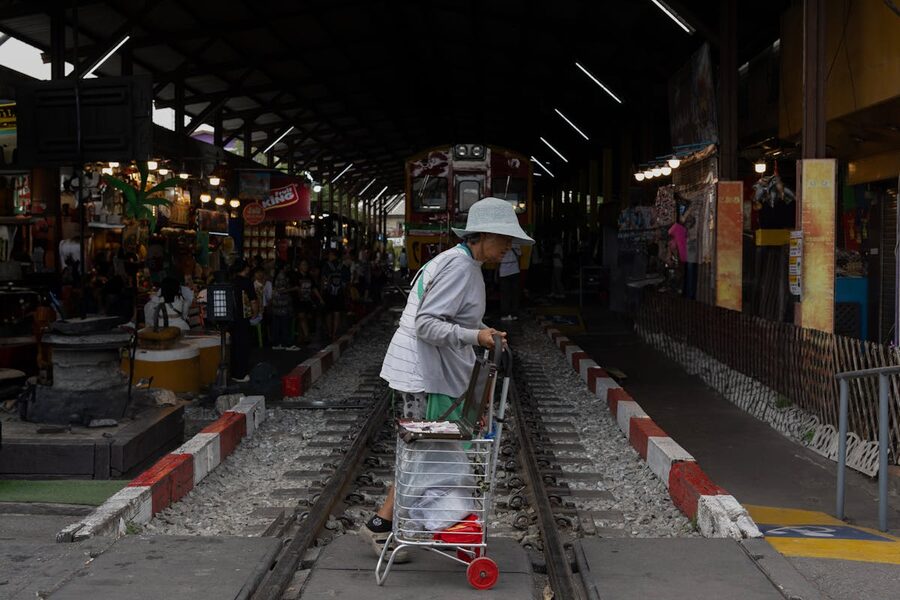
The other half of this day trip — Maeklong Railway Market — is somehow even more surreal. A fully operational train pushes through a market so narrow that the awnings literally fold onto the tracks. Vendors pull their produce back about 30 centimeters, the train rolls through close enough to touch, and 30 seconds later everything snaps right back into place. Seeing it on YouTube is one thing. Standing there while a diesel locomotive passes a meter from your face is completely different.
Short on time? Here are my top picks:
Best overall: Bangkok Train Market and Floating Market With Boat Ride — $25. Highest rated of the bunch, includes a longtail boat ride through the canals, and covers both markets in one efficient loop.
Best for history lovers: The Old Siam Tour — $32. Adds cultural context with a coconut sugar farm stop and the Tha Kha community. More depth, fewer crowds.
Best budget: Damnoen Saduak and Maeklong Railway Market — $25. The original combo tour with 26,000+ bookings. Simple, proven, gets the job done.
- How the Floating Market and Train Market Actually Work
- Going Solo vs Booking a Tour
- The Best Floating Market and Train Market Tours to Book
- 1. Bangkok Train Market and Floating Market With Boat Ride —
- 2. Damnoen Saduak Market and Maeklong Railway Market —
- 3. The Old Siam: Damnoen Saduak and Maeklong Railway Market —
- 4. Bangkok Floating Market and Train Market Experience —
- When to Visit
- How to Get There
- Tips That Will Save You Time and Money
- What You Will Actually See
- What Else to Do in Thailand
How the Floating Market and Train Market Actually Work
Let me clear up something that confuses a lot of first-timers. Damnoen Saduak Floating Market and Maeklong Railway Market are two completely different places in two different provinces, about 40 minutes apart by road. They are almost always paired together on day trips from Bangkok because the driving route makes it efficient (the other classic day trip heads north to the ancient temples of Ayutthaya), but the two markets have nothing to do with each other.
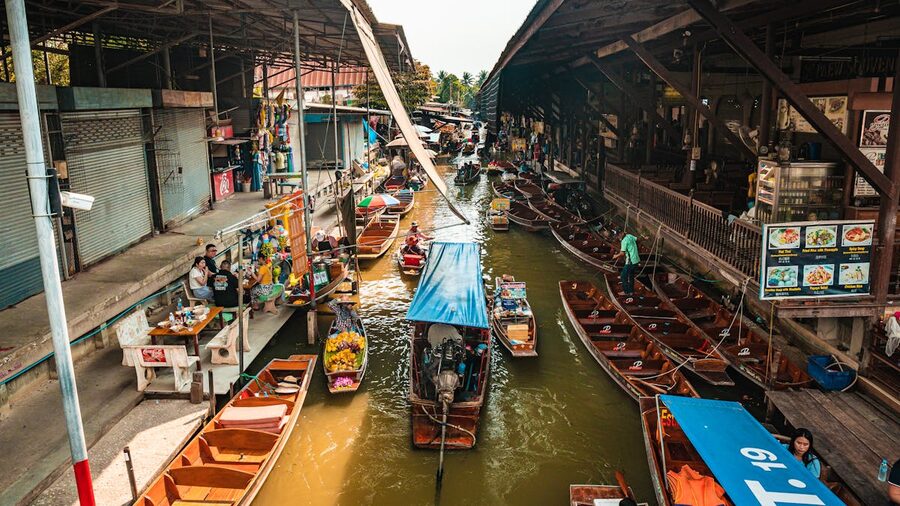
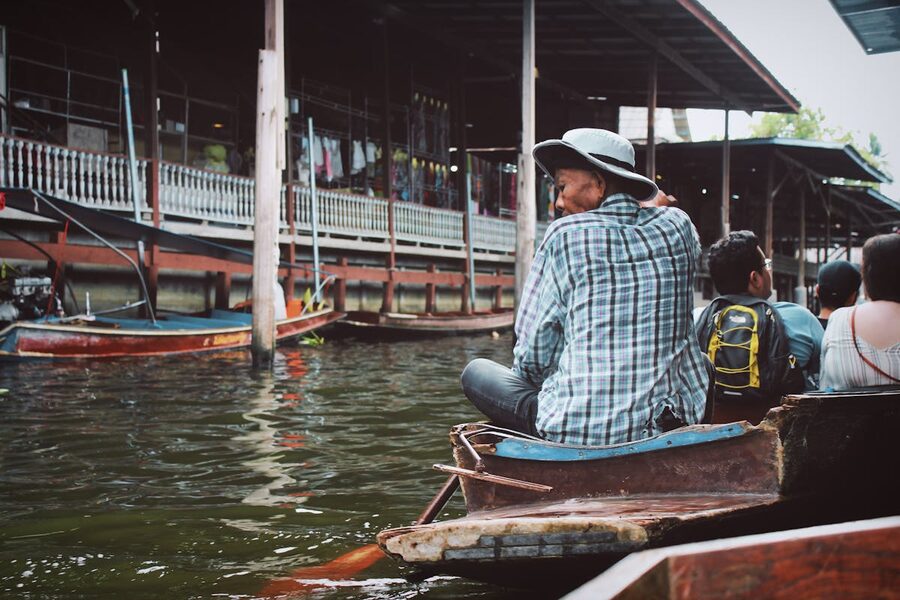
Damnoen Saduak Floating Market is about 100 kilometers southwest of Bangkok in Ratchaburi Province. It was built in 1866 by King Rama IV as a canal shortcut between two rivers, and locals started selling from boats because the waterway was the only road. Today it runs every day from roughly 7am to noon, though the sweet spot is 7-9am before the canal gets packed with tour boats. You can visit independently by hiring a longtail boat (around 300-500 baht per person for a 20-30 minute ride) or walk the wooden platforms along the canal banks for free.
There are no official tickets. The market is a public space. What you pay for is the boat ride — and honestly, the boat ride IS the experience. Walking along the sides is fine for photos, but being on the water between the vendor boats, pointing at coconut pancakes and grilled prawns while someone paddles you through, is something else entirely.
Maeklong Railway Market (also called Talad Rom Hoop, which translates to “umbrella pulldown market”) is in Samut Songkhram Province, closer to Bangkok. The market sprawls along an active railway track and the train runs through it eight times per day. The schedule is roughly 6:20am, 8:30am, 9:00am, 11:10am, 11:30am, 2:30pm, 3:30pm, and 5:40pm — but the morning passes (8:30 and 9:00) are the ones every tour catches because the market is most active then.
Again, no tickets needed. You walk in for free. The market itself is excellent for buying seafood, dried goods, and Thai sweets. Most visitors spend about 30-45 minutes here waiting for and watching one train pass.
Going Solo vs Booking a Tour
You absolutely can visit both markets without a tour. Grab a taxi or book a Grab car from Bangkok, hit Maeklong first (it is closer), then drive to Damnoen Saduak. Total transport cost: maybe 2,000-3,000 baht round trip if you negotiate with a taxi, or about 1,500 baht via Grab for each leg.
But here is the thing — the math actually favors the tours. At $25 per person with hotel pickup, air-conditioned van, a guide who speaks English and knows the train schedule by heart, and a guaranteed boat ride at the floating market, it is hard to justify doing it yourself unless you specifically want to arrive at 6am and have the market to yourself (which, to be fair, is magical).
The main advantage of going solo is timing. Tours lock you into set arrival times, usually getting to Maeklong around 8:15am and Damnoen Saduak around 9:30-10am. If you go alone, you can hit the floating market at 7am when it is genuinely local, then drive to Maeklong for the 9am train. But you will spend the whole morning coordinating transport instead of just eating coconut ice cream on a boat.
My honest take: book a tour unless you have been to Bangkok multiple times and want the early-morning solo experience. The tours are dirt cheap for what they include, and the logistics of getting to two different provinces south of Bangkok and back in one morning are genuinely annoying to sort out yourself.
The Best Floating Market and Train Market Tours to Book
I have looked at every combination tour available for these two markets. There are dozens listed across GetYourGuide, Viator, and Klook, but most of them are operated by the same handful of companies with different branding. Here are the ones worth your money, ranked by overall value.
1. Bangkok Train Market and Floating Market With Boat Ride — $25
This is the one I would book if I were doing this trip for the first time. It carries a 4.7-star rating across nearly 10,000 bookings, which at this scale means it is consistently delivering. The itinerary covers both markets with a longtail boat ride at Damnoen Saduak included in the price — no surprise upsells at the canal.
The full-day format (7-8 hours including travel) gives you proper time at each stop. You are not rushing through Maeklong to catch a bus. The pickup window starts around 6am from central Bangkok hotels, which gets you to the train market well before the late-morning crowds.
At $25, this is the same price as the budget options but with better reviews and a more polished operation. That is a rare combination in the Bangkok tour market.
2. Damnoen Saduak Market and Maeklong Railway Market — $25
This is the OG market combo tour and the most booked option by a wide margin. Over 26,000 travellers have done this exact itinerary, and it holds a solid 4.5 stars. The slightly lower rating compared to option #1 is not about quality — it is about volume. When you have had that many customers, even a few early pickups on bad traffic days drag the average down.
The format is a standard 7-hour day trip with hotel pickup, both markets, and a boat ride at Damnoen Saduak. The guide provides historical context about why these markets exist and how the communities adapted to tourism without losing their character. It is not deep culture, but it is more than “look at the train.”
If the #1 option is sold out for your dates, this is the safe backup. Same price, same route, just a bigger operation with more daily departures.
3. The Old Siam: Damnoen Saduak and Maeklong Railway Market — $32
At $32, this is marginally more expensive but includes stops that the cheaper tours skip. The addition of a coconut sugar farm — where you watch the full process from palm tree to finished sugar — gives the day more texture than just market-market-done. The Tha Kha community stop is the real differentiator though. It is a much smaller, more local market that operates on a different rhythm.
With 11,000 bookings and a 4.5-star rating, this is a well-established tour that appeals to people who want a bit more context and fewer selfie sticks. The group sizes tend to be smaller too, which makes a noticeable difference in the narrow canal sections.
Worth the extra $7? If you have got the budget, yes. The coconut farm alone is unexpectedly interesting, and Tha Kha shows you what Damnoen Saduak probably looked like 30 years ago.
4. Bangkok Floating Market and Train Market Experience — $25
This is the newest of the four tours and it is already building a strong reputation. A 4.8-star rating across nearly 4,000 bookings is exceptional — most tours at this price point settle around 4.4-4.6 once they hit scale. Something about the operation is clicking.
The itinerary covers the same ground as the other $25 options, but the reviews consistently mention the guide quality as a standout. In a category where many guides just point at things and tell you the train schedule, this tour seems to have invested in people who actually make the day interesting.
It is listed at 510 minutes (8.5 hours), which is longer than the others. That extra time translates to less rushing between stops and more actual market time — a trade-off most people would take happily.
When to Visit
Best months: November through February. This is Thailand’s cool, dry season, and temperatures in the low 30s (Celsius) with low humidity make standing in an open-air market for two hours actually pleasant. The floating market is at its most photogenic in December and January when the light is clear and the skies are blue.
Worst months: May through October. The rainy season does not shut the markets down, but afternoon downpours can turn the canal-side walkways slippery, and some smaller vendor boats do not operate in heavy rain. The train market is fine year-round since the train runs regardless.
Best time of day: You want to be at the floating market between 7-9am. After 9, the canal fills with tour boats and the vendor-to-tourist ratio flips. For the train market, the 8:30am pass is ideal — the market is fully set up and the light is good for photos. Most tours aim for this timing and work backward from there with 5:30-6:30am hotel pickups.
Weekends vs weekdays: Both markets are busier on weekends, but the difference is not dramatic enough to rearrange your itinerary. The floating market is slightly better on weekdays (more vendors, fewer travellers). The train market does not change much either way.
How to Get There
Both markets are about 80-100 kilometers southwest of central Bangkok, in the direction of the Gulf of Thailand. No BTS, no MRT, no public transit that makes this easy.
By tour (recommended): Every tour includes round-trip hotel pickup and drop-off in an air-conditioned van. This is why the tours make sense — you are not just paying for a guide, you are paying for hassle-free transport to two locations in different provinces. Most tours depart from Khaosan Road area, Silom, Sukhumvit, or Siam. Once you are back in the city, a hop-on-hop-off bus and river boat pass is a solid way to cover the rest of Bangkok without negotiating fares all day.
By taxi/Grab: A one-way Grab from central Bangkok to Maeklong Railway Market costs about 700-900 baht (roughly $20-25). Then from Maeklong to Damnoen Saduak is another 400-500 baht. Return trip to Bangkok adds the same again. Total: 1,800-2,300 baht ($50-65) for two people, which is more than double the tour price but gives you flexibility on timing.
By minivan: Minivans depart from Bangkok’s Southern Bus Terminal (Sai Tai Mai) to Damnoen Saduak roughly every hour from 6am. Cost: about 80 baht one way. For Maeklong, take a minivan to Samut Songkhram (also from the southern terminal, about 70 baht). This is the cheapest option but involves a lot of waiting and transferring between stations.
Tips That Will Save You Time and Money
Bring cash, small bills. Neither market accepts cards. ATMs exist nearby but charge 220 baht ($6) per withdrawal. Bring 1,000-2,000 baht in 20s and 100s. The vendors cannot break 1,000-baht notes easily.
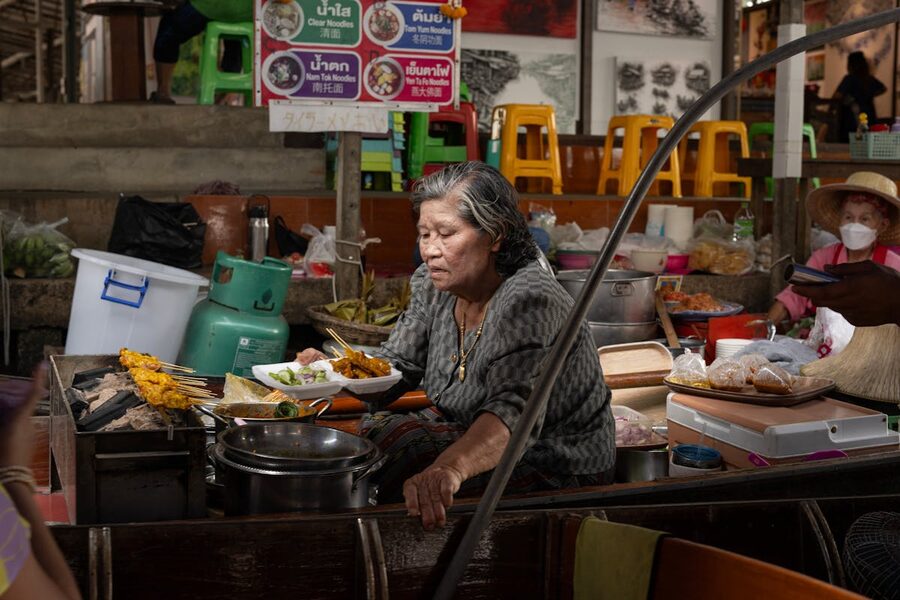
Eat breakfast on the water. Do not eat at your hotel before the tour. Part of the floating market experience is eating from the boats — boat noodles, grilled prawns, coconut pancakes, mango sticky rice. If street food on the water gets you hooked, a dedicated Bangkok food tour back in the city is the natural next step. It is cheap (40-80 baht per dish) and far better than hotel buffet food.
Wear shoes you do not mind getting wet. The walkways at Damnoen Saduak splash, and you will step in puddles getting on and off boats. Sandals work. White sneakers do not.
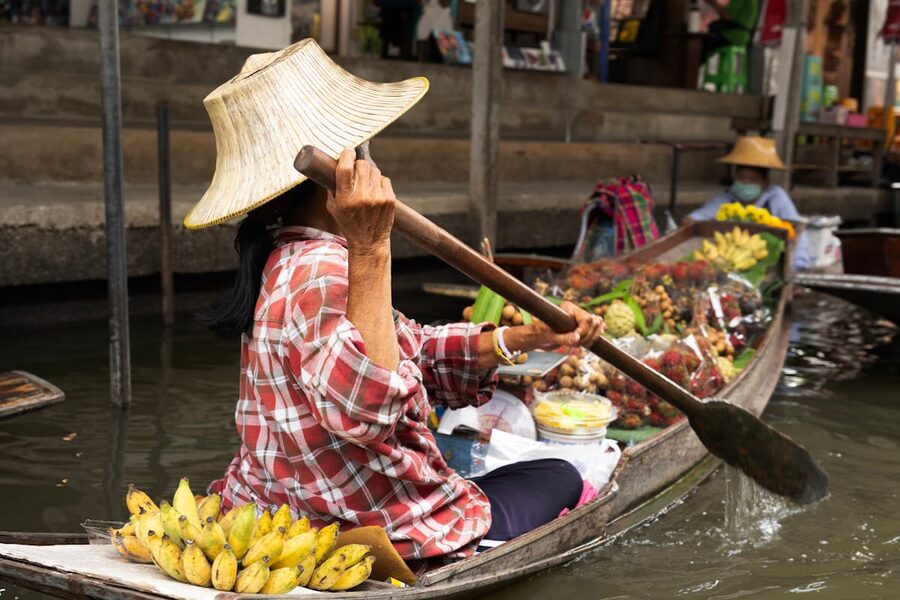
Do not buy the tourist tat at the floating market. The stalls along the walkway sell mass-produced souvenirs at tourist prices. The actual food vendors on the water are where the value is. Spend your baht on eating, not on wooden elephants.
For Maeklong, position yourself to the side. Standing directly on the tracks means you have to move when the train comes (obviously). Standing to the side of the tracks, near where the awnings fold, gives you a better angle for photos AND you do not have to scramble.
Bring sunscreen and water. The floating market has minimal shade. By 9am the sun is serious. Tours provide water but not sunscreen.
Skip the coconut boats. Some vendors at Damnoen Saduak offer “private” boat rides for 300-500 baht on top of your tour. These are unnecessary — your tour already includes a boat ride. The upsell gives you the same canal from a slightly different angle.
What You Will Actually See
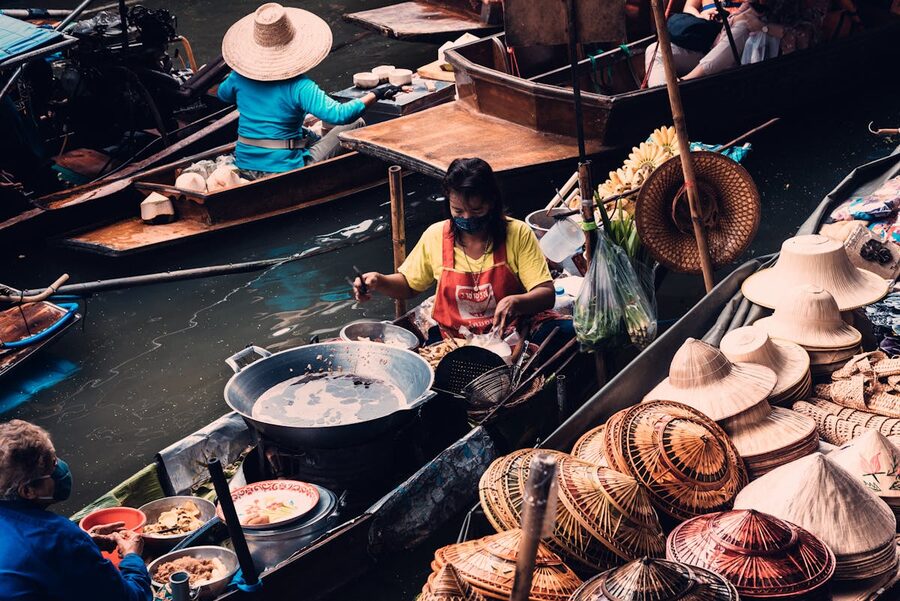
At Damnoen Saduak, the canal is about 4-5 meters wide in the main section, lined with wooden shop-houses on both sides. Vendors in wooden paddle boats sell everything from fresh tropical fruit (mangosteen, rambutan, dragon fruit, coconut) to hot food cooked on charcoal grills balanced in the boats. The boat ride takes you through the main canal and into some smaller side channels where the tourist density drops noticeably. If the canal life hooks you, the Bangkok longtail boat canal tours offer a grittier, more local version of the same experience right in the city.
The market started as a genuine wholesale produce market in the 1960s. Tourism changed it, but it has not completely taken over. If you look past the souvenir stalls on the walkways, the core of the market — the food vendors on the water — is still authentic. The Thai families buying from these boats are buying their actual groceries, not performing.
A bit of history that most tours mention: King Rama IV ordered the canal dug in 1866 to connect the Tha Chin and Mae Klong rivers. For over a century it was the main transport route in the area. The floating market tradition grew naturally from people living on the water. It was not invented for travellers, though tourism has obviously reshaped it.
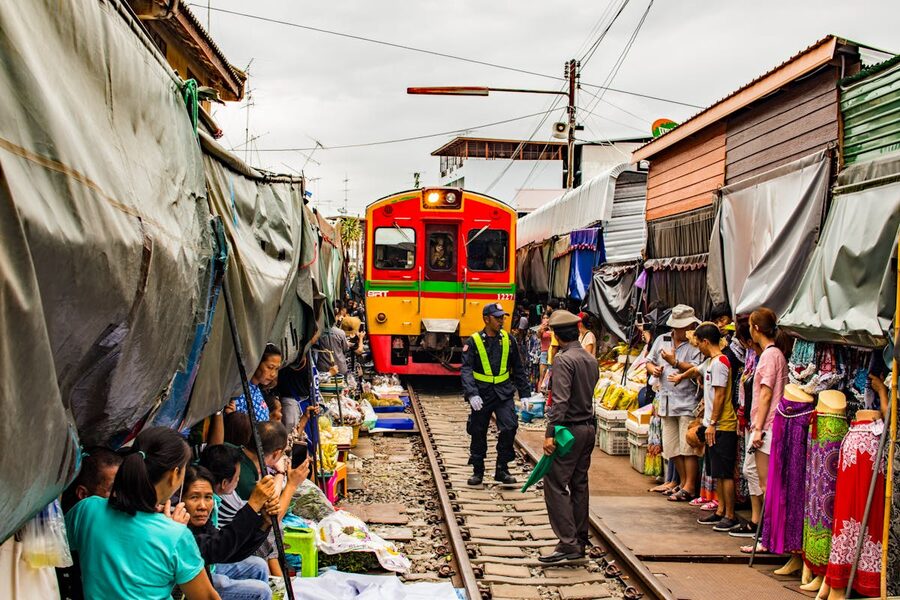
At Maeklong, the market stretches about 100 meters along the tracks leading to Maeklong Station. When no train is approaching, the tracks look like any other Thai market aisle — tarps overhead, produce stacked on either side, shoppers squeezing past each other. Then you hear the horn. The whistle blows about 2-3 minutes before the train arrives, and the transformation is immediate. Awnings retract on spring-loaded poles, vendors pull their tables and baskets back just enough to clear the train’s width, and everything that was covering the tracks folds inward like a mechanical flower closing.
The train passes through at walking speed — maybe 10-15 km/h — close enough that you could reach out and touch it (do not). The whole pass takes about 90 seconds. Then the awnings flip back out, the produce goes back on the tracks, and within a minute or two you would never know a train had been through.
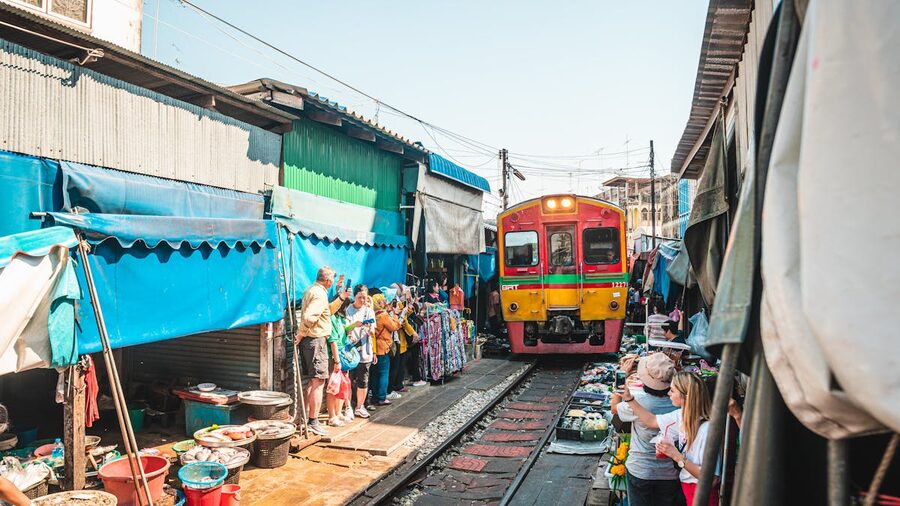
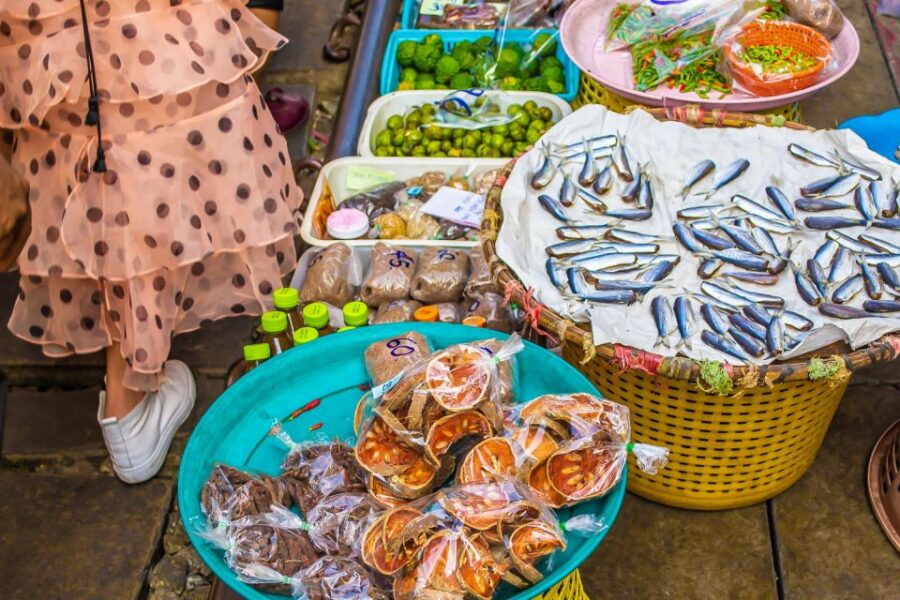
The market itself is worth browsing even without the train. The seafood section has some of the freshest and cheapest catches in the region — Samut Songkhram is a fishing province. Dried squid, shrimp paste, and local sweets are the things to buy here, not souvenirs.
What Else to Do in Thailand
If the floating market has you wanting to see more of Bangkok, the Grand Palace, Wat Pho, and Wat Arun circuit is the obvious next day — those temples are even more impressive in person than in photos. For something completely different after dark, a tuk-tuk night tour takes you through neighborhoods the daytime crowds never see. Heading north?
A Thai cooking class in Chiang Mai will teach you to make the same dishes you ate from the boats, and the Chiang Mai elephant sanctuaries are genuinely moving. And if you are making it to the south, the Phi Phi Islands from Phuket are as ridiculously photogenic as everyone says.
This article contains affiliate links. If you book a tour through our links, we earn a small commission at no extra cost to you. This helps us keep writing honest, detailed guides like this one.