
I bought tamagoyaki from the wrong stall. Not wrong as in bad — it was fine, sweet and jiggly and perfectly decent. But the guide on my food tour pointed three doors down to where an old man was cooking them to order on a worn copper pan, flipping each piece with chopsticks the length of his forearm. That version was on another level entirely. Golden, caramelized edges.
A faint smokiness from the pan’s decades of seasoning. That’s Tsukiji in a nutshell: the difference between good and extraordinary comes down to knowing exactly where to stand.
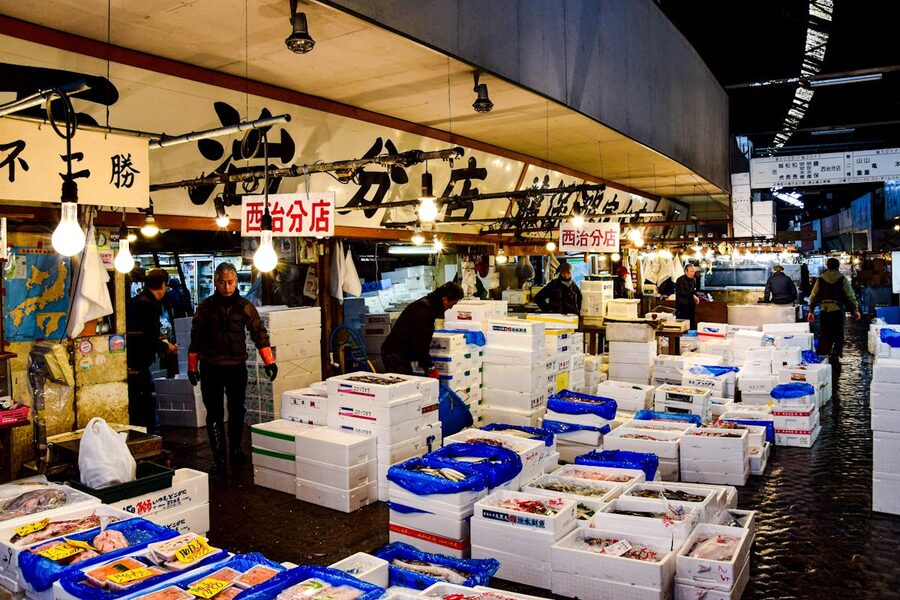
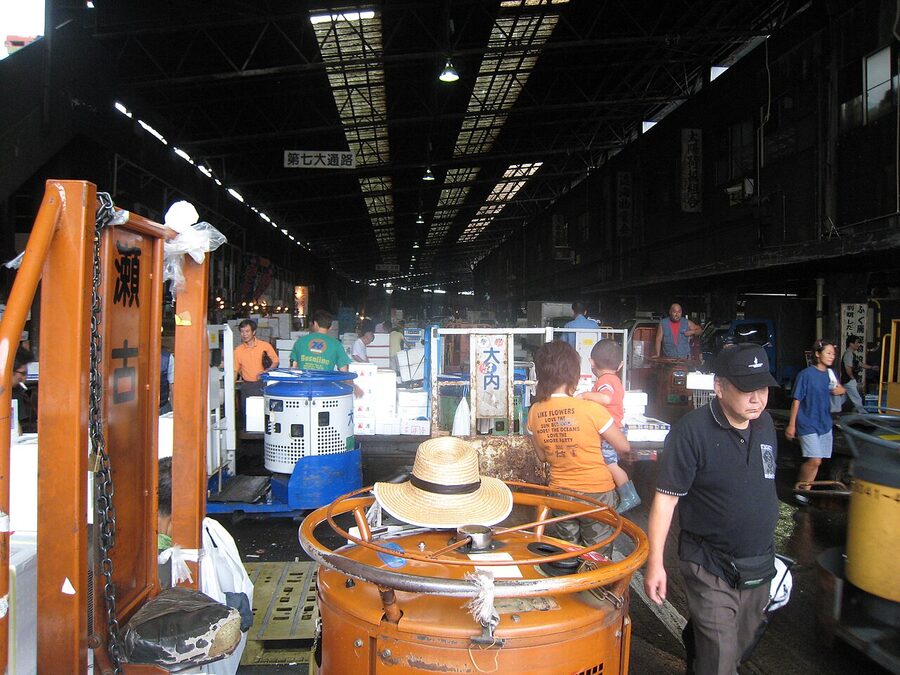
The outer market has over 400 shops and stalls crammed into narrow lanes around the original wholesale site. And while the tuna auctions moved to Toyosu Market in 2018, this is where the food stayed. The restaurant owners, the knife sharpeners, the families who’ve been selling dried kelp since your grandparents were born.
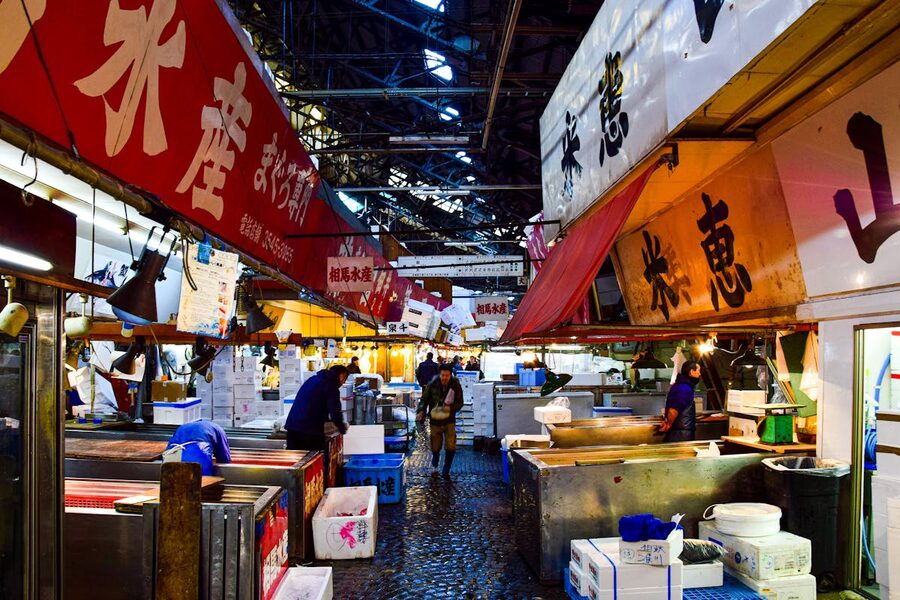
A food tour here changes everything. You could wander around and eat random things (and honestly, that’s fun too), but having someone who knows which knife shop has been open since 1933, which stall serves the freshest uni, and which tiny counter seats only six people but makes the best sushi breakfast in Tokyo — that’s worth paying for.
Short on time? Here are my top 3 picks:
Best overall: Tsukiji Fish Market Food and Culture Walking Tour — $99.49. The deep-dive option with sushi lunch and temple visit included.
Best budget: Tsukiji Fish Market Food and Walking Tour — $22. Unbelievable value for a 2-hour guided walk with tastings.
Best combo: Tsukiji Market Visit + Sushi Making — $104.13. Market tour plus a hands-on sushi class — you eat what you roll.
- How Tsukiji Outer Market Works
- Why Book a Guided Food Tour Instead of Going Solo
- The Best Tsukiji Fish Market Tours to Book
- 1. Tsukiji Fish Market Food and Culture Walking Tour — .49
- 2. Tsukiji Fish Market Food and Walking Tour —
- 3. Food Tour in Tsukiji —
- 4. Tsukiji Fish Market Visit With Sushi Making Experience — 4.13
- 5. Tokyo Tsukiji Fish Market Street Food Tour — .16
- When to Visit Tsukiji Outer Market
- How to Get to Tsukiji Market
- Tips That Will Save You Time (and Money)
- What You’ll Eat at Tsukiji
- Tsukiji vs Toyosu: Which One Should You Visit?
- Beyond Tsukiji
How Tsukiji Outer Market Works
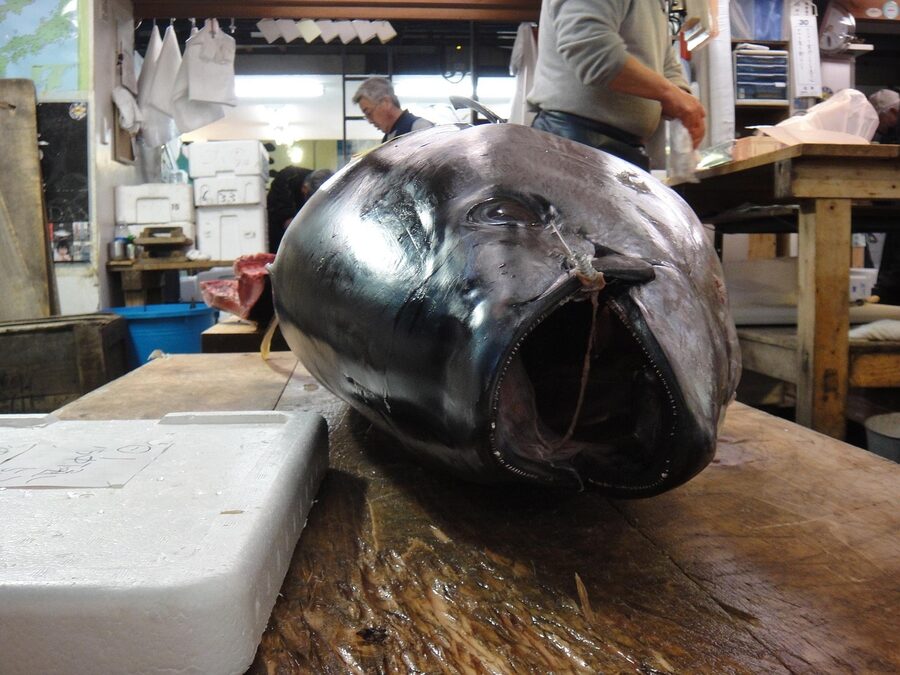
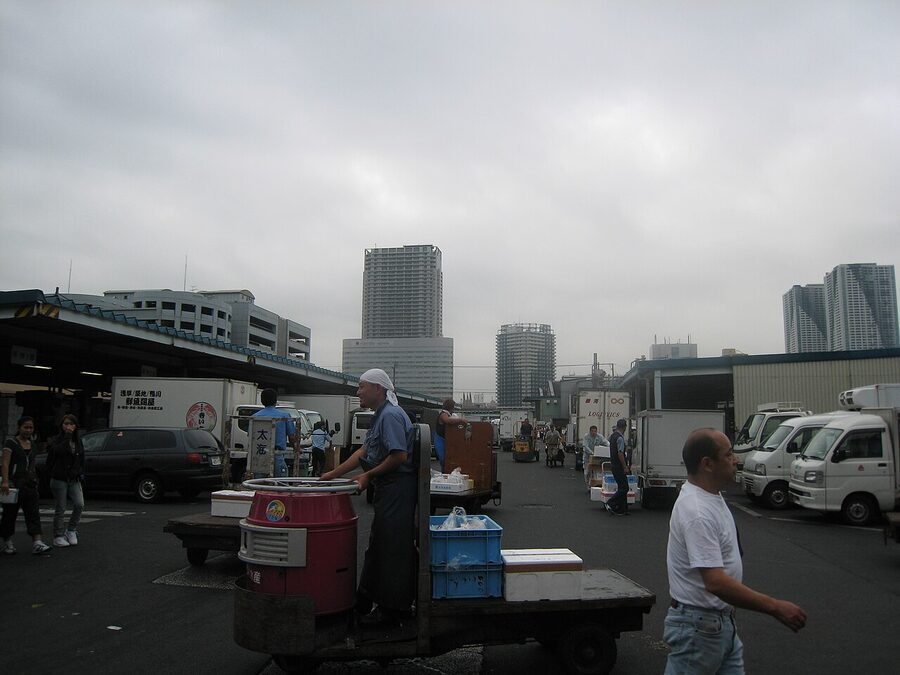
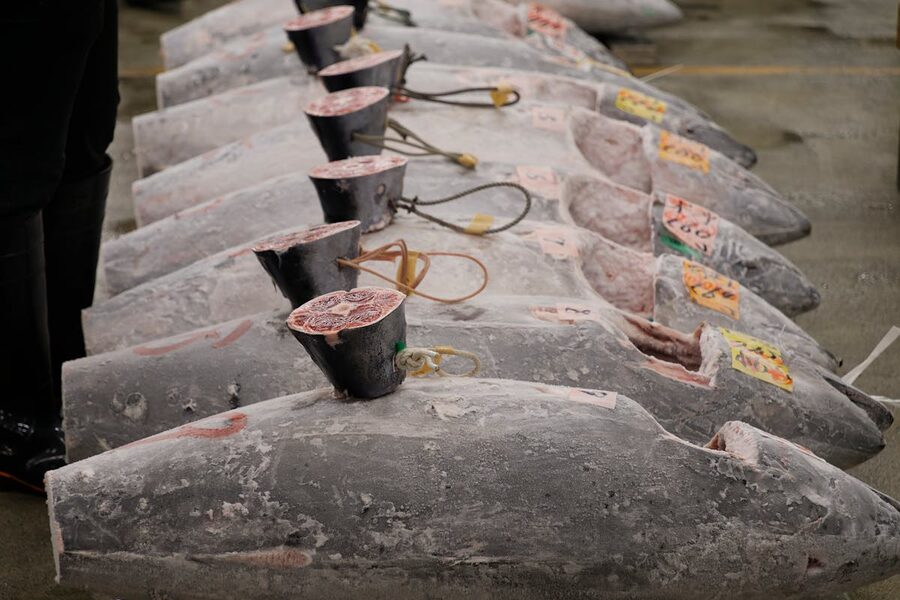
Here’s the thing that confuses most people: Tsukiji is actually two markets, and only one still exists. The inner wholesale market — the one with the famous tuna auctions — relocated to Toyosu in October 2018. That massive modern facility now handles the wholesale trade. But the outer market? It stayed right where it’s always been, a dense grid of shops and restaurants alongside the Tsukiji Honganji Temple in Chuo ward.
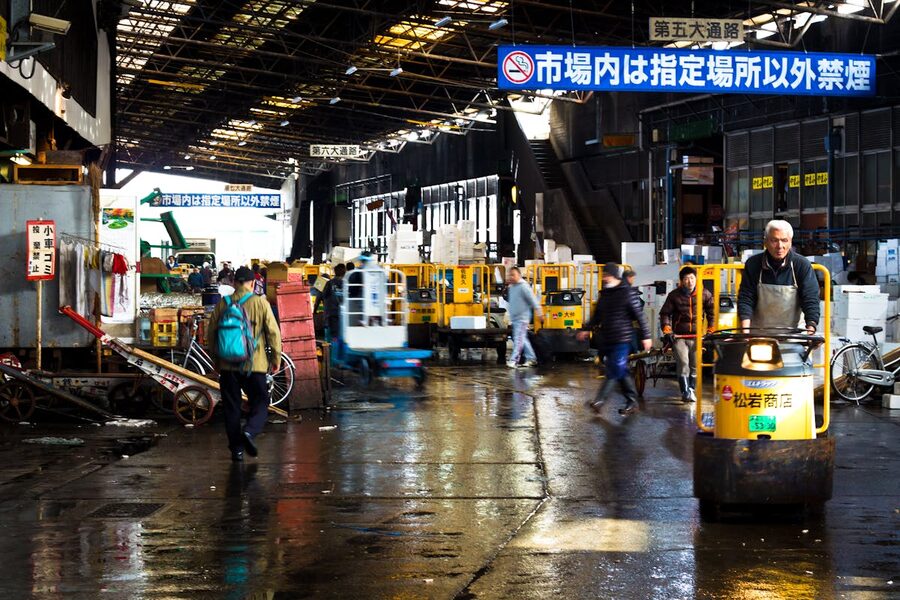
The outer market is free to enter. No tickets, no reservations. It opens early — most shops are up and running by 5am, catering to industry buyers first and travellers second. Peak visitor hours are roughly 9am to noon. By 2pm, many stalls start closing. Some restaurants open for dinner, but the market energy is a morning thing.
You’ll find roughly four zones of interest:
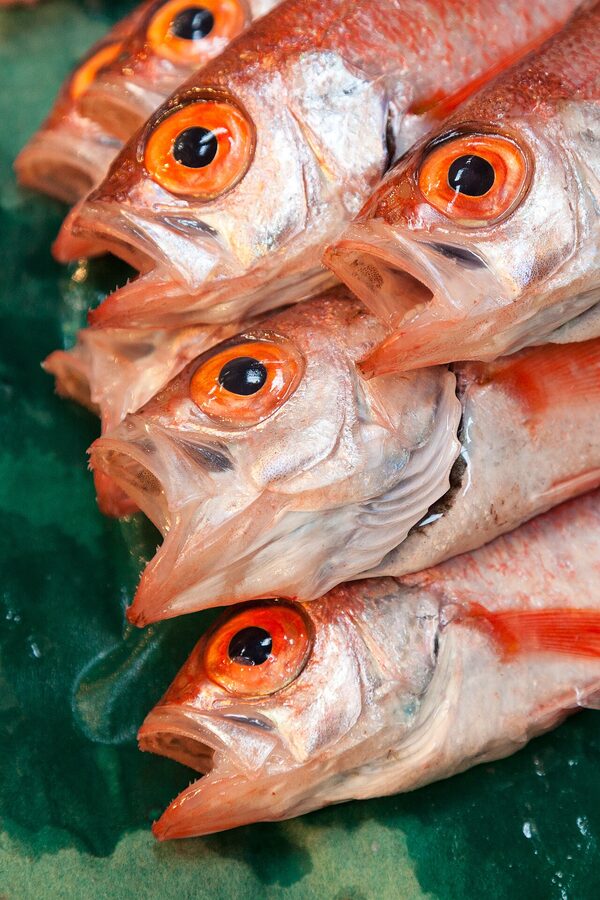
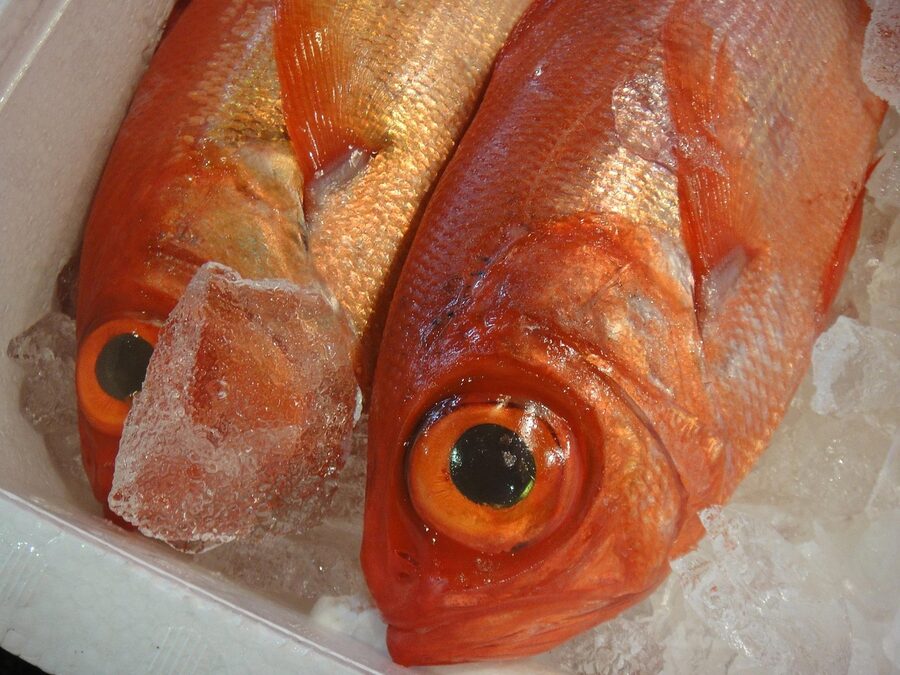
- Fresh seafood stalls — sashimi, grilled scallops, oysters shucked to order, sea urchin bowls
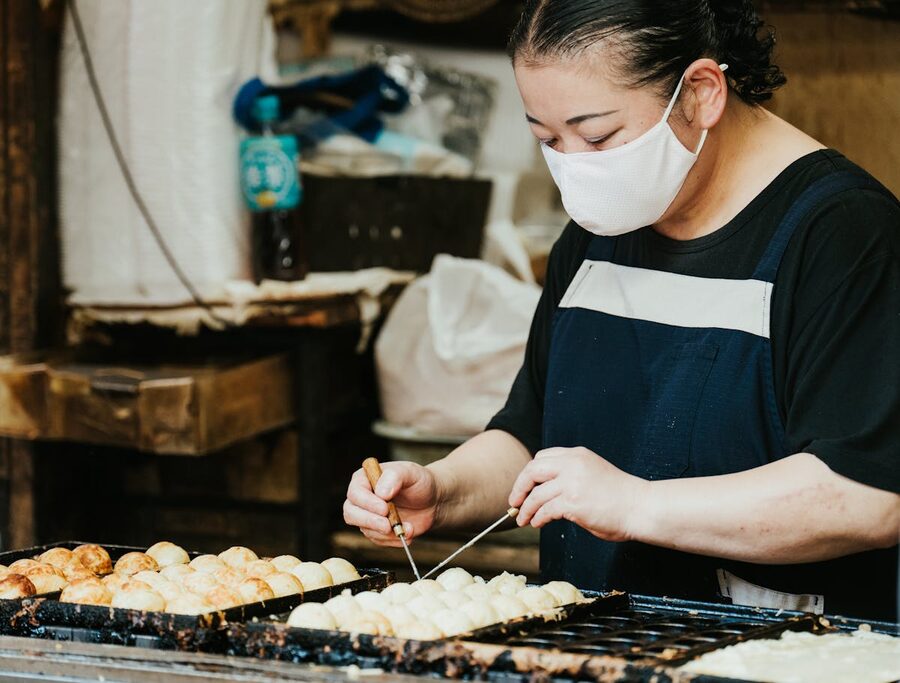
- Prepared street food — tamagoyaki (rolled omelette), takoyaki, croquettes, mochi, matcha treats
- Kitchen equipment shops — professional-grade Japanese knives, cookware, chopsticks
- Sit-down sushi restaurants — tiny counters where chefs serve omakase breakfasts from fish bought that morning
Why Book a Guided Food Tour Instead of Going Solo
You absolutely can visit Tsukiji on your own and have a great time. The market isn’t hard to navigate and most vendors are used to travellers pointing at things. So why pay for a guide?
Three reasons, and I’m being honest about this.
First: the best stalls aren’t obvious. The ones with the longest queues aren’t always the best — sometimes they’re just the most Instagrammed. A local guide knows which hole-in-the-wall makes the best dashimaki tamago, which seafood counter gets their stock from Toyosu’s first auction of the day, and which restaurant owner used to work at a Michelin-starred sushi bar before opening his own counter. You’d walk right past most of these places.
Second: context makes the food better. Eating a piece of grilled mochi is nice. Eating it while someone explains that this particular shop has been making it the same way since 1927, using rice from a single farm in Niigata, and the charcoal grill is replaced exactly once a year — that’s a different experience. The stories turn snacks into memories.
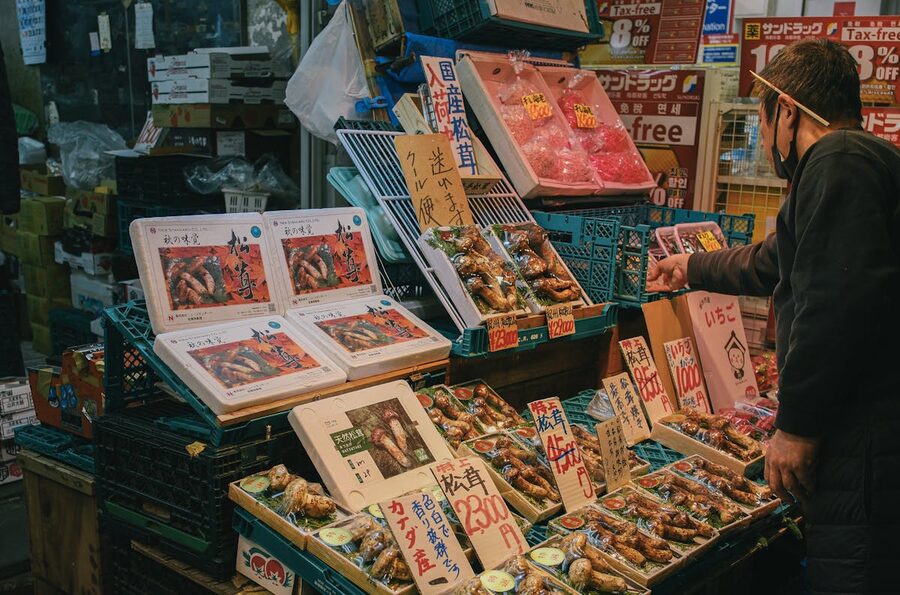
Third: you eat more variety. Left to my own devices, I’d probably fill up on sushi and tamagoyaki and miss the weird stuff. A guide pushes you to try things you’d skip — fried fish cakes from that unassuming window, dried bonito shavings that melt on your tongue, or a cup of dashi broth so clean and deep it makes instant miso taste like dishwater by comparison.
A guided tour typically costs between $22 and $105 depending on length and whether food is included. Given that you’d easily spend $30-50 sampling things on your own, the guided premium is minimal — and you’ll eat better for it.
The Best Tsukiji Fish Market Tours to Book
I’ve gone through every major Tsukiji food tour available on GetYourGuide and Viator and picked the five that actually deserve your time. These range from a $22 budget walk to a $104 market-plus-cooking combo. Each one takes a different angle on the market, so the right choice depends on what you’re after.
1. Tsukiji Fish Market Food and Culture Walking Tour — $99.49
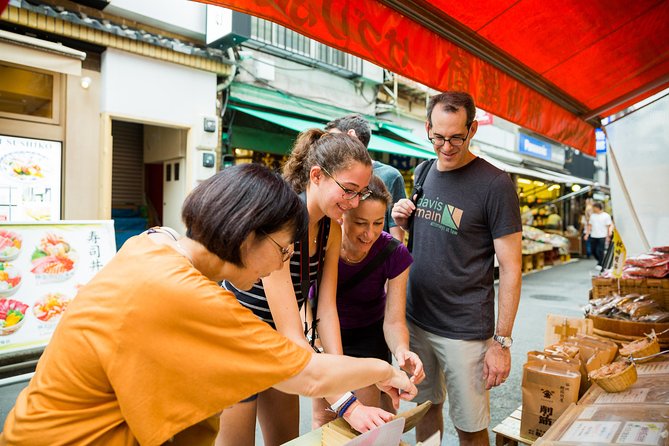
This is the one I’d pick if you want the complete Tsukiji experience in one morning. It starts at Tsukiji Honganji Temple — that striking Indian-inspired Buddhist temple right at the market’s edge — before heading into the food stalls. The tour includes multiple tastings plus a sit-down sushi lunch at a local restaurant, which sets it apart from cheaper options that only cover street food.
At $99.49 it’s the priciest on this list, but the included lunch easily covers $25-30 of that. The guides are locals who know the vendors personally, and that relationship means you occasionally get tastings that aren’t available to regular walk-ins. It’s one of the most reviewed Tsukiji tours on Viator, with a near-perfect rating for good reason.
2. Tsukiji Fish Market Food and Walking Tour — $22
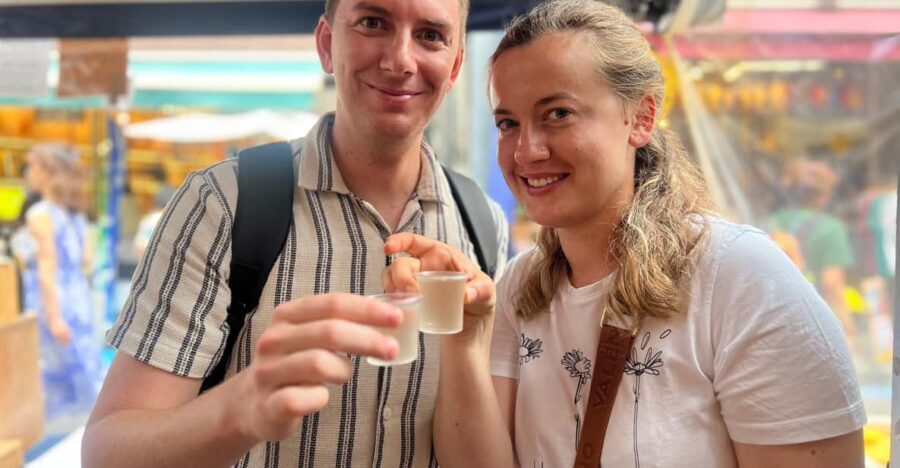
Twenty-two dollars for a 2-hour guided walk through Tsukiji with food tastings included. I keep expecting the catch, but there isn’t one. The guides are knowledgeable, the route covers the market’s highlights, and you’ll try enough street food to call it brunch.
This tour runs through GetYourGuide and it’s the most popular budget option out there. The only downside compared to the premium tours is that you don’t get a sit-down meal — it’s all standing and walking tastings. But honestly, that’s how Tsukiji is meant to be experienced. You eat while you move. At this price, it’s almost ridiculous not to book a guide.
3. Food Tour in Tsukiji — $30
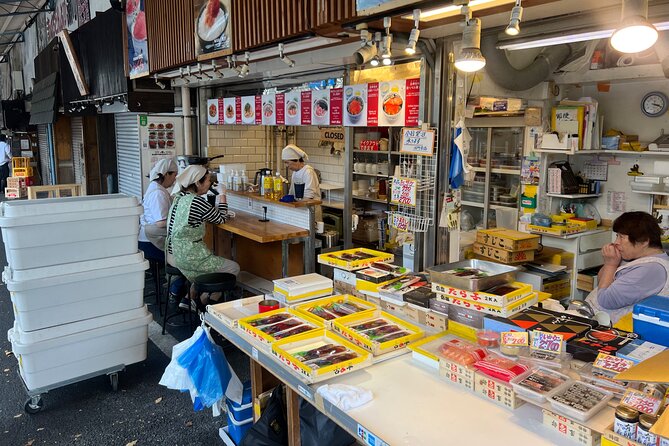
This Viator tour sits in the sweet spot between the $22 budget option and the $99 deep-dive. At $30 per person, you get a focused food tour that skips the cultural preamble and gets straight to eating. If you’ve already visited the temple on your own and just want someone to lead you to the best food stalls, this is the one.
The guides are friendly and patient — they’ll wait while you finish your grilled scallop before dragging you to the next stop. Groups tend to be small, which means you can actually hear your guide over the market noise and ask questions without shouting. It’s a solid mid-range pick that doesn’t try to be everything.
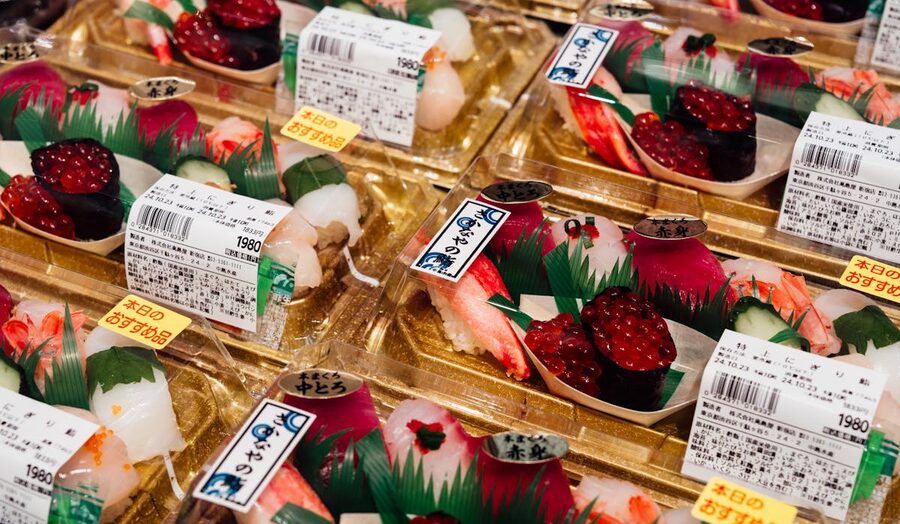
4. Tsukiji Fish Market Visit With Sushi Making Experience — $104.13
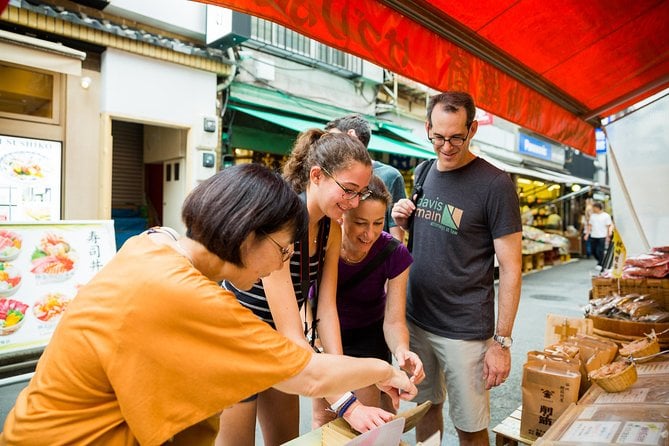
This is really two experiences in one: a Tsukiji market walk followed by a hands-on sushi making class. You tour the market first, learn about the different fish and ingredients, and then head to a small kitchen space where a sushi instructor teaches you to roll and press nigiri. You eat everything you make.
Fair warning: the reviews on this one are mixed. Most people love it, but a few feel the sushi-making portion is basic for the price. The classroom space is small and no-frills. If you’re expecting a polished cooking school experience, temper your expectations — it’s more casual workshop than culinary academy.
But if you’re traveling with kids or want a fun activity that goes beyond just eating, the combo format works well. At $104.13, you’re paying more per hour than the other tours, but you also walk away with a new skill. Sort of.
If you’re specifically interested in sushi making as a standalone activity, we’ve got a full guide to booking sushi making classes in Japan with more options.
5. Tokyo Tsukiji Fish Market Street Food Tour — $33.16
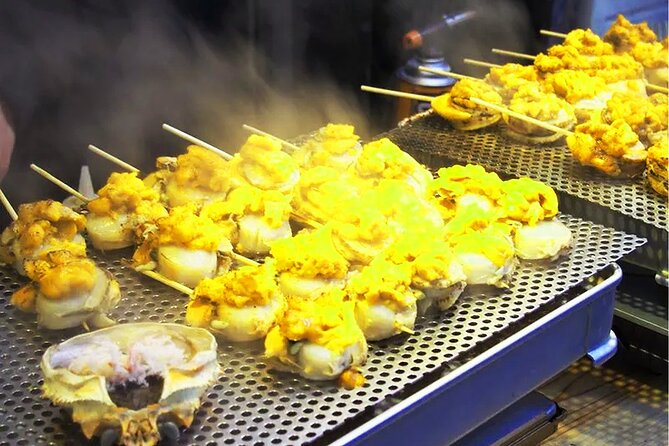
Another strong budget option that leans hard into street food tastings. The Tsukiji Street Food Tour focuses purely on eating — fewer cultural stops, more time with food in your hands. At $33.16 through Viator, it’s competitively priced and has a perfect rating from travellers who’ve taken it.
This is my pick if you’re a confident eater who just wants someone to point you to the good stuff without spending too much time at temples or knife shops. The guide hits a solid variety of stalls — seafood, grilled items, sweets, and usually at least one spot that serves something unusual enough to make you pause before biting. The tour size stays small, which keeps the energy personal rather than feeling like a tour group being herded through.
When to Visit Tsukiji Outer Market
The outer market operates roughly 5am to 2pm, though individual shop hours vary. Some sushi counters open as early as 4:30am. By 1pm, stalls start shutting down and the energy drops off fast.
Best time: Arrive between 7am and 9am if you’re going solo. The market is awake but not yet packed with tour groups. You’ll see actual industry buyers alongside the travellers, which gives the whole place more authenticity. If you’re on a guided tour, most depart between 8am and 10am — the guides time it to hit stalls before the lunch rush queues form.
Worst time: Saturday mornings between 10am and noon. The narrow lanes get so packed that walking becomes a shuffle. Weekday mornings are noticeably calmer. Sundays and Wednesdays, many shops are closed entirely — check before you go.
Best months: Autumn (October-November) and spring (March-April) are ideal. Summer gets brutally humid and the smell of fish in 35-degree heat is… memorable. Winter mornings are cold but the market’s enclosed sections trap warmth from all the grills and steamers.
How to Get to Tsukiji Market
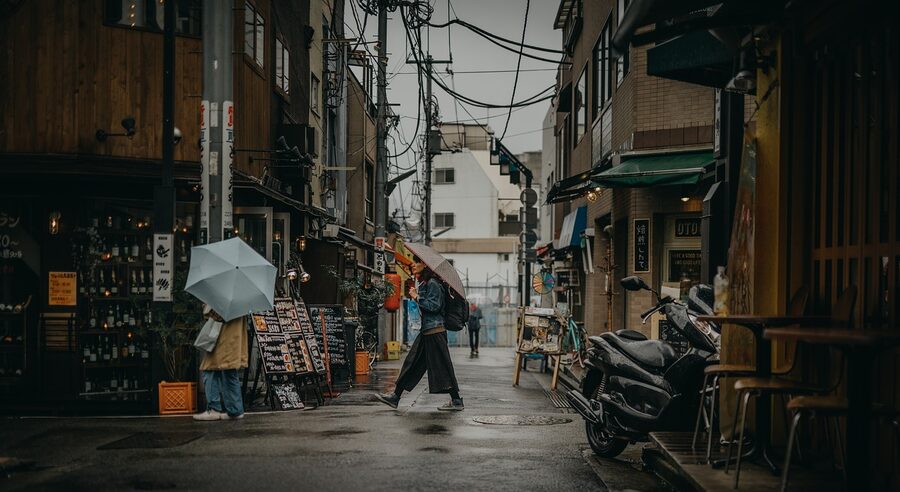
Tsukiji is one of the easiest markets in Tokyo to reach by train.
By subway: Take the Tokyo Metro Hibiya Line to Tsukiji Station (exit 1 or 2). The outer market is a 2-minute walk. Alternatively, the Toei Oedo Line stops at Tsukiji-Shijo Station (exit A1), which drops you at the market’s main entrance.
From major stations:
- Tokyo Station: 10-minute taxi ride, or take the Marunouchi Line one stop to Ginza, transfer to Hibiya Line for one more stop
- Shinjuku: Take the Toei Oedo Line direct to Tsukiji-Shijo — about 25 minutes, no transfers
- Shibuya: Take the Ginza Line to Ginza, transfer to Hibiya Line — about 20 minutes total
On foot from Ginza: Tsukiji is a 10-15 minute walk from the Ginza shopping district. If you’re staying in that area, you don’t even need the train. Walk south along Harumi-dori and you’ll hit the market.
Tips That Will Save You Time (and Money)
Bring cash. Many stalls are cash-only. A few of the larger restaurants take cards now, but street vendors overwhelmingly prefer yen. Hit a 7-Eleven ATM before you arrive — there’s one across the street from exit 1 of Tsukiji Station.
Don’t eat a big breakfast first. This sounds obvious but I’ve seen it derail food tours. If your tour starts at 9am, have coffee and nothing else. You’ll be eating 8-12 different things over 2-3 hours. Pace yourself and leave room.
Wear shoes you don’t love. The ground gets wet. Fish juice, ice melt, random puddles — the lanes are damp by mid-morning. Sneakers are fine, but leave the white ones at the hotel.
Skip the crowd-magnet stalls with English menus and LED signs. They’re fine, but you’re paying a tourist premium. Walk one lane deeper and you’ll find the same food at better prices from vendors who serve locals.
Buy a knife. Seriously. Tsukiji has some of the best knife shops in Japan. A hand-forged Japanese kitchen knife makes a fantastic souvenir — practical, lasts forever, and infinitely better than another fridge magnet. Expect to pay 8,000-30,000 yen ($55-200) for a quality chef’s knife. The shops will sharpen it for you and package it for carry-on luggage.
If you want the tuna auction, that’s now at Toyosu Market, about 10 minutes away by Yurikamome Line. You can watch the auction from a viewing gallery (free, starts at 5:30am). Combine a Toyosu morning with a Tsukiji food tour later for the ultimate Tokyo seafood day.
What You’ll Eat at Tsukiji
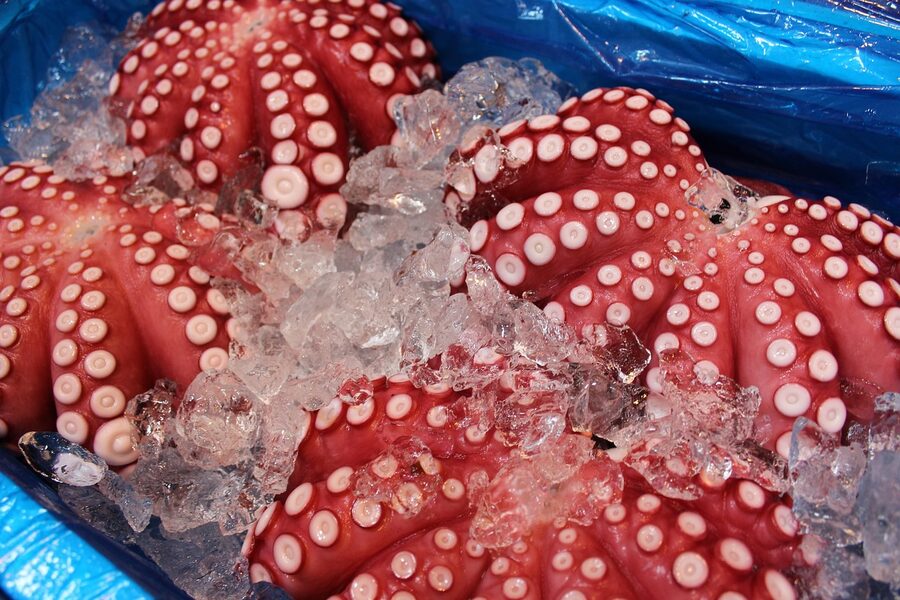
The market has a dizzying variety of food, but here’s what you shouldn’t miss:
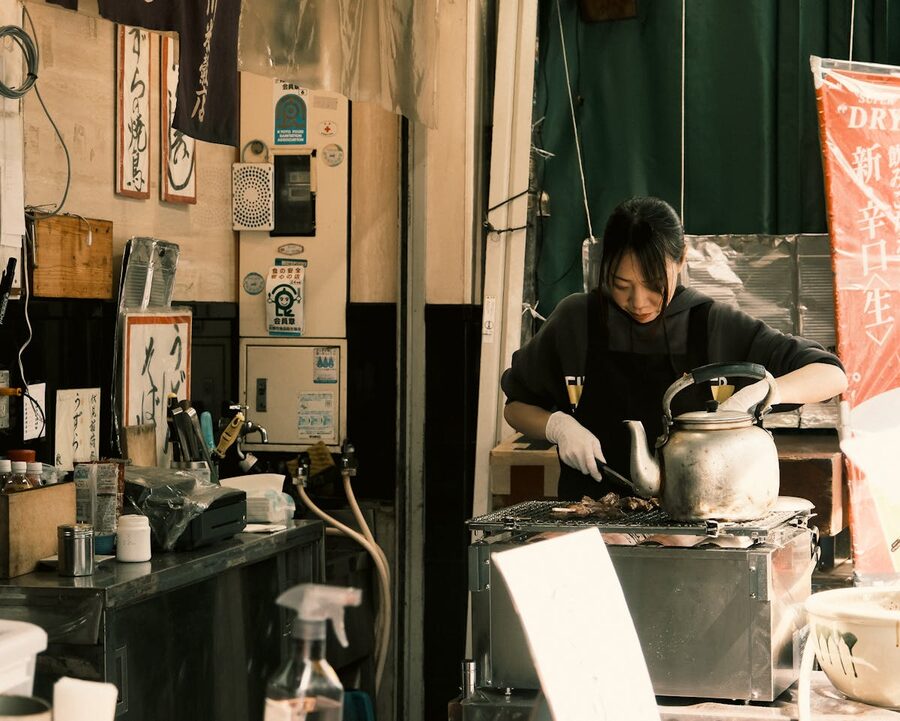
Tamagoyaki — the rolled Japanese omelette. There are several stalls but the ones cooking to order (not pre-made) are worth the wait. Sweet, savory, slightly smoky. Eat it on a stick while it’s still warm.
Grilled scallops and oysters — many vendors grill them right in front of you with a torch of butter and soy sauce. The Hokkaido scallops are the size of your palm. If you’re visiting in winter, the oysters are at peak season.
Fresh sushi breakfast — several tiny counters serve omakase-style sushi starting from around 6am. Expect to queue 15-30 minutes at the popular ones. The fish was swimming less than 24 hours ago.
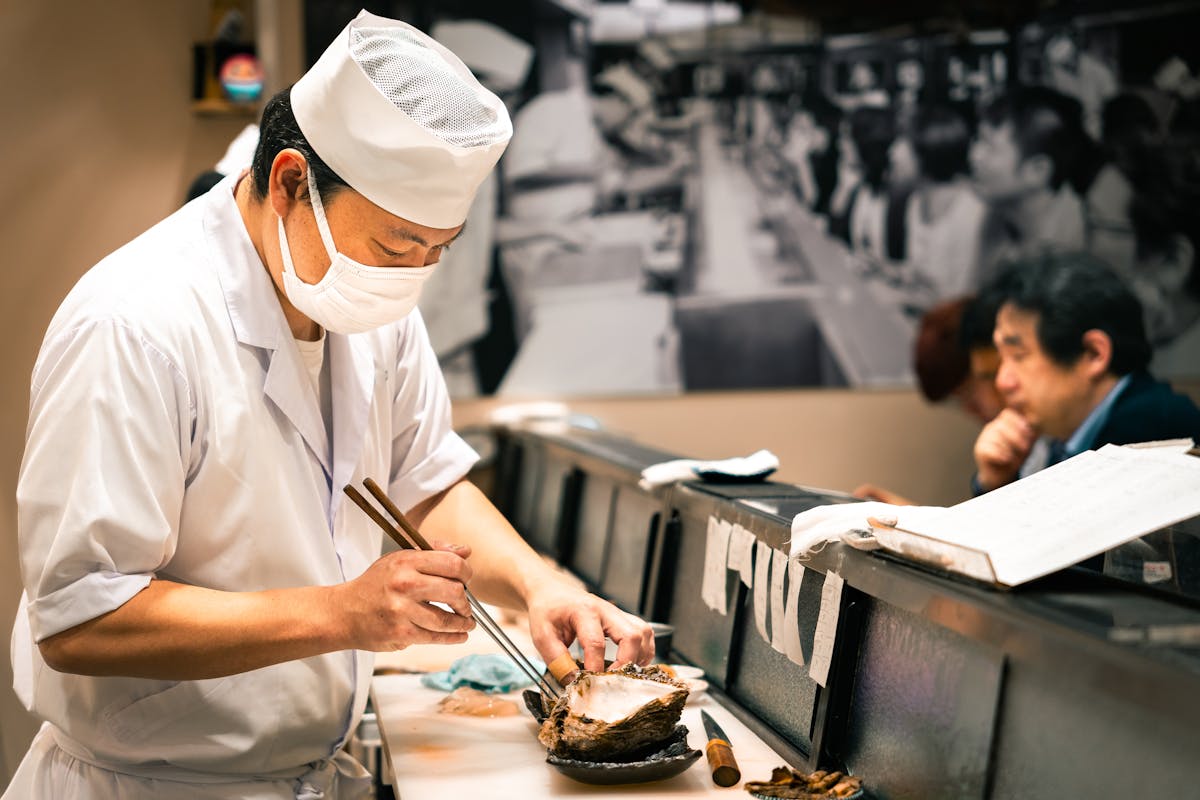
Wagyu beef skewers — not seafood, but several stalls grill A5 wagyu on sticks for around 500-1,000 yen ($3.50-7). The fat melts the second it hits the grill. There’s usually a line, and it moves fast.
Mochi and matcha — a good palate cleanser between savory bites. The freshly grilled mochi with red bean paste is simple and perfect. Matcha soft serve is everywhere — some stalls use ceremonial-grade powder, and you can taste the difference.
Dried goods and seasonings — bonito flakes, dried kelp, wasabi, pickled vegetables. These make great edible souvenirs that won’t trigger customs issues.
Tsukiji vs Toyosu: Which One Should You Visit?
Short answer: both serve different purposes, but for food travellers, Tsukiji wins.
Toyosu Market is the new wholesale facility where the industry trade happens. You can visit the viewing galleries to watch the tuna auction and see the massive trading floors through glass walls. It’s architecturally impressive and very modern. But you can’t walk among the vendors, you can’t buy street food while wandering, and the restaurant options — while good — feel more like a food court than a market.
Tsukiji Outer Market is where you eat. It’s chaotic, old-school, packed with character, and the food is right there in front of you — steaming, sizzling, getting handed across counters. There’s no glass wall between you and the action. It smells like grilled fish and soy sauce and burnt sugar from the mochi stalls. That sensory overload is half the experience.
If you have time for both, do Toyosu at 5:30am for the tuna auction and Tsukiji at 9am for food. If you only have time for one, go to Tsukiji.
Beyond Tsukiji
If the Tsukiji tour whet your appetite, you will want to hit Shinjuku next — the Shinjuku food tours cover the best izakaya crawls and yakitori alleys in the city. For plant-based travellers, the Tokyo vegan food tour explores a completely different side of the culinary scene. After dark, the bar hopping tours through Golden Gai are the natural continuation of a day spent eating.
Beyond food, the sumo experience is something you genuinely cannot get outside Japan, teamLab Planets is a 15-minute walk from the old Tsukiji market area, and the Mt. Fuji and Hakone day trip is the best escape from the city when you need a break from urban sensory overload.
This article contains affiliate links. When you book through these links, we may earn a small commission at no extra cost to you. This helps us keep producing free travel guides.